
Tag: Ben Whishaw

The International (2009)


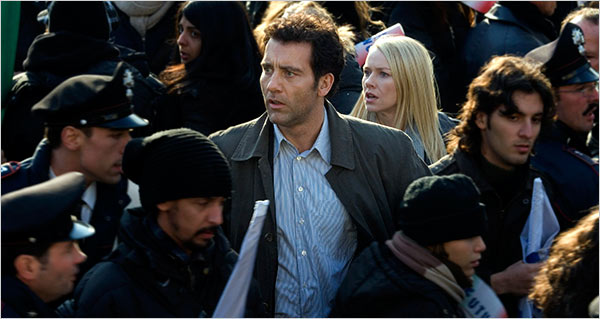
Clive Owen and Naomi Watts are lost in the high-pressure world of big finance in The International

Director: Tom Twyker

Cast: Clive Owen (Louis Salinger), Naomi Watts (Eleanor Whitman), Armin Mueller-Stahl (Wilhelm Wexler), Ulrich Thomsen (Jonas Skarssen), Brian F. O’Byrne (The Consultant), James Rebhorn (New York DA), Michel Voletti (Viktor Haas), Patrick Baladi (Martin White), Jay Villiers (Francis Ehames), Fabrice Scott (Nicolai Yeshinski), Haluk Bilginer (Ahmet Sunay), Luca Barbareschi (Umberto Calvini), Alessandro Fabrizi (Inspector Alberto Cerutti), Felix Solix (Detective Iggy Ornelas), Jack McGee (Detective Bernie Ward), Ben Whishaw (Rene Antall), Lucian Msamati (General Motomba)

Welcome to another of my unlikely pleasures. I remember seeing The International because we took a punt on it with an Orange Wednesday 2-for-1. I had no real expectations, but I was totally wrapped up in it. It has an old-school 1970s Hollywood-conspiracy-thriller feel. I keep waiting for it to be rediscovered (I’m waiting in vain it seems). But it’s a wonderful, tense little thriller which – by focusing on the shady, morally corrupt dealings of private banks – always seems relevant. Throw in alongside that a truly stand-out action set-piece at the centre of the film and you have a much overlooked pleasure.

Louis Salinger (Clive Owen) is a scruffy Interpol agent, with a reputation for getting too involved in his cases. Working with Assistant New York DA Eleanor Whitman (Naomi Watts), Salinger is investing possible illegal arms deals involving private investment bank IBBC. After their inside contact and Whitman’s fellow DA are both murdered in quick succession, Salinger takes the battle directly to IBBC. But the bank, chaired by ruthlessly blank businessman Jonas Skarsson (Ulrich Thomsen), is prepared to go to increasingly violent lengths to protect its interests, with assassinations arranged by its in-house security expert ex-Stasi agent Wilhelm Wexler (Armin Mueller-Stahl) and carried out by his mysterious Consultant (Brian F. O’Byrne).

Tom Twyker shoots the film in cool grays and drained out colours, giving it a very cold palette fitting for its exploration of the ruthless viciousness of big business. Twyker uses the cold, modern architecture of the various businesses the film is set in to great effect, making a wonderful, imposing backdrop. The camera constantly allows this domineering modern architecture to fill the frame, and mixes it up with some well-chosen aerial shots that reduces the action to cogs in a machine. It’s a very distinctive visual film – and it’s not until it finishes that you realise (apart from blood) you’ve really seen a red, a green or a purple in the whole film. There’s no jittery editing or hand-held camerawork – it’s got a smooth old-school cinematic quality to it.

The plot is a chilling conspiracy thriller, that (within the confines of a Hollywood action thriller) gets really in-deep into the workings of big finance. Critics accused it of being a light-weight Jason Bourne but really it’s more of a colder Parallax View. It largely eschews action in favour of paranoia, investigation and simmering tension. It’s a well-constructed journey down the rabbit hole, as Salinger gets both closer towards answers, and further away from bringing anyone to justice. 

Clive Owen’s rumpled performance is perfect. Far from being a “Bond audition”, Salinger is an outsider, a man who lives for his job, who wears his heart on his sleeve, and spends large chunks of the film either terrified or out-of-his-depth. Practically the first thing that happens to him is being knocked out by the wing-mirror of a truck. His grubby, unshaven scruffiness doesn’t recover from that. Owen gives the performance both a moral conviction and a slight air of desperation and bewilderment, as if he can’t quite understand why others aren’t as wrapped up in his case as he is.

He’s part of a great cast of actors – the film is full of unusual choices and rewarding cameos. Armin Mueller-Stahl mastered playing these world-weary ex-spies years ago, but delivers here. Broadway star Brian F O’Byrne is great, as a ruthlessly efficient hitman. Ulrich Thomsen is rather good as the blank businessman and family man, who seems to see no moral issues in the conduct of his bank’s business. Interesting actors like Patrick Baladi, James Rebhorn, Luca Barbaeschi, Haluk Bilginer and Lucian Msamati round out the cast with terrific cameos – there is always a unique actor and dynamic performance around every corner.

The plot of the film doesn’t unfold the way you expect it to – and mixes hope with a nihilistic powerlessness. Twyker’s directing is professional and he adds a lot of intelligence to a standard Hollywood set-up. He also throws in a few moments where the film pauses to reassess things we’ve seen before or to allow Salinger to puzzle out another crucial clue.

And it’s fitting for a film so in love with overwhelming power of modernist architecture that its most explosive sequence takes place in New York’s Guggenheim museum. This is a gut-wrenchingly exciting, destructive gun battle that serves as the pivot point. Brilliantly shot and edited, and perfectly built towards, it explodes into the film and grabs your attention. Owen again is perfect for this sequence – determined, but terrified and completely out of his depth – and Twyker’s use of the Guggenheim is masterful. Honestly it’s one of the best shoot-out scenes I’ve ever seen in a movie: five minutes of brilliance. You’d remember the film for that scene alone, if for nothing else.

Okay it’s not a perfect film by any stretch. Poor Naomi Watts has a thankless, ill-formed part. I’m pleased the film doesn’t include any romantic connection between the two characters at all, but (despite her work on the case) Whitman seems more a plot device than a character. The script largely fails to serve up too many memorable lines – and its main strengths are to present familiar actions and events in a fresh manner. Some have found the plot momentum to often flag – and there is something to that – and the overall schemes of the bank are not always completely clear.

But, nevertheless, I really like The International. It’s got a classic old-school feel to it. Its views on the immorality of big business feel very true, as does its presentation of the villain as basically a monolithic institution – the actual guys running the bank seem irrelevant, it’s just the ongoing nature of business. And in this world of corporations, where destroying a few men don’t admit to a hill of beans, how can truth and justice ever win out? Even if it had nothing else, tackling that idea makes The International feel like something new and worth revisiting. Well that, and that Guggenheim gun fight…

Spectre (2015)


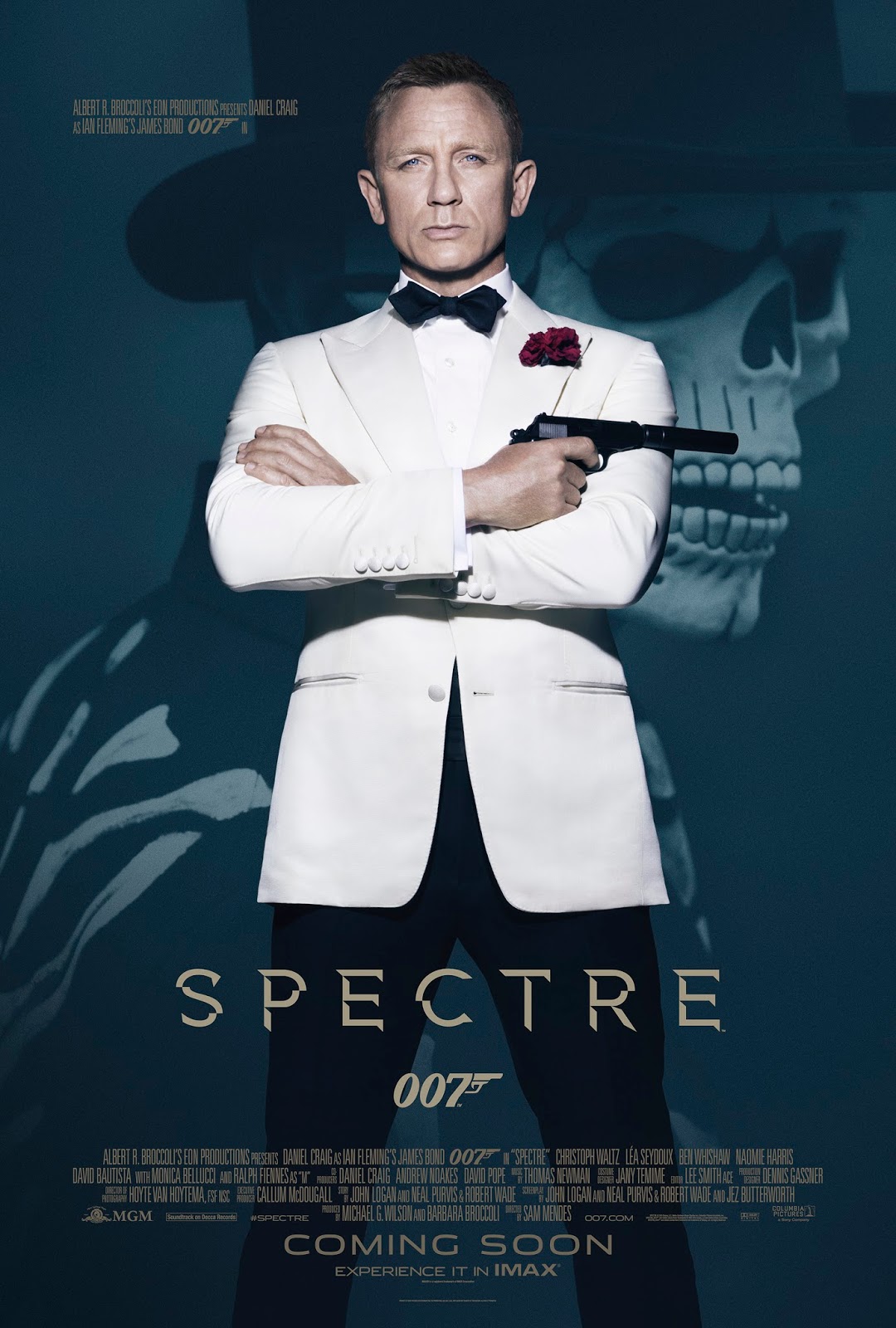
Bond heads into danger in thematic mess Spectre

Director: Sam Mendes

Cast: Daniel Craig (James Bond), Christoph Waltz (Franz Oberhauser/Ernst Stavro Blofeld), Léa Seydoux (Dr Madeleine Swann), Ralph Fiennes (M), Ben Whishaw (Q), Naomie Harris (Eve Moneypenny), Dave Bautista (Mr Hinx), Andrew Scott (Max Denbigh), Monica Bellucci (Lucia Sciarra), Rory Kinnear (Bill Tanner), Jesper Christensen (Mr White)

SPOILERS: Okay, surely most people have seen this by now – but just in case I’m going to spoil the big twist of Spectre. It is, by the way, a really, really, really stupid, annoying terrible twist. So you won’t mind. But just in case you do… Spoilers.

In 2002, Austin Powers: Goldmember had, amongst its ridiculous plotlines, a reveal that Austin Powers and Dr Evil were, in fact, long lost brothers. It was the crowning height of silliness in the franchise, the ultimate punchline to Mike Myers’ James Bond spoof. Well the wheel comes full circle: in 2015, Spectre’s shock plot reveal was – James Bond and Ernst Stavro Blofeld – wait for it – they were only – guess what! – raised by the same man, so basically sorta brothers! Who would have thunk it? The world’s greatest spy and world’s greatest villain both grew up together. Yup, the Bond producers actually thought this was a good idea. Yup they were completely wrong.

Spectre opens in Mexico with Bond (Daniel Craig) preventing an attack on a football stadium – although this attack basically involves trashing an entire city block. Benched by M (Ralph Fiennes), he investigates the shadowy organisation known as Spectre, which he discovers is run by Franz Oberhauser (Christop Waltz), a man Bond seems to know a great deal about. Meanwhile M engages in Whitehall battles with the intelligence director Max Denbigh (Andrew Scott) and his sinister “Nine Eyes” programme, designed to control all surveillance in the developed world.

Spectre is a film that really falls apart in its final third, as ridiculous revelation piles on top of ludicrous contrivance. After Skyfall, we all wanted Sam Mendes to come back to do another Bond film, but this makes every single mistake that film avoided: self-conscious,  silly in the wrong way, takes itself way too seriously, despite its best efforts it doesn’t really do anything new, and attempts to build a “Bond universe” around a franchise that works because it keeps reinventing itself in stand-alone films. It’s the Bond producers attempt to do a Marvel film – and it ain’t pretty. Did we need to create some sort of tenuous link between the Craig-era Bond movies? Did we need Blofeld and Bond to have a “very personal” connection? No we massively did not.

Mendes shoots the action with a mock grandeur that seems to be serving other things than the plot. Critics fawned over the long shot that follows Bond through the Day of the Dead street festival, through a hotel, out of a window, across a series of roofs and into the first action scene. But for me, it’s a self-conscious, look-at-me piece of trickery. It’s an air of pretention that runs through the whole film: it’s a film that wants you to think it’s making Big Points around Bond’s psychology and background, but keeps running aground because it goes about them in such a ham fisted way, particularly when compared to Skyfall’s subtlety and willingness to look at Bond’s vulnerability.

Most sequences in the film feels strangely flat and lifeless. There is a surprisingly sterile car chase through the streets of Rome between Bond and Hinx. The opening montage in Mexico just never really grips – maybe because it’s not clear what’s going on, maybe because it feels so self-consciously grandiose. The film’s tone is over the place – there are lashings of Moore. Bond falls through a collapsing building only to land on a sofa. During the car chase, Bond hits a button only to have some Frank Sinatra start playing on the radio. Craig does at least go through the comedy with a breezy lightness, though it sits oddly in a film that features a villain shooting himself in the head, and a guy having his eyes gouged out. 

The whole investigation into Spectre just isn’t interesting. Because the film has been written with such a self-conscious eye on fandom, it never gives us a reason within the film to care about it at all. Spectre don’t seem to be doing anything, other than being a shady organisation making money. We don’t get told why Bond is invested in it or Oberhauser until late in the day. The film pins everything on a “beyond the grave” video from Judi Dench’s M to give us a reason for chasing this plot. But nothing feels at stake and we don’t get told about Bond’s personal stake in it until almost the end – and even when we do, Bond doesn’t really seem to give a toss about the reveal.

Ah yes. The reveal. A few years ago, Star Trek Into Darkness had a terrible, nonsensical reveal around Benedict Cumberbatch’s character – turns out he was Khan. This was met with derision because (a) it had no impact on the wider viewers who didn’t know who Khan was, (b) it felt shoe-horned in as fan service, and (c) it had no impact on the characters in the film who’d never met Khan before. So who cared? He might as well have said “My real name is Fred”. This was the case with the Blofeld reveal here. The name means little to non-Bond fans. And it means naff-all to Bond. We’ve never heard it mentioned in the film before. It comes out of nowhere. It means nothing – it’s dropped into the film to get a cheer at comic con – so nakedly so, that it just annoyed people.

It doesn’t help that the whole “secret brothers” thing is a really, really dumb idea. I mean so mega-dumb it was, as mentioned, the final ridiculous flourish of Austin Powers. How did they look at this and think “yes”? Again it feels like retreading Skyfall ground – this already had given us interesting insights into Bond by having him return to his childhood home. But what did we learn about Bond here? Sweet FA. Whatever iconic status Blofeld had is immediately undermined by making him a pathetic envious child. Christoph Waltz’s bored performance doesn’t help either.

And as the film doesn’t spend any time establishing Blofeld or Spectre doing terrible things, it has to make a series of tenuous connections to Craig’s other films to ludicrously suggest that everything that happened in those films was Blofeld’s evil plan. This is so clearly bollocks, retroactive adaptation that it just makes you snort. Skyfall’s villain was very clearly established as a personally motivated lone-wolf – it makes no sense that he was sent by Blofeld. The first two Craig films established a secretive organisation, but it was framed very much as corporate ruthless villainy – the idea that it was an organisation established to destroy Bond is nonsense.

The reveal that Blofeld wants to destroy Bond personally makes most of the film itself make no sense. If Blofeld wants Bond to come to his base to exact revenge for childhood wrongs, why does his muscle-man Hinx spend the film so aggressively trying to kill him (especially in the film’s stand out action sequence, a no-holds-barred scrap on a train)? It’s almost like they were making it up as they go. Even Quantum of Solace held together better plotwise than this (ironically QoS goes almost completely unmentioned in Blofeld’s evil schemes – probably because it’s a bad film). The final confrontation between Bond and Blofeld strains credulity and patience – reaching for a personal rivalry that hasn’t been established by anything other than fans’ vague memories of watching You Only Live Twice on a Sunday afternoon years ago.

I’ve not mentioned the Bond girls either. The film tries to make a “strong female character” in Léa Seydoux’s Madeline Swann, but she is a plot device rather than a character, with no consistent personality, solely there to be whatever the plot requires. When it needs her to be a gun-toting, self-reliant, go-getter who sasses Bond, she is. When it needs her to be a damsel in distress she forgets all that firearms stuff and waits for a man to save her. When the plot needs her to express total devotion for Bond she does. When it needs her shortly afterwards to leave him, guess what, she does that as well. She is a character who makes no sense at all. It doesn’t help that she looks way too young for Craig. The wonderful Monica Belluci is given a thankless role of informant and brief sex partner for Bond – she of course was far too close to Craig’s age to be the main Bond girl. Just as he did with the shower sex scene in Skyfall, Craig manages to make this seduction seem inappropriate and pervy – it’s not his strength.

Lea Seydoux. She is, by the way, 17 years younger than Daniel Craig. Just saying.

 The stupidly unclear, dully predictable “Nine Eyes” plot doesn’t make things any better either. One of Skyfall’s neatest tricks was to cleverly mislead us about Ralph Fiennes’ Gareth Mallory, setting him up as an antagonist to slowly reveal him as an ally. This film attempts an inverted version of this trick with Andrew Scott’s Max Denbigh. Problem is, Scott is at his most softly-spoken Moriarty sinister – you are in no doubt he’s a wrong ‘un from the first frame. What would have worked is making Denbigh Bond’s ally. This would make the reveal of his villainy at least a surprise for some people in the audience. As it is the whole reveal is no shock what-so-ever. The whole plot starts to feel like plates being spun in the air, a way to give Fiennes, Kinnear and Harris something to do on the margins of the film.

I mean – he just LOOKS like a villain doesn’t he?

Okay Spectre is well filmed. It’s got some good scenes. Ben Whishaw continues to be excellent as Q – and gets loads to do here which is great. Craig actually does some of the comedy with charm and skill – even if he hardly seems as engaged with the material here as he did before, as if he was already becoming tired of the whole enterprise. But it’s too long (over 2 and a half hours!), and straight from its pretentious “The Dead Are Alive Again” opening, it’s straining for a thematic depth and richness that it constantly misses. It makes nothing of its family feud plotline and we learn very little about Bond as a character at all. It mistakes stupid fan-service and pointless reveals for plot, and it builds itself towards a reveal that it expects to get a cheer from the audience, but has no real connection to the plot of the film we are watching, and is in no way earned by the events of the film. 

Spectre is, at best, in the middle rank of Bond films – too self-important, incoherent and (whisper it) a little dull in places to really work. It’s not a complete failure – but it is a major disappointment. There is enough here to entertain most of the time, but not enough to really engage the mind or the guts. For Sam Mendes, lightening didn’t strike twice.