Tag: Benedict Cumberbatch

The Fifth Estate (2013)

Benedict Cumberbatch and Daniel Bruhl struggle through this turgid retelling of hacking derring-do in The Fifth Estate

Director: Bill Condon

Cast: Benedict Cumberbatch (Julian Assange), Daniel Brühl (Daniel Domscheit-Berg), Alicia Vikander (Anke Domscheit-Berg), Anthony Mackie (Sam Coulson), David Thewlis (Nick Davies), Stanley Tucci (James Boswell), Laura Linney (Sarah Shaw), Moritz Bleibtrue (Marcus), Carice van Houten (Birgitta Jónsdóttir), Peter Capaldi (Alan Rusbridger), Dan Stevens (Ian Katz), Alexander Siddig (Dr Tarek Haliseh)

In 2010 the world was thrown into turmoil when a website called Wikileaks published a host of top-secret government documents that revealed a never-ending stream of Western wrong-doing during the war on terror. The leak was co-published by WikiLeaks and the Guardian and New York Times. However Wikileaks founder Julian Assange (played here by Benedict Cumberbatch) had other ideals – namely that the files should not be redacted in any way to protect serving US officials or informants in hostile countries. 

It should be a gripping story of the state failing to keep up with the speed of modern communications. But instead this is one hell of a turgid, dull info-dump of a film that turns this potentially explosive event into something about as gripping as watching a series of people type into a computer. On top of that, the film totally fails to develop any proper personality dynamics to engage your interest, and instead falls back into the usual crude filmic language of a star-struck protégé realising his mentor has feet of clay.

Bill Condon’s direction is totally incapable of making the entry of data into a computer dynamic or visual, and is completely unable to bring the world of computer hacking and data search to life. In fact, there is so much information given to the viewers (rather than drama) that the impression I was left with is that Condon doesn’t really understand what’s going on in the movie anyway. He certainly doesn’t manage to make it interesting or feel that important. 

Visually, the film is flat and falls back on superimposing text on the screen when people type or creating a sort of “mind palace” office to represent the inner workings of the Wikileaks server (which is basically just a big office space). In fact, the film gets less interesting as it progresses – which is a real shame after a nifty credits sequence that chronicles in images the development of the press from cave paintings, through the Rosetta stone, printing, television and the internet. 

Not to mention the lack of drama about this. Things are just happening – we never get any sense of the danger or the world-changing impact, or any reason why we should care. Poor Anthony Mackie, Laura Linney and Stanley Tucci are wheeled out as a trio of American government big wigs who talk at each other at great length about what is going on and how it will endanger government assets – but it’s all show and not tell. The plight of a Tunisian informant – played with his usual skill by Alexander Siddig – is reduced to a few scenes, a human element that gets trimmed so much it carries little impact. 

The film also deals with the personality clashes Assange inspires, here interpreted as a borderline sociopathic monster, an egotist and liar interested only in his own legend. Benedict Cumberbatch gives a superbly detailed and richly observed impersonation of Assange, but the character has no depth. He’s merely a sort of phantom monster, who the film slowly reveals has no conscience. Compare it to the presentation of Mark Zuckerberg in The Social Network (a film that is everything this clunking disaster is not). That film is also told from the prospective of a disillusioned former colleague, but there our view of the central character is shaded and given depth – and we are encouraged to recognise we are seeing one person’s perspective. Here the film swallows whole the side of the story presented by Daniel Berg.

Berg played with a disengaged flatness by Daniel Brühl, snoozing through a part shorn of any dynamism, whose views oscillate constantly until he finally settles for being a campaigner to keep sources safe. Alicia Vikander gets shockingly short shrift as a girlfriend – she even has the obligatory “stop working on the management of earth-shattering leaks and come to bed” scene. Berg allies himself with the traditional media, similarly portrayed with a clunking obviousness: David Thewlis is a standard shouty journalist, Peter Capaldi a chin-stroking concerned editor. 

The Fifth Elementis flat and unable to dramatise the world of computer coding. The dialogue is turgid and obvious (there is a terribly obvious metaphor of Assange constantly lying about the reason for his white hair – he can’t be trusted you see!) and the performances are either dull, clichéd or saddled with this terrible writing. At the end, as Cumberbatch plays Assange denouncing the entire film in a reconstruction of a talking head interview, you get a sense of the more interesting, fourth-wall-leaning film this might have been. But sadly the rest of the film reminds you what a flat, tedious, stumbling, confused, inexplicable misfire this really is.

Avengers: Infinity War (2018)

Josh Brolin is hero-villain Thanos in the latest chapter (and it really is a chapter) of the Marvel franchise Avengers: Infinity War

Director: Anthony & Joe Russo

Cast: Robert Downey Jnr (Tony Stark), Chris Hemsworth (Thor), Mark Ruffalo (Bruce Banner), Chris Evans (Steve Rogers), Scarlett Johansson (Natasha Romanoff), Josh Brolin (Thanos), Chris Pratt (Peter Quill), Benedict Cumberbatch (Dr Stephen Strange), Don Cheadle (James Rhodes), Tom Holland (Peter Parker), Chadwick Boseman (T’Challa), Paul Bettany (Vision), Elizabeth Olsen (Wanda Maximoff), Anthony Mackie (Sam Wilson), Sebastian Stan (Bucky Barnes), Tom Hiddleston (Loki), Idris Elba (Heimdall), Peter Dinklage (Eitri), Benedict Wong (Wong), Pom Klementieff (Mantis), Karen Gillan (Nebula), Dave Bautista (Deax), Zoe Saldana (Gamora), Vin Diesel (Groot), Bradley Cooper (Rocket), Gwyneth Paltrow (Pepper Potts), Benecio del Toro (Collector), William Hurt (Thaddeus Ross), Danai Gurira (Okota), Letita Wright (Shuri)

Well this is what it has all been building towards. Or at the very least, this is the start of what it has been building towards, since the film ends on a (slightly underwhelming as soon as you think about it) cliffhanger leadinginto the next film. You never reach the end in these movies – each one, while serving some of the story, is also a jumping-off point for the next one. Marvel’s Cinematic Universe is a triumph of long-form storytelling and juggling characters – but it’s also like a shark moving forward, promising us even more thrills and spills if we tune in next time.

This time the Avengers come together (and overcome inevitable personality clashes) to defeat Thanos (a motion-captured Josh Brolin). Thanos is a lunking purple beast who believes the universe is vastly overpopulated. The solution? Why kill half the universe’s population, so the other half can lead lives of perfect contentment on the remaining resources. How? Well he needs the Infinity Stones, six all-powerful gems that, together, will give him control of time and space. He just needs to wrestle them from their various hiding places.

Avengers: Infinity War has been called less of film and more an episode in a long running TV series. I think that’s fair. This film is in no way designed for anyone new to the saga to step in – half of the expansive cast are not even fully introduced. And actually it’s a good thing: we’re almost 20 films in now into this expanded universe, and if you are one of those critics sniffing that there wasn’t any concession made to the newcomer, well tough. One of the film’s strengths is that it understanding its playing to the galleries of long-established fans. Your enjoyment of the film will only increase the more Marvel films you’ve seen.

Unfortunately this sort of “dive straight in and to hell with the consequences” approach is also the root of the film’s weaknesses. This film’s primary aim is to juggle all its characters successfully, balancing its huge number of events and locations so they remain coherent, throwing in enough set pieces along the way for whoops and cheers. What it manifestly is not for is to tell a story about character or to give us striking visual images.

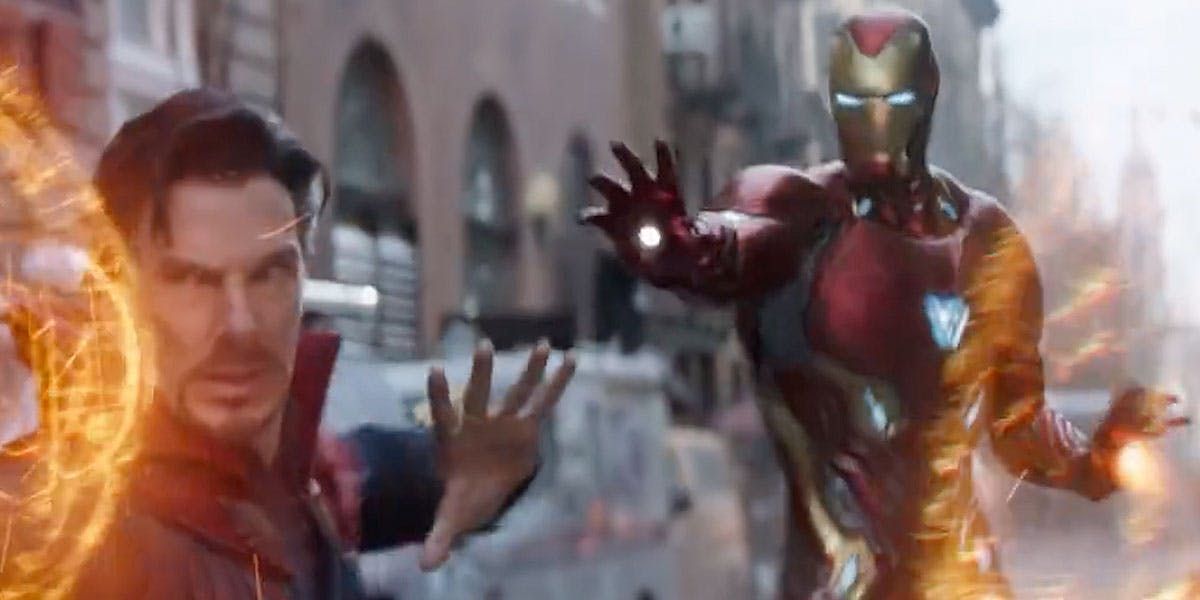
It’s like a mega, mega, mega budget all-action crossover episode of something. The excitement for the viewer is, say, Iron Man and Doctor Strange butting heads or Thor and the Guardians of the Galaxy exchanging comic riffs. It’s not designed for us to learn anything new about these heroes. In fact, the character beats are pretty formulaic. A standard arc generally goes like this: brief individual introduction doing something everyday, a meeting where much plot is quickly exchanged, bickering, a huge battle and some self sacrifice. Repeat. The film does nothing fresh on this formula which Joss Whedon introduced so well in The Avengers. If it ain’t broke, don’t fix it.

The difference with The Avengers was that it felt like a real novelty, and there was a smaller number of characters to bring together (it seems almost timid now to remember the original Avengers gang was only 6-7 strong – it’s almost 20+ now). Each character had more time and we got a much better sense of how their individual personalities affected the other. Here the Russos have to try and deal with the vast number of heroes by effectively breaking them up into 3-4 silos, giving even the most prominent ones probably no more than 20 minutes of screen time.

On top of which, despite the much vaunted “all bets are off” promotion of the movie, the action still has a stakes-free weightlessness to it. Yes some characters die, and while 1-2 of these might well stick, by the end of the film the main question is how many of the deaths will be reversed, not the impact of them. In fact the final sequence (which sees several deaths) slowly carries less and less weight the more you realise these deaths are really serving as a cheeky “how will they get out of that” moment.

Which is the dark secret of Avengers: Infinity War: it’s really nothing more than a trailer for its sequel. At the end of its vast running time – after all the functionally filmed action and odd decent one liner – you realise you have watched an extended prologue for the next film. That’s the one we’ve all been building for. The events of this film, in the long run, are the long road we need to take to get there.

This is not to say the film doesn’t have moments of enjoyment. The spectacle may not be filmed with much more than a derivative traditionalism, but it can’t help but be enjoyable. There isn’t much imagination about the implications of these heroes’ powers, in the way of say X-Men 2, but it’s still impressive to watch. Thor and Captain America get some pretty cool entrances. 

But I got the impression it must have been pretty boring to act in. Most of the vast cast have very little to do except a few one-liners and then punching. The character who most emerges as a three-dimensional figure is Thanos. Josh Brolin’s interpretation of the character as a sort of misguided humanitarian, who feels to do a great right he must do a greater wrong, yearns not for control of the universe but (in a perverse way) to save it. His quest for these stones is built like some sort of Arthurian epic, involving sacrifice and struggle. It would have been easy to make Thanos a sadistic maniac, but making him someone who believes he is doing the right thing is much more interesting. Essentially he’s the main character of the film.

Of the rest those that get the most to do are those with a connection with Thanos. Zoe Saldana as his adopted daughter turned foe Gamora gets some meaty emotional material, as does Chris Pratt as her would-be boyfriend Peter Quill (Pratt is the actor who probably gets the most “actorly” material in the film by far). Paul Bettany as Vision (the robot with an infinity stone in his head) gets to centre a plot that balances self-sacrifice with his love for Wanda Maximoff (Elisabeth Olson pretty good, even if her character oscillates between bad assery and weeping).

For the rest, it’s just their actor’s charisma that carries them through. Robert Downey Jnr gets a touching moment or two (most notably his reaction to another character’s distressed fear on facing death). Benedict Cumberbatch is great value as Strange. Chris Hemsworth gets to continue flexing his comic muscle as Thor. Others like Chris Evans are criminally wasted.

But then their time will come. Because there is another film in the pipeline – and if our heroes still feel slightly like they can survive anything up to and including getting crushed by a moon, it’s because we know that there are still movies to be made, and money for Marvel to take to the bank. And that’s probably the real nemesis of these expansive, bombastic films: the lack of danger is only going to continue while the studio doesn’t want to kill anyone major off. Hopefully that will change, but without it it’s still a film of the invulnerable hitting the inevitable.

Avengers: Infinity War is pretty good – but largely as a spectacle and because it superficially pays off what you were being hyped up to see in its action and character partnerships. But give it a year or so – and repeat viewings – and I think its stock will fall.  Because it doesn’t really do anything that unexpected, and most of its more daring movies are designed with loopholes to undo them. There are enough bright lights to entertain you (and I mostly was) but I don’t think there is much depth for you to swim in when you come back for a second dip.

Black Mass (2015)

Johnny Depp dives into his make-up box in this sup-par wannabe Goodfellas

Director: Scott Cooper

Cast: Johnny Depp (James “Whitey” Bulger), Joel Edgerton (John Connolly), Benedict Cumberbatch (William Bulger), Rory Cochrane (Stephen “The Rifleman” Flemmi), Kevin Bacon (Charles McGuire), Jesse Plemons (Kevin Weeks), Peter Sarsgaard (Brian Halloran), Dakota Johnson (Lindsey Cyr), Corey Stoll (Fred Wyshak), David Harbour (John Morris), Julianne Nicholson (Marianne Connolly), Adam Scott (Robert Fitzpatrick), Brad Carter (John McIntyre), W. Earl Brown (Johnny Martorano)

Well Goodfellas casts a long shadow doesn’t it? Certainly long enough to completely drown Black Mass which, despite some good acting and period detail, never really comes together into something compelling or engrossing or even really that interesting. But you’ve got to admire how often Scott Cooper must have watched Scorsese’s classic. Shame he didn’t bring anything new to the table.

In South Boston in the mid-1970s, James “Whitey” Bulger (Johnny Depp) controls organised crime. With his rule under challenge from rival gangs, Bulger turns informer to the FBI – specifically agent and childhood friend John Connolly (Joel Edgerton) – offering information on his rivals in return for being allowed to take over their business. Inevitably, Bulger exploits the relationship for his own gain – with the increasingly blind-eye of Connolly who becomes more and more embroiled in the underworld. 

So there are good things in this. The period detail is pretty good. There are plenty of good gangster moments, even if they’re the reheated leftovers from everything from The Sopranos to Goodfellas. The low-level gangsters we follow have a slightly different perspective – even if most of their characters are completely interchangeable. It’s interesting that Bulger moved in such legitimate circles as the FBI and his State Senate President brother (well played by Benedict Cumberbatch). But the film never really makes this come together to mean anything. You don’t learn anything, you don’t understand anything new – it’s just a series of events.

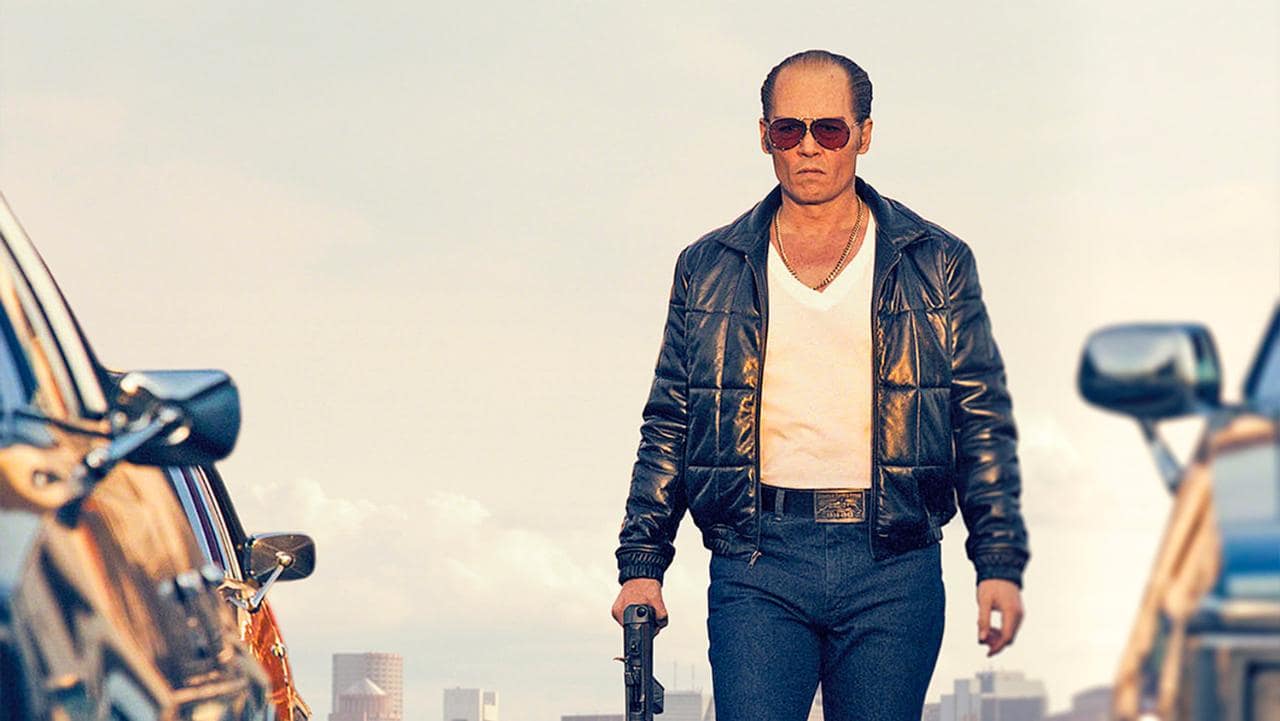
That’s despite, to be fair, a very good performance by Johnny Depp. Sure the part caters to Depp’s Olivier-like love of the dressing-up box – here he sports bad teeth, a bald patch, a paunch and a pair of searing bright-blue contacts that make him look like a Muppet demon – but for all that, he is very good. His natural presence works to make Bulger a leader and he has a swaggering, dry, cruel quality to him that never makes him anything less than unsettling. He also conveys the monstrous moral blankness behind Bulger, using a fig-leaf of loyalty to cover his destruction.

It’s a shame then that he’s not really given anything to do. Too much of the part is reminiscent of other things: from Jack Nicholson in The Departed (to be fair, Bulger was the inspiration for that character), to Joe Pesci’s “Do I amuse you?” speech or his insanity from Casino. Montages as tired as a sleepless night run through the collection of funds and the beating of rivals. It’s just all so predictable. It’s a box ticking exercise. Yawn.

The biggest shame is that, in Connolly, the film has a far more interesting potential lead character. Imagine it repositioned to follow him instead: the semi-chancer, semi-star-struck kid swept up in the glamour of crime. So much more interesting. How far did he turn a blind eye? How far was he essentially an accomplice? Did he feel or know he was doing the wrong thing? Consider Depp’s brilliance in Donnie Brasco and then imagine what he could have made of this Faustian figure: and what an interesting film we could have had.

Instead, good as Edgerton is, the film barely scrapes the surface of his thoughts or motivations. We get beats – and his wife (excellently played by Julianne Nicholson) is clearly disgusted by his gangster friends – but it constantly falls flat as we keep pulling back to Bulger, or internal FBI arguments that tell us nothing. On top of this Bulger’s empire is ham-fistedly explained: it’s never clear what his reach is, what his main crimes are or what his aims are. We see killings but don’t often know why – and a sequence in Miami is so poorly explained I still don’t know what it was about.

The film introduces Bulger’s lieutenants – but reduces them to identikit hangers on. All the flash-back retrospective confessions (a framing device the film uses to very mixed effect) in the world can’t turn them into characters. Even Bulger’s relationship with his patrician brother gets lost in the shuffle – again a film focused on a crime lord and his State Senator brother would have been more interesting.

Black Mass is well made – but its problem is that there is on the edges a far more interesting film that never comes into focus. If they had chosen a different focus we could have had a film worth watching. Instead, like Connolly, the film is seduced away by the dark soul of Bulger. Depp is great – but the film is so in love with him and his transformation that it becomes something completely forgettable.

Thor: Ragnarok (2017)


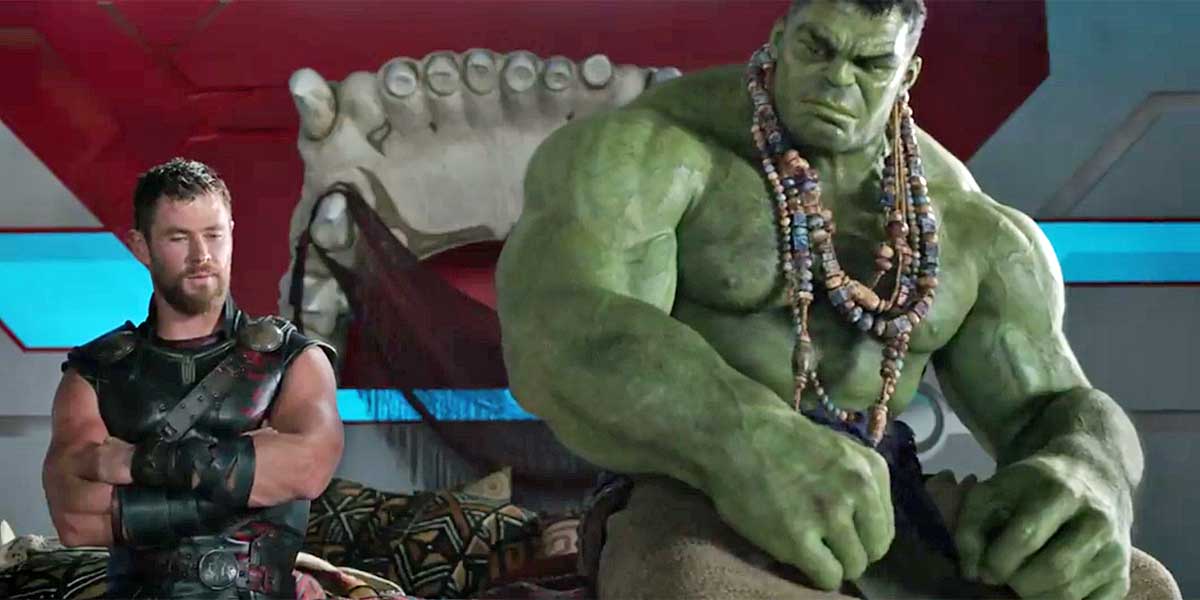
Thor and Hulk: It’s the buddy movie you’ve been waiting for

Director: Taika Waititi

Cast: Chris Hemsworth (Thor), Tom Hiddleston (Loki), Cate Blanchett (Hela), Idris Elba (Heimdall), Jeff Goldblum (Grandmaster), Tessa Thompson (Valkyrie), Karl Urban (Skurge), Mark Ruffalo (Bruce Banner/Hulk), Anthony Hopkins (Odin), Benedict Cumberbatch (Doctor Strange), Rachel House (Topaz), Taika Waititi (Korg)

The Marvel franchise is now on to 17 films. That’s 17 films all in the same universe, with at least three more to come in the next year or so. The weight of franchise backstory has started to feel overbearing, with so many other films to tie into and characters to set up that the individual film itself is left with barely any identity or purpose. How refreshing then to have a film that cuts loose and takes a slightly different tone: a genuine action comedy. Thor: Ragnarok is so tonally different from the other Thor films (let alone the other films in the series) it actually manages to feel like its own beast – it’s as close to a director-led vision as the franchise has got.

Thor (Chris Hemsworth) has been all over the universe, working to stop Ragnarok (the prophesised end of Asgard). Returning to Asgard, he unmasks his troublesome step-brother Loki (Tom Hiddleston) who has been disguised as Odin (Anthony Hopkins). Travelling to Earth to rescue their dying father, they arrive in time to see his death. Unfortunately, this releases their elder sister Hela, Goddess of Death (Cate Blanchett). While Hela ruthlessly conquers Asgard, Thor is trapped on the planet Sakaar and forced to enter a deadly gladiatorial contest – against his Avenger ally the Hulk (Mark Ruffalo) – all while trying to escape back to Asgard to stop Hela.

Thor: Ragnarok has a plot that ambles at points rather than sprints. But this hardly matters, as its main focus is on entertaining the audience. Waititi creates a sort of punk 1980s wildness, mixed with a fun-loving wit. The result is a film with action, and high stakes – but never takes itself too seriously. It perfectly understands how to puncture grandeur or pomposity of the Asgardian gods with a neat one-liner or a bit of everyday conversational inanity (a lot of the latter comes from Waititi himself, hilariously playing chilled out rock gladiator Korg).

Waititi also allows Hemsworth to let rip with his comic timing rip in a way he’s scarcely been allowed to do since Branagh’s original. It drops the faux-Shakespearean seriousness of Thor: The Dark World, and Hemsworth repositions the character in a more relaxed and charming style. From his opening introduction, undercutting the monologing of a fire demon with a dry series of puns while dangling from a ceiling in chains, he finds a neat balance between seriousness and charisma. Waititi is also (like Branagh) not afraid to let Asgard’s mightiest warrior be the butt of a few sight gags – one laugh out loud moment involving a very strong window is a stand out. Hemsworth demonstrates here he’s a far more accomplished comedian (physically and verbally) than he gets credit for.

This more relaxed Thor is perfect for the rock-and-roll feel of the film. Expertly scored (there is particularly fine use of Led Zeppelin’s Immigrant Song) it has a groovy, 1980s feel. The planet Sakaar is a primary-coloured, odd-alien filled, campy explosion of energy and vibrant punky fun. Said planet is run by the Grandmaster, played by Jeff Goldblum at his most Jeff Goldblumiest ever – if you can picture that you’ve got the tone of the whole planet. This neon lit style is reminiscent of everything from Flash Gordon to The Last Starfighter

The film’s loose comic style also allows a series of fun match-ups, from Thor and Loki (a wonderfully weaselly, fun Tom Hiddleston – still one of the best things in this whole franchise), to Thor and Strange (a lovely cameo from Cumberbatch), Thor and Valkyrie (a neat mixture of drunken self-loathing and female Thor-ness from Tessa Thompson) and lastly Thor and Hulk. The latter provides a lot of the film’s comic gold, the Hulk finally turned into some sort of character with achildish vulnerability and swagger (though the film still finds time for a Hulk penis gag). Waititi also throws in some nice call-backs to previous films – the bunch here set themselves up as the Revengers, while there are multiple references to the mantra used to calm the Hulk in Avengers: Age of Ultron – without making it feel in-jokey. 

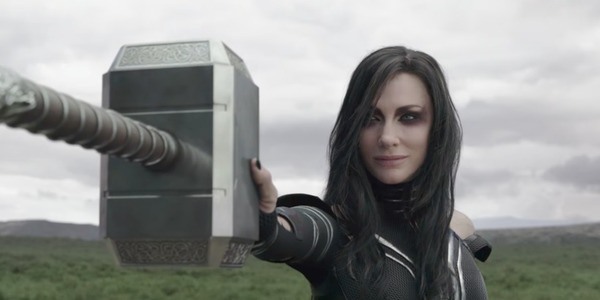
There is so much fun in the film, you almost forget the main plot of the film is fairly heavy-going, end-of-the-world stuff. For a Marvel film there is a large body count of recurring characters (at least four bite the bullet here), while Hela’s plot encompasses mass slaughter and destruction. Scenes with Hela are kept short (structurally the film effectively strands her on Asgard to contain her invincibility), so it’s just as well the part is played with such charismatic dryness and imperious arrogance by Cate Blanchett (easily the best Marvel villain since Loki). She’s ably backed up by Karl Urban, adding a lot of complexity to reluctant cowardly turncoat Skurge. Waititi shoots Hela’s rampage of destruction with an exciting dynamism – it’s an action scene that feels different, no mean feat in a franchise that has had so many fights.

In fact most of the action feels very fresh, the fights never out-stay their welcome, and there are some brilliant visual flourishes – the final battle in particular throws in some almost painterly images as Thor and his allies take on Hela’s zombie army. The arena fight between Hulk and Thor is about a million times more interesting than the dull Hulkbuster battle between Iron Man and Hulk in the past Avengers film as Watiti keeps the focus on character rather than pummelling. The film also manages to keep the stakes high – there are always innocent people our heroes fight to protect.

Thor: Ragnarok might well be the most entertaining, fun film Marvel has produced. It’s almost certainly the best Thor film. While The Dark World failed dismally to build on the mixture of earnestness and comedy in Branagh’s original, this one feels like a natural progression of the first, amping everything up into a vibrant, 1980s styled cocktail of action and fun. It’s terrifically entertaining, well paced, anchored in characters we care about, and it just wants to entertain the viewer. You’d have to be pretty cold for it not to succeed.

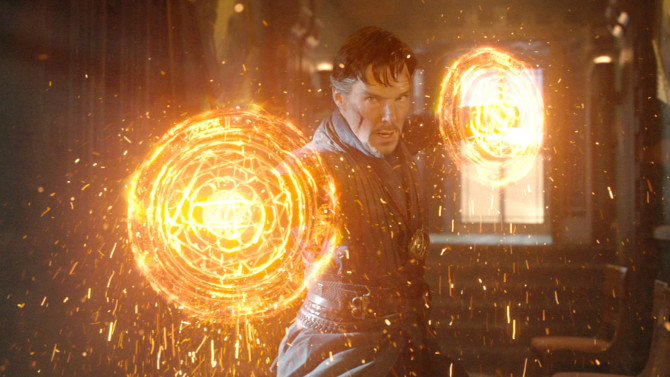
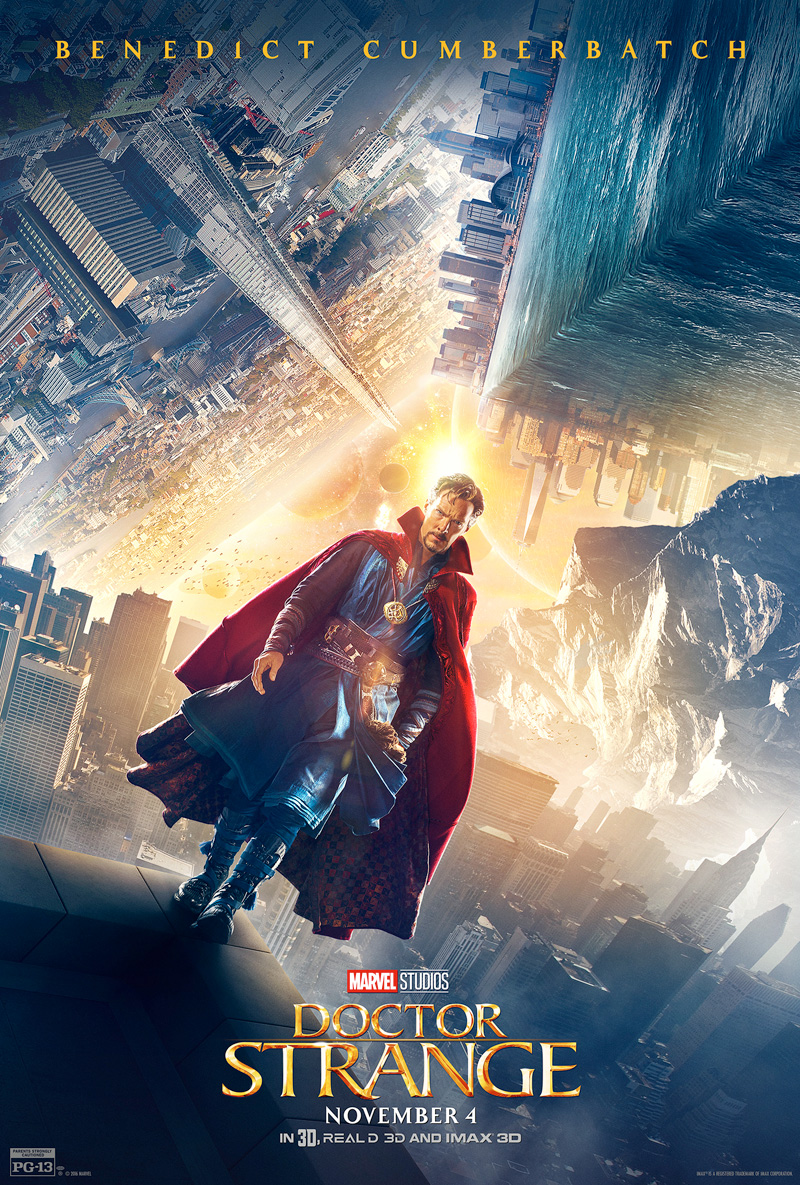
Doctor Strange (2016)


Benedict Cumberbatch goes into battle with magic. Silly but in a good way.

Director: Scott Derrickson

Cast: Benedict Cumberbatch (Dr Stephen Strange), Chiwetel Ejiofor (Karl Mordo), Rachel McAdams (Christine Palmer), Mads Mikkelsen (Kaecilius), Tilda Swinton (The Ancient One), Benedict Wong (Wong), Michael Stuhlbarg (Dr Nicodemus West), Benjamin Bratt (Jonathan Pangborn)

Arrogant surgeon (is there any other kind in the movies?) Stephen Strange (Benedict Cumberbatch) loses the fine motor control of his hands after a car crash caused by his reckless driving. With science unable to find a cure, he travels across the world to find another solution, eventually joining a secret group of sorcerers, led by The Ancient One (Tilda Swinton), who use energy from parallel universes to perform feats of magic in our world. Trained by Karl Mordo (Chiwetel Ejiofor) he is absorbed into a clash between the sorcerers and a rogue former protégé of The Ancient One, Kaecilius (Mads Mikkelsen) who wants to destroy the boundaries between worlds and unleash chaos.

In a film franchise that threatens to get increasingly samey, Doctor Strange is in many ways a breath of fresh air. Its twisting, mind-bending special effects (part Escher, part Inception) are stunning and showcase a great deal of visual and narrative imagination in the film, immediately making it look different from the dozens of city-smashing films we’ve seen in the Marvel franchise. It’s also told with a fair amount of wit, tongue-in-cheek beats and some lovely sight gags (Strange’s Cloak of Levitation is clearly inspired by the Carpet from Aladdin). This lightness of touch is essential to stop this concept feeling silly: with a more po-faced style this story, full of magic and things like “the Eye of Agamatto”, would have stumbled over its own ridiculousness.

This is however pretty close to being the best comic-book origins film, and certainly in the top five of this franchise. For a start, despite the visual glory, it feels like a focused more personal story: there are only really 6-7 characters (compare that to the sprawling cast of Captain America: Civil War), and the real heart of the film is the lead character’s struggle to overcome an existential crisis and find a new purpose while rediscovering his humanity. Even the final confrontation is a spin on the formula, avoiding city-wrecking super-punches in favour of intelligence and humour saving the day. It still crams in the action, and the characters are still cartoons made flesh, but at least they have been given a real depth here. There is an emotional weight to the story that makes you care about Strange and his world.

No actor right now is better able to embody intellectual brilliance matched with cool arrogance and societal disconnection than Benedict Cumberbatch. So in many ways, Strange is a part that falls well within his comfort zone. But Cumberbatch shows he can carry a major motion picture by making Strange a charismatic lead who grows and develops. Strange is deliberately unlikeable at first, but Cumberbatch invests him with an underlying vulnerability and a cocky charm that is increasingly broadened and shaded as the film progresses. Almost without realising it, you find yourself actually rather liking him halfway through (while still happy to give him a smack in the mouth for his cockiness). Cumberbatch is in almost every scene and carries the film effortlessly.

The film is dominated by it’s lead character, but gives moments to the rest of the cast. Tilda Swinton overcomes the controversy of her casting by investing The Ancient One with both a serene wisdom with dark hints of anger and impatience bubbling under the surface. Ejiofor is good as an increasingly disillusioned mentor and Wong has some great comic beats. Mads Mikkelsen, one of the greatest actors in the world, is rather wasted as a villain who never becomes quite as interesting as you’d hope. Most misused is Rachael McAdams, whose character serves very little purpose other than “ex-girlfriend” – even the director, in an interview, described her role as being there to love him, so that we can see why we should love him.

It’s still a Marvel film, and it still follows the Marvel formula, however newly presented it might be. The arc of despair, rejection, slow progress, revelation, disillusionment, rallying and overcoming personal problems is pretty recognisable from everything from Thor to Iron Man. But it is enough of an inversion, it’s got a good enough script, it’s directed with enough focus on character as well as action, and it has a sufficiently good leading actor to lift and elevate the whole idea into something that feels richer while keeping it entertaining. It’s a very good comic book movie, and it’s trying to do something different, And it mostly succeeds.

The Hobbit: The Desolation of Smaug (2013)


Martin Freeman does some good work in one of the rare moments where the film actually does a scene from the original book

Director: Peter Jackson

Cast: Martin Freeman (Bilbo Baggins), Ian McKellen (Gandalf), Richard Armitage (Thorin Oakenshield), Benedict Cumberbatch (Smaug/Necromancer), Evangeline Lilly (Tauriel), Luke Evans (Bard), Lee Pace (Thranduil), Stephen Fry (Master of Lake Town), Orlando Bloom (Legolas), Graham McTavish (Dwalin), Ken Stott (Balin), Aidan Turner (Kili), James Nesbitt (Bofur)

The Hobbit films are an interesting opportunity to watch a team try to recapture lightening in a bottle. The Lord of the Rings films were not just a hit – they were a cultural phenomenon and changed the lives of nearly everyone involved in their production. For many of the actors it will be the first line of their obituary. The Hobbit followed the same shooting plan (two years in New Zealand, three films shot back to back) but somehow it didn’t manage to recapture the same magic. It still made squillions of dollars of course, but it’s not as loved as the first trilogy.

Of course the main problem with this is that the three films were (let’s be honest) a rather bloated inflation of a pretty short kids’ book into almost 8 hours of film making. The Desolation of Smaug is one of the biggest victims of this aggressive padding, as action sequences are crammed into to fill up the running time, at the cost of those moments of character development that made the first trilogy such a rewarding investment (and even made the first film an enjoyable experience for all its faults).

This film is all too aware that it is a “big film” and a guaranteed box-office smash, so gives us the action it thinks the punters want. Strangely it all feels more like a contractual obligation (“Peter we need more Tolkien. Three more to be exact. Do what you have to do!”) – what it probably needed (as did the whole trilogy) is a new pair of eyes on it, a fresh take, rather than Jackson having to go back to the well. To be fair Jackson acknowledged this, and tried to hire Guillarmo Del Toro to direct the trilogy (still credited as creative consultant).

The action sequences in this film bizarrely expand moments from the book with overblown padding – they are invariably the duller parts of the film. In that I’ll include the ludicrous semi-comic barrel escape of the dwarves (turned from floating down the river to a chase orgy of Dwarves-Elves-Orc conflict) and the overextended attempt to dispose of Smaug in the Lonely Mountain (again marked by unbelievable acts of athleticism and derring-do which seem so out of step I wonder if we are meant to take them seriously). Add in the huge amount of action given to Jackson-favourite Legolas and we have an awful lot of dull, over-choreographed action padding out a very slim story (no more than 6 chapters of the original book). What the makers seem to feel are the film’s tentpole highlights are in fact the sags in the fabric.

It’s a shame because the moments where the film does hew more closely to the story of the book are easily the best bits. The confrontation between Bilbo and Smaug is the film’s real highlight (helped by Benedict Cumberbatch’s superb vocal work as the self-satisfied fire breather), and (with some tweaks) it’s pretty much straight out of the book. The material in Laketown is faithful enough to the tone of the book, while adding depth to its story and the life of the town so that you invest in its fate (Luke Evans does a good job with surprisingly little as Bard). The inclusion of Beorn the shapeshifter I could have done without (one for the fans) and stupid as the spider attack is, at least it was in the original book. But the more the film starts to focus away from the dwarf plotline and onto elf politics or the terribly vague rise of Sauron story, the less it holds your attention.

Bless him, by 2013 Jackson was probably the only person on the planet excited by seeing Orlando Bloom in a film. The acrobatic elf has all the depth and interest of a cartoon character, while his now heavily over choreographed fight scenes seem to be taking place in a different universe from the first trilogy. In fact, all the scenes involving the elves are deathly dull and add very little to the plot, little more than limp attempts to tie in the LOTR story more fully into The Hobbit. This focus on Legolas also steals screen time from the dwarves, making many of them little more than extras in their own story.

The problem with ramming so much action and extra plot in to link the films into LOTR is that we don’t get the time with the characters we need in order to feel the necessary concern for them. The main problem here is that there are too many characters. There are three people who can claim to be the lead in this film (Bilbo, Gandalf and Thorin). Behind them there are at least 10 prominent supporting characters and behind them at least another 12 small but important characters. That’s 25 characters the film needs to be juggle – in other words about 6.5 minutes each if you divide it equally. Jackson does a decent job with juggling these it has to be said – but it’s still way too many. I challenge any non-Tolkien fan to successfully identify pictures of all 13 dwarves without prompts.

It’s a shame as there are some very good performances in this. Martin Freeman continues to be perfect for the lead role, decent, brave and resourceful (but with small flashes of “ring addiction”); Ian McKellen of course just is Gandalf; controversial as her extended storyline is, I rather liked Evangeline Lilly’s performance; Ken Stott does a lot with limited screen time as Balin. Richard Armitage demonstrates his star charisma again as Thorin, a complex part he invests with a Shakespearean gravitas: in this film Thorin is at times kindly, stubborn, generous, selfish, patient, temperamental, a warm friend, a deeply suspicious comrade – Armitage holds all these threads together brilliantly. Honestly the guy is an absolute star.

Overall, I enjoyed Desolation much more than I remember doing in the cinema. Perhaps it helps that I’ve seen all three films, and understand more where this film is going. It’s still an overblown, overstuffed piece of work that doesn’t have the sense of soul that LOTR has. It mistakes high octane action for human interest and struggles to make all the characters in the film make an impression. A braver adaptation would have reduced the number of dwarves – but I can just imagine the riot from the book fans… What this film really is, of course, is 4-5 really good scenes, surrounded by padding to boost the running time – but those scenes (Smaug and Bilbo, Thorin confronting the people of Laketown, the few quiet talking bits) are very well done, and they just about make the film work. On repeated viewings you’ll find yourself drifting out to make a cuppa during the barrel chase. But you’ll certainly be in your seat when Bilbo first enters the Lonely Mountain’s treasure store. And its miles better than what was to come.