Tag: Bernard Hill

Titanic (1997)

Titanic (1997)

Cameron’s film is easy to knock, but is a triumph of romance, scale and real-life tragedy

Director: James Cameron

Cast: Leonardo DiCaprio (Jack Dawson), Kate Winslet (Rose DeWitt Bukater), Billy Zane (Cal Hockley), Frances Fisher (Ruth DeWitt Bukater), Kathy Bates (Molly Brown), Gloria Stuart (Old Rose), Bill Paxton (Brock Lovett), Suzy Amis (Lizzy Calvert), David Warner (Spicer Lovejoy), Danny Nucci (Fabrizio De Rossi), Victor Garber (Thomas Andrews), Bernard Hill (Captain Smith), Jonathan Hyde (J Bruce Ismay)

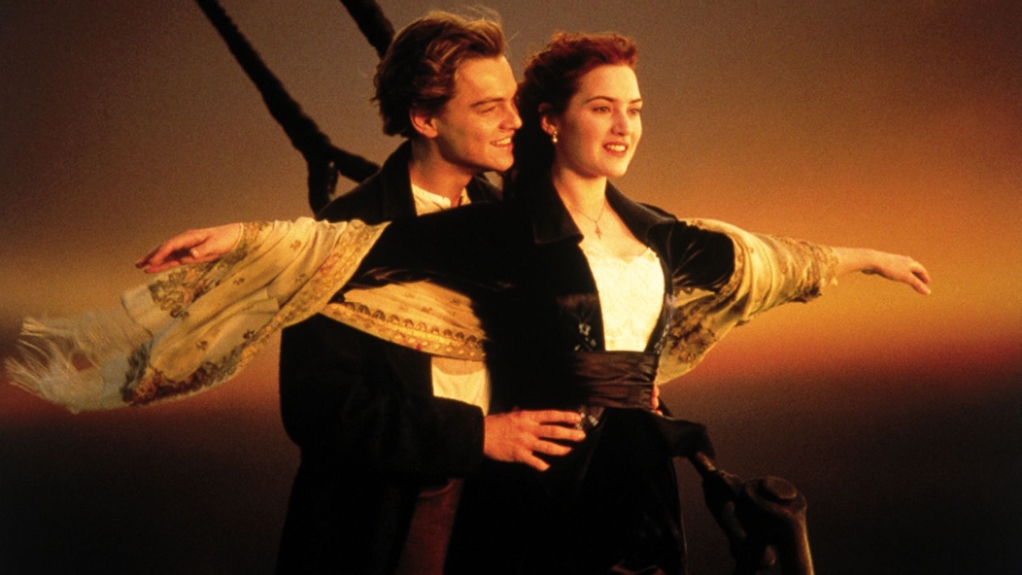
Get on any ship, and I guarantee you’ll see two people at the bow standing, one in front of the other, with their arms stretched out. If that doesn’t tell you something about the lasting impact of Titanic nothing will. Titanic was a sensation: top of the box office for months with the sort of repeat-viewing producers dream of; My Heart Will Go On went platinum and half the world was in love with Leonardo DiCaprio. It won 11 Oscars, made a billion dollars and is a film everyone knows even if (hard to believe) they ain’t seen it. James Cameron took an enormous punt on TitanicRomeo and Juliet meets disaster movie on legendary ship – and it paid off in spades. Because, no matter your cynicism, you can’t deny he created a film millions of people invested in to an extraordinary scale, staged with the epic sweep, gorgeous detail and pounding disaster thrills that channelled David Lean, Luchino Visconti and Irwin Allen all at once.

Rose DeWitt Bukater (Kate Winslet) is destined for a life of dutiful, unimaginative marriage with spoilt millionaire Cal Hockley (Billy Zane) when she boards Titanic as a first-class passenger in Liverpool on 10 April 1912. Also boarding the ship (but in steerage) is drifter and would-be artist Jack Dawson (Leonardo DiCaprio). When he saves her from taking her own life by jumping from the ship, they form a bond which flourishes into a love that will change both their lives. But not as much as the iceberg the ship is ploughing relentlessly towards across the Atlantic.

It’s very easy to take a pop at Titanic. Its romance sometimes succumbs to Mills and Boon cliché and Cameron’s script has more than its fair share of clunky lines (it’s one of those rare Best Picture winners with no screenplay nomination). Plenty of people hated it in a fit of inverted snobbery as a whole generation took this modern romance to its heart. But Titanic reveals the truth of the magic of movies: it uses a traditional romance to build our emotional investment in the sinking and the lives of ordinary passengers, more successfully than any other Titanicfilm had before or since.

Cameron knew the mountain he had to overcome. After all, this was the most famous disaster since Pompeii: where was the tension? So, he opens with a modern-day setting, a treasure hunt among the real ship’s ruins, with the hilariously named Brock Lovett (a game Bill Paxton in a thankless role) searching for a priceless diamond, the Heart of the Ocean. His only link: the older Rose (a plucked-from-retirement performance of charm and hidden fire from 87-year-old Gloria Stuart), who becomes our window to the past. This allows the audience to be told the geekily excited “ain’t it cool” details of the sinking with the same sort of distance we’re used to thinking about it. The film then becomes a lesson in making us learn, like Brock, this wasn’t an anecdote but a horrific disaster that killed 1,500 real people (made worse because we know exactly what’s going to happen to this ship every step of the way). The MacGuffin is intended to look as trivial as it does by the film’s end.

His key tool for this was his Romeo and Juliet love story told, for all its airport-novel lack of originality, with a vibrant, earnest intensity. Helped by fantastic chemistry between two talented actors, you have to work hard not to care for Rose and Jack (no accident those initials). And through their eyes, the whole ship comes to life, Just as the special effects camera sweep through the ruins, turns it from a ghost shop into a living breathing place, where ordinary, real-life dramas play out in every corner. It’s a perfectly judged entry point for bringing history to compelling life, playing on emotions we’ve all felt: love and fear of death.

The film splits neatly into two acts. The first is the romance and, whatever you say, it’s a cinematic romance for the ages in its old-school sweep. As we watch them bounce round the ship, make each other laugh, dance and fall in love, the utter lack of cynicism is really winning. It’s so overwhelmingly genuine and heartfelt, you can’t help feeling it yourself. Both help each other find new depths: for Rose, the willingness to embrace her own choices, for Jack a maturity and responsibility he’s lacked. Bathed in golden cinematic light and backed by James Horner’s superb score, they become two people we really invest in being together. It’s so earnest and honest it even gets away with otherwise ridiculous scenes like “draw me like one of your French girls Jack”.

Both the leads carry-off it off superbly. No mean feat considering the challenge of making the film – not least being submerged for weeks in freezing cold water during night shoots. Kate Winslet makes Rose burst with life from the depths of fear and doubt, effortlessly carrying much of the movie. It’s often overlooked that Rose drives much of the pace of the romance, as well as clearly being the more sexually and romantically experienced partner. Leonardo DiCaprio – who found it a burden for years, as it turned him from proto-DeNiro to heartthrob pin-up – gives an infectious energy to Jack’s fortune-cookie mantras, while growing in authority as the film progresses towards disaster.

Cameron fills his golden-hued recreated Titanic with the sort of detail we’ve not seen since The Leopard. Sure, his view of the haves and have-nots is hardly subtle (from ruthlessly posh, heartless Brits to plucky, happy-go-lucky Irish working-class), but it makes it very easy to relate to the injustice, bullying and casual snobbery. In Rose’s fiancée Cal, Billy Zane unselfishly plays an utter rotter: a coward, a snob who mocks Picasso and has never heard of Freud, a bully who treats Rose like a pet dog and puts his own needs (and safety) first at every turn. Titanic might be a ship of goodies and baddies (most egregiously in its clumsy slandering of First Officer Murdoch, a clumsy mis-step Cameron later apologised to Murdoch’s family for), but it’s undeniably alive.

It’s that quality of life which makes the sinking of the ship so horrifyingly intense. Cameron’s extraordinary second-half of the film – effectively a souped-up, horrifying remake of A Night to Remember (including quoting shots from that film) – never lets us treat this like a historical curiosity. Instead, it hammers home in intense, tragic detail, the shocking loss of life and the desperate, futile attempts of so many people to survive. Told in close to real-time, superbly edited and practically dripping in freezing water, it’s terrifying in its unstoppable intensity. Suddenly the scale of this mighty ship shrinks into an ever smaller world of fear. Events advance with horrifying speed, as the ship slowly then terribly quickly, disappears, made worse by our knowing in advance every step.

Cameron breathes life into dozens of small tragedies that surround Titanic. The band that played on. The Irish mother who puts her children to bed, knowing they cannot escape. The wealthy elderly couple who lie together while the water washes up around them. The hysterical children separated from their weeping father who remains on board. The priest who spends his dying moments comforting his flock. The camera catches moments of terror in the eyes of people we have seen fleetingly in the film. Titanic drains any sense of perverse excitement at the disaster from you. By the time the survivors are pleading for rescue in the freezing Atlantic, you’ll be as shell-shocked and shaken as the witnesses in the lifeboats.

Watch Titanic with your cynicism parked, and it is an extraordinary piece of epic, romantic film-making. The cinematography, production design, costumes and editing are all perfect and James Horner’s inspiring score takes the film’s slightly mushy romance to a higher level. There are great performances from the likes of Kathy Bates and Victor Garber. And the second half grips like a horrific vice, never letting go. There’s a reason this film gripped the hearts of the whole world in 1997: it knows exactly what it is trying to do and excels at doing it. And never, in any film, has a historical disaster hit a viewer with as much punch as Titanic does.

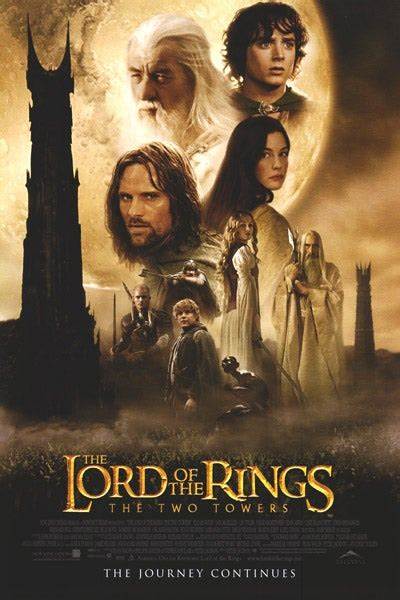
The Lord of the Rings: The Two Towers (2002)

Peter Jackson’s second film in the Lord of the Rings trilogy is another triumph

Director: Peter Jackson

Cast: Elijah Wood (Frodo Baggins), Ian McKellen (Gandalf), Viggo Mortensen (Aragorn), Sean Astin (Samwise Gamgee), Liv Tyler (Arwen), Andy Serkis (Gollum), Billy Boyd (Peregrin Took), Dominic Monaghan (Meriadoc Brandybuck), John Rhys-Davies (Gimli/Treebeard), Orlando Bloom (Legolas), Cate Blanchett (Galadriel), Bernard Hill (King Theoden), Christopher Lee (Saruman), Hugo Weaving (Elrond), Miranda Otto (Eowyn), David Wenham (Faramir), Brad Dourif (Grima Wormtongue), Karl Urban (Eomer), Sean Bean (Boromir), Craig Parker (Haldir)

After Fellowship of the Ring we knew we were in safe hands. So, the real question was would The Two Towers continue to win over long-term fans and new-comers to Middle Earth? Would Jackson pull off the difficult middle chapter, resolving some things, but leaving us with enough tantalising hooks? He succeeded: for many The Two Towers is their favourite film in the series.

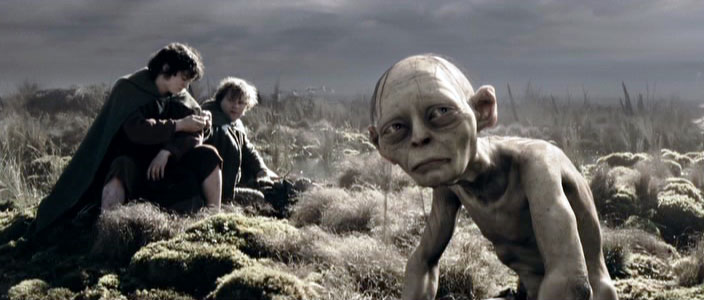
The fellowship is broken. Boromir (Sean Bean) and Gandalf (Ian McKellen) are dead. Frodo (Elijah Wood) and Sam (Sean Astin) are making their own way to Mordor – now guided by the former ring-bearer, the dangerously untrustworthy and unbalanced Gollum (Andy Serkis). Aragorn (Viggo Mortensen), Legolas (Orlando Bloom) and Gimli (John Rhys-Davies) are tearing across the land of the kingdom of Rohan following the orcs who kidnapped Merry (Dominic Monaghan) and Pippin (Billy Boyd). Meanwhile, the dark forces of Saruman (Christopher Lee) are moving against Rohan and its sickly king Theoden (Bernard Hill), determined to destroy it. War has truly come to Middle Earth – but can the return of an old friend help to turn the tide? And will Frodo and Sam find safety or danger when they meet Boromir’s brother Faramir (David Wenham)?

Hard to believe considering the scale of the first film, but Jackson’s second Tolkien adventure ramps up the scale even further. It continues the immersive capturing of the look and feel of the novels, while reconceptualising it into something closer to a stirring, gripping action epic. The Two Towersis awe-inspring in its scale and world-creation, building towards one of the all-time great cinematic battles as the few of Rohan hold out against the massed forces of Saruman at Helm’s Deep.

Just as in Fellowship the pace and tension is heightened. With the heroes split into three groups, there are a number of balls to juggle. But Jackson and co-screenwriters Fran Walsh and Phillipa Boyens superbly intercut the more linear book chapters – feeling free to shift orders, motivations and inventing their own narrative flourishes to link events together. The film adapts around 13 of the novel’s twenty chapters (the rest being assigned to the other films), but is so perfectly paced it never feels overstretched or disjointed. They even add more material involving Saruman, making this arch-manipulator a larger presence in the film than in the novel.

The Two Towers radically changes many of the events of the novel – but in most cases (except one) this is done with such respect for Tolkien that even most fans overlooked them. So, it hardly matters Theoden’s motivations for making a stand at Helm’s Deep have radically changed or that the films add warg action or has Aragorn presumed dead at the halfway point. Elves turning up to fight at Helm’s Deep is such a “Hurrah” moment, only the most extreme Tolkien purist could object (they would have objected a lot more to the original plan to have Arwen fight there). Merry and Pippin’s interaction with the Ents (living trees) are re-purposed to give them greater agency.

In fact, the changes to Faramir were the only ones anyone objected. In the novel Faramir is pure-of-heart and untempted by the Ring. With much of the novel’s Frodo material transferred to The Return of the King, Jackson, Walsh and Boyens needed to make Faramir “an obstacle”. Cinematically, the idea of Faramir trying to take the Ring to Gondor – motivated by the urge to win the affection of his distant father – made perfect sense (and Wenham delivers the character very well).

But for many book fans, this was a travesty of a beloved character (for all that Faramir eventually proves his quality). I’ve never met a book fan who wasn’t displeased by “movie Faramir”. For those familiar with the films, there won’t be a problem – but I can see the point. The character is clearly, in a subtle way, different from the more whimsical and unsullied man the book presents.

If there is one element of Tolkien Jackson, Walsh and Boyens are not interested in, it’s Tolkien’s whimsy and idea of characters as paragons (or parAragorns). For the film, the conflicted Boromir is more interesting and sympathetic than goodie-two-shoes Faramir. By contrast, to Tolkien Faramir was an ideal and Boromir a shadow of the martial blowhards who led millions to death in the trenches. Tolkien wanted heroes who were more certain and perfect. The films are about the struggles people face with doing their duty, questioning their purpose. The films are not about questions of spiritualty and moral purity. Tolkien gives over long chapters to the spirituality of the Ents and one short one to Helm’s Deep – that balance is completely flipped here.

But the advantage is that the idea of true heroism being conquering your own doubts pays off hugely in the adaptation. Aragorn – a superb and hugely charismatic Viggo Mortensen, literally sweating heroism and poetic sensibility – has his character arc improved by the film. In the book, he has not doubt at all. The film establishes his reluctance to lead and unwillingness to acknowledge he is of men. From seeing only the weakness of men, he slowly identifies with them. It’s a conscious decision for him to fight at Helm’s Deep and the battle sees him finally accepting leadership. It’s a richness not found in the novel.

Of course, battles are more compelling on screen than the page. Helm’s Deep is perhaps the greatest battle on screen, a Kurosawa-inspired, rain-splatted masterpiece, perfectly mixing character beats and action. It never forgets that we care about people not action, so rarely more than thirty seconds go by without one of our heroes front-and-centre. Shots of refugees establish the stakes, the costs of war are laid shockingly bare and the battle is crammed full of awe-inspiring shots of mayhem and martial prowess. You can’t not be excited by this superbly choreographed epic, with just the right level of Jackson’s pulpish-gore background laid on.

But this is not just a film about a battle. As always, every beat is perfectly worked – even if the Ents material suffers from the reduced interest from the creative team. The opening sequence expanding the battle between Gandalf and the Balrog is jaw-dropping. The world of Rohan is created beautifully. Bernard Hill’s Theoden is plagued with self-doubt. Miranda Otto is very good as a woman who wants to prove her place in a man’s world (even if the hinted romantic sub plot between her and Aragorn feels a little forced).

But the biggest magic in the film, and its most special effect, might just be Gollum. While the computer wizardry to create the character is astounding, it works because the acting behind it is sublime. Serkis invented a whole school of acting in motion capture. The screenwriters expand the novel’s conflicted psyche and explores even more the character’s split personality – Gollum (the Ring dominated side) and Smeagol (the timid but dangerous side), both made distinctive by Serkis. Jackson’s most bravura scene might be one of his most simple, a two-shot argument between the two sides, that sees Serkis switch personality with each cut. It’s a superb combination of cinematic language and acting skill.

The Two Towers is superb film-making, with music, photography, editing and design all faultless. The acting is again brilliant – Wood, McKellen, Astin, Tyler as well as those mentioned above. But it’s also a brilliant adaptation of a novel, making changes to increase tension and drama and carefully selecting the elements that will work most effectively on screen. It’s closing battle is one for the ages, but the entire film is a perfectly paced epic, with a growing sense of danger and doom that ends on a beat of quiet hope. This series is a thing of beauty.

The Bounty (1984)

The Bounty (1984)

Hopkins and Gibson present a more historically-accurate Bounty movie that’s serious but solid

Director: Roger Donaldson

Cast: Mel Gibson (Fletcher Christian), Anthony Hopkins (Lt William Bligh), Laurence Olivier (Admiral Hood), Edward Fox (Captain Greetham), Daniel Day-Lewis (John Fryer), Bernard Hill (William Cole), Phil Davis (Edward Young), Liam Neeson (Charles Churchill), Wi Kuku Kaa (King Tynah), Tevaite Vernette (Mauatua), Philip Martin Brown (John Adams), Simon Chandler (David Nelson)

The story of the mutiny on The Bounty has intrigued for centuries. It’s been made into plays, novels and no fewer than three films. Most versions have been inspired by a 1932 novel that painted Bligh as an ogre and Christian as a matinee idol. That image was cemented by the classic Best Picture winning Laughton/Gable version. The real story is far more intriguing – and operates much more in shades of grey – and this 1984 film tries to find a middle ground, with mixed success.

In real life, Bligh was a prickly, difficult but fundamentally decent man, who had worked his way up the naval ranks through merit. He was a superb sailor – as seen by his feat of navigating a small open boat of loyalists over hundreds of miles back to a British port. Cleared of any guilt for the mutiny, he had a successful career and retired as Vice Admiral. Fletcher Christian, on the other hand, was an entitled young man who owed everything to his rich family, rather than merit. The truth has been lost in fictionalised versions who were devil and saint. The truth was far more complex.

This film was a long-standing dream of David Lean, who planned the film for many years, before pulling out at the last moment. The script was written by long-time collaborator Robert Bolt (although ill health meant it was finished by an uncredited Melvyn Bragg). Producer Dino de Laurentis – not wanting to write off the money invested – bought in Australian Roger Donaldson to direct. The final product is a competent, if uninspired, middle-brow history film with a slight air of stodge, and a haunting – if incredibly 80s – electronic score from Vangelis. Where the film really lucked out is the superb cast of actors assembled, with Gibson on the cusp of mega stardom and the cast stuffed with future Oscar winners and nominees.

Anthony Hopkins had been attached to the film for almost seven years, and his carefully researched performance as Bligh is what really gives makes the film work. He gets closer to the personality of the real Bligh than anyone else ever has. Awkward, shy, uneasy with men under his command, insecure at his poor background and the West Country burr to his accent, Hopkins’ Bligh is a world away from a bad man. But he is a demanding and rigid leader, who inspires fear but not respect. He’s far from cruel, but he’s short-tempered, inflexible and has trouble empathising. All too often, he relies on his position alone to ensure obedience, rather than building respect. You sympathise with him, at the same time becoming deeply frustrated at his intransigence. You can understand why many would find him an extremely difficult man to work with (let alone work for).

Fletcher Christian is young, naïve and impetuous, a man whose experiences in Tahiti lead him to become surly and impatient with the confines of a naval life. Gibson later said he felt the film didn’t go far enough to depict Christian as selfish and motivated by a desire for the ‘good life’, and the film does try to show him standing up for the crew against Bligh’s demands for perfection. But Gibson is willing to embrace Christian’s darkness. He hurls himself into the (historically attested) near mental collapse, consumed with violent and unpredictable emotion, that Christian demonstrated during the mutiny, losing all control of himself in an explosion of self-pity and frustration.

The film’s highpoints revolve invariably around these actors. Hopkins’ demanding Bligh sets the tone on the ship. The roots of the mutiny can be seen in Bligh’s public bawling out (and demotion) of his first officer Mr Fryer (a disdainful Daniel Day-Lewis) in front of the entire ship, setting a precedent for disrespect. Every action he intends to build spirit and health in the crew has the exact opposite effect (from pushing them to excel, to enforced dancing sessions for exercise). Hopkins is perfect as man believing he is acting for the best but constantly getting the tone wrong, either too distant and reserved to inspire affection, or too enraged to inspire loyalty. Similarly Gibson, in the less intriguing part, really sells the growing self-absorption of Christian, especially his feckless weakness, easily manipulated into actions that go a step beyond his desires (Phil Davis is very good as a darkly Iago-ish Ned Young, using Christian’s popularity to his own ends).

However, the film itself is a little too traditional. Using Bligh’s trial (all captains who lost their ship were placed on trial to judge their responsibility) as a framing device brings us slightly too many interjections of the “and then you did this” variety – even if it allows actors as impressive as Olivier and Edward Fox to narrate us through the film. This stodgy structure carries us into a narrative that is professionally handled but lacks inspiration, ticking off events but not giving them a force outside of the performances of the actors. The film is competently but not inspiringly made, and never quite captures the sense of the epic that the location and scale should bring.

Perhaps this is because a true-to-life version of the mutiny is a little less traditionally dramatic. Despite some truly impressive performances from the leads (and the rest of the superbly chosen cast), it never quite shakes off the feeling of being a history lesson.