Tag: Bill Paxton

Titanic (1997)

Titanic (1997)

Cameron’s film is easy to knock, but is a triumph of romance, scale and real-life tragedy

Director: James Cameron

Cast: Leonardo DiCaprio (Jack Dawson), Kate Winslet (Rose DeWitt Bukater), Billy Zane (Cal Hockley), Frances Fisher (Ruth DeWitt Bukater), Kathy Bates (Molly Brown), Gloria Stuart (Old Rose), Bill Paxton (Brock Lovett), Suzy Amis (Lizzy Calvert), David Warner (Spicer Lovejoy), Danny Nucci (Fabrizio De Rossi), Victor Garber (Thomas Andrews), Bernard Hill (Captain Smith), Jonathan Hyde (J Bruce Ismay)

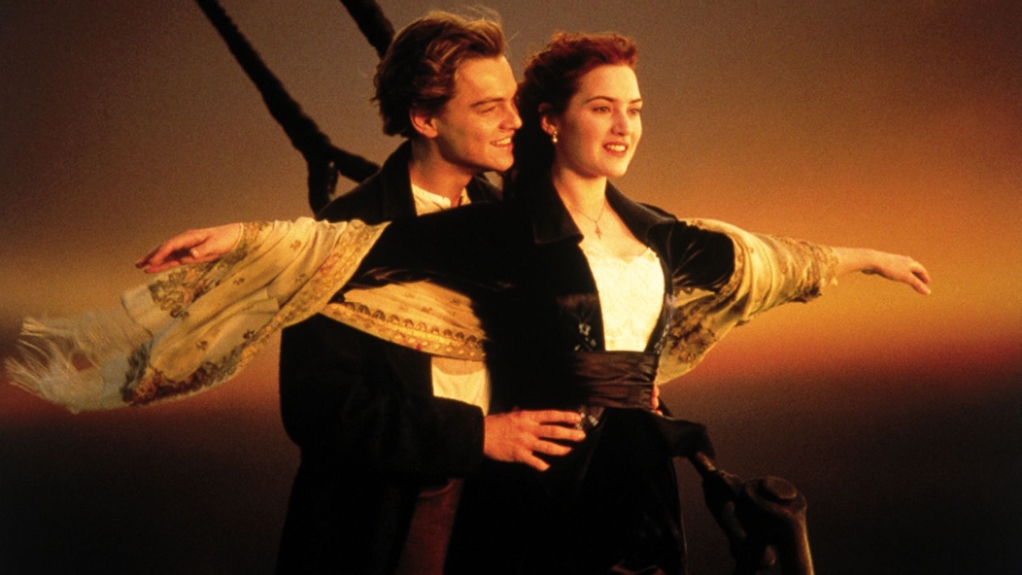
Get on any ship, and I guarantee you’ll see two people at the bow standing, one in front of the other, with their arms stretched out. If that doesn’t tell you something about the lasting impact of Titanic nothing will. Titanic was a sensation: top of the box office for months with the sort of repeat-viewing producers dream of; My Heart Will Go On went platinum and half the world was in love with Leonardo DiCaprio. It won 11 Oscars, made a billion dollars and is a film everyone knows even if (hard to believe) they ain’t seen it. James Cameron took an enormous punt on TitanicRomeo and Juliet meets disaster movie on legendary ship – and it paid off in spades. Because, no matter your cynicism, you can’t deny he created a film millions of people invested in to an extraordinary scale, staged with the epic sweep, gorgeous detail and pounding disaster thrills that channelled David Lean, Luchino Visconti and Irwin Allen all at once.

Rose DeWitt Bukater (Kate Winslet) is destined for a life of dutiful, unimaginative marriage with spoilt millionaire Cal Hockley (Billy Zane) when she boards Titanic as a first-class passenger in Liverpool on 10 April 1912. Also boarding the ship (but in steerage) is drifter and would-be artist Jack Dawson (Leonardo DiCaprio). When he saves her from taking her own life by jumping from the ship, they form a bond which flourishes into a love that will change both their lives. But not as much as the iceberg the ship is ploughing relentlessly towards across the Atlantic.

It’s very easy to take a pop at Titanic. Its romance sometimes succumbs to Mills and Boon cliché and Cameron’s script has more than its fair share of clunky lines (it’s one of those rare Best Picture winners with no screenplay nomination). Plenty of people hated it in a fit of inverted snobbery as a whole generation took this modern romance to its heart. But Titanic reveals the truth of the magic of movies: it uses a traditional romance to build our emotional investment in the sinking and the lives of ordinary passengers, more successfully than any other Titanicfilm had before or since.

Cameron knew the mountain he had to overcome. After all, this was the most famous disaster since Pompeii: where was the tension? So, he opens with a modern-day setting, a treasure hunt among the real ship’s ruins, with the hilariously named Brock Lovett (a game Bill Paxton in a thankless role) searching for a priceless diamond, the Heart of the Ocean. His only link: the older Rose (a plucked-from-retirement performance of charm and hidden fire from 87-year-old Gloria Stuart), who becomes our window to the past. This allows the audience to be told the geekily excited “ain’t it cool” details of the sinking with the same sort of distance we’re used to thinking about it. The film then becomes a lesson in making us learn, like Brock, this wasn’t an anecdote but a horrific disaster that killed 1,500 real people (made worse because we know exactly what’s going to happen to this ship every step of the way). The MacGuffin is intended to look as trivial as it does by the film’s end.

His key tool for this was his Romeo and Juliet love story told, for all its airport-novel lack of originality, with a vibrant, earnest intensity. Helped by fantastic chemistry between two talented actors, you have to work hard not to care for Rose and Jack (no accident those initials). And through their eyes, the whole ship comes to life, Just as the special effects camera sweep through the ruins, turns it from a ghost shop into a living breathing place, where ordinary, real-life dramas play out in every corner. It’s a perfectly judged entry point for bringing history to compelling life, playing on emotions we’ve all felt: love and fear of death.

The film splits neatly into two acts. The first is the romance and, whatever you say, it’s a cinematic romance for the ages in its old-school sweep. As we watch them bounce round the ship, make each other laugh, dance and fall in love, the utter lack of cynicism is really winning. It’s so overwhelmingly genuine and heartfelt, you can’t help feeling it yourself. Both help each other find new depths: for Rose, the willingness to embrace her own choices, for Jack a maturity and responsibility he’s lacked. Bathed in golden cinematic light and backed by James Horner’s superb score, they become two people we really invest in being together. It’s so earnest and honest it even gets away with otherwise ridiculous scenes like “draw me like one of your French girls Jack”.

Both the leads carry-off it off superbly. No mean feat considering the challenge of making the film – not least being submerged for weeks in freezing cold water during night shoots. Kate Winslet makes Rose burst with life from the depths of fear and doubt, effortlessly carrying much of the movie. It’s often overlooked that Rose drives much of the pace of the romance, as well as clearly being the more sexually and romantically experienced partner. Leonardo DiCaprio – who found it a burden for years, as it turned him from proto-DeNiro to heartthrob pin-up – gives an infectious energy to Jack’s fortune-cookie mantras, while growing in authority as the film progresses towards disaster.

Cameron fills his golden-hued recreated Titanic with the sort of detail we’ve not seen since The Leopard. Sure, his view of the haves and have-nots is hardly subtle (from ruthlessly posh, heartless Brits to plucky, happy-go-lucky Irish working-class), but it makes it very easy to relate to the injustice, bullying and casual snobbery. In Rose’s fiancée Cal, Billy Zane unselfishly plays an utter rotter: a coward, a snob who mocks Picasso and has never heard of Freud, a bully who treats Rose like a pet dog and puts his own needs (and safety) first at every turn. Titanic might be a ship of goodies and baddies (most egregiously in its clumsy slandering of First Officer Murdoch, a clumsy mis-step Cameron later apologised to Murdoch’s family for), but it’s undeniably alive.

It’s that quality of life which makes the sinking of the ship so horrifyingly intense. Cameron’s extraordinary second-half of the film – effectively a souped-up, horrifying remake of A Night to Remember (including quoting shots from that film) – never lets us treat this like a historical curiosity. Instead, it hammers home in intense, tragic detail, the shocking loss of life and the desperate, futile attempts of so many people to survive. Told in close to real-time, superbly edited and practically dripping in freezing water, it’s terrifying in its unstoppable intensity. Suddenly the scale of this mighty ship shrinks into an ever smaller world of fear. Events advance with horrifying speed, as the ship slowly then terribly quickly, disappears, made worse by our knowing in advance every step.

Cameron breathes life into dozens of small tragedies that surround Titanic. The band that played on. The Irish mother who puts her children to bed, knowing they cannot escape. The wealthy elderly couple who lie together while the water washes up around them. The hysterical children separated from their weeping father who remains on board. The priest who spends his dying moments comforting his flock. The camera catches moments of terror in the eyes of people we have seen fleetingly in the film. Titanic drains any sense of perverse excitement at the disaster from you. By the time the survivors are pleading for rescue in the freezing Atlantic, you’ll be as shell-shocked and shaken as the witnesses in the lifeboats.

Watch Titanic with your cynicism parked, and it is an extraordinary piece of epic, romantic film-making. The cinematography, production design, costumes and editing are all perfect and James Horner’s inspiring score takes the film’s slightly mushy romance to a higher level. There are great performances from the likes of Kathy Bates and Victor Garber. And the second half grips like a horrific vice, never letting go. There’s a reason this film gripped the hearts of the whole world in 1997: it knows exactly what it is trying to do and excels at doing it. And never, in any film, has a historical disaster hit a viewer with as much punch as Titanic does.

The Terminator (1984)

The Terminator (1984)

Schwarzenegger becomes an icon in Cameron’s masterpiece, a darkly gripping sci-fi chase-thriller

Director: James Cameron

Cast: Arnold Schwarzenegger (The Terminator), Michael Biehn (Kyle Reese), Linda Hamilton (Sarah Connor), Paul Winfield (Ed Traxler), Lance Henriksen (Hal Vukovich), Bess Motta (Ginger), Rick Rossovich (Matt), Eal Boen (Dr Peter Silberman), Bill Paxton (Punk)

“It can’t be bargained with. It can’t be reasoned with. It doesn’t feel pity, or remorse, or fear. And it absolutely will not stop… ever, until you are dead!”

If that description doesn’t grab your attention, I don’t know what will. James Cameron cemented his place in cult-film history with The Terminator, such a pure shot-to-the-heart of filmic adrenalin, its hard to think it’s been bettered since. Cameron takes a fairly simple story – essentially a long, relentless chase – and fills it with energy, black humour and a genuine sense of unstoppable menace, in a film that barely draws breath until it’s over an hour in and then promptly throws you straight into a final action set-piece. It uses its low budget effectively to create a world of mystery and dark suggestion and leaves you gagging for more. So much so, they’ve tried to recapture the thrill ride six times since (and only Cameron did it right, with Terminator 2).

It’s 1984 and two naked people arrive in Los Angeles in a ball of light. They’re both from 2029, time-travellers looking for the same woman. One of them nicks a tramp’s piss-stained trousers and runs from the police. The other is a stoic, impassive mountain of muscle who offs a few violent punks after they refuse his blunt instruction to hand over their clothes. Which one do you wish you were eh? Unfortunately, the second one is a Terminator (Arnold Schwarzenegger), a machine in the skin of a man sent to eliminate Sarah Connor (Linda Hamilton), mother of the future leader of the post-apocalyptic human resistance to the machines. The first is Kyle Reese (Michael Biehn), the man sent to save her. Tough gig, since the Terminator is relentless, almost invulnerable and holds all the cards.

The Terminator is pulpy, dirty, punchy film-making – and its huge success became James Cameron’s calling card for a lifetime of success. Set in a neon-lit, dingy Los Angeles (it never seems to be daytime in The Terminator), it taps into the core of a million nightmares, the fear of being chased and nothing you do ever sees to get you further away. It’s a really elemental fear which The Terminator brilliantly exploits, as impassive and impossible to negotiate with as your deepest, darkest dreads. Throw into that Cameron’s gift for tension and you’ve got the almost perfect thrill-ride.

It’s also a film that gives us the perfect level of information we need. Unlike the cops (and Sarah Connor) who can’t believe this story Reese is peddling them that they are up against an unstoppable metal killing machine, we know from the start the whole story. It’s enough for us to feel a cheeky frustration as they bend over backwards to fit logical explanations to the things they’ve seen and for us to feel the sneaking dread that storing Sarah away in a police precinct crammed full of heavily armed cops isn’t going to make a jot of difference. He won’t let anything stop him.

Is it any wonder quite a few people came out of the film sympathising with Sarah and Kyle – but feeling a sort of guilty admiration for the Terminator? This is the foundation stone of the Schwarzenegger cult, his role as the monosyllabic machine sending him into the upper echelons of Hollywood stardom. Cameron’s original idea was the Terminator should be a perfect infiltration unit, the sort of guy who wouldn’t stand out in a crowd (the original choice was Lance Henriksen, relegated instead to the second-banana cop behind Paul Winfield’s folksily doomed decent guy, fundamentally out of his depth). That went out of the window when Schwarzenegger came on board: say what you like about the Austrian Oak, but he stands out in a crowd.

Why is the Terminator darkly cool? (After all literally no one ever pretended to be Kyle Reese, but everyone has put on a pair of shades and said “I’ll be BACH”.) Because he embodies all the qualities we’ve been taught by films to respect. He’s strong and silent, calm and confident, never complains, doesn’t need help and never gives up. He’s exactly the sort of guy Hollywood has cast admiring eyes at since film spooled through a camera. We can’t help ourselves.

The film becomes about Schwarzenegger (even if he’s not in the last set piece, replaced by a budget-busting CGI android). Cameron knew how to get the best out him, his tiny number of lines (17 in total) delivered in his emotionless, euro-accent make him seem mysterious, different and cool, frequently responding with either deadpan seriousness or sudden violence. His under-statement lines are funny because we anticipate already the bloodbath that will follow. And, unlike despicable villains, he’s not motivated by greed, jealousy or wickedness: he’s almost the quintessential American hero, taking care of business – it just so happens his business is killing people.

Reese should be someone we admire more: he’s a plucky, resourceful underdog. But, unlike the actions-rather-than-words Terminator, he’s got to speak all the time – while the Terminator is a killing machine, Reese is the exposition machine. Biehn does a terrific job with a difficult role, a decoy protagonist who spends much of the movie alternating between gunplay and spitting out reams and reams of exposition explaining to anyone and everyone the future and terminators. On top of that, while his opponent gets on with, Reese’s constant refrain of how scared he is and everyone else should be (who wants to hear a hero say how terrified he is eh?) and his frustrated whining at no-one listening to his fantastic story marks him as weak. Charismatic heroes persuade their audiences: no one believes Reese until they are literally watching Arnie shrug off a whole clip of ammo.

Reese is, in any case, a decoy protagonist of sorts. His romantic longing for Sarah (having fallen in love with her photo in the future) and nurturing personality actually mark him out as the more conventional ‘female lead’. In the first of several films where Cameron would show-case heroic female characters, the actual ideal rival for the machine is Sarah. One of the most interesting things about The Terminator is watching Linda Hamilton skilfully develop this character from ordinary young woman into the sort of archetypal Western hero the film ends with her as (she even gets the sort of badass kiss-off line “You’re terminated FUCKER” you can’t imagine the less imaginative Reese saying).

On top of this The Terminator is a triumph of atmosphere. With its synth-score, it has an unsettling quality from the off helping to build the sense of grim inevitability that is its stock-in-trade. Just like the Terminator’s never-ending pursuit, the whole film is a well-judged, inevitable, time-loop. Sending people back in time turns out to be the very thing that guarantees that future will happen. Throughout, Cameron’s little titbits about the future (partly constrained by budget) are perfect in giving us just enough information to understand the stakes but leave enough mystery for us to be so desperate to know more, we fill in the gaps from our imagination.

But the reason The Terminator works best is that it’s an undeniably tense thrill ride, an extended chase sequence that rarely eases off and never loses its sense of menace. You never feel relaxed or safe while watching The Terminator and never for a moment that its heroes are on a level playing field with their opponent. Atmospheric, tense and terrifying, it walks a brilliantly fine line (so much so, the Terminator methodically massacring a precinct full of cops is both unnerving and the most popular scene in the film) and never once let’s go of your gut. It’s not only possibly the best, most perfect, Terminator film made also still one of Cameron’s finest hours.

Twister (1996)

Twister (1996)

Cardboard characters try not to get blown away in this extremely silly disaster movie

Director: Jan de Bont

Cast: Helen Hunt (Dr Jo Harding), Bill Paxton (Dr Bill Harding), Jami Gertz (Dr Melissa Reeves), Cary Elwes (Dr Jonas Miller), Lois Smith (Aung Meg Greene), Philip Seymour Hoffman (Dusty Davis), Alan Ruck (“Rabbit” Nurick), Sean Whalen (Allan Sanders), Todd Field (“Beltzer” Lewis), Wendle Josepher (Haynes), Jeremy Davies (Brian Laurence), Joey Slotnick (Joey), Zach Grenier (Eddie)

In 1996 Twister blew through cinema screens with a vengeance, becoming the second most biggest hit of the year. Yes, you read that right. Stop me if I am wrong, but has anyone thought about, even for a second, this bog-standard disaster film since? Staffed almost exclusively by characters so lightweight a puff of wind would blow them away, never mind a tornado, the whole thing is full of sound and fury and signifies absolutely nothing at all.

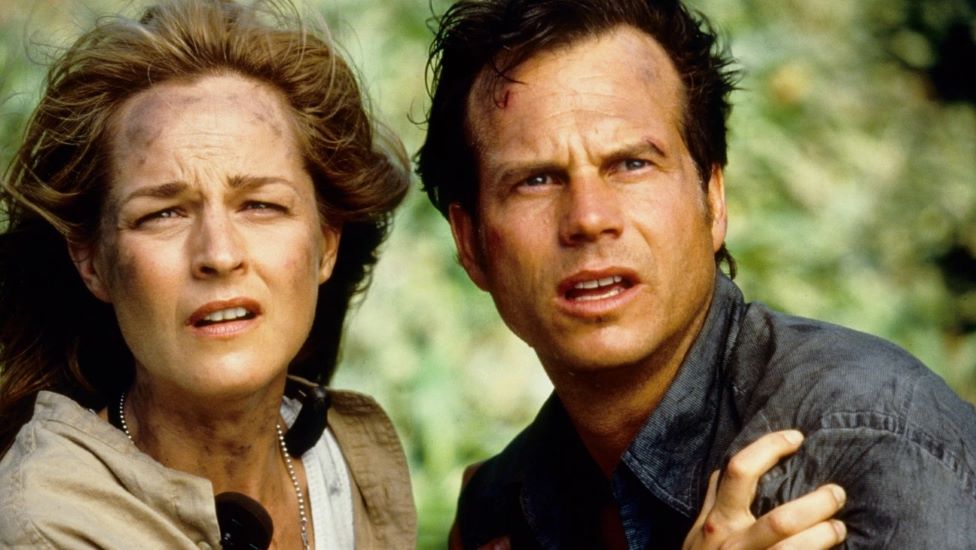
Drs Jo (Helen Hunt) and Bill Harding (Bill Paxton) are trying to get divorced. He’s finally had enough of risking his neck on their joint passion for storm-chasing, deciding to jack it in for a lucrative life on the media circuit and marriage to relationship therapist Dr Melissa Reeves (Jami Gertz). He arrives in Oklahoma to get Jo to sign the divorce papers – but doncha know it, he gets sucked in to “one more job”, to road-test the storm measurement doo-hickey device he and Jo dreamed of making but she’s actually built. And, handily, one of those pesky twisters is on the way.

The doo-hickey – I’m really not sure what it’s meant to do – is the sort of ludicrous scientific device that only exists in the movies. It’s basically a huge metal cauldron full of marbles that needs to be placed in the path of a twister. It’s also – in a terrible design flaw – hugely fragile and unstable, constantly falling over at the worst possible time. There are apparently three prototypes, of decreasing quality, each a back-up of the one before – you have one guess as to how many of these they burn through in the film.

In fact, you can pretty much one guess almost everything that might happen. Will Jo finally come-to-terms with the death of her father in a storm? (That’s right – she has a “I’m passionate and obsessed because a twister killed my dad” backstory!) Will Bill realise Jo is the one for him, not fish-out-of-water big-city-girl Mel? Will Cary Elwes’ lip-smacking, moustachio-curling copyright-stealing storm expert get his (fatal) comeuppance? Will sweet Aunt Meg (and her dog) survive her tussle with the storm? That “it’s almost never happened” super-storm they talk about at the start of the film – do you think it’s possible our heroes will find themselves in the middle of it before the end?

All of this is shuffled in a film with a hideously over-loaded deck. Jo’s team consists of around eight assistants, none of whom have so much as a character between them. They are a feeble collection of archetypes: the geek, the shy one, the techie, the religious one and the loud-mouthed one (a role of flamboyant indignity for Philip Seymour Hoffman, yet to be recognised as a great actor and instead relegated to feeble comic relief roles). But then it’s not like the leads are that interesting either: she’s committed, passionate but gosh-darn-it puts the storm before her personal life. He’s trying to move on but doncha-know-it he’s just lying to himself that he doesn’t love the storm.

In fact, as this rather smug ex-couple riffed on in-jokes, storm facts and their shared love for their doo-hickey made of marbles I felt rather sorry for Mel. Obviously, we are meant to scorn Mel, with her hand-wringing profession of counsellor (as opposed to the macho jobs of Bill and Jo) and her reluctance to run into a massive twister. Actually, I think she’s rather sensible. Bill and Jo are both clearly insane and take suicidal risks. She puts up with her fiancé flirting with his ex far longer than most of us would and she is hugely patient with the polite scorn she’s treated with by Jo’s rag-tag band of tedious risk-taking geeks playing at being alphas. She hangs around far longer than anyone else would do, before departing after maturely and sensibly telling Bill he should stick with his first two loves (Jo and storms – maybe not in that order).

People aren’t watching these films for the character or plot though – just as well as the film doesn’t really have either – but the special effects. These are impressive, I suppose, as the storm rips through sets, throws CGI buildings around and generally makes for loud and impressive noise. The film has a sort of goofy wit at times – at one point a CGI cow is blown through the sky in front of the Hardings, mooing rather sadly.

There are some decent set-pieces, even though they are basically all the same set-piece repeated over and over again at a different scale (first the storm blows over a car, then a building, then a village, then most of a town while our heroes duck and cover their heads). Lots of it was done with practical effects, shot with an alarming lack of regard for safety – Hunt got an infection from being flung into a drain and she and Paxton were temporarily blinded by a burst of artificial lightning.

De Bont directs all this with a personality-free competence. The film is at absolute best less than half as good as his first film, Speed – and de Bont’s subsequent film, The Haunting, would be half as good again in a career of ever-diminishing returns. Twister offers nothing new or even particularly interesting, other than some wind special effects that are of passing curiosity value but nothing else. It’s almost quaint that, in 1996, this was seen as something earth-shatteringly impressive. Now it’s as fearsome a burst of raw natural power as a fart.

Apollo 13 (1995)

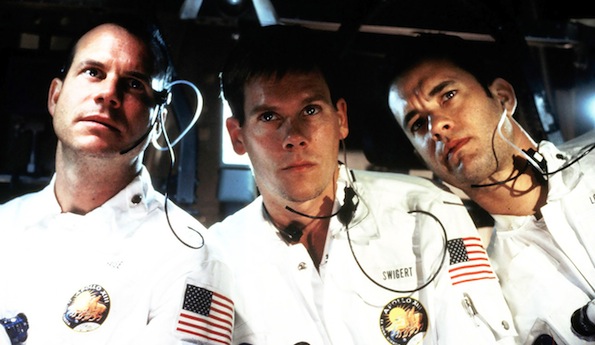
Bill Paxon, Kevin Bacon and Tom Hanks are stranded in space in Apollo 13

Director: Ron Howard

Cast: Tom Hanks (Jim Lovell), Kevin Bacon (Jack Swigert), Bill Paxton (Fred Haise), Gary Sinise (Ken Mattingly), Ed Harris (Gene Kranz), Kathleen Quinlan (Marilyn Lovell), Chris Ellis (Deke Slayton), Joe Spano (NASA Director) Xander Berkeley (Henry Hunt), Marc McClure (Glenn Lunney), Clint Howard (Sy Libergot), Ray McKinnon (Jerry Bostwick), David Andrews (Pete Conrad), Christian Clemenson (Dr Charles Berry), Brett Cullen (CAPCOM1)

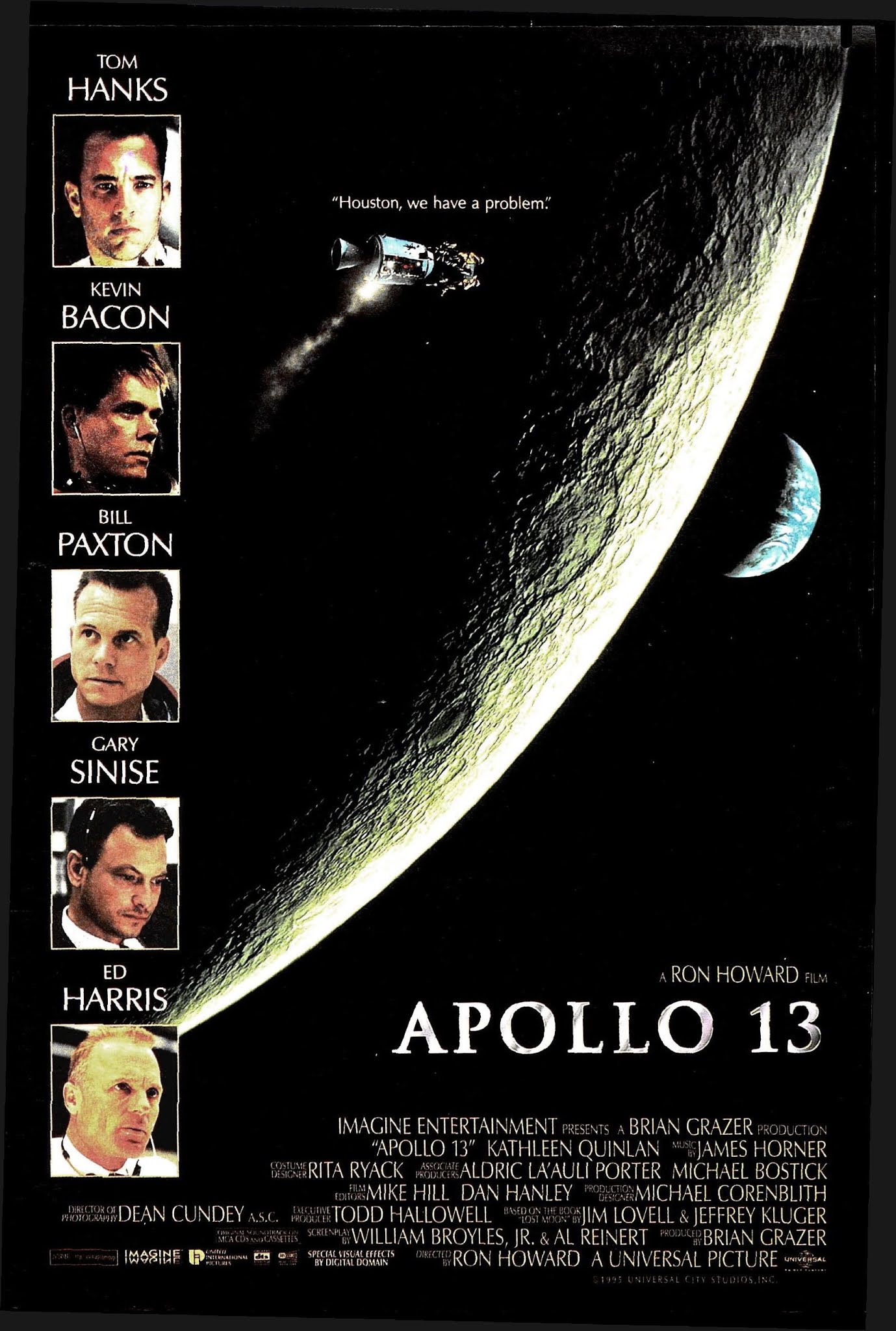
“Houston we have a problem”. Those calmly spoken words coat an ocean of disaster in Ron Howard’s brilliant reconstruction of the disaster-that-very-nearly-was, Apollo 13. Without a shadow of a doubt Howard’s finest film, this is brilliantly tense and hugely engaging that builds an edge-of-the-seat tension around a true story. You can’t watch it without being filled with breathless admiration for the ingenuity of those in mission control and the courage of those in space as they worked together to bring the mission home. Truly “Failure is not an option”.

On a mission to the moon, Mission Commander Jim Lovell (Tom Hanks) and crew Fred Haize (Bill Paxton) and late replacement Jack Swigert (Kevin Bacon) are left desperately trying to salvage their ship after an accident strikes. Meanwhile back in Houston, Flight Director Gene Kranz (Ed Harris) and replaced crewman Ken Mattingley (Gary Sinise) lead a dedicated team juggling every inch of mathematical, scientific and practical knowledge they have to bring the ship home.

Apollo 13 is a masterpiece of reconstruction. Every inch of the NASA space programme is reassembled in perfect detail. Every nut and bolt, from procedures to the interplay between the astronauts and Ground Control. There isn’t a single false note, and every single element of the production, photography and editing is carefully placed to support this total immersion in period. Howard’s technical direction is brilliantly done, intercutting with a fabulous sense of pacing between the crew in space and Ground Control back here on Earth. It becomes one of the most engrossing and involving true-life stories you can imagine.

I love this film. I love every second of it. Every single time I see it – and I must have watched it at least once a year since 1996 – I get wrapped up in the tension and, perhaps even more than that, the inventiveness needed to solve problems in space. The film throws conundrums at us time and time again. The command module needs to be restarted to land the ship – but only has enough power to keep a coffee machine running for a few hours. A vital course correction, that a computer could calculate and perform, needs to be carried out by hand. The weight of moon rocks needs to be replicated in the landing module. And, most brilliant of all, the NASA boffins need to work out literallyhow to fit a round peg into a square hole in order to replace a CO2 filter – using nothing but the pile of equipment on the spaceship.

These problems all need to be solved by people low on sleep, high on stress and – in three obvious cases – stranded, cold and alone in space, and each one is carefully explained by the film’s very natural but highly detailed script and then relayed into nail-biting efforts to solve them. (James Horner’s score also works wonders here, communicating the awe of space and our vulnerability in that black void expertly.) In no other film can the tearing of a plastic bag have you gasping at the impact it could have on life or death.

Added to the impact of this, is the engrossing excitement of watching brilliantly trained professionals tackle the sort of situations that would reduce you or I to sweaty panic. Other than a brief moment of recrimination between Haise and Swigert (authoritatively quashed by Lovell’s “Gentlemen, we are not doing this”), everyone stays more cool, calm and collected than you could possibly expect. This also means that flashes of urgency or emotion carry huge impact in communicating stress: when Libergot stresses powering down the ship is the only way for the crew to survive or Lovell is caught on radio ranting he is “well aware of the Goddamn gimbels” while trying to pilot a ship leaking oxygen through a barrage of debris to a soundtrack of alarms, the pressures they are trying to cope with come thundering home to us.

The extraordinary work of the actors also goes a long way towards the film’s success. If any film cemented Tom Hanks’ everyman quality, it was this one. His Jim Lovell is calm, controlled and extremely grounded, a professional with a realistic outlet, a devoted family man and overwhelmingly ordinary for all the extraordinary things he’s done. Hanks brings the role a huge authority and acres of empathy and relatability. He seems both vulnerable, human and professionally assured. I’d trade both his Oscar-winning performances for this one.

The whole cast follows his lead. Bacon and Paxton are very good as the rest of the crew, juggling moments of fear, frustration and black humour. Ed Harris became a star character actor overnight with his brilliant performance as Kranz, another committed professional who refuses to countenance failure and guides the ground team through super-human efforts, while keeping his own emotions carefully under control. Kathleen Quinlan is impressive as Lovell’s wife, keeping the morale of those left behind as high as she can while barely controlling her own fear. Gary Sinise’s Ken Mattingley channels his resentment at being benched from the mission into a Herculean commitment to bringing them home.

It’s that commitment on the ground that Howard’s film so brilliantly understands. A lesser film would have focused overwhelmingly on the courage of the astronauts alone, and heightened their struggles to pilot the spacecraft and survive. Apollo 13 understands above all that this was a team effort – and the casting and scripting feeds brilliantly into this. No one is the “hero”, no one “saves the day”. Every character focuses on their own small piece of the puzzle and has to trust all the others worked out. The film gives huge amounts of time over to the boffins and geniuses of Mission Control – all brilliantly played by a host of character actors – and its respect for these unsung heroes is as great as it is for Lovell and his crew.

Howard also understands exactly when to up the music, editing and effects and when to slow the film down and let events quietly play out. Moments in space where the actors have to quietly reflect, or when we check in on the fears and concerns of the families back home, contrast perfectly (and carry even more impact) when they sit alongside the scenes of failures and rushes to save lives. As for that re-entry scene… is there any more tense scene in a true story film than that long, long wait to see if Apollo 13 will return from space? There are certainly fewer moments that will get those specks of dust irritating your eyes – I get a lump in my throat just thinking about it.

Everything in Apollo 13 is spot on. I would go further and say I’m not sure there is a single wrong beat in it. It’s Howard’s masterpiece – his infamous snubbing for an Oscar nomination is inexplicable, his direction here is vastly superior to winner Mel Gibson’s work on Braveheart. It turns a true-life story into an impossibly tense, deeply involving, hugely emotional story. The actors – some of whom shot for weeks in a “vomit comet” plane to replicate weightlessness, an effect that works superbly – are outstanding. Every single technical aspect of the film is spot on. Its emotional impact is as absolute as the admiration and respect you’ll feel for the real NASA crews that guided this mission home. Apollo 13 is a classic. I can’t imagine anyone not finding something in it to like – not many films you can say that about.

Vertical Limit (2000)


Chris O’Donnell and Scott Glenn head into high nonsense in Vertical Limit

Director: Martin Campbell

Cast: Chris O’Donnell (Peter Garrett), Bill Paxton (Elliot Vaughan), Robin Tunney (Anniez Garrett), Scott Glenn (Montgomery Wick), Izabella Scorupco (Monique Aubertine), Robert Taylor (Skip Taylor), Temuera Morrison (Major Rasul), Stuart Wilson (Royce Garrett), Nicholas Lea (Tom McClaren), Alexander Siddig (Kareem Nazir), David Hayman (Frank Williams), Ben Mendelsohn (Malcolm Bench), Steve Le Marquand (Cyril Bench), Roshan Seth (Colonel Amir Salim)

You know a film is in trouble when its heart-rendering death scene at the open is met with howls of laughter from the packed cinema. But Vertical Limit is that kind of film: totally ridiculous, mind-numbingly stupid and filmed in such a melodramatic, over-the-top way it’s impossible to take seriously. It’s a silly, contrived, stupid movie, but at least it’s good clean fun.

Peter (Chris O’Donnell) and Annie Garrett (Robin Tunney) are on a climbing trip with their father when an accident puts them all in danger. Their father sacrifices himself to save their lives, but afterwards the siblings drift apart. Three years later she’s part of mountaineering team taking arrogant millionaire Elliot Vaughan (Bill Paxton) up K2. When disaster strikes (of course!) and Annie, Elliot and wounded Tom McClaren (Nicholas Lea) are stranded up the mountain, Peter gets together a team to head up the mountain to save them. The best way of doing this? Why, carrying nitro-glycerine up the mountain! That’s right, this is a film where our heroes basically carry a series of bombs up a mountain: it’s The Wages of Fear meets Cliffhanger.

Oh lord where to begin? In the very first scene, I horribly misread the relationship between Annie and Peter – so it was a bit of shock, after what seemed like a fair amount of flirting, to have them revealed as brother and sister. But their weird obsession with each other hangs over the whole picture, and is used to justify the people killed in this film to save Peter’s sister. Peter certainly can’t get excited about his nominal love-interest (a bored looking Izabella Scorupco), although that might be partly due to Chris O’Donnell’s balsa-wood earnestness.

But then the whole film is wonkily acted. Bill Paxton is so obviously a wrong-un, he practically twirls his moustache through the whole film. Scott Glenn plays a mystic climber mourning the loss of his wife, like some sort of bizarre shaman. Robert Taylor is wooden as Skip. Alexander Siddig is wasted as a rent-a-Muslim (the film is so old the call to prayer even needs to be explained!). Among the smaller roles, Ben Mendelsohn plays a sort of climbing Crocodile Dundee. None of these actors bring their A-game to this rubbish.

And it is rubbish. Nothing in it is particularly exciting, despite the efforts of Campbell to throw a (literal) avalanche of events at the screen, with characters hanging over cliffs like no-one’s business. None of these action sequences is actually that exciting – some, like a prolonged helicopter drop-off, are frankly dull – and everything has a sort of inevitability about it. You can predict who will die and who won’t, and the film only talks about things that are going to happen: of course Montgomery Wick’s wife’s body will be revealed after one of several avalanches (another scene that provokes sniggers rather than gasps); of course Vaughan will try and kill his fellow survivors; of course Peter will have to come to terms with his dad ordering him to cut him loose at the start of the film.

Most of the mountain climbing effects are not convincing. The opening sequence is obviously filmed at ground level, the passes of K2 look like sound stages. At one point Wick drops the title by saying they are at the “Vertical Limit” where the body starts dying: O’Donnell responds like a forgetful child actor, suddenly remembering he’s supposed to be out of puff in this scene. The very idea of taking nitro-glycerine up the mountain like this is so completely irresponsible and stupid that the film can’t get over it. Needless to say many, many, many more people die on this rescue expedition than are actually rescued at the end. Not that it matters, as Annie and Peter reconcile to continue their odd flirtatious relationship once more!

Vertical Limit is a terrible film. No doubt about it. It’s good to laugh at, I’ll give it that. But it’s got literally nothing else going for it. Nothing. Martin Campbell: how did you deliver something this mundane and stupid?

Aliens (1986)


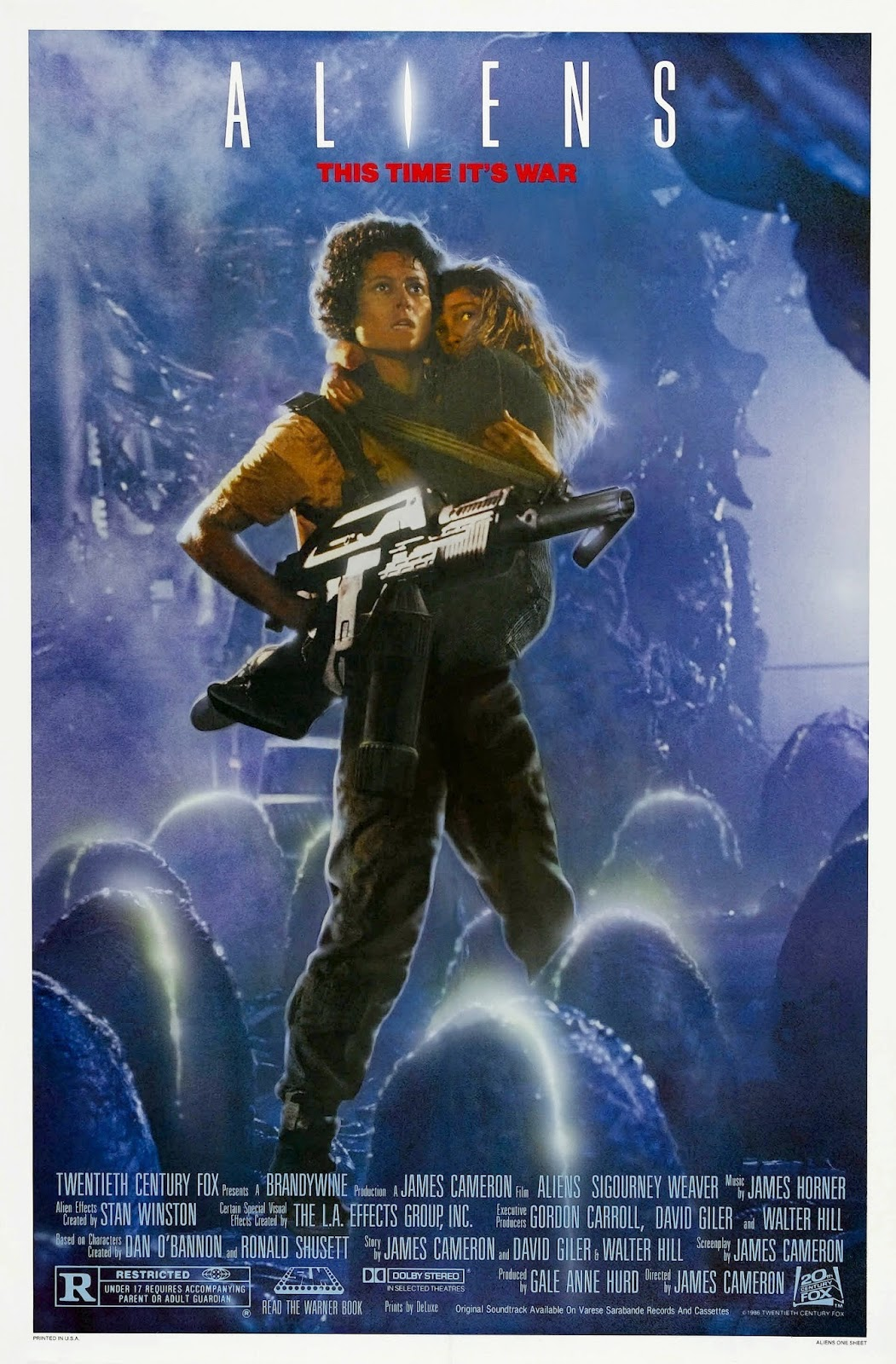
Sigourney Weaver takes on the terrifying alien hordes in Aliens

Director: James Cameron

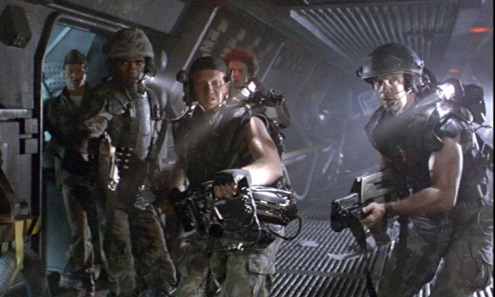
Cast: Sigourney Weaver (Ellen Ripley), Michael Biehn (Corporal Dwayne Hicks), Paul Reiser (Carter Burke), Lance Henriksen (Bishop), Carrie Henn (Newt), Bill Paxton (Private Hudson), William Hope (Lieutenant Gorman), Jenette Goldstein (Private Vasquez), Al Matthews (Sergeant Apone), Mark Rolston (Private Drake)

When any list of greatest-sequels-ever-made is put together, you get the familiar names: Godfather Part II, Toy Story 2, The Empire Strikes Back – but no such list is complete without James Cameron’s groundbreaking Alien sequel, Aliens. In fact, Aliens is so bloody good no list of great action films, science fiction films or even war films is complete without it. 

Set 57 years after Alien, Ripley (Sigourney Weaver) is awakened from hypersleep and returns to Earth. Her warnings of the hideous Alien threats on LV-426 go unheeded by the soulless Weyland-Yutani company – until all contact is lost with the terraforming colony there. At which point, company man Burke (Paul Reiser) recruits a troop of marines to head to LV-426 on a rescue mission. However, the over-confident marines find themselves on a devastated base with only one survivor, a traumatised young girl called Newt (Carrie Henn), and are quickly out of their depth fighting against a ferocious enemy whose tactics and motivations they don’t understand. 

Can this really only be the second large-scale movie James Cameron ever made? The guy may be (allegedly) a demanding, perfectionist dick, but you are left in no doubt of his mastery of genre film-making – or the thematic depth and emotional weight he can bring to what in the hands of thousands of other film-makers would have been a cheap-shock, monster-schlock thriller. Aliens is quite simply magnificent, one of the best Hollywood films you are likely to see. I’ve seen it I don’t know how many times, but it never, ever loses its impact. It’s always gripping, the action is always compelling and it never ever fails to scare and thrill you. 

Cameron’s trick is that he is so good at build-up. Nary a single Alien is seen on screen for the best part of an hour. Instead Cameron invests time in establishing the characters and their relationships. We begin to understand each of the marines as individuals. We feel our empathy for Ripley grow as we discover she has lost her daughter while in hypersleep, that she still feels traumatised by the events she witnessed, but that she has a strength of character, integrity and will that helps her weather the storms she has endured. You understand these characters so well – and the world that they inhabit – that when they start getting torn apart by slathering xenomorphs, it carries real weight and impact.

All the weapons the marines have and their tactics are carefully explained. We spend a good 15 minutes in the base itself before any Aliens arrive: the entire complex is quickly established as basically a huge haunted house. The wonderful production design makes it feel like the industrial zone on The Crystal Maze if a desperate hand-to-hand battle had been fought there (it’s also great that Cameron leaves what actually happened there to our imagination). Cameron has a mastery of small details – so the marines’ motion detectors have an electronic bleeping that increases in intensity as movement gets closer. It’s a brilliant tension builder that works time and again. The over-confident marines also makes their later fear all the more realistic and strangely affecting.

Then of course when things do kick off, it goes absolutely mental. Not for nothing is poor Hudson (a career establishing performance of bravado hiding fear from Bill Paxton) screaming “It’s game over man! GAME OVER!” after the first foray into the Alien nest. Paxton by the way has a perfect part in this film – every single line is endlessly quotable, largely because of his pitch-perfect delivery (I love “What so you mean they cut the power? They’re ANIMALS man!”), and despite being a cocky blow-hard, you end up loving him. Jenette Goldstein is similarly excellent as an almost impossibly hard-as-nails marine – she’s full of good advice, such as “Just nerve gas the whole fucking nest”.

The rest of the film is a helter-skelter of high octane, perfectly paced action. Every single sequence in this film is a stand-out, with stakes that feel impossibly high. Cameron really understood just how terrifyingly, inhumanly, remorselessly brutal the Aliens are – they are relentless and brilliantly single-minded, as well as having a ruthless cunning. They look and sound incredibly unsettling, and their darker, more animalistic design works wonders. It’s actually amazing, considering how this film is over 30 years old, that the Alien effects look better here than in Ridley Scott’s Alien: Covenant. Technically this film hasn’t aged a day – even the model work makes the film look real and lived in, rather than electronic and shiny.

James Horner’s score is sombre, unsettling and foreboding. It makes brilliant use of near ambient sound, before building into crashing, threatening crescendos in sequence with the action. Mix that in with the film’s brilliant sound design, and you’ve got a marvellous soundscape. The Aliens sound unnatural in their hissing fury. The military equipment is just the right side of futuristic and modern. The lighting is a dark mixture of shadows and reds. Everywhere seems unsettled. The editing is hugely influential – fluid, calm, brilliantly communicating the story and the geography of the action, everything.

Cameron’s greatest triumph, though, is to ground the story so well in a sense of family. The marines, for all their arguments and feuds, are a functional family unit – part of the reason William Hope’s useless Gorman struggles is because he doesn’t have the confidence to impose himself on such a tight group. But the real family theme is the mother-daughter relationship between Ripley and Newt. This is a bond that grows throughout the film, and feels really genuine and warm. It’s also a relationship that gives an emotional basis for all the actions we see. Cameron recognised that we can all relate to a basic family and that protecting this against the Aliens is what defines us in relation to them.

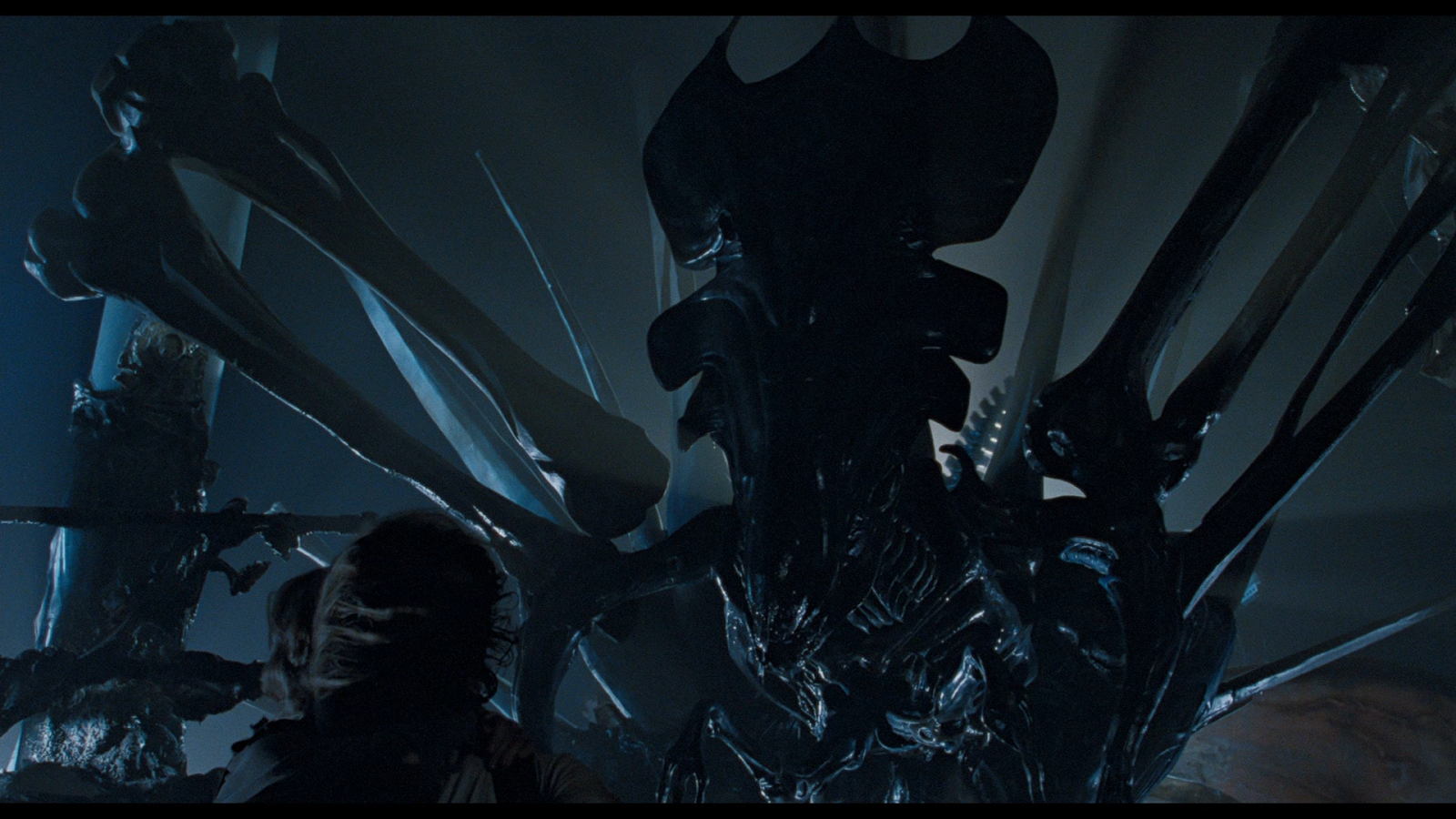
Of course, it also allows some clever thematic contrasts later when we are introduced to the Queen Alien. While it would be easy to blame this film for the tired cliché of the “Alien Queen” which we’ve seen time and time again, it’s used really well here. The Aliens may be conscienceless killers, but they’re still someone’s children: and we get a really neat contrast between Ripley and the Alien Queen’s determination to protect their children (as well as the best use of the word “Bitch” until Molly Weasley in Harry Potter).

The film’s secret weapon however is Sigourney Weaver’s outstanding performance in the lead. Not many actors get Oscar nominations for sci-fi or action films: Sigourney Weaver is one. And she deserved it because this is an iconic performance. Ripley isn’t an action hero – she’s strong and resourceful and she survives because of that. She’s not skilled at expressing herself or communicating – largely because it’s clear she’s suffering from PTSD. She completely fails to win over the corporate board with her story, and it’s clear the marines don’t hold her initial briefing in high regard. But even before they arrive on the planet, she’s beginning to win their respect. By the time of the initial encounter, her principled, strong-willed, sensible resourcefulness effectively makes her the expedition’s leader. 

Alongside this, Weaver does a fantastic job with Ripley’s growing maternal feelings towards Newt – the bond between these two is immediately clear, and her maternal protection of Newt becomes one of her core motivations. With Weaver, Hicks and Newt we end up with a strange family at the centre – a curious closeness that makes the film feel unique. It adds a strong emotional core to the film, and gives Weaver a depth to play with that enlightens her relationships throughout the film – she’s clearly got a strong protective feeling, and her desire to protect the marines is as much a part of this as her feelings for Newt.  It’s a terrific performance, full of feeling and strength. She fully deserved the Oscar nomination – arguably she could have won.

Aliens is one of those landmark films that never lets you down. Cameron’s direction of it is pitch-perfect, there’s hardly a fault in the whole film. It’s a masterpiece of design and construction and totally gripping from start to finish. It’s not only one of the best sequels of all time, as a purely enjoyable and affecting piece of cinema it may well be superior to the original. Even more than the first film, it made Ellen Ripley one of the great iconic characters of cinema. It will never get old and it’s never going to get tired. If you haven’t seen it, you really, really should.

The Circle (2017)


Emma Watson struggles against the surveillance state in shockingly bad adaptation The Circle

Director: James Ponsoldt

Cast: Mae Holland (Emma Watson), Tom Hanks (Eamon Bailey), John Boyega (Ty Lafitte/Kalden), Karen Gillan (Annie Allerton), Ellar Coltrane (Mercer), Patton Oswalt (Tom Stenton), Bill Paxton (Vinnie Holland), Glenne Headly (Bonnie Holland)

Is there anything sadder than seeing a book you thought was fantastic get totally screwed up by film producers? Worst of all, Dave Eggers, the book’s author, even gets a screenwriting credit here. I hope to God his contribution was a rejected earlier draft, rather than the bland, aimless drivel on display here. It would be too depressing to think he gutted his own work and then mutilated its corpse.

Mae (Emma Watson) is thrilled to land a job at The Circle, an all-powerful, Google-style corporation with a virtual monopoly over the internet. However, she discovers while she works at the Circle that there are (of course!) dark secrets at the heart of the company, and that its charismatic CEO Eamon Bailey (Tom Hanks) may not be all that he seems.

Imagine an adaptation of 1984 at the end of which Winston Smith defeats Big Brother but decides there are positive sides to living under a dictatorship, so carries on doing so. That’s exactly as ballsed-up as this total misreading of Egger’s gripping critique of our internet age. In this terrible adaptation, the novel is neutered beyond recognition into just another bland “Big Corporations Acting All Corporation-y” nonsense. The film is pretty much exactly as awful as the book is brilliant.

Where did it all go so completely and utterly wrong? Did they not understand the book? The novel is not only a critique of the pervasive power of its shady Google-like organisation. It’s also a savage attack on our own tweeting, social media obsessed world – the sort of world where private actions are theft as they rob everyone else from experiencing them vicariously through tweets, photos and posts. It’s this part of the story the film completely (and almost wilfully) misses the point of.

They seem terrified at the thought that the social media Twitteratti might take against the film if it too openly attacks the actual users of systems like this, with their (at times) shallow, demanding and entitled pushing of their own opinions, and intrusions into others’ lives. Instead the film gives a complete pass to all the users of the systems, while attacking the corporation providing them. So we get the bizarre set up of a film that seems to say it’s totally fine for normal people to record everything and push it all onto the internet, turning their world into a judgemental surveillance state, but it’s evil for a corporation to create the devices they use to do it.

Even the film’s criticism of corporations isn’t very clear, largely because we never get a sense of the Circle’s power and its hunger for getting more and more control. The film throws away its involvement in politics and its control over everyday lives. Perhaps because it knows so many of the viewership love gadgets, there is no exploration of the creepy, controlling aspect of the many tracking and recording devices the Circlers wear throughout the film, as there is in the novel. Instead the target is the shady business people at the top (not that we learn anything about what they want) because everyone hates businessmen don’t they? Nice easy target. I can tweet my loathing of them very easily.

It’s a film devoid of any challenge. A character’s suicide from the book is changed to an accidental death. The more vulnerable and desperate of the characters from the book have been deleted. The obsessive self-definition the Circlers gain from what other people tweet about them is downplayed. The ending of the film completely inverts the novel, and leaves us with a bizarre final image of our hero kayaking on the lake, but warmly smiling at the drones watching her, even after she has destroyed the “villains” who run them. It makes no sense whatsoever. My jaw literally dropped when this happened by the way.

Mae is a character who now has no consistency. Her growing obsession with the power of social media – and the destructive effect it has on her actual human relationships – is completely ignored. It’s the key part of her character from the book, and its removed here to try her as traditionally ‘likeable’ as possible. An anti-hero becomes a flat out hero. The film shows the impact of actions she carries out in the book – particularly on Annie – but removes these actions from the film. Why do people slip into depression or depart from the film? Who knows. Left with nothing to work with from the original book, Emma Watson gives a bland and forgettable performance. No one else really makes an impact, playing dull, neutered versions of the characters from the source material, devoid of depth or interest.

The Circle might be one of the worst literary adaptations I’ve ever seen. It guts the original book and removes any of the most challenging and interesting content. It’s terrified of criticising in any way anyone who might be watching. It’s a satire on the social media age that has no satire in it, and is desperate not to talk about social media. Worst of all it will discourage people from reading the original novel. In the words of the modern age: #uttershit.

U-571 (2000)


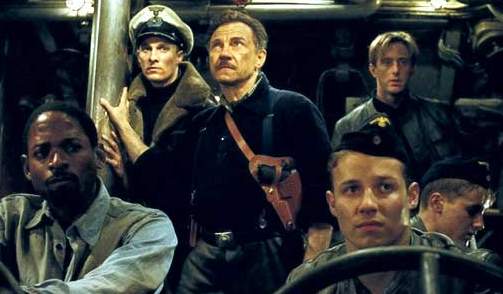
Matthew McConaughey and Harvey Keitel crack the Engima Code. With lots of guns. And no maths at all.

Director: Jonathan Mostow

Cast: Matthew McConaughey (Lt. Andrew Tyler), Bill Paxton (Lt. Com. Mike Dahlgren), Harvey Keitel (Chief Henry Klough), Jon Bon Jovi (Lt. Peter Emmett), David Keith (Major Matthew Coonan), Jake Weber (Lt. Michael Hirsch), Jack Noseworth (Bill Wentz), Erik Palladino (Anthony Mazzola), Thomas Kretschmann (Capt. Gunther Wassner)


On its release, U-571 was something of a sensational scandal– and in fact gained far more attention than a fairly standard submarine movie probably deserved. Why is that? Because it epitomised the perception in this country of American films taking war achievements from us poor Brits and giving them to Yankee heroes. Was this annoying for a British people all to used (it seemed) to having their war contribution lost in the crush of American films? You betcha.

During World War 2, Lt. Andrew Tyler (Matthew McConaughey) is sent to lead a team of American sailors to capture an Enigma machine from a stranded German sub. The Enigma machine, and the inability of the Allies to break it, is losing America (whose involvement in the war has been moved forward for the purposes of this story) the war after all. However, the mission swiftly goes wrong and Tyler is left commanding a rogue bunch of terrified sailors on the captured German submarine, trying to get the Engima machine back to the US Navy before its loss is discovered. All that is missing is Alan Turing reinvented as a hard-boiled Brooklyner totting a machine gun and shouting “I gotta Bombe for ya, ya Kraut Bastards!”.

The movie itself is not too bad, to be honest. although nothing special. The expected clichés of the submarine are all there: the fears about water pressure, claustrophobia, a sequence where the boat sinks inexorably towards the bottom of the ocean, torpedoes in the water, depth charges, “right full rudder”, sonar pings, water gushing from pipes, someone having to undertake a vital repair underwater with limited air supply etc etc. – it’s all been done before, from Enemy Below to Crimson Tide. Saying that, Jonathan Mostow knows how to cut the heck out of a movie and as a result this charges forward with a relentless energy which works rather well and makes this a suitably tense film. Special mention also goes to the sound editing, which won an Oscar for its brilliant creation of the aural impact of everything from depth charges to torpedoes scraping hulls.

Of course the story itself is nothing unique: even the personal plot lines are largely recycled from other movies: will McConaughey’s young XO be placed in a situation where he has to prove his chops as a commander? You bet he will! Keitel is an Old Sea Dog, Paxton is a fatherly Captain, Kretschmann is a cold professional German – but the actors play these well shuffled stock characters with an admirable level of commitment. The film has a great “Dirty Dozen” vibe to it, and does manage to throw in a couple of surprises about character fates. For those of us who love the predictable trotted out with po-faced commitment and energy, it’s hard not to be entertained.

There are some well-done (if unsurprising) scenes as Tyler struggles with his authority over men who don’t have trust in him and are terrified of getting killed. It’s interesting how much the film asks us to invest in essentially willing Tyler (a decent performance by McConaughey) to have the guts to send a man to his death for the good of the ship. Centring this moral dilemma as a crucial qualification for leadership at least means the film does take a honest look at the complexities of command to counter the boys’-own heroics elsewhere. Saying that, the almost pathological mutinous rumblings of Seaman Mazzola against an officer we are told early in the film is “popular with the men” does seem rather sudden – possibly because making Tyler a distant stick-in-the-mud (which he would need to be for the level of rejection from the crew to really work) rather than a regular Joe might have made us less likely to root for him at the start.

Of course all of this seems pretty inconsequential next to the real issue of the film, which is its historical accuracy (or complete lack thereof). To be honest, the fury against the film’s appropriation of British Naval achievements is rather harder to sustain (a) nearly 20 years on and (b) when you see what an agenda-free, entertainment-only movie it is. Perhaps the real insult was that the crew of this mission contained actors like Jon Bon Jovi and the guy who played ER’s Dr Dave. But that doesn’t change the fact that this stuff didn’t happen, and the elements of the story that did certainly didn’t happen like this and were done by completely different people. It’s hard to shake the feeling, even while you enjoy the film, that it gives a false glory to the wrong people. If even a few people came out of it thinking the Americans cracked Engima (or that Engima was cracked like this rather than primarily by maths) it’s certainly a few people too many. 

As a side note, while reading up about the film before this review, I found that one of the screenwriters, David Ayer (now a purveyor of average WW2 films himself with Fury), had this to say about the controversy of the film’s re-writing of history: “[I do] not feel good…it was a distortion, a mercenary decision to create this parallel history in order to drive the movie for an American audience…Both my grandparents were officers in World War Two, and I would be personally offended if somebody distorted their achievements…I understand how important that event is to the UK, and I won’t do it again.”