Tag: Biography

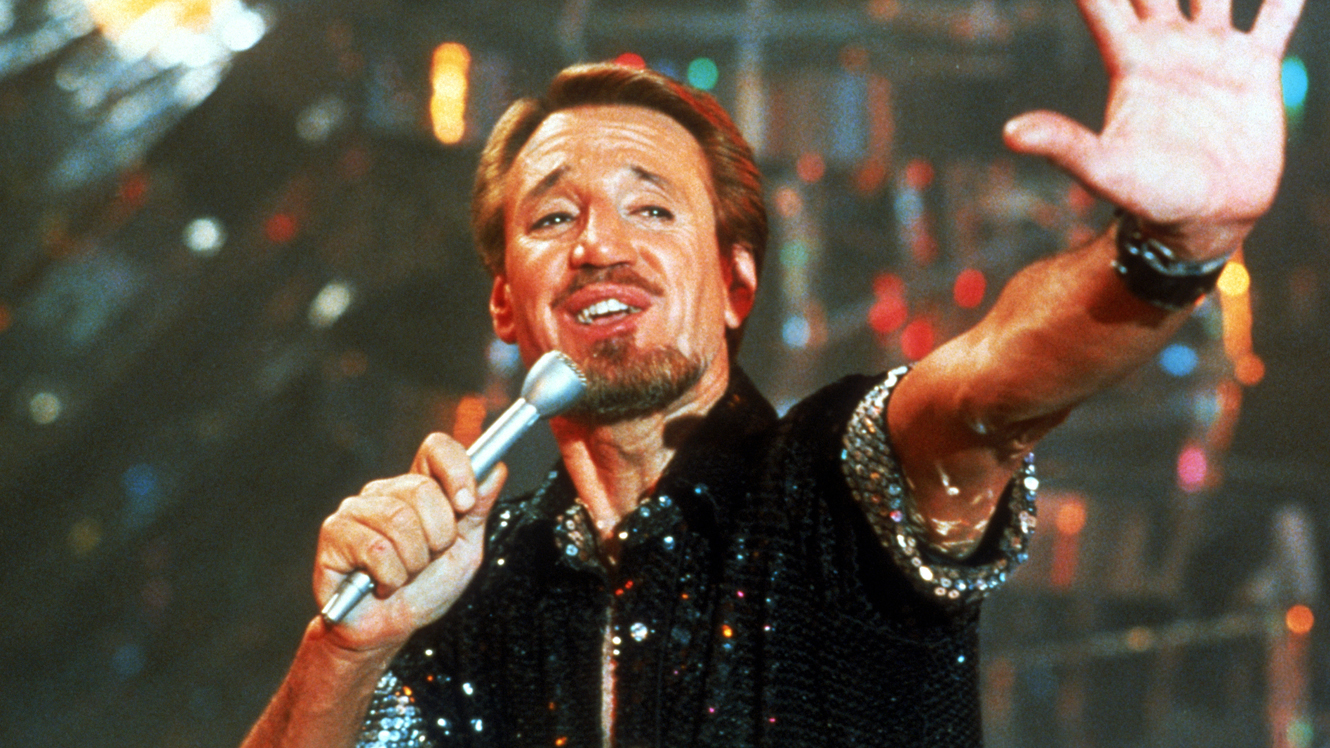
All That Jazz (1979)

Roy Scheider plays the director Bob Fosse in a barely-veiled-at-all autobiographical film All That Jazz

Director: Bob Fosse

Cast: Roy Scheider (Joe Gideon), Jessica Lange (Angelique), Leland Palmer (Audrey Paris), Ann Reinking (Katie Jagger), Cliff Gorman (Davis Newman), Ben Vereen (O’Connor Flood), Erzsebet Foldi (Michelle Gideon), David Marguiles (Larry Goldie), Michael Tolan (Dr Ballinger), Max Wright (Joshua Penn), William LeMassena (Jonesy Hecht), Deborah Geffner (Victoria Porter), John Lithgow (Lucas Sergeant)

It’s revealing when a director makes an autobiographical film. There are insights to be found about the sort of person they are – and the sort of person they want to present themselves as to the world. And All That Jazz is possibly the most striking autobiographical film ever made. You have to have a towering amount of ego to make a film showing yourself as a deliriously talented polymath, generally liked by everyone. And then you have to have a giddy self-awareness to give your semi-fictional doppelganger all your titanic faults, selfishness, cruelty and flaws. Let’s not even get into the psychology of turning your own death into a musical number, eight years before it happened.

Just like Bob Fosse, Joe Gideon (Roy Scheider) is a hugely influential choreographer and director who has changed the face of Broadway musicals before going on to become the Oscar-winning director of a string of critically acclaimed films. He is also a workaholic, addicted to a string of prescription drugs, a never-ending smoker, with a strong of failed marriages and affairs behind him. Just like Bob Fosse, in 1975 Gideon is staging his ground-breaking original production of a musical (Fosse was directing Chicago which clearly inspired the unnamed musical here), starring his ex-wife (and mother of his daughter) Audrey Paris (Leland Palmer, a frequent Fosse collaborator), living with his girlfriend Kate Jagger (played by Ann Reinking, who was Fosse’s real life girlfriend at the time). At nights and weekends he is editing The Stand-Up (a version of Fosse’s film about stand-up Lenny Bruce titled Lenny starring Dustin Hoffman). When he has a near fatal heart attack part way through this, Gideon starts to sink. Fosse on the other hand used the experience to write this movie. 

All That Jazz is an electric piece of film-making, full of Fosse’s dynamism. It’s not only crammed with fabulous song and dance numbers (some of the best Fosse work you’ll see) but it’s beautifully edited and paced. Fosse holds it all together so brilliantly you never feel the thing teeter on the tightrope like Gideon does (the first image of the film is appropriately Gideon walking a tightrope). It perfectly captures the high intensity, killer pressure of maintaining this constant state of activity, and suggests how much Fosse (clearly) believed his own life was a performance, every moment constructed and staged for maximum impact. 

And that’s what you wonder about the film. Does Fosse hate himself, love himself or some combination of both? It’s something the film just teases, with Gideon indulged in a series of fantasy-tinged cryptic conversations with Jessica Lange (another Fosse conquest allegedly) as some sort of angel dressed in white. Here Gideon of course flirts and charms as only he can, while answering with ambiguous amounts of truthfulness a series of questions about love, his background, his wishes and dreams. But even when he says these things, there is the half smile that suggests it’s only part of the story. Or maybe Gideon himself doesn’t even know where life ends and the story begins.

Fosse’s film is just about perfectly structured. Repeatedly we see Gideon going through the same daily ritual when he wakes up: Vivaldi, shower, cocktail of prescription drugs, eye drops, slap hands, “It’s a show time!” (with an ever increasing struggle to keep the energy up). As the tempo of this repeated introduction changes through the film, you get a perfect idea of the state of Gideon’s mind and mood – and his relentless attempt to turn his own life into a perfect performance.

In among all this, perhaps no film has ever showed a better understanding of the pressures of creating a Broadway musical. The opening sequence follows a series of exhausting auditions from literally hundreds of dancers desperate for a role in Gideon’s show, slowly being whittled down to the chosen few. The rehearsals are a punishing series of deconstructions as the dancers strive to match Gideon’s perfectionism. Rehearsal rooms are crammed, sweaty and uncomfortable. The money men hover over every scene, with an eye on protecting their investment. And then, we see the results suddenly of Gideon’s work with a Chicago-ish dance routine so sexually charged it is positively indecent. It’s genius on at least three levels.

The film revolves around Gideon, and the amount of time squeezed out of his personal life by his never-ending, passionate work commitments. Leland Palmer is excellent as his loving but deeply frustrated wife, supportive but all too aware of Gideon’s selfishness. The bond between them feels strong, real and above conventional marriage. Ann Reinking is equally marvellous as his lover, protégé, partner and you name it. Between these three characters there is a hugely warm performance from Erzsebet Foldi as Gideon’s shrewd but loving daughter. Fosse isn’t afraid to sprinkle real moments of family warmth in, as if trying to show Gideon all the things he is missing out on – one particularly outstanding moment is a song-and-dance routine Reinking and Foldi perform for Gideon after the premiere of his film The Stand-Up, as entertaining as it is charming.

But the film’s secondary motor, after Fosse’s directing brilliance (seriously, there are few Hollywood directors so undervalued, the man is a genius) is Roy Scheider as Gideon. I can’t really imagine a more bizarre sounding bit of casting: Jaws Chief Brody as a song-and-dance man, the world’s greatest (even slightly camp) choreographer. But Scheider is simply sublime in this role. It’s a towering, landmark performance of total commitment. He’s achingly human, supremely sad but also overflowing with warmth, humanity and humour while also being repeatedly selfish, difficult and demanding. It’s a performance of total absorption.

By time of the finale number (a truly bizarre version of Bye Bye Love, renamed Bye Bye Life, in which Gideon lives his final moments in a fantasy world, singing and dancing his way towards death in front of an audience of faces from past and present) the whole thing is so wonderfully overblown it doesn’t really matter. The film’s passage into the surreal and fantasy as Gideon gets increasingly ill (while showing less and less regard for his own health) will be a bit much for some, but I was honestly so into it that I didn’t care. 

Because the film is about this acute piece of self-analysis from the director, a Fellini-inspired sort of musical , in which the understanding (or lack thereof) we get of Gideon, and which he gains about himself, is most important. His conversations with Lange’s angel of death are intriguing and as informative about the man he really is as the man he wants to be. 

Fosse’s film is simply supremely well directed (Kubrick called it one of the best films he ever saw). Fosse’s editor (playing himself in the film as the editor of The Stand-Up) said if Fosse had actually died during the making of the film, he would have made sure his death was filmed and edited into the movie. I can believe it. The only musical you’ll ever see which doubles as a confession and a condemnation, which turns death and surgical procedures into wham bam musical numbers, and which never becomes maudlin or sentimental about the self-inflicted disaster the director is putting on himself – it’s brilliant.

The Elephant Man (1980)

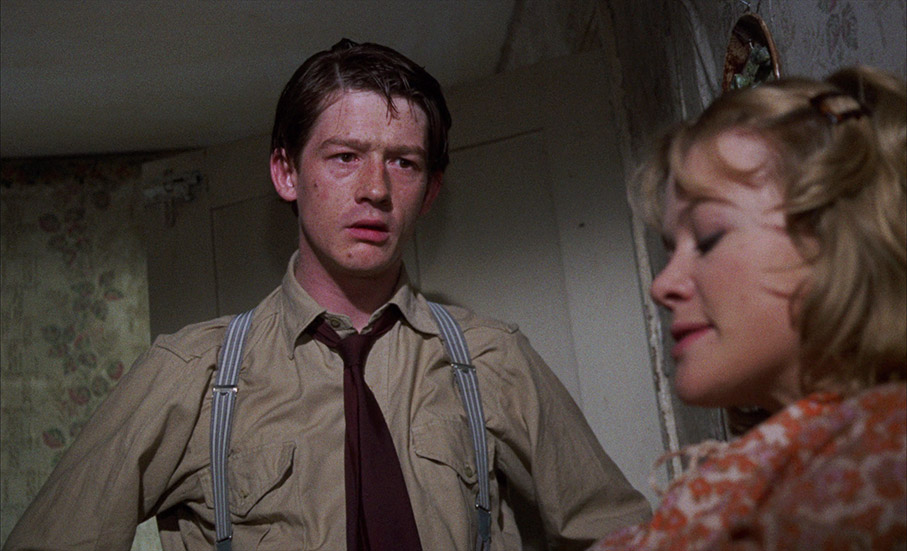
John Hurt is sublime as the tragic John Merrick in The Elephant Man

Director: David Lynch

Cast: John Hurt (John Merrick), Anthony Hopkins (Dr Frederick Treves), Anne Bancroft (Madge Kendal), John Gielgud (Francis Carr-Gomm), Wendy Huller (Mrs Mothershead), Freddie Jones (Bytes), Dexter Fletcher (Bytes’ boy), Michael Elphick (Jim the porter), Hannah Gordon (Ann Treves), Helen Ryan (Princess Alexandra), John Standing (Dr Fox)

In the late 19th century, society was swept up in the story of a circus show freak, Joseph Merrick (renamed John here, as per Frederick Treves’ memoirs), saved from a life as a circus exhibit by Treves (a doctor at the London Hospital). Treves introduced him into society and formed a close friendship with him. Merrick died young (27) but his life became a sort of byword for struggling for dignity. The Elephant Man follows this journey.

John Hurt plays Merrick, with Anthony Hopkins as Treves, and the film is a pretty accurate reconstruction of the major events of Merrick’s life. The Elephant Man must have seemed like a strange proposition at the time. Produced by Mel Brooks! Directed by bizarro director David Lynch! About a man grotesquely deformed by nature! But what emerges put those doubts to shame, because this is a beautiful and emotional piece of film-making, guaranteed to put a tear in your eye. It’s an extraordinary and moving film, it’s almost impossible not to love.

In a career made up of playing characters who undergo enormous suffering, it’s fitting that one of John Hurt’s most famous performance sees him utterly unrecognisable under a mountain of make-up. (Acting in this was no fun either – Hurt worked alternate days to deal with the discomfort and stress, telling his wife “They’ve finally found a way to make me hate acting”). But what Hurt does here is extraordinary: under this mountain of make-up, the humanity, sweetness and tenderness of Merrick sings out. He’s a character you feel a total empathy for, with Hurt making him almost a gentle child, an innocent who learns to value himself and his own humanity. It’s mesmeric stuff.

Lynch’s film is all about the place Merrick holds in the world – and it’s not sure shy of showing it is one of exploitation and display. Sure, the circus life for Merrick is horrible under Freddie Jones’ freak-masker (Jones is magnificent here, alternating between weaselly, conniving, vulnerable, self-pitying and loathsome). But he’s plucked from this lower-class hell not for reasons of charity or loving care, but (initially) so that Treves can display him at medical conferences.

Even after demonstrating his sensitivity and artistic richness, Merrick is still rammed into a different treadwheel of society curiosity. Paraded before the rich and famous, his freakish appearance combined with his gentle, otherworldly, politeness and kindness becomes a new show in itself – something Treves himself (in a wonderfully played scene of introspection from Hopkins) slowly comes to realise. Alongside this, Merrick is still seen as fair-game by Elphick’s brutish night porter: if the hoi polloi can watch the freak, why can’t he parade him in front of working class customers at night? All this is intensely moving.

Does Merrick even realise that he is (in some ways) still a freak show, even while he collects photos of his new friends? The film is deliberately unclear: although it is clear that the (eventual) genuine friendship of Treves does lead Merrick to value himself as something more. The famous anguished cry (simply brilliantly played by Hurt) of “I am not an animal. I am a human being” after Merrick is chased into a train station bathroom by a crowd of scared and disgusted passengers is goose-bump inducing in both its sadness and its newfound moral force. From this point on, Merrick makes decisions for himself (for good or ill).

Lynch’s film walks a delicate balance around Merrick’s character and how much his life was a question of being exploited. Although the film does at times shoot Merrick with the slow reveal coyness of a monster movie, it never fails to regard him (and almost demand we do the same) with the utmost sympathy. In many ways, it shoots Merrick the same way people first seem him – a sense of shock followed by a growing appreciation that there is much more to see there than you might first suspect. 

That’s what works so well about Lynch’s inspired direction here – this is a sensitive, haunting and poetic film that wrings untold levels of sadness from Merrick’s life. Lynch reins in his more arty leanings very effectively. In fact, once you get over the film’s bizarre opening of Merrick’s mother being attacked (sexually assaulted?) by an elephant, the film relaxes into a classical style mixed with Lynch’s chilling eeriness and his games with time and mood (the timeline is particularly hard to work out in this film), while his sensitive handling of the macabre is perfect for this film’s storyline. While it’s easy to see this as the least “authored” of Lynch’s film, it’s possibly one of his finest and sets the groundwork for some of his later works, exploring humanity in the bizarre.

He’s helped as well by Freddie Francis’ simply beautiful black-and-white photography which brilliantly captures both the grime and the shine of Victorian London, with an inky darkness. Francis also embraces some of Lynch’s expressionistic style, and shoots the film with a real atmospheric sensitivity. It’s about perfect – and Lynch brings the outsider’s view to London that sees the entire city with a brand new eye. 

There are some sublime performances. Anthony Hopkins’ Treves is a masterclass in contrasted desires. He’s the sort of guy who can grab Merrick like a collector, but still shed a tear when he first sees him. Watching him slowly realise that he has used Merrick just as Bytes has done – within the confines of his Victorian paternalism – and grow to love him as a father does his son (feelings of course never expressed in words) is extraordinary. In the less flashy role, Hopkins powers a lot of the feelings of sadness the audience feel. Alongside him, a host of British legends do brilliant work, particularly Gielgud and Hiller as authority figures who slowly reveal themselves to have huge depths of compassion and understanding.

And what you end up with is a marvellous film. Brilliantly made, wonderfully filmed and hugely emotional with powerful, heartfelt performances from Hurt and Hopkins among many others. It’s extremely beautiful, and stirs the emotions wonderfully. You would struggle to get to the end of the film and not feel overcome with the final few moments, its sadness and the sense of regret. It’s possibly the most heartfelt of Lynch’s films – and also the one I enjoy the most.

J. Edgar (2011)


Leonardo DiCaprio is excellent in Clint Eastwood’s decent J. Edgar

Director: Clint Eastwood

Cast: Leonardo DiCaprio (J. Edgar Hoover), Armie Hammer (Clyde Tolsen), Naomi Watts (Helen Gandy), Judi Dench (Anne Marie Hoover), Josh Lucas (Charles Lindbergh), Dermot Mulroney (Norman Schwarzkopf), Damon Herriman (Bruno Richard Hauptmann), Jeffrey Donovan (Robert F. Kennedy), Zach Grenier (John Condon), Ken Howard (General Harlan F Stone), Stephen Root (Arthur Koehler), Denis O’Hare (Albert S Osborn), Geoff Pierson (A Mitchell Palmer)

J. Edgar Hoover holds a unique place in American history. As the first ever director of the FBI he ruled it as his own personal fiefdom from 1935 to his death in 1972. A workaholic, he revolutionised the investigation of crime in the USA, centralising records, introducing and championing scientific techniques, and working to change the image of lawmen into heroes. On the other hand, Hoover frequently abused his position, used the FBI to investigate rivals and stamp out groups he judged as dissident, and put together secret files of unpleasant and damaging material on political opponents.

Eastwood’s film actually does a pretty good job of balancing these two J. Edgar Hoovers, and of presenting a fairly even-handed portrait of a man most people see now as the worst example of a power-abusing policeman. The film follows the career of Hoover (Leonardo DiCaprio), focusing in particular on the Lindbergh kidnapping, clashes with Presidents, and his relationships with his deputy (and probably long-term lover) Clyde Tolsen (Armie Hammer) and with his domineering mother (Judi Dench). 

The film’s main advantage is a typically power-house performance from Leonardo DiCaprio. His Hoover blusters with insecurity, resentment and a monomaniacal obsession with his own sense of right and wrong. He’s the sort of guy who takes a woman on a date because he thinks it’s time to get married and then takes her to see his filing system. Hoover was a man whose life was work and power – but DiCaprio doesn’t forget that amidst the maniacal power grabbing, he had a confused personal sexuality.

The film suggests Hoover repressed his homosexuality due to the influence of his mother (“I’d rather have a dead son than a daffodil”), and contrasts this painful struggle with the preppy, tender, manly Clyde Tolsen, played with equal skill by Armie Hammer. Tolsen was Hoover’s long-term friend and companion, they holidayed together, ate meals together, lived opposite each other, and Tolsen even accepted the flag after Hoover was buried – neither man married. The film creates a fairly sweet love story of a man who couldn’t fully accept his own feelings falling in love with a man comfortable with who he was. 

The old-married feeling of this couple – whose physical contact never really goes much further than the occasional hand holding – is the emotional heart of the film. Although the repressed Hoover never admits his love openly (to the occasional hurt of Tolsen), it’s actually a fairly good expression of a normalised same-sex marriage, and Eastwood never succumbs to some of the odder gossip about Hoover’s cross-dressing (except in grief at the death of his mother) or sexual preferences.

His relationship with his mother (whom he lived with his whole life until her death) is more predictable: she is demanding and controlling, he is loving, placid and deferential to her. It’s what we’ve seen before several times – and Judi Dench can play this role standing on her head – but it gives us a nice context to get inside Hoover’s head and understand why he behaved the way he did. 

The film doesn’t lose track of Hoover’s ongoing political clashes. We get showpiece senate hearings as Hoover struggles to establish the FBI with the powers it needs to combat crime (DiCaprio is pretty electric in these scenes). Repeated shots show Hoover watching various inauguration parades, or stopping to stare at the same portrait of Washington as he heads in to meet with (and intimidate) various (unseen) presidents. The film hits these beats hard at times – did we need Hoover telling Robert Kennedy that he has information on “your brother, the President of the United States”? But it’s not afraid to show Hoover unsympathetically, particularly in his vindictive campaign against Martin Luther King.

What Dustin Lance Black’s screenplay, and Eastwood’s professional, smooth direction, do well is explain why Hoover may have hated these people so much. The film focuses on Hoover’s early days – full of anarchist bombings, wildfire communist strikes that led to clashes with the police, years of bank robbers and gangsters carrying on unrestricted in America – that makes you at least understand why he felt America was under threat. 

The film’s reconstruction of period detail is exquisite, and much of the photography has a brilliantly murky, sepia tone to it I really liked. The reconstruction of details from the Lindbergh kidnapping is very well done. All this is much better than some of the wonky “old age” make-up Di Caprio, Hammer and Watts (playing Hoover’s faithful secretary) have to labour under towards the end of the film (Hammer in particular looks slightly ridiculous under laboured liver patches). 

In structure, this is a fairly traditional biopic, and in trying to cover Hoover’s entire career it often skips over or misses key incidents. In an era where “modern” biopics tend to focus on dramatizing one key moment in their subject’s life (such as Selma or Lincoln), J. Edgar feels a bit more like a 1990s biopic. It crams so many events in, it sometimes feel like an “and then this happened” sort of film, rather than the more interesting thematic film under the surface.

It’s also struggling to bring more interesting depths out. It has a neat structure of Hoover dictating his biography to a string of indistinguishable “trusted” FBI agents (each scene has a different one, and there is neat visual gag as Eastwood cuts to a series of these guys in a row offering the “wrong” answer to Hoover’s question as to who was the most famous American of the 20th century – the answer being Lindbergh). Interestingly a final speech from Tolsen suggests much of what we have seen is Hoover’s vainglorious “legend building” rather than the “true story” – a theme that you feel could have been explored more.

It’s stuff like this that makes J. Edgar stand out a bit more. That and the wonderful performances from DiCaprio and Hammer, as the truly rather sweet married couple-who-weren’t. The film could make more of exploring the psychology of Hoover – the man who hated anyone different, including homosexuals – but who carried this open secret. But there isn’t time. It’s a film with good ideas and scenes, which could be more than it is. But it’s a decent film for all this. Many won’t like the fact that it takes a sympathetic angle on Hoover. But it shows every life has its right and wrongs.

Ten Rillington Place (1971)


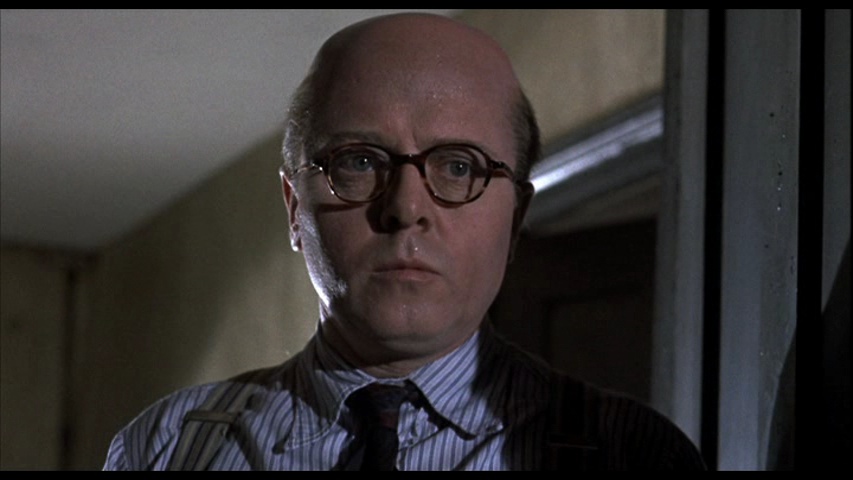
Richard Attenborough brings the killer John Reginald Christie to life in Ten Rillington Place

Director: Richard Fleischer

Cast: Richard Attenborough (John Reginald Christie), Judy Geeson (Beryl Evans), John Hurt (Timothy Evans), Pat Heywood (Ethel Christie), Isabel Black (Alice), Robert Hardy (Malcolm Morris), Geoffrey Chater (Christmas Humphreys), André Morell (Judge Lewis), Tenniel Evans (Detective Sergeant)

Films about real-life serial killers have that eternal problem: how far can they go in giving us answers? How much can we ever really understand why a killer does what they do? Is there any way of really putting ourselves in their shoes – and do we really want to? Ten Rillington Place avoids a lot of these issues by making no attempt to give understanding to Christie at all, simply presenting his actions, and by putting the focus on the tragic death of Timothy Evans.

In a miscarriage of justice Timothy Evans (John Hurt) was tried and executed for the murder of his wife Beryl (Judy Geeson) and their baby daughter in 1950. The real murderer? The man who lived downstairs, John Christie (Richard Attenborough), a socially maladjusted, softly spoken man who confessed to killing at least eight people three years later at his trial for murdering his wife. Christie had an uncanny gift for gaining the confidence of desperate women, would offer to perform illegal (and free) medical procedures (such as abortions), during the course of which he would gas them with carbon monoxide, strangle them, possibly carry out acts of necrophilia and then bury them in his garden or in the walls of his house. Evans never suspects until far too late that Christie is the killer and, scared that he will be accused, follows Christie’s advice to the letter – advice that will only make him look all the more guilty.

Richard Fleischer’s chillingly documentary-style film-making goes into forensic detail on the events of the murder of Beryl Evans and her daughter, and the wrongful conviction of Timothy Evans for the crime – largely on the basis of Christie’s testimony at Evans’ trial. Fleischer shoots the film with a deeply disciplined restraint, a calm documentary style that avoids any sensation lingering on the crimes, but still carries great emotional impact.

The film covers the period from Evans moving into the flat above Christie, Christie’s murder of Beryl, Evans panicked flight to Wales on Christie’s advice, his series of confessions to the police, his trial and execution. Book ending the film we get a scene with Christie murdering his neighbour Muriel Eady – a terrifying demonstration of Christie’s murder rituals, as well as an indicator of how easily he could gain the trust of his victims. What it strikingly doesn’t try to give us is any psychological explanation for why Christie did what he did. There are no revealing flashbanks, no cod-psychology. Instead we just see a killer, kill people. We might get an idea of what he gets out of it, but no explanation of what turned him to it. The film is all the more powerful for it. 

Instead the focus is on the victims, and the Evans story is heart-rending, partly because of Fleischer’s calm, sensitive direction, but mainly due to John Hurt’s astonishingly powerful performance. The film, and Hurt, don’t shy away from the qualities that made Evans seem like such a natural fit for a murderer at his trial. He’s a compulsive liar. He brags. He fights and argues with a fury. He’s not really that sympathetic a guy at first. But he’s certainly innocent. Hurt brilliantly demonstrates his vulnerability and simplicity – Evans was illiterate and almost unbelievably trusting, a liar who fell victim to a superb, manipulative liar.

His shock and slowly growing realisation of the nightmare he is in are incredibly moving, as is his powerful grief when he finds his wife killed – and his trusting innocence when he turns (unknowingly) straight to his wife’s killer for advice on what to do. Every action Evans takes in the film makes you want to jump in and urge him to do something – anything – different.  Unsympathetic as he is at the start, by the conclusion you almost can’t bear to watch him incriminate himself with each action. Hurt is sublime, with his weak manner, his confusion, his touching faith that it will all be okay and his feeble mantra of “Christie Done It” – it’s one of the greatest performances in his career.

Judy Geeson gives a marvellously emotional performance as Beryl Evans. Geeson has the perfect look for the part, and she completely embodies a woman who has found herself in a difficult situation, in love with a weak man. You understand completely how she is drawn towards Christie as a confidant, and why she would feel the desperation to abort a child she and Evans could never afford. Her eventual murder is horrifying in its struggle and desperation, the growing horrible realisation in her eyes that she is in mortal danger – this is a particularly strong sequence, difficult to watch for the viewer, as we know what a terrible series of decisions she is making. 

Fleischer’s film was motivated by a very firm anti-death sentence stance. The scene of Evans’ execution is shocking in its brutal suddenness. Shot with a handheld camera and in a single take (in near silence other than Hurt’s deep breathing), the execution is over and done with in less than a minute – from Evans sitting in a room, to the reveal of the executioner’s noose next door and the terrible drop (with a jump cut straight to Christie stretching his back). It’s a brilliantly low-key, but resoundingly powerful scene that sticks with you for all time.

All this way and we’ve not mentioned Richard Attenborough’s transformative performance as Christie. Attenborough presents the softly spoken monster as a bland, empty non-entity, a man who has almost nothing to make him stand out from the crowd. He never makes the part into a great monster or any sort of domineering force of nature. In partnership with Fleischer, he shows Christie was a total blank canvas of a man, “evil” only in the most mundane and uninteresting way. He’s so mild-mannered, you can see why so many women trusted him. Attenborough is chillingly blank throughout, in a deeply unsettling performance of crushing mundanity. He’s brilliant in this film – Attenborough was completely committed to its anti-death penalty stance – and he avoids the temptation of trying to explain or make sense of Christie. 

That’s the trick of the film – Christie is not a special man. He performs dreadful acts, but he is a nothing of a person, devoid of motive (the lack of motive is something those at Evans’ trial use most to argue against Christie’s possible guilt), a totally forgettable man who committed crimes memorable only for their cruelty. Fleischer, and Clive Exton’s careful, thoroughly researched script, is simply superb in presenting Christie with all his filthy blankness, Rillington Place in all its crushed lack of colour, and the murders in un-flashy documentary sadness. Ten Rillington Place is an engrossing true-life story that turns a miscarriage of justice into a Greek tragedy. It’s a much overlooked classic.

The Man Who Knew Infinity (2015)


Dev Patel is mathematical genius Srinivasas Ramanujan, struggling against prejudice in The Man Who Knew Infinity

Director: Matthew Brown

Cast: Dev Patel (Srinivasas Ramanujan), Jeremy Irons (GH Hardy), Devika Bhise (Janaki), Toby Jones (John Edensor Littlewood), Stephen Fry (Sir Francis Spring), Jeremy Northam (Bertrand Russell), Kevin McNally (Percy MacMahon), Richard Johnson (Vice Master Henry Jackson), Anthony Calf (Howard), Padraic Delaney (Beglan), Shazad Latif (Chandra Mahalanobis)

The British Empire. It’s a difficult slice of British history, and it undoubtedly contributed to contemporary attitudes of superiority that affected British people and their institutions. It’s these attitudes that form the central themes of The Man Who Knew Infinity, an effective story of a struggle against the odds. 

In the early 1900s, Srinivasas Ramanujan (Dev Patel) works in Madras as a junior accountant – but his superiors quickly realise his mathematical abilities far outstrip his mundane tasks, and encourage him to write to mathematics professors to bring his theoretical work to their attention. Ramanujan starts a correspondence with GH Hardy (Jeremy Irons) of Trinity College, Cambridge, who invites him to England to explore his potential. Once there, Ramanujan quickly proves his genius but, despite Hardy’s support, he struggles to be accepted by the fellows and students of the college, who only see an upstart from the colonies.

The Man Who Knew Infinity is a conventionally structured biography – struggles personal and professional, success followed by setback and a final triumph combined with a bittersweet ending. It’s structurally nothing different from things you’ve seen before, but it’s told with calm, quiet, engrossing dedication, with unflashy direction, a solidly written script and some truly excellent acting. No wheel is reinvented, but it revolves with a highly enjoyable and heartfelt tenderness.

It’s a film that manages to present mathematics without using spurious real-world clunky metaphors, and gets a lovely feel for the hard work and theoretical study that go into mathematical theory. It also brilliantly communicates what the maths is about. I’m no theoretical mathematician (football stats are my limit) but even I could follow (just) why Ramanujan’s insights were so important and what they meant to the field of theoretical mathematics. The film has a real feel, not only for rhythms of academic work, but also the politics of academia (which needless to say are labyrinthine).

But the film’s main point is the resentment and outright racism Ramanujan must overcome. Played by Dev Patel with a quiet decency and modesty that only rarely bubbles over into bitterness, Ramanujan is constantly hit with everything from misunderstanding to contempt. His every achievement is met by questioning and doubt. His proofs must be demonstrated time and time again. To win the support and respect of his peers, he must constantly revise and revise his work, while the slightest slip is held up as proof his fraudulence or luck. 

If you do want to criticise the presentation of this, you could say that much of the campaigning and struggle for acceptance is championed by the establishment figure of Hardy – it’s he who does most to convert others, and who presents Ramanujan’s key theories to the Royal Society at the end. Stressing Ramanujan’s politeness and humbleness does have the downside of making him a slight passenger at times in his own movie.

But then it’s not just his movie, because this is a story of a deep, near romantic, bond that forms between the gentle Ramanujan and the shy and sensitive Hardy. Hardy, the film implies, was a man uncomfortable with emotional closeness, but he feels a huge bond with Ramanujan, having overcome similar class-based prejudice. The two men have a natural understanding, and support each other, finding themselves in perfect sync in their opinions on mathematics and their outlooks on life. In the nature of the British, nothing is ever said – but it’s clear that both men feel an intense personal connection that, quite possibly in Hardy’s case, mixes with a suppressed romantic yearning.


This relationship largely works so well because Jeremy Irons is quite simply fantastic as Hardy. Cast so often as superior types, here he gets to flex other parts of his arsenal as someone shy, timid, and sensitive. Hardy is so uncomfortable with personal friendships, he can rarely bring himself to look directly at other people. Irons sits on the edges of frames, or hunches and shrinks, his eyes permanently cast down. Saying that, he brings out the inner steel and determination in Hardy, his devotion as an advocate for Ramanujan. Irons is so shyly withdrawn, that the moments he allows emotional openness with Ramanujan, and most movingly with fellow mathematician Littlewood (played with a kindly good nature by Toby Jones), are wonderfully affecting. This might be one of Irons’ finest performances in his career.

The Man Who Knew Infinity is in many ways a conventional film, but performances like Irons’ lift it into something a little bit special. It’s a well-meaning and heartfelt film that embraces some fascinating concepts and also presents a story of triumph against adversity that feels genuinely moving and engaging. Filmically and narratively it’s very much by-numbers at times – but it hits those numbers so well, you’ll certainly have no complaints.

Wilde (1997)


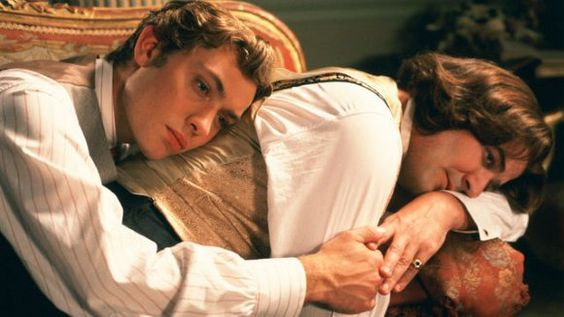
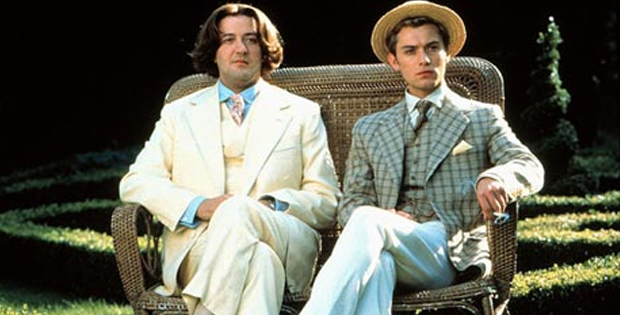
Jude Law and Stephen Fry in a disastrous love affair in sensitive biopic Wilde

Director: Brian Gilbert

Cast: Stephen Fry (Oscar Wilde), Jude Law (Lord Alfred “Bosie” Douglas), Jennifer Ehle (Constance Lloyd Wilde), Vanessa Redgrave (Jane Francesca Agnes “Speranza” Wilde), Gemma Jones (Sibyl Douglas), Judy Parfitt (Lady Mount-Temple), Michael Sheen (Robbie Ross), Zoë Wanamaker (Ada Leverson), Tom Wilkinson (Marquess of Queensbury), Ioan Gruffudd (John Gray)

Could there be a more perfect piece of casting than Stephen Fry as Oscar Wilde? Not only is Fry the spitting image of the famed Irishman, but Fry’s own mercurial talent, his enormous outpouring of novels, articles and screenplays, his skill as a raconteur and his general ubiquitous presence as a personality make him a pretty good modern equivalent of Oscar Wilde. A lifelong admirer of Wilde – and an increasingly vocal proponent of gay rights and mental health awareness – Wilde’s life plugs into many of Fry’s own outlooks on the world. So yeah, perfect casting!

Opening in 1882 with Wilde’s tour of America (he effortlessly charms a group of clichéd “yee-haw!” silver miners – who literally fire their guns into the air in delight at his bon-mots in the film’s crudest touch), the film covers Wilde’s growing career, but focuses on his personal relationships. Unaware of his homosexuality, he marries Constance (Jennifer Ehle), but discovers his true nature with her friend Robbie Ross (Michael Sheen). However, this leads to his destructive, obsessive love for alternately petulant and caring Lord Alfred Douglas (Jude Law), his beloved “Bosie”. When he is accused publically of sodomy by Bosie’s father, the Marquess of Queensbury (a raging Tom Wilkinson, chewing the scenery), Wilde takes the matter to court – a disastrous decision that destroys his life.

Brian Gilbert’s film is a sensitive and lovingly crafted slice of period drama, that movingly demonstrates the hypocrisy of Victorian values. Wilde is celebrated by the public, despite the open secret of his and Bosie’s relationship, while rent boys (including a one-line appearance from Orlando Bloom!) and discrete gay relationships are common place. Wilde is a gentle, naïve man for whom emotional closeness is more important than physical love. He charms a society only too aware of his nature. However, the instant he causes a stink, his reputation is ruined and his life collapses. What the film does so well is give us a sense of the inner vulnerability, doubt and desire for affection at the heart of a man who, perhaps more than any other, lived his life as a public exhibition.

Halliwell’s Film Guide claimed the film attempted to reposition Wilde as a family man, a grossly unfair view of the film’s stance. As if a man who discovers he is gay could not love his children, or that he could no longer care for his wife. Similarly, accusations that the film shows Wilde’s homosexuality as the roots of his downfall are similarly misguided – Robbie Ross is unaffected by legal troubles and he’s openly gay. No, the film is making a far more conventional (in a way) point – Wilde was brought low because he fell hopelessly in love with the wrong guy.

Jude Law’s big break was in this film – and watching it again is a reminder of what a firebrand, dynamic actor he can be. He makes Bosie half monster, half emotionally vulnerable child. He alternates (sometimes within the same scene) between affection, devotion, kindness and wildly petulant rage. He’s overwhelmingly selfish and self-obsessed – even as Wilde’s life collapses, he can only whine that he is furious his father is winning – but then remorseful and guilt-stricken when the consequences of his actions become clear (but not enough to not do it again). Law juggles all these contradictions with astonishing skill – it’s an assured, magnetic performance of brilliance. We can see why Wilde adores him, while at the same time wanting to wring his neck.

It’s also clear why all the other characters around Wilde find him so appalling. Ross (and Sheen is similarly superb as Wilde’s tragically “friend-zoned” devoted admirer) can’t bear the appalling influence Bosie has, but knows he’s powerless to do anything about it. In one great scene, Bosie haughtily says he knows Ross always hated him, before cruelly saying it’s because Wilde loved Bosie, but Ross was only “one of his boys” – the look of pain on Sheen’s face is brilliantly moving. Wilde himself seems almost sadly (if inevitably) drawn into Bosie’s tastes for casual sex and rough trade – often playing voyeur at these events, while sadly accepting Bosie doesn’t find him physically attractive. Wilde’s basically the victim of an abusive relationship – and the film does a brilliant job of demonstrating why a man otherwise so blessed with intelligence can’t see it.

Julian Mitchell’s excellent screenplay (based on Richard Ellman’s award-winning biography) uses Wilde’s The Selfish Giant as a framing device – subtly comparing Wilde and Bosie respectively to the giant and the child. It also brilliantly constructs a sense of Wilde’s quick wit and staggering intelligence, and provides a host of sparkling cameos for some fine character actors. The production design and photography are spot-on, and while Gilbert may be slightly workmanlike in his filming, he certainly lets the story tell itself.

The focus on Wilde’s family life is also reassuringly different – it’s brilliant to see Wilde’s obvious adoration for his children, and plenty of indication that he was actually (much of the time) a very good husband and father. Mitchell’s script softens Constance’s reaction to Wilde’s conviction (she wasn’t as forgiving and forward-thinking in her views as she seems to be here) but it does mean that we are allowed to see the full story of Wilde’s life, rather than having him defined by his sexuality. Jennifer Ehle also does a marvellous job with very little material, and her quiet dignity and support for her husband (despite her anger at his obsession with Bosie) is very affecting.

But at the centre of all this is that perfect casting of Stephen Fry. In all the rest of his career, Fry will never be better than he is here. His Wilde is intellectual, mildly arrogant, but also naïve, gentle and almost unworldly. His voice is perfect for the aphorisms, and he is really striking physically. Above all though, he brings a deep, emotional empathy to the part – you feel how personal this is for Fry the actor, and you feel how closely he identifies with a man who discovered his sexuality late. His besotted, blind love for Bosie is as affecting as it is frustrating. His vulnerability in Reading gaol is deeply moving. It’s a quite marvellous performance, anchoring a movie that is gentle, kindly, caring and sensitive in exploring the inner life of a very public man.

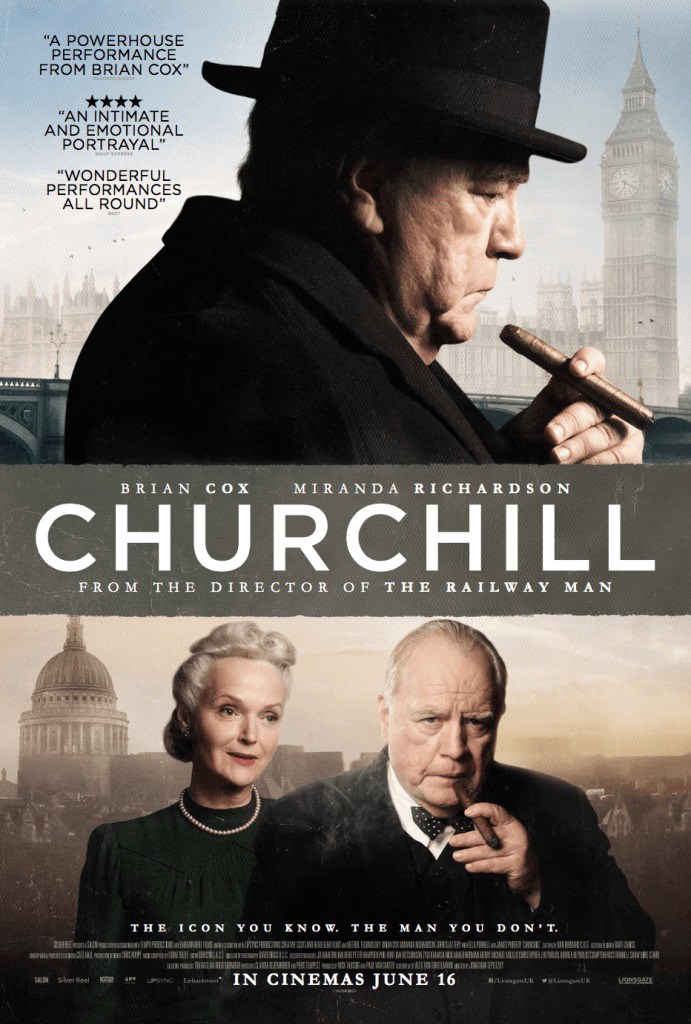
Churchill (2017)


Brian Cox does his very best Greatest Britain as Churchill

Director: Jonathan Teplitzky

Cast: Brian Cox (Winston Churchill), Miranda Richardson (Clementine Churchill), John Slattery (General Dwight D. Eisenhower), James Purefoy (King George VI), Ella Purnell (Helen Garrett), Richard Durden (Jan Smuts), Julian Wadham (Field Marshall Bernard Montgomery), Danny Webb (Field Marshall Alan Brooke), Jonathan Aris (Air Field Marshall Trafford Leigh-Mallory)

Someone should open a club: The Churchill Club. Every actor who’s played the Great Man gets instant membership. President the late Robert Hardy (seven times!). Other members? You name it: Finney, Gambon, Burton, Spall, Gleeson, Russell Beale, West, Hoskins… Think of a shorter, slightly rotund British character actor and inevitably they’ve had a go. Even the decidedly non-rotund, non-short, non-British John Lithgow aced the role in Netflix’s The Crown. With Gary Oldman also making his pitch this year in Darkest Hour, this film sees renowned character actor Brian Cox join the club. 

1944. Its three days before D-Day and Winston Churchill (Brian Cox) is getting cold feet. Haunted by memories of Gallipoli, he fears that the attack on Northern France will lead to disaster and oceans of blood. Against the advice of his Generals Montgomery (Julian Wadham) and Brooke (Danny Webb), he attempts to push General Eisenhower (John Slattery) to change the plans. As depression takes its grip on him, only his wife Clementine (Miranda Richardson) can get through to him. 

Churchill is a bit of a mess. It’s pretty well acted but highly televisual, shot with a self-conscious flourish that only emphasises its micro-budget. Teplitzky is in love with the cross-fade (or even worse the half fade) – constantly cutting from place to place for brief moments in the middle of scenes, often for lingering shots of actors staring out to sea or walking through fields. The action is often framed oddly, in long shot with full bodies in shot framed between ground and sky. Other scenes are filmed flatly – when Montgomery addresses his army, no amount of slow pans can hide that it consists of about 20 men.

On top of that, every single scene is scored within an inch of its bloody life. Now I love the power of film music, but this goes too far. The score is bland, predictable and unimaginative and just not that interesting to listen to. When it’s dropped heavy-handedly on top of every single scene it makes you want to scream. It’s also often completely misjudged or inappropriate – as gentle romantic piano swells during a key discussion between Churchill and the King, you almost expect them to kiss. 

That’s before we get started on the script, which is instantly forgettable. Alex von Tunkleman wrote a long running column in the Guardian on historical accuracy (or not) in films. Talk about a hostage to fortune, when you try to write your own film… I’ll go into historical issues in a bit, but there are lots of little things that feel wrong from Smuts (Deputy PM Of South Africa!) following Churchill around like some sort of valet too Montgomery addressing the Prime Minister to his face as “Churchill”. Stuff that just doesn’t feel quite right. The script also relies on a fictional “young secretary” who eventually speaks truth to the great man and wins his respect. Von Tunkleman is no writer of snappy dialogue, the film too often feeling like a wonky history lesson than a drama.

Historically the film does explore a different side of Churchill – enough to ruffle the feathers of the millions of Churchill fans out there. It focuses on his depression and self-doubt, within the framework of a period when he was starting to become sidelined by America. It also focuses on his little known opposition (certainly initially) to D-Day (he favoured a second front opened in Europe’s “soft underbelly” of Italy) – although it certainly expands this last-minute opposition for dramatic effect. I’m pretty sure he was on board by this point (however initially reluctant)!

What the film looks like it might do (but never quite does) is really explore some of Churchill’s laws and vulnerabilities – to look at the negatives and see how overcoming (or dealing with these) made him a great man. It touches heavily on Churchill’s depression – the “black dog” – with a desperately worried Churchill retiring to his bed to despair, praying for bad weather to prevent the landing and bawling out his secretary. Churchill is frequently wrong or mistaken, and the film captures much of the frustration his generals had with this talented amateur. It also isn’t afraid to show that, with American muscle driving the war, Churchill was becoming more of a mascot than a major orchestrator of allied strategy.

It’s a shaded portrait, but the film is eventually seduced by Churchill’s magnestism – a King’s Speech style final radio broadcast is all swelling regard, and a coda of Churchill waving his hat on a beach towards France hammers home his legendary status – miles away from its careful look at his growing irrelevance (and his concerns about this) early in the film. For all we have characters constantly stressing to Churchill his time is passing, the film can’t help finishing with a flourish that hammers home his centrality.

Churchill is flat and unimaginative but it does have an energetic, engaging performance from Brian Cox. While not in the first rank of Churchills, he captures the charisma, without slavishly imitating the famous voice. His Churchill, with his depression and doubt, also feels different: a slightly counter-establishment actor like Cox fits nicely with this. It’s an assured, charismatic performance hampered by the material. The rest of the cast feed off scraps though Miranda Richardson is assured as a twinkly level-headed Clementine. Richard Durden also deserves mention as gruffly supportive Smuts, as does James Purefoy as a gentle George VI.

Churchill means well – but fails. It’s aiming to question some of the reverence we have for the past, but ends up falling between stools, in the end too in love with the myth, but too critical to please the die hards. Flatly filmed and woodenly written, too many scenes fade from memory too quickly. Brian Cox (and Winston) deserved better.

The Founder (2016)


Michael Keaton accepts the praise as Founder of the McDonalds Business Empire

Director: John Lee Hancock

Cast: Michael Keaton (Ray Kroc), Nick Offerman (Richard McDonald), John Carroll Lynch (Maurice McDonald), Linda Cardellini (Joan Smith), B.J. Novak (Harry J. Sonneborn), Laura Dern (Ethel Kroc), Justin Randell Brooke (Fred Turner), Kate Kneeland (June Martino), Patrick Wilson (Rollie Smith)

McDonalds. The Golden Arches are ubiquitous, not just in America but across the whole world. But how did this happen? How did a small business – just one stand in a small town in America – suddenly become a global monolith?

Ray Kroc (Michael Keaton) is a luckless travelling salesman, selling supplies to drive-in diners. In California he encounters a diner the likes of which he has never seen before: a walk-up restaurant serving high quality food in disposable packaging, instantly. The business is McDonalds, run by brothers Dick (Nick Offernan) and Maurice (John Carroll Lynch). Kroc instantly recognises the potential of the business, and strikes a deal to franchise the formula across America, although the McDonald brothers will maintain control over all changes. Kroc, however, has the drive and ambition the McDonald brothers lack – and he slowly begins to stretch and expand the deal, taking on more and more power. Eventually he will become “The Founder” of the business that bears his original partners’ names.

What’s interesting about The Founder is that it has a certain element of wanting to have its cake and eat it. It’s simultaneously a semi-celebration of American entrepreneurship and a condemnation of big business crushing the little guy. This sounds like it should make for a confusing film but actually it kinda works. It fits the complex world of major business successes – someone like Kroc had the skills and the ruthlessness to actually make McDonalds into a global super-company in a way the McDonald brothers never did. At the same time, Kroc is clearly incapable of creating anything himself (even most of his business-building ideas come from other people) and the McDonald brothers have the real “American” entrepreneurial invention to create something new.

So the film becomes an engaging story of how businesses grow and develop, which largely manages to remove Hollywood sentiment from the equation. Kroc isn’t exactly a hero – he’s selfish, ruthless and places himself first constantly – but he’s not exactly a villain either. He’s a downtrodden striver, who has too continually push to be accepted by those who look down on him. He has a sense of loyalty and love for his brand – even while he begins to shut the McDonald brothers out of their own business. Similarly the McDonald brothers have a homespun honesty to them, but they are also naïve and unrealistic in their demands and desires for the business.

The film relies a lot for its success on Keaton’s slightly tragic desperation in the lead role, his yearning to improve and better himself. The first half of the movie shows his charm but also demonstrates his business acumen, his genius in recognising that what the McDonald brothers have invented could work on a huge scale. He’s hard-working and initially luckless, and the snobbish knock-backs he receives from banks and investors when peddling an idea get us on his side – after all we know it’ll be worth billions. It’s a Capraesque spin: he’s the little guy bucking against the system who becomes the very monolithic monsterous system himself. We can’t even be certain where we see the flip.

What becomes clear is that Kroc himself is somehow empty, somehow slightly devoid of depth, a man able to move smoothly from concept to concept with no lingering sense of guilt. He discards the McDonald brothers (after copyrighting their name) with as much calmness as he drops his wife (Laura Dern, in a thankless part as The Loyal Wife). Despite this though, the film never brings itself to condemn Kroc. It’s a little in love with the chutzpah of Kroc’s success and his persistent positivism, while seeing those he has had to drop on the way as tragic victims of the monolithic American business success Kroc has created.

We are invited to have similar sympathetic feelings about the hapless McDonald brothers: innocents in a world of business, able to create something that can change the world but hopelessly incapable of translating it into the type of scale that it could achieve. The film doesn’t forget that the McDonald brothers are the victims here, and Offerman and Lynch are both superb as two brothers with a deep personal bond and a love for their business and each other. But it also partly follows Kroc’s line – these two do not have the vision and ambition to take their idea to the next level. They are innovators but they are small-scale ones. The film daringly doesn’t just take their side as the little guys crushed by the system; it also allows itself to consider if they to a certain extent failed themselves. They never learn either, accepting Kroc’s handshake agreement for future royalties at the end of the film, an agreement we are all too aware even when it is happening will probably never be met.

The film has a certain love for the Americana of McDonalds and fast food joints, and it’s both an advert for the triumph of the business (the customers are all uniformly happy, and the ordinary employees in Kroc’s empire are all wonderfully warm) and a sad testament to the small businessman being swept aside by the big company. It’s quite a feat for the film to manage both at the same time and remain coherent. It’s both an advert for and attack on McDonalds, but it holds both these ideas simultaneously at the same time really well. Well worth a watch.

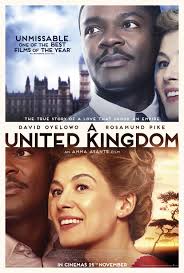
A United Kingdom (2016)


Rosamund Pike and David Oyelowo are a love match in underwhelming A United Kingdom

Director: Amma Asante

Cast: David Oyelowo (Seretse Khama), Rosamund Pike (Ruth Williams Khama), Terry Pheto (Naledi Khama), Vusi Kunens (Tshekedi Khama), Jack Davenport (Alistair Canning), Laura Carmichael (Muriel Williams-Sanderson), Jack Lowden (Tony Benn), Tom Felton (Rufus Lancaster), Charlotte Hope (Olivia Lancaster), Nicholas Lyndhurst (George Williams), Anastasia Hille (Dot Williams)

Some films just have a safe, crowd pleasing, “your whole family would like it” feel to them. A United Kingdom falls very neatly into this category. It’s a simple and straightforward story, told with a cosy safety that won’t challenge you or really stick in your memory.

Seretse Khama (David Oyelowo), heir to the throne of the Bamangwato tribe in what will become Botswana, is studying law in England in the late 1940s to prepare for his reign. He meets and falls in love with London girl Ruth Williams (Rosamund Pike) – and despite the protests of their families and their nations, they marry and resolve to build a life in his country working for the betterment of his people. But first they must overcome what seem insurmountable obstacles.

A United Kingdom is a very well-meaning film. It has an important story to tell about acceptance and prejudice. Many of the points it makes about the negative reactions to mixed race marriages and colonial politics are still painfully relevant today. It’s an earnest and good-hearted film. It’s just a real shame that it’s also not that special.

It’s well acted by the two leads, we can give it that. Sure they are presented as almost flawless individuals, but David Oyelowo and Rosamund Pike are engaging performers and give a lot of emotional weight to the story. Their courtship is sweetly hesitant and their relationship feels real and lived in. Oyelowo brings much of the magnetic charisma he has shown in a wide range of films to the part, and Pike’s neat mixture of prim Englishness, decency and stubborn self-determination work really well.

But the story it so simply done, the whole thing feels like a TV movie of the week. The film is flatly directed and conventionally shot: London is always dark, filmed through a blue lens, with rainwater or fog dripping off every shot. Africa by contrast is a vibrant, orange lensed place where every sunset and sunrise looks like a painting. Very few shots show much more imagination than that. There is no flair or originality to the cinematography, the composition of the shots, or even the musical score (which swells up stirringly at emotional moments and then fades instantly from memory). On every technical level, it can boast nothing more impressive than workman-like competence.

The narrative is equally simplistic: our heroes fall in love, deal with rejection, passionate speeches are made, allies are slowly won over and a deus ex machina finally makes everything fine. The stakes of what Seretse is putting at risk through his marriage are never made completely clear, despite all the talk of digging and diamonds. The final resolution of the entire problem is so simplified, contrived and rushed I almost had to double check the runtime to see if I missed anything. It’s all part of the same simplification in the story that sees sides change with confusing speed – Seretse’s sister goes from rejecting Ruth to treating her like a sister in a blink; Ruth’s father (distractingly played by Nicholas Lyndhurst, forever Rodney) is given one moment in a cinema to switch from prejudiced British working man to repentant father.

The characters themselves are very plainly drawn: they are either goodies or baddies with no attempt made to look at the deeper feelings or motivations behind them. For instance, Seretse’s uncle is shown as simply outraged by the marriage, with no attempt to explore why a marriage like this may not have been seen as ideal in a fragile community, or how it might have made holding a deal with the UK together difficult. Similarly, the Brit characters are almost to a man mustachio twirlers or bitchy mem-sahibs, callously sipping sherry as they thwart Seretse and Ruth’s plans. (Spare a thought for poor Tom Felton, yet again hired to play Draco Malfoy In A Different Historical Costume.)  Even Clement Attlee (so regularly beautified as the Prime Minister who oversaw the creation of the Welfare State and NHS) is portrayed here as a cold-hearted architect of realpolitik.

By making its lead characters so saintly and pure, and anyone who disagrees with them so cruel and sunk in villainy, the film weakens itself. Yes it has a sweet relationship at the middle, but it also manages to make this feel slightly lightweight, because the film itself is so flimsy. When their opponents are such cartoonish baddies, and their aims for their country so unclearly explained, it minimises the impact of the story. Instead of showing us the birth of a modern, democratic nation through the focal point of one couple’s struggle against prejudice and adversity, it makes both personal and national triumphs feel actually less impressive than they were – no more than a Sunday afternoon, Mills & Boon tale of a working class London girl and a handsome, “exotic” stranger.

A United Kingdom is an important story that has made itself into a slight one, a conventionally filmed and simplistically told tale that never carries the weight and impact it should do. Despite good performances from the leads, it’s really nothing special.

Hidden Figures (2016)


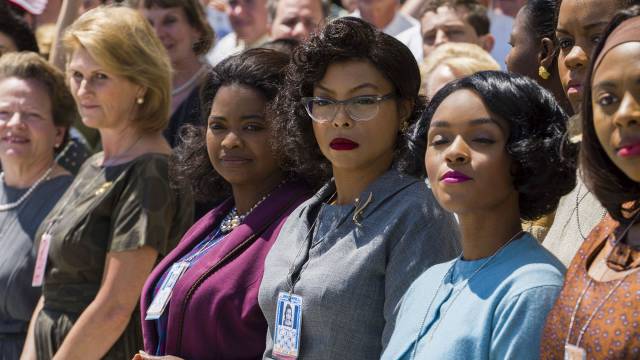
Octavia Spencer, Taraji P. Henson and Janelle Monáe are trying to make their way in a white man’s world

Director: Theodore Melfi

Cast: Taraji P. Henson (Katherine Goble), Octavia Spencer (Dorothy Vaughan), Janelle Monáe (Mary Jackson), Kevin Costner (Al Harrison), Kirsten Dunst (Vivian Mitchell), Jim Parsons (Paul Stafford), Glen Powell (John Glenn), Mahershala Ali (Colonel Jim Johnson)

The Space Race has a certain mysticism in American culture, epitomising a time of hope, where humanity literally touched the stars. And yet, amidst all this hope and aspiration, a whole section of America’s own population was being oppressed by racial segregation and prejudice. Hidden Figures brings these two aspects together by telling the stories of some of the black women who struggled against adversity to help send a man to the moon.

Hidden Figures is the sort of film Hollywood does very well: a warm, unfussy crowd-pleaser pushing all the expected emotional buttons, presenting an inspiring “based on true events” story . The film focuses on three black women pioneers at NASA. Katherine Goble (Taraji P. Henson) is a mathematical genius and widowed mother, promoted to work as a figures checker – and struggles to gain acceptance and equality with her fellow workers. Dorothy Vaughan (Octavia Spencer) is the team leader in all but name (and pay) of a group of black female checkers, who decides to make herself invaluable as a computer expert. Mary Jackson (Janelle Monáe) works as an assistant to the engineering team, but struggles to gain the formal qualifications she needs to progress.

Truth be told, it isn’t anything special – it knows how to serve up its moments in an affecting way, but it’s filmed with a workmanlike flatness. Its structure and events are predictable – the standard arc of adversity, struggle, acceptance and triumph. But it’s still affecting for all that, and well made. It becomes a decent feel-good movie, and manages to never succumb to overt seriousness or heavy handed self-importance: it keeps the tone pretty light.

It’s a film about racial and sexual discrimination, but it avoids introducing an actual villain. The real opponent is “the way things are” – no single white character is particularly racist or unpleasant, just used to the system being what it is and, feeling only the benefits of it, feel no obligation to change it. It’s not just the white characters either – even Ali’s Colonel Johnson struggles to believe Katherine works at NASA as a mathematician, and this everyday sexism is as much a barrier to the women as race.

Melfi astutely picks a handful of key moments to showcase discrimination: from little moments like Goble being handed a bin to empty when she arrives on her first day, to the careful hierarchical games played as Dorothy addresses Kirstin Dunst’s supervisor as “Miss Mitchell”, while always being called “Dorothy” in return. This sits alongside more overt moments: Hidden Figures probably has a claim to fame as being the only film to feature a toilet trip as its dramatic highlight – Gobley having to run over 15 minutes across the campus to use the “Coloured Women’s” bathroom, a situation only resolved by the intervention of her grizzled boss (an effective Kevin Costner). The design also works well to help visually make the woman stand out as different in the sea of white NASA men around them.

Spot the odd one out in NASA

If the characters do fall into a standard pattern (the quiet professional one, the motherly one, the firebrand), the acting is still extremely good. Henson is terrific as the quiet anchor of the film – it’s particularly admirable as the role largely isn’t showy or flashy. But she brings a quiet, assured professionalism, making Goble a woman who knuckles down and gets on with it, whose quiet assurance wins eventual respect. The love story between her and Ali’s Colonel Johnson is also very sweet. Spencer is very good as Vaughan, particularly the way she suggests resentment just below the surface of her motherly exterior. Monáe has the least interesting role, but her bolshiness serves as a nice contrast to the other leads.

The tricky thing when a film purports to be a piece of history, is when you find out much of what you watched didn’t actually happen. The racial segregation we see so prevalent in NASA just wasn’t quite the case in real life. The obstacles and barriers placed before our heroines largely didn’t happen. Even segregated bathrooms (a key motif in the film) were not an issue at NASA. Many of the events we see didn’t happen – or not like this – and the vast majority of the supporting characters are composite inventions. After investing in the struggles of the three characters, it’s easy to feel that the revelation that it was (almost) all made-up has cheapened the impact of the story.

However, what is true is: even if NASA wasn’t as bad as this, most of the rest of America was. So even if this film makes working in NASA look a lot worse in the 1960s than it in fact was, it does feel very true if taken as a general impression of what life in America was like back then for black Americans. So although the film has to brush up and embellish things that actually happened, it does feel very true to the general experience of being both black and a woman in the 1960s. All of which is a way of giving the film a bit of a pass for its inaccuracy. It might be gilding the lily of the struggles these women had in NASA, but it is certainly a real impression of what black women experienced in America at the time – in fact the reality was almost certainly worse.

Hidden Figures is a charming enough film, even though it’s a pretty predictable and unsurprising one. It pushes all the Hollywood buttons you would expect with confidence, and while its story arcs don’t deviate much from the “inspiring movie” template, they do work very well. Its historical accuracy is ropey, but it does feel like it gives a very good sense of the attitudes of the time – capturing both the almost atmosphere of hope in 1960s America, and also the everyday horrors of segregation and racial oppression. It also has some terrific performances. It may be a safe, crowd-pleaser of a film – but it does please the crowds well.