Tag: Bob Odenkirk

Nebraska (2013)

Bruce Dern excels in Alexander Payne’s masterful Nebraska

Director: Alexander Payne

Cast: Bruce Dern (Woody Grant), Will Forte (David Grant), June Squibb (Kate Grant), Bob Odenkirk (Ross Grant), Stacy Keach (Ed Pegram), Mary Louise Wilson (Aunt Martha), Angela McEwan (Peg Nagy), Rance Howard (Uncle Ray), Devin Ratray (Cole), Tim Driscoll (Bart)
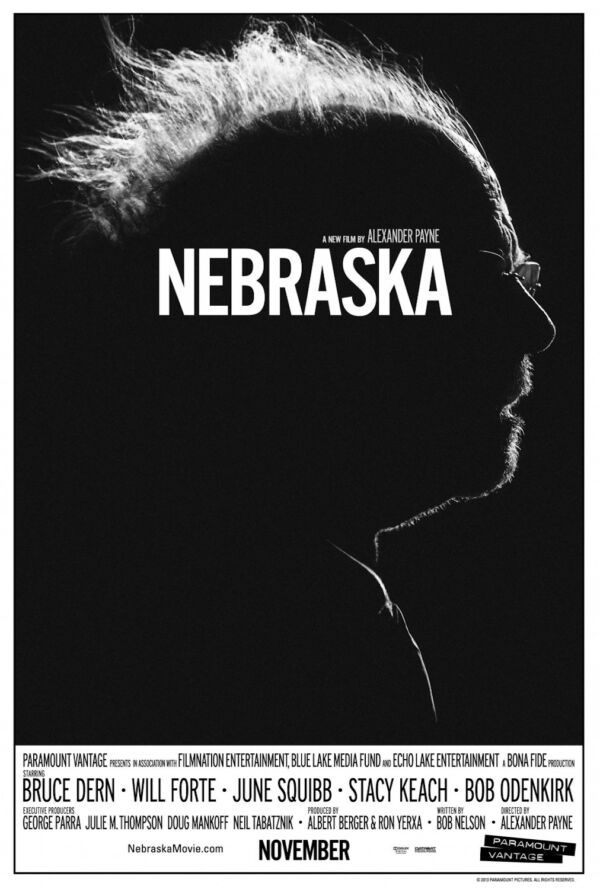
Woody Grant (Bruce Dern) is an ageing alcoholic on the edge of senility. Receiving a circular from a magazine company, he becomes convinced he has won a million-dollar sweepstake – despite his family telling him he definitely hasn’t. Eventually, son David (Will Forte) agrees to drive him to Lincoln, Nebraska, to ‘claim’ the prize. Along the way, they visit Woody’s family in Hawthorne, Nebraska – and the whole town swallows whole the idea that Woody has won the sweepstakes. Despite the best efforts of David, his mother Kate (June Squibb) and brother Ross (Bob Odenkirk), both family members and townsfolk come forward with claims for this fictional money. All this while the family themselves come to understanding about each other and their past.

Alexander Payne’s Nebraska is gently paced, meditative, but has lasting impact. Shot in a gorgeous black-and-white, this is a road movie, an odd buddy film, a family drama and a comedy of misunderstandings. All this comes together, in a way perhaps only Payne could do it, into something that at first seems like a bitter-sweet look at a dysfunctional family, but slowly reveals itself into something far more heartfelt than you expect. Nebraska carefully builds a portrait of a family that feuds, but is fundamentally loyal, even while carrying private resentments.

It all revolves around Woody himself, who at first seems to be the typical bad Dad: distant from his sons, dismissive of his wife, a history of drinking. His marriage to Kate seems based more on longevity rather than any love. Approaching senility has only accentuated, it seems, his stubbornness and self-obsession. He’s crochety and fixated on his own needs. But, despite all this – and this is a huge credit to Dern’s sympathetic performance – there is a gentleness to him. For all his negatives, he’s vulnerable and even naïve. He assumes people are telling him the truth. Later Kate will angrily denounce his grasping family, has Woody never said ‘no’ to anything he was asked to for. And you can believe it. He is a character who we see in more and more of a human light.

It comes across in the relationship with David. In an equally beautifully judged performance by Will Forte, David’s motivations for this road journey change. At first it seems an attempt to end an idee fixee, but it becomes more and more about spending time with a man he realises he loves more than he thought. Perhaps that’s because Forte’s sad-sack gentleness has more of an echo of the inner meekness of Dern’s Woody. David has more than a few similarities to Woody – a disappointing career, a failed relationship (unlike Woody’s generation, separation is a lot more feasible), a sense that his life has been a disappointment. But Payne’s film flourishes, because it becomes about David’s discovery of a kindred with his father he hasn’t acknowledged for years.

A lot of that comes from seeing the world his father grew up. A small American town, with more than a touch of The Last Picture Show, where everyone seems either stuck-in-a-rut or happy to drift. Everyone knows everyone, and there are no entertainments except feuds and sharing every piece of gossip. But, above that, David also discovers more about his father’s background: his hopes and dreams, his acts of kindness but also his acts of selfishness. His awkward relationship with his family, and the reasons behind his dysfunctional but strangely contented relationship with his wife.

All this comes together in that very Payne-ish way that is both heart-warming, slightly sentimental but genuinely moving. Above all it works, because everyone one in it feels very relatable and true. David is a highly understandable guy, a quiet fellow who hasn’t quite cracked how life works, but wants to rekindle a relationship with his father. Woody wants to cling to anything that might help him feel he has control over his own life. The saga of the fictional money starts as an item pushing the two men apart, but actually draws them closer as others in the town seek to take advantage (most nastily, the excellent Stacy Keach, claiming to be a former business partner).

That’s what helps make, what could have been a comedy about a clueless Quixote and his reluctant Sancha Panza, into something really moving. Payne may tease Woody – and even allow him to say some quite unpleasant things (his indifference as a young man to having children is a tough thing for any father to say to his son) – but he never makes him a joke. He’s just a man who seems to be looking back at his life, not quite sure how he got there. With David as an audience surrogate, wondering the same thing in turn – and half wondering whether he is going the same way.

And, of course, the film is funny. Woody and David make a wonderful flying trip to Mt Rushmore (“It looks unfinished…Lincoln hasn’t even got an ear” is Woody’s summary of it). June Squibb is very funny as David’s surprisingly foul-mouthed mother, for whom a road trip is a wonderful chance to remember all the conquests she might have made back in the day. David’s constant pleas for Woody to not mention his “win” – and the town’s total buying of this urban rumour – is very well done.

But it mixes with genuinely moving moments. Squibb’s Kate may be frustrated and fed-up with Woody, but she will defend him to the end and tenderly kisses his forehead while he sleeps. It mixes with genuine touches of regret: the extended Grant family sit and watch football together, mutely starring at the television, barely communicating. This isn’t nostalgic, but it is faintly sad about how life so quickly life can trap us into familiar patterns.

And the performances are of course sensational. Dern is incredibly heartfelt, communicating huge amounts of little dialogue and watery eyes. Fonte is superb as a man who believes he has had enough of his father, only to have his perceptions change. Squibb is both funny and heart-breaking, Odenkirk exasperated but tender, Keach a bully scared of his own empty life. It’s one of Payne’s signature works, a gentle character study that starts giving you one perception and develops into giving you a very different one. It’s one of his finest films.

Little Women (2019)

March Sisters: Assemble! For Greta Gerwig’s superlative adaptation of Little Women

Director: Greta Gerwig

Cast: Saoirse Ronan (Jo March), Emma Watson (Meg March), Florence Pugh (Amy March), Eliza Scanlen (Beth March), Laura Dern (Marmee March), Timothée Chalamet (Laurie), Meryl Streep (Aunt March), Tracy Letts (Mr Dashwood), Bob Odenkirk (Father March), James Norton (John Brooke), Louis Garrel (Professor Friedrich Bhaer), Chris Cooper (Mr Laurence)

Spoilers: Such as they are but discussion of the film’s ending (or rather Greta Gerwig’s interpretation of it) can be found herein…

There are few novels as well beloved as Louisa May Alcott’s Little Women. So much so – and so successful have been the numerable adaptations, not least Gillian Armstrong’s 1994 version – that it’s hard to see what a new adaptation could bring to the story that hasn’t been covered before. A new window on the story is triumphantly found though in Greta Gerwig’s fresh and vibrant adaptation, blessed with some terrific performances, and telling its own very distinctive version of the story.

Gerwig’s version crucially starts off in the sisters’ adult lives: Jo (Saoirse Ronan) in New York struggling to make it as a writer, while Meg (Emma Watson) nurses the ill Beth (Eliza Scanlon) back home with Marmee (Laura Dern), and Amy (Florence Pugh) encounters their childhood friend Laurie (Timothée Chalamet) in Paris. This is intercut with the story of their growing up in Massachusetts, with the past story line eventually catching up with the present day. 

If that sounds like it should make the story hard to follow, don’t worry – this is astonishingly confident work from Gerwig, wonderfully directed with zest, fire and imagination (making her exclusion from the Best Director list at the Oscars even more inexplicable – chalk that up I guess to sexism against pictures about “girls” and the fact it’s not as overtly flashy as the rest of this year’s nominees). This takes a familiar book, and fires it up with all the energy of independent, modern cinema, creating something that feels hugely fresh and dynamic. The cross cutting between the two timelines work beautifully – not only is it always perfectly clear, but it also makes for some wonderful contrasts between events in the past and present. None less than the recovery of Beth from TB being followed (with an almost shot-by-shot echo in its filming) by the reactions to Beth’s death. Inventions like this add even greater depth and meaning to the moments and hammer home some terrific emotional high points. 

Gerwig’s style throughout the film invests the story with a great energy, particularly in creating the warm bohemian attitude of the March family. This really feels like a family – conversations between them are fast, people talk relaxedly over each other, the chemistry is completely real, and the camera captures in its movement the warmth and energy of these characters who are completely comfortable in each other’s presence. It’s no surprise that Laurie is taken so quickly with this family, or wants to be part of it. Gerwig invests the family with a dynamic, excited sense of freedom and urgency. Helped by the warm glow that the childhood sections of the film are shot with, these scenes hum with a glorious sense of familial warmth and excitement. 

The camera often moves with careful, but perfectly planned, movement through scenes, mixed in with moments of fast movement – following Jo through streets, or the playful exuberance of Jo and Laurie’s first meeting (and dance) at a society ball. It’s a vibe that carries across to the performances, anchored by Saoirse Ronan’s fabulous performance as Jo. Fervent, intelligent, idealistic but also stubborn, prickly and difficult, Ronan’s Jo carries large chunks of the film, with the character skilfully mixed in with elements of Louisa May Alcott. Ronan most impressively suggests a warmth and familial love for Laurie at all times, that never (on her side) tips into a real romantic feeling. She also has superb chemistry in any case with the excellent Timothée Chalamet, who is just about perfect as a dreamy, but quietly conventional in his way, Laurie.

Gerwig’s primary rejig – and a reflection of the new structure she is chosen – is to allow more screen time to Amy, usually the least popular of the four sisters. She’s also helped by a sensational performance by the Oscar-nominated Florence Pugh as Amy, who not only plays a character perfectly from her mid-teens to her early twenties, but also invests the character with huge amounts of light and shade. The film gives a great deal of time to Amy’s time in Paris – her frustration with living in Jo’s shadow, her longing for her own artistic career (and recognition of her conventional talent – brilliantly established by a wordless glance Pugh gives an impressionist painting compared to her own literal effort) and her own romantic feelings and dreams. Cross cutting this with her past actions – her more temperamental and less sympathetic moments (burning Jo’s book!) that have pained generations – gives the audience far more sympathy and understanding for her. Pugh is also pretty much flawless in the film.

There are a host of superb performances though, with Watson capturing the duller sense of conventional duty in Meg, but spicing it with a sad regret for chances lost; Laura Dern is wonderfully warm as Marmee, but mixes in a loneliness and isolation below the surface; Chris Cooper and Meryl Streep sparkle in cameos. There is barely a false step in the case.

All the action eventually boils towards the ending – and Gerwig’s bravest and most unconventional decisions, in subtly adjusting the final conclusion of the story. At first it seems that the cross cutting of the story has short changed heavily the Bhaer-Jo relationship (Bhaer appears only in the first half an hour of the film and the end), as it cannot lean too heavily on romance when many in the audience will still be expecting a Jo-Laurie match up. 

But Gerwig actually uses this as a skilful deconstruction of the novel. Always feeling that Alcott desired Jo to be a single author – but inserted the marriage to Bhaer at the end to help sell the book – Gerwig effectively has Jo do the same thing. At a crucial moment in the final scenes, we cut to Jo negotiating with her publisher (a droll cameo by Tracey Letts), who insists on a happy ending. Cue a “movie style” chase to intercept a departing Bhaer (shot with the golden hue of the past, while Jo’s meeting with the publisher has the colder colours of the present). Our final shot shows Jo watching her book being printed, cross cut with a golden hued vision of “Jo’s” school with husband in tow. 

It’s a genius little touch, as it’s subtle enough to allow viewers to take the happy ending as it appears in the surface, but smart and clever enough to make the movie unique and different from the other versions (and that ending from the 1994 version is hard to top!). It may undermine the final relationship – and offend those who like the idea of Jo deciding she wants something different than she at first thought – but in its freshness it can’t be challenged. It also makes for a film from Gerwig that is both fresh and exciting and also bracingly and thrillingly in love with Alcott and her work.

The Incredibles 2 (2018)

The family are back together, in belated but brilliant sequel The Incredibles 2

Director: Brad Bird

Cast: Craig T Nelson (Bob Parr/Mr Incredible), Holly Hunter (Helen Parr/Elastigirl), Sarah Vowell (Violet Parr), Huck Milner (Dash Parr), Samuel L Jackson (Lucius Best/Frozone), Bob Odenkirk (Winston Deavor), Catherine Keener (Evelyn Deavor), Brad Bird (Edna Moda), Sophia Bush (Voyd)

Fourteen years? In Hollywood that is nearly an eternity. Can you even imagine a film released today getting its first sequel over a dozen years later? But that is how long we’ve had to wait for a sequel to The Incredibles

Picking up immediately after the first film finished, the efforts of the Parrs, Bob/Mr Incredible (Craig T Nelson), Helen/Elastigirl (Holly Hunter), their children Violet (Sarah Vowell) and Huck (Dash Parr) and their friend Frozone (Samuel L Jackson) to stop the Underminer only lead to destruction. Superheroes are once again anathema to the authorities, but tech millionaire Winston Deavor (Bob Odenkirk) and his inventor sister Evelyn (Catherine Keener) are determined to change their reputation. Their plan? Use Elastigirl as the new “face” of responsible superhero-ing. Elastigirl takes on a new threat: the villainous Screenslaver who uses screens to hypnotise people and control them. Meanwhile, Bob has to cope with the pressures of being a stay-at-home dad, dealing with with teenage crushes, homework challenges and controlling super-powered baby Jack-Jack, who can barely control his never-ending series of powers.

And the world of Hollywood has changed so much since the first Incredibles film came out. Back then, comic book films were only just starting to come into fashion, and the Marvel Cinematic Universe didn’t even exist. So can The Incredibles forge its way in a cinematic landscape now overstuffed with superhero derring-do?  Well yes it does, because the film hasn’t lost the sense of what was so enjoyable about the first film. We still get all the action-packed excitement of some damn fine adventure sequences, choreographed with skill and wit. Playing alongside that we get all the homespun domestic turmoil of modern family life, right down to a dad struggling to help his son with his homework (“How can they change math?!”) and trying not to mess up his kids’ lives. 

The film resets the table to get us back to the situation of the first film – superheroes are illegal and unwanted and anything the Parrs do is going to have to be under the wire. And then it spins out a twist on the first film – this time it’s the super-competent and intelligent Elastigirl who will be the hero, while the more old-school Mr Incredible stays at home and looks after the kids. This combination works perfectly – Elastigirl is a brilliantly conceived character, cool, calm, collected, super smart, ultra-determined and ridiculously good at what she does. Holly Hunter’s southern tones are smoothly perfect for this part, investing it with just the right level of humanitarianism.

Really I should be annoyed about the end of the last movie being so completely reset in the opening minutes of this one, but truthfully the idea of superheroes struggling to balance everyday problems with illegal super-heroing is such a totally brilliant idea you are really happy to see it play out again, this time adding the dilemmas of Mr Incredible suddenly being thrown into a situation he can’t handle – having to be a regular dad – and collapsing in an unshaven, exhausted mess. 

Seeing someone struggle with such everyday problems is hilarious enough, but the film has a USP in the challenges of looking after cute little ball-of-trouble baby Jack-Jack: a sweet, blubbering little kid with a regular smorgasbord of powers, none of which he is able to control. Bob’s struggles to deal with this explosion of wildness (everything from laser rays to moving in the fourth dimension) throw up endless hilarious moments and sight gags that had me laughing out loud (probably too loud) in the cinema.

Sitting alongside this, Brad Bird hasn’t forgotten how to shoot and cut an action sequence – whether it’s animated or not. A chase where Elastigirl has to stop an out-of-control train is not only hugely exciting, but also tense and witty. Elastigirl is also such a relatable character that she adds huge amounts of human interest to every one of these action bits, and her determination to save lives – even of her enemies in exploding buildings – is really rather touching. The final action sequence doesn’t quite match the highlights of the first film, but it does excellent work.

Of course the villain is in fact using these strengths against her. If the film has one weak point, it’s that the identity of the villain is really rather obvious from the start. I pretty much guessed immediately who the villain was going to be. I can’t see anyone of any age being fooled, and the motivations of this villain seem a lot more rushed and less interesting than those of Syndrome in the first film. 

But that feels like a minor blemish on what is an excellent sequel, a real gem in the Pixar cannon. It’s still got the brilliantly retro-cool design that mixes the modern world with the 1950s and 60s. Michael Giacchino’s soundtrack is cracking. Brad Bird brings himself back as scene-stealing superhero costume designer Edna Mode. What’s not to like? I wouldn’t mind waiting another 14 years if they produce a third film as good as this one.

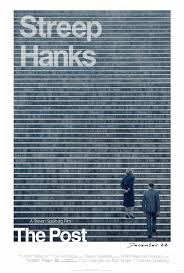
The Post (2017)

Hanks and Streep bust Watergate in advance in Spielberg’s too dry The Post

Director: Steven Spielberg

Cast: Meryl Streep (Katharine Graham), Tom Hanks (Ben Bradlee), Sarah Paulson (Tony Bradlee), Bob Odenkirk (Ben Bagdikian), Tracy Letts (Fritz Beebe), Bradley Whitford (Arthur Parsons), Bruce Greenwood (Robert McNamara), Matthew Rhys (Daniel Ellsberg), Alison Brie (Lally Graham), Carrie Coon (Meg Greenfield), Jesse Plemons (Roger Clark), David Cross (Howard Simons), Michael Stuhlbarg (AM Rosenthal)

There are few things newspaper journalists like more than old-fashioned films about the glory days of the press, showing journalists to be uniformly noble, upstanding, seekers of truth. There are few things Hollywood likes more than films the feature Streep and Hanks and/or are directed by Spielberg. As such, it’s not really a surprise that The Post received laudatory reviews, or that it crept into the Best Picture list of 2017 (it only got one other nomination, inevitably for Streep).

The film covers the Washington Post’s decision in 1971 to publish details from the Pentagon Papers, originally leaked to the New York Timesby former Defence Department official Daniel Ellsberg (Matthew Rhys). The papers detail the American government’s deceptive public messages on Vietnam, a war they knew to be unwinnable for almost ten years. The Nixon administration has blocked publication in the New York Times, but when the Post gets the same papers, owner and publisher Katharine Graham (Meryl Streep) and editor Ben Bradlee (Tom Hanks) have a difficult decision to make – suppress the truth or publish and face crippling legal penalties that could destroy the business.

The Post is quite similar in some ways to Spielberg’s far more successful Lincoln – a po-faced history lesson, told with panache, but essentially a dry civics lesson which draws some neat, but a little too on point, parallels with current events. Certainly it’s clear whom we are meant to be thinking of when the camera shows a shadowy Nixon in long shot from outside the White House, ranting into a phone in the Oval office late at night (admittedly, in a nice touch, the film uses the actual audio from Nixon’s Oval Office recordings). The parallels between press freedom and the spin of politics (or the charges of Fake News flung at any story the powers that be don’t like) are pretty clear. They are also pretty obvious.

Part of the film’s problem is that, unlike All the President’s Men (where the story covers full investigative journalism and Woodward and Bernstein need to piece the story together against the odds), this film hands everything to the journalists on a plate. It doesn’t even try to put a puzzle or some form of mystery before the viewers. Instead, the history is painstakingly (and drily) explained to give us the context, then each stage of the Post getting the papers is shown in simple and rather undramatic steps. There isn’t a sense – despite Bob Odenkirk’s deputy editor doing a bit of legwork – that the Post needed to work that hard to land the story. Crikey, you can see why The Times (who really did the crack the story) were a bit pissed at the film stealing their glory.

Once the papers are in the Post’s hands, the story almost immediately jumps to one night in which the papers are read and the board and the journalists squabble over whether they can legally publish or not. After that we get a swift coda where everything turns out fine, backs are slapped and the Supreme Court says it’s all good. There just isn’t quite enough drama. In fact we feel like we are watching a footnote, rather than the real story, which seems to be happening on the margins (for starters, the scandal of government lies on Vietnam, how The New York Times broke the story, and the Watergate break-in, a recreation of which rather clumsily closes the picture).

And I get that the film is trying to tell a story about how important a free press is and, yes, it’s great – but despite having a number of characters talk at length about this, I’m not sure what the film really tells us that we don’t already know. Instead it moves methodically but swiftly through events, carefully telling us what happened but never turning it into a really compelling story. Pizzazz for its own sake is not a strength, but a little more oomph in delivery here might have helped.

Alongside this, the film also wants to make points about the struggle of a woman in a man’s world and the institutional sexism (that probably hasn’t changed that much) of many boardrooms. Meryl Streep’s Katharine Graham – having inherited the company after the suicide of her husband – is a brow-beaten woman struggling to impose herself in a room of men whom she feels inferior to. Even this plotline though feels slightly rushed – we have Graham cowering in a boardroom meeting and struggling with paperwork, next thing we know she hesitantly makes the call to publish and is facing down her chief opponent (Bradley Whitford, rolling out another of his arrogant men of privilege). It’s all a bit rushed, perfunctory and all as expected – and Streep can clearly play this sort of role standing on her head.

But then the whole film has this slight comfort job feeling about it – everyone clearly invested in the story and the importance of the film’s points, but clearly without being challenged by the content. By the end of the film we’re are awash with clichés, from newspaper print rolling through old machines, to Graham walking through a crowd of admiring women outside the Supreme Court. The interesting and well assembled cast don’t get enough to do, with many of them feeling slightly wasted, not least Sarah Paulson in a thankless role as “the wife”.

The Post wants to be a big, world-changing film that talks about our modern age. Instead it’s a very middle brow, middle of the road history lesson that flatters to deceive, entertaining enough just about, but immediately forgettable.