Tag: Bradley Whitford

Scent of a Woman (1992)

Scent of a Woman (1992)

Pacino roars to Oscar-glory with an impressive turn in an enjoyable but predictable coming-of-age drama

Director: Martin Brest

Cast: Al Pacino (Lt Col Frank Slade), Chris O’Donnell (Charlie Simms), James Rebhorn (Mr Trask), Gabrielle Anwar (Donna), Philip Seymour Hoffman (George Willis Jnr), Ron Eldard (Officer Gore), Richard Venture (Willie Slade), Bradley Whitford (Randy), Nicholas Sadler (Harry Havemeyer)

Hoo-ha! It took eight nominations, but Pacino finally lifted the Oscar for his abrasive, damaged, charismatic turn as blind retired army Lt Colonel Frank Slade in Scent of a Woman. It’s not really a surprise: it’s a gift of a part, tailor-made for an actor as in love with bombast as Pacino to rip into, and rip he does. But he also manages to find the moments of gentleness, pathos, fear and self-loathing while expertly calibrating his internal acting dial to pings with explosive entertainment when the big show-stopping speeches come. It’s a million miles away from Michael Corleone’s bolted down, internalised rage – but it’s also a hell of a lot of fun to watch.

Pacino picks Scent of a Woman up and carries it single- handedly through enemy lines. Almost nothing will surprise you in this cosily familiar mix of coming-of-age posh-school drama and well-worn “odd couple” friendship, where an abrasive older guy toughens up a reluctant mild protégé. But, whaddya know, the kid also softens the old guy up. Charlie Sims (Chris O’Donnell), decent and polite scholarship kid at super-posh Baird school, faces expulsion because his principles won’t let him snitch on the spoilt, trust-fund, tosspot kids who played a prank on the school’s sanctimonious headmaster (James Rebhorn). Taking Thanksgiving to think about what to do, he accepts a job looking after Slade who promptly ropes him into a trip to New York, where the blind Slade plans on one final glorious weekend before blowing his brains out in a five-star hotel.

Of course, the film doesn’t end with Pacino’s little grey cells dripping down the side of the Waldorf’s no-expense-spared wallpaper. It will not surprise you at all that Martin Brest’s film heading where all feel-good films like this head: learned lessons, love of life re-embraced and a big speech from the big star solving all the problems. Scent of a Woman’s biggest flaw is it takes a very long time to hit all these familiar beats on the way towards its cookie-cutter capping of its coming-of-age/road trip set-up. Martin Brest was never a director to tell a story in a few sentences when a whole chapter would do, and Scent of a Woman is the last time he got the balance right between the length of the journey and the pleasure of being on it.

But then, as mentioned, a lion’s share of the credit belongs to Pacino. Surly but with just enough cheek. charm and biting wit, it’s a hugely entertaining role with big meaty speeches to chew on. Pacino makes it very funny, from his don’t-give-a-crap rudeness to his don’t-take-no-for-an-answer insistence on getting his own way. The film gives him a memorable set-piece moment pretty much every 15 minutes: his surly introduction, via a speech on the beautiful scents of women, the film’s iconic tango-dancing with Gabrielle Anwar, driving a Ferrari around the empty streets of the Bronx (and convincing a cop who pulls him over that he’s not blind), a thwarted suicide with the sort of barked refrain Pacino loves (“I’m in the DARK here!”) to a leave-no-prisoners final “courtroom” speech that’s one of the best of its kind. This is all meat and drink for Pacino.
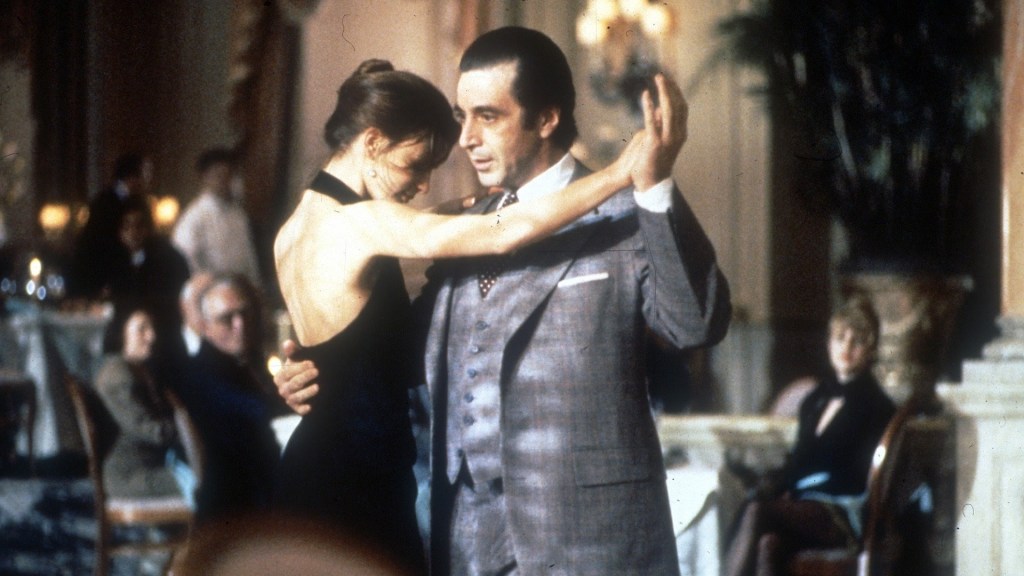
But this is a more nuanced performance than just a star’s turn. Pacino makes Slade a deeply unhappy man, slowly realising he has been so most of his life. A man who uses anger, wit and cruelty as shields to drive people away and make himself look and feel tough. Blindness has become a constant reminder of his vulnerability and dependence, but also made the shell of isolation he has built around himself all consuming. He’s realising pretty much everyone he knows hates him, whose family (from youngest to oldest) want as little to do with him as possible, who has never had a meaningful relationship and clings to a war record he frequently garnishes to appear more important. Pacino manages to convey all this deep-down regret and self-loathing extremely well, matched with a physically dedicated performance of approximating blindness that is one of the best there is on film.

There’s a striking scene midway through where Slade crashes his brother’s Thanksgiving dinner. The family are less than happy to see him, but tolerate him at a table he dominates, first with garrulous (uninvited) army stories and then increasingly rude, sexual comments about his nephew’s wife. The nephew (Bradley Whitford) eventually tears him off a strip: in 1992 some felt sorry for this merciless puncturing of Slade’s self-mythologising, but today I can’t help but agree with Whitford’s takedown of Slade’s bullying. Slade’s eventual assault on his nephew is allegedly for calling Charlie “Chuck” once too often, but really feels like a desperate attempt to take revenge without feeling in the wrong. It’s a scene that actually cements what an awful negative force Slade has been, something he’s just starting to realise no end of whimsy can fix. This is a complex stuff among the Hoo-Ha.

Pacino’s helped by a very fine, generous performance from Chris O’Donnell as a young man who may be naïve and innocent but, in his own way, has more guts and integrity than the mercurial Slade ever did. While Slade is fundamentally selfish (and always has been), Charlie will make sacrifices for people he knows will never do the same for him and won’t flex his principles for any personal gain. O’Donnell also does some magnificent reacting throughout, frequently generously providing the dramatic context and crucial reaction points to make Pacino’s character work effectively.

Scent of a Woman’s posh-school drama provides a few more straight-forward figures of loathing: from James Rebhorn’s headmaster, via Philip Seymour Hoffman’s smug, gutless, entitled fellow student (a prototype of his role in The Talented Mr Ripley) who hangs Charlie out to dry, culminating in the three unbearably arrogant rich kids who carry out the prank. In some ways the plot here is far more engaging than Slade’s suicide run, even though nothing surprising really happens at all throughout it’s runtime. It also allows Brest to caps it off with such a dynamite speech from Pacino that it made the Oscar probably a foregone decision (even though Denzel Washington’s Malcolm X could feel rightly aggrieved at missing out on the little bald man).

That kind of sums the whole film up. Despite moments of complexity in its character study – forcefully delivered with depth and feeling by Pacino – Scent of a Woman is a film that offers virtually no surprises at all while expertly hitting every single beat you would expect to see while giving maximum entertainment factor along the way. It’s the sort of thing that Oscars are grown from.

Tick…Tick…Boom! (2021)

Tick…Tick…Boom! (2021)

Joy and tragedy intermix in this extremely affectionate tribute to a musical theatre talent and his whole genre

Director: Lin-Manuel Miranda

Cast: Andrew Garfield (Jonathan Larson), Alexandra Shipp (Susan Wilson), Robin de Jesús (Michael), Joshua Henry (Roger Bart), Vanessa Hudgens (Karessa Johnson), Bradley Whitford (Stephen Sondheim), Jonathan Marc Sherman (Ira Weitzman), MJ Rodriguez (Carolyn), Ben Levi Ross (Freddy), Judith Light (Rosa Stevens)

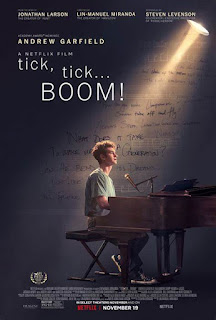
When an artist dies young, you also mourn the loss of all the art still to come. There is an added tragedy when – like van Gogh – the artist dies on the cusp of achieving the recognition and respect they have toiled for so long to achieve. Jonathan Larsen spent over a decade struggling to get his work performed on Broadway – only to die of an undiagnosed heart condition the night before the previews for Rent (the musical that would win him a stack of posthumous awards, including a Pulitzer and a Tony) opened. Miranda’s film is a heartfelt, joyful celebration of Larsen’s life based on Larsen’s own autobiographical one-man rock musical.

Tick, Tick…Boom is all about the counting clock Larsen (Andrew Garfield) fears as his life starts to catch up with his own mapped out timetable for success. It’s 1990 and he’s turning 30, with his rock musical Superbia still only a glint in a workshop’s eye. As he keeps reminding us, at 27 Sondheim had already staged West Side Story. Is Larsen’s chance of making a success of writing musicals ticking away? Should he build a business career, like his school friend Michael (Robin de Jesús) has in advertising? Should he accept the offer of his girlfriend Susan (Alexandra Shipp) to give up on New York and start teaching in Massachusetts? Or should he keep powering away at his dream?

Lin Manuel Miranda has talked openly about how Larsen’s revolutionary work on Rent changed his understanding of what musicals could be. To him – and many others – Larsen is a key figure in the history of the American musical, paving the way to some of the great landmarks of the 21st century. Miranda’s film is soaked in a deep love for both the work of Larsen and musical theatre itself. This is a film made by a man who defines himself by his love for everything musicals – and it’s a love that echoes in every single frame of his film.

Miranda was the perfect man to direct the film – after all, perhaps only Hamilton has had as much revolutionary impact since Rent (just like Larsen, Miranda spent years toiling to get it staged). Working with screenwriter Steven Levenson, Miranda expands the original one-man musical (later versioned into a three-actor piece after Larsen’s death) into a beautifully assembled testament to a crucial few months in the life of its subject, as he subconsciously starts the inspiration that will lead (eventually) to Rent. The film takes the original score for Tick, Tick…Boom and complements it with other Larsen songs and material from Superbia to develop a rich, emotionally moving tapestry that brings Larsen storming vividly to life.

And a lot of that life comes from Andrew Garfield’s revelatory performance. Bearing a striking resemblance to Larsen, Garfield’s performance has an energy, litheness and openness to it, to a degree we’ve not seen before. His singing and dancing are graceful, dynamic and impassioned. He’s emotionally open, tender, delicate – but also, as so many artists must be, sometimes selfish, demanding and self-obsessed. It’s a performance of great joy and humour, making it even more moving to remember that ticking clock is literally counting down Larsen’s life. But this is not a tragic performance: instead it is a vibrant celebration, performed by an actor at the top of his game.

Garfield delivers wonderfully in the many songs, most of them unfamiliar. Tick, Tick…Boom is a little known musical – but Larsen’s sudden death gives it a prescient tragedy he was totally unaware of when he wrote it: he meant it was a clock counting down the end of his youth, but we know it’s actually knocking down the seconds of his life. Miranda stages the songs with all the scintillating freshness of a Broadway musical, with imaginative choreography, energetically engaged performances and at times a powerful emotional intimacy that delivers real impact.

It all works so well because of that love for musical theatre that it is dipped in. The cast is stuffed with cameos from Broadway actors – the song Sunday uses a virtual Who’s Who of the cream of Broadway – and Miranda places Larsen’s music at the very heart of the movie. It’s a film directed with a great deal of skill, but not a showy or flashy distraction. Instead, creative decisions in scenes are subordinate to the songs – so some take place in a realistic setting, some in a staged recreation of Larsen’s original performance of Tick, Tick…Boom, others in a heightened reality somewhere between a dream and a fantasy. Miranda’s trick is to make these contrasted styles all feel part of the same whole – and the joy with which all are filmed (even the sadder moments) is essential to this.

And there are some powerful moments of emotion here. Bubbling throughout the story is the AIDS crisis, which has literally destroyed the lives of several of Larsen’s friends. It is to have a very personal impact on his best friend Michael (a heartfelt Robin de Jesús). Larsen’s dwelling on this plague, where many blamed the victims, sees him scribble notes for key lines that will build Rent (Miranda has these appear on screen in hand-written text). Part of the self-criticism of Tick, Tick…Boom is Larsen acknowledging that his selfish desire for success as a protégé blinded him to the suffering of some of those closest to him. While I would have liked more direct tying of Rent into the film’s conclusion, this deconstruction of Larsen’s laser focus is well done.

Above all, Tick, Tick…Boom works because it is made so clearly by people who love musical theatre, for people who love musical theatre. The performances are sublime, especially Garfield who has never been better or more engaging, with de Jesús and Alexandra Shipp also excellent and Vanessa Hudgens standing out among the rest. Miranda’s film is a strikingly well-made and heartfelt labour of love, that will reward rewatching and uncovers the overlooked work of a major talent who died way too young.

Saving Mr Banks (2013)

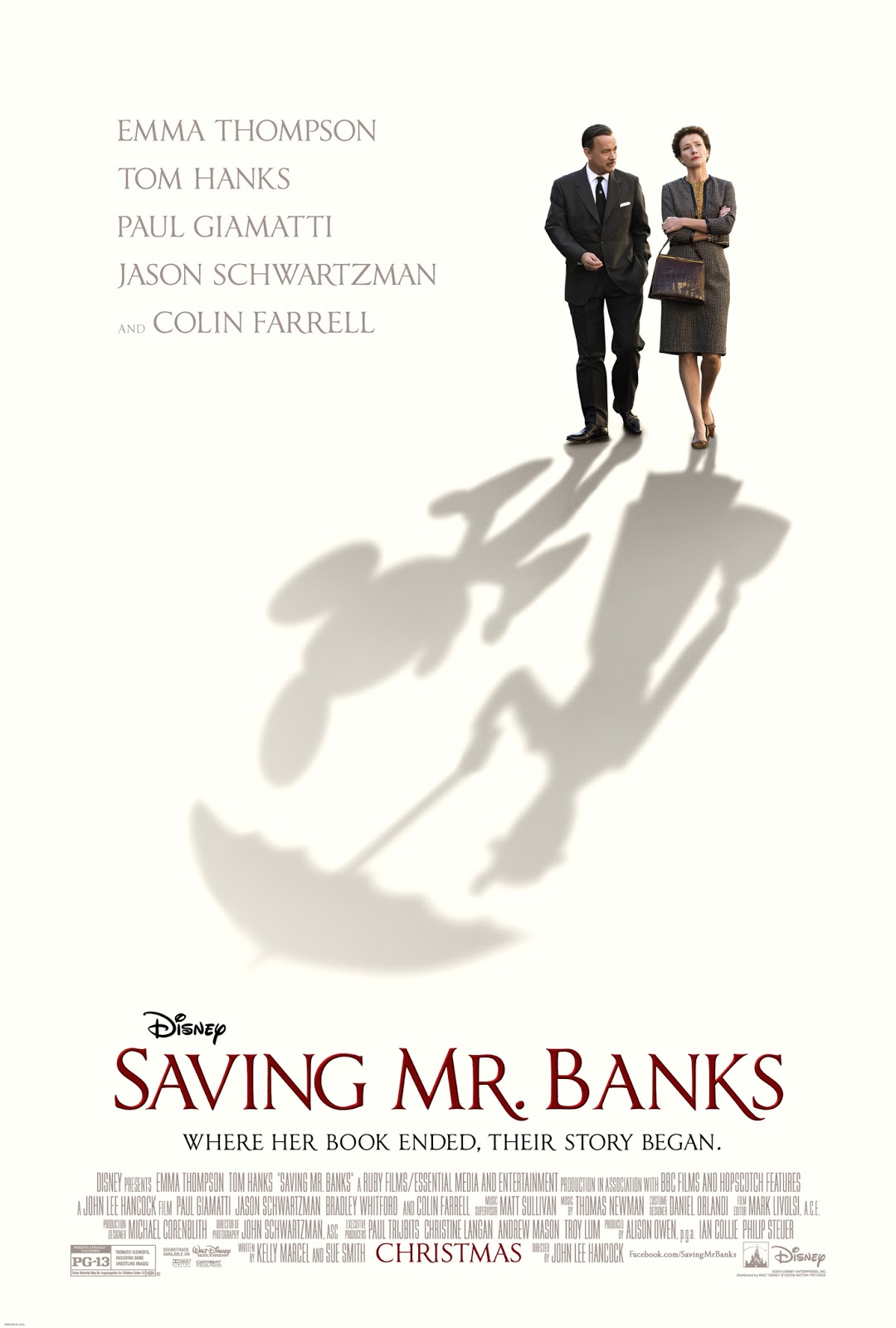
Tom Hanks and Emma Thompson clash on the making of Mary Poppins in Saving Mr Banks

Director: John Lee Hancock

Cast: Emma Thompson (Pamela Travers), Tom Hanks (Walt Disney), Colin Farrell (Travers Robert Goff), Ruth Wilson (Margaret Goff), Paul Giamatti (Ralph), Bradley Whitford (Don DaGradi), Jason Schwartzman (Richard M Sherman), BJ Novak (Robert B Sherman), Kathy Baker (Tommie), Melanie Paxson (Dolly), Rachel Griffiths (Ellie), Ronan Vibert (Diarmuid Russell)

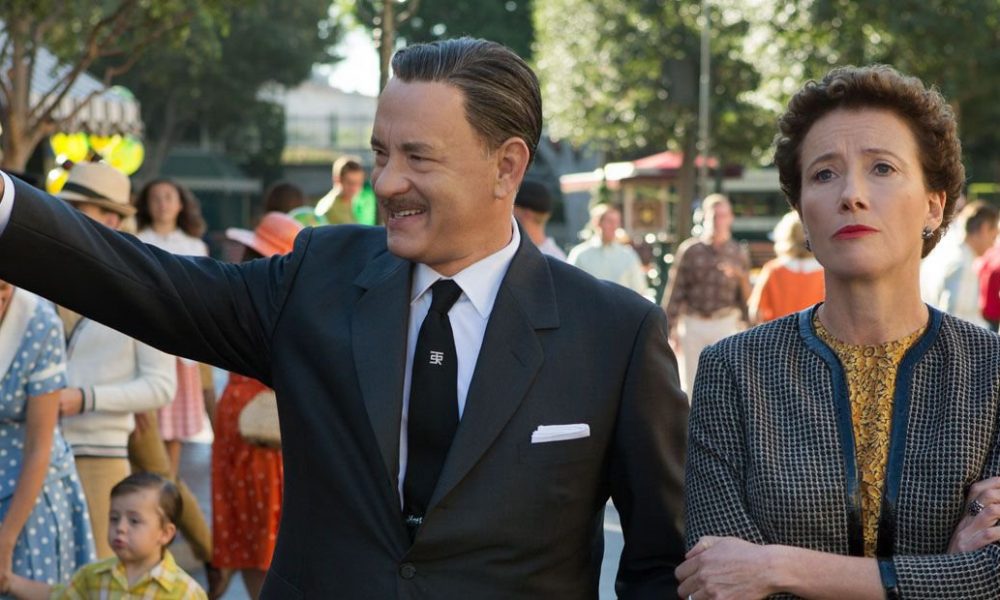
Walt Disney was a man used to getting what he wanted. And what he wanted more than anything was the rights to PL Travers’ Mary Poppins series. It was his kids favourite books, and he had promised them he would make the movie. It took decades – and Disney had to wait until Travers needed the money – but finally a deal was struck, with Travers having full script approval. So the hyper-English Travers is flown across the Atlantic to Los Angeles where she reacts with a brittle horror to every single suggestion from the Mary Poppins creative team, and distaste at the commercialisation of Disney’s enterprise. Based on the actual recordings (which Travers insisted on) from the script meetings, Emma Thompson is the imperious PL Travers and Tom Hanks the avuncular Walt Disney.

John Lee Hancock’s film is a solid crowd pleaser that, if it feels like it hardly delivers a completely true picture of the making of Mary Poppins, does put together an entertaining and interesting idea of the difficult process of creation and the tensions when writers (who don’t want to change a thing!) clash with film production companies. These problems being made worse by the clashing worlds of the loose, casualness and breezy friendliness of Los Angeles, and the intensely cold, buttoned-up Edwardianism of Travers, hostile to all shows of affection and any touches of sentimentality.

The film gets more than a lot of comic mileage out of these mixed worlds, with Travers’ every look of aghast, repressed, British reserve (“Poor AA Milne” she mutters while manhandingly a stuffed Winnie-the-Pooh toy out of her way, followed by “You can stay there until you learn the art of subtlety” as she dumps a massive Mickey Mouse cuddily toy against the wall of her bedroom) bound to raise sniggers at both her blunt hostility and cut-glass wit. Against this the American characters – all of them forced to dance to her tune – meet wave after wave of hostility with a practised American friendliness and warmth. It works a treat.

The film walks a fine line with its portrayal of Disney who is both a charming uncle figure and also a savvy and even ruthless businessman. Tom Hanks is spot-on with showing both sides of this man, making it clear how he managed to make so much damn money but also from how he managed to inspire such loyalty from many of his staff. Yes the film soft-peddles on many of Disney’s negatives – from refusing to show a single second of Disney smoking, to no mention of his active union-busting activities – but this is a film focused on Disney the impresario and negotiator. 

And what a person to negotiate with! That the film works is almost exclusively down to Emma Thompson’s imperious performance in the lead role. Thompson has a very difficult job here of turning someone so consistently rude, aggressive, arrogant and unpleasant as Travers (and over half of the film goes by before she says something nice to anyone) into a character we genuinely invest in, care about and laugh with as much as gasp at her rudeness. It’s a real trick from Thompson, adding a great deal if inner pain and vulnerability just below the surface, but only allowing a few beats of letting these feelings out for all the world to see. It makes for a performance that is superbly funny, hugely rude but also someone we end up caring about.

A lot of that spins from the careful recreation of Travers’ past in flashback, particularly her relationship with her father, Travers Goff (played with charm by Colin Farrell), an alcoholic bank manager in Australia when Travers was a child, who lived a life of irresponsibility mixed with bursts of playful, imaginative games with his daughter. It’s the realisation, by the elderly Travers, that her father was feckless and irresponsible that motivates her writing of Mary Poppins, the super-Nanny who flies in and saves not just the whole family, but specifically the father. Equally good in these sequences is Ruth Wilson as the despairing Mrs Goff.

It adds a sadness to the backstory of Travers – and an understanding of why she behaves the way she does – and the film also brings it round to a neat mutual meeting ground between her and Disney, who himself had problems with a father who drove him hard to achieve. It also explains Travers’ growing warmth to her chauffer, played by Paul Giamatti as a loving dad, the one person she demonstrates some affection to within the film.

It’s a film that wants to have its cake and eat it though, and it can’t resist adding a “happy ending” to the story of Travers finally accepting (even if she denies it) that she enjoys the Mary Poppins film and is moved by the saving of Mr Banks that it contains. In reality of course, Travers hated the film (though claimed some of it was passable) and refused Disney all permission to ever make any sequel. But that hardly matters here, to this fairy tale of saved souls which wants to see Travers saved – even if the truth was far more complex.

Destroyer (2018)

Nicole Kidman goes way-against-type as a bend the rules cop in Destroyer

Director: Karyn Kusama

Cast: Nicole Kidman (Detective Erin Bell), Sebastian Stan (Chris), Toby Kebbell (Silas), Tatiana Maslany (Petra), Bradley Whitford (DiFranco), Jade Pettyjohn (Shelby Bell), Scoot McNairy (Ethan), Toby Huss (Gil Lawson)

There are few things that pique the interest of reviewers and viewers more than a celebrated Hollywood star going well against type, looking rough, playing tough and letting those shades of grey flow freely. That’s the cheap interest in Destroyer, Karyn Kusama’s engaging, well-made thriller which showcases the sort of way-against-type performance by Nicole Kidman that practically demands the poster scream “Kidman as you’ve never seen her before!”. Of course this all serves to obscure that Kidman is a damn fine actress and a committed performer, and she gives it everything in this grimy, underworld thriller of compromised cops and ruthless robbers.

Erin Bell (Nicole Kidman) is a detective with a shady past: an undercover operation with an FBI Agent Chris (Sebastian Stan) which went wrong 15 years ago. In the present day, the body of a John Doe in Los Angeles opens up links to this case from the past, causing Erin to start a rogue investigation into her old undercover days and the gang members she knew back in the day, specifically her long-held grudge against the psychopathic Silas (Toby Kebbell).

Destroyer gives us a familiar story – the cop with the dodgy past, gone to seed, playing against the rules, tired of life, with a shattered family background, investigating what could be one last case that has devastating links to the past – but presents it from a slightly new angle by making the protagonist a woman. This calls for a terrific performance from Nicole Kidman, who is bashed up, run down, grouchy, seedy and above all immensely damaged. Kidman’s skill at a performer is evident in every scene, creating a character who cannot escape from the burdens of her past, who rejects all help and who is unable to live with the burden of some sort of unspecified guilt.

Much has been made of Kidman’s roughed up, broken nosed, run down, alcoholic appearance (the film gets a lot of mileage over close ups of her ravaged, aged, alcoholic’s hands), but her commitment to the role transcends any deliberate slumming. She is completely believable as the sort of rough-and-tumble, rule breaking cop. The make-up also means that the flashback scenes to a 15-years younger Erin are immediately clear – and give us a clear indication of how far she has fallen since her more hopeful days.

The film is all about the burden of the past, and the film constantly flashes back and forth between the present day and Erin’s time undercover. The film carefully and slowly unveils the exact reasons for Erin’s guilt and why she has become the person she is, but the burden of it hangs over every scene in the present and is visible in Kidman’s eyes in every scene. It brings these themes to life extremely well and weaves an engaging story, even if everything in it seems like a collection of familiar events from other films.

In fact that is the film’s biggest weakness, right there. Many of the events, characters and themes in it feel like they have been plucked from a range of noir thrillers, thrown up into the air, and then reassembled into a new patchwork. As impressive as Kidman’s character is, it’s familiar to us from any number of hard-boiled cops past. The film’s structure – of Kidman going from contact to contact to get closer to Silas – basically allows for a series of actors to give performances that, for all their skill, end up feeling like a random collection of stock characters. None more so than Silas himself who, despite Toby Kebbell’s best efforts, is a totally forgettable rent-a-psycho. But then you can say the same for Tatiana Maslany’s aged junkie and, for all his slimy excellence in the role, Bradley Whitford’s sleazy money launderer. Other characters feel the same as well, from Kidman’s troubled teenage daughter, her would-be gangster boyfriend, Erin’s put upon ex-partner or her wearily understanding partner. These people all seem, to various degrees, to be stock caricatures rather than characters.

What really makes the film work is the dynamic, often hand-held, kinetic energy of Karyn Kusama’s direction. Jittery, immediate and very real, Kusama makes a number of these stock situations – from shoot outs to roughing up suspects – look at least new and exciting. The two main shoot outs in the film are extremely excitingly done and make for gripping set pieces, with the added originality of seeing the main players being women. 

But the film itself is just a little too obvious and stock for it to really stand by itself, for all the quality of the direction and the excellence of Kidman. There are some moments that work brilliantly with the unexpected twist of having a woman in the lead role and seeing Kidman throw herself into a gunfight with a heat-packing disregard for her own safety is all the more electric for it. But it’s still a little too predictable and familiar – for all the fact that there is a decent semi-twist towards the end that reveals not all is as we thought at the start – which perhaps doesn’t make it a film for all time.

The Post (2017)

Hanks and Streep bust Watergate in advance in Spielberg’s too dry The Post

Director: Steven Spielberg

Cast: Meryl Streep (Katharine Graham), Tom Hanks (Ben Bradlee), Sarah Paulson (Tony Bradlee), Bob Odenkirk (Ben Bagdikian), Tracy Letts (Fritz Beebe), Bradley Whitford (Arthur Parsons), Bruce Greenwood (Robert McNamara), Matthew Rhys (Daniel Ellsberg), Alison Brie (Lally Graham), Carrie Coon (Meg Greenfield), Jesse Plemons (Roger Clark), David Cross (Howard Simons), Michael Stuhlbarg (AM Rosenthal)

There are few things newspaper journalists like more than old-fashioned films about the glory days of the press, showing journalists to be uniformly noble, upstanding, seekers of truth. There are few things Hollywood likes more than films the feature Streep and Hanks and/or are directed by Spielberg. As such, it’s not really a surprise that The Post received laudatory reviews, or that it crept into the Best Picture list of 2017 (it only got one other nomination, inevitably for Streep).

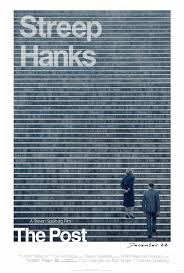
The film covers the Washington Post’s decision in 1971 to publish details from the Pentagon Papers, originally leaked to the New York Timesby former Defence Department official Daniel Ellsberg (Matthew Rhys). The papers detail the American government’s deceptive public messages on Vietnam, a war they knew to be unwinnable for almost ten years. The Nixon administration has blocked publication in the New York Times, but when the Post gets the same papers, owner and publisher Katharine Graham (Meryl Streep) and editor Ben Bradlee (Tom Hanks) have a difficult decision to make – suppress the truth or publish and face crippling legal penalties that could destroy the business.

The Post is quite similar in some ways to Spielberg’s far more successful Lincoln – a po-faced history lesson, told with panache, but essentially a dry civics lesson which draws some neat, but a little too on point, parallels with current events. Certainly it’s clear whom we are meant to be thinking of when the camera shows a shadowy Nixon in long shot from outside the White House, ranting into a phone in the Oval office late at night (admittedly, in a nice touch, the film uses the actual audio from Nixon’s Oval Office recordings). The parallels between press freedom and the spin of politics (or the charges of Fake News flung at any story the powers that be don’t like) are pretty clear. They are also pretty obvious.

Part of the film’s problem is that, unlike All the President’s Men (where the story covers full investigative journalism and Woodward and Bernstein need to piece the story together against the odds), this film hands everything to the journalists on a plate. It doesn’t even try to put a puzzle or some form of mystery before the viewers. Instead, the history is painstakingly (and drily) explained to give us the context, then each stage of the Post getting the papers is shown in simple and rather undramatic steps. There isn’t a sense – despite Bob Odenkirk’s deputy editor doing a bit of legwork – that the Post needed to work that hard to land the story. Crikey, you can see why The Times (who really did the crack the story) were a bit pissed at the film stealing their glory.

Once the papers are in the Post’s hands, the story almost immediately jumps to one night in which the papers are read and the board and the journalists squabble over whether they can legally publish or not. After that we get a swift coda where everything turns out fine, backs are slapped and the Supreme Court says it’s all good. There just isn’t quite enough drama. In fact we feel like we are watching a footnote, rather than the real story, which seems to be happening on the margins (for starters, the scandal of government lies on Vietnam, how The New York Times broke the story, and the Watergate break-in, a recreation of which rather clumsily closes the picture).

And I get that the film is trying to tell a story about how important a free press is and, yes, it’s great – but despite having a number of characters talk at length about this, I’m not sure what the film really tells us that we don’t already know. Instead it moves methodically but swiftly through events, carefully telling us what happened but never turning it into a really compelling story. Pizzazz for its own sake is not a strength, but a little more oomph in delivery here might have helped.

Alongside this, the film also wants to make points about the struggle of a woman in a man’s world and the institutional sexism (that probably hasn’t changed that much) of many boardrooms. Meryl Streep’s Katharine Graham – having inherited the company after the suicide of her husband – is a brow-beaten woman struggling to impose herself in a room of men whom she feels inferior to. Even this plotline though feels slightly rushed – we have Graham cowering in a boardroom meeting and struggling with paperwork, next thing we know she hesitantly makes the call to publish and is facing down her chief opponent (Bradley Whitford, rolling out another of his arrogant men of privilege). It’s all a bit rushed, perfunctory and all as expected – and Streep can clearly play this sort of role standing on her head.

But then the whole film has this slight comfort job feeling about it – everyone clearly invested in the story and the importance of the film’s points, but clearly without being challenged by the content. By the end of the film we’re are awash with clichés, from newspaper print rolling through old machines, to Graham walking through a crowd of admiring women outside the Supreme Court. The interesting and well assembled cast don’t get enough to do, with many of them feeling slightly wasted, not least Sarah Paulson in a thankless role as “the wife”.

The Post wants to be a big, world-changing film that talks about our modern age. Instead it’s a very middle brow, middle of the road history lesson that flatters to deceive, entertaining enough just about, but immediately forgettable.

Get Out (2017)


Daniel Kaluuya finds himself well out of his depth in Get Out

Director: Jordan Peele

Cast: Daniel Kaluuya (Chris Washington), Allison Williams (Rose Armitage), Catherine Keener (Missy Armitage), Bradley Whitford (Dean Armitage), Caleb Landry Jones (Jeremy Armitage), Stephen Root (Jim Hudson), Lakeith Stanfield (Logan King), Lil Rel Howery (Rod Williams), Marcus Henderson (Walter), Betty Gabriel (Georgina)

Really great genre film-making transcends its genre, while demonstrating all its strengths. Get Out is nominally a horror film, but strangely it didn’t feel quite like that while I was watching it. It’s more of a horror-inflected social drama with lashings of satire and commentary on race in America. It’s a smart, deeply unsettling film, which really makes you think about how racism has subtly developed in America over the past 100 years. It also manages to feel very much like a film caught at the turning point between Obama and Trump.

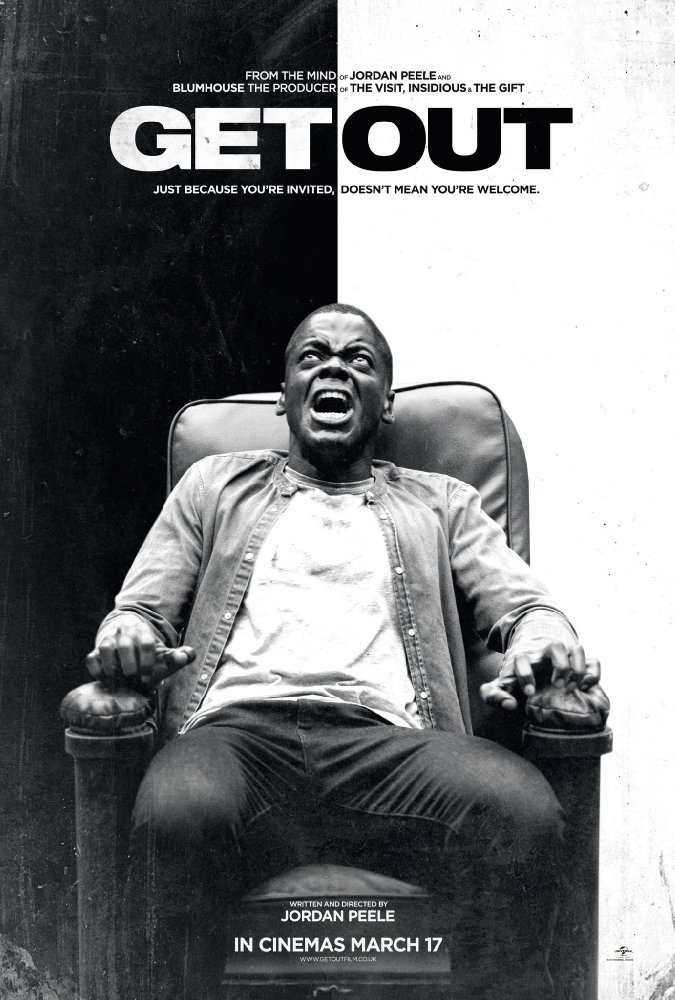
Chris Washington (Daniel Kaluuya) is a young, black photographer dating wealthy white Rose Armitage (Allison Williams). He reluctantly agrees to spend the weekend with her family on their countryside estate. Rose’s parents, neurosurgeon Dean (Bradley Whitford) and hypnotherapist Missy (Catherine Keener) are almost overly welcoming and in expressing their liberal credentials. Chris is doubly unsettled that the Armitages’ house has two black workers, both of whom seem alarmingly compliant. The weekend coincides with an annual get-together the Armitage family hosts, where the guests (all rich and white) make comments to Chris admiring his physique, build, sporting ability and genetic advantages. Chris can sense something is wrong – but can’t even begin to guess the mystery at the heart of the Armitage house.

Get Out is, more than anything else, a film about racial politics in America. It trades in the unsettled discomfiture some liberal white people feel when they actually have to interact with a black male from a different background, and then inverts this into a horror. But it rings true: the father so keen to be seen as liberal he uses the phrase “my man” repeatedly, praises Obama, shows off his “multi-cultural art”, delightedly repeats stories about Jesse Owens; the guests at the party who pinch Chris’ muscles, and praise his physique. It feels like a situation where Chris is invited but not welcome. 

In turn, it also inverts the discomfort some black people feel in white middle-class society. Chris finds his hosts patronising and condescending in their desire to be seen as open-minded. He’s uncomfortable at the black staff. Every second in the house reminds him that he doesn’t belong there. But the genius of Peele is that this could be nothing to do with anything except seeing a black man being constantly made aware of his difference in an unfamiliar milieu. 

Chris though, being basically a decent guy, does what any polite person in a minority tends to do: he works overtime to put his hosts at ease. He keeps quiet, he smiles, he laughs at jokes,  he tries to gently drift away. As almost the sole black person, he’s lost and out-of-his-depth and comfort zone (he’s reluctant about even going). All the other black people he meets are strange – Peel brilliantly shows the mixed messages from the servants in particular. In one brilliant sequence Georgina, the maid, says everything is fine while smiling and simultaneously crying. A black party guest dresses and behaves like the rest of the white people around him: has he just completely assimilated or is there something sinister going on here? Chris might guess more – but until it’s too late he decides to batten down the hatches and ride out an awkward weekend.

The house has plenty of mystery – there is a throw-away reference to a locked off-limits basement. Early in the film the couple hit a deer with their car: the police demand to see Chris’ ID even though he wasn’t driving, to the outrage of Allison. It’s a brilliantly eerie opening that hints at danger to come, both in the corpse of the deer and the suspicion of the police. It’s a brilliant touch to explore the barely acknowledged underlying racism of some middle-class Americans – this liberal elite would be horrified to hear the suggestion that they are anything but open-minded, but in fact have deeply paternalistic, two-tier beliefs that have subtly developed since the end of segregation.

The film is played superbly by the whole cast. Bradley Whitford brilliantly inverts his Josh Lyman persona. Catherine Keener is a sort of warm Earth Mother figure, with darkness and control under the surface. Both characters seem suspicious and yet are both so open and direct in what they say, you think it’s almost too obvious to assume they are villains. Caleb Landry Jones as their son is both full of alpha-male welcome and strange, violent and scornful looks and yearnings. Allison Williams as Chris’ girlfriend seems a strange presence in this household, but her honest sympathy for Chris, and her growing realisation with him that something is wrong, is the one thread Chris has to hang onto.

The star-turn of the movie is of course though Daniel Kaluuya as Chris. A young British actor, he’s superb here in a reactive role, trying to persuade himself everything is fine. His unease and insecurity are brilliantly done, as are the surface humour and reserved politeness he uses to disguise this. In a paranoid film, he is going out of his way to not appear paranoid. His relief in seeing any other black people – and then confused discomfort at their behaviour – is endlessly brilliant. As the plot progresses, Kaluuya takes Chris to some dark and emotional places, conveying both despair, fury and pain brilliantly. 

Peele’s film is not perfect. Introduce a character as a hypnotist and you are probably tipping the hat a little too soon – though to be fair, Peele even lampshades this by having Chris’ friend Rod (a hilariously endearing Lil Rel Howery) immediately point this out. The explosion of violence when it comes at the end is gratifying, but a little too much almost for a film about lack of power. The DVD contains an alternative ending that is, in fact, far better and more appropriate, which continues this theme (and is what I expected the ending to be as the film entered its final act) but was replaced because Peele felt (he says on the commentary) it needed a more upbeat ending.

Get Out though is both an excellent paranoia thriller with lashings of horror, and also a brilliant satire on race in America. Trading on the comedy of embarrassment, it has genuine things to say about how the racial divide hasn’t really gone away at all. Both funny and also deeply terrifying, its final reveal of what is going on is brilliant and also rings very true – as well as casting new light on several scenes we have already seen. Peele is a first-time director – but based on this he certainly won’t be one and done.