Tag: Brendan Gleeson

Suffragette (2015)


Votes for Women is the cry in this bad movie made about an important issue

Director: Sarah Gavron

Cast: Carey Mulligan (Maud Watts), Helena Bonham Carter (Edith Ellyn), Anne-Marie Duff (Violet Miller), Romola Garai (Alice Haughton), Ben Whishaw (Sonny Watts), Brendan Gleeson (Inspector Steed), Samuel West (Benedict Haughton), Meryl Streep (Emmeline Pankhurst), Adrian Schiller (David Lloyd George), Geoff Bell (Norman Taylo r), Finbar Lynch (Hugh Ellyn)
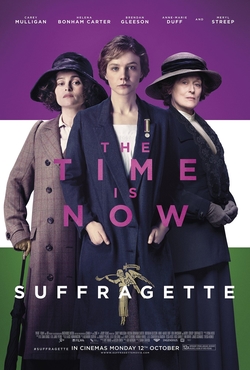
Votes for Women was a historic movement that looked to settle a gross injustice. It’s a major issue brimming with importance: and Lord doesn’t Suffragette know it. In fact, Suffragette is practically a textbook example of an important issue being turned into a bad film. Clunky, weighed down with its own bombast and stuffed to the gills with clichés, Suffragette fails to move and makes its vital political points seem leaden and dull.

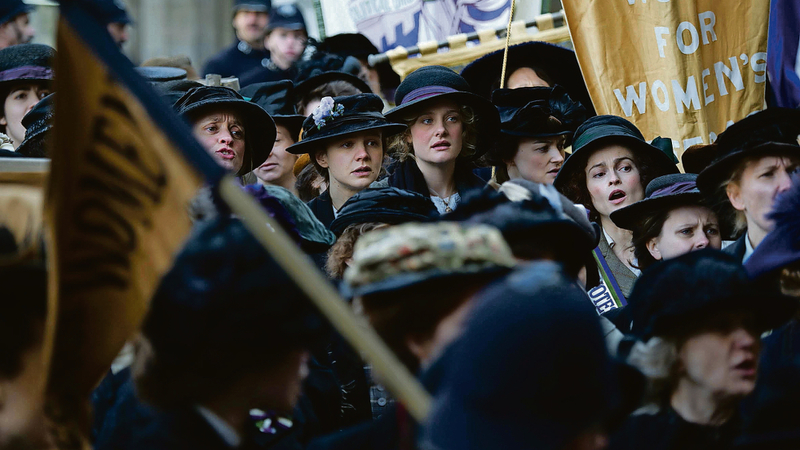
Maud Watts (Carey Mulligan) is a young washerwoman, who one day finds herself accidentally swept up in a suffragette protest. Before she knows it, her friend Violet Miller (Anne-Marie Duff) has inveigled her to give testimony at a parliamentary hearing, where she meets Edith Ellynn (Helena Bonham Carter). Ellyn believes that peaceful struggle will lead nowhere and violent action is the only way to get what they want. As the violence escalates, Inspector Steed (Brendan Gleeson) is tasked to infiltrate and bring down the suffragette movement.

It should be more interesting. But Suffragette is a sluggish “issue drama” whose every frame drips with the self-importance of people who feel they aren’t just making a film, they’re making a “statement”. This feeling infects everything, from the heavy-handed dialogue (too many scenes feel like speechifying rather than dialogue) to the obvious characterisations. Nothing in the film ever really rings true, and nothing ever really grips. On top of that sloppily written, it doesn’t really have any dramatic structure and events eventually peter out.

Mulligan’s saintly character – as a kind of suffragette every woman – goes through everything from abuse from her boss, to losing her home and children, to being force-fed in prison. It strains credulity – particularly as she’s playing some fictional archetype. The truly noble suffragettes are all working-class and put-upon, while Romola Garai’s upper-class wife quickly turns her back on the cause when things get risky. Bar Brendan Gleeson’s humane Inspector and Finbar Lynch’s decent husband (and even he performs an act of betrayal), every single man in this is a bastard – a paternalistic liar, a wife-beater, a bullying husband or an abusive boss. It’s just too bloody much. The film seems not to trust its audience to understand the story unless it’s acted out by a series of caricatures, as if we can’t appreciate that gender equality is a good thing in itself without a saintly sad-faced girl being mistreated by a series of misogynist ogres.

Mulligan is rather good but her angry denunciations and points during her scenes with Gleeson just sound like she’s mouthing research from the writer. The end result is, despite all the things Maud goes through, you just don’t really care about her. She feels like an empty character. Even the end of the film doesn’t revolve around her: Emily Davison is reintroduced just in time for the conclusion at the Derby. Why not just make a film about Davison? Why did they feel the need to place this uninteresting fictional character at the heart of it? Did they just feel it had to be a working class hero?

Because the script tries to cover every single element of the suffragette movement, it often feels like a box-ticking exercise. Meryl Streep gets the best tick, popping up to deliver a single speech as Emmaline Pankhurst before disappearing. But the collection of events thrown together don’t convince. Helena Bonham Carter does her very best to make Edith’s radicalism seem compelling and thought-through, but even that seems like a tack-on rather than something that really teaches us about any of the characters. Moral questions around violence and protest are almost completely ignored, and the film doesn’t really distinguish between those (essentially) willing to kill and those who wanted to protest within the law.

On top of its mediocre writing, the film is also only competently directed – its pace is often way off and sluggish, and most of the scenes are shot with an unimaginative televisual eye, mixed with standard “throw you into the action” shots for major protests. It all contributes to the entire venture not coming to life at all. For such a huge issue, and for all the importance it’s being treated with here, it just seems lifeless and rather dull.

This is despite the decent acting (Anne-Marie Duff is excellent, as are most of the rest of the principals) and the efforts of all involved. But it’s just not engaging. The most moving and gasp-inducing moment is the end credits roll of dates where countries gave women the vote (1970 for Switzerland!) – but when the most moving thing you see in the film could have cut and pasted from a Wikipedia page you are in trouble.

But what can you say about a drama about women’s rights where the male Inspector comes out as the most interesting and nuanced character? That just doesn’t feel right. And that’s the problem with Suffragette. Nothing feels right. Everything feels off. The history doesn’t ring true, the characterisations feel forced, the events seem predictable and clichéd. There’s nothing to really get you impassioned here – other than with frustration about a bad movie fudging an important subject.

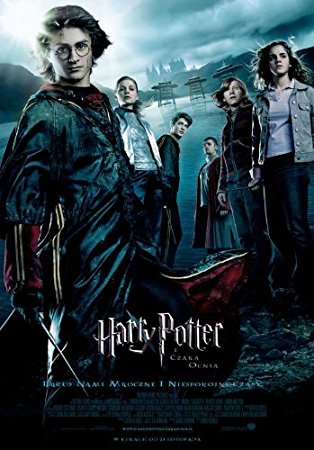
Harry Potter and the Goblet of Fire (2005)


Our heroes face an increasingly dark future in Harry Potter and the Goblet of Fire

Director: Mike Newell

Cast: Daniel Radcliffe (Harry Potter), Rupert Grint (Ron Weasley), Emma Watson (Hermione Granger), Robbie Coltrane (Rubeus Hagrid), Ralph Fiennes (Lord Voldemort), Michael Gambon (Albus Dumbledore), Brendan Gleeson (“Mad-Eye” Moody), Jason Isaacs (Lucius Malfoy), Gary Oldman (Sirius Black), Miranda Richardson (Rita Skeeter), Alan Rickman (Severus Snape), Maggie Smith (Minerva McGonagall), Timothy Spall (Peter Pettigrew), Frances de la Tour (Madame Maxime), Mark Williams (Arthur Weasley), Robert Pattinson (Cedric Diggory), David Tennant (Barty Crouch Jnr), Jeff Rawle (Amos Diggory), Tom Felton (Draco Malfoy), Robert Hardy (Cornelius Fudge), Roger Lloyd Pack (Barty Crouch), David Bradley (Argus Filch), Clémence Poésy (Fleur Delacour)

After Alfonso Cuarón announced he would only direct one Harry Potter film, the producers faced a stiff challenge. The third Harry Potter film had been the best so far, and elevated both the acting and design into a far more filmic, epic position than before. Could Mike Newell match this in Goblet of Fire? Sure he could.

If nothing else, Goblet of Fire is a triumph of adaptation. Used to the page-to-screen translations of the earlier films, it was expected that the film would be split into two parts. Instead Newell and screen-writer Steven Kloves turned Rowling’s huge fourth book into a tightly structured and focused film that places Harry’s emotional journey firmly at its centre, and includes only the things that support the building of that story. 

Goblet of Fire is a film of fascinating contrasts. In fact, it’s probably the lightest, most ‘teenage’ of the films, while also containing a dark final chapter and more death than we’ve had so far in the series. But this film is actually rather funny and allows its characters to focus on the challenges and stresses of growing up, with only a few flashes of danger and darkness – before they get wrapped up in the battle against Voldemort that will dominate the next few films.

So this is the film where we get crushes, where Harry and Ron struggle to get dates for the ball, where we get a sense of Hermione not only growing up – but growing in confidence. Harry develops a hopeless crush on Cho Chang – his “Willyougotoballwithme” hurried date proposal is all too familiar to most men, as is his “oh no never mind not a problem” when she (reluctantly) says no. Meanwhile, Ron struggles to understand his own hormonal feelings towards Hermione. It’s all well done and very funny. The ball itself is a highlight of teenage awkwardness, as well as genuinely feeling like a teenage party (including a sort of wizarding mosh pit). 

This teenage awkwardness carries across into Harry’s involvement in the Tri-wizard Tournament, a series of stirring set-pieces against dragons, mer-people and a wicked ever-shifting maze. The tournament offers a range of puzzles Harry needs to solve – more than enough opportunity to allow other characters to get involved. Neville Longbottom particularly moves to the fore for the first time – not only embracing dancing (hilariously nearly every boy is as embarrassed by it as you might expect) and landing a date, but also using his knowledge of plants to help Harry, and we get increased insight into his own tragic backstory. It’s great to see Matthew Lewis being able to stretch himself – and show the roots of the good young actor he’s become.

The film spends a lot of time on family roots, both tragic and happy, in particular fathers and sons. We have no fewer than four father/son match-ups in these films, and each gives us a slightly different perspective on family relationships. Mark Williams’ matey but loving Arthur Weasley gets more screen time than ever before, and Williams develops him into a protective but warm patriarch. Contrast that with the troubled coldness the Crouches show each other – and the swift speed with which Barty Crouch denounces his own son. We get a glimpse of the sort of father Harry could have had with a brief ghost appearance of Harry’s parents. The strongest father-and-son relationship we get to see is that between the Diggorys, an immeasurably proud father and a perfect son.

Mentioning Amos Diggory means we have to bring up one of the most extraordinary acting cameos in the entire series: Jeff Rawle’s work here is brilliant. Is there a more moving moment in the franchise than his uncontrollable grief when Cedric is killed? His anguished crying of “That’s my boy” will haunt many a viewer for years to come. It’s a measure of the brilliance Mike Newell had with actors, and the shrewdness of the casting throughout. Would anyone else have thought of George Dent from Drop the Dead Donkey for this King Lear-like cameo? Would anyone else have thought of Trigger as strict disciplinarian, Barty Crouch (Roger Lloyd-Pack is terrific). The film also shrewdly cast David Tennant about five minutes before he became one of the most popular actors in the country, for an excellent malevolent cameo of pride and bitterness.

The acting throughout is terrific – Mike Newell has the reputation of an actor’s director, and he really shows it here. The three leads are no longer children but teenagers, and they feel like it. Radcliffe plays Harry with increasing maturity and emotional depth, balancing with nuance and quiet confidence the light comedy of Harry’s hormonal yearnings, his fear during the tournament, and his terror and resolve during the confrontation with Voldemort. It’s quite a range he has to go through here, and this features his best performance so far.

Similarly, Grint increases his comedic range with a sullen, teenage I-don’t-want-to-admit-I’m-interested-in-girls series of exchanges. Watson demonstrates her obvious chemistry with both her co-stars, and also does a great job of showing Hermione’s growing emotional maturity and confidence. Many of the other regulars continue to do great work, with Gambon really settling into this role of Dumbledore (although his fury when Harry’s name emerges from the Tri-wizard cup seems strangely out of character). 

The new cast members as always offer plenty. Miranda Richardson delivers a lot of comic flourishes, and snappy media pot-stirring, as gossip columnist Rita Skeeter. Brendan Gleeson carries all the charisma you would expect as a maverick, perhaps even unbalanced Mad-Eyed Moody. In a further testament to the excellent casting directors here, Robert Pattinson (five minutes before his fame exploded) is very good as a suave, handsome, slightly cocky but charming Cedric Diggory.

The film though is building towards its surprising gear-change late in the story – and the introduction of Voldemort, murder and death into a film that until now has been an engaging and amusing action film and teenage comedy. Perfect casting for Voldemort was secured with Ralph Fiennes. Of course Fiennes could play Voldemort standing on his head, but his softly-spoken suaveness and patrician charm is absolutely perfect for the role. You really get a sense of ice running through his blood, and his cold cruelty and arrogance. Fiennes is pretty much iconic in this role. 

The final sequence itself is brilliantly done, a thrilling and terrifying sequence, which really hammers home the extent of Harry’s powerlessness and vulnerability – while the brutal, instant dispatching of Cedric immediately changes the ball game for the rest of the series. The scene is brilliantly shot with a series of blacks and greens for mood and offers a sensational conclusion, as well as an expertly shot duel between Harry and Voldemort that established the filmic language for all subsequent duels that were to come.

Goblet of Fire is another example after Prisoner of Azkaban of a great piece of franchise film-making. It’s not quite as stand-alone, or as perfectly dramatically formed, as the previous film – but that’s because this one ends, like none of the other films before, on a cliffhanger. For the first time, this series wasn’t offering an opponent and obstacle that could be overcome and left behind at the end of the film. Here the baddies win – and the feeling going forward is that, with the help of friends and family, we can battle the evil, but it will still be there. It’s an engaging, funny and very well-structured film, packed with decent twists, and ends with a humdinger of a scene in a film that has already had plenty of excellent moments. Harry Potter is surely one of the best franchises there is.

Troy (2004)


Brad Pitt sails into history and legend as Achilles in the misunderstood Troy

Director: Wolfgang Petersen

Cast: Brad Pitt (Achilles), Eric Bana (Hector), Orlando Bloom (Paris), Diane Kruger (Helen), Brian Cox (Agamemnon), Peter O’Toole (Priam), Rose Byrne (Briseis), Saffron Burrows (Andromache), Brendan Gleeson (Menelaus), Sean Bean (Odysseus), Julian Glover (Triopas), James Cosmo (Glaucus), John Shrapnel (Nestor), Julie Christie (Thetis), Garrett Hedlund (Patroclus), Vincent Regan (Eudorus), Nigel Terry (Archeptolemus), Trevor Eve (Velior), Tyler Mane (Ajax)

VERSION CONTROL: Some films are just vastly superior as Director’s Cuts. Troy is one. The longer cut of Troy,I can assure you, is a richer, deeper, more enjoyable film. So watch that one. I’m also spoiling The Illiad. For those who worry about such things.

When I was younger I loved the Greek myths. I had two or three books of them and I read them over and over again. I practically grew up knowing the whole story of the siege of Troy in intimate detail. This helped feed my love for sweeping epic films, with big casts, spectacle and themes. So it probably won’t surprise you to hear I love Troy. That I’ve seen it dozens of times. It’s the film I wish had existed when I was a kid, because I would have watched it again and again. I know it’s not perfect, but I can forgive it almost anything. 

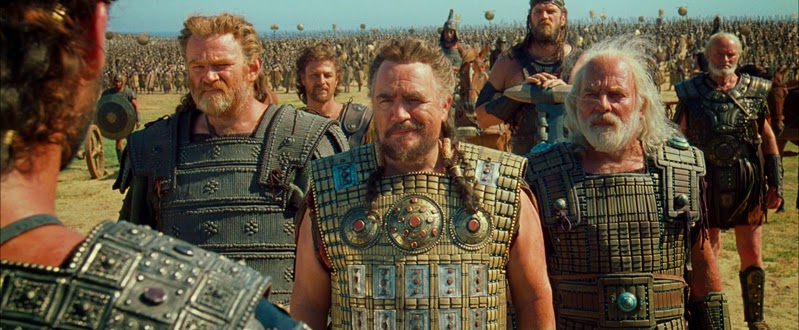
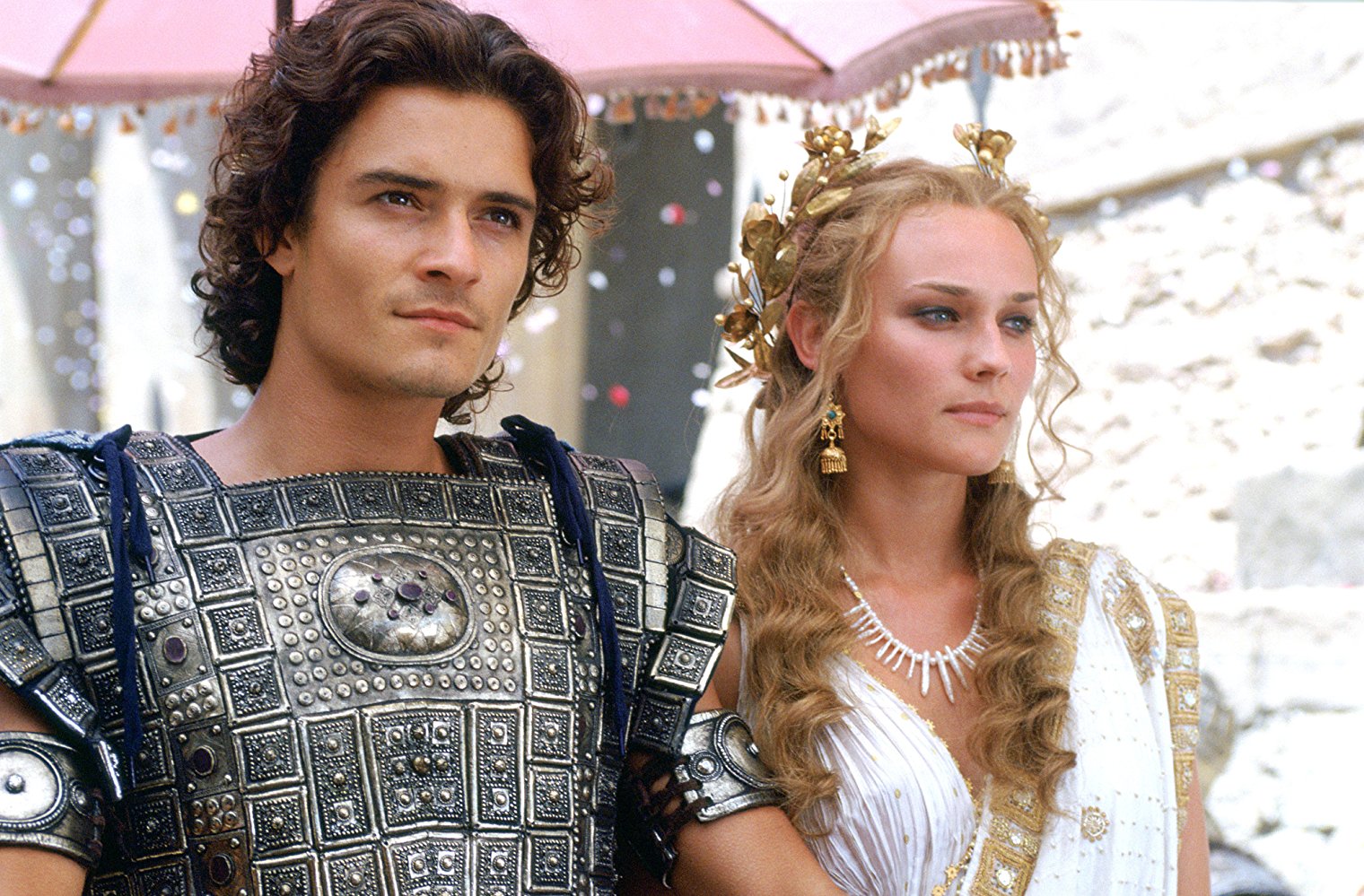
In Ancient Greece, a peace treaty has finally been agreed between Sparta’s King Menelaus (Brendan Gleeson) and Priam (Peter O’Toole) of Troy. Priam’s sons Hector (Eric Bana) and Paris (Orlando Bloom) are in Sparta to seal the treaty – only for Paris to fall in love with Menelaus’ unloved wife Helen (Diane Kruger). When they elope – despite Hector’s fears for the harm it will cause Troy’s people – Menelaus’ ambitious brother Agamemnon (Brian Cox) sees his chance to cement his hold over the last corner of the Mediterranean by conquering Troy. But to do so he’ll need the help of the greatest warrior in Greece, Achilles (Brad Pitt), who cares only for his legend and hates Agamemnon. 

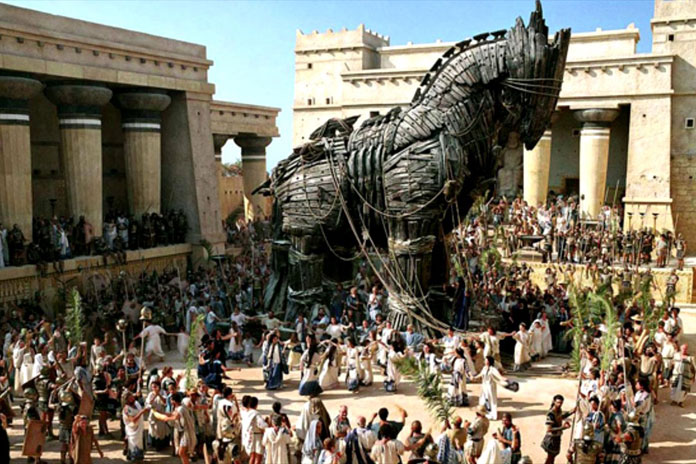
Directed with an old-fashioned grandeur by Wolfgang Petersen, mixed with an unflinching look at the blood and guts of war, Troy is a grand, cinematic epic that looks fantastic. The production and costume design are spot-on, and there is a great mixture of the “real” and the “special effect” in what you see on screen. It’s also got some cracking battle and fight choreography. The sword fight choreographers worked overtime on this one. The film embraces the grace and style of Achilles – he’s not the largest or strongest, but he has a pace, speed, intelligence and ruthlessness that allows him to duck, sway and constantly be one step ahead of his opponents. It doesn’t shy away from the brutality of his violence, and the camera never forgets the fallen.

It’s a film that understands the impact of war. It makes us care about many of the characters – and frequently shocks us with senseless, sudden deaths, or devotes time to the grief of those they leave behind. Our hero Hector has an almost tortuous-to-watch lengthy build up to his final fight – and then the camera gives us a moment or two when he is fatally wounded to see the light start to go from his eyes before Achilles delivers the killer blow. It’s a film that moves the viewer, that excites us with action while letting us grieve the cost of war.

The script is also a reasonably decent adaptation of elements of Homer, remixed with a modern (God-free) twist – as if this was the “true” story legend has been spun from. The script is put together by Game of Thrones’ David Benioff, and has his recognisable mix of epic scope and noble principles, clashing with realpolitik.

So why was Troy rejected by so many people? Why was it so misunderstood on release? It’s a mis-sold and partly mis-cut story struggling to embrace its own implications. Maybe I’m reading stuff into it, but I feel like this is a different film than the marketing or filmmakers seem to have understood. 

Firstly, Achilles is (at least for the first two thirds) effectively the film’s villain. He has no interest in people, only a sociopathic wish to be remembered as a great warrior. He’s ruthless in combat and slaughters indiscriminately. He’s temperamental and emotionally stunted. Contrast him with Eric Bana’s Hector: a devoted family man, who values the lives of the people of Troy first and foremost. Hector is effectively reimagined from the source material as a very modern man – the audience surrogate, the hero we can relate to, compared to the greedy, rapacious Greeks.

The struggle the film has is its biggest star plays Achilles – and it doesn’t want to compromise his box office appeal. So it tries not to draw too much attention to this contrast, and avoids passing too much judgement on Achilles. So we struggle when Achilles and Hector fight – anyone with any sense is surely rooting for the guy with a wife who just wants to see his kid grow up, rather than the sociopath, even if he is played by a super-star. All the characters hammer home our distress at Hector fighting Achilles, by the fact all of them reckon he’s got no chance. There are moving farewells for Hector with his father, wife and son. Hard to sympathise with Achilles when he slays the film’s most sympathetic character and drags him in the dirt right?

Achilles only starts to develop humanity (and become a modern hero) when he hits rock bottom after killing Hector – and is shamed first by Priam’s humbling, controlled pain (a tour-de-force from Peter O’Toole) then by his slowly developing love for Briseis. From this point , Achilles fights specifically to protect others – and finally puts aside his longing for immortal fame to try and save Briseis from the slaughter of the sack of Troy. The film’s slightly muddled unwillingness to condemn Achilles earlier, and its desire to celebrate him at the end, muddies the water. But there is a clear character arc slowly developing of Achilles becoming a humbler, more humane man.

As Achilles doesn’t look that good opposite Hector, the film turns Agamemnon into a ruthlessly ambitious, vain and greedy tyrant (played with a lip-smacking, roaringly enjoyable style by Brian Cox). Agamemnon (like many of the Greeks) is a modern politician – he wants to fashion the Greek city states into a single nation (sure one under his control, but it’s a more modern idea). The film, however, uses him to make Achilles desire for lasting fame feel more sympathetic. We all hate hypocritical politicians and cowardly bullies, right? And we all prefer the romance of the individual fighter uninterested in worldly affairs, right? Ergo, says the film, if we don’t like Achilles because we prefer Hector, we can also like Achilles a bit more if we don’t like Agamemnon. It’s clever structure in a way – but because the film doesn’t completely commit to it, it gets a bit lost in the telling.

The film’s attitude to Agamemnon is reflected in its favouring of Trojans over Greeks. While the Greek commanders squabble, or engage in political chicanery, the Trojans have an old school nobility. The film is enamoured with Priam. He’s played by Peter O’Toole in his grandest style (and O’Toole, though he can’t resist a bit of ham here and there, is very good). But Priam is in fact a naïve idiot, who makes a mess of everything. He’s incapable of accepting the realities of the world – his decisions lead to disaster at every turn. He may be overtly noble, honest and full of integrity – but like Ned Stark in Game of Throneshe’s completely out of his depth in Agamemnon’s ruthless world. Achilles may call him a “far better king”, but by any modern standard, Priam is in fact a terrible king, who makes all his decisions based on his regard for the Gods, rather than a claim appraisal of the situation.

These two reasons are why the film struggles. The film despises the Greeks but wants us to love Achilles – while at the same time having him kill without compassion, including our main audience surrogate character. It wants us to aspire to the romantic ideals of Priam and the Trojans – even while it demonstrates time and again that these ideas are hopelessly misguided, and completely wrong. It goes part of the way to accepting these contradictions, but it can never quite bring itself to villainise Brad Pitt, or condemn the noble Peter O’Toole.

I like to watch it my own way, balancing these contradictions – and I think if you do that (like watching the TV show The Tudors if you accept what the show can’t: that Henry VIII is the villain) then the film is really rewarding, full of interesting ideas and packed with cracking scenes.

It also allows some wonderful performances. Brad Pitt is, I suppose, an odd choice for Achilles in many ways – and he seems a bit bound in by his 1950s-Hollywood-Epic-Transatlantic accent. But he really looks the part, and I don’t think he’s afraid to let Achilles look bad – and he sells his conversion into a more heroic figure. Eric Bana is terrific as Hector – warm, engaging, hugely admirable. He has a world-weary tiredness to him – while Pitt’s Achilles is as cold as marble, Bana’s Hector looks like he has the cares of the world on his shoulders, tired already of the violence and horror he has had to endure.

There are tonnes of excellent supporting performances. Sean Bean in particular is so good as the wry and infinitely wise Odysseus you will be wishing they had made an Odyssey sequel so you can see more of him. Cox and O’Toole are rather good (bless, they are clearly enjoying themselves) as flip sides of the same coin. Byrne is affecting as gentle Briseis. Brendan Gleeson makes a fiercely bullying Menelaus. I’m not sure Saffron Burrows has ever been better than here. James Cosmo and Nigel Terry shine in smaller roles.

Poor Orlando Bloom struggles with a part that is hugely difficult – Paris is basically a spoilt coward. The film makes great play of Helen (a pretty good Diane Kruger in a near impossible part as the most beautiful woman, like, ever) being attracted to Paris precisely because he’s more of a romantic, and not interested in violence – but he tends to come across more as a thoughtless playboy, who lands everyone in trouble. It’s tricky for Bloom as this is the purpose of the film – and in many ways he’s very good casting for it – but that’s partly because he’s not the most persuasive of actors. He has a slight redemption arc – but I’m not sure Bloom as the presence to really sell it. 

I can’t believe how much I’ve actually written about this– but, for all its faults and its confused structure  I actually rather deeply love it. Maybe it’s tied in too much with my love for Greek myths. Maybe I love these all-star character actor epics. But I think it’s a film that puts a lot at stake for its characters – and really makes you invest in them – and that draws some fine performances from its cast and frames them all in a brilliant vista. It’s crammed with some terrific scenes. It never fails to entertain me. It’s almost a go-to film. I’ve seen it dozens of times and yet it never tires for me. I love it. In many ways it’s one of my filmic (forgive me) Achilles’ heels.