Tag: Bruce Davison

Short Cuts (1993)

Anne Archer and Jack Lemmon are just two of many intersecting lives in Altman’s Short Cuts

Director: Robert Altman

Cast: Andie MacDowell (Ann Finnigan), Bruce Davison (Howard Finnigan), Julianne Moore (Marian Wyman), Matthew Modine (Dr Ralph Wyman), Anne Archer (Claire Kane), Fred Ward (Stuart Kane), Jennifer Jason Leigh (Lois Kaiser), Chris Penn (Jerry Kaiser), Lili Taylor (Honey Bush), Robert Downey Jnr (Bill Bush), Madeleine Stowe (Sherri Shepard), Tim Robbins (Gene Shepard), Lily Tomlin (Doreen Piggot), Tom Waits (Earl Piggot), Frances McDormand (Betty Weathers), Peter Gallagher (Stormy Weathers), Annie Ross (Tess Trainer), Lori Singer (Zoe Trainer), Jack Lemmon (Paul Finnigan), Lyle Lovett (Andy Bitkower), Buck Henry (Gordon Johnson), Huey Lewis (Vern Miller)

Helicopters fly over Los Angeles, spraying against medflies. Beneath them, people’s lives entwine over the course of a couple of days. It could only be an Altman film. The man who turned the whole of Nashville into a set for, repeats the trick here with a brilliantly handled adaptation of a series of Raymond Carver short stories into one single inter-linked narrative, that explores a full gamut of emotions in that strange race we call humanity.

The son of TV commentator Howard (Bruce Davison) and his wife Anne (Andie MacDowell) is hospitalised after he is accidentally clipped by the car of waitress Doreen (Lily Tomlin). He’s treated by Dr Ralph Wyman (Matthew Modine), currently feuding with artist wife Marian (Julianne Moore). Marian befriends clown Claire (Anne Archer), who is horrified when her husband Stuart (Fred Ward) and his friends decide not to let finding a dead body spoil their fishing trip. Marian’s sister Sherri (Madeline Stowe) is becoming increasingly exasperated with philandering cop husband Gene (Tim Robbins), who is having an affair with Betty (Frances McDormand) estranged wife of Stormy Weathers (Peter Gallagher) who flew one of those helicopters spraying medflies. That’s not even mentioning a furious baker (Lyle Lovett), a sexually frustrated pool cleaner (Chris Penn) and his phone-sex worker wife (Jennifer Jason Leigh) or Howard’s unreliable father Paul (Jack Lemmon).

There aren’t many directors in Hollywood who could throw this many plates onto sticks and keep them spinning. Certainly very few who could make it look as easy as Altman does. With no less than twenty leading characters spread out across at least nine storylines, many of which intersect but without those taking part of them being aware of it, this is such a carefully woven tapestry even a single loose thread could have led to the entire image unravelling into a sorry collection of fabric. The fact it doesn’t, and the film moves so confidently and vibrantly from place-to-place, shifting from perspective to perspective without ever once confusing or alienating the audience, demonstrates this is the work of a master at the top of his game.

Altman’s verité style is at its best here. There is no need for flash or intrusive cinematic tricks, when the entire film is a brilliant expression of the potential of cinematic narrative. Altman’s camera, with its observational stillness, is perfectly matched with masterful editing (the film is superbly assembled by Geraldine Peroni) that not only makes this a coherent whole, but also finds every trace of reaction and nuance from the characters. Time and time again the camera (and the editing) searches out and finds that little moment of reaction that adds a whole world of depth to the story.

Because, like some of Altman’s best films, this is all about a cascade of little moments that combine into one beautifully enlightening whole. Each story demonstrates a different facet of the human experience, but what they all have in common is the unpredictability of how events many turn out and how people may react to them. There is a wonderful unknowability about people which the film captures. Just when we think we have a person sussed, they will do or say something we don’t expect. A philanderer’s wife will be amused by his cheating than horrified. An abusive baker will have depths of kindness. Feuding couples will find they have more in common than not.

There’s also darkness and sadness. The film is largely anchored by the increasingly heart-string tugging collapse of Howard and Ann’s son – and the pain that can lie in parent-child relationships is also seen in the dysfunctional relationship between jazz singer Tess (Annie Ross) and her talented but depressed celloist daughter Zoe (Lori Singer). As Ann, Andie MacDowell gives one of her finest performances as a powerless mother desperate to do the right thing, her fear and vulnerability as touching as her pain is devastating. Somehow, it’s all the more affecting by knowing how distraught Lily Tomlin’s Doreen would be if she knew the terrible impact of her very minor accident was.

That’s another beauty of this tapestry. As characters ‘guest’ in each other’s stories, we don’t see them in black-and-white but as ordinary people doing their best. Tim Robbins’ cop would probably seem a selfish rogue agent in the eyes of several characters, but as we see more of his home life (dysfunctional but strangely loving), it’s hard not to warm to him. We understand why Ralph (Matthew Modine) is a bit distant with the Finnegans, because he’s distracted by concerns that his wife is having an affair. We can’t be angry at Doreen, because we know she’s such a decent person.

The film doesn’t shy away from the darkness of people, not less the slow bubble of sad-eyed depression in the eyes of Chris Penn, jealous of the people his wife (a very good Jennifer Jason Leigh) talks dirty to down a phoneline – a bubble that will burst before the film’s end. Peter Gallagher’s cocksure and charming pilot has the potential in him to do something quite unpleasant to his wife. Even Tim Robbins’ cop seems only a few degrees from potentially taking the law into his own hands.

Short Cuts is wonderfully constructed – and never feels overbearing or overlong despite its great length – but it’s not perfect. It’s very hard not to notice today that it’s view of the great melting pot of Los Angeles is overwhelmingly white. Nearly every single woman takes her clothes off at some point (Julianne Moore famously does an entire domestic argument nude from the waist down, which is making a point about the impact of long-term marriage but still Modine is fully clothed). Altman at times lets his cynicism (and even slight condescension) for some characters show a little too clearly.

But, despite those flaws, Short Cuts is an almost perfect example of smorgasbord story-telling in cinema. And no one else could surely have done it with such ease and wit as Altman did.
The Crucible (1996)

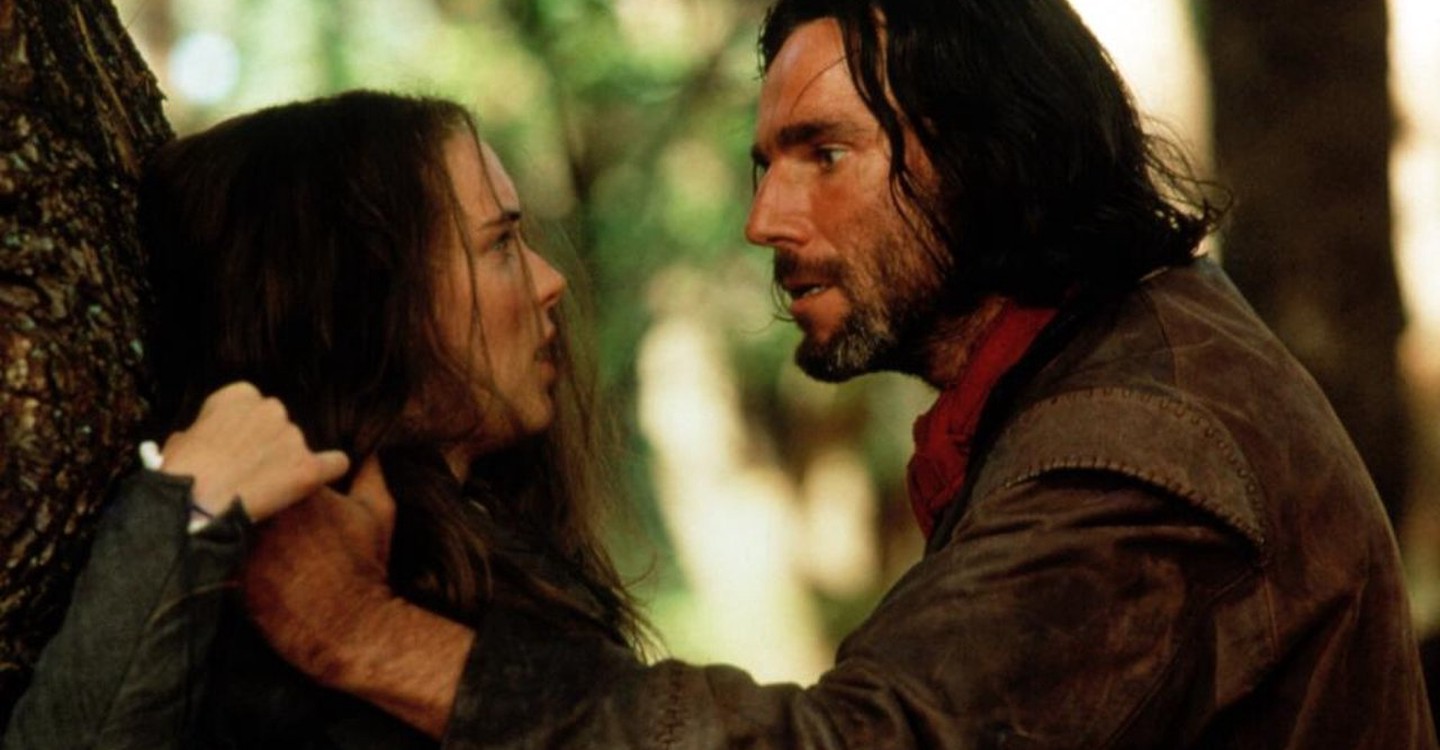
Winona Ryder and Daniel Day-Lewis are swept up in the heated emotions of small-town Salem in The Crucible

Director: Nicholas Hytner

Cast: Daniel Day-Lewis (John Proctor), Winona Ryder (Abigail Williams), Paul Scofield (Judge Thomas Danforth), Joan Allen (Elizabeth Proctor), Bruce Davison (Reverend Samuel Parris), Rob Campbell (Reverend John Hale), Jeffrey Jones (Thomas Putnam), Peter Vaughan (Giles Corey), Karron Graves (Mary Warren), Charlayne Woodard (Tituba), Frances Conroy (Ann Putnam), Elizabeth Lawrence (Rebecca Nurse), George Gaynes (Jude Samuel Sewell), Mary Pat Gleason (Martha Corey)

The Crucible is now so well-known, it’s virtually a shared cultural reference point. Surely we have all studied it at some point at school, or seen it on stage (or both). The play helped “witch trial” become a common short-hand for an increasingly vicious campaign conducted by society against a group within it. The Crucible works so effectively as a play because it is both simultaneously a brilliant recreation of the time it is staging, and a play of universal themes which is for all time.

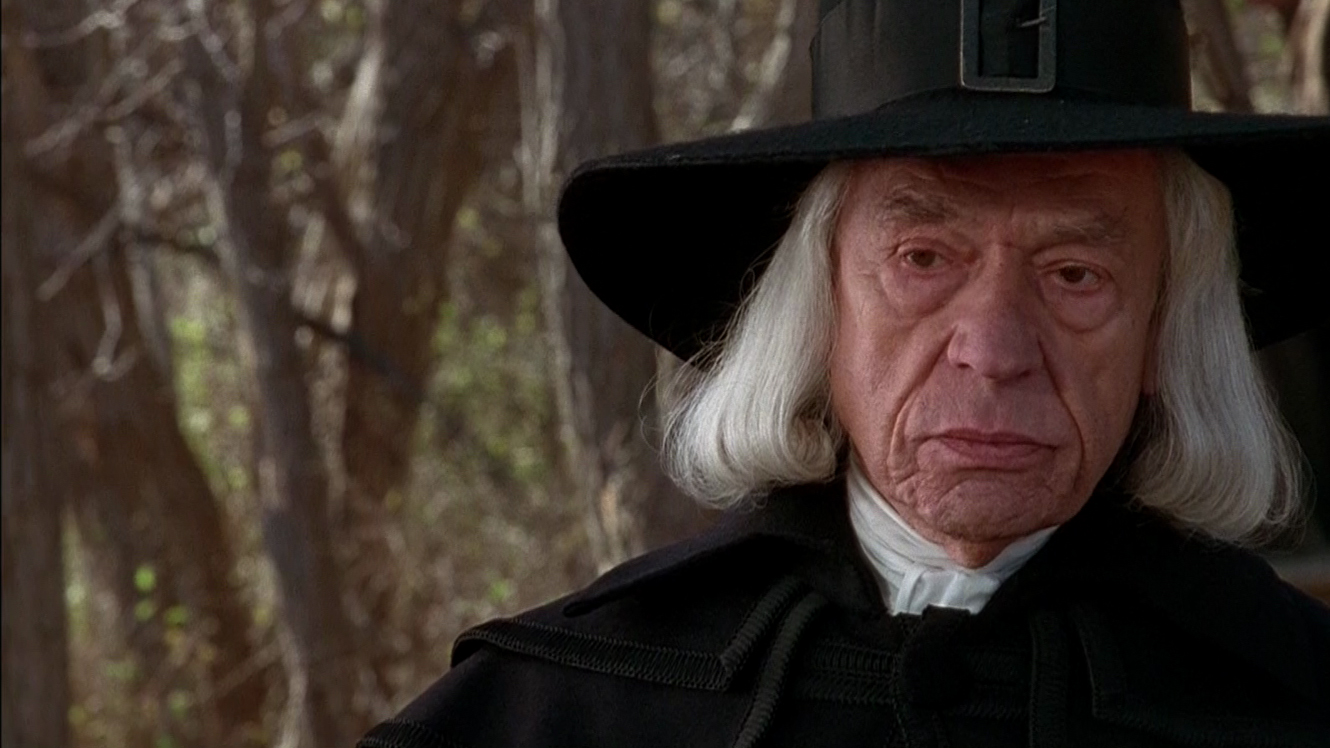
In Salem, Massachusetts in 1692, the young girls of the village are caught dancing around a fire in the woods late at night by Reverend Paris (Bruce Davison). The next day, some of the girls will not awaken from fits, and rumours of witchcraft spread. Terrified of the blame being pinned on her, the girls’ ring-leader Abigail Willams (Winona Ryder) “confesses” to being tempted by the devil and swiftly accuses other people in the village (often at the prompting of senior villagers keen to remove rivals and resolve old feuds). However, Abigail’s real target is Elizabeth Proctor (Joan Allen), the wife of Abigail’s former lover John Proctor (Daniel Day-Lewis). The accusations quickly spiral into a series of trials based on the girl’s “evidence”, conducted by Judge Thomas Danforth (Paul Scofield).

The Crucible may be one of the finest adaptations of a play ever made. With the script adapted for the film by Arthur Miller itself, the play is effectively opened out and subtly restructured (the original is essentially four acts, each a single scene in a single location) to allow different character interactions, earlier introductions, and to show us things only implied in the original play. Many will complain about the film showing us rather than allowing our imaginations to work, but the film never loses the ideas and themes of the original play and gives it a real emotional force. What the film might sacrifice in the claustrophobia of small rooms, it more than makes up for in getting across a real sense of a community consumed by hysteria.

Nicholas Hytner – in only his second movie – directs with great skill, using a number of low-angle lenses to make ceilings loom over the scene. He mixes this with sweeping shots (beautifully filmed) of the Massachusetts countryside, which looks increasingly windswept and bleak. He really understands how to play the film “straight” – to let its universality speak by grounding it in the Salem countryside, without tipping the hat. His theatrical experience works wonders for the set-piece scenes, which sizzle with tension and brilliance, with Hytner allowing moments where you can almost convince yourself everything is going to be OK.

Miller’s expanded screenplay also allows an even greater sense of the hidden corruption of the trials, and how they are misappropriated by certain members of the village. Far more than even in the play, you get a real sense of old scores being settled, and of odd-balls and eccentrics being targeted. Frances Conroy (pre-Six Feet Under fame) is excellent as Ann Putnam, using accusations to alleviate her own bitterness at the loss of her children, while her husband is a spittle-mouthed bully, shamelessly using the trial as a landgrab (well played by Jeffrey Jones, awkward as it is to see him in a movie – google it).

In this nightmare village of suspicion and accusation, Abigail Williams is the only person who really understands the opportunities and dangers fully. Winona Ryder is often overlooked in this film, but her brilliant expressiveness is perfect for Abigail. She really adds depth and shade to the character – yes she is bitter and angry and ruthless and shameless, but she’s also scared and genuinely in love with John, and you get flashes of doubt and even regret over what she is doing.

The object of her obsession is John Proctor. Daniel Day-Lewis – Miller’s son-in-law – takes on the role and he is of course as excellent as you might expect. Day-Lewis’ key roles are such larger-than-life landmarks in cinema, it’s easy to overlook him playing a role taken on by so many other actors. At first, you almost feel it might be a waste – but he gives it a growing emotional commitment and force. He may be the one sane man in the storm of hysteria, but Day-Lewis doesn’t lose track of Proctor’s inner cowardliness, his corruption, his bitterness. Day-Lewis’ performance repositions the role as a man who has to learn to stand for something. It’s a superb performance.

He’s equally matched by Joan Allen, whose performance as Elizabeth Proctor throbs with dignity, but also a puritan strength of faith that makes it easy to imagine that Proctor would feel overwhelmed by a sense of being weighed in the balance and found wanting. She and Day-Lewis have a beautifully played, hugely emotional scene late on in a windswept field which (like so many other scenes in this production) briefly suggests a hope for the future.

Paul Scofield did so few films that each of his rare performances is to be treasured (this was his last film performance). His Danforth is simply superb, probably close to the definitive performance. It trades a lot on an inversion of Scofield’s most famous performance as Thomas More. Scofield plays Danforth as a man filled with certainty without a trace of doubt, who is married to the word of the law but has no understanding of the spirit of it. In Scofield’s masterful performance, flashes of arrogance and pride intermix with a genuine sense of faith and morality. His Danforth is convinced everything he does is right – a position that allows him to commit many wrongs.

The film is rounded out by several other excellent roles: Bruce Davison is outstandingly weaselly as Samuel Paris, Peter Vaughan has a wily shrewdness as Giles Corey, Rob Campbell is increasingly filled with doubt and anger as Hale, Karron Graves is wonderful as a desperate and scared Mary Warren. Mary Pat Gleason is perfect as the proud Martha Corey, while George Gaynes subtly suggests a man consumed with doubt as Judge Sewell.

“Anybody seeing The Cruciblenow would never dream that it had been a play” said Arthur Miller on this adaptation. He’s right. This must be one of the best stage-to-screen adaptations there has ever been, with all involved totally understanding what made the play great while expanding and deepening the content for film. It’s a marvellous film.