Tag: Burgess Meredith

Of Mice and Men (1939)

Of Mice and Men (1939)

Well-made version of a story that has since become almost excessively familiar

Director: Lewis Milestone

Cast: Burgess Meredith (George), Lon Chaney Jnr (Lennie), Betty Field (Mae), Charles Bickford (Slim), Roman Bohnen (Candy), Bob Steele (Curley), Noah Beery Jnr (Whit), Oscar O’Shea (Jackson), Granville Bates (Carlson), Leigh Whipper (Crooks), Helen Lynd (Susie)

I suspect John Steinbecks’s powerful parable has been rather defanged for many people, after extensive over-exposure in schools across the world. Who hasn’t spent hours in an English class pouring over the struggles and dreams of permanently unlucky Depression-era drifters, scrawny George and muscular-but-childlike Lenny? It’s hard to not feel Of Mice and Men is very familiar the second the credits roll on Milestone’s film – or fail to notice some of its on-the-nose musings (sometimes the kindest thing you can do is kill a frightened, vulnerable dog, rather than let it suffer – I wonder what development plot is being alluded too here…) and while familiarity has stripped Of Mice and Men of some of its power, this is an effective, well-made, version.

George (Burgess Meredith) is the brains of a partnership with childlike muscle man Lenny (Lon Chaney Jnr) as they drift from job-to-job out West, constantly hired on the back of Lenny’s muscle, then escaping from the troubles his lack of understanding of the world causes, through George’s survivalist cunning. They dream of having their own place – and they get a shot at it when aged, one-handed farmhand Candy (Roman Bohnen) offers to chuck his accident-payout dollars into their pot. But Lenny’s inability to cope with the world keeps leading to danger: from his accidental rousing of the ire of small-of-statue rancher’s son Curley (Bob Steele) to his fascination with Curley’s pretty wife Mae (Betty Field). Some dreams are doomed.

Of Mice and Men stays very faithful to Steinbeck, playing out this smalltown tragedy under the low-key, persuasive eye of Milestone who avoids either overplaying the tear-jerking or smothering the story with flashy film-making (there is one dramatic pull-back after disaster strikes, and George flees a barn, the camera heading into a sudden wide-angle, but other than that this is restrained film-making). Instead, the focus is very much placed on the relationship between two very different men who, without even quite understanding it, are mutually dependent halves of a whole.

At first it seems George and Lenny are effectively in a marriage of convenience. The wirey George would struggle to be hired without the loaded-cart lifting Lenny as a sweetener, while Lenny can barely tie his own shoelaces without George’s guidance. Meredith’s snipy, wheedling George feels at first like he can only just master his frustration with Chaney Jnr’s lumberingly sweet Lenny. But Meredith gives full life to a character who, we slowly realise, has a brotherly protective regard for Lenny – and needs the purpose Lenny gives his life, just as much as they both need the reassurance of George’s constantly spun story of their dream farm. This mantra – with Lenny echoing lines like a child’s bedtime story – of the buildings and animals they’ll care for is delivered by Meredith with a careful repetition that constantly flowers into earnest true-belief. We realise George is as much a lost soul as Lenny, adrift and barely able to cope with the world.

Because Depression-era America is a place where dreams go to die. Curley, clutching a few hundred dollars hush money after a farming accident cost him his hand, knows his life is just a countdown until he is kicked off the farm for being unable to work. He’s facing a future not too dissimilar from his euthanised dog, eyed up by the other men as a feeble old-timer who’d be better off snuffing it. No wonder both he and the simple Lenny, living on the bottom rung of life’s ladder, find a companionship with segregated Black farmhand Crooks (a very sensitive performance from Leigh Whipper, a character treated respectfully by Milestone’s film).

George’s natural alliance is with these little guys. Meredith’s George is naïve in his own way, slightly off-the-pace in social situations, tolerated by others, a deep vein of anxiety and worry just under his skin that he is all-too-happy to repress while he focuses on being father-figure and big-brother to Lenny. Meredith makes him chippy but not quite as worldly as he thinks, shrewd but vulnerable and, for all his carefully performance self-confidence, insecure and intimidated by events. He’s a passenger in life who likes to kid himself he’s a driver.

Authority lies elsewhere. Curley, played with a little-man anger and stunted swagger by Bob Steele, makes up for his own (many) insecurities – about everything from his height to what his flirtatious wife gets up to – by treating everyone below him in the farm’s pecking order with contempt. Curley needs to proof his masculinity by beating Lenny – who has all the physical gifts he longs for but none of the gumption to use them. He can only dream of having the relaxed, natural authority of Charles Bickford’s Slim, a man completely confident about himself and his standing in life – this easy assurance stands out in a film full of the jittery, frightened and insecure.

Of Mice and Men’s weakness, as with the book (as even Steinbeck later acknowledged) is Curley’s wife. Betty – played with a shrill energy by Betty Field in a performance she’s not quite strong enough to pull off – is only faintly crafted into a vaguely three-dimensional figure from the sexually charged, selfish flirt she is in the book. Here she has moments of self-reflection – and Milestone’s film briefly explores the isolation of this girl who dreamed of Hollywood but ended up married to an inadequate, angry man on a crappy farm – but remains, at heart, a brassy, selfish woman who precipitates disaster through her actions. It’s a singular lack of empathy in a film that prides itself on its humanitarianism.

Disaster is the inevitable outcome of a Steinbeck Depression-era drama. Milestone’s film finds quiet emotional power – aided a great deal by both Meredith and Chaney Jnr effectively under-playing – in the film’s final moments. You can imagine if this was your first exposure to a very familiar story, being impressed by the effectiveness of so much here. This is particularly so in the film’s powerful ending, directed with admirable restraint and played with a highly effective (and underplayed) emotion by Meredith. If other parts of the film are more well-assembled than really inspired, delivering Steinbeck pretty much as it is on the tin, that still makes for a fine version of a now familiar tale.
Rocky III (1982)

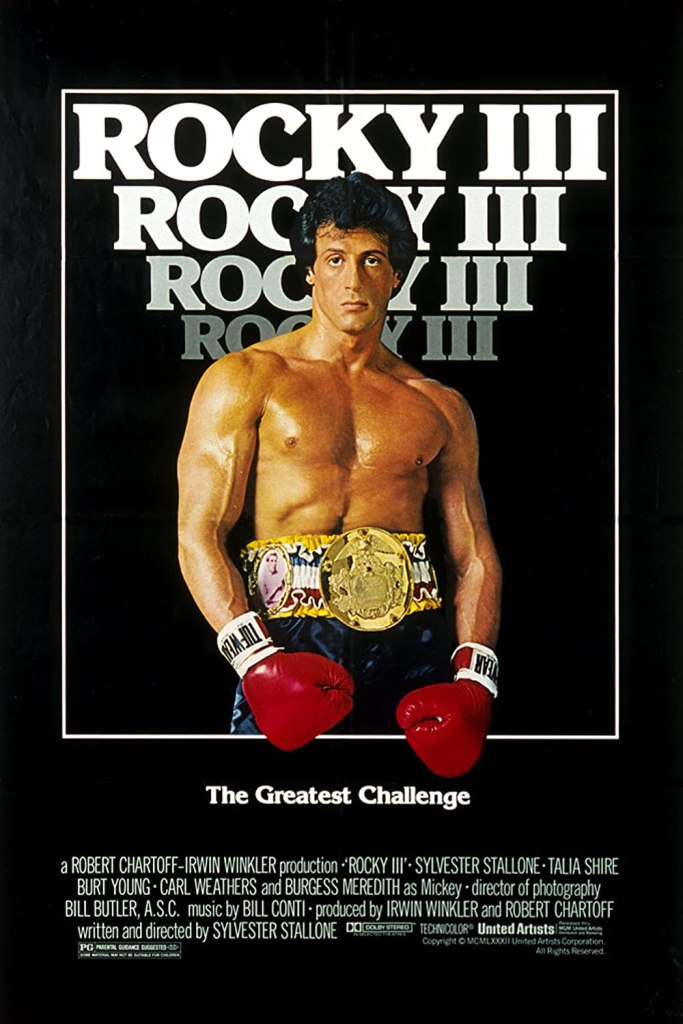
Rocky III (1982)

Rocky needs to build his way back to the top – again – in this boxing buddy movie

Director: Sylvester Stallone

Cast: Sylvester Stallone (Rocky Balboa), Talia Shire (Adrian Balboa), Burt Young (Paulie Pennino), Carl Weathers (Apollo Creed), Burgess Meredith (Mickey Goldmill), Tony Burton (Duke Evers), Mr T (Clubber Lang), Hulk Hogan (Thunderlips)

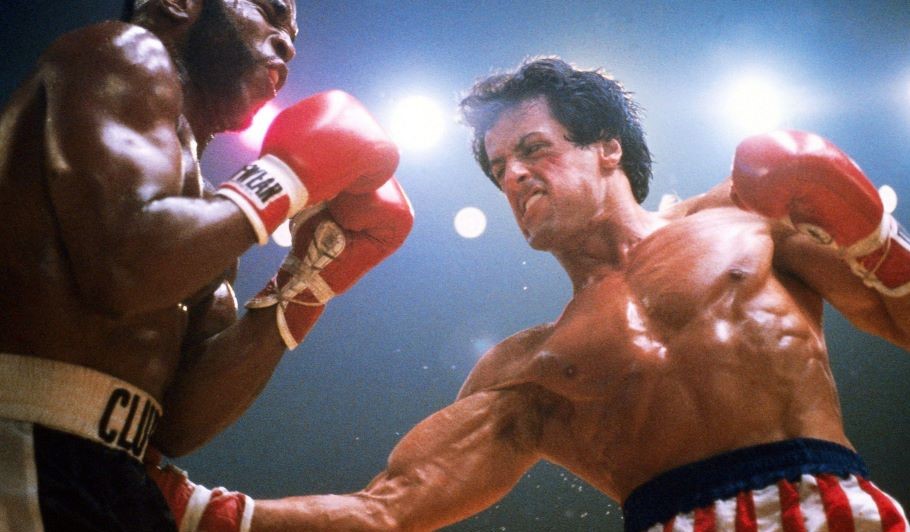
Life is good for Rocky Balboa (Sylvester Stallone)! Ten successful title defences and he is literally on-top of the world. Time to hang up his gloves right? Wrong of course. He’s challenged by hungry new up-and-comer Clubber Lang (Mr T), a brutal, never-beaten machine. Dismissive to all around him, Lang says Rocky has never taken on a proper challenger: turns out he’s right as Mickey (Burgess Meredith) only put Rocky up against challengers he knew he could beat. Lang takes Rocky apart in the fight – not before indirectly causing a fatal heart-attack for Mickey – and Rocky is a broken man. Who else can bring him back from the brink than his old frenemy, the Count of Monte Fisto himself, Apollo Creed (Carl Weathers)?

Rocky III confirms that there are in only so many plots available for a Rocky film. This one shakes the formula up by having Rocky start at the top, then fall to the bottom, then rise back up again. But it’s the same story, now taking place in a slightly different style to the first two. Any sense of kitchen-sink drama is gone from Rocky III. You can see it in the body of Stallone, now a chisselled, Michelangelo sculpture. This is a cartoon with a happy ending, and the fact it’s entertaining doesn’t hide that the whole franchise was leaving reality behind.

Saying that, Rocky III makes a bigger push for tragedy than either of the other two. Stallone leans heavily into incoherent blubbing as Rocky cradles the body of his surrogate father, Mickey dying with one last growling word of wisdom. It’s, of course, the moral of all film mentors that they must eventually kick the bucket so their proteges can take their place. It shakes Rocky up like nothing before. That and the beating he takes from Lang, in a brutal one-sided beat-down.

One of the film’s claim to cult fame is of course the casting of Mr T as Clubber Lang. Growling and scowling like a cartoon heavy, with some punchy one-liners (“I don’t hate Balboa. I pity the fool!”), it’s a part that works due to Mr T’s charisma. Stallone shoots Clubber Lang like some sort of fighting lion, frequently employing slo-mo to focus in on Lang’s scowling face and flying fists, the soundtrack echoing with his roar. Mr T is the series best villain, a man so loathsomely cocky (literally no one likes him, not the crowds, the commentators, his fellow boxers…) that he propositions Adrian, shoves Apollo before the first fight and gives Mickey a heart attack.

You needed someone like that to bring together Apollo and Rocky as a super-team. Rocky III is the series first buddy-movie. It’s hard not to see something faintly homoerotic in Weathers and Stallone, bodies greased and rippling in muscles, eyeing each other up, running along beaches or the faintly sexual air to Weather’s delivery of lines about wanting a “special favour” from Rocky “after the fight”. No wonder there isn’t much time for Adrian in the film – what chance could she have when these two have such a mutual appreciation society going on? – with Talia Shire’s best scene as a sounding board for Rocky’s confession of fear about stepping back into the ring against Lang.

Saying that, the inevitable training sequence – this is the film with the quest for “the Eye of the Tiger” – is great value. It’s fun to watch Rocky pick-up Apollo’s signature Muhammad Ali style quick feet and Weathers is very good as the former champ taking vicarious revenge who forms a genuine friendship with his old rival (I love it when Apollo shadowboxes in excitement when Rocky begins to turn the final fight in his favour). Of course, montage takes Rocky from down-hearted dope (suffering from slo-mo visions which play like a half-arsed panic attack) to freeze-frame triumph. (I’ll also say Rocky III rather neatly mocks Paulie’s kneejerk racism about training with ‘these people’).

To get to these expected beats, Stallone first needed to pad out the run time – and slight plot. Surely that’s the only reason for the bizarre Act One ‘exhibition’ match which sees a complacent Rocky fight an exhibition match against wrestler “Thunderlips” (a terrible cameo from Hulk Hogan), the sort of sequence you keep thinking must be a dream but is in fact real. We also get an initial training montage structured like a modern morality play, Rocky’s lazy prep for fighting Lang sees him living like a Hollywood hotshot, while Lang trains with a monastic dedication. No surprise who is going down in the ring (even if the first fight wasn’t only thirty minutes into the film).

The rematch though doesn’t disappoint, taking its lead from Ali’s rope-a-dope from the Rumble in the Jungle. And the real coda, which is all about friendship, is sweeter than this comic book, Roy of the Rovers film has any right to be. Rocky III replays some of the elements of the first two films, this time as a comic strip, but by focusing on a bromance (and throwing in a properly hissable pantomime villain) despite the fact you know it lacks any inspiration, you’ll still punch the sky when Rocky turns that final fight and leave the film whistling Eye of the Tiger.

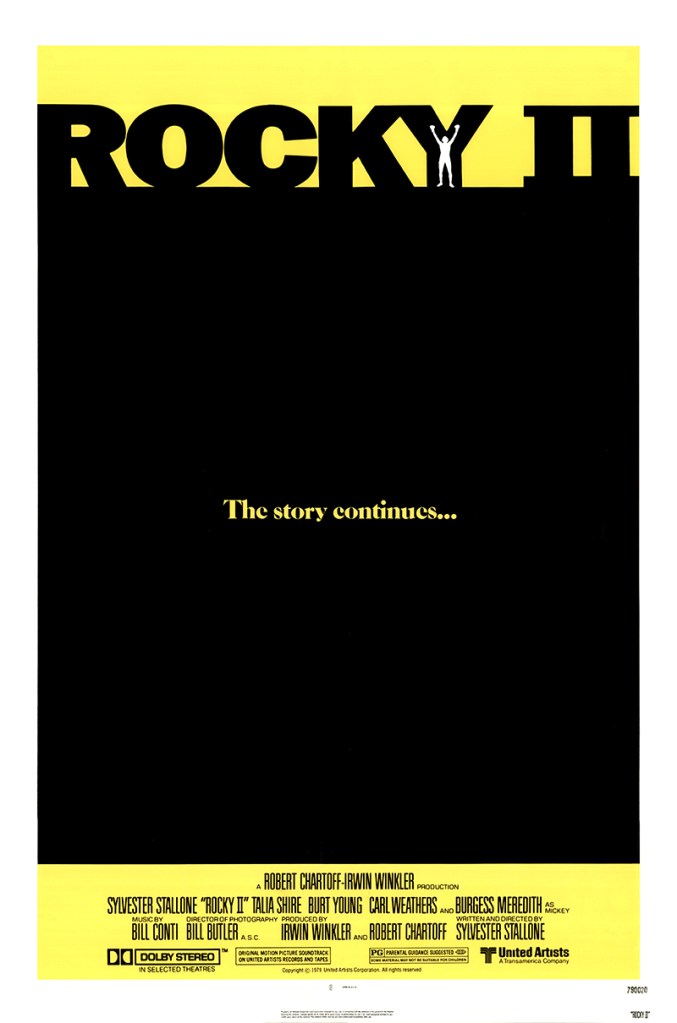
Rocky II (1979)

Rocky II (1979)

Rocky Balboa rides again, in Stallone’s enjoyable virtual remake of the first film

Director: Sylvester Stallone

Cast: Sylvester Stallone (Rocky Balboa), Talia Shire (Adrian Balboa), Burt Young (Paulie Pennino), Carl Weathers (Apollo Creed), Burgess Meredith (Mickey Goldmill), Tony Burton (‘Duke’ Evers), Sylvia Meals (Mary Anne Creed), Joe Spinell (Tony Gazzo)

It’s minutes after the end of that shock title fight won (just) by Apollo Creed (Carl Weathers – very good here as a curled ball of frustration), but already the champ is smarting since the moral victory was won by plucky challenger Rocky Balboa (Sylvester Stallone). Now Apollo wants a rematch. It’s the last thing Rocky – or his soon-to-be-wife Adrian (Talia Shire) want: Rocky’s eyesight is shot and he wants to retire to a well-earned career of cashing in on his fame. But when his money dries up, Rocky has no choice but to saddle up once again – only this time he and trainer Mickey (Burgess Meredith) are “gonna eat lightnin’ and crap thunder” till Rocky wins the bout outright.

I like to think of Rocky II as being, just like Rocky semi-autobiographical. If the first Rocky was about plucky small-timer Sylvester Stallone getting a shot at the big-time, Rocky II is about the hero returning to the scene of his success, but only on his own terms. Stallone had followed up Rocky with a film he wrote and starred in about union politics (F*I*S*T) and a would-be epic on an Italian-American family Paradise Alley which he wrote, directed and starred in that flopped. I’m guessing part of him didn’t want to be (at that time) just the guy who did Rocky. He wanted more.

That’s the vibe I get in a film where Rocky spends the first hour telling anyone who’ll listen he doesn’t want to fight no more. If he can’t make a career in advertising – and Rocky’s stumbling inarticulacy and border-line illiteracy quickly show that a filming career ain’t a goer – he wants a job in an office. Like Stallone pushing higher-brow passion projects, Rocky wants a new chapter. And, just like (I assume) Stallone was met by executives saying “just make another Rocky” so Rocky meets a (admittedly sympathetic) office manager who basically politely asks him “why don’t you just go back to fighting”

Just as Rocky fights Creed on his own terms, because it’s his decision, Stallone made Rocky II on his own terms: he would direct. The film we end up with is decent, but honestly little more than a retread. This is designed for people who saw and loved the first film – and at that time might not even have seen it since the cinema. It’s a nostalgia vehicle after only three years!

The basic structure is the same. Rocky shuffles around, bashful and quiet. He tries to be something he’s not and does his best to fit in (buying a home, car and posh new coat) but he never loses track of his fundamental decency. He still has a sweet relationship with Adrian – their ice rink date is basically restaged here with a zoo-set proposal (a neat joke since Rocky said in the previous film he couldn’t imagine a date to a zoo). Just as they had a brief will-they-won’t-they, so the couple have a crisis as Adrian struggles to support Rocky’s decision to go back into the ring and falls into a brief coma after a painful delivery of their son.

The training is all pretty much the same – as it would be in almost every film to come – including a call back to Rocky’s epic run up those steps, this time as the culmination of a run around seemingly the whole of Philadelphia, with half the cities kids running behind him cheering. Then he takes to the ring for another 15-round, mano-a-mano face-off with Apollo, sweat, blood and fists flying, Rocky switching to right-hand from southpaw.

Rocky II is entertaining – but it’s a diet coke rehash of Rocky, with all the same tricks but an ever-so-slightly diminished reward. Probably because nothing about it surprises you one little bit. It’s a film that’s looking to recapture that warm glow from 1976 and doesn’t aspire to anything more. It even ends with our hero bellowing “Adrian!” at the end. You’d have a decent quiz if you cut the two films up and threw random scenes at people and asked them to guess which Rocky film they were from.

Saying that, the franchise pretty much exhausted its kitchen-sink roots here. By the time we get too Rocky III there was no way the film was going to remember that Rocky’s eyesight was going or that he was a plucky underdog fighter. From here, Rocky would turn into a chiselled slab of marble and Rocky would fight Hulk Hogan, hire a robot butler and bring down communism. Compared to the nonsense that would follow in films 3 and 4, Rocky II really does look like the last time we had a Rocky film that might just have been directed by Ken Loach.

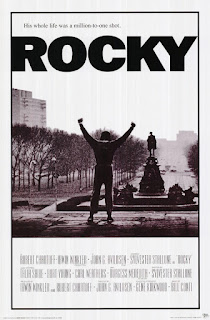
Rocky (1976)

Rocky (1976)

Doubters and some very steep steps are conquered in the Best Picture winning Granddaddy of Sports movies

Director: John G. Avildsen

Cast: Sylvester Stallone (Rocky Balboa), Talia Shire (Adrian Pennino), Burt Young (Paulie Pennino), Carl Weathers (Apollo Creed), Burgess Meredith (Mickey Goodmill), Thayer David (Miles Jergens), Joe Spinell (Tony Gazzo), Tony Burton (Tony “Duke” Evers), Pedro Lovell (Spider Rico)

How many people have run up those steps to the Philadelphia Museum of Art? So many, they’ve renamed them “the Rocky Steps” – and placed a statue of Stallone (from Rocky III) there. You can be sure everyone hummed Gonna Fly Now while they did it. It’s all a tribute to the impact of Rocky, the iconic smash hit that led to no less than seven sequels (and counting!) and, arguably, kickstarted the 80s in Hollywood (a decade Stallone would stand tall across with both Rocky and Rambo). The original Rocky mixes genre-defining delights and a feel-good, crowd-pleasing story with a surprisingly low-key setting that deals in a bit of Loachesque reality and social commentary.

Rocky Balboa (Sylvester Stallone) is a journeyman southpaw boxer, fallen on hard times. He’s making ends meet with a bit of loan shark enforcement (although of course he’s far too nice to actually break any bones) and getting seven bells knocked out of him at low-key fights. His trainer Mickey (Burgess Meredith) thinks he’s wasting his talent, and Rocky spends the day casting puppy dog eyes at Adrian (Talia Shire) sister of Rocky’s chancer best friend Paulie (Burt Young). But Rocky’s life changes overnight when Heavyweight Champion of the World Apollo Creed (Carl Weathers) picks him at random as the nobody he will fight in a title bout (to get Apollo some free publicity). Can Rocky dedicate himself to training so he can “go the distance”?

Surely everyone knows by now, don’t they? The big fight only takes up the last ten minutes of the film. What we’ve spent our time doing beforehand is watching possibly the one of the best ever packaged feel-good stories, full of lovable characters and punch-the-air moments, directed with a smooth, professional (but personality free) charm by Avildsen. Rocky genuinely looked and felt like a little slice of Capra, a fairy tale triumph for the little guy struggling less against the world and more against his own doubts.

And it overcame some real heavyweights to win Best Picture: it knocked aside All the President’s Men, Taxi Driver and Network in a shock win. Is Rocky better than those films? No. But is it more fun to watch? Yes, it probably is – and I would be willing to bet many more people have come back to it time and time again. It was also a triumph for Stallone, a jobbing actor, who produced a first draft of the script in three days and fought tooth and nail to make sure he played the lead.

And Stallone’s performance is absolutely central to its success (can you imagine what it would have been like with, say, James Caan in the role?). Stallone gives Rocky exactly the sort of humble, shy, sweetness that makes him easy to root for. Rocky is no genius, but he’s loyal, polite, well-meaning and Stallone taps into his little-used qualities of softness and naivety. Rocky is lovable because, for all the punching, he’s very gentle – just look at him make a mess of money collecting or the way he talks like a little kid with his pets. Stallone has a De Niroish – yes seriously! – quality here: he absent-mindedly shadow boxes throughout and gives a semi-articulate passion to his outburst at Mickey. His romance with Adrian is intimate and gentle. The whole performance feels lived in and real.

Real is actually what the whole film feels like – despite the fact it’s a ridiculous fairy tale of a boy who becomes a prince for a day. It helps that its shot deep in the streets of Philadelphia, on the cheap and on the fly in neighbourhoods and locations that feel supremely unstaged (Avildsen avoided the cost of extras by frequently shooting at night or very early morning). Even that run up the stairs was a semi-improvised moment. Rocky’s world is a recognisable working-class one that for all its roughness, also feels like a community in a way Ken Loach might be proud of (even the loan sharks are easy-going). Day-to-day the film manages to capture some of the feel of a socio-realist film with a touch of working-class charm.

It also makes a lovely backdrop to the genuinely sweet romance that grounds the film: and a recognition of the film’s smarts that a great crowd-pleaser needs a big dollop of romance alongside a big slice of action. Very adorably played with Talia Shire (original choices Carrie Snodgrass and Susan Sarandon were considered too movie-star striking), Adrian feels like a slightly mousy figure (and she is as sweet as Rocky) but also has a strength to her. She’s led a tough life as sister to the demanding Paulie (and Burt Young does a great job of making a complete shitbag strangely lovable and even a bit vulnerable), but it’s not stopped her feeling love. She and Rocky complement each other perfectly – gentle, shy people, who have something to prove to themselves and the world.

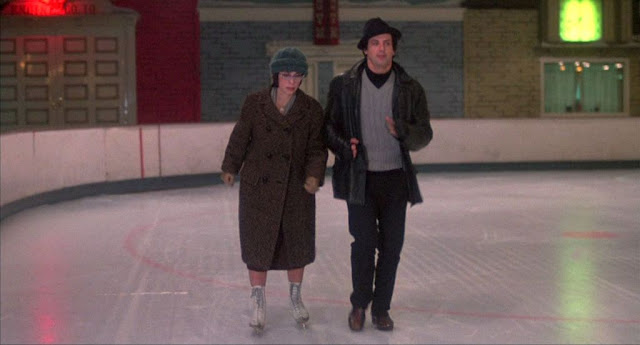
Is there a sweeter first date in movies than that solo trip to the ice rink? Cost cutting saved the day here (it was intended to be packed), that stolen few minutes skating while Rocky hurriedly tries to find out a much about Adrian as he can (an attendant counting down the time they have as they go), Adrian both charmed and bashful. It’s a lovely scene and goes a long way to us giving these characters the sort of emotional devotion that would keep audiences coming back for decades.

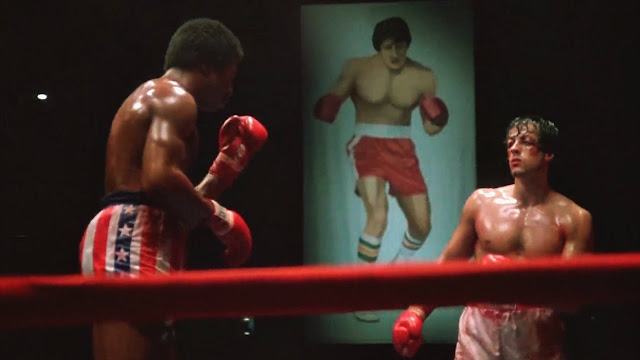
That and those boxing fights of course. Rocky’s final fight sets a template most of the rest of the films would pretty much follow beat for beat. But it’s still fun watching Rocky go toe-to-toe against all odds. Particularly as we know what is important to Rocky is not victory but proving something to himself. It helps as well that Stallone still looks like an underdog of sorts (over the next ten years he would turn himself into a slab of muscular stone).

Opposite him is Apollo Creed, with Carl Weathers channelling his very best Mohammad Ali. The underdog story makes for fine drama, and Rocky is superably packaged: there is a reason why so many other films essentially copied it. From montage, to an “against all odds” fight to Burgess Meredith’s grizzled trainer (a part you’d see time-and-again in the future from different respected character actors) there is a superb formula Rocky takes and repackages from classic films of the 40s and 50s and re-presents to huge and successful effect.

And it works because it’s so entertaining. Stallone is hugely winning in the lead role – more sweet and sensitive than he would be in later Rocky films (traits he would allow himself to rediscover in the more recent films) and it’s a perfectly packaged feel-good entertainment. But it’s also got a grounded sense of realism and reality, with an affecting love story. It’s one of the first – and best – films of the 80s, where formula and crowd-pleasing would be king.

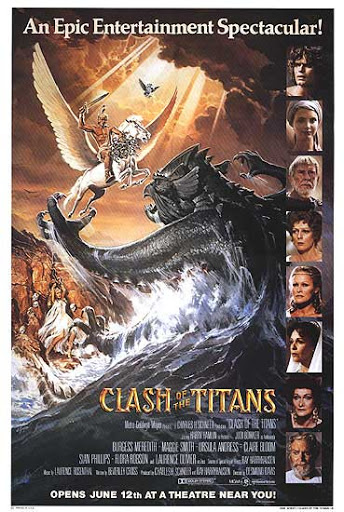
Clash of the Titans (1981)

Clash of the Titans header
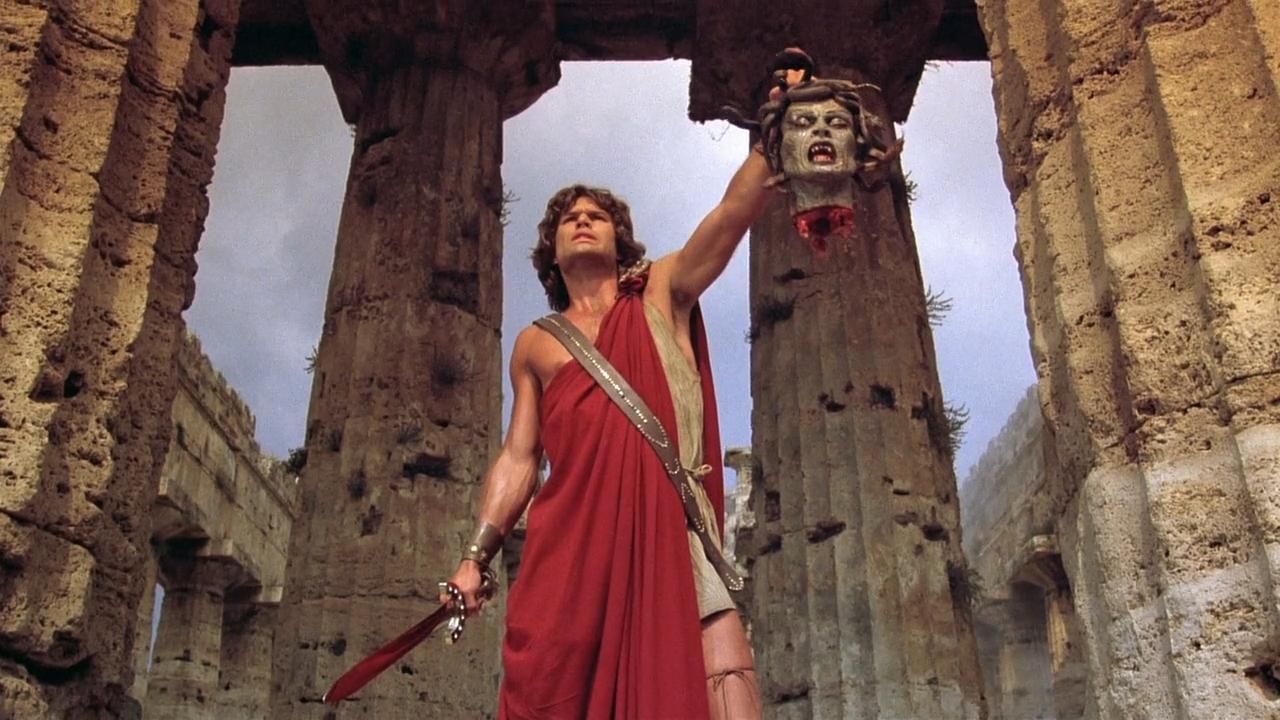
Harry Hamlin takes on monsters in Clash of the Titans

Director: Desmond Davis

Cast: Harry Hamlin (Perseus), Judi Bowker (Andromeda), Burgess Meredith (Ammon), Maggie Smith (Thetis), Sian Phillips (Cassiopeia), Claire Bloom (Hera), Ursula Andress (Aphrodite), Laurence Olivier (Zeus), Susan Fleetwood (Athena), Tim Pigott-Smith (Thallo), Jack Gwillim (Poseidon), Neil McCarthy (Calibos), Donald Houston (Acrisius), Flora Robson, Freda Jackson, Anna Manahan (Stygian Witches)

It’s almost impossible not to have a soft spot in your heart for Ray Harryhausen’s stop-motion magic. The best of Harryhausen – and for me surely that’s his superb Jason and the Argonauts – has a magic that few other films can match. A magic born of awe at the technical skill and patience needed to bring it to the screen and the boundless imagination behind them. For all that they are no more real than the CGI of today, there is an emotional connection you can form with watching something where you know each frame was painstakingly hand-made, that you can’t quite feel for the scope of a computer-born Marvel world. Clash of the Titans was the last hurrah for Harryhausen. It’s far from perfect, and even in 1981 it looked dated and almost a relic from another era – but it still carries enough entertainment value.

We’re back in the mythology of ancient Greece. As a boy, Perseus (Harry Hamlin) and his mother are sent out to sea to drown by his Grandfather King Acrisius of Argos (Donald Houston), jealous of her love from Perseus’ father, the God Zeus (Laurence Olivier). Zeus orders Argos destroyed by the Titan sea monster the Kraken. Years later Princess Andromeda (Judi Bowker) of Joppa is due to marry Calibos (Neil McCarthy), son of the Goddess Thetis (Maggie Smith). But Calibos is cursed by Zeus, turned into a monster for his crimes. Andromeda is cursed by Thetis to only marry a man who can answer a riddle (set every night by Calibos). Perseus – using gifts from Zeus – discovers the answer to the riddle, confronts Calibos, cuts off his hand and is set to marry Andromeda.

But when Andromeda’s mother Cassiopeia (Sian Phillips) claims her daughter is more beautiful than any of the Gods, Thetis condemns the Andromeda to be consumed by the Kraken, or the city to be destroyed. To stop this, Perseus – with the quiet help of Zeus and his winged horse Pegasus – must travel across Greece to obtain the head of Medusa, who turns all who look upon her to stone.

Well, in case you were in any doubts (and I really struggled to write those last couple of paragraphs), one of Clash of the Titans main faults is that it’s plot is a mess (a combination of several Greek myths into one story) and lacks either a clear narrative thrust or a clear villain. It’s without focus, flabby and has so many sub-clauses in its structure, you either need to concentrate or just switch off and take it on a scene-by-scene basis. It’s summed up by the meaningless title which – for all Flora Robson’s Stygian witch shrieks “a titan against a titan!” mid-way through the film – barely relates to the plot.

The film also suffers from an over-abundance of characters (Gods, Kings, warriors, monsters) many of them only vaguely outlined. But with so much going on (and so much plot to cover in the slight running time) it all pulls focus from our two leads. Harry Hamlin’s Perseus is a dull, uncharismatic figure who it’s hard to get interested in. Judi Bowker fares a little better as Andromeda, but her brief moments of proactivity are only byways before she becomes a damsel in distress, chained to a rock. Neil McCarthy as nominal villain Calibos is undermined by only getting to play the character in close-up (in all other shots he’s all too obviously replaced by a tailed stop-motion monster), and in any case the character is barely given any decent motivation or background.

It doesn’t help these underpowered leads that there are a host of famous actors picking up pay cheques around them. Laurence Olivier made no secret of the fact that a large cheque (and only a week’s shooting time) was what bought him on board as Zeus (although the part is a good fit for his grandeur). Claire Bloom and Ursula Andress signed up for similar reasons. Maggie Smith (who was married to the screenwriter) seemingly did the film as a well-paid favour. Burgess Meredith repackages his role from Rocky as a poet turned advisor to Perseus. I will say Tim Pigott-Smith does a decent turn as the head of Joppa’s royal guard. But these are paper-thin characters, given what life they have by the actors rather than the script.

But Clash of the Titans is all about those Harryhausen set-pieces, with everything else just over-complicated filler to get us from place-to-place. Desmond Davis’ uninspired and flat direction doesn’t help, with the action too often presented in basic medium shot and frequently over-lit – a lighting set-up that doesn’t help to make the effects look particularly convincing. The film feels confusingly pitched, part a kids film, part an appeal to nostalgic adults. Neither seems to particularly work, and the film ends up looking rather uninspired.

This was the last hurrah for this sort of stop-motion. Star Wars had reset the table completely for adventure films like this. Clash of the Titans feels like a feeble attempt to address this challenge – right down to the irritating robotic owl Bubo, a clear rip-off of R2-D2 right down to his bouncing movement and dialogue of beeps. The film goes for making things as big as possible – the gigantic kraken, the huge scorpions – but everything in it looks a little tired.

Davis’ uninspired direction and the film’s flatness doesn’t help – or its general air of fusty, dusty oldness. If Jason and the Argonauts has all the charge and energy of a young man’s film (from its sharp direction, pacey plot, neatly drawn characters and Herrmann’s score), this really feels like a middle-aged Dad trying to be hip. The Kraken’s destruction of Argos seems to consist of little more than a few toppling pillars. The beast is slow, cumbersome and takes forever to do anything. An extended sequence where our heroes fight a two-headed dog is both dull and laughable. The only classic piece of stop-motion here is Medusa. Surely no coincidence that this is the most atmospherically shot sequence, with lighting that helps to hide the joins between stop-motion and reality in a way the rest of the film ruthlessly exposes.

Clash of the Titans is a film you can feel a nostalgia for – but really it’s actually rather naff. It’s badly plotted – surely the story could have been told in a cleaner way than this confused mess. Too many actors either phone it in, or fail to deliver the charisma needed (Todd Armstrong in Jason is no Olivier, but at least he had a matinee idol robustness Hamlin lacks). It’s limply directed. Worst of all, too much of the stop-motion looks a little silly – the film failing to cover up the cracks and too frequently exposing the joins rather than disguising them. Show this one to someone first, and you’ll never get them back to watch the best of Harryhausen. While I always enjoy it – for nostalgia if nothing else – its a cult classic, but no classic.