Tag: Burt Lancaster

Elmer Gantry (1960)

Elmer Gantry (1960)

Burt Lancaster gives a magnetic, Oscar-winning, performance in this entertaining plot-boiler

irector: Richard Brooks

Cast: Burt Lancaster (Elmer Gantry), Jean Simmons (Sister Sharon Falconer), Arthur Kennedy (Jim Lefferts), Dean Jagger (William L. Morgan), Shirley Jones (Lulu Bains), Patti Page (Sister Rachel), Edward Andrews (George F Babbitt), John McIntire (Rev John Pengilly), Hugh Marlowe (Rev Philip Garrison), Joe Maross (Pete)
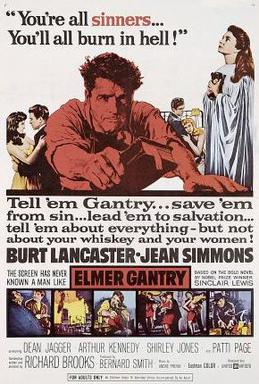
Elmer Gantry (Burt Lancaster) has the patter down perfectly. He can charm, wheedle and turn a phrase to set the whole room alight with laughter. He wants success but the big break never comes, perhaps because he’s selling two-bit vacuum cleaners rather than something people really want. Elmer is smart and works out, when everyone is afraid of dying, it’s a captive market for salvation. With his seminary background, he’s a natural preacher and inveigles himself into the revivalist roadshow of Sister Sharon Falconer (Jean Simmons) which his force of personality shifts into a fire-and-brimstone exhibition of frenzied religious passion – just the sort of thing that gets the punters back into the church. But when the roadshow moves to the big city, will Gantry’s young affair with priest’s-daughter-turned-prostitute Lulu Baines (Shirley Jones) come back to bite him?

Elmer Gantry was seen as controversial and even outlandish at the time of its release – so much so a lengthy pre-credits opening crawl distances it from all those decent servants of the Lord who were worried it was tarring them with the same brush. But with TV evangelists raking in the cash and travelling preachers whipping crowds up into wild-eyed ecstasy, Elmer Gantry doesn’t seem so outlandish these days. Richard Brooks film adapts the middle-act only of Sinclair Lewis’ sharply satirical novel, and while it does smooth down the rough edges and offer touches of redemption for its charismatically selfish hero, it’s still a very entertaining plot-boiler with a well-delivered message and subtle character development.

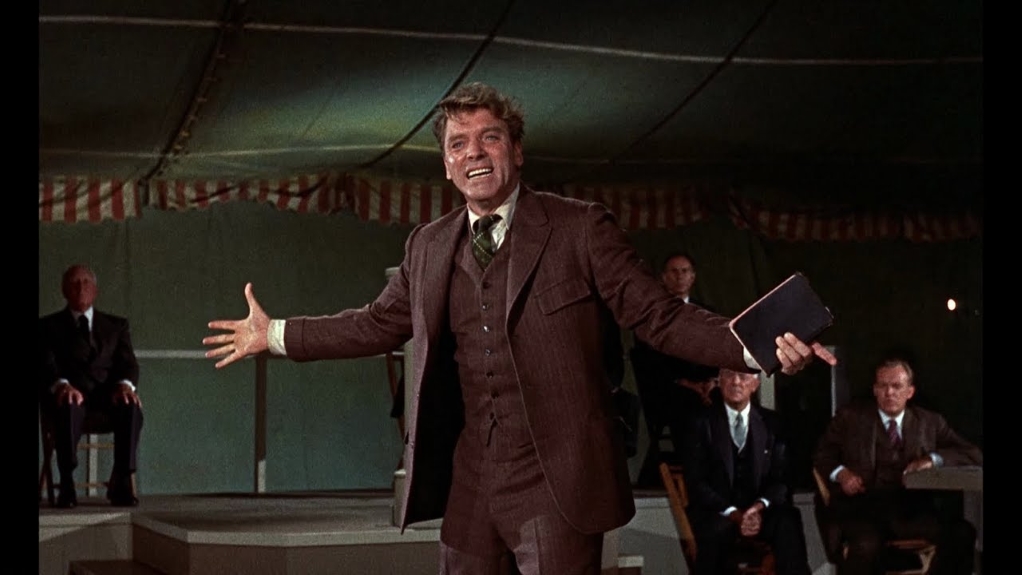
Above all though it’s a defining star-vehicle for a perfectly cast, Oscar-winning, Burt Lancaster. Elmer Gantry plays to all his strengths: charismatic, larger-than-life and charming, overflowing with boundless energy and nimble, physical grace. Lancaster’s intense eyes and excitable grin burns through the screen and he’s totally believable as the sort of rogue everyone knows is a rogue but give him a pass because he’s so likeable. And he nails the magnetic charisma of fire-and-brimstone preaching, full of self-aggrandising comments about his own holy conversion from salesman to man of God. It helps that Lancaster’s physical prowess (at one point he does a body slide down the full length of the aisle mid-sermon) really helps build Gantry’s magnetic presence.

Elmer Gantry superpower isn’t that he’s shameless – he looks suitably guilty when calling his mother on Christmas day to explain, once again, he isn’t coming home – but that he can compartmentalise and forget shame so quickly. He manipulates and uses people with such charm they either don’t notice or don’t care – from charming clients on Christmas Eve with dirty stories to plugging Sister Sharon’s naïve assistant Sister Ruth (Patti Page) for details on Sharon’s life that he will then use to get his foot in the door of her roadshow. Even cynical journalist Jim Lefferts (Arthur Kennedy, warming up for effectively the same role in Lawrence of Arabia), who knows he’s a complete bastard, still finds him a great guy to hang out with.

But the truth is Gantry corrupts everything he touches. It happens by degrees, pushed along with winning arguments and eager ‘I’m just trying to help’ excitability, but its inevitable. Before he arrives, Sister Sharon’s roadshow is a dry but heartfelt and earnest mission focused on winning converts. Under Gantry’s influence it becomes religious entertainment. Because Gantry knows people need to have their passions stirred to really invest in something, and mesmerising patter is a huge part of that. Lancaster’s delivery of these showpiece sermons drip with eye-catching, inspiring passion – even when we know he’s a hypocritical bullshit artist who probably doesn’t truly believe word he’s saying, but sure does believe it in the moment. When even we feel stirred by it, is it a surprise his audiences start to get whipped into a frenzy, barking at devils and clawing across the floor to be saved by Gantry’s touch?

Sister Sharon’s manager and sponsor William Morgan (Dean Jagger skilfully playing a character who is far more susceptible to manipulation than he thinks) might have his doubts, but it works. Elmer Gantry takes a satirical swing at the Church as the reverends of the town of Zenith swiftly put aside any doubts (other than straight-shooter Garrison, inevitably played by Hugh Marlowe) and bring Sister Sharon’s Gantry-inspired roadshow into the big city to help drag more punters (and it’s quite clear that they see congregations as customers for religion) into their church. Elmer Gantry gets some subtle blows in on the commercialisation of the Church, even if it is careful to largely distance it as a whole from the tactics of Gantry.

Gantry’s corruption also touches Sister Sharon herself. Well-played by Jean Simmons, Sharon is earnest but surprisingly steely but as she lets a little of Gantry’s shallowness into her roadshow, so she starts to compromise on the very qualities that made her stand-out. From entering into a ‘good-cop-bad-cop’ performance for sinners to opening her heart to Gantry’s persistent seduction, Sharon becomes a portrait of corruption by degrees. Brooks’ film also implies in its dark finale that she has allowed herself to absorb Gantry’s spin that she could be a vessel of holy power, which puts her life at deadly risk.

Elmer Gantry is overlong and perhaps relies a little too much on Lancaster’s charisma – it fair to say when he is off-screen it’s energy lags. Its satiric edge is sometimes blunted by focusing on Gantry as the disease rather than a symptom of a church struggling to survive in a secular age. The introduction of Lulu Baines – an Oscar-winning Shirley Jones, playing against type as a bitter floozy – is a little late in-the-day and while her performance is solid enough, the character is more of a cipher in a plot-required final act conundrum than a fully-formed character.

But when the film focuses on Gantry, it’s a fascinating character study. How much does he believe in the things he says? Does he feel shame? How ambitious is he? When he says he loves Sharon, does he? Or does he feel everything he says in the moment, but it never sticks? Either way, it’s at the heart of Burt Lancaster’s compelling, charismatic performance which juggles a mountain of contradictions but never loses the sense of the shallow selfishness that lies behind the charm.

Separate Tables (1958)

Separate Tables (1958)

Guilt and shame under the politeness in this stagy and almost-very-brave Rattigan adaptation

Director: Delbert Mann

Cast: Rita Hayworth (Anne Shankland), Deborah Kerr (Sibyl Railton-Bell), David Niven (Major David Angus Pollock), Burt Lancaster (John Malcolm), Wendy Hiller (Pat Cooper), Gladys Cooper (Mrs Maud Railton-Bell), Cathleen Nesbitt (Lady Gladys Matheson), Felix Aylmer (Mr Fowler), Rod Taylor (Charles), Audrey Dalton (Jean), May Hallett (Miss Meacham), Priscilla Morgan (Doreen)

Bournemouth’s Hotel Beauregard offers comfortable rooms and separate tables for dining. No wonder it’s popular with a host of regulars and out-of-town guests. But at each of those separate tables, drama lurks. Unflappable Pat Cooper (Wendy Hiller) manages the hotel and is secretly engaged to John Malcolm (Burt Lancaster), a down-on-his luck writer a little too fond of a pint in The Feathers. Their secret relationship is thrown into jeopardy when John’s ex-wife Anne (Rita Hayworth) arrives from New York, keen to get John back. Meanwhile, Major Pollock (David Niven) hides a secret behind his “hail-fellow-well-met” exterior, one which will threaten his place in the hotel and friendship with mousey Sibyl (Deborah Kerr) – a woman firmly under the thumb of her domineering mother (and resident bully) Mrs Railton-Bell (Gladys Cooper).

Delbert Mann’s film merges two Terence Rattigan one-act plays into a single, respectable piece of middle-brow Masterpiece Theatre viewing, which Mann subsequently effectively disowned (even after its seven Oscar nominations) after losing control of both editing and scoring to producer Lancaster. (Mann, quite rightly, loathed the hilariously out-of-place Vic Damone crooner number “Separate Tables” that opened the film.) Mann had already replaced Laurence Olivier, who dropped out after Lancaster’s company felt the film needed two American stars to make it box-office (handily they chose Lancaster himself and his business partner’s fiancée Rita Hayworth).

Lancaster and Hayworth are incidentally the weak points in the cast, their Americanness hopelessly out of step with Rattigan’s extremely English style and setting. Both actors are all too clearly straining to “stretch themselves” in unlikely roles, giving the film a slight air of self-indulgence. (Hillier later archly stated her best scene from the original was handed to Hayworth, while Lancaster recut the film to move up his first entrance.) The will-they-won’t-they tug-of-war between the two of them is Separate Tables’ least interesting beat and it’s to the film’s detriment that it, and these two awkwardly miscast actors, dominate so much of the film’s middle section.

They were already playing the dullest half of Rattigan’s double bill. Rattigan’s passion, and by far the film’s most electric moments – even if they only really constitute just under a half the runtime – revolve around the scandal of Major Pollock. Pollock, it is swiftly revealed, is not only prone to exaggerate his class, schooling and military career (his knowledge of alleged alma mata Sandhurst and the classics is revealed to be sketchy at best) but also carries a secret criminal conviction for harassing young women in a cinema.

While such harassment is of course recognised as beyond the pale today, it’s very clear in Separate Tables that Pollock’s misdeeds are standing in for a crime that literally “dare not speak its name”. Rattigan was one of Britain’s most prominent closeted homosexuals and his original intention had been for the Major’s crime to be fumbled cottaging. In the 50s it was unspeakable for the lead to be a sympathetic frightened homosexual so, in what looks bizarre today, it was far more acceptable to make him a timid sexual molester. However, the subtext is very clear, unspoken but obvious. One only has to hear the tragic Major sadly say “I’m made in a certain way and I can’t change it” and talk about his shame and loneliness to hear all too clearly what’s really being talked about here. Isn’t the Major’s pretence about being “the Major” just another expression of the double life a gay man had to lead in 1950s Britain?

This sensitive and daring plot is blessed with a wonderfully judged, Oscar-winning performance by David Niven (dominating the film, despite being on screen for a little over 20 minutes – the shortest Best Actor winning performance on record). Niven had made a career of playing the sort of suave, debonair military-types Pollock dreams of being – so there might not have been an actor alive more ready to puncture that persona. Recognising a role tailor-made for him, Niven peels away the Major’s layers to reveal a shy, sensitive, frightened man, desperate for friendship and acceptance. His heart-breaking confession scene (clearly a coded coming out) is beautifully played, while the closing scene with its hope of acceptance gains hugely from Niven’s stiff-upper-lip trembling with concealed emotion.

Niven’s performance – (Oscar-in-hand he rarely felt the need to stretch himself as an actor again) – centres the film’s most dramatic and engaging content. The campaign against the Major is led by Mrs Railton-Bell, superbly played by Gladys Cooper as the sort of moral-crusader who needs to cast out others to maintain her own ram-rod self-perception of virtue. Cooper uses icy contempt and overwhelming moral conviction to browbeat the rest of the guests in a sort of kangaroo court into blackballing the Major, a neat encapsulation not only of the power of the loudest voice but how readily decent people reluctantly acquiesce to it to avoid trouble.

Her control has also crushed her daughter’s spirit. Deborah Kerr’s performance is a little mannered: Kerr works very hard to embody a mousey, dumpy, frumpy spinster and make sure we can see she’s doing it. But she works beautifully with Niven and her meekness means there is real impact when the mouse finally (inevitably) roars. The rest of the guests are a fine parade of reliable British character actors: Felix Aylmer reassuringly fair and May Hallett particularly delightful as a no-nonsense woman who doesn’t give a damn what people think and trusts her own judgement.

Linking all plots together, Wendy Hiller won the film’s other Oscar as the hotel manager. Hiller was born to play decent matrons, bastions of respectable fair play who reluctantly but stoically bear personal sacrifices as their own crosses. She’s a natural with Rattigan’s dialogue and brings the best out of Lancaster, as well as providing all the drama (and sympathy) in the film’s other plotline as a surprisingly noble “other woman”.

Separate Tables is a middle-brow slice of theatre filmed with assurance. But when it focuses on Major Pollock it touches on something far more daring and much more moving than anything else it reaches for. Here is true low-key, English tragedy: under a clear subtext, we see the horror of a man who pretends all his life to be something he is not and the terrible judgements from others when he is exposed. It’s that which gives Separate Tables its true impact.

1900 (1976)

1900 (1976)

Bertolucci’s bloated, self-indulgent and simplistic film is a complete mess

Director: Bernardo Bertolucci

Cast: Robert De Niro (Alfredo Berlinghieri), Gerard Depardieu (Olmo Dalco), Dominique Sanda (Ada Fiastri Paulhan), Donald Sutherland (Attila Mellanchini), Laura Betti (Regina), Burt Lancaster (Alfredo Berlinghieri the Elder), Stefania Sandrelli (Anita Foschi), Werner Bruhns (Ottavio Berlinghieri), Stefania Casini (Neve), Sterling Hayden (Leo Dalco), Francesca Bertini (Sister Desolato), Anna Henkel (Anita the Younger), Ellen Schwiers (Amelia), Alida Valli (Signora Pappi)

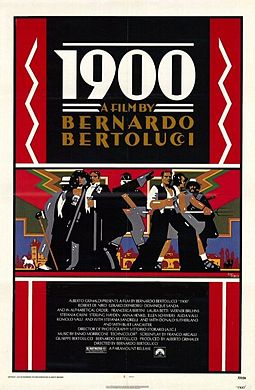
After The Conformist and Last Tango in Paradise, Bertolucci could do anything he wanted. Unfortunately, he did. Perhaps the saddest thing about 1900 is that you could watch The Conformist twice with a decent break in-between during the time it would take you to watch it– and get a much richer handle on everything 1900 tries to do. Bertolucci went through a struggle to get his 315-minute cut released: perhaps the best thing that could have happened would have been if he had lost. Not only would the film be shorter, but it would be remembered as a lost masterpiece ruined by producers, rather than the interminable, self-indulgent mess we ended up with.

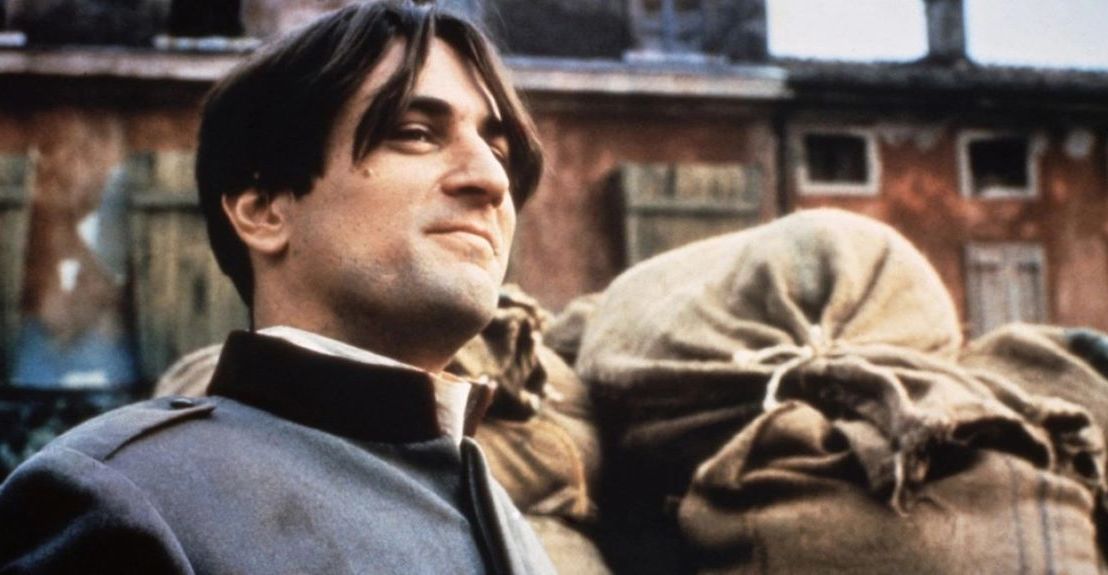
1900 – or Twentieth Century to literally translate its title Novecento – follows the lives of two very different men. Born minutes apart in 1901, Alfredo (Robert De Niro) is the grandson of the lord of the manor (Burt Lancaster), while Olmo (Gerard Depardieu) is the grandson of Leo (Sterling Hayden), scion of a sprawling dynasty of peasants. They grow up as friends, Olmo becomes a socialist and Alfredo an indolent landlord and absent-minded collaborator with the fascists, embodied by his psychopathic land agent Attila (Donald Sutherland). Their small community becomes a symbol of the wider battle between left and right in Italy.

In many ways 1900 is an epic only because it is extremely long and beautifully shot in the Bologna countryside by Vittorio Storaro. In almost every sense it fails. It offers nominal scale in its timeline, but its attempt to become a sweeping metaphor for Italy in the twentieth century falls flat and it focuses on a small community of simple characters, many of whom are ciphers rather than people. All of Bertolocci’s communist sympathies come rushing to the fore in a film striking for its political simplicity. It never convinces in its attempt to capture in microcosm the forces that divided Italy between the two world wars, nor invests any of its characters with an epic sense of universality.

Instead Bertolucci presents a world of obvious questions and easy answers. Every worker is an honest, noble salt-of-the-earth type, working together in perfect harmony to fight for rights. Every single upper-class character is an arrogant, selfish layabout, caring only about their back-pockets and the easy life. Bertolucci suggests fascism only arose in Italy as a means for the rich to control the poor, and never allows for one moment the possibility that any working-class person was ever tempted to take their side. It never rings true. (Bertolucci skips a huge chunk of the fascist 30s and 40s, possibly because this fantasy would be impossible to sustain if he actually focused on the history of that era.)

Bertolucci uses his two protagonists to make painfully on-the-nose comparisons between working class and rich with De Niro’s weak-willed Alfredo always found wanting compared to Depardieu’s Olmo. Even as children, Olmo is braver, stronger and smarter. Olmo has the guts to lie under the moving trains (Alfredo runs), Olmo stands up for what he believes in (Alfredo looks away), Olmo puts others first Alfredo whines about his own needs. Hell, Olmo even has a bigger cock than Alfredo (something they discover comparing penises as children and re-enforced when as young men they share an epileptic prostitute and she ‘tests’ them both).

The upper classes hold all the power but can do nothing without the working class. During the 1910s, a strike by the workers on the Berlinghieri leaves the clueless rich unable to even milk their moaning cows (they buy milk instead). Sterling Hayden’s peasant patriarch is a manly inspiration to all, while Lancaster’s increasingly shambling noble is literally and metaphorically impotent (Lancaster’s role is like a crude commentary on his subtle work in The Leopard). At one point he even pads around barefoot in horseshit to hammer home his corruption. (Incidentally this is the only film where you’ll ever see a horse’s anus being massaged on camera to produce fresh shit to be thrown at a fascist.)

For the rich, fascism is the answer. Continuing to shoot fish in a barrel, Bertolucci scores more easy hits by presenting our prominent fascist as an out-and-out psychopath. Played with a scary relish by Sutherland – in the film’s most compelling performance – no act of degradation is too far for Attila. Along with his demonic partner-in-crime Regina (a terrifyingly loathsome Laura Betti), he routinely carries out acts of violence, horrific murder and child-abuse, even literally headbutting a cat to death while ranting about the evils of socialism.

The poor meanwhile are all good socialists. Olmo, decently played by Depardieu, and his wife Anita (an affecting Stefania Sandrelli) rally the workers to stand against charging cavalry and protect their rights. Bertolucci even has Depardieu flat-out break the fourth wall for a closing speech, spouting simplistic platitudes direct to camera about the inherent wickedness of the landowner. Depardieu at least seems more comfortable than De Niro among this Euro-pudding (every actor comes from a different country and the soundtrack is a mismatch of accents and dubbing, not least Depardieu himself). Rarely has De Niro looked more uncomfortable than as the empty Alfredo, a role he fails to find any interest in, like the rest of the actors never making him feel like more than a device.

Bertolucci, stretching the run-time out, also embraces numerous tiresome excesses. Rarely does more than 20 minutes go by without a sex scene or a sight of someone’s breasts or sexual organs. From children comparing penises, to Depardieu performing oral sex on Sandrelli (just outside a socialist meeting), to De Niro and Depardieu getting hand-jobs from a prostitute, to Sanda dancing naked and high on cocaine or the revolting exploits of Attila and Regina, nothing is left to the imagination. As each goes on and on Bertolucci ends up feeling more like a naughty boy than an artist, so praised for his sexual licence in Last Tango that he feels more is always more. The excess doesn’t stop with sex either: at one point a worker silently cuts his ear off in front of a landowner to make a point about his stoic nobility.

1900 eventually feels like you’ve stumbled into a student debating club, where a privileged student drones on at great length about the evils of the rich, while quaffing another glass of champagne. It has moments of cinematic skill – some of its time jump transitions, in particular a train passing through a tunnel in one time and emerging at another, are masterful – but it’s all crushed under its self-indulgence. From its length to its sexual and violence excess, to its crude and simplistic politics delivered like a tedious lecture, everything is crushed by its never-ending self-importance.

The Leopard (1963)

The Leopard (1963)

Possibly the most luscious film ever-made, Visconti’s epic is a beautiful film of rage against the dying of the light

Director: Luchino Visconti

Cast: Burt Lancaster (Don Fabrizio Corbera), Alain Delon (Prince Tancredi Falconeri), Claudia Cardinale (Angelica Sedara), Paolo Stoppa (Don Calogero Sedara), Rina Morelli (Princess Maria Stella of Salina), Romolo Valli (Father Pirrone), Terence Hill (Count Cavriaghi), Serge Reggiani (Don “Ciccio” Tumeo), Leslie French (Cavalier Chevalley), Pierre Clémenti (Francesco Paolo Corbera), Lucilla Morlacchi (Concetta Corbera), Ida Galli (Carolina Corbera), Ottavia Piccolo Caterina Corbera)

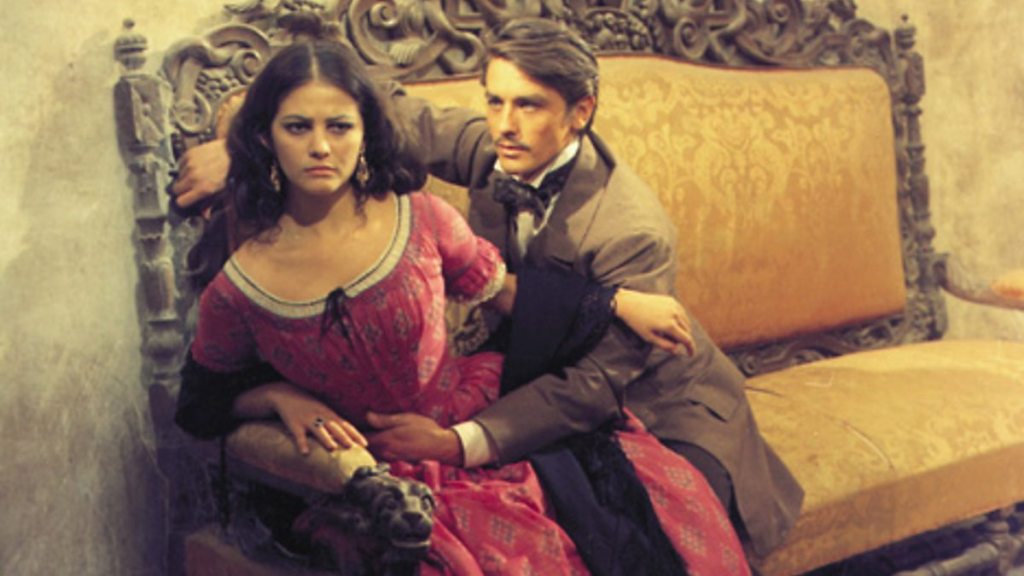
There might not be a more visually ravishing film than Visconti’s The Leopard. Every detail of costume and set design is perfect in this gloriously stately, carefully crafted adaptation of Giuseppe Tomasi di Lampedusa’s only novel. It’s a perfect match for the autumnal melancholy of Visconti’s elaborate work, as an ageing prince in the Risorgimento rages quietly against the dying of the light. The Leopard is a delicate and carefully-paced film that carries a sweeping romanticism.

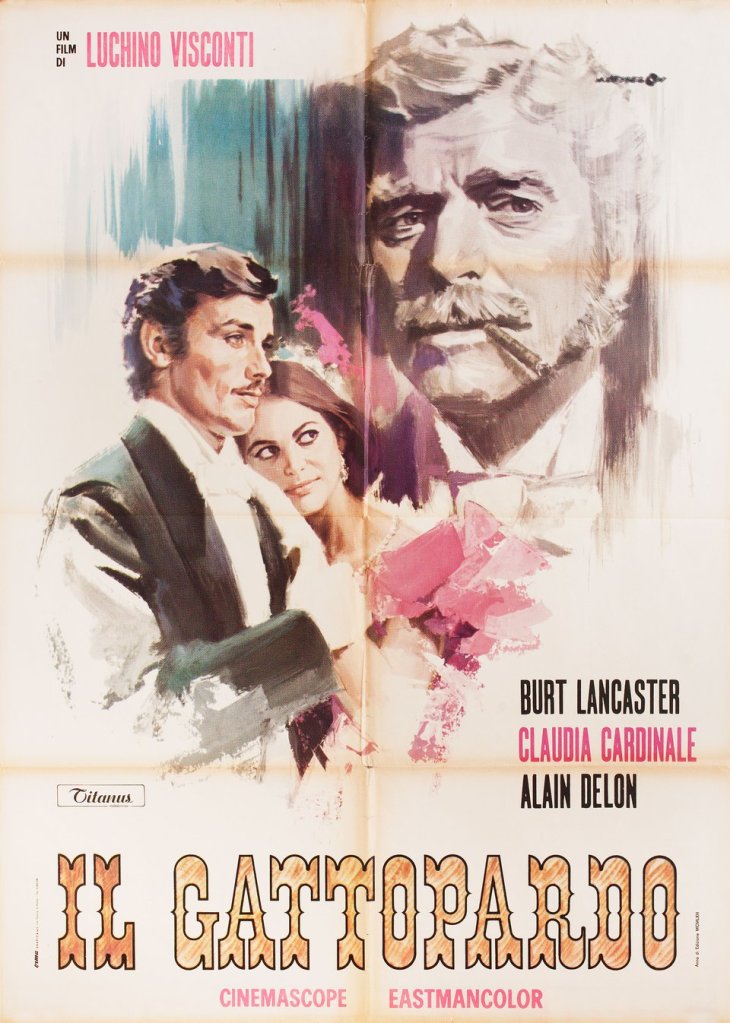
It’s 1860 and if the Sicilian aristocracy “want things to stay as they are, things will have to change”. Italy is forming itself into a nation and Sicily is in a state of civil war. On one side, the forces of the revolutionary republican Garibaldi – on the other, the old-guard of Francis II of the Two Sicilies, clinging to keep Sicily part of the Bourbon empire. Watching all this, Don Fabrizio Corbera, Prince of Salina (Burt Lancaster), scion of a noble family, watching the inevitability of change but clinging to tradition. His nephew Tancredi (Alain Delon) embraces first the fervour of Garibaldi, then Angelica (Claudia Cardinale) the radiant daughter of nouveau riche Don Sedara (Paolo Stoppa). But is there a place for the prince in this new world of democracy and the power of the middle classes?

The Leopard hails from the same wistful remembrance of things past that powers Brideshead Revisited in the English language. In Visconti, son of Milanese nobility, it found its perfect director. Visconti didn’t just know the world behind the declining place for the nobility: he’d lived it. He brings every inch of that to the luscious beauty of The Leopard, a mournful final hurrah of a generation and way of living that has no place in the present and is only an echo of the past.

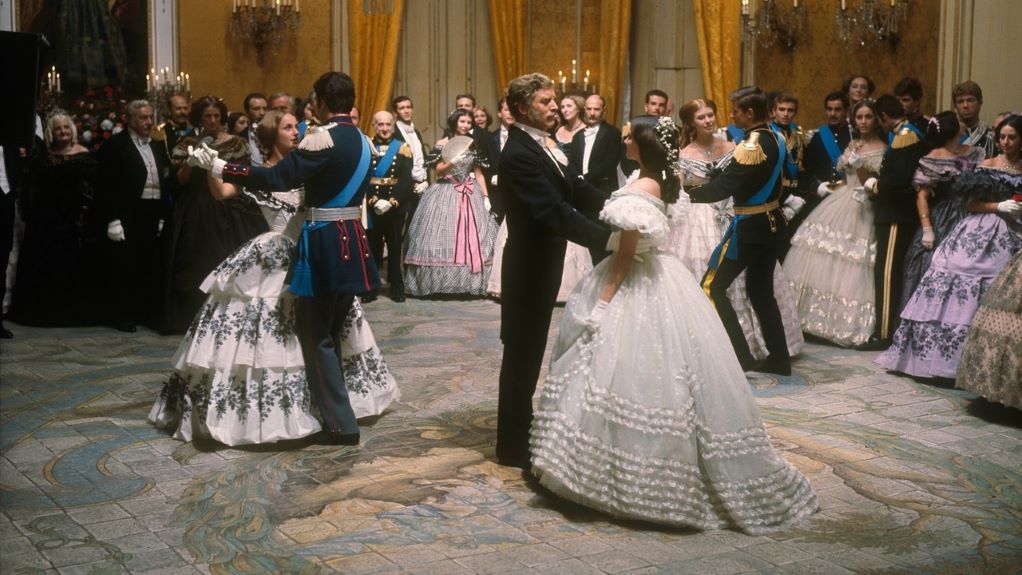
The Leopard is crammed with simply stunning period detail. Visconti shoots this with a calm, controlled, observant camera, that moves and pans slowly through sets, carefully following its players. It’s set in a world of elaborate drawing rooms and stunning vistas. Costumes are intricate in their period detail. Dinners are grand celebrations of the opulence of this bygone era. Every detail in the set is perfect to the minutest detail – you feel a drawer could be pulled open and only period-appropriate props would be contained inside.

Visconti though never makes the film a slave to its period trappings. The careful details of the prince’s life serve to stress how bygone and dying these days are. It’s a film full of moments of small but telling undercutting that stress how this world is crumbling. In church, wind blows dust across the gathered Corbera family, coating them in dirt. They mock the newly empowered Don Sedara – and the pompous chap’s ineffectiveness is hammered home when a band keeps interrupting his attempt to declare the results of a rigged unification plebiscite – but Fabrizio is desperate to secure a marriage alliance with him and it’s clear Sedara is very much in the political ascendancy.

Could Fabrizio have done more to preserve his way of life if he wasn’t so clearly entering the twilight of his years? He’s virile enough, dashing from the family home (priest in tow) to spend a night in town with his mistress. He can climb the hills and hunt with the best of them. He half considers that it’s not outside the realm of possibility for him to have a crack at Angelica himself. But this is truly the Lion in Winter. He’s powerless to defend the traditional position that guarantees his influence and lacks the drive and youth Tancredi has to fashion himself a new one. For all his wry wit and handsome features, he becomes a sweaty, mournful figure at a celebration ball watching the young people dance all night and musing on where his own vitality went.

That long ballroom sequence – a near 45-minute extended scene that ends the film – is one of the triumphant tour-de-forces of cinema. A gorgeous culmination of the beauty of the entire piece, Visconti also manages to present it as a final hurrah of a whole way of life. This celebration is crammed with military figures who call the shots and filled as much with older people struggling to keep the pace as it is young ones with an eye on something far more modern than the pleasures that thrilled their parents. At the heart of this, Visconti’s camera carefully follows the prince as he moves from room to room, a quiet, lonely observer, tears in his eyes at moments, reflecting on his mortality and rousing his youthful fire only for a single dance with Angelica.

As this rusting monument to the old ways, Visconti was gifted with a Hollywood star. To be honest, at first he was far from happy when he received Burt Lancaster. But – once you get over the oddness of Lancaster being dubbed by a plummy Italian accent – it’s a near perfect marriage of actor and role. Always a graceful and elegant actor, Lancaster becomes Italian – there is more than a foreshadow of the Godfather to him – and his genteel, noble face is perfect for this bastion, just as his expressive eyes are perfect for the part’s delicacy and sadness. It should be a bizarre miscasting, but it lands perfectly and much of the success of the final ball sequence is his ability to communicate so much from such small moments.

Visconti places him at the heart of this languid, precise film and contrasts the prince’s gentle moving out-of-step with the future with the dynamism and openness to compromise of his nephew. Tancredi – a youthful and passionate Alain Delon – is energetic and with a casual ease switches passions personal and political. Starting the film as a red-shirted revolutionary, he ends it as a uniform-clad member of the elite. Professing his love for the prince’s daughter, he ditches her on a sixpence for Angelica. Not that anyone can blame him: Claudia Cardinale is gorgeous but also shows the elemental charisma that Leone was to use to such great effect in Once Upon a Time in the West. Cardinale also feels like someone between two eras: attracted to the casual and flexible Tancredi but perhaps more drawn to the elegant grandeur of the prince.

The Leopard works as extraordinarily well as it does because it is so well paced. This is a film that requires an inordinate length, lingering shots and scenes, and for action to be happening elsewhere. Our single burst of action is to see Garibaldi’s forces fight in the streets of Palermo: other than this, momentous events happen elsewhere off-screen. The camera moves instead to study the scenery or the passing of normal people on the streets. We are always given the sense of this family and its world being cut off and left behind by real events. Tancredi starts the film explaining his conversion to Garibaldi in detail: later he will barely mention why he’s changed uniforms or feel the need to say why he is accepting positions the revolutionaries reject.

It’s not a surprise that a cut-down version of The Leopard was a major bomb when released in America. The three-hour run time is needed to truly understand the drift and ennui Visconti’s film is exploring. It does it in a film dripping with gorgeous period detail and full of scenes awash with interest, but the point is this is a film of slow, deceptive but finally overwhelming impact. The quiet, controlled, predictable life that generations of the prince’s family has known, dies with the same polite, grand silence as it largely lived. The Leopard is a stunning tribute to the passing of an era.

Atlantic City (1981)

Atlantic City (1981)

A never-was romances a dreamer in Malle’s low-key film, full of neat observations

Director: Louis Malle

Cast: Burt Lancaster (Lou), Susan Sarandon (Sally), Kate Reid (Grace), Michel Piccoli (Joseph), Hollis McLaren (Chrissie), Robert Joy (Dave), Al Waxman (Alfie), Moses Znaimer (Felix)

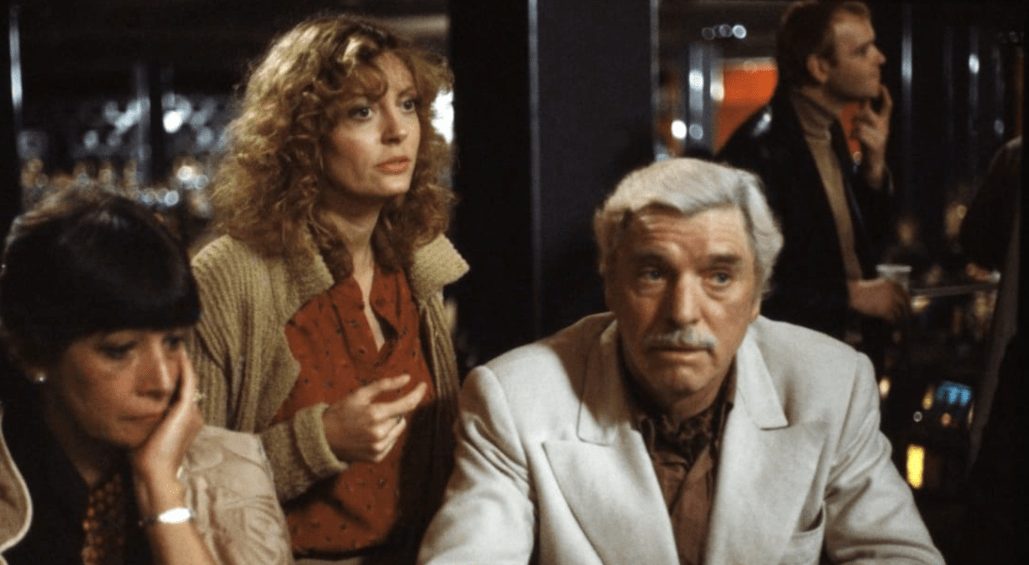
Lou trundles around Atlantic City taking a few cents for bets and wanting anyone who listens to know that back in the glory days of the Boardwalk Empire he was a big shot. Bugsy Siegel roomed with him in the slammer. Meyer Lansky asked his opinions on the latest scores. When he killed someone, he dove into the sea to wash the exhilaration from his body. Not his fault the glory days are gone, and his life has crumbled as much as the worn out city around him. He’s still a player.

Only of course he’s not. Played in a fine autumnal performance by Burt Lancaster, Lou has the front of an ageing star, but is a dyed-in-the-wool loser. He trades on a past that never happened, full of tall stories that only the dimmest and most impressionable would consider believing. He’s essentially a kept servant of Grace (Kate Reid), a former local beauty queen (third place) and spends his nights spying on his neighbour Sally (Susan Sarandon), while she washes away the stench of the hotel fish counter she works in.

When the chance comes to spin a fantasy that means Lou could actually impress and seduce this women, he jumps at it. That chance is Dave (Robert Joy), Sally’s pathetic dweeb of an ex-husband who believes Lou is the perfect to peddle his stolen cocaine around town. Dave winds up dead, Lou pockets the money, impresses the naïve but determined Sally (training to be a croupier) and very firmly considers letting her take the rap when the cocaine’s owners turn up looking for the money.

Both Lou and Sally are dreamers – or fantasists – at the opposite end of life’s scale. Lou dreams big about a past that never was. Sally is dreaming of an impossible future – one of French class, Monaco high-rollers and earning a future as a flash croupier. Really, we know both of their dreams are fantasies. After all it should be clear only losers wind up in Atlantic City. The casinos are dumps and even the criminals are pathetic, easily out-matched by Philadelphia hoods. Louis Malle’s film captures this perfectly in a crumpling city that looks like mouldy leftovers.

Malle’s film is a marvellously structured, low-key but highly effective character study, very well acted and shot with an intelligent, detailed eye. It’s a showcase for Malle’s subtle but intelligent camera work and composition. As Lou serves Grace early in the film, he is kept constantly in the centre of the frame, the camera jerking up and down to match his movements as he fetches and carries for the bed-bound Grace. Dave is frequently shot from above, looking even more pathetic and irrelevant with every shot. This is framing that speaks volume for status and character. The camera fluidly shifts across large spaces – the boardwalk, a casino – to show different interactions in different plains, characters either unaware of each other or using events elsewhere to escape notice.

Grimy and fabulously capturing the collapsing grandeur of a city fallen on very hard times, the setting is the perfect metaphor for the disaster of the character’s lives. None more so than Lou. You can argue Malle’s film may be too sympathetic to Lou – and, indeed, contemporary reviews discussed Lancaster’s inherent dignity mistaking it for the character. Lancaster however is smarter. Lou is a pathetic, sad figure. Look how he delights in puffing himself up as a big shot for the feeble Dave. Watch the childish excitement he takes in the notoriety he collects late in the film. Lancaster perfectly understands the desperate need to dress the part, longing to be something you are not: the grand, well-dressed sugar daddy who solves problems for his moll by unwrapping the elastic band from a roll of dollar bills.

Lancaster never allows this fantasy to be mistaken for reality. When danger comes, Lou almost always freezes or looks to keep himself safe. When he spins his stories of daring or classy confidence, Lancaster shows us a Lou who is replicating behaviours he has seen elsewhere. After completing his first cocaine deal, he has to wash his face in fear in a bathroom – then instantly condescends to an old friend who has been reduced to toilet attendant.

Sally is fooled for a while. But then we know she has a weakness for glamour. After all we’ve seen her indulge the pervy whims of casino trainer Joseph, a lecherous Michel Piccoli. In a clever performance by Sarandon, Sally is naïve enough to be sucked in but guileful enough to just about keep afloat. She tends to trust anyone who oozes confidence. She’s a little star-struck by the idea of Lou perving at her across the window (as if happy that she’s sexy enough to win the attentions of this seemingly classy old guy). But, turned, Sarandon makes clear she’s righteously furious when cheated and far more adept at confidence-tricksterism than the increasingly hapless Lou.

Because when crime comes Lou is out of his depth. But what would you expect from a man who is a live-in cook, dog-walker and sometime-stud for Grace, entombed in her kitsch-nightmare room. Kate Reid is very good as this clear-eyed bully who needs but also despises Lou, who knows all about what an unreliable and cowardly fellow he is deep-down but jealously guards his attentions.

Malle’s film plays out like a sort of noir short story, an adept study of its characters more focused on their damage and flaws than on the crimes at its nominal heart. This is about fantasy and the lies we tell ourselves. Just like Atlantic City kids itself it’s still a gambling mecca, so Lou and Sally believe they still have chances in life. It makes for an intriguing, engrossing film as they lie to themselves and each other, denying the truth until it hits them squarely and unavoidably in their face.

Atlantic City muses on familiar themes, but does so with freshness and intelligence. Perhaps Malle is a little too sympathetic to its characters (Lou in particular), but he is very clear-eyed about the Dennis Potterish fantasy world they are clinging onto and the shabby decline and disrepair that clutters their existence. It makes for a very fine, well-made and fascinating little film, full of sharp observations and wonderfully played beats.

Airport (1970)

Airport (1970)

Disaster awaits in the sky in this ridiculous soap that is less exciting than Airplane!

Director: George Seaton

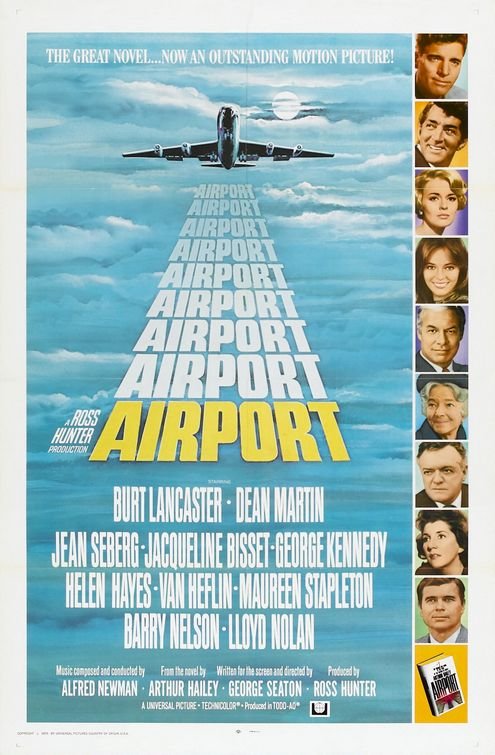
Cast: Burt Lancaster (Mel Bakersfied), Dean Martin (Captain Vernon Demerest), Jean Seberg (Tanya Livingston), Jacqueline Bisset (Gwen Meighen), George Kennedy (Joe Patroni), Helen Hayes (Ada Quonsett), Van Heflin (DO Guerrero), Maureen Stapleton (Inez Guerrero), Barry Nelson (Captain Anson Harris), Dana Wynter (Cindy Bakersfeld), Lloyd Nolan (Harry Standish), Barbara Hale (Sarah Demarest), Gary Collins (Cy Jordan)

A busy Chicago airport in the middle of a snowstorm. Workaholic Mel Bakersfeld (Burt Lancaster) doesn’t have time to prop up his failing marriage to his humourless wife: he’s got to keep the flights moving, clear the runways and solve the problems other people can’t. He’s not dissimilar to his brother-in-law Vernon Demerest (Dean Martin), who hasn’t got time for his plain-Jane wife at home when he’s got a flight to Rome to run and a saintly pregnant air hostess girlfriend Gwen (Jacqueline Bisset), to deal with. Tensions will come to a head when depressed former construction worker Guerrero (Van Heflin) joins Demerest’s flight, planning to blow himself up so his wife can profit from his life insurance. Disaster awaits!

“A piece of junk”. That was Burt Lancaster’s pithy review of this box-office smash that was garlanded with no fewer than ten Oscar nominations. He’s pretty much spot on. Airport is a dreadful picture, a puffed-up, wooden soap opera that never takes flight, stapled together with a brief disaster plotline that only really kicks in during the final act of the film and is solved with relative ease. Other than that, it’s all hands to the pumps to coat the film in soapy suds, which can be stirred up by the strips of wooden dialogue that fall from the actors’ mouths.

Seaton adapted the script from a popular low-brow novel, though it feels as if precious little effort went into it. It’s corny, predictable dialogue does very little to freshen up the bog-standard domestic drama we’re watching in a novel setting. Both lead actors juggle loveless marriages with far prettier (and much younger) girlfriends. Those girlfriends – Jean Seberg for Burt and Jacqueline Bisset for Dean – play thankless roles, happily accepting of their place as no more than a potential bit-on-the-side and very respectful of the fact that the job damn it is the most important thing.

The film bends over backwards so that we find Burt and Dean admirable, despite the fact that objectively their behaviour is awful. Burt treats his home like a stopover, barely sees his kids and seems affronted that his wife objects he doesn’t attend her important charity functions and doesn’t want the cushy job he’s being offered by her father. Just in case we sympathise with her, she’s a cold, frigid, mean and demanding shrew who – just to put the tin lid on it – is carrying on behind Burt’s back. We, meanwhile, applaud Burt for showing restraint around the besotted Jean Seberg, merely kissing, hugging and chatting with her about how he’d love to but he can’t because of the kids at home damn it!

He looks like a prince though compared to Dean. Only in the 1970s surely would we be expected to find it admirable that a pregnant girlfriend happily takes all the blame – the contraceptive pills made her fat and she knows the deal – begs her boyfriend not to leave his wife and then urges him to not worry about her. Dean’s wife doesn’t even seem that bad, other than the fact she’s a mumsy type who can’t hold a candle to Bisset’s sensuality. That sensuality is overpowering for Dean, who at one point pleads with her to stay in their hotel room because the taxi “can wait another 15 minutes”. Like a gentleman his reaction to finding out Bisset is pregnant, is to offer to fly her to Norway for a classy abortion (rather than the backstreet offerings at home?).

This soapy nonsense, with its stink of Mad Men-ish sexual politics (where men are hard-working, hard-playing types, and women accept that when they age out, he has the right to look elsewhere) is counterbalanced by some laboriously-pleased-with-itself looks at airport operations. Baggage handling. Customer check-in. Customs control checks. Airport maintenance. All get trotted through with a curious eye by Seaton. Just enough to make parts of the film feel briefly like a dull fly-on-the-wall drama rather than a turgid soap.

Soap is where its heart is though. Helen Hayes won an Oscar for a crowd-pleasing turn (from which she wrings the maximum amount of charm) as a seemingly sweet old woman who is in fact an expert stowaway. Van Heflin and Maureen Stapleton play with maximum commitment (Stapleton in particular goes for it as if this was an O’Neil play rather than trash) a married couple whose finances are in the doldrums, leading the husband to take drastic steps.

It’s all marshalled together with a personality-free lack of pizzaz by Seaton, who simply points the camera and lets the actors go through their paces, with a few shots of humour here and there. There are some interesting split-screen effects, but that’s about the last touch of invention in the piece. It’s mostly played with po-faced seriousness – something that feels almost impossible to take seriously today, seeing as the structure, tone and airport observational style of the film was spoofed so successfully in Airplane (a much better film than this on every single level, from humour, to drama even to tension – how damning is that, that a pisstake is a more exciting disaster thriller?)

It smashed the box office in 1970 and got nominated for Best Picture. But its dryness, dullness and lack of pace mean it has hardly been watched since. Although it can claim to be the first all-star disaster movie, it’s not even fit to lace the flippers of The Poseidon Adventure, which far more successfully kickstarted the cliches that would become standard for the genre (and is a tonne more fun as well as being a disaster movie – this has a disaster epilogue at best). An overlong, soapy, dull mess.

From Here to Eternity (1953)

From Here to Eternity (1953)

Glorious romance goes up against military discipline in this sweeping, entertaining Oscar-winner

Director: Fred Zinnemann

Cast: Burt Lancaster (First Sergeant Milton Warden), Montgomery Clift (Private Robert E. Lee Prewitt), Deborah Kerr (Karen Holmes), Donna Reed (Alma Burke/Lorene), Frank Sinatra (Private Angelo Maggio), Philip Ober (Captain Dana Holmes), Mickey Shaughnessy (Sergeant Leva), Harry Bellaver (Private Mazzioli), Ernest Borgnine (Staff Sergeant James “Fatso” Judson), Jack Warden (Corporal Buckley)

Dominating the 1953 Oscars, From Here to Eternity is exactly the sort of sweeping, highly-professional studio epic Hollywood at its best produced in its Golden Years. Everything turned out pretty much right, with iconic imagery and characters, and skilled production and acting turning a soapy story into something quite profound. From Here to Eternity is entertainment-as-art, a sharply intelligent film that sails along smoothly. It feels like a generational progression from Casablanca – it may not quite hit those heights, but it deserves to be in the same conversation.

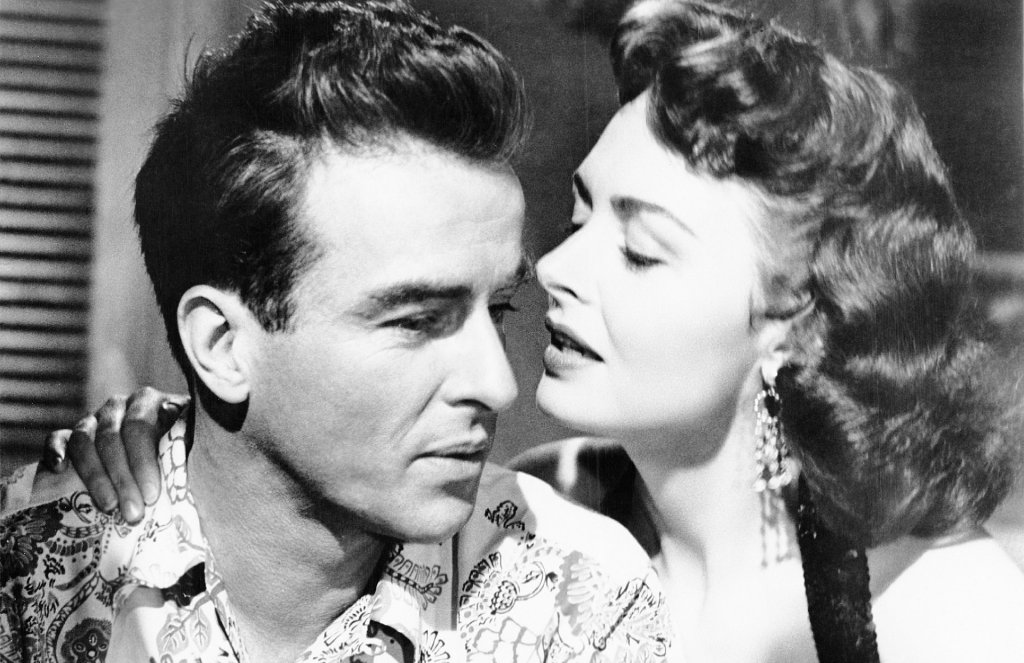
It’s 1941 at Pearl Harbour and three soldiers discover going their own way, rather than conforming to rules and expectations, causes no end of trouble. Private Prewitt (Montgomery Clift) is repeatedly hazed by his comrades (with the support of his CO) for refusing to join the boxing team. A champion boxer, Prewitt retired after accidentally blinding an opponent and nothing will persuade him to go back. His only comfort is with local social club ‘hostess’ Lorene (Donna Reed). First Sergeant Warden (Burt Lancaster) is persuaded to try for officer – because otherwise he risks prison for his love affair with the CO’s unloved wife Karen (Deborah Kerr). Private Maggio (Frank Sinatra), Prewitt’s only friend, is a loyal wild-card who can’t stick to the rules and is targeted by brutal stockade sergeant “Fatso” Judson (Ernest Borgnine).

From Here to Eternity sounds like a great big soap, a sort of 1980s glossy TV mini-series made before its time (it was later remade exactly as that). It’s got that in its DNA, but is made with such luscious, professional, old-school Hollywood excellence it becomes something special. Superb craftsmen work in every position to produce a classic melodrama with touches of romance, thriller, war drama and tragedy. With excellent performances across the board (Sinatra and Reed both won Oscars, while Lancaster, Clift and Kerr were all nominated), FHtE tells emotive, empathetic stories about genuine characters trapped in situations beyond their control.

The film is a masterclass in adaptation. The original novel – a popular tome of its day – tells a story crammed full of sex, STDs, homosexuality, bad language and violence across its 800+ pages. No wonder it was a hit – and no wonder, under the Production Code, it was thought impossible to adapt it into a film. Screenwriter Daniel Taradash carefully reworked and ‘hinted’ at several things that could not be explicitly said (for example, no one calls Lorene a prostitute, but you’d have to be pretty dense not to realise she is doing more than pouring drinks in that bar). Restraint, as it often did, demanded invention and bought out the best (and subtle work) in people. The film’s requirement to focus on dialogue and character rather than controversy hugely works to its benefit.

Zinnemann was the perfect director for the material. Drawing wonderful performances from the actors, he also keep the film intimate, drawing us closer to the characters over scale, despite the temptations of the film’s location shooting in Hawaii (Zinnemann pushed strongly against shooting in technicolour and widescreen). The film also fits perfectly with one of Zinnemann’s key pre-occupations: the struggle of principled men (most strikingly Prewitt) in a society that demands them to say or do something against those principles. Just as the townspeople wanted Marshal to run and the Tudor court wanted More to swear allegiance, so our characters buck against conforming with the roles they are expected to play.

You can see why the military – after supporting the project – were less happy when they saw the film. The individual is championed at the cost of the machine. Prewitt’s principles are praised, while his regiment is hopelessly corrupted by his incompetent and careerist commander. The hazing is endemic, and supported from above – and no one even notices or cares that Fatso is also abusing his position to brutalize Maggio. The CO is so useless – as well as ruining his wife’s life, rendering her infertile and cheating on her all over town – that the company is effectively run by First Sergeant Warden, the only NCO with the courage of his principles. Under pressure from their army sponsors, the film does see the chain of command cashier the CO (a scene Zinnemann hated) – but the sympathy is with the individual rather than the system.

From Here to Eternity is also a highly effective romance. Its most famous image will always be the clinch between Lancaster and Kerr, kissing and embracing while the turf washes up around them. But the film is also realistic – its why it remains so effective. Warden and Karen are made as miserable by their growing love as they are happy (they even comment on this). Relationships are never an easy ride, and demand constant dedication. Lorene and Prewitt’s relationship is far from rose-tinted, with the two of them constantly forced apart by their own mistakes and choices.

It’s melodrama told with emotional intelligence and realism – and Zinnemann gets great performances from great actors. Lancaster brings immense strength and purpose to Warden, but also a concealed vulnerability and decency. Kerr – revitalising her career after a string of “good wives” – brilliantly conveys Karen’s desperation and misery, along with her wary hope her life could change. That moment on the beach, the surf washing around them as they make-out is a rare moment of relaxed happiness. Other than that, its one tough conversation after another – stolen moments in bars or cars, where the two of them confront the difficulty of their situation, but also their need for each other. That’s old school romance for you – unavoidable, but never-endingly difficult and even a little painful.

Sinatra (in the role that changed his career – and the debate around how he got the role inspired that horse’s head in The Godfather) brings charm, cheek and tragedy to Maggio. How did Maggio end up in this man’s army? He’s quietly fun loving, but bucks the rules like almost no other character in the film. Sure he’s an upstanding guy – the only one who sticks by Prewit and defends him – but he can’t follow a simple order. Mostly because he’s not really disciplined enough. Plus he makes enemies – worst of all Borgnine’s bruising sergeant. He’d be so much happier running a bar for soldiers than he ever is being a soldier himself.

This makes him very different from Clift’s Prewit. Clift gives one of his finest performances as this fully-realised tragic hero. Prewit is a man of principle who, for the best reasons, makes choices that have a terrible impact on him. He’ll stand by his decision not to box, even though it opens up a bucket load of unpleasantness for him and Maggio. If that leaves him with one friend and no supporters, so be it. He may not look like a boxer (the studio wanted a more muscular lead), but he is every inch the emotionally conflicted, guilt-plagued and confused GI, stubborn but profoundly sincere, with the strength of character to stand alone, but the vulnerability to need affection from Lorene (and respond like a lovesick kid when he thinks she has spurned him). It’s a complex, mature and excellent performance.

All these events are eventually dwarfed by the outbreak of war. If there is one thing that Zinnemann will accept is bigger than the individual, it’s world war. The film quietly counts down to the attack on Pearl Harbor (without the characters realising it), sneaking us peaks at calendars and reports to let us know how close we are to the fateful day. When it comes, it reveals the characters of the people we’ve been following. Warden takes command in a way his CO never could. Prewit, hiding out with Lorene (Reed by the way is marvellous, her investing Lorene with a real world-weary sadness), decides its his mission to return from AWOL, despite the dangers this will cause him. The attack is grippingly but simply filmed.

From Here to Eternity is a complex film, made with real professional skill, and a rewarding character study. Zinnemann gets the tone right at almost every single point and draws out brilliant performances from a very strong cast. As an example of Hollywood Studio film making, it’s hard to beat.

Seven Days in May (1964)

Burt Lancaster and Kirk Douglas find themselves on opposite sides of a military coup in Seven Days in May

Director: John Frankenheimer

Cast: Burt Lancaster (General James Mattoon Scott), Kirk Douglas (Colonel Jiggs Casey), Fredric March (President Jordan Lyman), Ava Gardner (Eleanor Holbrook), Edmond O’Brien (Senator Ray Clark), Martin Balsam (Paul Girard), Andrew Duggan (Colonel Mutt Henderson), George Macready (Secretary of the Treasury), Whit Bissell (Senator Fred Prentice), John Houseman (Admiral Barnswell)

President Jordan Lynman (Fredric March) has completed his signature policy: a nuclear disarmament treatment with the USSR. Some are thrilled, others are horrified. In the latter camp are the Joint Chiefs of Staff, none more so than chairman General James Mattoon Scott (Burt Lancaster). General Scott has a plan: a coup to be launched in seven days time, during a training op. But word leaks to his assistant Colonel Casey (Kirk Douglas) who, however much he admires Scott, won’t be party to treason. Casey warns the President – and a race against time begins to stop the coup.

Seven Days in May opens with documentary style footage of clashing crowds outside the White House (one pushing for peace, the other for war) and then carefully balances that style with an unsettling sense of paranoia throughout. People suddenly disappear (once from frame to frame), most of the action takes place in confined spaces. When characters do head outside, they constantly seem to be looking over their shoulder, with the camera watching like a distant observer. The lack of music all adds the eerie feeling that this could just happen.

And, of course you, feel it could. Because we’ve not lost a tingling sense of unease at an over-powerful military. It’s a shame therefore that Seven Days in May doesn’t grip quite as much as it should. I think a large part of that is because the plot is exposed very early – and when Casey goes to the authorities with his suspicions, they are instantly acted on. Thrillers like this often work best with a “one man stands alone” vibe – it’s missing here, and instead we get the President and the cabinet laboriously investigating different elements of this conspiracy looking to turn up enough evidence to prevent the coup before it starts.

The drop in tension could have been counter-balanced if the film had more successfully explored the conflicts and contradictions in America. This is after all a country priding itself as being the home of freedom and democracy – but since George Washington, has had a fondness for installing military men in a job role pointedly called “Commander-in-Chief”. This is a film that could have explored how different parts of American society might admire either an Adlai-Stevenson-style intellectual or a blood-and-guts ‘simple’ soldier. But the film dodges this – and works hard to stress both men act within what they define as honour and the needs of the country. The film is to nervous about any suggestion that Scott’s coup could lead to a proto-dictator vetoing the electorate.

There is also a naivety about the film. A long subplot (not particularly interesting) features Casey being side-lined into uncovering evidence of Scott’s long-term affair. Ava Gardner does her best with a largely thankless part as the woman in question, but there is a touching faith that evidence of this will be enough to destroy Scott. It’s a faith in the system: while the public might be shaken slightly in their belief that Scott is like King Arthur reborn, finding out he’s actually Lancelot is hardly going to weaken his hold over many of his followers – or his military machine.  For a conspiracy film, Seven Days believes conspiracies are a relatively simple matter to defeat.

What’s best about the film – not surprisingly since it’s largely a chamber piece – is the strength of the acting. Produced by Douglas (who generously cast himself in the most thankless role as the decent-but-dull Casey), a cast of stars was assembled. Lancaster was perhaps the only choice as the holier-than-thou Scott, arrogant, morally-superior, cold, distant but capable of inspiring immense loyalty – it’s the perfect role for him and he plays it to the hilt.

The film’s finest sequence is a late confrontation between Scott – Lancaster oozing moral superiority and unhidden contempt – and Fredric March’s intellectual President. March is brilliant, a born negotiator and compromiser – all the skills you need to be a successful politician – with just the right edge of irritation, arrogance and pride for you to know that, even if he is right, he’s no saint. March also gives Lyman an old-school sense of honour and moral principle that makes him unable to cross lines Scott can leave behind him, while still be jittery and waspish to colleagues and friends.

Filling out the cast, O’Brien gives a wonderful (Oscar-nominated) turn as a hard-drinking, good-old-boy Senator who turns out to have principles of iron and the guts to match. Martin Balsam delivers one of his patented put-upon functionaries, struggling to keep stress at bay. Macready is great value as a bombastic cabinet member while Houseman glides above it all as an Admiral to smart to say anything certain either way.

Acting is eventually what powers Seven Days in May and if it never becomes the white-knuckle conspiracy thriller or the insightful political commentary it should be, it just about has enough entertaining scenes to keep you watching.

Birdman of Alcatraz (1962)

Burt Lancaster excels in prison drama Birdman of Alcatraz

Director: John Frankenheimer

Cast: Burt Lancaster (Robert Stroud), Karl Malden (Harvey Shoemaker), Thelma Ritter (Elizabeth Stroud), Neville Brand (Bull Ransom), Betty Field (Stella Johnson), Telly Savalas (Feto Gomez), Edmond O’Brien (Thomas E Gaddis)

What is prison for? Is it just a cage – or should it offer reform and self-improvement? Debates like this have existed from the moment the first mass-prison opened. Birdman of Alcatraz taps into this, presenting a romanticised image of the life serving time of Robert Stroud (Burt Lancaster), a double convicted murderer (including killing a guard in prison) who narrowly escapes a death sentence, sentenced to a lifetime in solitary confinement. Stroud develops a passion for ornithology, eventually becoming one of the world’s experts on avian disease – all while confined to his cell.

Front and centre in Birdman of Alcatraz is Burt Lancaster. Made by his production company, and hand-picked director (after firing Charles Chrichton), Lancaster’s prickly persona and patrician distance is wonderfully re-directed as a man who, for much of the film, carries a strong whiff of danger and violence. Surly, bitter and unrepentant, Lancaster brilliantly captures Stroud’s monomania which blossoms into a realisation his own life has been wasted. Oscar-nominated, Lancaster makes Stroud hard-to-like, but one who we slowly relate to as his brutality into a sort of recognisable humanity, however sharp-edged and un-appealing he can be.

Frankenheimer’s well-made film – it’s strikingly less flashy than much of his early work, instead using a restrained sense of documentary realism – is one I found both entertaining and involving, but also strangely troubling. But first the positive: there is no doubt this is a great “prison” movie, perfectly capturing the monotony and boredom long-term solitary confinement brings. It reduces the world into something small and oppressive – Stroud has a cell, a corridor and an exercise yard – and Frankenheimer pours on the sympathy for prisoners who are caged in a system that removes any individuality from them to turn them into docile drones.

Stroud faces a permanent struggle to win the right to keep and study his birds – including going into business selling his bird illness remedies – in the face of a system that wants him to sit in his silently in his cell. It’s hard not to be engaged with Stroud, and the lengths he must go to sustain the new hobby that has given him a reason for living. A birdcage is fashioned out of a crate after months of work. Endless variations on cures are attempted to deal with an outbreak of disease. There is even a bureaucrat warden – well played by Karl Malden as a functionary who is all duty and no imagination – who strongly believes indulging this nonsense is letting him off lightly. And maybe he’s right.

And it’s that issue which I find troubling at a film. This is a conscious attempt to turn Stroud into a sort of Mandela of Ornithology. But, scratch the surface of researching the film, and you discover Stroud was a man repeatedly diagnosed as a psychopath, who committed acts of brutal murder. This is a film that asks us to look at a man and sympathise with him, based on his passion for his hobby – like a Herman Goering biopic that focuses on his love for art. Reflecting real life, in the film Stroud never expresses a jot of regret or remorse for his crimes. The film argues his work with birds shows he has been rehabilitated – but I would argue his utter inability to recognise any moral responsibility for his actions, shows he is in no-way suitable for release.

Let this idea trip into your head and then, no matter how well made the film is made – or how well acted or engaging the story is – you suddenly twig this is a film about a man who forms stronger relationships with birds than he does with other human beings. Stroud will slave for months to save his bird – but barely bat an eyelid at the death of a man. His closest bond seems to be his antagonistic relationship with Malden’s warden, while even his closest prisoner companion (an Oscar-nominated Telly Savalas) is someone who passes out of his life for years at a time with no reaction from Stroud, and who seems capable of more regret and reflection than Stroud.

Fitting his sociopathic profile, Stroud’s only real human contact is formed with his mother. And, like White Heat’s Cody Jarrett, they have the same all-encompassing (and damagingly facilitating) relationship. His mother – played with a skilful sense of control and emotional manipulation by Thelma Ritter – constantly excuses her son’s sins, while demanding she remain his principle (ideally only) personal contact. To her, all other people – especially women – are a dangerous corrupting influence. This is not a healthy relationship, but the film doesn’t explore it, other than positioning the mother as a beast, who furiously drops her son when he decides to marry (for convenience so she can visit him) a fellow ornithologist, played by Betty Field.

In real life, Stroud was a brutal killer – not the rogueish old man he becomes by the film’s end, charming journalists – but his personality is re-positioned to take a stance on the ethics of prison reform. The film has, not surprisingly, an optimistic 1960s feeling that free-will and independence should be prioritised and that the system only crushes those feelings. Life isn’t as simple as that, however much Birdman of Alcatraz wants it to be. However, it shows you can still hugely enjoy a film that you disagree with. I guess that’s the sort of oddity that makes us human.

The Killers (1946)

THe Killers
Ava Gardner draws Burt Lancaster into a world of crime in The Killers

Director: Robert Siodmark

Cast: Burt Lancaster (Pete Lund/”Swede” Anderson), Ava Gardner (Kitty Collins), Edmond O’Brien (Jim Rearden), Albert Dekker (“Big Jim” Colfax), Sam Levene (Lt Sam Lubinsky), Vince Barnett (Charleston), Virginia Christine (Lily Harmon Lubinsky), Charles D Brown (Packy Robinson), Jack Lambert (“Dum-Dum” Clarke), Donald MacBride (RS Kenyon), Charles McGraw (Al), William Conrad (Max)

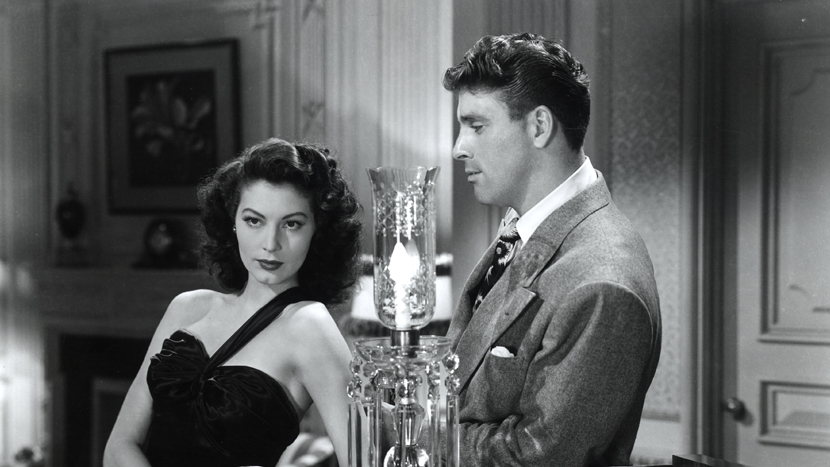
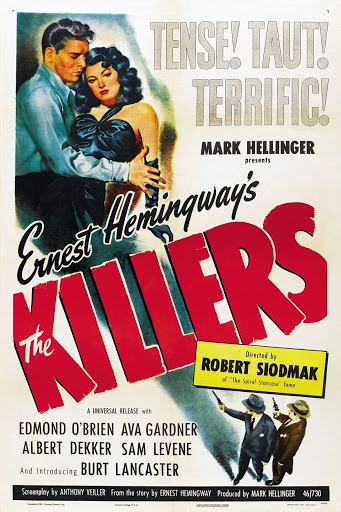
Ernest Hemingway’s short story “The Killers” is 3,000 words of tension and atmosphere, as a pair of hitmen turn up at a diner looking for a former Swedish boxer. They leave and a fellow diner runs to warn the Swede. He meets the news of his impending demise with a stoic acceptance that nothing can be done. That’s basically it. Siodmark’s film consumes the entire content of the source material in the first fifteen minutes. So the film basically expands and explores this set-up. The gripping opening is just our entrée into the film, that will explain to us why the killers are here, who the Swede was and why he needs to die. It makes for a tight, atmospheric and very well-done film noir.

Because there is no doubt that this is a classic film noir. The Swede’s backstory ticks all the boxes you would expect of the genre. Of course, all his troubles are rooted in a Femme Fatale (needless to say his former girlfriend is a saint). There’s a heist gone wrong, double crossing gangsters, a dedicated investigator and a range of locations from seedy nightclubs to rundown hotel rooms. The Swede (Burt Lancaster) is an easily-led handsome man, duped by a beautiful woman. Of course, it all finally leads to a series of shoot-outs, where the wicked are punished for their crimes. In many ways, the script (by Anthony Veillor, heavily polished by John Huston) simply turns the short-story into a familiar piece of genre work. What makes it work is the freshness with which it’s told.

Siodmark is not the biggest name director out there. But he’s a skilled professional and he elevates the material into something with deeper meaning. Perhaps it’s the Hemingway in its DNA, but this story plays like a Greek Tragedy. Fate intervenes at frequent moments, with chance and minor decisions circling back to reveal all. The Swede is a sympathetic heavy, out-of-his-depth, with the fateful flaw of being too trusting. Even the villains are vulnerable figures, while the femme fatale is only doing what she must to try and survive. It’s a neat structure.

And Siodmark shoots it with a beautiful, unobtrusive and pacey smoothness. Nothing in the film draws overt attention to itself, but every moment beautifully combines with those around it to create an absorbing whole. The pace works perfectly, and the film’s structure works very well. Throwing us essentially into the middle of the story increases the mystery – and also means that as we hear the story of each person who knew The Swede, we are constantly invited to rethink and reappraise events and characters we have already met.

It’s a film about the lasting impact of disappointment and disillusionment. Why doesn’t the Swede run a mile when he hears there are killers after him? Because its clear he died inside years ago – the bullet is just a formality. There is a rather touching romanticism to this. This strangely gentle boxer turned thug, who is so smitten by Kitty Collins that he can’t take his eyes off her during their first meeting. Who willing serves jail time for the stolen necklace she’s wearing. Who trashes his hotel and nearly flings himself out of a window when she leaves him. This is a shell of a man. And its not just him. Most of the crooks live out lives of disappointment and fear, while even our investigator seems to have very little in his life beyond chasing down insurance claims. If there is a message in this film, it’s that life is tough.

A lot of that impact comes from the sad-sack vulnerability in Burt Lancaster’s eyes. In his film debut here, Lancaster is at times a little raw. But what he conveys fantastically is the sense of a little boy lost. The Swede always looks out of his depth, dragged from pillar to post by other people, constantly unable to control the situations he finds himself in.

No wonder he’s so easily suckered by Ava Gardner’s gloriously savvy and fiercely determined Kitty – the character with the most drive and determination in the film. She’s smart enough to fool all the characters at least once – and ruthless enough to not give a damn about any of them. Gardner’s performance is spot-on here, with Kitty emerging as possible the most ruthless femme fatale this side of Double Indemnity – with Lancaster as much her gullible patsy as Fred MacMurray was. Gardner’s icy cool is so well done, that it adds even more weight to her performance of a last act switch to desperation, as events finally spiral out of her control.

Carrying most of the narrative is Edmond O’Brien in the slightly thankless role of the investigator piecing it all together. O’Brien however plays the role with a real savvy and drive, as well as with a growing sense of moral outrage – making his role much more than what it could have been (a feed for other characters). The rest of the cast is also very strong.

The Killers isn’t overtly flashy or eye-catching in the way of other films. But it carries with it a large degree of intrigue and more than a dash of hopeless tragedy. With sharp, efficient direction and some fine performances, it’s possibly one of the finest film noirs ever made.