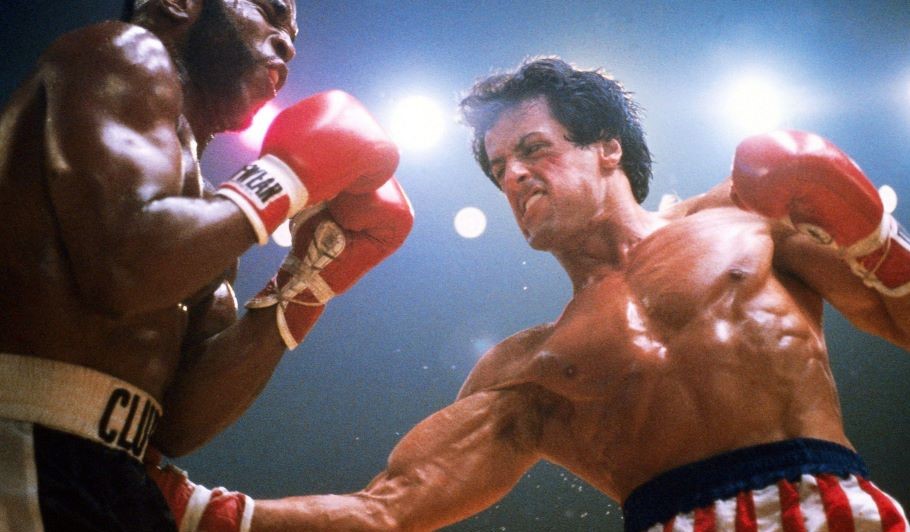
Tag: Carl Weathers

Rocky III (1982)

Rocky III (1982)

Rocky needs to build his way back to the top – again – in this boxing buddy movie

Director: Sylvester Stallone

Cast: Sylvester Stallone (Rocky Balboa), Talia Shire (Adrian Balboa), Burt Young (Paulie Pennino), Carl Weathers (Apollo Creed), Burgess Meredith (Mickey Goldmill), Tony Burton (Duke Evers), Mr T (Clubber Lang), Hulk Hogan (Thunderlips)
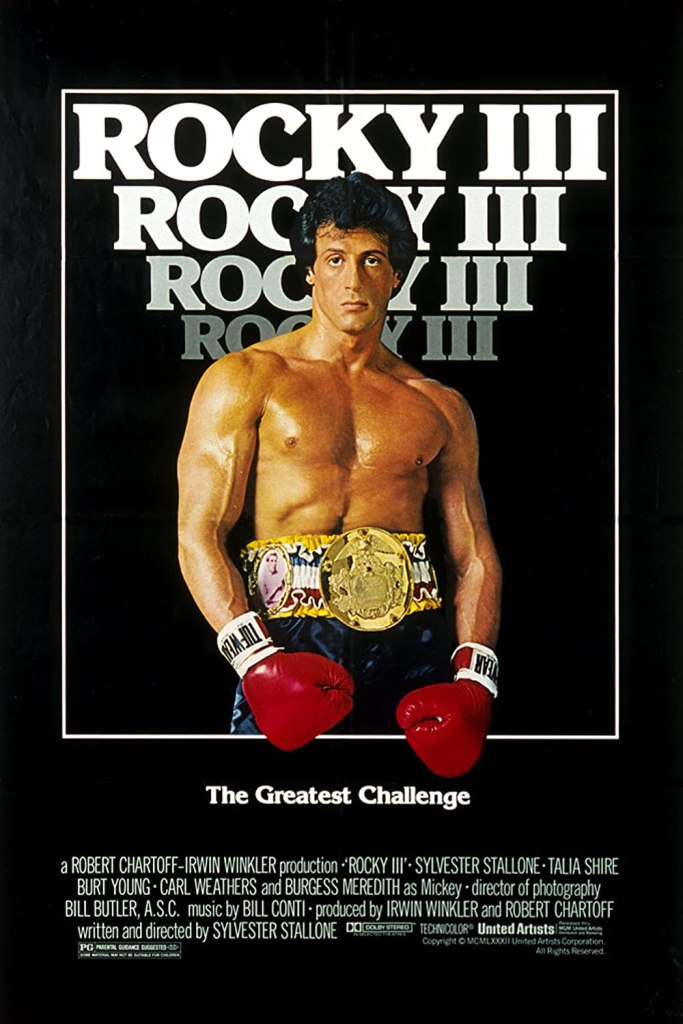
Life is good for Rocky Balboa (Sylvester Stallone)! Ten successful title defences and he is literally on-top of the world. Time to hang up his gloves right? Wrong of course. He’s challenged by hungry new up-and-comer Clubber Lang (Mr T), a brutal, never-beaten machine. Dismissive to all around him, Lang says Rocky has never taken on a proper challenger: turns out he’s right as Mickey (Burgess Meredith) only put Rocky up against challengers he knew he could beat. Lang takes Rocky apart in the fight – not before indirectly causing a fatal heart-attack for Mickey – and Rocky is a broken man. Who else can bring him back from the brink than his old frenemy, the Count of Monte Fisto himself, Apollo Creed (Carl Weathers)?

Rocky III confirms that there are in only so many plots available for a Rocky film. This one shakes the formula up by having Rocky start at the top, then fall to the bottom, then rise back up again. But it’s the same story, now taking place in a slightly different style to the first two. Any sense of kitchen-sink drama is gone from Rocky III. You can see it in the body of Stallone, now a chisselled, Michelangelo sculpture. This is a cartoon with a happy ending, and the fact it’s entertaining doesn’t hide that the whole franchise was leaving reality behind.

Saying that, Rocky III makes a bigger push for tragedy than either of the other two. Stallone leans heavily into incoherent blubbing as Rocky cradles the body of his surrogate father, Mickey dying with one last growling word of wisdom. It’s, of course, the moral of all film mentors that they must eventually kick the bucket so their proteges can take their place. It shakes Rocky up like nothing before. That and the beating he takes from Lang, in a brutal one-sided beat-down.

One of the film’s claim to cult fame is of course the casting of Mr T as Clubber Lang. Growling and scowling like a cartoon heavy, with some punchy one-liners (“I don’t hate Balboa. I pity the fool!”), it’s a part that works due to Mr T’s charisma. Stallone shoots Clubber Lang like some sort of fighting lion, frequently employing slo-mo to focus in on Lang’s scowling face and flying fists, the soundtrack echoing with his roar. Mr T is the series best villain, a man so loathsomely cocky (literally no one likes him, not the crowds, the commentators, his fellow boxers…) that he propositions Adrian, shoves Apollo before the first fight and gives Mickey a heart attack.

You needed someone like that to bring together Apollo and Rocky as a super-team. Rocky III is the series first buddy-movie. It’s hard not to see something faintly homoerotic in Weathers and Stallone, bodies greased and rippling in muscles, eyeing each other up, running along beaches or the faintly sexual air to Weather’s delivery of lines about wanting a “special favour” from Rocky “after the fight”. No wonder there isn’t much time for Adrian in the film – what chance could she have when these two have such a mutual appreciation society going on? – with Talia Shire’s best scene as a sounding board for Rocky’s confession of fear about stepping back into the ring against Lang.

Saying that, the inevitable training sequence – this is the film with the quest for “the Eye of the Tiger” – is great value. It’s fun to watch Rocky pick-up Apollo’s signature Muhammad Ali style quick feet and Weathers is very good as the former champ taking vicarious revenge who forms a genuine friendship with his old rival (I love it when Apollo shadowboxes in excitement when Rocky begins to turn the final fight in his favour). Of course, montage takes Rocky from down-hearted dope (suffering from slo-mo visions which play like a half-arsed panic attack) to freeze-frame triumph. (I’ll also say Rocky III rather neatly mocks Paulie’s kneejerk racism about training with ‘these people’).

To get to these expected beats, Stallone first needed to pad out the run time – and slight plot. Surely that’s the only reason for the bizarre Act One ‘exhibition’ match which sees a complacent Rocky fight an exhibition match against wrestler “Thunderlips” (a terrible cameo from Hulk Hogan), the sort of sequence you keep thinking must be a dream but is in fact real. We also get an initial training montage structured like a modern morality play, Rocky’s lazy prep for fighting Lang sees him living like a Hollywood hotshot, while Lang trains with a monastic dedication. No surprise who is going down in the ring (even if the first fight wasn’t only thirty minutes into the film).

The rematch though doesn’t disappoint, taking its lead from Ali’s rope-a-dope from the Rumble in the Jungle. And the real coda, which is all about friendship, is sweeter than this comic book, Roy of the Rovers film has any right to be. Rocky III replays some of the elements of the first two films, this time as a comic strip, but by focusing on a bromance (and throwing in a properly hissable pantomime villain) despite the fact you know it lacks any inspiration, you’ll still punch the sky when Rocky turns that final fight and leave the film whistling Eye of the Tiger.

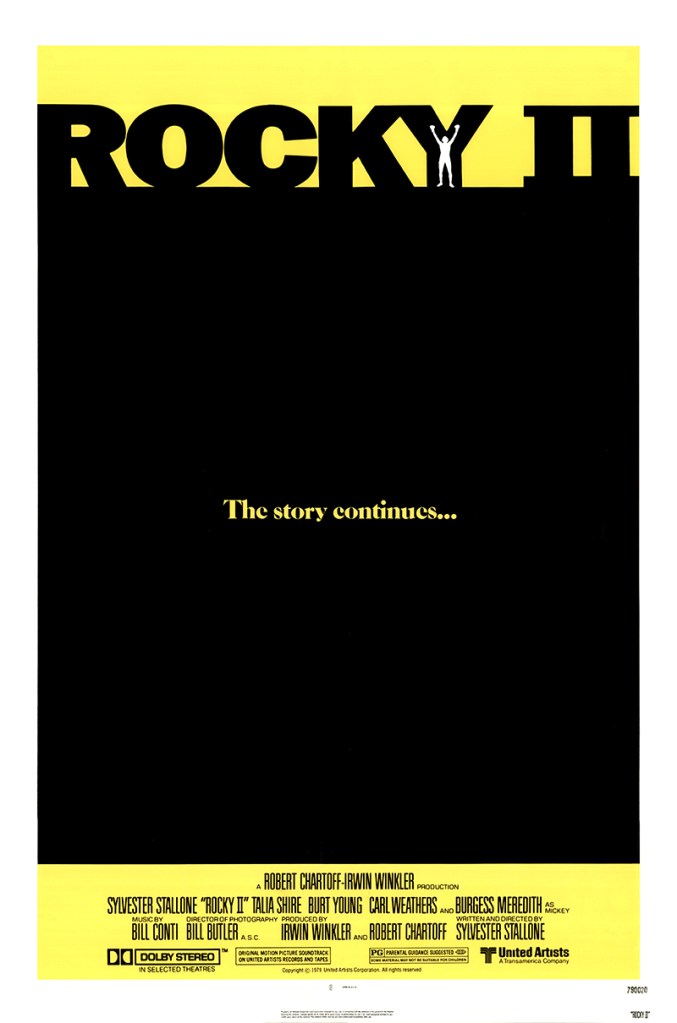
Rocky II (1979)

Rocky II (1979)

Rocky Balboa rides again, in Stallone’s enjoyable virtual remake of the first film

Director: Sylvester Stallone

Cast: Sylvester Stallone (Rocky Balboa), Talia Shire (Adrian Balboa), Burt Young (Paulie Pennino), Carl Weathers (Apollo Creed), Burgess Meredith (Mickey Goldmill), Tony Burton (‘Duke’ Evers), Sylvia Meals (Mary Anne Creed), Joe Spinell (Tony Gazzo)

It’s minutes after the end of that shock title fight won (just) by Apollo Creed (Carl Weathers – very good here as a curled ball of frustration), but already the champ is smarting since the moral victory was won by plucky challenger Rocky Balboa (Sylvester Stallone). Now Apollo wants a rematch. It’s the last thing Rocky – or his soon-to-be-wife Adrian (Talia Shire) want: Rocky’s eyesight is shot and he wants to retire to a well-earned career of cashing in on his fame. But when his money dries up, Rocky has no choice but to saddle up once again – only this time he and trainer Mickey (Burgess Meredith) are “gonna eat lightnin’ and crap thunder” till Rocky wins the bout outright.

I like to think of Rocky II as being, just like Rocky semi-autobiographical. If the first Rocky was about plucky small-timer Sylvester Stallone getting a shot at the big-time, Rocky II is about the hero returning to the scene of his success, but only on his own terms. Stallone had followed up Rocky with a film he wrote and starred in about union politics (F*I*S*T) and a would-be epic on an Italian-American family Paradise Alley which he wrote, directed and starred in that flopped. I’m guessing part of him didn’t want to be (at that time) just the guy who did Rocky. He wanted more.

That’s the vibe I get in a film where Rocky spends the first hour telling anyone who’ll listen he doesn’t want to fight no more. If he can’t make a career in advertising – and Rocky’s stumbling inarticulacy and border-line illiteracy quickly show that a filming career ain’t a goer – he wants a job in an office. Like Stallone pushing higher-brow passion projects, Rocky wants a new chapter. And, just like (I assume) Stallone was met by executives saying “just make another Rocky” so Rocky meets a (admittedly sympathetic) office manager who basically politely asks him “why don’t you just go back to fighting”

Just as Rocky fights Creed on his own terms, because it’s his decision, Stallone made Rocky II on his own terms: he would direct. The film we end up with is decent, but honestly little more than a retread. This is designed for people who saw and loved the first film – and at that time might not even have seen it since the cinema. It’s a nostalgia vehicle after only three years!

The basic structure is the same. Rocky shuffles around, bashful and quiet. He tries to be something he’s not and does his best to fit in (buying a home, car and posh new coat) but he never loses track of his fundamental decency. He still has a sweet relationship with Adrian – their ice rink date is basically restaged here with a zoo-set proposal (a neat joke since Rocky said in the previous film he couldn’t imagine a date to a zoo). Just as they had a brief will-they-won’t-they, so the couple have a crisis as Adrian struggles to support Rocky’s decision to go back into the ring and falls into a brief coma after a painful delivery of their son.

The training is all pretty much the same – as it would be in almost every film to come – including a call back to Rocky’s epic run up those steps, this time as the culmination of a run around seemingly the whole of Philadelphia, with half the cities kids running behind him cheering. Then he takes to the ring for another 15-round, mano-a-mano face-off with Apollo, sweat, blood and fists flying, Rocky switching to right-hand from southpaw.

Rocky II is entertaining – but it’s a diet coke rehash of Rocky, with all the same tricks but an ever-so-slightly diminished reward. Probably because nothing about it surprises you one little bit. It’s a film that’s looking to recapture that warm glow from 1976 and doesn’t aspire to anything more. It even ends with our hero bellowing “Adrian!” at the end. You’d have a decent quiz if you cut the two films up and threw random scenes at people and asked them to guess which Rocky film they were from.

Saying that, the franchise pretty much exhausted its kitchen-sink roots here. By the time we get too Rocky III there was no way the film was going to remember that Rocky’s eyesight was going or that he was a plucky underdog fighter. From here, Rocky would turn into a chiselled slab of marble and Rocky would fight Hulk Hogan, hire a robot butler and bring down communism. Compared to the nonsense that would follow in films 3 and 4, Rocky II really does look like the last time we had a Rocky film that might just have been directed by Ken Loach.

Rocky (1976)

Rocky (1976)

Doubters and some very steep steps are conquered in the Best Picture winning Granddaddy of Sports movies

Director: John G. Avildsen

Cast: Sylvester Stallone (Rocky Balboa), Talia Shire (Adrian Pennino), Burt Young (Paulie Pennino), Carl Weathers (Apollo Creed), Burgess Meredith (Mickey Goodmill), Thayer David (Miles Jergens), Joe Spinell (Tony Gazzo), Tony Burton (Tony “Duke” Evers), Pedro Lovell (Spider Rico)

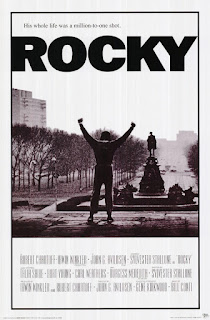
How many people have run up those steps to the Philadelphia Museum of Art? So many, they’ve renamed them “the Rocky Steps” – and placed a statue of Stallone (from Rocky III) there. You can be sure everyone hummed Gonna Fly Now while they did it. It’s all a tribute to the impact of Rocky, the iconic smash hit that led to no less than seven sequels (and counting!) and, arguably, kickstarted the 80s in Hollywood (a decade Stallone would stand tall across with both Rocky and Rambo). The original Rocky mixes genre-defining delights and a feel-good, crowd-pleasing story with a surprisingly low-key setting that deals in a bit of Loachesque reality and social commentary.

Rocky Balboa (Sylvester Stallone) is a journeyman southpaw boxer, fallen on hard times. He’s making ends meet with a bit of loan shark enforcement (although of course he’s far too nice to actually break any bones) and getting seven bells knocked out of him at low-key fights. His trainer Mickey (Burgess Meredith) thinks he’s wasting his talent, and Rocky spends the day casting puppy dog eyes at Adrian (Talia Shire) sister of Rocky’s chancer best friend Paulie (Burt Young). But Rocky’s life changes overnight when Heavyweight Champion of the World Apollo Creed (Carl Weathers) picks him at random as the nobody he will fight in a title bout (to get Apollo some free publicity). Can Rocky dedicate himself to training so he can “go the distance”?

Surely everyone knows by now, don’t they? The big fight only takes up the last ten minutes of the film. What we’ve spent our time doing beforehand is watching possibly the one of the best ever packaged feel-good stories, full of lovable characters and punch-the-air moments, directed with a smooth, professional (but personality free) charm by Avildsen. Rocky genuinely looked and felt like a little slice of Capra, a fairy tale triumph for the little guy struggling less against the world and more against his own doubts.

And it overcame some real heavyweights to win Best Picture: it knocked aside All the President’s Men, Taxi Driver and Network in a shock win. Is Rocky better than those films? No. But is it more fun to watch? Yes, it probably is – and I would be willing to bet many more people have come back to it time and time again. It was also a triumph for Stallone, a jobbing actor, who produced a first draft of the script in three days and fought tooth and nail to make sure he played the lead.

And Stallone’s performance is absolutely central to its success (can you imagine what it would have been like with, say, James Caan in the role?). Stallone gives Rocky exactly the sort of humble, shy, sweetness that makes him easy to root for. Rocky is no genius, but he’s loyal, polite, well-meaning and Stallone taps into his little-used qualities of softness and naivety. Rocky is lovable because, for all the punching, he’s very gentle – just look at him make a mess of money collecting or the way he talks like a little kid with his pets. Stallone has a De Niroish – yes seriously! – quality here: he absent-mindedly shadow boxes throughout and gives a semi-articulate passion to his outburst at Mickey. His romance with Adrian is intimate and gentle. The whole performance feels lived in and real.

Real is actually what the whole film feels like – despite the fact it’s a ridiculous fairy tale of a boy who becomes a prince for a day. It helps that its shot deep in the streets of Philadelphia, on the cheap and on the fly in neighbourhoods and locations that feel supremely unstaged (Avildsen avoided the cost of extras by frequently shooting at night or very early morning). Even that run up the stairs was a semi-improvised moment. Rocky’s world is a recognisable working-class one that for all its roughness, also feels like a community in a way Ken Loach might be proud of (even the loan sharks are easy-going). Day-to-day the film manages to capture some of the feel of a socio-realist film with a touch of working-class charm.

It also makes a lovely backdrop to the genuinely sweet romance that grounds the film: and a recognition of the film’s smarts that a great crowd-pleaser needs a big dollop of romance alongside a big slice of action. Very adorably played with Talia Shire (original choices Carrie Snodgrass and Susan Sarandon were considered too movie-star striking), Adrian feels like a slightly mousy figure (and she is as sweet as Rocky) but also has a strength to her. She’s led a tough life as sister to the demanding Paulie (and Burt Young does a great job of making a complete shitbag strangely lovable and even a bit vulnerable), but it’s not stopped her feeling love. She and Rocky complement each other perfectly – gentle, shy people, who have something to prove to themselves and the world.

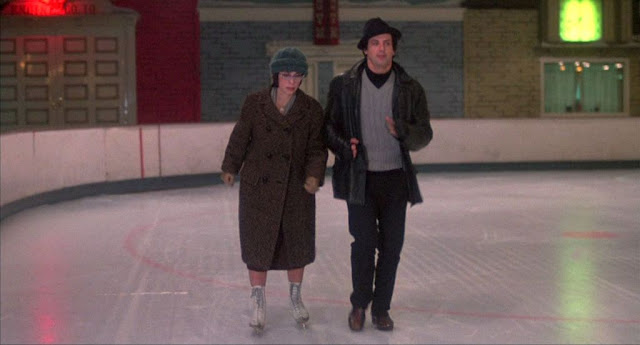
Is there a sweeter first date in movies than that solo trip to the ice rink? Cost cutting saved the day here (it was intended to be packed), that stolen few minutes skating while Rocky hurriedly tries to find out a much about Adrian as he can (an attendant counting down the time they have as they go), Adrian both charmed and bashful. It’s a lovely scene and goes a long way to us giving these characters the sort of emotional devotion that would keep audiences coming back for decades.

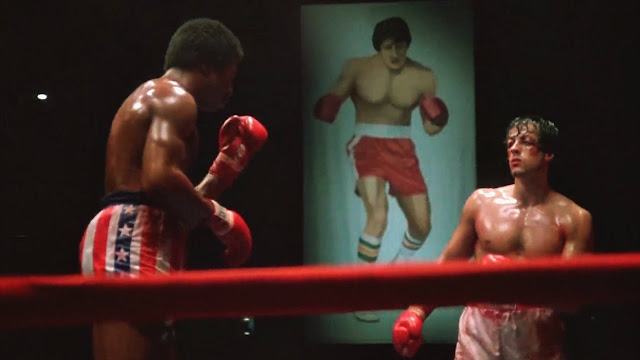
That and those boxing fights of course. Rocky’s final fight sets a template most of the rest of the films would pretty much follow beat for beat. But it’s still fun watching Rocky go toe-to-toe against all odds. Particularly as we know what is important to Rocky is not victory but proving something to himself. It helps as well that Stallone still looks like an underdog of sorts (over the next ten years he would turn himself into a slab of muscular stone).

Opposite him is Apollo Creed, with Carl Weathers channelling his very best Mohammad Ali. The underdog story makes for fine drama, and Rocky is superably packaged: there is a reason why so many other films essentially copied it. From montage, to an “against all odds” fight to Burgess Meredith’s grizzled trainer (a part you’d see time-and-again in the future from different respected character actors) there is a superb formula Rocky takes and repackages from classic films of the 40s and 50s and re-presents to huge and successful effect.

And it works because it’s so entertaining. Stallone is hugely winning in the lead role – more sweet and sensitive than he would be in later Rocky films (traits he would allow himself to rediscover in the more recent films) and it’s a perfectly packaged feel-good entertainment. But it’s also got a grounded sense of realism and reality, with an affecting love story. It’s one of the first – and best – films of the 80s, where formula and crowd-pleasing would be king.

Rocky IV (1985)

Sly Stallone takes on the towering Dolph in Cold War ending boxing fable Rocky IV

Director: Sylvester Stallone

Cast: Sylvester Stallone (Rocky Balboa), Talia Shire (Adrian Balboa), Burt Young (Paulie Pennino), Carl Weathers (Apollo Creed), Dolph Lundgren (Ivan Drago), Brigitte Nielsen (Ludmilla Drago), Tony Burton (“Duke” Evers), Michael Pataki (Nicolai Koloff)

By 1985, Rocky Balboa had come from behind to overcome adversity through sheer willpower no fewer than three times. We’d seen him come from obscurity to fight Apollo Creed, lose his money, fight Creed again, win, get shamed in the ring and lose his belt and trainer on the same night, then come storming back to beat Mr T. We’d had training montages aplenty as, for every major fight, Rocky needed to learn how to box in a new way. We’d seen him take punishment like nobody’s business in the ring as better opponents pummelled him before coming up against Rocky’s iron will. So in Rocky IV we got… well, more or less exactly all that. Again. But in Russia.

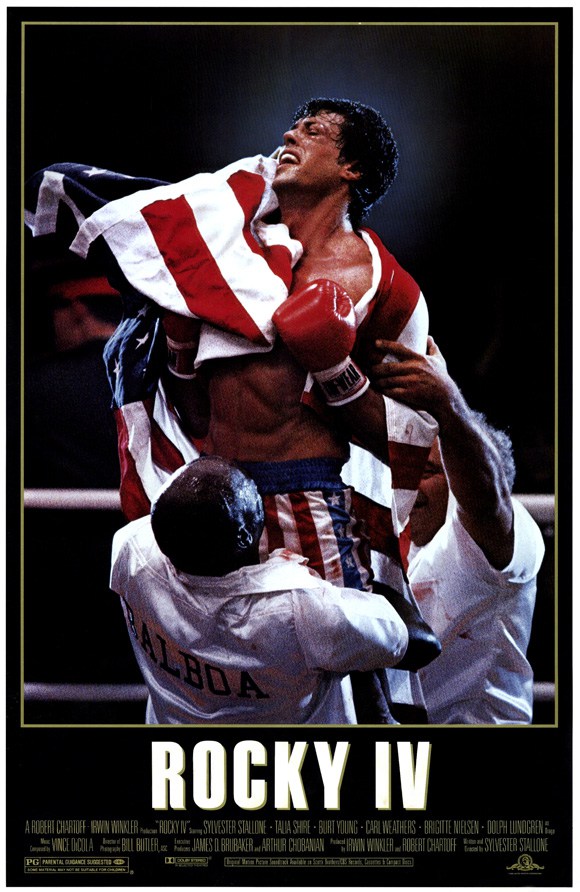
The ideas had gone, the inspiration had tanked. There was nothing new to do. Rocky IV is a very short film – and it could easily be shorter again if the padding had been removed. Apollo Creed (Carl Weathers) takes on Russian uber-fighter Ivan Drago (Dolph Lundgren) in the ring in a charity match. Drago is a mountain of Soviet athletic engineering and he beats Creed so badly, Creed dies. In Rocky’s arms of course. So Rocky Balboa (Sylvester Stallone) does what a man has to do – he’ll fly to Siberia and he’ll fight Drago on his own turf, all to avenge the memory of Creed. And for American pride. And along the way he’ll only go and get the Russians to rethink this whole Cold War thing.

Rocky IV is so painfully short of ideas, you’ll feel like you’ve seen it even before you’ve seen it. In fact, at least 10 minutes of it you have. The film opens with essentially a complete recap of Rocky III, including the closing scenes of that film. Later Rocky goes driving to the airport. Along the way he hits the radio in his Lamborghini (the product placement in this film is shockingly crude) and listens to the whole of No Easy Way Out by Robert Tepper, while the film plays a montage that recaps all three of the previous films. The scene might as well end with the title of the song appearing in the bottom left hand corner like an old MTV video. (Stallone’s rolodex was obviously well thumbed, as James Brown later pops up to deliver a rendition of the whole of Living in America.) This sort of stuff pads the plot absurdly.

Either side of that, we have two long training montages comparing the homespun honesty of Rocky’s training with the naughty, doping inspired, technological training of Drago. But then this is not a subtle film. Any film that opens with two boxing gloves – one American, one Soviet – flying towards each other and exploding isn’t exactly pulling its punches on the subtlety front. The political commentary in the film is laughably naïve, from Creed’s inane chatter about American pride, to the laughable depiction of the Soviet officials as distant Bond villains, to Rocky’s closing speech after his victory (spoilers) with its infamous “If I can change, you can change!” refrain. Did the makers think they were putting a hammer to the Berlin Wall here or something?

Most of the rest of the film moves between padding and the bizarre. Almost every single scene ends with a freeze frame, possibly one of the most clunky visual devices you could hope to see. Stallone as director focuses his camera with such loving intensity on his own chiselled frame that it’s almost a sort of camp classic. Some of the conversation and physicality between Creed and Rocky is almost laughable in its inadvertent homoeroticism. 

Then there is plenty of dumb stuff as well. I’d totally forgotten this film showpieces a robot servant whom Rocky’s brother-in-law Paulie (Burt Young) spends most the film treating like a hen-pecking wife. This robot is a bizarre sci-fi addition to the story, which seems to have walked in from a different film.

The fighting when it comes is pretty good, I’ll give it that. Yes literally everything in the boxing ring is so predictable you could write it down in advance, but as always there is something quite moving about watching Rocky take such punishment to emerge as victor. Heck even the Soviet crowd start chanting his name (take that Cold War!). But it’s fine. Drago isn’t even a character (he doesn’t even really have any lines), but that doesn’t really matter as its Lundgren’s size and strength that sells the show (he towers over famously titchy Stallone).

Rocky IV is predictable hokum, that offers precisely zero surprises and must have taken a wet weekend to write. Its bizarre robot sub plot, matched with the endless music videos, montages and flashbacks to old movies, shows that the well was pretty much dry by the time this film came around. But you know the formula still sorta works, and you still cheer as Rocky turns an epic pummelling into triumph. Carl Weathers is pretty good, Creed’s death is as strangely affecting as it is totally ludicrous (never in a million years, by the way, would either of the fights in this film be allowed to continue) but Rocky IV’s okay. And of course it ended the Cold War.