Tag: Carmen Ejogo

Fantastic Beasts: The Crimes of Grindelwald (2018)

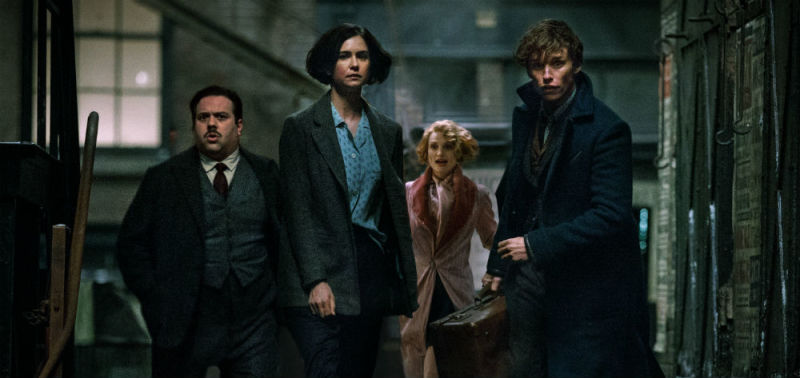
Eddie Redmaynes wades his way through the murky Crimes of Grindelwald

Director: David Yates

Cast: Eddie Redmayne (Newt Scamander), Katherine Waterston (Tina Goldstein), Dan Fogler (Jacob Kowalski), Alison Sudol (Queenie Goldstein), Jude Law (Albus Dumbledore), Johnny Depp (Gellert Grindelwald), Ezra Miller (Credence Barebone), Zoë Kravitz (Leta Lestrange), Callum Turner (Theseus Scamander), Carmen Ejogo (Seraphina Picquery), Claudia Kim (Nagini), William Nadylum (Yusuf Kama), Kevin Guthrie (Abernathy), Brontis Jodorowsky (Nicolas Flamel), Derek Riddell (Torquil Travers)

What were the Crimes of Grindelwald? Well the main one is this film. Grindelwald does what we thought might have been impossible – he features prominently in the first flat-out bad Harry Potter film. Fantastic Beasts: The Crimes of Grindelwald is a near incomprehensible mess of clumsy set-up for future plots, tedious side-plots, poorly executed drama and a vast array of not particularly interesting characters struggling through not particularly interesting events with low stakes. I feel asleep twice for a few moments in the film. There is very little in it to recommend.

Dark wizard Grindelwald (Johnny Depp) opens the film by escaping from captivity and flees to Paris. There he plans to – well to be honest I’m not terribly sure what he is planning to do at all. I think it involves something about world domination. Also it involves locating and winning to his side mysterious young wizard Credence (Ezra Miller) from the first film. Meanwhile Grindelwald’s old friend (or was it more? The film ain’t saying) Albus Dumbledore (Jude Law) sends Newt Scamander (Eddie Redmayne) to Paris to find Credence first. Lots of things sort of happen after that, but most of them are building up to the next three (three!) films.

Three films? Seriously? Was that something they had in mind from the start? It feels a lot more likely it’s an idea that came out of the financial success of the first film, rather than any artistic decision. It’s certainly very hard indeed to see many narrative, tonal or thematic links from the first film carrying across to this one. This one feels like it comes from a completely different type of story. More than anything, the film-makers seemed to desperately want to forget the whole “fantastic beasts” angle we started this damn thing with. The odd beast is thrown in every so often to keep ticking the title box, but this flies off (or tries to) into such different, would-be darker, stakes that the beasts never feel a natural link. This is a film that wants – with its muted palette, murders, darkness and (in one supremely misjudged moment) a Holocaust reference – to set us on a dark path to future misery and war. Whatever happened to chasing beasts around to catch them in a suitcase?

Instead the film doubles down on Potter-lore.  You virtually need a PhD in the Potterverse to keep on top of what’s going on. Spells, objects, phrases, charms and incantations are thrown in all over the place, with very little explanation for the audience. Now I can roll with this a certain amount, hell we’ve all read the books and seen the films, but there are at least a few things in here that could desperately do with some reminders for the audience (what is an obscurus again?) so that we can understand their contextual importance. Instead the film barrels along, throwing plot points all over the place and ramming information into our ears.
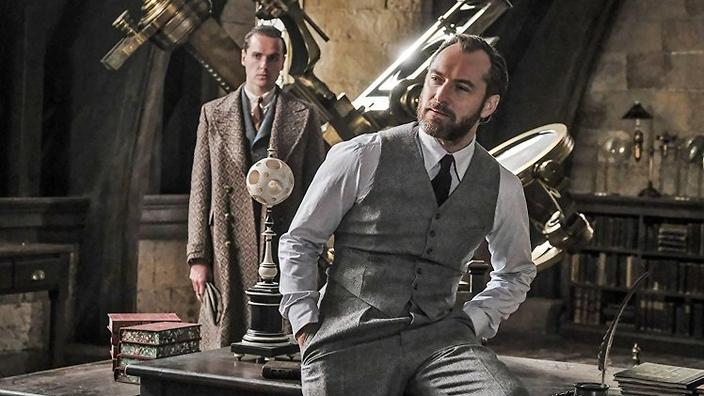
In fact, most of the film is like an epic info-dump of material designed to set up stuff for later films. Again, you can’t help but feel that they suddenly realised after completing the first film that if they were going to spin this out into another multi-volume series, there were lots and lots and lots of plot threads they hadn’t even attempted to introduce at the start. Instead of taking a bit of time to build these things in and make us care about them, this film throws them into the mix as quickly as possible to make up for lost time.

In all this mass pile of information thrown at us, the film could really do with less going on. There is a massive, red-herring- filled plot about a character’s family history that takes up loads of screen time and eventually turns out to mean absolutely nothing at all. This is a misdirection that could work well in a book – but in a film as crammed and packed as this one, it makes you tear your hair out. How long did we spend on this and it means naff all at the end!

In fact, you can’t help but feel that Rowling as tried to write a book here rather than a film. These sprawling bits of wizarding lore, universe building, red herrings and other plots would have worked really well if she had 500 pages of prose to explore and build them in. But she’s not experienced enough a screenwriter to make them work well here. If another scriptwriter had adapted her ideas into something that works as a screenplay – the sort of focused work that changed the sprawling Order of the Phoenix into a tightly focused couple of hours – the film would be far better.

But instead, the film feels like everyone has got far too used to producing these epics, to a certain style of making the films. There is a lack of fresh ideas here, with a lack of independent or new eyes to see the whole and suggest how an outsider could see it. This also extends to David Yates’ direction which, while competent and well managed as ever, now feels like he has run out of ideas of how to film this wizarding stuff in a new way, which is fair enough after five films. It’s a film that desperately needs fresh new blood in it, and a universe that needs the sort of creative kick-up-the-backside that Alfonso Cuaron gave in The Prisoner of Azkaban.

You feel sorry for some of the actors carried across from the first film. Dan Fogler has so little to do that he would have been better off not being in the film. His absence (for instance, if his memory wipe from the previous film had stuck) would at least have been motivation for the actions of Queenie in this film, who gets a rushed and nonsensical character arc that seems to completely change the character we got to know in the first film. Katherine Waterston is saddled with virtually nothing as Tina.

Instead, far more time is given over to Johnny Depp. Depp’s casting was controversial to say the least – and not worth it. Depp gives one of his truly lazy, eccentric performances – aiming possibly for brooding intensity, he instead lands out dull and underwhelming, a charisma vacuum. It’s hard to see him leading hundreds of followers in a revolution. Jude Law does far better as a twinkly Dumbledore (even if his performance bears little resemblance to Gambon or Harris), and his scenes are the highlights of the film. The film, by the way, shies cowardly away from any real depiction at all at the alleged love affair (which Rowling talks about) between Dumbledore and Grindelwald, presumably because it would make the film a harder sell in China.
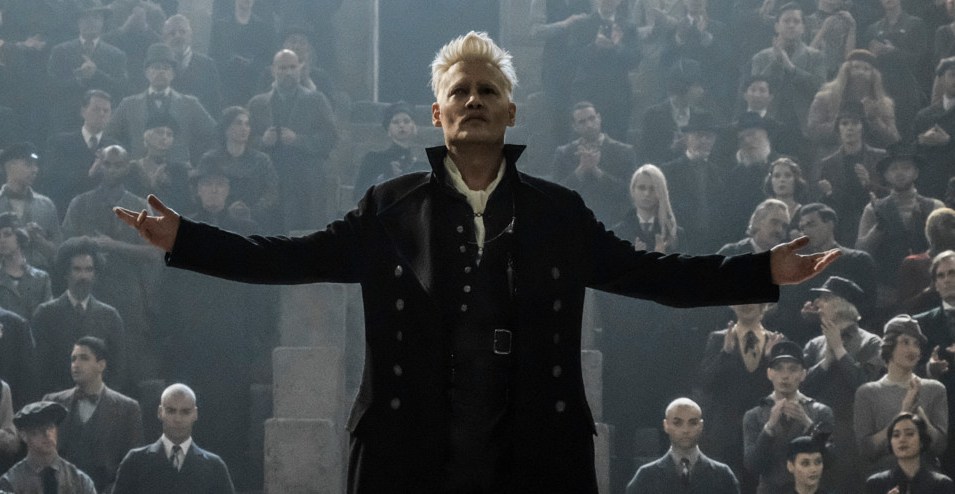
And what of our hero? Well Eddie Redmayne is still charming, but his character feels out of step with the increasingly darker tone the film aims for. He’s also saddled with a supremely dull and unengaging sort of love-triangle with his brother (a forgettable Callum Turner) and ex-girlfriend and brother’s fiancée Leta Lestrange (an out of her depth Zoë Kravitz). The film talks a bit about the troubled relationship of the Scaramander brothers – but is so rushed it never has time to really show us any of this, so instead has to tell us about it, even though everything we see basically shows their relationship as being reserved but loving.

But then that’s just par for the course of this underwhelming and deeply uninvolving film. The stakes should feel really high, but they never do because to be honest you are never really sure what they are. The film ends with the expected fire filled wizarding special effects stuff – but honest to God I had no idea what was going on, why it was happening, what was the danger or where it came from. It just felt like the film needed to end with a bang. There are moments of this film that should have had some emotional force but they don’t because it’s so crammed to the margins with plots, superfluous characters (many of whom are introduced with fanfare and then barely appear in the film) and pointless digressions that when things happen to characters we care about from the first film, it doesn’t carry the force it should. Five films of this? I’m not sure on the basis of this I’d want to see another five minutes. A major, major, major misfire.
Fantastic Beasts and Where to Find Them (2016)

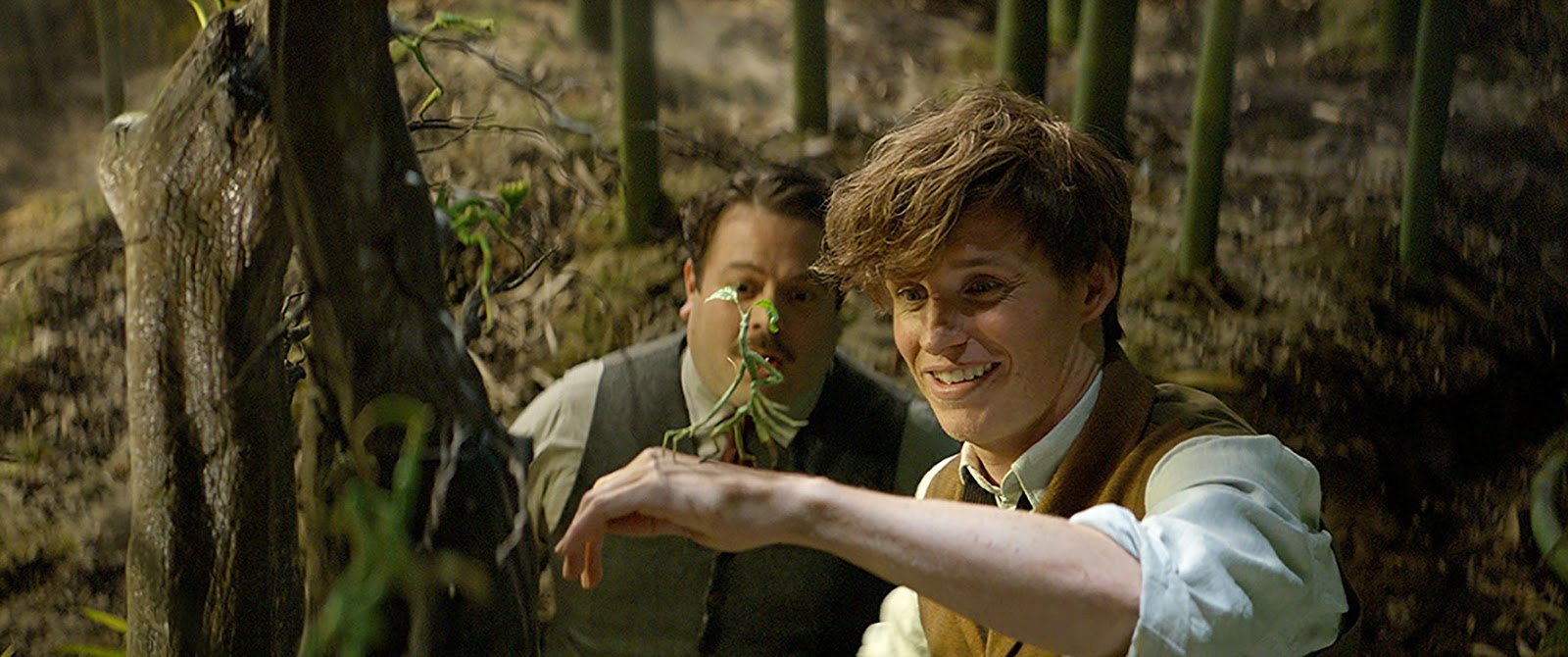
Eddie Redmayne and Dan Fogler uncover some Fantastic Beasts

Director: David Yates

Cast: Eddie Redmayne (Newt Scamander), Katherine Waterston (Tina Goldstein), Dan Fogler (Jacob Kowalski), Alison Sudol (Queenie Goldstein), Colin Farrell (Percival Graves), Ezra Miller (Credence Barebone), Samantha Morton (Mary Lou Barebone), Jon Voight (Henry Shaw Snr), Carmen Ejogo (President Seraphona Picquery), Ron Perlman (Gnarlack), Ronan Raftery (Langdon Shaw), Josh Cowdery (Henry Shaw Jnr), Johnny Depp (Gellert Grindelwald)

Eventually the gravy train had to come to an end. The Harry Potter franchise laid golden eggs for over a decade, until Rowling’s books came to an end. Just as well then that the incomparable JK Rowling had tonnes of invention left up her sleeve, and was keen to look at other elements of the Potterverse. So we got the creation of this sideways prequel, set in the rich backstory of the Harry Potter novels. And it is a bit of a treat.

In the 1920s, Newt Scamander (Eddie Redmayne) arrives in New York with a suitcase full of fantastic beasts. He’s there to return one of them home – but after a mix-up at a bank his suitcase ends up in the hands of muggle (or as the Americans put it “No-Maj”) and would-be baker Jacob Kowalski (Dan Fogler). As the escaped beasts cause chaos, demoted Auror Tina Goldstein (Katherine Waterston) works with Newt and Jacob to try and recapture the creatures, with the aid of Tina’s mind-reading sister Queenie (Alison Sodel). But is all the destruction truly caused by Newt’s creatures? Or are there darker forces at work? 

Fantastic Beasts is a charming spin-off, sustained by some endearing performances, its warm heart and stylish design. Whether the plot is quite strong enough to reward constant viewing as much as many of the Harry Potter films do, I’m not sure (I didn’t find its story particularly gripping the second time around), but I think there are enough incidental pleasures there to keep you coming back for more. It’s actually a film which will be interesting to re-evaluate after the later sequels emerge – there are many suggested threads set up in this one for exploration later.

It’s not a surprise that the initial plot around chasing and collecting the beasts is fairly basic, since it’s based on a slim handbook (itself based on a reference from the original Harry Potter stories) that Rowling published as a Comic Relief fundraiser. Besides the chasing around to capture the animals, it’s only really the backdrop for sight-gags, cute animals and (most importantly) our window for getting to know our leads.

And these leads are certainly well worth getting to know, with a string of excellent performances from the four principals. Redmayne anchors the film very well as the slightly dotty, professorial, socially awkward Newt, whose coy, bashful charm really endears him to the viewer. Dan Fogler is possibly even better as our viewer surrogate, an average New Yorker thrown into a mad world of magic who somehow manages to take it all in his stride and whose growing excitement and embracing of this demented wizard world makes you fall in love with him. He’s helped by a sweet, gentle and touching romance with the effervescent but lonely Queenie (a magnetic Alison Sudol). Katherine Waterston gets the trickiest part as the earnest, try-hard, play-by-the-rules Tina – but her growing fondness for Newt and his creatures works very well.

The moments of the film that focus on the interaction between these four are the finest of the film – as are those that allow us a glimpse of Newt’s wonderful creatures. Housed in a Mary Poppins-ish suitcase of infinite TARDIS-like depth, these beasts are brilliantly designed and wonderfully individual, from a cute mole-like Niffler (naughtily stealing shiny things like a magpie), to a horny Erumpent (like a hippo and rhino mixed), to the majestic Thunderbird, a sort of Eagle-Phoenix, soaring through the plains in Newt’s suitcase. Even the small Bowtruckle Newt carries in his pocket gets to develop a sense of personality. (And yes I had to look all these names up).

These creatures are both individualistic but also used for very specific purposes in the film, from lock-picking to a sort of bizarre self-defence weapon. Despite their horrific appearances, the film treats them with as much understanding sweetness as Newt does – even the dangerous ones are only dangerous when riled or threatened, and Newt’s protective nature helps us to feel as fond of them as he does.

Away from the beasts, the film largely focuses on setting up threads (and threats) for future films. A major sub-plot revolves around an anti-Magical society run by a stern-faced Samantha Morton. The film heads into darker territories here, with its references to both cults and the ill-treatment of children. Ezra Miller does well as Morton’s awkward, ill-treated adopted son, unable to escape from his oppression or express his frustration. Someone in this family is a powerful magical being called an Obscurus, and the film plays a neat game of bluff and double bluff around this.

It continues this game as it fills out the political magical world around Carmen Ejogo’s regal magical President. What game is Colin Farrell’s authoritarian Perceval Graves playing? What of the film’s opening references to dark wizard Grindelwald, and the suggested war that is bubbling under the surface in the magical world? All this darker stuff sits around the edges and margins of Newt’s beast-collecting storyline, occasionally seeping in (let’s not forget at one point Newt and Tina are literally sentenced to death for supposed crimes), but doesn’t overwhelm the lightness.

David Yates directs with a professionalism that comes from being hugely familiar with this world. His later sequences of Obscurus destruction are not always particularly different from other city-smashing scenes from other films. Not every plotline feels fully explored – Jon Voight playing a newspaper mogul and his two contrasting sons seems like a plot we could do without – but Yates does keep the film moving pacily forward, he gets the tone of light slapstick and family warmth and he still shoots the wonder of magic better than almost anyone.

Fantastic Beasts is a film that is perhaps a little too light and frothy to really be a classic – it juggles too many plots and doesn’t always bring them together well. It’s mixture of darkness and lightness is a little eclectic, and it sometimes feel very much like a film designed to set up future films effectively. But when it focuses on its four leads, it’s very strong indeed and all of them – particularly Fogler – are people you want to see more of. It even manages to end the film on both a genuine laugh and a heart-warming bit of romance, tinged with sadness. It’s a fine start to a new franchise.

Love's Labour's Lost (2000)


Shakespeare meets Musicals in Kenneth Branagh’s Love’s Labour’s Lost

Director: Kenneth Branagh

Cast: Alessandro Nivola (King Ferdinand of Navarre), Alicia Silverstone (Princess of France), Kenneth Branagh (Berowne), Natascha McElhone (Rosaline), Carmen Ejogo (Maria), Matthew Lillard (Longaville), Adrian Lester (Dumaine), Emily Mortimer (Katherine), Timothy Spall (Don Armado), Nathan Lane (Costard), Richard Briers (Nathaniel), Geraldine McEwan (Holofernia), Richard Clifford (Boyet), Jimmy Yuill (Constable Dull), Stefania Rocca (Jaquenetta)

Love’s Labour’s Lost is one of Shakespeare’s lesser-known comedies. There is a reason for that – it’s simply not that good (it’s certainly the weakest Shakespeare play Branagh has brought to the screen). I’ve sat through some turgid, and terminally unfunny, stage productions of the play in the past – but this movie version presented something different, as Branagh plays fast and loose with the script and turns it into an all-singing, all-dancing musical, with only the barest sprinkling of Shakespeare dialogue.

LLL isn’t really about anything. The King of Navarre (Alessandro Nivola), invites his three best friends (Kenneth Branagh, Adrian Lester and Matthew Lillard) to join him in three years of academic study, during the course of which they will forsake all female company. Of course, no sooner than the deal is made but the Princess of France (Alicia Silverstone) and her three companions (Natascha McElhone, Emily Mortimer and Carmen Ejogo) arrive in Navarre. Will love blossom to prevent the plans of the King? You betcha.

It’s slight stuff. The play always feels a little bit unfinished – it ends with the lovers separated (or as the play puts it “Jack hath not Jill”) but with hints of hope. It’s oddly structured – more like the first part of a series of plays than a standalone (the lovers don’t get together until almost Act 4, and the men and women spend very little time together). There is a series of dull sub plots revolving around the academics of Navarre, with whole scenes made up of obscure Latin jokes. As the icing on the top, a clown and a foppish Spaniard form a bizarre love triangle with a busty country wench. None of these plots is really resolved at the end. It’s a play that focuses a lot more on floral dialogue and intricate poetry rather than narrative.

Branagh addresses a lot of these problems by simply trimming the play to the absolute bone. I would guess at least 65% of the dialogue has been cut – probably more. Although this means some roles are now so small they feel like sketches (in particular many of the more working-class characters and academics), it does mean that this has a bit more narrative thrust and energy than most productions. Moving the setting to 1939 also gives a good context to the play, and places the political issues into an understandable context. It also gives a tension to underlie the lightness of the rest of the play. Branagh manages to remove most of the cumbersome exposition dialogue by replacing it with a series of 1930s-style cine-news reels (spryly voiced by Branagh himself). He even resolves the “cliffhanger” ending of the play with a similar device (reflecting the tonal shift at the end of the original play), which helps to ground the otherwise lightweight play in a very real world, where war carries a cost.

Of course, the main invention was to replace the intricacy (and obscurity!) of some of the dialogue with song and dance routines. The songs are carefully chosen from the great musical composers of the 1930s and 40s, and are delicately interwoven with the dialogue. Now for the purist this could of course be a source of fury, but when the material is one of the weaker plays, getting this “greatest hits” version of the text alongside some excellent songs works really well.

The song and dance numbers also have a certain charm about them. Most of the cast are not especially talented singers and dancers – only Nathan Lane and Adrian Lester have song and dance experience (and it certainly shows when Branagh allows them to let rip). The actors went through an extensive “musicals boot camp”, which certainly taught them the steps, but the musical numbers still retain a charming amateurishness about them. Sure it helps a truly gifted dancer like Adrian Lester stand out, but it’s also quite sweet to see actors like Richard Briers tripping the light fantastic. (Check Lester out at around 3:10 in the video below).

The real issue with some of the actors chosen is less with their song-and-dance strength, but that their acting strength doesn’t quite cut the mustard. Branagh’s delivery and comic timing is spot on, and McElhone is a worthy adversary cum love interest for him; but Nivola and Silverstone are a little too out-of-their-depth to bring much more than blandness to their key roles. Amongst the supporting roles, Nathan Lane stands out in making Costard actually quite funny, but Lillard mistakes gurning for wit. Mortimer and Ejogo are engaging but have precious little screentime.

The film is shot with Branagh’s usual ambition on a set that has a deliberate air of artificiality about it, evoking the classic 1930s studio musical. All exteriors deliberately feel like interiors, and there are homages aplenty, from Singin’ in the Rain to Ethel Merman. Each musical number has its own unique feel and the majority are shot with Branagh’s usual love of long-take. Some of the numbers stick in the head longer than others – but that’s just the nature of musicals. Particularly good are I Won’t Dance, I Get a Kick Out of You, I’ve Got a Crush on You, Cheek to Cheek and a steamy tango to Let’s Face the Music and Dance.

LLL doesn’t want to do anything more than entertain – and sometimes it probably tries a little too hard to be light and frothy, as if Branagh was consciously kicking back after the mammoth undertaking of his uncut Hamlet. Perhaps that is why LLL appealed to him – Shakespeare comedies don’t get less treasured or more inconsequential than this, so he had total creative freedom to do what he liked, in a way that a Twelfth Night or a Much Ado About Nothing wouldn’t allow him. It’s the sort of film you need to plug into the mindset of – and some aren’t going to be able to do that. It’s not a perfect film, but the lightness Branagh handles things with pretty much carries it through.

Perhaps that lightness however is slightly the problem: in Branagh’s previous films he found a perfect mixture between influential reimaginings (Henry V), wonderful crowd-pleasers (Much Ado) and reverential labours of love (Hamlet). People probably expected something else from him than a high-budget, lightly amateur musical with precious little Shakespeare in it. I think this partly explains the hesitant response this has received from the public and critics since: it’s just such an unlikely ideal that people didn’t seem to know how to respond to it.

Of course, as anyone who has sat through an average production of the play can tell them, they weren’t missing much from what has been cut – and this is still an infectiously funny, frothy concoction. It may have a slightly mixed acting bag – some of the leads are underpowered, while some strong actors like Timothy Spall are underused – but the actors do seem to be enjoying themselves, and this enjoyment basically communicates to the audience. It’s not a concept that could have worked with a long running time, but it sure works for the short term. It’s an odd concept – and it was a huge box office bomb – but it’s one that works.

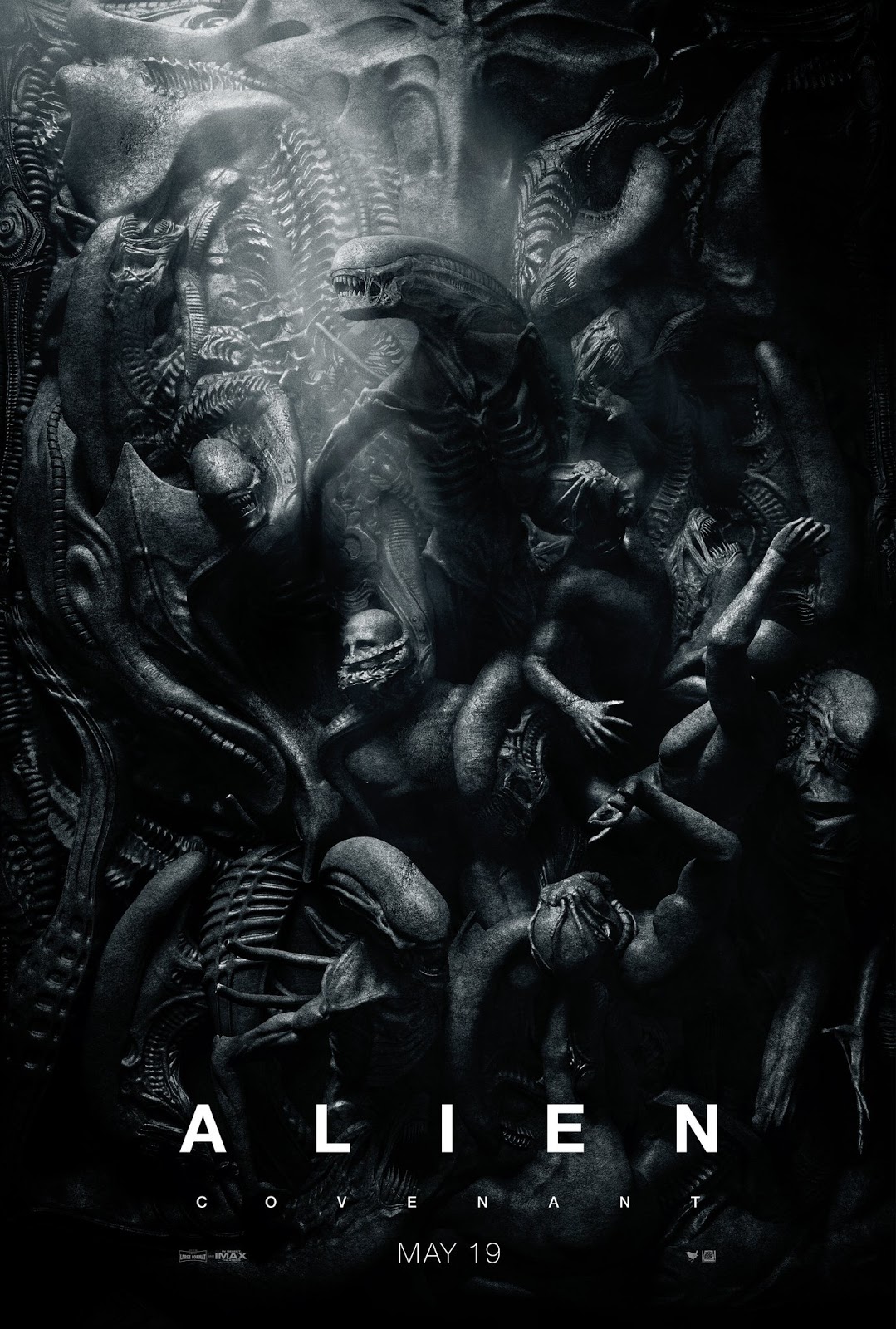
Alien: Covenant (2017)


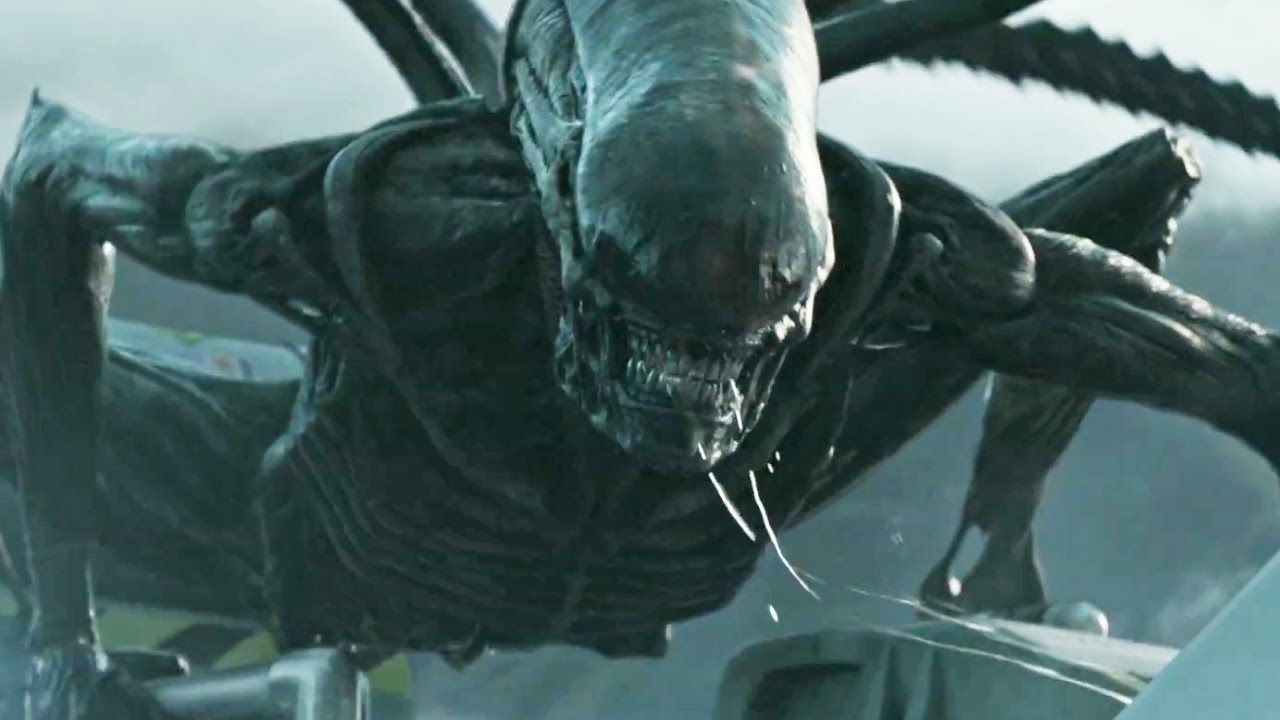
The xenomorph rises again, in prequel Alien: Covenant

Director: Ridley Scott

Cast: Michael Fassbender (David/Walter), Katherine Waterston (Daniels), Billy Crudup (Oram), Danny McBride (Tennessee), Demián Bichir (Lope), Carmen Ejogo (Karine), Amy Seimetz (Faris), Callie Hernandez (Upworth), Guy Pearce (Peter Weyland), Noomi Rapace (Elizabeth Shaw), James Franco (Jacob)

The Alien franchise is a series I’ve always had a lot of time for. Perhaps I just enjoy the carnage and blood letting of these movies, but at their best there is a sinister poetry behind the pure destructiveness of this rampaging beast, with a perfect mix of haunting nihilism and stirring action. In 2012, Scott returned to the franchise to explore its roots. His prequel film, Prometheus, had a mixed reception (and it’s a film I’ve found weaker with repeated viewings) but it still had that mixture of nihilistic poetry and gore. So where does Alien: Covenant fall?

Set 10 years after Prometheus, a solar flare hits the colony ship Covenant. To repair the damage, the ship’s android Walter (Michael Fassbender) wakens the crew, although the captain (an unbilled James Franco) is killed by a malfunction. Command passes to Oram (Billy Crudup), although many of the crew look to the captain’s wife Daniels (Katherine Waterston) as their moral leader. After the damage is repaired, the crew investigate a signal from an abandoned world, where they find the marooned android David (Fassbender again) and a planet with a terrible virus, that infects its hosts to create brutal Xenomorph monsters. But is all as it seems?

Alien: Covenant is a mixed bag. It has a haunting and unsettling tone and gives us plenty of aliens in all their various forms. Many of the sequences of alien attacks are exciting. It’s trying to build a mythology around the creation of the aliens, and tie that in with a thematic exploration of our needs to create and destroy. It wants to explore the potential dangers of artificial life, and how it could judge us and find us wanting. At the same time, it’s a flawed and rather predictable film, which never really surprises you. It might give you some things to think about – but it won’t provoke your interest enough to make you really think about them for long after the credits roll.

Its main weakness is in its large cast. Most of the characters are referred to throughout by non-descript surnames, hammering home their lack of individuality. The film is so resolutely invested in the establishment of its mythology, it has no time to build characters or a story around the crew. They are little more than ciphers, plot tools to deliver specific points rather than for us to relate to them, or feel concern for their fate. Even Waterston’s Daniels, nominally our surrogate character, feels distanced and undefined. Like the rest of the cast, she suppresses the loss of a loved one (there are at least three bereaved partners in this film) with a suddenness that speaks less of her professionalism and more of the film’s shark-like need to always moving forward.

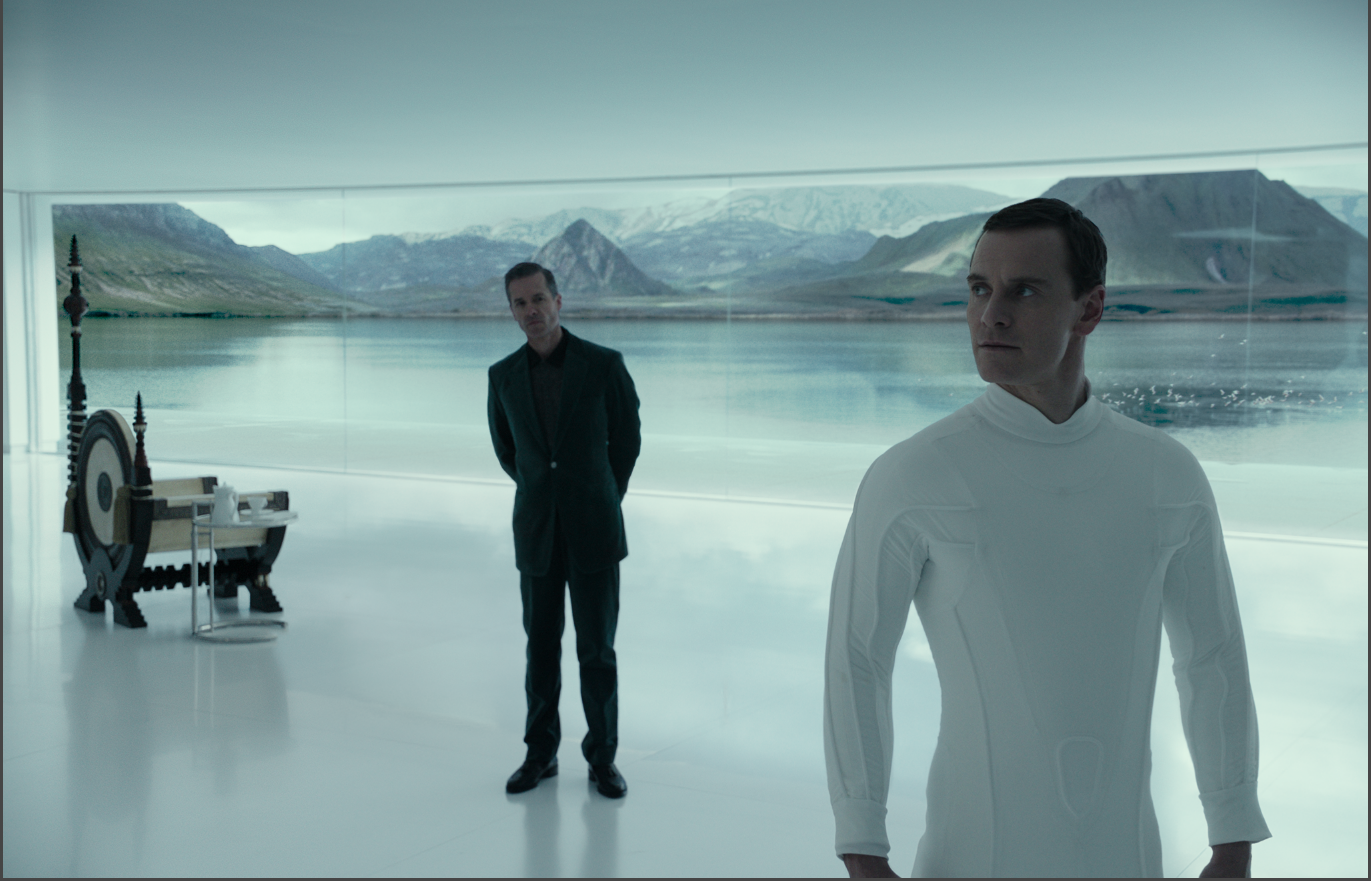
The one exception to the blandness is Fassbender’s dual role as androids David and Walter. It’s an actor’s bread and butter to play different roles, so we shouldn’t be surprised that a great actor like Fassbender executes it here with such skill. But he clearly distinguishes both the loyal, straightforward Walter and the darkly oblique David, and manages to craft the two most impressive performances in the film. This also gives Fassbender several chances to act oddly with himself, including a scene where David (rather suggestively) teaches Walter to play a pipe (it’s all about the fingering) and even a creepily possessive kiss scene between the two androids.

It helps that the film positions David as a protagonist-antagonist, and spends time exploring his fractured psyche (because it is central to the creation of the aliens, the film’s main interest). From its dark prologue, which shows David awkwardly questioning his nature with his creator (a swaggering cameo from Guy Pearce), David carries much of the film thematic interest. He is a creation of mankind, who believes he has surpassed his creators. Learning that Walter, a second generation, has been programmed to be less ‘human’ in his emotional capability as David, only confirms his belief that he is perfect. David is fuelled by a homicidal rage towards his creators, matched with an insane fixation on his own perfection.

The film wheels out a host of literary big guns to suggest a richness and depth to its exploration of these themes, from Milton to both Shelleys, but these points are really window dressing, as David is really closer in spirit to a Mengele crossed with a mad scientist from an old Hollywood B-movie. Despite this though, Fassbender’s David feels like a fully-rounded, absorbing character. His ‘Walter’ performance is equally good – gentler, compassionate, less grandstanding but quietly engaging.

Alien: Covenant is a film that aims high and wants to add some intellectual heft to its “slasher” roots. I think it’s probably a film that “hangs out” with ideas rather than enters into a proper conversation with them, but at least it’s aiming for thematic depth and richness, even if it often misses. I’m not sure it carries the sense of wonder and awe, and near-religious parallels, Prometheus (a deeply flawed, but more haunting film than this) managed. But it wants to make us question our place in the universe, and how our blind overconfidence could one day doom us. These ideas may just be window dressing to the blood and guts that the film delights in, but it at least shows that Scott is trying to make something a little deeper, and trying to make points about human nature.

It may be this focus on philosophical musing and the mythology of the alien’s development, distracted the film-makers from creating a plot to wrap around all this. The characters actions are too are often determined by the requirements of the plot, rather than logic or characterisation. So many dumb decisions are made, it stretches credibility: deflecting on a whim to a strange planet, charging around this alien world with careless abandon, following a clearly demented android you don’t trust into a room full of alien eggs – the plot requires each of the characters to perform various acts of stupidity in order for it to get anywhere.

The plot is also a hybrid that remixes beats from the previous films. No death (and there are loads of them) carries any surprise or shock value, and the alien itself (impressively filmed as the action is) behaves pretty much as you would expect. The familiarity of the events also makes the characters feel (to the audience) even more stupid and careless. There is excitement, but the film never really gets you to the edge of your seat – with its familiar action, and bland characters most of whom are little more than alien-fodder, you just never feel a tension or investment in their fates.

I wanted to like Alien: Covenant more than I actually did – but the truth is that it’s a film that lets itself down. There are moments of awe and wonder in there. It has a very good villain, whose motives and reasoning are interesting and thought-provoking. It has a terrific pair of performances by Michael Fassbender. But it’s also got too much flatness – plot and characters seem rushed and thinly sketched out. It’s clear where Scott’s and the writers’ focus was – and it means chunks of this movie just glide past the eyes and ears. Not the worst Alien film by a longshot – but still someway off the greatness of the first two films.

Selma (2014)

Martin Luther King fights the good fight

Director: Ava DuVernay
Cast: David Oyelowo (Martin Luther King), Tom Wilkinson (President Lyndon B. Johnson), Carmen Ejogo (Coretta Scott King), Andre Holland (Andrew Young), Tessa Thompson (Diane Nash), Giovanni Ribisi (Lee C. White), Lorraine Toussaint (Amelia Boynton Robinson), Stephan James (John Lewis), Wendell Pierce (Hosea Williams), Common (James Bevel), Alessandro Nivola (John Doar), Tim Roth (George Wallace), Oprah Winfrey (Annie Lee Cooper)

Tragically, for a while this film seemed to be most famous for being the poster child for “Oscar-Gate” or hashtag oscarssowhite (sorry hashtags are not my thing). Selma was the film that should have been littered with nominations. Instead it got just two – one for Picture, one for Best Song. Of the many, many snubs the most shocking were Ava DuVernay and David Oyelowo, particularly as other contenders up for the awards had certainly done inferior work that year . This film, however, categorically demands to be remembered in its own right – it is a fine, very moving piece of work, a dynamic history lesson that avoids preaching from a pulpit.

A lot of this comes down to the breathtaking work from David Oyelowo, who delivers one of those performances where the actor seems to transcend his skin, not just imitating Martin Luther King but inhabiting him, exploring and expressing every depth and shade. It’s a performance that stands comparison with Daniel Day-Lewis’ Abraham Lincoln. Oyelowo’s King is a big hearted, patient man but also a shrewd political player, a family man who betrays his wife, a political campaigner who holds the big picture and the small in his mind. It’s a totally committed performance that is intensely respectful without ever feeling hagiographic.

Oyelowo’s performance also immeasurably helps the film’s structure, as this is a biography that focuses on one single key moment in its subject’s life, rather than attempting to cover the whole lot in one 2-3 hour sitting. I rather like this, as the important thing about these biopics is to understand the person at the centre, not just to tick off events in their life. Anyway this film focuses on three months in 1965: King is campaigning for equal voting rights, and planning a high-profile march across Alabama from Selma and Montgomery to pressure President Lyndon B Johnson to promote the Voting Rights Act.

This is a very powerful film, humming with a constant sense of the deep rooted injustice and oppression in America at this time. It makes no compromises in showing the violence meted out to Black Americans, but it’s the day-to-day injustice that DuVernay shows particularly well: in the opening scene, Annie Lee Cooper (played by producer Oprah Winfrey) has her carefully prepared application to vote cruelly dismissed by a smalltown clerk, gleefully and casually exploiting a succession of legal loopholes to thwart her. It’s a simple scene but amazingly powerful in its casual (unspoken) racism, and it brings to life in a few strokes the day-to-day experience of millions of people at this time.

It’s also a beautifully shot film, that uses the real-life location of the Selma bridge spectacularly. An assault on the first attempted march by mounted policeman, shrouded in tear gas, is deeply moving in its simplicity, the camera catching the brutal overreaction of the police with a journalistic eye (Wendell Pierce as Hosea Williams is particularly impressive in the build-up to, and aftermath of, this sequence). Other moments of violence are equally shocking, but DuVernay never over-eggs the moment, allowing the events and the story to speak for themselves. We know how terrible some of these events are, and how disgusting the treatment of Black Americans was – the film never uses music or editing to hammer it home to us.

The film ends on the kind of high note you can only feel when injustice has been overcome and decent people triumph (punctured, DuVernay acknowledges, by the fates of some of the characters,  revealed at the end of the film. More than one of these is a gut punch – not least the death of King himself three years later). But it’s never twee, preachy or a history lesson. Instead it’s a living, breathing expression of a moment in history that wraps you up in its story. Oyelowo is of course outstanding, but there is some excellent support, not least from Carmen Ejogo as his wife Coretta (overlooked at the time, but outstanding), Andre Holland, Stephen James, Lorraine Toussaint and Common as King’s fellow Civil Rights leaders. Tom Wilkinson adds a lot of depth to a sometimes thinly written Johnson, while Tim Roth translates his contempt for George Wallace in a performance of slappable vileness. A beautiful and marvellous film.