Tag: Carol Lynley

The Poseidon Adventure (1972)

The Poseidon Adventure (1972)

Our heroes climb up an overturned cruise liner in the film that launched a thousand enjoyable disaster movie clichés

Director: Ronald Neame (Irwin Allen)

Cast: Gene Hackman (Reverend Frank Scott), Ernest Borgnine (Mike Rogo), Red Buttons (James Martin), Shelley Winters (Belle Rosen), Jack Albertson (Manny Rosen), Carol Lynley (Nonnie Parry), Roddy McDowell (Acres), Stella Stevens (Linda Rogo), Pamela Sue Martin (Susan Shelby), Arthur O’Connell (Chaplain John), Eric Shea (Robin Shelby), Leslie Nielsen (Captain Harrison)

New Year’s Eve on the biggest cruise liner in the world and the money men have ordered “Full steam ahead!” into a storm – after all, it would be terrible publicity to arrive late at harbour. Needless to say, it’s a terrible idea, as the Poseidon is hit by a tsunami and flipped upside down. Everyone at the top of the ship is killed, leaving only the party goers in the promenade room alive. Who is going to make it out from the one of the most famous disaster films of all time?

Produced by the Master of Disaster himself Irwin Allen – he personally staked half the budget and made a fortune – the ship’s passenger log is a host of Oscar-winning stars, each balancing soapy plotlines. Gene Hackman is the maverick priest, body pumping with muscular Christianity, who believes God helps those who help themselves. Ernest Borgnine is a grumpy police chief, on a long-delayed holiday with his ex-call girl wife Stella Stevens. Shelley Winters and Jack Albertson are a retired couple heading to Israel to see their grandson for the first time. Red Buttons is an unlucky-in-love fitness freak, Roddy McDowell a plucky steward. Pamela Sue Martin and Eric Shea are two (unbearable) kids travelling to join their parents while Carol Lynley is the ship’s terrified singer.

The Poseidon Adventure cemented the tropes you’d come to know and love in disaster films. The maverick leader, the grouchy contrarian, a plucky pensioner with a vital skill, adorably brave kids, a self-sacrificing nice guy… They’re all in here, the actors playing these cardboard cut-out characters with gusto as they climb up the endurance obstacle course set of an upside-down cruise liner.

Allen’s film takes a while to get going: a quarter of the run time is dedicated to setting up the various character dilemmas. Is a member of the crew a former client of Stevens’ Linda? Will Gene Hackman find new purpose in his faith? Will Red Buttons find love? Neame shoots these opening exchanges with the uninspired professionalism the exposition-filled dialogue demands (there are several variations on “What am I doing on this ship? Let me tell you…” lines). But what makes the best of these films work is when the soapy shallowness manages to make the characters endearing. It’s what happens here: the cast could do these scenes standing on their head, but gosh darn it we end up hoping the Rosens will live to see their grandson at the foot of Mount Sinai.

The film of course “starts” proper with that wave hitting. At which point, Allen (and Neame) knows exactly what works. He makes the stakes clear, the target simple (climb up, get out) and taps into common fears of falling, drowning etc. He knows how to make us thrill at the stunts – that tipping ballroom, with various stuntmen plunging downwards – and throw in the odd moment to remind us how tragic it all is (like Red Buttons sadly laying his jacket across some poor soul).

It also understands that we need to feel smarter than the crowd of extras caught up in the drama. When Gene Hackman earnestly tells everyone their only chance of survival is up, we want to feel that we’d be smart enough to go with him, rather than join the sheeple listening to the literally-out-of-his-depth purser (“What you’re suggesting is suicide!”). Allen knows we need to feel smarter so much he later throws in another group led by a confident-but-wrong authority figure (the ship’s doctor) blithely walking downhill to the flooded aft, ignoring Hackman’s cries that they are striding to a watery grave.

No, we’d definitely be with the plucky stars. After all Hackman can’t be wrong! (Gene Hackman’s priest, for all his bluster, is remarkably unpersuasive – he even only just holds onto authority in the group). The stunt work and production design as the battered stars climb up the overturned ship to the hull are remarkable – not for nothing did this scoop nine Oscar nominations – and while the film is undeniably slightly cheesy, it’s played with an absolute earnest seriousness by the cast (Hackman, to his eternal credit, acts as if his life depended on it – which considering it’s clearly a pay cheque role other actors would have coasted through is admirable).

The set pieces are superb. As the cast is whittled down, the deaths carry a certain weight – again conveyed by the honesty of the grief from those left behind. Shelley Winters bagged the best role – and the most iconic scene – as an overweight old lady with a Chekhov’s skill, performing (at great cost) an act of heroism no one else could manage. (She landed an Oscar nomination, largely for this stand-up-and-cheer moment with a sting). Most get a moment to shine – although Carol Lynley’s pathetic, panicking singer (she can’t swim or climb or hold her breath or run…) who spends her time shrieking tries your patience no end.

The film is so much about the experience of seeing this group of people overcome death-defying climbs, swims and flames that when the survivors stagger into the sunlight, the film abruptly ends. It’s all about the ride, with most of the plot points established earlier settled by someone dying on the way up. But it’s entertaining and lands just the right side of involving. The characters may be artificial, but we still care about them.

The Poseidon Adventure was a massive hit and still the best maritime disaster film made (certainly much better than its belated, lame, remake). Allen cements a formula where swiftly sketched characters, played by recognisable actors, go through endurance tests in front of us via terrifying set-ups and death-defying stunts. It’s grand, old-fashioned entertainment, perhaps taking itself a little too seriously, but giving us lots to gasp and cheer at.
Bunny Lake is Missing (1965)

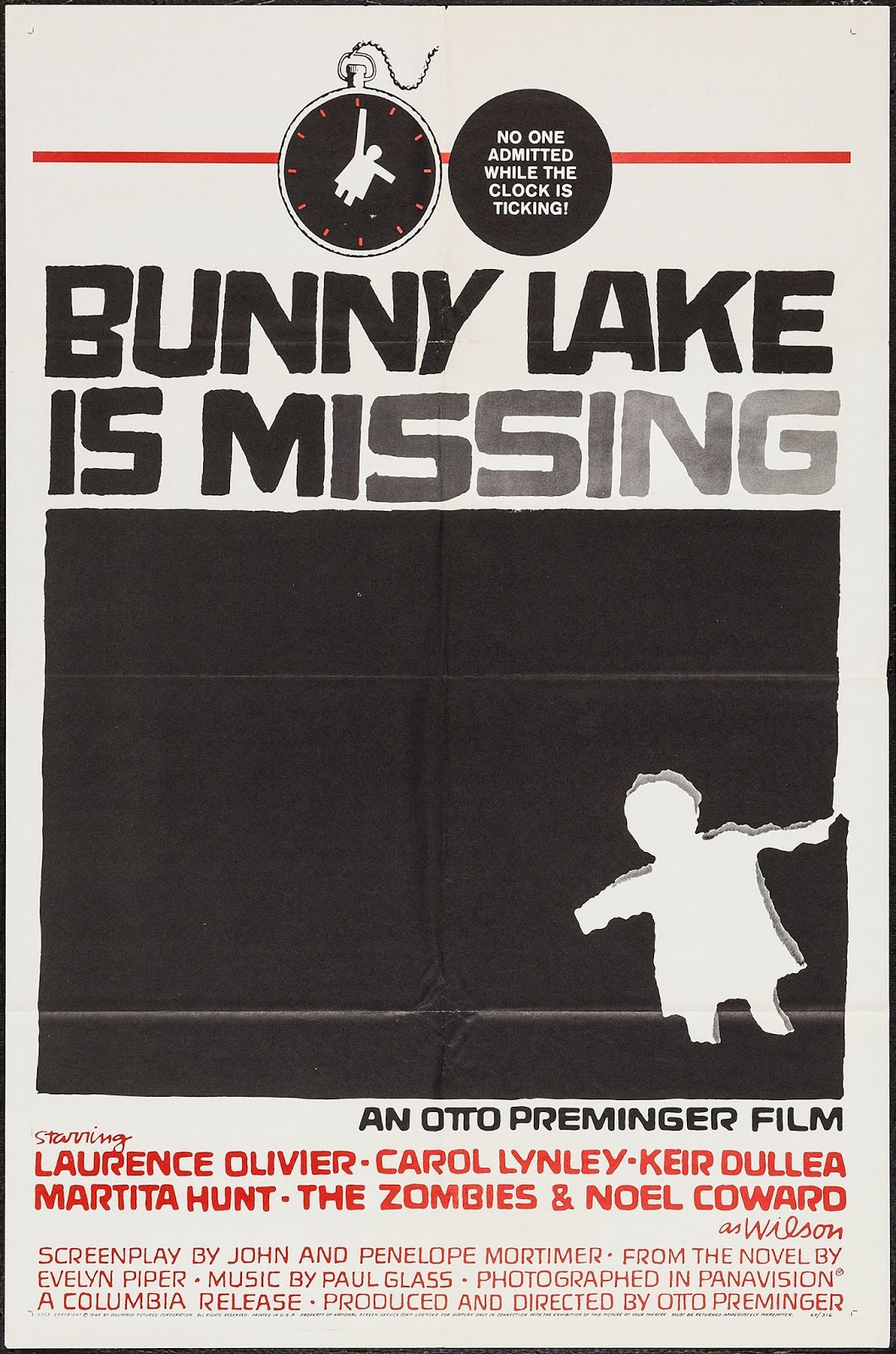
Carol Lynley’s daughter ‘Bunny’ goes missing – but is the girl real or not? Classic noir mystery Bunny Lake is Missing

Director: Otto Preminger

Cast: Laurence Olivier (Superintendent Newhouse), Carol Lynley (Ann Lake), Kier Dullea (Steven Lake), Martita Hunt (Ada Ford), Anna Massey (Elvira Smollett), Clive Revill (Sergeant Andrews), Finlay Currie (The Doll Maker), Lucia Mannheim (The Cook), Noël Coward (Horatio Wilson)

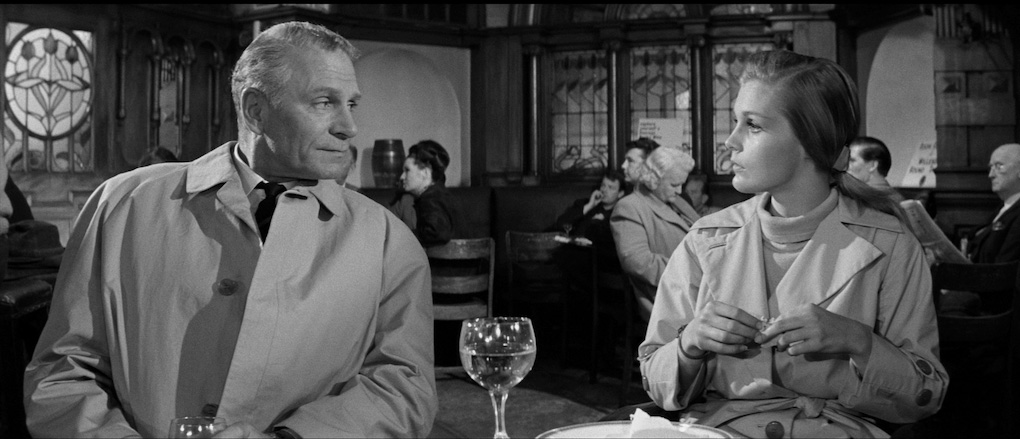
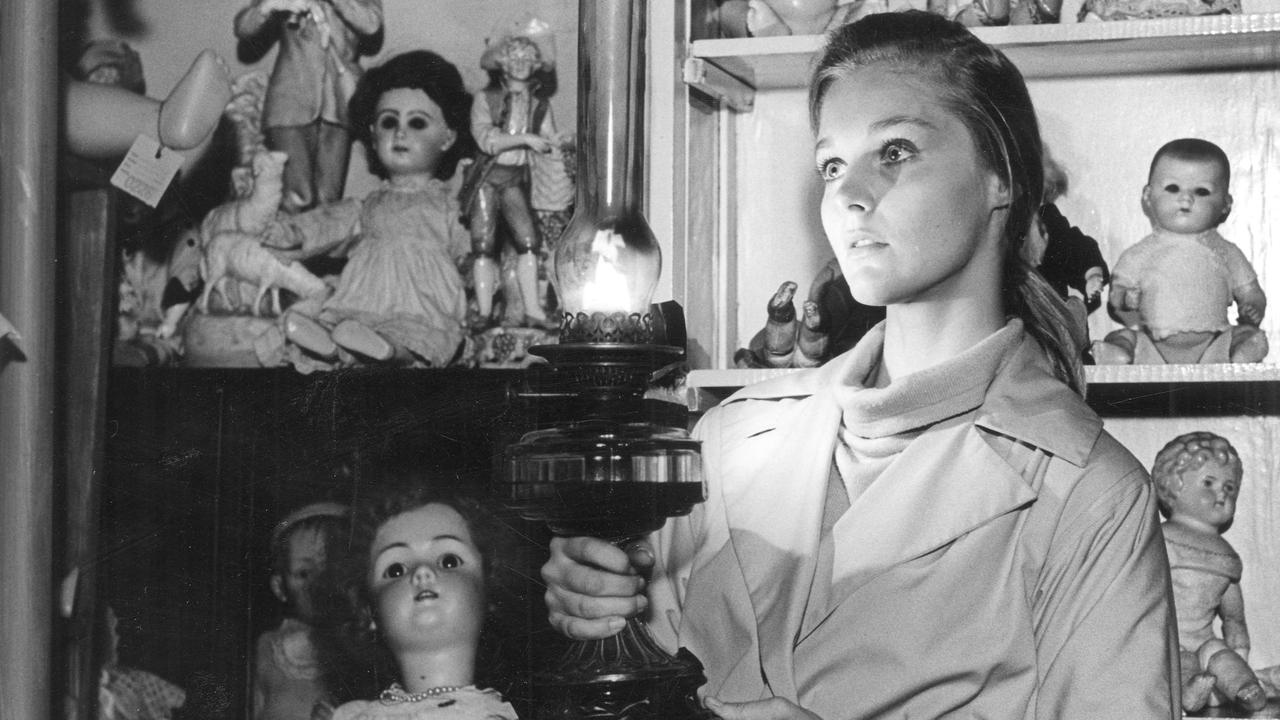
Otto Preminger’s career was an interesting mixture of high-brow, noirish thrillers and pulpish adaptations. Bunny Lake Is Missing is a mixture of these, a restructuring of a hit novel. Transplanting the novel from New York to London, the film covers a single day and the investigation into a missing child ‘Bunny’ Lake. Her American mother Ann Lake (Carol Lynley) drops her at her new school, and returns at the end of the day to find no one has seen her daughter or any record of her existence. While her protective brother Steven (Kier Dullea) rants and rages, Superintendent Newhouse (Laurence Olivier) leads the investigation. As Newhouse fails to find any evidence for the child’s existence at all, the question is asked: is she a figment of Ann’s fragile imagination?

Preminger plays this delicate game of “guess who” with the audience for a skilled and enjoyable 90 minutes before giving us any form of answer. The film throws us straight into the mystery of whether Bunny is real or not from the off, as our first shot of Ann is her alone in the school after dropping her daughter off. We see as little evidence of Bunny’s existence as the cast does. From there it’s a careful balance between giving us enough reasons to both trust Ann’s conviction her daughter is real and also give us enough reasons to suspect that Ann may be as unbalanced as Newhouse is concerned she might be. 

It’s quite the game the film plays, and Preminger does it very well, the film never tipping the hand too much one way or the other. Shot in luscious black and white, it’s a film of noirish shadows and imposing blackness where everything feels a little bit out of kilter and untrustworthy. Preminger throws us into Ann’s perspective by using a number of clever tracking shots that allow us to follow her through the events of each scenes. These shots are sustained, subtle and also give us a further subconscious reason to trust her – we are effectively seeing the events of the film side-by-side with her. It makes for a rather empathetic film, and one you find yourself investing into.

Not least because it completely understands the twin horrors of both losing a child and not being believed by anyone no matter how desperate you plead that you are telling the truth (no matter how generous people are while doing so). Preminger acutely understands we all deep down worry that we are going to be let down by those we need to believe in – and this feeling of concern, mixed with frustration and pity for Ann is what draws us to her. Even while we think there is more behind Bunny’s existence than meets the eye.

The screenplay by John and Penelope Mortimer also throws plenty of potential suspects at us. These are largely a series of delicious cameos for vintage British actors. These extreme odd-balls also make the two Americans in London (Ann in particular) seem even more like fishes out of water. Martita Hunt is excellent value as a retired school headmistress, seemingly confined to a bedroom in the attic of the school (!) whose hobby is recording children talking about their nightmares. Anna Massey is equally good as a harassed matron more concerned about the negative impact on the school’s reputation than child’s safety. Pick of the bunch of this rogues gallery is Noël Coward (having a whale of a time) as Ann’s drunken landlord, a faded actor and sexually ambiguous seductress who in one priceless scene gleefully shows a group of police detectives some of his favourite whips (“I find the sensation [of being whipped] rather titillating…[this was] reputed to belong to the great one himself. The Marquis de Sade”) from his collection of bizarre sex toys.

These perverts, oddballs and weirdos are all investigated with a cool professionalism by Laurence Olivier’s Superintendent Newhouse. Olivier gives possibly one of his most humane, restrained and engaging performances: he’s the epitome of caring, dedicated professionalism and a superbly humane detective. Carrying much of the burden of conveying the films narrative, Olivier is superb here – and he manages to make Newhouse exactly the sort of man you would long to investigate your child’s disappearance, even as he starts to doubt the child even exists. Olivier is in fact so strong, that the parts of the film where he disappears suffer noticeably from his absence – no one else among the principles can match him for presence.

Saying that, Carol Lynley does an excellent job as a character we invest in and sympathise with, but can never quite bring ourselves to be sure is reliable. It’s a difficult line she walks between being believably distraught and simultaneously slightly off kilter, enough to make you worry that she be (knowingly or not) making the whole thing up. The feeling may be more than helped by the exceptionally weird relationship between herself and her brother, one of an incestuously unsettling intensity (their relationship as brother and sister isn’t divulged until almost 15 minutes into the film and it’s as much a surprise to the audience as it is to the characters).

Kier Dullea as her brother gives a decent, if rather strained performance, as Steven. Dullea’s slight emptiness in the role can perhaps be partly attributed to his terrible relationship with Preminger, later claiming making the film was the worst experience of his life. (Olivier was also unimpressed calling Preminger a bully). 

It’s a shame as Dullea is crucial to the final sections of the film. I won’t give away the reveal and solution, but Preminger overplays his hand here, stretching the final sequence of the film out to a full 15 minutes which rather overstays its welcome. Maybe the sort of psychological complexity it’s aiming for is a bit more familiar to use today, than it was in 1965, but it certainly feels like a scene overstretched. But that’s a blemish on a very solid mystery before then that brings more than enough pulpish pleasure, fine performances and interesting film making to reward rewatching.