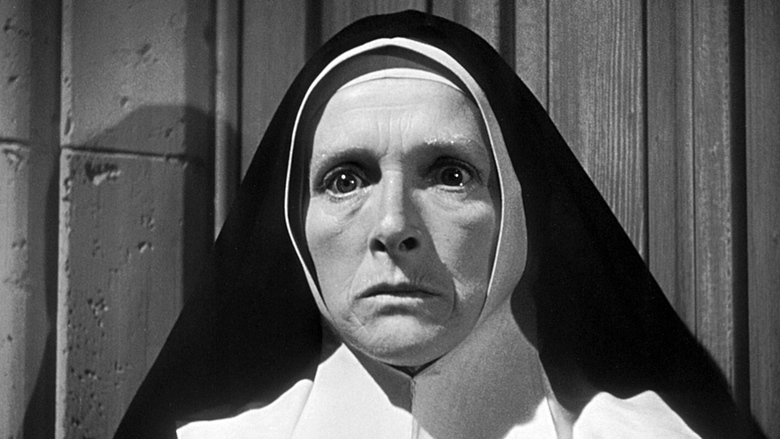
Tag: Charles Bickford

Of Mice and Men (1939)

Of Mice and Men (1939)

Well-made version of a story that has since become almost excessively familiar

Director: Lewis Milestone

Cast: Burgess Meredith (George), Lon Chaney Jnr (Lennie), Betty Field (Mae), Charles Bickford (Slim), Roman Bohnen (Candy), Bob Steele (Curley), Noah Beery Jnr (Whit), Oscar O’Shea (Jackson), Granville Bates (Carlson), Leigh Whipper (Crooks), Helen Lynd (Susie)

I suspect John Steinbecks’s powerful parable has been rather defanged for many people, after extensive over-exposure in schools across the world. Who hasn’t spent hours in an English class pouring over the struggles and dreams of permanently unlucky Depression-era drifters, scrawny George and muscular-but-childlike Lenny? It’s hard to not feel Of Mice and Men is very familiar the second the credits roll on Milestone’s film – or fail to notice some of its on-the-nose musings (sometimes the kindest thing you can do is kill a frightened, vulnerable dog, rather than let it suffer – I wonder what development plot is being alluded too here…) and while familiarity has stripped Of Mice and Men of some of its power, this is an effective, well-made, version.

George (Burgess Meredith) is the brains of a partnership with childlike muscle man Lenny (Lon Chaney Jnr) as they drift from job-to-job out West, constantly hired on the back of Lenny’s muscle, then escaping from the troubles his lack of understanding of the world causes, through George’s survivalist cunning. They dream of having their own place – and they get a shot at it when aged, one-handed farmhand Candy (Roman Bohnen) offers to chuck his accident-payout dollars into their pot. But Lenny’s inability to cope with the world keeps leading to danger: from his accidental rousing of the ire of small-of-statue rancher’s son Curley (Bob Steele) to his fascination with Curley’s pretty wife Mae (Betty Field). Some dreams are doomed.

Of Mice and Men stays very faithful to Steinbeck, playing out this smalltown tragedy under the low-key, persuasive eye of Milestone who avoids either overplaying the tear-jerking or smothering the story with flashy film-making (there is one dramatic pull-back after disaster strikes, and George flees a barn, the camera heading into a sudden wide-angle, but other than that this is restrained film-making). Instead, the focus is very much placed on the relationship between two very different men who, without even quite understanding it, are mutually dependent halves of a whole.

At first it seems George and Lenny are effectively in a marriage of convenience. The wirey George would struggle to be hired without the loaded-cart lifting Lenny as a sweetener, while Lenny can barely tie his own shoelaces without George’s guidance. Meredith’s snipy, wheedling George feels at first like he can only just master his frustration with Chaney Jnr’s lumberingly sweet Lenny. But Meredith gives full life to a character who, we slowly realise, has a brotherly protective regard for Lenny – and needs the purpose Lenny gives his life, just as much as they both need the reassurance of George’s constantly spun story of their dream farm. This mantra – with Lenny echoing lines like a child’s bedtime story – of the buildings and animals they’ll care for is delivered by Meredith with a careful repetition that constantly flowers into earnest true-belief. We realise George is as much a lost soul as Lenny, adrift and barely able to cope with the world.

Because Depression-era America is a place where dreams go to die. Curley, clutching a few hundred dollars hush money after a farming accident cost him his hand, knows his life is just a countdown until he is kicked off the farm for being unable to work. He’s facing a future not too dissimilar from his euthanised dog, eyed up by the other men as a feeble old-timer who’d be better off snuffing it. No wonder both he and the simple Lenny, living on the bottom rung of life’s ladder, find a companionship with segregated Black farmhand Crooks (a very sensitive performance from Leigh Whipper, a character treated respectfully by Milestone’s film).

George’s natural alliance is with these little guys. Meredith’s George is naïve in his own way, slightly off-the-pace in social situations, tolerated by others, a deep vein of anxiety and worry just under his skin that he is all-too-happy to repress while he focuses on being father-figure and big-brother to Lenny. Meredith makes him chippy but not quite as worldly as he thinks, shrewd but vulnerable and, for all his carefully performance self-confidence, insecure and intimidated by events. He’s a passenger in life who likes to kid himself he’s a driver.

Authority lies elsewhere. Curley, played with a little-man anger and stunted swagger by Bob Steele, makes up for his own (many) insecurities – about everything from his height to what his flirtatious wife gets up to – by treating everyone below him in the farm’s pecking order with contempt. Curley needs to proof his masculinity by beating Lenny – who has all the physical gifts he longs for but none of the gumption to use them. He can only dream of having the relaxed, natural authority of Charles Bickford’s Slim, a man completely confident about himself and his standing in life – this easy assurance stands out in a film full of the jittery, frightened and insecure.

Of Mice and Men’s weakness, as with the book (as even Steinbeck later acknowledged) is Curley’s wife. Betty – played with a shrill energy by Betty Field in a performance she’s not quite strong enough to pull off – is only faintly crafted into a vaguely three-dimensional figure from the sexually charged, selfish flirt she is in the book. Here she has moments of self-reflection – and Milestone’s film briefly explores the isolation of this girl who dreamed of Hollywood but ended up married to an inadequate, angry man on a crappy farm – but remains, at heart, a brassy, selfish woman who precipitates disaster through her actions. It’s a singular lack of empathy in a film that prides itself on its humanitarianism.

Disaster is the inevitable outcome of a Steinbeck Depression-era drama. Milestone’s film finds quiet emotional power – aided a great deal by both Meredith and Chaney Jnr effectively under-playing – in the film’s final moments. You can imagine if this was your first exposure to a very familiar story, being impressed by the effectiveness of so much here. This is particularly so in the film’s powerful ending, directed with admirable restraint and played with a highly effective (and underplayed) emotion by Meredith. If other parts of the film are more well-assembled than really inspired, delivering Steinbeck pretty much as it is on the tin, that still makes for a fine version of a now familiar tale.

Johnny Belinda (1948)

Johnny Belinda (1948)

Small-town drama is a beautifully done exploration of prejudice with excellent performances

Director: Jean Negulesco

Cast: Jane Wyman (Belinda MacDonald), Lew Ayres (Dr Robert Richardson), Charles Bickford (Blackie MacDonald), Agnes Moorehead (Aggie MacDonald), Stephen McNally (Locky McCormick), Jan Sterling (Stella), Rosalind Ivey (Mrs Poggerty), Dan Seymour (Pacquet), Mabel Paige (Mrs Lutz), Alan Napier (Defence Attorney)

Small towns. Sometimes they’re safe, cosy little havens of the familiar. And sometimes they’re bitchy places of resentment and suspicion where everyone judges everyone else’s business. In an environment like that, it doesn’t pay to be different. Belinda MacDonald (Jane Wyman) is as different as they come: a deaf and dumb young woman, who (despite her intelligence and warmth) everyone assumes is a mentally deficient. Just as different, in a way, is Dr Richardson (Lew Ayres), a compassionate, well-educated man who forms his own opinions and is oblivious to other’s prejudices. Life’s going to be tough for this pair.

Dr Richardson is the only person in this small Canadian fishing town who can see the bright, vivacious young woman Belinda is. With his support, her father Blackie (Charles Bickford) rediscovers his love for a daughter, who he always blamed for her mother’s death in childbirth, while her austere aunt Aggie (Agnes Moorehead) thaws and proves her loyalty. Belinda will need them when she is raped by the popular Lucky (Stephen McNally) and trauma leaves her unable to remember who is responsible for the resulting child. The town, of course, blames Dr Richardson.

Johnny Belinda has all the ingredients of a melodrama: but it surprises as a mature, sensitive and moving story about real people. It’s amazing to see a 40s film this frank about rape and an illegitimate child, that lays not a finger of reproach on the victim, instead turning its fire on the small-minded judgements of those around her. It’s also striking it doesn’t define Belinda solely as a victim, either of deafness or rape. She gives birth to a child she dearly loves, refuses to let what’s happened haunt her and sees her life as one with blessings rather than curses. But neither is she an angelic character, being at times as capable of mistakes and quick judgements as the rest of us.

It helps that Jane Wyman (in an Oscar-winning turn) gives a perfectly judged performance. She’s never winsome or cloying, but fills Belinda with an uncomplaining grit to make the best of things, matched with a growing joy as her opportunities expand, from her discovery of sign language to the birth of her child. In complete silence (Wyman intensively learned sign), Wyman employs her expressive eyes to communicate a range of emotions from wonder to joy to fear to pain and grief (including a wordless rendition of the Lord’s Prayer). Belinda is a character we deeply empathise with, but never we nor the film treat her as an object of charity.

That also springs from Ayres’ Dr Richardson, a genial, kindly man whose inability to see the worst in people makes him a target-in-waiting for gossip. His less than regular attendance at Church has already raised question. Add his academic earnestness – and Ayres wonderfully embodies a man quietly passionate about making a difference – and you’ve got someone who doesn’t fit in a town that respects manly ruggedness. Richardson doesn’t pick up on this at all – just as he doesn’t even notice the clearly besotted devotion of his housekeeper Stella (an excellent portrait of quiet desperation by Jan Sterling).

Gossip is soon flying that Richardson is too close to Belinda. A trio of judgemental old woman, like Irish banshees, frequently stand on street corners to share little tit-bits of meanness.  The town punches down on outsiders, fitting people into insultingly simple brackets. It’s partly why immigrant shop-owner Pacquet (Dan Seymour) becomes the ringleader of a morality lynch mob: he’s all too aware it otherwise won’t be long before he’s the target again. No one, of course, can imagine for a moment that the carefree, rugged Lucky (Stephen McNally, a wonderful portrait of utterly smackable shallow vileness) could be the sort of cruel, cowardly cad he is.

A cad who takes notice of a newly confident Belinda – and not in a good way. Part of Johnny Belinda’s power is you can sense the latent danger in those eyes on a newly radiant and confident Belinda at a town shindig, the shy wallflower turned smiling young woman enjoying the music through feeling the vibrations of a violin string (a lovely moment, played with a real burgeoning wonder by Wyman). It’s a mark of the cruelty of the world that this confidence just makes Belinda a target for the vile Lucky.

Again, it’s a mark of Johnny Belinda’s success that the cruelty of what happens hits so hard. Rarely have I despised a film villain as much as Lucky, perhaps because he’s so weak, snivelling and arrogant – the sort of guy so arrogant and stupid he crows over the good-looks of his illegitimate son. He’s a picture of the real villains out there: the weak, stupid and shallow who always get passes from those around them.

Johnny Belinda creates deep, engaging characters. Charles Bickford’s Blackie is presented as first as a gruff, careless father. But the film – and Bickford’s performance – slowly unpeels him as a tender, caring and decent man. The sort of man whose first instinct is to protect, who delights in his unexpected grandson and is thrilled with the excitement of sign language. Similarly, Agnes Moorehead gives a terrific performance as a woman who seems at first a bullying harridan, but becomes a pillar of familial strength. (Both of them and Ayres were Oscar nominated, Johnny Belinda one of the few films to get nominations in every acting category).

This affecting story of people who feel real and three-dimensional, is well directed with restraint and care by Jean Negulesco (easily his finest film) and shot with a real beauty in its rugged Canadian sea-town visuals by Ted McCord. Max Steiner’s excellent score mixes emotional melody with sea shanty influences. It’s a world where intense but very real emotions help ground a story of rape, murder, scarlet letters and court cases into something that feels real and relatable.

Johnny Belinda feels like an overlooked gem, a sort of perfect example of Hollywood issue film where the ‘issue’ isn’t pounded over our head but built organically into the plot. One where characters surprise us with developments that feel real, embodied by a series of excellent actors at the top of their game. It’s a small gem that deserves to be better known.

The Big Country (1958)

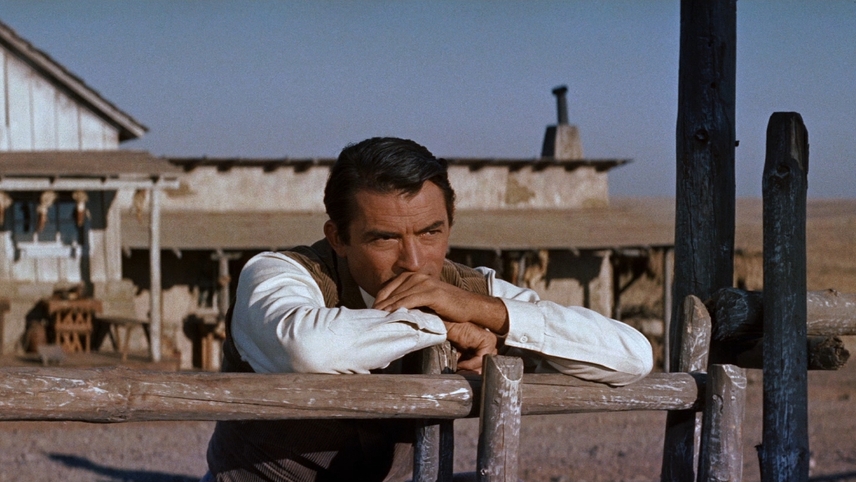
Gregory Peck rides into town in The Big Country

Director: William Wyler

Cast: Gregory Peck (James McKay), Jean Simmons (Julie Maragon), Carroll Baker (Patricia Terrill), Charlton Heston (Steve Leech), Burl Ives (Rufus Hannassey), Charles Bickford (Major Henry Terrill), Alfonso Bedoya (Ramon Gutierrez), Chuck Connors (Buck Hannassey), Chuck Hayward (Rafe Hannassey)

From the very first frame when that score kicks in, you know you are in safe hands. The Big Country is a big film, and big entertainment. When I re-watched it I hadn’t seen it for years. I loved it. It’s a slab of prime Hollywood entertainment, not perfect, but it’s one of those films that always delivers.

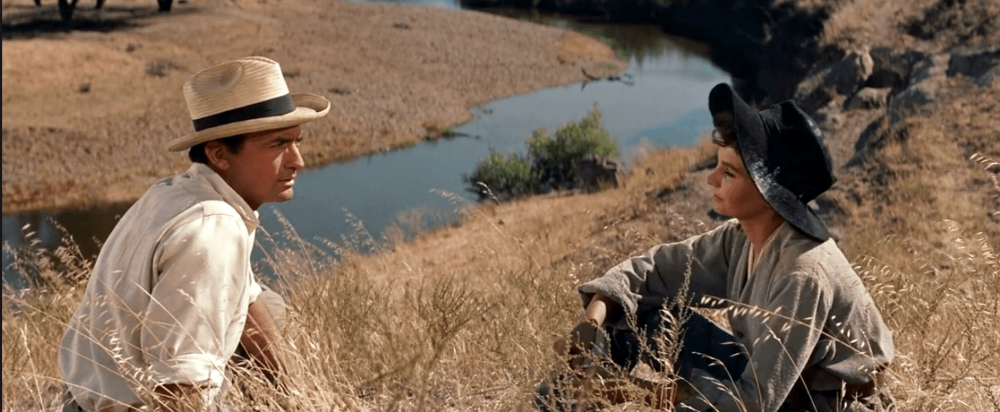
It’s the American West, and James McKay (Gregory Peck) arrives in town to marry Patricia Terrill (Carroll Baker), daughter of local landowner Major Henry Terrill (Charles Bickford) who is in the middle of a turf feud with patriarch of a cowboy clan, Rufus Hannassey (Burl Ives). This is a town where men-are-men and a harsh word is met with a sock to the mouth. It’s a world where McKay is out of step: a seasoned naval captain, with more experience than anyone, he couldn’t care less what people think of him and won’t be goaded into doing something foolish. His self-assurance and strength of character are interpreted as wimpy yellow-belly-ness by nearly everyone, including Patricia and Terrill’s macho foreman Steve (Charlton Heston). Only local schoolteacher Julie Maragon (Jean Simmons) understands him. But as events come to a head, only McKay has the strength of character to step up and try resolve things without mass bloodshed.

The Big Country is the classic set-up: a stranger in town, who has the guts to stand up. The only difference here, is that McKay has the guts to stand up and not conform to the macho bullshit being driven by the two feuding patriarchs. Both of these men are, of course, far more similar than they would admit, being perfectly contrasting personalities. Charles Bickford plays a genteel man with the principles of a thug, while Burl Ives plays a thug with the principles of a genteel man. No wonder they can’t get on, both see in each other qualities they most likely despise in themselves.

Compared to them, McKay looks like the very model of twentieth century liberal coalition building. Or at least McKay is a liberal who packs a punch, since it’s pretty clear Peck is probably the toughest son-of-a-bitch in the town. What’s glorious in McKay – and Peck’s sensational performance of reserved warmth and wry amusement, mixed with world-weary sufferance – is that you get a definite sense he’s seen way worse than this before. A man who has sailed around the world for decades, in the hardiest conditions, who has been keelhauled and saved men from sharks, recognises this for the slightly pathetic parochial dust-up it really is, and has no interest – or need – to put his life or the lives of others at risk to make crude points about his manliness.

If only, the film argues, we could all be as confident in our own skin. McKay keeps his cool in a way no-one in film, except perhaps Tracy in Bad Day at Black Rock, has managed so successfully. He laughs off his irritation at a hazing from the Hannassey’s – and makes clear, as the Terrill’s saddle up to fight back, that in doing so they are not acting in his name. He won’t make a fool of himself by trying to ride a wild horse in front of a crowd. He won’t rise to Steve’s provocation for a punch-up in front of the entire Terrill gang. McKay is a man who only needs to prove things to himself: so he’ll tame that horse in front of no crowd and swear the only witness to secrecy. He’s not one to brag.

And if it’s a fight that Steve wants, he’ll give him one on his own time and his own terms – those being a dusky morning in private. Wyler shoots one of the greatest fights of all time, an exhausting slugging match between Peck and Heston, played out mostly in long shot that soaks up the dawn Western atmosphere, as the two men fight themselves to an exhausted score-draw, with each punch landing with a punishing wallop. There is something very compelling about this unflashy, in-the-dust, clash of two alpha males, and the strange sense of respect that grows between them (as well as the dry wit of the script – “You certainly take your time to say goodbye”, Heston deadpans after this exhausting ‘I’m leaving but first this’ fight).

It also showcases how well Wyler uses sound (or the lack of it), the fight taking place often in a longshot silence that somehow makes the dusty scuffle even more effective. Silence also comes into play brilliantly to stress McKay’s isolation when first the Terrill men ride away to extract vengeance and then the disgusted Patricia closes the front door on him, leaving him standing in magnificent isolation on the porch. Silence will also come effectively into play during the late act ride of various characters through a white chalk lined gorge and to stress the danger that the kidnapped Julie is under when being held by the Hannassey’s.

The final act brings all the threats of danger and threat together into a brilliantly tense final confrontation. This sequence showcases, not only Peck’s granite principles and nobility, but also gives excellent opportunities for Ives to explore hidden depths in Old Hannassey (it surely helped him win the Oscar for Supporting Actor) and his dumb son Buck (excellently played with a swaggering arrogance by Chuck Connors) who is all mouth and no trousers.

Sure, at times the film overplays the anti-violence card. It’s particularly noticeable as it sometimes wants to have its cake and eat it, favouring probably a sort of gun-toting liberalism, of the “I could kill you but I want to make it so I don’t have to” variety. But then the film would be a heck of a less effective if we weren’t so convinced that Peck was as tough as they come and that his unwillingness to throw himself into events thoughtlessly is a mark of his unparalleled strength. Again, Wyler uses silence as effectively as sweeping camera movements and that brilliant score, to suggest moral strength.

There is probably very little tension about where the romantic plotlines are going, but both Carroll Baker and Jean Simmons are very good as two very different, but equally strong, women (although both women allegedly found Wyler’s perfectionist Kubrickian retakes on set extremely trying). But it still works a treat because of the strength of the acting, and its strongly scripted characterisation.

That and I’ve hardly mentioned the score, by Jerome Moross, which is powerful and famous you’ll instantly know it even if you’ve never seen the film. The Big Country is a Western where the hero has the strength to stick to his principles while still getting the job done. It’s superbly acted by Peck, with Simmons, Baker, Heston, Ives, Bickford and Connors all excellent in support. Wyler combines visual and a compelling story into a film that, while at points a little long, is still a bona fide classic. Again I’ll say: I loved it.

A Star Is Born (1954)

James Mason and Judy Garland deal with ups and downs in Hollywood in A Star is Born

Director: George Cukor

Cast: Judy Garland (Esther Blodgett/Vicki Lester), James Mason (Norman Maine/Ernest Gubbins), Jack Carson (Matt Libby), Charles Bickford (Oliver Niles), Tommy Noonan (Danny McGuire)

A Star is Born’s story had effectively been told twice already in Hollywood – once under the same title in 1937 and once before that as What Price Hollywood?, directed by none other than George Cukor. But Judy Garland’s husband Sid Luft saw the project was perfect for her. Luft thought the volatile Garland needed a director who could draw the best from her – and who better than Cukor, who worked with actors perhaps better than any other director in Hollywood. Cukor had been worried about repeating himself – but the chance to direct his first musical, first technicolour epic and work with Garland was too tempting.

The story is of course familiar. Esther Blodgett (Judy Garland) is an aspiring singer who – with quick thinking and performance nerves of steel – saves drunken Hollywood star Norman Maine (James Mason) from humiliation by involving him in a musical number at a charity event. When he sobers up, Maine goes to visit Esther to thank her – and is blown away when he hears her singing. Convinced she will be a major star, Maine arranges for a screen test with studio head Oliver Niles (Charles Bickford) and later pitches heavily for her to be considered as a last-minute replacement on the studio’s big new musical when the star drops out. Esther – or Vicki Lester as the studio renames her – becomes a major star when the film is a smash hit. But as her career goes up and up, Maine’s alcoholism and unreliability start to catch up with him and his own career hits the skids.

Cukor’s A Star is Born is a big, charming, impressive film that mixes emotional desperation with moments of joyous celebration. The film was not the box-office bomb it’s often believed to be (although it did do disappointing business) but, worried about its length, the studio cut the film several times during its release. The film we have today is a slightly neutered version, with several scenes reassembled by film historian Ronald Haver using audio, the odd clip and still photographs (it adds an impressionistic section of the film which you can’t imagine Cukor would have cared for) – but Haver did locate several missing musical numbers which add to the film’s impact.

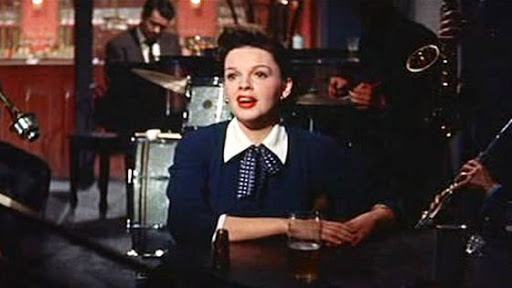
Garland sings all the numbers, and some of her best work ever is in this film. Her late night bar rendition of The Man That Got Away (the performance that wins Norman’s heart) is superb. I love the affectionate spontaneity of Someone at Last, Esther’s recreation to amuse Norman of the sequence she has spent the day filming in the studio. This scene is playful, sweet, funny and has a freshness not all the numbers have.

Some of the other numbers go on too long – and it’s hard to escape the feeling that they are in there solely because of Garland and not because they serve the plot. Because this isn’t really a musical as such, more of a romantic tragedy with the odd tune, with each number a performance. It works superbly because Cukor’s sympathetic direction draws some of her best work from Garland – and a truly superb performance from Mason. 

Cukor works particularly effectively with Garland who, in real life at this point, was far more similar to the destructive Maine (she delayed the film frequently with her absences and fluctuations in health). Garland is of course too old for the part – but it doesn’t really matter as she brings it such freshness, naturalness and emotional openness that you can persuade yourself that she’s a young ingénue at least ten years younger than she looks.

Garland was also surely helped by being paired opposite Mason. Not the first choice – that was Cary Grant – or indeed the second, Mason was hired as his professionalism and expertise could deal with Garland’s erraticism. Under Cukor’s direction he gives his finest work on screen here. His turns Maine into someone decent, charming, kind – but overwhelmingly self-destructive. His slightly slurred speech and ability to turn on a sixpence to anger makes for some of the best drunken acting you’ll ever see. But it works especially as we are desperate for Maine to kick the bottle. Because when he’s sober he’s the perfect husband and gentlemen. But Mason uses that to mine the deep tragedy of the character, his intense shame and self-loathing. The later sequences of drunken misbehaviour are heartbreaking (Maine’s drunken interjections at Esther’s Oscar-winning speech are almost unbearably painful to watch), and it’s all powered by Mason’s humanity in the role. It’s a truly great performance.

The film itself is perhaps a little slow and uneven around these performances. The musical numbers – whisper it – frequently slow the action down or grind the plot to a complete halt (none of them add anything to the story at all, and exist to showcase Garland). The film is so tightly focused on its two leads that it never develops any sub-plots to contrast with the main action. There is some light satire on Hollywood studios and their rapacious desire for more money – but not too heavy as the villain here is the odious press man (a weasly Jack Carson) while the studio head is a kindly, affectionate, fatherly figure who would never make a call based on business. The matter of fact way both stars have their names changed (the moment when Esther discovers Norman’s real name is a hilarious throwaway moment) is a neat gag. But the film takes a long time, frequently stopping for another Garland set-piece.

Perhaps the studio instincts were right that the film needed to be tighter – and some of the dialogue sequences reinserted by Haver hardly add much too the plot. Cukor’s direction is calm but assured though and the superb performances of the two leads make the film what it is. It looks fabulous with its technicolour depth, and it carries a genuine emotional force that pays off dramatically by the film’s conclusion. A Star is Born is uneven at times and overindulgent but it has more than enough going for it to reward the viewer.

The Song of Bernadette (1943)

Jennifer Jones sees visions of the Virgin Mary in the moving The Song of Bernadette

Director: Henry King

Cast: Jennifer Jones (Bernadette Soubirous), Charles Bickford (Abbé Dominique Peyramale), Williem Eythe (Antoinie Nicoleau), Gladys Cooper (Marie Theresa Vauzou), Vincent Price (Vital Dutour), Lee J. Cobb (Dr Dozous), Anne Revere (Louise Casteror Soubirious), Roman Bohnen (François Soubirous), Mary Anderson (Jeanne Abadie), Aubrey Maher (Mayor Lacade), Linda Darnell (Virgin Mary)

“For those who believe in God, no explanation is necessary. For those who do not believe, no explanation is possible.”

With these words, this worthy religious epic from the Golden Age of Hollywood kicks off its retelling of how visions of the Virgin Mary from one poorly educated peasant girl, Bernadette Soubirous, turned Lourdes from a backwater near the French-Spanish border into one of the most important Catholic pilgrimage sites in the world. It’s material that you could fairly expect to be pretty dry and sanctimonious stuff. But, surprisingly, it’s rather affecting and engaging work – and, although made with a certain workmanlike competence, carries enough touches of grace to lift it up into the second tier of the Hollywood firmament.

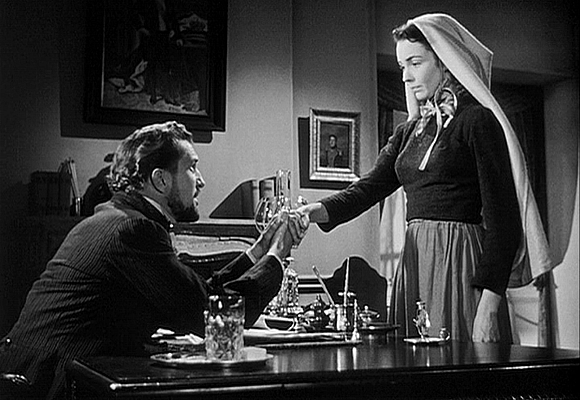
Bernadette Soubirous is played by Jennifer Jones – in one of her first screen roles, for which she became at 25 one of the youngest Best Actress Oscar winners ever. Until her visions begin, she is just an average peasant child, struggling with asthma, her parents (Anne Revere and Roman Bohnen) struggling with poverty, failing at religious school under the strict tutelage of Sister Marie Theresa (Gladys Cooper), and generally looking ahead to a life very much like any other. But visions of the Virgin Mary (played by an unbilled Linda Darnell) bring belief and devotion into her life, and she reports the content of the visions (and her discussions with the Virgin Mary) with an honest simplicity and consistency that wins many backers, not least local priest Abbé Peyramale (Charles Bickford). But the local officials of Lourdes, led by local prosecutor Vital Dutour (Vincent Price), concerned that these visions will impact plans for the town’s development and anxious about the hysteria they could encourage in the simple-minded, try their best to restore what they see as reason over the intoxication of faith.

Faith really is the word of the day in Henry King’s at-times stately, but also shrewdly worldly drama that mixes divine intervention and belief with a fair-hearing for the doubters and the arguments of reason. The miracles, when they come, are followed with several characters – not least Lee J Cobb’s coolly rational doctor – outlining the alternative explanations for why these people may suddenly feel they have been cured. Later Dutour complains wryly that it only takes a handful of cures among the thousands that come for everyone to continue to want – or need – to believe. 

But the film sides squarely with the truth of Bernadette’s visions, not least by stressing at every turn her honesty, guilelessness and principle. Questioned by various church officials – many of them terrified of being duped by a con, having been stung in the past – she sticks with an honest openness to the same version of the story over and over again. Peyramale – initially just as sceptical – is won over to belief by Bernadette’s sudden knowledge of such matters as the immaculate conception, when she seemed barely aware of what the Holy Trinity was while studying at school. 

King – a largely middle-of-the-road director, but who marshals his resources well here – clearly takes inspiration from Carl Dreyer’s films on similar topics of faith and visions in his shooting of Bernadette. Bright light and intense close-ups that study every inch of her rapture help convey the spirituality of her visions. When Bernadette leads groups to her visions – none of whom can see what she sees – light radiates around her and over her, but seems to barely touch those she is with. The cinematography by Arthur C Miller is beautiful, a brilliant use of light and darkness to skilfully sketch both the poverty of Bernadette’s background and the radiance of her visions.

The mood of the film is also helped be Jennifer Jones’ impressive performance. Bernadette is, in many ways, potentially one of the least interesting and dynamic characters in the film, but Jones pulls off the immensely difficult task of making someone stuffed with decency, innocence and honesty into an actually compelling and endearing character. A protégé of David O Selznick (whom she later married), Jones earned her place in the film with her ability to invest Bernadette with humanity, avoiding any hint of cynicism in her performance while never becoming grating either.

It contributes to a beautiful telling of the story, backed by a series of excellent supporting performances. Charles Bickford landed an Oscar nomination as the kindly, decent priest whose initial scepticism and concern that the crowd is being manipulated is washed away by growing belief. Lee J Cobb is very good as a stoutly rationalist doctor. Anne Revere (also nominated) has a protective warmth as Bernadette’s mother.

The film’s finest supporting roles though come from Vincent Price and Gladys Cooper. Price is superb as the man of science and reason who worries over the implications of fanaticism and the damage hysteria can cause, but is never simply prejudiced or Dawkinsish in his religious doubts. King’s film treats his concerns with a genuineness that makes both the character more interesting and the film more balanced. Cooper is brilliant as a Salieri-like nun, enraged with envy and jealousy that after years of devotion and suffering it is not she but Bernadette who gets the visions.

And why did Bernadette get those visions? The film is not crude enough to suggest why – Bernadette herself apologises for the trouble she has caused and her unworthiness – but it’s clear that it’s her very innocence and sincerity that makes her worthy of them. The design – and impressive score by Alfred Newman – helps to make the film feel as profound as it does, but it’s the balance that the film handles its characters with that makes it engrossing. There are no simple heroes or villains, just as there are no simple solutions. Like the film says at the start, it’s a question of faith. Those who do not wish to believe can marshal as many arguments in their favour as those who want nothing more than to trust in faith. It makes for a fine, balanced, engaging and well-made classic.