Tag: Chinese films

The Farewell (2019)

The Farewell header
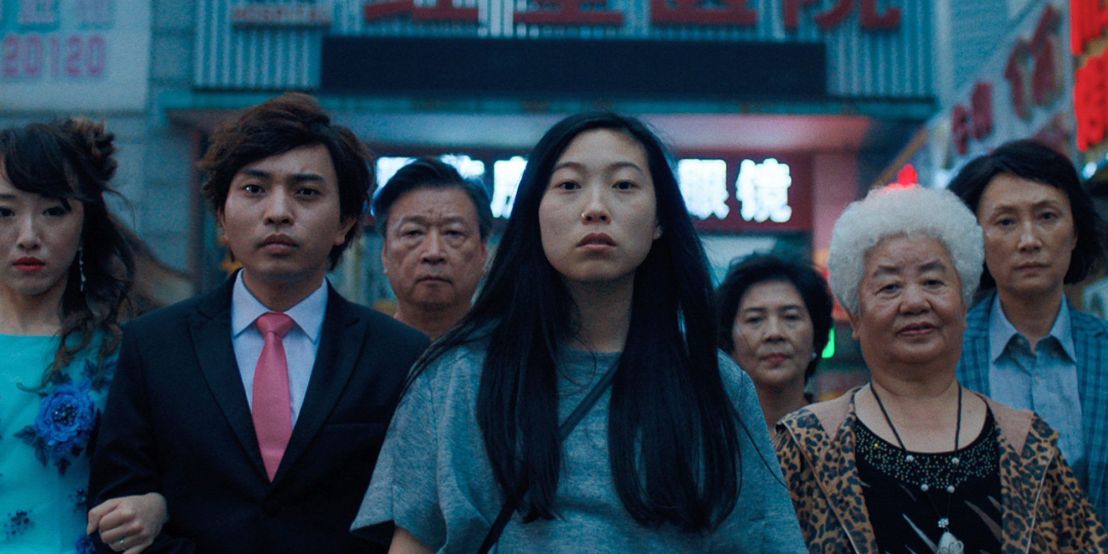
Awkwafina leads an impressive ensemble cast in Lulu Wang’s excellent film

Director: Lulu Wang

Cast: Awkwafina (Billi Wang), Tzi Ma (Haiywan Wang), Diana Lin (Lu Jian), Zhao Shu-zhen (Nai Nai), Lu Hong (Little Nai Nai), Jiang Yongbo (Haibin), Chen Han (Hao Hao), Aoi Mizuhara (Aiko), Zhang Jing (Yuping), Li Xiang (Aunty Ling), Yang Xuejian (Mr Li)
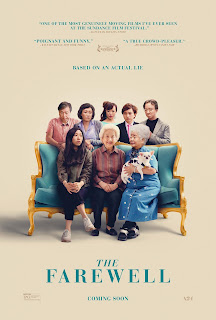
When you have lived your life as part of two different cultures, it can be difficult reconciling them together. It’s something Lulu Wang has personal experience of, born in China and moving to America aged 6. She grew up American, but with a strong Chinese heritage – and a family who held some sharply different cultural expectations than she had grown used to in her adopted country. Wang explores these details with warmth, insight and wit in the semi-autobiographical The Farewell, based on events that happened in her own family.

Billi Wang (Awkwafina) is a young graduate in America, working out what the next step of her life will be. All this is put on hold when she hears from China her paternal grandmother “Nai Nai” (Zhao Shu-zhen) has been diagnosed with terminal lung cancer and has only months to live. As per Chinese custom, the family decide to keep her diagnosis a secret from her so she can enjoy the last few months of her life untroubled by worry and fear. Billi and her parents Haiywan (Tzi Ma) and Lu Jian (Diana Lin) fly to Changchun to attend a hastily arranged wedding of Billi’s cousin – the wedding being an excuse for the family to come together for one last time. But, arriving in Changchun, Billi struggles between her desire to tell Nai Nai the truth and the desire of her family (however difficult they find it) to maintain Chinese cultural beliefs.

In another world The Farewell could have been an out-and-out comedy of cultural clashes and misunderstandings. That’s not to say the film itself doesn’t have a great deal of wit in it. But Wang has directed a sharply intelligent, respectful, compassionate and heartfelt exploration of cultural legacy and split loyalties between them, that refuses easy answers or moral judgements. Instead, it encourages a great deal of thought: what would you do in this situation? Whose values are ‘right’ – those of your adopted home, or those of your family heritage? Is it even right to think in these terms of one being more legitimate than another? How does returning to the country of your birth make you reflect about the things you left behind or have forgotten?

It all comes out beautifully in Awkawafina’s delicate and tender performance as Billi. Returning to China reminds her of parts of her own past she has nearly forgotten. It’s not just changes in the land where she grew up. It’s the memory of that childhood trauma of being taken halfway across the world to a new country, leaving everything she had ever known behind. Of remembering her grandfather died shortly after they left, having been told the same story as Nai-Nai, and she never saw him again. And seeing that whole cycle about to repeat again and struggling to square that with her Western ideal to be open and truthful.

But is that the right thing? For many watching in the West, we will of course assume at first ‘yes’. But, as an English-educated young doctor in a hospital points out, what harm does it really do when you can work instead to make someone’s last few months happy and free of fear? After all, you can’t change the diagnosis. And is, as the film implies, wanting to share the truth as much, if not more, about you more than it is the person you are telling?

After all, it’s not as if the family isn’t torn apart emotionally about the impending loss. Many of them at various points choke back tears and it’s clear the pressure of maintaining the front of the happy wedding is taking its toll on everyone. Billi’s dad and brother drown mountains of beer one night and even take up smoking again. The bride and groom are so distracted by the pressure, Nai Nai worries people will think it’s a shotgun wedding. Billi is even barred at first from the wedding because her family are worried she won’t be able to keep up the pretence that all is well at a joyous celebration.

Billi’s uncle Haibin points out that this ties in with a more Chinese collectivist way of thinking, Death is a terrible burden – surely its better for the whole family unit to share it among themselves rather than force it all onto the sufferer. Nai Nai would certainly agree – it’s revealed during the film she was part of a similar lie to her husband. For our Western eyes, a more individualised view of people having all the choice themselves seems more important, but The Farewell’s strength is showing that such a view – well-meaning as it is – can also be an arrogant imposition of thinking what you instinctively believe is more legitimate than another cultures.

It’s a fascinating insight into discussions and conflicts that must be occurring in families all over our newly shrunk globe. And this might make it sound like a tough film to watch, but it’s not. It’s manages also to be wonderfully warm and life-affirming and if it tugs the heartstrings, its because Wang directs it with such truth and empathy for all the characters. Their little idiosyncrasies ring very true and the film is crammed with moments of small but truthful family humour.

It’s also superbly performed. Awakwafina is excellent. Zhao Shu-zhen manages to transcend the cliché of the larger-than-life older woman, by making Nai Nai a force of nature, but also wise and gentle with a slight air of determined sadness. Tzi Ma and Diana Lin are wonderful as Billi’s parents, quietly juggling their own mixed feelings. The film mines some gentle humour from how Billi’s family Westernised ways have made them, at times, strangers in China and the actors all achieve the difficult feat of actually feeling like a real family on screen – private jokes, natural warmth, and an emotional short-hand.

The Farewell is a gentle, charming but very thought-provoking movie that asks intriguing questions about multi-cultural families and the difficulties second-generation migrants have with balancing the culture of their ancestors with the world they have grown up in. With plenty of humour and an abundance of warmth, it’s got something for everyone.
Farewell My Concubine (1993)

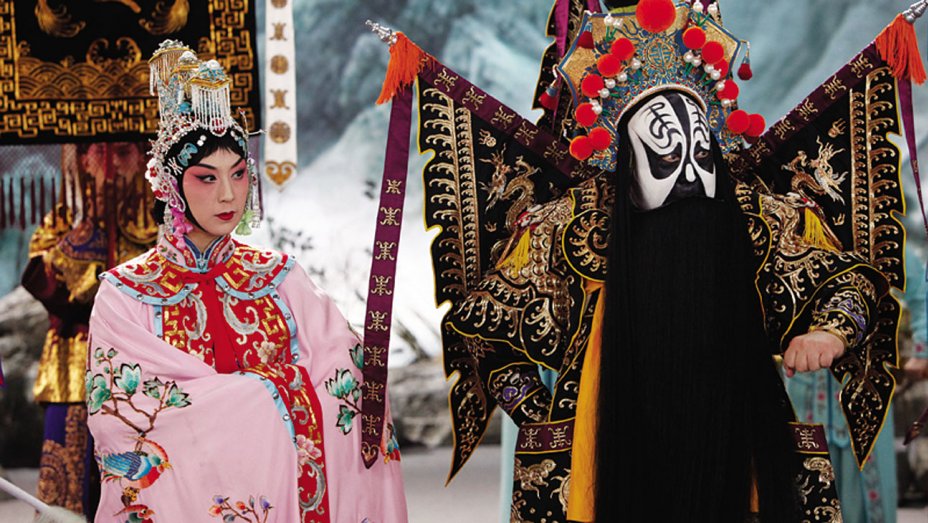
Leslie Cheung and Fengyi Zhang are the still centre for decades of Chinese history in Farewell My Concubine

Director: Chen Kaige

Cast: Leslie Cheung (Cheng Dieyi), Fengyi Zhang (Duan Xialou), Gong Li (Juxian), Ge You (Yuan Shquig), Lu Qi (Master Guan), Ying Da (Na Kun), Yidi (Eunuch Zhang), Zhi Yitong (Saburo Aoki), Lei Han (Xiaosi)

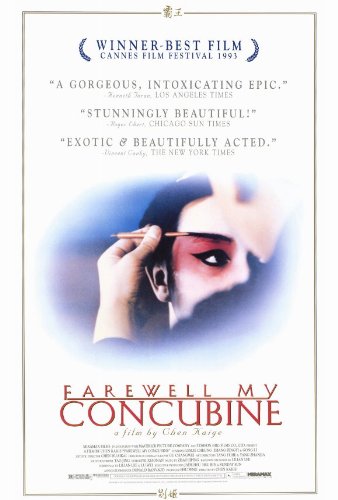
Chinese cinema isn’t well-known in the West. Maybe it comes from China so long being behind its own Red Curtain. Farewell My Concubine was pivotal to introducing Chinese cinematic culture to the West, winning a Palme d’Or and nominated for an Oscar. It’s surprising in a way, as Farewell My Concubine is a film that you almost need an intimate knowledge of Chinese history to truly appreciate (which I’m not sure I do!). But not surprising in another, as it is a glorious made, brilliantly acted and directed paean to the warmth of the human spirit.

Told over 52 years, from 1925 to 1977, the film follows two actors in the Peking Opera – Cheng Dieyi (Leslie Cheung) and Duan Xiaolou (Fengyi Zhang). Brought up in a brutally tough actor training school, the two become famous for their performances in the opera, Farewell My Concubine, about the suicide of a king’s concubine. Dieyi plays the concubine, while Xialou plays the king. The two actors are held together with a strong, almost unbreakable bond of brotherhood. But Dieyi also has a romantic longing for Xiaolou. Their relationship is made more complex after Xiaolou’s marriage to former courtesan Juxian (Gong Li) – but the three quickly find a relationship of tolerance, support and understanding that is tense but works. Around them China undergoes the Second World War, Japanese occupation, Mao’s seizure of power and the Cultural Revolution.

Kaige’s film is an epic that places an intimate and personal story at its centre and introduces global and national events which we largely understand from the perspective of our characters. This is a brilliant way of showing the seismic changes in China over this period – from the 1920s, which are so simple and Dickensian in their set-up that they might as well be the fifteenth century, to the increasingly brutal oppression of Mao’s regime. At the centre of all this is the relationship between the three core characters.

This relationship is almost impossible to define, so richly complex and human does it feel. It all rings immediately true – three people who are held very closely together by bonds of family, shared past and mutual dependency, but whose relationships are also rife with jealousies and regrets. Deiyi oscillates between vulnerability and guarded resentment against everyone around him. Xiaolou (brilliantly played by Fengyi Zhang, all warm-hearted charisma but easily led by others) is both annoyed and frustrated by Deiyi, but also goes to extraordinary lengths to protect him. Juxian (an enigmatic intelligent performance from Gong Li) at first seems to be a manipulative presence who wants to split the two of them apart, but comes to an unspoken accommodation with Deiyi that recognises they have a lot of shared interests and love.

All of this is simply beautifully done, subtle, un-obvious and brilliantly restrained, wonderfully acted by the three leads. Deiyi is a fascinating character, struggling with his sense of identity, trained from an early age to look and behave as much like a woman as possible. Is it any wonder that it has had an impact on his sexual identity? (The film’s openness about homosexuality – with Deiyi frequently being used for sex by his patrons – is one of many reasons it was nearly banned in China). Deiyi feels unable to express the feelings he clearly has, frequently falling back on imperiousness and pride. Leslie Cheung is just about perfect in this role: fragile, brittle but also harsh and unforgiving.

Kaige films all this beautifully in this visually striking film, using a host of brilliant images and wonderful lighting. The film’s opening hour covers the characters’ childhoods in the harsh training regime of the opera school, where beatings are common. Every character, by the way, accepts this as totally normal – in a striking later scene, the two adults meet their mentor again and immediately revert back to mutely accepting physical punishment for perceived wasting of their talent. One of the film’s striking commentaries on China in fact is the difference between their deference and the defiance of up-and-comer Xiaosi, who flat out refuses to take part in the harsh regime Deiyi tries to introduce and later becomes a leading light in the Cultural Revolution. It’s one of many ways the film uses the characters to demonstrate the changes in China.

The section covering the childhood of the characters is wonderfully done, a truly Dickensian series of events that will go on to define the lives and impressions of the two characters, skilfully built around the fate of a third friend – a more defiant joker who struggles far more to cope with the discipline of the camp compared to Deiyi’s stoic acceptance and Xiaolou’s matey deference. I truly loved this sequence and would happily have watched it for ever, every moment is so well observed, the child actors are marvellous and the claustrophobic world of the training school is immaculately observed (the outside world is so absent that the appearance of a car is actually a huge surprise as it makes you realise we are in the 20thcentury). 

But then this is a film that is set in a small interior world, which shifts and changes subtly as the wider Chinese world moves around it. The Japanese occupation seems to come from nowhere, a sudden interruption of a world where the two actors struggle to please patrons. The continued re-staging of the opera Farewell My Concubine is striking for how little it changes, a still centre of artistic conventionality (and it is conventional – every moment is handed down from previous generations, with Xiaolou constantly criticised for using five steps at one point where tradition demands seven). The imperious patrons rise and fall around the actors, victims to a China which is shifting quicker than they keep up. 

Kaige’s film also sharply criticises the excesses of the Cultural Revolution, that threaten this relationship and pressure the actors to denounce both themselves and each other. The Chinese government of Mao changes constantly in its views and demands, faster than many can keep up – and what is acceptable one year becomes a capital crime the next year. Deiyi is ordered to perform for the Japanese, and later nearly faces death for this. A patron pivotal in saving him is later a man condemned for having that kind of power. Welcome to China.

Farewell My Concubine works because it puts the sprawling history in the background of this personal story of the relationship between three characters who need each other in ways they can hardly understand, increasingly drawn together as fixed points in a changing world. When the rules of yesterday are the crimes of tomorrow, is it any wonder you cling closer to the few people around you who understand and remember what you were like and where you are from?

Deiyi, Xiaolou and Juxian are characters held together by bonds that seem unshakeable, which allow them to frequently anger and attack each other but constantly draw them back to each other to support and save each other. Kaige’s understanding of this – and his brilliant discipline in refusing to add moments of definition to the feelings between these characters, but allowing us to interpret and form our own opinions of how their relationship works – is brilliant, and Farewell My Concubine is a brilliantly made, fascinating and infinitely rewarding film.

Crouching Tiger, Hidden Dragon (2000)


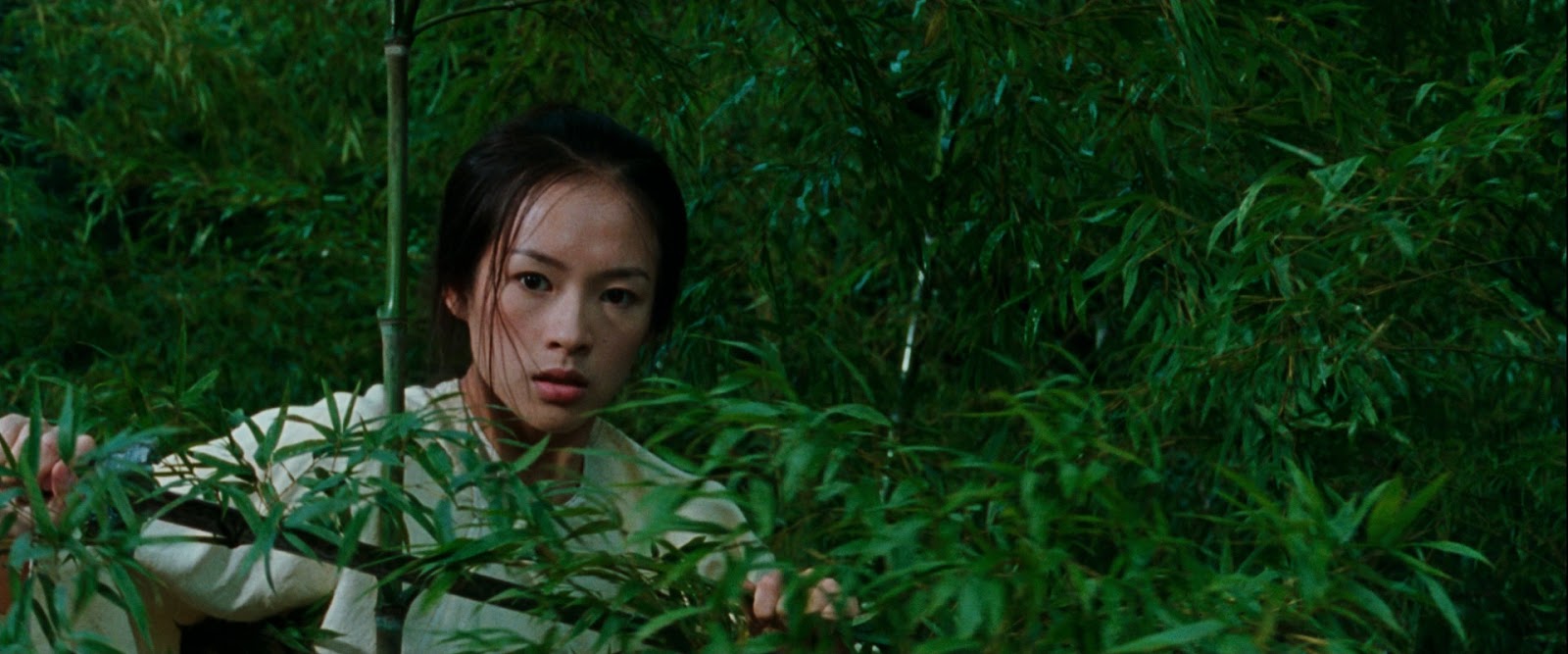
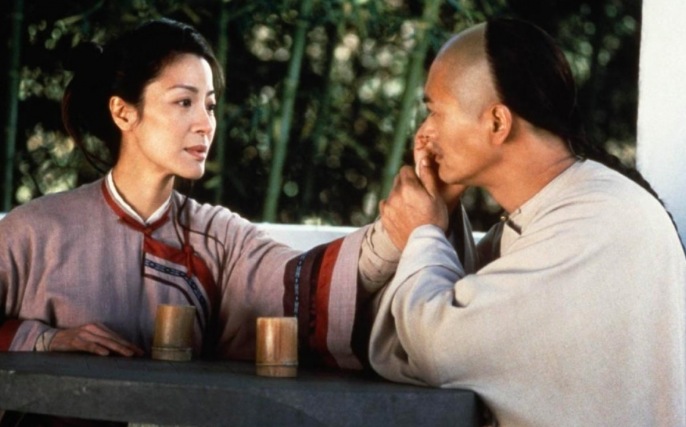
Michelle Yeoh and Zhang Ziyi defy gravity and danger in Crouching Tiger, Hidden Dragon

Director: Ang Lee

Cast: Chow Yun-Fat (Li Mu Bai), Michelle Yeoh (Yu Shu Lien), Zhang Ziyi (Yu Jiaolong), Chang Chen (Luo), Cheng Pei-pei (Jade Fox), Suhung Lung (Sir Te), Li Fazeng (Governor Yu), Gao Xi’an (Bo), Wang Deming (Prefect Cai Qiu), Li Li (May)

Ang Lee is the sort of director who can turn his hand to anything – is there a director with a more eclectic CV? From costume dramas to comic book films, coming-of-age 1970s stories to gay cowboys, he seems able to do everything. But the film that cemented him as a blockbuster director was Crouching Tiger, Hidden Dragon, an awe-inspiring, visually stunning, beautifully made martial arts film, told with a poetic grandiosity that opened the West’s eyes to a whole genre of film-making.

Li Mu Bai (Chow Yun-Fat) is looking to give up the warrior lifestyle, and surrenders his legendary sword “Green Destiny”. Mu Bai asks Yu Shu Lien (Michelle Yeoh), a professional bodyguard, to guard the sword on its way to its new owner. Mu Bai and Shu Lien have long held feelings for each other, but her late fiancée being Mu Bai’s best friend led them to never act on (or truly speak of) their love. The sword is stolen by a mysterious warrior, soon revealed to be the daughter of the local governor, Yu Jiaolong (Zhang Ziyi). Jiaolong has been trained by Jade Fox (Cheng Pei-pei), who murdered Mu Bai’s former master. Gradually the sword becomes the centre of a complex clash between these characters, of conflicting emotions and desires.

Despite its gravity-defying visuals, what Crouching Tiger, Hidden Dragon is really about – and perhaps why it works as well as it does – is contrasting the principles and standards of two different generations. Li Mui Bai and Yu Shu Lien have both lived lives governed by restraint and self-denial, not least in denying their own love. Jiaolung and Luo, on the other hand, are far more willing to act on their emotions – even if these lead to destructive consequences. It’s the human stories like this that ground the drama and make it something with heart that you can invest in.

Jiaolong isn’t willing to tame her wild spirit, and Lee’s film explores within it the nature of mentor-mentee relationships, and the level of confinement that comes from training: Jade Fox wants to control Jiaolong, and both resent each other for the restrictions they have placed on each other. Mu Bai wants to train Jiaolong – but she doesn’t want to submit herself to a master. Mu Bai has spent his whole life searching for Jade Fox to avenge his master. The shadows that masters place over their apprentices hang over the whole movie.

It’s also a refreshing movie that places women so firmly at the centre. Its central figure is Jiaolong, a young woman with an instinctive mastery of the art of Wudang – and she has the fiery defiance and impulsiveness you would expect of a traditional male figure. Jiaolong is a loving but damaged figure, confused and poisoned by Jade Fox’s resentment. She can love with great feeling and also feel a prickly resentment towards the same person – a feeling she expresses time and again. Zhang Ziyi is terrific in the role, an electric screen presence, it’s impossible to take your eyes off her.

She is contrasted throughout the film with Shu Lien, expertly played by Michelle Yeoh. Shu Lien has lived years of control over her feelings, but carries great reserves of emotion. Yeoh’s eyes are crowded with emotion, and she conveys a great sharpness. Shu Lien is a shrewd, kind but reserved character – someone who realises too late the price she has paid. For all the combat in the film, you feel that the real clash is between these two women and how they have chosen to live their lives.

In the lead male roles, Mu Bai is played with a serene calm by Chow Yun-Fat. Yun-Fat is so reserved that he’s not always as interesting as he could be – despite having a few beautifully played moments. Chang Chen as Lo is a more conventional romantic figure, but he has a lot of charisma – and it’s also a refreshing balance that he is both the more traditionally “female” character in the relationship, but also feels like a worthy partner for Jianlong.

But the thing that makes the film really memorable is its extraordinary beauty. Ang Lee is a master at marrying up marvellous, dynamic images with intelligent, thematic plotting. The battle scenes are of course the most memorable, and they are truly striking, wonderfully choreographed by Yuen Woo-ping. These defy gravity and are extraordinarily graceful in timing and movement – as striking and genuinely beautiful to watch as they are exhilarating. They look marvellous and Lee films them with a disciplined simplicity to allow us to appreciate their beauty. 

On top of that, the overall design and feel of the film is wonderful. Every scene is carefully framed and beautifully composed. Tan Dun’s score is marvellous (amazingly the whole lot was composed, produced and recorded in just two weeks) and really helps to strength the emotions in the scenes themselves. Lee’s masterful direction never loses track of the emotions and relationships that underpin the action sequences, and makes them develop and grow organically from the story, rather than fight scenes for the sake of it.

Crouching Tiger works because it has a strong story, while showing some beautiful and breathtaking fight sequences, the likes of which many people had never seen before. It’s a well-paced movie, that packs a lot into a tightly controlled run time and its thematic richness gives every scene something to reward the viewer with. The real hero here is Ang Lee. Lee is not just a director who can deliver action, he is a man with an intimate emotional understanding. In particular, he has shown in his films an empathy and warmth towards women, and an appreciation of their worldview, in a way few other male directors have managed. Crouching Tiger still stands up – it’s still strikingly different, well acted, looks gorgeous and has a lot of emotional investment.