
Tag: Chishū Ryū

An Autumn Afternoon (1962)

An Autumn Afternoon (1962)

Ozu’s final film feels like a perfect summation of the rich sense of ordinary life in his work

Director: Yasujirō Ozu

Cast: Chishū Ryū (Shuhei Hirayama), Shima Iwashita (Michiko Hirayama), Keiji Sada (Koichi Hirayama), Mariko Okada (Akiko Hirayama), Teruo Yoshida (Yutaka Miura), Noriko Maki (Fusako Taguchi), Shinichiro Mikami (Kazuo Hirayama), Nobuo Nakamura (Shuzo Kawai), Eijirō Tōno (The Gourd), Kuniko Miyake (Nobuko Kawai), Ryuji Kita (Professor Horie)
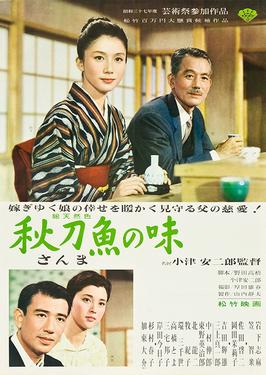
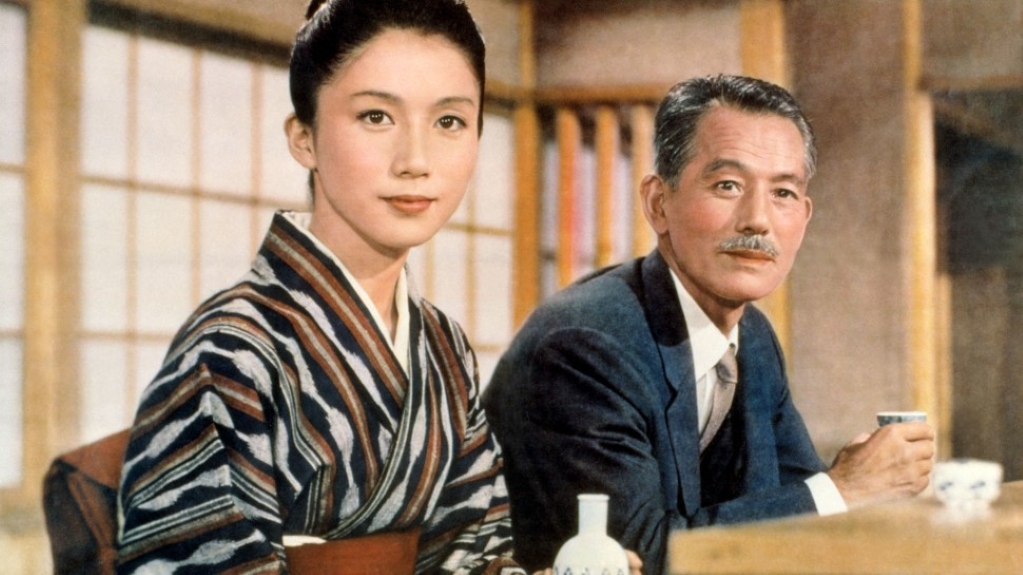
Ozu’s final film feels like a luscious, beautifully filmed summation of a life’s work. Deceptively quiet, simple and gently paced, like the best of Ozu’s work it throbs with a deep understanding of the quiet joys, regrets and pains in ordinary life, where the march of time can relentlessly change and mould your world. An Autumn Afternoon returns to themes familiar from Ozu past work – you see it as almost a remake of Late Spring (with Chishū Ryū, effectively, in the same role) –with his subtly effective recognition of how each generation echoes and reimagines the one before. It’s a deeply humane film from a director who understood everyday life better than almost any other.

Once again, a man feels pressured to marry off a daughter. Shuhei Hirayama (Chishū Ryū) is a middle-ranking factory manager, whose home is tended to by 24-year-old daughter Michiko (Shima Iwashita). Hirayama’s old school-friend and colleague Kawai (Nobuo Nakamura) suggests an arranged marriage for her. Hirayama quietly lets the subject drift, little motived to shake up his home. His opinions slowly shift as he re-encounters his former teacher The Gourd (Eijirō Tōno), now a down-at-heel noodle restaurant owner, who lives with an unhappy spinster daughter. Does Hirayama sees parallels between himself, Michiko and this pair? Is Michiko bothered either way?

It’s a classic Ozu set-up: the different views and perceptions of the generations, contrasted against each other. In many ways, very little happens in An Autumn Afternoon, but in other ways a whole life-time plays out. Skilfully, with an observing, restrained (Ozu’s final film is stiller than ever) camera, Ozu observes people in the Spring, Summer, Autumn and Winter of their lives. In doing so, he captures a particular moment of Japanese history, where pre-War, war and post-war generations confront the world with subtly different outlooks.

In the first darkening of the Autumn of his life, Hirayama is a quiet man with a rich vein of humour. He’s from a generation which sees itself on being more liberal than those before. He meets regularly with a bunch of former school friends, who pride themselves on holding their drink and frequently prank each other in dead-pan comic exchanges. There is a delighted ragging of their friend Professor Horie’s barely concealed sexual glee at his new (younger) wife. They have traditional values (Hirayama assumes marriage will lead to immediate resignation for his young secretary) but enjoy the post-war flourishing of Japan.

Hirayama is comfortable with Americanised Japanese culture, from bottled beers and baseball to American bars and their stools. He drinks too much, make generous offers to others and indulges his children. He’s perfectly happy with the way things are: perhaps because he already fears what his life may be like when his two youngest children flee the nest. It’s a beautifully judged performance from Ryu, genuine, relatable, quietly content but with a subtle sense of sadness and anxiety at change.

There is a sense Ryu’s Hirayama doesn’t want the world shaken, as he has already lived through enough shaking to last a lifetime. He’s a former career Naval officer, who captained a ship in the War. His late wife, it’s implied, died in the American bombing of Tokyo. (Of his children, only two can really remember her, talking about her only wearing trousers during air raids). Bumping into one of his former petty officers, the two men indulge in reminiscences and reflections of what life might have been like in victory (in an American themed bar of all places). Hirayama is drawn to return to the bar again and again, as the barmaid reminds him of his late wife (this small detail would be the entire plot of another film) – although Ryu’s quietly sombreness suggests the memory is to painful to dive into.

But this man contrasts sharply with his children. Hirayama never re-married, and his children have filled the companionship gap in his life. While Michiko matches neatly the traditional view of a Japanese woman as dutiful and guarding of the home (she wears a kimono more than any other female character), his youngest son Kazuo dresses like an American teenager and isn’t afraid to criticise his father. And even Michiko too wants to make her own choices about her life, regardless of the views of others.

The most intriguing contrast though is the marriage between his oldest son Koichi (Keiji Sada) and Akiko (Mariko Okada). Here power dynamics are strikingly different. Both partners work – indeed at one point, Akiko arrives home to find Koichi cleaning and cooking. Decisions are made between them, with Akiko frequently calling the shots. A dispute about Koichi’s plan to spend the excess of a loan from Hirayama on a second-hand set of golf clubs, sees Akiko take firm control of finances (Koichi seems to have inherited his father’s quiet desire not to rock the boat) and has the final say. It echoes, in a way, Professor Horie’s second marriage, where his wife has a level of control over his comings-and-goings that surprises Hirayama and Kawai.

Hirayama may also be quietly disturbed by a vision of what the winter of his life might be like, from ‘The Gourd’, a respected teacher of his childhood, played with a superb desperation and forced good humour by Eijirō Tōno. This once-respected man now works for customers who barely look at him and is totally reliant on a daughter miserable at her life (Ozu quietly watches her break down in tears dealing with her drunken father) and gets embarrassingly pissed at the slightest opportunity when someone else is paying. Considering Hirayama is also a heavy drinker (both men are prone to slumping forward, or swaying on the spot when under the influence) there is a lot that suggests his Winter might not be wildly dissimilar from the Gourd’s.

All of these multi-generational issues are superbly explored by Ozu, all without forced commentary, in a film that is a triumph of his distinctive style of low-angle static cameras, transitions that ground us in location, made even more striking by the film’s gorgeous use of colour (especially its reds). And the film leaves it all open to us to interpret. Because there is no right-or-wrong in Hirayama’s situation: should he let his daughter remain or help her move on and embrace her life?

An Autumn Afternoon concludes with one of the most quietly heart-breaking moments in Ozu’s cinema – under-played to utter perfection by Ryu – as Hirayama sits alone, drink swishing around his guts, singing songs of a martial Japan and facing an unknown future that might see him forced to confront the loneliness he has avoided since his wife died. As the final shots complete of Ozu’s final work – a series of cuts to parts of Hirayama’s home – it feels like a perfect final statement from an artist who looked at the small tragedies of life like no other.

Late Spring (1949)

Late Spring (1949)

Ozu’s marvellous heart-rending simple tale of difficult family decisions carries universal strength

Director: Yasujirō Ozu

Cast: Chishū Ryū (Shukichi Somiya), Setsuko Hara (Noriko Somiya), Yumeji Tsukioka (Aya Kitagawa), Haruko Sugimura (Taguchi Masa), Hohi Aoki (Katsuyoshi Taguchi), Jun Usami (Shuichi Hattori), Kuniko Miyake (Akiko Miwa), Masao Mishima (Jo Onodera), Yoshiko Tsubouchi (Kiku Onodera)

In post-war Japan, Professor Shukichi (Chishū Ryū) and his twenty-seven-year-old daughter Noriko (Setsuko Hara) live together in contentment. But what is to be done when her Aunt Masa (Haruko Sugimara) proclaims its time Noriko left the nest and made her own life, with a marriage Masa can arrange with a family friend. Can Noriko’s reluctance be overcome, or will it need the imminent threat of her own father’s potential remarriage to an attractive widow?

From a small-scale, intimate set-up like this – a slight story that can be summarised in little more than a few sentences – Yasujirō Ozu crafts a story of family, ageing, maturity and loss, sacrifice and regret that’s both uniquely Japanese and universal. So carefully is the whole film assembled, so patient Ozu’s intricate, formal structure of each scene that it’s ending of quiet, emotional force takes you overwhelmingly by surprise. It also leaves you challenging all sorts of perceptions you might have had about the rights and wrongs of duty and familial obligation.

Ozu’s Late Spring, like the greatest of his work – which this undoubtedly is – uses a series of carefully designed, stationary camera shots (so much so, it feels a shock when a camera tracks alongside Noriko and her father’s assistant Hattori, as they cycle to a beach) to carefully build a world both intimate and immediate and also oppressive. Furniture in rooms loom around the edges of the frame of the low positioned cameras or are lined up in such a way as if to force movement in one direction (such as, at one point, two parallel rows of chairs leading inevitably to a doorway). Characters are framed in doorways or surrounded by furniture, their choices visually whittled down to a single path.

It’s fitting for a film all about a decision – that everyone believes is for the best – being pushed directly onto Noriko. On paper of course, it certainly is. Surely, it’s no life for a young woman to essentially become nothing more than a housekeeper to her father? Noriko organises the house, dutifully prepares his meals, reminds him to shave – and seems completely content with this. But surely, it’s not what she should want – or indeed what anyone would want for her?

But yet it’s what she wants. Noriko is beautifully played by Setsuko Hara, in the first of her collaborations of Ozu. Hara creates a woman who is warm, bright, funny and greets every day with a beaming smile. She is content with her lot, shrugging off any idea of change. She barely seems to recognise the shy attempts at seduction that Hattori (a suitably bashful Jun Usami) tries – smilingly turning down his concert invitation (a concert we then see him attend alone, his hat filling the second chair he purchased) and reacting with smiling happiness when he reaffirms his long-running engagement is indeed progressing to marriage (far from, it is clear, his first choice).

Noriko’s world is only shaken by the suggestion of marriage, an idea that reduces her to withdrawn, downcast quietness, shuttering herself off from the world. The only thing that could horrify her more is the idea of her father remarrying – she’d already confessed her distaste at her honorary uncle, Shukichi’s colleague Onodera, re-marrying. Her rejection stems from her desire, it seems, for things to remain as they are – and people to do so as well. But that’s also because change requires the old life to be left behind – and her father makes clear he will accept a reduced role.

You could argue its right to push Noriko away from a life of sheltered self-sacrifice and towards something that feels more real and mature. That feels like the modern world. But isn’t this just the old social rules reapplying themselves in new ways? Late Spring takes place at a turning point in Japan. Shukichi and Masa are of a pre-war generation: their homes and clothing are as well, even their formal movements, speech, Shukichi’s love of Noh theatre and (in Masa’s case) clinging to old wives tales smacks of a pre-1945 way of thinking. There everything has a natural order – and Noriko’s marriage is an inevitable part of this.

But there are signs of a new Japan all around them – literally so, as the path to the beach is lined with American military and Coca-Cola signs and a Tokyo increasingly filled with Western coffee bars, along with kids playing baseball and giggling talk of Gary Cooper and other film stars. Noriko even has an alternative path presented in the form of her friend Aya (a charming performance by Yumeji Tsukioka). Aya has decided not to remarry after her post-war divorce, learned English, trained as a stenographer and dresses in the latest Western fashions. Her home is full of Western furniture and the traditional Japanese floor sitting leaves her with sore knees after minutes. She’s the sign of a new Japan on the horizon, one where traditions carry less weight, and choices can be more personal.

The problem is Noriko’s conservative choices don’t work in either worlds. She’s not radical enough to follow Aya (despite half-hearted enquiries), and the idea of non-marriage is alien in the world she wants to stay in. As Ozu and Hara make clear, this locks her into clinging to no change at all. She clearly would never-leave unless pushed. And a white lie from her father is what does it: for Noriko knows that would end her role in her father’s home and her duty to him would be leave. It’s the only duty that would never be her choice.

Nevertheless it’s clearly what her father believes is best for her. Beautifully played by Chishū Ryū, he’s a seeming curmudgeon at first who reveals himself to be a man of deep feeling and self-sacrifice – there is a beautiful moment when he outwardly denies his white lie about intended marriage, while his face subtly twitches. Ryū makes Shukichi a man of quiet dignity, determined to do the best for his daughter, regardless of his own feelings (which are clearly to continue things as they are).

So both parties work towards the ending of a way of life they both desperately want to cling to, doing so in a misguided act of duty towards the other. Is it though? Ozu makes that hard for us to be completely comfortable: our last sight of Noriko, in her wedding garb, sees her bow one final time to the father she loves while the film’s coda gives a heartbreaking moment of unbearable emotional toil for Ryū while he simply sits peeling an apple.

Does it have to be like this? The idea of a daughter subjugating her life to her father feels mistaken, but isn’t that her choice not ours? But how alien is such a conservative and non-traditional choice, in a country at a turning point between tradition and new possibilities? And can you blame people for sacrificing what they want, because they believe the result is better for someone else? It’s an eternally relatable scenario that gives Ozu’s film an undeniable, compelling emotional force, which creeps up on you and crashes over you like high tide waves Ozu closes the film with. Marvellous.

Tokyo Story (1953)

Family life is troubled in post-war Japan in Yasujiro Ozu’s masterpiece Tokyo Story

Director: Yasujirō Ozu

Cast: Chishū Ryū (Shūkichi Hirayama), Chieko Higashiyama (Tomi Hirayama), Setsuko Hara (Noriko Hirayama), Haruko Sugimura (Shige Kaneko), So Yamamura (Kōichi Hirayama), Kuniko Miyake (Fumiko Hirayama), Kyōko Kagawa (Kyōko Hirayama), Eijirō Tōno (Sanpei Numata), Nobuo Nakamura (Kurazō Kaneko), Shirō Ōsaka (Keizō Hirayama)

When you think about Japanese cinema, many people’s minds turn to the work of Kurosawa, or high tempo manga animations. But there is another side to Japanese cinema – a more careful, meditative, almost lyrical side – and few directors express that better than Yasujirō Ozu. Tokyo Story is his masterpiece, a film so masterfully put together – but also so restrained and simple in its telling – its reputation has grown until it is considered a contender for the greatest film ever made. 

Ozu’s trick with Tokyo Story is to tell a story that is focused on a very particular time and place, but also brings with it a universal relevance. Elderly married couple Shūkichi (Chishū Ryū) and Tomi (Chieko Higashiyama) travel to Tokyo to visit their grown-up children, doctor Kōichi (So Yamamura) and hairdresser Shige (Haruko Sugimura). But their children now have their own work and life pressures – living in small, crowded homes in Tokyo that double as business places – and they just don’t have the space or time to spend with their parents. The only person who makes their time for them is their daughter-in-law Noriko (Setsuko Hara), the probable-widow of their son who went missing during the war and has not been seen in over eight years. 

Ozu’s film is about a transition in Japanese culture, as the country modernises in the post-war environment and the natural deference and familial links that had previously powered much of its way of life began to fade in importance. Families are now distant, patience and respect between the generations is fading, and many in the elderly generation struggle to understand their children. In the same way, the younger generation forge their own lives and see their priorities change from those of their parents. This is an acute issue at this post-war era of Japan – but who hasn’t experienced some level of this inter-generational confusion?

That’s perhaps why Tokyo Story carries as much impact as it does. A quiet, reflective and gently paced film, it’s striking that it doesn’t place blame or cast characters as heroes or villains. Instead, everyone is, by-and-large, trying their best, struggling with pressures of their own. While it’s easy to see the children as uncaring – it’s also clear that their own lives are hugely busy, with demanding workloads and the homes they live in are small, cramped and difficult for them to live in. Shige and her husband effectively sleep on the floor of their hairdressing parlour. Kōichi struggles to fit himself, his wife, two children and a doctor’s surgery into what looks like a pretty simple two-up-two-down home. While the children are frequently thoughtless – or quick to persuade themselves that what’s easy for them is also easy for the parents – the film makes clear that there are reasons for this.

Nevertheless our sympathies are clearly meant to lie more with the parents rather than their children. Polite, quiet and determined to think the best of their children, the parents are reserved, dutiful relics of a very different Japan. They fall over themselves to thank their children for any time or patience shared with them, and feign enjoyment of the spa (packed full of young party people) their children send them to as a treat (it takes one night of no sleep for them to decide, quietly, to leave). These are people determined not to rock the boat, resolved that everyone is acting for the best. 

However, it is clear the emotional impact of these events is greater than they might expect. Shūkichi, it emerges, has a history of too much drinking – and a few days in Tokyo is enough for him to hook-up with some old drinking buddies and stumble into Shige’s home late at night, drunk as a skunk. But the emotional impact is also clear in their growing closeness and regard for their daughter-in-law Noriko, the only person in Tokyo who seems to make an effort to spend time with them, rather than their own children.

Superbly played by Setsuko Hara, with a gentleness, slight timidity and genuine sense of kindness that makes her the warmest character in the film, Noriko thinks the best of everyone and desires all to be happy. For her adopted parents, however, her good treatment slowly awakens to them to the way Noriko has put her own life on hold since the disappearance of their son. His photo still hangs like a shrine in her home, and she shows no interest in moving her life on. Warm and kind as she is, she is as lonely as the parents. Tomi in particular becomes overwhelmingly concerned for this vulnerable person – perhaps a child that needs her protection in a way her own children no longer do. Staying the night at Noriko’s, their conversation touches – in a very reserved way – on deep emotional trouble. Tomi stresses her desire for Noriko to be happy – and as they go to sleep seems to be overcome with tears and emotion. But she won’t speak openly of her worries for Noriko.

It takes later events, and Tomi’s later illness, for Shūkichi to broach the subject openly, kindly telling Noriko that both of them worry about her future happiness and her waiting for a man who will never come back from the war.  They urge her to restart her life – a suggestion Noriko meets with an emotional out-pouring of tears, but also perhaps a sense of being given permission to re-start her life.

This emotional content plays out with all the more power due to Ozu’s restrained and quiet shooting style. A huge majority of the film is shot in mid-shot, with the camera positioned at the height of someone kneeling on a tatami mat (Ozu called them his “tatami shots”). This has the impact of making events play out gently in front of the viewer, a bit like a play, but giving things a strangely intimate stillness. The sort of cinema language we are used to – cross-cutting and over-the-shoulder shots for conversation – is completely absent. Ozu rarely cuts, keeps the camera more-or-less stationary and only occasionally throws in shots where the characters deliver dialogue effectively straight at the camera. This effect in particular adds to the intimacy, making us part of the scene with the characters expressing their thoughts or concerns directly to us.

In addition, Ozu beautifully allows scenes to both gradually play in and out. The cutting of most scenes allows an establishing shot of a location, followed by a prolonged series of tatami shots that start before the scene proper begins and then frequently continues for a few moments after the scenes finish. Again this makes the film all the more personal, as the characters expand and live beyond the confines of the requirements of the scenes. Watching characters silently continue to pack – or quietly sitting having run out of things to say – in some way carries as much power as dialogue, and really immerses you in the world of the film.This quiet, meditative effect becomes increasingly engrossing, as Ozu’s slow-paced, gentle filming style lets this small-scale story play out very effectively. Although not much really happens in the story, this story of miscommunication between the generations gains a universal strength the more you let yourself get lost in it. The acting is excellent, with Chishū Ryū (playing a character twenty years older than him) and, in particular, Chieko Higashiyama extremely moving and heartbreakingly real as the parents. But what really gives the film its heart – and its sense of hope – is the beauty of Setsuko Hara’s Noriko. It’s this character that provides the hope for a warmer, stronger, more understanding future for all. As Noriko returns to Tokyo at the film’s end – cradling a gift – we hope that a cross-generational understanding is in our grasp. 

Ozu’s final shot features the sounds of traditional children’s singing being drowned out by a train. It’s a sign of how progress has changed our society – but the film carries enough hope for us to promise ourselves that things will get better.