Tag: Claudette Colbert

Cleopatra (1934)

Cleopatra (1934)

DeMille’s blockbuster is a fun, camp spectacle with plenty of his suggested sex and naughtiness

Director: Cecil B DeMille

Cast: Claudette Colbert (Cleopatra), Warren William (Julius Caesar), Henry Wilcoxon (Marc Anthony), Joseph Schildkraut (King Herod), Ian Keith (Octavian), Gertrude Michael (Calpurnia), C Aubrey Smith (Enobarbus), Irving Pichel (Apollodorus), Arthur Hohl (Brutus), Edwin Maxwell (Casca), Ian Maclaren (Cassius), Eleanor Phelps (Charmion), Leonard Mudie (Pothinos)

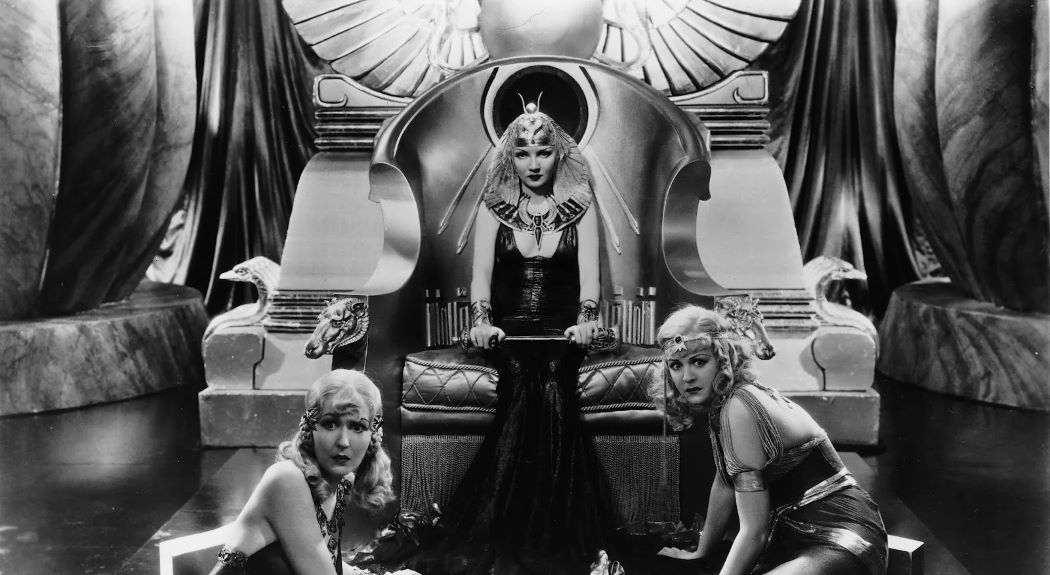
When a sand-and-sandals epic opens with a not-particularly-disguised naked woman cavorting erotically with incense, you know you are in Cecil B DeMille territory. Thirty years before the ill-fated Taylor-Burton epic, DeMille’s Cleopatra was the box-office hit of 1934. It was also a stompingly silly film, crammed with hammy performances and sexual imagery which it got-away-with in those pre-code days because it was an important historical subject taking place on humongous sets. But Cleopatra is also extremely good fun, a film so camply delighted in its naughtiness (and bowling along with such pantomimic energy) that it knocks spots off the turgid 1963 flop.

This Cleopatra follows pretty much the same structure (literally in half the time). Cleopatra (Claudette Colbert) is at war with her brother for the throne of Egypt. Smuggled into the presence of Julius Caesar (Warren William) wrapped in a carpet, she reveals the evil machinations of her rival Pothinus (Leonard Muddie) and seduces Caesar (possibly more with the prospect of controlling Egypt, since this Caesar is a power-mad cold-fish). When Caesar is dispatched by conspirators during the Ides of March, Cleopatra’s focuses on man’s-man Marc Anthony (Henry Wilcoxon) who is very open to her seduction. Before they know it though, the two are at war with envious technocrat Octavian (Ian Keith) who marches all of Rome to Cairo to crush the two. Bring on the asps!

DeMille shoots all this with relentless energy and pace, though not quite enough that you don’t notice the dialogue clunking out of the actor’s mouths (“You and your Friends, Romans, Countrymen…” a bitter Octavius observes about Anthony’s funeral oration). Cleopatra, like many of the Great Showman’s finest films (of which this is unquestionably one) gives us all the sex and smut we could possibly want, disguised in its classic setting. Cleopatra absolutely drips in lust and is crammed with suggestive imagery from top to bottom.

From that cavorting incense-carrier, we cut to the rooms Cleopatra has been kidnapped from. These look like nothing less than the aftermath of a kinky orgy, including a hog-tied servant who looks like he’s passed out in an asphyxiation sex-game. Colbert models a series of deep-dive dresses that leave little to the imagination. Poor, randy Marc Anthony doesn’t stand a chance (we know he’s a hot-blooded man because he never goes anywhere without his two barking greyhounds). Cleopatra even dresses at time like some musicals starlet, trailing billowing fabric behind her as she descends stairs.

Meeting her on her pleasure barge (this ship is practically Tardis-like in its interior dimensions) he’s treated to the sort of show that wouldn’t be out of place in Amsterdam’s Red-Light district. Scantily-clad ladies cavort, dancers dressed in skin-tight leopard skin are marshalled by a whip-carrying ring-master, while they cavort and engage in (literal) cat-fights until broken up by a crack of the whip. All the time Cleopatra reclines on a silk-covered bed, Colbert’s eyes flashing unmistakable “come hither” glances. No wonder the randy sod quickly finds himself going all-in on Egypt.

Along with sex, the film mixes in plenty of action. Caesar’s assassin is rather imaginatively filmed through a POV shot (“You? You too Brutus?!” Warren William intones in despair), as daggers fly in. The forthcoming battles are teased in an early scene where Caesar, bored with an Egyptian delegation, fiddles with various models of siege engines. All of these come into play in the film’s later sequences, that sees a parade of fast-cut war scenes overlaid: siege engines fire, armies plough at each other over deserts, ships clash at sea, men drown in agony. Much like the epic scale of Cleopatra’s court and barge, the film doesn’t skip on the epic conflict.

Between these two tent poles, we basically get a soap dressed to-the-nines in sandals, short skirts and armour. Claudette Colbert in a banner year (this was one of three hits she had, and she won the Oscar for It Happened One Night) is sultry, playful and if she never feels for even-one-minute like a figure from antiquity, at least she has that in common with the rest of the cast. She gives Cleopatra a charismatic energy that makes her believable as a figure round whom all else revolves. Wilcoxon plays Anthony with a thigh-slapping, hail-fellow-well-met quality. Warren William underplays as Caesar – which can make him look dull in a film as overblown as this – but makes for an effectively cold and calculating man.

Egypt, in its voluptuous naughtiness makes all Rome look rather dull though. Our capital is introduced in a house-party where the conspirators pose and moan like hammy matinee performers, stroking their historically incorrect beards, while the ladies bitch like New York housewives gleefully spreading catty gossip. Octavian is re-imagined as whining middle-manager, a weasily Ian Keith constantly moaning about never getting enough attention and clearly far-too inhuman to ever be stirred by Cleopatra the way the lusty Anthony is. With the frame of the film being classic antiquity, we can even pretend this is somehow serious drama when really it’s just Dallas.

These actors march their way through a series of break-ups and get-togethers, punctuated by moments of silly drama. (Cleopatra, Hamlet-like, even stabs Porthinus through a curtain seconds before he can assassinate Caesar!) But it all kind of works because you suspect nothing is really taken that seriously. DeMille is making a big pageant here, a walloping epic of lusty suggestion, powered by larger-than-life performances. It’s meant to fill you with excitement and awe, to make you gasp in awe. It doesn’t really matter that we get a shit-stirring King Herod (a smirking Joseph Schildkraut) or an Enobarbus who puffs like a regimental sergeant-major (C Aubrey Smith, giant of beard). It’s all about the spectacle, the drama and showmanship. And no one really does that sort of stuff better than Cecil B DeMille.

It Happened One Night (1934)

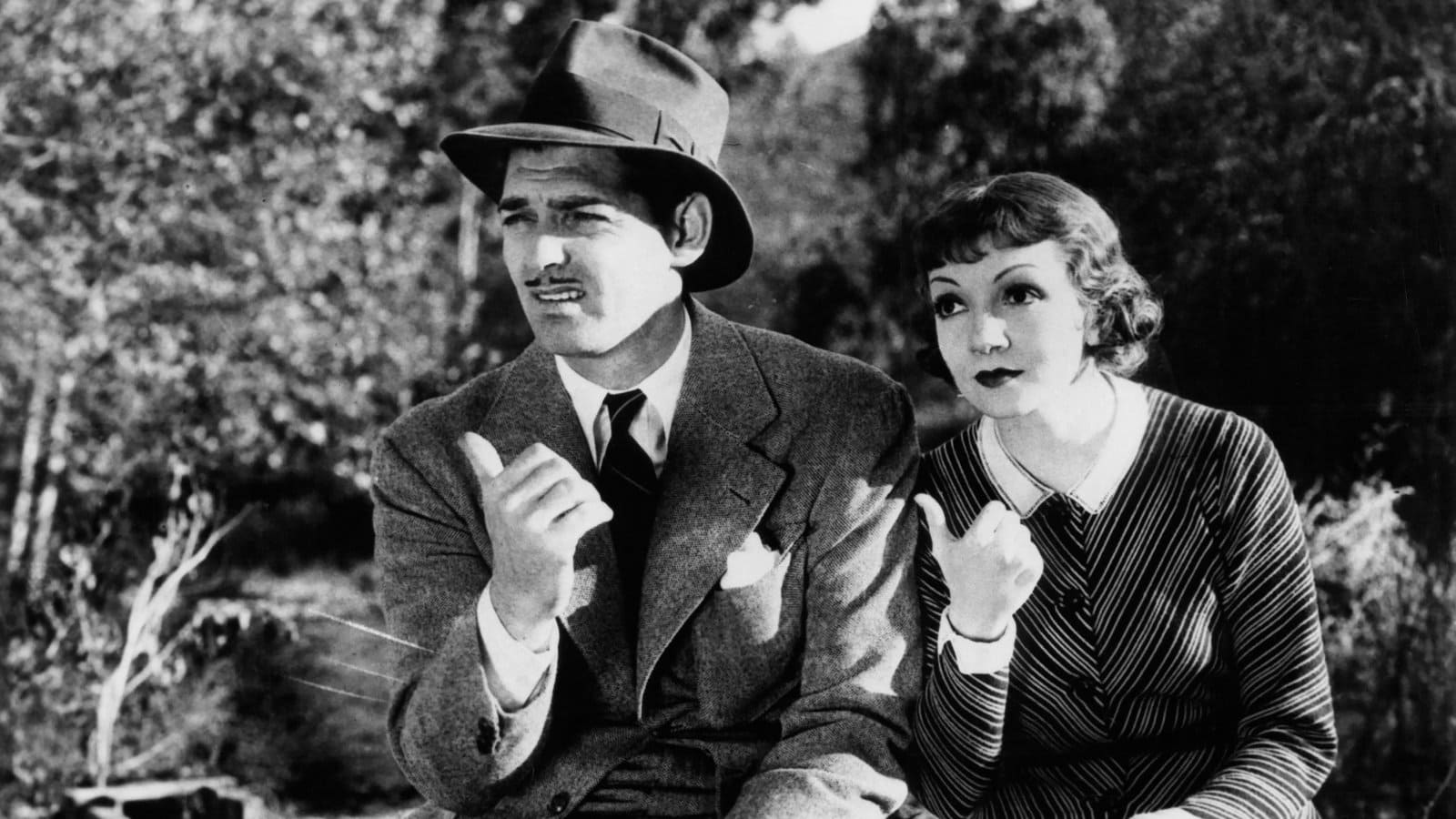
Clark Gable and Claudette Colbert as the original odd-couple who find love in It Happened One Night

Director: Frank Capra

Cast: Clark Gable (Peter Warne), Claudette Colbert (Ellie Andrews), Walter Connolly (Alexander Andrews), Roscoe Karns (Oscar Shapeley), Jameson Thomas (“King” Westley), Alan Hale (Danker), Arthur Hoyt (Zeke), Blanche Friderici (Zeke’s wife), Charles G Wilson (Joe Gordon)

Two contrasting people thrown together over a set period of time, at first rub each other up the wrong way but then, doncha know it, frustration turns to love and suddenly we’re nervously watching to see if a last minute complication will throw a spanner into the works. If it sounds like a classic set-up – that’s because it is. Where did you think the set-up came from? Capra’s comedy – which scooped the Big Five at the Oscars (Picture, Director, Actor, Actress and Screenplay) is one of the most influential films ever made – and one of the funniest and sharpest examples of great film-making from Hollywood’s Golden Age.

“Daughter escaped again, watch all roads, airports, and railway stations in Miami.” Heiress Ellie Andrews (Claudette Colbert) has eloped with daring-but-dull flying ace “King” Westley (Jameson Thomas) but her father Alexander (Walter Connolly) won’t wear it as he’s sure Westley is only after her money. So, Ellie literally jumps ship in Florida (swimming to shore from her father’s yacht, she’s got some guts that girl) and decides to make her way to New York to reunite with her husband. Hopping on a Greyhound bus to New York, she meets recently fired New York reporter Peter Warne (Clark Gable) and, after a series of unfortunate incidents, the two of them end up penniless and travelling across America together. Will their waspish banter blossom into something else?

It Happened One Night is so delightful, as soon as its finished, you fancy skipping back and watch it again. It’s such a brilliant, sexy, romantic comedy it’s odd to think nearly everyone involved wasn’t even sure they wanted to do it. Re-named from the less catchy Night Bus (and who cares if the film actually takes place over several nights), it was rushed into production to take advantage of Colbert’s availability (she only agreed to do it if it filming took four weeks). Gable was loaned out by MGM against his will. Capra and Colbert didn’t really get in and screenwriter Robert Riskin re-wrote the script on set. If you ever needed proof adversity leads to a classic, take a look at this.

It Happened One Night beautifully charts how two mismatched people can be surprised by how much in common they have. Both are, in their own way, fiercely independent. Ellie will marry the man she wants, and hang the consequences. Peter gets the spike permanently because his unique way of doing things doesn’t fit with his editor. They are both quick-witted people with dreams who don’t suffer fools. At first she thinks he’s smug (and in a way he is), he feels she’s entitled (after all its day two before she asks his name). But they bounce off each other from the start, each an equal match for wit (not to mention they both clearly fancy the pants off each immediately).

What’s going to bring the “walls of Jericho” tumbling down between these two? Forced into sharing a hotel room at night, Peter astounds Ellie’s expectations by throwing a sheet up between them, their own little wall of Jericho. Colbert judges perfectly this scene how Ellie’s exasperation also mixes with something pretty close to disappointment. After all she’s already cuddled up to Peter, sleeping on the bus – and Peter in no way objected. Later, in a mirroring hotel room scene Peter will speak openly about how he’s longed for a woman with freedom and spirit (and Gable does this with a beautiful wistfulness) – exactly the qualities he has seen grow in Ellie over their days together.

What works wonderfully is how naturally this relationship becomes first a friendship, then something deeper. Improvising a marital argument, pretending to be a plumber and his wife to put detectives off her scent, they complement each other perfectly. What’s fabulous about this scene, is that (to their surprise) they are equally delighted by how smart and witty the other is. Their gleeful giggling is not only very sweet, but also the start of a new chapter in their relationship. The scene culminates with one of the few moments of intimacy on film involving clothes going on, as Peter helps Ellie button up her blouse.

What’s endearing about them – helped by Riskin’s sparkling dialogue – is how they settle into ‘roles’ and eagerly bounce off each other. Peter increasingly effects a parody of self-importance, claiming to be a world expert on everything from donot dunking to hitchhiking. Ellie gleefully punctures his grandiose claims, but enjoys playing up to her own image of the heiress, at sea in the real world. This is how real people fall in love – and the film is confident enough to have them exchange private jokes we can’t hear on the backseat of a car. It’s gloriously romantic because it feels true.

Gable and Colbert’s chemistry is scintillating. Both are supremely funny, but also grounded. When they lark about they feel like real-life sweethearts. Colbert gives Ellie a wonderful vulnerability under the self-entitlement. She’s snappy and quick-witted but confused and even a bit frightened by her growing feelings. Gable’s easy charm also has a slight chip on his shoulder: but he’s also laid-back and more than willing to look silly, proud but self-aware with it. He’s also a hugely adept physical comedian (his demonstration of how to hitch-hike is hilarious).

Moments have passed into film lore. Gable’s extraordinarily silly hitch-hiking routine, cars streaming past, until Colbert flashes a bit of leg. This is a beautifully staged scene, a cheeky bit of sexuality a brilliant punchline to an extended showcase for Gable’s comic timing and Colbert’s reactive skills and composure. The dialogue exchanges between the two are superbly delivered. The film was a massive sleeper hit – it even has one of the best examples of reverse product placement, when the reveal Gable’s character didn’t wear an undershirt allegedly led to sales of that garment plummeting.

The direction from Capra is spot-on, classic Hollywood but mixed with some beautiful framing and some dynamic camera movements, including some lovely tracking shots particularly through the bus (Capra’s visual direction in a confined space here doesn’t get enough credit). Capra also ensures we don’t forget this was the time of depression: money is tight for everyone, many of those on the bus are desperate for work and the out-of-touch affluence of Ellie rightly raises heckles.

Above all, Capra creates a hugely sweet romance – with lashings of sexy chemistry but not a jot of sex. Wipes and fast transitions keep the pace up. The dialogue pacing is perfect. He uses light wonderfully: in the two hotel room scenes, light carefully divides up and then unifies our two leads, dancing off their Ellie’s eyes and reflecting how they are beginning to see each other in a new light. It has a reputation as a screwball comedy, but really its a carefully paced character comedy, where Capra lets the relationship flourish organically from scene-to-scene (only Peter’s “hold-the-press” editor and irritating fellow bus rider Shapely – the inspiration for Bugs Bunny – are characters who could walk into screwball unchanged).

Above all, he draws fresh, relaxed and emotional performances from the two leads. The bond between them has been so comfortably formed – and resonates so strongly – that the film can get away with being possibly the only romantic comedy in history where the couple never kiss and don’t share the screen in the final act. It’s a film where two characters bantering and sharing heartfelt truths, sleeping in separate beds on opposite sides of a sheet has more sexiness and emotion to it than a world of rumpy-pumpy. It Happened One Night is just about the perfect romantic comedy, oft-imitated but never-bettered. You’ll want to watch it again as soon as it finishes.