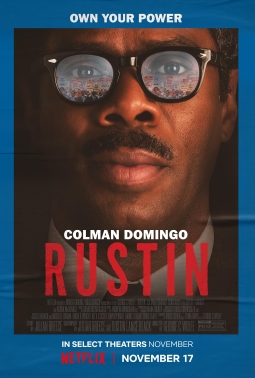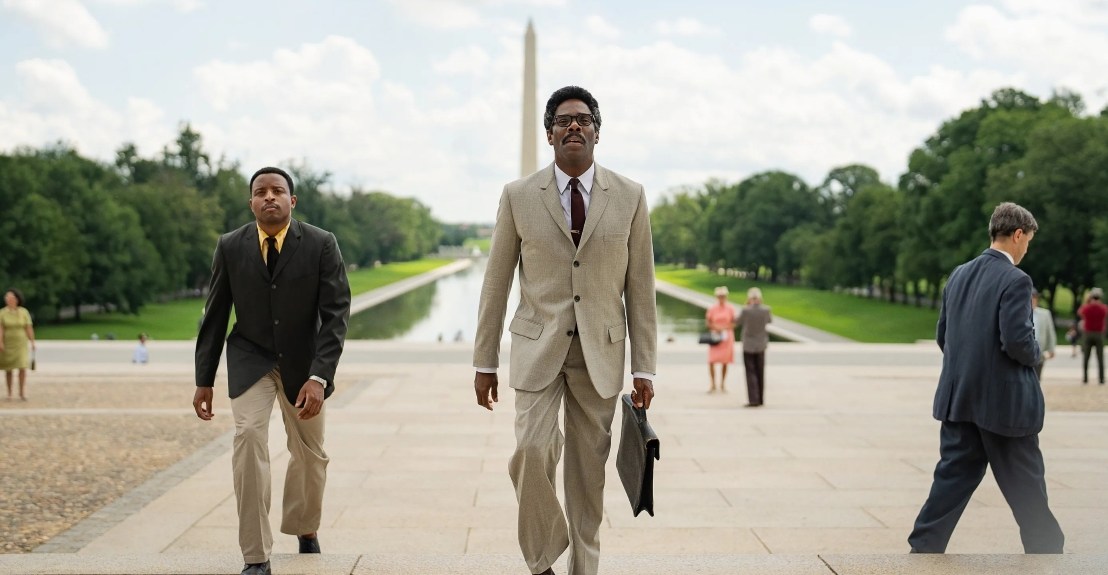
Tag: Colman Domingo

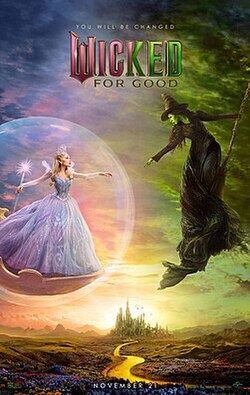
Wicked: For Good (2025)

Wicked: For Good (2025)

Part 2 doesn’t match Part 1 for entertainment or depth, but has enough moments to work

Director: Jon M. Chu

Cast: Cynthia Erivo (Elphaba Thropp), Ariana Grande-Butera (Glinda Upland), Jonathan Bailey (Fiyero Tigelaar), Michelle Yeoh (Madame Morrible), Jeff Goldblum (The Wizard of Oz), Ethan Slater (Boq Woodsman), Marissa Bode (Nessarose Thropp), Bowen Yang (Pfannee), Bronwyn James (ShenShen), Colman Domingo (Cowardly Lion)

Act Two comes to the screen in Wicked: For Good, putting the finishing touches to a five-hour journey through a single stage musical. While there are literally hundreds of millions of reasons for splitting the film in two, you can’t doubt the passion and love for the source material from everyone involved. However, Wicked: For Good, while shorter than the first film, feels longer: more padded but also more aimless, exposing more of the flaws of the musical less apparent when Act Two breezes past in about an hour. It’s still an entertaining watch, but it lacks the explosive, glorious impact of the first film.

Elphaba (Cynthia Erivo) has been firmly branded public enemy number one as the Wicked Witch of the West. Meanwhile, her old friend Glinda (Ariana Grande-Butera) is the universally beloved face of the regime, showmanship and trickery hiding her complete lack of magic. Elphaba is fighting a losing battle for hearts and minds, failint at her attempts to expose the Wizard’s (Jeff Goldblum) lies and to protect the animals of Oz from persecution. Attempts at good deeds constantly go wrong and the arrival of a young girl from Kansas brings chaos. Will Elphaba and Glinda heal their relationship and will Oz be saved?

Wicked: For Good suffers for covering the weaker second act. Most of the best songs were in the first film. The first act also has more interplay between the two leads (whose relationship is the heart of the story) and had a clearer coming-of-age arc with Elphaba’s eyes being opened to the nature of Oz. Wicked: For Good tries to tackle an awful lot (Good and Evil! Animal rights! The Wizard’s oppression and guilt! Propaganda and manipulation! Backstory for every character in The Wizard of Oz! Elphaba and Glinda’s relationships with Fiyero!) But it often ends up under-cooking, hand-waving and fudging many of them. It chops and changes its focus so often, that developments seem sudden or under-explained.

This is where the extended run-time doesn’t help. The logic leaps that can be done in a few minutes of dialogue between songs in an hour of stage-time, make less sense when stretched over two hours plus. One of Elphaba’s main motivations is protecting the animal’s rights, with these creatures literally losing their voice. Despite opening with her trying to free slave-worker animals from building the Yellow Brick Road, eventually this plot-line feels lost in the shuffle. The motivations and mechanisms of the persecution are unclear, and then confusingly bunched in with racist laws against Munchkins. Similarly, Jeff Goldblum’s Wizard switches from a sociopathic arch-manipulator, into a drink-dependent man coated in guilt, without this journey being amply explained.

Wicked: For Good also awkwardly shoe-horns in events from The Wizard of Oz (there is a lot of Dorothy and her companions on the margins) and comes up with not-always-well-developed reasons why Elphaba and Glinda do the things-they-do as required by Wizard of Oz, without contradicting the more complex, interesting characters they are here. Again, these are flaws revealed by the extended run-time which gives more depth to the leads, but little of its added hour to giving more depth and context to the plot and themes the film is trying to handle, making them feel under-powered.

That’s not to say there are not plenty of positives. Wicked: For Good really understands its core strength is the relationship between its leads, and the chemistry between Erivo and Grande is still dynamite. It’s made very clear they are taking opposite approaches in interpreting ‘what’s best for Oz’ (for Elphaba it’s ending the lies, for Glinda it’s keeping people happy – very on brand for both). Their scenes are the film’s emotional heart, whether laughing or crying together, or even (in one laugh-out-loud moment) literally fighting. Just as in the first film, Wicked: For Good demonstrates the different perception an outsider and an insider brings to a situation and how this informs their loyalties and actions.

Erivo’s wonderfully draws on deep loneliness and growing frustration at her inability to change things, capturing the sense of someone certain she’s in the wrong, but who utterly lacks the ability to persuade (be that animals to stay and fight, or Ozians to take another look at the Wizard). Her deep need for friendship (and romance with Jonathan Bailey’s effortlessly charismatic Fiyero – rather short-changed by screen time here) is clear, even if her transition to embracing elements of ‘the villain’ seems rather forced. Her singing remains breathtakingly good with ‘No Good Deed’ an extraordinary show-stopper.

However, the film might just belong to Ariana Grande. If Wicked was Elphaba’s coming-of-age, this is Glinda’s. Grande brilliantly shows how fragile the bubble of happiness Glinda has built is. Glinda’s realisation that from an early age (an excellent childhood flashback scene helps here) she hid her feelings with an immaculate smile is very well explored – as is her realisation that she is universally beloved, but has no real friends. Grande finds a desperation, fragility and sense of pain that only just peak out – feelings covered well in the best of the film’s two new songs ‘The Girl in the Bubble’, with Chu using reflections to stress Glinda’s realisation of the lies she has told herself.

Of the many themes the film tries to cover in a broad sweep, this one comes out best while others fall by the wayside. Propaganda and dictatorship in Oz sort of sits there as a presence without getting real focus. The oppression of the animals (and imagery of them working in whips and chains) makes a big emotional swing the film isn’t willing to commit to. The other new song, ‘No Place Like Home’, is an unforgettable ballad that awkwardly stages Elphaba begging animal users of an Underground Railroad to stay and hope for the best (imagine telling that to real-life Railroad users). There are darker elements I liked (Marissa Boda’s Nessarose and Ethan Slater’s Boq explore jealousy, possessiveness and rage in a surprisingly daring way, told with an effective economy I wish Chu could have found more often).

When Wicked: For Good works, it works. The impressive visual design from the first film is still in place. Chu directs with energy and vibrancy and gets real emotion from the moments between the leads. But I miss the large choreographed numbers here (perhaps expected from a darker Act Two) and its plot is often unfocused, forced and manages to use double the time to barely extend (or make more interesting) the level of thematic exploration the original musical does. I didn’t enjoy it as much as the first one and becomes a little too trapped by fitting into Wizard of Oz but it’s still an entertaining ride.

Transformers: Rise of the Beasts (2023)

Transformers: Rise of the Beasts (2023)

Transformers serves away from the charm of Bumblebee back to the tedious machismo of Bay

Director: Steven Caple Jnr

Cast: Anthony Ramos (Noah Diaz), Dominique Fishback (Elena Wallace), Dean Scott Vazquez (Kris Diaz), Luna Lauren Velez (Breanna Diaz), Peter Cullen (Optimus Prime), Ron Perlman (Optimus Primal), Peter Dinklage (Scourge), Michelle Yeoh (Airazor), Pete Davidson (Mirage), Liza Koshy (Arcee), Colman Domingo (Unicron)

Somehow the Transformers franchise lucked out and managed to make a film I actually wouldn’t feel awkward showing to a child. Bumblebee avoided the crude sexualisation and graphic violence (hidden by the fact you are watching CGI engine oil and bits of metal flying around, rather than blood and bits of human flesh) of Michael Bay’s films. I really enjoyed it. I can’t really say the same about this follow-up. I’d at least let a child watch it – although it’s the cinematic equivalent of letting them have a Big Mac for dinner.

Transformers: Rise of the Beasts could have continued in the tone of Bumblebee, a delightful mix of cartoon and Buster Keaton/Laurel and Hardy. Instead, it takes tiny elements of that, then mashes them up with the throw-it-all-at-the-screen style of Bay. It’s not a happy marriage, and Rise of the Beasts is tired and overly familiar, crammed with crude banter and the sort of mass smackdown we’ve seen done time-and-time again. Give me strength. Rise of the Beasts isn’t really a sequel to Bumblebee – the events of that film are referred to only in a blink-and-you’ll-miss-it reference. The boyish charm of Bumblebee is drenched in audio clip quotes from Scarface and the like. Instead, it’s another “end of the world seconds away from a giant robot monster” flick.

Far in the future Unicorn (voiced with regal indifference by Colman Domingo), the planet eating robot from the 1985 film (when he was voiced by a final pay-cheque collecting Orson Welles) is trapped in another dimension, but wants to break into ours. He sends his minion Scourge (Peter Dinklage, dialling it in big time) to 1990s Earth to hunt down the MacGuffin that will do it. Only Optimus Prime (Peter Cullen) and his Autobots can stop him, allied with an ex-soldier desperately trying to help his kid brother Noah Diaz (Anthony Ramos) and Elena Wallace (Dominique Fishback) a junior archaeologist who can unearth the MacGuffin from where it has been hidden centuries ago by the Maximals, a group of transformers descended from our Autobots who transform into giant mechanical animals (their leader Optimus Primal is a Kong style ape).

It all seems a million miles away from the charm of the first film, with a teenage girl bonding with her first car who just happens to be a clumsy robot. There is precious little charm at all Rise of the Beasts. The human characters are either faintly forgettable, loud and brash or serve only as plot points. Anthony Ramos has to do a lot of digging to find any depth in a character given only a cursory plotline of desperation to provide for his mum and brother. Dominique Fishback’s archaeologist has the faintest of backstories about being cheated out of the credit for her work, before she’s fiddling with MacGuffins with handwave lines. The action zips across two universes and two continents, but never seems to really find firm grounding for itself.

There’s also something rather sad about the film swopping out the fairy tale elements of Bumblebee with a far more conventional Bro-romance. Ramos’ street-wise ex-soldier is paired up with Peter Davidson’s Mirage, a loud-mouthed Autobot who, despite a few witty lines, basically comes across as a street-wise bro with a hot streak of immaturity. There is a streak of laddish banter throughout the film – none of it, thank God, as appallingly sexist or racist as what passes for this sort of chat in Bay’s films – that essentially doubles down on restoring the franchise to something that appeals only to teenage boys and adults who wish they still were teenage boys.

After the broadening out of Bumblebee with a female lead given actual agency, this feels like a retrograde step. Rise of the Beasts does manage to pay this Bros plotline off with a surprisingly effective scene of self-sacrifice – but does so while not shirking on red-blooded (or red-oiled) young men whooping and cheering as they blast stuff out of the sky. It’s a step firmly back towards a territory that places male relationships at a premium – be it bros or actual brothers – and the bonds between men a world that leaves women on the outside looking in.

Not to mention the plot continually readjusts its stakes and characters depending on the requirements from scene to scene. Scourge is an unstoppable killing machine… until the plot requires him not to be. Characters are killed off… until the plot needs them to come back to life. Characters are fixated on their own needs… until the plot needs them to be altruistic. It combines that up with a final battle sequence that feels painfully derivative of the end of Avengers: Endgame, with Scourge mustering an army of rent-a-baddies to slow down the heroes while he slowly plugs a thingamee into a do-hickey.

Even Optimus Prime takes a backward step. While Bumblebee salvaged some likeability out of this hero, Rise of the Beasts very much returns him to Bay form: a deeply flawed leader with anger-management issues, who slices and dices foes with reckless abandon, rips off heads and uses neat kiss-off lines like “Then DIE”. I suppose he doesn’t execute at point-blank range a surrendering foe begging for mercy (Bay did this twice!) but he still hardly feels like an admirable hero. Rise of the Beasts vaguely acknowledges this by having Prime go on a loose arc of learning to put the needs of humans on a level with the Autobots (yup he’s also a proto-racist at the start) but it’s a very loose peg to hang a hero on.

Rise of the Beasts gives up on any pretensions of doing something fresh, engaging or different with the series. Even the beasts, for all their animalistic looks, are basically barely characters, more different looking toys imported into a flagging cinematic universe (Ron Perlman and Michelle Yeoh lazily yawn their way through terminal dialogue). While Bumblebee took the starting principles of the franchise and found the joy in them, Rise of the Beasts is a teenage wet dream of toys hitting each other to no great purpose, that places male relationships at its heart and leaves you with nothing to really care about. It’s a callback to everything bad about this franchise.

Sing Sing (2024)

Sing Sing (2024)

Highly emotional, beautifully made film about the power of theatre to change lives for the better

Director: Greg Kewdar

Csat: Colman Domingo (John “Divine G” Whitfield), Clarence “Divine Eye” Maclin (Himself), Paul Raci (Brent Buell), Sean San José (Mike Mike), David “Dap” Giraudy, Patrick “Preme” Griffin, Mosi Eagle, James “Big E” Williams, Sean “Dino” Johnson, Dario Peña, Miguel Valentin, Jon-Adrian “JJ” Velazquez, Pedro Cotto, Camillo “Carmine” Lovacco, Cornell “Nate” Alston

Prisons are designed to punish but also to reduce people to easy-to-control numbers, to shut them away from the joys of everyday life. What they are not designed to do is rehabilitate and change people’s lives. The opportunities of doing this in prison are rare, but one such is the Rehabilitation Through the Arts program in Sing Sing maximum security prison. Here prisoners are given the opportunity to explore their creative side in a supportive community, staging plays and taking part in theatrical workshops that encourages inner exploration. It has had extraordinary success in cutting re-offending rates and changed the lives of many of the men who have worked through it.

Sing Sing explores the life-changing impact of giving opportunities to explore new horizons to men society has written off as irredeemable. Sing Sing follows the production of one play and how the rehearsals provide a small slither of humanity to people eager to reform and change themselves for the better. It’s crucial message is that this programme is not so much about acting – but about coming to terms with who you are, and giving its members the tools to evaluate and be truthful about themselves and their crimes, a crucial first step towards rehabilitation. It is based on the personal experiences of John ‘Divine G’ Whitfield (played by Colman Domingo) and Clarence ‘Divine Eye’ Maclin (playing himself), who worked with Kewdar and producer Clint Bentley on the script.

The two men joined the programme at different times for very different reasons. The passionately artistic Divine G is a long-standing member, the group’s leading actor and playwright and its spiritual co-leader with programme director Brent (Paul Raci). Divine Eye is a surly, aggressive man whose initial contempt for performance hides his instinctive connection with poetry and the language of Shakespeare. Sing Sing covers their staging of Breakin’ the Mummy’s Cord, a bizarre mix of cowboys, Ancient Egypt, time travel, Robin Hood and Hamlet – but exactly the sort of light comedy rather than serious drama new member Divine Eye argues they should be doing.

What emerges in this beautifully played drama, shot with a poetic immediacy by Kewdar that embraces natural light (a light the prisoners can largely only experience by looking at it through windows) is a passionate, moving tribute to the power theatre and art can have in changing people. The proof is there in the pudding: along with Maclin’s beautifully honest and natural performance as himself, the cast is full of former programme members playing themselves. This gives a real emotional force to Sing Sing’s reflections on the burdens of incarceration and regrets at terrible life choices: when these men speak of pain, guilt and regret, the truth stares from their eyes. There is an extraordinary moment when Sean ‘Dino’ Johnson speaks about the programme as a place where the inmates can feel, just for a few hours, like they can do the small, beautiful things other people are free to do – and the pain in Johnson’s eyes hurts us all the more because of the truth behind it.

Theatre then can transform us, and we see it in the effect it has on Divine Eye. A combative man, touchy on everything from his masculinity in acting to instinctive anger when another actor walks behind him, at first he seems a dangerous recruit and certainly unlikely casting as Hamlet (the role Divine G had longed for). But he feels a deeper connection with Shakespeare that surprises him, and as the rehearsals proceed he allows himself to connect with his emotions (the core point of the process) to express himself truthfully – to show on the outside more traces of the man inside. Maclin’s performance is extraordinarily honest, not shirking on his bullying anger at the start but showing how learning to understand and communicate his emotions truthfully and without fear or shame changes him into both a passionately committed performer but also a kinder man.

It’s the power of acting and theatre to help people become richer, better versions of themselves – more in touch with, and able to express, their emotions and (even more importantly for criminals) to empathise with others – that Sing Sing makes a passionate case for. It also means we feel the injustice when others treat the programme with suspicion. At his parole hearing, Divine G is asked about whether his reasonable, polite, earnest manner is an example of him ‘acting’. After seeing how this programme has changed lives, the injustice of it being accused of effectively being a programme to build lying skills (not to mention that the programme is based on understanding and accepting the truth about yourself) stings us almost as much as it breaks Divine G’s heart.

As the sole fully professional actor, Colman Domingo gives a wonderful and inspiring performance. Domingo matches the rest of the cast’s truthfulness, showing Divine G has funnelled his pain at incarceration into a flurry of artistic expression: acting, writing plays and pouring his energy into supporting others through the programme. Domingo shows though that Divine G enjoys his standing in the programme: he struggles not to show his hurt and irritation when his offer of a self-written play is rejected in favour of a crazy comedy and there is a more than a little touch of envy when Divine Eye lands Hamlet, the role Divine G was desperate to play. But this comes from a man, falsely convicted, embracing the meaning he has left in his life. When his sense of self is challenged by tragic events, Domingo’s emotional vulnerability and raw pain pours out of him.

But the film is about the small triumphs of changing yourself for the better and it’s a massive tribute to the film that it largely avoids the sort of cliches of prison dramas, or expectations about ‘personal journey’ films that you are primed to expect as it begins. Sing Sing avoids manufactured drama or (in the most part) grandstanding, barnstorming speeches. Instead, its power lies in smaller, quieter moments, of honest reconciliations and small confessions of people working together to better their lives and embracing art and culture to enrich themselves. It’s a beautiful, hopefully and very moving film, the sort of film that offers us hope in a sometimes dark and depressing world.

Ma Rainey's Black Bottom (2020)

Chadwick Boseman excels in his final performance in the stagy Ma Rainey’s Black Bottom

Director: George C Wolfe

Cast: Viola Davis (Ma Rainey), Chadwick Boseman (Levee Green), Glynn Turman (Toledo), Colman Domingo (Cutler), Michael Potts (Slow Drag), Jonny Coyne (Mel Sturdyvant), Taylor Paige (Dussie Mae), Jeremy Shamod (Irvin), Dusan Brown (Sylvester)

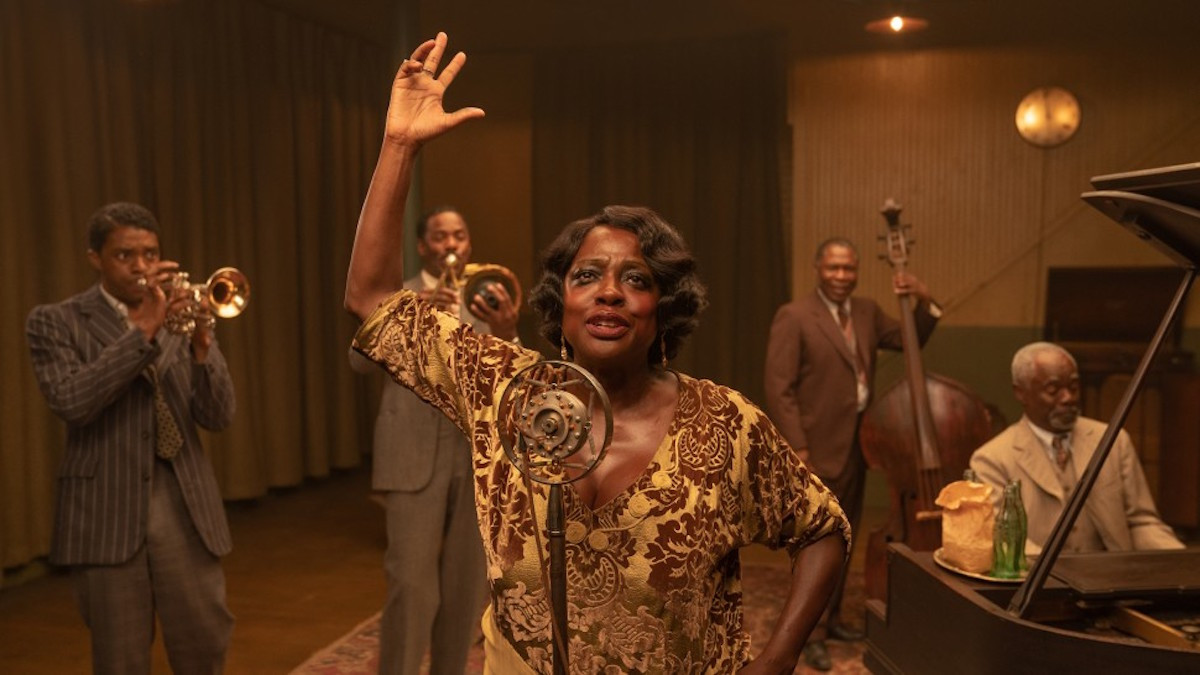
In a Chicago recording studio in July 1927, while the sun beats down outside, blues singer Ma Rainey (Viola Davis) is due to record some of her greatest hits. But she’s almost an hour late. The people who made it on time are her backing jazz band. Cutler (Colman Domingo), Toledo (Glynn Turman) and Slow Drag (Michael Potts) are seasoned pros. But trumpet player Levee Green (Chadwick Boseman) is something else, an ambitious and electric young man who feels he knows what the new sound is in a way that Ma doesn’t. Over an afternoon, as Ma flexes her power upstairs, the white agent and recording studio owner fret, and tensions between the band members slowly simmer towards and explosion.

It’s impossible to watch Ma Rainey’s Black Bottom right now without being very aware of the tragic early death of Chadwick Boseman. Boseman passed away while the film was in post-production, and it’s hard not to guiltily wonder if Boseman was aware this was to be his final performance. Either way, this was a stunning way for this electric, James Dean-like talent to sign off – a scintillating, passionate performance as a man carrying huge burdens and deeply repressed griefs and guilt. August Wilson’s play provides several key set-piece speeches for Levee – and Boseman burns through them with an intensity that will leave its mark on you.

Bright-eyed, with a wiry body of elastic tension that shifts from loose, jazzy movements to rigid bursts of fury, Boseman is extraordinary. Starting the film as seemingly an irresponsible, easy-going young man frustrated at the concessions of his elders, Boseman establishes a deep psychological pain at his core. He’s a young man who has seen his parents vilely mistreated by oppressive white men, who smiles to get what he wants but never forgets that the white bosses he works with see him as little better than a slave, ripe for exploiting. It’s a brilliant performance, one for the ages.

It dominates a film that is told with dynamism but never escapes its theatrical roots. Its set-piece speeches are virtuoso moments for the actors, but the silent observance with which they are watched by other actors feels more suited to theatre rather than the realism of film. The build towards the film’s tragic end, hinging on a moment of violence, is the sort of character breakdown that we accept in the theatre, but seems forced on film – especially when met with the sort of visual tableaux that seems to invite the curtain to come down. Wolfe directs what is very much a conversation piece in two locations with a great deal of energy and imagination – but it remains very much a theatrical venture at heart, where long speeches and elements of Greek tragedy (hubris, nemesis and character flaws) shape the plot.

But it doesn’t altogether matter when the ideas the film tackles are so vibrant and presented with such passion. It’s a film that sharply outlines the racial divide in America. Wilson’s play is all about how master/servant exploitation continues in America. Its early shots establish the only work black people in Chicago can find (all of it manual or secretarial), while the musicians are paid cash-in-hand, even Ma, because no bank will believe a black man hasn’t stolen a cheque.

“All they want is my voice” says Ma, and she’s right. A difficult prima-donna, unafraid of expressing her desires both musical and sexual, Davis is larger-than-life but impressive as the domineering Ma. But Ma behaves badly because it’s the only way she has of exerting some control in this environment. She won’t see the profits from this recording work (it will be the white men running the studio). So, just for a few hours, she wants to remind them that they rely on her. So, she’ll be late. She’ll demand a cold coke. And she’ll insist her stammering nephew speaks the opening monologue of the song, even if that does mean burning through several recording albums to get it right. Because Ma may be an artist, but she’s also a tool to these people – something they will use while she can earn them money, and will then cast aside the second she is done.

It’s the same with the band. And the older hands have accepted it. Sure, they have their resentments and their sadnesses – old pro Toledo even remembers when he had the fire like Levee has – but they understand the game. They are props in the white man’s game, and they are content to earn a decent living from something they like doing, knowing that they are still living a better life than many. Cutler even has his faith to bolster him, a faith Leveee rejects in Boseman’s most electric scene, with a speech that angrily denounces God for his unfairness towards black people.

Levee is another thing again to the rest of them. He has plans and ambitions and wants to form his own band. He’s written his own songs, which have far more of the zip that we know jazz is heading towards. He’ll play nice to get what he wants, but he’s not willing for a second to forget how racist the world is. And he won’t let go of his anger for a moment. Compromise for him only serves a purpose. His youthful defiance and lack of deference spark resentment in the others – who either can’t or won’t understand him – and even Ma, perhaps seeing him as a threat, can’t stand him.

It of course leads to tragedy – and a coda that grimly reminds us all that in this world there may be winners but the thing that unites them all is that they are white. Jazz music may be on the cusp of change – and Ma will pay that price in a few years – but America isn’t. You only need to look at how the musicians are treated to know that equality is a million miles away.

The cast are faultless. Turman carries a quiet sadness and resignation as the ageing Toledo. Colman Domingo is relaxed then taut as Cutler. Taylor Paige has a dangerously selfish energy as Ma’s younger lover Dussie. But it’s still more of a play than a film, even if it is told with pace and energy, acted with such flourish and passion. It leaves you with effective and engaging arguments, but it still feels like it work best in the theatre.