Tag: Comic books

Flash Gordon (1980)


Flash Gordon: Sometimes words fail you

Director: Mike Hodges

Cast: Sam J Jones (Flash Gordon), Melody Anderson (Dale Arden), Max von Sydow (Ming the Merciless), Topol (Hans Zarkov), Ornella Muti (Princess Aura), Timothy Dalton (Prince Barin), Brian Blessed (Prince Vultan), Peter Wyngarde (General Klytus), Mariangela Melato (General Kala), Richard O’Brien (Fico), John Osborne (Arborian Priest), Philip Stone (High Priest Zogo), John Hallam (General Luro)

Well. If almost 40 years on, Flash Gordon is a cult favourite and beloved by millions, then there is hope yet for Jupiter Ascending. By any objective standards, Flash Gordon is a terrible film. But it gets a pass from millions because it’s one people have grown up with. I dread the same reaction to The Phantom Menace from those people whose first exposure to Star Wars was through that film.

Ming the Merciless (Max von Sydow) rules the planet Mongo and decides to destroy the Earth for his own amusement. Disgraced ex-NASA scientist Hans Zharkov (Topol) is the only man on Earth who believes a series of natural disasters are the actions of invaders from space. Zharkov flies a rocket into space to find them – accompanied, for strange reasons, by professional football star “Flash” Gordon (Sam J Jones) and travel agent Dale Arden (Melody Anderson). Arriving at Mongo, they encourage its citizens – especially the forest people led by Prince Barin (Timothy Dalton) and the hawkmen led by Prince Vultan (Brian Blessed) – to unite and rise up against Ming.

Yup you read that right. It’s all as barmy as you might expect. Any film that asks to believe Brian Blessed can fly is always going to be odd. Flash Gordon does at least have its tongue firmly in its cheek. The whole thing is as camp as Christmas. In an age where science fiction and comic books are treated like holy texts, it is at least interesting to see a film that treats its source material with such a breezy lack of respect. The entire film is an exercise in high camp, cheaply put together, that refuses to take anything seriously and actively encourages the respected actors in its cast to take the piss.

So what is Flash Gordon? Is it a big old joke? Yes it probably is. No one is taking it seriously. The actors clearly think it’s a pile of campy rubbish. The producers seem determined to throw as much technicolour cartoon colours at everything as possible. The film is so cartoonish it all but has “Pow!” and “Thwack!” appear on screen as punches land. At a time when Star Wars (and it’s hard to believe it, but George Lucas only made Star Wars because he couldn’t get the rights for this) took its space opera roots rather seriously, this seemed to miss the point completely. It’s a would-be Star Wars rip off that has nothing in common with the tone of the thing its ripping off. Usually that would be a good thing: here I’m not sure it is.

So the dialogue is terrible, the plot line makes no real sense, the film barrels around telling jokes against itself as inopportune moments. Characters shrug off events with no problems at all – at one point a character undergoes brainwashing torture: two scenes later he’s fine (“I just didn’t think about it” he gleefully tells someone. It’s never mentioned again.) The special effects, even for the time, are shockingly bad (the backdrops are sub-Doctor Who. The costumes and design are ludicrously overblown, like an explosion in a campy dressing-up box. It’s a terrible display of excess married with a complete lack of understanding about what made the things it’s trying to rip off successful in the first place. But yet, and yet, and yet it’s still in a terrible, terrible, terrible way quite good fun.

But perhaps the most interesting thing about its campy rubbishness, is how much odd sexual stuff creeps in under the radar. There are also lashings of sadomasochism, incest, orgasms, sex dens, threesomes, swinging, voyeurism – acres of cheeky sexual humour. Ming has a ring that can induce orgasms (it’s so effective on Dale Arden that it’s even commented only Ming’s daughter has had such a response). Ming has a harem, full of opiates to encourage “performance”. There are references to pleasure planets and sex toys. Ming’s daughter is whipped while tied to a bed by Ming’s henchmen (while Ming watches eating some popcorn). The arborians have a bizarre ritual which seems laced with wanking references. It never stops. At least they had some fun.

Some of the actors are also clearly enjoying themselves. Of course Brian Blessed throws himself into it: an actor who never knowingly underplays, Blessed rips through a bizarre role that sees him perform in a jockstrap with some unconvincing wings. Timothy Dalton channels Errol Flynn. Max von Sydow chews the scenery and virtually everything else in sight as a campy, moustachio-twirling Ming. Peter Wyngarde has a great voice and uses it to marvellous effect as pervy security chief Klytus, while Mariangela Melato plays his dominatrix assistant. There are bizarre, eclectic casting choices: so we get Look Back in Anger author John Osborne playing a high priest, Blue Peter’s Peter Duncan as an initiate, and Richard O’Brien (of course!) playing – well to be honest himself.

Sam J Jones is of course simply awful as Flash (wooden, dull and confused). Melody Anderson isn’t a lot better as Dale Arden, while Ornella Muti gets some awful dialogue which she does at least deliver with some conviction (sometimes too much: “Not the BORE WORMS!” sticks in the mind as a bizarre moment of over such over conviction that it simply becomes funny). It’s a bizarre mix of acting styles and overblown, fourth-wall leaning. It’s so bad, I suppose, that to many people it’s good. But actually it gets a little overbearing.

Because nothing is taken seriously at all, the film actually becomes a bit wearing after a while. The writer later regretted playing everything for laughs: it removes any stakes from this ridiculous film. It says a lot that Brian Blessed – the most overblown actor in it – is the only one who really emerges with dignity intact. Blessed at least knows it’s utter crap and plays it like he’s taking the piss in every scene. He commits so fully to the scenery chewing that it sort of works. The rest of the cast can only aspire to his levels of camp. Flash Gordon is a terrible film. But age and fondness have been kind to it, and made it remembered as something better than it is. It’s a misfiring gag with some great Queen songs. It goes on forever, it looks awful but it fails utterly as anything but a joke. But hell maybe that’s enough.

GI Joe: Retaliation (2013)


Channing Tatum and Dwayne Johnson wonder how they landed in this mess in GI Joe: Retaliation

Director: Jon M. Chu

Cast: Dwayne Johnson (Roadblock), Bruce Willis (General Joe Colton), Channing Tatum (Duke), Jonathan Pryce (President of the US), Adrianne Palicki (Lady Jaye), DJ Controne (Flint), Ray Park (Snake Eyes), Byung-hun Lee (Storm Shadow), Ray Stevenson (Firefly), Arnold Vosloo (Zartan), Walton Goggins (Warden James), RZA (Blind master)

Back in 2009, Hasbro (flushed with success from its Transformers franchise) released GI Joe: a humble, straightforward nonsense actioner (almost exactly the sort of film spoofed by Team America) in which gung-ho American action heroes save the world, destroying major cities on the way. It was harmless, Stephen Sommers-directed fun. Critics hated it. Audiences saw it, but were basically meh. It left us on a cliff-hanger. The cliff-hanger led to this joyless, “by-contractual-obligation” reboot.

The villainous Zartan (Arnold Vosloo) has changed his entire DNA to make him an exact physical match for the President of the United States (Jonathan Pryce) and taken his place. Using his powers, he orders a surprise attack on the GI Joe force, wiping out their base. All the Joes, including Duke (Channing Tatum) are killed, except for Roadblock (Dwayne Johnson), Lady Jaye (Adrianne Palicki) and Flint (DJ Controne). Now they need to form a team to take revenge, defeat Zartan and prevent the plans of the newly escaped Cobra Commander.

Oh dear God this is an awful film: a truly dire comic book disaster, terribly written and practically incoherent in its plot and storyline, peopled from top to bottom with bored looking actors. It’s barely a sequel at all to the original film. In fact, it disregards most of the plot of GI Joe: Rise of Cobra altogether, barely acknowledging its existence. None of the plot threads of the first film are carried across at all, with the exception of the replacement of the President. On top of that, all the characters the first film spent time establishing as our heroes are unceremoniously dispatched (mostly off-screen) to be replaced with a trio of new heroes, none of whom make any real impact. Is it just me who feels cheated that all the characters the first film tried to build up just get wiped out like so many wasps when a pest controller comes calling?

Was it really necessary to totally dump the previous film? It wasn’t that bad. And if they were going to do that, could they not have come up with a fresher reboot than this? Who on earth thought the way to make the series fresher was to introduce Bruce Willis (at his most breezily, contemptuously disengaged) as a new hero? The film barely has time to introduce its new heroes: Lady Jaye has Daddy issues and is looking for approval (her Daddy, by the way, sounds like a sexist asshole with his “women shouldn’t serve in the military” attitudes and I was waiting for another character to point this out – they don’t of course), while Flint barely has a character beyond being a cheeky-chappie. When even Dwayne Johnson can barely be bothered to bring his C-game to a role, you know you’re in trouble: this film turns the most engaging action star of our age into a dull rent-a-muscle.

Then the plot. Yawn. Oh dear God yawn. Is there a plot? Not really. Events happen. They keep happening. Occasionally characters (like the “Blind Master”) pop up to essentially blurt out a load of plot, in between rushed character introductions. Turgid fight scenes are given extended screentime – but since they usually involve people we don’t really know fighting people we’ve barely been introduced to, it’s pretty hard to get engaged in them. Nothing really links together or carries any meaning. In fact, the film is about so little – and what plot there is, so clumsily and irritatingly spoonfed to the audience while our heroes take a frustratingly long time to catch-up – that you’ll be surprised the run time is as long as it is. I’ve already forgotten most of it and I watched it two days ago.

I say watched it, because I’m not sure “letting it pass before my eyes” on a Saturday morning over breakfast really counts. Certainly the final battle scenes – involving the storming of a bunker, something blowing up in space, world leaders in peril, and embarrassingly trite “personal rivalry” stories coming to a head – are so unimaginatively filmed, so dully predictable in their execution, that I fast forwarded through them. I just wanted the fucking thing to end. In fact I bemoaned the failure of Cobra to knock off all the Joes to start with. Not that the villains are much better themselves.

Pity poor Channing Tatum. Actually on reflection don’t: he’s well out of it. Tatum and Johnson’s double bill is the most likeable thing in the movie, the only thing that feels remotely real. Tatum was called back for reshoots (as he became more famous in between finishing filming and the planned release date, after the success of Magic Mike) and it’s a neat reminder of what an engaging, off-the-cuff performer he can be: when he kicks the bucket, the film’s most likeable, interesting character goes with it. The other actors just seem interested in picking up a cheque.

GI Joe: Retaliation isn’t a reboot. It’s an execution. It’s not even an execution you can get worked up about. In fact, I would have happily knocked off some of its characters myself. Did we create the language of cinema to come up with something as stodgy and insipid as this? Where is the magic and inspiration, where is the fun? What looking glass did we fall through, that anyone thought this pile of crapparoo was the way to restart a franchise?

Thor: Ragnarok (2017)


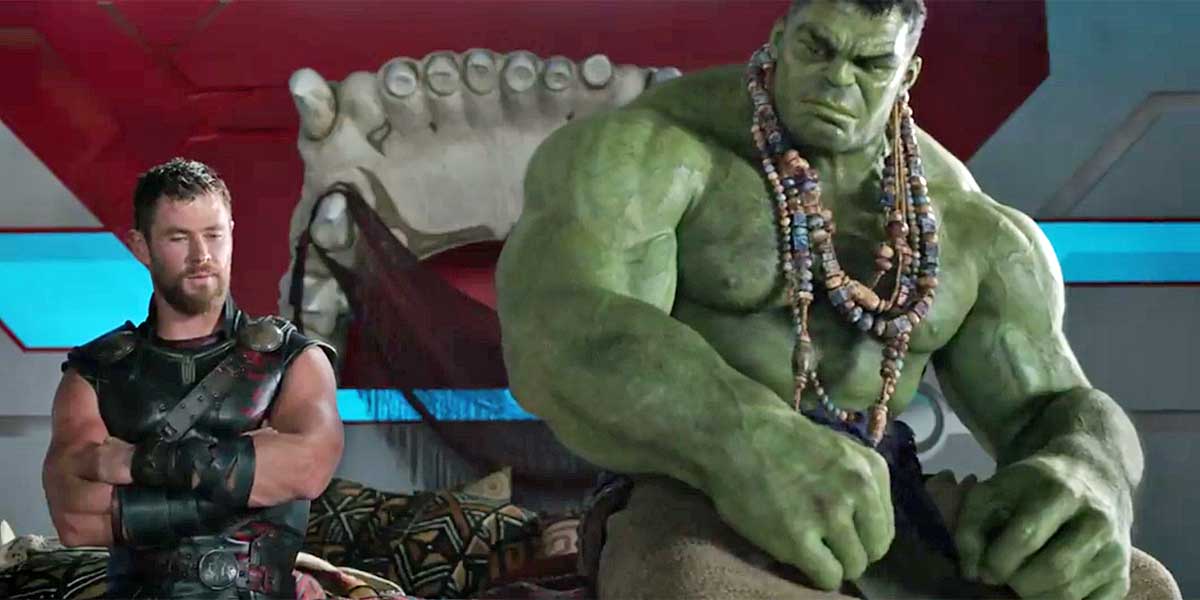
Thor and Hulk: It’s the buddy movie you’ve been waiting for

Director: Taika Waititi

Cast: Chris Hemsworth (Thor), Tom Hiddleston (Loki), Cate Blanchett (Hela), Idris Elba (Heimdall), Jeff Goldblum (Grandmaster), Tessa Thompson (Valkyrie), Karl Urban (Skurge), Mark Ruffalo (Bruce Banner/Hulk), Anthony Hopkins (Odin), Benedict Cumberbatch (Doctor Strange), Rachel House (Topaz), Taika Waititi (Korg)

The Marvel franchise is now on to 17 films. That’s 17 films all in the same universe, with at least three more to come in the next year or so. The weight of franchise backstory has started to feel overbearing, with so many other films to tie into and characters to set up that the individual film itself is left with barely any identity or purpose. How refreshing then to have a film that cuts loose and takes a slightly different tone: a genuine action comedy. Thor: Ragnarok is so tonally different from the other Thor films (let alone the other films in the series) it actually manages to feel like its own beast – it’s as close to a director-led vision as the franchise has got.

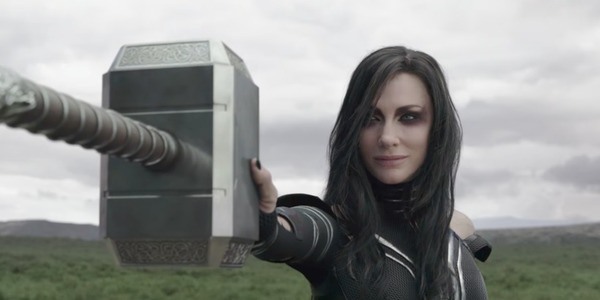
Thor (Chris Hemsworth) has been all over the universe, working to stop Ragnarok (the prophesised end of Asgard). Returning to Asgard, he unmasks his troublesome step-brother Loki (Tom Hiddleston) who has been disguised as Odin (Anthony Hopkins). Travelling to Earth to rescue their dying father, they arrive in time to see his death. Unfortunately, this releases their elder sister Hela, Goddess of Death (Cate Blanchett). While Hela ruthlessly conquers Asgard, Thor is trapped on the planet Sakaar and forced to enter a deadly gladiatorial contest – against his Avenger ally the Hulk (Mark Ruffalo) – all while trying to escape back to Asgard to stop Hela.

Thor: Ragnarok has a plot that ambles at points rather than sprints. But this hardly matters, as its main focus is on entertaining the audience. Waititi creates a sort of punk 1980s wildness, mixed with a fun-loving wit. The result is a film with action, and high stakes – but never takes itself too seriously. It perfectly understands how to puncture grandeur or pomposity of the Asgardian gods with a neat one-liner or a bit of everyday conversational inanity (a lot of the latter comes from Waititi himself, hilariously playing chilled out rock gladiator Korg).

Waititi also allows Hemsworth to let rip with his comic timing rip in a way he’s scarcely been allowed to do since Branagh’s original. It drops the faux-Shakespearean seriousness of Thor: The Dark World, and Hemsworth repositions the character in a more relaxed and charming style. From his opening introduction, undercutting the monologing of a fire demon with a dry series of puns while dangling from a ceiling in chains, he finds a neat balance between seriousness and charisma. Waititi is also (like Branagh) not afraid to let Asgard’s mightiest warrior be the butt of a few sight gags – one laugh out loud moment involving a very strong window is a stand out. Hemsworth demonstrates here he’s a far more accomplished comedian (physically and verbally) than he gets credit for.

This more relaxed Thor is perfect for the rock-and-roll feel of the film. Expertly scored (there is particularly fine use of Led Zeppelin’s Immigrant Song) it has a groovy, 1980s feel. The planet Sakaar is a primary-coloured, odd-alien filled, campy explosion of energy and vibrant punky fun. Said planet is run by the Grandmaster, played by Jeff Goldblum at his most Jeff Goldblumiest ever – if you can picture that you’ve got the tone of the whole planet. This neon lit style is reminiscent of everything from Flash Gordon to The Last Starfighter

The film’s loose comic style also allows a series of fun match-ups, from Thor and Loki (a wonderfully weaselly, fun Tom Hiddleston – still one of the best things in this whole franchise), to Thor and Strange (a lovely cameo from Cumberbatch), Thor and Valkyrie (a neat mixture of drunken self-loathing and female Thor-ness from Tessa Thompson) and lastly Thor and Hulk. The latter provides a lot of the film’s comic gold, the Hulk finally turned into some sort of character with achildish vulnerability and swagger (though the film still finds time for a Hulk penis gag). Waititi also throws in some nice call-backs to previous films – the bunch here set themselves up as the Revengers, while there are multiple references to the mantra used to calm the Hulk in Avengers: Age of Ultron – without making it feel in-jokey. 

There is so much fun in the film, you almost forget the main plot of the film is fairly heavy-going, end-of-the-world stuff. For a Marvel film there is a large body count of recurring characters (at least four bite the bullet here), while Hela’s plot encompasses mass slaughter and destruction. Scenes with Hela are kept short (structurally the film effectively strands her on Asgard to contain her invincibility), so it’s just as well the part is played with such charismatic dryness and imperious arrogance by Cate Blanchett (easily the best Marvel villain since Loki). She’s ably backed up by Karl Urban, adding a lot of complexity to reluctant cowardly turncoat Skurge. Waititi shoots Hela’s rampage of destruction with an exciting dynamism – it’s an action scene that feels different, no mean feat in a franchise that has had so many fights.

In fact most of the action feels very fresh, the fights never out-stay their welcome, and there are some brilliant visual flourishes – the final battle in particular throws in some almost painterly images as Thor and his allies take on Hela’s zombie army. The arena fight between Hulk and Thor is about a million times more interesting than the dull Hulkbuster battle between Iron Man and Hulk in the past Avengers film as Watiti keeps the focus on character rather than pummelling. The film also manages to keep the stakes high – there are always innocent people our heroes fight to protect.

Thor: Ragnarok might well be the most entertaining, fun film Marvel has produced. It’s almost certainly the best Thor film. While The Dark World failed dismally to build on the mixture of earnestness and comedy in Branagh’s original, this one feels like a natural progression of the first, amping everything up into a vibrant, 1980s styled cocktail of action and fun. It’s terrifically entertaining, well paced, anchored in characters we care about, and it just wants to entertain the viewer. You’d have to be pretty cold for it not to succeed.

Wonder Woman (2017)


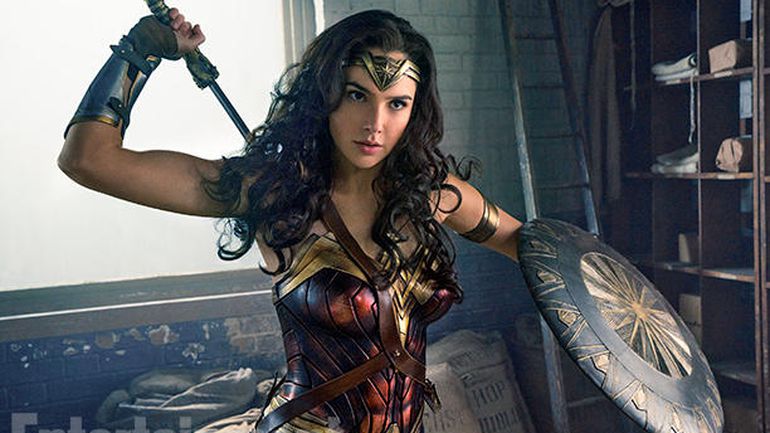
Gal Gadot prepares to save the world as Wonder Woman

Director: Patty Jenkins

Cast: Gal Gadot (Diana), Chris Pine (Steve Trevor), Robin Wright (Antiope), Danny Huston (General Erich Ludendorff), David Thewlis (Sir Patrick Morgan), Connie Nielsen (Hippolyta), Elena Anaya (Isabel Maru), Lucy Davis (Etta Candy), Saïd Taghmaouri (Sameer), Ewen Bremner (Charlie), Eugene Brave Rock (Chief Napi)

The DC universe has largely been a feeble attempt to parrot the success of Marvel, but without the latter’s charm or sense of fun. Each film has been a crushingly, overwhelmingly, teenage-boy focused series of grim super-bashing. So it’s a refreshing change that for their fourth film we get something different: lighter, funnier, warmer and focused on women rather than men.

On a hidden island, the Amazons live in hiding, waiting for the day they will return to save humanity from the villainous fallen god Ares. Diana (Gal Gadot) is the daughter of Hippolyta (Connie Nielson) queen of the Amazons, trained by Antiope (Robin Wright) into becoming their greatest warrior. Their timeless world is shattered in 1918, when American pilot Steve Trevor (Chris Pine) crashlands his plane on the island – and explains the world is torn apart by war. Convinced this is Ares’ influence, Diana leaves the island with Steve – and finds herself thrown into a world she scarcely understands, with only her faith in the goodness of mankind to sustain her.

Wonder Woman is a change of pace from previous DC filmes – largely because it is pretty good. For the first time in this struggling universe, we have a bit of lightness and humour, and some engaging central characters. Which, considering the dark grimness of the previous entries is saying something. It’s bright, feels like a comic book (in a good way), has a decent story arc and, most importantly, you care. Is it the best comic book movie ever made? Of course not, but it’s a damn solid effort.

A lot of this is due to Gal Gadot being such an endearing lead. She gives Diana a perfect blend of serene, super-powered action goddess and naïve, charming lost-out-of-time sweetness. So one minute she can cooing over the first baby she’s ever seen, the next she can be laying out baddies in a scuffle. Her unquestioning faith in the fundamental goodness of people makes her innocence very winning. In fact, her secret weapon is empathy, a quality the film really embraces. Gadot’s skill is in keeping such unremitting goodness and positivity hugely loveable. She is terrific.

The film deals with her head-turning beauty with a witty affection (“You put specs on her and she’s suddenly not the most beautiful woman you’ve ever seen?” Etta comments on one particularly feeble disguise option Steve suggests). In fact, the romance between Diana and Steve (Chris Pine similarly engaging as an “above average” man head over heels in love) is really well drawn – he clearly adores her, while she has a shy, almost teenage crush which blossoms over time into a genuine affection. It’s a very innocent and heart-warming romance, that plays out extremely well.

Needless to say as well, the film makes a fine counter-balance to the leering cameras you see in other films. Diana’s unmatchable competence is immediately recognised by Steve: while Steve understands the world, Diana is very much the hero, for all her fish-out-of-water naïveté. The film holds off a reveal of the costume for a long time – but when it is, it’s not a sexualised moment, but one of awe. The opening section of the movie, with its Amazonian islanders, also allows plenty of ass-kicking to be given to the women (Robin Wright is especially terrific as an Amazonian general – she should get her own Taken style action series).

Wonder Woman is not perfect. Structurally it’s pretty similar to other origin stories. Much of the backstory makes little sense, while the powers (or not) of the Amazonians in comparison with Diana are poorly explained. Away from the charm of the lead characters, nothing feels particularly new – none of the action sequences feel unique, and are shot with competence rather than inspiration. The final battle briefly looks like it might do something different, before it becomes an all too familiar CGI bashing.

I’m also not sure about setting the film in the First World War. Seeing Diana lead a successful charge through the trenches where real people died in their thousands, somehow doesn’t sit quite right. It’s uncomfortable to watch a cartoon hero walking across no man’s land into gunfire, just as thousands of real people had to, but without super-powers to make it a moment of awesome cool. They just died; it wasn’t the setting for an action sequence, oh a moment of “wow she’s cool”.

I’m not sure about the film’s use of the grim trenches of the First World War for kick-ass action

Unlike the Second World War (where at least we know the SS were completely despicable) its portrayal of German soldiers as mostly faceless villains feels unjust – these were largely just ordinary people in a horrendous situation. Making Luddendorf a psychotic, lunatic also feels uncomfortable – he was real. Would it have been so difficult to make up a General von Baddie? (It doesn’t help that Danny Huston gives a truly abysmal performance of over-the-top hamminess). This is an area where Captain America handled its setting much better – the film may have been set in a real war, but the villains are specifically Hydra soldiers, a made-up army of made-up people who had consciously sworn allegiance to Evil. The First World War was a complex tragedy in shades of grey – presenting it as a good vs evil, with the Germans eager to embrace a horrifying nerve gas, just doesn’t feel right.

The strengths of the film are away from the action, and I think that’s why it has formed a bond with people. You genuinely care and root for Diana and Steve. It’s got wit and humour and it doesn’t take itself too seriously. When the action really kicks off the film isn’t anything special, but before then it has its moments: a charming sequence where Diana tries on (and breaks with various fighting moves) female costumes of the 1910s; a beautiful Renaissance-painting style flashback to the backstory of how the gods fell; the early fumbling scenes of romantic interest between Diana and Steve. It’s where the heart of the film is.

In fact that’s what the film is really about (and what really makes it work) – the heart at the centre. It gets a little bit lost in all the booms and bombast of the second half, but there is more than enough of it in the first half to carry it through. When the film is tightly focused you can really feel it coming to life. The more of that the better. It’s also a breath of fresh air for presenting such a strong female lead, whom the men are defined by their relationship to (rather than vice versa). It’s fun and it’s heart-warming. Its old ideas presented from a fresh perspective

Ant-Man (2015)


Paul Rudd springs into action as Ant-Man

Director: Peyton Reed

Cast: Paul Rudd (Scott Lang), Michael Douglas (Hank Pym), Evangeline Lilly (Hope van Dyne), Corey Stall (Darren Cross), Bobby Cannavale (Paxton), Michael Peña (Luis), Anthony Mackie (Sam Wilson/Falcon), Judy Greer (Maggie), Hayley Atwell (Peggy Carter), John Slattery (Howard Stark)

Back into Marvel’s Cinematic Universe, as yet another comic book hero comes to the big screen. Is there going to be anyone who has appeared in a Marvel comic at any point who isn’t going to find their way into a live action film at some point? It’s looking unlikely!

Hank Pym (Michael Douglas) was formerly Ant-Man, a super-hero who can shrink himself to the size of an ant, with superhuman strength. In the present, he has been forced out of his own company by his former protégé Darren Cross (Corey Stoll) and his estranged daughter Hope van Dyne (Evangeline Lilly). When newly released thief Scott Lang (Paul Rudd), desperate to provide for his daughter, steals Pym’s Ant-Man suit, Pym identifies him as the man who he can train up to take his place as Ant-Man and help to protect the shrinking technology from being misused by Cross.

Ant-Man was a project developed for many years by Edgar Wright, dynamic director of the Cornetto Trilogy with Simon Pegg and Nick Frost. But our old friend Creative Differences reared its head, and studio and director went their separate ways. Which is a real shame as you can’t shake the feeling a director with genuine invention and imagination might have been able to craft something truly original out of this, rather than the essentially solid piece of craftwork it is.

There’s nothing particularly wrong with Ant-Man. It’s just a rather average, forgettable film with moments of interest. It’s a jolly, inoffensive little caper, which goes through the motions of the origins story of a hero without offering anything that different from what we’ve seen dozens of times before now. It’s all very professionally done, and even witty in places, but it’s nothing special.

This is particularly a shame since there are genuine moments of originality. A battle between Lang and Cross, both shrunken, takes place in a child’s train set, with the film cutting between the different scales of events for some effective comic impact (so we see the train crash with seismic impact on small scale, then see the same event at normal scale where it seems laughably minor). Similarly, Michael Peña’s character tells a series of anecdotal stories in voiceover in a laid back, hipster patter, with his words and phrasing exactly lip-synched by the people in the story. It’s a neat little piece of cinematic invention.

The heist structure of the film is good fun, and the pseudo-science of shrinking is entertainingly (and consistently) explained. Even our hero’s ability to control ants doesn’t seem too silly (which is really saying something).

It’s just all pretty much what you would expect. Corey Stoll’s villain in particular seems a slightly contrived after-thought, an antagonist whose existence serves as a contrast to Lang and Pym rather than a character who seems to be organically developed. Their final confrontation is amusingly done – but it’s a familiar Marvel trope now: a hero and villain with the same powers facing off. We’ve seen it done many times since the first Iron Man film.

Saying that, Paul Rudd is a decent and engaging lead (even though he seems to be effectively playing himself) and he makes Lang into a character it’s easy to root for (even if we’ve seen the sort of “Dad wants to prove himself” narrative many, many times before). Michael Douglas could do his mentor role standing on his head, but brings the role a nice lightness of touch. Evangeline Lilly brings a nice mix of resentful and caring to a tricky role as Pym’s overlooked daughter.

The problem you always have is that everything in the film feels a little bit too straight-forward and easy. It’s not a bad thing that this is a film that simply sets out to entertain, but somehow, enjoyable as it is, you want something a little bit more rather than the rather safe concoction that we have here. It’s fun while it lasts but then it disappears from your mind almost completely once it’s finished. Is that a good thing? Well it makes good escapism. But plenty of these films have managed to be more than just something to enjoyably pass the time. Which is all Ant-Man really is.

The Amazing Spider-Man 2 (2014)


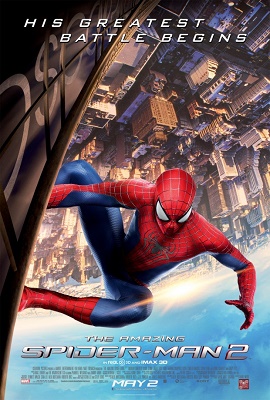
Spider-Man retreats in full flight from the shocking explosion of this film behind him

Director: Marc Webb

Cast: Andrew Garfield (Peter Parker/Spider-Man), Emma Stone (Gwen Stacy), Jamie Foxx (Max Dillon/Electro), Dane DeHaan (Harry Osborn/Green Goblin), Colm Feore (Donald Menken), Felicity Jones (Felicia Hardy), Paul Giamatti (Aleksei Sytsevich/Rhino), Sally Field (Aunt May), Campbell Scott (Richard Parker), Embeth Davidtz (Mary Parker), Marton Csorkas (Dr Kafka), Chris Cooper (Norman Osborn)

The Amazing Spider-Man 2 was set to launch a Spider-Manfranchise that “would last a THOUSAND YEARS!!!”. It didn’t. In fact this bloated, poorly constructed, overlong mess killed those plans stone dead. It says a lot that a film which took $709 million worldwide is considered a flop. But the reaction to the film was so mehthat there was no desire to see any further films about this Spider-Man. On every count the film is a catastrophic failure.

Peter Parker (Andrew Garfield) is enjoying the life of a super-hero, while struggling to maintain his relationship with Gwen Stacy (Emma Stone) due to his guilt over her father’s death. That sentence, by the way, demonstrates how schizophrenic this film’s tone is: a hero who loves life and simultaneously is plagued with guilt? He’s also obsessed by finding out what happened to his parents (killed off in a superfluous pre-credits flashback, setting up a mystery the film loses all interest in). At the same time, he must take on obsessive loner fan Max turned supervillain Electro (Jamie Foxx), and old friend Harry Osborn turned supervillain Green Goblin (Dane DeHaan).

After a so-so remake of Sam Raimi’s first Spider-Man, Sony seemingly decided to skip Spider-Man 2 and jump straight to a remake of the reviled Spider-Man 3. Many of that film’s disastrous mistakes are made again: romantic tension that never feels real, action sequences that feel like trailers and, worst of all, stuffing the film to the gills with villains (at least four characters can lay claim to being major primary or secondary antagonists). It also makes its own mistakes, chucking in endless references to a dull, confusing ‘mystery’ around Peter’s parents (that will never now be resolved).

On top of all that, there is something so nakedly grasping about Amazing Spider-Man 2 it’s almost impossible to love. It’s such a greedy film that almost every conversation and stray camera shot tries to set-up potential future movies (the low point being a camera pan down a room full of devices that will become the weapons of future baddies). The plot gets constantly drifts down side alleys as it frantically tries to establish enough plots for the studio to keep churning out films over the next five years. This also means it goes on forever without any real sense of impetus developing in the story.  The action is so nakedly shot with an eye on the trailer, that nearly each fight is literally shot with a crowd of people watching behind barriers, cheering events on.

Whatever happened to the trick of making a successful franchise being to make a good movie? Imagine a film focused on a single villain plotline, and played that off against a relationship drama (something like, say, Spider-Man 2). That might have been something worth seeing, that might have made you think “well I enjoyed that, I wouldn’t mind seeing another one”. But this film is little more than an extended trailer for films to come – it’s as soulless and empty as a piece of marketing puff.

Any ‘emotional’ moments are placed so blatantly as filler between the action that they carry no resonance. Does anyone give a toss if Gwen Stacy goes to London or not? Was anyone actually moved at all when she (spoiler!) dies at the end? For all of Spider-Man 3’s faults, at least when Harry Osborn went bad it resonated, as audiences had seen his and Peter’s relationship play out over two films. Here Harry is introduced, the next scene he and Peter openly say they are best friends, then they barely spend any further time together before Harry’s “shocking” volte-face. If the film can’t be bothered to spend any time earning it, why should I spend any time investing in it?

Andrew Garfield’s Peter Parker has his fans, but I’ve found him (in both films) an insufferable, cocky prick. Garfield is a very good actor, but his direction to play Parker as a young buck completely fails. His wisecracking persona works as Spider-Man, but falls flat as Peter, who never seems particularly sweet, relatable or endearing in a way Tobey Maguire managed so well. The parental plotline doesn’t help here either: having spent the first film not really giving a toss about the death of Uncle Ben, here he outright obsesses over his parents in a way that just doesn’t ring true, particularly as it carries with it an implicit rejection of Aunt May. His borderline controlling/stalkerish behaviour with Gwen Stacy is also pretty hard to stomach (he spends half the film telling her what to do, the other half either following her or openly stating he will never let her go – okay weirdo…)

It’s quite damning that despite all this, Garfield (and to be fair, Emma Stone) is the best thing in this lifeless pile of stodge. Jamie Foxx is so hilariously miscast as Electro it skewers the whole movie (surely part of the reason why he is in it so little). Foxx can’t resist showing the audience all the time that he (the actor) is far smarter, cooler and popular than the character – his contempt for the role drips off the screen. DeHaan overacts wildly as Harry, bested only by Giamatti’s cartoonish overblown shouting. Field cashes her cheque with professionalism as Aunt May.

People aren’t stupid. They can tell when they are being ripped off. And they can tell when a studio flings bangs and bucks at the screen with no heart and soul behind them, when a film’s been made by people who want to fleece fanboys, rather than create something that speaks to their love of the material. It’s the problem with both of these Garfield Spider-Man films (and to a certain extent Raimi’s last one). They are soulless, dead films made by committees. They listen to all the worst cries of the fans and then try to give them everything at once. They end up giving them nothing. Which is what this film is: a big, empty pile of nothing.

Avengers: Age of Ultron (2015)


The Avengers Assemble to take on robotic villain Ultron

Director: Joss Whedon

Cast: Robert Downey Jnr (Tony Stark), Chris Hemsworth (Thor), Mark Ruffalo (Bruce Banner), Chris Evans (Captain Steve Rogers), Scarlett Johansson (Natasha Romanoff), Jeremy Renner (Clint “Hawkeye” Barton), James Spader (Ultron), Samuel L Jackson (Nick Fury), Don Cheadle (James Rhodes), Aaron Taylor-Johnson (Pietro Maximoff), Elisabeth Olsen (Wanda Maximoff), Paul Bettany (JARVIS/Vision), Cobie Smulders (Maria Hill), Anthony Mackie (Sam Wilson), Hayey Atwell (Peggy Carter), Idris Elba (Heimdell), Stellan Skarsgard (Erik Selvig), Thomas Kretschmann (Baron von Strucker), Linda Cardellini (Laura Barton)

The Marvel Cinematic Universe: with the wrong director, it can be top a heavy mess, but Whedon showed with the first Avengers film that the right writer/director can weave the competing plotlines into a story that win overs an audience and leave them thrilled and entertained. His problem here was repeating that trick with the sequel.

After (it seems) finally defeating HYDRA, the Avengers relax at last – little knowing that Tony Stark (Robert Downey Jnr) is using multi-film-macguffin Loki’s staff to explore the possibility of creating an intelligent army of robots to defend the Earth. Instead, he creates Ultron (James Spader), a deeply flawed robotic version of his own personality, who grows to believe the best way to save the world is to wipe out mankind. Time for the Avengers to saddle up once more!

The greatest nemesis the Avengers faced here was that the first of these superhero smackdown films (2011’s Avengers Assemble) was far better than anyone had a right to expect. It was witty and had a plausible script, a very good villain in Tom Hiddleston (much missed here), and a winning structure that saw our heroes initially far apart and later drawn together into a family. On top of that, it gave all the jaw-dropping action and geeky thrills of watching iconic characters fighting together (in every sense of the word) that the fans expected. It worked so well that, consciously or not, Whedon ended up imitating it its structure here.

Both films open with a piece of shady alien tech: it’s stolen, and our heroes’ noble intentions for its use which   backfire. The villain is an outcast with a personal (familial) connection to one of our heroes (Ultron is, to all intents and purposes, Stark’s son). A first attempt to take on the villains ends in chaos as no-one works together, leaving the gang disheartened. Hulk is unleashed, causes chaos and needs to be restrained. A pep talk from Fury perks the gang back up. They head back into a battle over a city, against overwhelming odds, where they finally work together and turn a weapon of mass destruction into their salvation. With some small thematic twists and some adjustments to the plot they are fundamentally the same movie.

This might be connected to the greater studio interference Whedon dealt with. This conflict of visions results in a wonky balance between pay-off from past films and build up to future ones, and several plot lines being poorly developed. Most obviously most of Thor’s sub-plot ended-up on the cutting room floor. What was meant to be a series of revelations about infinity stones turns into essentially Chris Hemsworth sitting in a puddle. Whedon confirmed that the studio instructed he delete either this sequence or the sequence set at Barton’s log cabin (the emotional heart of the movie) so it’s not surprising that this paid the price. Needless to say, not a frame of the terrifically dull and overextended Iron Man vs. Hulk battle was allowed to hit the cutting room floor.

This confused cutting down of ideas is present throughout the movie. Villain Strucker, introduced with fanfare at the end of the last movie, is unceremoniously bumped off off-screen. Andy Serkis pops up to serve as an introduction to a future movie. The creation of Paul Bettany’s Vision is only vaguely explained. Ultron is never really given time (despite a pitch perfect performance of cold smarm from James Spader) for his plans to fall into shape, or for the audience to really understand him as a character. A backstory for Natasha is fitfully sketched out – but with hardly any time to explore it, the final product was so clumsily done that the film drew heavy (unfairly personal) criticism from the Twitterati, claiming Whedon was denouncing any woman choosing not to have children (“I’m a monster” says Natasha remembering her brutal education, which included GBH, murder and her voluntary sterilisation). He clearly isn’t, but as the plotline is rushed, it becomes easier to read an unintended message in it.

The area Whedon does handle well is juggling the huge number of characters he needs to keep tabs on at any one time – with careful plotting and some decent, fleet-footed scripting, he manages to allow each of the heroes a moment in the sun and a chance for the actors to breathe and perform. Those moments where the film takes five and doesn’t worry about the explosions and comic lore are the ones that work best – and also, perhaps, the ones most warmly embraced by the fans (never the best judges of what they think they will like – in advance they would probably have named the bland Iron Man-Hulk battle as the movie’s big sequence).

There’s a reason why most people would probably remember sequences like the party scene, where our heroes playfully take it in turns to lift Thor’s hammer: they feel real and they deal with emotions and friendships that we can understand and relate to, in a way we can’t with a giant robot man hitting a big green guy for no real eason (can you tell I didn’t like that bit?). It’s why the sequence Whedon fought so hard to keep in the film – Barton’s log cabin – feels genuinely rather sweet and moving. These are sequences where our characters behave like human beings, and they are the sequences that make us connect with the film.

Anyway take a look at these two scenes – which is more interesting and engaging? Make up your own mind!

The best Marvel films have always had an eye for the incongruous insertion of our heroes into a real world. And by placing Barton (an empathetic Jeremy Renner) front and centre as the moral cornerstone of the film, contrasting his (albeit well-trained) normality against the Gods he fights with, Whedon allows elements of relatability to anchor the film. Renner makes an awful lot of Barton’s wistful longing for something away from Avenging, while his relationship with his wife (who “fully supports your Avenging”) is one of the first relationships in these films that feels like it could be from a regular movie.

It’s strengths like this that Whedon brings to these films. It’s not directorial vision – at heart Whedon is quite a televisual director, using simple camera set-ups without much visual flair. The action the film provides is entertaining enough, but in truth we’ve seen all this super action before, and few of the set pieces are really memorable. Even a few days away I’m struggling to remember them all. Which is not to say they are badly staged at all – they’re just nothing new or special, and in many ways just higher budget developments of things from the first film. Whedon’s real visual strength is in his instinct for a comic beat or sight gag – and the film delivers several of these.

Whedon also crucially forced through (against studio objections) the death of Quicksilver. Marvel strongly urged a cop-out final shot of Quicksilver either in a hospital bed or in recuperation, but Whedon wisely stuck to his guns. It was an important struggle, as it forces a sense of peril into this world and gives the viewer the sense that sometimes things might not always turn out well. This is particularly important, since Stark’s entire plot about his fears would make no sense in a world without stakes or consequences. It also allows Whedon to do some very neat audience misdirection with Barton – how many of us, watching Barton solemnly promise his wife that this will be ‘one last mission’, were expecting him to bite the big one later in the film?

Avengers: Age of Ultron is a compromised film, but still a decent one. It’s not in the top five Marvel films, let alone the top five superhero films, but it’s entertaining, has some decent action – and, above all, Whedon manages to put a bit of heart in heart, enough for us to care about the characters. It’s this factor so many of these films miss out on – and it’s a reason that, while Age of Ultron is flawed, it’s not fatally so, and will continue to entertain for a good many years yet.

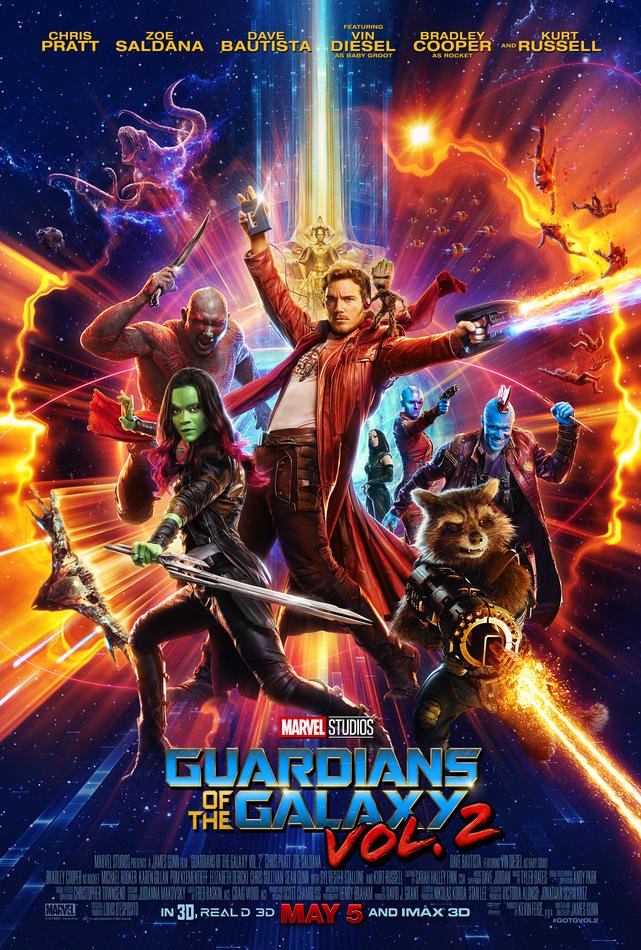
Guardians of the Galaxy Vol. 2 (2017)

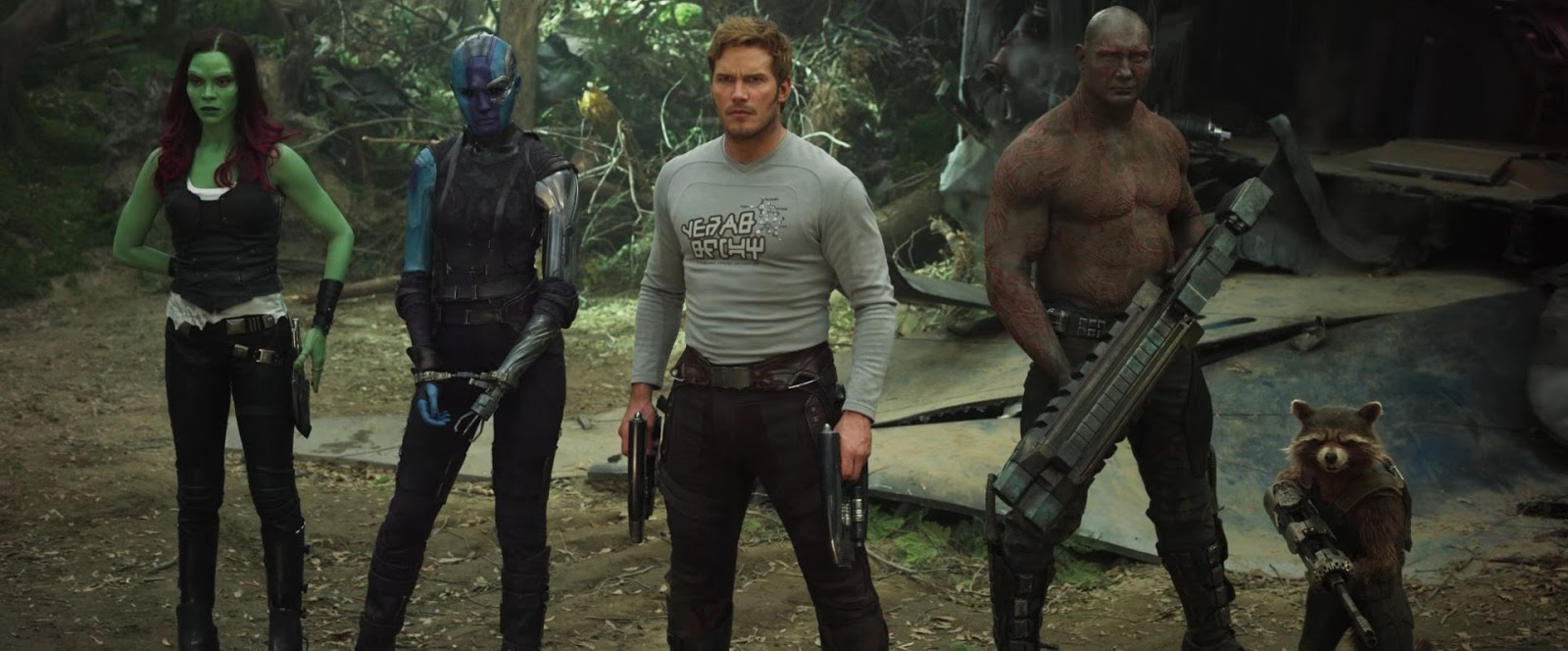
Our heroes line up for action in a fun follow-up to a more fun movie

Director: James Gunn

Cast: Chris Pratt (Peter Quill), Zoe Saldana (Gamora), Dave Bautista (Drax), Bradley Cooper (Rocket), Vin Diesel (Baby Groot), Michael Rooker (Yondo Udonta), Karen Gillan (Nebula), Pom Klementieff (Mantis), Kurt Russell (Ego), Elizabeth Debicki (Ayesha), Sean Gunn (Kraglin), Sylvester Stallone (Stakar Ogord)

In 2014, Guardians of the Galaxy was expected to be Marvel’s first flop: an odd collection of ridiculous looking characters, from a comic book few had ever heard of. Instead, its oddball charm and wit made it one of the most popular in the franchise. This is the tricky second album, which has to deliver more of the same while trying to build on the first film.

Set a few months after the first film, the Guardians are left stranded on an alien planet after a job for elitist race The Sovereign (led by a drily witty Elizabeth Debecki) goes badly wrong. They are saved by Ego (Kurt Russell) who reveals himself as Peter Quill’s long-lost father. Quill (Chris Pratt), Gamora (Zoe Saldana) and Drax (Dave Bautista) follow Ego to his homeworld, while Rocket (Bradley Cooper) stays to repair the ship with their captive Nebula (Karen Gillan). While Ego’s world hides a range of dangers, Rocket and Nebula come under attack from Peter’s former guardian Yondo (Michael Rooker), whose pirates have been hired to capture the Guardians.

First the good things: this is a very entertaining film, packed full of funny lines and entertaining moments, solidly acted (with some stand-outs) by a cast who are able to communicate their enjoyment with the audience watching. Like the best of the Marvel films, it focuses on a core cast and establishes an audience bond with their characters very swiftly, and care about their fate. The focus of the film is actually skewed in favour of character over plot and action, which makes a nice change from many of these films (the action quotient is actually fairly low for a Marvel movie, and a large chunk of the film largely involves spending time with our heroes). It’s also admirable that the film doesn’t shy away from the fact that, to varying degrees, all of our heroes are in some way anti-heroes, or perfectly willing to perform selfish, dangerous or questionable acts for their own immediate gain (even if on the bigger issues their hearts in the right place).

It’s clear what type of movie you can expect right from the opening credits, where the camera focuses on (adorable) Baby Groot dancing to music in close-up, while (out of focus) our heroes combat a space monster in the background, each of them at key moments interacting with Groot in a way that demonstrates their character. It’s a lovely, witty way of opening the movie (perfectly scored to ELO’s Mr. Blue Sky) and firmly states that character and personality will be central. Baby Groot is, by the way, possibly the star of the movie, Gunn making sure the character isn’t overused or becomes wearing. The film gets the tone more or less right: it would be easy for this to feel like a private party we’ve been invited to watch, but it just about feels inclusive enough (and avoids smugness or self-satisfaction at its own wit) to remain charming and fun.

The focus is so much on jokes and fun that the actual plot of the movie is a little bit weak: a (predictable) villain reveal is made late-on, seemingly to give the film an antagonist. The actual plot content of the film is pretty lightweight. What plot there is, is nothing new (Daddy issues, spliced with Universe-in-peril) I’d also say that the films length is probably a bit too much – considering not a lot really happens, the film takes a long time to do it – it could do with a bit more discipline in the editing room, and a bit more willingness to trim out some of the material. This is, however, not a major problem –– and the film just gets away with it because it gets the character moments so right you simply enjoy spending time with this group, even if what they are getting up to is little more than a second-rate episode of Star Trek.

Where Guardians 2 falls a little bit flat is the wearily on-the-nose “emotional” sections of the script. While in the first film much of this goes unspoken, here several scenes are featured where the characters carefully spell out their feelings. The most egregious examples are an almost laughably overplayed game of catch between Peter and his Dad, and a terrible “everything spelled out” conversation between feuding sisters Gamora and Nebula. Whenever this film goes near this emotional content, its points land with heavy punches, while coating the content with sticky sentiment that gets “bad laughs” from the audience. The film has plenty of well-crafted and funny impact lines, but its script rushes through the areas where depth is needed, and doesn’t seem to trust the audience to understand the emotions that underlie the bickering between the characters, or that some of them may be tempted to do terrible things to fulfil their emotional needs. Only the final sacrifice of a character really works – and that’s because it is the only emotional connection that is quietly built in the background of the movie, rather than in the foreground.

But that’s probably a movie trying too hard for good reasons, rather than bad. There is more than enough here to recommend the film. Interestingly, Pratt’s Peter Quill is largely sidelined for chunks of the film (the fact that its nominal plot is all about Quill and he feels like a supporting role tells you how weak the plot is) so other members of the cast really stand out. Saldana has a slightly thankless role as the “Big Sister” of the group, but manages to bring a lot of unspoken depth to her role. Bautista provides excellent comic relief as Drax (though his lines are such gifts, it would be hard to screw them up), Baby Groot is very funny, Cooper’s Rocket has a juvenile, rebellious attitude that  that deserves a more interesting subplot. Surprisingly though, the film is repositioned more as a redemption journey for Michael Rooker’s space rogue Yondo, and Rooker delivers a surprisingly emotional performance as a confirmed killer and thief struggling with his conscience. Gunn allows him contemplative moments that really ring true within the chaos of most of the rest of the film, and this feels like one of the best displays of simple “acting” you’ll see in the MCU.

Guardians 2 is not a perfect film, and I suspect its weak plot, predictable and uninteresting villain, and often ham-fisted emotional moments will grate more and more once the exuberance of the ride has worn off on the second or third viewing. But it’s got a lot going for it: genuinely funny jokes, an intention to entertain which it largely succeeds in, some charming performances and enough action in it without letting that overwhelm the film. It’s a roller-coaster rather than a gift that will keep giving, and it lacks the first film’s well balanced plotting and world-building, but it’s entertaining and a great deal of fun (if 20 minutes too long) and the final reel’s sad events do carry an emotional weight (because they are based on largely unspoken feelings) that will stay with you after the film wraps. Not as fun as the first one – but still better than many others.

Logan (2017)


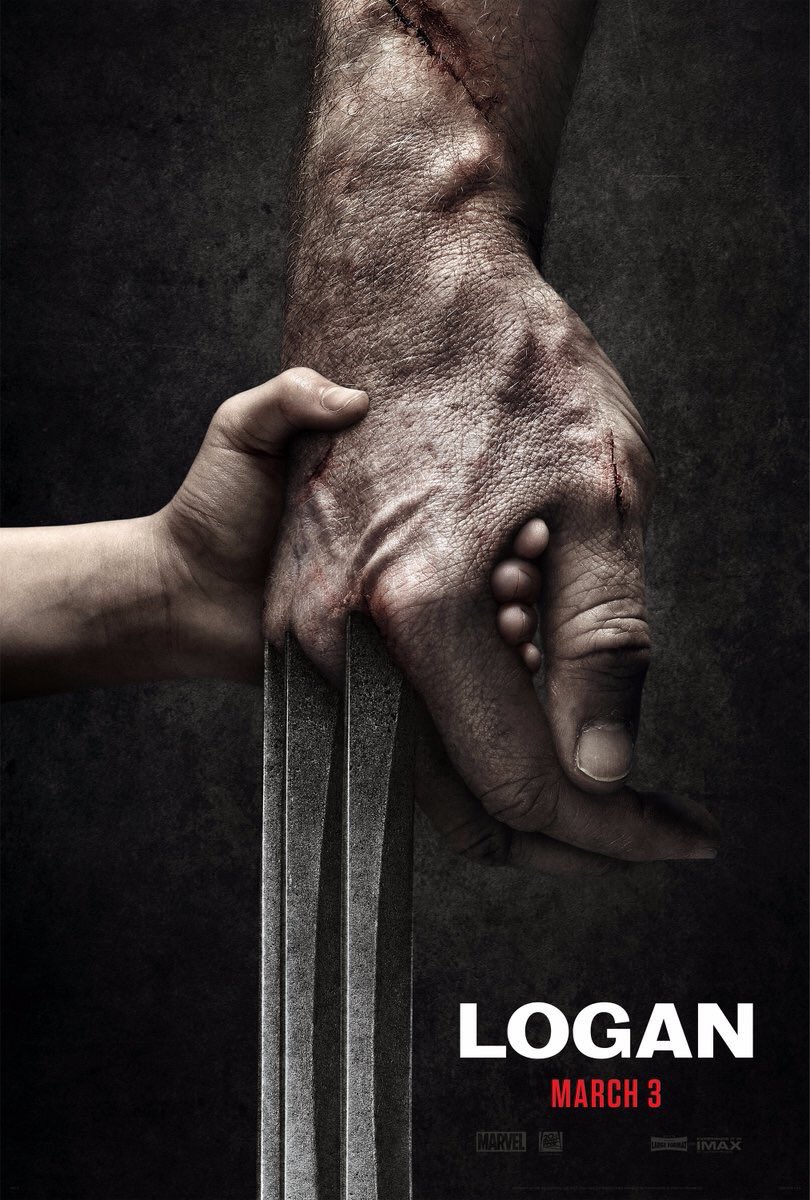
One looks at the past, the other their potential future in bleak superhero thriller Logan

Director: James Mangold

Cast: Hugh Jackman (Logan), Patrick Stewart (Charles Xavier), Boyd Holbrook (Donald Pierce), Stephen Merchant (Caliban), Richard E. Grant (Dr Zander Rice), Dafne Keen (Laura), Eriq La Salle (Will Munson), Elisa Neal (Kathryn Munsun), Elizabeth Rodriguez (Gabriela Lopez)

What were you doing 17 years ago? Personally, I was still at school: but Hugh Jackman was being parachuted into X-Men to take on the role of Wolverine after Dougray Scott’s shooting schedule on Mission Impossible 2 forced him to drop out. Since then he has appeared in eight films as the clawed superhero, some good, some shockingly bad – and this is his swansong. Taking a paycut, Jackman wanted to make the Wolverine “you’ve seen in the comics”: did he succeed?

The year is 2029 and mutants are nearly extinct. Logan (Hugh Jackman) lives in Mexico on an abandoned farm, caring for former X-Men leader Charles Xavier (Patrick Stewart), now suffering dementia and brain seizures with lethal effects on those around him. When young mutant Laura (Dafne Keen) arrives needing their help, Logan and Charles find themselves (reluctantly in Logan’s case) on one last adventure, travelling to reunite Laura with other new-born mutants – with a band of lethal mercenaries on their tail. Naturally a string of bodies follows in their wake.

Firstly I think its fair warning to say this is a bone-crunchingly, head-skeweringly, blood-spurtingly violent film. It’s easily more violent than every other X-Men film put together quadrupled. It’s also littered with strong swearing. To be honest, I’m surprised it’s not an 18 certificate – lord knows what strings they had to pull. Mangold’s intention is to show us what battle would actually be like if you were fighting with impossibly sharp knives for hands: limbs are hacked off, chests ripped to pieces, heads are punctured, bits of brain litter the floor. 

There is no romanticism of any of this violence – and the film needs to show it, as its primary theme is the impact a life full of this sort of extreme slaughter would have. Even Logan, his regenerative powers severely decayed, stumbles and limps through the action, often totally outmatched by those he fights – even a gang of car thieves get the jump on him in the opening scene. In fact, that scene serves to establish the mood of the film very quickly: Logan is slow and out of shape and eventually has to resort to extreme and brutal violence to desperately end the fight as quickly as possible. 

The action in the film is impressively filmed but never triumphalist in execution, and the overriding emotion is pain and sorrow. In many ways, it’s a bleak and depressing film, with precious little hope (it does find some peace and optimism in the final frames, but it’s almost the first time this happens). It has a huge body count, and many of the deaths hit home as both deserving and undeserving suffer. In this world there are no good decisions – whatever Logan decides to do, people around him suffer: and it’s the truth of this throughout his life that has led to such pain behind his eyes. The film’s comparatively small scale compared to previous films in the franchise helps keep the focus intimate and personal.

Its setting of course brings Westerns to mind, but also in its sense of the grim passing of an age. Emotionally, both Logan and Charles are exhausted and struggling under impossible burdens of guilt and sorrow., it’s a nihilist Western, a homage to especially perhaps to Shane and The Searchers. Mangold’s direction seizes these contrasts and infuses every frame of the film with visual and stylistic homages to this iconic American genre: even the inclusion of X-Men comic books “in-universe” gives the heroes the feeling of being, Wyatt Earp style, living legends, struggling to carry that burden.

Interestingly this is probably one of the first films that feels like a post-Trump movie. The future America it shows is grim and depressing, with big corporations ruling the roost and the little guy trodden down. The health system is a mess. The film is set partly across the border in Mexico (with brutally tight border control preventing easy passage). A large section of the plot even revolves around a desperate attempt to flee across a border before it is closed down. Of course it’s probably just part and parcel of the standard cinematic crapsack future, but right now the tone and mood of the film feels very much in sync with modern America. 

Hugh Jackman is of course front and centre in this film, and you can see straight away this project is a deeply felt one for him. Unlike any other X-Men film before, this is a character study and allows Jackman to first and foremost act. And he is terrific. With Logan’s powers failing, not only is he able to offer a very different physical performance than ever before, he also allows the character’s vulnerability, defensiveness and fear to come to the fore. Jackman explores the continual conflict in the character between his rage and isolation and his empathy and desire to be good. His protectiveness of Charles is balanced throughout by his deliberate distancing himself from Laura, as if he knows anyone whom he allows to get close will suffer. Jackman makes Logan feel old and beaten down, without losing the sense of fire under the surface.

There are in fact terrific performances throughout the film. Patrick Stewart similarly has never had a better written X-Men role in 17 years, and he makes the witty, profane, bitter but still optimistic and kindly Charles Xavier a stand-out. The interplay between him and Jackman is superb, drawing on the emotion of that years of working together on these films. Dafne Keen is a real find as Laura, convincingly feral and never less than compelling, even though she barely speaks for 2/3rd of the film – Mangold’s direction of her is perfect, drawing maximum impact from her performance. She perfectly captures the sense of being a younger version of Logan, struggling to understand the world and the impact of killing: is it any wonder Logan feels uncomfortable looking at her? Boyd Holbook is very good as a dry mercenary while Richard E Grant draws the maximum from limited screentime as a frightingly calm “mad” scientist.

While this is something very different from previous X-Men films, it’s not a perfect film. In terms of violence, I would argue it sometimes goes too far, like an excited child looking to see how far it can push us. It’s main problems are with narrative: far too many plot devices in the film are signposted like Chekov’s Guns, drawn to our attention in a forced way (often twice in case we forgot) so that most audiences could guess where events are going (there is only one real surprise in the film, and that one I defy you to really see coming). Similarly, while the film’s debt to classic Westerns is clear, to have the characters actually sit down and watch Shane seems a little too much (as well as giving a massive hint about the eventual destination this film is heading towards). Mangold’s direction is good but he lacks the profoundity of a Christopher Nolan to give these comic book happenings a shattering depth – their emotional impact comes from our familiarity with these actors in these roles over many years, not quite so much the film itself.

Saying all that, this is something strikingly different and showpieces some terrific performances. It also feels like it has something it wants to tell us about the burdens of violence on a man and how the past always eventually catches up with us.

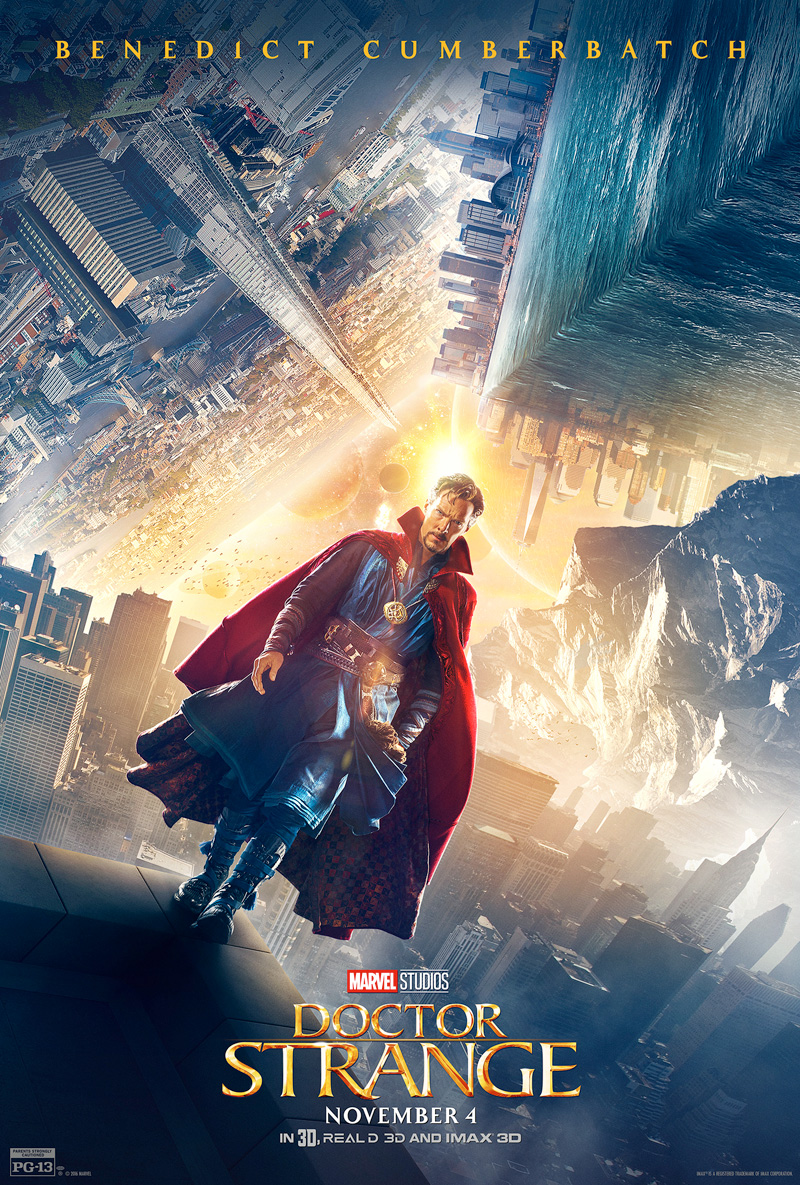
Doctor Strange (2016)


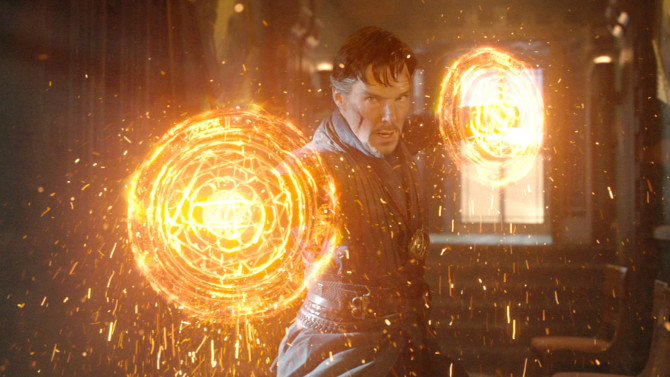
Benedict Cumberbatch goes into battle with magic. Silly but in a good way.

Director: Scott Derrickson

Cast: Benedict Cumberbatch (Dr Stephen Strange), Chiwetel Ejiofor (Karl Mordo), Rachel McAdams (Christine Palmer), Mads Mikkelsen (Kaecilius), Tilda Swinton (The Ancient One), Benedict Wong (Wong), Michael Stuhlbarg (Dr Nicodemus West), Benjamin Bratt (Jonathan Pangborn)

Arrogant surgeon (is there any other kind in the movies?) Stephen Strange (Benedict Cumberbatch) loses the fine motor control of his hands after a car crash caused by his reckless driving. With science unable to find a cure, he travels across the world to find another solution, eventually joining a secret group of sorcerers, led by The Ancient One (Tilda Swinton), who use energy from parallel universes to perform feats of magic in our world. Trained by Karl Mordo (Chiwetel Ejiofor) he is absorbed into a clash between the sorcerers and a rogue former protégé of The Ancient One, Kaecilius (Mads Mikkelsen) who wants to destroy the boundaries between worlds and unleash chaos.

In a film franchise that threatens to get increasingly samey, Doctor Strange is in many ways a breath of fresh air. Its twisting, mind-bending special effects (part Escher, part Inception) are stunning and showcase a great deal of visual and narrative imagination in the film, immediately making it look different from the dozens of city-smashing films we’ve seen in the Marvel franchise. It’s also told with a fair amount of wit, tongue-in-cheek beats and some lovely sight gags (Strange’s Cloak of Levitation is clearly inspired by the Carpet from Aladdin). This lightness of touch is essential to stop this concept feeling silly: with a more po-faced style this story, full of magic and things like “the Eye of Agamatto”, would have stumbled over its own ridiculousness.

This is however pretty close to being the best comic-book origins film, and certainly in the top five of this franchise. For a start, despite the visual glory, it feels like a focused more personal story: there are only really 6-7 characters (compare that to the sprawling cast of Captain America: Civil War), and the real heart of the film is the lead character’s struggle to overcome an existential crisis and find a new purpose while rediscovering his humanity. Even the final confrontation is a spin on the formula, avoiding city-wrecking super-punches in favour of intelligence and humour saving the day. It still crams in the action, and the characters are still cartoons made flesh, but at least they have been given a real depth here. There is an emotional weight to the story that makes you care about Strange and his world.

No actor right now is better able to embody intellectual brilliance matched with cool arrogance and societal disconnection than Benedict Cumberbatch. So in many ways, Strange is a part that falls well within his comfort zone. But Cumberbatch shows he can carry a major motion picture by making Strange a charismatic lead who grows and develops. Strange is deliberately unlikeable at first, but Cumberbatch invests him with an underlying vulnerability and a cocky charm that is increasingly broadened and shaded as the film progresses. Almost without realising it, you find yourself actually rather liking him halfway through (while still happy to give him a smack in the mouth for his cockiness). Cumberbatch is in almost every scene and carries the film effortlessly.

The film is dominated by it’s lead character, but gives moments to the rest of the cast. Tilda Swinton overcomes the controversy of her casting by investing The Ancient One with both a serene wisdom with dark hints of anger and impatience bubbling under the surface. Ejiofor is good as an increasingly disillusioned mentor and Wong has some great comic beats. Mads Mikkelsen, one of the greatest actors in the world, is rather wasted as a villain who never becomes quite as interesting as you’d hope. Most misused is Rachael McAdams, whose character serves very little purpose other than “ex-girlfriend” – even the director, in an interview, described her role as being there to love him, so that we can see why we should love him.

It’s still a Marvel film, and it still follows the Marvel formula, however newly presented it might be. The arc of despair, rejection, slow progress, revelation, disillusionment, rallying and overcoming personal problems is pretty recognisable from everything from Thor to Iron Man. But it is enough of an inversion, it’s got a good enough script, it’s directed with enough focus on character as well as action, and it has a sufficiently good leading actor to lift and elevate the whole idea into something that feels richer while keeping it entertaining. It’s a very good comic book movie, and it’s trying to do something different, And it mostly succeeds.