
Tag: Cybil Shepherd

The Last Picture Show (1971)

last picture show header
Timothy Bottoms, Jeff Bridges and Cybil Shepherd are making the best of small-time life in The Last Picture Show

Director: Peter Bogdanovich

Cast: Timothy Bottoms (Sonny Crawford), Jeff Bridges (Duane Jackson), Cybill Shepherd (Jacy Farrow), Ben Johnson (Sam the Lion), Cloris Leachman (Ruth Popper), Ellen Burstyn (Lois Farrow), Eileen Brennan (Genevieve), Clu Gulager (Abilene), Sam Bottoms (Billy), Randy Quaid (Lester Marlow), Gary Brockette (Bobby Sheen)

“Anarene, Texas, 1951. Nothing much has changed…” So went the tagline for Peter Bogdanovich’s The Last Picture Show. Change, or rather the lack of it, is the heartbeat of this film. It’s small time (fictional) Texas town isn’t a million miles from the Wild West dustbowls. You feel nothing has really changed for decades, the same faces in the town have just got older. But the tagline suggests that, in many ways, the 1950s were not that different from the progressive 1970s. Sex and scandal lie under the surface of the town, with the inhabitants having little to distract them from boredom other than seducing each other. Unlike the sort of traditional films shown in the picture show – Father of the Bride or Red River – this town is just drifting, a change in America both round the corner but also feeling like something that would slide off the town like water from a duck’s back.

The film largely follows three high schoolers are preparing for graduation. Sonny (Timothy Bottoms) and Duane (Jeff Bridges) are on the town’s useless high school football team (a uselessness no-one will let them forget). Duane is dating Jacy (Cybil Shepherd), a woman just discovering the power of her looks – and Sonny longs for her himself. Instead, Sonny starts an affair with Ruth Popper (Cloris Leachman), the overlooked, lonely housewife of his football coach. Romantic entanglements abound, but life drifts on with the younger generation thinking sometimes of the future, but really repeating the mistakes of the older generation – people like Jacy’s cynical mother Lois (Ellen Burstyn) and the owner of the town’s pool-hall, cinema and diner, the fading conscience of the town Sam the Lion (Ben Johnson).

Bogdanovich’s film was a sensation when it was released, a key part of the New Wave films in Hollywood. It has lasted, in the way other films from the period haven’t, because it has a subtly simple but compelling story, shot as a perfect fusion of French New Wave styles with John Ford and Orson Welles inspired classicism. Bogdanovich’s film buffery is obvious from every frame – not just from the film posters announcing what is being shown at the picture palace, but also from its loving use of French-style realism and lack of glamour, set and framed in the Fordian style, often stressing isolation, intercut with homages to Kane, The Magnificent Ambersons and Touch of Evil.

And in it we have a series of young people who seem to have no idea either where they, or the world is heading. Timothy Bottoms acts with such effortless naturalism, it’s easy to forget he is even acting at all. It’s a perfectly judged performance of a very normal young man, low on aspiration and inspiration, selfish in the way the young are but full of passion and regret. Jeff Bridges is similarly brilliant, playing a not-particularly smart (or particularly successful) school sports star in a performance completely free of any condescension or camera winking, but played with a charming honesty. These are supremely normal young men. Generally decent, well-meaning and naïve, not knowing what it is they want or need from life. They would fit as neatly into 1971, with their dreams, as they do in 1951. Especially as Duane packs off to head to Korea (no real difference from Vietnam).

And a lot of these dreams revolve around sex – and often sex with Jacy. Cybil Shepherd was a sensation on the film’s release, seen as the ultimate late-teen temptress and sexpot. But in fact, Jacy is (in her way) as much of an innocent as the others. She’s a woman only just discovering her own passions and longings. Who doesn’t want to become the jaded figure her mother has become – but working out the easiest way to get what she wants (be that a better boyfriend, better chances or even just some attention) is through using her physical attributes. Her sexual experimentation is, in a way, liberating – and just another attempt to find an answer to her own aimlessness. Sure – encouraged by her mother – she doesn’t invest anything emotionally in these entanglements. But is it really all that different from Sonny’s own using of Ruth Popper?

Ruth Popper is emblematic of the sadder older generation in the town. You can imagine they must have had hopes and dreams – or were once as breezily uncaring – as the younger generation. But they’ve found out, just as they will, that things don’t change. That you can blink and find yourself twenty years down the line, unhappy and lonely in a place you can’t seem to escape.

Cloris Leachman is outstanding as Ruth (she won an Oscar), the only person in the all the film’s couplings that we see expressing tenderness and vulnerability (in a film full of sexual encounters, the most intimate thing we see is her combing Sonny’s hair). She dares to slowly open herself up emotionally to believing in Sonny – to seeing their affair as more than just the booty call it starts as, but as something with a future. From the tearful fragility of her first scenes – her buttoned up matronly appearance, making her look far older than she is – she blossoms into a warmer, excited, person. It makes her inevitable betrayal by Sonny all the more heart-wrenching – along with her self-loathing fury that closes the film.

All the adults are drifting through the same disappointing life. Ellen Burstyn (also nominated) is wonderful as Jacy’s mother, who continually defies expectations. This mother is unfazed by her daughter sleeping with her lover, suggests that she might as well experiment sexually so she can find out it’s not all that and carries a revelation of deep loss and personal tragedy that only comes to light late in the film but is there in the character from the start. Other adults seem equally aware of their pointlessness: the coach is a repressed homosexual, the English teacher seems resigned to teaching Keats to bored students, Jacy’ father is a blow-hard nobody, Sonny’s father is a stranger to him. Only Eileen Brennan (excellent) motherly waitress still seems to have some hope.

Sonny’s surrogate father – and the heart of the film – is local businessman Sam the Lion. Johnson is superb, gifted a surprisingly small number of scenes but which establish both his moral force and his position as a link to a halcyon days past in America that might not really exist. Bogdanovich gives Johnson a knock-out speech (surely what won him the Oscar) – an Everett-Sloane-in-Kane inspired remembrance of a relationship from long ago, where the world seemed full of hope and opportunity, that perhaps get closest to defining the film’s sad reflection on how little those two things actually seem to exist in the present.

But it’s also about the temptation of memory. Bogdanovich’s masterpiece (it was all downhill in his career from here), The Last Picture Show knows only too well how quickly we realise life is a confusing, compromised mess. And the film, for all its old-school Hollywood style, is all about the past being just as a confusing, empty, sex-filled place of loss as the present is. Things have always been like this – and they probably always will. Welcome to Anarene. Nothing has changed.
Taxi Driver (1976)

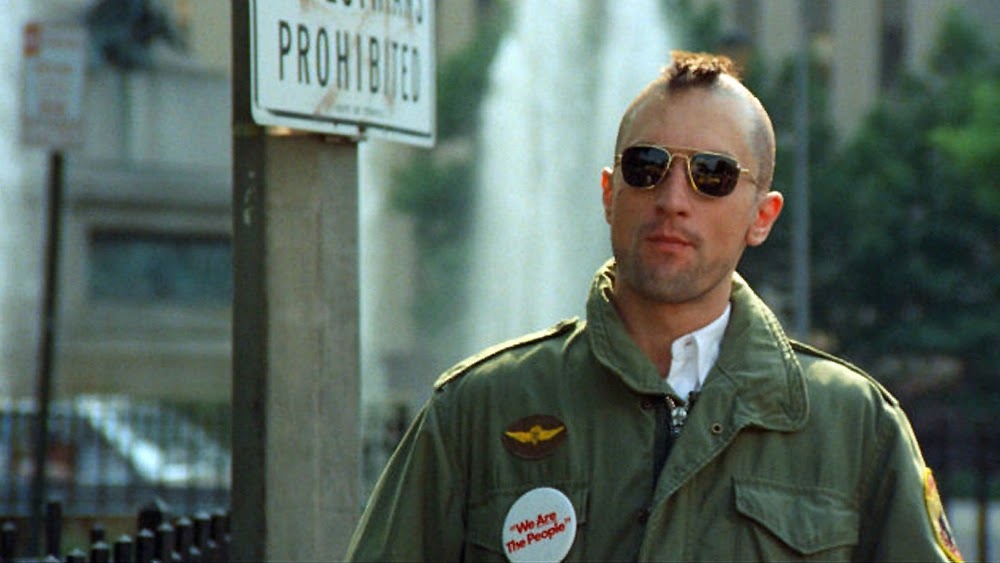
Robert De Niro embodies dangerous loners everywhere in Taxi Driver

Director: Martin Scorsese

Cast: Robert De Niro (Travis Bickle), Jodie Foster (Iris), Cybill Shepherd (Betsy), Albert Brooks (Tom), Harvey Keitel (Sport/Matthew), Leonard Harris (Charles Palantine), Peter Boyle (Wizard), Harry Northup (Doughboy), Steven Prince (Easy Andy), Martin Scorsese (Passenger)

A grungy taxi ploughs through the neon-lit back alleys of New York, the glow of stop signs and tail lights washing the car in a hellish red glare. Inside that taxi, the interior monologue of its driver tips ever closer towards paranoia and fantasy. It’s no surprise that something is going to give. Martin Scorsese’s influential Taxi Driver is the definitive exploration of fractured psyches, the key text in film for exploring how isolation, loneliness and an inability to connect with people can tip someone into being a danger to others.

Travis Bickle (Robert De Niro) is our taxi driver, an honourably discharged Vietnam vet who can’t sleep so works the night shifts. He’s seemingly quiet, shy, self-contained but this hides a desperation to connect with the world, a horror at what he sees around him that he can’t understand, a paranoid disgust at the crime and dirt he feels infect the street and a desire to be someone or do something. His failure to understand to or relate to the world on any level will eventually lead to a gradual collapse as Bickle determines that he must lash out at something, must attack something, to make himself a place in the world.

Taxi Driver is such a brilliant analysis of disaffection and confusion at the world, such an insightful understanding of how feeling separate and locked out from events around them can make a person feel they must act to make their mark, that it profoundly influenced the motivations of Ronald Reagan’s would-be-assassin John Hinckley Jnr in 1981. The film was even screened for the jury as part of Hinckley’s (successful) defence that he acted due to insanity (Hinckley claimed he was trying to impress Jodie Foster). Tragic as that is, it speaks something to the power of the film and its acute understanding (but not excuse) for lonely, fractured, potentially violent souls like Hinckley.

Scorsese’s direction is pitch-perfect. The film uses a series of tightly held shots – and some go on for a very long time, staring at trivial events (such as the shot of an empty corridor while we hear Bickle being rejected on the phone by his stalking target Betsy) – or stately intercutting between actors that brilliantly serve to establish both Bickle’s isolation and his lack of connection. This is intermixed with tighter editing that captures Bickle’s undirected fury and paranoia towards the real world, presented as he drives as a concussive collection of sounds and images that seem to hammer down on the taxi, combined with Bernard Herrmann’s superb classically tense score, lyrical but haunting. 

Every scene Scorsese constructs is designed to show Bickle’s isolation, his weakness and continual succumbing to fantasy and false perspectives. His internal monologue has a monotone fluency to it, but talking to people he’s tongue tied, clumsy or prone to tip into the rantings of a crazy man. Slow motion camera tracks show Bickle moving through crowds like an alien, unable to comprehend or understand what he is seeing, later prowling the frame like a misguided hunter. New York is a hellish underworld – although you are certain we are seeing it largely as Bickle sees it, every scene filtered through his disturbed POV (Michael Chapman’s photography by the way is faultless). 

It works so well because De Niro himself is so restrained, and at first feels rather sweet, even handsome, like someone who you want to look after or feel sorry for – a million miles from the mohawked gun totter he will become by the film’s end. He’s quiet, shy and desperate for friends. He can manage bursts of seeming like a compelling person – his fooling of Cybil Shepherd’s Betsy into a date is a tribute to his ability in short bursts to appear charmingly eccentric. The date of course flounders on his inability to understand human norms (buys her a record she says she has, takes her to a porn film, points out he has a taxi when she tries to get into one to leave), and his response to it is of course to get angry and make a scene, to blame the other person for his own failings.

De Niro immersed himself in the dark psyche of this man, and never loses touch of the gentleness and vulnerability that underpin his violent actions. Bickle talks the talk often of a crazy person, but by his own lights he’s a well-meaning man. It’s just that his well-meaning actions involve multiple murders, and it’s only by a twist of fate that he guns down a house full of pimps and gangsters rather than putting a bullet through a Presidential candidate.

And that’s the scary thing about the film: Bickle is strangely sympathetic, for all his obvious psychosis. Who hasn’t felt alone and lost in the world? Who hasn’t felt scared by events around them or dangers unknown? Who hasn’t wondered “why don’t people like me”? We just deal with it a lot better than Bickle and his messianic sense of mission that he develops.

Bickle channels what human emotions he can muster or understand into ciphers he barely knows. These people become totems, or stalking targets, who he becomes persuaded must be “saved”. With Cybil Shepherd’s Betsy, the delusion is clear: here is a confident, career woman, independent and smart, for whom Bickle can feel an attraction but clearly no understanding at all beyond her being an object he cannot have. The awkwardness and later stunningly poor judgement and reactions he shows when around her mark him immediately as a weirdo and danger to others.

But the film’s smarts – and it has a terrific script by Paul Schrader, whose understanding of dark psyches was never better captured than here – is that these fixations have a totally different impact when targeted on a child prostitute. Suddenly, Bickle’s unwanted attentions have the air of righteousness, even though intellectually he makes no distinction between either Betsy or Jodie Foster’s Iris (a performance of staggering emotional maturity from an actress barely 12 at the time). For all Iris is clearly a victim of society and abuse (in a way Betsy isn’t), for Bickle she’s pretty much the same, someone he must ‘rescue’ – and from her pimp Sport (a disturbingly fey and incestuous turn from Harvey Keitel).

So Bickle takes up the guns, and eventually does what we all wish we could do sometimes. Because who hasn’t stood in front of the mirror and dreamed about saying “you talkin’ to me” to our enemies – the difference being most of us don’t fantasise about blowing them away, let alone actually go on to do it. De Niro’s brilliance is the chilling emptiness behind the exterior, the way he captures universal fears and doubts but shows us a character who has no personality of his own but only collects titbits from those around him (like his would-be murderous passenger – played by Scorsese himself – who eagerly talks about how he wishes he could murder his cheating wife).

So the violence comes – and it is horrific – as Bickle shoots up a lowlife prostitute den with sickening graphicness (nothing this violent had really been seen before). But it’s only fate that has turned him away from his real target, Senator Palatine (George Lucas must have had this film in the back of his mind when naming his Evil Emperor!), reverting to his secondary target and killing a group of people far more acceptable to Joe Public to be wasted.

Scorsese’s genius final epilogue asks us questions about truth but also perceptions. The camera takes on a “God’s view” POV overhead shot as Bickle’s slaughter ends (and De Niro’s jerky, terminator like physicality here is stupendous), tracking back through the house. Is this his soul leaving a dying body? But then we flash forward and there is Bickle in the taxi again, hailed as a hero by society for rescuing the girl – the same society that would have condemned him as psychopath if he had taken his first target. He even gets a sympathetic conversation with Betsy.

But he hasn’t changed. And the world hasn’t changed. And Bickle may be a hero now but the same dark impulses still ride within him – and they will, the film suggests, lead him to kill again. Scorsese’s film is a masterpiece of alienation and disaffection, a brilliant analysis of what makes a killer kill – and how vagaries of fate can see us miss the signs – with a wonderful script and a superb performance from De Niro, a landmark turn that manages to tap into such existential fears we all have on our place in the world that we completely miss we are starting to relate to a psychopath. Dark and brilliant, a landmark.