Tag: David Lynch

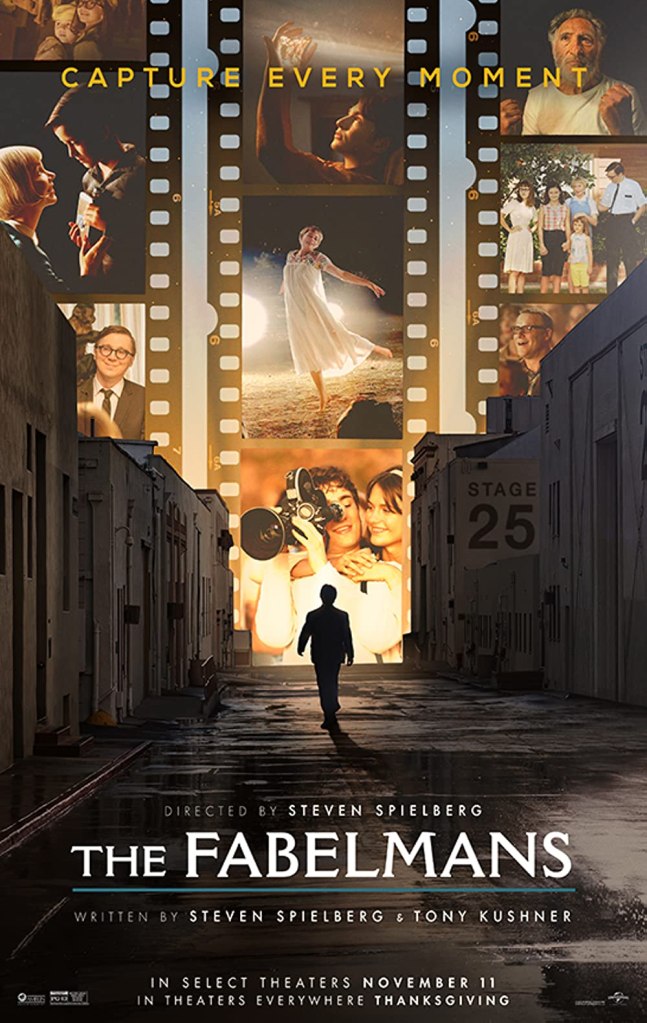
The Fabelmans (2022)

The Fabelmans (2022)

Spielberg explores his childhood in this warm but honest look at the triumph and pain of movie-making and family

Director: Steven Spielberg

Cast: Gabriel LaBelle (Samuel Fabelman), Michelle Williams (Mitzi Schildkraut-Fabelman), Paul Dano (Burt Fabelman), Seth Rogan (Bennie Loewy), John Butters (Regina Fabelman), Keeley Karsten (Natalie Fabelman), Sophia Kopera (Lisa Fabelman), Mateo Zoryan Francis DeFord (Young Sammy), Judd Hirsch (Boris Schildkraut), Jeannie Berlin (Hadassah Fabelman), Robin Bartlett (Tina Schildkraut), David Lynch (John Ford)
Perhaps no director is more associated with cinema’s magic than Steven Spielberg. And watching The Fabelmans, a thinly fictionalised story about his childhood, clearly few directors have as much of that cinematic magic in their blood. The Fabelmans joins a long line of post-Covid films about auteur directors reflecting on their roots (clearly a lot of soul searching took place in 2020). Surprisingly from Spielberg, The Fabelmans emerges as a film that balances sentiment with moments of pain and a love of cinema’s tricks with the suggestion of its darker powers rewrite reality according to the eye of the director (or rather the editor).

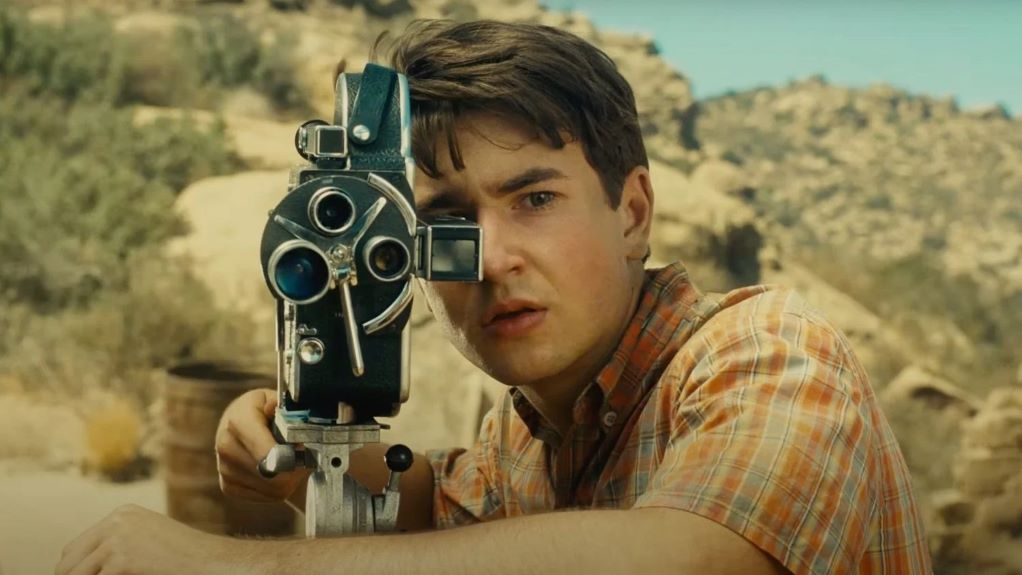
The film follows thirteen years in the life of the young Spielberg, here reimagined as Samuel Fabelman (Gabriel LaBelle, by way of Mateo Zoryan Francis-DeFord). His father Burt (Paul Dano) is an electrical engineer with a startling insight into the way computers will shape the modern world. His mother Mitzi (Michelle Williams) is a former concert pianist turned full-time Mom. The family moves from New Jersey to Phoenix and finally California, as Burt’s career grows. From a young age Samuel is enchanted by cinema, filming startling narrative home movies, packed full of camera and editing tricks. But he and the family are torn between art and science, just as Mitzi’s friendship with “Uncle” Bennie (Seth Rogan), Burt’s best friend, is revealed to go far deeper.

The Fabelmans is both a love letter to cinema and to family. But it’s a more honest one than you expect. It’s got an open eye to the delights and the dangers of both, the pain and joy that they can bring you. The film’s theme – expertly expressed in (effectively) a sustained monologue brilliantly delivered by Judd Hirsch in a brief, Oscar-nominated, cameo as Samuel’s granduncle a former circus lion tamer turned Hollywood crew worker – is how these two things will tear you apart. The creation of art makes demands on you, both in terms of time and dedication, but also a willingness to make reality and (sometimes) morality bend to its needs. And family are both the people who give you the greatest joy, and the ones that can hurt you the most.

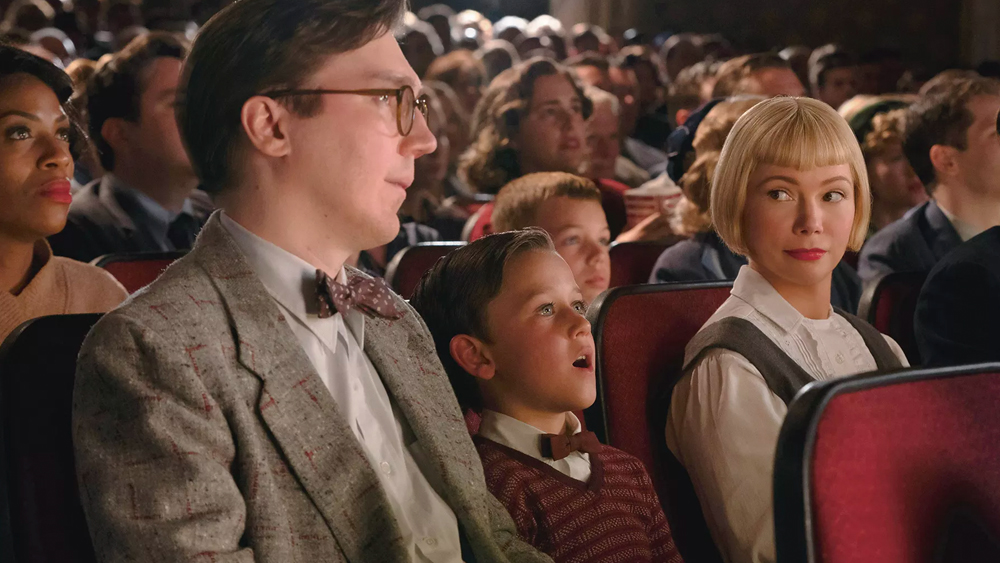
Spielberg’s film tackles these ideas with depth but also freshness, lightness and exuberant joy. Nowhere is this clearer than the film’s reflection of Spielberg’s deep, all-consuming love for the art of cinema. Its opening scene shows the young Samuel – an endearingly warm and gentle performance from Francis-DeFord – transfixed during his first cinema visit by the train crash the concludes DeMille’s The Greatest Show on Earth. So much so he feels compelled to recreate it – much to his father’s annoyance – with an expensive gift trainset, before his mother suggests filming it. Even this 10-year olds film, shows a natural understanding for perspective and composition.

The young Samuel – in an inspired moment of Truffautesque brilliance – is so enraptured with his resulting film, that he plays it repeatedly, projecting it onto his hands, as if holding the magic. No wonder he becomes a teenager obsessed with movie-making, who talks about film stocks and editing machines at a hundred miles an hour, locking himself away for hours carefully snipping and editing footage. The film this young auteur directs – very close recreations of Spielberg’s actual movies – are breath-taking in their invention and the joy. A western with real gun flashes – Burt is astounded at the effect, achieved by punching holes in the film – an epic war film crammed with tracking shots and stunningly filmed action.  This is a boy who loves the medium, excited to uncover what it can do, who finds it an expression for his imagination.

He’s clearly the son of both his parents. Burt, played with quiet, loving dignity by Paul Dano (torn between holding his family together and the knowledge he can’t do that), is a quintessential man of science. It’s from him, Samuel gets his love for the nitty-gritty mechanics of film-making, its machinery and precision. But to Burt it’s only a “hobby” – real work is the creation of something practical. So his artistic sensibility films comes from his mother Mitzi, gloriously played by Michelle Williams as a women in a constant struggle to keep her unhappiness at bay by telling everyone (and herself) its all fine. She needs a world filled with laughter and joy.
It’s what she gets from Uncle Bennie (Seth Rogan, cuddly and kind). It’s also where the darkness of both family and film-making touches on this bright, hopeful world. Creating a film of a camping trip the extended family have taken, its impossible for Samuel not to notice at the edge of the frames that Bennie and his mother are more than just friends. His solution? Snip this out of the film he shows the family, then assemble an “alternative cut” which he shows his mother, showcasing the tell-tale signs of her emotional (if not yet physical, she swears) infidelity. The Fabelmans skirts gently however, over how Spielberg’s teenage fear of sexuality in his mother and the association of sex with betrayal may have affected the bashful presentation of sex in many of his movies.

Samuel’s camping film works best as a reassuring lie. He’ll repeat the trick a few years later, turning his jock bully (who flings anti-Semitic insults and punches) into the super-star of his high-school graduation film, a track superstar who is made to look like a superman. Confronted about it, Samuel acknowledges it’s not real – but maybe it just worked better for the picture. It’s as close as Spielberg has ever come to acknowledging the dark underbelly of cinematic fantasy: it can mask the pain and torment of real life and it can turn villains into heroes. His unfaithful Mum becomes a paragon of virtue, his school bully a matinee idol.

Why does he do it? Is it to gain revenge by confronting those who have let him down with idealised versions the know they can’t live up to? Even he is not sure. Perhaps, The Fabelmans is about the young Spielberg reconciling that even if the movies are lies, they can also be joyful, exciting lies that we need: and that there is more than enough reason to continue making them. Just as, angry as we might get with our parents, we still love them.

The film is held together by a sensational performance by Gabriel LaBelle, who captures every light and shade in this journey as well as being uncannily reminiscent of Spielberg. It’s a beautifully made film, with a gorgeous score by John Williams that mixes classical music with little touches of the scores from Spielberg classics. And it has a final sequence dripping with cineaste joy, from a film deeply (and knowledgably) in love with cinema. Who else but David Lynch to play John Ford, handing out foul-mouthed composition tips? And how else to end, but Spielberg adjusting the final shot to match the advice, tipping the hat to the legend?

The Fabelmans creeps up on you – but its love for film and family, its honesty about the manipulations and flaws of both and its mix of stardust memories and tear-stained snapshots feels like a beautiful summation of Spielberg’s career.

Mulholland Dr (2001)

Mulholland Dr (2001)

Surrealist, dream-like images fill a film that’s wilfully complex, perplexing and probably Lynch’s masterpiece

Director: David Lynch

Cast: Naomi Watts (Betty Elms/Diane Selwyn), Laura Harring (Rita/Camilla Rhodes), Justin Theroux (Adam Kesher), Ann Miller (Coco), Mark Pellegrino (Joe), Patrick Fischler (Dan), Michael Cooke (Herb), Dan Hedaya (Vincenzo Castigliane), Angelo Badalamenti (Luigi Castigliane), Michael J Anderson (Mr Roque), Monty Montgomery (The Cowboy), Lee Grant (Louise Bonner), James Karen (Wally Brown), Chad Everett (Jimmy Katz), Melissa George (Camilla Rhodes), Billy Ray Cyrus (Gene), Lori Heuring (Lorainne Kesher)

Spoilers: I’ll be discussing in detail the plot (if you can call it that) including its final act reveals which are crucial for understanding the film. So watch it first!

Where do you begin? Mulholland Drive feels like the culmination of Lynch’s work, a perfect boiling down of Twin Peaks, Lost Highway, Wild at Heart and Blue Velvet into a surrealistic meditation on Hollywood, wish-fulfilment, dreams and reality. It’s both wilfully inaccessible and surprisingly clear, both coldly cruel and achingly tender, full of hope and devoid of happiness. It’s tough, cryptic, engrossing viewing and unpeels like an onion (and likely to have the same effect on you as that vegetable). Every scene may mean everything or nothing, but there is not a moment of it that isn’t darkly, thrillingly engrossing.

It starts with a car crash on Mulholland Drive – but not before a stream of seemingly disconnected images that only later reveal their importance, including a women on a bed and a dizzying array of disconnected jittybug dancers drifting across the screen like paper cut-outs before a purple background. The car crash involves a mysterious woman ‘Rita’ (Laura Harring) who narrowly escapes being murdered but is left with amnesia. She stumbles to the house of Betty (Naomi Watts), a newly arrived girl in Hollywood, eager to become an actress. With only a bag of money and a mysterious blue key to go on, Rita and Betty search to find out who Rita is. Meanwhile, director Adam Kesher (Justin Theroux) finds his film (which Betty wants to audition for) being taken over by gangsters. Did I also mention an incompetent-but-brutal hitman, a supernaturally omniscient albino cowboy and a monstrous goblin-like hobo who lives behind a diner and can kill on sight?

Mulholland Drive grew out of Lynch’s plans for a new Twin Peaks style TV series. He shot a pilot, the footage from which takes up much of the first two thirds. Like Twin Peaks it was full of mysterious alleyways to be explored: it’s amnesiac lead, mysterious money and blue key, shadowy gangsters (even led by Twin Peaks veteran Michael J Anderson, here in a Red Room style hide-away, his head attached to a prosthetic body), creepy supernatural nightmare elements. Alas, the executives hated it (it wasn’t exactly Desperate Housewives), but French investors stepped in to fund Lynch turning it into a surrealist movie, with an additional half an hour of footage to an ending (of a sort).

A sort of ending is what we get. Mulholland Drive is a famously confusing, impenetrable film. But to me it seems clear. Lynch’s solution was to turn all the pilot footage into a bizarre and terrible dream – and latch on an ending set in the ‘real world’ which re-presents characters, events and throwaway moments in surprising new lights, leading us to radically reinterpret everything. Effectively, the first two-thirds are the guilt-ridden nightmare of Diane (Watts again), a failed actress in Hollywood who paid for a hit on a star actress Camilla (Harring again) who she believes seduced and spurned her. In her dream, Diane reimagines both herself and Camilla exactly as she wishes they were: herself unspoilt by Hollywood with preternatural talent, Camilla as an amnesiac utterly reliant on her.

What we have here is dreams as wish fulfilment: and what city is more about that, than Hollywood? Mulholland Drive plays as the dark underbelly of Sunset Boulevard (pretty dark and bitter already!). Lynch’s Hollywood is a vicious, heartless, bloody place, where cruelty and death are commonplace. In ‘the dream’ the gangsters – terrifying cameos from Hedaya and composer Badalamenti, the latter dribbling inadequate coffee from his mouth during a meeting in a grotesque power play – call the shots. Reality might be worse. This heartless factory of dreams chews up and spits out innocents like Diane, turning her from naïve and optimistic into  bitter, twisted shell, emotionally maladjusted, locked in her apartment tearily in thrall to her worst instincts.

It makes sense in a way that the film is dominated (probably) by a dream. Hollywood is the town of stories, and it’s perversely logical that the unreality should feel so detailed, engrossing and narratively compelling while what is (probably) reality is fragmented, mundane and laced with cruelty. To the people of films, stories are richer and more freeing than anything that happens in real life and infinitely more comforting.

Comfort is what our dreamer wants. Naomi Watt’s Betty seems like a cliché of a small-town girl, swept up in the big city. Full of aw-shucks charm, the eagle-eyed will spot little moments of strength that feel out of character. There are micro-flashes of anger and she’s determined to break into a mysterious, abandoned house to find a clue when Rita runs. She’s a gifted actress, turning a mundane script in an audition (a script she and Rita laugh at) into a simmering performance of sexual control that stuns the room. But this is a multi-layed performance, just one facet of a whole.

Because Betty’s talent is recognised in the way her ‘real-world’ counterpart Diane – stuck in small supporting roles, gifts from Camilla – never is. There are touches of this in that audition: the director is the least involved and speaks only in vague bullshit. Its not just that talent recognition: in the dream she can turn her lover Camilla, an independent and (perhaps) selfish figure, into someone so dependent on her that she literally doesn’t even know who she is. She even turns the man Camilla leaves her for, into a deluded, humiliated cuckold in thrall to gangsters.

Lynch’s crafting of this dream is flawless. He can mine tension from even the smallest moments. Innocuous events – two men sitting in a diner, a kind old couple in a cab, a business meeting, a singing audition – drip with menace and unknown horror. His camera frequently, almost imperceptibly weaves, as if held floating in space. Logic jumps and sudden transitions abound. Lights flicker and time never obeys rules. He is also a master of black humour: a hit-job gone wrong (with bodies and a vacuum cleaner joining the carnage) is hilarious, as is Kesher’s unexpected arrival home to find his wife in bed with a muscular pool cleaner.

Mulholland Drive is also a sensitive and highly emotional romance story between two lost souls. Betty, naïve and helpful and Rita, who clings with gratitude and adoration to the woman who helps her. Moments of sexual tenderness between these two are shot with erotic beauty: contrasted sharply with the more sordid, aggressive couplings between them in ‘reality’.

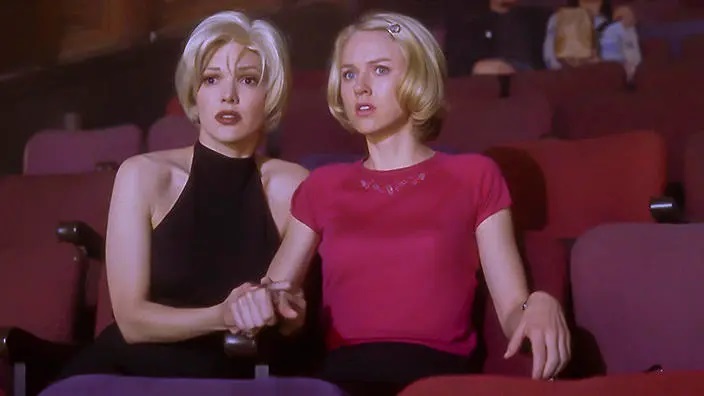
But these mix with moments of chilling, unspeakable horror. The hideous goblin living behind a diner, an embodiment of all that is cruel, evil and twisted, later clutching a box the releases the furies themselves seem to leap from. Is this a dark expression of the dreamer’s own guilt (which seems to be transferred to “Dan” a man we see literally dying of fright in a diner that becomes crucial later)? The Cowboy, who may or may not be of this world, glanced at two dreadful moments (just as he promises) seems to guides the dream. And the Silencio club, a theatre of the bizarre, disturbing auditory and visual twists and turns that serves as the gateway between dream and reality – something Betty subconsciously knows, vibrating in terror in her seat, knowing this fantasy she has crafted is under siege from dark elements of the truth demanding she acknowledge them.

Mulholland Drive deconstructs itself at every turn, aided by Lynch’s wonderful, hypnotic surrealistic touches. What’s beautiful about it, perhaps, is it leaves it very much up to you. For me, the desire for dreams to be fulfilled is crucial. It’s all captured in Watts and Harring’s multi-layered performances, their versions of the same women contrasting and complementing each other. Lynch allows their personalities to blur both in character and in visuals (Rita ends up in a matching wig in touches of Vertigo while the film’s blurring of two personalities echoes Bergman’s Persona, including a homage via a shot where both faces seem to merge into one).

An intense, fascinating dream-like exploration of several classic Lynchian themes, Mulholland Drive is his finest, most rewarding film. One which, whatever interpretation you place on its events, grips and challenges you at every moment, full of scenes which spark a mixture of imagination, horror and intrigue. Powered by two wonderful performances at its lead, both with just the right mix of reality and fantasy about them, it’s an extraordinary film.

The Elephant Man (1980)

John Hurt is sublime as the tragic John Merrick in The Elephant Man

Director: David Lynch

Cast: John Hurt (John Merrick), Anthony Hopkins (Dr Frederick Treves), Anne Bancroft (Madge Kendal), John Gielgud (Francis Carr-Gomm), Wendy Huller (Mrs Mothershead), Freddie Jones (Bytes), Dexter Fletcher (Bytes’ boy), Michael Elphick (Jim the porter), Hannah Gordon (Ann Treves), Helen Ryan (Princess Alexandra), John Standing (Dr Fox)

In the late 19th century, society was swept up in the story of a circus show freak, Joseph Merrick (renamed John here, as per Frederick Treves’ memoirs), saved from a life as a circus exhibit by Treves (a doctor at the London Hospital). Treves introduced him into society and formed a close friendship with him. Merrick died young (27) but his life became a sort of byword for struggling for dignity. The Elephant Man follows this journey.

John Hurt plays Merrick, with Anthony Hopkins as Treves, and the film is a pretty accurate reconstruction of the major events of Merrick’s life. The Elephant Man must have seemed like a strange proposition at the time. Produced by Mel Brooks! Directed by bizarro director David Lynch! About a man grotesquely deformed by nature! But what emerges put those doubts to shame, because this is a beautiful and emotional piece of film-making, guaranteed to put a tear in your eye. It’s an extraordinary and moving film, it’s almost impossible not to love.

In a career made up of playing characters who undergo enormous suffering, it’s fitting that one of John Hurt’s most famous performance sees him utterly unrecognisable under a mountain of make-up. (Acting in this was no fun either – Hurt worked alternate days to deal with the discomfort and stress, telling his wife “They’ve finally found a way to make me hate acting”). But what Hurt does here is extraordinary: under this mountain of make-up, the humanity, sweetness and tenderness of Merrick sings out. He’s a character you feel a total empathy for, with Hurt making him almost a gentle child, an innocent who learns to value himself and his own humanity. It’s mesmeric stuff.

Lynch’s film is all about the place Merrick holds in the world – and it’s not sure shy of showing it is one of exploitation and display. Sure, the circus life for Merrick is horrible under Freddie Jones’ freak-masker (Jones is magnificent here, alternating between weaselly, conniving, vulnerable, self-pitying and loathsome). But he’s plucked from this lower-class hell not for reasons of charity or loving care, but (initially) so that Treves can display him at medical conferences.

Even after demonstrating his sensitivity and artistic richness, Merrick is still rammed into a different treadwheel of society curiosity. Paraded before the rich and famous, his freakish appearance combined with his gentle, otherworldly, politeness and kindness becomes a new show in itself – something Treves himself (in a wonderfully played scene of introspection from Hopkins) slowly comes to realise. Alongside this, Merrick is still seen as fair-game by Elphick’s brutish night porter: if the hoi polloi can watch the freak, why can’t he parade him in front of working class customers at night? All this is intensely moving.

Does Merrick even realise that he is (in some ways) still a freak show, even while he collects photos of his new friends? The film is deliberately unclear: although it is clear that the (eventual) genuine friendship of Treves does lead Merrick to value himself as something more. The famous anguished cry (simply brilliantly played by Hurt) of “I am not an animal. I am a human being” after Merrick is chased into a train station bathroom by a crowd of scared and disgusted passengers is goose-bump inducing in both its sadness and its newfound moral force. From this point on, Merrick makes decisions for himself (for good or ill).

Lynch’s film walks a delicate balance around Merrick’s character and how much his life was a question of being exploited. Although the film does at times shoot Merrick with the slow reveal coyness of a monster movie, it never fails to regard him (and almost demand we do the same) with the utmost sympathy. In many ways, it shoots Merrick the same way people first seem him – a sense of shock followed by a growing appreciation that there is much more to see there than you might first suspect. 

That’s what works so well about Lynch’s inspired direction here – this is a sensitive, haunting and poetic film that wrings untold levels of sadness from Merrick’s life. Lynch reins in his more arty leanings very effectively. In fact, once you get over the film’s bizarre opening of Merrick’s mother being attacked (sexually assaulted?) by an elephant, the film relaxes into a classical style mixed with Lynch’s chilling eeriness and his games with time and mood (the timeline is particularly hard to work out in this film), while his sensitive handling of the macabre is perfect for this film’s storyline. While it’s easy to see this as the least “authored” of Lynch’s film, it’s possibly one of his finest and sets the groundwork for some of his later works, exploring humanity in the bizarre.

He’s helped as well by Freddie Francis’ simply beautiful black-and-white photography which brilliantly captures both the grime and the shine of Victorian London, with an inky darkness. Francis also embraces some of Lynch’s expressionistic style, and shoots the film with a real atmospheric sensitivity. It’s about perfect – and Lynch brings the outsider’s view to London that sees the entire city with a brand new eye. 

There are some sublime performances. Anthony Hopkins’ Treves is a masterclass in contrasted desires. He’s the sort of guy who can grab Merrick like a collector, but still shed a tear when he first sees him. Watching him slowly realise that he has used Merrick just as Bytes has done – within the confines of his Victorian paternalism – and grow to love him as a father does his son (feelings of course never expressed in words) is extraordinary. In the less flashy role, Hopkins powers a lot of the feelings of sadness the audience feel. Alongside him, a host of British legends do brilliant work, particularly Gielgud and Hiller as authority figures who slowly reveal themselves to have huge depths of compassion and understanding.

And what you end up with is a marvellous film. Brilliantly made, wonderfully filmed and hugely emotional with powerful, heartfelt performances from Hurt and Hopkins among many others. It’s extremely beautiful, and stirs the emotions wonderfully. You would struggle to get to the end of the film and not feel overcome with the final few moments, its sadness and the sense of regret. It’s possibly the most heartfelt of Lynch’s films – and also the one I enjoy the most.

Lost Highway (1997)


Bill Pullman goes out of his mind in David Lynch’s deliberately weird Lost Highway

Director: David Lynch

Cast: Bill Pullman (Fred Madison), Patricia Arquette (Renee Madison/Alice Wakefield), Balthazar Getty (Pete Dayton), Robert Loggia (Mr Eddy/Dick Laurent), Robert Blake (The Mystery Man), Gary Busey (Bill Dayton), Lucy Butler (Candace Dayton), Michael Massee (Andy), Richard Pryor (Arnie)

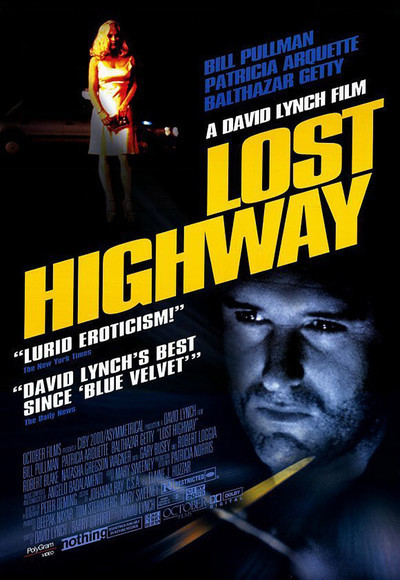
It wouldn’t be a David Lynch film unless the plot was impossible to explain, but here goes. Fred Madison (Bill Pullman) and his wife Renee (Patricia Arquette) marriage is on the rocks. The couple start receiving packages containing camcorder videos of their home. These videos become increasingly more and more personal and intimate. The final video shows Fred murdering Renee. Imprisoned, Fred suffers from headaches and then overnight he transforms into another person, Pete Dayton (Balthazar Getty). Released back into the world, Dayton encounters the glamorous Alice Wakefield (Arquette again). Then things get even weirder. Yup that’s right: weirder.

Lost Highway is probably Lynch at his most obscure and baffling. Like a lot of Lynch films, it’s a question of taste. What do you want to get out of a film? If it’s a puzzling mystery then this might be the film for you. Lost Highway is like an impossible jigsaw, or a landscape with no frame of reference: trying to judge what the overall actual picture is, is nearly impossible. Traditional film making elements, such as story and character, are subservient here.

So whether you like Lost Highway will probably come down to how much you are willing to accept everything you see is constantly being dismantled and repositioned by the film. It strikes a less successful balance between this “Lynchian” material and more traditional storytelling than Blue Velvet or Mulholland Drive (both, I would argue, superior films). However, for those willing to run with a mystery, Lost Highway is a baffling but intriguing watch – unsettling, unnerving, but fascinating.

So what is it about? Now I confess I needed to read up a little bit, but the best way to understand the film is as some sort of elliptical, dreamlike fantasy created by its lead character. It seems pretty clear that the majority of the film is, at best, subjective recollection or out-and-out fantasy. A little too much attention is paid in the film to a line from Fred Madison that he dislikes video cameras as he prefers to “remember things my own way rather than how they happened”. A fairly on-the-nose statement, but a clear mission statement for a film if I ever I saw one.

In fact, Fred Madison is so keen to remember the world only as he sees it that, he literally becomes someone else to build some sort of internal fantasy world where he can win the girl. But Fred/Pete is such a screwed up, confused person he can’t even get his own fantasy world right –impressions from the real world keep draining in. At least, that’s a fair interpretation. The film of course deliberately keeps things open: is this some fantasy Fred has while trapped in his cell? Or is there some sort of metaphysical transformation that fades into the real world? Is there an element of this story being circular and self-perpetuating? Is there any reality to it at all? How much you engage with these questions is a pretty good indication of what you’ll make of this film.

Whatever your response to it, as a piece of film-making it’s a very impressive piece of work. All the usual Lynchian touches are here: the strident and discordant lighting at key moments, the intelligent and daring use of music, the intermingling of design from the modern world and Americana of the 1950s, not to mention the moments of extreme violence and graphic sex. Lynch uses unsettling camera angles and sudden tilts of angle and sound to constantly keep the audience on their toes and questioning what they are seeing. Disturbing and haunting imagery, a testament to Lynch’s painter’s eye, is perfectly judged. Confusing as this film is, it offers a parade of intriguing images.

It’s an important landmark in Lynch’s filmography: a flowering of ideas he had been dabbling with since Twin Peaks, of mysticism, perversion and human darkness, and a jumping off point for haunting, almost illogical films to come like Mulholland Drive. The Mystery Man (unsettlingly played by Robert Blake – not least as this is the last film Blake made before his conviction for murdering his own wife) is a haunting, perfect Lynchian character – unsettling in appearance and confusing in intention. Is he a real person, or a mystical force? Is he some sort of external expression of evil driving Fred on, or is he part of Fred’s fractured mind?

Patricia Arquette plays two very different femme fatales, but to what extent are they reimaginings or reversionings of each other? It’s a very good performance from Arquette, playing someone who is not quite a real person, nor quite a fantasy, who feels like a character from a film moving into a real world, which itself is probably a fantasy. Just writing this sentence shows what a crazy film this is.

For the rest of the performances, there is a good mix of the genuine and the artificial. Bill Pullman, at his most understated, is perfect to ground the film, while Balthazar Getty gives a fine, detailed performance as a character who is similar and slightly different to Fred. Robert Loggia mixes ferocity and a bizarre tenderness as a character who may or not be a foul-mouthed gangster. These performances add a level of heart to the film, allowing a bit for freedom for the strangeness.

Lynch’s Lost Highway isn’t a masterpiece – it’s perhaps too self-consciously oddball and unusual, too reliant on mood and atmosphere to make up for its lack of story and characterisation. It is however intriguing, a brilliant puzzle, even though it doesn’t really allow you to invest emotionally in it at all. You can admire it as a mystery, but you can never really open your heart to it. It’s a film that is daring and dangerous, but it’s also one that, for all its erotic sex and tortured psyches, never really feels like it’s about real people with real feelings. It’s a mixture that, as I’ve said, works better in Mulholland Drive. But this is a very good staging post to that film.

Wild at Heart (1990)


Laura Dern and Nicolas Cage in the hideously empty Wild at Heart

Director: David Lynch

Cast: Nicolas Cage (Sailor Ripley), Laura Dern (Lula Pace Fortune), Diane Ladd (Marietta Fortune), Harry Dean Stanton (Johnnie Farragut), J.E. Freeman (Marcello Santos), W. Morgan Sheppard (Mr Reindeer), Willem Dafoe (Bobby Peru), Crispin Glover (Dell), Isabella Rossellini (Perdita Durango), Sherilyn Fenn (Car Accident Girl), Sheryl Lee (Good Witch)

David Lynch is an eccentric film director. I think that is a fair comment. At his best, he combines his “view askew” look at the world with genuine comedy and pathos. At other times, his films disappear down a self-reverential rabbit-hole that seems designed to frustrate and alienate the viewer. Wild at Heart is the latter type of movie.

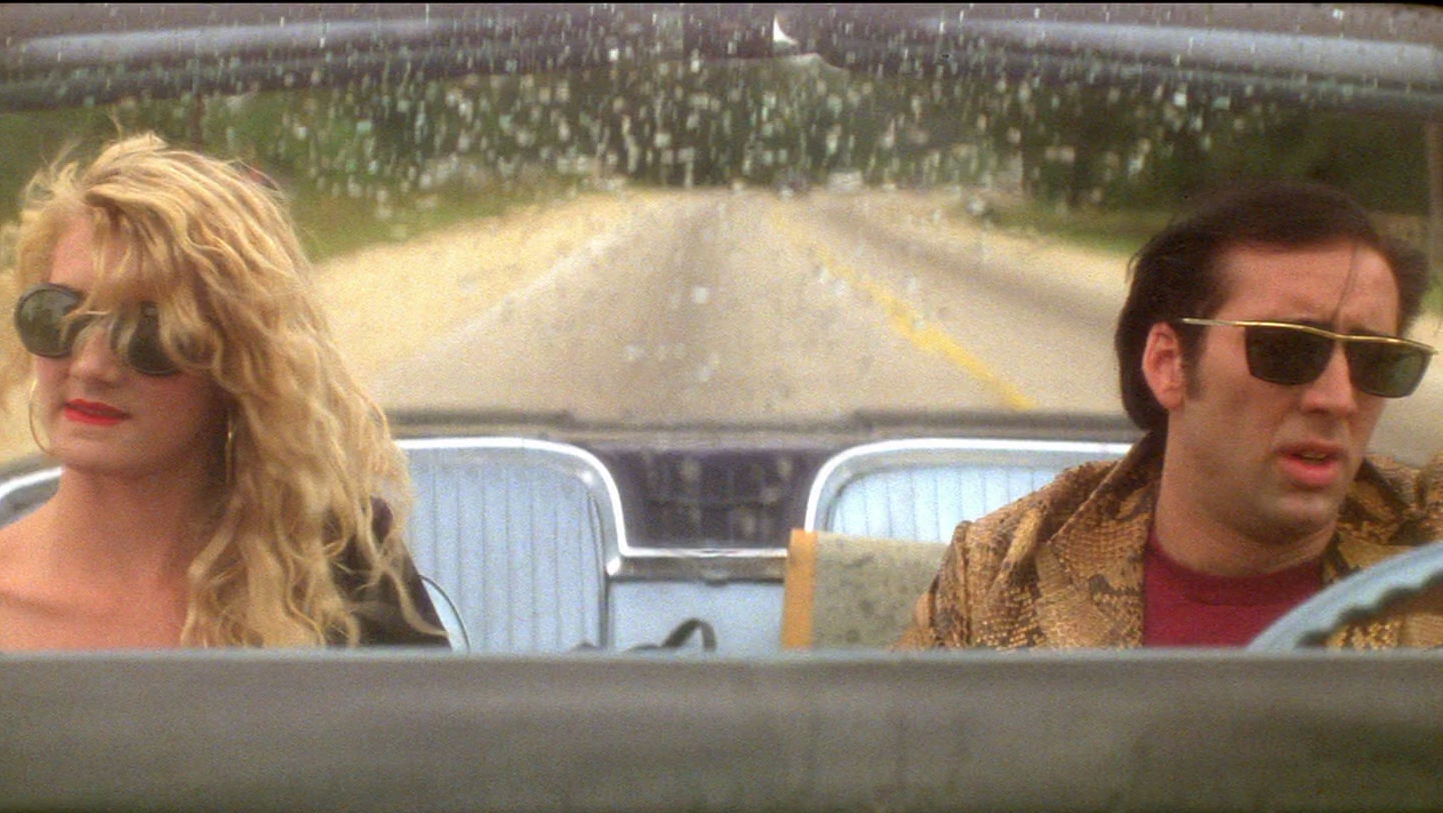
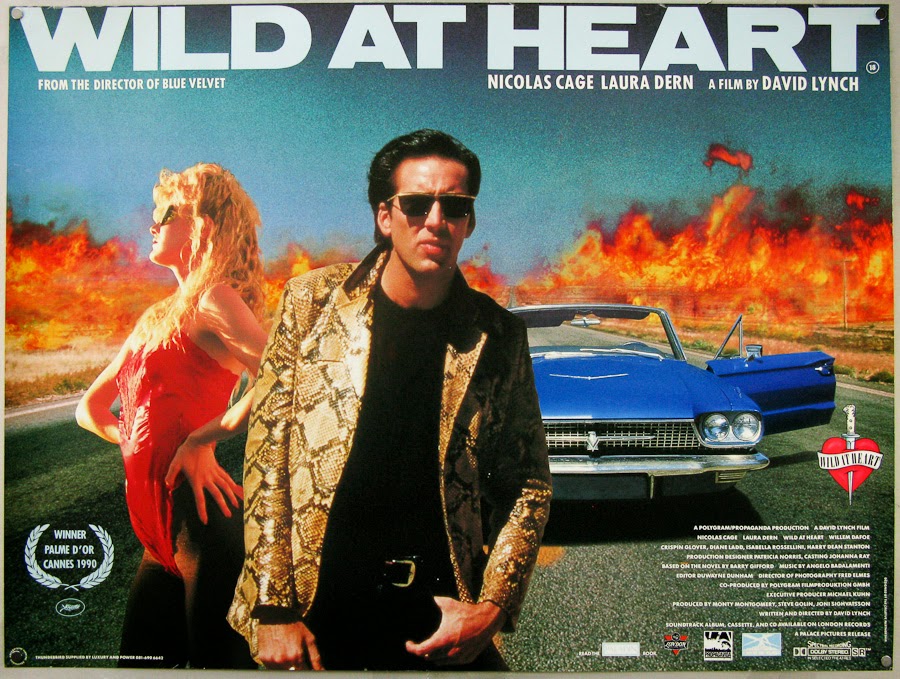
Sailor Ripley (Nicolas Cage) is released from prison after his self-defence response to a knife-wielding man at a party turns into a homicidal fury. The knifeman may (or may not) have been hired by Marietta (Diane Ladd), mother to Sailor’s “girl” Lula Pace Fortune (Laura Dern, Ladd’s real life daughter) a woman with a sexually troubled background of abuse, who is in the middle of a sexual awakening. Together they go on a road trip to – well just kinda to get away I guess.

I’ve got to confess I really hated this movie. I only stuck with it to the end, because (a) it wasn’t that long and (b) I wanted to have actually watched the whole thing before I laid into it in this review. This film is the absolute worst elements of Lynchian oddness and gore mixed with pop-culture references to the 1930s through to the 1950s.

In fact it’s a film that is so totally obsessed with these two things that there is literally no room in it for any real plot or emotion. Instead it’s full of pointless, smug and irritating visual and audio quotes from Elvis to The Wizard of Oz, and empty characters played by showboating actors giving massive performances under ostentatious make-up, all to hide the fact that the film (for all its bombast) is a shallow as a puddle. It’s a horrible piece of intellectual fakery, that pretends to be about deep profound themes about love and death but tells us nothing about them. In the end it gets more delight from Dafoe blowing his head off with a shotgun than it does from anything to do with its so-called themes.

Lynch piles on the violence for the sake of it, all in the name of parodying the aggression that lies under his apple-pie surface Americana. This worked in Blue Velvetbecause the contrast was so great, and the characters (for all their larger-than-life qualities) felt real. Here, everything feels artificial. A constant visual image of fire and flames runs through the story – it’s a reference back to the murder (it’s not a surprise to say) of Lula’s father (burnt alive on the orders of his wife it turns out). This adds nothing at all to our understanding of anything – particularly since Marietta is the most obviously corrupt and hypocritical character from the start, drawing attention in such a ham fisted way to her past misdeeds, and the impact of them, hardly seems necessary.

The film is full of signs of man’s inhumanity – the brutal shootings, the torture of Harry Dean Stanton’s luckless PI (toned down considerably from the original cut), Sailor’s brutal murder at the start, a road accident peopled with twisted bodies – but it’s all so bloody obvious. We get it David, the world is bad and people suck. Just because you’ve shot this with some tricky angles and carry it across with a tongue-in-cheek delight at your own naughtiness doesn’t make this a masterpiece. It just highlights the shallow emptiness you are peddling as art.

The rampant self-indulgence spreads to the actors. You’d think Cage would be perfect for Lynch right? Wrong. His hideously self-conscious performance of overt oddity here just makes his performance all the more unbearable. Diane Ladd gives the sort of performance many call brave, but is really just about shouting and smearing lipstick all over her face. By the time Willem Dafoe turns up with ludicrous teeth, ripping into the scenery, you’ve lost all patience. The only person who emerges with any credit is Laura Dern, who at least invests her characters with some level of humanity and sweetness. Everyone else (everyone!) is a stock cartoon drawing.

But even Dern is cursed with Lynch’s awful sexual abuse sub-plot, which is genuinely offensive in its trite shallowness and in its suggestion that having sex with your uncle as a young teenager will turn you into a real goer later in life. Did he really deal with the same themes with such sensitivity in Twin Peaks? As for the so-called romantic happy ending – it’s unearned in any way by the film, which has treated the subject with scorn. The film’s dark wit isn’t even particularly funny – everything is so dialed up to eleven, that all the comic beats get smothered in over acting or over stylised dialogue and action.

Wild at Heart won a flipping Palme d’Or (to be fair the announcement was booed). But don’t be fooled. This is a film pretending an intellectual depth it never gets anywhere near to achieving. It’s a horrible, pathetic, cruel and empty film that thinks it’s a satire on the dark heart that lies at America’s soul. It’s not. It’s just a cartooney, self-important lecture which mistakes oddity and eccentricity for heart. Lynch is a talent for sure, but here his talents are sorely misdirected into indulgent, childish emptiness and faux profundity. Don’t watch it.

Twin Peaks: Fire Walk With Me (1992)


Laura Palmer and Dale Cooper trapped in Twin Peaks nightmare halfway house between this world and the next

Director: David Lynch

Cast: Sheryl Lee (Laura Palmer), Ray Wise (Leland Palmer), Mädchen Amick (Shelly Johnson), Dana Ashbrook (Bobby Briggs), Phoebe Augustine (Ronette Pulaski), David Bowie (Phillip Jeffries), Eric Da Re (Leo Johnson), Miguel Ferrer (Albert Rosenfield), Pamela Gidley (Teresa Banks), Chris Isaak (Special Agent Chester Desmond), Moira Kelly (Donna Hayward), David Lynch (Gordon Cole), Kyle MacLachlan (Special Agent Dale Cooper), James Marshall (James Hurley), Frank Silva (BOB), Kiefer Sutherland (Agent Sam Stanley), Grace Zabriskie (Sarah Palmer)

Twin Peaks was a mystifying, but very short lived, sensation. Its first series gripped America with its whodunit mystery around who killed Laura Palmer: it was an early 90s Broadchurch with added mysticism and twisted Lynchian psychosis. Just like Broadchurch, the second series stumbled from disaster to disaster as the answer to the mystery was revealed. Though this plot line was dark, disturbing and haunting, effectively contrasted with the surreal humour of the rest of the show, large chunks of the episodes were, to be honest, terrible. As Lynch’s attention turned elsewhere, the show fumbled through half a season of increasingly bizarre, pointless, laughable and plain rubbish episodes, before rallying at the end with a return to the mysterious dwelling on the nature of evil that the series is now best remembered for.

Twin Peaks is a rare anomaly – a show whose most die-hard fans would probably admit at least a quarter of the episodes were terrible. Ratings had dropped off a cliff as the series went on (sure enough it was cancelled). The cast and crew knew the show had lost something – several actors, most notably Lara Flynn Boyle (here replaced by Moira Kelly) refused to appear in the film. Even the show’s star, and Lynch surrogate, Kyle MacLachlan only agreed to return for this film for a few brief scenes (requiring an urgent re-write). However, Lynch’s interest in the concept had clearly been awakened during his writing and filming of (what would become) the final episode, surely one of the most surreal, unsettling, bizarre, intriguing and disturbing episodes of TV ever screened.

Twin Peaks: Fire Walk With Me was Lynch’s final reclaiming of the series from the toilet it had dropped into. It also served partly as a “retcon” to tie the foundations of the original series plotline into the mythology the show had deepened in its final few episodes (built upon many surreal elements Lynch had introduced in the first episodes, otherwise hinted at rather than explored). As much of this mythology was unsettling, this movie very much follows that mood, losing much (if not all) of the dark, surrealistic humour that contrasted the darkness so well in the series. Twin Peaks: Fire Walk With Me is a strange movie that is more like an expanded extra episode of the series, rather than a stand-alone. It makes no attempt at all to appeal to anyone who hasn’t seen every episode of the series: I’d go so far to say it’s almost completely impenetrable without having sat through all of Twin Peaks.

The film explores two plot-lines: the first an investigation by FBI Agent Chester Diamond (Chris Isaak) into the murder of Teresa Banks, a plotline referred to many times in the series. The film then flashes forward a year to cover the final few days of the original murder victim Laura Palmer (Sheryl Lee) and her relationship with her father Leland Palmer (Ray Wise), who is possessed by a demonic presence known as BOB, driven by it to perform acts of sexual and physical violence. Laura is aware – and terrified – of the existence of BOB (a greasy haired face from a thousand nightmares) but seems unable to recognise that BOB and her father are one and the same. It’s the discovery of this in the film that will help to tip her over the edge into despair.

If the film is about anything other than expanding the mythology around BOB and the mysterious “Black Lodge” between dimensions, where evil and violence abound, it’s about the damaging impact of domestic abuse. The film intensely explores the personality damage Laura (an excellent and fully committed Sheryl Lee, leaving nothing in the locker room in a performance of fearless intensity) has suffered as a result of years of sexual abuse from her father (Ray Wise equally good as his personality veers wildly between gentle father and possessed evil rapist). Laura’s fractured psyche is the root cause, Lynch makes clear, of her sexual promiscuity, drug addiction and flashes of cruelty. She’s even aware of the damage, as seen in her desperation to protect others (especially the gentle Donna) from being sucked into the nightmare of her life.

The unremitting bleakness of Laura’s disastrous life is intermixed with the horror of the scenes where we witness Leland’s destructive behaviour to her, while the final scene of her eventual murder is haunting in its skilful nightmare imagery and suggestive editing. Lynch’s direction remains humane and tender, and despite putting Sheryl Lee through the ringer she never feels exploited. Instead, the film has an incredible empathy for both her suffering, and the confused, damaged actions she is driven to carry out. It gives us an understanding of the damage that can be done to even the strongest seeming people by abuse.

Alongside this, Lynch unleashes the full range of dark surrealism through a series of disturbing images to build up his mystical backstory. This is a flat out horror film, with twisted images of monkeys, blood and forests guaranteed to haunt your dreams. Nearly every scene in Twin Peaks re-positions the often quirky town of many of the episodes as a nightmareish world of neon, darkened rooms and twisted sexual and physical violence. The portrayal of Laura Palmer’s fragile heart is as intensely moving as it is intensely filmed, while the views behind the red curtain into the hellish underbelly of Twin Peaks’ mystical mythology will stick with you for some time – and is sure to be central to the new third series.

Twin Peaks: Fire Walk With Me was met with intense hostility when it was released: “It’s not the worst movie ever made,” the New York Times review read, “it just seems to be”. David Lynch publically stated he had clearly done when the network couldn’t do, and successfully killed Twin Peaks. Of course that wasn’t the case – with the new third series finally coming to the screen 25 years after the screening of this film. The re-evaluation of the film has only grown in the intervening period. The nightmarish content (and the final scenes of the series) – the wicked BOB, the nightmare of the Black Lodge and the Red Room, the elements of psychological horror – these are the things that Twin Peaks is remembered as being about: the rotten core of the sweet pie of the town.