Tag: David Strathairn

Nomadland (2020)

Nomadland (2020)

Poetic and surprisingly moving, this Best Picture winner is light on plot but deep on meaning

Director: Chloé Zhao

Cast: Frances McDormand (Fern), David Strathairn (Dave), Linda May, Charlene Swankie, Bob Wells, Peter Spears, Derek Endres
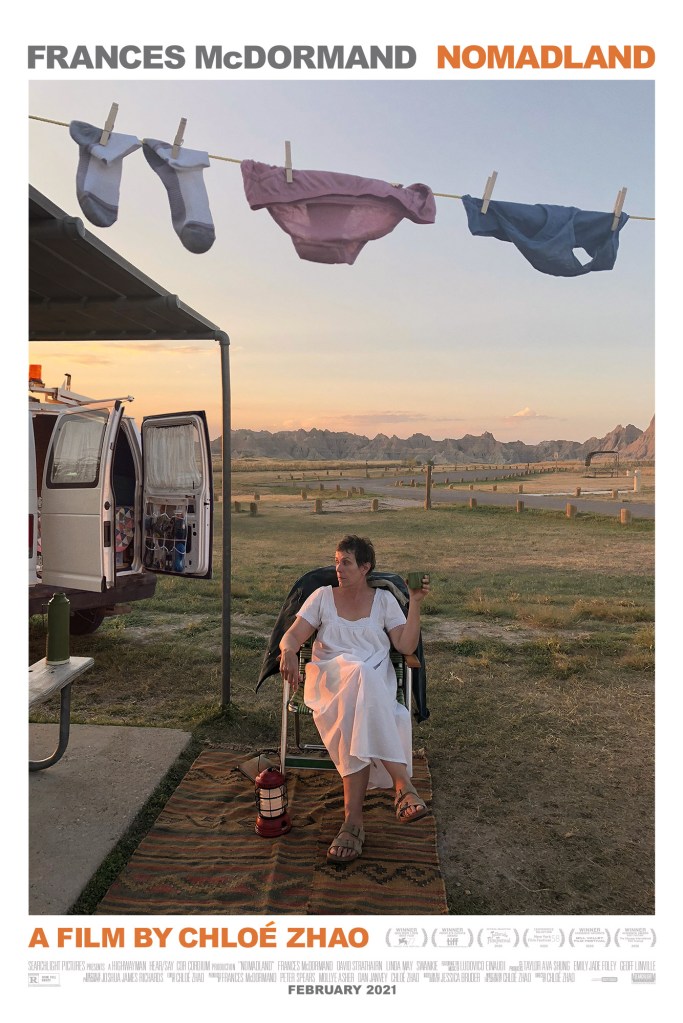
We all have ideas about what life should look like in the 21st century. Settled job, dream home, the rooted life. It’s what we are expected to be working towards – but it’s not for everyone. Nomadland, Chloé Zhao’s Malick-influenced road movie explores the lives of those who decide to live off that beaten track. The modern nomad, who chooses flexibility to move their home from place to place and don’t want to be tied down by bricks-and-mortar. It makes for a meditative, soulfully poetic film with a quietly mesmeric power.

Fern (Frances McDormand) is recently widowed, childless and has lost her job after the gypsum plant in Empire, Nevada closes. But, far from down-hearted, Fern is determined to lead a new life without the fixed commitments of her old one. She sells most of her possessions, kits out a van as a travel home and begins to drive across the country, taking seasonal jobs as and where she stops. She finds herself part of a warm and supportive community of nomads, who help to learn how to flourish in this unconventional home life.          

Nomadland winning Best Picture is as close as the Oscars have come to giving an award to Terence Malick. It’s hard not to feel his influence over the camera’s languid worship of the beauty of the Badlands, or its characters quiet searching for higher in life, via a communing with nature. Zhao’s film is a very effective and surprisingly moving character study, with only the smallest smidgen of a plot, but full of feeling. Radiantly shot by Joshua James Richards, it finds an orange-tinged beauty in a dawn and dusk and tiny moments of joy in rain falling in your face. All contrasted with the dull oppressiveness of buildings, those four walls shutting out nature.

Zhao’s film goes a long way in challenging neat assumptions we might have about this lifestyle. “I’m not homeless I’m houseless” Fern states and she politely – but firmly – turns down well-meaning offers of charity. The decision to move from place-to-place is not one enforced by poverty or failure. Instead, this is a rich, vibrant, supportive community that looks out for each other and share a legitimate (and refreshing) view of the world. Who says you need to spend your life chasing the dollar and building up a debt to have a fixed slice of real-estate you can sort of call your own?

This is particularly true in our post-recession world. Nomadland starts with the final collapse of an industrial community, now a ghost town. Many of the nomads find seasonal work that is often manual and low-skilled. Fern’s first job (of many) is working at an Amazon dispatch location, where jolly team leaders burst with enthusiasm met with smiling indifference by the (often older) staff. Fern’s travel is shaped around moving to key locations for seasonal work – Amazon, a campsite, a short-order chef job, beet processing… The economic situation is poor, but this is a way of playing the system to get a higher level of freedom, without debt or financial pressures.

It’s a key subject of a talk given to fellow nomads by Bob Wells, an influential advocate of the nomad life-style (one of any people playing versions of themselves). It’s part of a series of events at a nomad event – a sort of convention – where people gather to share experiences, advise and life-hacks. Ever needed to know how to change a tyre or what size bucket you should use for your built-in toilet? Wonder no more! On the road people come together in a way they never would in more regular life. With everything transient and nothing fixed, friendships and connections are more intense, constantly in that first glow of excitement.

That’s the pay-off of choosing this lifestyle. Everything is transient. Close friendships form, but you might not see the other person for months at a time. While phones help you to keep in touch, day-to-day you see completely different people from place-to-place. It will never be completely clear where you might be to your family. However, the short-lived intensity of connections can lead to a closeness and intimacy that might otherwise take months – a friend of Fern’s confides she has terminal cancer but regrets nothing, with a warmth and trust that would normally takes years to form not weeks.

It’s implied as well that the more short-lived intensity of friendships fits more with what the slightly taciturn and guarded Fern wants from life. Frances McDormand makes her friendly, ready with a smile, good company – but she is always slightly reserved and guarded. She will give sympathetic ears and invite confidences. But she is also a woman determined to live by her own rule. Having lived most of her life in one place in a happy marriage, a conversation with her sister (who bails her out with a loan to repair her van) reveals she was always prone to not look back when a decision was made. It’s the same with deciding to live on the road as moving to Empire – Fern knows her own heart and mind, and will fully commit to that.

This is despite temptations, the main one she faces being David Strathairn’s (the only other professional actor in the film) Dave, a fellow nomad who makes no secret of his romantic interest in her. Sweetly played by Strathairn, Dave pursues Fern and dangles the possibility of a more fixed and traditional life. They are close, but Fern has lived that life of marriage and rejected already the idea of a family. And, as McDormand makes clear in her soulful eyes, if that life was ever on the cards, it would have been with her husband not this new man, nice as he is.

Nomadland, like Fern, can see the dangers and problems. A van breaking down in the middle of nowhere is a major danger, a broken plate a potential disaster – Fern painstakingly reassembles it, not wishing to spend the money to replace it. Low temperatures and bad weather can make it uncomfortable – although she (smilingly) rejects an offer from a garage owner to sleep inside. But it also understands living this lifestyle is a legitimate choice, filled with rich possibilities. You only need to see Fern joyfully travel to the coast or get wrapped up in the embrace of the vibrant community she finds on the road to see that you could do immeasurably worse with your life.

Zhao’s film has a documentary realism to it, that comes from its deep immersion in real nomad communities. It makes copious use of real nomads playing versions of themselves, giving a rich feeling of authenticity to every moment. It also means we gain a real understanding of the idea that goodbyes are never final in this world, that there is always the prospect of seeing someone again “down the road”. The film’s poetic empathy, its warmth and the vibrant humanity of its characters makes it film that creeps up on you and has a surprising, but profound, power.

Nightmare Alley (2021)

Nightmare Alley (2021)

A mysterious drifter gets more than he bargained for in del Toro’ flashy but unsatisfying film

Director: Guillermo del Toro

Cast: Bradley Cooper (Stanton Carlisle), Cate Blanchett (Lilith Ritter), Rooney Mara (Molly Cahill), Toni Collette (Zeena Krumbein), Willem Dafoe (Clem Hoatley), Richard Jenkins (Ezra Grindle), Ron Perlman (Bruno), David Strathairn (Pete Krumbein), Mark Povinelli (Major Mosquito), Mary Steenburgen (Felicia Kimball), Peter MacNeill (Judge Kimball), Paul Anderson (Geek), Clifton Collins Jnr (Funhouse Jack), Jim Beaver (Sheriff Jedediah Judd), Tim Blake Nelson (Carny Boss)

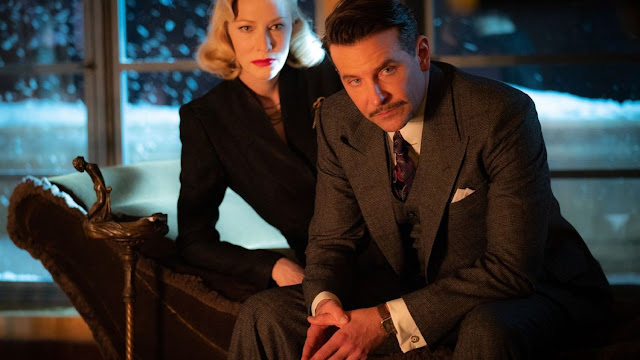
There isn’t any magic left in the world, it’s all show and tricks and no wonder. Nightmare Alley is del Toro’s follow-up to his Oscar-winning The Shape of Water and you can’t not admit it’s a triumph of style. It’s a glorious fusion of film noir and plush, gothic-tinged horror. There is something to admire in almost every frame. But it’s also all tricks and no wonder. There’s no heart to it, just a huge show that in the end makes nowhere near the impact you could expect.

In the late 1930s Stanton Carlisle (Bradley Cooper) is a drifter with a dark past, who is recruited as a labourer in a travelling carnival. Learning the ropes from freak show owner Clem (Willem Dafoe), he’s taken under the wing (in every sense) by mesmerist mind reader Zeena (Toni Collette) and taught the tricks of the art (observation and careful word codes using an assistant to guess names, objects and other facts) by Pete (David Strathairn). Eventually Stanton and his love, circus performer Molly (Rooney Mara), head to the big city where, after two years, Stanton reinvents himself as celebrity mind-reader and medium. There Stanton gets involved with psychiatrist Lilith Ritter (Cate Blanchett) in a long con where he will use the recordings of her sessions with patients to act as a medium to put them in touch with their lost ones. But is there a danger Stanton isn’t ready for in one of his clients, powerful businessman Ezra Grindle (Richard Jenkins)?

Nightmare Alley looks fabulous. But it’s hellishly overlong and curiously uninvolving. It’s like Del Toro fell in love with the whole project and forgot to search for the reason why somebody else would love it. It’s a strangely unshaped film, alternating between long, loving scenes glorying in the dark mood, baroque performances and design but then makes drastic, swift jumps in character psychology that constantly leaves you grasping at engaging with or understanding the personalities of its characters.

Its design is faultless though – it’s no surprise that its only Oscar nominations outside the Best Picture nod were all in technical categories. Dan Lautsen’s cinematography is inky black, with splashes of all-consuming colour. It’s a marvellous updating of film noir, with deep shadows spliced with angles reminiscent of Hammer-style horror. The production design is a labour of love, the carnival sets a hellish nightmare of unsettling shapes, forms and structure contrasting with the art deco grandness of the big city. The design is pretty much faultless, a real labour of love.

But the same effort didn’t go into pacing and story. This is a slow-moving, self-indulgent film, that frequently seems to be holding itself at arm’s length to make it all the easier for it to admire itself. It looks extraordinary, but it’s a frequently empty experience, more interested in mood and striking imagery than character and emotion.

Bradley Cooper gives a fine performance as Stanton. He has an air of cocksure charm, and Cooper skilfully shows this is largely a front of a man who, when push comes to shove, is capable of sudden and unflinching acts of violence. We get an early hint of this when he reacts to being struck by an escaping circus freak with unhesitating brutality. It recurs again and again in the film, and Stanton proudly states his avoidance of alcohol with all the assurance of a man who knows the bottle could unleash dark forces that he could never control. Cooper is vulnerable but selfish and above all becomes more and more arrogantly convinced of his own genius and bulletproof invulnerability, so much so that he drives himself further and further on into self-destruction.

There is some rich material here, so it’s a shame that for all that we never really seem to be given a moment to really understand who he is. Much has to be inferred from Cooper’s performance, since the film seems content to state motivational factors – troubled parental relationships, greed, ambition, a desire to make something of himself – without ever crafting them into a whole. Stanton remains someone defined by what he does.

And Stanton is the only character who gets any real oxygen to breathe, with the others largely ciphers or over-played caricatures. Rooney Mara as his gentle love interest is under-developed and disappears from the film for long stretches. Cate Blanchett gives a distractingly arch performance, somewhere between femme fatale and Hannibal Lector and is so blatantly untrustworthy it’s never clear why Stanton (an expert reader of people!) trusts her completely. Richard Jenkins is miscast as a ruthless businessman, lacking the sense of danger and capacity of violence the part demands.

Most of the rest of the cast are swallowed by the long carnival prologue, that consumes almost a third of the film but boils down to little more than mood-setting and a repeated hammering home of a series of statements that will lead into a final scene twist (and I will admit that is a good payoff). The carnival seems like a self-indulgent exploration of style, and several actors (Perlman, Povinelli and even Collette) play roles that add very little to the film other than ballooning its runtime.

The earlier section would have perhaps been better if it was tighter and more focused on Stanton and his mentor, well played by David Straithairn. I appreciate that would have been more conventional – but it would also have been less self-indulgent and helped the opening third be less of a stylish but empty and rather superfluous experience (since the film’s real plot doesn’t start until it finishes). Drive My Car demonstrated how a long prologue can deepen a whole film – Nightmare Alley just takes a long, handsome route to giving us some plot essential facts, without really telling us anything engaging about its lead character.

It makes for an unsatisfying whole, a cold and distant film packed with arch performances – although Cooper is good – and events that frequently jump with a dreamlike logic. It’s a marvel of design but way too much of a good thing, and constantly seems to stop to admire itself in the mirror and wonder at its own beauty. It becomes a cold and arch study of a film not a narrative that you can embrace. And you can’t the same about many of Del Toro’s other films – from Pan’s Labyrinth to Pacific Rim they’ve got heart. Nightmare Alley doesn’t really have that.

Good Night, and Good Luck (2005)

Good Night, and Good Luck (2005)

The importance of journalism is loudly praised in this engaging but faultlessly liberal Clooney film

Director: George Clooney

Cast: David Strathairn (Edward R Murrow), George Clooney (Fred Friendly), Robert Downey Jnr (Joseph Wershba), Patricia Clarkson (Shirley Wershba), Frank Langella (William Paley), Jeff Daniels (Sig Mickelson), Tate Donovan (Jesse Zousmer), Ray Wise (Don Hollenbeck), Helen Slayton-Hughes (Mary), Alex Borstein (Natalie), Thomas McCarthy (Palmer Williams)

In the early 1950s America seemed to be in the paranoid grip of one man. Senator Joseph McCarthy was the tip of a spear of anti-Communism, targeting every part of American life. To have even had thoughts that might be seen as socialist or communist, was enough for you to be considered an Anti-American and potential enemy of the state. McCarthy led a campaign to unearth Communist spies and sympathisers in the government, military, business, academia and the media. Blacklists and persecution were rife, and the slightest past association could condemn you. It took many years before anyone took a stand against this.

One of the leaders of this stand was renowned journalist Edward R Murrow (David Straithairn). Famous for his broadcasts from London during the Blitz, Murrow hosted an investigative journalist programme See It Now. A passionate believer in the power of television to educate and inform, Murrow and his producer Fred Friendly (George Clooney) are appalled when Air Force officer Milo Radulovich is condemned to be discharged, based on members of his family being communists and a sealed envelope of charges he was never allowed to see. Despite the worries of network CBS, Murrow, Friendly and their team run an episode of the show that exposes McCarthyism and its injustice, the first of several investigating McCarthy. But what price will they pay?

Clooney’s well-made, heartfelt film, is an impeccably liberal piece of film-making that is a very sincere tribute to the potential of television to be more than just an idiot’s lantern. Clooney frames the film with Murrow accepting a lifetime achievement award in 1958: he uses the opportunity to make a speech rebuking the room full of executives and journalists for squandering the potential of television to inform rather than just entertain. Murrow would of course be horrified by what TV became. Good Night, and Good Luck is a rose-tinted view of television journalism at its pioneering best: just as the end result of See It Now being gutted by cuts is a realistic look at where the scales will fall if entertainment and money are balanced with principles and education.

Clooney’s father was a TV journalist, while Clooney himself majored in journalism. The cut-and-thrust of the newsroom is as intrinsic to him, as is a desire to investigate and inform as part of a healthy political debate. Good Night, and Good Luck captures the mood of a newsroom with a convincing confidence. Journalists debate the fine point of stories, editors rush to assemble films and executives balance the pros and cons. It’s all shot in a beautiful monochrome, that exquisitely captures the haze of cigarette smoke all this takes place in. It’s a shot with a handheld urgency, sharply cut, that puts us into this world of cut-and-thrust media decisions.

And it makes clear what TV news can be. Not agenda led, but facts led. Not kowtowing to power, but challenging it to justify itself. Looking into matters that are important, not sensational. Wanting to inform people and expand their understanding, rather than pander to the lowest common denominator. Murrow’s shows are scrupulously fact-checked, and allow full rebuttal from their subject. He comes at story not with a pre-supposed position, but based on where the facts and his editorial judgement leads him.

It all takes place in a TV set that’s really striking in its humbleness, compared to the operatic news sets we see today. The 1950s studio is small, cramped and simple – and by contrast the ideas are large, expansive and complex. Murrow’s set is little more than a chair with a TV monitor. His producer Fred Friendly, literally sits at his feet to hand him notes and cue him in with announcements and VT. The See It Now set contrasts vividly with the more grandiose sets for Murrow’s other show, a series of puff piece interviews with popular stars like Liberace. (While Murrow learns his scripts by heart for See it Now, he professionally reads through a series of cue cards for these for-the-money interviews).

Murrow and Friendly also won’t compromise. They defend their right to make the show to CBS President William Paley (a brilliant performance from Frank Langella), who prides himself on no direct intervention on the news but pushes for a less controversial line. The entire team is consulted on every issue. The newsroom is a place where our better angels can come out.

But it’s still happening in an America where people are careful about what they say and do. A subplot concerns reporters played by Robert Downey Jnr and Patricia Clarkson: secretly married – contrary to CBS policy – like those suffering from McCarthyism, they must live a lie in order to protect what they have. See It Now is in danger of criticism, cancellation and attack. Another CBS anchor, Don Hollenbeck – perfectly played by Ray Wise (and few actors are better at suppressed desperation than Wise) – is dealing with constant media persecution for his perceived communist sympathy. Murrow and Friendly are not perfect: they sometimes dodge the fights they can’t win and Murrow in particular shrugs off or ignores Hollenbeck’s concerns with tragic results.

But, as Clooney makes clear, the good outweighs all the rest. As Murrow, David Straithairn (Oscar-nominated) has never been better. He perfectly captures Murrow’s mannerisms, but mixes it with wonderful measure of honesty and decency, mixed with a degree of pride and self-righteous certainty. He dominates the film (with Clooney as a generous foil) and carries much of the film’s liberal message that smart, intelligent, dedicated men can change the world.

Good Night, and Good Luck might be the most soft-left liberal film made in Hollywood in the last fifteen years. But it is a fine example of film-making craft and the earnest honesty with which it is made in its own way inspiring. It’s Clooney’s finest film and it’s grounded in his strengths: fine actors and writing carrying a sincerely told message.

The Firm (1993)

“He can’t handle the truth!” Tom Cruise takes on The Firm. We lose.

Director: Sydney Pollack

Cast: Tom Cruise (Mitch McDeere), Jeanne Tripplehorn (Abby McDeere), Gene Hackman (Avery Tolar), Holly Hunter (Tammy Hemphill), Ed Harris (FBI Agent Wayne Tarrance), Hal Holbrook (Oliver Lambert), Jerry Hardin (Royce McKnight), David Strathairn (Ray McDeere), Terry Kinney (Lamar Quinn), Wilfrid Brimley (Bill DeVasher), Gary Busey (Eddie Lomax), Paul Sorvino (Tony Morolto)

Mitch McDeere (Tom Cruise) is graduating top-of-his-class from Harvard Law. A plucky kid who’s worked for everything he has – and who wants to provide the best he can for wife Abby (Jeanne Tripplehorn) – Mitch has lots of offers but is seduced by a perk-filled offer from a law firm in Memphis. Everything goes wonderfully at first. But then associates at the firm start to die under suspicious circumstances and Mitch discovers no-one everleaves the firm except in a wooden box. Maybe all that off-shore tax-dodging isn’t quite as innocent as it seems – and those big-city clients with Italian-sounding names aren’t so friendly after all…

Adapted from a best-selling novel by John Grisham at the height of his airport-novel flogging days, The Firm is bought to the screen by Sydney Pollack. And what a complete dog’s dinner he makes of it. The Firm is a dreadful film: long, slow and dull with a plot that stretches right through elaborate and comes out the other side as confusing. By the time Mitch is tearing through Memphis, briefcase flapping behind him, you’ll have long-since ceased caring about anything involved in the film at all. Because for a film of such great length, very little seems to happen in it – and what little does happen is wrapped up in a mixture of legalese and curiously flat chase sequences.

Cruise plays Mitch at his most gung-ho, cocky, shit-eating grinnish. He’s preppy, super-smart, arrogant but also loyal, brave and principled. Aside from a brief temptation by money – and that because he wants the best for his family! – and of course a dalliance with a honey-trap on a beach (but it was a set-up, so not his fault!), he’s practically perfect in every way. He’s even a decent athlete, playfully taking part in back-flipping competitions with a break-dancing pre-teen busker (one of the most clumsy and bizarre introductions of a Chekov’s skill in the movies).

To put it bluntly, Mitch is an irritating character and watching him (very slowly) decide to do the right thing doesn’t make gripping viewing. Around him a host of experienced character actors do their thing, none of them stretching themselves. Tripplehorn does her best with the thankless part of “wife”, though she does at least get to do something a little proactive at the end. Hackman grins and coasts as Cruise’s mentor with the lost conscience. Hunter pouts and wisecracks (Oscar-nominated) as Grisham’s twist on an Eve-Ardenish secretary. Holbrook and Brimley scowl behind smiles as high-ups at the Firm. Harris shouts a lot as a permanently angry FBI agent with a heart of gold. Sorvino breaks out his Mob Boss 101.

Pollack marshals all these forces together with minimal effort and then ticks the boxes of all Grisham-cliches. The only thing missing are some courtroom dynamics, but we get the next best thing with wee-Tommy playing the FBI, the Mafia and the Firm off against each other in a desperate attempt to stay one step ahead of the game. I can’t stress enough how turgid and dull this film is. However scintillating you feel the set-up you might be, as the film clocks into the second hour (with 30 minutes still to go), you’ll be amazed how little sense of peril or threat there is.

There is nothing sharp, pointed or pacey about this film. “It has to happen fast” Tom announces at one point, as he kicks his impenetrable plan into gear. “Good luck in this film” my wife commented. She’s spot-on. Pollack fails to bring any sense of pace or peril to the film. For all we are repeatedly told Cruise’s life is at risk, it never really feels like it.

A big part of this massive failure is the terrible musical score that covers every single second of the film. Provided by an Oscar-nominated Dave Grusin (beating out Michael Nyman’s score for The Piano from even being nominated, one of the most inexplicable oversights at the Oscars from the 90s), every single second of the film is overlaid with a plinky-plonky piano score that would not sound out of place in a second-rate jazz bar or a hotel lift. Rather than bring you to edge of your seat, the score actually makes you feel like you should be resting back in it with a large cocktail in hand and a fuzzy sense of upcoming sleepiness clouding your brain. Which to be honest might work: pissed and half-asleep is probably the only way to get anything from the movie.

Lincoln (2012)

Daniel Day-Lewis gives on the great transformative performances as Lincoln

Director: Steven Spielberg

Cast: Daniel Day-Lewis (Abraham Lincoln), Sally Field (Mary Todd Lincoln), Tommy Lee Jones (Thaddeus Stevens), David Strathairn (William Seward), Joseph Gordon-Levitt (Robert Lincoln), James Spader (WN Bilbo), Hal Holbrook (Preston Blair), John Hawkes (Robert Latham), Jackie Earle Haley (Alexander Stephens), Bruce McGill (Edwin Stanton), Tim Blake Nelson (Richard Schell), Joseph Cross (John Hay), Jared Harris (Ulysses S Grant), Lee Pace (Fernando Wood), Peter McRobbie (George Pendleton), Gloria Reuben (Elizabeth Keckley), Jeremy Strong (John Nicolay), Michael Stuhlbarg (George Yeaman), David Costible (James Ashley), Boris McGiver (Alexander Coffroth)

It took me three viewings until I felt I got Lincoln. Previously – in the cinema and the first time at home – I respected it. I admired the skill with which it was assembled. But I had found it hard to see it as much more than a critically acclaimed civics lesson, Spielberg at his most prestige. Returning to it the third time with the pressure well and truly off, suddenly I discovered a film I’d never seen before, an intensely dramatic telling of the perilous struggle to pass the Thirteenth Amendment to abolish slavery. A vibrant, beautiful and surprisingly intense story of how close Congress came to vetoing it. What had seemed a stuffy museum piece, instead came to life as a dramatic piece of cinema. It goes to show you should never be afraid to give something another go. Or two.

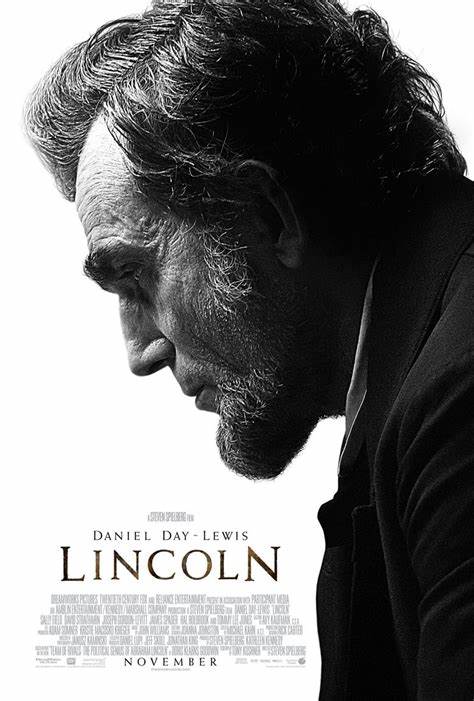
This biopic of Lincoln goes down a very modern route of avoiding covering the Great Man’s entire life. Instead it zeroes in on little more than a crucial month. It’s January 1865 – in what we know are the final months of the President’s life – and Abraham Lincoln (Daniel Day-Lewis) confronts a terrible choice. Civil war has torn America apart for year and peace may be on the horizon. But Lincoln fears a reformed America, with all its Southern slave states back in the fold, will find a way to end his Emancipation Proclamation and restore slavery to its height. To prevent this, Congress must ratify the Thirteenth Amendment to the Constitution ending slavery. But, with many in Congress worried that such an Amendment will end any chance of peace, Lincoln is in a terrible position. Should he sacrifice peace for abolition? Or vice versa? Either way, it will be a no-holds barred fight on the floors of Congress.

Spielberg’s film is near perfect in its shooting and editing, while its historical detail is brilliantly on-point. You couldn’t fault a moment of its making. However, what makes the film a success is the director’s skilful ability to combine graceful (even stately) old-fashioned film-making expertise, with a truly compelling sense of the passions and dangers we face when democracy is in action. And the overwhelming tension when the stakes are high and we have no guarantees of the end result. Another film – the stately civics lesson I once took the film for – would have shown the passage of the bill as a Whiggish inevitability, a progress filled march to a better world.

Lincoln isn’t like that. This is a film that shows politics then and politics now ain’t that different. For every principled man, there a dozen looking out for the main chance, marking time or who are too scared to worry about right and wrong. The Amendment is delivered not by impassioned oratory from the President. It’s carried by skilled floor management and the employment of a trio of political lobbyists with briefcases stuffed with cushy job offers in the rebuilt America.

Votes are brow-beaten out of people, threats and persuasion are used in equal measure. There is no winning people over with poetic oratory. At one point, Lincoln makes a simple and heartfelt plea for one congressmen to do the right thing: the guy votes against him. One of the film’s moments of triumph sees fervent abolitionist Thaddeus Stevens refuse to be provoked into expressing his true views on the floor, instead offering a statement that he does not believe in equality “in all things”, knowing any other answer will be used to build opposition against the bill. Is there any other film in American politics where one of the biggest cheer moments is one of our heroes compromising and spinning his true views into something far less threatening?

It’s all part of the film’s demystification of American history as not being something made from marble, but instead being real and true. If anything though, this sense of realism – of danger and the very real possibility of defeat – makes the final vote (a long sequence that almost plays out a congress vote in real time) both far more dramatic and also surprisingly moving. Because we appreciate every step of the backroom handshakes, fights, compromises and (let’s be honest) corruption and shady deals that got us here. And, more than anything, the film has made clear Lincoln is willing for this brutal war (the horrors of which, both in battle and bloody aftermath, intrude at key points in the film) to go on for as long as it takes, to ensure this Amendment.

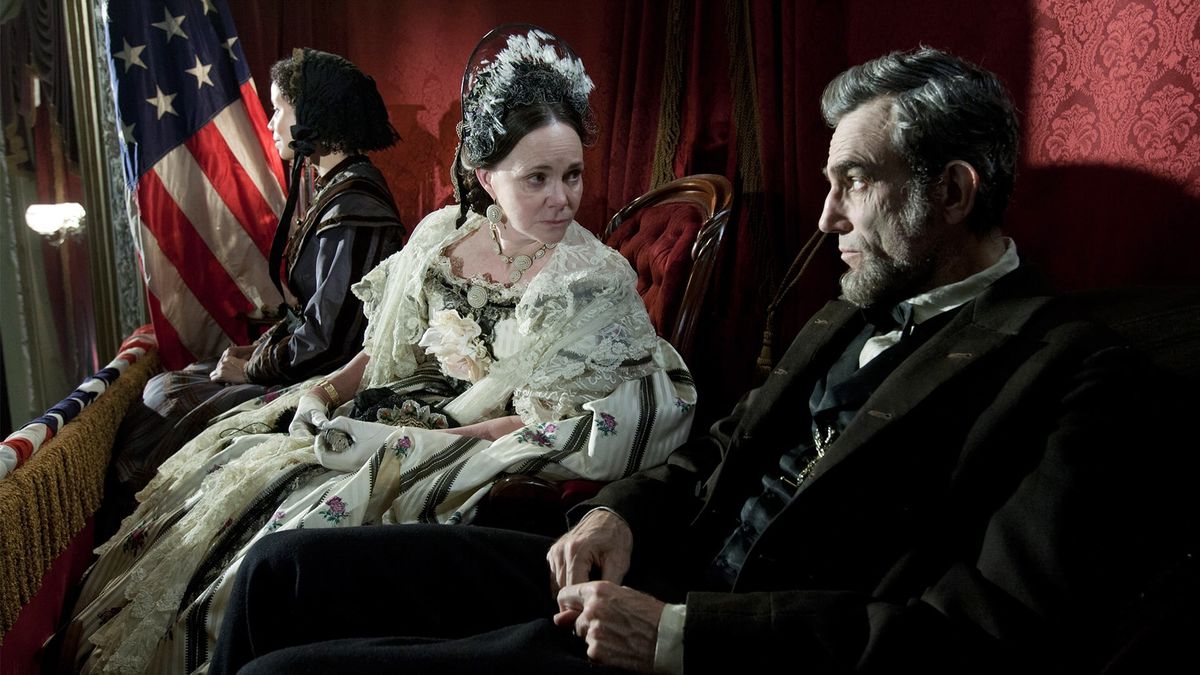
Lincoln is the heart of the film: and it’s almost impossible to state how central Daniel Day-Lewis is to the film’s success. This is an extraordinary performance. I don’t think you can understate how venerated Lincoln is in the American memory. With his distinctive features and a permanent memory of him sitting like a marble God in the centre of Washington, it’s hard for many to imagine that this was ever a real man. But Day-Lewis has turned in a performance here that transforms Lincoln into a living, breathing man but never once compromises his greatness.

From the voice (a wispy lightness, a million miles from the deep, Shakespearean accent you would expect – and entirely accurate) to the ambling walk, to the film’s embracing of Lincoln’s eccentric monologing, his love of whimsy and jokes, his autodidact passion for language, his warmth and love for his family – and his righteous anger when frustrated by those who cannot see the big picture – this is extraordinary. Day-Lewis is compelling in a way few actors can be. His Lincoln is superbly human. Every moment is beautifully observed, but this is so much more than an actor’s tricks. His Lincoln is someone you can come out of the film convinced that he was talking to you, that you understand him as a human being not a cipher. I felt I knew and understood Lincoln more from watching this film than I ever had from a history book. It’s breathtaking.

Of course it inspires everyone else in the cast to give their best. The at times difficult marriage between Lincoln and his wife gives some wonderful material for Sally Field (easily her finest performance in decades). Mary Todd Lincoln is aware she will always be a disappointment for her husband as a partner, but equally feels that her public mourning for this lost child speaks of a deeper humanity than her husband. Loyal if questioning, she’s also abrupt and clumsy enough at times to be a liability.

Tommy Lee Jones is exceptional as Thaddeus Stevens, prickly, difficult but also morally pure (the film has helped rediscover the unjustly overlooked Stevens). Previous Lincoln performers Strathairn and Holbrook give very good support. James Spader is great fun as colourful lobbyist. Joseph Gordon-Levitt is all restricted ambition as Lincoln’s son. Jared Harris shines in a few scenes as Grant. Gloria Reuben has a few beautiful moments as Mary’s confidante Elizabeth Keckley.

Lincoln is a film shot with all the prestige of an American Merchant-Ivory, in love with the power of democracy. But it’s also open-eyed on how a system like America’s works, and how perilous delivering “the right thing” can be. Emotional and engrossing, it’s powered above all by a towering sublime performance by Daniel Day-Lewis who might as well be the 16th President reborn. It took me three viewings to see the richness here – but I am so glad I stuck it out.

Godzilla (2014)

Godzilla the only character this film is truly interested in.

Director: Gareth Edwards

Cast: Aaron Taylor-Johnson (Ford Brody), Ken Watanabe (Dr Ishiro Serizawa), Bryan Cranston (Joe Brody), Elisabeth Olsen (Elle Brody), Juliette Binoche (Sandra Brody), Sally Hawkins (Dr Vivienne Graham), David Strathairn (Admiral William Stenz)

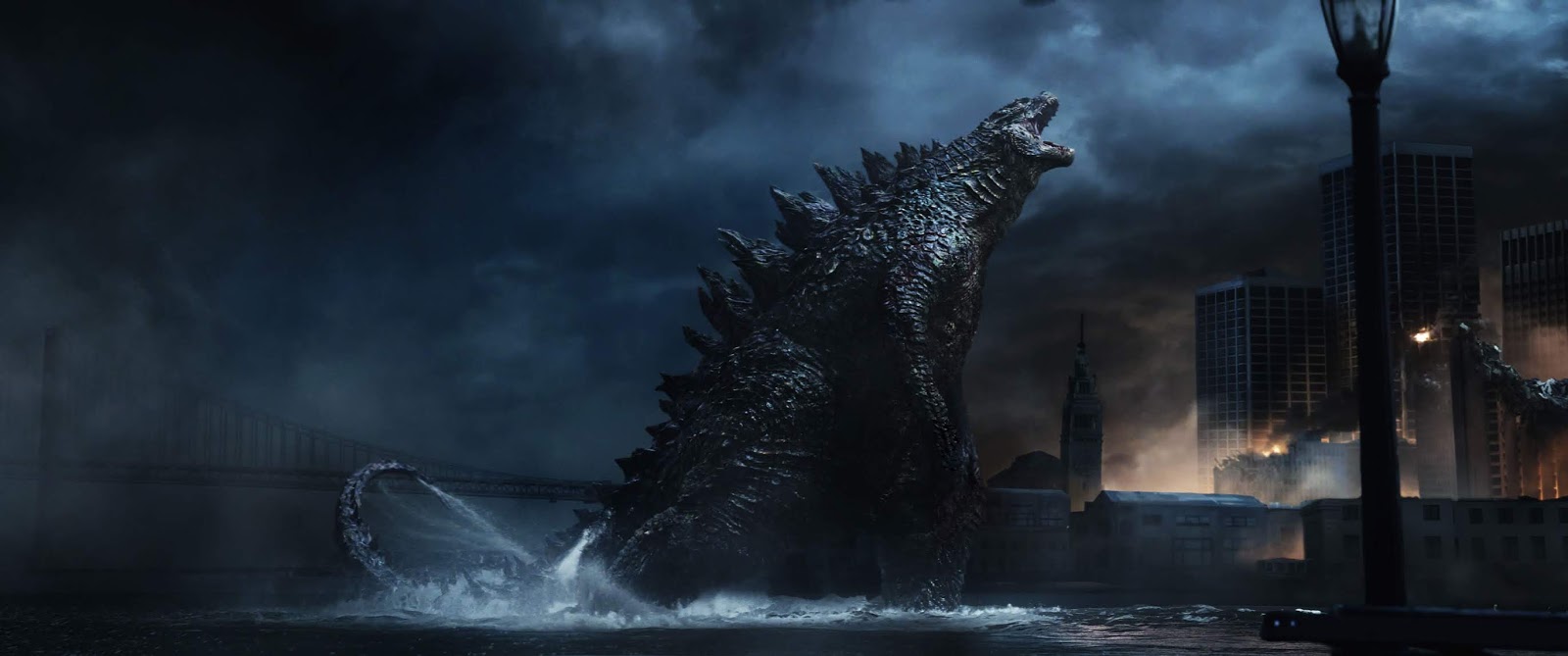
There is a lot of affection out there for Godzilla. I’ve never quite felt it myself, so I guess I was the wrong person to watch this film. This is a film celebrating the legend of a series of films from Japan about a guy in a rubber suit hitting other guys in rubber suits in a set designed to look like a miniature city. Gareth Edwards’ has directed an affectionate homage that at times flirts with being a more interesting film but never really commits to it.

In 1999, Joe Brody (Bryan Cranston) is forced to watch his wife Sandra (Juliette Binoche) die in front of him in a mysterious accident at the nuclear plant in Japan they work at. Fifteen years later, his now grown-up estranged son Ford (Aaron Taylor-Johnson), a bomb disposal expert, is called to Japan after Joe trespasses into the exclusion zone. There Ford and Joe discover there is no fall-out at the accident site – and that the accident was actually linked to a series of mighty beasts from prehistoric times who feed off radiation. The beasts are being investigated and monitored by a global organisation called Monarch – and they are starting to stir. Soon cities are at risk and our only chance of survival may be from alpha-predator Godzilla bashing the other monster out of existence.

Godzilla starts with a brilliant human interest story – a husband forced to sacrifice his wife to save hundreds of thousands of others. But around the halfway mark it loses all interest in its human characters, who become mere spectators to the mighty monsters hitting each other. By the final act, your interest in the action will depend on how much you can invest in a huge CGI monster hitting another huge CGI monster. With nary a character in sight, I’m not sure how much I could. 

Gareth Edwards does a good job directing the film. It’s intelligently and imaginatively framed and Edwards shows some wonderful restraint in showing Godzilla himself, gently avoiding showing too much too soon (the monster doesn’t appear full in camera for well over an hour into the film). In fact, Edwards has a lot more interest in showing the perspective of ordinary people watching the rampage, running or simply standing in awe starring upwards at these mighty beasts. It immediately hammers home the scale and awe of these creatures. Edwards often films from the perspective of those on the ground, with the camera craning upwards seeing the colossal beasts.

It’s a shame that the film doesn’t lavish as much attention on the cardboard cut-out characters who are running around beneath the beasts. A fine company of actors are assembled, most of whom are relegated for much of the first half of the film to spouting exposition and the second half of the film to staring upwards in awe. Remember when Edwards made his breakthrough film Monsters? This film, sure, had monsters in it but it was a human interest story about two very different people thrown together after cataclysmic events. Edwards’ film worked because it was above all about people and their problems. Hollywood came calling.

And Hollywood of course missed the point. Edwards is a director who I think has some truly interesting work in him. Watch the scene as Cranston is forced to slam the safety doors on Binoche. This is a scene crammed with more drama, emotional investment and tragedy than the whole of the rest of the runtimes of Godzilla and Edwards’ Rogue One. Both of those films are well-made but derivative bits of geek chic, pandering towards the crowds by giving them parts of what they think they want, homage-stuffed retreads of other films that focus on bashes and toys rather than on people and characters. Edwards is becoming a purveyor of B-movie thrills, well made, but basically empty. 

That’s your Godzilla movie here. Well-made but rubbish. Full of spectacle wonderfully filmed, but fundamentally empty. A film that is careful about what it shows you and when, but is basically lacking any real soul.