
Tag: David Tennant

Mary, Queen of Scots (2018)

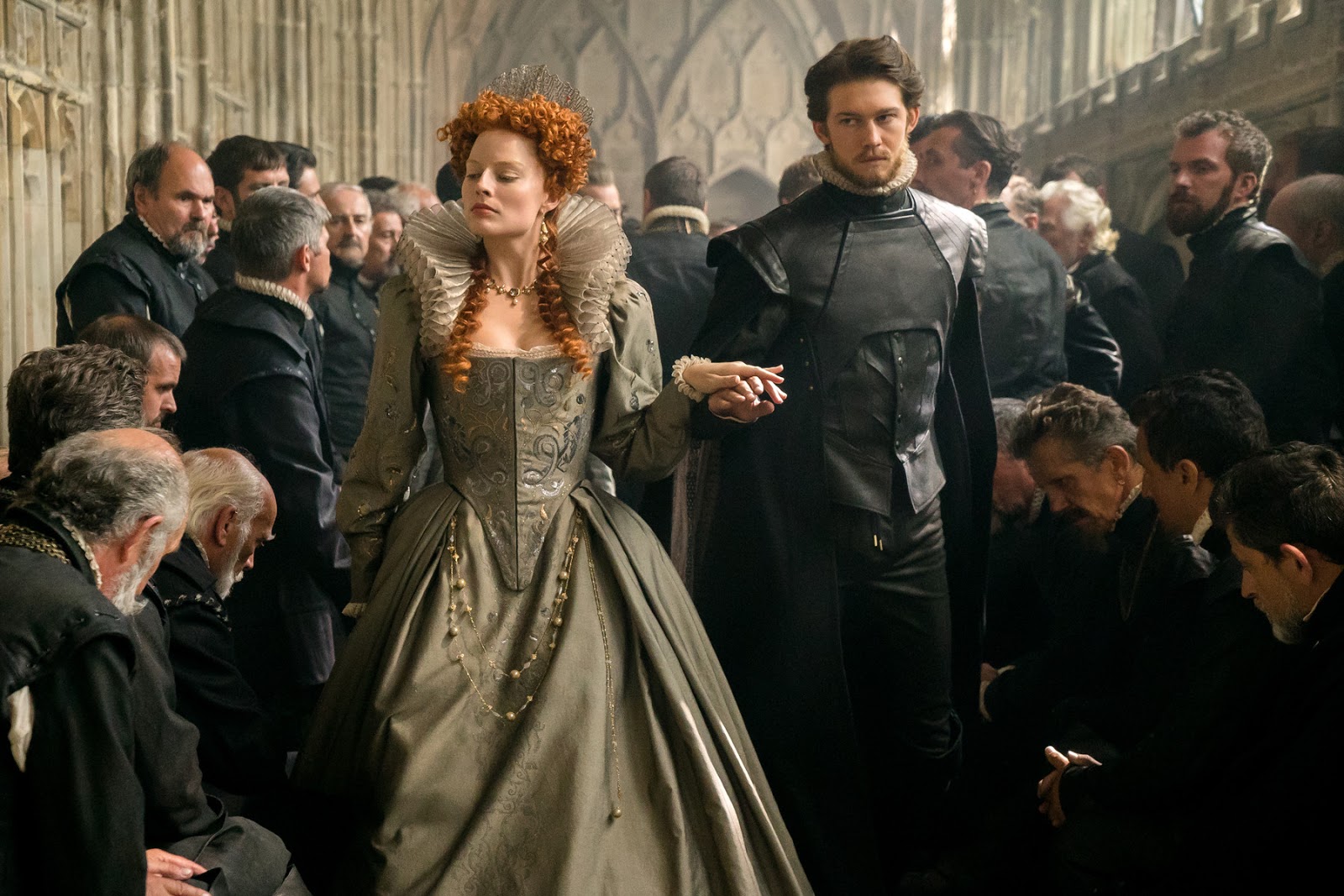
Margot Robbie as a particularly dense version of Elizabeth in misfire Mary, Queen of Scots

Director: Josie Rourke

Cast: Saoirse Ronan (Mary Queen of Scots), Margot Robbie (Elizabeth I), Guy Pearce (William Cecil), David Tennant (John Knox), Jack Lowden (Lord Henry Darnley), Joe Alwyn (Lord Robert Dudley), Gemma Chan (Elizabeth Hardwick), James McArdle (Earl of Moray), Martin Compston (Earl of Bothwell), Ismael Cruz Cordova (David Rizzio), Brendan Coyle (Earl of Lennox), Ian Hart (Lord Maitland), Adrian Lester (Lord Randolph), Simon Russell Beale (Robert Beale)
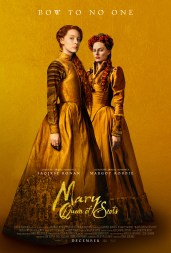
Mary Queen of Scots posterThe history of the Tudors has been mined so often by film and theatre that there can hardly be any hidden stories left to tell, barely any twists that can be unveiled or reimaginings that haven’t already been imagined. Mary Queen of Scots certainly fails to find any new angles on its oh-so-familiar tale, and even its attempt to rework events and characters keeps banging its head on those damn, unchangeable real events that spoil the story it seems to want to tell.

And it’s a familiar story. Mary (Saoirse Ronan) returns to Scotland from France after the death of her husband. Naturally many people aren’t keen to see this Queen, not least her half-brother the Earl of Moray (James McArdle) who was running the country, and protestant firebrand anti-feminist John Knox (David Tennant). But Mary is plugged in, sharp and savvy and she’s going to rule the country her way – and also put forward her claim for the throne of England currently held by her cousin Elizabeth I (Margot Robbie). It seems all is set for Mary’s success – until fortune begins to turn with her marriage to drunken playboy Henry Darnley (Jack Lowden). Conspiracy, murder, exile and execution are on the cards.

Mary Queen of Scots is a mess. For starters, Beau Willmon’s script does the near impossible of turning one of the most electric periods of British history into something stodgy, dull and hard to follow. Perhaps wrapped up in his House of Cards background, a show where there is a never ending stream of betrayals, counter crosses and twists for twists’ sake, Mary Queen of Scots is the same. The film is a constant parade of betrayals in Scotland, as lords shift and move sides from scene to scene with such swiftness, such lack of explanation, such lack of exploration of character and motivation, that you end up not only confused by ceasing to care. Decent actors like James McArdle and Ian Hart struggle through with ciphers (Hart literally changes sides every single scene). Martin Compston is given a confused character design as Bothwell that makes Mary’s third husband a hero until he makes a left-field heel reversal and becomes a bullying rapist. What a mess.

It’s even worse in England, where poor Guy Pearce’s every scene is a never-ending stream of exposition and historical context. Every single scene in England at the court drags and claws itself into nothingness, simply a load of dry, dense, uninvolving dialogue with characters whom we are never given any real reason to invest in. Just as the Scottish lords are ciphers who do whatever the plot requires them to do, with no time invested in developing their characters, so it’s the case with the English lords. There are many, many, many people to keep on top of but virtually no characters to invest in.

Willmon’s script also falls wildly in love with Mary herself, desperate to turn her into some genius politician and master of realpolitik, who we are frequently told is playing the game of courtly politics with aplomb and genius. “She’s out-manoeuvred us” one character constantly bemoans. However, the problem Willman has is that he eventually has to deal with the fact that the real life Mary made hideous, disastrous, stupid decisions. And since those decisions are basically the building blocks of the story (who she marries, who she trusts, who dies, where she goes, who she abandons etc etc.), there is no way around them. You are left with a film that tells you all the time how smart your lead character is, while most of the things she does are foolish.

Not least the marriage to Lord Darnley. Jack Lowdon gives a very good performance as a feckless, arrogant weakling. But surely only the densest woman alive could fail to see that Darnley is a hideously inappropriate husband? The film gets round this by stressing his charm and, in one hilariously misjudged scene, his intense skill at cunnilingus as being the thing that pulls the wool over her eyes. (After this first soft focus bit of oral play, Mary bashfully asks Darnley if he would like some “satisfaction” as well. No that’s fine he sweetly says – she really should be suspicious by then.) The film tries to course-correct by having Mary realise literally five minutes into the marriage that she has made a terrible mistake. But she doesn’t learn from it, as the rest of her life is a series of disastrous decisions, promoting the wrong people, snubbing others, leaving her son (the SINGLE MOST IMPORTANT PERSON IN THE COUNTRY) behind when she runs away… need I go on.

As well as trying to make Mary a genius, it also balances by trying to make Elizabeth an idiot. I swear there is not a single scene in this film where Elizabeth is not in tears about something. She shows no judgement whatsoever, struggles with her hormones, blindly follows the advice of her counsellors, spends half the movie making paper roses and stroking horses rather than running the kingdom. On top of which, this film which wants to make a point about the sexism women face dealing with a world of men, turns Elizabeth (the greatest queen England ever had) into a hormonal idiot, blindly led by men and obsessed with the idea of having children (even longingly trying to make her shadow appear pregnant) because, you know, deep down the ladies just be wanting babies. 

Now Saoirse Ronan and Margot Robbie do decent jobs with the versions of these people they play, even if none of this rings true. Josie Rourke does a decent job directing the film visually, with its Game of Thrones inspired look and feel (Edinburgh castle is turned into some sort of bizarre Dragonstone structure, half hewn out of a mountain). But its story is, to put it bluntly, really, really BORING. You are never given any reason to care about most of these characters, so the constant stream of betrayals and side shifting eventually becomes utterly unengaging. Every time you get near to thinking Mary is smart, she has to do a terribly dumb historically inspired real event, that actually makes her look even more stupid than she was. Mary Queen of Scots is a stodgy, dense, dull mess of a film that ends up being drier and less interesting than the sort of high-Hollywood epics from the 1970s it’s trying to update.

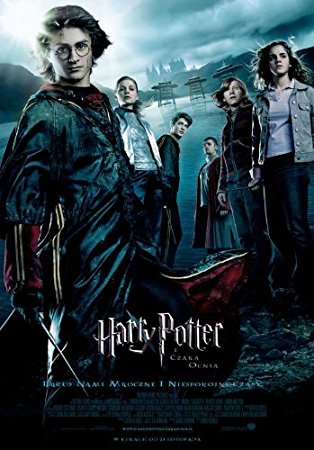
Harry Potter and the Goblet of Fire (2005)


Our heroes face an increasingly dark future in Harry Potter and the Goblet of Fire

Director: Mike Newell

Cast: Daniel Radcliffe (Harry Potter), Rupert Grint (Ron Weasley), Emma Watson (Hermione Granger), Robbie Coltrane (Rubeus Hagrid), Ralph Fiennes (Lord Voldemort), Michael Gambon (Albus Dumbledore), Brendan Gleeson (“Mad-Eye” Moody), Jason Isaacs (Lucius Malfoy), Gary Oldman (Sirius Black), Miranda Richardson (Rita Skeeter), Alan Rickman (Severus Snape), Maggie Smith (Minerva McGonagall), Timothy Spall (Peter Pettigrew), Frances de la Tour (Madame Maxime), Mark Williams (Arthur Weasley), Robert Pattinson (Cedric Diggory), David Tennant (Barty Crouch Jnr), Jeff Rawle (Amos Diggory), Tom Felton (Draco Malfoy), Robert Hardy (Cornelius Fudge), Roger Lloyd Pack (Barty Crouch), David Bradley (Argus Filch), Clémence Poésy (Fleur Delacour)

After Alfonso Cuarón announced he would only direct one Harry Potter film, the producers faced a stiff challenge. The third Harry Potter film had been the best so far, and elevated both the acting and design into a far more filmic, epic position than before. Could Mike Newell match this in Goblet of Fire? Sure he could.

If nothing else, Goblet of Fire is a triumph of adaptation. Used to the page-to-screen translations of the earlier films, it was expected that the film would be split into two parts. Instead Newell and screen-writer Steven Kloves turned Rowling’s huge fourth book into a tightly structured and focused film that places Harry’s emotional journey firmly at its centre, and includes only the things that support the building of that story. 

Goblet of Fire is a film of fascinating contrasts. In fact, it’s probably the lightest, most ‘teenage’ of the films, while also containing a dark final chapter and more death than we’ve had so far in the series. But this film is actually rather funny and allows its characters to focus on the challenges and stresses of growing up, with only a few flashes of danger and darkness – before they get wrapped up in the battle against Voldemort that will dominate the next few films.

So this is the film where we get crushes, where Harry and Ron struggle to get dates for the ball, where we get a sense of Hermione not only growing up – but growing in confidence. Harry develops a hopeless crush on Cho Chang – his “Willyougotoballwithme” hurried date proposal is all too familiar to most men, as is his “oh no never mind not a problem” when she (reluctantly) says no. Meanwhile, Ron struggles to understand his own hormonal feelings towards Hermione. It’s all well done and very funny. The ball itself is a highlight of teenage awkwardness, as well as genuinely feeling like a teenage party (including a sort of wizarding mosh pit). 

This teenage awkwardness carries across into Harry’s involvement in the Tri-wizard Tournament, a series of stirring set-pieces against dragons, mer-people and a wicked ever-shifting maze. The tournament offers a range of puzzles Harry needs to solve – more than enough opportunity to allow other characters to get involved. Neville Longbottom particularly moves to the fore for the first time – not only embracing dancing (hilariously nearly every boy is as embarrassed by it as you might expect) and landing a date, but also using his knowledge of plants to help Harry, and we get increased insight into his own tragic backstory. It’s great to see Matthew Lewis being able to stretch himself – and show the roots of the good young actor he’s become.

The film spends a lot of time on family roots, both tragic and happy, in particular fathers and sons. We have no fewer than four father/son match-ups in these films, and each gives us a slightly different perspective on family relationships. Mark Williams’ matey but loving Arthur Weasley gets more screen time than ever before, and Williams develops him into a protective but warm patriarch. Contrast that with the troubled coldness the Crouches show each other – and the swift speed with which Barty Crouch denounces his own son. We get a glimpse of the sort of father Harry could have had with a brief ghost appearance of Harry’s parents. The strongest father-and-son relationship we get to see is that between the Diggorys, an immeasurably proud father and a perfect son.

Mentioning Amos Diggory means we have to bring up one of the most extraordinary acting cameos in the entire series: Jeff Rawle’s work here is brilliant. Is there a more moving moment in the franchise than his uncontrollable grief when Cedric is killed? His anguished crying of “That’s my boy” will haunt many a viewer for years to come. It’s a measure of the brilliance Mike Newell had with actors, and the shrewdness of the casting throughout. Would anyone else have thought of George Dent from Drop the Dead Donkey for this King Lear-like cameo? Would anyone else have thought of Trigger as strict disciplinarian, Barty Crouch (Roger Lloyd-Pack is terrific). The film also shrewdly cast David Tennant about five minutes before he became one of the most popular actors in the country, for an excellent malevolent cameo of pride and bitterness.

The acting throughout is terrific – Mike Newell has the reputation of an actor’s director, and he really shows it here. The three leads are no longer children but teenagers, and they feel like it. Radcliffe plays Harry with increasing maturity and emotional depth, balancing with nuance and quiet confidence the light comedy of Harry’s hormonal yearnings, his fear during the tournament, and his terror and resolve during the confrontation with Voldemort. It’s quite a range he has to go through here, and this features his best performance so far.

Similarly, Grint increases his comedic range with a sullen, teenage I-don’t-want-to-admit-I’m-interested-in-girls series of exchanges. Watson demonstrates her obvious chemistry with both her co-stars, and also does a great job of showing Hermione’s growing emotional maturity and confidence. Many of the other regulars continue to do great work, with Gambon really settling into this role of Dumbledore (although his fury when Harry’s name emerges from the Tri-wizard cup seems strangely out of character). 

The new cast members as always offer plenty. Miranda Richardson delivers a lot of comic flourishes, and snappy media pot-stirring, as gossip columnist Rita Skeeter. Brendan Gleeson carries all the charisma you would expect as a maverick, perhaps even unbalanced Mad-Eyed Moody. In a further testament to the excellent casting directors here, Robert Pattinson (five minutes before his fame exploded) is very good as a suave, handsome, slightly cocky but charming Cedric Diggory.

The film though is building towards its surprising gear-change late in the story – and the introduction of Voldemort, murder and death into a film that until now has been an engaging and amusing action film and teenage comedy. Perfect casting for Voldemort was secured with Ralph Fiennes. Of course Fiennes could play Voldemort standing on his head, but his softly-spoken suaveness and patrician charm is absolutely perfect for the role. You really get a sense of ice running through his blood, and his cold cruelty and arrogance. Fiennes is pretty much iconic in this role. 

The final sequence itself is brilliantly done, a thrilling and terrifying sequence, which really hammers home the extent of Harry’s powerlessness and vulnerability – while the brutal, instant dispatching of Cedric immediately changes the ball game for the rest of the series. The scene is brilliantly shot with a series of blacks and greens for mood and offers a sensational conclusion, as well as an expertly shot duel between Harry and Voldemort that established the filmic language for all subsequent duels that were to come.

Goblet of Fire is another example after Prisoner of Azkaban of a great piece of franchise film-making. It’s not quite as stand-alone, or as perfectly dramatically formed, as the previous film – but that’s because this one ends, like none of the other films before, on a cliffhanger. For the first time, this series wasn’t offering an opponent and obstacle that could be overcome and left behind at the end of the film. Here the baddies win – and the feeling going forward is that, with the help of friends and family, we can battle the evil, but it will still be there. It’s an engaging, funny and very well-structured film, packed with decent twists, and ends with a humdinger of a scene in a film that has already had plenty of excellent moments. Harry Potter is surely one of the best franchises there is.