Tag: David Wenham

Elvis (2022)

Elvis (2022)

A brash, confident exterior hides a more sensitive and tender film – rather like its subject

Director: Baz Luhrmann

Cast: Austin Butler (Elvis Presley), Tom Hanks (Colonel Tom Parker), Olivia DeJonge (Priscilla Presley), Helen Thomson (Gladys Presley), Richard Roxburgh (Vernon Presley), Kelvin Harrison Jnr (BB King), David Wenham (Hank Snow), Kodi Smith-McPhee (Jimmie Rodgers Snow), Luke Bracey (Jerry Schilling), Dacre Montgomery (Steve Binder)
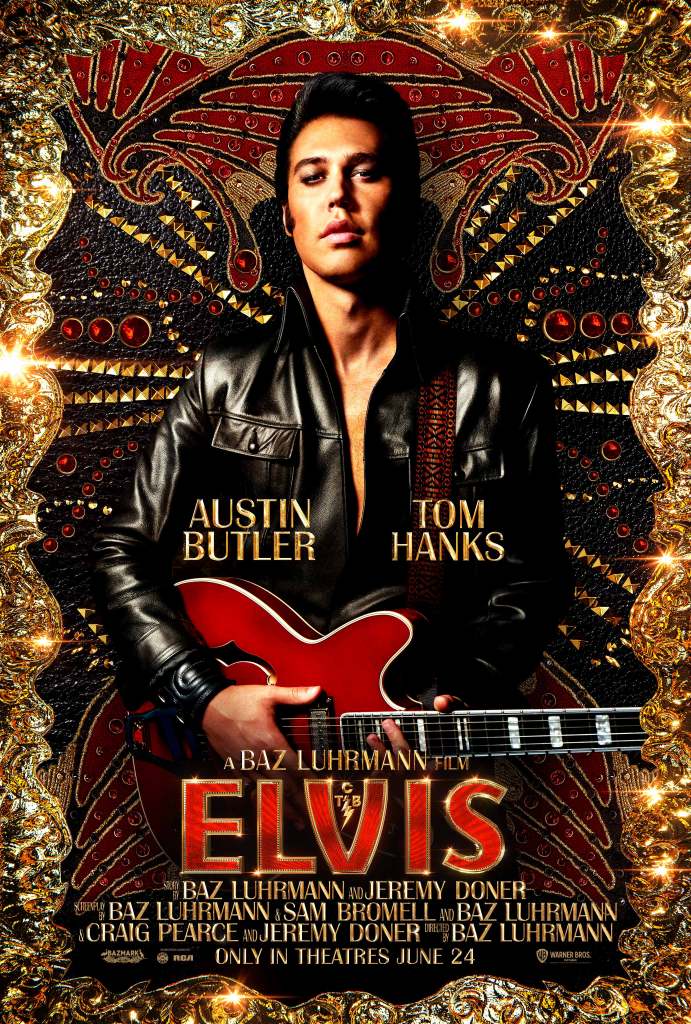
You know someone has reached an untouchable level of fame, when their first name alone is enough for everyone to know who you’re talking about. Few people are as instantly recognisable as Elvis. He had such impact, that the world is still awash with impersonators decades after he died. He’s an icon like few others – perhaps only Marilyn Monroe can get near him – and if Baz Luhrmann’s ambitious, dynamic biopic only at times feels like it has really got under his skin, it does become an essential, tragedy-tinged tribute to a musical giant.

Its slight distance from its subject is connected to Luhrmann’s choice of framing device. This is the life of legend, as told by the man behind the curtain who pulled the strings. The film opens in the final moments in the life of Elvis’ manager, Colonel Tom Parker. Whisked to hospital after a terminal stroke, Parker sits (hospital gown and all) in a Las Vegas casino (standing in as his own personal purgatory), bemoaning that everyone blames him for Elvis’ death and he never gets the credit for giving the world the genius in the first place.

Like a mix of Salieri and Mephistopheles, Parker is a poisonous toad, a cunning “snowman” who spins spectacles at travelling fairs with Elvis as his ultimate circus “geek”, a peep show for the whole nation. Played by Tom Hanks under layers of prosthetics, with a whining, inveigling voice and a mass of self-pitying justifications, he is an unreliable narrator who we should be careful to listen to (a neat way of justifying any historical amendments). It also helps prepare us for one of the film’s main themes: Elvis is a man so trapped by what others want, he doesn’t even get to tell his own life story.

You can’t argue Luhrmann isn’t a polarising film maker. Elvis starts, as so many of his films do, with an explosion of frentic, high-paced style. The camera sweeps and zooms, fast cuts taking us through the final fever dream of the dying Parker, 60s-style split screens throwing multiple Elvis’ up on the screen. It’s a loud, brash statement – much like that visual smack in the face that opens Moulin Rouge! You either love or loath Luhrmann’s colourfully brash style – love it and you are in for a treat.

Like Luhrmann’s other films, the attention-grabbing start is our doorway into a sadder, quieter, more reflective film. The early sweep of the camera, zooming in to Parker’s eyes and whirligigging around his giggling frame as he wheels himself through a casino, the transitions to comic-book style visuals, the location captions that loom over the scenes… it all builds to a sad, depressed and trapped Elvis sitting alone in his hotel room in America’s city of sin. Elvis is a film about an abusive relationship between two people, where the victim can’t imagine life without his Svengali. It’s Romeo and Juliet – but if Romeo was a poisonous succubus draining the lifeforce of Juliet.

Luhrmann is a master of quick establishment and has the confidence to make scenes that really should be ridiculous, work wonderfully well. The key musical influences on Elvis – the blues and Gospel – are introduced in a neat scene which shows the young Elvis moving from one to another on the same afternoon. His first performance captures the world-changing impact of the sex appeal of those swivelling hips by Luhrmann cutting to women, almost surprising themselves, by jumping out of their seats screaming and then looking around stunned at their reaction, before screaming again. It conveys whole themes in cheekily constructed vignettes like this.

It’s the same with stressing the obligations and influences that fill Elvis’ world. His dependence on the affection of a series of women – from his tough but demanding mother (strongly played by Helen Thomson) and then his loving but frustrated wife Priscilla (Olivia DeJonge) – is equally well established, as is Parker’s skill in sidelining these figures. The film deftly explores Elvis’ musical influences and that his success partly stemmed from being a white man singing black music. It’s an attraction Parker instantly picks up, and if the film does skirt over some of the more complex feelings of the black community towards this white singer, it does make Elvis’ debt to them hugely clear.

Luhrmann’s film takes a cradle-to-grave approach but manages to be a lot more than just jukebox musical. While there are performances – impressively staged and recreated – the music is used more to inspire refrains and ideas in the score rather than shoe-horned in as numbers. It’s a skill you wish the script had a little more of at times. Elvis doesn’t always quite manage to tell you about the inner life of this icon. We begin to understand his dreams of leaving a mark, but little of his motivations. His feelings for his wife are boiled down to a simple lost romance and his opinions on everything from politics to family dynamics (both subjects the real Elvis was vocal about) remain unknowable.

But this is film that focuses on the tragedy of an icon. And it makes clear that Parker – whose bitter darkness becomes more and more clear from the beginning – was responsible for crushing the life from a man who he turned into a drugged showpony, in a glittering Las Vegas cage. Parker and Elvis’ first meeting is a beautifully shot seduction atop a Ferris wheel, and helps cement in the viewer’s minds the power this man will have over the King’s life and career.
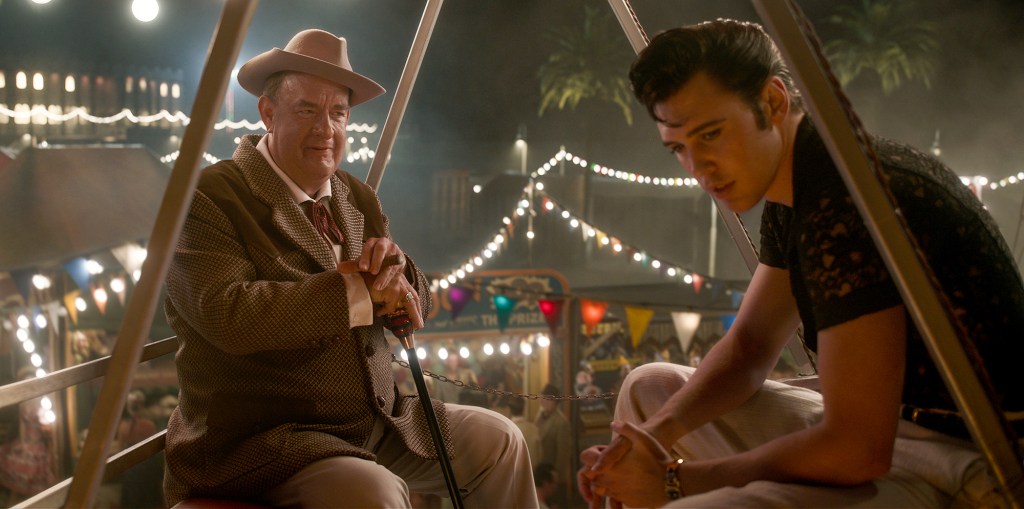
Crucial, perhaps above all, to the success of the film is Austin Butler’s extraordinary, transformative performance. This is sublime capturing of Elvis’ physicality, but he matches it with a beautifully judged expression of the legend’s soul. His Elvis is always completely believable as the most famous man on the planet, but also a conflicted, slightly lost man under the surface, lacking the confidence to build his own destiny. Butler’s recreation of Elvis’ singing is extraordinary and his performance bubbles with an unshowy tragedy. He breathes life into this larger-than-life icon in a subtle and eventually deeply affecting way that will make you want to throw an arm around his shoulder.

Luhrmann’s film ends a world away from its bright beginning. We’ve seen Elvis triumph, but we’ve also seen him buffeted by events, never really becoming their master. Elvis becomes a highly emotional tribute to a man who gave us so much, but was prevented from giving more. When the real Elvis appears on screen, singing Unchained Melody with passion, it’s undeniably moving. Even more so because we get a sense that performances like this was what we wanted to be doing. Luhrmann – and Butler, whose work cannot be praised enough – may not always manage to make us know the King as completely as we could, but it certainly makes us care deeply and share his regret.
The Lord of the Rings: The Return of the King (2003)

The Fellowship face one final battle in the conclusion of Jackson’s stunning trilogy

Director: Peter Jackson

Cast: Elijah Wood (Frodo Baggins), Ian McKellen (Gandalf), Viggo Mortensen (Aragorn), Sean Astin (Samwise Gamgee), Andy Serkis (Gollum), Billy Boyd (Peregrin Took), Dominic Monaghan (Meriadoc Brandybuck), John Rhys-Davies (Gimli), Orlando Bloom (Legolas), Bernard Hill (Theoden), Miranda Otto (Eowyn), David Wenham (Faramir), Karl Urban (Eomer), Hugo Weaving (Elrond), Liv Tyler (Arwen), Cate Blanchett (Galadriel), John Noble (Denethor), Ian Holm (Bilbo), Christopher Lee (Saruman), Brad Dourif (Grima Wormtongue), Sean Bean (Boromir)

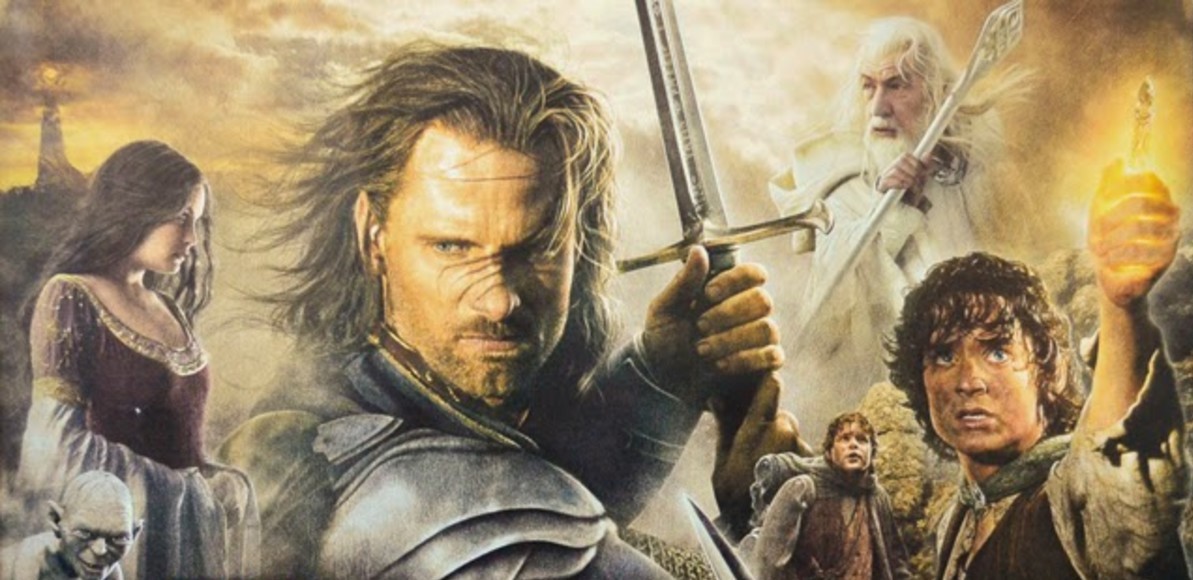
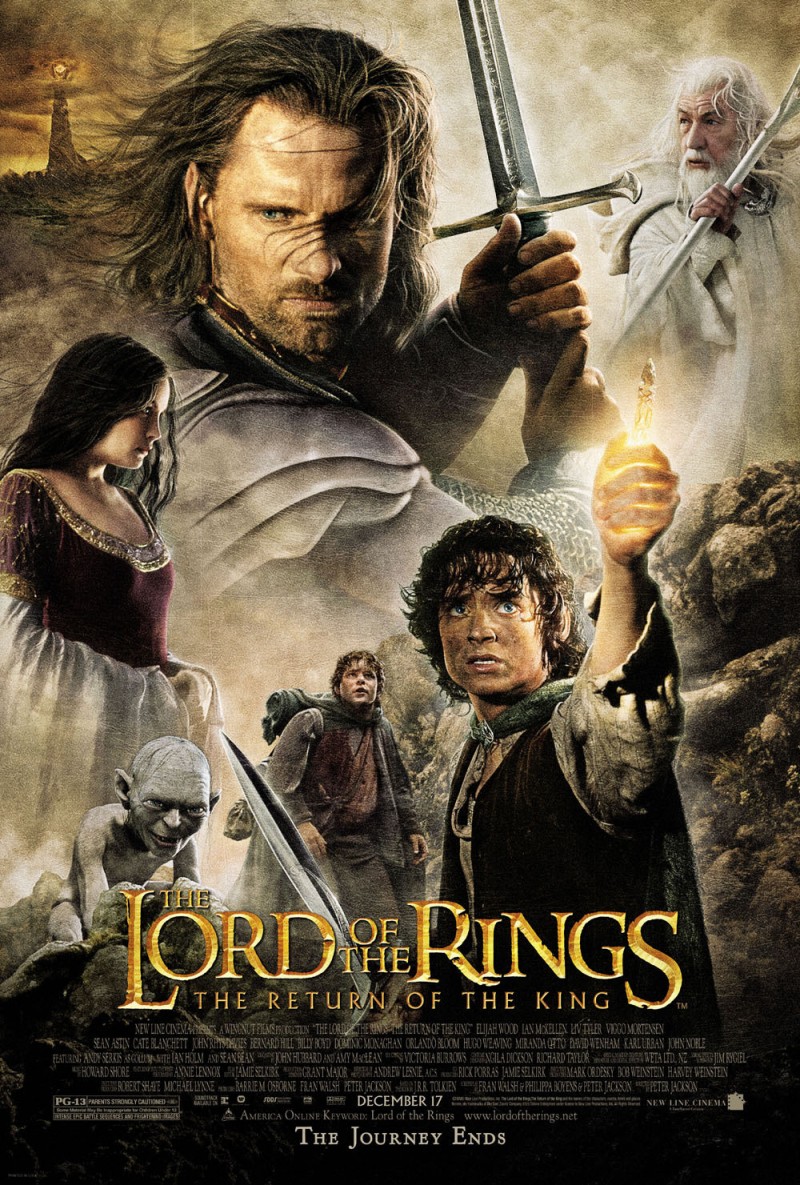
By the time the third film in Jackson’s Lord of the Rings trilogy came out, we all knew this was something very special. Readers of Empiremagazine voted it the 9th Best Film Ever Made the month it was released. It was showered with awards, winning every Oscar it was nominated for (11, including three for Jackson) and grossed over a billion dollars worldwide. The Return of the King is a landmark – and it’s a stunning sign-off for a triumphant trilogy.

Frodo (Elijah Wood) and Sam (Sean Astin) are even closer now to Mount Doom, guided by the treacherous former ring-bearer Gollum (Andy Serkis). While they must negotiate the dangers of Mordor, Sauron has sent his forces out to conquer Middle Earth. The city of Minas Tirith is his target. Facing an army of thousands of orcs, the city’s only hope is if Gandalf (Ian McKellen) can defend it long enough to allow Aragorn (Viggo Mortensen) – the man destined to become king of Gondor – to lead a relief force. Will Frodo resist temptation and destroy the ring? And will Aragorn be able to defend the city and become its king?

I think it’s fair to say, with books as widely loved as this, no one is going to agree with every single decision Jackson and fellow writers Fran Walsh and Phillipa Boyens made. Here again, changes have been made – famously the scouring of the Shire that closes the novel has been cut (with Saruman dispatched in the opening scenes of the extended edition). What the screenplay seeks to do is increase the pace and tension – it’s probably why Denethor, leader of Gondor, is reinvented as an antagonist (of which more later) and events charge ahead with a relentless forward motion. There is no stopping to catch breath here: there is always a new crisis to solve.

Where changes have been made, they largely have a positive impact. For example, the film takes the decision to introduce conflict between Frodo and Sam – as well as increasing further the scheming malice of Gollum – by having the disturbed ring-addict manipulate the two hobbits into a falling out. This allows Frodo to enter the lair of the giant spider Shelob (a disgustingly visceral creation) alone. Not only does this make Frodo more vulnerable, it also increases the bravery and nobility of Sam, by having him return to save the day (and allow for a classic Hollywood nick-of-time entrance).

The change also adds to the devious brilliance of Gollum, once again superbly played by Andy Serkis. After spending much of The Two Towers bringing out the depth and sadness in this fragile character, The Return of the King carefully shows how this doesn’t excuse his fundamental ruthlessness. The film opens with a flashback showing Smeagol finding the ring, serving as a neat reminder of the Ring’s fundamental wickedness: within seconds its pushes Smeagol to murder his best friend. The sequence following Smeagol’s moral and physical collapse neatly reminds us of its danger and also how close Frodo is to all this happening to him.

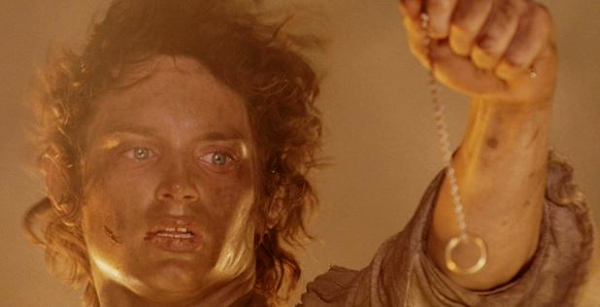
Frodo’s suffering and painful growing maturity is more central here. Wood brilliantly charts Frodo’s continuing moral and emotional decline under the Ring’s influence. Increasingly a physical wreck, Jackson carefully lets the suspicion grow that Frodo’s not going to be capable of chucking the ring away. Balancing this, Astin’s Sam Gamgee (the most heartfelt and affecting performance) becomes the moral centre, self-sacrificing, optimistic and fundamentally decent – a beacon of light in the grimness of Mordor.

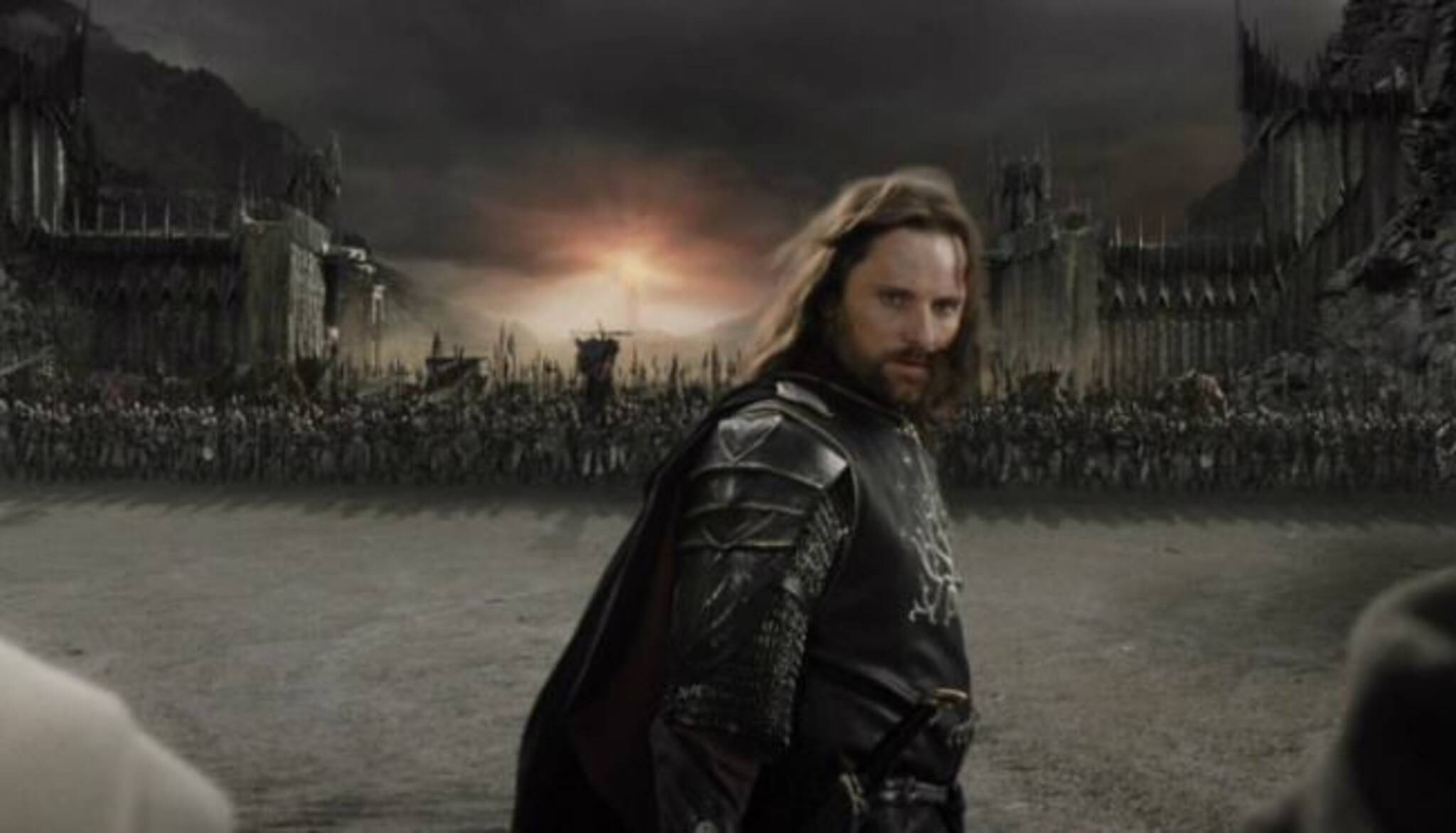
Again, Jackson ups the stakes, with TROK taking place on the grandest scale you could imagine. The battle sequences are breath-taking in their depth and ambition. But, as with the other films, Jackson knows the scale counts for nothing if you didn’t care about the characters at its heart. So, while the events are epically earth-shattering, the film always brings us back to simple emotion. Even in the siege of Gondor, it finds time for a quiet moment of humanity between Gandalf and Pippin.

But those battle scenes are still stunning. The orc armies are terrifyingly vast, while the strafing run of the airborne Nazgul (soldiers snatched from towers are thrown hundreds of feet to their deaths) adds to the sense that victory is hopeless. Soldiers fight desperately for their, and others, lives. The film even tops the Two Towers’ charge of the Rohirrim with a stunningly rousing charge involving thousands of horses into the massed ranks of Orc (and tops that minutes later with a second change accompanied by a sweeping camera movement and swelling musical cue that is just about perfect).

Jackson brilliantly communicates how much the stakes are against our heroes. We really feel their bravery and desperation as they take on impossible odds – and it’s that which really gives the scenes their power, not the scale or the special effects. No moment is lost without bringing us back to moments of bravery and vulnerability from our leads. There are powerful moments of warmth, kindness, loyalty and generosity throughout. It’s finally what makes the film so effective – it’s a tribute to the power of friendship.

It’s all powered with a beautifully operatic score by Howard Shore. Shore’s music captures perfectly the world of Tolkien. A few years after this, an ill-fated musical version of LOTR was launched – and flopped. Because, essentially, Shore has already turned these novels into a sort of opera-slash-concerto, with perfect themes for everything from martial orcs to whimsical hobbits. Some of the musical cues are so luscious and stirring, they make you want to stand and applaud. The music accompanying Gandalf’s rescue of the retreat from Osgiliath is a wonderful highlight, the triumphant and tense music for the Rohirrim charge is stunning, the score for our heroes leaving for the Undying Lands beautiful. LOTR is so beautifully scored, Shore’s work so gorgeous, LOTRis a film you could certainly watch with just the music playing and still understand it perfectly.

Of course, there are things you can criticise. Denethor – in the novel a portrait of corrupted nobility, his intelligence and pride turned to despair – is repositioned here as a sort of heartless WW1 General, gobbling food while his soldiers die and embracing a nihilistic death wish (although this change does allow for the absolutely beautiful Gandalf/Pippin beacon lighting sequence, in defiance of Denethor). It’s not helped by Noble’s lip-smacking performance, stripping the character of nuance. It’s gives Gandalf more to struggle against, but it’s a crude approach for a character who would have worked better as a mis-guided elitist rather than a crass, hissable villain.

Lots of people have had a pop at the multiple endings as well. Jackson certainly teases us a little too much with fades to black. But I’d argue the lack of a definitive full stop adds greater depth to the story. Tolkien was partly inspired by his experiences in WW1. In that war, the hell of the trenches came to an end, but people’s lives didn’t end with a triumphant parade. Instead, they needed to return home and adjust back into civilian life. I think it’s powerfully affecting that the hobbits return to an unscoured Shire, which hasn’t changed at all while they (and us) have seen Middle Earth torn apart. And it adds real force to why Frodo, in particular, can’t return to “life as normal”.

It gives a powerfully moving, bitter-sweet ending and, I think, brings out a rich, emotional message from Tolkien’s story often missed: Frodo and his friends are fighting to protect their home, but find that they have changed so much they can never settle back into that home in the same way again. It’s something soldiers serving in WW1 experienced, and it feels fitting echoed in Jackson’s LOTR.

Jackson’s LOTR will always spark conversations around faithfulness and otherwise to the source material. Not everyone will agree with every choice. But surely no one can argue with the majesty, scale and wonder of these films, the sublimely perfect casting choices, or the loving detail in every touch of the design. When I first saw Return of the King in the cinema, the audience got to their feet and applauded. You can’t blame them: watch this and you are watching something very special, a true landmark in cinema.

The Lord of the Rings: The Two Towers (2002)

Peter Jackson’s second film in the Lord of the Rings trilogy is another triumph

Director: Peter Jackson

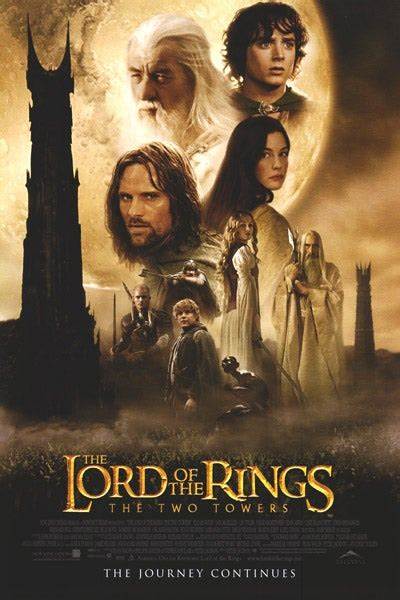
Cast: Elijah Wood (Frodo Baggins), Ian McKellen (Gandalf), Viggo Mortensen (Aragorn), Sean Astin (Samwise Gamgee), Liv Tyler (Arwen), Andy Serkis (Gollum), Billy Boyd (Peregrin Took), Dominic Monaghan (Meriadoc Brandybuck), John Rhys-Davies (Gimli/Treebeard), Orlando Bloom (Legolas), Cate Blanchett (Galadriel), Bernard Hill (King Theoden), Christopher Lee (Saruman), Hugo Weaving (Elrond), Miranda Otto (Eowyn), David Wenham (Faramir), Brad Dourif (Grima Wormtongue), Karl Urban (Eomer), Sean Bean (Boromir), Craig Parker (Haldir)

After Fellowship of the Ring we knew we were in safe hands. So, the real question was would The Two Towers continue to win over long-term fans and new-comers to Middle Earth? Would Jackson pull off the difficult middle chapter, resolving some things, but leaving us with enough tantalising hooks? He succeeded: for many The Two Towers is their favourite film in the series.

The fellowship is broken. Boromir (Sean Bean) and Gandalf (Ian McKellen) are dead. Frodo (Elijah Wood) and Sam (Sean Astin) are making their own way to Mordor – now guided by the former ring-bearer, the dangerously untrustworthy and unbalanced Gollum (Andy Serkis). Aragorn (Viggo Mortensen), Legolas (Orlando Bloom) and Gimli (John Rhys-Davies) are tearing across the land of the kingdom of Rohan following the orcs who kidnapped Merry (Dominic Monaghan) and Pippin (Billy Boyd). Meanwhile, the dark forces of Saruman (Christopher Lee) are moving against Rohan and its sickly king Theoden (Bernard Hill), determined to destroy it. War has truly come to Middle Earth – but can the return of an old friend help to turn the tide? And will Frodo and Sam find safety or danger when they meet Boromir’s brother Faramir (David Wenham)?

Hard to believe considering the scale of the first film, but Jackson’s second Tolkien adventure ramps up the scale even further. It continues the immersive capturing of the look and feel of the novels, while reconceptualising it into something closer to a stirring, gripping action epic. The Two Towersis awe-inspring in its scale and world-creation, building towards one of the all-time great cinematic battles as the few of Rohan hold out against the massed forces of Saruman at Helm’s Deep.

Just as in Fellowship the pace and tension is heightened. With the heroes split into three groups, there are a number of balls to juggle. But Jackson and co-screenwriters Fran Walsh and Phillipa Boyens superbly intercut the more linear book chapters – feeling free to shift orders, motivations and inventing their own narrative flourishes to link events together. The film adapts around 13 of the novel’s twenty chapters (the rest being assigned to the other films), but is so perfectly paced it never feels overstretched or disjointed. They even add more material involving Saruman, making this arch-manipulator a larger presence in the film than in the novel.

The Two Towers radically changes many of the events of the novel – but in most cases (except one) this is done with such respect for Tolkien that even most fans overlooked them. So, it hardly matters Theoden’s motivations for making a stand at Helm’s Deep have radically changed or that the films add warg action or has Aragorn presumed dead at the halfway point. Elves turning up to fight at Helm’s Deep is such a “Hurrah” moment, only the most extreme Tolkien purist could object (they would have objected a lot more to the original plan to have Arwen fight there). Merry and Pippin’s interaction with the Ents (living trees) are re-purposed to give them greater agency.

In fact, the changes to Faramir were the only ones anyone objected. In the novel Faramir is pure-of-heart and untempted by the Ring. With much of the novel’s Frodo material transferred to The Return of the King, Jackson, Walsh and Boyens needed to make Faramir “an obstacle”. Cinematically, the idea of Faramir trying to take the Ring to Gondor – motivated by the urge to win the affection of his distant father – made perfect sense (and Wenham delivers the character very well).

But for many book fans, this was a travesty of a beloved character (for all that Faramir eventually proves his quality). I’ve never met a book fan who wasn’t displeased by “movie Faramir”. For those familiar with the films, there won’t be a problem – but I can see the point. The character is clearly, in a subtle way, different from the more whimsical and unsullied man the book presents.

If there is one element of Tolkien Jackson, Walsh and Boyens are not interested in, it’s Tolkien’s whimsy and idea of characters as paragons (or parAragorns). For the film, the conflicted Boromir is more interesting and sympathetic than goodie-two-shoes Faramir. By contrast, to Tolkien Faramir was an ideal and Boromir a shadow of the martial blowhards who led millions to death in the trenches. Tolkien wanted heroes who were more certain and perfect. The films are about the struggles people face with doing their duty, questioning their purpose. The films are not about questions of spiritualty and moral purity. Tolkien gives over long chapters to the spirituality of the Ents and one short one to Helm’s Deep – that balance is completely flipped here.

But the advantage is that the idea of true heroism being conquering your own doubts pays off hugely in the adaptation. Aragorn – a superb and hugely charismatic Viggo Mortensen, literally sweating heroism and poetic sensibility – has his character arc improved by the film. In the book, he has not doubt at all. The film establishes his reluctance to lead and unwillingness to acknowledge he is of men. From seeing only the weakness of men, he slowly identifies with them. It’s a conscious decision for him to fight at Helm’s Deep and the battle sees him finally accepting leadership. It’s a richness not found in the novel.

Of course, battles are more compelling on screen than the page. Helm’s Deep is perhaps the greatest battle on screen, a Kurosawa-inspired, rain-splatted masterpiece, perfectly mixing character beats and action. It never forgets that we care about people not action, so rarely more than thirty seconds go by without one of our heroes front-and-centre. Shots of refugees establish the stakes, the costs of war are laid shockingly bare and the battle is crammed full of awe-inspiring shots of mayhem and martial prowess. You can’t not be excited by this superbly choreographed epic, with just the right level of Jackson’s pulpish-gore background laid on.

But this is not just a film about a battle. As always, every beat is perfectly worked – even if the Ents material suffers from the reduced interest from the creative team. The opening sequence expanding the battle between Gandalf and the Balrog is jaw-dropping. The world of Rohan is created beautifully. Bernard Hill’s Theoden is plagued with self-doubt. Miranda Otto is very good as a woman who wants to prove her place in a man’s world (even if the hinted romantic sub plot between her and Aragorn feels a little forced).

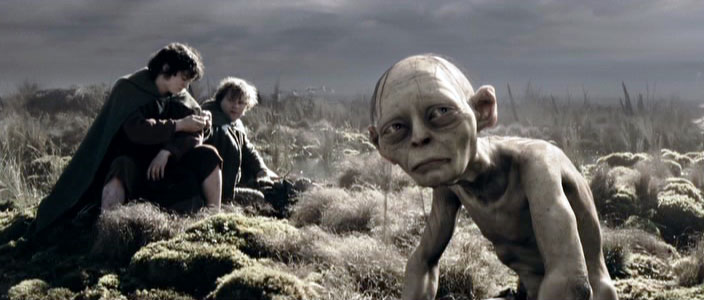
But the biggest magic in the film, and its most special effect, might just be Gollum. While the computer wizardry to create the character is astounding, it works because the acting behind it is sublime. Serkis invented a whole school of acting in motion capture. The screenwriters expand the novel’s conflicted psyche and explores even more the character’s split personality – Gollum (the Ring dominated side) and Smeagol (the timid but dangerous side), both made distinctive by Serkis. Jackson’s most bravura scene might be one of his most simple, a two-shot argument between the two sides, that sees Serkis switch personality with each cut. It’s a superb combination of cinematic language and acting skill.

The Two Towers is superb film-making, with music, photography, editing and design all faultless. The acting is again brilliant – Wood, McKellen, Astin, Tyler as well as those mentioned above. But it’s also a brilliant adaptation of a novel, making changes to increase tension and drama and carefully selecting the elements that will work most effectively on screen. It’s closing battle is one for the ages, but the entire film is a perfectly paced epic, with a growing sense of danger and doom that ends on a beat of quiet hope. This series is a thing of beauty.

The Proposition (2005)

Guy Pearce is given a fateful mission in bleak Aussie Western The Proposition

Director: John Hillcoat

Cast: Guy Pearce (Charlie Burns), Ray Winstone (Captain Morris Stanley), Emily Watson (Martha Stanley), Danny Huston (Arthur Burns), David Wenham (Eden Fletcher), Richard Wilson (Mike Burns), John Hurt (Jellon Lamb), Tom E Lewis (Two Bob), Leah Purcell (Queenie), Robert Morgan (Sgt Lawrence), David Gulpilil (Jacko), Tom Budge (Samuel Stoart)

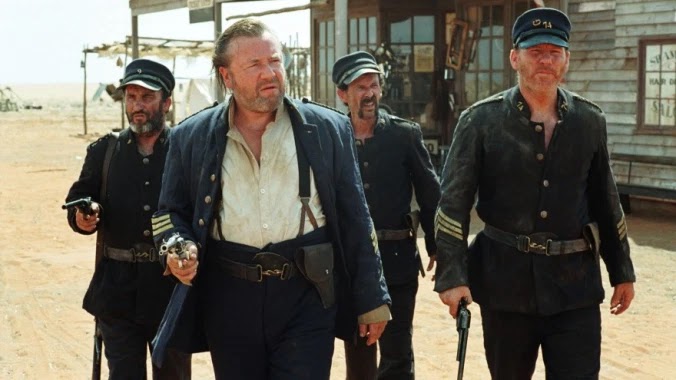
In the Australian outback at some point near the turn of the last century, a gang of ruthless killers are finally tracked down and killed by the police. The only survivors are Charlie Burns (Guy Pearce) and his younger brother Mikey (Richard Wilson). Charlie is offered a proposition by British émigré police captain Morris Stanley (Ray Winstone): find and kill Charlie’s other brother, the even more ruthless Arthur (Danny Huston), in nine days and Charlie and Mikey can go free. Will Charlie do it? And what view will Morris’ superiors take of his unusual decision? Either way violence and bleakness will ensue in the ruthless world of the Australian outback.

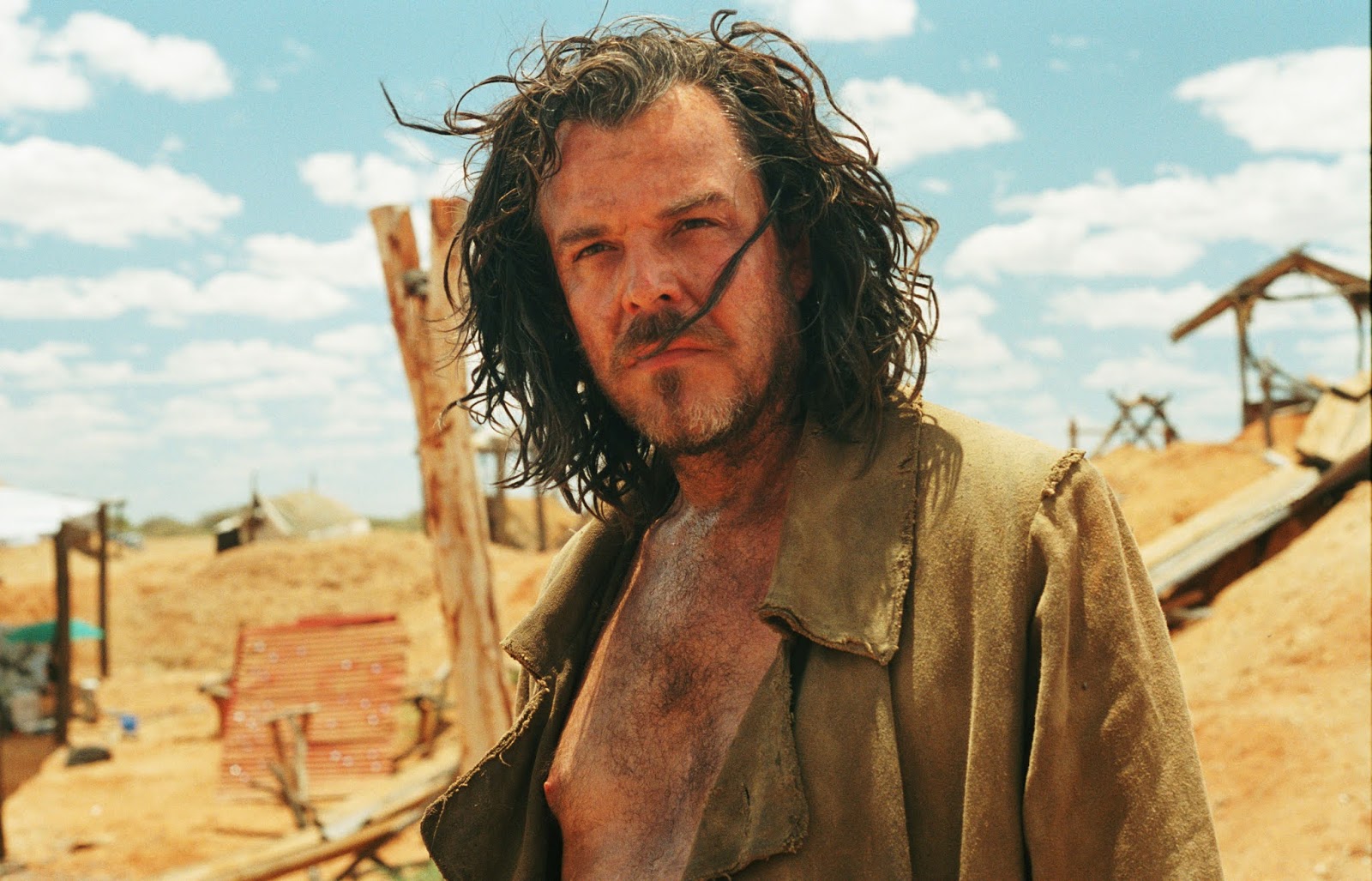
Scripted by Nick Cave – who also contributed the film’s sparse and haunting score – The Proposition is a dark, challenging and difficult film. It’s bleak, nihilistic and lacking in any real sense of hope or warmth. It presents a world where life is cheap and blood flows freely. All of this set in a wild, open-aired, dead, dry and dusty environment that in its gaping wildness and emptiness seems to consume the men who walk into it and leave them unhinged and capable of any depth of inhumanity.

How can there be any hope for mankind in all this? No wonder Stanley’s wife Martha (an intriguing performance of both optimism and disillusionment walking hand-in-hand from Emily Watson) tries to turn their house into a little slice of England, with a nice fence and traditional garden. It’s almost like she’s trying to slice something recognisable and safe from an environment that feels like it crushes everything it touches. It contrasts with every other ramshackle shack we see in the film, or dusty sandstone building – or the homes that most of the characters fashion among the rocks and the outback. What chance does civilisation have in this wild world?

It’s a world of ruthlessness where life is cheap. The local sport seems to be killing native Australians – something both police and gangs brag about. The native tracker used by the police – played by Walkabout’s David Gulpilil – quietly watches on as his drunken employers celebrate the (mercifully off screen) killing of a group of native Australians accused of murdering an Irish settling family. There is no pardon for him – later his throat is contemptuously slit by one of his fellows who now works as a sharp-shooter with Arthur’s gang. Hillcoat and Cave’s Australia has not a single touch of romance  or fellow feeling, but instead feels like a waiting room for hell.

Stanley is out of place here, not only by his Englishness, but also because his tough and pitiless policing is dwarfed by the cruelty he encounters. Ray Winstone gives one of his finest performances here as a toughened veteran who slowly realises he has only skimmed the surface of the brutality man can show man. Brutal and determined as he is, he has rules – and a wife he loves and a home he values – and that puts him at an utter disadvantage when going up against the amoral likes of Arthur Burns. Winstone’s Stanley also has a sense of fair play – he will struggle in vain to prevent a lethal flogging for Mikey that obsequious town mayor (a very good David Wenham) wants to inflict to placate the town. He frowns on the persecution of the indigenous people and treats his house servant well. Is it any wonder he isn’t remotely prepared for the bloodletting Arthur unleashes when he rides into town?

Danny Huston does excellent work as the poetic Arthur who lacks any touch of empathy. Softly spoken and chillingly calm at all times, with a lilting Irish accent, Arthur slaughters without any mercy and can charmingly undertake any level of depravity and violence. From mutilation to rape, from sudden slaughter to lingering sadism, worst of all it never seems to be personal with Arthur. More just a way of alleviating his own boredom with the world. Is there something about life in the outback that has turned Arthur slowly and quietly insane? Perhaps so, and it fits with Hillcoat and Cave’s nihilistic view of humanity as a destructive force with very little room for hope.

Guy Pearce’s Charlie perhaps offers what little hope we have – and even he is a murderer. Pearce does quiet, generous work in a reactive role, tipped pillar to post and dealing with conflicted family loyalties as well as some sense of right and wrong. Enough of a sense at least to believe wanton murder and destruction as practised by Arthur is too much. Pearce is a quiet, enigmatic figure in the film – perhaps a man struggling to work out where he sits. It’s a performance that cedes a lot of the fireworks elsewhere, with a moral conundrum that is almost deliberately elliptical, but striking nonetheless.

The Proposition is a tough and difficult film. It has a slightly disjointed narrative that at times skips gently over events or moves swiftly from one to another but missing connective events in between. It has the feel of a fever dream, the sort of bizarre tale you might throw together out of half-remembered nightmares. It allows wonderful opportunities for actors – all mentioned, and also John Hurt quite delightful as a drunken but deadly bounty hunter, his wizened looks perfect for the overbearing wilderness. Sure it’s a western that runs rampant with destruction, but it’s also a dark stare into the evil heart of man. It may end with a slight note of hope, but it’s an obscured and uncertain one and mixed in with more than enough suffering and destruction for the survivors.

The Proposition is still the finest film John Hillcoat has directed, and the best balance between compelling story telling and difficult nihilism.

Public Enemies (2009)

Johnny Depp rides into action as John Dillinger in Michael Mann’s underwhelming Public Enemies

Director: Michael Mann

Cast: Johnny Depp (John Dillinger), Christian Bale (FBI Special Agent Melvin Purvis), Marion Cotillard (Billie Frechette), Billy Crudup (J Edgar Hoover), Stephen Dorff (Homar van Meter), Stephen Lang (Agent Charles Winstead), Stephen Graham (Baby Face Nelson), Jason Clarke (Red Hamilton), David Wenham (Harry Pierpont), Spencer Garrett (Tommy Carroll), Christian Stolte (Charles Makley), Giovanni Ribisi (Alvin Karpis), Bill Camp (Frank Nitti), Branka Katic (Anna Sage)

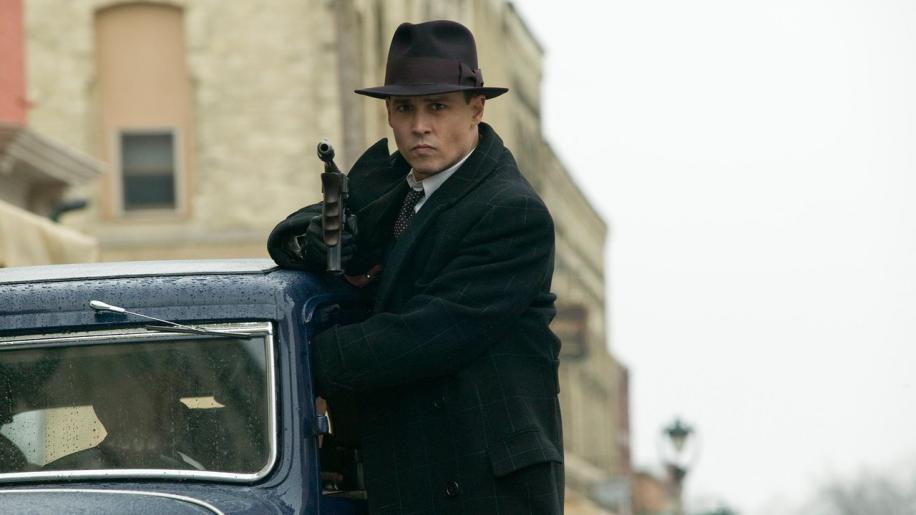
Michael Mann has an affinity for crime films. With Heat as one of his calling cards, Public Enemies is his attempt to do the same in the classic prohibition and bank robbery era of the 1920s. The guys going head-to-head this time?  John Dillinger (Johnny Depp), coolest robber there is, an icon of the criminal classes, and Melvin Purvis (Christian Bale) rigid and committed FBI agent. Public Enemies however fails to match Heat, falling part way between history lesson and action thriller. Covering the last few years of Dillinger’s life, and the rise of the FBI, it’s a cold, strangely uninvolving film mixed with a few stand out action scenes where tommy guns go blazing.

One of the first things it impossible to miss about the film is Mann’s decision to shoot the film using HD video cameras. The advantages of this is it gives much of the film an immediacy and modern look that throws the viewer into the middle of the action and makes this at times look and feel like a piece of news reel footage rather than a period piece. The camera choice allows Mann to put the camera right into the action, capturing every detail at a fast pace. The film has the look at times of a genuine documentary, and removing the richness of film also gives it the air of being caught on a phone, like some of this was some sort of found footage. Or rather, a phone that has been handled by a gifted cinematographer for perfect framing.

The downside of the choice of HD camera is that it makes the film at times look rather like a behind-the-scenes DVD documentary, with its untextured shadows and lack of lighting. Frankly at points it makes the film look bizarrely a little bit dull in places, or unusually unprofessional. Personally, I feel the benefits it gives in immediacy are cancelled out by this. But that’s just me.

Away from Mann’s shooting style – and his usual high octane skill of cutting and assembling action scenes – the film showpieces a strange lack of insight into its characters or any real developments of their hinterland. This is particularly so in the case of Purvis who never comes to life either in the film’s staging of him, or in Bale’s firm jawed, muted performance. When the final film caption throws up news of his later resignation and years later possible suicide it doesn’t make you question things you have seen in the film or feel like a logical progression: it just doesn’t tally up at all. 

The film does get some material out of how both sides play the media game. Purvis is a reluctant but fairly skilled player. His boss J Edgar Hoover (rather well played by Billy Crudup in one of the films best performances) is obsessed with spinning the nascent FBI to the media – half his scenes are bookended by press conferences – and his primary motivation is to exhibit himself to the media as the only logical choice for leading the FBI and the essentialness that it gains the powers it needs. Similarly, Dillinger and his fellow criminals delight in their media profile and do their damnedest to build up images of themselves as Robin Hoods (without the giving to the poor of course).

This is captured in Johnny Depp’s charismatic performance as Dillinger, a brooding, intense figure who would like to see himself as a sort of poet of the underworld. Dillinger talks about the banks money being their only interest and is frequently charming with an edge with regular people. He prefers bloodless robberies as they are cleaner and demonstrates a genuine sense of romantic openness with his girlfriend Billie. However, he is no angel. While he does not use violence as a first resort, he has no hesitation about using it as a second and will happily put bystanders at risk and rough up bank staff to get what he wants. He talks of escaping, but it’s clear that the game is an addiction for him and the danger is enjoyable – he takes an illicit thrill at one point of sitting in a cinema while his mugshot appears on the screen, wondering if anyone will dare spot him.

Depp’s performance is the finest thing in the film, a subtle and intelligent tightrope walk that teases depths that are perhaps not there, and suggests sympathies and agendas he perhaps does not have. While the character remains unknowable, you sense a great complexity and conflict there somewhere. He’s helped by being given a great actress like Marion Cottilard to play off, who makes Billie much more than just a gangster’s moll.

There is potential in the film, but it never really comes to life. For all the exciting shoot outs and drama, none of its characters are engaging or really interesting. The rest of the supporting cast feel like pieces to be moved around the board – many disappear with no real trace – and their fates pre-ordained by the demands of the plot. It makes for a rather flat experience, full of style, but never making you invest in it.

Lion (2016)


Dev Patel searches for his past in Lion

Director: Garth Davies

Cast: Sunny Pawar (Young Saroo), Dev Patel (Saroo Brierley), Rooney Mara (Lucy), Nicole Kidman (Sue Brierley), David Wenham (John Brierley), Abishek Bharate (Guddu), Divina Ladwa (Mantosh Brierley), Priyanka Bose (Kamla Munshi), Seepti Naval (Saroj Sood)

In 1986, Saroo (Sunny Pawar) is accidentally separated from his brother Guddu (Abishek Bharate) and mother (Priyanka Bose) after being trapped on a train that travels 1,600km to Calcutta. Unable to find his way home, and dodging the dangers of Calcutta’s streets, he eventually ends up in an orphanage. He is adopted by an Australian couple, the Brierleys (fine and tender performances Nicole Kidman and David Wenham). Twenty years later, a chance meeting with a group of Indian students brings Saroo’s (Dev Patel) memories flooding back– and dedicates himself to retracing his steps and finding his family in India.

Lion is an overlong expansion of a story that would really spark your interest when presented in a newspaper article. But Garth Davies’ film drains the dramatic life out of the story by ludicrously overextending the telling in order to try and eke as much emotion from the audience as possible. Lion is under two hours, but it really should be at most an hour and a half.

The problem is the central section in Australia, while our hero tries to locate his roots. It just isn’t quite interesting enough, despite sterling, committed and emotional work from Dev Patel. Put simply, even with an extraordinary story like this, the film can’t help but communicate Sarro’s obsessions through cinema’s clichés. So we get a madness board with pins and bits of string to link clues. We get Saroo increasingly dishevelled. We get him driving away family and girlfriend. We get moody, tearful glances into the middle distance. Even the final solution to the mystery occurs after a spark of inspiration during a rage fuelled “I’m going to wreck this board and give up” moment. This whole section just serves to reduce the story into movie-of-the-week territory.

The film just doesn’t quite connect with us as it should. Perhaps because of the amount of time given over to very slow Google Earth searches, or overblown camera tracking shots across train lines, or expansive slow, piano-scored moments of emotional torment from Saroo. It’s a shame because there are flashes of good material in there – Nicole Kidman’s has a stand out scene to explain why she chose not to have children – and Dev Patel is the best he’s been. But it doesn’t quite work. After Saroo’s emotional revelation at an Indian friend’s house and realisation that he is “lost” (and this quiet devastation from Patel is affecting), the story doesn’t really kick off. It just slows down.

It’s a shame as the opening third of the film with young Saroo lost in Calcutta is very well done, even if it seems virtually every male living on the streets is a paedophile. The early scenes with Saroo and his brother are very good, and establish the strength of their bond. Sunny Pawar does a marvellous job as the lost boy, and Garth Davies films Calcutta with an earthy realism, as well as having a wonderful sense of empathy for the vulnerability of children. It’s also striking to see how uncommented upon a child alone on the streets of Calcutta goes. The dangers Saroo dodges feel genuinely threatening, and helps us invest emotionally for the rest of the film.

The moments that flash back to this do get overplayed later. Much as I initially liked Saroo hallucinating his brother and mother appearing around him in the streets of Melbourne, it’s a card that quickly gets overused. Like many of the ideas in this film, it gets hammered home a little too much. It’s that whole middle section, with poor Rooney Mara saddled with the thankless part of supportive girlfriend. You could have cut it down by 20 minutes and had the same impact. Garth Davies’ direction simply gets carried away with the lyrical sadness, to try and tug our heartstrings.

The problem is the most moving part of the film is the final sequence where we see the real people meeting in the streets of Khandwha. Nothing else in the film really measures up to this genuine emotion. Particularly after we’ve watched a man searching Google and behaving moodily for well over forty minutes. It’s a film that loses its way because it’s moments of emotional reality like that which make these stories truly profound – and a dramatisation can never provide that. With the film also unable to find a way to make the search as dramatic and engaging as the getting lost and being found, it also flounders in the middle, taking way too long to get us to the destination. It’s got its moments, but it’sa well assembled film that outstays its welcome.