Tag: Dennis Hopper

True Grit (1969)

True Grit (1969)

The Duke wins an Oscar in this solid Western (already old-fashioned in 1969) put together with a professional solidity

Director: Henry Hathaway

Cast: John Wayne (Reuben “Rooster” Cogburn), Glen Campbell (La Boeuf), Kim Darby (Mattie Ross), Jeremy Slate (Emmett Quincy), Robert Duvall (Lucky Ned Pepper), Dennis Hopper (Moon), Alfred Ryder (Goudy), Strother Martin (Colonel Stonehill), Jeff Corey (Tom Chaney), John Fiedler (Daggett)
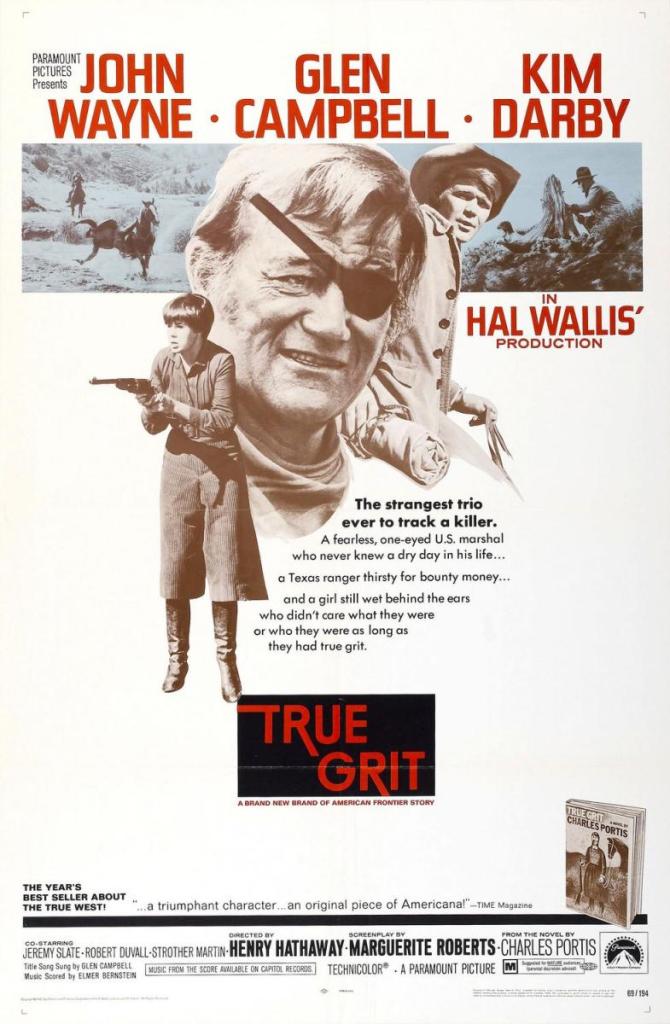
By 1969 John Wayne had been pulling his six shooters against rascals and rapscallions for thirty years, ever since making one of the all-time great entries in Stagecoach. He’d been an American icon, box-office gold and practically the Mount Rushmore of Hollywood. What he never really had was recognition that, underneath the drawl, he was a fine actor who knew his business. He’d only had the single Oscar nomination in 1949, so by 1969 there was a sentimental urge to correct that – especially since illness had already seen the Duke (one of the first major stars to be open and frank about his cancer and urge others to get checks) lose a lung a few years previously.

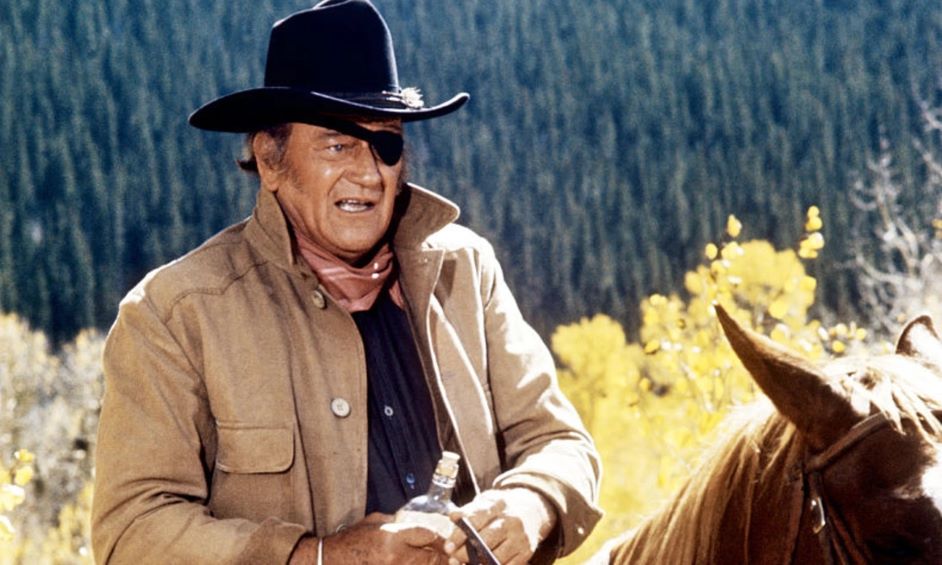
And correct that they did, as Wayne beat out two respected thespians (the perennially unlucky Burton and O’Toole) as well as the whipper-snapper stars of Midnight Cowboy (the sort of cowboy film the Duke would never even consider making!) to scoop the Best Actor prize for taking a character-role lead (all Wayne roles are lead roles) in True Grit. Wayne was “Rooster” Cogburn, a hard-drinking but hard-riding, always-gets-his-man US Marshal, hired by Mattie Ross (Kim Darby) the teenager daughter of a murdered father to track down his killer Tom Chaney (Jeff Corey). Rooster develops an avuncular relationship with Mattie, despite his penchant to get pissed and (of course!) eventually proves he has the ‘true grit’ that made Mattie hire him in the first place.

True Grit is a traditional yarn, directed with a smooth competence (but lack of inspiration) by Henry Hathaway. It must have felt quite a throwback in 1969: you could imagine it pretty much would have been shot-for-shot identical if it had been filmed in 1949 (especially since Wayne had been playing the veteran since at least Fort Apache). Compared to other major Westerns made that year – Butch Cassidy and the Sundance Kid and, especially, the grim nihilism of The Wild BunchTrue Grit looks like the cosiest film imaginable. It even shies away from the book’s ending where Mattie loses an arm after a snake bite (something the, frankly superior, Coen Brother’s remake would not do 40 years later).

It does feel odd to see Wayne, that bastion of old-school Hollywood, sharing the screen with New Hollywood icons like Dennis Hopper (playing a yellow-bellied squealer at the baddies hideout) and Robert Duvall (a belated villain, looking uncomfortable in this genre saddle-flick as a bad-to-the-bone gang leader). But Hathaway makes sure it’s The Duke’s show. Which it is from start-to-finish.

Rooster isn’t really a stretch for Wayne. Compared to his work in The Searchers and Red River, Cogburn is a cosy and straight-forward hero, a straight-shooter who always holds to his word. But it’s a perfect showpiece for his charisma. Wayne shows a decent comic-timing (he has a nice line in deadpan reactions, particularly when he meets Mattie’s famed lawyer Daggett for the first time, discovering far from the imposing figure he imagined he’s actually the mousy John Fiedler) and there’s just a little hint of lonely sadness in Rooster as he talks about the family who left him or the homes he’s never known.

Wayne also has a lovely chemistry with Kim Darby, the relationship flourishing in a rather sweet big-brother-“little sister” (as Rooster calls her) way. Although of course it takes time to form: Rooster spends most of the first half of the film trying his best to shrug her off so he can hunt down the gang Tom Chaney runs with (and collect the bounty for them) unencumbered. The two of them form a tenuous alliance with Texas Ranger La Bouef, who is far keener to deliver Chaney to another state for a higher bounty than that offered for the killing of Mattie’s father.

La Bouef is played with try-hard gameliness by singer Glen Campbell, largely hired to commit him to singing the film’s best-selling theme tune. To be honest, he makes for a weak third wheel – but it’s hard not to hold it against Campbell when he charmingly later said he’d “never acted in a movie…and every time I see True Grit I think my record’s still clean!”. Far better is Kim Darby, who gives a spunky tom-boyish charm to the shrewd and persistent Mattie who is far too-smart to either by cheated by short-changing landlords or to be ditched from the trail by Rooster and La Bouef.

It’s Wayne’s film though, and a final act face-off with the villains shows that there were few people better with a gun on screen (his one-handed shotgun twirling reload while riding a horse is surely the envy of Schwarzenegger’s similar move in Terminator 2). The whole enterprise is carefully framed to showcase Wayne and he rises to the occasion. Think of it like that, and it hardly matters that Hathaway offers uninspired work behind the camera and fails to provide either any moments of visual interest or dynamism (or work effectively with the weaker actors).

True Grit is an entertaining, second-tier Wayne film, lifted by his charisma and enjoyment for playing a larger-than-life gravelly cool-old-timer and cemented in history by his reward with that sparkling gold bald man. Compared to other Westerns – both before and at the time – it’s traditional, straight-forward and unchallenging. But it’s fun, has some good jokes and offers decent action. And it’s a reminder that no one did this sort of thing better than the Duke.

Speed (1994)

Speed (1994)

Thrills never came faster (or as much on a bus) as they did in Speed one of the greatest action films of the 90s

Director: Jan de Bont

Cast: Keanu Reeves (Jack Traven), Dennis Hopper (Howard Payne), Sandra Bullock (Annie Porter), Jeff Daniels (Harry Temple), Joe Morton (Lt Herb McMahon), Alan Ruck (Doug Stephens), Glenn Plummer (Maurice), Beth Grant (Helen), Hawthorne James (Sam), Carlos Carrasco (Ortiz)

For most of the 90s, nearly every action film made was promoted as “Die Hard in/on an X”. We had determined, maverick heroes fighting alone against the odds on trains, planes, mountains, aircraft carriers, Alcatraz… You name it, it was Die Hard-ed. But which one was the best? It might just be Die Hard on a Bus – or rather Speed. A never-ending rush of propulsive excitement, Speed is one of the most entertaining films of the 90s. It’s possibly the best high-concept actioner ever made and if you don’t come out of it with a sort of daffy grin on your face there’s something wrong with you.

“Pop quiz, hotshot. There’s a bomb on a bus. Once the bus goes 50 miles an hour, the bomb is armed. If it drops below 50, it blows up. What do you do?” And there’s the whole set-up right there. Detective Jack Traven (Keanu Reeves) is the hotshot, who has already foiled mad bomber (Dennis Hopper’s scheme to hold a lift full of hostages for ransom. Now, for round 2, he’s got to try and keep a bus moving over 50mph through the streets of Los Angeles. Helping him out is passenger Annie Porter (Sandra Bullock) who takes the steering wheel, and best friend Detective Harry Temple (Jeff Daniels) who’s trying to find the bomber. It’s pedal to the metal all the way.

The fact that Speed is as good as it is, is a miracle. Graham Yost’s original script had the bus not going above 20mph (it was called Minimum Speed – and sounds hilariously like the Father Ted spoof where Dougal was trapped on a milk float that couldn’t go below 5mph). It was set entirely on the bus and ended with it exploding into the Hollywood sign. The hero was a wise-cracking smart-ass John McClane type, the bomber was revealed to be his friend Harry and one of the passengers was a cowardly lawyer who met a grizzly end. Die Hard director John McTiernan passed on this unpromising mess, recommending his regular cinematographer Jan de Bont instead.

De Bont – in what remains the only good movie he directed – helped restructure the film into three acts: hostages in a falling lift, hostages in a speeding bus, hostages in an out-of-control subway train. Joss Whedon rewrote the dialogue (Yost generously attributes “98.9% of the dialogue” to Whedon). The bomber became a separate character – with the insane energy of Dennis Hopper behind him. Bullock’s part became a combination love interest and comic sidekick. And Keanu Reeves’ Jack Traven, from being a McClane knock-off, turned into an earnest, dedicated, insanely brave and determined police-officer. And that lawyer was turned into Alan Ruck’s out-of-his-depth wide-eyed tourist. Boom: suddenly, we had a film that felt a little unique.

From there, what made it work was the propulsive pace. An opening act with a lift in peril, sets up the race against time, perilous stakes and dangerous risks (powered by an effective strings and drums soundtrack by Mark Mancina). There is a perfectly poised battle of wits between Hopper’s mastermind bomber and Reeves’ cop. Split second decisions and acts of chance have life-saving consequences. The dialogue is just the right side of cracking wise, with enough earnestness to temper the spice. The whole first act makes a hell of a movie in itself. Like the best of the Bond pre-credit sequences, you could go home happy at the end of it – and having never even seen a bus.

But hang about because that bus is well worth waiting for. More wildly exciting than a one-vehicle chase scene has any right to be, de Bont brilliantly cranks the tension up and never lets go. You’ll grip the edge of your seat as Traven races through town and down the freeway to try and get to the bus before it hits that ominous 50mph – even though, of course, we know there is no chance of him succeeding. Because, after all, if he did Reeves wouldn’t need to jump from a car to a bus at 50mph. de Bont – a skilled cinematographer – has the camera duck and weave among the traffic so hard you’ll feel the g-force throwing you back in your seat.

That’s before we even have the bus itself charging through traffic, with the reluctant Annie at the wheel. Throwing itself through crowded streets, around hair-pin bends and over huge gaps in unbuilt freeways, the entire film is basically an opportunity to gorge yourself on an unlikely vehicle doing gripping stunts at insane speeds. We also get the peril of Jack’s attempts to defuse the bomb on the run – when, inevitably, the fuel tank is damaged the film has the wit enough for Annie to say “what, you felt you needed another challenge?”. It’s, frankly, exciting, expertly shot and edited stuff.

And it also works because the characters are lightly – but very warmly – sketched. Reeves – at the time still best known as “Dude”-ing his way through Bill & Ted – shaved his hair to look more like Hollywood’s idea of an action hero. But what makes him stand out is the sincerity, politeness and rather endearing determination to save lives and serve his community. It’s the trademark Reeves sweetness that has made countless action films afterwards work – he’s never an alpha male or a ‘damn the consequences’ maverick. Bullock became an overnight mega-star with a performance overflowing with charm and wisecracking girl-next-door vulnerability. No one did lip-smacking villiany like Hopper. Daniels is great and the bus was crammed with reliable character actors who craft people we care about from crumbs.

That and the relentless excitement of almost every scene. I’ll agree that the third act resolution on the speeding subway train effectively just re-treads elements of the first two acts. Is it any wonder that Speed 2 was such a disaster when even the original can’t go through less than two hours without repeating itself? But you won’t care, because if the film doesn’t have you firmly in its grip by then, there must be something wrong with you.

De Bont never again even got near the outstanding quality of this ultimate thrill ride. But then, when you’ve touched action-thriller perfection, does that matter? Speed is the best high-concept, Die Hard rip-off ever made – so much so that you feel a bit churlish mentioning that as part of its DNA. Superbly paced, totally gripping and guaranteed to leave you with a big cheesy grin on your face, I’ve seen it more times than I can count and still I feel floored by it. You’ll believe a bus can fly.

WaterWorld (1995)

WaterWorld (1995)

As the waters rise, the world sinks down – and WaterWorld went down with it in the very average mega-budget sci-fi

Director: Kevin Reynolds

Cast: Kevin Costner (The Mariner), Dennis Hopper (The Deacon), Jeanne Tripplehorn (Helen), Tina Marjorino (Enola), Michael Jeter (Old Gregor), Gerard Murphy (The Nord), RD Call (Atoll Enforcer), Kim Coates (Drifter #2), John Fleck (Smoker Doctor), Robert Joy (Smoker Ledger), Jack Black (Smoker Pilot), Zakes Mokae (Priam)

In 1995 they called it “Kevin’s Gate”. Costner cashed all – and I pretty much mean all – his superstar chips to make Waterworld, a sort of water-logged Mad Max crossed with a Leone Western, starring himself as a nameless mutant with gills behind his ears. You needed to be the Biggest Box Office Star in the World to get that one up and running. But then Costner’s last “all-in” bet had been Dances with Wolves – and that won seven Oscars. What could do wrong?

Waterworld has been pretty much defined – then and now – as the (at the time) most expensive film ever made, which went on to be a damp squip, a box-office stinker. It’s not that: it’s a solid, entertaining-enough B-movie with some neat Dystopian ideas. In 2500, the world has been completely flooded after the polar ice caps melted. Mankind exists in rusted boats and small floating camps on the ocean. Dry land is a myth and actual soil is worth a fortune. Costner’s Mariner ends up protecting Helen (Jeanne Tripplehorn) and her adopted daughter Enola (Tina Marjorino), as Enola has (handily tattooed on her back) a map to the last piece of dryland left in the world. But Enola’s map is hunted by the Smokers, and their maniacal leader The Deacon (Dennis Hopper), who want to claim Dry Land for themselves.

Waterworld largely lives on as a hugely successful stunt show at Universal Studios (I’ve seen it and it is amazing – all the exciting bits of the film, done in about fifteen minutes) that has been running non-stop since 1995 (other shows, based on more successful movies, have long since disappeared). It focuses on all the stuff that’s good about the film. Kevin Reynolds’ can shoot the heck out of action scenes and professional stuntmen really know their business. The best sequences in Waterworld involve pounding action – jet ski chases, the Mariner’s transforming trimaran, jet skis flying over walls and diving under water, stunning boat chases – and they are great.

They also exploit, in their rusted crap-sack props, one of the film’s other triumphs, it’s detailed world-building design. Sure, it owes a heavy-debt to the cobbled-together semi-steam-punk of Mad Max, with rust that covers everything, adapted wet-suits and rags (augmented with various pieces of fishing equipment and light fabrics) that characters wear, the bashed out colours contrasted with the glorious blue of the water. But the film never looks anything less than an outre mad-house. Throw in James Newton Howard’s very effective score – romantic and mournful when required, but then pounding with heroic action beat – and you’ve got elements of a decent movie.

But decent is all it ever is. Because, aside from the novelty of being set on water (a hugely time- and money-consuming expense, that partly explained why the film went zillions of dollars over budget), there isn’t anything that new about the story. A gruff outsider is roped into grudgingly protecting a mother and a daughter, but then his heart-is-melted – just as the villains turn up to snatch the daughter away. The villains are cartoonish monsters (Dennis Hopper seems to be on a mission to counter the water-logged misery of most of the rest of the performers by acting as much as possible), who are either ingenious or incompetent depending on the requirements of the script. The quest for the land-of-plenty is so familiar, you could scribble it down on a postcard in advance.

The question is, why did Costner want to make this? It’s not even a part that showcases him very well. I’ve always found Costner’s mega-stardom a bit of a mystery: once he graduated from more young, naïve parts (such as in The Untouchables), action films more and more exposed his slightly blank sulkiness as an actor. Perhaps due to the pressure of Waterworld (he worked non-stop, six day weeks, mostly on or in the water, for six months), perhaps due to his inability to find any warmth in a role he clearly sees as an Eastwoodish man-with-no-name, he largely comes across as sullen and hard-to-engage with. This is double hard for a film set in a dystopian future, where we really need to understand and relate to the hero in order to get into the world.

The rest of the cast follow his lead – no one, apart from maybe Hopper, really looks like they want to be there and most of them give of a sense of suffering under the constant threat of accidentally drowning. Tripplehorn isn’t helped by playing a dull, functionary, by-the-numbers character although Marjorino does get to have a bit of spark as plucky Enola. None of the characters step out of the formulaic surroundings of the film they have been trapped in.

You can have a bit of fun with the film’s wonky science. The Mariner is introduced pissing into a bucket and converting the piss into drinking water: cool character establishing moment, but since the salt quota of piss is higher than sea water, why not just convert the sea water? (I’m staggered at the idea that, in 500 years, no one has discovered a way to make sea water drinkable). If the polar ice caps melted, they would not flood the world as much as this. Would an oil tanker and fleet of jet skis really have managed to eek out the 235k cubic metres of oil it carried for 500 years? (How do they even convert it into petrol?) Where are all the fish? Why is the Mariner the only one with deep sea diving equipment – especially when he has flipping gills and doesn’t need it?

But hey, it’s only a movie. Waterworld eventually became profitable: but not till after it had cemented itself in the public perception as an uber-stinker. Really, it’s not that different from Avatar in its functional story, it just made a worse job of selling its big-budget effects as must-see moments. Costner’s alleged megalomania on set didn’t help (re-writing scenes, ordering special effects cover his receding hairline, falling out with Reynolds during editing – so much so Reynolds walked out), but really Waterworld isn’t terrible, just a huge lump of soggy okay. But that Universal Stunt Show? It’s the bee’s knees.

Apocalypse Now (1979)

Martin Sheen heads into insanity in Coppola’s epic pretentious masterpiece Apocalypse Now

Director: Francis Ford Coppola

Cast: Martin Sheen (Captain Willard), Marlon Brando (Colonel Kurtz), Robert Duvall (Lt Col Kilgore), Frederic Forrest (Chef), Albert Hall (Chief), Sam Bottoms (Lance), Laurence Fishburne (Mr Clean), Dennis Hopper (Photojournalist), GD Spradlin (Lt General Corman), Harrison Ford (Colonel Lucas), Scott Glenn (Captain Colby), Christian Marquand (Hubert de Marais), Aurore Clément (Roxanna Sarrault), Jerry Ziesmer (Mysterious Man)

During the 1970s, the director was king in Hollywood. Get a reputation as a visionary director, and Tinseltown fell at your feet. You could spare no expense to put together ambitious, thought-provoking, epic films. If you wanted to shoot on location at huge cost, or reconstruct elaborate sets for single shots, for a huge runtime that catered as much to your ideas of being an artist as it did to crowd-pleasing narrative, then Hollywood would give you keys. It didn’t last: several massive bombs (combined with the huge box office take of Star Wars) shattered the mystique of the director as an ego-mad, flawless genius who had to be indulged, and persuaded Hollywood the future was in big-budget, mass-produced action films (welcome to the 1980s, Hollywood’s nadir).

Apocalypse Now wasn’t one of those flops, like (most infamously) Heaven’s Gate. But, by golly gosh, it really could have been. In fact, in many ways it should have been. It has all the hallmarks: a huge runtime, filmed over a colossal period of time in a difficult location, a plot that mixes action, war and thrills with impenetrably pretentious musings on mankind’s dark soul. A maverick director throwing his own very personal vision at the screen, and damn the consequences. It’s a miracle Apocalypse Now wasn’t a career apocalypse for everyone. It escaped because, despite everything, it more or less gets the balance right between plot and character and pretention and faux-philosophy.

The film is famously a transposing of Joseph Conrad’s Heart of Darkness into Vietnam. Captain Willard (Martin Sheen) is ordered to head down the river to “terminate with extreme prejudice” rogue Special Forces Colonel Kurtz (Marlon Brando), who is conducting his own vigilante war. On the boat trip down the river, Willard encounters a host of increasingly bizarre and surreal scenes, from war-mad Colonel Kilgore (Robert Duvall) to a seemingly leaderless battle over a bridge, a playboy bunny show and a compound of ex-French colonials. And that’s before he even arrives at Kurtz’s compound and things get really strange.

Apocalypse Now is almost impossible to separate from the bizarre, tortuous route it took to get to the screen. Originally scheduled for a few months, the film took over a year to complete. A typhoon destroyed all the sets in the first two months. Original star Harvey Keitel was dismissed after a week (as his performance wasn’t right): his replacement, Martin Sheen, had a near-fatal heart-attack partway through filming. Marlon Brando not only turned up the size of a buffalo but refused to learn (or even speak) his lines. A year into production, the film had no ending. Coppola put his entire fortune up as collateral to complete the film. It was a nightmare.

But yet somehow what emerged has a sort of force-of-nature quality to it. Even though parts are basically pretentious rubbish, despite the fact I have twice fallen asleep in this film, despite the fact it is far from being a film that trades in complex ideas and offers profound insights, it still has a hypnotic quality about it. It’s done with a real force of commitment, a genuine labour of love, a film that doesn’t leave anything in the locker room but throws it all at the screen. The quality of what lands may sometimes be questionable, but the commitment with which it is thrown is beyond doubt.

And in a world of cookie-cutter films, it’s hard to have anything but respect and regard for a film that is so defiantly its own animal, that tells its story in its unique way. It’s perhaps one of the first “experience” films: no film could of course communicate what it was like to serve in Vietnam, but this film perhaps gets close to the surreal, drug-fuelled madness in that conflict.

Because Apocalypse Now is a very surreal film. Its plot is extremely thin, and each section of its (mammoth) runtime is all about experiencing another element of the American experience. In the commentary, Coppola talks about the river trip being partly a journey from the present into the past, a journey back not only into the history of the conflict (and its different stages) but also the regressing of mankind itself into a more primitive, malleable, basic state. It’s a big lump for a film to bite off – and I’m not sure if the idea really comes across without you knowing it. The real impression you get is of rules of society being left further and further behind.

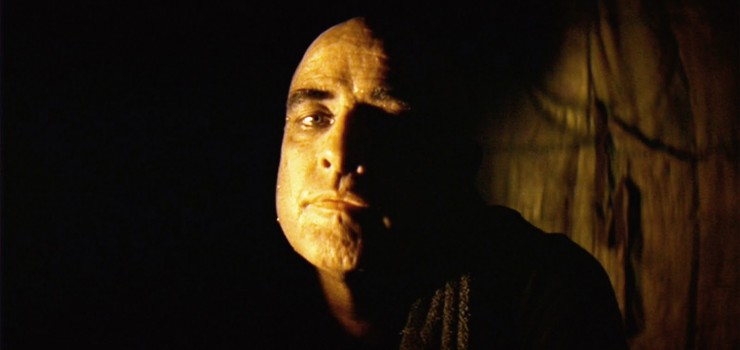
The arrival at Kurtz’s compound is the fufillment of this increasingly unnerving story. We’ve seen the madness on the journey, the pointlessness, and the bemused, carefree confusion of the crew. But at the camp we get the overblown, decadent lunacy of Kurtz. Brando dominates the final 30 minutes of the film, although his monologues are meaningless drivel, the sort of intellectual point-scoring you could hear in a sixth form debating society. To be honest, iconic as Brando’s appearance is, his performance of mumbling battiness is actually a little awful (like one big practical joke from the actor) and the film’s momentum grinds to a halt while he babbles on. 

In fact, so self-indulgent is Brando that in a way it’s a sort of tribute to Coppola’s mastery of cinema that he makes this pompous character make any sense at all – or that he makes this sort of nonsense even remotely watchable. But again it’s the hypnotic pull of the film: Coppola builds towards a chilling, haunting final sequence of Willard and Kurtz’s final confrontation intercut with The Doors’ The End and the real-life slaughtering of an ox by a crowd of real-life villagers (they were going to kill the animal anyway but offered to do it for the camera). Coppola somehow turns all this into iconic cinema, even though, viewed objectively, it’s overblown, indulgent, pretentious rubbish.

The whole film is a testament to hewing compelling filmmaking out of breathtaking insanity. After the film departs in the boat, most of reason, sense and conventional story-telling depart with it. Information only gets conveyed through rambling monologues from Willard. The crew of the boat get into scraps that reflect heightened versions of the American experience in Vietnam – from a war crime as the crew shoot-up what turns out to be an innocent boat, to an attack from unseen tribesmen with spears from the mists of the shore. Sam Bottoms, as surfer-turned-GI Lance, is our guide of a sort here – as he gets more stoned, so narrative logic departs with his senses. 

What keeps the film going throughout is the masterful film-making. Coppola shoots the bizarreness with brilliant, visionary imagination. As a social theorist he’s pretty basic – man is, by the way, a savage animal and the Americans didn’t know what they were getting themselves into in ‘Nam – but as a film-maker he’s one of the best. Who else could have made three hours of episodic boat journeys so strangely compelling? The film is crammed full of great scenes and moments which rarely feel like they tie together – in fact, they could almost be watched in any order – and there is barely a character in there, but the film feels like its throwing you into the madness of Vietnam. 

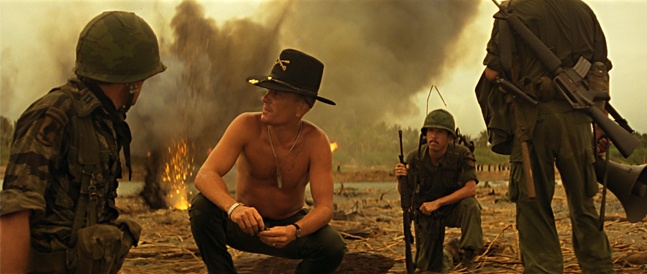
Even the sequence with a bit more narrative is still laced with absurdity. Kilgore’s helicopter assault on a village – and its use of Wagner blaring from helicopters to scare the Vietcong – is justly famous. This is a bravura film-making – and as much a tribute to the astoundingly amazing editing and sound work of Walter Murch as it is the photography of Coppola. Like most of the rest of the film it is visually outstanding, but it also has the film’s best writing (in the quotable but also strangely subtle characterisation of Kilgore) and also the film’s most iconic performance in Robert Duvall. Duvall is terrific as the war-loving, but strangely childish Kilgore, obsessed with surfing and with an ability to live totally in the moment. 

This sequence doesn’t hesitate in showing both the brutality of war – and also the insanity of our commanders. Kilgore is genuinely dreading the end of the war, and you can see why he would since he is clearly having a whale of a time bombing places. Kilgore is a lovable, quotable badass doing what needs to be done – but the film doesn’t forgot that he is also an insane soldier with no off-switch. And Apocalypse Now never really glamourises war, for all the excitement and beauty of watching those helicopters come over the horizon.

It’s the artistry in its film-making, and the genuine effort and work that helps make it a demented classic. Walter Murch’s sound design and editing is possibly flawless – this might be the best edited and sound designed movie ever – from the opening moment when the helicopter blade sounds transform into a hotel room fan you know you are seeing something special. Scenes such as Willard’s hotel-room breakdown hum with intensity as they feel genuinely real – that scene in particular feels like Martin Sheen exposing part of his tortured psyche at the time. Sheen is by the way perfect as Willard, a slightly unknowable killer with dead eyes and a dead soul, still aware of the vileness of his world.

Apocalypse Now is a sprawling batty film – and in many ways an intellectually empty one straining at a depth that ain’t there. But somehow, for all that, it still is a masterpiece. Which is in itself a bit of a miracle as it really should be a disaster. It’s pretentious. It’s overlong. It’s very full of its own importance as a work of art (the re-insertion of the long-winded political discussion at the French Plantation into the Redux version doesn’t help). Some of its performances are plain ridiculous, verging in Brando’s case on outright bad. But yet, it’s delivered with such force of conviction, it’s so wonderfully assembled, so hauntingly shot and edited, that it hammers itself into your brain. You literally can’t forget it, for all its many, many flaws. Despite yourself, you find yourself forgiving it an awful lot – a lot more than you might expect. A mess, but also a classic.