Tag: Denzel Washington

Cry Freedom (1987)

Cry Freedom (1987)

Highly earnest, well-meaning, but tragically mis-focused biopic that doesn’t have the impact it wants

Director: Richard Attenborough

Cast: Kevin Kline (Donald Woods), Denzel Washington (Steve Biko), Penelope Wilton (Wendy Woods), Alec McCowen (High Commissioner David Aubrey Scott), Kevin McNally (Ken Robertson), Ian Richardson (State Prosecutor), John Thaw (Jimmy Kruger), Timothy West (Captain De Wet), Josette Simon (Dr Mamphela Ramphele), John Hargreaves (Bruce Haigh), Zakes Mokae (Father Kani), John Matsikiza (Mapetla), Julian Glover (Don Card)
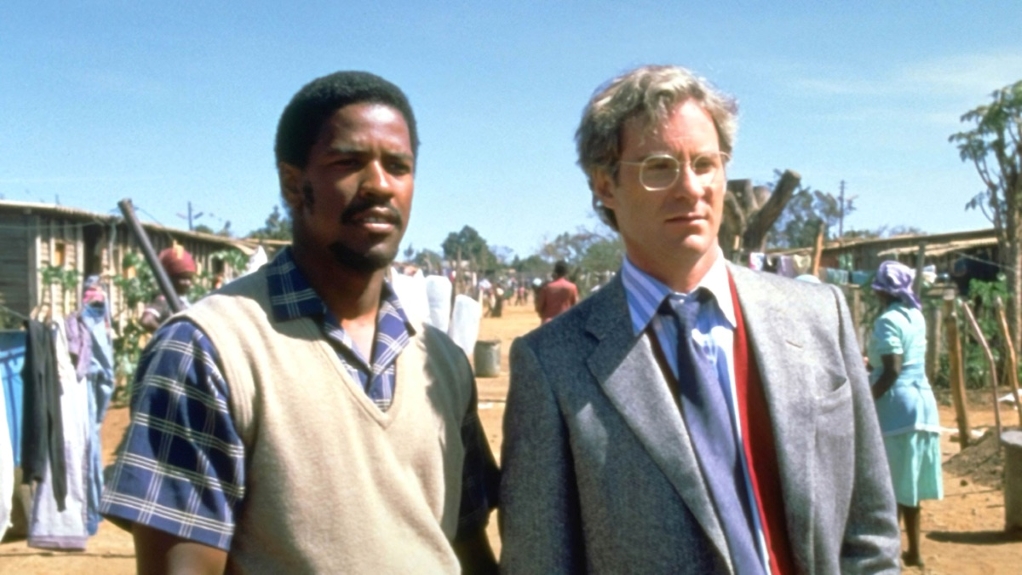
Steve Biko (Denzel Washington) was a leading anti-Apartheid campaigner, driving the Black Consciousness Movement in the repressive racist state of South Africa. Biko called for Black people to organise themselves and rejected the paternalistic concern of hand-wringing white liberals. Biko was ‘banned’ in 1970s by South Africa’s (in)justice department (meaning he could not be in physical proximity with more than one other person at a time) but didn’t let this stop him campaigning – until he was eventually arrested and murdered in custody in August 1977. His story came to international attention with the reporting Donald Woods (Kevin Kline), the white liberal newspaper editor who befriended Biko, later also banned and eventually fled in disguise from South Africa.

All of this makes very ripe ground for Richard Attenborough to make another socially conscious, unreservedly liberal film, very much in the style of Gandhi. Unfortunately, while Gandhi combined epic sweep and drama with its schoolboy history, Cry Freedom is a deathly serious film, straight-jacketed by recreating events as reverentially as possible and focuses itself in all the wrong places. Cry Freedom is the Biko biography in which Biko becomes a supporting character to exactly the sort of white liberal he rejected having African stories filtered through. Admirable as Donald Woods’ efforts to find justice for Biko was, does it feel like he deserved the focus of over half the film? It’s as if Attenborough had decided to frame Gandhi solely from the perspective of Martin Sheen’s journalist rather than the Father of India himself.

Following the trend of many films of the 80s and 90s, Cry Freedom believes that the only way the regular cinemagoer can relate to a minority group is through the filter of a complacent white person having their eyes opened to how unjust everything is. In carefully following this cliché, Cry Freedom does do a decent job. Woods is patronisingly certain of his liberal views, even while he sometimes fails to even acknowledge his live-in Black maid who unquestioningly calls him ‘master’.

Back-slapping himself on writing the odd sympathetic editorial and convinced one of the big problems of South Africa is the danger of anti-white racism, he’s exactly the sort of hero you get in this genre: the guy who assumes, because the system has always worked for him, it will work for everyone. When he resolves to support Biko, he immediately assumes a friendly pow-wow with Justice Minister Jimmy Kruger (a terrifyingly amorally, avuncular John Thaw) will sweep away all the problems (it, of course, makes things immeasurably worse for everyone).

Cry Freedom largely re-creates the oppressive policies of South Africa, through seeing a white character become a victim of the very persecution, bullying and terrorising the Black community has spent its whole life suffering. (With the big exception that Donald Woods never seems to be in danger of being dragged off the streets and beaten to death in a police cell). It feels like a tone-deaf way of exploring these issues. Particularly as Donald Woods’ eventual escape from South Africa is staged and filmed with a singular lack of energy over nearly an hour of screen time, with interest slowly drained out as Attenborough uninventively turns it into an identikit version of any number of bog-standard behind-the-lines Great Escape shenanigans you’ve seen done a million times better before.

Attenborough, to be fair, saves his energy for the re-staging of the brutal repression inflicted on the Black community. Cry Freedom’s opening and closing sequences – a brutal slum clearance in East London and a restaging of the shockingly violent crushing of the 16 June 1976 Soweto uprising (where indiscriminate police automatic weapons fire killed and injured hundreds of children) – are shot with exactly the sort of humanitarian outrage and cold-eyed recognition of the horrors of conflict that Attenborough bought to Gandhi and A Bridge too Far.

It’s not hard to wonder if this is more the sort of film Attenborough wanted to make, but that funding demanded a white lead so as not to panic mainstream cinema audiences. It makes large parts of the film feel like a missed opportunity. A real immersion in the actual day-to-day lives of Black South Africans – not just the beatings, but the unending, casual racism and oppression – would have created a film of even more power. (The fact the film suddenly ends with a flashback to Soweto – an event not central to the plot at all – makes you wonder if Attenborough suddenly realised that, without it, Cry Freedom would have barely shown a Black face for its last twenty minutes).

But too much of the rest of Cry Freedom feels too dry, reserved and lifeless. Even Biko himself falls into this trap. Denzel Washington delivers a very fine performance, full of the sort of effortless charisma and magnetic leadership that makes you believe that so many would follow him and using wit and moral certainty to stand up to the various bullying policeman he encounters. But too much of Biko’s dialogue with Woods is full of the sort of dialogue designed to inform and educate the audience, rather than create good story-telling. Too many scenes in Cry Freedom’s opening hour feel like a South African politics seminar, no matter how much energy Washington gives the dialogue.

It’s part of the feeling the whole film carries: a very serious political ethics class, mixed with an all-too familiar story of a white man learning first hand just how tough his Black friends have had it for years. Attenborough so clearly means well, it feels almost cruel to knock him and his film: but Cry Freedom feels like a film with a lot of blood, sweat and tears invested in it, which then fails to have the emotional heft it really needs and spends a lot of time telling the wrong person’s story.

Gladiator II (2024)

Gladiator II (2024)

Gonzo sequel sits firmly in the shadow of the illustrious predecessor it tries to imitate time and time again

Director: Ridley Scott

Cast: Paul Mescal (Lucius Verus/Hanno), Pedro Pascal (Marcus Acacius), Connie Nielsen (Lucilla), Denzel Washington (Macrinus), Joseph Quinn (Emperor Geta), Fred Hechinger (Emperor Caracalla), Derek Jacobi (Gracchus), Tim McInnerny (Thraex), Alexander Karim (Ravi), Peter Mensah (Jubartha), Lior Raz (Viggo), Matt Lucas (Master of Ceremonies), Rory McGann (Tegula)

There’s nothing particularly wrong with Gladiator II. In many ways, it’s a big, silly, perfectly inoffensive swords-and-sandals flick, with the violence dialled up. But as a sequel to Gladiator – a film that married scale with a hugely relatable emotional story about one man’s quest to avenge his family and unite with them in the afterlife – it’s not even in the same league. Gladiator II’s biggest problem is that when it tries to do something different from Gladiator it usually fails and when it hues close to the original, it only reminds you what a good film that was and how you’d honestly much rather watch that again.

Gladiator II picks up 16 years after the first film. The nephew of the late Commodus, Lucius (Paul Mescal) lives with his wife in the last free city of Numidia. That ends when the city is taken by a Roman army, under the command of General Marcus Acacius (Pedro Pascal) and Lucius’ wife is killed. Lucius, taken as a slave, of course arrives in Rome and becomes a gladiator in the service of the ambitious, unscrupulous wheeler-dealer Macrinus (Denzel Washington). Macrinus has schemes to exploit the fragile Empire, ruled by brothers Geta (Joseph Quinn) and Caracalla (Fred Hechinger). General Acacius and his wife, Lucius’ mother Lucilla (Connie Nielsen), also plan to overthrow the Emperors. And Lucius also plans revenge against Acacius and all of Rome in that order.

Gladiator II is awash in echoes from the first film. It gives Lucius mostly the same motivation as Maximus. It opens with a big Roman battle. It rushes to get Lucius back into the Colosseum, via a few reluctant bouts in the provinces. He is accepted as a leader by the other gladiators, marshalling them like troops. Connie Nielsen gets the same plot and versions of the same “visiting the hero in prison” scenes. There is a lot of talk about the power of the mob. Hands are frequently rubbed in the dirt. The famous quotes (“Strength and honour!”) are paraded out. Lucius cos-plays as Maximus for the film’s big ending. The final scene shows a survivor searching in the dirt of the Colosseum. Just when you think the film has at least not shown us a shot of a hand stroking some wheat… Gladiator II even chucks that in. It’s a big bit of nostalgia IP dressed up as homage.

But Gladiator II only seems to understand the surface elements of what made the first film successful – not the heart. Gladiator was a very simple story: it was a film about a man who deeply loved his late wife and son, determined to carry on living until he avenged them. Sure there were plot mechanics about the future of the Empire and “The Dream of Rome” – but this was window dressing to a plot focused on very real emotions, about caring for your loved ones. Maximus was carefully crafted as an honourable, decent man, a reluctant warrior who fought because he must. This narrative simplicity is completely lost in Gladiator II, a film so awash with subplots, schemes and shady deals that it becomes hard to follow – and eventually to care – who is on whose side and why.

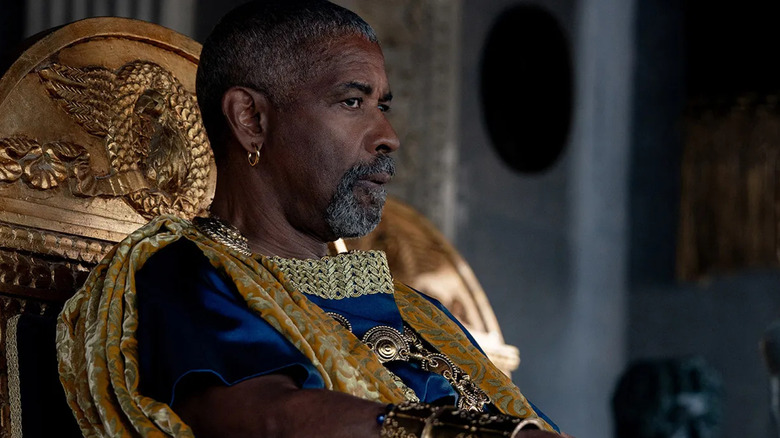
There are at least four competing schemes at play in Gladiator II, each fighting for screen time like rats in a trap. It’s at best a bloody stalemate. The character who emerges best from all this is Macrinus. Based on the first Moorish Emperor of Rome (a fascinating, if short-lived, figure) he’s played with a meme-courting bombast by a clearly having-fun Denzel Washington (his rolling pronunciation of the word “Pol-leetic-sah!” designed to launch a thousand GIFs). A flamboyant figure, he effectively mixes elements of both Proximo and Commodus from the first film with the larger-than-life amorality of Washington’s Alonzo Harris (if Harris was a slightly camp Roman aristocrat). Most of the film’s enjoyable moments revolve around his increasingly brazen manipulations, first of a corrupt senator (an enjoyably sleazy Tim McInnerny) then the two deranged and incompetent Emperors. Every other plotline eventually falls into the shadow of Washington’s scenery-chewing excess (by the time Macrinus is using a character’s severed head as a prop to intimidate the Senate, you realise you just have to go with it).

Gladiator II though needs to split its focus between these multitudinal plot lines, to the detriment of all of them. The emperors fiddle and feud while Rome burns. Various soldiers and senators line-up familiar plots to restore the republic. Lucius, the character we are supposed to relate to the most, is the one who starts to lose our interest. Paul Mescal does an effective job as this growling, surly figure, even if he doesn’t quite have the force to pull off his final late-act speeches. But the film rushes his elevation to leader among the gladiators so quickly it feels unearned – as well as stuffing the film with a multitude of sidekicks so anonymous they blur into one, so much so you won’t even notice (or care) when they start to bite the big one.

On top of which, Lucius zigs-zags through motivations with all the logic of a charging rhino. He goes from wishing he was dead, to fighting desperately for life, to vowing revenge on one man to suddenly changing his mind, to leading a proto-Spartacus inspired revolt to ditching the idea, to denouncing his mother and birth-right until suddenly he doesn’t, to half-heartedly resenting Macrinus to announcing he only lives to see him die, from rejecting Maximus to cos-playing him – how are we supposed to keep up with this? The fact he’s a man of very little words doesn’t help.

When he does speak it’s never particularly punchy. Scarpia’s workman-like dialogue gives him a clumsy rallying cry – “Where we are not where death is. Where death is, we are not” – which manages to be both leaden word-soup and spectacularly unrallying. The film recognises this by having Lucius ditch it late on for a rousing cry of – what else? – “Strength and honour”. Scarpia’s script, along with its muddy plotting, is full of deathly, forgettable pap; as well as riffing so determinedly on Gladiator that you’d think not a day went by in the bowels of the Colosseum without a wistful discussion about Maximus. Gladiator II also manages to pee across several ideas at the heart of Gladiator, from the potential implication that Maximus may have cheated on his wife to father Lucius (even Russell Crowe questioned that one) to the idea that at the end of the film they buried him in the Colosseum, which seems like the last thing they’d do.

In fact, I started to think that Ridley Scott’s main motivation for doing Gladiator II was to chuck in all the gonzo ideas he couldn’t make work (or find the budget for) in the first film. A fight with a mad rhino. A flooded arena full of ships (with added sharks – how these were caught and conveyed in-land to the arena just doesn’t even bear thinking about). Lucius and his fellow prisoners take on man-eating poorly-CGI’d baboons (Lucius’ position as leader largely stems from him biting one of these beasts before strangling it to death). Outside the arena, heads, hands and arms are hacked off and Scott effectively opens the film with a re-stage of the battle of Jerusalem from Kingdom of Heaven – only the siege towers this time are on ships charging the sea walls.

All of this is pretty well done, don’t get me wrong. Scott can do historical epic on screen like few others. But Gladiator II actually suggests that where he lucked out on Gladiator was keeping it simple with a strong story. Gladiator II feels something where attention has been lavished on the scale and the bombast, but that plot and character have been rushed. The film is about 15 minutes shorter than Gladiator while telling a story twice as complex, a mixture that doesn’t work well. In fact, the main feeling I had coming out from it was that I didn’t need to see it again and if I could re-watch Gladiator and pretend this didn’t exist at all, I might be a happier man. Gladiator II lives so absolutely in the shadow of its predecessor, that its flaws become more apparent through the constant invitation the viewer is made to compare and contrast them. This one won’t echo to 2030 let alone eternity.

Training Day (2001)

Training Day (2001)

Pulsating corrupt-cop drama, highly entertaining with a full-throttle Denzel Washington

Director: Antoine Fuqua

Cast: Denzel Washington (Detective Alonzo Harris), Ethan Hawke (Officer Jake Hoyt), Scott Glenn (Roger), Tom Berenger (Stan Gursky LAPD), Harris Yulin (Doug Rosselli LAPD), Raymond J Barry (Lou Jacobs LAPD), Cliff Curtis (Smiley), Dr Dre (Officer Paul), Snoop Dogg (Blue), Macy Gray (Sandman’s wife), Charlotte Ayanna (Lisa), Eva Mendes (Sara)

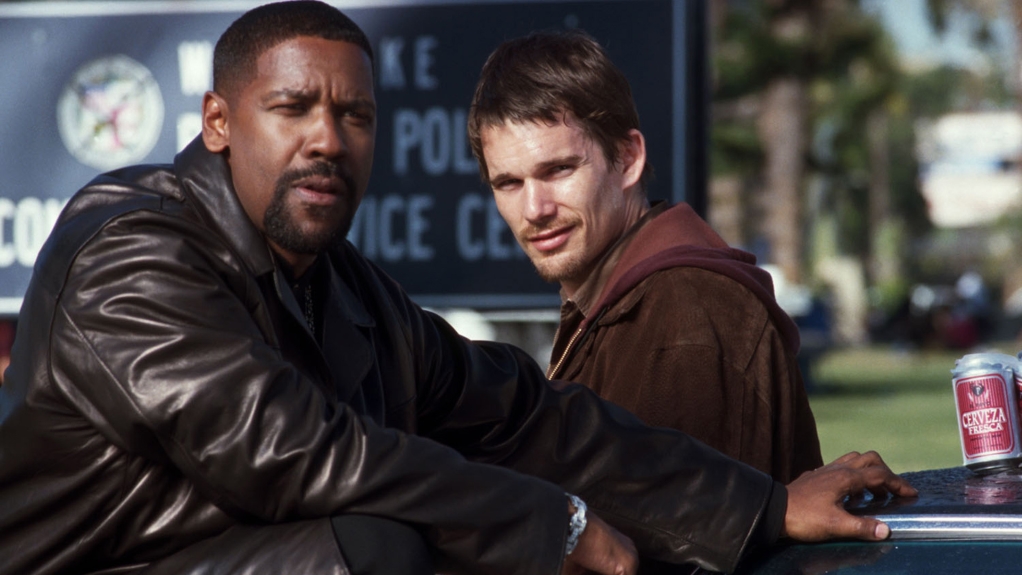
“King Kong ain’t got nothing on me!” That’s the mantra of larger-than-life legendary cop Alonzo Harris (Denzel Washington), who has immersed himself so much in the dirty neighbourhood gangland of LA that it’s hard to see where cop ends and crook begins. Alonso claims to believe to keep the town clean, you gotta break a few rules. But then he also believes in filling his own pockets with stolen money. It’s all going to come to a head in one day: first day on the job for ambitious boy-scout officer Jake Hoyt (Ethan Hawke) who thinks he’s auditioning to join an elite squad only to find he’s the victim of a series of elaborate mind-games and dodgy moves by Alonzo, testing to see whether he is potential asset or sacrificial pawn. It’s going to be a long day.

Training Day is basically a massive dance with the devil, offering his little Faustus all the wonders of the world in return for his soul. It’s all there for Hoyt’s taking: respect, glory, standing – and of course oodles of plastic-wrapped dollar bills. All he has to do is sacrifice every inch of his integrity and personal morality to Alonzo Harris, a grandstanding Mephistopheles. This first day is all about Harris pushing Hoyt to see how far he will go. Will he smoke a little dope so he could pass as an undercover druggie? Will he search a house under a false warrant? Will he rough up a suspect? Will he murder a drugdealer and steal his cash?

Throughout all this, Denzel Washington barnstorms to fantastic Oscar-winning effect. This is a delightfully Devilish performance, Washington leaving it all out on the pitch. Alonzo Harris has inhabited the persona of the gangsters he follows for so long he’s basically become one. Harris is scarily charismatic, the unshakeable confident cool he uses to cow and terrify criminals and punks on the street, also making him a hugely attractive figure. This is despite his complete amorality, his ruthless capacity for violence and his shocking willingness to abuse and use almost everyone around him. He does all this by convincing Hoyt for long stretches that his poor treatment, abuse and deception of him is all in Hoyt’s own interest: to toughen up this naïve puppy into a killer.

Hoyt spends half the time if this is some elaborate show-and-test. Who can blame him? Washington’s exuberance plays masterfully on the edges of someone putting on a massive performance. There are neat moment where we see how fragile some of Harris’ control is, once he is outside of his comfort zone: he’s in hoc for millions to Russian gangsters and as events of the day pile up his thermonuclear self-confidence tips into moments of impotent fury. Washington is fantastic as this street monster, whose seductive lines on modern policing (do a little bad to do a greater good) start off sounding like common sense before you realise they tip quickly into justifying open criminality. It’s a performance of perfect physical swagger matched with his limitless charisma, inverting the qualities that made him a perfect Steve Biko or Malcolm X into a Lectorish monster.

Ethan Hawke is also extremely good as his polar opposite, the eager to please rookie who realises there is a lot more going on here than he thought. Training Day suggests there may well be a middle ground between Hoyt’s straight-as-an-arrow idea of policing and Harris’ corruption – and it’s part of Harris’ appeal that his perverted mentoring ends up making Hoyt a tougher, more unrelenting (better?) cop than he was before. But also, Hawke is great at showing that Hoyt (under his sheen of moral uprightness) is also a tough, hardened professional. In classic story-telling style, Harris is a dark reflection of Hoyt: they share a stubbornness, a conviction that they are right, a refusal to be intimidated (Hoyt may nervously try to please Harris at first, but once he realises the score he refuses to be forced into doing anything he doesn’t want to do) and a capacity for throwing themselves into decisive action. There is a reason why this rookie can get the drop on Harris – much to his wicked mentor’s delight and admiration – in a way no one else can.

That alone shows the dark magnetism of people like Harris: like Hoyt we end up wanting their approval even when we hate or fear them. Even as he holds a shotgun to his head, there is a part of Hoyt you suspect is proud that Harris’ gut reaction is to shout an impressed “My man!”. Of course Harris knows his validation is important to people. Monsters like this know the weaker-willed crave their respect. But then Harris also knows no one else in his team – all of them weak-willed bullies, desperately trying to imitate them – have even a quarter of the independence of mind Hoyt has.

What Harris under-estimates is Hoyt’s survival instinct. The final third of the film, the clash that has been building inevitably between these two, again demonstrates both their similarities and their fundamental differences. The main difference between them being Hoyt cares for, and protects others, and Harris cares only about himself. Hoyt’s humanitarianism will save him from dangerous situations and even Harris’ girlfriend (a tough-but-cowed performance from Eva Mendes) recognises Hoyt has shown more concern for her son in a few minutes than his father, Harris, ever has in his whole life.

The final act of Training Day hinges a little too much on one whopper of a coincidence: the sort of narrative contrivance so colossal that, in a less magnetic film, you’d be throwing stuff at the TV shouting “oh come on!” It’s final, inevitable, confrontation between Harris and Hoyt feels rather too much like many, many other films before it in every single beat, while the ending has a whiff of Hays Code morality (all wrongs righted!) about it that rather undermines the edgy, unpredictable film it precedes.

But when Training Day focuses on the sound and the fury of Washington and the Faustian dance on the deep grey lines of street policing, this is a sensational, energetic and highly watchable cop thriller, pulsatingly directed by Antonie Fuqua. With Washington superb and Hawke easy to overlook as his straight-laced partner, it’s a character study that constantly shifts our expectations and leaves us genuinely worried about the fate of its hero. The sort of slick entertainment Hollywood does at its best.

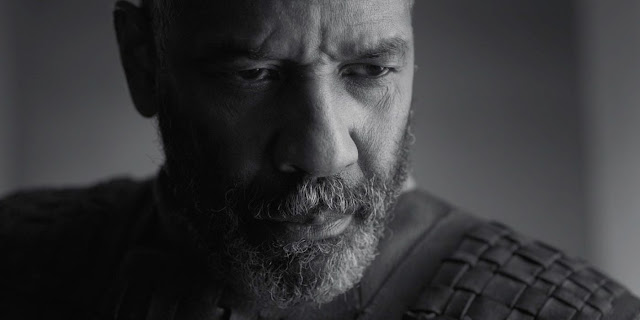
The Tragedy of Macbeth (2021)

The Tragedy of Macbeth header

Denzel Washington and Frances McDormand are the Macbeths in this brilliant, noirish, superb Shakespeare film

Cast: Joel Coen

Director: Denzel Washington (Lord Macbeth), Frances McDormand (Lady Macbeth), Corey Hawkins (Macduff), Brendan Gleeson (King Duncan), Harry Melling (Malcolm), Bertie Carvel (Banquo), Alex Hassell (Ross), Kathryn Hunter (The Witches), Moses Ingram (Lady Macduff), Ralph Ineson (Captain), Stephen Root (Porter), Miles Anderson (Lennox), Jefferson Mays (Doctor)

Shakespeare on screen is difficult to pull off. Focus too much on the language and you end up with something more theatrical than cinematic. Zero in on the visuals and you lose what makes Shakespeare great in the first place. That’s not even to mention that films – with their huge audiences – tend to focus on simple, more traditional interpretations of a play that add little to interpreting it afresh. These are all problems avoided by Joel Coen’s The Tragedy of Macbeth which is bloody, bold and resolute and jumps straight into the upper tier of great Shakespeare films. Inventive, dynamic, gripping and excellently acted it succeeds in being both a creative production of the play and something truly cinematic.

Shot in a crisply clean black-and-white, the 4:3 frame frequently filled with rolling mist and stark white light (it’s superbly shot by Bruno Delbonnel), this is a Macbeth set in a Jan Kott inspired Samuel-Beckett-tinged wasteland, with Scotland a bleak, blasted country, its characters leading lives full of sound and fury that signify nothing. The Macbeth’s castle is an Esher like construction of perfectly formed empty rooms, towering walls and arches casting grim shadows and open ceilinged rooms allowing onlookers to observe everything. There are brilliant images: not least the handle to Duncan’s door which is strikingly lit to resemble a knife. Characters frequently emerge from the mist or the darkness to walk towards us and confess their darkest thoughts.

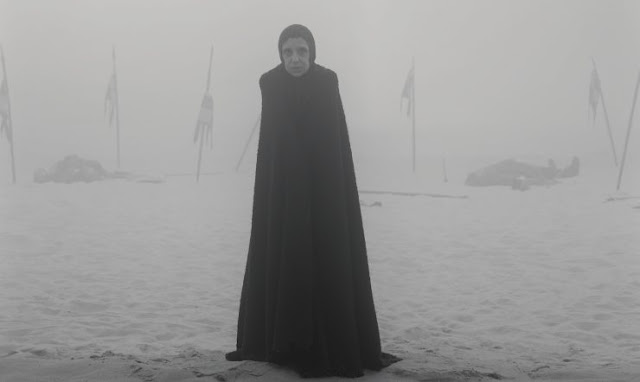
No Shakespeare film has better used set and location since Orson Welles’ Othello – a film this is sharply reminiscent of, with its brilliant use of angles and shade that constantly disconcerts the viewer (even leaving us confused at points on whether we are looking down or up). Coen also seems to have been inspired by Peter Brook’s grimly nihilistic King Lear film, with this Scotland being trapped firmly in a circle of destruction powered by the witches. All three are played by Kathryn Hunter, whose contortionist twisting and ability to switch her vocals on a sixpence from sing-song to a Gollumesque growl make them truly feel of the earth and yet not. Hunter is inspired casting – sometimes representing all three witches in a single schizophrenic body, at others playing all three at once. A brilliant image at one point shows her double reflection in a watery pool, turning her body immediately into a trinity.

Hunter’s movement is birdlike and agile – fitting since it’s suggested the witches can transform themselves into carrion crows, flying over Scotland picking bones clean of fresh. The first image is the three birds circling the Captain as he walks slowly across a beach to report to Duncan. Later Hunter perches on a crossbeam in another opened-ceiling room, subtly poking Macbeth on to greater monstrosities. There is a cycle of destruction here – and the film’s ending implies all this chaos is bound to start again.

Crucial to this is Ross. Following Polanski’s Macbeth – and again heavily inspired by Jan Kott – Alex Hassell’s unctuous Ross, ingratiates himself with all while happily engaging in acts of brutality. He personally executes Cawdor (by beheading), joins Banquo’s murderers, shows the way to the sacking of Macduff house and hands Malcolm both the crown and Macbeth’s severed head. But Coen takes it further again: rather than a cruel opportunist, this Ross seems to be an agent of the witches – or maybe even a witch himself. Hassell’s costume, with its curiously feminine robe and wing-like arms, echoes the witches and Ross moves smoothly from side-to-side even in the final acts, planting seeds of further destruction (including further implied murders) and collaborating directly with the witches to restart the cycle at the end.

All this makes Macbeth and Lady Macbeth at times feel like rather tragic puppets at the heart of a terrible cycle of events they cannot control. It certainly fits with Denzel Washington’s balanced and intelligent performance in the lead. While Washington doesn’t mine as much weight and meaning from the text as the great stage Macbeths, he gives his line readings an unstudied naturalism and a dynamic and thoughtful rhythm (even if he is prone a little too much to the “soft-slow/fast” approach). His Macbeth is a weak, indecisive man, happy only when he is in action. Clearly ambitious from the start, he binds himself in knots thinking but, once a decision has been made, has no hesitation. Violence is an instinctive tool – he kills several people with no hesitation and a lightening aggression – but he’s lost without direction. He clings to the crown as if it will somehow give the things he has done meaning.

Washington’s performance shifts gears once Macbeth has decided to fully commit himself to those scorpions that fill his mind, becoming an unbalanced mixture of fatalistic and recklessly impulsive. No wonder he has less need for his wife. Frances McDormand is perhaps even better as a Lady Macbeth who sees the crown as her last chance for legacy in a world that has left her behind. McDormand really understands the way to mine nuance from the language. Frequently inpatient with her husband, she is decisive where he is not, but squeamish around violence in a way he isn’t. Both Washington and McDormand manage to suggest a great deal of unfulfilled sadness in the Macbeths, two people in the twilight of their years who pounce on a chance for a last hurrah but find themselves psychologically unsuited for the consequences.

The two leads are at the head of a uniformly strong cast. Hunter and Hassell are both superb. Bertie Carvel is a brooding but honest Banquo. Corey Hawkins a forceful but thoughtful Macduff, played with guilt and wise from the start on Macbeth’s villainy. Moses Ingram brings a lot of warmth to a striking scene as Lady MacDuff. Ralph Ineson’s delivery of the Captain’s speech is spot on. Harry Melling is an immature, stubborn Malcolm.

But the real star here might just be Coen’s direction. The brooding, overbearing beauty of the film is all part of its atmosphere of creeping intimidation and danger. There are some truly striking, haunting images: the flame lit murder of Banquo, a deranged Macbeth fighting a spectral hallucination of Banquo, water pouring down into the flagstones after Macbeth’s final visions of the future, the smoke and mist filled murder of Macduff’s children (a shot of Wellesian brilliance), Lady Macbeth standing before a sheer drop, the imaginative arrival of Birnam wood, Macduff and Macbeth’s final duel in a narrow battlements. This is a punchy, brilliant, beautiful, intelligent and unique reimagining of the play that mixes Shakespeare, visual and has something clear and unique to say about staging the play. Comfortably one of the greatest Shakespeare films ever made.

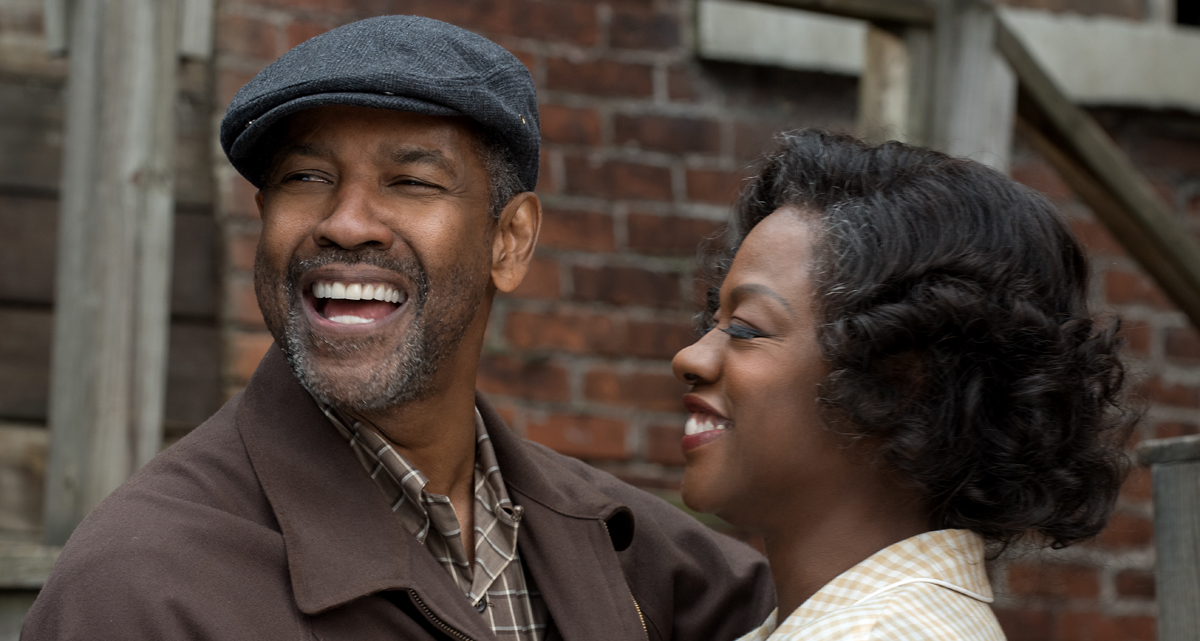
Fences (2016)

Denzel Washington and Viola Davis triumph in an overly theatrical version of August Wilson’s Fences

Director: Denzel Washington

Cast: Denzel Washington (Troy Maxson), Viola Davis (Rose Lee Maxson), Stephen McKinley Henderson (Jim Bono), Jovan Adepo (Cory Maxson), Russell Hornsby (Lyons Maxson), Mykelti Williamson (Gabriel Maxson), Saniyya Sidney (Raynell Maxson)

Pittsburgh in the 1950s. Troy Maxson (Denzel Washington) works as a garbage collector after his dreams of becoming a professional baseball player came up against the colour bar. Troy lives with his second wife Rose (Viola Davis). Troy had a troubled upbringing, turning to crime (and serving time in prison – lost time Rose quietly believes may have had more of an impact on his failed baseball career) and claims to have beaten Death in a wrestling match. Proud of his self-made status and certain, always, that he is right, Troy has difficult relations with his two sons Lyons (Russell Hornsby), a musician he believes is forever sponging money and Cory (Jovan Adepo), a teenager being scouted by an American Football team.

Fences follows a couple of years (with a coda that jumps forward five years) in the lives of these characters, and principally the impact that Troy’s mixture of pride, selfishness and bull-headed self-righteousness has on the family. It’s adapted from August Wilson’s award-winning stage-play, with a script prepared before his death by the playwright himself (earning him a posthumous Oscar nomination). Washington, Davis and most of the cast all starred in a hugely successful Broadway production of the play a few years before, and the film is a careful restaging of this production.

Perhaps a little too careful. If there is a problem with Fences, it is that it falls rather awkwardly between two stools. It’s neither particularly filmic – few of the scenes have been adjusted from the single-set locations of the play, and it’s filmed with an unobtrusive conventionality that makes it look and feel pretty similar to watching a National Theatre Live production – nor is it sufficiently theatrical. I can well imagine the power – and they are undeniably powerful – performances by the cast, principally Washington and Davis, would have blown you away live: but on screen, they can’t quite capture that same impact, in a film that feels slightly constrained by its theatricality.

Most of this comes from Washington’s determination that Wilson’s words would be the star, and all other factors in the production would service that. To that end, the film is a clear success – and you can’t argue Wilson doesn’t deserve a certain reverence, particularly as transfers of his plays to film had been almost non-existent before Fences. Wilson’s plays have rarely crossed the Atlantic, so watching this – a play I was not familiar with – I was enraptured by the working-class poetry of Wilson’s language, not to mention the empathy with which he explores his characters.

At the heart is Troy, a fascinatingly flawed human being. Played with huge charisma, which masks a deep bitterness, cynicism and self-pity, by Denzel Washington, Troy manages to be both admirable and destructive at the same time. You can’t not admire the way he has built his own life from scratch, or the “go-out-and-grab-it” balls that helps him become the first black garbage truck driver in Pittsburgh. He’s witty, warm-hearted and loves his family deeply. He’s also domineering, proud and so convinced his view is right that he sees no problem with cheating on his wife or forcing his children, often against their will, to conform with exactly his ideas of how they should live their lives.

So, he’ll tell his son that because Troy’s dreams of becoming a professional sportsman came to nothing, so will his: so there isn’t even any point trying. He loves his mentally handicapped brother Gabe (Mykelti Williamson), and rages at the Government that failed to support this wounded veteran – but he also takes Gabe’s disability payout and uses it to buy himself a house and charge Gabe rent for living in it. He’ll talk endlessly about putting duty and family first – but that fence of the title, which Rose asks constantly him to build, is a job he’ll put off time and time again in favour of holding court in his backyard. Troy’s built the family – but he’s also the main factor holding it back from moving forward any further. He’s a classic tragic figure.

Equally superb is Viola Davis as Rose, endlessly patient and caring, holding the entire family together and quietly and carefully cleaning up after Troy’s outbursts or bad temper. Davis won the Oscar, and Rose is a dream of a part a woman who closes her eyes to problems, believing she lives a perfect family life, until it is too late. When finally confronted with the selfishness of Troy’s actions, Davis’ emotional devastation – her resentment and fury at having benched her own dreams and desires to service Troy – is hugely moving, perfectly showcasing Davis’ skill to play deep emotions while simultaneously holding those emotions in.

These two actors are both extraordinary – and there are also fabulous performances from Henderson, Adepo, Williamson and Hornsby. What stops it from being an outstanding film though is that its more of a theatrical event pushed into a cinema. With the majority of the scenes taking place in Troy and Rose’s backyard, you can picture the single-set theatre production. The camera moves calmly from close-up to medium shot but does very little else. Very little has also been changed or reworked in the play – compare to Arthur Miller’s reworking of The Crucible or Peter Shaffer’s re-imagining of Amadeus for the screen. It’s a film with a slightly worthy, mission quality to it. But as a showcase for the play – and the performances – it’s very fine.

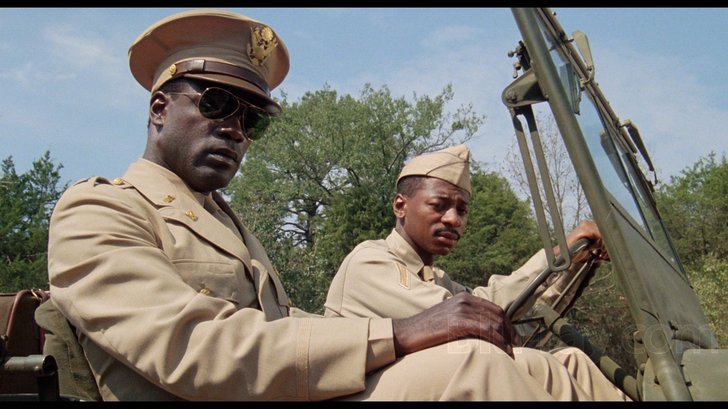
A Soldier's Story (1984)

Howard E Rollins Jnr investigates a racially motivated murder with a difference in A Soldier’s Story

Director: Norman Jewison

Cast: Howard E Rollins Jnr (Captain Davenport), Adolph Caesar (Sergeant Waters), Art Evans (Pvt Wilkie), David Alan Grier (Cpl Cobb), David Harris (Pvt Smalls), Dennis Lipscomb (Captain Taylor), Larry Riley (CJ Memphis), Robert Townsend (Cpl Ellis), Denzel Washington (Pfc Peterson), William Allen Young (Pvt Henson)

A Louisiana military base, 1944. A company of black soldiers prep for Europe to fight for Uncle Sam. All that is put on hold when hard taskmaster Vernon Waters (Adolph Caesar), their sergeant, is shot outside the base. Black JAG officer Captain Richard Davenport (Howard E Rollins Jnr) arrives to investigate the murder – to the hostility of his fellow officers, who are unused to saluting a black man as the common soldiers are. But is Waters murder the result of racism from the town? Or is it due to the tensions within the platoon?

Jewison’s adaptation of a notable stage success by Charles Fuller is a professionally mounted, sharp film – nominated for Best Picture in 1984, but largely forgotten since – that while never quite inspired, does provide plenty of insightful racial commentary on America. It never quite manages to come together as a film – and at times its pace is still better suited to the theatre than the movies –but it counterbalances this with its strength of good acting and an underplayed anger at divisions in America.

Racism is at the heart of the film. Many types of it. Jewison’s opening sequence – depicting Davenport’s arrival on the bus – provides us plenty of sightings of America’s apartheid, segregation being clearly visible in shops, benches and the bus itself. Davenport is addressed as “boy” and instinctive racial unease and disgust is in the eyes of every townsperson we meet. The officers range from paternalistic to patronisingly contemptuous of their men. Every element of the base is designed to remind the soldiers of their second-class status. Davenport is only with great reluctance allowed the trappings of his fellow officers. The film ends with a march of the soldiers towards war – a war they are volunteering to fight in, to protect a country that sees them as less-than-human.

But at its heart this is a film about the real insidious horror of racism. How it can turn someone against themselves. Because the real racial villain, it becomes clear, was actually Sergeant Walters himself. Played with a tightly-wound, self-loathing resentfulness by Adolph Caesar (repeating his stage role and Oscar nominated), Walters loathes the black men under his charge. He sees them as embodying the elements of black culture that (he believes) has led to them being treated so poorly by the whites. He hates their choices in music, in food, the way their talk. Most of all he hates the late Private CJ Memphis (Larry Riley), a good-natured, music-playing, sweet soldier who he believes embodies all the casualness and simplicity that he believes his people need to put them behind them to gain respect.

It’s Fuller’s brilliant insight that the most insidious thing about racism is that it is about creating barriers and hatreds – and it can lead to a black man loathing himself and his own people for not being white. Bad enough that the rest of society is against black people: worse that it is also secretly encouraging them to turn on each other. The tensions in the company all stem from Walters barely concealed unease at his colour, and his fury that his men don’t feel the same way.

Unwrapping in a series of flashbacks as Davenport investigates, the film reveals a fascinating series of tableau that demonstrates the confusion in Walters’ psyche and the impact it has on others. In a society where everything is all against them – as Jewison’s film is at pains to show – these are people who should be sticking together. Instead Walters crusade is to turn them against themselves and each other – to deny who they are in an attempt to become their oppressors. The quest for an acceptance that Walters eventually realises will never happen.

Because, as he bitterly states, no matter how much blood a black man sheds for America, no matter what sacrifices he makes – to many he will still be an “other”. Someone who the people of Louisiana are happy to have fight for them, but wouldn’t share a park bench with. These destructive attitudes are there as well in Davenport’s attempts to investigate, butting up against resentment from junior officers who can’t stomach being spoken to like this by a black man. Howard E Rollins Jnr plays the role with a terrific cool underneath which lies a tightly-controlled fury (he rather effectively channels Poitier in In the Heat of the Night).

A Soldier’s Story is crammed with some wonderful and challenging insights into race. It has a wonderful cast – Art Evans and a young Denzel Washington also stand-out – and a real sense of moral outrage at the evil of racism. What it sometimes lacks is the energy and dynamism the story needs to carry more immediate impact. Too often the film feels a little too safe, a little too conventional to really grip. It wraps up things with a rather conventional feel-good position (with Davenport and Dennis Lipscomb’s Captain Taylor coming to a soapy ‘mutual respect’ position). With the pace slightly off, it can drag at times. However, it’s insight can’t be doubted: it will certainly make you consider that the impact of racism can be even deeper and more damaging than the obvious, initial signs.

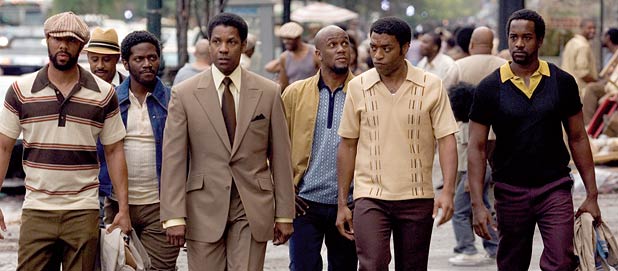
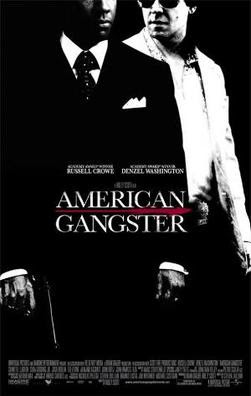
American Gangster (2007)

Denzel Washington leads his brothers in a life of crime in American Gangster

Director: Ridley Scott

Cast: Denzel Washington (Frank Lucas), Russell Crowe (Richie Roberts), Chiwetel Ejiofor (Huey Lucas), Josh Brolin (Detective Trupo), Lymari Nadal (Eva), Ted Levine (Captain Lou Toback), Robert Guenveur Smith (Nate), John Hawkes (Freddie Spearman), RZA (Moses Jones), Yul Vazquez (Alfonsa Abruzzo), Malcolm Goodwin (Jimmy Zee), Ruby Dee (Mama Lucas), Ruben Santiago-Hudson (Doc), Carla Gugino (Laura Roberts), John Ortiz (Javier J Rivera), Cuba Gooding Jnr (Nicky Barnes), Armand Assante (Dominic Cattaneo), Joe Morton (Charlie Williams), Idris Elba (Tango), Common (Turner Lucas), Jon Polito (Russo), Ric Young (Chinese General), Clarence Williams III (Bumpy Johnson)

In 1970s New York there was only one organisation that ran crime: the mafia. The idea that anyone else could get a look in was unthinkable: to the cops, the government and the criminals themselves. Frank Lucas (Denzel Washington) was the guy who was going to shake that up: a resident of Harlem and former right-hand man of crime boss “Bumpy” Johnson (Clarence Williams III), Lucas saw an opening to bring in cheap, high-quality drugs from Vietnam (hidden in the temporary coffins of deceased servicemen). With this product he could take over crime in New York – and run it as he thinks it should be run, with the mentality of a FTSE 500 company and a gun. Frank is helped by the fact no one knows who he is. But that is all about to change as honest cop Richie Roberts (Russell Crowe) sets up a task force dedicated to finding, and arresting, the drug kingpins in New York. He’s as surprised as anyone to find the trail leads to Harlem.

Based on a true story, Scott’s American Gangster is assembled with Scott’s usual professionalism and assured touch, using top actors in well-assembled, well-shot scenes. It’s glossy, entertaining and enjoyable. But it’s not quite inspired or stand-out. Despite everything, it doesn’t really show us anything new and lacks either the fire of inspiration or the sort of poetry and energy the likes of Spike Lee, Quentin Tarantino or Steve McQueen could have bought to it. It tells an interesting story, but manages to be pretty much by the numbers – albeit those numbers are flashed up with as much pizzazz, drama and entertainment as you could wish.

The most interesting themes are questions of class and racial politics. The film’s version of Frank Lucas is successful because he runs his crime empire not like a gang but like a company. He dresses plainly and simply, so as not to draw attention (unlike the flamboyant criminals played by Idris Elba and Cuba Gooding Jnr). He talks in terms of supply and demand, brand loyalty and being a chairman. In one particularly well managed scene, he pontificates to his brothers on his ideology of business, excuses himself to walk across the street and shoot a rival in the head, then returns to calmly finish his breakfast. It’s the ideas of Wall Street applied to gangster crime. Lucas is all about bringing a smooth, modern, professional thinking to crime – but with the gun still up his sleeve.

But another reason why Frank Lucas needs to be as professional as he is, is because he’s loathed by all other parts of the criminal system. It’s a system that is racist from top-to-bottom, where black men are unwelcome as anything other than foot-soldiers. The elite criminals – most of them tracing many generations back to Sicily – smile at Frank for his money, but never see him as an equal. Even the government can’t begin to imagine a black man could be running such a huge empire – Robert’s AG boss spews out a racist diatribe, rubbishing any idea that a black man could achieve something the Mafia has failed to do. Frank though is just as wary of the flashy ostentatiousness of most black criminals in New York, telling his brother that the quietest man in the room is the most powerful.

It’s those brothers who Frank relies on – only family can be trusted. They’ll also be his Achilles heel. Because even his most competent brother (played by a sharp Chiwetel Ejiofor) is as much a liability as he is a good lieutenant. His brothers are innocents turned by their brother into tools for his crime empire. Frank hands out beatings to cousins who are unreliable. He’s bitterly disappointed when his nephew chucks in a baseball career because crime looks more fun. As his mother – an impassioned performance from an Oscar-nominated Ruby Dee – tells him, the rest of the family looks to him and follows his lead. There is a clear tension between this family – whose benefactor is also its corrupter – but it doesn’t quite come into focus.

This is partly because the film is covering a lot, and partly because it finds itself falling a bit in love with Frank Lucas. Not surprising when the part is played by Denzel Washington at his most magnetic – if strangely not quite as energised as you might expect. Washington gives Frank a dignity and cool that the real Frank – by all accounts a much cruder, ruder, less able man – never had. The film doesn’t really want to explore the darker side of Frank. Instead it invites us to sympathise with him, as an outsider made good. To feel sorry for him when he makes a fatal error (wearing an ostentatious fur coat to the Ali/Frasier “Fight of the Century” – an act that blows his carefully preserved anonymity). The film doesn’t want us to feel the damage of the drugs Frank is pouring into New York, since it might damage our respect for his triumph against the odds.

The barriers that Frank has to overcome – from arrogant Mafia kingpins, to local crime lords and corrupt cops (Josh Brolin has fun as a prowling bullying detective) – are in the end more interesting than the procedural struggles of Russell Crowe’s Richie Roberts (on solid form). Roberts is also given a rather cliched (and fictional) custody battle that hardly justifies its screentime. The cops definitely get the short end of the stick – and a stronger film might have focused just on Frank Lucas and really explored the struggles of a black man in white crime world, dealing with racism and trying to apply Wall Street ideals to street violence.

American Gangster doesn’t quite succeed with its dark commentary on the American dream – but it’s as entertaining as you could hope and while it lacks in inspiration, it’s also hard to find too much fault with. One of Scott’s most solid works, with a charismatic Washington doing decent work.

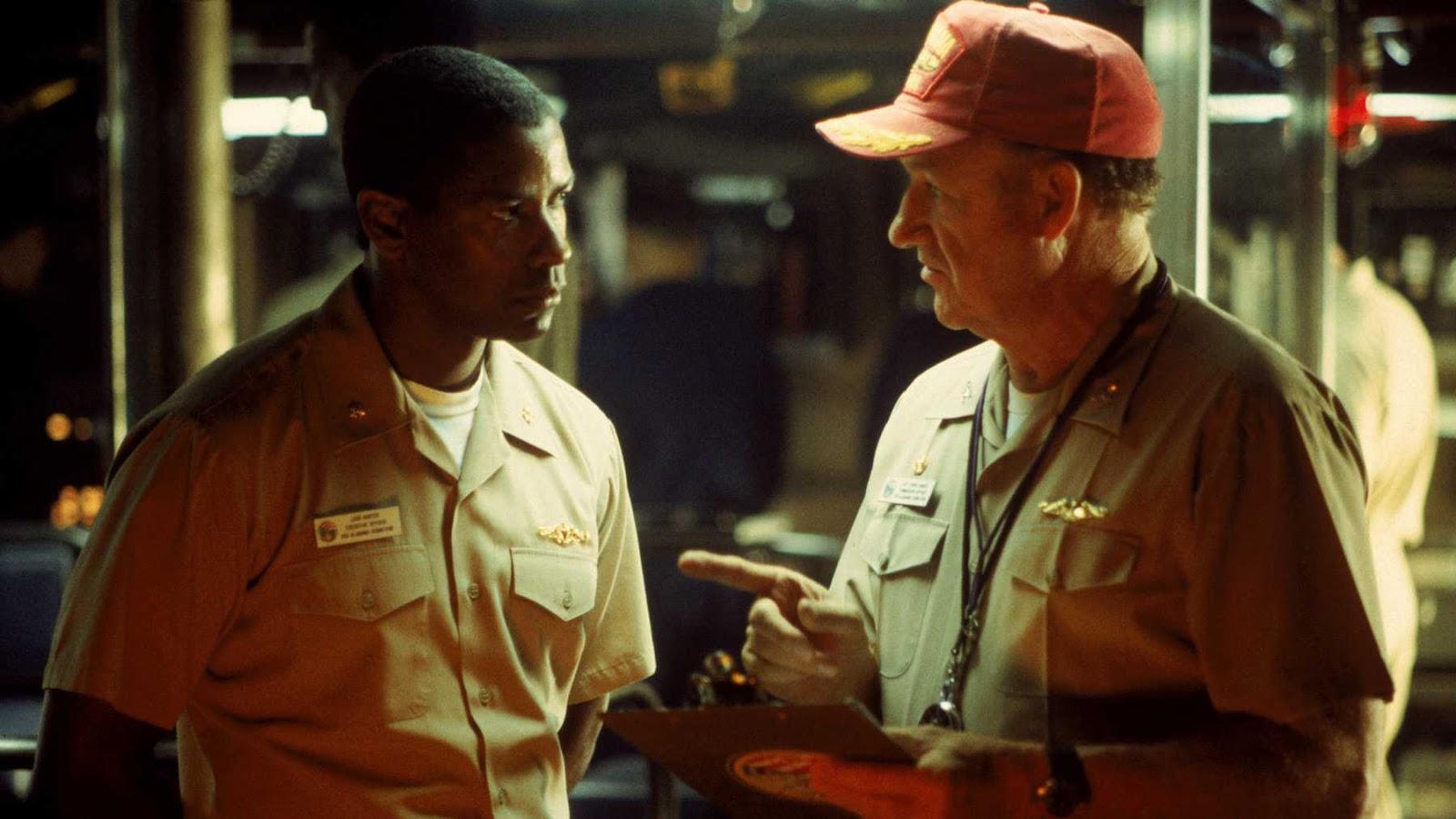
Crimson Tide (1995)

Denzel Washington and Gene Hackman face off under the water in Crimson Tide

Director: Tony Scott

Cast: Denzel Washington (Lt Commander Ron Hunter), Gene Hackman (Captain Frank Ramsey), George Dzundza (COB Walters), Matt Craven (Lt Roy Zimmer), Viggo Mortensen (Lt Peter Ince), James Gandolfini (Lt Bobby Dougherty), Rocky Carroll (Lt Darik Westerguard), Danny Nucci (PO Danny Rivetti), Lillo Brancato Jnr (PO Russell Vossler)

“The three most powerful people in the world: the President of the United States, the President of the Russian Republic and…the captain of a US ballistic missile submarine”. So boasts the film’s opening caption. This submarine drama explores the truth of that, during a clash of wills (and more) between Captain Frank Ramsey (Gene Hackman) and his XO Lt Commander Ron Hunter (Denzel Washington) over the launch of the sub’s nuclear missiles at a rogue Russian general. Ramsey has orders in hand. Hunter has a later, partial, order that may or may not be recalling the strike. Should the sub launch, or should they work to repair their radio and check the second message – possibly losing the narrow window of time they have to take out a rogue general’s missiles before he can launch them at America? Glad I don’t have that job.

Tony Scott’s submarine thriller is one of the best of the genre. It throws in all the clichés you would expect (the claustrophobia, the long dive, the game of cat and mouse with an enemy sub, the blips on the radar, the need to sacrifice someone to save the ship etc.) but presents them with a dynamic freshness (helped by Hans Zimmer’s exciting, award winning score). And at its heart it is a character study of two very different men, with very different styles of thinking and leading. Both rules are juicy, so it’s not surprising that two of the best actors in the game fill them out.

Denzel Washington is just about perfect as a Harvard-educated, committed soldier-thinker who believes in relating to the men as much as he does in firm order. Washington is careful not push Hunter towards being too cautious – under his command the Alabama bests a Russian sub in combat – and he may be alarmed by the impact of nuclear war but will reluctantly pull the trigger, but only once he is certain he has received the correct orders. A lot of the film depends on Washington’s natural moral authority, as well as his mix of forceful reserve and relatability. 

You need a big actor to not get steamrollered by Washington in those argument scenes – and few have the authority of Gene Hackman. Hackman is way too smart an actor to make the captain what he could have been in lesser hands – a trigger happy autocrat. Ramsey may be an old hand who believes in telling men what he wants and expecting delivery or a boot in their ass. But he’s not uncaring, he’s well-read, thoughtful, articulate and capable of acts of kindness and generosity. But he’s also a man rigid in his intent when he believes he is doing the right thing – and Hackman is always careful to establish that his intent on launching missiles is because he believes he is protecting innocent civilians back home.

The film becomes a compelling clash of tempers between two men who firmly believe they are both doing the right thing. The film is careful to throw up the fundamental lack of compatibility between the two from the start, even if it is tinged with respect. Their backgrounds, methods of discipline even ways of thinking about their role are different. There is an unspoken racial tension under the film, not because anyone in it is racist, but rather as Washington’s Hunter represents all round a newer America (an educated Black-American officer) that makes Hackman’s naval old hand feel like a relic of Cold War thinking.

But the film is, at heart, sympathetic towards both men, and probably places more blame on the system (an Admiral later reassures us both men were both right and wrong). Scott’s film with its expected flashy style (Scott loves the stark red lighting of the sub at alarm, mixed with the blaring greens of radar screens and the cool blues of sub interiors) gets a wonderful sense of the claustrophobia affecting decisions. Every character is a sweaty mess, while the sub seems to spend half the movie at an angle, forcing the crew to virtually pull themselves through it. 

The final hour takes place almost in real time, and covers the pressure cooker of men forced to make world-destroying decisions, cut-off under the ocean from any idea of what’s going on in the world, in extreme temperatures on little sleep. It’s a world of butch extreme masculinity – another way that makes Washington’s more cultured Hunter seem strangely other. Sweat pours off the men (the camera frequently focuses in on sweat-dripping faces). The officers of the ship generally come out badly, with Viggo Mortensen in particular a weak-willed man flip-flopping from side-to-side during the various changes of command on the sub. Many of the rest think little about what they are doing, and it’s telling Washington is largely supported by non-commissioned officers and regular sailors. Perhaps that’s where the true heart of America lies.

The film was written by a smorgasbord of writers (Robert Towne wrote much of the Hackman/Washington arguments at short notice, while Quentin Tarantino polished up much of the rest of the dialogue – no wonder it’s sprinkled with pop culture references). Initial support from the navy was cut off after Bruckheimer confessed the film was not about a HAL style computer trying to launch missiles, but a potential mutiny on a submarine and a feud between its two senior officers. Scott’s front-and-centring of the human drama between two great actors is what makes the film work – and take its place as one of the classic submarine movies.

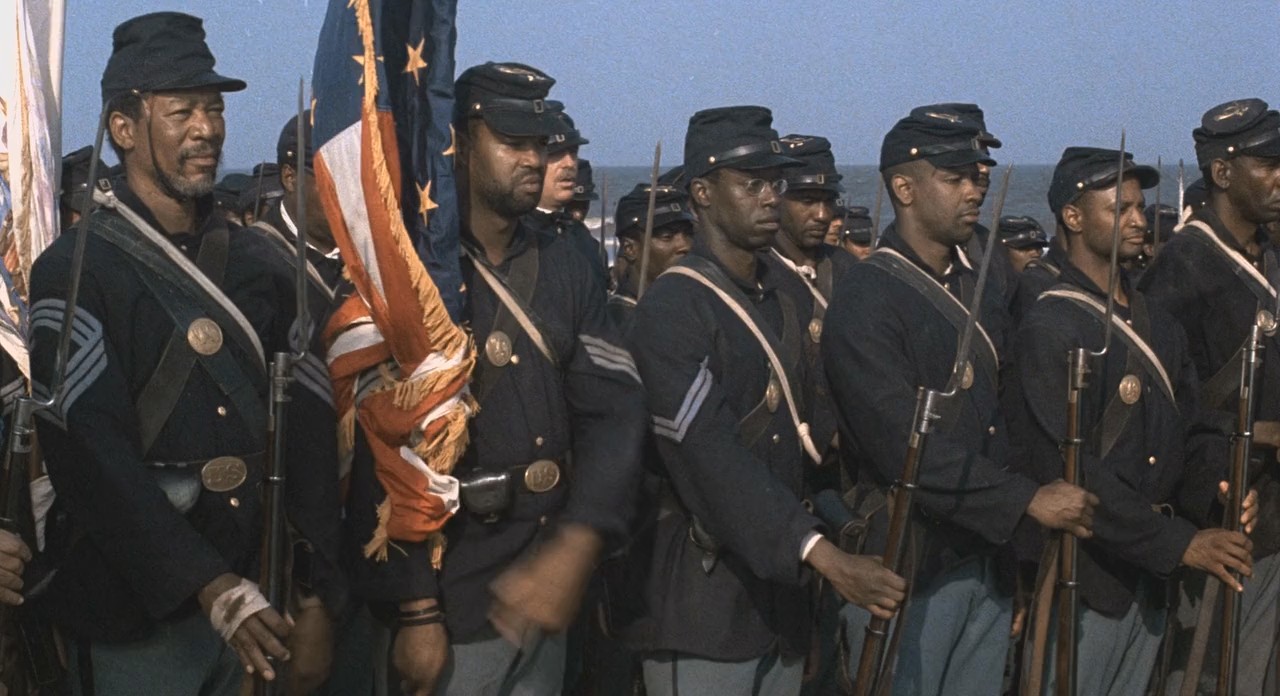
Glory (1989)

Morgan Freeman and Denzel Washington are among the first black American soldier in Glory

Director: Edward Zwick

Cast: Matthew Broderick (Colonel Robert Gould Shaw), Denzel Washington (Pvt Silas Trip), Cary Elwes (Major Cabot Forbes), Morgan Freeman (Sgt Major John Rawlins), Andre Braugher (Cpl Thomas Searles), Jihmi Kennedy (Pt Jupiter Sharts), Cliff De Young (Colonel James Montgomery), Alan North (Governor John Albion Andrew), John Finn (Sgt Mulcahy), Bob Gunton (General Charles Garrison Harker), Jay O Sanders (General George Crockett Strong)

The American Civil War started over slavery, but it took a long time for either side to admit it was a fight about slavery. Racism abounded on both sides, and it was a fight in which black Americans may have been the subject, but were rarely invited to join. Glory covers this point of history, and specifically the first all-black regiment and its struggle to be recognised as equal to the other regiments in the army. 

Wounded at the Battle of Antietam in September 1862, Robert Gould Shaw (Matthew Broderick) returns home to Massachusetts and accepts command of the first all-black regiment, which is currently being raised by abolitionists in the state. With his friend Cabot Forbes (Cary Elwes) as second-in-command (no one was progressive enough to actually allow black officers for the regiment), he recruits a wide range of black Americans, from free-man and bookish intellectual Thomas Searles (Andre Braugher) – an old friend of Robert and Cabot – to former slaves such as the wise John Rawlins (Morgan Freeman) and the resentful Silas Trip (Denzel Washington). Training is a struggle, with the army denying the regiment supplies and support, and it’s an equal struggle when they reach the front line to be recognised for duties other than looting and latrine digging. Will the Massachusetts 54th be given the chance to prove itself in the front line – and establish a black man can fight as hard and bravely as a white man can?

Edward Zwick’s beautifully filmed, carefully re-created historical epic set the tone for much of his future career. It’s an often overly-sentimental film straining for a very self-conscious sense of importance, weighed down by the pride at the “message” it is carrying. It often does hit the mark with presenting scenes that carry emotional force – but then seeing as it treats nearly every scene as being a “moment” that should move us (with James Horner’s choral manipulation working double time to get us experiencing feelings), it’s no wonder that it succeeds sometimes.

Which is not to say the message it presents isn’t an important one. Black Americans have often been pushed into the margins of American Civil War history. Or worst of all presented as the victims, reliant on the courage and bravery of the abolitionists of the North to save them from slavery in the South. Until Glory it was very rare for anything to push their stories front and centre – or to tell a story where former slaves were allowed to fight their own battles and choose their own destinies. 

It’s one of the strongest marks of the film: these are soldiers unlike any other, who enter battles with less concern about their own survival, and more about having the chance to live as freemen and to make a mark on the world. To show that they, and people like them, could do just as a white man could do. And if they had to die to do that, better to live a day on their feet as freemen then a lifetime on their knees. It’s the principle emotional message of the film, and something Zwick translates with some skill, even if he frequently overeggs the pudding while doing so.

However, with such a strong message, it’s a shame so much of the film is filtered through the experience of its white lead character. For many of the films of the 80s and 90s dealing with these issues – Cry Freedom, the Steve Biko biopic, with Biko as a supporting character to his white South African journalist friend, being perhaps the key example – it was essential to have a white man at the centre, as if worried that audiences couldn’t understand the story they were seeing unless they had it filtered through the perception of someone who looks a bit more like them.

Matthew Broderick takes on the lead role here of Shaw – with the film giving a significant slice of its running time to its coming-of-age theme of Shaw learning to become a leader of men – and while the character is meant to be callow and an unlikely Colonel, it doesn’t help that Broderick lacks the charisma for the part. Perhaps he is a little too lightweight an actor for such an enterprise, for a film that demands greater force of character (you can imagine Tom Cruise doing a much finer job in the role).  Similarly, the familiar beats of a young man learning how to lead feel trivial compared to the life-and-death issues facing his soldiers.

But too often Zwick’s film returns us to Shaw’s point-of-view, the narrative filtering so much of the action through his perceptions and decisions that the black soldiers become supporting actors in their own stories. Broderick is not helped by the soldiers being played by some of the finest American actors of the last 30 years. Braugher is fabulous in the thankless role of the bookish man who must grow a spine. Morgan Freeman established a persona – the wise and level headed older man, who will not let hate and fury define his life and his choices – that would last him for the rest of his career, and is superb (his Oscar nomination for Driving Miss Daisy is probably the only thing that led to him not getting a nod for this film).

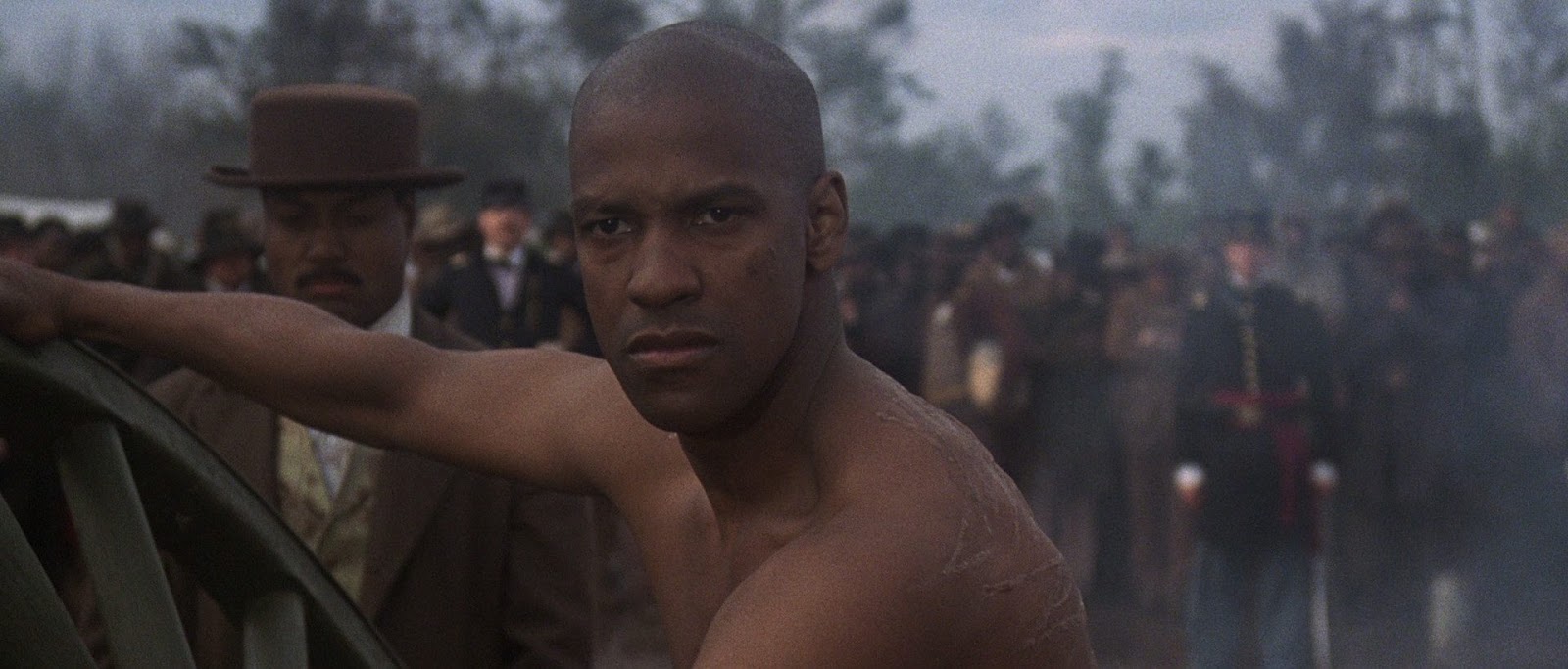
Denzel Washington took home an Oscar as the bitter, angry Trip – and it’s the sort of role an actor seizes with relish. Washington fills every frame with his rage at the system, his inarticulate, indiscriminate anger lashing out in every direction. It’s the fury of a man who has had all his choices taken from him in life, and would rather destroy things than run the risk of allowing himself to become committed to something, or form a bond. Washington probably won the Oscar alone for the astonishing scene where he silently, defiantly accepts a whipping (on a body covered with scars) for missing a curfew. He’s an elemental force of nature in the film.

There is plenty of strong stuff in Zwick’s work, but the film itself overplays its hand frequently. Moments of emotion are played so heavily to the hilt they sometimes fail to have an impact. It wants you to know at every turn that you are watching a film with an important social message – and the speechifying at points put into the mouths of the characters runs dry. While superbly made – veteran photographer Freddie Francis’ work is beautiful (and Oscar winning) – it’s a heavy-handed, overly pleased with itself film that knows all too well that it is about an important subject. While sometimes it lands – often in quieter moments, particularly those where Freeman and Washington are allowed to simply be human without overindulgent music cues hammering home the emotions – at others it comes across as too much.

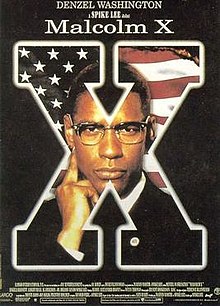
Malcolm X (1992)

Denzel Washington dominates in Spike Lee’s masterpiece Malcolm X

Director: Spike Lee

Cast: Denzel Washington (Malcolm X), Angela Bassett (Betty Shabazz), Albert Hall (Brother Baines), Al Freeman Jnr (Elijah Muhammad), Delroy Lindo (West Indian Archie), Spike Lee (Shorty), Roger Guenveur Smith (Rudy), Theresa Randal (Laura), Kate Vernon (Sophia), Lonette McKee (Louise Little), Tommy Hollis (Earl Little), James McDaniel (Brother Earl), Steve White (Brother Johnson), Ernest Lee Thomas (Sidney), Christopher Plummer (Prison Chaplin Gill), Peter Boyle (NYPD Captain Green)

In the early 1990s, Norman Jewison was attached to direct a biopic of Malcolm X, the powerful African-American activist, tragically assassinated in 1965. It was the project of Spike Lee’s dreams – and Jewison conceded he did not have the vision for the film that Lee clearly had. Lee stepped in – and thank goodness, as this is perhaps a film only he could have made. It splices together Lee’s customary political savvy and (accurate) sense of the injustice Black Americans have faced with a surprisingly adept use of the cinematic language of David Lean and other sweeping epics. In bringing these together, he created a superb biography, a great piece of epic cinema and a vital piece of American film-making.

The film covers the life of Malcolm X in three clear stages. Firstly his young days as a tearaway in Harlem, with drug addiction and crime, all with best friend Shorty (Spike Lee), a local gangster whom he admires (Delroy Lindo) and white girlfriend Sophia (Kate Vernon). The second act is his conversion to Islam under the guidance of (fictional) Brother Baines (Albert Hall) and his rise as an incendiary speaker with the Nation of Islam under the influence of its leader Elijah Muhammad (Al Freeman Jnr). The final act covers his disillusionment and departure from that organisation after a host of scandals and political disagreements, his pilgrimage to Mecca and his return looking to work with other civil rights movements before his assassination by former members of the Nation of Islam.

It’s hard to know whose film to call this, because Spike Lee and Denzel Washington both invest this film with so much passion, director and actor working in perfect synchronicity, that it’s impossible to imagine the film without one or other of them. Washington’s performance is quite simply extraordinary. He spent over a year of focused preparation on the film, and every pore of his body seems to have soaked in the mood, manners and attitudes of Malcolm X. It’s a transformative performance of purest emotional commitment: impassioned, empowering and enthralling, charismatic in the extreme. He never shies away from the anger and the faults of Malcolm X, but so engrossingly human is his work that he brings to life in a way few people had before Malcolm’s humanity, his generosity, his love, his decency. It’s a performance that seems to have transformed the actor into the man and the film works so well because Washington completely involves you in his story. 

Washington should have won the Oscar that year – it went instead to Al Pacino – and Malcolm X also should have been nominated for Best Picture and Best Director, far more so than Scent of a Woman nominated in both categories. It’s a film that builds its audience’s empathy so successfully with its lead character, and so clearly understands what Malcolm was trying to do, that you come away from it full of respect and admiration for the man. Even when the film was made, many people saw Malcolm X as a divisive, even dangerous figure – but watching the film you forget that and invest in him as a man.

It’s also inarguable – as n-words and racial bias from many whites in the film litter the screen – that it opened the eyes of many people as to exactly how harsh living in America was at the time if you were black. Put simply, it was a country labouring constantly under injustice, persecution and suffering where a black life was worth less than a white one. It’s a theme that Lee has returned to time and again in his work – and quite rightly – and it’s the sort of masterclass of simmering political anger that powers the best of his work. Would any other director under the sun have chosen to open this film with footage of the Rodney King beating? Would anyone else have thought of ending it with a coda in South Africa, as Nelson Mandela (yes the real Nelson Mandela) addresses a classroom full of children about the importance and power of Malcolm’s vision of black people taking pride in themselves and their heritage – a pride beaten out of them still today, as Lee’s Rodney King footage shows.

Lee’s direction is quite simply superb, a wonderful fusion of his own styles with a classical sweep of David Lean, spiced with the textual play of Oliver Stone. The photography from Ernest Dickerson is wonderful, the film is beautifully cut and assembled and the recreation of period detail from set to costume is remarkable. Lee’s style is sublime, from a riotously fun Harlem song and dance routine (really impressive) with Malcolm others dancing a superb Lindy Hop, to the harshness of prison, through to the intelligent and acute analysis of growing divisions in the Nation of Islam (Al Freeman Jnr is fabulous as Elijah Muhammed) and Malcolm’s developing political stance.

Lee’s film is even-handed on the whole – Malcolm’s real opponents are ideological disagreements, the film dramatizes a moment Malcolm considered a great regret where he rudely brushed aside a white college student keen to help his cause, and the film makes a lot of play over his controversial opinions on Kennedy’s assassination (essentially that he deserved it). But it also builds a superb sense of Malcolm’s personal life alongside, and the film is crammed with moments of quiet intimacy and a wonderfully developed performance of supportive love from Angela Bassett as Betty.

But the Lee touch is in that sense of anger. The politics and fury of Malcolm’s speeches and his message to black people today to save themselves and find pride in themselves carry through the whole film. Lee was sick and tired of the “white saviour” film and he triumphantly made here a film that was by black people, about black people but had something for all to hear. Malcolm X is a superb piece of biography cinema that leaves you with justifiable admiration for a man it’s easy to misjudge, engrosses you in a complex and disturbing era, angers you at racism and its impact, and also leaves you entertained. In many ways the most classical of Lee’s films – but a reminder that he is a unique and compelling voice. He thought he was the only one that could tell this story. He was right.