Tag: Denzel Washington

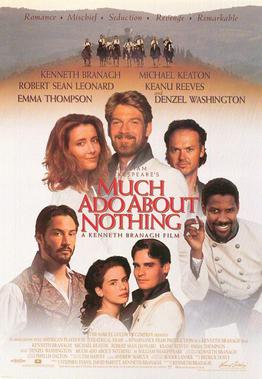
Much Ado About Nothing (1993)

Kenneth Branagh and Emma Thompson triumph in this brilliant adaptation of Much Ado About Nothing

Director: Kenneth Branagh

Cast: Kenneth Branagh (Benedick), Emma Thompson (Beatrice), Denzel Washington (Don Pedro), Michael Keaton (Dogberry), Keanu Reeves (Don John), Richard Briers (Leonato), Robert Sean Leonard (Claudio), Kate Beckinsale (Hero), Gerard Horan (Borachio), Imelda Staunton (Margaret), Brian Blessed (Antonio), Ben Elton (Verges), Jimmy Yuill (Friar Francis), Richard Clifford (Conrade), Phyllida Law (Ursula)
Branagh’s Much Ado About Nothing was his second Shakespearean directing gig, but his fourth film – and it’s clear from the first frame what a confident director he has become. Much Ado is one of the best Shakespeare films ever made, and certainly the greatest film version of a Shakespearean comedy, largely because it’s not only charming and hugely enjoyable but also actually funny – a pretty rare feat for any filmed version of a Shakespeare comedy.

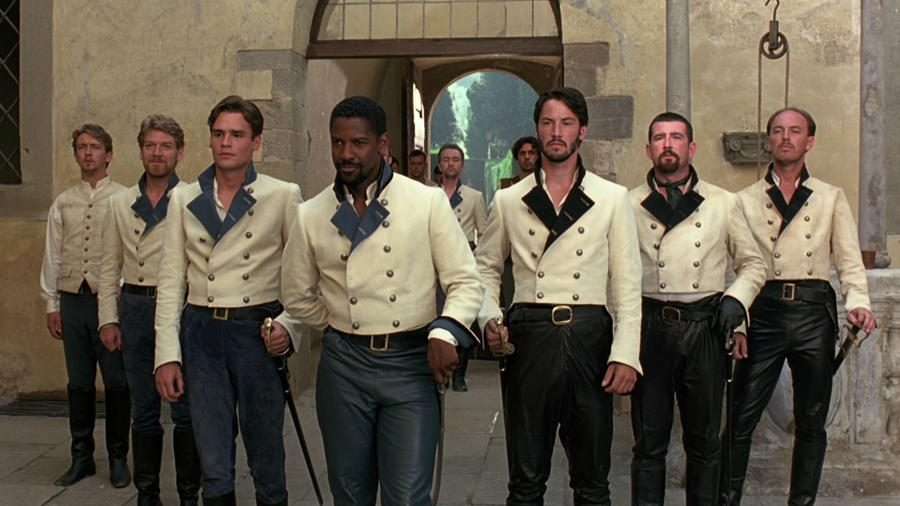
From the opening you pretty much know you are in safe hands. Branagh loves the vibrant excitement of cinema, and delights in bringing the meaning out of Shakespeare’s text. Both ideas are central to the opening of the film, with Emma Thompson’s luscious reading of “Sigh No More”, while the camera pans across a bucolically blissful Tuscan setting. This feeds straight into Beatrice’s playful banter with the messenger – and Richard Briers gives the first indication of the film’s attention to small character details with his “don’t go there” look when the messenger tries to correct Beatrice’s teasing defamation of Benedick. From there the film explodes into a triumphant Magnificent Seven style arrival of Pedro’s lords on athletic horseback (backed by Patrick Doyle’s inspiring overture), while Leonato’s household excitedly (in a typical Branagh tracking shot) prepare to greet them, before an overhead crane shot introduces the two groups meeting in a courtyard. Everything you need to know about the sort of film you are getting – and Branagh’s ability to marry the language of cinema with the language of Shakespeare – is right there.

Branagh’s setting of the play in a golden Tuscan villa is perfect for both its playful, relaxed, soldiers-back-from-the-war plot line and the heated romances and jealousies that fuel the plot. Is it any surprise feelings are running high in such a sultry and hot climate? The two worlds – the army men and the people of Leonato’s household – are immediately clear. And the setting communicates the film’s mood – fundamentally bright, sunny, cheerful. Kick back your heels, you are being taken on a high-spirited, exotic holiday.
In this playful setting, Branagh invariably gets the tone just right. Shakespearean comedy is so reliant on live audience reactions, on bouncing off the audience, that creating this on film without that live element is really difficult. Trust me, watch any number of BBC Shakespeare comedies (don’t worry I’ve done it for you) and you will see immediately how hard it is to get that bounce and comedic juice out of these shows. Branagh gets it spot on here – the characters are so likeable, the delivery of the actors so assured, the spirit of the film so light yet perfectly controlled, that the comedy lands nearly every time. Above all, the actors look like they had a whale of a time making the film – and that enjoyment completely communicates to the audience.

The gulling scenes of both Beatrice and Benedick are expertly played and hugely entertaining: Branagh skilfully cuts them to fast-paced essentials, and then gets the best possible comic mileage out of them – from skilled cut-away shots for reactions to wonderful ensemble playing (Briers in particular is superb as a Leonato slightly out of his depth in trickery). It’s easy for the Beatrice gulling scene to fall a little short after the Benedick one – but, largely thanks to Emma Thompson’s excellent performance, that certainly doesn’t happen here.

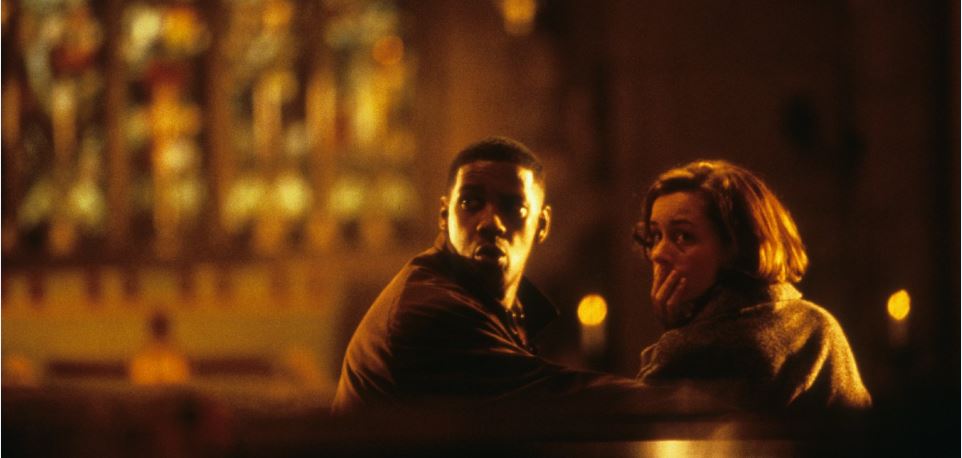
But Branagh understands Much Ado is not just a comedy: it comes perilously close to being a tragedy. For at least an act of the play, our heroes are at loggerheads, and murder and death are almost the end results. From Claudio’s explosively violent reaction to Hero’s perceived betrayal at the wedding to Leonato’s furious denunciation, horror and danger are ever-present. This then leads us into Beatrice and Benedick’s wonderful post-wedding. Branagh sets this in a small chapel – adding an echo of marriage vows to the understanding the pair reach – and Thompson’s passion, fury and pain are met (for the first time) with quiet, mature understanding from Branagh’s Benedick. Thompson’s order for Benedick to “kill Claudio” carries a fiery conviction that chills. It’s a brilliant scene.

A lot of this works so well because of the brilliance of the acting. Branagh is charming, very funny and mixes this with a growing emotional depth and maturity as Benedick. But the film belongs to Emma Thompson who is quite simply astounding as Beatrice – surely one of the greatest performances of the role you will catch. She is the soul of the movie, at turns playful, frustrated, joyous and consumed with grief and rage. She speaks the lines (needless to say) with absolute clarity and emotion, but even more than that her intelligence dominates the movie. You can’t take your eyes off her.

But this is a very strong cast of actors, the best mix Branagh got between Hollywood stars and his regular players. Denzel Washington is simply perfect as the noble but strangely distant Pedro (his moments of isolation at the close of the film are as touching as they are unsurprising). Richard Briers gives some of his best work in a Branagh film as a Leonato, moved to great emotion and feeling. Leonard and Beckinsale are perhaps not given huge amounts of interpretative depth, but are very lovable. Gerard Horan is very good as a swaggering Borachio.

It’s easy to knock Keanu Reeves but – aside from his untrained voice, which makes him sound duller and flatter than he actually is – his Don John is actually pretty good. As a physically very graceful actor he completely looks the part, and he glowers and fumes with all the intensity you could require – and after all, Shakespeare didn’t give Don John much more to do than that.

No the real problems with the production – and the parts that don’t work – are Dogberry and Verges. Now I can see what Branagh is trying to do here: the malapropisms of Dogberry’s dialogue are rarely, let’s be honest, that funny, and would work even less well on film. But the decision to make Dogberry and Verges a cross between Monty Python and the Three Stooges doesn’t really work. Michael Keaton is giving it his all here to try and get some humour out of this – but his straining for every laugh, combined with gurning over delivery, bizarre accent and physical over-complications, just deaden every single Dogberry scene. These scenes largely flop.

But it doesn’t matter when every other scene in the film works so damn well. And, however much you might drift away during the Dogberry moments, the rest of the film will capture your heart and mind every time. Filmed with a luscious richness and stylish confidence, this is a ravishing and flamboyant film that will never fail to entertain. By the time the final reconciliation has happened, and the house erupts into a joyous celebration party – filmed, with astonishing chutzpah, as a single take, staggering in its complexity, that covers close-up, tracking shot and huge crane shot – while Patrick Doyle’s score gives a swelling version of Sigh No More, you’ll be in love yourself. And if not – well look to yourself.
Fallen (1998)


Denzel Washington and Embeth Davidtz on the run from a nasty Demon in Fallen

Director: Gregory Hoblit

Cast: Denzel Washington (Detective John Hobbes), John Goodman (Detective Jonesy), Donald Sutherland (Lt. Stanton), Embeth Davidtz (Gretta Milano), James Gandolfini (Lou), Elias Koteas (Edgar Reese), Gabriel Casseus (Art Hobbes)

Every so often, a film comes round that you know, while you watch it, is a fairly average, unspectacular piece of film-making. But for some reason something about the film just clicks with you and you end up enjoying something basically nothing special. For me, Fallen is one of those films.

What’s particularly nice about having this film as a bit of a guilty pleasure is, I’m pretty sure, most people have never heard of it. Detective John Hobbes (Denzel Washington) has recently been present at the execution of a notorious serial killer. Moments before his death, the killer grabs his hand and mutters a message in a strange language. As a copycat killer continues the crimes – and begins to frame Hobbes – the detective slowly realises his nemesis is no man, but a demon, able to possess humans by touch. He failed to possess Hobbes – and now wants to destroy his life.

There is nothing really new here: Hobbes is straight out of film noir, while the plotline of his mentally handicapped brother raising a son is pure TV-movie of the week. The demon possession idea is not exactly new (although it’s snazzily shot) and the demon quickly heads the way of most creatures in these films: foul-mouthed and delighting in sex and violence. There is a secret underground movement of those aware of the demons on Earth (fortunately we only see one of them) combatting their evil. Nothing really new.

But Fallen makes these elements seem somewhat fresh. The idea of the demon moving from person-to-person via touch is very interestingly presented. At one point Hobbes has a conversation with the demon, as it switches from host to host. Later Gretta (Embeth Davidtz) is pursued down the street by the demon, moving swiftly from person to person in a chain of touching hands. The various actors do a good job of conveying a single consistent character for the demon (fortunately he favours possessing recognisable character actors from US TV drama). Hoblit’s direction has plenty of these interesting new ways of presenting things. He’s also able to keep a good air of menace throughout the film.

It’s not perfect of course. The investigation of the demon’s background hits all the familiar beats from Dante to the Bible. Hobbes must be the only person in the world who (having decoded a message) has to ask A NUN whether the word “Apocalypse” means anything to her. A detective who has never heard of the word apocalypse? Times have changed: it’s the sub-title to a bad X-Men film now. At least one character is so obviously set-up as a candidate for long-term possession, you immediately suspect he’s innocent.

But the film has a fine closing scene, and a decent twist which plays with your initial expectations. It also gives you plenty of clues throughout (from the first shot of the film) about how the action might play out, more than enough for you to work it out for yourself. The idea of the “final confrontation in the wilderness” is again a familiar one, but the supernatural element makes this feel different. It’s actually a twist I didn’t see coming first time around (I was young at the time, not sure if I would be caught again today) – but it’s well presented and doesn’t cheat the audience.

Probably the main reason the film works so well though is Denzel Washington. Here is an actor giving a performance probably beyond the material, encouraging others to lift their game. He perfectly captures both Hobbes’ dedication and his purity of soul, with plenty of little touches that never feel heavy handed. He makes the plotline with his brother hugely sweet. He gets the balance just right between scepticism and dawning horror. It’s a real professional performance that plays off his charisma very well – imagine how awful it would have been with Keanu Reeves in the lead.

But I love that twist ending, and I’m a sucker for these demonic possession films (like disaster films or period epics) so I’ve seen this 3-4 times and really enjoyed it each time. As well as Washington, John Goodman and Embeth Davidtz give very good performances, and there is always enough mystery that you never feel you are racing  far ahead of the film (of course we know from day one it’s about demonic possession, but the characters never feel dense catching up with us). Fallen is a high quality piece of B-movie thrills. If you haven’t heard of it, do check it out.

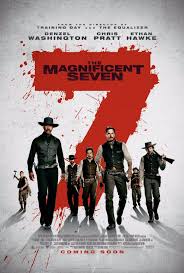
The Magnificent Seven (2016)


Denzel Washington leads his gang of seven wildly different souls to do battle for the little guy

Director: Antoine Fuqua

Cast: Denzel Washington (Sam Chisolm), Chris Pratt (Joshua Faraday), Ethan Hawke (Goodnight Robicheaux), Vincent D’Onofrio (Jack Horne), Byung-hun Lee (Billy Rocks), Manuel Garcia-Rulfo (Vasquez), Martin Sensmeier (Red Harvest), Haley Bennett (Emma Cullen), Peter Sarsgaard (Bartholomew Bogue), Luke Grimes (Teddy Q)

The Magnificent Seven is a much loved staple of BBC bank holiday weekend screenings. The original wasn’t a brilliant piece of film-making art, but it was a brilliant piece of film-making entertainment, and it had simple, wry, heartfelt (if sometimes on-the-nose) observations to make about the sacrifices the life of a gunslinger calls for. How does the remake measure up?

In 1879, the village of Rose Creek is besieged by would-be industrialist Bartholomew Brogue (Peter Sarsgaard), who orders the villagers to leave as he plans to expand the local mine. Newly widowed Emma Cullen (Haley Bennett) sets out to recruit gunslingers to help protect the town. Warrant Officer Sam Chisolm (Denzel Washington) is her first recruit, and he helps her to gather six others from drunken cardsharp Joshua Faraday (Chris Pratt) to legendary sharpshooter Goodnight Robicheaux (Ethan Hawke). But the battle to protect the village will lead to many good men six feet under before our heroes can have the chance to prevail…

One thing’s for sure. In 60 years’ time they won’t be playing this film every bank holiday weekend. That doesn’t mean this is a bad film, it’s just quite an average one. It’s decently done, has several good scenes and even one or two witty lines in among a fairly routine script, but there is very little imagination or inspiration behind this. It’s got a decent cast of actors, but you always feel they are lifting average material rather than working with the good stuff. While the original film combined a sense of boyhood heroics and some iconic performances with some exploration of the emptiness of the life of a gunslinger and the attraction of a normal life, this film manages to deliver much less on all these counts.

So first the good parts. Much of the gun-toting action is very well done. The first shootout as our heroes arrive in the town is terrific (see link below), full of thrilling beats and rewindable moments. To be honest, it’s the best moment of the film, and as close as it comes to capturing the excitement of old-school gunslinging action. The final battle scene is decent, but offers generally more of the same with additional (no spoilers to say) sacrifice. Even without the inspirations of the original film, many of the character beats will be familiar to the watching audience. I successfully predicted which of the cowboys would survive early in the film, and only one death is near to a surprise. It’s well done, but it’s not got the filmmaking expertise of Kevin Costner’s Open Range, with its final small-band-against-an-army structure, nor that film’s intelligent and low-key analysis of the cost of violence.

It’s that lack of human insight that I think is one of the film’s principal weaknesses. The original had more to say about the damage a life of violence can inflict on people, and the longing even the most hardened man of the world can find for  the simple life – as well as the lengths they will go to in order to protect it. This film offers none of that. The motivations for the seven in joining are incredibly thin, almost after-thoughts. At least two members of the team simply turn-up, as if dropped from the sky. Team leader Chris has a “very personal” motivation, signposted from the very start, that serves to undermine much of the depths we seem to learn about his character during the film – as well as making him just another “man looking for revenge” architype.

On top of that, a serious trick is missed when setting this film near the end of the Western era. Already the time of these lawless gunslingers is coming to an end, and they have no place in the modern world. The villain is a sort of corporate bully, launching a hostile take-over of the village for his mining company. There is plenty of thematic material to mine here of these men taking a stand not only against the strong persecuting the weak, but also against the onrush of time that is leaving them behind. Now I’m not expecting the film to be a serious socio-economic discussion, but I’d like to watch a film that at least tips the hat to ideas like this (or any ideas at all) rather than just push through a well-filmed but-by-the-numbers remake.

Saying all this, it is pretty entertaining in an unchallenging way. It does make you want to go back and re-watch the original version (which was itself, to be fair, little more than a crowd pleaser). But that’s kind of all it is – and it doesn’t have any ambition to be more. But it’s a good watch and some of the updating ideas work very well. The multiracial composition of the seven works very well, and Haley Bennett as the “Eighth” member of the team, is a strongly written role that feels like a character rather than an accessory. Washington can do this role standing on his head, but brings his customary authority. Chris Pratt is at his Harrison Fordish charming best, particularly on the edge of bursting out into a childish grin, in gleeful excitement at being paid to play cowboys. Hawke is saddled with the thematic content as a gunslinger with PTSD, but makes a good fist of it. Much of the rest of the gang are a collection of moments rather than characters, but do their jobs well.

The Magnificent Seven, it seems too easy to say, isn’t magnificent. It’s an unambitious film without any real thinking or imagination in its conception. It seems scared of introducing anything too conceptual or thought-provoking in its setting or plot. It’s just about entertaining enough to survive while you are watching it, but its life is going to be little longer than the two hours you watch it, not the 60 years of its predecessor.

The Equalizer (2014)

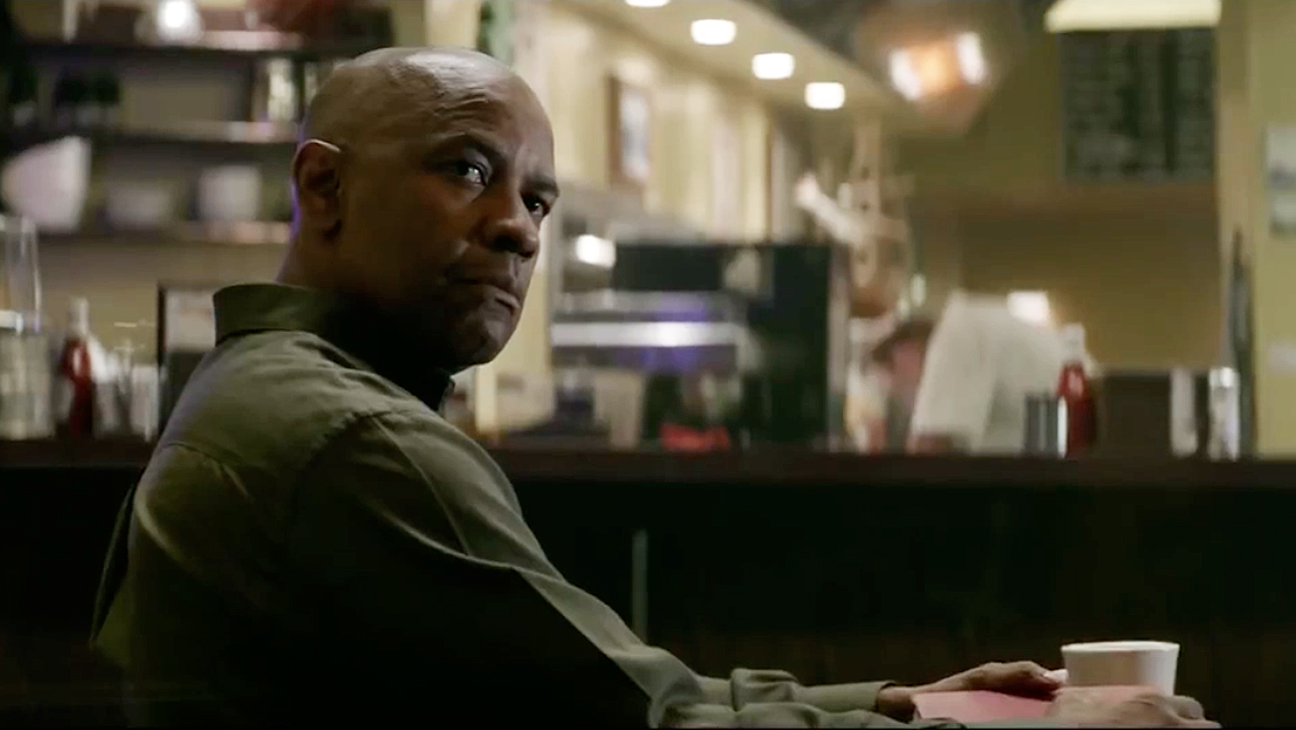
Denzel rests up. In about five seconds of screen time that scolding hot coffee will probably be in someone’s face.

Director: Antoine Fuqua
Cast: Denzel Washington (Robert McCall), Marton Csokas (Nicolai Itchenko) , Chloe Grace Moretz (Alina/Teri), Melissa Leo (Susan Plummer), Bill Pullman (Brian Plummer), David Harbour (Frank Masters), Johnny Skourtis (Ralph)

In the 1980s Edward Woodward had a sudden massive success in the States starring as Robert McCall, akaThe Equalizer, a former agent of a Government Agency, making atonement for past misdeeds by offering his skills free-of-charge to help the innocent and falsely accused. It ran for four seasons and then largely faded from memory. As such, it seems a strange choice for Denzel Washington to bring back to life – until you remember that Washington has a fondness for appearing in trashy action films. Kinda like I have a fondness for watching them.

Because I’ll be honest, this film is more or less exactly what you would expect from a film whose poster is the star male actor holding a gun (and, after watching this on Netflix and seeing my recommendations I am now aware how many films out there have posters of late middle age actors holding guns. Liam Neeson has a lot to answer for. Half of Hollywood’s middle aged men should be paying him some sort of commission.)

Here McCall is reimagined as a quietly retired man, works at a hardware store, is beloved by his colleagues and in mourning for his wife, who of course he promised he would leave his old life behind. There are hints that he has a certain level of OCD, and meticulously times every action he carries out. Concerned at the poor treatment handed out to a teenage prostitute by her Russian Mafia pimp, he attempts to intervene politely but firmly – but of course a blood bath of slaughtered goons ensues, and before we know it the whole Russian mafia is trying to work out who our hero is and what he wants.

It’s a pretty familiar set-up and the film wastes no time in letting us understand it before hurling us into events that will shatter any peace its lead character has. After all we all know that this zen peace isn’t going to last and that Washington will soon be dishing out pain and taking names like nobody’s business. What the film does do quite well though is sketch out the everyday folk in the film so well (with only brief moments on screen of things like baseball games) that you actually do care for them, and you actually do understand why McCall finds this life so enjoyably unstressful.

The violence when it comes is very effectively filmed. It has a great “Bourne-ish” quality to it, as McCall uses a series of everyday items with lethal effect. The final sequence takes place in the very hardware store McCall works at, and there is some imaginative use of the various products contained therein. Similarly, throughout the film McCall uses various hardware items for purposes other than those intended by the manufacturer, and niftily cleans the items to return them for sale (a great way of junking the evidence).

My one issue with the violence in this film is that I felt, at times, it was a little too graphic, a little too delighting in its mayhem. It largely gets away with this as it establishes that the victims of the violence throughout the film are mobsters and killers. The film is also slightly too long – the momentum dries up in places – and the script or direction fails to deliver a single key ‘moment’ to make this stand out from the crowd of films in this genre. It’s entertaining and good fun for fans of the genre, but it never really seems completely original, instead an effective remix of things from other movies.

Denzel Washington is of course the film’s MVP, and he tackles the part extremely well, adding a great deal of depth to McCall’s shame at his past, his discomfort with violence and his need to carefully organise his life into time managed compartments. He has the quiet, cool confidence that the part needs and suitably manages to look normal enough that you can believe he would fade into the background. Of course he could do the part standing on his head, but he still gives it a lot of interest. Marton Csorkas also does a good job as his nemesis, though the part is paper thin.

The ending feels rather tacked on and designed as sequel bait – but there are far worse films out there that will get sequels. Decent fun, nothing special, an effective remix of other films.