Tag: Diego Luna

Milk (2008)

Milk (2008)

A political pioneer is lovingly paid tribute to in van Sant’s heartfelt biopic

Director: Gus van Sant

Cast: Sean Penn (Harvey Milk), Emile Hirsch (Cleve Jones), Josh Brolin (Dan White), Diego Luna (Jack Lira), James Franco (Scott Smith), Alison Pill (Anne Kronenberg), Victor Garber (Major George Mascone), Denis O’Hare (State Senator John Briggs), Joseph Cross (Dick Pabich), Stephen Spinella (Rick Stokes), Lucas Grabeel (Danny Nicoletta)
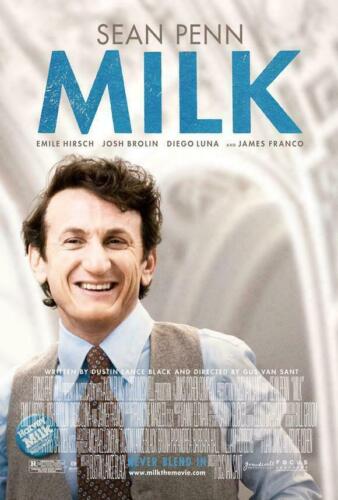
Harvey Milk was the first openly gay man elected to public office in the United States. Milk is a passionate, accessible and lovingly crafted biopic from Gus van Sant, which aims to restore this crucial figure back to the heart of public consciousness. van Sant covers a lot, but he crafts a film that hums with respect and a great deal of life. It also gains a huge amount from Sean Penn’s extraordinary and compassionate Oscar-winning performance, which embodies the spirit of this political pioneer.

Milk, in many ways, takes a traditional biopic approach, attempting to capture all the major events of Milk’s life in just over two hours. We follow Milk (Sean Penn) from closeted office worker, starting a relationship with Scott Smith (James Franco) to San Francisco and becoming part of a vibrant gay community – although one still facing an onslaught of discrimination and persecution from the authorities. Milk determines to change things, eventually elected as City Supervisor in 1977. From there he fights against the anti-gay Proposition 6 and pushes for change, until his murder by fellow City Supervisor Dan White (Josh Brolin) in November 1978.

Milk makes a strong statement about the dangers faced by the gay community in this period of American history. It opens with a montage of newsreel footage showing the impact of raids and the reaction to Milk’s murder. It explores in detail the vicious backlash against gay rights across America, with Florida among several states passing legislation to repeal rights. There is a creeping sense of danger throughout, from Milk walking down a dark street looking over his shoulder, to the everyday prejudice characters encounter on the streets. Above all perhaps, it strongly demonstrates the powerful sense of shame people were driven into about their sexuality, most powerfully in a young man who cold-calls Milk begging for help. Milk fascinatingly explores the tensions within the gay community and its representatives – split between radicals, like Milk and his friends, and the more traditional elite worried someone “too gay” will alienate people.

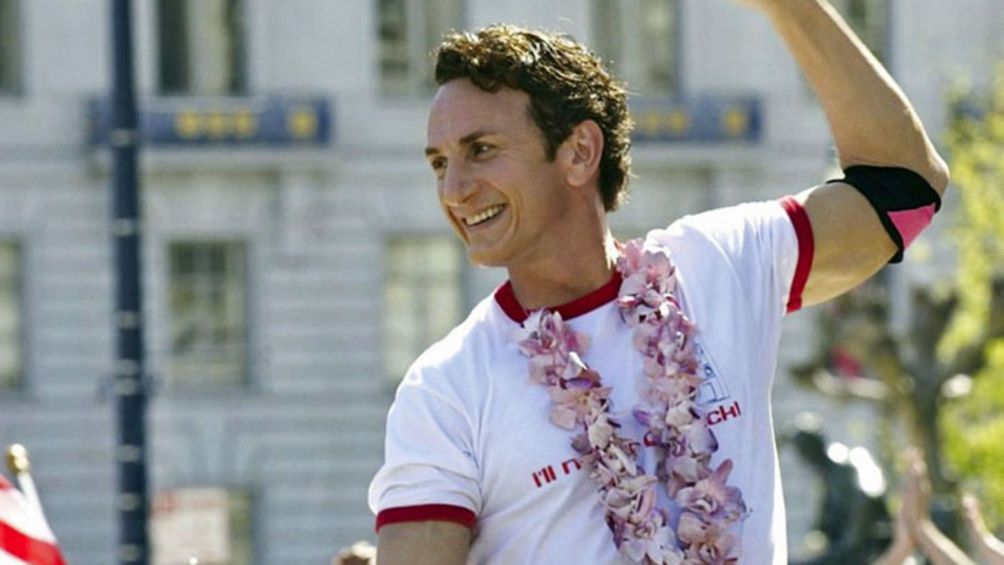
It’s a beautifully shot, loving recreation of 1970s San Francisco, fast-paced, insightful and informative. As Harvey Milk, Sean Penn gives an extraordinary, transformative performance. Penn’s careful study has beautifully reproduced Milk’s mannerisms and vocal tics, but above all he has captured a sense of the man’s soul. Penn presents Milk as fiery but caring, loving but sometimes selfish, passionate but reasoned, both an activist and a politician. He’s a man determined to make life better, so young men don’t feel the shame he felt growing up – not a hero or a superman, just someone who feels he can (and should) make a difference. Penn’s energetic performance mixes gentleness with a justified vein of anger at injustice.

And he has a lot to be angry about. The film’s finest sequence is Milk’s duel with Senator John Briggs (waspishly played by Denis O’Hare) over Proposition 6. van Sant skilfully re-constructs the debate, but also carefully elucidates the high stakes and the impact its passing would have had. van Sant’s film is frequently strong not only at reconstruction but also in using drama to inform and, above all, to bring to life the sense of hope people had that the struggle could lead to change.

The film grounds Milk firmly within his relationships and friendships, while exploring clearly the issues that motivated him so strongly. To do this, the film shies away from Milk’s polyamorous relationships, grounding him in a series of long-term relationships, some functional and some not. It presents Scott Smith (sensitively played by James Franco) as Milk’s lost “soul-mate” (the couple split over Milk’s all-consuming focus on campaigning) – perhaps van Sant’s attempt to keep the film as accessible as possible by introducing a more traditional element. Smith is contrasted with Jack Lira (Diego Luna), a sulky and immature man equally alienated by Milk’s focus.

Those personal relationships are extended to explore the tensions and fractured friendship between Milk and his eventual murderer Dan White. You’d expect the film to recraft White as a homophobic killer. Instead, it acknowledges White’s crime was largely motivated by factors other than gay rights, primarily his mental collapse and his sense of aggrievement over a workplace dispute. Sensitively played by Josh Brolin, White is presented as a man’s man suffering from a deep sense of inadequacy and insecurity (the film openly suggests he may have been closeted himself). Milk’s mistake is misunderstanding the depths of this man’s insecurities and never imagining the lengths they might drive him to. Brolin is very good as this troubled, if finally unsympathetic, man.

Milk of course fully anticipated being murdered – it was just he expected a homophobic slaying at a rally, rather than an office shooting by an aggrieved co-worker. One of the clumsier devices used in the film is its framing device of Milk recording his will a few days before his unexpected murder, a device that seems to exist solely to allow Penn to pop up and explain things more fully at points the film can’t find another way to expand. But again, it might be another deliberate attempt by van Sant and writer Dustin Lance Black to make a film as accessible as possible, by falling back on traditional biopic devices (including its semi-cradle-to-grave structure), just as he aims to shoot the film in a vibrant but linear and visually clear style, avoiding overt flash and snappy camera and editing tricks.

Perhaps that’s because the film generally knows it doesn’t need to overplay its hand to capture emotion (when it does, it’s less effective: you could argue its slow-mo murder of Milk to the sound of Tosca is far less affecting than the look of shock and horror that crosses Penn’s face a moment earlier when he realises what is about to happen – a cut to black might have worked more effectively here). Actual footage of the candlelit vigil after his murder, mixed with reconstruction, is simple but carries real impact. Throughout the film, real-life stories pop-up time and again of prejudice and pain, which move with their honesty. Above all, it becomes a beautiful tribute to a passionate, brave and extraordinary man who left the world a better place than he found it.

Rogue One: A Star Wars Story (2016)


The characters of Rogue One. I struggle to remember their Dingly-Dang sci-fi names.

Director: Gareth Edwards (Tony Gilroy)

Cast: Felicity Jones (Jyn Erso), Diego Luna (Cassian Andor), Ben Mendelsohn (Director Krennic), Donnie Yen (Chirrut Imwe), Mads Mikkelsen (Galen Erso), Alan Tudyk (K-2SO), Riz Ahmed (Bohdi Rook), Jiang Wen (Baze Malbus), Forest Whitaker (Saw Gerrera), Genevieve O’Reilly (Mon Mothma), Jimmy Smits (Bail Organa), Guy Henry (Grand Moff Tarkin), Alistair Petrie (General Draven)

When Disney got hold of the complete rights for Star Wars, they were motivated by one thing above all: making a shitload of cash. In that goal, they’ve been very, very successful. Rogue One fills out (pads out) the story of how the Rebels got hold of the Death Star plans, something the original film (correctly?) reckoned could be covered in a few lines of dialogue. Anyway, for complex, muddily explained reasons, the rebels needs Jyn Erso (Felicity Jones), daughter of chief designer on the Death Star Galen (Mads Mikkelsen), to rescue a pilot from a rogue general to get a message from her father. Or something. Anyway, things eventually lead to a major space battle as our heroes try to steal the plans from a giant computer database.

Rogue One is hugely popular. You’ll go a long way before you meet someone willing to say a bad word about it. It’s been hailed as a far superior dip into the franchise ocean than JJ Abrams’ The Force Awakens. This is inexplicable to me. I genuinely can’t understand it. As far as I can tell, Rogue One is little more than a fair to middling action film, hugely reliant on ramming in as many references and easter eggs from previous films as it can, rather than actually doing anything new or unique with the franchise. 

For me it’s a sprawling, rather dull film with no depth or patience. The first hour is genuinely quite boring, with each over-designed location blending into the next. The whole film seems designed to require as little attention as possible: short scenes, planet to planet, each having little real impact on the next emotionally. The battles are designed and shot like things intended to be cut up into YouTube clips. No-one talks during the fights, we rarely learn anything about characters during the prolonged action – instead it’s a series of moments, straining at the leash to be cool, with personal sacrifices determined by plot requirements rather than by natural character growth. 

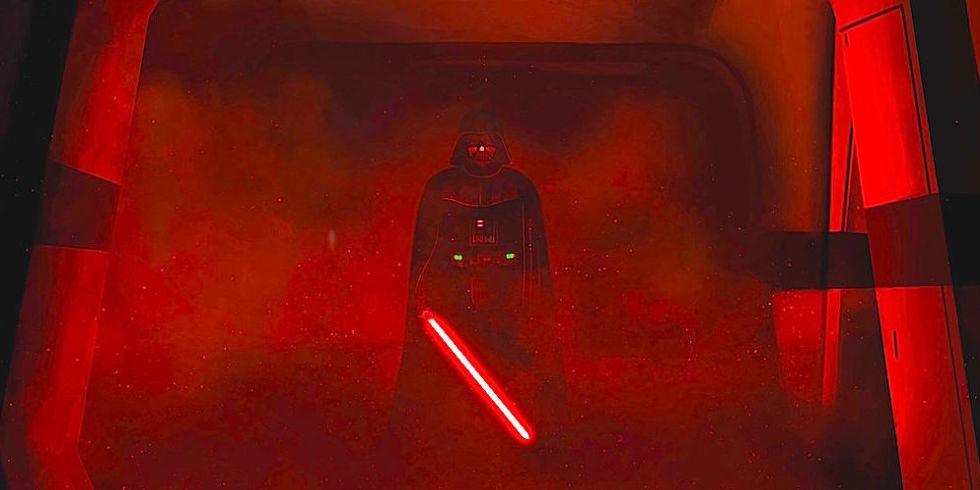
Watching parts of it you can enjoy the moments: a blind man taking out Stormtroopers, or Darth Vader cutting down rebels. But there is little to tie these moments together. Plot and characterisation are treated in the same chunked way – events grind to a halt so Mads Mikkelson can tell us what happens next, or Cassian can bluntly talk about how being a rebel is tough on the nerves. In the original Star Wars, plot, character and action were woven together so we learned about all three together. Here they are silos, with action the focus. It feels like a film made for YouTube, more interested in pop culture references with only the flimsiest story propping it up, designed to be spliced up online.

Darth Vader lets rip in a section that seems designed as a YouTube moment of the future

Now the lead character, Jyn Erso. I don’t understand this character. Who is she? What is it she actually wants? For the first hour or so of the film she makes no decisions at all, but does what a series of older male characters tell her to do. There is nothing in the film that allows us to get to know her. Her actions aren’t dictated by character, or even logic, she simply shuttles around the carousel of ever-changing planets whenever the plot needs her to, mouthing whatever sentiments the film needs in order to move on. The film needs her to be a disaffected criminal? She is. The film needs her to be a distraught daddy’s girl? There we go. The film needs her conversion into a rebel freedom fighter? Boom. What does she feel about this? What awakes her idealism, and converts her from criminal to self-sacrificing hero? Nobody knows, the film doesn’t care. It doesn’t help that Felicity Jones’ headgirlish primness is a total mismatch for a gritty, tough-as-nails fighter from the wrong-end-of-the-tracks.

There are many people in this film, but precious few characters. It’s quite damning that the person who makes the biggest impact isn’t a person at all but a robot – and K-2SO is basically a walking cynical punchline, a battle-ready C3PO. Diego Luna’s Cassian is so thinly sketched it’s hard to invest in him at all: the film has no interest in character development so we are bluntly told his characteristics in ham-fisted dialogue. He has a vague speech about how he’s Seen Bad Things, and that’s deemed sufficient to explain all his actions. The worst is Riz Ahmed’s pilot, whose motivations are so unaddressed he spits out some final words to supply his motivation just as he snuffs it. Donnie Yen and Jiang Wen are little more than a collection of cool sounding quirks – Blind One, and Blind One’s Friend. Can you even remember their names? 

On the plus side, Ben Mendelsohn is pretty good as an ambitious Imperial officer edging his way up the greasy pole – most of the more interesting dialogue scenes feature Death Star office politics. Mads Mikkelson mines every inch of humanity and compassion from his role. At the other end of the spectrum, an unrestrained Forest Whitaker lets rip as a plot mouthpiece, delivered in his most overripe manner. (There’s some kind of backstory to his relationship with Jyn, but the film never bothers to go into this, because that time is better spent with Whitaker spouting bland, faux-epic, lines like “Save the rebellion. Save the dream”, round mouthfuls of scenery.)

There has been a lot of discussion of the digital recreation of Peter Cushing as Grand Moff Tarkin – I’ve no real moral problem with it (lord knows, a glance at his CV tells you Cushing would probably have loved to have been in this film), and Guy Henry does a pretty good vocal recreation of Cushing. It looks a little odd the more you watch it – it’s probably going to date the film quite badly in ten years time – with more than a hint of the “uncanny valley” in Tarkin’s face. It makes sense, though, including the character in the film – and at least we get some characterisation and motivation.

Edward’s visual ability allows him to film his toy collection in a way that at least feels a bit fresh, but it’s a film made by a fanboy, more interested in getting as many references from the past in than creating something new. Edwards rams in everything from Blue Milk to AT-ATs. Now there is a certain pleasure in spotting this stuff, don’t get me wrong. But will it reward future viewing? The final space battle sequence might as well be a child filming smashing his toys together.

My point is, remove all the vast amount of Star Wars ephemera from this, and what do you have left? Once you’ve exhausted the pleasure of seeing that bloke Obi-Wan cuts the arm off in the bar in the first film, or you’re no longer excited by admiring the recreation of the Rebels’ base, what is there left in the film for you to enjoy? Imagine this was a stand-alone story – what would really make you come back? It’s so shrunken and dependent on Star Wars that it stops almost exactly 5 minutes before Star Wars starts – and, I would argue, means the start of that film makes much less sense.

That’s the final problem – for all the talk of Star Wars being a huge universe, this film only stresses how small it is, how reliant it is on events that have already happened or spinning its plotlines off from references in other films. No matter where we go, the same people keep popping up, the same beats keep getting hit. The film is daring, I suppose, in killing off nearly the entire cast over the course of the film – but these characters have been so poorly developed that their deaths lack any impact. It’s a film overwhelmingly fascinated by surface and fan-wanking over the old films, than showing anything new. 

Now I know you could level some of these charges against The Force Awakens – but that was a film with engaging characters and fresh, enjoyable dialogue that introduced a few new concepts for the films to go forward with. Within moments of their first appearances, you knew what kind of person Rey was (bold, determined, wistful, searching) or Finn (conscience-stricken, inventive, desperate) – hell the dinky robot had more character than the cardboard cutouts here. The internet obsession with shipping Finn & Po shows how much these characters came alive. Can you imagine anyone spinning out theories of backstory or subtext about any of the people here? No, because they’re not people, they’re plot devices. 

If a truly inventive director had got hold of this material, we could have ended up with something that felt really fresh. Instead we have something that is basically juvenile and dim: front row seats at a child’s game that jumps from set-piece to set-piece with no interest in weaving them together. Possibly only the 6th best Star Wars film.

Elysium (2013)


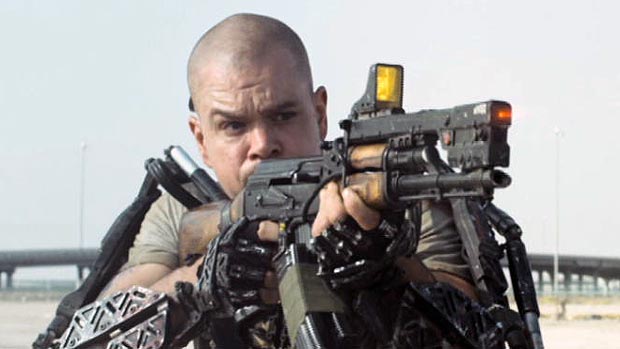
Matt Damon takes aim. He’s wearing as well a mechanical suit that makes him look like a building under construction.

Director: Neill Blomkamp

Cast: Matt Damon (Max Da Costa), Jodie Foster (Defence Secretary Delacourt), Alice Braga (Frey Santiago), Sharlto Copley (Agent Kruger), Diego Luna (Julio), Wagner Moura (Spider), William Fichtner (John Carlyle)

In a dystopian future, the world has become polluted and overpopulated. The rich and privileged live on Elysium, a massive orbital space station with an Earth-like atmosphere where medical equipment can cure anything. The masses on Earth yearn to join Elysium, many resorting to black market routes. Max da Costa (Matt Damon) is an ex-thief who contracts a lethal radiation infection at work. With little choice, he agrees to take part in a dangerous data heist (wearing a suit that enhances his physical abilities) in return for a black market trip to Elysium. But his heist crosses the plans of Elysium’s ambitious Defence Secretary (Jodie Foster) and her ruthless black ops operative Kruger (Sharlto Copley).

The design of this world, as per District 9 (to which this feels almost like a spiritual sequel), is impressive and really captures the visual clash between third world poverty on Earth and the paradise in the sky of Elysium. The sense of a society firmly divided into the haves and have nots is (at first) very well sketched out. There is the potential for a compelling us-against-them narrative ready to burst out, and Damon’s character seems positioned as “our champion” to bring down the system. 

This is actually a really neat concept for a movie. What it’s crying out for, though, is more than the by-the-numbers execution it gets here. I suspect there were struggles between Blomkamp’s interest in putting social issues side-by-side with sci-fi action, and the demands of “the money” to get more Damon Bourne-inspired chaos on the screen. Either way, after the initial set-up the movie goes nowhere in particular. A lot of world establishment is needed here (I’ve just struggled to explain it in one paragraph) and the film doesn’t get the balance right between setting this up and then getting into the story – it’s a good 45 minutes before the story starts and 40 minutes later the film is more or less over. I’ll give it credit that the short runtime does mean it goes nowhere fast, but it’s still a pointless destination.

Anyway, the problem that cuts to the core is you don’t really care about anything. Copley brings charisma to his heavy role, but the character is a formless one who engages in any act of villainy the film needs him to do. Foster’s cold (English accented?) bureaucrat similarly never fully comes to life, despite her best efforts. Braga is a thinly sketched bit of human interest. The film is crammed with decent actors who were obviously attracted to some sort of idea behind the script – it’s just a shame that whatever got them worked up about the material never made it to the screen.

Damon’s character is key to this: he should be someone who finds his feet as the champion of the oppressed, who makes decisions and sacrifices that initially at first seem to be out the scope of his understanding of the world. The script pushes him towards this but it never feels real – we never get to know him (either before or after the event that changes his life) and we never get a sense of him being driven by anything beyond his original narrow aims until the film suddenly calls on him to make a series of huge sacrifices. It just doesn’t feel true: the film doesn’t take us on a journey with him, meaning the end lacks satisfaction. I’ll also mention in passing that, among the poor, downtrodden, entirely-Latino urban classes, the lead is the only white character – and yet he too has a Latino name, which to me suggests a certain level of white-washing for box office.

Instead this is a poorly sketched out bit of faux-thinking sci-fi, that sketches out a dystopia that never really makes any sense (it seems easy to cure the population of the world, but the inhabitants of Elysium never do – surely some sort of reason other than apathy might have added a bit more believability to this? Perhaps if more had been made of the need to depopulate the Earth?). Instead it’s a crapsack world for the sake of it, and the characters move through a series of events that happen but never engage us. 

It’s sad, as this could have been quite a little B-movie classic. Perhaps the best review of the film comes from Blomkamp himself: “I feel like I fucked it up, I feel like ultimately the story is not the right story. I still think the satirical idea of a ring, filled with rich people, hovering above the impoverished Earth, is an awesome idea. I love it so much, I almost want to go back and do it correctly. But I just think the script wasn’t… I just didn’t make a good enough film is ultimately what it is. I feel like I executed all of the stuff that could be executed, like costume and set design and special effects very well. But, ultimately, it was all resting on a somewhat not totally formed skeletal system, so the script just wasn’t there; the story wasn’t fully there.”

Couldn’t put it better myself.