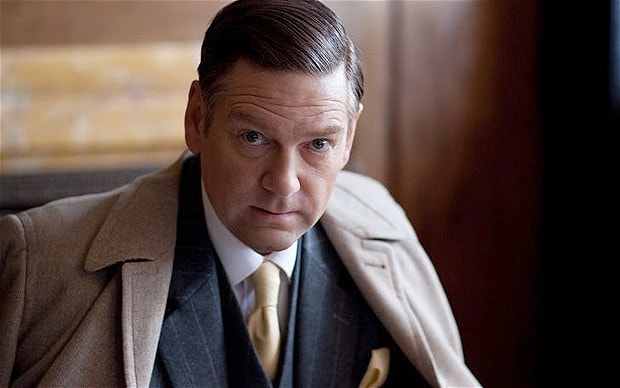
Tag: Dominic Cooper

Dracula Untold (2014)


Luke Evans rises above another terrible film in this first terrible attempt to launch a “Dark Universe”

Director: Gary Shore

Cast: Luke Evans (Vlad the Impaler/Dracula), Dominic Cooper (Sultan Mehmet III), Sarah Gadon (Mirena), Art Parkinson (Ingeras), Charles Dance (Master Vampire), William Houston (Cazan), Diarmaid Murtagh (Dumitru), Noah Huntley (Captain Petru), Paul Kaye (Brother Lucian)
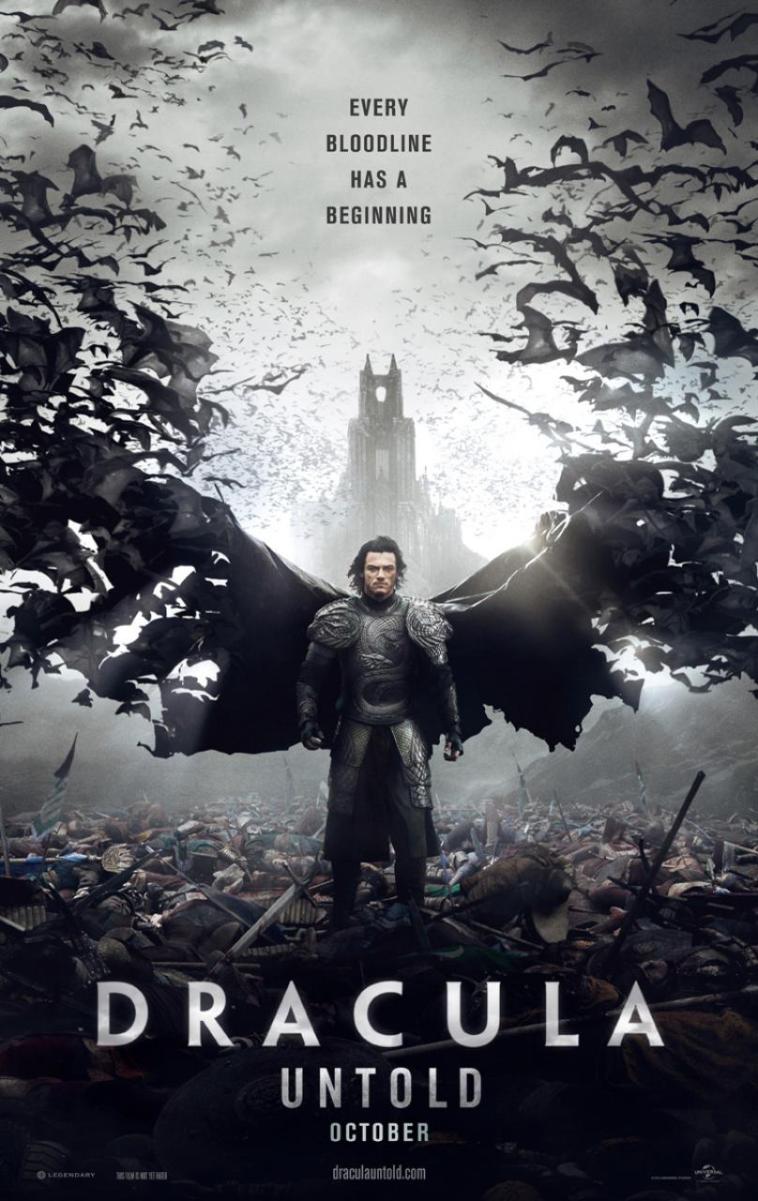
Every studio wants its own Cinematic Universe. Because the lesson from Marvel’s patient and excellent build of an entire world is that people will come and see every single film you make in a series. Right? Perhaps that explains the painful attempts of Universal to turn one of their few recognisable assets – monster movies – into some sort of bizarre linked universe. The project is currently in terminal decline after the flop of Tom Cruise’s The Mummy. But before that, a reboot had already been attempted with this bizarre retelling of the Dracula origins story.

Vlad the Impaler (Luke Evans) is a guy who wants to put his life of impaling behind him. All he wants is to lead his people peacefully in Transylvania. So imagine his disappointment when his boyhood rival Sultan Mehmet III (Dominic Cooper) arrives and demands the tribute of the first born sons of Transylvania – including Vlad’s son Ingeras (Art Parkinson). Vlad umms and ahs and then he decides – y’know what – not on his watch. But how can he keep his people, his son and wife (Sarah Gadon) safe? Well the only solution is to take on the mighty Power of the Vampire from a mysterious cave-dwelling creature (Charles Dance). Vlad now has unlimited strength for three days – but can he resist the craving for human blood that will make the transformation permanent? And will the powers last long enough to repel the Turks?

Okay. So obviously this film is complete rubbish. I mean it really is. It’s hilariously overshot – the action sequences are frequently hard to follow, so swiftly does the camera swoop and swirl like the bats Vlad can transform into. Shore is in love with showy shots – one battle is seen through the reflection on a CGI sword that is thrown in the air and twirls in an arc downwards (yes it is as complex and unengaging as I made it sound).

The plot is complete bobbins. It’s all “Forsooth my lord” and “We make for the monastery!” (a building, by the way, of unlimited size that seems genuinely able to accommodate most of the population of Transylvania). The film wants us to remember that Vlad is a cool bad-ass but also that he is ashamed of his life of sticking people on poles (needless to say, his signature move breaks out eventually). Vlad is a vampire and a monster – but he is also someone we need to root for, so he is portrayed as a lovable family man who never really seems that tormented by urgings for blood.

Luke Evans. One day he will be a star. If you could find a good performance in a terrible, stupid film it would be his. He is fully committed and he gives the part so much emotional depth – way more than is in the script. He really, really sells Vlad’s humanity and makes his character feel like a warm, lovable guy – but he mixes it with an edge behind the noble call of duty. Evans is genuinely rather good in this. The guy deserves so much better.

I’ll give a pass as well to Sarah Gadon and Art Parkinson, who at least treat the parts with a certain respect. Charles Dance has fun under bizarre make-up as a wizened monster. Everyone else is here to be as over-the-top and stupid as possible – not least Dominic Cooper, whose ludicrous accent, utterly unimposing frame and inexplicable sudden detailed knowledge of vampires makes for a deeply stupid, bad performance. But then everyone is going for it – Paul Kaye leaves no piece of scenery unchewed in his brief performances – and going for it badly. Everyone comes out of it badly.

The plot makes no sense: a strange gypsy emerges from nowhere to try and serve Vlad (why?) and then only returns at the end to help set up a sequel-that-never-came. Every decision Vlad makes is terrible. The villagers oscillate wildly from pathetically grateful yokels to “burn him!” lunatics to – well it would be spoilers, but let’s just say there is quite the body count. In fact, the only thing really interesting about the story is wondering what will make Vlad remain a vampire (which we all know he will do) – of course it is a “noble sacrifice”.

The biggest problem with the film is that Vlad is both far too powerful and far too noble. Since he can literally kill thousands of people single handed, why does he waste time taking his people into the woods – why not ride out single handed to meet the Turkish force and take them out? If he is so noble that he is never tempted once to keep the powers of a vampire for selfish reasons, where is the dramatic tension?
The film eventually ends in another overblown, stupid fight scene with bats and invulnerable vampires flying about the place. That’s before we head into an unearned coda in the modern age which sets up a sequel that is not coming, and includes a few groan-worthy references back to the original novel. But then this is a cartoon made by people who thought that they didn’t need to bother to make a good movie at all if they slapped the Dracula name on it.  I suppose you could say it’s just trying to entertain: but with no real interest in doing anything other than making more movies off it later, it’s a bit of a pointless mess.

My Week with Marilyn (2011)


Michelle Williams navigates the world of fame as Marilyn Monroe, escorted by Eddie Redmayne

Director: Simon Curtis

Cast: Michelle Williams (Marilyn Monroe), Eddie Redmayne (Colin Clark), Kenneth Branagh (Laurence Olivier), Judi Dench (Sybil Thorndike), Emma Watson (Lucy), Dominic Cooper (Milton H. Greene), Derek Jacobi (Owen Morshead), Dougray Scott (Arthur Miller), Toby Jones (Arthur P Jacobs), Julia Ormond (Vivien Leigh), Zoë Wanamaker (Paula Strasberg), Michael Kitchen (Hugh Perceval), Philip Jackson (Roger Smith), Simon Russell Beale (Cotes-Preedy), Robert Portal (David Orton), Jim Carter (Barry), Richard Clifford (Richard Wattis), Gerard Horan (Trevor)

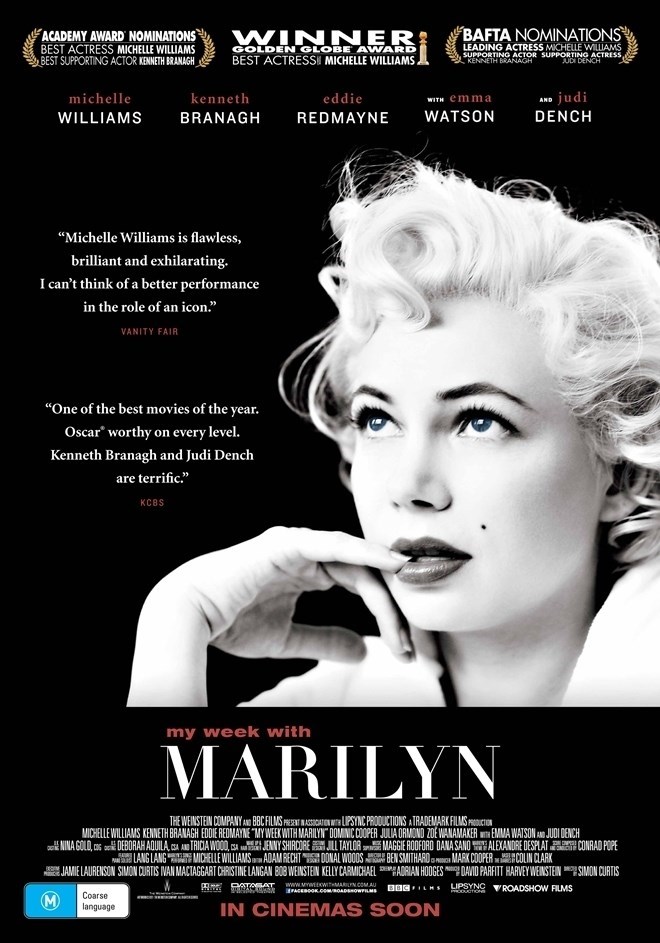
In 1956 Laurence Olivier was the greatest actor in the world; Marilyn Monroe was the biggest star (and sex-symbol) in the world. Surely when they came together to make a movie, it would be cinema gold. It wasn’t. Olivier directed and starred with Monroe in The Prince and the Showgirl, an almost impossibly slight puff piece, partly assembled (so rumour goes) so Olivier could sleep with Monroe. But it turned out Monroe’s fragile psyche and Stanislavkian approach to acting was incompatible with Olivier’s well-honed craft. The two did not get on.

Simon Curtis’ gentle, at times charming, but basically very lightweight film follows the making of the film through the eyes of Colin Clark. Clark, son of the famous art critic Kenneth Clark, was a naïve, romantic young man keen for a career in the movies through his father’s contacts. Hired by Olivier’s production company, Clark is tasked to take care of Monroe throughout the film. He becomes increasingly fascinated and infatuated with her as they spend more and more time together.

The film is based on Clark’s diaries, and he is played by Eddie Redmayne at his most fresh-faced. The problem with Clark is that, to be honest, rather than a young man on a journey of self-discovery, he comes across a little like a social-climbing creep and borderline stalker. Clark recounts a short-lived friendship that obviously had huge importance to him – but the film doesn’t want to deal with the fact it probably meant virtually nothing to Monroe, beyond some company during a lonely time. 

It’s not helped by the fact Clark comes across slightly like a pushy groupie, the self-proclaimed guardian of Monroe’s needs – qualifications barely justified by his actions. The film wants us to think he got closer to the magic of celebrity than anyone, but he feels like a stranger with his nose a little closer to the portcullis. Quite frankly, Colin is the least interesting character in his own story, and Redmayne fails to really give him much depth for us to engage with. Instead he remains a slightly unsettling inverted snob, manipulated by Monroe. The film, you feel, just doesn’t get this. At the end someone tells Colin he is “standing taller” than when he first met him (the implication being the relationship has made a man of him – as if spending a bit of downtime with a celebrity was the only route to emotional maturity). But rather than being part of a sweet star-crossed romance, Colin feels like someone creepily attaching himself to someone vulnerable. 

However, Michelle Williams is very good as Marilyn, capturing a real sense of her emptiness and insecurity. She perfectly captures Monroe’s physicality and vocal mannerisms. She is very good at capturing Monroe’s sense of permanent performance, of her glamour, kindness and innocence, mixed with her maddening vulnerability and (inadvertent?) selfishness. It’s a fine performance – better than the film deserves. 

Because the film is afraid of remotely criticising Monroe at all – or really engaging with the deep psychological reasons for her depression, or addressing the possibility that part of her appeal was her slight blankness that any desires could be projected onto. Instead, the film suggests, she’s sad because men just use her. Apart from Colin of course. His kissing, skinny-dipping and sharing a bed with her are entirely unmotivated by any lustful yearnings.

The film is in love with Monroe, presenting her just as Colin saw her – perfection. In fact, just as Dougray Scott’s put-upon Arthur Miller says, she was probably exhausting and all-consuming. She certainly sucks the naïve Colin into her orbit, in a way he (or the film) hardly notices or understands. It wants us to think of this as a romance – in fact, Monroe’s fragility created a neediness that meant she didn’t feel she needed to consider other people, so overwhelmingly concerned was she with her own brittleness. The film essentially believes she was a star, so is basically allowed to do what she wants. The fact that she did so with an air of gentle vulnerability means the film gives everything she does a pass.

So it’s rather hard not to sympathise with Olivier’s growing frustration with Monroe’s unreliability. Kenneth Branagh triumphs as Olivier, surely the role he was born to play: very funny, but also with a patrician charm and all-consuming arrogance. Branagh taps into Olivier’s vulnerability, his sense that he may not be able to communicate his acting strength into movie stardom, that he is yesterday’s man. For all her difficulty, Monroe had that “star quality” that makes her the centre of your attention. I’d argue Olivier almost certainly had the same – but the film is so in love with Monroe, it needs to slightly bring Olivier down. Branagh, however, is so good that he constantly punctures the film’s attempt to force Olivier into a less sympathetic role than the one it indulges Monroe with.

My Week with Marilynis far from terrible – it’s just a rather empty film. It has a terrific cast with these British star actors all offering fine pen portraits of assorted actors, producers and agents. The film however is slight, and so in love with its fairy-tale elements, it doesn’t notice that Clark’s story is slightly more creepy and certainly a lot more emotionally empty than the film wants it to be. It wants to take us behind the curtain of a 20th-century icon – instead it accidentally shows how impenetrable their screens are, and how easy it is for ordinary people to persuade themselves that the most fleeting of contacts was something special.

The Duchess (2013)

Keira Knightley in lusciously filmed, but shallow The Duchess

Director: Saul Dibb

Cast: Keira Knightley (Lady Georgiana Devonshire), Ralph Fiennes (Duke of Devonshire), Hayley Atwell (Lady Bess Foster), Charlotte Rampling (Countess Georgina Spencer), Dominic Cooper (Earl Grey), Aidan McArdle (Richard Brinsley Sheridan), Simon McBurney (Charles James Fox)

My main memory of The Duchess is seeing the trailer while watching Mamma Mia in the cinema. The first shot was Keira Knightley’s face, met with an overwhelming groan from the female-dominated audience. There is something about Knightley that seems to get people’s goat.  If you’re one of those who struggle to warm to Knightley as a performer, this probably isn’t going to be the film that changes your mind.

In the late 18th century, Lady Georgiana (Keira Knightley) marries the absurdly wealthy, but older and duller, Duke of Devonshire (Ralph Fiennes). She wants a meeting of minds. He just wants an heir. The marriage flounders – and gets worse when the Duke in turn starts an affair with Lady Bess Foster (Hayley Atwell), Georgiana’s closest friend. As her home-life becomes a menage-a-trois, with the Duke treating both women as wives (with their agreement) she begins to experience deeper feelings for the dashing Charles Grey (Dominic Cooper), an ambitious politician.

So, first things first, Keira Knightley. She does a decent job. She’s pretty good. But, rather like Jonathan Rhys Meyers, it feels like her best is a 7/10 performance. She’s dedicated, she’s really striving here – but always feels like someone trying rather than truly natural and unforced. She brings Georgina’s glamour and does a decent work of her bewildered hurt, but she (and the film) don’t communicate her intelligence and political activism, so she never really develops as a character. You can’t really put your finger on her doing anything wrong as such, it’s just a performance where you always see the acting, and never feel the naturalism.

It’s particularly noticeable here as her two supports – Fiennes and Atwell – are such accomplished performers. In many ways, the film would have been improved with Atwell in the lead. As it is, as the third corner of the triangle, she has just the right mix of guilt, warmth and mercenary self-interest. In a terrific low-key performance, Fiennes manages to turn a character the film always wants to push into being a bullying villain into a man who feels alive, real and often understandable if not (whisper it) even rather sympathetic.

The film is desperate to turn Georgiana into a suffering victim, and to push Devonshire into the role of a domestic despot. But in fact, most of Devonshire’s actions are quite forward thinking: he adopts and cares for his bastard daughter (conceived pre-marriage), he saves Bess’ children and cares for them as his own, he condones a quiet affair from his wife, he treats her with the utmost public respect and allows her to spend time with her son by another man (although this is relegated to a caption at the end). The only problem is he clearly doesn’t love her, while he clearly does love Bess. Hardly able to believe he wasn’t as besotted with Georgiana as the film is, the film works overtime to try and turn someone a little dull, with some surprisingly generous views, into a monster.

In order to make it categorical who is “right” and who is “wrong”, the film chucks in a gratuitous marital rape scene that feels so out of character and over-the-top, it actually makes you step out of the film. Did it really happen? There’s no evidence of it, and it flies in the face of virtually every other action the Duke does in the film. It’s probably also in there to further contrast Georgiana’s joyless couplings with the Duke against her passionate rumpy-pumpy with Dominic Cooper’s Charles Grey (here re-imagined as a penniless adventurer and radical, rather than the son of an Earl) Like Knightley, Cooper has the glamour and dash for the high-class Mills and Boon plot the film is peddling, but fails to convey Grey’s intellect and political ideals.

The film has deliberate echoes of Princess Diana throughout – the crowded marriage, the glamourous outsider marrying into a great family, the sense that her dashing public image made him look like a dullard. And like much of the public reaction to Charles and Diana in real life, the film can’t compute why Devonshire didn’t love this public idol, overlooking the fact that they shared no interests and had nothing in common. Many of Georgiana’s negative aspects are downplayed to help this – the gambling addiction that left her bankrupt is no more than high spirits here.

Basically this is a film interested in style over substance, aiming to turn a fascinating story about a menage-a-trois into something very straightforward and traditional about a husband who treats his wife badly. Now the style is great – Rachel Portman’s score is brilliant, the photography luscious, the make-up and costumes gorgeous – but the substance often isn’t there. The idea of Georgiana’s celebrity is only briefly touched upon, and her intellect barely at all.

Not content with airbrushing out her less appealing characteristics, even her positive ones are done few favours by this candyfloss depiction of her life – one of the first women to take a prominent role in the British political scene, a published writer of novels and poems, and a famously charismatic social figure, here she is little more than a mannequin on which to hang elaborate period hairstyles and costumes, who talks about being a free-spirited intellectual without doing anything that corresponds with these interests.

It shoves in dramatic events which feel out of step with both the characters and the events to push the film towards being as straightforward as possible. Knightley does a decent job – and Fiennes is extremely good as the Duke – but it settles for being something safe and traditional rather than a really interesting look at the cultural moods of the time, or the complexities of the real people it claims to portray. It shares it’s subjects beauty, but reduces her to blandness.

An Education (2009)


First love: Never as smooth as you think it will be

Director: Lone Scherfig

Cast: Carey Mulligan (Jenny Mellor), Peter Sarsgaard (David Goldman), Dominic Cooper (Danny), Rosamund Pike (Helen), Alfred Molina (Jack Mellor), Cara Seymour (Marjorie Mellor), Emma Thompson (Miss Walters), Olivia Williams (Miss Stubbs), Sally Hawkins (Sarah), Ellie Kendrick (Tina)

The education in question is the first sexual relationship of a girl who is 16 going on 17. Jenny (Carey Mulligan) is a schoolgirl and prospective Oxford candidate who finds herself winning the attention of charming older man David (Peter Sarsgaard). Jenny is swept off her feet by the world of classy bars, art and culture David introduces her to and begins to lose interest in her literal education: if all education can do is turn women into either lawyers’ wives or teachers what is the point?

Strangely for a film based on a man approaching middle-age taking advantage of a naïve and excited teenager, it’s strangely cosy and charming, with the whiff of “safe” family viewing. Nothing wrong with that of course, but the whole confection is just a little too slight, a little too well packaged, a little too carefully and thoughtfully put together to really leave a lasting impression. Instead it’s an enjoyable enough 90 minutes which doesn’t really have anything that stays with you.

What it does have going for it above all is the marvellous lead performance from Carey Mulligan. At the time best known for appearing in the Blink episode of Doctor Who, Mulligan cements her early promise by demonstrating what a charismatic and vibrant performer she is. Jenny delights in the ease with which David deceives everyone without it ever occurring to her that he might be lying to her, and this teenage arrogance could easily be smackably annoying – but Mulligan makes her deeply engaging and loveable. You want to protect her from making an irrevocable decision that will ruin her life at 16 (sort of the opposite to Bella in Twilight). But Mulligan’s endearingly engaging performance sweeps the audience up into Jenny’s fascination with the exciting life David seems to be offering, and makes you understand why she believes it to be a viable option. She’s a radiant centre to the film and it’s almost impossible to imagine it working at all without her.

It is in fact very well-acted throughout. Sarsgaard underplays the role, suggesting the underlying shallowness and weakness to David which is far clearer to the audience than the characters. The supporting cast are knock-outs: Rosamund Pike is hilarious as a sweet airhead, Alfred Molina embodies the gullibility of the striving middle-classes mixed with great reserves of unspoken love and affection, Olivia Williams is terrific in an underwritten part as Jenny’s concerned teacher.

It’s strange watching the film to see how it romanticizes the sort of behaviour that, if we encountered it today, would be denounced as grooming at best, paedophilia at worst. In fact, the film soft-peddles a lot of the unpleasantness of its characters: David and Danny, it is clear, are conmen and swindlers, though I suspect the film wants us to think of them more as charming rogues. I suppose it’s the impact of seeing the story from Jenny’s perspective, but some more outside commentary would perhaps have been interesting: it also might have been more interesting to see Jenny actually having to deal with the moral consequences of some of the actions that happen around her. 

This is a slight affair, almost a shaggy dog story. There are many more things it could have explored (the swindling career of David, the role of women in the 1960s, the changing perceptions of “blue stockings” and their career options) but instead it settles for being a charming period piece. It makes no secret of the fact that, deep down, we are not meant to trust David and nothing in the plot ever really surprises you. It’s a gentle amble through an ill-advised teenage romance. But, despite all that, it’s very well acted and Carey Mulligan proves she was set to become a star.