
Tag: Dominique Fishback

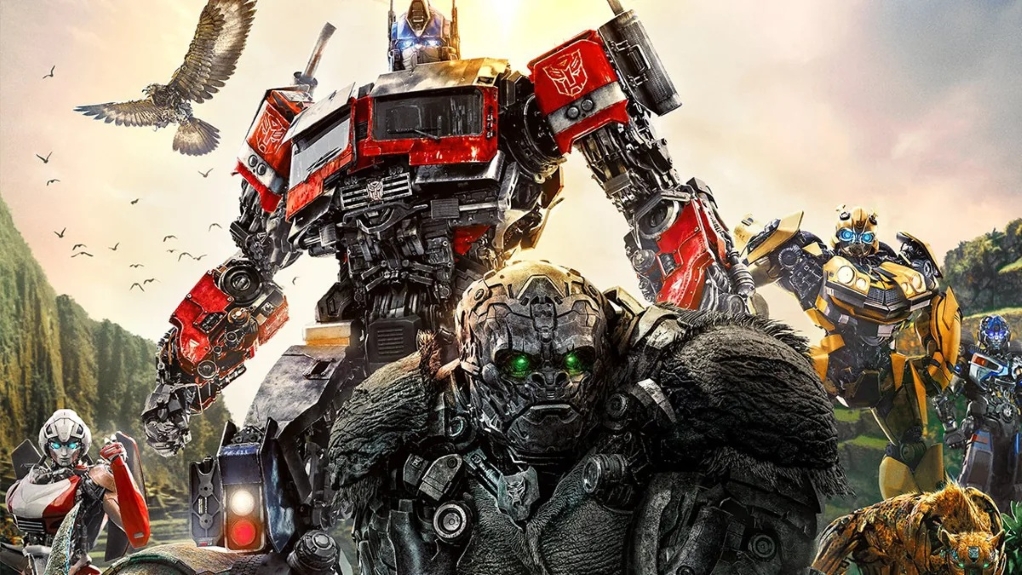
Transformers: Rise of the Beasts (2023)

Transformers: Rise of the Beasts (2023)

Transformers serves away from the charm of Bumblebee back to the tedious machismo of Bay

Director: Steven Caple Jnr

Cast: Anthony Ramos (Noah Diaz), Dominique Fishback (Elena Wallace), Dean Scott Vazquez (Kris Diaz), Luna Lauren Velez (Breanna Diaz), Peter Cullen (Optimus Prime), Ron Perlman (Optimus Primal), Peter Dinklage (Scourge), Michelle Yeoh (Airazor), Pete Davidson (Mirage), Liza Koshy (Arcee), Colman Domingo (Unicron)

Somehow the Transformers franchise lucked out and managed to make a film I actually wouldn’t feel awkward showing to a child. Bumblebee avoided the crude sexualisation and graphic violence (hidden by the fact you are watching CGI engine oil and bits of metal flying around, rather than blood and bits of human flesh) of Michael Bay’s films. I really enjoyed it. I can’t really say the same about this follow-up. I’d at least let a child watch it – although it’s the cinematic equivalent of letting them have a Big Mac for dinner.

Transformers: Rise of the Beasts could have continued in the tone of Bumblebee, a delightful mix of cartoon and Buster Keaton/Laurel and Hardy. Instead, it takes tiny elements of that, then mashes them up with the throw-it-all-at-the-screen style of Bay. It’s not a happy marriage, and Rise of the Beasts is tired and overly familiar, crammed with crude banter and the sort of mass smackdown we’ve seen done time-and-time again. Give me strength. Rise of the Beasts isn’t really a sequel to Bumblebee – the events of that film are referred to only in a blink-and-you’ll-miss-it reference. The boyish charm of Bumblebee is drenched in audio clip quotes from Scarface and the like. Instead, it’s another “end of the world seconds away from a giant robot monster” flick.

Far in the future Unicorn (voiced with regal indifference by Colman Domingo), the planet eating robot from the 1985 film (when he was voiced by a final pay-cheque collecting Orson Welles) is trapped in another dimension, but wants to break into ours. He sends his minion Scourge (Peter Dinklage, dialling it in big time) to 1990s Earth to hunt down the MacGuffin that will do it. Only Optimus Prime (Peter Cullen) and his Autobots can stop him, allied with an ex-soldier desperately trying to help his kid brother Noah Diaz (Anthony Ramos) and Elena Wallace (Dominique Fishback) a junior archaeologist who can unearth the MacGuffin from where it has been hidden centuries ago by the Maximals, a group of transformers descended from our Autobots who transform into giant mechanical animals (their leader Optimus Primal is a Kong style ape).

It all seems a million miles away from the charm of the first film, with a teenage girl bonding with her first car who just happens to be a clumsy robot. There is precious little charm at all Rise of the Beasts. The human characters are either faintly forgettable, loud and brash or serve only as plot points. Anthony Ramos has to do a lot of digging to find any depth in a character given only a cursory plotline of desperation to provide for his mum and brother. Dominique Fishback’s archaeologist has the faintest of backstories about being cheated out of the credit for her work, before she’s fiddling with MacGuffins with handwave lines. The action zips across two universes and two continents, but never seems to really find firm grounding for itself.

There’s also something rather sad about the film swopping out the fairy tale elements of Bumblebee with a far more conventional Bro-romance. Ramos’ street-wise ex-soldier is paired up with Peter Davidson’s Mirage, a loud-mouthed Autobot who, despite a few witty lines, basically comes across as a street-wise bro with a hot streak of immaturity. There is a streak of laddish banter throughout the film – none of it, thank God, as appallingly sexist or racist as what passes for this sort of chat in Bay’s films – that essentially doubles down on restoring the franchise to something that appeals only to teenage boys and adults who wish they still were teenage boys.

After the broadening out of Bumblebee with a female lead given actual agency, this feels like a retrograde step. Rise of the Beasts does manage to pay this Bros plotline off with a surprisingly effective scene of self-sacrifice – but does so while not shirking on red-blooded (or red-oiled) young men whooping and cheering as they blast stuff out of the sky. It’s a step firmly back towards a territory that places male relationships at a premium – be it bros or actual brothers – and the bonds between men a world that leaves women on the outside looking in.

Not to mention the plot continually readjusts its stakes and characters depending on the requirements from scene to scene. Scourge is an unstoppable killing machine… until the plot requires him not to be. Characters are killed off… until the plot needs them to come back to life. Characters are fixated on their own needs… until the plot needs them to be altruistic. It combines that up with a final battle sequence that feels painfully derivative of the end of Avengers: Endgame, with Scourge mustering an army of rent-a-baddies to slow down the heroes while he slowly plugs a thingamee into a do-hickey.

Even Optimus Prime takes a backward step. While Bumblebee salvaged some likeability out of this hero, Rise of the Beasts very much returns him to Bay form: a deeply flawed leader with anger-management issues, who slices and dices foes with reckless abandon, rips off heads and uses neat kiss-off lines like “Then DIE”. I suppose he doesn’t execute at point-blank range a surrendering foe begging for mercy (Bay did this twice!) but he still hardly feels like an admirable hero. Rise of the Beasts vaguely acknowledges this by having Prime go on a loose arc of learning to put the needs of humans on a level with the Autobots (yup he’s also a proto-racist at the start) but it’s a very loose peg to hang a hero on.

Rise of the Beasts gives up on any pretensions of doing something fresh, engaging or different with the series. Even the beasts, for all their animalistic looks, are basically barely characters, more different looking toys imported into a flagging cinematic universe (Ron Perlman and Michelle Yeoh lazily yawn their way through terminal dialogue). While Bumblebee took the starting principles of the franchise and found the joy in them, Rise of the Beasts is a teenage wet dream of toys hitting each other to no great purpose, that places male relationships at its heart and leaves you with nothing to really care about. It’s a callback to everything bad about this franchise.

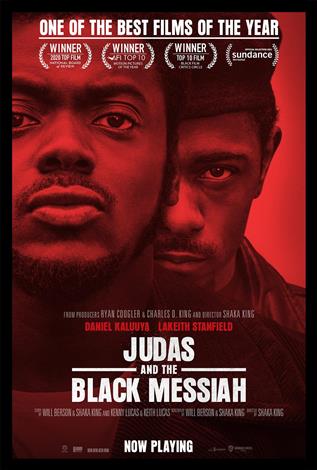
Judas and the Black Messiah (2020)

Judas and the black messiah
Daniel Kaluuya excels as the betrayed Fred Hampton in Judas and the Black Messiah

Director: Shaka King

Cast: Lakeith Stanfield (Bill O’Neal), Daniel Kaluuya (Fred Hampton), Jesse Plemons (Agent Roy Mitchell), Dominque Fishback (Deborah Johnson), Ashton Saunders (Jimmy Palmer), Algee Smith (Jake Winters), Darrell Britt-Gibson (Bobby Rush), Lil Rel Howery (Judy Harmon), Martin Sheen (J. Edgar Hoover), Amari Cheatom (Rod Collins), Jermaine Fowler (Mark Clark)

In the 1960s, America was in violent turmoil. Simmering racial tensions were exploding, as a younger, politically engaged generation refused to accept the status quo of the past. Facing them was a reactionary, institutionally racist law and order system, determined to take any steps necessary to stop them. Violence was inevitable and the anger and resentments of that time still carry a powerful legacy today. It’s these emotions that Judas and the Black Messiah engages with. Impassioned and ambitious film-making, it often tries to do too much but still leaves a powerful impression.

In Chicago in 1968, Bill O’Neal (Lakeith Stanfield) is a car thief and conman, who uses a faked FBI badge to steal cars. Arrested (and beaten), he is given a choice by FBI Agent Roy Mitchell (Jesse Plemons) – serve time for his offences or turn informant for the FBI. O’Neal is ordered to join the Black Panther Party – and to get as close as he can to the charismatic leader of the Illinois chapter, Fred Hampton (Daniel Kaluuya). Hampton is radical, but also a visionary leader who is attempting to build a “rainbow coalition” that will unite black, Puerto Rican and white working classes to campaign on a wide range of social issues, from race to healthcare and education: a vision the FBI sees as a nightmare. O’Neal’s information is used to help frame Hampton, as events build inexorably towards his permanent removal.

Judas and the Black Messiah is dynamic and electric film-making. Shaka King’s film hums with righteous fury at the hypocrisy, racism and violence of the law enforcement agencies towards the Chicago black community (effectively the police are an occupying force, perpetrating violence and injustice). While not shying away from the violent response from many of the Black Panthers – including showing one white police officer executed while begging for his life – it paints an unsparing picture of the racism and cruelty of the Chicago police. Innocent black people are bludgeoned and abused. Those in the Black Panthers are framed for crimes, brutalised in prison and murdered in police custody. The outrage and fury of the film is both justified and affecting.

Simultaneously there is a powerful sense of grief at the loss of a golden opportunity – and the inspiration of a visionary leader, who could have grown to become a key figure in American history. King’s film explores the all-too-short life of Hampton before his murder. It delicately paints his charisma but also carefully establishes his vision. His recognition that social, educational and medical improvements are at least as important to ordinary black people as political rights. His attempt to build a coalition of the downtrodden, white and black. His status as the only man who could unite this coalition. His loss an incalculable tragedy for his cause and also for America.

This powerful picture is further framed by Kaluuya’s marvellous performance as Hampton. Kaluuya perfectly captures the charisma and electricity of Hampton’s public speaking, his ability to marshal words and move crowds. With a bulked-up physicality and head-cocking defiance, he wonderfully conveys Hampton’s ability to persuade and inspire, his lack of fear and passion to see justice done. But Kaluuya also makes him wonderfully human. In intimate moments with his girlfriend Deborah (very well played by Dominique Fishback), Kaluuya makes Hampton gentle, shy, even a little nervous – giving him a very real emotional hinterland that sits naturally alongside (and contrasts with) his activist public persona. This is a stunningly good performance.

It also, perhaps, unbalances the film slightly. King’s film is ambitious – but it is attempting to do too much within its two-hour runtime. This is a film that wants to explore the corruption of the law forces, the terrible plight of black Americans, the life of Fred Hampton and the story of his betrayer Bill O’Neal. It’s this final story that actually ends up feeling the least defined – and least engaging – of the film’s plot threads (unfortunate as it’s the one that gives the film its title).

None of this is the fault of Lakeith Stanfield, who gives a marvellous performance of weakness, fear, self-preservation and regretful self-loathing as O’Neal. But his relationship with Hampton never feels close or personal enough. In fact, the two of them feel very distanced from each other. The sense of the personal in the betrayal is lost. The idea of O’Neal struggling between loyalty to Hampton and his FBI handler Mitchell (who encourages O’Neal to see him as a sort of surrogate father) is weak, because we never get a real sense of a very personal link between O’Neal and Hampton, or a real sense that O’Neal is deeply conflicted about his betrayal. (Indeed, the film is reduced to explicitly telling us that O’Neal is struggling between betraying the Black Panthers and a true belief in their cause, which feels like a failure of narrative.)

Fundamentally, you could split the film into two movies. One which focuses on Hampton and in which O’Neal is little more than an extra. And another that zeroes in on O’Neal’s struggle with the FBI and fears of being caught, in which Hampton is a distant, inspirational figure. What King’s film fails to do is effectively is bring these two characters together properly. The personal nature of the relationship (and the betrayal) is lost. This isn’t Jesus betrayed by one of his disciples – more like Jesus being cashed in by someone at the temple. It’s a loss to the film.

It feels at times as if O’Neal was the original “hook” but that King became more interested – perhaps rightly – in Hampton and the tensions in Chicago (and America more widely) at the time. Similarly, the film is fascinated by the corruption of the FBI – Martin Sheen makes a chilling, latex covered, appearance as Hoover – and by questions over how far Mitchell (Plemons, decent bur fatally compromised), a relative liberal, is willing to go. In both plot lines, O’Neal is an entry point but becomes less and less the focus. It partly explains perhaps why Stanfield – clearly the “lead” – ended up joining Kaluuya in the supporting actor category at the Oscars. He may well be the lead but his story is the least compelling of the several threads here.

Judas and the Black Messiah is still hugely effective in many places. Its main weakness is in trying to juggle these various plot threads, and not always succeeding in bringing them together as well as it should. Because the O’Neal plot line needs to take up a good share of the run time – but is the thread the film seems least interested in – it does mean some of these scenes drag more than they should, making the film at times seem longer than it should. You can’t help but a feel a film that focused on Hampton alone would have been stronger. King’s film still makes powerful points – but its ideas are sometimes blunted and crowded out by its attempt to cover so much. Impassioned and ambitious, it doesn’t always completely succeed.