
Tag: Donald Glover

The Lion King (2019)

The Lion King (2019)

Soulless, heartless remake designed to make Disney as much money as possible

Director: Jon Favreau

Cast: Donald Glover (Simba), Beyoncé Knowles-Carter (Nala), Seth Rogan (Pumbaa), Chiwetel Ejiofor (Scar), James Earl Jones (Mufasa), Alfre Woodard (Sarabi), Billy Eichnor (Timon), John Kani (Rafiki), John Oliver (Zazu), Florence Kasumba (Shenzi), Keegan-Michael Key (Kamari), Eric André (Azizi)
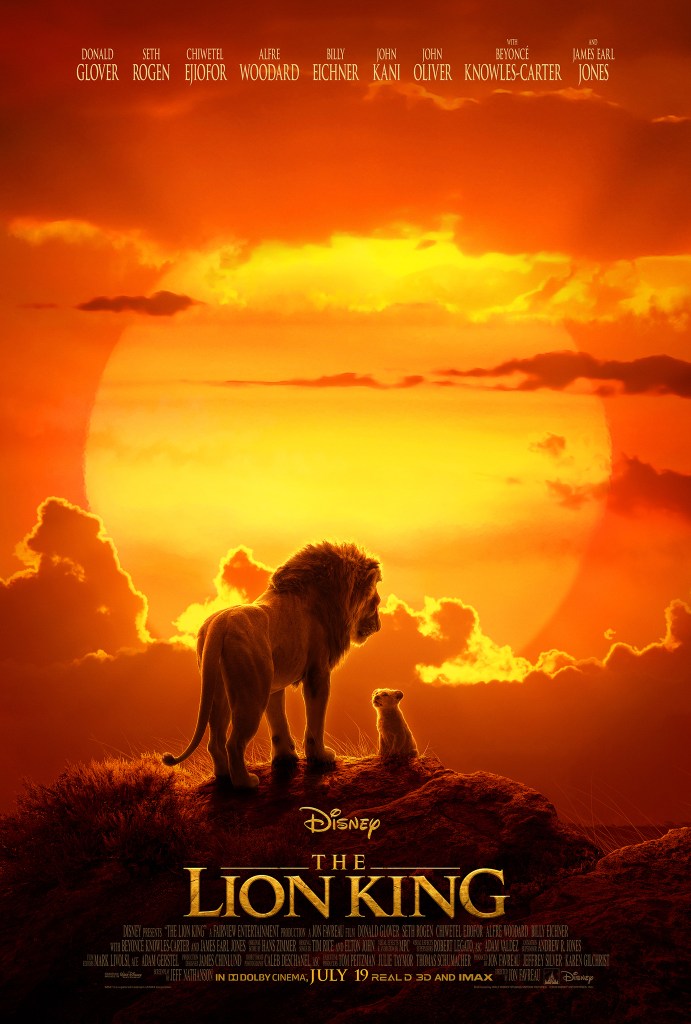
We all like to pretend Disney is the custodian of our childhood dreams – that they exist on to give us even more gorgeous memories to treasure. Bollocks. It’s a corporate enterprise existing solely to create more money for shareholders. If you were in any doubt, cast your eyes across The Lion King, a bottomless collection bucket for the God of Mammon. There is literally no reason for this film’s existence, other than to lure people into the cinema for the express purpose of removing their pennies from their pockets and dropping them into Disney’s McDuck vault for the next time the shareholders want to take a dip.

Seen the original? Then you know the plot. At least Disney’s previous nakedly commercial “live-action” remakes of Beauty and the Beast and Aladdin had the decency to introduce a few new plot elements so there was at least a little bit of surprise content. Even if it was tedious stuff like the Beast’s Tardis mirror to the past or the Genie’s love interest. Here the extra 15 minutes is made up solely of padding, dreadful unfunny comic and utterly unnecessary extra characters who make literally no impression (Timon and Pumbaa now run a sort of hippie commune).

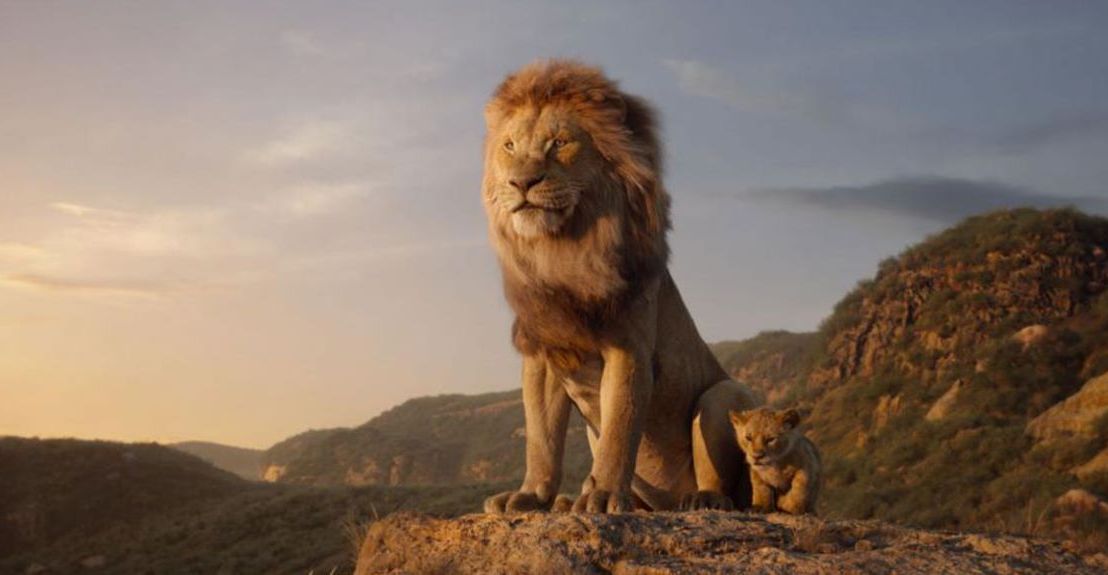
Disney made huge play out of the fact this is a “live action” Lion King. That’s the selling point. So proud of this were they, that they were hilariously pissed off when the Golden Globes nominated the film for Best Animated Film. But nothing in this film is real, or live action – except, as Favreau later bragged, the first shot of the film showing the sunrise. Everything you see here is created in a computer: from the tufts of Mufasa’s mane to the grass that dances in the breeze. Far from watching a live-action film, this is an orgy of CGI wizardry that constantly pats itself on its back for the hard work and detail that went into its creation. Who cares if the result has no heart?

Because that’s the case. The Lion King is a soulless cultural abomination. It is almost entirely a shot-by-shot remake, with the only changes being the occasional introduction of new (less good) dialogue. The characters have the same conversations, with less snap, laughs and emotion. It’s the sort of film-making karaoke some people like to call affectionate homage, but instead feels like pandering and no-one having the guts to change even the slightest moment from the original. How hard would it have been to match the plot, but find new ways to film it? This however matches shots, camera moves, angles, edits – the whole damn thing. If you had a choice between seeing the Mona Lisa or watching a computer do a Mona Lisa paint-by-numbers, which would you choose?

It also feels like no one stopped for a second during their self-congratulatory film-making to ask one or two obvious questions. Firstly, I don’t think its racist to say this, but to my eyes most lions look the same. No real effort has been made to distinguish any of them from each other (with the obvious exception of Scar) – this particularly effects the lionesses who all essentially look the same. Secondly, one of the first things you’ll notice about most animals is that they have inexpressive faces that do not display emotion and that they have mouths that have not been designed for talking.

With an animated lion you can get round this. You can draw a look of fear on Mufasa’s face because you aren’t limited to only using the facial movements that a real lion can. Their faces can shift and change to match the emotions of a real person – they can look happy or sad, cynical or sarcastic, joyful or mournful. You can’t do this with a real animal, because animals don’t have expressive faces. The whole cast of The Lion King have stiff, stationary faces that never react to the emotional events around them. They often can’t even move their mouths to properly replicate speech (Favreau starts to get round this by having as much of the dialogue delivered off camera as possible).

What you end up with is a series of robotically cold shots of animals not emoting, mechanically going through the emotions to replicate a masterpiece. Mind you, perhaps it’s a good thing that the film tries to rip-off the original as much as possible because whenever it does its own thing it thuds face-first into a pile of animal dung. Pumbaa is given a hideously on-the-nose line about “I can’t stand bullies” (to replace his “they call me Mr Pig!” battle cry). Eichhorn, Oliver and Rogen litter the film with unfunny fourth-wall-leaning references which stink of over-indulged recording booth improv. A few songs are butchered (most noticeably Be Prepared) and several musical cues are reworked in a way that dramatically reduces their impact. Even the obligatory new song is lacklustre and weirdly tonally wrong for the moment it’s used.

The cast struggle, never quite sure how they should approach the content. Spare a little sympathy for Ejiofor, stuck trying to follow one of the greatest vocal performances of all time – but his response to this is to bend himself into all sorts of shapes to be as different from Jeremy Irons as possible. The result is an underwhelming Scar, who lacks presence, menace, or the glorious manipulativeness of the original. Other actors are flat-out fails, most particularly Eichhorn who turns Timon an unlikeable bitchey whiner. Only John Kani really does something that feels like a good mix of homage and original work as Raffiki – he’s one of the few genuinely African voices in a film that loudly “prided” itself on its mostly African-American cast, but still has all the lions speaking in reassuringly American accents – and casts white actors into almost every non-lion role.  

But that’s a side note. The Lion King is a ruthlessly, exploitative attempt to make money. Which it managed to do to an enormous degree. So, I guess it hardly matters that surely no-one will be watching it in five years’ time. Or that its CGI created lions are expression-free automatons existing in a shiny world of non-reality. Or that the entire enterprise is a heartless, soulless, nakedly commercial stare deep into the belly of a conglomerate that sees people as nothing more than ATM machines. The Lion King is an abomination and will take pride of place in Hell’s multiplex for all time.
Solo: A Star Wars Story (2018)

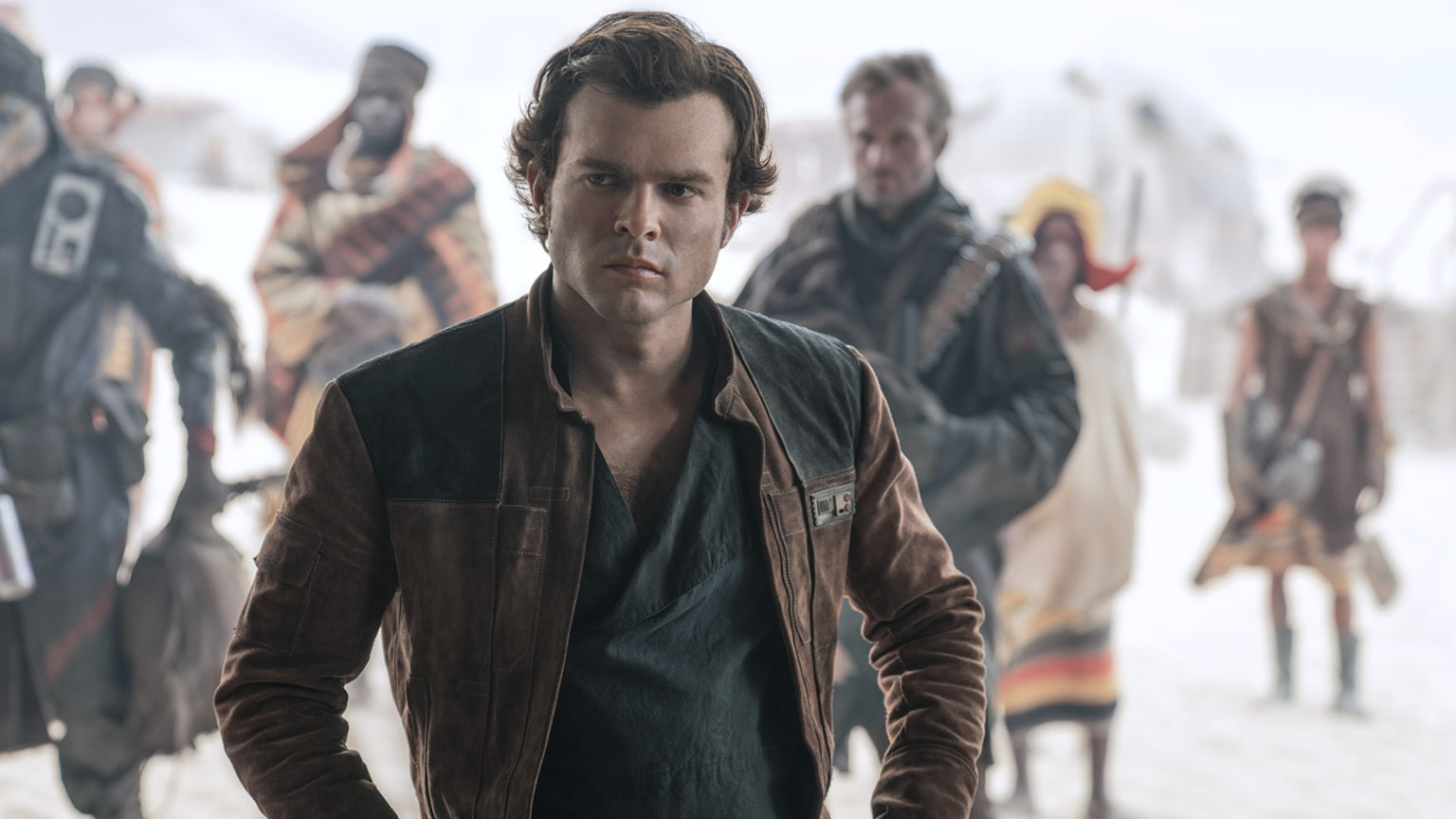
Alden Ehrenreich tries his best in Solo: A Star Wars Story

Director: Ron Howard (Phil Lord, Christopher Miller)

Cast: Alden Ehrenreich (Han Solo), Woody Harrelson (Tobias Beckett), Emilia Clarke (Qi’ra), Donald Glover (Lando Calrissian), Thandie Newton (Val), Phoebe Waller-Bridge (L3-37), Joonas Suotamo (Chewbacca), Paul Bettany (Dryden Vos), Erin Kellyman (Enfys Nest), Jon Favreau (Rio Durant)

Solo did the impossible. No not the Kessel Run in 12 parsecs. It showed you could release a Star Wars film that lost money. How could this happen? Well the easy solution is to point at the film’s disastrous shooting. Lego Movie directors Phil Lord and Christopher Miller were originally announced as its directors, making their live-action debuts. But Lord and Miller lacked experience, and a litany of complaints – poor direction, a demand for constant improvisation slowing shooting, failing to get enough angles to allow options in editing – led to them getting fired and replaced with Ron Howard. 

Unfortunately, even though large parts of the film had already been shot, Howard still needed to go back and reshoot large chunks (and recast, with Paul Bettany replacing the Michael K Williams as the film’s villain due to a scheduling clash). The budget ballooned to nearly $300million, a sum (with marketing costs) the film didn’t stand a chance of hitting with its poor initial buzz and mixed word of mouth. Not to mention the general (misguided) poor reaction from the core fanbase to Last Jedi, which had literally only just left theatres as this film prepared to launch.

If it seems a little unfair to open a review of the film with an anecdote about its making, that’s because the film’s tortuous journey to the screen is more interesting than most of the things that actually ended up in it. It’s an origins story for Han Solo (gamely played by a trying-his-best Alden Ehrenreich), which traces his early days towards becoming the smuggler we know, with the background given for virtually every aspect of the character: meeting Chewie, how he got his surname, where he found his blaster, how he did he win the Millennium Falcon from Lando (Donald Glover, who with his charisma and cool is the only one who manages to reinterpret his character to feel both fresh and a natural predecessor of Billy Dee Williams’ interpretation) and just how did he do that Kessel Run in 12 parsecs? 

If that sounds a bit like the film is a series of nostalgic box ticks… that’s kind of because it is. The impact is made worse by the fact that nearly all its events – from Han meeting his “mentor” Beckett through to the end of the film as he jets off to do a job for Jabba the Hutt – seem to take place in a week. As so often, the modern Stars Wars films manage to make its universe as small as possible. The sense of wearying accumulation as every half reference ever made in the old films is given a backstory, makes you wonder how boring the rest of Han’s life must have been if everything he ever talks about is connected to this one job.

The telescoped timeline also has a serious impact on much of the film’s relationships. Han and Chewie get by fine because we’ve already invested in that friendship – and Ehlenreich and Suotamo do a good job of building the regard between these two, one of the best beats from Howard’s direction. But other relationships get short-changed, particularly Beckett. Played with a maverick gusto by Woody Harrelson, this character is meant to be a model of the sort of heartless mercenary Han Solo starts A New Hope as. But the relationship of the two characters never works, because there is no sense of bond – they’ve known each other a week or two at best, and the emotional trust between them doesn’t exist, so the inevitable betrayal (when it comes) means nothing.

The other principle relationship between Solo and his childhood sweetheart, the equally mercenary Qi’ra, similarly suffers from getting lost in the shuffle of ticking off iconic references. It’s not helped by the total lack of chemistry between Ehlenreich and Emilia Clarke. Clarke herself feels painfully miscast in a role that doesn’t use any of her brightness and wit, instead pushing her into the sort of fantasy-genre, fanboy’s-dream woman she might find herself trapped into playing. This links in strongly with a terminally uninteresting criminal gang plot in which a wasted Paul Bettany – playing someone who barely seems to manage to have a personality – is the mysterious crime lord manipulating everyone.

The film goes from set piece to set piece, but none of them really stand out, and all are shot and edited together with a sort of bland competence that perhaps you could expect from a master craftsman like Howard, who works better with actors than he does special effects. The film clearly wants to go for a Firefly vibe (with its heists, mismatched criminal gang, double crosses and damaged hero not wanting to get involved in the problems of others) – and there is something quite sad that this film about an iconic character feels the need to rip off a TV show that ripped off a lot of the vibe of that original iconic character.

But then that’s the problem perhaps. This is a wallowing in nostalgia that depends on your affection for Harrison Ford’s masterful Han Solo – but which will only serve to remind viewers that, for all his work, Ehlenreich is no Ford. It also doesn’t help that the film, by its very nature, can allow no development for Solo. This is a character that spends all of Star Wars as a cynical and selfish hired gun, who acts without thinking and has no interest in helping others if there is nothing in it for him. Since Solo basically starts this origins story like this, he therefore must end the film in the same way – so other than becoming a bit more competent and worldly-wise, he’s stuck not developing in any way. This makes for a film that feels even more like a slightly pointless exercise in nostalgia.

For all that, it has its moments and is fun enough – and certainly not the worst film in the franchise. But it’s the first sign, that Disney should have heeded, that nostalgia and retelling familiar stories over and over again was not a guaranteed box office smash any more. By rooting another film in things introduced in the first two Star Wars, it reminds us again that this is a small and incestuous universe, where we see the same faces over and over again. With a film where every scene is a homage and every possible piece of trivia is laboriously given a back story, that feeling grows even more.

The Martian (2015)

Matt Damon is Lost in Space in The Martian

Director: Ridley Scott

Cast: Matt Damon (Mark Watney), Jessica Chastain (Commander Melissa Lewis), Jeff Daniels (Teddy Sanders), Kristen Wiig (Annie Montrose), Chiwetel Ejiofor (Vincent Kapoor), Sean Bean (Mitch Henderson), Michael Peña (Major Rick Martinez), Kate Mara (Beth Johansson), Sebastian Stan (Dr Chris Beck), Aksel Hennie (Dr Alex Vogel), Mackenzie Davis (Mindy Park), Donald Glover (Rich Purnell), Benedict Wong (Bruce Ng)

Imagine being abandoned somewhere really difficult to get out of. Now how about being abandoned somewhere where it’s literally impossible to escape? Well you can’t get much more impossible than Mars, a place so bloody difficult it doesn’t even supply you with such luxuries as oxygen, water or food. But that’s exactly what happens to astronaut Mark Watney.

Part of the first manned mission to Mars, Watney (Matt Damon) is struck by debris and presumed killed after a storm forces the crew to abandon their planet. With no one on Earth aware he is alive, Watney faces huge difficulties: the next Mars mission isn’t for four years, and will land over 2,000 miles away. He has only enough food for at best a couple of years, and his Mars Rover can only travel 70 miles before it needs to be recharged. Fortunately, Watney (as well as being incredibly inventive) is a botanist – and works out a complex improvised farm in the base to grow potatoes (the only potential crop he has) as well beginning to modify the Rover to drive to the next mission site in four years. But things change when NASA (after holding his funeral) spot his movements via satellite – and now the race is on to organise a rescue mission.

The Martian perfectly works out what we find appealing about survivor stories: a charming, easy to relate to, protagonist who inspires with his never-ending MacGyver-ish invention. The best sequences by far focus on this, as Watney uses whatever he has available, from radioactive waste to his own shit, to try and save his life. There is something hugely compelling about seeing such inspiration in the face of adversity – perhaps because you want to believe “heck that’s what I would do…”

The first half of the film is crammed with these moments, made even more enjoyable by Watney’s off-the-wall, amusing commentary on events via video diary. Watney never succumbs to despair but instead constantly puts as positive as possible a spin on his situation, aware that opening the door to despair is the road to the end. A lot of this works so well because of Matt Damon’s terrific performance in the lead role. It’s no easy thing basically holding the screen entirely by yourself, but Damon does an amazing job here. He’s not just funny and engaging, but he also subtly touches on deep inner feelings of isolation and loneliness.

Scott understands all this and shoots most of the sequences with Watney with a low-key, calm but technically assured simplicity. He lets the action here largely speak for itself, and shows a better ear for comedy than I think many people thought him capable of. He also uses Watney’s “suit cam” and the video diary format to constantly shake up the visuals and allow us to see Watney’s actions and decisions from different perspectives. His mastery of the sweeping epic comes into its own when the camera swoops over Martian panoramas, making the hostile red planet look unbelievably beautiful. 

It’s easy to see why NASA supported this film so strongly, as the organisation comes out of this impossibly well. This is essentially a fictionalised retelling of Apollo 13, with the astronauts surviving above, while the ingenious techies below work miracles to first communicate with, and then devise a rescue mission, for Watney. The film is deeply in love with NASA – despite some personality clashes, the NASA characters are all shown to be highly intelligent, compassionate people. Even “the suit”, Director Sanders (played with a square jawed patience by Jeff Daniels), is basically a humanitarian who wants to preserve human life (and is cool enough to have a brilliant Lord of the Rings gag).

Despite this, the struggles of the various bigwigs at NASA to save Watney are slightly less interesting than the opening half of the film based around Watney’s struggles to survive. Perhaps because, well done as it is, we’ve seen this sort of stuff before, done better – not least in Apollo 13 – and partly because what NASA is trying to do is not quite clearly explained in layman’s terms. Think of the simple brilliance of Apollo 13 when the engineers need to create a filter using only what the astronauts have on the ship: it’s easy to understand, clear, brilliant and gripping. Comparative scenes in this film just don’t land as quickly.

The film also struggles as events and twists in the midway part of the movie lead to Watney losing a lot his agency. Since most of the film’s unique enjoyment is seeing Watney conquer his environment, and gain mastery of the rotten hand that fate has dealt him, as soon as that element is removed and Watney turns into more of a man in distress, the film struggles to maintain its unique interest. It makes the second half of the film more conventional (Damon is noticeably in this much less, considering how much he dominates the first half) and also ends up comparing unfavourably with other, better films (sorry I mean Apollo 13 again…)

But The Martian is crammed with good lines, fine jokes and some good performances – even if some of the characters seem a bit sketchily drawn. Benedict Wong is very good as NASA’s top techno bod. Chiwetel Ejiofor and Sean Bean do well as the most clearly sympathetic senior NASA bods. Up in space, the rest of the crew are very lightly sketched, but Jessica Chastain gives a fine sense of authority to the Mission Commander. But make no mistake this is Damon’s movie – and he dominates both the audience’s interest and the film’s.

The Martian is a very well made, intelligent crowd-pleaser. It’s not a classic – and it’s slightly in the shadow of better movies – but it’s brilliantly put together and hugely engaging. The second half of the story is less compelling and more conventional than the first, but there is more than enough invention and enjoyment there for you to want to come back and see it again.