Tag: Donald Pleasance

Escape from New York (1981)

Escape from New York (1981)

B-movie thrills and an epic piece of world building in this very fun cult actioner

Director: John Carpenter

Cast: Kurt Russell (Snake Plissken), Lee Van Cleef (Commissioner Bob Hauk), Ernest Borgnine (Cabbie), Donald Pleasance (The President), Isaac Hayes (The Duke), Harry Dean Stanton (Brain), Adrienne Barbeau (Maggie), Tom Atkins (Captain Rehme), Season Hubley (Girl in ChockFull o’ Nuts)

In the 1980s New York was pretty much America’s crime capital, so it wasn’t too much of a stretch to imagine an insanely dystopian America of 1997 where Manhattan is turned into a massive jail surrounded by a wall with its population entirely made up of murderous gangs and criminals (sadly without the severed head of the Lady Liberty lying in the middle of the streets). That’s what we get in Escape From New York (great title!). Problem is, it also makes it incredibly hard to get into New York – a real issue when a hijacked Air Force One crashlands there and the President (Donald Pleasence) needs rescuing.

Who ya gonna call? None other than grizzled, scowling, no-nonsense ex-Special Forces legend turned criminal Snake Plissken (Kurt Russell). Plucked from a line of convicts by Commissioner Hauk (Lee Van Cleef), Snake is given a simple offer: fly a glider into Manhattan, find the President and bring him back in 22 hours so he can speak at vital peace conference and in exchange get a pardon. And just to make sure he doesn’t back out? Inject him with explosives that will go off in exactly 22 hours unless Hauk switches them off. Into New York Snake goes, a Mad Max hell under the thumb of kingpin The Duke (Isaac Hayes), with his only allies an eccentric ex-cabbie (Ernest Borgnine) and married couple Maggie (Adrienne Barbeau) and an old (untrustworthy) partner-in-crime Brain (Harry Dean Stanton).

From all this pulp, Carpenter serves up a very entertaining slice of B-movie fun and games, that frequently makes very little narrative sense (by the end relying on hilariously convenient plot developments and off-screen meetings), where the 22-hour countdown seems to alter with as little consistent logic as the shifts between night and day (judging by the sky, at one point it takes Snake well over an hour to take a lift up the World Trade Centre which even in a dystopian hell seems like a long time) and where characters switch allegiances as easily as you and I change socks.

But that hardly matters when Carpenter was so focused on making B-movie fun and use every penny of his tiny budget to maximum effect. Escape From New York is above all a triumph of creative world-building. In broad strokes – the sort of well-built skeleton that leaves the audience wanting to fill in the muscles and skin themselves – it presents a compelling view of an America that has so comprehensively gone-to-shit that a city is now a prison, a forever-war is taking place with both the USSR and China, the President is a corporate stooge (with British accent!) and the whole country is run by a proto-fascist police force. It’s full of neat little touches – not least the computer voice at the Manhattan prisoner processing centre that offers prisoners the chance of voluntarily immediate cremation rather than be chucked into the city – that suggest a panoply of dystopian mess behind it.

The world of Escape From New York is so intriguing, it carries the fairly bog-standard urban warfare against lunatic gangs plot that Carpenter had already mastered with Assault on Precinct 13. Once Snake lands his glider atop the World Trade Centre (for extra un-intentional retrospective impact, hijackers also fly Air Force One into a couple of Manhattan skyscrapers), truthfully there isn’t much in terms of the action that we haven’t seen before. Shoot-outs on streets lined with trashed cars and graffiti, fisticuffs in abandoned train stations and boxing ring match-ups between Snake and a giant bruiser armed with a baseball bat full of nails. Most of the film is basically a hide-and-seek cat-and-mouse chase. Eccentrically presented stuff, but all fairly run-on-the-mill.

What makes it work is that post-apocalyptic mystique and Carpenter’s determination to make every shot count. Not least because the budget only stretched to about a day’s filming in New York (probably why both sequences atop the World Trade Centre illogically take place at nighttime). The rest was shot in a burnt-out district of St Louis. There is a great deal of demented imagination that has gone into the design of the film, not least the cyber-punk barminess of the gang costumes, from the Duke’s Napoleonesque shoulder braids to the punk-rocker scuzziness of his number two Romero (an eye-catching performance of bizarre oddness from Frank Doubleday).

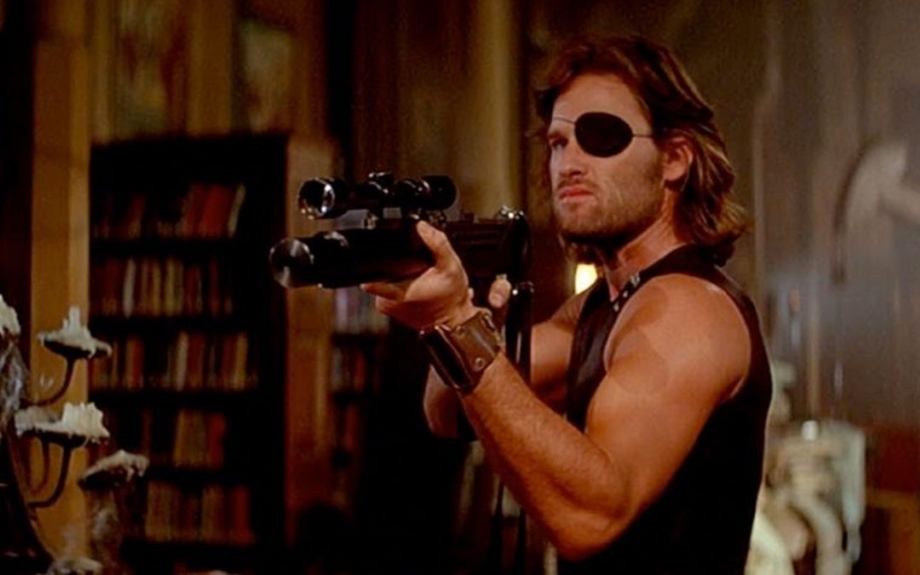
It helps when you have some committed performances, not least from Kurt Russell as ultimate man’s-man maverick Snake Plissken. Strange to think now that Russell, best known for Disney work, was seen as an odd choice for the bitter, shoulder-chipped, ruthless Snake. But it’s a role he embraces whole-heartedly, making Snake both a selfish guy who literally barely cares about anything other than himself and the sort of ideal tough-as-nails maverick who gets things done that we all kind of want to be. He’s also – from his eyepatch to his grizzled monosyllabic dialogue to his unveiled contempt for all the double-dealers and bullies he meets – effortlessly cool.

Russell sets a lot of the tone for the movie, his low-key scowl allowing a lot of the rest of the cast to cut loose in eccentric roles. Ernest Borgnine overflows with cheery New York patter, which doesn’t even slow down when he lights a Molotov cocktail to ward off marauding gang-members. Harry Dean Stanton weasels as a constantly side-shifting guy we are assured is a genius (despite all evidence to the contrary). Donald Pleasance has a whale of a time as an uncharismatic functionary who, it becomes clear, doesn’t care about anyone other than himself. Best of all, Lee Van Cleef (perhaps flattered that Russell seem to be homaging his Spaghetti Western roles) smirks, gloats and scowls as a relentlessly ends-rather-than-means boss.

Escape From New York barrels along to a blackly comic ending (in which our pissed off maverick hero potentially scuppers a major peace conference out of a fit of resentful pique). It’s intriguing world-building riffs wonderfully on Mad Max (in fact, you could argue that later Mad Max films basically riff of Escape From New York) and while its action is fairly routine, it’s acted and directed with huge verve and fun. The sort of thing you call a guilty pleasure.
The Greatest Story Ever Told (1965)

Greatest Story Ever Told header
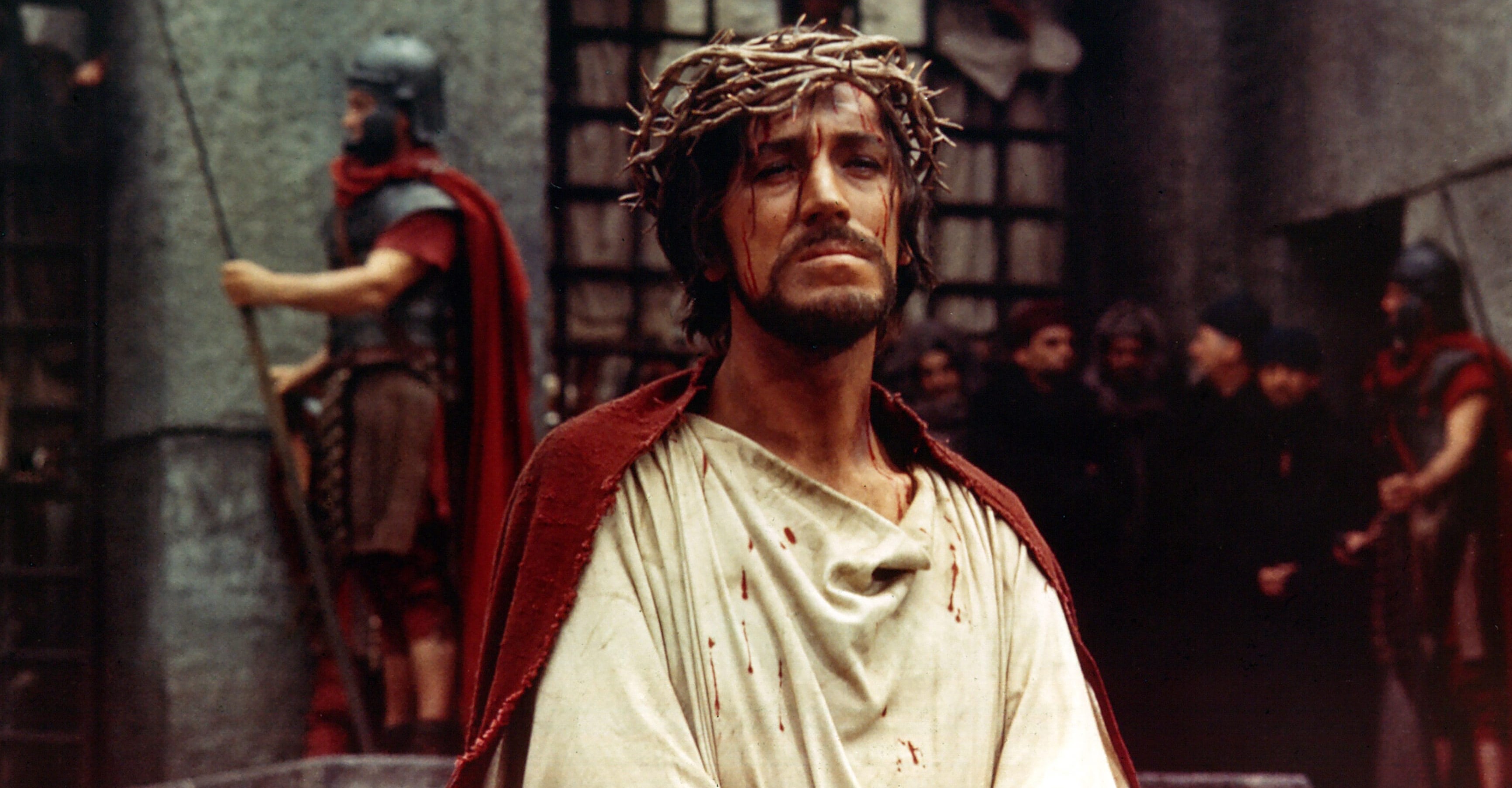
Max von Sydow carries a heavy burden in Steven’s far-from The Greatest Story Ever Told

Director: George Stevens

Cast: Max von Sydow (Jesus), Dorothy McGuire (The Virgin Mary), Charlton Heston (John the Baptist), Claude Rains (Herod the Great), José Ferrer (Herod Antipas), Telly Savalas (Pontius Pilate), Martin Landau (Caiaphas), David McCallum (Judas Iscariot), Donald Pleasance (“The Dark Hermit”), Michael Anderson Jnr (James the Less), Roddy McDowell (Matthew), Gary Raymond (Peter), Joanna Dunham (Mary Magdalene), Ed Wynn (Old Aram), Angela Lansbury (Claudia), Sal Mineo (Uriah), Sidney Poitier (Simon of Cyrene), John Wayne (Centurion)

You could make a case to prosecute The Greatest Story Ever Told under the Trade Descriptions Act. In a world where we are blessed (cursed?) with a plethora of Biblical epics, few are as long, worthy, turgid or dull as George Stevens’ misguided epic. Just like Jesus in the film is plagued by a Dark Hermit representing Satan, did Stevens have a wicked angel whispering in his ear “More wide shots George, and even more Handel’s Messiah. And yes, The Duke is natural casting for a Roman Centurion…”. The Greatest Story Ever Told has some of the worst reviews Christianity has ever had – and it’s had some bad ones.

The plot covers the whole life of the Saviour so should be familiar to anyone who has ever seen a Gideon’s Bible. It was a passion project for Stevens, who spent almost five years raising the cash to bring it to the screen. When he started, the fad for self-important Biblical epics was starting to teeter. When it hit the screen, it had flat-lined. It didn’t help that The Greatest Story Ever Told was first released as an over four-hour snooze fest, laboriously paced, that managed to drain any fire or passion from one of (no matter what you believe) the most tumultuous and significant lives anyone on the planet has ever led. The film was cut down to about two hours (making it incomprehensible) and today exists as a little over three-hour epic that genuinely still feels like it’s four hours long.

Stevens gets almost nothing right here whatsoever. Self-importance permeates the entire project. The film cost $20million, double the largest amount the studio had ever spent. Ordinary storyboards were not good enough: Stevens commissioned 350 oil paintings (that’s right, an entire art gallery’s worth) to plan the picture (which probably explains why the film feels at times like a slide show of second-rate devotional imagery). The Pope was consulted on the script (wisely he didn’t take a screen credit). Stevens decided the American West made a better Holy Land than the actual Holy Land, so shot it all in Arizona, Nevada and California. It took so long to film, Joseph Schildkraut and original cinematographer William C Mellor both died while making it, while Joanna Durham (playing Mary Magdalene!) became pregnant and gave birth. Stevens shot 1,136 miles of film, enough to wrap around the Moon.

There’s something a little sad about all that effort so completely wasted. But the film is a complete dud. It’s terminally slow, not helped by its stately shooting style where the influence of all those paintings can be seen. Everything is treated with crushing import – Jesus can’t draw breath without a heavenly choir kicking in to add spiritual import to whatever he is about to say. Stevens equates grandeur with long shots so a lot of stuff happens in the widest framing possible, most ridiculously the resurrection of Lazarus which takes place in a small part of a screen consumed with a vast cliff panorama. Bizarrely, most of the miracles take place off-screen, as if Stevens worried that seeing a man walk on water, feed the five thousand or turn water into wine would stretch credulity (which surely can’t be the case for a film as genuflecting as this one).

What we get instead is Ed Wynn, Sal Mineo and Van Heflin euphorically running up a hilltop and shouting out loud the various miracles the Lamb of God has bashfully performed off-screen. Everything takes a very long time to happen and a large portion of the film is given over to a lot of Christ walking, talking at people but not really doing anything. For all the vast length, no real idea is given at all about what people were drawn to or found magnetic about Him. It’s as if Stevens is so concerned to show He was better than this world, that the film forgets to show that He was actually part of this world. Instead, we have to kept being told what a charismatic guy He is and how profound His message is: we never get to see or hear these qualities from His own lips.

For a film designed to celebrate the Greatest, the film strips out much of the awe and wonder in Him. It’s not helped by the chronic miscasting of Max von Sydow. Selected because he was a great actor who would be unfamiliar to the mid-West masses (presumably considered to be unlikely to be au fait with the work of Ingmar Bergman), von Sydow is just plain wrong for the role. His sonorous seriousness and restrained internal firmness help make the Son of God a crushing, distant bore. He’s not helped by his dialogue being entirely made-up of Bible quotes or the fact that Stevens directs him to be so stationary and granite, with much middle-distance staring, he could have been replaced with an Orthodox Icon with very little noticeable difference.

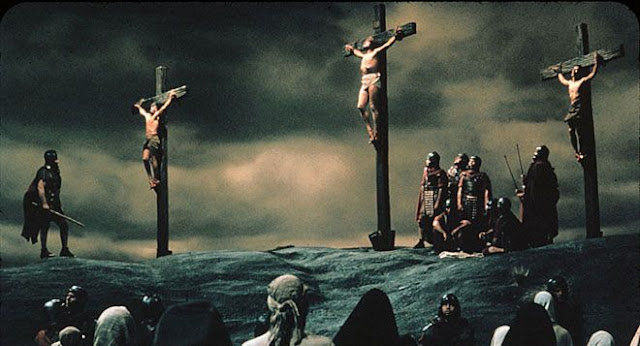
Around von Sydow, Stevens followed the norm by hiring as many star actors as possible, some of whom pop up for a few seconds. The most famous of these is of course John Wayne as the Centurion who crucifies Jesus. This cameo has entered the realms of Filmic Myth (the legendary “More Awe!”exchange). Actually, Stevens shoots Wayne with embarrassment, as if knowing getting this Western legend in is ridiculous – you can hardly spot Wayne (if you didn’t know it was him, you wouldn’t) and his line is clearly a voiceover. In a way just as egregious is Sidney Poitier’s wordless super-star appearance as Simon, distracting you from feeling the pain of Jesus’ sacrifice by saying “Oh look that’s Sidney Poitier” as he dips into frame to help carry the cross.

Of the actors who are in it long enough to make an impression, they fall into three camps: the OTT, the “staring with reverence” and the genuinely good. Of the OTT crowd, Rains and Ferrer set the bar early as various Herods but Heston steals the film as a rug-chested, manly John the Baptist, ducking heads under water in a Nevada lake, bellowing scripture to the heavens. Of the reverent, McDowell does some hard thinking as Matthew, although I have a certain fondness for Gary Raymond’s decent but chronically unreliable Peter (the scene where he bitches endlessly about a stolen cloak is possibly the only chuckle in the movie).

It’s a sad state of affairs that the Genuinely Good actors all play the Genuinely Bad characters – poor old Jesus, even in the story of his life the Devil gets all the best scenes. That’s literally true here as Donald Pleasence is head-and-shoulders best-in-show as a softly spoken, insinuating but deeply sinister “Dark Hermit” who tempts Jesus in the wilderness and then follows Him throughout the Holy Land, turning others against Him. Also good are David McCallum as a conflicted Judas, Telly Savalas as weary Pilate (he shaved his head for the role, loved the look and never went back) and Martin Landau, good value as a corrupt Caiaphas (“This will all be forgotten in a week” he signs the film off with saying).

That’s about all there is to enjoy about a film that probably did more to reduce attendance at Sunday School than the introduction of Sunday opening hours and football being played all day. A passion project from Stevens where he forgot to put any of that passion on the screen, it really is as long and boring as you heard, a film made with such reverent skill that no one seemed to have thought about stopping and saying “well, yes, but is it good?”. I doubt anyone is watching it up in Heaven.

The Great Escape (1963)

Steve McQueen is the Cooler King (King of Cool?) in The Great Escape

Director: John Sturges

Cast: Steve McQueen (Captain Virgil Hilts), James Garner (Flight Lt Bob Hendley), Richard Attenborough (Sqd Leader Roger Bartlett), James Donald (Group Captain Ramsey), Charles Bronson (Ft Lt Danny Welinski), Donald Pleasance (Flt Lt Colin Blythe), James Coburn (FO Sedgwick), Hannes Messemer (Oberst von Luger), David McCallum (Lt-Commander Eric Ashley-Pitt), Gordon Jackson (Ft Lt Andy MacDonald), John Leyton (Ft Lt Willie Dickes), Angus Lennie (FO Archie Ives), Nigel Stock (Ft Lt Dennis Cavendish), Robert Graf (Werner)

Is there a film in Britain more associated with holidays than The Great Escape? While I was growing up it felt like a day-off wasn’t complete unless the BBC screened it as part of their afternoon schedule. In Britain is has a status as a sort of cosy uncle, a part of the furniture of many people’s filmic lives. There is always something comforting and reassuring about The Great Escape. So much so, people forget it ends with a large bodycount and the majority of our heroes further away from freedom than when they started.

But it doesn’t really matter, because The Great Escape is one of the last hurrahs of effective, nostalgic war-films. The sort of hugely enjoyable caper that recognises the cost of war, but also celebrates the pluck, ingenuity and guts of Allied servicemen, running rings around those dastardly cheating Nazis. Where we would all like to look back and remember those days when men-were-men and worked together towards a common goal. Sturges has created a marvellous tapestry of a movie, that pulls together several striking scenes, characters and snippets of dialogue into a true ensemble piece that reflects the camaraderie and unity that exists between the prisoners as they work towards their escape.

In some ways, The Great Escape is such good fun, such well-packaged entertainment and telling such an exciting, uplifting and (in the end) moving story that it’s almost immune to criticism. You’d have to have a pretty hard heart not to enjoy it. And you’d have to be pretty cynical not to enjoy the way it presents a series of obstacles and then carefully demonstrates the fascinating and rewarding ways the prisoners resolve these. It’s also notable that, aside from the shadowy Gestapo types, the film doesn’t really have an antagonist. The enemy is that fence. Most of the Germans are just regular soldiers doing a job – it’s only the brutal final-act Gestapo who are aren’t playing this eccentric game. But this helps us sit back and enjoy the film as a caper – just as it makes the burst of machine-gun fire that (nearly) ends the film even more impactful and shocking.

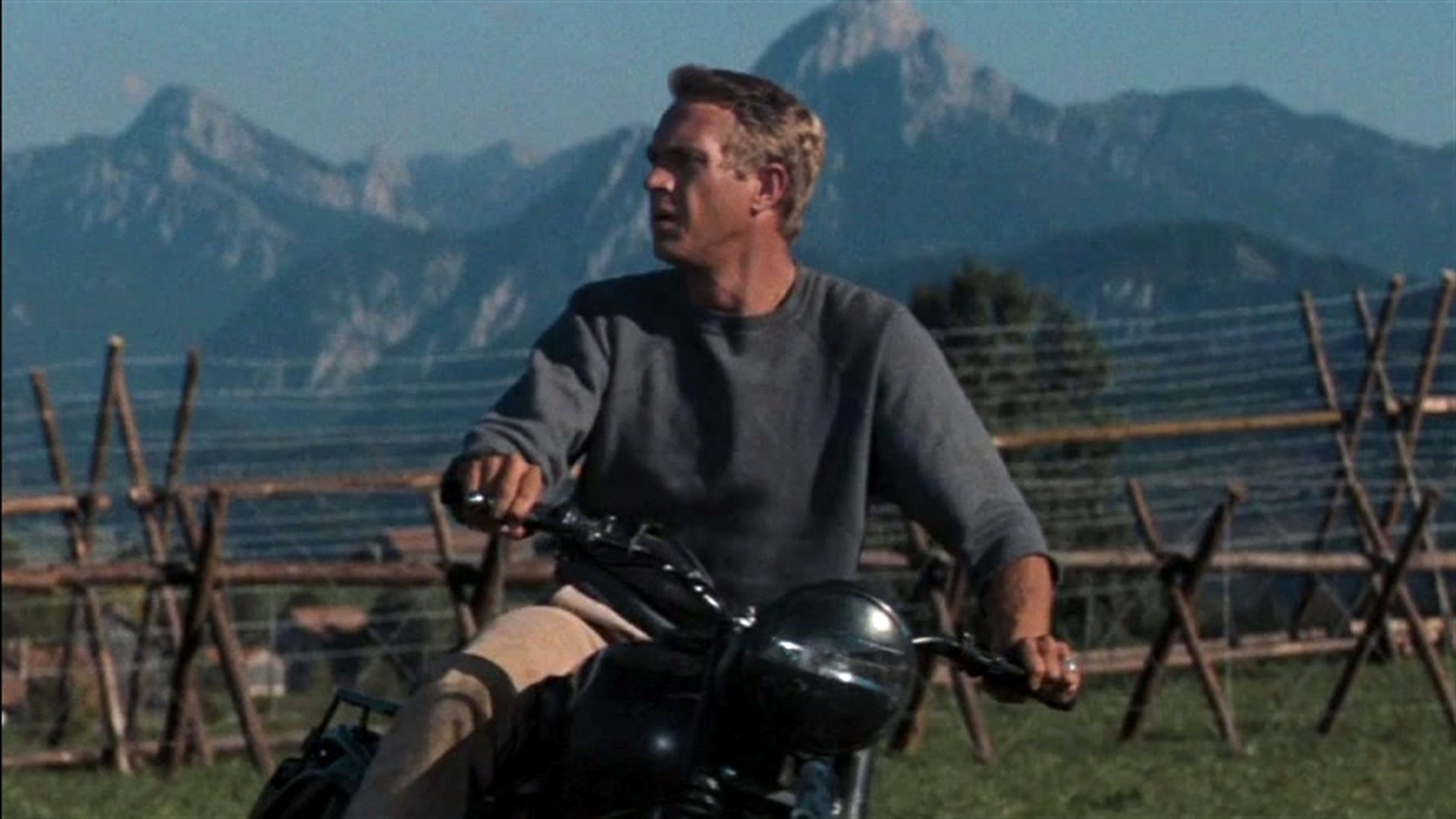
Sturges’ gets the tone of the film spot-on, and also draws a series of perfectly balanced performances from his all-star cast. I think it’s fair to say a lot of the film’s success was connected to Steve McQueen’s casting in the crucial role of Hilts. McQueen channels a sense of 1960s anti-establishment cool into the film (unlike the rest of the POWs, he seems to be wearing basically his own clothes in t-shirt, chinos and bomber jacket). Iconically bouncing his ball against the wall in a cooler, a natural loner (who of course still does his bit), with a cocky sense of defiance and some exceptional motor-bike skills, Hilts is undeniably cool. He’s the face of the film – and the one you walk away wanting to be.

He also gets the film’s definitive claim to fame, with a series of daring motorbike stunts as he races across Germany to escape. Mostly performed by McQueen himself (although not the most famous fence jump, done by a stuntman) this last act chase is a gripping, action counter-point to the more cagey, paranoid runs of the other escapees. It’s so exciting and feel-good, it’s a surprise to remember that Hilts actually gets caught. But then, if he hadn’t, we’d have lost McQueen’s cool, wry shrug of acceptance as he and his mitt were sent back to the cooler in the camp for another 20 days.

The film tees up plenty of sub-plots for the rest of the cast, with Sturges’ spreading the love very effectively. Charles Bronson gets perhaps the best plot as “tunnel king” Danny Welinski who holds back his crippling claustrophobia almost long enough. I think this might be Bronson’s finest hour, giving a real vulnerability to Danny, with genuinely quite affecting whimpers and fear at confronting the tunnel – making his struggle all the more moving. Bronson makes a wonderful double-act with John Leyton as fellow tunneller Willie Dickes, the two of them forging an affecting bond of loyalty.

A similar bond also forms between James Garner’s suave and playful scrounger Jack Hedley and Donald Pleasance’s professorial forger Colin Blythe (has there ever been a more “Colin” Colin on film than Pleasance?). The final moments between this pair carry perhaps the biggest gut-punch of a film that has a surprising large number of them. Pleasance’s sad attempts to hide and combat growing blindness are genuinely affecting, while Garner is a master at conveying depth beneath a light surface. Sturges’ film taps into the nostalgic memories most of us have (or have picked up) of this war being one where life-long friendships were formed against horror and adversity.

Attenborough does most of the thankless heavy-lifting as Big X, but the film uses his Blimpish authority well. Gordon Jackson has a memorial role as the number #2 famously caught out by his own vocal trap (the sort of irony films like this love). Fans of the TV show Colditz can enjoy seeing David McCallum in a very similar role as a daring young escapee. James Donald channels British reserve as the senior officer. The film’s single truly bizarre performance is from James Coburn, with an Australian accent from the Dick van-Dyke school of ineptitude, so terrible even Sturges surely noticed it when cutting the film.

The Great Escape marshals all these cards extremely well. Any combination of any of these actors produces fireworks. It’s one of the best boys own adventure you can imagine. It in fact gets the perfect balance: you can spend a large chunk of the film thinking that being locked up in a German POW camp looks like the best time ever – and then it chillingly reminds you with its sad coda of the terrible cost of war. But it’s that first hour and half and its celebration of grit, guts, determination and ingenuity that really works – and it’s so entertaining that it solves immediately any mystery as to why any public holiday you’re 10-1 to find this popping up on your afternoon TV listings.

You Only Live Twice (1967)


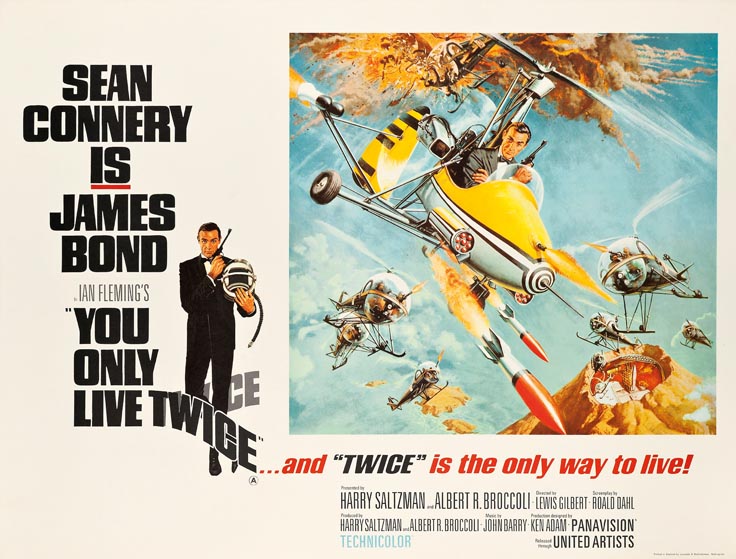
I feel Connery’s attitude to the film comes across well in this image…

Director: Lewis Gilbert

Cast: Sean Connery (James Bond), Akiko Wakabayashi (Aki), Mie Hama (Kissy Suzuki), Tetsurō Tamba (Tiger Tanaka), Teru Shimada (Mr. Osato), Karin Dor (Helga Brandt/No. 11), Donald Pleasence (Ernst Stavro Blofeld), Bernard Lee (M), Lois Maxwell (Miss Moneypenny), Desmond Llewelyn (Q), Charles Gray (Dikko Henderson)

James Bond films: always fun, even when not that good. You Only Live Twice is probably the prime example. For many, many reasons, it isn’t actually very good but still remains strangely enjoyable just because, well hell, it’s Bond. 

Anyway YOLT revolves around naughty super villains SPECTRE nabbing US and USSR space missions, hoping to provoke a nuclear war between the two superpowers. Apparently they will profit handsomely from this – but how they see that happening in a nuclear wasteland isn’t clear. Anyway, James Bond (Sean Connery) fakes his own death and heads to Japan to investigate. Events peddle around Japan for ages, giving filmgoers the chance for some vicarious sight-seeing, before culminating in an all-out attack by Bond and a gang of ninjas on the hollowed-out volcano base of SPECTRE chief Blofield (Donald Pleasance).

YOLT is the moment Bond started to head full tilt towards the Moore-era of overblown, fantasy silliness. The plot is total bobbins (despite being repeated in The Spy Who Loved Me, Moonraker etc.) with both Russians and the US naturally continuing to suspect each other, even when each side loses a spacecraft (though I did like the fact that the actual astronauts together in captivity are shown to have far more in common than not). There is no logical reason for them to behave like this, even at the heart of the Cold War.

There is plenty of other nonsense here. Bond’s death is faked early doors for no reason (only the hopeless SPECTRE is in any way fooled). Bond meanders around Japan with even less subtlety than usual, with a series of clashes, fights and chases that make little real narrative sense at all. Later, again for no reason, (and almost unbelievable to watch today) he disguises himself as a Japanese man (PC alert ahoy, as Bond cuts his hair with a bowl and tans his skin. At least he doesn’t tape his eyelids back…). He also finds a kindred spirit in Tiger Tanaka, both of them treating a host of female servants as a shopping list for rumpy-pumpy.

As per many Bond films, the franchise clambers on top of a current fashion to feel hip and cool (but actually manages to feel fusty and stuffy). This time it’s the samurai craze, as Bond joins a sword-swinging, ninja training school. Yes, you read that right. But of course Bond also needs to get married before the attack: again why? His wife is of course offed seconds later, and Connery just about manages to look put out at this coitus interruptus (more on Connery later…)

SPECTRE themselves are hilariously incompetent. They are hoodwinked like children by Bond’s ludicrous faked death. They practically signpost their location by bumping off anyone who gets within about five miles of the place. Later, poor Blofield not only carefully talks Bond through the self-destruct button for his rocket, he also lets Bond take back his clearly gadget-concealing smoking case, blows away two sidekicks (one right in front of Bond) rather than eliminate Bond himself, then caps it all with sending the base itself to kingdom come. SPECTRE’s agents are equally useless, with Brandt too attracted to Bond to finish him off (and then deciding to tie him up in a plane, detonate a grenade in it and then parachute out to leave the plane to crash with Bond in it – needless to say Bond lands the plane with ease).

The terrific volcano set

The volcano base, however, is a triumph of production design – it’s staggering to think that everything you see on screen was built for real. It’s huge and iconic – and the battle scene between the aforementioned ninjas and SPECTRE goons that fills the final act of the film is hugely exciting, despite almost every single thing making virtually no sense. Incidentally the final battle’s structure is lifted almost completely for a similar sequence in The Spy Who Loved Me.

The problem is that everything else leading up to this feels like all involved are going through the motions – as if there wasn’t really anything fresh left to do or say in the Bond-verse. Need a glamourous location. Never been to Japan have we? Need some scuffles – not sure we‘ve done a roof top fight in long shot, let’s chuck that in. How about we kill Bond off for a few seconds – yeah never done that before. A super gadget needed? Bring on suitcase-assembled helicopter, Little Nellie. The final reveal of Blofeld is fun, but when you come back to watching the film you realise he’s as bland and identikit as Largo or Dr No – a pompous windbag who fucks everything up.

Stumbling through all this is a clearly bored Sean Connery. By this time, Connery was sick of the part (“I’ve always hated that damned James Bond, I’d like to kill him” he was to later say), and money was the only thing tempting him back. Connery coasts through the whole movie with the air of a man who would rather be anywhere else. There is no sparkle at all, just a weary going through the paces. He can barely raise a smirk, let alone a glimmer of interest in the events around him.

Bond turns Japanese. No they really did do this.

It’s the atmosphere of the whole film. Roald Dahl (yes that Roald Dahl) did the script – but he felt the book was pretty awful (one of Fleming’s duller efforts) so spiced it up with some new content. Problem was the suits basically demanded a certain quota of set pieces and a certain number of Bond girls. Trying to deviate from this template too much was far too difficult a challenge. Lewis Gilbert’s direction is professional but pretty uninspired: it sums up the whole movie.

Most of the acting is pretty non-descript. Donald Pleasance at least deserves some credit for making Blofield’s appearance iconic and for doing a nice line of whispering menace. Charles Gray is pretty good fun as a camp British contact (“That’s stirred, not shaken. Is that right?”) – though SPECTRE (true to form) confirm all his suspicions by knocking him off after less than minute or two on screen. Everyone else blends into one.

So, anyway, YOLT is really nothing special – a tired entry into a tired franchise, with an all too obviously disillusioned star and action beats that largely feel like retreads of things we’ve seen before (done better) in the series. But yet, but yet… Somehow enough of the old Bond magic keeps you watching. Sure Connery is indifferent and the action more a travelogue than a thriller – but the final sequence is exciting, Blofeld (for all his ineptitude) makes a decent enough villain, and while no-one really gets het-up about it, the stakes do feel fairly high. Stretches of the film are dull – but others work very well. You may only watch twice, but it will be fun enough.