Tag: Dorothy Malone

Basic Instinct (1992)

Basic Instinct (1992)

A sensationalist hit, this Trashy Hitchcock-pastiches looks very pleased with its own naughtiness today

Director: Paul Verhoeven

Cast: Michael Douglas (Detective Nick Curran), Sharon Stone (Catherine Tramell), George Dzundza (Detective Gus Moran), Jeanne Tripplehorn (Dr Beth Garner), Dorothy Malone (Hazel Dobkins), Denis Arndt (Lt Philip Walker), Leilani Sarelle (Roxy Hardy), Bruce A Young (Detective Sam Andrews), Chelcie Ross (Captain Talcott), Wayne Knight (Assistant DA John Correli), Stephen Tobolowsky (Dr Lamott)
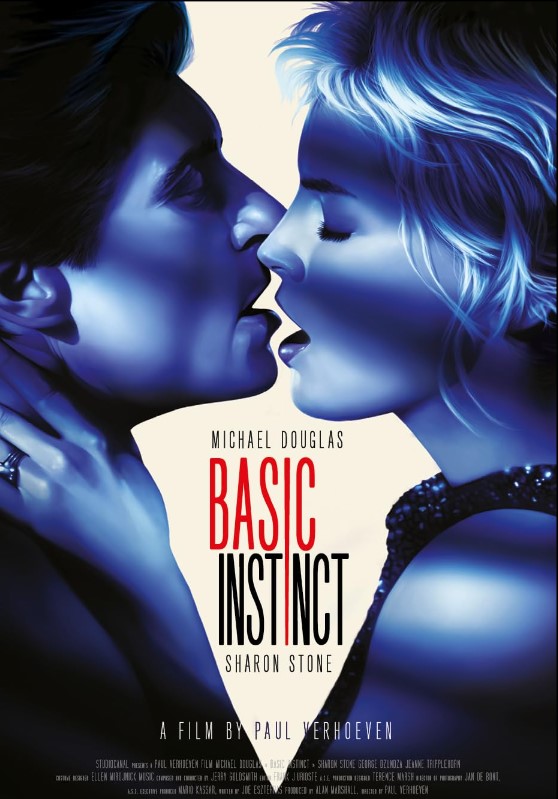
If there is one thing Basic Instinct proves for sure, it’s that Paul Verhoeven is a very naughty boy. A sensational smash hit in 1992, largely because of the instant iconic status of that scene (you know which one), Basic Instinct remixes Hitchcock (especially Vertigo and Psycho) with lashings of explicit sex and violence, a touch of The Silence of the Lambs and a dollop of Fatal Attraction. It’s a deeply silly, dirty film that was a sort of Fifty Shades of its day: vanilla porn for those who feel too self-conscious to actually go and watch a real one.

Catherine Trammell (Sharon Stone) is number one suspect for the murder of her boyfriend (or rather as she describes him “the guy I was fucking”) for two reasons: one she published a novel a few weeks earlier where she explicitly described the crime in detail and two she’s an obvious Hannibal Lector-ish genius psychopath. Doesn’t stop weak-willed detective Nick Curran (Michael Douglas) from becoming obsessed with her, sucked into a wild sexual affair. But is Catherine a misunderstood unlucky victim, or the genius manipulator her old college rival Dr Beth Garner (Jeanne Tripplehorn) – also Nick’s on-and-off girlfriend and psychiatrist – says she is?

Basic Instinct was the most expensive script ever sold, earning Joe Eszterhas $3million for what he claimed was fourteen days’ work. And you can see why – it’s got everything audiences could need for an addictive, trashy bit of fun. A femme fatale who is also a genius psychopath! A handsome macho cop! Brutal murders! A puzzle interesting enough to keep ticking over but obvious enough that you don’t need to think about it too much! And of course, lots and lots and lots of sex! And then even more sex! No wonder people saw dollar bills – at the very worst they had a chance at a so-bad-its-good box office smash.

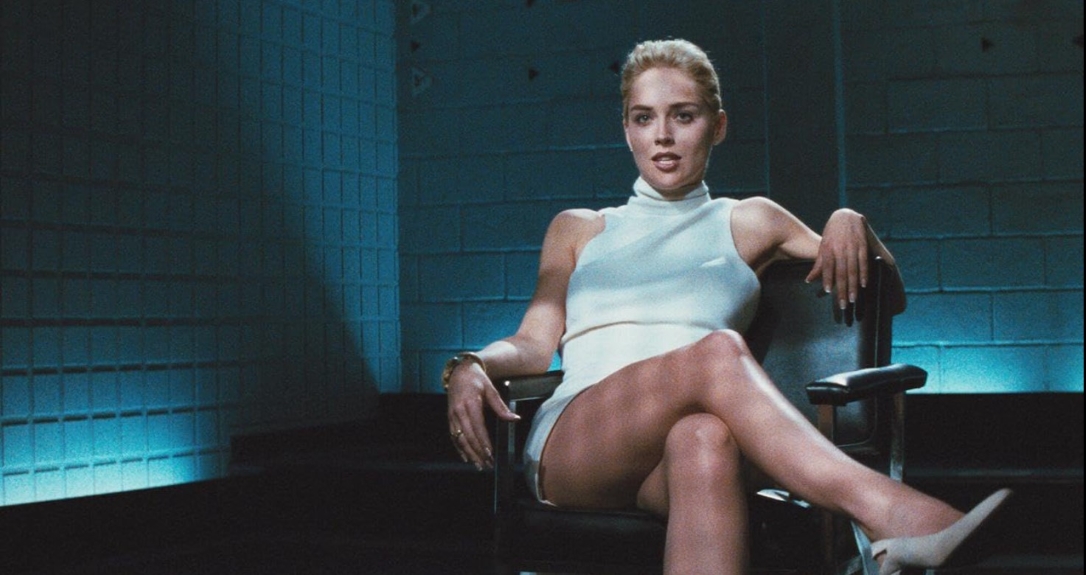
But the good stuff. Basic Instinct’s comic-book Hitchcock pastiche actually works rather well, helped enormously by a marvellous Oscar-nominated score by Jerry Goldsmith, which brilliantly channels Bernard Herrmann’s luscious Vertigo strings. It’s no exaggeration to say Goldsmith’s score dramatically improves the film, from adding tension to a drawn-out elevator trip to adding a film noir lyricism to Catherine and Nick’s rather forced sexualised banter. Verhoeven also really knows his business: the film’s famous interrogation scene works as well as it does through his skilful editing between wide angles, close-ups and POV shots, aided by the striking uplighting from cinematographer Jan de Bont.

That scene – and the film – also works because of Sharon Stone. Taking on a role turned down by almost every single woman in Hollywood, Stone seizes hold of a part she knew was a once in a lifetime opportunity. Nick may be the lead – and Douglas, in the middle of his run of weak modern American men bewitched by strong women, may have been the high-paid star ($14 million to Stone’s $550k) – but both knew this was Catherine’s movie. Stone plays the role with a playful, sensual confidence and arrogant defiance, knowing full well she can seduce anyone. Despite the clunky dialogue, she makes Catherine sexy, smart and just about vulnerable enough to make some viewers doubt whether she’s the killer or not. (I mean she blatantly is, the film doesn’t really try and pretend otherwise. Most of the fun is seeing how shamelessly she can parade it and still get away with it.)

Away from that though, Basic Instinct is a terribly silly film, a well-made pandering to our lowest desires. Opening with an extremely graphic post-coitus stabbing frenzy (with blood spray everywhere and a nose skewered by an ice pick) – it then teases us three times that it will repeat this again after nearly every explosive session of rumpy-pumpy. Ah yes, the rumpy-pumpy. Basic Instinct slows at the half-way mark for an almost five-minute extended multi-angled, orgasm packed bit of horizontal jogging that Nick then rather pathetically spends most of the rest film bragging about being “the fuck of the century”.

But then Nick is a pathetic figure. Somehow keeping hold of his badge, despite gunning down two tourists while high on cocaine, he’s got such an addictive personality he makes Lloyd Bridges’ (“I picked the wrong week to quit sniffing glue!”) air traffic controller in Airplane look like a model of restraint. After internal affairs-mandated therapy (how’s that for a slap on the wrist) – hilariously compromised by Jeanne Tripplehorn’s Dr Garner crossing all ethical lines by repeatedly shagging him – Nick has proudly quit drugs, drink, smoking, and shooting before asking questions. Needless to say, under Catherine’s influence, he embraces all of these again, all while still managing to be the sort of middle-aged loser who wears a pullover to nightclub.

Eszterhas’ script mixes awful “tough” dialogue (“Looks like he got off before he got offed” Nick’s partner jokes over a victim) with clumsy psychological insight (my favourite is Tobolowsky’s consultant who confidently states two options: Trammel either did or didn’t do it – inevitably this childishly empty insight is met with the manly ‘tecs muttering “In English Doc!”) and blunt statements of the obvious (“She’s brilliant! And Evil!” screams poor Tripplehorn). The flirty banter is largely sold by Sharon Stone’s confidence, since the lines (“I’m not wearing underwear”) are hardly Double Indemnity. The film’s mystery is so irrelevant to its appeal (and, in many ways, plot), it merrily gets bogged down in several off-screen murders of characters we’ve never met.

Today Basic Instinct feels like a bizarre museum piece. George Dzundza’s sidekick cop is intended as comic-relief but comes across like a little ball of toxic masculinity. An early sex scene between Nick and Beth is pretty much impossible to watch today without thinking “yeah that’s rape”. The film uses bisexuality (though we only, of course, get girl-on-girl – Douglas made it clear he ain’t gonna kiss no man) as raw titillation, an entre for the soft porn of Douglas and Stone noisily going at it for about 10% of the film’s run time. Even the famous scene is uncomfortable to watch, since Stone has since made it clear she didn’t consent to that shot.

Basic Instinct is a deeply silly piece of trash. But then that was its appeal back then – no one felt they were actually watching Hitchcock when they sat down to this rip-off of the master (in fact Basic Instinct makes you feel it’s probably a relief the production code meant Hitchcock couldn’t give into his Verhoevenish instincts). Today most like to think of it as a sort of well played card trick. However, it’s hard not to feel a bit for Sharon Stone to whom it became a millstone (which she eventually exploited for a terrible belated sequel for which she pocketed $13.5million), despite being the person possibly most responsible for its success. So maybe Nick won in the end after all.
Written on the Wind (1956)

Written on the Wind (1956)

Sirk’s melodrama packs in plenty of tight psychological observation among soap suds

Director: Douglas Sirk

Cast: Rock Hudson (Mitch Wayne), Lauren Bacall (Lucy Moore Hadley), Robert Stack (Kyle Hadley), Dorothy Malone (Marylee Hadley), Robert Keith (Jasper Hadley), Grant Williams (Biff Miley), Robert J. Wilke (Dan Willis), Edward Platt (Dr. Paul Cochrane), Harry Shannon (Hoak Wayne)

Money can’t buy you love. The oil-rich Hadleys live the high-life off the oil-empire built by patriarch Jasper Hadley (Robert Keith). Unfortunately, his children are both deeply unhappy and emotionally stunted. Kyle (Robert Stack) is an alcoholic playboy, Marylee (Dorothy Malone) a lonely woman who plays with other people’s lives to make herself feel better. Both are, in different ways, in love with sub-consciously resentful Mitch Wayne (Rock Hudson), the poor-boy childhood friend turned geologist who their father sees as the son he wishes he had. Mitch is in love with Lucy Moore (Lauren Bacall), an ambitious secretary at Hadley Oil – but Kyle also falls for her, marrying her. Marylee is in love with Mitch, who doesn’t feel the same. We already know from the film’s prologue all this is going to end with a bullet.

It makes for gorgeous entertainment in Douglas Sirk’s lusciously filmed melodrama, that helped lay out the template for the sort of soapy Dynasty-type TV monoliths that would follow years after. Sirk’s gift with this sort of material was to imbue it with just enough Tennessee Williams’ style psychological drama. Written on the Wind is awash with the glamour and beauty of wealth but, at the same time, demonstrates the immense psychological emptiness at the heart of the American Dream. What’s the point of all this luxury when those who have it are as deeply fucked up as the Hadleys are?

Their family is so wealthy the Texas town they live in is named after them and the run it like a private fiefdom, with the police running around like their errand boys. It’s not made them a jot happy. Both Maryann and Kyle are deeply aware of their own emptiness, rooted in the lack of attention (and love) from their father, a work-obsessed man who seems to have written his children off at an early age and invested far more time in training up Mitch like some sort of cuckoo-in-the-nest. Perhaps to try and win back their father’s love as much as to try and find meaning in their own, both of them want to possess Mitch: Maryann is destructively desperate to marry him, Kyle seems to want to become him and if one-way of doing that is by stealing the girl Mitch loves, all the better.

Wonderfully played by Robert Stack, overflowing with false confidence, jocularity and an utter, all-engulfing emptiness, Kyle talks endlessly about how Mitch is like a brother to him all while repeating as often as he can gently disparaging references to his poor-upbringing and dependence on the Hadley’s patronage. It’s coupled with his homoerotic (unspoken of course – it’s the fifties – but you can’t miss it!) obsession with Mitch. All of these confused, contradictory feelings wrap up in Stack’s (Oscar-nominated) performance, with the weak Kyle all too-readily believing Mitch might just be bedding his wife.

It’s an idea planted by Maryann, played with a scene-stealing bravado by Oscar-winner Dorothy Malone. Despite her vivacious energy and languidly casual confidence in establishing her pre-eminence over the newcomer Lucy, Maryann is a miserable, disappointed, deeply damaged soul, painfully bereft of any love and seeking meaning in casual couplings with a parade of gas attendants and hotel bellboys. Obsessively in love with Mitch, she dwells like Kyle on their childhood and the lost dreams of what might have been, but never was. This bubbles out over the course of Written on the Wind to an ever-more destructive Iago-like manipulation of the haplessly drunk Kyle, out of a mix of wanting everyone to be as miserable as she is and a desire to either own or destroy Mitch.

Malone and Stack triumph in these show-case roles, successfully building both frustration and sympathy in the audience. Opposite them, Hudson and Bacall (the stars!) play the more sensible, less interesting parts. Bacall’s strength and firmness balance rather nicely the contradictions in Lucy. A clear-eyed realist on meeting Kyle, attracted to the display of wealth while repulsed by his shallow, well-oiled, lothario routine, she never-the-less marries him, at least partly out of a desire to mother this fragile figure (she is genuinely moved by Kyle’s cockpit confessions of inadequacy and self-loathing while he flies her from New York to Miami for a date). From this Lucy confronts the psychological mess of the Hadley family with a stoic determination to make the best of things.

When does she start to develop feelings for Mitch? Mitch is clearly smitten on first sight, glancing fascinated at her legs while she stands behind a display board. But Sirk uses Rock Hudson’s similar stoic quality to great effect, turning Mitch into the epitome of duty, loyal enough to the Hadley family to bend over backwards to support the Kyle-Lucy marriage, all while clearly carrying an immense candle for Lucy. Saying that, part of the fun in Written on the Wind is wondering how much the patient Mitch is a conscious cuckoo, displaying all the intelligence, dedication and aptitude that Jasper so publicly lambasts his children for lacking (and whose fault is that?)

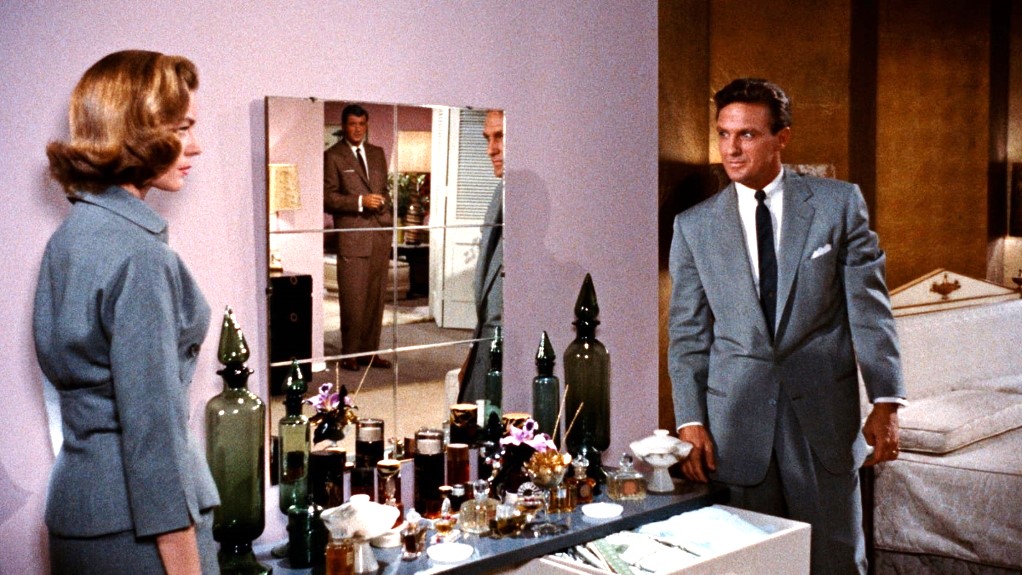
All these psychological soapy suds bubble superbly inside Sirk’s intricately constructed world. Every shot in Written on the Wind is perfectly constructed, splashes of primary colours dominating a world of pristine 50s class. Sirk frames the picture gorgeously, notably using mirrors effectively to place the characters in triangular patterns (Mitch at one point strikingly appearing in a mirror standing between Kyle and Lucy) or to suggest psychological truths (one shot angled to show Lucy brushing her hair in a mirror where we see a reflection of the reclining Maryann and don’t forget that marvellous closing shot of Dorothy subconsciously mirroring her father’s pose in the painting behind her while caressing a phallic model of an oil drill).

Sirk keeps events just the right side of melodramatic excess. A brilliantly staged sequence sees Maryann – dragged home from an assignation by the police – dance with a wild abandon in her bedroom while Jasper, horrified at realising how his disregard has warped Maryann, collapses to a heart-attack on the stairs. It’s a sequence that could be absurd but has just the right amount of reality to it, grounded as it is in Maryann’s self-loathing. Just as Kyle’s belief that impotence is going to consign him to being as much a failure in continuing the Hadley line as he is in everything else. Particularly since he’s constantly reminded of his inadequacy opposite the taller, smarter, better-at-everything Mitch who everyone else in the film openly seems to prefers to him.

It’s an extraordinary balance Sirk keeps, treating the characters with utter respect and affection while placing them in an over-the-top structure full of elaborate sets and overblown, melodramatic events and heightened feelings. Perhaps because Sirk never laughs at the concepts and content he’s created, we invest in both its truth and ridiculous entertainment quality. He does this while avoiding any touch of self-importance, never forgetting this is an old-fashioned melodrama. It makes Written on the Wind a hugely enjoyable, and surprisingly rich, character study mixed with plot-boiler.

The Big Sleep (1946)

The Big Sleep (1946)

Bogie and Bacall flirt their way into legend in the iconic Chandler adaptation

Director: Howard Hawks

Cast: Humphrey Bogart (Philip Marlowe), Lauren Bacall (Vivian Sternwood Rutledge), John Ridgeley (Eddie Mars), Martha Vickers (Carmen Sternwood), Sonia Darrin (Agnes Lowzier), Dorothy Malone (Acme bookstore owner), Regis Toomey (Chief Inspector Bernie Ohls), Peggy Knudsen (Mona Mars), Charles Waldron (General Sternwood), Charles D Brown (Norris), Elisha Cook Jnr (Harry Jones)

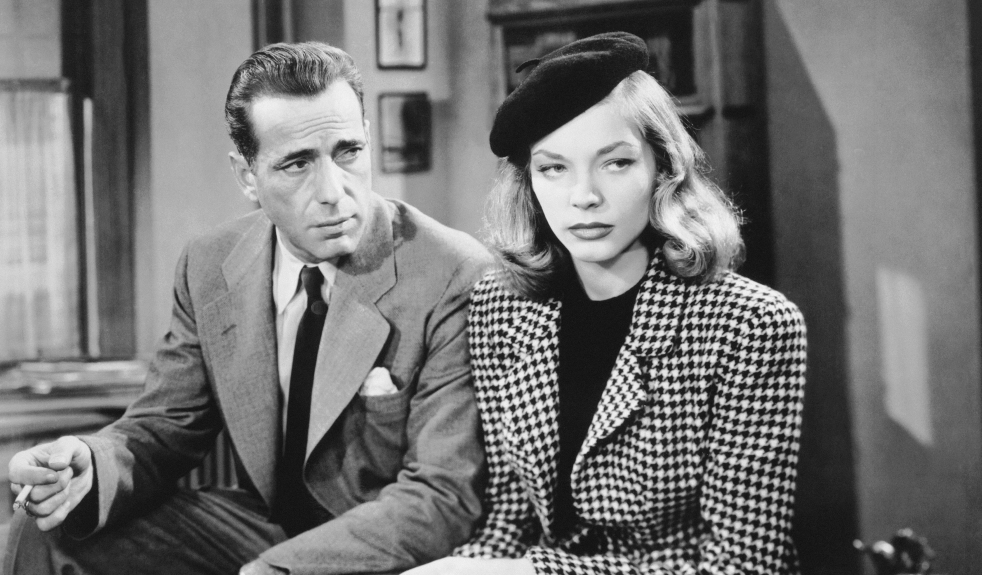
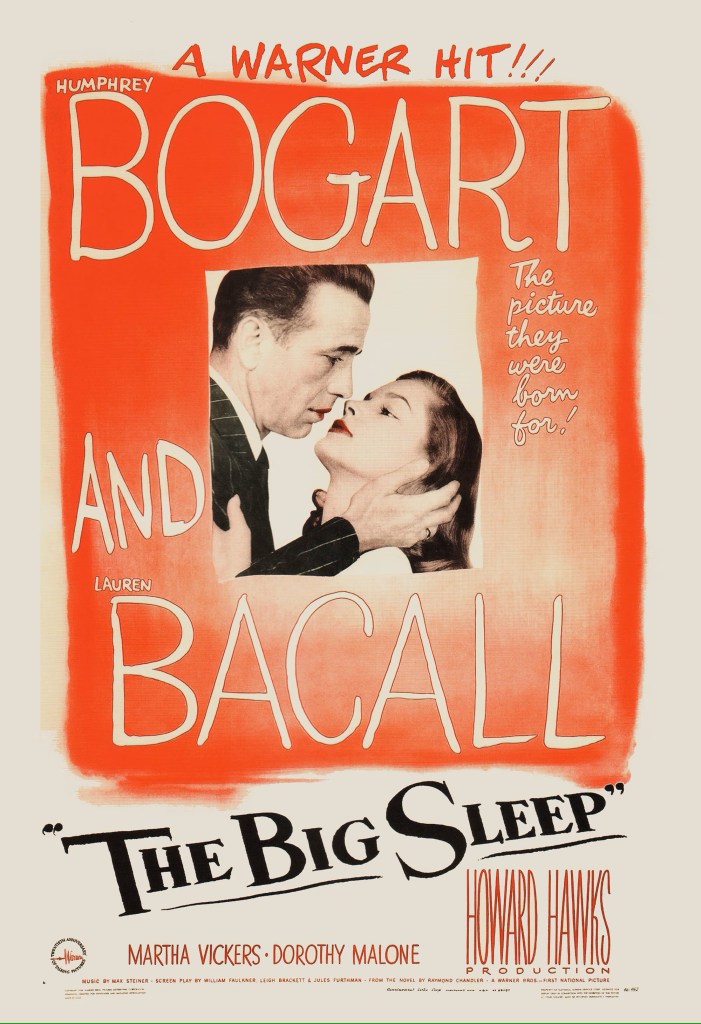
The Big Sleep was actually shot in 1944 – you can spot the odd wartime reference, from a female taxi driver to Marlowe’s special gasoline permit – but was released almost two years later. A lot had changed since then (the end of the war for starters) not least the fact that Bogart and Bacall had become the most famous couple in the world. After previews, Warner Bros quickly twigged they could have a mega-hit if they took out some of the dull bits and replaced them with Bogie and Bacall flirting instead. Which they duly did, helping turn The Big Sleep from what could-have-been a fairly routine Chandler gumshoe adaptation into a sort of genre-defining phenomenon.

The first thing they sacrificed was the plot. Famously, nothing in The Big Sleep really makes that much sense – and it hardly matters. Bogie asked Hawks at one point just who exactly shoved the Sternwood unconscious chauffer’s into the river – neither Hawks or the several scriptwriters (including William Faulkner and Leigh Brackett) had a clue. It doesn’t matter, because few films are about “the ride” as much as The Big Sleep. Every moment has something in it to appeal to the hard-boiled detective fan. Not a scene goes by without either a glamourous lady eager to bed Bogie, a fight, a shooting or some combination of all three. All washed down by a hard-bitten Bogie at his absolutely best, over-flowing with charisma and an impish sense-of-fun at how cool it all was.

The Big Sleep sees Philip Marlowe (Humphrey Bogart) hired by General Sternwood (Charles Waldron) to investigate a series of mysterious debts run up by Sternwood’s carefree and wantonly flirtatious daughter Carmen (Martha Vickers). The plot inevitably thickens as Marlowe uncovers blackmail, prostitution, pornography rings and lord knows what else, all circulating around a sinister bookseller with a sideline in naughty photos, a brazen femme fatale (Agnes Lowzier) manipulating a series of weak-willed men and a tough gangster Eddie Mars (John Ridgeley) willing to use his secrets to win advantage. That’s not even mentioning Carmen’s austerely arch sister Vivian (Lauren Bacall) whose sultry flirtatiousness captures Marlowe’s attention.

The Big Sleep really is a series of hugely entertaining scenes, loosely tired together with a vague plot. The original cut had featured a dull scene with Bogie laboriously explaining what was going on to his dull-as-ditch-water police friend. What Hawks and co realised is no one really wants to see that when they could see Bogie and Bacall puffing cigarettes and talking suggestively (brazenly!) about how you need to ride a horse hard. They were probably right: after all, no one thinks about Psycho and says “my favourite scene is the bit with the psychiatrist’s explanation at the end”. Hawks realised if the viewer enjoyed themselves, no one would give a damn if it made almost no sense.

How else really can you explain scenes like Marlowe’s drop-in on an Acme bookstore where he meets the sort of drop-dead gorgeous bombshell store owner (Dorothy Malone, sexy as hell) who only exists in movies and happily closes the store in the middle of the afternoon to drink a bit of whisky (and more) with Bogie? It offers nothing to the plot that couldn’t be covered with a brief time-lapse montage – it’s all about the mood, the dialogue and the sensual charge between the two characters, with the illicit promise of no-strings sex (which, rather nicely for a 40s movie, they both seem well-up for). Who hasn’t dreamed of that?

It’s the same frisson that lies behind the whole Bogie and Bacall appeal. These two set the screen alight with the sort of temperature that came from basically watching them have an affair right in front of us. The two became an illicit item while filming To Have and Have Not and large chunks of The Big Sleep were held up due to Bogie drinking away his guilt. By ’46 they were an official item, but you couldn’t doubt it from the lingering, heated looks they give each other. Or the screwball lightness – and the one-upmanship and delight in making the other laugh – during their telephone call to the police department, as they pass the phone between each other putting on voices and pretending to be various members of an entire clan of troubled curtain-twitchers.

Humphrey Bogart was in his element here. Literally no one before or since could play this sort of super-smart, more-sensitive-than-he-appears hero who covers himself with a cynical, wise-cracking front than him. His Philip Marlowe has a joke for every occasion but also a strong moral sense close to the surface. He’s playful – the delight in which he affects the fusspot demeanour of a book collector early on is delightful – but superbly unruffled by threats.

No wonder Bacall’s Vivian is drawn towards him. Bacall is sultry and husky voiced, a slice of imperial sexiness. If the film doesn’t call for her to do much more than that, she certainly can deliver it. It’s a performance that is left surprisingly one-note (after all that one-note was all Hawks wanted from her). Chandler believed Martha Vicker’s inspired performance of childish selfishness and sexual shamelessness as her sister Carmen was if anything even better – and he’s probably right. But then Bacall has those famous scenes with Bogie – somewhere between His Girl Friday and Basic Instinct – and it’s those moments that cement themselves in your mind.

That and The Big Sleep’s effective moments of hard-edged violence. Elisha Cook Jnr gets his greatest role as a weakling who bungles his way into an early grave in a partially-silhouetted murder. There is a cracking shoot-out between Marlowe and Mars’ hired gun and a neat (if barely logical) final face-off between the outraged Bogie and Joh Ridgeley’s expertly judged Mars who crumbles from arrogant superiority to snivelling cowardice. There are equal delights in numerous other scenes that play out like stand-alone treats – from Bogie’s imperious swatting of bully-boy Brody to his greenhouse hiring by General Sternwood. Every scene in the film plays out with hard-boiled zing like its own cool little stand-alone movie.

It makes for a fun package – and it’s easy to see why The Big Sleep is the sort of film people list as “their favourite”. It’s playful and manages to seem extremely cool without seeming to make any effort. Bogart is sensational and every second of the film offers something good. What the hell does it matter if none of it really makes sense?