Tag: Edmond O’Brien

The Barefoot Contessa (1954)

The Barefoot Contessa (1954)

An enigmatic beauty finds fame but not happiness in Hollywood in Mankiewicz’ slightly muddled mix of satire, romance and tragedy

Director: Joseph L Mankiewicz

Cast: Humphrey Bogart (Harry Dawes), Ava Gardner (Maria Vargas), Edmond O’Brien (Oscar Muldoon), Marius Goring (Alberto Bravano), Valentina Cortese (Eleanora Torlato-Favrini), Rossano Brazzi (Count Vincenzo Torlato-Favrini), Elizabeth Sellers (Jerry Dawes), Warren Stevens (Kirk Edwards), Franco Interlenghi (Pedro Vargas)

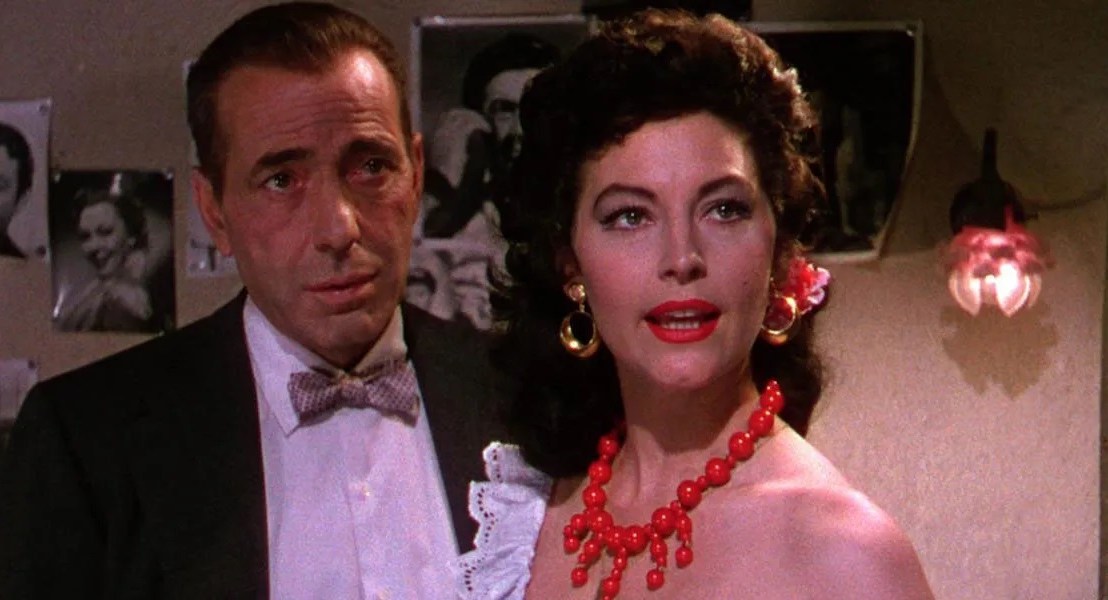
Rain hammers down on a funeral in the Italian Rivera. A group of (mostly) men gather to pay their respects to deceased film star Maria Vargas (Ava Gardner). In flashback, two of the men who discovered her as an exotic dancer in a Madrid nightclub, remember her. Harry Dawes (Humphrey Bogart) is the world-weary writer-director and her friend and mentor, Oscar Muldoon (Edmond O’Brien) a publicist to power-mad producers and self-satisfied millionaires who wanted to use Maria for their own ends. Maria’s success goes with a growing loneliness and ennui: marriage to Count Vincenzo Torlato-Favrini (Rossano Brazzi) feels like a fresh start but leads only to further tragedy.

Mankiewicz’s The Barefoot Contessa was an attempt to do for Hollywood what he so superbly did for theatre in All About Eve. What’s fascinating is that it’s clear Mankiewicz loved the theatre – for all its bitchy acidness – but clearly didn’t like Hollywood that much. The Barefoot Contessa is a cold, cynical film where Hollywood is a shallow, selfish place with no loyalty and where people are only commodities.

The only exceptions are Dawes and Maria. Dawes – an obvious Mankiewicz stand-in (and who hasn’t wished they could be Humphrey Bogart?) – is an artist, with an abashed guilt about wasting his talents on shallow films. Played with a quiet, observational languor by Bogart (so ashen faced at times, he seems almost grey), Dawes narrates with a dry distance, seeing but avoiding involvement, an arched eyebrow for every event. He’s also got a level of principle and integrity largely missing from the other Hollywood figures.

What we see of them is often hard to like – could Mankiewicz already be so bitter about his profession, just a few years after dominating the Oscars? Maria’s first producer, Warren Stevens, is a spoilt millionaire (inspired by Howard Hughes), played with a stroppy greed by Kirk Edwards. Stevens humiliates underlings in restaurants, treats Dawes like a bellboy, demands total devotion from Maria (sulkily ordering her to stay away from a potential rival at a dinner party) and has not a shred of interest in art. Under his control, Dawes directs films which sound formulaic (Black Dawn!) and which he clearly despises. A screen-test for Maria is gate-crashed by a series of European producers who gossip about money, stars, finance and never art.

Maria rises above all this as a true romantic ideal, her tendency to go barefoot part of her defining characteristic as a natural free-spirit in touch with the Mother Nature (“I feel safe with my feet in the dirt”). Ava Gardner is perfectly cast as this romantic but enigmatic figure, an idealised figure we never quite understand. Introduced as curiously indifferent about auditioning for Hollywood (partly due to her instinctive dislike for Stevens), Maria almost drifts into stardom but finds little contentment. She lives the ultimate Cinderella story (as she comments on with Dawes) but never find a satisfying fairy tale ending after her rags-to-riches story.

The Barefoot Contessa starts as a Hollywood expose, but becomes an ill-focused study of this almost unknowable glamour figure. Gardner is, of course, nothing like what a Madrid dancer from the slums would look or act like, but she is perfectly cast as the idealised figure Mankiewicz wants for his Maugham-ish exploration of ennui and shallowness among the jet-set of Europe. They’re not that different from Hollywood producers: obsessed with status and class, and uninterested in truth and art. Marius Goring’s Italian millionaire turns out (for all his Euro-charm) to be as much a stroppy ass as Stevens (humiliatingly blaming Maria for his gambling losses). Her husband, the Count, seems to be her salvation, but turns out to be as much a deceptive empty-suit as anyone else.

I suppose it’s part of the point that we never get to hear Maria’s own voice, only the perceptions of the men around her. You could say the same about All About Eve’s Eve and Margo, but they were such rich characters our understanding of them was always clear. But Maria is never quite compelling enough and Mankiewicz never escapes from making her feel a variation on a fantasy figure (between sex bomb and earth mother). Mankiewicz was forced to compromise on his central conceit (rather than gay, her husband is cursed with ludicrous war-wound induced impotency) of Maria marrying the man least suited to giving her the family-life purpose she seeks.

The Barefoot Contessa – strangely for a film from a director whose best work was with women – eventually becomes a film about men, fascinated with a woman they can never really understand. Dawes gets the closest, the only man free of sexual desire for her, but to the others she is often seen as an unobtainable sexual figure (on a yacht, she defiantly confronts the lecherous stares of the men on board). When we finally see her dance, she has a freedom and naturalness you feel has been crushed by the circles she now moves in.

It feels like two films pushed together: one a Hollywood expose about a newly-grown star (that film is a broader, farcical one where Edmond O’Brien’s hammy Oscar-winning turn as a wild-eyed, famously sweaty publicist seems to fit); the other a novelistic musing on ennui in the moneyed jet-set classes, where an unobtainable woman is at last obtained by a man who can do nothing with her.

Mankiewicz’s weakness is not pulling these two narratives together into a coherent thematic whole. He himself was later critical of the films structure. It’s beautifully written of course – Mankiewicz is a master of theatrical pose – and Jack Cardiff’s technicolour beauty is outstanding. The Barefoot Contessa sits in the shadow, both of In a Lonely Place (Bogart’s vicious 1950 Hollywood expose) and films that loosely followed in its ennui-exploring footsteps, like La Dolce Vita. But it’s as if Mankiewicz got a bit lost (like Dawes) about what his intentions were in the first place.

Julius Caesar (1953)

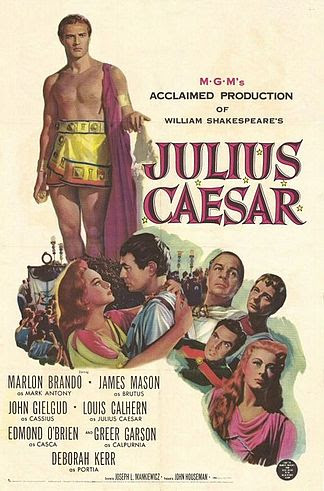
Mason and Gielgud confront Brando in Hollywood’s faithful Shakespeare adaptation Julius Caesar

Director: Joseph L Mankiewicz

Cast: Marlon Brando (Mark Antony), James Mason (Brutus), John Gielgud (Cassius), Louis Calhern (Julius Caesar), Edmond O’Brien (Casca), Greer Garson (Calpurnia), Deborah Kerr (Portia), George Macready (Marullus), Michael Pate (Flavius), John Hoyt (Decimus Brutus), Douglass Watson (Octavius)

Hollywood has always been in awe of Shakespeare. For large chunks of Hollywood’s Golden Age, it was felt the Bard’s mighty words could only be performed in a certain way by certain actors and that it somehow besmirched the Bard to put him on celluloid. It’s partly why there are few truly radical productions of Shakespeare on screen. By 1953 Orson Welles had directed inventive, challenging productions of Macbeth and Othello that reworked Shakespeare for cinematic effect, but these had been met by horror by some critics (‘how dare he change things!’). Julius Caesar fit the mould in many ways for how Hollywood felt Shakespeare should be done – traditionally, respectfully and by a cast of trained theatre actors. Then they threw in a curve ball by casting Brando as Mark Antony.

It’s hard now to really understand the hesitancy (and outright snobbery) from many about the very idea of Brando doing Shakespeare. This was the mumbling Stanislavsky-trained star of Streetcar, the earthy, T-shirt wearing slab of muscle that yelled “Stella!” – who on Earth did he think he was? Shakespeare is for plummy accents, focused on poetry. Brando took a huge risk taking this role on. But, today, his performance feels fresh, vivid and in many places strikingly modern.

Brando bought a more relaxed, natural style – and, yes he also affected a slightly plummy Brit accent – and bought a emotional realism to the most exhibitionist of Shakespeare’s great roles. (Let’s not forget, most of Antony’s part is a massive public speech). Brando creates an Antony who is passionate, loyal, committed – but also cunning, manipulative and very aware of the effect he is attempting to generate in that famous speech. He delivers the speech with aplomb, but concentrated as much on the emotion of what he was saying as the poetry of how he said it. It makes for an excellent marriage between two different styles of theatre, and Brando’s powerhouse delivery (Oscar nominated) carries real energy and dynamism.

It sits within a very traditional production, carefully shepparded to the screen by Joseph L Mankiewicz. Mankiewicz was a two-time Oscar winner for Best Director – but his reputation was largely formed on his mastery with dialogue and actors, rather than any visual sensibility. Julius Caesar is intelligently and faithfully bought to the screen – albeit with little cinematic flourish – shot with a moody black-and-white (designed to ape news-real footage and add further dramatic urgency to the action) on sets that were leftover at the studio from Quo Vadis. (Some of the busts are hilariously out of place – pretty sure Brutus has a bust of the Emperor Hadrian in his home, quite something seeing as he died 160 years before Hadrian was born.)

Mankiewicz by and large lets the play speak for itself.  What Shakespeare wrote, he largely says, and there is little in the way of message in a play that has been reversioned to almost any oppressive regime you can imagine. A few flourishes diverge from the text. He radically simplifies Acts 4 and 5 of the play (particularly the Battle of Philippi and the consecutive suicides of Brutus and Cassius), reducing these down to little more than half an hour. Wisely he focuses on the more dramatic Acts 1-3. The scheming is tense and moody, the assassination swift and brutal. The crowd scenes in Rome bustle with an immediacy and vibrancy – the camera often sits among the plebians during the speeches, encouraging us to share their feelings and reactions to the speeches. Antony is made a calculating and cunning figure – consciously waiting for certain reactions: he even, in one directorial flourish, enters bearing Caesar’s corpse during Brutus oration.

Mankiewicz’s main strength is in working with actors. Although Brando claimed the plaudits, the play is actually centred around Brutus, the intellectual of good intentions drawn into a conspiracy for the best intentions who finds principles and coups make for impossible bedfellows. The film’s finest performance is from the simply superb Mason, who was born to play tortured decent patricians like this and creates a Brutus stuffed with doubt, pride, arrogance, uncertainty and a little touch of fear. His patrician voice is perfect for this “most honourable of all the Romans”, and he sets about murder as the deeply unpleasant task it is, guided by his assumption that he-knows-best. The little moments are brilliantly done: from his petrified nerves at the assassination to his pious sermons on morality to Cassius to his tenderness and care for his wife and servants. It’s a wonderful performance.

To complement him, Mankiewicz recruited one of the greatest Shakespearean actors living as Cassius. Gielgud hadn’t done a film for over ten years (he always felt the cinema to be a minor art), and Julius Caesar was the only opportunity he had to capture one of his great Shakespearean performances on film until Prospero’s Books nearly 40 years later. It’s fascinating to watch a film where the old school (in Gielgud) and new school of acting (in Brando), both bring their own approaches to Shakespeare. This is Gielgud’s finest Shakespearean performance on camera – he must surely have learned more about acting on camera from Mason and Brando – the first time his style moved away from ‘singing the verse’ towards something more emotional, his Cassius a bitter, manipulative man who starts the film holding all the cards and ends up with none of them.

Watching these three powerhouse performers work is a treat – and also to see their styles merging and playing off each other. Mason is the perfect fusion of the realism of Brando and theatricality of Gielgud. Brando learned huge amounts from Gielgud, frequently consulting him on delivery. Gielgud surely took as much from Brando on adding greater emotion and realism into his screen performances, shirking the declamatory style that often makes him grand but unconnectable. The other actors around them offer versions of these styles: O’Brien stands out best as a shrewd and cunning Casca, Calhern tries a little too hard to be grand as Caesar, Kerr and Garson are a bit too theatrical in thankless parts as “the wives”.

Julius Caesar as a whole though is a lean, pacey and intelligent staging of the play, directed unobtrusively but professionally, very well acted by the cast. While Mankiewicz does nothing radical here – look at Orson Welles Othello and there you’ll see how the language of cinema can add a whole new perspective to Shakespeare, in a way this film never does. But while not radical, it focuses on story and character really well. The set-piece moments – the speeches, the murder, the plotting – are staged with urgency, energy and drama. Mainstream Hollywood still wasn’t ready for radical reworking of Shakespeare (this got lots of Oscar noms, Welles Othello was a flop), still seeing him as someone best cast in marble – but with Julius Caesar Hollywood took baby steps towards suggesting there could be a different future.

Seven Days in May (1964)

Burt Lancaster and Kirk Douglas find themselves on opposite sides of a military coup in Seven Days in May

Director: John Frankenheimer

Cast: Burt Lancaster (General James Mattoon Scott), Kirk Douglas (Colonel Jiggs Casey), Fredric March (President Jordan Lyman), Ava Gardner (Eleanor Holbrook), Edmond O’Brien (Senator Ray Clark), Martin Balsam (Paul Girard), Andrew Duggan (Colonel Mutt Henderson), George Macready (Secretary of the Treasury), Whit Bissell (Senator Fred Prentice), John Houseman (Admiral Barnswell)

President Jordan Lynman (Fredric March) has completed his signature policy: a nuclear disarmament treatment with the USSR. Some are thrilled, others are horrified. In the latter camp are the Joint Chiefs of Staff, none more so than chairman General James Mattoon Scott (Burt Lancaster). General Scott has a plan: a coup to be launched in seven days time, during a training op. But word leaks to his assistant Colonel Casey (Kirk Douglas) who, however much he admires Scott, won’t be party to treason. Casey warns the President – and a race against time begins to stop the coup.

Seven Days in May opens with documentary style footage of clashing crowds outside the White House (one pushing for peace, the other for war) and then carefully balances that style with an unsettling sense of paranoia throughout. People suddenly disappear (once from frame to frame), most of the action takes place in confined spaces. When characters do head outside, they constantly seem to be looking over their shoulder, with the camera watching like a distant observer. The lack of music all adds the eerie feeling that this could just happen.

And, of course you, feel it could. Because we’ve not lost a tingling sense of unease at an over-powerful military. It’s a shame therefore that Seven Days in May doesn’t grip quite as much as it should. I think a large part of that is because the plot is exposed very early – and when Casey goes to the authorities with his suspicions, they are instantly acted on. Thrillers like this often work best with a “one man stands alone” vibe – it’s missing here, and instead we get the President and the cabinet laboriously investigating different elements of this conspiracy looking to turn up enough evidence to prevent the coup before it starts.

The drop in tension could have been counter-balanced if the film had more successfully explored the conflicts and contradictions in America. This is after all a country priding itself as being the home of freedom and democracy – but since George Washington, has had a fondness for installing military men in a job role pointedly called “Commander-in-Chief”. This is a film that could have explored how different parts of American society might admire either an Adlai-Stevenson-style intellectual or a blood-and-guts ‘simple’ soldier. But the film dodges this – and works hard to stress both men act within what they define as honour and the needs of the country. The film is to nervous about any suggestion that Scott’s coup could lead to a proto-dictator vetoing the electorate.

There is also a naivety about the film. A long subplot (not particularly interesting) features Casey being side-lined into uncovering evidence of Scott’s long-term affair. Ava Gardner does her best with a largely thankless part as the woman in question, but there is a touching faith that evidence of this will be enough to destroy Scott. It’s a faith in the system: while the public might be shaken slightly in their belief that Scott is like King Arthur reborn, finding out he’s actually Lancelot is hardly going to weaken his hold over many of his followers – or his military machine.  For a conspiracy film, Seven Days believes conspiracies are a relatively simple matter to defeat.

What’s best about the film – not surprisingly since it’s largely a chamber piece – is the strength of the acting. Produced by Douglas (who generously cast himself in the most thankless role as the decent-but-dull Casey), a cast of stars was assembled. Lancaster was perhaps the only choice as the holier-than-thou Scott, arrogant, morally-superior, cold, distant but capable of inspiring immense loyalty – it’s the perfect role for him and he plays it to the hilt.

The film’s finest sequence is a late confrontation between Scott – Lancaster oozing moral superiority and unhidden contempt – and Fredric March’s intellectual President. March is brilliant, a born negotiator and compromiser – all the skills you need to be a successful politician – with just the right edge of irritation, arrogance and pride for you to know that, even if he is right, he’s no saint. March also gives Lyman an old-school sense of honour and moral principle that makes him unable to cross lines Scott can leave behind him, while still be jittery and waspish to colleagues and friends.

Filling out the cast, O’Brien gives a wonderful (Oscar-nominated) turn as a hard-drinking, good-old-boy Senator who turns out to have principles of iron and the guts to match. Martin Balsam delivers one of his patented put-upon functionaries, struggling to keep stress at bay. Macready is great value as a bombastic cabinet member while Houseman glides above it all as an Admiral to smart to say anything certain either way.

Acting is eventually what powers Seven Days in May and if it never becomes the white-knuckle conspiracy thriller or the insightful political commentary it should be, it just about has enough entertaining scenes to keep you watching.

Birdman of Alcatraz (1962)

Burt Lancaster excels in prison drama Birdman of Alcatraz

Director: John Frankenheimer

Cast: Burt Lancaster (Robert Stroud), Karl Malden (Harvey Shoemaker), Thelma Ritter (Elizabeth Stroud), Neville Brand (Bull Ransom), Betty Field (Stella Johnson), Telly Savalas (Feto Gomez), Edmond O’Brien (Thomas E Gaddis)

What is prison for? Is it just a cage – or should it offer reform and self-improvement? Debates like this have existed from the moment the first mass-prison opened. Birdman of Alcatraz taps into this, presenting a romanticised image of the life serving time of Robert Stroud (Burt Lancaster), a double convicted murderer (including killing a guard in prison) who narrowly escapes a death sentence, sentenced to a lifetime in solitary confinement. Stroud develops a passion for ornithology, eventually becoming one of the world’s experts on avian disease – all while confined to his cell.

Front and centre in Birdman of Alcatraz is Burt Lancaster. Made by his production company, and hand-picked director (after firing Charles Chrichton), Lancaster’s prickly persona and patrician distance is wonderfully re-directed as a man who, for much of the film, carries a strong whiff of danger and violence. Surly, bitter and unrepentant, Lancaster brilliantly captures Stroud’s monomania which blossoms into a realisation his own life has been wasted. Oscar-nominated, Lancaster makes Stroud hard-to-like, but one who we slowly relate to as his brutality into a sort of recognisable humanity, however sharp-edged and un-appealing he can be.

Frankenheimer’s well-made film – it’s strikingly less flashy than much of his early work, instead using a restrained sense of documentary realism – is one I found both entertaining and involving, but also strangely troubling. But first the positive: there is no doubt this is a great “prison” movie, perfectly capturing the monotony and boredom long-term solitary confinement brings. It reduces the world into something small and oppressive – Stroud has a cell, a corridor and an exercise yard – and Frankenheimer pours on the sympathy for prisoners who are caged in a system that removes any individuality from them to turn them into docile drones.

Stroud faces a permanent struggle to win the right to keep and study his birds – including going into business selling his bird illness remedies – in the face of a system that wants him to sit in his silently in his cell. It’s hard not to be engaged with Stroud, and the lengths he must go to sustain the new hobby that has given him a reason for living. A birdcage is fashioned out of a crate after months of work. Endless variations on cures are attempted to deal with an outbreak of disease. There is even a bureaucrat warden – well played by Karl Malden as a functionary who is all duty and no imagination – who strongly believes indulging this nonsense is letting him off lightly. And maybe he’s right.

And it’s that issue which I find troubling at a film. This is a conscious attempt to turn Stroud into a sort of Mandela of Ornithology. But, scratch the surface of researching the film, and you discover Stroud was a man repeatedly diagnosed as a psychopath, who committed acts of brutal murder. This is a film that asks us to look at a man and sympathise with him, based on his passion for his hobby – like a Herman Goering biopic that focuses on his love for art. Reflecting real life, in the film Stroud never expresses a jot of regret or remorse for his crimes. The film argues his work with birds shows he has been rehabilitated – but I would argue his utter inability to recognise any moral responsibility for his actions, shows he is in no-way suitable for release.

Let this idea trip into your head and then, no matter how well made the film is made – or how well acted or engaging the story is – you suddenly twig this is a film about a man who forms stronger relationships with birds than he does with other human beings. Stroud will slave for months to save his bird – but barely bat an eyelid at the death of a man. His closest bond seems to be his antagonistic relationship with Malden’s warden, while even his closest prisoner companion (an Oscar-nominated Telly Savalas) is someone who passes out of his life for years at a time with no reaction from Stroud, and who seems capable of more regret and reflection than Stroud.

Fitting his sociopathic profile, Stroud’s only real human contact is formed with his mother. And, like White Heat’s Cody Jarrett, they have the same all-encompassing (and damagingly facilitating) relationship. His mother – played with a skilful sense of control and emotional manipulation by Thelma Ritter – constantly excuses her son’s sins, while demanding she remain his principle (ideally only) personal contact. To her, all other people – especially women – are a dangerous corrupting influence. This is not a healthy relationship, but the film doesn’t explore it, other than positioning the mother as a beast, who furiously drops her son when he decides to marry (for convenience so she can visit him) a fellow ornithologist, played by Betty Field.

In real life, Stroud was a brutal killer – not the rogueish old man he becomes by the film’s end, charming journalists – but his personality is re-positioned to take a stance on the ethics of prison reform. The film has, not surprisingly, an optimistic 1960s feeling that free-will and independence should be prioritised and that the system only crushes those feelings. Life isn’t as simple as that, however much Birdman of Alcatraz wants it to be. However, it shows you can still hugely enjoy a film that you disagree with. I guess that’s the sort of oddity that makes us human.

The Killers (1946)

THe Killers
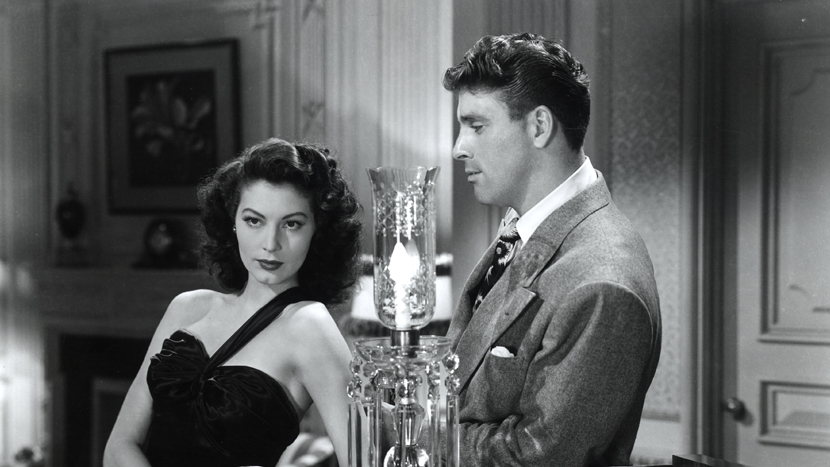
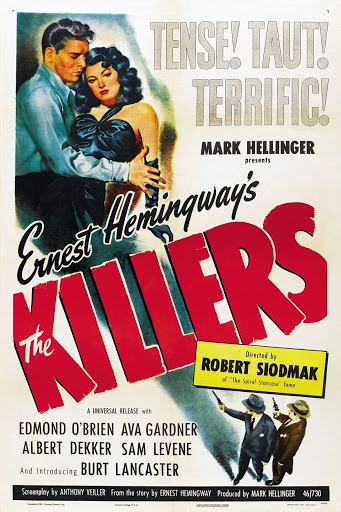
Ava Gardner draws Burt Lancaster into a world of crime in The Killers

Director: Robert Siodmark

Cast: Burt Lancaster (Pete Lund/”Swede” Anderson), Ava Gardner (Kitty Collins), Edmond O’Brien (Jim Rearden), Albert Dekker (“Big Jim” Colfax), Sam Levene (Lt Sam Lubinsky), Vince Barnett (Charleston), Virginia Christine (Lily Harmon Lubinsky), Charles D Brown (Packy Robinson), Jack Lambert (“Dum-Dum” Clarke), Donald MacBride (RS Kenyon), Charles McGraw (Al), William Conrad (Max)

Ernest Hemingway’s short story “The Killers” is 3,000 words of tension and atmosphere, as a pair of hitmen turn up at a diner looking for a former Swedish boxer. They leave and a fellow diner runs to warn the Swede. He meets the news of his impending demise with a stoic acceptance that nothing can be done. That’s basically it. Siodmark’s film consumes the entire content of the source material in the first fifteen minutes. So the film basically expands and explores this set-up. The gripping opening is just our entrée into the film, that will explain to us why the killers are here, who the Swede was and why he needs to die. It makes for a tight, atmospheric and very well-done film noir.

Because there is no doubt that this is a classic film noir. The Swede’s backstory ticks all the boxes you would expect of the genre. Of course, all his troubles are rooted in a Femme Fatale (needless to say his former girlfriend is a saint). There’s a heist gone wrong, double crossing gangsters, a dedicated investigator and a range of locations from seedy nightclubs to rundown hotel rooms. The Swede (Burt Lancaster) is an easily-led handsome man, duped by a beautiful woman. Of course, it all finally leads to a series of shoot-outs, where the wicked are punished for their crimes. In many ways, the script (by Anthony Veillor, heavily polished by John Huston) simply turns the short-story into a familiar piece of genre work. What makes it work is the freshness with which it’s told.

Siodmark is not the biggest name director out there. But he’s a skilled professional and he elevates the material into something with deeper meaning. Perhaps it’s the Hemingway in its DNA, but this story plays like a Greek Tragedy. Fate intervenes at frequent moments, with chance and minor decisions circling back to reveal all. The Swede is a sympathetic heavy, out-of-his-depth, with the fateful flaw of being too trusting. Even the villains are vulnerable figures, while the femme fatale is only doing what she must to try and survive. It’s a neat structure.

And Siodmark shoots it with a beautiful, unobtrusive and pacey smoothness. Nothing in the film draws overt attention to itself, but every moment beautifully combines with those around it to create an absorbing whole. The pace works perfectly, and the film’s structure works very well. Throwing us essentially into the middle of the story increases the mystery – and also means that as we hear the story of each person who knew The Swede, we are constantly invited to rethink and reappraise events and characters we have already met.

It’s a film about the lasting impact of disappointment and disillusionment. Why doesn’t the Swede run a mile when he hears there are killers after him? Because its clear he died inside years ago – the bullet is just a formality. There is a rather touching romanticism to this. This strangely gentle boxer turned thug, who is so smitten by Kitty Collins that he can’t take his eyes off her during their first meeting. Who willing serves jail time for the stolen necklace she’s wearing. Who trashes his hotel and nearly flings himself out of a window when she leaves him. This is a shell of a man. And its not just him. Most of the crooks live out lives of disappointment and fear, while even our investigator seems to have very little in his life beyond chasing down insurance claims. If there is a message in this film, it’s that life is tough.

A lot of that impact comes from the sad-sack vulnerability in Burt Lancaster’s eyes. In his film debut here, Lancaster is at times a little raw. But what he conveys fantastically is the sense of a little boy lost. The Swede always looks out of his depth, dragged from pillar to post by other people, constantly unable to control the situations he finds himself in.

No wonder he’s so easily suckered by Ava Gardner’s gloriously savvy and fiercely determined Kitty – the character with the most drive and determination in the film. She’s smart enough to fool all the characters at least once – and ruthless enough to not give a damn about any of them. Gardner’s performance is spot-on here, with Kitty emerging as possible the most ruthless femme fatale this side of Double Indemnity – with Lancaster as much her gullible patsy as Fred MacMurray was. Gardner’s icy cool is so well done, that it adds even more weight to her performance of a last act switch to desperation, as events finally spiral out of her control.

Carrying most of the narrative is Edmond O’Brien in the slightly thankless role of the investigator piecing it all together. O’Brien however plays the role with a real savvy and drive, as well as with a growing sense of moral outrage – making his role much more than what it could have been (a feed for other characters). The rest of the cast is also very strong.

The Killers isn’t overtly flashy or eye-catching in the way of other films. But it carries with it a large degree of intrigue and more than a dash of hopeless tragedy. With sharp, efficient direction and some fine performances, it’s possibly one of the finest film noirs ever made.

The Wild Bunch (1969)

William Holden and Ernest Borgnine lead The Wild Bunch into one last adventure

Director: Sam Peckinpah

Cast: William Holden (Pike Bishop), Ernest Borgnine (Dutch Engstrom), Robert Ryan (Deke Thornton), Edmond O’Brien (Freddie Sykes), Warren Oates (Lyle Gorch), Ben Johnson (Tector Gorch), Jamie Sánchez (Angel), Emilio Fernandez (General Mapache), Strother Marin (Coffer), LQ Jones (T.C.)

SPOILERS: Discussion of The Wild Bunch is pretty much impossible without discussing its ending – but then it does have a pretty famous ending. Well you’re warned…

It’s easy to look back the Wild West with rose-tinted glasses. To remember it as being when the American spirit was at its best and a romance ruled. To basically take the “Wild” out of the picture. Peckinpah’s The Wild Bunch is all about putting that “Wild” front and centre, a stunning exploration of the closing days of the Wild West that replaces sentiment and nostalgia with violence and a group of men who know nostalgia is just the vanity of hardened, brutal killers.

In 1916 Pike Bishop (William Holden) is the leader of a notorious gang of criminals, ruthless killers all, wanted by the law – and the rail company they have been robbing for years – at any price. Pike’s latest bank job winds up being a trap, with a deadly shoot-out taking place in the middle of a town (with the population lethally caught in the crossfire) as the rail company tries to kill Pike’s crew, their efforts led by Pike’s former partner Deke Thornton (Robert Ryan), forced to work against Pike or return to the hellish jail at Yuma. The massacre sees only a few members of the gang survive – Pike, his best friend Dutch (Ernest Borgnine), the Gorch brothers Lyle (Warren Oates) and Tector (Ben Johnson), Mexican gun-slinger Angel (Jamie Sánchez) and old-timer Freddie Sykes (Edmond O’Brien). The gang flees to Mexico, with Deke and his posse dispatched on their heels by the furious railway company. In a Mexico ripped apart by civil war, the gang are hired by would-be warlord General Mapache (Emilio Fernandez) to hijack guns from the American army – but there are other dangers when Angel has friendly contacts with the Mexican revolutionaries.

Peckinpah’s film is a stunning exploration not only of the dying dreams and way of life of old men in the West – Pike, Deke, Dutch and Freddie are all old men while the Gorch brothers are hardly in the first flush of youth – but also the endemic nature of violence. Peckinpah’s film is unfailingly brutal in its depiction of violence, an infection that runs through every level of society. Everyone from the children – the film opens with a gang of children laughingly feeding two scorpions to a mass colony of ants, before setting all the animals on fire (look in vain for the “no animals were harmed in the making of this picture” message) – to the men themselves. The film’s opening shoot-out – a technical marvel and also a masterpiece of slow tension building by Peckinpah – is shocking in its brutality.

Unlike Leone, to whom violence is shocking in its suddenness, Peckinpah slows down the action so that we can see (and feel) the horror of each bullet. The Wild Bunch set some sort of record – in its final shoot-out sequence – for blood squibs used. It’s not a surprise after watching the opening shoot-out between the Bunch and the railway forces. With the Bunch using a passing Temperance march to cover their retreat, bullets are fired indiscriminately, killing passers-by and men from both sides alike. No one, aside from a furious and appalled Deke (the only character who has suffered himself from violence in prison) expresses a moment’s guilt for this massacre.

But then Pike and the bunch are hardened killers to a man. Pike cares nothing for the members of the gang lost – even forgetting until late on that he left a man guarding the bank staff while the gang rode out of town – and when a wounded survivor can’t ride and agrees that Pike should finish it, he doesn’t pause for a second. Any ideas of these men as being rogues or there being any charm to living a life on the margins of the law are rapidly dispelled. 

And this violence isn’t just an American thing – it dominates life in Mexico as well, where the drunken, bullying General Mapache is a brutal would-be dictator, whose soldiers frequently terrorise, steal from and murder the villagers around them. In Mexico, the gun is law even more than the US, and these guys have even closer to being criminals in uniform, just as Deke’s posse could just as easily be working with the Bunch as against them.

So what motivates these men? What is brilliant about Peckinpah’s film is acknowledging that these violent killers may feud and fight, but they are still stretching for some sort of meaning in their life. These are world-weary old men with little to live for, who are trying to work out what – if anything – is left in their lives. And that life has to have some sort of code, some sort of grounding basis, even if everything else is up for grabs. Pike says when you “side with a man, you stay with him and if you can’t do that you’re finished”. It’s a flexible rule for these guys – and they frequently shirk it in the film when events are dangerous – but it’s a code they need to believe they would keep.

It’s that code that comes into play late in the film as Angel falls increasingly foul of Mapache’s anger and whims. It takes the gang a while to stand by it, but when they do it’s also partnered by a sad realisation that for these old men what else is there? Their lives have been ruled by the gun and shoot-out after shoot-out. Peckinpah views the West with no nostalgia, but he understands that men need to view their own lives with nostalgia at times, to understand that they may yearn to point at something and say that was what their lives were for.

And what else is there? Everyone in the film knows it’s over. They’re old men, and the world is moving on and leaving them behind. At one point the gang look on at wonder at a car owned by Mapache, and the Gorch brothers flat out can’t believe in the existence of an aeroplane. The modern world is ending the world of these guys, and Pike knows it: “We need to start thinking beyond our guns” he says at one point, but offers no solutions at all about what that might be. The modern world is the real deadly bullet that’s taking out the gang: in the final shoot-out, the key weapon even turns out to be a modern machine gun, spraying death at a level ordinary shooters can’t even begin to match.

That final shoot-out sees all these themes come together brilliantly. It could almost be a rebuttal of Butch Cassidy and the Sundance Kid (released the same year) that sees our heroes captured in romantic sepia freeze frame, charging into certain death against the Bolivian army. Here we effectively see the battle, with additional machine guns and thousands of blood squibs as the Bunch take on Mapache’s army in fury at Mapache’s murder of Sanchez. In a furious shoot-out lasting almost ten minutes, it’s a blood bath as the Bunch mow down dozens and dozens of Mapache’s army while themselves being repeatedly shredded by bullets, adrenalin alone keeping them going. Peckinpah even has the final fatal bullet that takes out Pike coming from a child soldier.

But the Bunch are taking this suicidal last stand because it’s their last –  their only – chance to have stood for something, to have a code they stuck by. To stand by their partner and if that means going down in a hail of bullets, at least there is some sort of glory to it. And besides – what else have they got? The modern world has drained all purpose from their life, so why not at the end wordlessly agree to leave behind the greed that has dominated their lives and die for something?

Peckinpah’s film is simply brilliant, fabulously made and brilliantly shot and edited. The cast of pros is simply excellent. Holden’s world-weary faded glamour now leaving only a cold ruthlessness and a wish that he had more to show for it is perfectly partnered with Borgnine’s easy-going sidekick who wants to do the right thing but needs to find the reasons. Ryan is excellent as a guilt-ridden Deke, who finally has begun to understand the impact of violence. The rest of the cast also excel. The Wild Bunch may be the least nostalgia infected Western ever made, a grim reminder that the West really was Wild. But it’s also a stunningly well-made and challenging picture.

White Heat (1949)

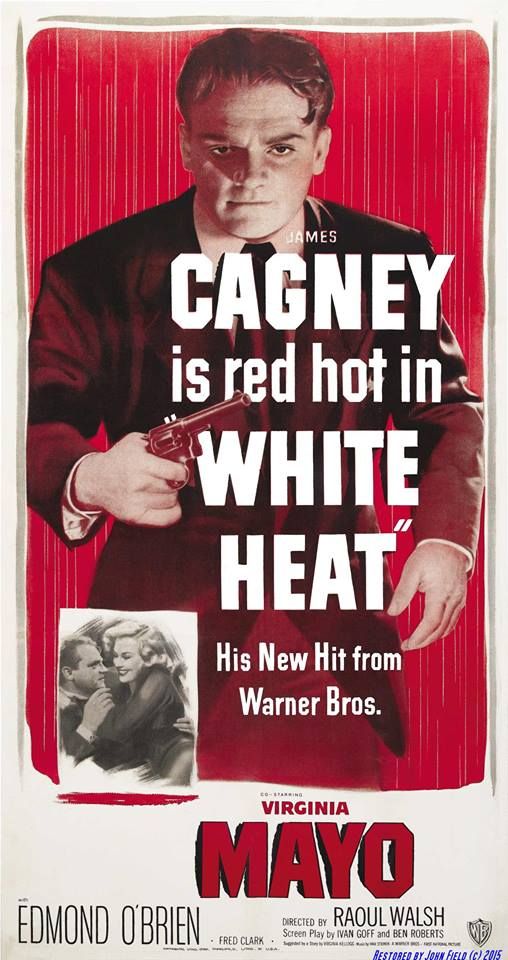
Top of the World Ma! Cagney excels in his final and greatest Gangster role White Heat

Director: Raoul Walsh

Cast: James Cagney (Cody Jarrett), Virginia Mayo (Verna Jarrett), Edmond O’Brien (Hank Fallon/Vic Prado), Margaret Wycherly (Ma Jarrett), Steve Cochan (“Big Ed” Somers), John Archer (Philip Evans), Wally Cassell (“Cotton” Valletti), Fred Clark (Daniel “The Trader” Winston)

After winning an Oscar for Yankee Doodle Dandy, Cagney left Warner Brothers to form his own production company. When that folded, he swallowed his pride and re-entered the Warners’ fold. Money was driving the relationship: and it was the pay cheque that got Cagney to return one last time to the role of a psychotic gangster in White Heat. And if he had to go back, why not make that gangster the most psychotic of the lot? After all who else could make it to “the top of the world”?

Cody Jarrett (James Cagney) is the leader of a gang of criminals, to whom no act of larceny, violence or murder is taboo. A botched train hijack – during which Jarrett shoots two unarmed train drivers – attracts the full attention of the law, but Jarrett dodges justice by having himself sent down for a minor crime that happened at the same time as the train hijack. Not fooled, the Feds send an undercover operative, Hank (Edmond O’Brien), into the prison as Cody’s cellmate “Vic Prado”, tasked with getting the details of the train job and locating the mysterious fixer who set up the job. But such schemes didn’t take into account Jarrett’s psychological disturbance – powered above all by his obsessive, overwhelming love for his mother (Margaret Wycherly), the one dominant influence over his life.

Raoul Walsh’s film is a brutally efficient gangster flick which may be a little too long (the mechanisms of tracing and tracking a car are covered in far too great a depth…), but ticks all the boxes of the genre with exceptional skill and dexterity. It’s shoot-from-the-hip (literally) melodrama, and has all the internal logic of a schoolground game of cops and robbers, but Walsh’s direction is pin-point perfect, and the film is based around a series of stunning and effective set-pieces and crammed with a sort of deep (even disturbing) psychological insight that puts it miles ahead of many of films of the genre. Walsh also throws in some of the finest stylistic touches of film noir, with Virginia Mayo’s femme fatale, darkened frames, dubious morals among even our heroes (one of whom is a practised deceiver and liar) and a whirlwind monster at the centre.

But the film soars and flies because of Cagney, and the no-holds barred sharpness of Jarrett. The film revolves above all around the deep emotional emptiness and need in Jarrett, which sees him lean on O’Brien’s Falon (“like my kid brother!”) and, most famously, fixate like a toddler on his mother. Freud would have had a field day with Jarrett’s obsessive love for his mother, with Cagney turning him into the little boy lost. Consumed with headaches, he literally climbs into her lap so she can comfort him. The slightest criticism of her leads to instant reaction (not least knocking his wife off her chair – how can the poor woman compete with this beatified mother figure?)

This culminates in one of the film’s most famous sequences, as Jarrett digests in prison the news that his mother has died. Sitting in a crowded dining room, he passes word down to a new inmate for an update on his mother. Slowly the question is passed down the line of prisoners – and with trepidation the news of her death is passed back. And here is the Cagney magic. He seems too stunned at first to take it in then a series of low moans explodes into a titanic screaming fit, matched only by the violence he takes out on all who stand in his way. Walsh and Cagney kept the response secret from the entire room of 300 extras, all of whom seem as stunned as us by Jarrett’s total lack of control, his complete consumption in grief.

Cagney’s performance is just about perfect, a simmering mummy’s boy who is also a charismatic leader of men. A dangerous psycho who seems aware that he is not quite normal. A lonely man desperate for love. And Cagney has so many beautiful touches that could only be him – the quip as he plugs with bullets a car boot with a luckless gang member in it, the sly kick away at Virginia Mayo, that screaming sequence. It’s a performance of complete power and charisma, the gangster psychoanalysed and reduced to his bare essentials for a personality barely functional and obsessed with his mother.

Margaret Wycherly is similarly excellent as that mother, as sly and self-confident as her son and clearly as accomplished at leading a gang as him (I love the smug half smile she gives herself after evading the FBI tail she picks up). Edmond O’Brien does sterling work in the “straight man” role of the undercover cop, walking a line between judging and even perhaps sorta liking Jarrett a bit (even if he does get saddled with the mandatory “that’s the moral of the story” final line). Virginia Mayo is a wonderful mix of sex appeal and needling cheapness as Jarrett’s two-faced wife.

The film culminates in one of the most famous endings of all time – one you’ll know even if you haven’t seen the film – as the law catches up with Jarrett at last in a shoot-out at a gas plant. Finally driven mad by betrayal and abandonment – although lord Cagney’s performance makes clear that only a tenuous grip on sanity has been present in Jarrett from the start, fractured beyond repair by the loss of his mother – Jarrett insanely shoots at the police from atop a burning gas plant, before immolating himself (and most of the factory) with the cry “Made it Ma! Top of the world!”. As Jarrett heads down to a firey hell, so Cagney signed off on the gangster flick with perhaps the most dangerous, disturbed and also intriguing gangster on film. It’s such a mighty performance that the Hays-Code mandated final line of tutting disapproval at the criminal life from O’Brien feels even more forced and unnecessary than ever.

The Hunchback of Notre Dame (1939)

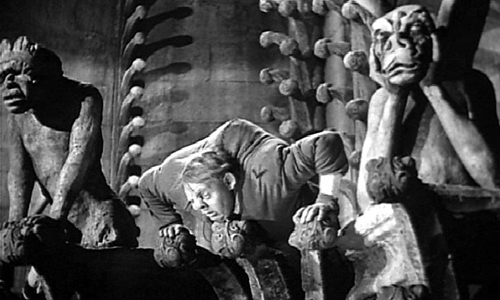
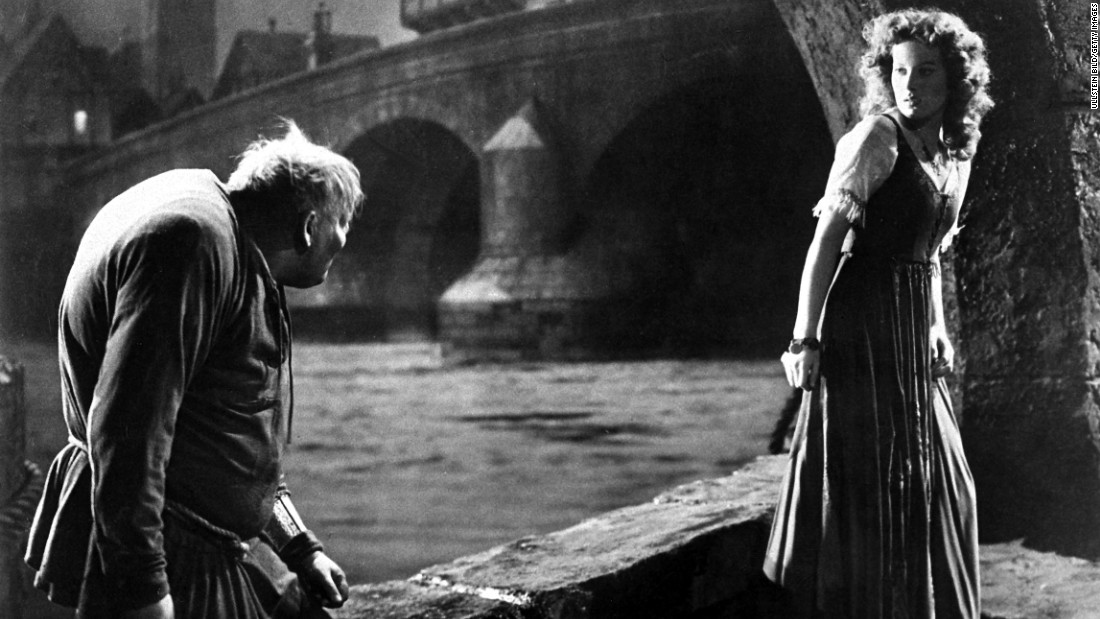
Charles Laughton looks on with longing as The Hunchback of Notre Dame

Director: William Dieterle

Cast: Charles Laughton (Quasimodo), Cedric Hardwicke (Jean Frollo), Thomas Mitchell (Clopin), Maureen O’Hara (Esmeralda), Edmond O’Brien (Pierre Gringoire), Alan Marshal (Captain Phoebus), Walter Hampden (Archbishop Claude Frollo), Harry Davenport (King Louis XI), Katherine Alexander (Madame de Lys), George Zucco (Procurator)

Victor Hugo’s gothic romance–slash-tragedy has been turned into a film so often, it’s a wonder anything that happens in it remains a surprise. But this 1939 version is perhaps the most influential, where Hollywood decided to throw money at the fable and try and make something as close as possible to the spirit of the book. But of course with a happyish ending on the end – because, you know, it’s still Hollywood!

In 1470s Paris, the city is caught between the pressures of religion and new developments such as the printing press. In the centre of the city is the Cathedral of Notre Dame – where the bells are operated by foundling Quasimodo (Charles Laughton), a deformed hunchback driven deaf by the constant ringing of the bells. His benefactor, Judge Jean Frollo (Cedric Hardwicke), is running a vicious campaign to cleanse the city of the gypsies and beggars that make up a large part of its underbelly – but he’s hit for six when he falls in love (or rather lust) with beautiful gypsy woman Esmeralda (Maureen O’Hara). But he’s not alone – equally smitten are naïve young poet Gringoire (Edmond O’Brien), arrogant Captain Phoebus (Alan Marshal), and Quasimodo himself. When Esmeralda rejects Frollo’s advances she soon finds herself in danger – and her only hope of safety comes from unexpected sources.

Dieterle’s background in German expressionism and silent cinema shines through in this visually striking and opulent studio production, with its superbly marshalled crowd scenes, brilliant use of near-impressionistic shadows and fabulous camera work that drifts over the impressive (and hugely expensive) set. Dieterle mixes this technical expertise with a real sense of emotion and character development, helped by some terrific performances from the cast. It’s a film that motors through the story of the novel, but skilfully repackages it as both a fascinating semi-romance and a sort of urban tragedy, as well as a subtle mediation on love and lust.

At the centre of it, you have Charles Laughton giving probably the definitive performance of the hunchback. Sweating under layers of make-up and an artificial hump, Laughton is nearly unrecognisable as the bell-ringer. His triumph is to make a gentle, tragic character emerge from make-up that suggests more Frankenstein’s monster than tragic hero. Nearly wordless for the first hour and a half of the film, Laughton does his magic with an expressiveness that speaks volumes of the loneliness in Quasimodo. Tenderly, he watches people knowing he can never be part of their lives – and look how excitedly he bursts out when he finally gets a chance to speak to Esmeralda one-on-one. Suffering punishment on the wheel, Laughton’s eyes convey the numb acceptance of pain as his natural state of affairs. But he also manages to bring out the gentle, childlike qualities of Quasimodo. It’s a wonderful, wordless, expressionistic performance – a triumph of physical acting and wonderfully judged emotional vulnerability.

The rest of the cast match Laughton stride-for-stride. Censor demands at the time required that Frollo be removed from his position (in the novel) as Archbishop, so the book-version of the character is split in two here. Archbishop Frollo is the sort of pious bore who can keep the Hayes committee happy. But Cedric Hardwicke gets to play the invented evil brother Judge Jean Frollo, the lecherous hypocrite from the novel. An authoritarian ascetic, Hardwicke’s Judge Frollo is lean, mean and utterly ruthless – and totally in denial about both his lustful feelings and hypocrisy. Hardwicke is virtually an archetype of the sinister authoritarian, but he manages to never chew the scenery. Incidentally, knowing the two characters are basically split from the original book, does allow moments of fun imaging the moral debates between the two as a sort of split personality discussion.

But there are plenty of other good performances as well – not least from Maureen O’Hara, who is charming and engaging enough to make you believe that the whole male cast is in love with her. Edmond O’Brian goes large at times with the passionate romance, but he does a very good job in the role. Thomas Mitchell is good value as the leader of the beggars, Clopin. There are strong performances across the whole film.

All these performances are framed within a fabulous design. The trouble and expense that has gone into the construction of the set is inspiring, the sweeping gothic arches and towers giving every shot something exquisite to look at. It also gives never-ending options for camera placement and impressionistic imagery for Dieterle. It works as well – the gloomy, imposing towers of Notre Dame are captured with real artistry, while the shadow it casts over the whole city of Paris serves as a constant reminder of the oppression the city lives in.

Dieterle also brilliantly films the crowd scenes, getting a superb sense of visceral emersion from these sequences. Whether the camera is in the mix, or flying above the crowds from the tops of Notre Dame, these scenes look equally fantastic. Dieterle handles the more action-related scenes with particular skill – Quasimodo’s rescue of Esmeralda from a death sentence is particularly well staged in its dynamism and graceful filming. 

Not every beat works. The portrayal of Louis IX as a sort of kindly old uncle seems off-piste from the very start. The early sequences sometimes get bogged down too quickly in set-up rather than getting into the action. Alan Marshal is rather wooden as Captain Phoebus, although the film goes surprisingly far in suggesting the dark desires and predatory sense of danger that comes from the character. Some of the beggar court sequences get similarly stuck in kitsch.

But these are minor beats. It’s a film that really understands emotions and makes the dramatic thrust work. It also has a dark sexual power, not least in Hardwicke’s Frollo: a seething mess of frustrated desires. It never loses sight of the sadness at the heart of its central character’s story, of his loneliness and isolation, and manages to communicate this brilliantly in every scene where the character appears – he is trapped by his muteness, his ugliness or his sadness at every turn. It’s a development that never fails to be engrossing and finally moving. It’s a film that is brilliantly assembled with real technical skill, very well acted and wonderfully directed.