Tag: Edward Norton

A Complete Unknown (2024)

A Complete Unknown (2024)

Engaging but traditional biopic, very well-made and full of knock out performances

Director: James Mangold

Cast: Timothée Chalamet (Bob Dylan), Edward Norton (Pete Seeger), Elle Fanning (Sylvie Russo), Monica Barbaro (Joan Baez), Boyd Holbrook (Johnny Cash), Scoot McNairy (Woody Guthrie), Dan Fogler (Albert Grossman), Norbert Leo Butz (Alan Lomax), PJ Byrne (Harold Leventhal), Will Harrison (Bob Neuwirth), Eriko Hatsune (Toshi Seeger), Charlie Tahan (Al Kooper)

In 1961 Bob Dylan seemed to emerge from nowhere – or, if you like, from being A Complete Unknown – to become the big star of American music and the centre of a battle for the soul of American folk music. On one side, were the traditionalists – they loved Dylan’s thoughtful, lyrical ballads and use of guitar, harpsichord and other instruments. They believed Dylan could lead a whole new generation to traditional American music. On the other side were the modernists, inspired by rock and roll, and the new (electric) sound. A Complete Unknown is about Dylan’s – inevitable – journey towards exploring new music sounds, culminating in his strum-heard-around-the-world as he played an electric set at the Newport Folk Festival (to a mixed reaction to say the least).

That’s the meat of James Mangold’s traditional, but very well-made and enjoyable musical biography, a spiritual sequel to Walk the Line (with a decent, but drink-addled Cash here played by Boyd Holbrook). Much like that film, this tweaks and amends some historical facts, but manages to get close to the spirit of its subject all within a familiar biography set-up of early success, mid-way struggles and triumphant (of a sort) resolution. There is nothing in A Complete Unknown to surprise you but it’s still a highly enjoyable, very professionally assembled journey.

Its main success is the depth and insight with which it penetrates Dylan’s character. A Complete Unknown embraces Dylan’s enigmatic quality, not to mention his stubborn, relentless and obsessive focus on his music and the austere distance he can treat the world. This all comes across beautifully in Timothée Chalamet’s superb performance – not only a pin-point physical and vocal and impersonation, but also a soulful rendering of a poet who constantly pushed against being classified and categorised, bristling against ideas he should play certain songs certain ways.

The roots of the culture clash that will dominate the film are clear from the start when Dylan and Pete Seeger (Edward Norton) drive from visiting visited Dylan’s hospitalised idol Woody Guthrie (Scoot McNairy) and Dylan flicks through radio channels. Dylan finds interest in all the different music they encounter; Seeger smiles pleasantly and nods his head, but clearly can’t hide his patient disregard for the electric beats of rock and roll. It’s the platform for the surly discontent Chalamet so perfectly embodies as Dylan is expected to pigeon hole himself as a folk singer, who (as he puts it) stands with his acoustic guitar at a mic and sings Blowin’ In the Wind for the rest of his life. A Complete Unknown falls in love with Dylan’s passionate self-expression, his search for his own sound.

That search frequently makes Dylan a difficult person to spend time with. Awkward and hesitant with other people – Chalamet’s Dylan is constantly cautious about exposing too much of his inner thoughts and feelings – the poetic writer mumbles in monosyllables and responds to fame with a grudging disdain that seems him rarely remove his sunglass shield between him and the world. He has no interest in fame and is positively alarmed at adulation from strangers (there is a neat line when he is unrecognised by a street vendor and asked if he has kids to which he wearily replies ‘Yeah, thousands’). Match that with his ruthless determination to put his artistic calling above anything else, and you’ve got a man who verges on using other people.

It feeds into Dylan’s relationships. At his request, his girlfriend Suzie Rotolo is very-lightly disguised as Sylvie Russo, played with an emotional richness by Elle Fanning. The film skips the more difficult parts of their break-up – Dylan stated the only song he regrated was one he wrote about Rotolo’s abortion, calling himself a shmuck for doing so. But in doing so, the film steams off Rotolo’s contribution to Dylan’s writing and much of her own dynamic and interesting qualities. The original Rotolo, an artist, was an important sounding board: we don’t see a jot of that here, as she is repackaged into offering Dylan much-needed stability and security, dealing with movie-girlfriend insecurity about Dylan’s attraction to collaborator Joan Baez.
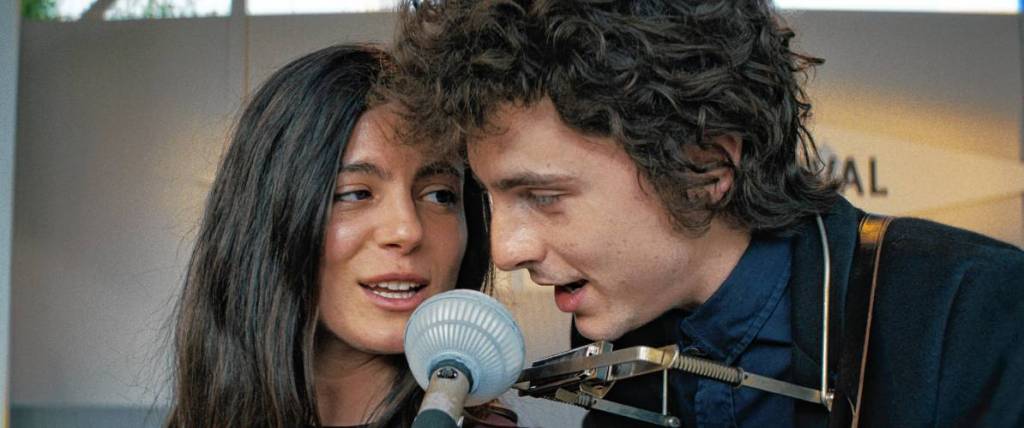
Dylan returns to Russo when he needs comfort at times of stress (from dropping in on her apartment – and waking her new boyfriend – late at night, to bringing her with him to the folk festival when he intends to turn electric) but Chalamet’s simmering self-focus makes clear Dylan at this stage can’t settle into a mutual relationship. It also comes between him and Joan Baez, played with dynamic charisma by Monica Barbaro, Despite their attraction and musical synchronicity, Dylan never sees her as a true artistic partner, even calling round one night for a booty call followed by private song writing using her guitar (she throws him out). On tour together, Dylan archly points out he writes the song and he leaves Baez hanging at a concert when he flat-out refuses to play the advertised favourites. The chemistry however is still there, within when it tips into aggression.

Dylan goes his own way, and if that means turning against surrogate fathers Peter Seeger and Woody Guthrie, then he will. A Complete Unknown features one of Edward Norton’s finest performances as a warm, tender and heartbreaking Pete Seeger (matched with a wonderful performance from Eriko Hatsune as Pete’s wife Toshi). Norton is brilliant at making Seeger – an environmentalist and gentle, accommodating advocate of folk music – a portrait of inevitable disappointment-in-waiting. There is a heart-rending moment where Norton beams as if all his dreams have come true as Dylan plays his first Newport festival: heart-breaking because we know Dylan’s next performance (where a guilty Dylan brusquely shrugs off Seeger’s gentle pleading to stay acoustic for just one more day) will see these dreams left in shattered pieces.

A Complete Unknown is a handsome, very well-mounted film from James Mangold, who has proved time-and-again that he can explore classic Americana with a freshness and energy few other directors can match. The film is perhaps overlong – probably due to the innumerable recreations of performances from Dylan, Seeger and Baez, all excellent but there are far too many – and it’s biopic approach is relentless traditional. But it’s filled with a parade of rich performances (with Chalamet outstanding), rolls along with energy, carries an emotional impact and will leave you engaged and entertained throughout.

Kingdom of Heaven (2005)

Kingdom of Heaven (2005)

Scott’s crusader epic is a much better, more thoughtful film than you’ve been led to believe

Director: Ridley Scott

Cast: Orlando Bloom (Balian of Ibelin), Eva Green (Sibylla of Jerusalem), Jeremy Irons (Lord Tiberias), David Thewlis (Hospitaller), Liam Neeson (Godfrey of Ibelin), Brendan Gleeson (Raynald of Chatillon), Marton Csokas (Guy de Lusignan), Edward Norton (King Baldwin IV), Ghassan Massoud (Saladin), Michael Sheen (Priest), Velibor Topić (Almaric), Alexander Siddig (Imad ad-Din al-Isfahani), Kevin McKidd (Sergeant), Jon Finch (Patriarch Heraclius), Ulrich Thomsen (Gerard de Ridefort), Nikolaj Coster-Waldau (Godfrey’s nephew), Iain Glen (Richard I)

Version control: This review cover the Director’s cut of Kingdom of Heaven, a three-hour film that is much better than the original theatrical version.

For hundreds of years the Middle East has been the site of wars over land and religion: the more things change, the more they stay the same. Ridley Scott’s Kingdom of Heaven is a grand, melancholic epic about the crusades, a period of history that seems to become even more divisive and controversial if every passing year. During the First Crusade (1096-99), a European Christian army had bloodily seized control of Jerusalem (massacring its Muslim population). The Crusaders built a state that lived through fragile truces, in a constant state of cold war with the Muslim states that opposed their conquest. Scott’s film picks up the final years of that ‘kingdom of Heaven’.

He does so through fictionalised version of the events. Balian (Orlando Bloom), a former military engineer, is now a widowed blacksmith in Northern France – until Godfrey of Ibelin (Liam Neeson), a crusader lord, returns to claim him as his illegitimate son. Fleeing his home after murdering his bullying priest brother (Michael Sheen), Balian arrives in the Holy Land as the new Lord of Ibelin. But he not a paradise, but a kingdom full of ambitious lords and zealots, surrounded by the armies of Saladin (Ghassan Massoud) with the whole thing only just held together by the wise leper king Baldwin IV (Edward Norton). There is already a power struggle for who will control Baldwin’s heir, the child of his sister Sibylla (Eva Green). Will it be the moderates led by Tiberias (Jeremy Irons) or the zealot Templars led by Sibylla’s husband Guy de Lusignan (Marton Csorkas)?

I’ve always been interested in this period of history, and I’m a sucker for a grand historical epics. So I’m pretty much the target for this ambitious, luscious, flawed but engaging film. It helps when it’s assembled by a director as full of visual flair as Ridley Scott. Kingdom of Heaven is an extraordinarily beautiful film – one of those where you really could snip out every frame and hang it up on your wall. Gorgeously lensed by John Mathieson, it moves from a chilly, blue-filtered North France (a land of artistic snow fall and permafreeze) to a David Leanesque desert land, of rolling sand dunes and skies tinged with deepest blue. It’s a film of breathtaking scale, as medieval armies converge, legions of siege weapons roll up to never-ending city walls and the desert stretches as far as the eye can see.

It makes a fantastic backdrop for a film that’s tries really, really hard to take a measured, reasonable view on human nature and religion. It’s fair to say that this makes Kingdom of Heaven a very serious film (there is barely a few minutes of humour in its entire three hour runtime – a joke about Neeson once fighting three days with an arrow in his testicle is about all you’re gonna get), but it’s also nice to have a film celebrating compromise and moderation. Really, Kingdom of Heaven isn’t a true representation of the Crusader period at all – the real Balian and Baldwin would scarcely recognise the humanist liberals they become here – but as a sort of fantasia on balancing conflicting demands in a place that seems to make men mad, it’s hard not to be respect that it’s trying as hard as it is.

To achieve it’s aims, Kingdom of Heaven divides both sides of the argument into goodies and baddies. For the goodies, Baldwin and Saladin are reasonable, just men willing to strive for a world where all can worship freely. Edward Norton – unbilled under a silver mask and English accent – brings a great deal of strength and wisdom to Baldwin, matched by Ghassan Massoud’s superbly patient Saladin. On the other side, we have the “God wills it!” brigade. Admittedly on the Muslim side, they are embodied by one of Saladin’s advisors, whereas the crusaders are awash in angry, Holy War bloodlust types who believe any killing is justified if it’s in God’s name.

Kingdom of Heaven has a respect for faith, particularly when filtered through the words of characters who don’t believe painting a cross on their chest allows them to kill anyone who disagrees with them. Several times, Balian argues doing sensible, reasonable things technically against the word of the Biblewill be understood by God (if he’s worthy of the name). It playfully suggests David Thewlis’ (in an excellent performance) reasonable Hospitaler might actually be an angel, with his power to appear undetected and prodding of Balian towards doing the right thing (Thewlis even disappears into a burning bush at one point).

But, if I’m honest, much of the rest makes its points rather forcefully, showing a world where fine words are corrupted by ambition and anger. Many of those preaching faith are really motivated by a constant hunger for more –power, land, you name it. The closer a character is to the Church, the more likely they are to be either a pantomime, mustachio-twirling villain (like Marton Csorkas imperious Guy or Brendan Gleeson’s playfully-psychotic Raynald) or snivelling hypocrites like Jon Finch’s Patriach (who counsels converting to Islam and repenting later when the shit hits the fan).

Kingdom of Heaven lays out this earnest, well-meaning political viewpoint of how moderation should trump fanaticism, while filling its wonderful visuals with gorgeous costumes, stupendous sets, a brilliant score and some stunning battle sequences. But there is always a fascinating lack of hope in Kingdom of Heaven. When Balian troops up Gethsemane on his arrival in Jerusalem, he only hears the wind not the word of God. When offered the chance to save the kingdom from itself, it comes with such a morally compromised price-tag a straight-shooter like Balian is always going to say no. While his father (one of Neeson’s patented performances of weary, maverick nobility) clings to ideals, the film is perhaps best summed up by Jeremy Irons’ wonderfully world-weary performance as the cynical Tiberias: mournful, depressed and wondering what the hell it’s all been for.

It’s no wonder it’s such a savage world. Kingdom of Heaven doesn’t shirk on the medieval violence. Bodies are hacked to pieces with fountains of blood. It opens by introducing us to a regular Dirty Dozen of toughened Crusader veterans – only to slaughter nearly all of them in the first act. Death is only seconds away in this dangerous world: even sailing to the Holy Land is to risk near certain shipwreck. It’s fascinating that the film’s amazing reconstruction of the Siege of Jerusalem sees Balian fighting to make the siege so difficult that Saladin will be forced to offer terms rather than slaughter the city’s population as the First Crusaders did hundreds of years ago.

Sadly, the film’s main weakness is Orlando Bloom. Surfing the peak of his post LOTR popularity, Bloom’s limitations are ruthlessly exposed by carrying this historical epic. His delivery lacks shade and depth, he doesn’t have the charisma for the big speeches and he never convinces as either a man consumed with grief or a battle-hardened veteran (he doesn’t even remotely look like Michael Sheen’s older brother). It’s a part that needs a role of commanding presence, but Bloom doesn’t have it. It’s unlucky he also has to play off Eva Green giving a complex, well-judged performance as a Queen who learns humility the hard way (the director’s cut restores an entire plot-line for her, which adds hugely to the film’s quiet air of inevitable tragedy).

Kingdom of Heaven has a lot going for it: it looks amazing, it’s crammed with stunning scenes on a truly epic scale and gives excellent opportunities to a host of great actors. It’s an interesting, surprisingly glum exploration of the struggle to find peace. Sure, it’s view of the Crusades has very little link to do with the actual crusades and it’s a little one-sided in its views. But it’s also a thoughtful film that’s really trying to say something that’s worth hearing about moderation, all with some truly breath-taking epic film-making. It’s not a lost masterpiece, but it’s a much more impressive film than its reputation suggests.

Asteroid City (2023)

Asteroid City (2023)

Anderson’s quirk filled film is a triumph of his own style but lacks the depth of his best work

Director: Wes Anderson

Cast: Jason Schwartzman (Augie Steenbeck/Jones Hall), Scarlett Johansson (Midge Campbell/Mercedes Ford), Tom Hanks (Stanley Zak), Jeffrey Wright (General Gibson), Tilda Swinton (Dr. Hickenlooper), Bryan Cranston (Host), Edward Norton (Conrad Earp), Adrien Brody (Schubert Green), Liev Schreiber (J.J. Kellogg), Hope Davis (Sandy Borden), Stephen Park (Roger Cho), Rupert Friend (Montana), Maya Hawke (June Douglas), Steve Carell (Motel manager), Matt Dillon (Mechanic), Hong Chau (Polly), Willem Dafoe (Saltzburg Keitel), Jake Ryan (Woodrow), Grace Edwards (Dinah), Aristou Meehan (Clifford), Sophia Lillis (Shelly), Ethan Josh Lee (Ricky)

Every time I go and see a Wes Anderson film, I hope I might fall in love again. Eventually, I’ll find something in Anderson’s overly distinctive, quirky style that I love as much as The Grand Budapest Hotel. Maybe the romantic in me is dying, because I think its never going to happen. Certainly it doesn’t with Asteroid City a film I sat watching thinking “I know some people will love this more than life itself, but for me sitting here it feels like waiting for the rapture”.

Asteroid City is another of Anderson’s films that’s an intricate puzzle box where the pieces shift like the brightly coloured squares on a Rubrik’s cube. It’s filtered through several layers of remove: we watch a 50s TV announcer (Bryan Cranston) introduce a stage performance of a playwright’s (Edward Norton) long-running play that is itself an entrée to a wide-screen, technicolour production of a host of eccentrics, including a recently widowed photographer (Jason Schwartzman), his grouchy father-in-law (Tom Hanks), a glamourous Hollywood star (Scarlett Johansson) and several others accompanying their kids to a remote town in the desert for a young stargazing and science competition co-sponsored by an army general (Jeffrey Wright), when the whole town is thrown into quarantine after a stop-motion alien drops in, looks around and flies off.

Somewhere in Asteroid City there is an interesting, slightly sad, meditation on grief, loss and ennui struggling to get out. The alien arrival makes everyone question the nature of the universe and their place in it. It’s easy to see the influence of Covid on a town flung into quarantine, and the resulting state of uncertainty throwing everyone off kilter. We are following a man who has recently lost his wife, being played in this film-within-a-play-within-a-TV-show by an actor who was (we discover) recently lost his own partner. At one point this actor asks the director if he is ‘doing it right’, if he is getting the emotion or the author’s intention: “just tell the story” the director (Adrien Brody) responds. I think that’s part of a message about just live and let the big questions take care of themselves, of trusting that we can do our loved ones proud. That’s an interesting, rewarding point.

But it’s lost in Anderson’s pitiless device, his never-ending quirk and the deliberately distancing, artificial nature of his world and the monotonous, arch delivery his script, camera work and editing imposes on a series of actors. What this film desperately misses is a leading player with the strength and independence of a Ralph Fiennes or a Gene Hackman: someone who can bring depth and a sense of reality to the stylised Anderson world, while still delivering something perfectly in keeping with his tone. To put it bluntly, Schwartzman is, to put it bluntly, not a sufficiently engaging or interesting actor to communicate his character’s inner turmoil under the surface which the film’s inner meaning requires. He too naturally, and trustingly, settles into the Anderson rhythm.

In this crucial role, he’s a misfire. With our leading player too much of an artificial character, someone we never believe is anything other than a construct of the film’s author, inhabited by a collaborator who doesn’t bring the independence or new vision the director needs, the more the deeper emotional layers of the film are drowned. Instead, the film becomes a crushing onslaught of style and trickery, devoid of any sense of reality at any point.

It eventually makes the film feel overly smug, too pleased with-itself, too taken with its intricate, tricksy construction. It is of course a triumph of art design and the photography is gorgeous, from the black-and-white of the TV studio and theatre, to the 60s tinged, artificial world of Asteroid City, crammed with its obviously fake skylines and vistas and technicolour inspired feel. That at least its impossible not to admire. But it’s also a mighty artificial trap that enfolds the entire film – and eventually the audience – in a world of weightless, arch, eyebrow-cocked commentary that promises a lot but winds up saying almost nothing of any interest.

There are performances to admire. Scarlett Johansson is very droll and finds some depths as an star actress struggling with a concealed depression. Tom Hanks looks most like the actor who feels like he can break out of the Anderson mould and discover some genuine emotion. Jeffrey Wright demonstrates few actors can do Anderson dialogue better than him, Bryan Cranston very droll and perfectly observed as Ed Murrow style TV man and Adrien Brody is loose, fun and inventive as the play’s director. But yet its everything inside this framework that feels somehow empty.

What I want from Anderson is someone to come in and shake him up, to point out that he is not betraying his aesthetics or style by injecting a small dose of reality and humanity into it. When he has done that in the past – moments in Rushmore, The Royal Tenenbaums and, above all, The Grand Budapest Hotel – he has delivered movies that are inventive, fun and playful but also carry real, lasting emotional impact. When he delivers in-jokes like Asteroid City, it feels like a party you have been invited to where everyone speaks in some made-up language they’ve not told you about in advance. And after not very long, all you want to do is to get up and leave.

Fight Club (1999)

Fight Club (1999)

Hugely popular, I find it widely misunderstood but also a little too in love with its own cleverness

Director: David Fincher

Cast: Edward Norton (The Narrator), Brad Pitt (Tyler Durden), Helena Bonham Carter (Marla Singer), Meat Loaf (Robert Paulson), Jared Leto (Angel Face), Holt McCallany (Mechanic), Zach Grenier (Richard Chessler), Eion Bailey (Ricky), Peter Lacangelo (Lou), Thom Gossom Jnr (Detective Stern)

When Fight Club was made, the studio didn’t get it. You can’t blame them. Studio suits sat down and just couldn’t understand what on earth this primal cry of anger, giving voice to the disillusioned and dispossessed, was going on about. Fight Club was categorically not for them. I’d managed to miss it for decades, so it’s an odd experience watching this angry millennial film for the first time when I’m now exactly the sort of punch-clock office drone its characters despised. I think I missed the boat.

Our narrator (Edward Norton) is cynical, bored and feels his life is going nowhere. Suffering from crippling insomnia, he takes to attending support groups for various terminal illness survivors, releasing his own ennui among the pain there. It’s where he meets fellow ‘suffering tourist’, Marla (Helena Bonham Carter), whom he’s attracted to while resenting her intrusion on his own private therapy. Shortly after he meets Tyler Durden (Brad Pitt), a charismatic rebel with whom he founds an underground bare-knuckle fight group for men who can’t express themselves in the modern world. But Durden’s charismatic, anti-corporatist rhetoric tips more and more into radicalism and he starts an affair with Marla. What will our Narrator do?

Sometimes I think Fight Club might be one of the most misunderstood films ever. So many people who have fallen in love with it talk about it being an attack on conformity in our cold modern world. Of its celebration of people leaving the oppressive, mindless 9-5 grind to find something true and real that makes them feel alive. To be fair, Fight Club is partly this. But how do our heroes do this? By starting a cult where the bitter, resentful and inadequate search for meaning through violence and becoming part of a monolithic organisation that bans independent thought. Essentially, it’s a cult movie, exploring what makes people who can’t relate to the monotony of the “real life”, embrace an oppressive set of rules simply because those rules make them feel important.

This misreading by many is a tribute to the brilliance of Fincher’s direction. Fincher’s film is radical, sexy, pulsating and exciting. It’s shot like a mix of music video and experimental feature and crammed with cutting, witty lines that skewer and puncture the ”grown up” ideas that so many find weary and tiresome. It’s a modern Catcher in the Rye and it pours all its functional, dynamically written anti-establishment rhetoric into the mouth of one of the world’s most charismatic stars in Brad Pitt and allows him to let rip.

Fincher’s Fight Club is really, to me, about the intoxicating excitement of anger, of how easy it is to pour your frustrations into actions that are destructive and selfish but which you can invest with a higher meaning. School shooters, incels – many of them see themselves as stars in their own Fight Clubs, as cool anti-establishment rebels who see some higher truth beyond the rest of us. Fight Club is a brilliantly staged exposure of how this mindset is created and how damn attractive it can be.

Because when Pitt lets rip with this mantra on finding truth and purpose, turning your back on Ikea and Starbucks and all the other soulless “stuff” people find important, you want to stand up and cheer with him. You can see that the attraction of forming a secret brotherhood with a series of other similarly frustrated men, who feel emasculated and purposeless in a world where they can’t do something meaningful like fight Nazis or hunt deer. How they could find satisfaction and a sense of masculine validation in punching seven shades of shit out of each other. Because, as the adrenalin and the blood flows, and the teeth go flying, you feel alive.

It’s certainly a lot more fun than trying to actually deal with your problems. Fight Club is really about this sort of toxic, masculine anger and bitterness leads us to fail to deal with our problems. The Narrator needs Durden, because he can’t manage to process his own feelings of insecurity and inadequacy. He can’t deal with ennui – except through a constant stream of cynical, privately spoken, bitter remarks – and when he meets a girl he likes, he can’t cope with that either.

Durden comes into his life straight after Marla does, and Durden does everything with Marla the Narrator can’t. He flirts with, impresses and fucks her. That’s the sort of thing the Narrator (literally) can only dream about doing. The film builds towards the Narrator realising that, by embracing Durden, he is denying himself the possibility of something real with an actual kindred spirit (screwed up as Marla is, she has decency and empathy). Fight Club – much as many of its fans who find the final act “disappointing” don’t want to admit it – is about putting away childish resentments and growing up. Even if the Narrator is culpable for the things Durden does – and only threats to Marla awaken his acknowledgement that he should do something – he recognises the aimless, irresponsible and dangerous anger of Durden is not healthy.

Because Fight Club centralises a group of terrorists who tell themselves they are plucky anarchists who don’t want to hurt anyone – but we know it never stops there. Especially when you have a mesmeric, Hitlerish figure like Durden driving people on. Pitt is superb as this raving id monster, a hypnotic natural leader who delivers rhetorical flourishes with such intense and utter belief he essentially brainwashes a legion of men into following his orders without question – acid burns, bombs and death don’t even make them blink, just even more willing to follow his orders.

Fincher works so hard to make us understand the attraction of all this that sometimes Fight Club – with its flash filtered look set in a nearly perpetual night – is more than a little pleased with its impish menace. It also takes a little too much delight in teasing its infamous twist – it’s a little too delighted with the “ah but when you watch it back” ingeniousness with which it presents a melange of scenes (the twist also makes you realise later just how brainwashed and dangerous the men in this cult must be, once we realise what they saw and how little they reacted to it). Fight Club also, for all its cool lines and winning gags, has an air of pop psychology to it. (I am very willing to overlook its cheap anarcho-socialism as we are very clearly invited to see this as empty nonsense – for all many people watching the film don’t.)

Edward Norton is extremely good in a challenging role, a stunted and bitter dweeb who dreams of being a player and barrels along with ever more dangerous events. He walks a fine line between a sheltered follower and true acolyte, in several moments showing more than a flash of Durden’s ballsy, take-no-chances, sadism-tinged determination when you least expect it. It’s the sort of performance designed to make sense in the whole, not in the moment – and on that score it’s exquisite. He also makes a wonderful pairing with Helena Bonham Carter, exploding her bonnet reputation with a part that’s rough-edged, unpredictable but surprisingly humane and vulnerable.

Is Fight Club a masterpiece? I’m not sure. It’s a very clever, sharp and dynamic piece of film-making designed to pull the wool over your eyes (in more ways than one). But it can also be overly pleased with itself and does such a superb job of getting you to empathise with the deluded and violent that when it gear changes in the final act it never quite lands as it should. It feels like an angry teenager’s idea of the greatest film ever made (and you can’t deny it digs into the same “loner who sees the deeper truth” vibe that helped make The Matrix a phenomenon later that year). It’s Fincher at his young, punk best – and maybe Fight Club got all this out of his system (you can’t believe the same man made this and Curious Case of Benjamin Button), but for me it lives in the shadow of Fincher’s dark and dangerous Seven, a film which explores similar themes but with more humanity and greater depth than Fight Club.

Glass Onion: A Knives Out Mystery (2022)

Glass Onion: A Knives Out Mystery (2022)

Johnson’s playful Agatha Christie tributes continue to delight in this affectionate homage

Director: Rian Johnson

Cast: Daniel Craig (Benoit Blanc), Edward Norton (Miles Bron), Janelle Monáe (Andi Brand), Kathryn Hahn (Claire Debella), Leslie Odom Jnr (Lionel Toussaint), Kate Hudson (Birdie Joy), Dave Bautista (Duke Cody), Jessica Henwick (Peg), Madelyn Cline (Whiskey), Noah Segan (Derol)

Johnson’s Knives Out reminded Hollywood that people love a good whodunnit. Netflix purchased two more films from the franchise after the first’s success: Glass Onion is the first, a wild, enjoyable and deft mystery, crammed with enough jokes, puzzles, side-mysteries and actors having a good-time to become a perfect Christmas treat.

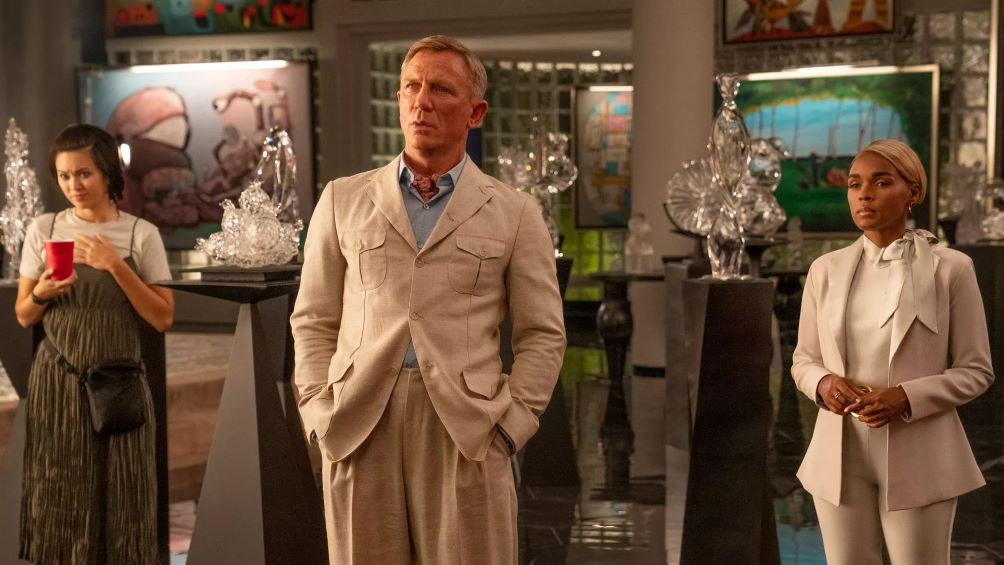
Set in the midst of the Covid-19 pandemic – and how unusual again to see everyone wearing a facemask during the first meeting of its characters – it revolves around a weekend get-away at the Greek island mansion of a billionaire, its elaborate design centred around a huge Glass Onion dome. A stack of personalities from wildly divergent backgrounds, thrown together in a secluded location with murder on the cards? You couldn’t get more Agatha Christie unless Hercule Poirot turned up. Instead, we get Daniel Craig’s Benoit Blanc, as outrageously Southern as ever and seemingly invited by mistake to take part in billionaire Miles Bron’s (Edward Norton) murder-mystery weekend for his close friends.

Those close friends are a smorgasbord who all seem to have as much reason to hate Bron as they do for being in debt to him. All are in hock to Bron’s company Alpha and its quest to create a new hydrogen super-fuel. The guests? Kathryn Hahn’s governor of Connecticut (reliant on Bron for funding), Leslie Odom Jnr’s scientist (reliant on Bron for funding), Kate Hudson’s fashion editor (reliant on Bron for her job), Dave Bautista’s influencer (reliant on Bron for Likes), and Janelle Monáe as Bron’s ex-partner, cheated (perhaps) out of the company they co-founded. Will the murder mystery party turn into murder mystery reality?

Johnson’s playful, loving homage to Agatha Christie successfully carries over its tone and sense of fun from Knives Out, delighting in its conventions even as it subtly inverts some of them, and building a classic murder mystery in a very modern skin. It’s possible that no-one is better at this than Johnson, and it’s hard to imagine anyone else playing something as fun as this so straight. For all the jokes, it never sneers at its material or looks down on the classic Christie model. Instead, it feels like a lost Christie making its way to the screen with a solution that the author would love.

Glass Onion does make part of its effect work by concealing information from the viewer for as long as possible – some characters here are not as they appear and some know much more than they are letting on. It’s not quite the characters you might expect either, who are playing their cards close to their chest. The film dips into a non-linear structure, progressing us through to a killing before winding back to retell all the events we have just witnessed from another perspective. It’s a brilliant way of keeping us on our toes – and most successfully, never feels like cheating but a deliberate bit of rug-pulling to keep the fun going.

It also reminds us to question everything we are seeing as the film unfolds. Like an intricate onion, there are layers upon layers – and like glass when the light reflects right, it suddenly becomes transparent. Everything in Glass Onion is meant to only really become clear by its conclusion – although Johnson drops plenty of hints of what’s going to be important, not least the swiping sound of the protective glass shield that snaps down over Bron’s displayed Mona Lisa (the real one) that he pretentiously shows off to his friends.

Pretentious and self-satisfied showing-off is meat-and-drink to Bron, played with a hugely enjoyable smug smackability by Edward Norton (having the time of his life channelling every arrogant billionaire you can think of, not least Elon Musk). Irritatingly new-age in his ostentatious wealth, every act of Bron (no matter how generous it seems) is laced with self-serving. He delights in (and feeds) his reputation as an eccentric genius and the film’s elaborate set is a testament to Bron’s classless grandiosity.

His hangers-on share deeply mixed feelings about this generous man who demands (with a wining smile) that they dance to any tune that he plays. Even his murder mystery weekend is designed around a chance for him show off (his balloon being well-and-truly burst by Blanc early in the movie is one of its greatest laugh-out-loud moments). Hahn, Odom Jnr, Hudson and Bautista have huge fun with four characters all larger-than-life in their own ways. But Janelle Monáe is the film’s most striking performer: as Bron’s cast-off former partner she gives a performance brimming with complexity and hidden depths.

In all this colour and old-school mystery razzle-dazzle that Johnson serves up, it’s very easy to forget what an essential role Craig plays in holding it together. Blanc remains a loving Poirot tribute, inverting that character’s bizarre accent, dandyish clothes and exactitude but still capturing Poirot’s essential kindness and humanitarianism. Craig quietly carries a lot of the film here, while ceding much of the most striking material to his “guest stars”. It’s fine work.

Johnson’s film is a superb entertainment, the sort of film you can imagine people saying of it “they don’t make ‘em like that anymore”. It works as extraordinarily well as it does because it manages to be both cool and catchy and hugely old-fashioned. It’s an unabashed entertainment, that wants to puzzle and entertain you. It succeeds at both.

The Grand Budapest Hotel (2014)

The Grand Budapest Hotel (2014)

Luscious visuals, hilarious gags mix with an air of sadness and regret in Wes Anderson’s masterpiece

Director: Wes Anderson

Cast: Ralph Fiennes (M. Gustav), Tony Revolori (Zero), F. Murray Abraham (Mr Moustafa), Mathieu Amalric (Serge X), Adrien Brody (Dmitri), Willem Dafoe (Jopling), Jeff Goldblum (Deputy Kovacs), Harvey Keitel (Ludwig), Jude Law (Young Writer), Bill Murray (M. Ivan), Edward Norton (Inspector Henckels), Saoirse Ronan (Agatha), Jason Schwartzman (M. Jean), Léa Seydoux (Clotilde), Tilda Swinton (Madame D), Tom Wilkinson (Author), Owen Wilson (M. Chuck)

I wrote recently I could forgive the flaws I’ve found in Kurosawa’s work, for the majesty of Seven Samurai. I can totally say the same again for Wes Anderson. He is a director I’ve sometimes found quirky, mannered and artificial – but God almighty he deserves a place in the pantheon for directing a film as near to perfection as The Grand Budapest Hotel, a delight from start to finish, as beautiful to look at as it is whipper-snap funny, as heart-warming to bathe in as it is coldly, sadly bittersweet. After three viewings I can say it is, without a doubt, a masterpiece.

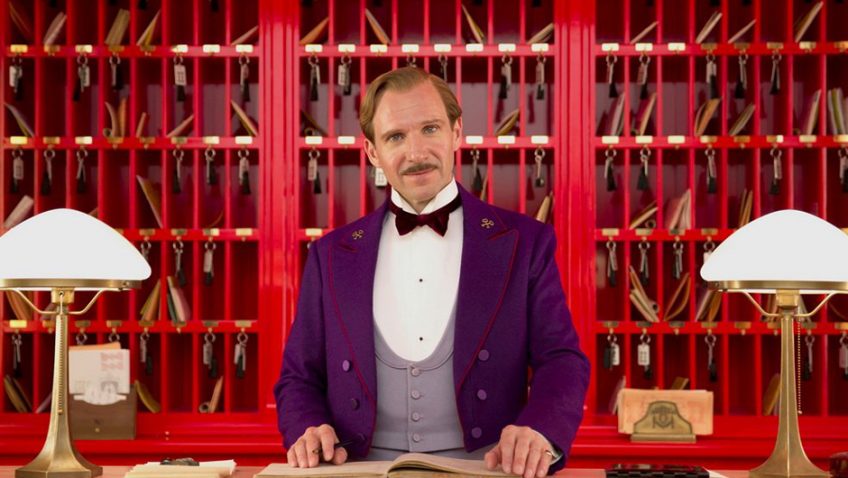
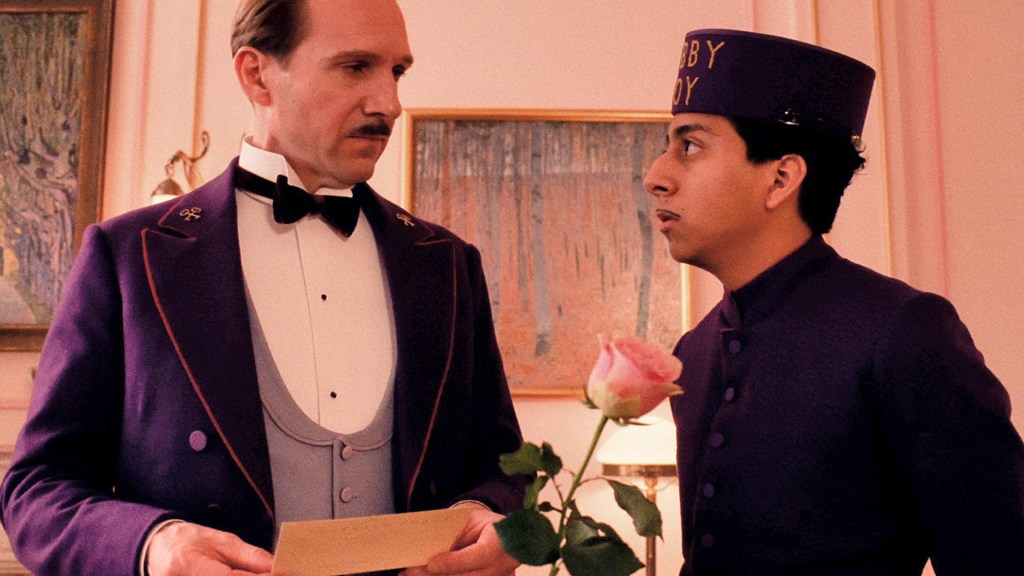
Like many Wes Anderson films, its storyline is eccentric, halfway between fantasy and absurdity. In 1932, in an opulent hotel, The Grand Budapest, concierge Monsieur Gustav (Ralph Fiennes) is the pinnacle of his trade: precise, fastidious, perfectionist, he can fix anything anywhere – opera tickets, the perfect table placement and a night of passion at any time for the elderly widows who visit his hotel. When one of them, Madame D (Tilda Swinton) dies leaving him a priceless painting, Boy with Apple he suddenly finds himself framed for her murder. Only his ingenuity, and the dedicated help of his protégé, best friend and surrogate brother/son, lobby boy Zero (Tony Revolori) will save him.

You can’t escape on the first viewing that The Grand Budapest Hotel is an extraordinarily funny film. Crammed with superb one-liners, it’s a showcase for a breathtakingly, blissfully funny performance from Ralph Fiennes whose comic timing is exquisite and whose mastery of the perfectly structured monologue of flowery language is as spot-on as his ability to deliver a crude punch-line. Anderson fills the film with clever sight-gags, bounce and a supreme sense of fun. You’ll laugh out loud (I frequently do, and I remember most of the gags) and wind back to watch them again.

But what lifts this is the wonderfully evocative, elegiac piece this beautiful film is. For all its comic zip, it unfolds in a romanticised past already a relic in 1932. We can’t escape the rise of Fascism that fills the film. Jack-booted soldiers accost and hunt Gustav and Zero. Adrien Brody’s furious heir to Madame D looks like a Gestapo officer, and his vicious heavy Jopling (Willem Dafoe so weathered, he looks like he’s been beaten by a carpet duster) has a stormtrooper menace. En route to Madame D’s funeral, Zero is nearly dragged off the train to be lynched by fascist thugs for being an immigrant and The Grand Budapest is taken over by this dreadful movement, filled with Mussolini-inspired ZZ insignia and blackshirts.

Under the jokes, the world Gustav represents has already died and been buried. We are never allowed to forget we are marching, inexorably, towards a very real-world war that will rip apart this fictional country and leave millions dead. Gustav’s gentile old-school charm ended with 1920s: and he sort of knows it. Fiennes, under the suaveness, conveys a man who falls back into potty language when he can no longer maintain his assured confidence that a straight-backed, polite assurance will solve any problem or a poetic reflection will allow them to put any unpleasantness behind them. Those days are gone and it makes for a deep, rich vein of sadness just under the surface.

It’s particularly acute because it’s made clear this is a memory piece. Anderson constructs the film like a memory box. It has no less than three framing devices. It opens and closes with a young woman in 2014 visiting a monument to a great writer, the author of the book The Grand Budapest Hotel. From there we flash back to the author (a droll Tom Wilkinson) in 1985 recounting how he met the man who inspired the novel, before heading again to a flashback to the 1960s where the young author (Jude Law) meets the man we discover is an older Zero (F Murray Abraham) who recounts the story we then watch. Each layer of the film descends deeper into Anderson’s artificial, carefully structured visual style, with its heightened sense of reality.

Old Zero – beautifully played by F. Murray Abraham – is introduced as a man of acute loneliness and sadness, who tells us early on the woman his young self loves, Agatha (a radiant Saoirse Ronan) will die and shuffles around the nearly abandoned The Grand Budapest (now a concrete nightmare of Communist architecture) with only his memories for comfort. No matter how jovial and bright the events of the 1930s are, we can’t forget that these are the reflections of a man full of regrets.

When old Zero’s narration turns to remembering Agatha, the lights around him dim: Agatha even enters the narrative almost by the side door: Gustav is arrested and imprisoned before she appears, along with a series of flashbacks-within-flashbacks to Zero and her meeting and her first meeting with Gustav, as if Zero had to steel himself to remember her (as reflected in Abraham’s tear-stained face). Later, when remembering the fates of Gustav (his best friend) and Agatha (the love of his life) he almost draws a veil over it (even their final scenes in flashback play out in monochrome). There is a deep, moving sense of humanity here, a powerful thread of grief that adds immense richness.

But don’t forget this is also a funny film! Anderson is an inventive visual and narrative director at the best of times, and here every single beat of his playful style pays off in spades. The entire 1930s section of the film (the overwhelming bulk of the narrative) plays out in 4:3 ratio, which to many other directors would be restrictive, but seems a perfect fit for a director who often composes his visuals with the skill of an expert cartoonist. The frame is frequently filled in every direction when within the grandeur of the hotel, but then feels marvellously restrictive for Gustav’s prison cell or the train compartments that seem to constantly carry Zero and him to disaster.

Anderson’s wonderfully precise camera movements also reach their zenith here. His camera is deceptively static, often placed in a series of perfectly staged compositions that places the characters at their heart, frequently looking at us. But then the camera will turn – frequently in a fluid single-plain ninety degrees to reveal a new image of character. There are Steadicam tracking shots that are a dream to watch. It’s combined with some truly astounding model shots (parts of the set are not-even-disguised animated models and miniatures, adding to the sense of fantasia) and the detail of every inch of the design (astounding work from Adam Stockhausen and Anna Pinnock) is perfection. The film is an opulent visual delight.

It’s a film of belly laughs and then moments of haunting sadness. But also, a wonderful celebration of friendship. The bond between Gustav and Zero is profound, natural and deeply moving – grounded, fittingly, in adversity from the agents of a hostile, oppressive state – and carries real emotional force. Newcomer Tony Revolori is hugely endearing as naïve but brave Zero, making his way in this new world (fitting the theme, he left his homeland after his family was destroyed by war) and sparks superbly with Fiennes and Ronan.

There is a wonderful beating heart in The Grand Budapest Hotel, amongst the farce, perfectly timed gags and cheekiness, that makes it a rich film you can luxuriate in. Anderson’s direction is faultless, Fiennes is a breathtaking revelation, both hilarious, affronted, decent and fighting the good fight. Gorgeous to look at, thought-provoking and laugh-out loud funny it’s a dream of a film.

The Illusionist (2006)

Ed Norton, Paul Giamatti and Jessica Biel are wrapped up in the tricks of The Illusionist

Director: Neil Burger

Cast: Edward Norton (Eisenheim), Jessica Biel (Sophie), Paul Giamatti (Inspector Uhl), Rufus Sewell (Crown Prince Leopold), Eddie Marsan (Josef Fischer), Jake Wood (Jurka), Tom Fisher (Willigut), Aaron Taylor-Johnson (Young Eisenheim), Eleanor Tomlinson (Young Sophie), Karl Johnson (Doctor)

In 2006, The Illusionist was the other film about nineteenth-century magicians that wasn’t Christopher Nolan’s The Prestige. As such it got rather overlooked, which is unfair as this is a handsomely made, intriguing little puzzle which doesn’t reinvent the wheel but does what it does with a fair amount of invention and beauty.

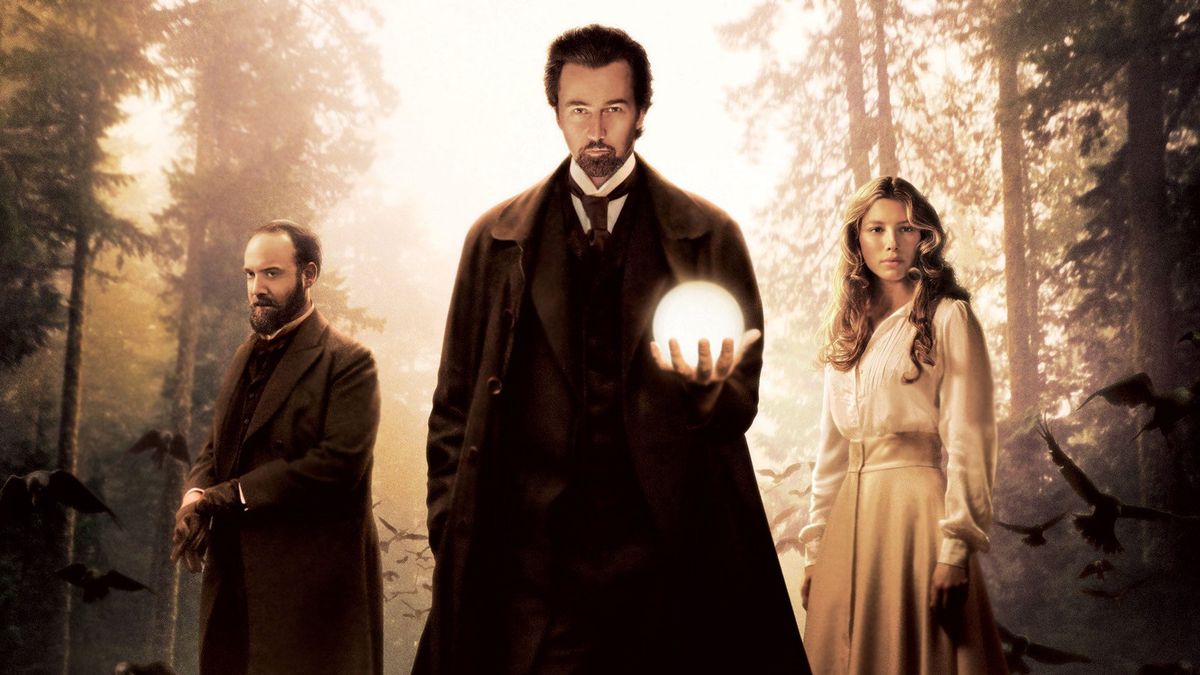
In turn-of-the-century Vienna, the illusionist Eisenheim (Edward Norton) is a revelation – a mystery character whose past is investigated by Police Inspector Uhl (Paul Giamatti) under the orders of Crown Prince Leopold (Rufus Sewell). The Crown Prince feels Eisenheim’s illusions – which suggest at times dark truths in the Prince’s own personal life – are a serious risk to his position. On top of which, there is a secret past romance between Eisenheim and the Prince’s intended wife Countess Sophie (Jessica Biel), and the Prince is not a man to be crossed. So begins a cat-and-mouse game of trick and illusions between Uhl and Eisenheim.

The greatest thing about Neil Burger’s period piece is the grace and beauty with which it has been filmed. Dick Pope’s mixture of sepia tones and candlelit blacks makes for a series of gorgeous images, contrasted perfectly with Philip Glass’ beautiful score. Both contribute hugely to creating an atmosphere of mystical unknowingness around the Vienna locations, and give the film something in every scene to delight the senses.

What works less well is the slightly routine scripting and filmmaking that pulls the film together. For all the beauty with which it is presented, there isn’t quite enough of the original or – for want of a better word – the magical about what we see on the screen. The story is just ever so slightly too familiar, the points it intends to made – be it about the nature of power, or magic, or love, or hope – never quite coalesce into a coherent and clear message that really feels like you are being told something or shown something you haven’t seen in several movies before. 

Instead we see that behind the eyes of even the most obscure and unreadable conjurer there is deep and abiding love – love that will push them to do wild, even morally questionable, things. For others like the Crown Prince, that love is tied in altogether with possession and power and that there is no place for truth. Illusion is in all things: from Eisenheim’s entire life to the Prince’s front as a man of the modern world and his desire to become a dictator. Maybe that might be as close as the film gets to a deeper meaning – that illusion hides and protects our truths. 

As Eisenheim’s tricks get closer and closer to mesmerism and séance, the film suggests that it is a human need to want to see the truth behind tricks. The crowds who see Eisenheim raise the dead in flickering images want to believe it, that they could talk to their own deceased loved ones. Even in his early magic tricks, the less poetic characters of the film see value in the tricks only when they feel they have worked out the illusion behind it. Both are looking for a form of truth in the illusion, but the truth behind the trick is often deeper and more complex than the mechanical process by which it is done.

It’s a shame the film doesn’t tackle these ideas more, and settles for a more traditional “love across the divide” romance, but perhaps it doesn’t quite engage because Eisenheim and Sophie aren’t really interesting enough characters. Edward Norton plays Eisenheim with grace and intelligence, and draws a lot of depth and emotion from scenes that often require him to wordlessly stare. But juggling a character who deliberately conceals the truth and his intentions at every single turn seems slightly to have straitjacketed Norton, an elliptical actor at the best of times. There is something unknowable about him in this film which, while perfect for the character, makes him one you can’t really invest in. Similarly, Jessica Biel (a last minute replacement for Liv Tyler after filming had started) certainly looks the part, and gives Sophie a warmth, but she never really makes an impression as a character. Rooting for these two star-crossed lovers is difficult because we never get a sense of who they are.

Instead the film is dominated by hard-nosed rationalist Inspector Uhl, a man with a curiosity for conjuring, an appetite for power, a determination to get things done, but finally more than a bit of humanity. Paul Giamatti is excellent in the part, playing a role that emerges as the audience surrogate, trying as hard as we are to work out what is real and what is illusion. He doesn’t put a foot wrong with Uhl’s affable professionalism nor his ability to switch to business-like harshness. He’s also adept at playing a man who is the third smartest character in the film, but believes himself to be the smartest. You could also the same for Rufus Sewell’s (also great and clearly having a ball) Crown Prince, a bully who thinks he is an enlightened man.

It’s Uhl whom the film finally bonds with the most, and it’s his attempts to piece together what’s going on that becomes the most engaging thing in the second half of the film. For all the beauty of its making, and the skill that has gone into creating the optical illusions (some of Norton’s sleight of hand tricks in this movie are extraordinary), it’s a film that doesn’t quite satisfy. When the final reveal occurs in the film’s closing moments, you won’t quite be as satisfied as you would expect, perhaps because you won’t really care about Eisenheim or Sophie. Burger has made a handsomely mounted but strangely cold film.

Birdman (or The Unexpected Virtue of Ignorance) (2014)


Michael Keaton is haunted by his superhero alter-ego in Iñárritu’s well made but heavy handed theatre satire

Director: Alejandro González Iñárritu

Cast: Michael Keaton (Riggan Thomson), Zach Galifianakis (Jake), Edward Norton (Mike Shiner), Andrea Riseborough (Laura Aulburn), Amy Ryan (Sylvia Thomson), Emma Stone (Sam Thomson), Naomi Watts (Lesley Truman), Lindsay Duncan (Tabitha Dickinson), Merritt Wever (Annie)

Oscar voters seem to be invariably drawn towards stories about actors and acting. Put together a decent and ambitious movie about those subjects, ideally with a sprinkling of gentle satire that pokes fun at acting but basically says at the end it is a noble profession, and you got yourself a contender. So it was with Birdman.

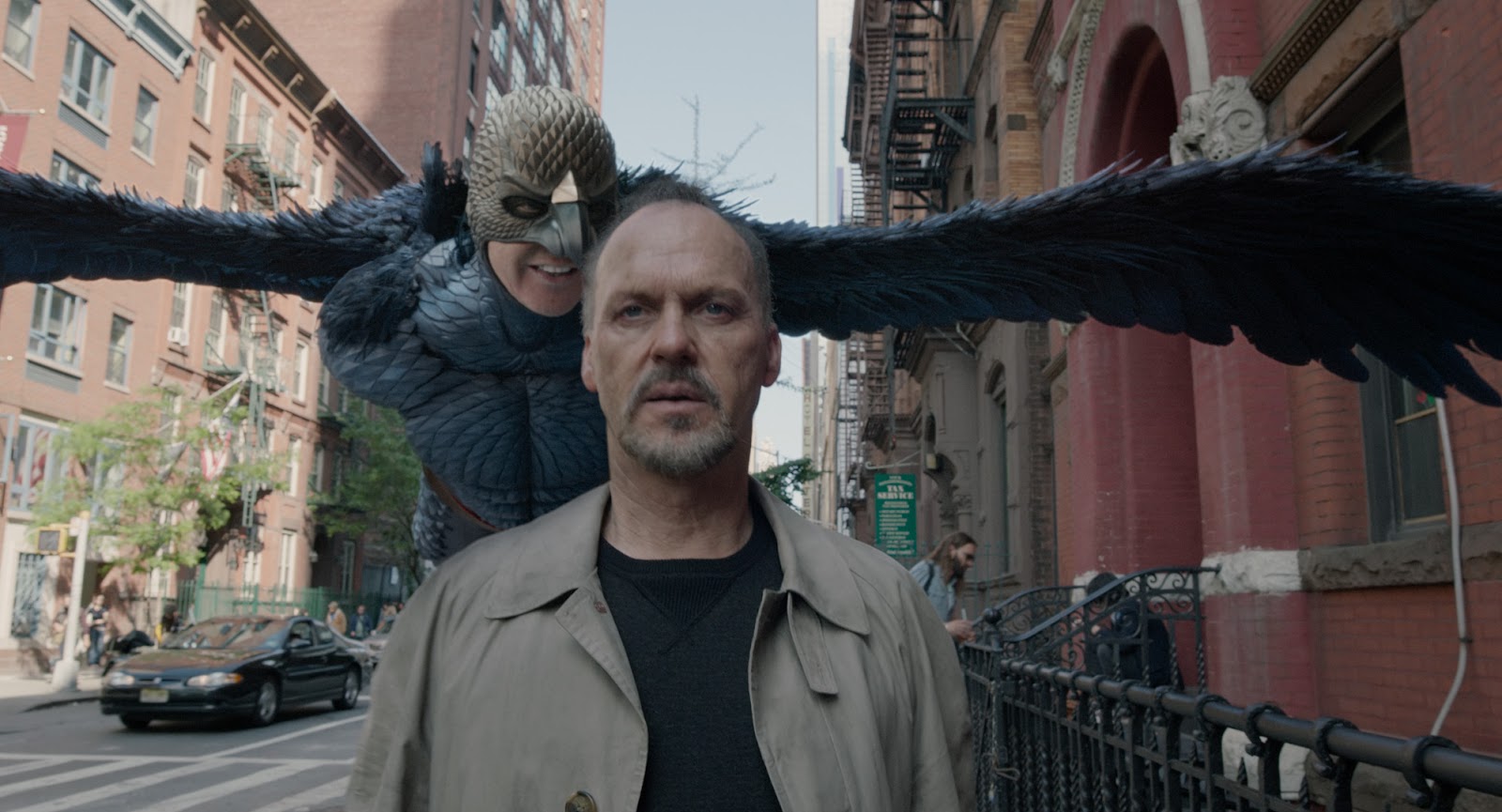
Riggan Thomson (a career revitalising role for Michael Keaton) is a faded movie star who hit celebrity 15 years ago with a series of films about a superhero, Birdman. Today he is trying to reclaim his artistic integrity by directing, adapting and starring in a Raymond Carver story on Broadway. At the same time he wants to rebuild a relationship with his daughter (Emma Stone), a recovering drug addict. The film covers the stumbling journey towards the opening night, with Thomson dealing with a demanding and difficult enfant terrible co-star (Ed Norton), a string of disasters and the haunting presence of his Birdman alter-ego, lambasting his choices and urging him to return to blockbusters.

I’m going to lay into this film a bit. It’s harsh, because it is really trying to do something different, for which it deserves credit. So I’ll start with the good stuff. The conceit of making the film look like it was done in one take is extraordinarily well done – the camera work is inventive and extraordinary. Emmanuel Lubezki is a visual genius and the technical accomplishment is astounding, a real tour-de-force. The acting is also very good. Michael Keaton embraces the best script he had in years, giving the part such commitment and emotion you overlook it’s a fairly simple part. Emma Stone is raw and tragic as his daughter. Ed Norton gives one of his finest performances as a dickish method actor (a neat self-parody) who in quieter conversations reveals real depth – and provides more insights into the passion for creativity than virtually anything else in the film.

Okay, that’s the really good stuff. It’s got some good lines as well, and its general style never stops being entertaining. But it’s also nowhere near as clever as it thinks it is. It wants to be a profound study of the nature of life and art, but it never really gets to grips with these ideas or drills down into them. For art, its contrasts are simplistic verging on hectoring. It never really gets to the heart of what acting is or means. For life it boils down into a straightforward “father wants to win back love of family” plot. The film presents all this as something deep and meaningful, and uses a lot of style and razamatazz – but the basic points remain simple or under-explored.

Part of my problem with the film is that is wears its pseudo-intelligence rather too heavily, and it ends up turning into smugness. Lubezki’s camera work is extraordinary but it also has a “look-at-me” quality that really begins to distract from the viewing of the film – even second time around the content of the film passes you by a bit. Tellingly, on the DVD Iñárritu talks about being drawn to the project because he wanted to make a film that felt like it was done in one take. Fine, but perhaps it would have been better if he had been a bit more interested in, say, the content of the film itself? Everything about the film-making demands you give it your attention, from the camerawork to the insistent drumming soundtrack. These elements are not bad in themselves – but it’s showing off rather than craft servicing the film.

The film’s themes themselves are, I think, also not as interesting or challenging as the film-makers believe them to be. The central idea of actors being shallow with chaotic home lives is so tired as to be a cliché: “Why don’t I have any self-respect?”/”You’re an actress, honey” summarises the sort of jokes you’ve seen before in other films.

I also felt the film’s attempts to analyse the nature of art and performance were formulaic and even rather empty. Lindsay Duncan plays a chilly theatre critic, determined to destroy the play, and Keaton delivers well Riggan’s rant to her on using labels and presenting opinions as facts. There isn’t any counterbalance to this offered, no exploration of, for example, criticism can service art or how opinion guides our reception of what we perceive as good art. A heavy handed fantasy sequence has his Birdman alter ego addressing the camera directly “Look at these people, at their eyes… they’re sparkling. They love this shit.” Yeah Alejandro we get it, we are shallow and deep down prefer action films than all this “ talky, depressing, philosophical bullshit” – hardly an original thought, and hardly framed originally though, is it? Do we really need to be whacked on the head with it? What point is this trying to make that we haven’t heard hundreds of times before?

But then is it any wonder that it wants to try and make points about cinema rather than theatre? For a film set exclusively in a theatre, I don’t really feel that its makers really understand the pressures or nature of theatre. Instead, it merely stands in here as a short hand for “cultural worthiness” – Riggan might as well be making an independent film or writing a novel, theatre is just a counterpoint used for blockbuster films (a genre Iñárritu clearly does understand and has opinions on). Nothing in the film really seems to capture a real sense of backstage in a theatre or what putting on a play is like, for example Peter Yates’ film of The Dresser. There is no sense of the collaborative nature of the medium or its immediacy as a performance art – it’s labelled as lazily as a vehicle for pretension and self loathing as criticism is for bitterness and failure.

The film also plays with the notion of Riggan’s (possibly) unhinged nature. Throughout the film we see him use superpowers – levitation, telekenesis, flight, control of fire. Along with his haunting by the Birdman character (done with a nice parody of the gravelly Christian Bale-Batman voice), it all ties into the possibility that Riggan is losing the ability to keep his real life and his career’s defining moment from merging into one another. The film’s ending builds on this, playfully suggesting some of what we have seen might have been real (though it also could be interpreted as a final dream sequence) – but I’m not sure what is gained by introducing these skills other than for visual flair. Riggan’s inner turmoil is never explored fully by the film and I don’t feel the film has the patience to explore his feelings or depression. As such, I find the open-ended ending doesn’t really add anything – it feels like it has been inserted to create debate, rather than acting as a culmination for your interpretation of the film, a la Inception say.

Phew. Birdman is by no means a bad film. It is a good one, but not a great one. It has much to admire, both on a technical and performance level, but (like Riggan) it is straining for an intellectual depth and thematic richness that simply isn’t there. It’s a showpiece, a brilliantly done one, really impressive to watch and it dazzles while it takes place – but there isn’t much to talk about afterwards. It is what it is. Compared to this year’s film-about-acting, La La Land, it’s both less charming and less profound, and has less to tell us about the compromises and struggles of real life. You can enjoy it, and it needs to be seen, but I can’t see it ageing well.

Primal Fear (1996)


Richard Gere prepares an impossible defence for unbalanced Edward Norton. Twist ahoy!

Director: Gregory Hoblit

Cast: Richard Gere (Martin Vail), Laura Linney (Janet Venable), John Mahoney (John Shaughnessy), Alfre Woodard (Judge Shoat), Frances McDormand (Dr Molly Arrington), Edward Norton (Aaron Stampler), Terry O’Quinn (Bud Yancy), Andre Braugher (Tommy Goodman)

Courtroom dramas are the bread and butter of film drama. You get to deal with good vs evil, right vs wrong – and you even have two advocates on each side there duelling it out on camera for you. Primal Fear came at a time when John Grisham and his like were ruling the bestseller charts, and it’s a fine demonstration of that very late 80s to mid 90s genre: the all-star court case film.

After the murder of a beloved archbishop in Chicago, bloodied altar-boy Aaron Stampler (Edward Norton) is found near the scene. There seems no doubt that he’s guilty. Top city lawyer Martin Vail (Richard Gere) takes his case for the publicity of a big trial, but finds himself believing the boy to be innocent. As the trial begins though, Vail’s psychiatric investigation reveals Stampler has a split personality – his gentle main persona and a violent defensive personality, “Roy”, who admits to the crime.

This is an advanced, well-written trial thriller which, through a combination of some neat lines and some very good performers, manages to bring a lot of life and originality to what could have been a collection of stock characters. Instead, each character in the film feels real and their actions seem part of a coherent personality. The mechanics of the plot also move very smoothly, with a well-handled twist. And as a bonus it has something to say about human nature, about our need to believe in something and how easy it is to tell lies about ourselves and believe them from others.

The film is shot with a good eye for grimy real-life locations and muddy shade-of-grey morality. Hoblit’s direction is crisp and straightforward and he avoids getting any pyrotechnics in the way of the actors – here the performances are the special effects. It’s also a brilliant twist movie that doesn’t telegraph the fact it contains a twist until it suddenly pulls the rug out from under your feet. Hoblit doesn’t give us any advantages over the characters and has the restraint not to show his hand too early – instead he sucker punches us with a sudden downer ending. It’s a masterpiece of genre craft film-making.

Richard Gere at first glance is playing well within his range – a smirking hotshot focused on the win, willing to defend anyone and anything. However, what Gere does really well here is play his persona as an actual persona of the character. The “real” Martin Vail, it becomes clear, is actually almost naïve in his underlying faith in the justice system. He has a touching faith in people and the twist of the film works because we believe how much Vail unwittingly allows himself too be manipulated and conned. He’s the sort of true believer who can playfully mock his faith because his belief in it is absolute. It’s even more crushing, then, when that faith is so cruelly used and abused. The final shot of him alone on the street all but screams “My God, what have I done?”.

But though this film has some of Gere’s best work, this is Ed Norton’s movie. Incredibly, this was Norton’s first ever film, and he seizes the film absolutely by the scruff of the neck. Re-watching the film now, it’s less of a surprise when Aaron’s “Roy” personality bursts out – Norton is so well known now you are almost waiting for him to really let rip – but he nails the contrasts between the stammering, gentle Aaron and the ferocious Roy. You always know which one he is at any time – and even better than that, Norton drops subtle hints throughout to set up the film’s twist (which I won’t give away). His performance is largely a triumph of masterful control of acting tricks and a brilliant demonstration of range, as well as a swaggering display of confidence, rather than a subtle piece of character work, but it’s still an absolute knock out for all that – and totally believable.

Strong performances also come from Laura Linney, making an awful lot of the role of Gere’s courtroom nemesis and part-time lover. Andre Braugher is particularly good as an investigating officer. Alfre Woodward is stern and authoritative but fair minded and just as the judge. Frances McDormand makes what could have been a wet liberal doctor feel like a genuinely caring and dedicated intelligent professional. There isn’t a weak link in the cast, and every character beat feels well observed and natural. How many genre films have failed to manage that?

It all works extremely well and offers all the courtroom fireworks you could want with maximum efficiency. All the actors are working at the top of their game, and the direction keeps the action taut and intriguing. Here’s the thing: the plot makes little sense if you think about it, and Norton’s plan depends on so many variables he could never have known that it would success. But the film is made with such confidence and assurance that it never really matters. The twist still has a lot of impact today – and the film bravely offers no happy endings, only hammers home the system’s corruptness. A very good example (perhaps one of the best) of the courtroom genre.

The Bourne Legacy (2012)


Even with two guns and Jeremy Renner’s face, Aaron Cross isn’t that interesting

Director: Tony Gilroy

Cast: Jeremy Renner (Aaron Cross), Rachel Weisz (Dr Marta Shearing), Edward Norton (Col. Eric Byer), Stacy Keach (Adm. Mark Turso), Dennis Boutsikaris (Terrence Ward), Oscar Isaac (Outcome #3), Joan Allen (Pamela Landy), Albert Finney (Dr Albert Hirsch), David Strathairn (Noah Vosen), Scott Glenn (Ezra Kramer), Donna Murphy (Dita Mandy), Michael Chernus (Arthur Ingram), Corey Stoll (Zev Vendel), Željko Ivanek (Dr Donald Foite), Elizabeth Marvel (Dr Connie Dowd)

What do you do when the people want more sequels to your film series but you can’t persuade the star and director (no matter how much money you offer) to make another film? Well you can either re-cast or you can put another character front and centre in a sequel. The Bourne Legacy goes for the latter approach and invents a new series of characters and shady CIA programmes so that we can put the old chase-and-fight formula back to work.

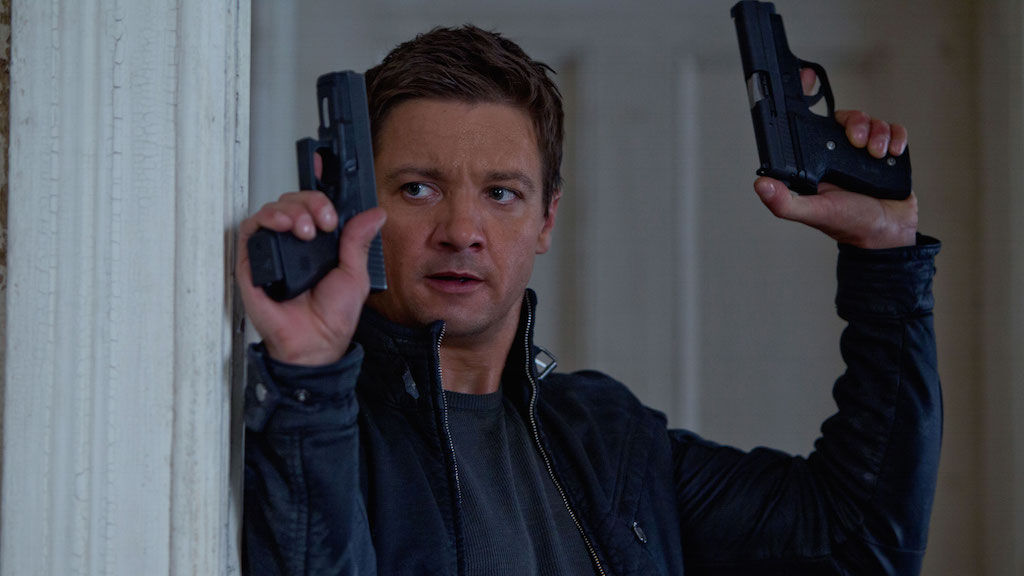
Aaron Cross (Jeremy Renner) has been mentally and physically enhanced as part of a series of CIA black ops, overseen by shady CIA bigwig Ed Norton. After the events of Bourne Ultimatum (which overlap with the first quarter of this film), the CIA cuts its losses and orders the deaths of all the agents (including Cross) and the scientists (including Rachel Weisz’s Dr Shearing). Of course both Cross and Shearing survive and go on the run. Despite the writing tying itself into knots to connect its story to the previous films, that’s the sum of the plot. Hardly gripping.

This strange historical curiosity spends the first half of its running time attempting to justify its existence. Extensive narrative hoops are jumped through and new footage carefully interwoven with clips from the previous two movies to try and suggest “a plot behind the plot”. It’s a mistake. No one needs to know why the film exists: we just want to get on with a cracking story. Instead we spend an inordinate amount of time unravelling this “sidequel” attempt at franchise expansion, meandering around unengaging and complex plotting that totally fails to engage the interest.

So long winded are these plotting gymnastics, it’s a good two-thirds of the way into the film before our villain becomes aware of our hero’s survival. Our hero never becomes aware of the villain (an unclear flashback is put into place so they share the screen) and only guesses at who is chasing him. This means the chase elements of the film never really click into place and lack anything for the viewer to invest in. The “hero” is an assassin whose objective is to keep hold of his enhanced intellect, obtained from drugs on the “programme”. Well good for him, but its hardly a sympathetic reason for us to root for him. He’s still an unrepentant killer.

This isn’t helped by the giggle-worthy flashback scenes of Jeremy Renner in his pre-enhanced state, where Renner seems to be aping Ben Stiller’s performance of Simple Jack in Tropic Thunder. In his enhanced state, Cross is fully aware he is an assassin and a willing volunteer – embracing the very dark secret Bourne was so ashamed of. Neither Cross nor Shearing ever have their actions questioned, or display any sense that they have done anything wrong – it seems clear that they would have continued their dirty deeds quite happily without the plot’s intervention. It’s fine to have morally compromised heroes in a film – but this film doesn’t seem to realise or comment on this at any point.

Whatever your views on the characters, the fact remains that this is a chase movie where the chase is not interesting, takes far too long to get started and never really gets the viewer feeling the tension. As an editor of action, Gilroy is no Paul Greengrass and the fight sequences have the same cold distance to them that the rest of the film has, a by-the-numbers series of clashes where it’s hard to really care what happens.

A brilliant cast of actors is totally wasted. Poor Jeremy Renner does his very best here – he has charm, he’s a charismatic performer, but this is a dull character who we are given no real reason to invest in. Rachel Weisz plays the sort of damsel distress (matched up with the “film scientist” trope) an Oscar winner surely can do without. Edward Norton as with so many other films makes his contempt and boredom with the film totally apparent. Allen, Finney and Straitharn have little more than single scene cameos. A host of great character actors (Isaac, Marvel, Stoll, Ivanek, Keach, Murphy) are totally wasted.

This is a dull, formulaic, unloved sequel that spends more time trying to place itself into the timeline of the previous movies than developing a storyline and characters we actually care about. It moves slowly from location to location, sprinkling in some inadequately filmed fights and chases, never once persuading us that we should care about anything that happens.