
Tag: Elisha Cook Jnr

The Big Sleep (1946)

The Big Sleep (1946)

Bogie and Bacall flirt their way into legend in the iconic Chandler adaptation

Director: Howard Hawks

Cast: Humphrey Bogart (Philip Marlowe), Lauren Bacall (Vivian Sternwood Rutledge), John Ridgeley (Eddie Mars), Martha Vickers (Carmen Sternwood), Sonia Darrin (Agnes Lowzier), Dorothy Malone (Acme bookstore owner), Regis Toomey (Chief Inspector Bernie Ohls), Peggy Knudsen (Mona Mars), Charles Waldron (General Sternwood), Charles D Brown (Norris), Elisha Cook Jnr (Harry Jones)
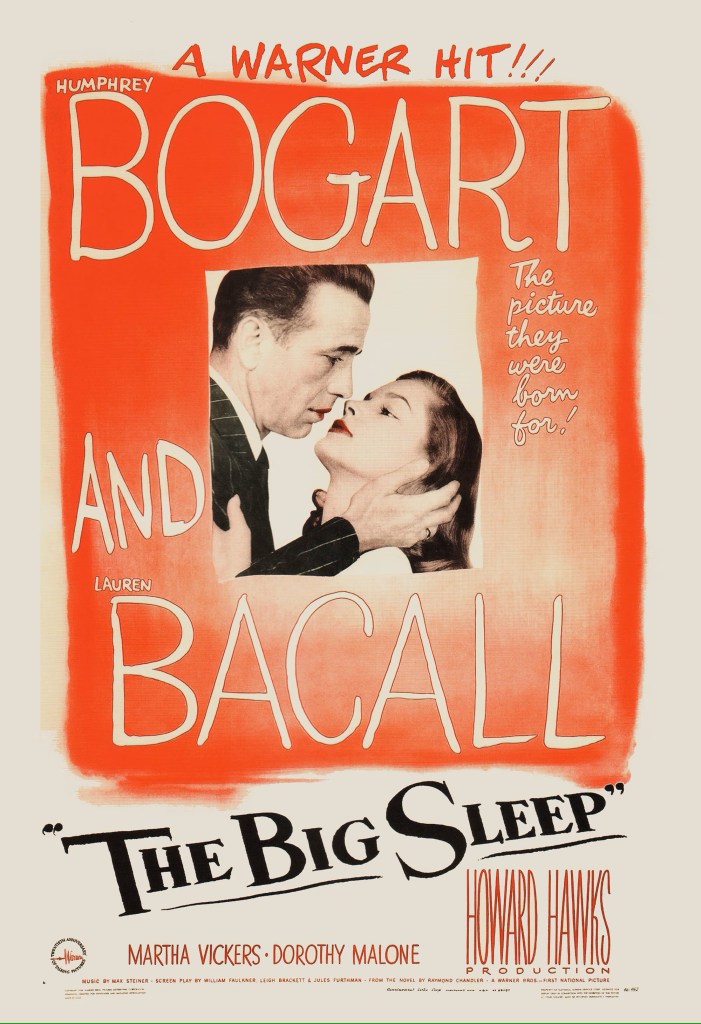
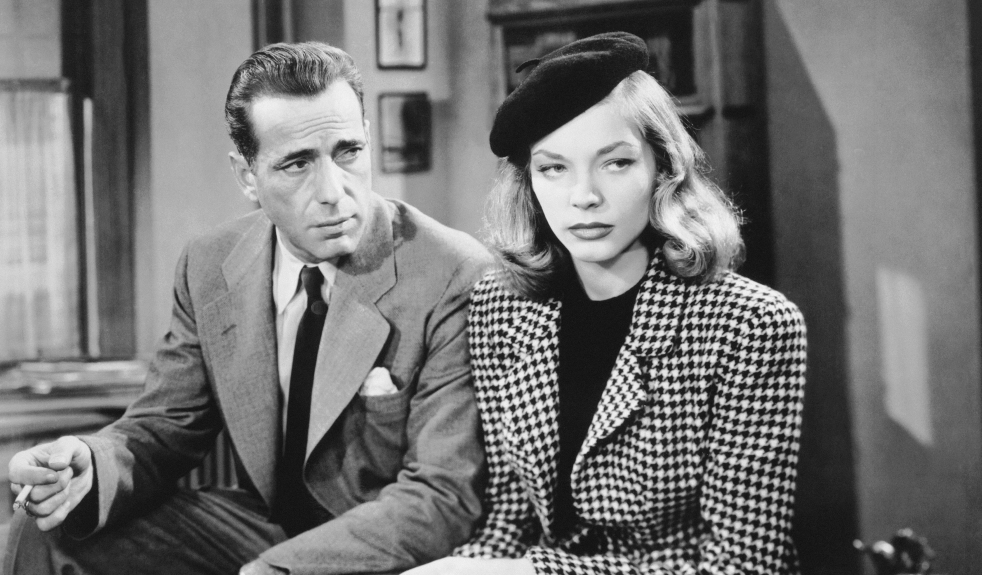
The Big Sleep was actually shot in 1944 – you can spot the odd wartime reference, from a female taxi driver to Marlowe’s special gasoline permit – but was released almost two years later. A lot had changed since then (the end of the war for starters) not least the fact that Bogart and Bacall had become the most famous couple in the world. After previews, Warner Bros quickly twigged they could have a mega-hit if they took out some of the dull bits and replaced them with Bogie and Bacall flirting instead. Which they duly did, helping turn The Big Sleep from what could-have-been a fairly routine Chandler gumshoe adaptation into a sort of genre-defining phenomenon.

The first thing they sacrificed was the plot. Famously, nothing in The Big Sleep really makes that much sense – and it hardly matters. Bogie asked Hawks at one point just who exactly shoved the Sternwood unconscious chauffer’s into the river – neither Hawks or the several scriptwriters (including William Faulkner and Leigh Brackett) had a clue. It doesn’t matter, because few films are about “the ride” as much as The Big Sleep. Every moment has something in it to appeal to the hard-boiled detective fan. Not a scene goes by without either a glamourous lady eager to bed Bogie, a fight, a shooting or some combination of all three. All washed down by a hard-bitten Bogie at his absolutely best, over-flowing with charisma and an impish sense-of-fun at how cool it all was.

The Big Sleep sees Philip Marlowe (Humphrey Bogart) hired by General Sternwood (Charles Waldron) to investigate a series of mysterious debts run up by Sternwood’s carefree and wantonly flirtatious daughter Carmen (Martha Vickers). The plot inevitably thickens as Marlowe uncovers blackmail, prostitution, pornography rings and lord knows what else, all circulating around a sinister bookseller with a sideline in naughty photos, a brazen femme fatale (Agnes Lowzier) manipulating a series of weak-willed men and a tough gangster Eddie Mars (John Ridgeley) willing to use his secrets to win advantage. That’s not even mentioning Carmen’s austerely arch sister Vivian (Lauren Bacall) whose sultry flirtatiousness captures Marlowe’s attention.

The Big Sleep really is a series of hugely entertaining scenes, loosely tired together with a vague plot. The original cut had featured a dull scene with Bogie laboriously explaining what was going on to his dull-as-ditch-water police friend. What Hawks and co realised is no one really wants to see that when they could see Bogie and Bacall puffing cigarettes and talking suggestively (brazenly!) about how you need to ride a horse hard. They were probably right: after all, no one thinks about Psycho and says “my favourite scene is the bit with the psychiatrist’s explanation at the end”. Hawks realised if the viewer enjoyed themselves, no one would give a damn if it made almost no sense.

How else really can you explain scenes like Marlowe’s drop-in on an Acme bookstore where he meets the sort of drop-dead gorgeous bombshell store owner (Dorothy Malone, sexy as hell) who only exists in movies and happily closes the store in the middle of the afternoon to drink a bit of whisky (and more) with Bogie? It offers nothing to the plot that couldn’t be covered with a brief time-lapse montage – it’s all about the mood, the dialogue and the sensual charge between the two characters, with the illicit promise of no-strings sex (which, rather nicely for a 40s movie, they both seem well-up for). Who hasn’t dreamed of that?

It’s the same frisson that lies behind the whole Bogie and Bacall appeal. These two set the screen alight with the sort of temperature that came from basically watching them have an affair right in front of us. The two became an illicit item while filming To Have and Have Not and large chunks of The Big Sleep were held up due to Bogie drinking away his guilt. By ’46 they were an official item, but you couldn’t doubt it from the lingering, heated looks they give each other. Or the screwball lightness – and the one-upmanship and delight in making the other laugh – during their telephone call to the police department, as they pass the phone between each other putting on voices and pretending to be various members of an entire clan of troubled curtain-twitchers.

Humphrey Bogart was in his element here. Literally no one before or since could play this sort of super-smart, more-sensitive-than-he-appears hero who covers himself with a cynical, wise-cracking front than him. His Philip Marlowe has a joke for every occasion but also a strong moral sense close to the surface. He’s playful – the delight in which he affects the fusspot demeanour of a book collector early on is delightful – but superbly unruffled by threats.

No wonder Bacall’s Vivian is drawn towards him. Bacall is sultry and husky voiced, a slice of imperial sexiness. If the film doesn’t call for her to do much more than that, she certainly can deliver it. It’s a performance that is left surprisingly one-note (after all that one-note was all Hawks wanted from her). Chandler believed Martha Vicker’s inspired performance of childish selfishness and sexual shamelessness as her sister Carmen was if anything even better – and he’s probably right. But then Bacall has those famous scenes with Bogie – somewhere between His Girl Friday and Basic Instinct – and it’s those moments that cement themselves in your mind.

That and The Big Sleep’s effective moments of hard-edged violence. Elisha Cook Jnr gets his greatest role as a weakling who bungles his way into an early grave in a partially-silhouetted murder. There is a cracking shoot-out between Marlowe and Mars’ hired gun and a neat (if barely logical) final face-off between the outraged Bogie and Joh Ridgeley’s expertly judged Mars who crumbles from arrogant superiority to snivelling cowardice. There are equal delights in numerous other scenes that play out like stand-alone treats – from Bogie’s imperious swatting of bully-boy Brody to his greenhouse hiring by General Sternwood. Every scene in the film plays out with hard-boiled zing like its own cool little stand-alone movie.

It makes for a fun package – and it’s easy to see why The Big Sleep is the sort of film people list as “their favourite”. It’s playful and manages to seem extremely cool without seeming to make any effort. Bogart is sensational and every second of the film offers something good. What the hell does it matter if none of it really makes sense?

Shane (1953)

Alan Ladd as the mysterious gunslinger Shane

Director: George Stevens

Cast: Alan Ladd (Shane), Jean Arthur (Marian Starrett), Van Heflin (Joe Starrett), Brandon de Wilde (Joey Starrett), Jack Palance (Jack Wilson), Ben Johnson (Chris Calloway), Edgar Buchanan (Fred Lewis), Emile Meyer (Rufus Ryker), Elisha Cook Jnr (“Stonewall” Torrey), Douglas Spencer (“Swede” Shipstead), John Dierkes (Morgan Ryker), Ellen Corby (Liz Torrey)

On the surface Shane is pretty much the definitive “white-hat-black-hat” Western. Crikey, Jack Palance’s vicious gunslinger Wilson practically wears nothing but black. Alan Ladd’s heroic Shane does what needs to be done, and the kid loves him to bits. But Steven’s film is more complex and intriguing than that. Because Shane is in fact only a few degrees away from Wilson. When he rides into the homestead, he is already weighted down by the memory of all the people he’s killed. Shane is no saint. He’s a tired man whose shed too much of other people’s blood to ever feel anything but an outsider.

Shane arrives at the Starrett farm. Joey (Brandon de Wilde), the boy-of-the-house immediately hero-worships this mysterious stranger with the distinctive guns. Joe Starrett (Van Heflin) is at first hostile but takes Shane in as a farm worker and he and his wife Marian (Jean Arthur) – maybe particularly Marian – are drawn towards this reserved but good-natured man. Starrett and the other homesteaders are in the middle of a feud with local cattle rancher Rufus Ryker (Emile Meyer), who wants to drive them off the land so he can use it for his cattle. Violence seems inevitable – but how long can Shane keep his unspoken pact to himself to put down his guns and try a life of normality?

Shane is one of Steven’s finest films, beautifully filmed with Oscar-winning photography and told with a lavishly poetic sense. It works so well because it juggles both a simple story, with a deep poetic understanding of humanity. You can see why this is “a Western for those who don’t like Westerns”. It’s got a beautiful, understated sense of struggle to it – the homesteaders against the bullying of Ryker – beautifully mixed with a sense of the dangerous glamour of violence. Match that with some wonderfully hissable villains and the honesty and decency of the Starretts and Shane’s quiet dignity, and you’ve got a perfectly judged morality play.

But the film works because there is so much operating on multiple levels. Which brings us back to Shane himself. Sure, he’s a decent guy. We expect him to be the hero. He fulfils much of that function in the plot. He’s kind and loving with the kid. He holds his cool and never seems to get angry. But why is this? The film makes clear that Shane has a past. A past of gun-slinging violence. And if Shane is still standing at the end of a life like that, he must have been good. And ruthless.

What was it that made Shane so desperate for a change? To try a life of normality, chopping down stumps and putting up fences on a farm? I suspect Shane in his prime wasn’t that different from the calm, cool and ruthless Wilson. You can see the guilt in his eyes when he finally shoots his weapon (at a rock!) two thirds into the film. This is a man who knows that killing carries a terrible burden – and he clearly knows all too well after sending so many to their graves. At the end of the film, with his emotional pean to Joey (“There’s no living with killing”) he’s speaking from the heart. And only someone who has killed many, many people – who doesn’t look remotely worried when facing off with Wilson and Ryker – could really know that.

It’s an idea that you could miss in the film, but it’s there all the way through. The casting of Alan Ladd – who was never better – is crucial to the success of this. Imagine the strength and power a Wayne or Cooper or Stewart would have given Shane. They would never have felt so slight, or beaten down by a life of violence. But Ladd’s smallness, his sadness and his reluctance works for the part. Stevens continually shoots him as an outsider, on the edge of scenes or even isolated in crowds. He can fade into the background in the way other stars couldn’t have done. He feels like a man who knows he has been a moral failure, who isn’t redeemed by star quality.

Stevens plays with our expectations of Shane through the reactions of the Starretts. Joe is (tellingly) instinctively hostile to him at first, before Shane wins him over. Marian’s reaction is however fascinating. She is both slightly repelled by what she can see as Shane’s past violence, but also increasingly drawn towards him. Is this because Shane’s internal knowledge, his worldliness, his depths of sadness make him more of a thoughtful kindred spirit than her husband can be? Joe is a simple man, decent beyond words, but not a thinker. Shane is more – for all his danger – and Marian feels like a woman who has accepted her place but perhaps dreamed of more. She would never act on this, but Shane to her seems to represent a path not taken.

And Joey? Shane is everything a boy could dream of in a hero. The man with few words who appears over the horizon with nothing but a six shooter. Stevens camera cuts back again and again to Joey’s adoring, worshipping face – and it’s an excellent performance from (the Oscar-nominated) Brandon de Wilde, as a young boy on the edge of becoming a teenager who wants to be a man, but still looks with the eyes of a child. Stevens throughout places the audience on the same level with Joey. Like him we want to believe in Shane, to see him play the hero. It’s part of the films skilful construction that it finishes before it occurs to you that the character the audience most closely related to was the uncritical, unknowing child. On first viewing we stare at Shane with the same hero worship as Joey.

Shane wants a life of normality. Shane isn’t a million miles away from Eastwood’s revisionist Unforgiven. In fact, Munny’s life in that film is basically Shane’s, without Ladd’s humbleness. The brutal killer who wants to leave it all behind, but is dragged back in. Who finally faces off and guns down a horde of enemies in a saloon bar before riding off into legend. Sure, Shane will be remembed with more fondness by those he leaves behind – and he saves the homesteaders – but just like Munny he does it by leaving a trail of bodies behind him.

Steven’s beautiful film is both a compelling narrative of goodies and baddies, but also a profound, fascinating and challenging film. It’s wonderfully made and has a host of reliable actors at the top of their game. Ladd is superb, Jean Arthur brings great depth to Marian, Van Heflin’s Joe is a the sort of simple, decent, salt-of-the-Earth type the West was made of. Facing them, Jack Palance makes the most of limited screentime (and got an Oscar nomination) as the sneering, bad-to-the-bone Wilson. It’s a perfect mixture of small, intimate scale that seems to be taking place in an epic environment. It’s influence has been so profound it’s virtually an archetype. An American classic.