Tag: Elizabeth Olsen

Martha Marcy May Marlene (2011)

Martha Marcy May Marlene (2011)

Durkin’s debut is atmospheric but not quite satisfying enough look at the danger of cults

Director: Sean Durkin

Cast: Elizabeth Olsen (Martha/Marcy May), John Hawkes (Patrick), Sarah Paulson (Lucy), Hugh Dancy (Ted), Brady Corbett (Watts), Christopher Abbott (Max), Maria Dizzia (Katie), Julia Garner (Sarah), Louisa Krause (Zoe)

When 22-year-old Martha (Elizabeth Olsen) surfaces after two years off-the-grid, seeking help from her sister Lucy (Sarah Paulson) and Lucy’s husband Ted (Hugh Dancy), they think she’s still the same slightly selfish screw-up she’s always been. But unknown to them, Martha has spent those missing years rechristened as Marcy Man in a patriarchal Manson-like cult in the Catskills run by charismatic Patrick (John Hawkes). As Martha attempts to readjust, she is haunted by flashbacks to the cult and a growing paranoia that her escape from Patrick’s clutches might only be temporary.

Durkin’s debut film is a masterclass in unsettling atmosphere. With its gloomy photography and stretches of unsettling silence, it never lets the viewer relax. Lucy and Ted’s luxury country house ends up feeling as unsafe and uncertain as the cult’s rickety farm. Well-handled cuts take us suddenly from present to flash-back – for example, a cut sees Martha dive from Ted’s boat to land in the waterfall near the cult’s farm. Auditory and visual transitions run throughout the whole film – Martha’s sleeping positions in the house suddenly mirrored in flashbacks, or food preparation in one timeline transitioning to the same task in the other. It makes everything feel as disjointed and jagged to us as it does to Martha.

This unsettling uncertainty, where the “safe” environment of Lucy and Ted’s house increasingly mirrors the unsafe world of the cult, is a neat way of suggesting the struggle of people like Martha to truly escape. It also complements a very effective, star-making turn from Elizabeth Olsen. At times hostile, Martha is just as likely to withdraw, Olsen showing her deeply unsettled by everyday acts like her sister combing her hair (an act reminiscent to her of the cult’s sexual abuse), or blankly not comprehending the society’s everyday rules. Desperate for reassurance, she still clings to the cult’s empty mantras, lashing out with furious venom when she feels vulnerable. It’s a soulful, damaged and delicate performance that carries much of the film.

Martha Marcy May Marlene captures the horrific, insidious manipulation of the cult. John Hawkes is very good as a quietly charismatic, intimidating man who, without ever raising his voice, controls every situation he is in through self-confidence and absolute certainty. The cult is firmly hierarchical, with Patrick at the top, men below and women at the bottom, serving the men – from cooking food (and not eating so much as a crumb until they are finished) to taking part in partner-swapping orgies watched by Patrick. All women are initiated into the cult through a “cleansing” ritual – being drugged by the other women, then raped by Patrick and they and the other members are brain-washed into pride at being “chosen” for Patrick’s wisdom.

Durkin leaves the nature of the cult deliberately ill-defined, in itself a comment on the shallow emptiness of these movements and the intellectual mediocrity of their leaders. When a row develops over dinner, Martha responds to the (admittedly smug) Ted by angrily parroting the cult’s empty, depth-free anti-money and anti-capitalist statements. The cult roughly follows the Manson Family playbook in breaking into homes and stealing (or worse) to fund its activities. Its main function is dehumanising its members, so they will think nothing of killing and abandon all personal boundaries. Martha still suffers from the latter: used to sleeping in communal rooms, she thinks nothing of wandering into Ted and Lucy’s room and lying down to sleep on their bed while they noisily have sex in the other half of it (they are not pleased, much to her bemusement).

There is good stuff here – which makes it disappointing that the film ends up, for me, feeling slightly unsatisfying. We get no real sense of what made Martha join this cult, or who she was before it sunk its claws into her. We also get very little sense of what made Martha decide to escape. The film suggests maybe her reaction to the murder of the owner of one of the wealthy homes they break into: but since the film later suggests that murder (and Patrick’s teaching that killing is somehow doing people a favour) is a fairly regular occurrence in the cult, this also feels unlikely.

The film also avoids really diving into interesting questions about readjustment and de-programming from traumatic experiences. For all it brings Martha’s PTSD to the fore, it doesn’t really show much development in either Martha’s feelings towards the cult or her understanding of her experiences. Now it’s true the road to recovery isn’t a straight line of narratively smooth continual healing, but a long, complex journey with many setback. But as a film, focussing solely on this part of her life ends up rather repetitive, like we’re struck watching just part of a longer story.

Durkin’s film is instead really a study of paranoia – Martha’s growing, unspoken, fear that the cult is coming for her and her family. But for those fears to really work, we need to feel the cult is capable of pre-meditated murder – the only killing we see is sudden and unprepared, other house entries showing the cult go to great lengths to be undetected. The film caps with a deliberately ambiguous sequence that may or may not be a mix of reality, chance, coincidence and Martha’s paranoid fears. But it’s a sequence that feels like it’s been created to conclude the film, rather than something that grows organically throughout, blunting some of its impact.

It’s a shame as there is a lot to like in this impressive, atmospheric debut, not least Durkin’s coldly unsettling direction, Olsen’s terrific performance and very good supporting turns from an exasperated-but-patient Sarah Paulson as Lucy and Hawkes’ dark, quiet charisma. But Martha Marcy May Marlene eventually boils down to telling you that being in a cult is traumatic, without really exploring the nuances of the struggle to overcome that or what pulls you into that situation in the first place. By focusing on paranoia, it feels like it tells only part of a wider, more interesting story.

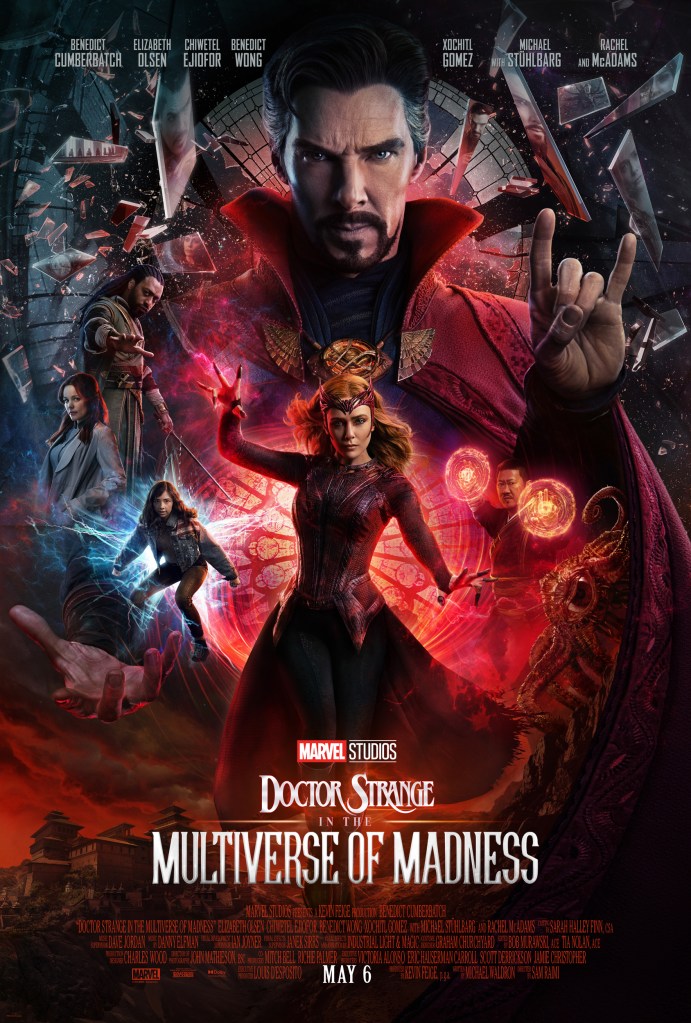
Doctor Strange in the Multiverse of Madness (2022)

Doctor Strange in the Multiverse of Madness (2022)

Marvel opens up its infinite universes as it lays the groundwork for bringing back old characters with new faces in this corporate outing

Director: Sam Raimi

Cast: Benedict Cumberbatch (Dr Stephen Strange), Elizabeth Olsen (Wanda Maximoff/Scarlet Witch), Rachel McAdams (Dr Christine Palmer), Chiwetel Ejiofor (Karl Mordo), Benedict Wong (Wong), Xochitl Gomez (America Chavez), Michael Stuhlbarg (Dr Nicodemus West)

Spoilers: The main spoiler would be looking at the cast list. I won’t name the cameos are but I do mention a main plot development revealed within 15 minutes.

Parallel universes have infinite possibilities. These are largely not found in this lumpen, fan-service obsessed and (whisper it) slightly dull film that fails to follow-up on either the promise of the first film (to which it makes awkward call-backs) or its main concept. It allows Raimi scope to indulge his Evil Dead style visuals, but all within the confines of producing another entry in the series that feels like a bridge between chapters rather than an interesting story in its own right.

Dr Strange (Benedict Cumberbatch) attends the wedding of former girlfriend Christine Palmer (Rachel McAdams), when he’s torn away to fight a squid monster chasing a teenager, America Chavez (Xochitl Gomez). America has the power to travel between parallel universes – and is dragging behind her the dead body of a parallel Strange who failed to protect her from a mysterious foe trying to steal her power. Strange, Wong (Benedict Wong – the most engaging performance in the film from this under-rated actor) and the Sorcerers protect America – but Strange’s attempt to recruit Wanda Maximoff (Elizabeth Olsen) goes awry when it turns out its she hunting America, using dark magic in an attempt to find her parallel versions of her lost children.

DSITMOM has been called the MCU’s horror film: which by no means makes it The Exorcist. It’s a sort of very, very gentle entrée to the genre – like Cronenberg’s Videodrome was turned into a kid’s TV series or a comic-book version of Raimi’s The Evil Dead. It has a few flourishes, but none of this is allowed to get in the way of the corporate enterprise. It’s more interested in giving people what it feels they want and fitting itself into the timeline of a series.

In fact it sometimes feels like an attempt to mirror the success of Spider-Man: No Way Home (I wonder how many of the cameos were added after that film’s release?). It takes the elements of guest stars and parallel universes and presents them in ways that provide little insight or long-term reward. In No Way Home alternate versions of characters are used to explore how different events could have shaped our heroes. The returning stars aren’t just thrown in, they have arcs and emotional journeys. The whole is both fun and an engaging story but also nostalgic. Compare, as well, the TV series Loki (by the same writer) that brilliantly used parallel versions of its lead to deconstruct and develop his character.

DSITMOM does none of this. There are rich opportunities to see how Strange may have developed in different universes: after all this is the closest thing to an “ends justify the means” character in the MCU. Would different versions of him go more or less further – and how might it make our Strange reflect on his occasionally ruthless ‘big picture’ thinking (this is after all, as the film mentions, the guy who allowed half of all life to blink out of existence as part of a masterplan only he knew). We don’t get nearly enough of that. In fact, we get virtually none of it.

These opportunities are ignored in the two parallel universes we spend the most time in, where Strange is either a dead war hero or an insane hermit corrupted by dark magic. Neither of these characters is really contrasted effectively or interestingly with our version. A faint plotline of Strange learning trust from the mistakes of others is threaded through, but only lightly. Instead, the film focuses more attention on Strange’s lost love for Christine Palmer, an oddly unsatisfying focus since Strange has appeared in at least four films since his first solo effort six years ago, and the franchise has failed to mention this motivating loss once (not even a throwaway line in No Way Home to build it up).

Mind you it’s better than the development Wanda Maximoff gets. DSITMOM is pretty much impenetrable unless you’ve watched WandaVision. Even if you have, as I have, you’ll probably be a little annoyed at the ‘development’ she gets here. At the end of that series, Wanda had accepted the damaging consequences of her grief and started moving on. Here though, she’s a sociopathic monster defined solely by her motherly grief and her ruthless determination to tear universes apart to heal it. It feels retrograde to, essentially, be saying “women who suffer loss go axe-crazy” or to double down on her willingness to harm others to cling to a ‘normal life’ fantasy (as well as contrary to the hopeful tone the series ended on).

That’s not to mention the clumsy fan service peppering the film. The main outing to a parallel universe is basically an excuse for fan-pleasing cameos. These amount to nothing more than a series of actors popping up say “Hello I’m Y” and promptly suffering terrible fates (because it’s a parallel universe and your plot armour means nothing there). Like Yoda fighting Christopher Lee, it’s cool when you first see it but risks becoming less and less rewarding overtime because it’s utterly insubstantial.

DSITMOM is basically insubstantial. It drags on – it’s a chase film that largely lacks momentum – it has a series of slightly bored looking actors (Ejiofor wins, with a Mordo who seems to have become Strange’s nemesis in the interim between this and the first film despite never being mentioned in any other film since), gets absorbed in a MacGuffin filled plot (there are no less than two Magic Books of Wham-a-bam that are being hunted or fought over) and flattens down most of Raimi’s style into a corporate product with little heart (compare this to his Spider-Man films which look like Citizen Kane or Vertigo next to this).

There are about two moments of invention: a sequence when Strange plummets through a series of bizarre parallel universes (including one where he’s made of paint) and a battle between two Stranges that utilises musical notes as weapons. Everything else feels production flattened, as do the actors, and ends teeing you up for a third film with another “whoop” cameo. Flat, lumpen and failing to capitalise on its possibilities, this is a big disappointment, an empty lightshow with brief but shallow pleasures.

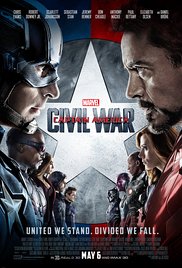
Captain America: Civil War (2016)

Captain America and Iron Man stand-off in overblown Captain America: Civil War

Director: Anthony and Joe Russo

Cast: Chris Evans (Steve Rogers), Robert Downey Jnr (Tony Stark), Scarlett Johansson (Natasha Romanoff), Sebastian Stan (Bucky Barnes), Anthony Mackie (Sam Wilson), Don Cheadle (James Rhodes), Jeremy Renner (Clint Barton), Chadwick Boseman (T’Challa), Paul Bettany (Vision), Elizabeth Olsen (Wanda Maximoff), Paul Rudd (Scott Lang), Emily VanCamp (Sharon Carter), Tom Holland (Peter Parker), Frank Grillo (Crossbones), William Hurt (Thaddeus “Thunderbolt” Ross), Daniel Brühl (Helmet Zemo), Martin Freeman (Everett K Ross), Marisa Tomei (May Parker), John Kani (T’Chaka), John Slattery (Howard Stark), Hope Davis (Maria Stark), Alfre Woodward (Mariah Dillard)

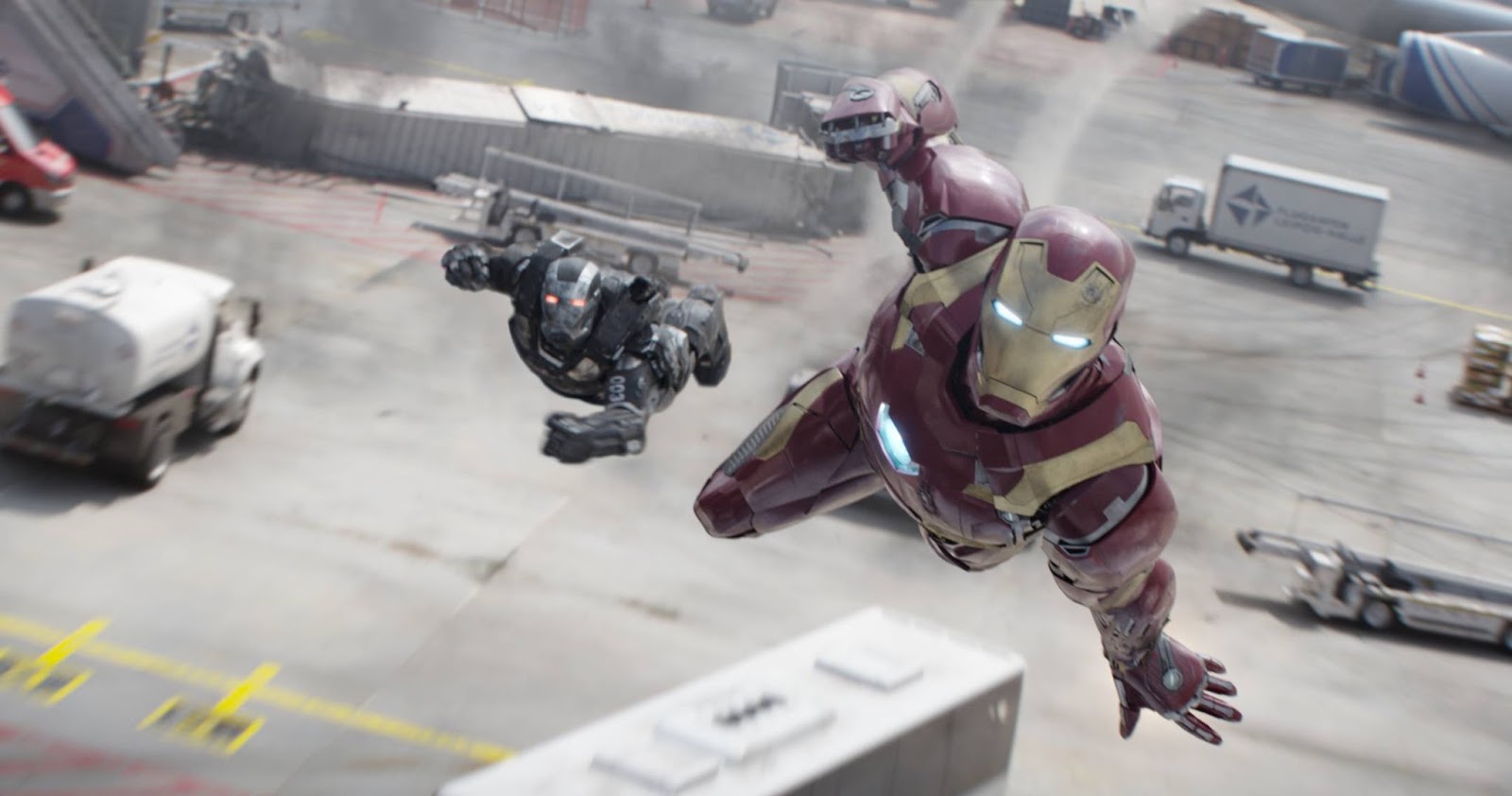
Captain America: Civil War is another explosive entry in the MCU, and is even more stuffed than usual, with nearly all our Avengers thrown into the mix – with the added twist that they fight each other! Yup it’s time for another playground argument: “If X fought Y, which one would win?!” That’s the main thrust of Captain America: Civil War, but it’s actually a distraction from the real plot. The much hyped fight at the airport (and the build-up to it) is a rather dull hour in the middle that distracts from a richer, more interesting film.

There is dissent in the ranks of the Avengers. The UN wants them to sign the “Zukovian Accords” – an agreement that they will work only under the direction of the UN. For Tony Stark (Robert Downey Jnr) this legal framework for their actions is essential – but Steve Rogers (Chris Evans) argues that the Avengers need to have the freedom to go where they are needed, not only where they are told. In this tense situation, a bombing in Vienna is swiftly blamed on Roger’s old friend Bucky Barnes (Sebastian Stan), who has become the brain-washed killer The Winter Soldier. In disagreement with Stark about the Accords and determined to protect Bucky, Steve quickly finds himself on a collision course with Tony.

The central idea here is actually fairly interesting: are superheroes people with a higher duty or just a group of vigilantes? Should they follow the direction of politicians – or be free to go where they are needed, when they are needed? How much accountability should they hold? If, in saving the world, dozens of civilians should die in the aftermath, is that acceptable or not? These are the ideas that lie under the arguments that the characters – principally Captain America and Iron Man – have. 

The first 40 minutes set this up nicely: an operation goes wrong, people are killed and the Avengers are confronted with footage of the collateral destruction they have caused while saving the world. But these ideas get left behind as the film gets caught up with pushing our characters into an artificial-feeling battle so destructive that an entire airport gets trashed by the “let’s cool our actions” team while trying to stop the “we should be independent” faction.

It would have been really nice to have these ideas explored in more depth, rather than a few moments here and there. Essentially, the film hires Alfre Woodard to deliver a top-notch performance as a mother whose son was Avengers collateral damage, to convince Tony things need to change, and leaves it at that. Steve’s counter-argument gets laid out swiftly – though he strangely makes no reference to the fact that the previous film saw a very similar “government organisation” revealed as the source of all evil in the Marvel world. It’s quick beats like this that set up this collision – but only Tony and Steve get any chance to express any form of developed views (in a few very well acted scenes). The motivations of the rest of the Avengers seem under-developed.

But that’s the problem with Captain America: Civil War: it’s seriously overstuffed. With some of these plots and characters removed, we could have actually had a very rich, thematic story.

The whole “Zukovia Accords” plot also has to constantly juggle for space with leftover “Winter Soldier” plotline from the previous two films. Truth be told, the latter is the more interesting, dealing with actual emotions, friendships and loyalties – chiefly the bond between Bucky and Steve (very well illustrated in a few brief, well played scenes). It’s this dilemma of whether Bucky can be held responsible for things he did under mind control that becomes the film’s key question. This plot line works far more effectively as it basically involves only three of the characters and feels like it has genuine things at stake, in a way I just can’t feel about the forced “civil war” angle. 

But it’s that civil war angle that the film is being sold on – and it’s what the middle section of the film is given over to. The big, airport-wrecking battle between the two sides is well shot, has good special effects and throws in plenty of neat one-liners. But what it completely lacks is any sort of dramatic tension or any stakes. As our heroes indestructibly bounce around while swapping light banter you never feel that this battle really amounts to anything. The sides don’t seem that far apart, or really that different – in fact the whole thing feels like playground horseplay.

The big battle is even undermined by the fact that we’ve already seen our heroes fight each other at least twice already in small combinations – and in all these cases, bodies are thrown about mercilessly but no one suffers more than a few scratches. Even after a character falls hundreds of feet to the ground, he’s later shown as basically being absolutely fine. The big battle is supposed to be the exciting showpiece, but it’s basically just big filler. A load of noise, where nothing really happens and no-one really feels at any risk, with no real consequences (all the emotional consequences emerge from the smaller scale final confrontation which would be unchanged if this airport fight was removed).

The film only really recovers again once that fight is benched, and we wind up with three of our heroes squaring off over very personal issues. This also brings to the fore the Daniel Brühl’s fascinating character, a very different type of villain: someone whom the film plays a neat game of misdirection with. The film reveals one of its themes as revenge, and how much it can dominate or twist our lives. This is given voice through a wonderfully written and played scene between Brühl and Boseman (very dynamic as the future Black Panther, dealing with grief over the murder of his father).

That scene gives an insight into the film’s real strengths: the small moments. The bits where the overblown fighting can be put to one side and we can see these characters (and the very good actors who inhabit them) talk. Moments like this carry more humanity, interest and tension than a thousand sequences of a giant Ant-man. In these moments, Downey Jnr and Evans are both terrific. Evans was born to play this part, making Rogers adamantine in his decency and nobility without being wearing, and also demonstrating an increasing streak of an old-soul who is tired of listening to other people and wants to make his own choices. Downey Jnr increasingly makes Stark a man hiding resentments, fears and doubts under a veneer of cool. Several other excellent performances also burst around the margins of the film (I’d single out Mackie who is excellent as the loyal Sam).

It’s just a shame Captain America: Civil War wastes some strong material in the prolonged set-up – and then enactment – of its superhero feud. Enjoyable as it can be to see this sort of stuff from time to time, after a while it’s tedious to watch invulnerable people taking pot shots at each other with no discernible impact. A single conversation with stakes – with a doubt about whether a friendship will hold or not – has more tension and excitement than a hundred sequences of heroes hitting each other. There is a more interesting story here – but between the action and the obligatory set-ups for future Black Panther and Spiderman movies (excellent as Boseman and Holland are in these roles) it doesn’t quite reach its potential.