Tag: Emma Watson

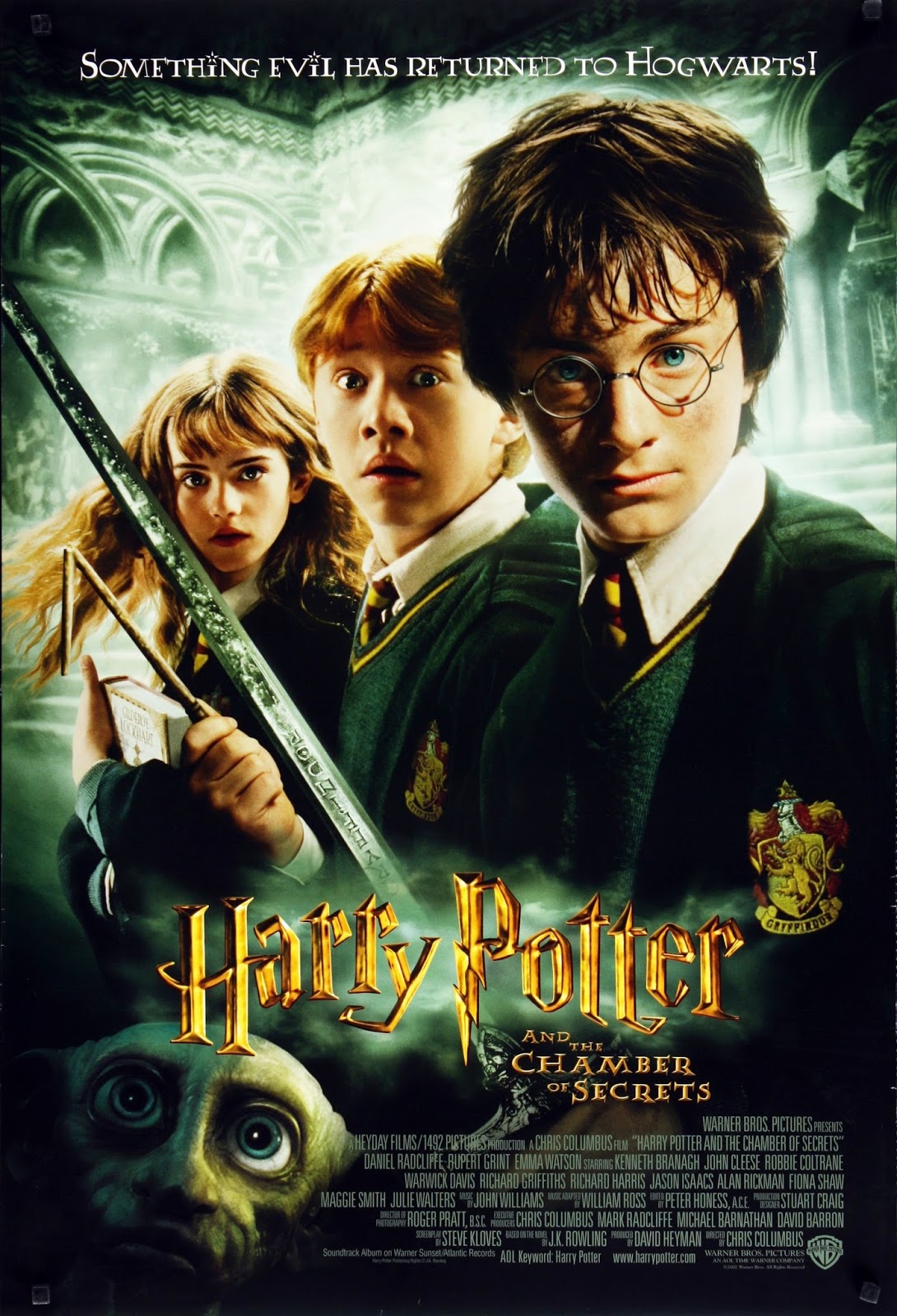
Harry Potter and the Chamber of Secrets (2002)


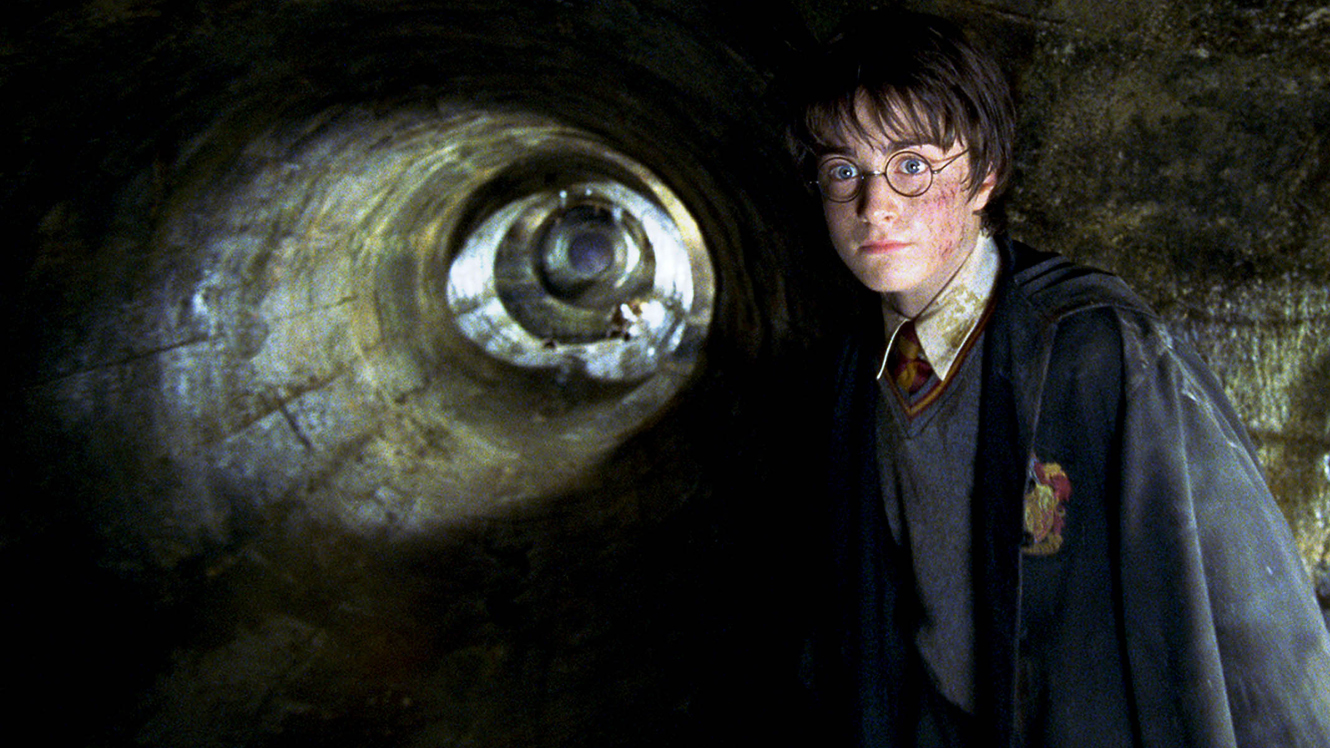
Daniel Radcliffe discovers dark goings on in the bowels of Hogwarts in Harry Potter and the Chamber of Secrets

Director: Chris Columbus

Cast: Daniel Radcliffe (Harry Potter), Rupert Grint (Ron Weasley), Emma Watson (Hermione Granger), Kenneth Branagh (Gilderoy Lockhart), John Cleese (Nearly Headless Nick), Robbie Coltrane (Rubeus Hagrid), Christian Coulson (Tom Riddle), Richard Griffiths (Vernon Dusley), Richard Harris (Albus Dumbledore), Jason Isaacs (Lucius Malfoy), Miriam Margolyes (Professor Snout), Alan Rickman (Severus Snape), Fiona Shaw (Petrunia Dursley), Maggie Smith (Minerva McGonagall), Julie Walters (Molly Weasley), Mark Williams (Arthur Weasley), Tom Felton (Draco Malfoy),  David Bradley (Argus Filch), Toby Jones (Dobby), Gemma Jones (Madam Pomfrey), Robert Hardy (Cornelius Fudge), Matthew Lewis (Neville Longbottom), Julian Glover (Aragog)
Another movie, and time for another everyday school year for Harry and friends: classes, exams, sports days and saving the entire population of the school from a grisly death. It’s a tough job but someone has to do it right? So welcome to the second Harry Potter film, that mixes the fun of flying cars and tricky elves with giant spiders and ferocious snakes.

Chris Columbus and team went virtually straight from the first film into making this one, and it’s pretty clear they had learned a lot from the last one. Sure, Columbus is still a safe pair of hands rather than an inspired director, but there is a bit more flair from cast and crew here. It also manages to look a lot less like a primary colour explosion or an illustrated version of the book, and more like a piece of film-making. Maybe this can be attributed to new cinematographer Roger Pratt, who gives the film a far more imaginative palette of darks blacks mixed with beautiful core colours (no surprise he returned to shoot Goblet of Fire). In addition, both design and costumes are far more adult and less Dickensian-robey than I remembered (though there’s still a way to go until we get to the steampunk 50s look of Prisoner of Azkaban that would dominate the rest of the films).

It also helps that the introduction to the wizarding world was covered so well in the first film. In fact, this is the last film where anyone felt it necessary to shoe-horn recaps into the dialogue, reminding us of who (and what) everything is. A particular moment of irritance for me is the first entry of Dumbledore and McGonagall: met with Harry breathlessly saying their names – just in case you were one of those people who didn’t contribute to the $1billion the first film made worldwide, or who hadn’t read any of the books by this point.

Anyway, Columbus got the principles out of the way in the first film so he could focus a bit more on this slightly darker, more developed story (just as Rowling was able to do in the books). The mystery of the Chamber of Secrets is more compelling than that around the Philosopher’s Stone in Potter’s first outing, and this is the film where we properly meet the series antagonist Voldemort – here played with a smarmy, casual cruelty by Christian Coulsen (it’s a shame this didn’t lead to bigger things for Coulsen). Radcliffe gets the chance to get his teeth into a decent final confrontation – and also the series’ first big action set-piece, quite well-shot with a creepy menace – as he takes on a basilisk.

In fact Radcliffe is much stronger in this movie – more relaxed, more confident and embracing Harry’s essential decency and sense of honour (the qualities that are always duller to play as an actor). He’s still struggling a bit at the moments that call for real emotion – but he does very well here indeed. Most importantly, you believe him and everything he does – which is quite something for a child actor to accomplish. 

He gets more depth and range to play with than Rupert Grint who was already being shoehorned into being gurning comic relief. There are few faces Grint isn’t asked to pull in this movie – and get used to that sad-sack downward grin, or the teeth-clench of terror, because these are going to become major weapons in his arsenal. Watson doesn’t actually get a lot in this movie, but even by this point it was becoming clear that she was pretty much a perfect fit for the character. 

The series also confirmed it had great roles for the cream of British acting – and that it was going to be a fine pension plan for most of Equity. Jason Isaacs plays the wicked Lucius Malfoy with relish and a scowling, patrician pride – no wonder he became not only a regular in the series, but one of its champions. He’s very good here indeed, as is other new addition Mark Williams, a perfectly charming shambolic dad as Arthur Weasley.

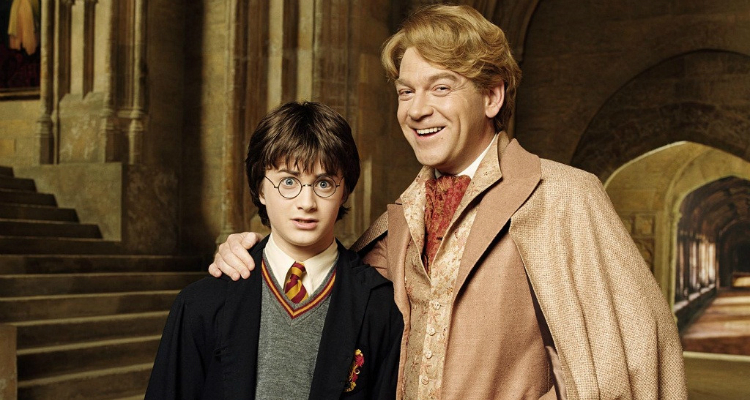
The show however is carried off by Kenneth Branagh as Gilderoy Lockhart. Branagh offers a performance close to of self-parody of his public perception, as a swaggering self-promoter, a preening egotist who can’t help but brag about his (almost non-existent) achievements and accomplishments. Branagh is deliriously funny as Lockhart, not only getting a lion’s share of the best scenes, but also bringing out some delicious comic rebuttals from the rest of the teachers – not least Rickman and Smith – who clearly can’t stand Lockhart. It’s a great performance – cocky, old-Etonianesque, full of surface charm and puffed up pride, but with a nasty selfish mean steak just below the surface.
It all feels part of the generally more free and engaging direction this film takes compared to the first one. Some of the best actors from the first film get relegated in screentime, but it shows the greater confidence the filmmakers have in the kids. The film really begins to introduce the ideas of good vs evil and the principles of friendship, humanity and love that differentiate Harry from Voldemort. Columbus isn’t quite the director to bring all this together into an epic vision, but he is good enough to deal the cards effectively. He gives it enough pace and shine so that we are never bored, though we’re also never wowed.

Despite the increased darkness and greater emotional depth, Columbus never loses track of the sense that he is making a family entertainment. He may still not be able to bring an artistic flourish to events, but he balances the light and dark very well. Not least the fact that the racism under the surface of the wizarding world emerges here. In the first film Voldemort alone was the villain, but in this one we first hear the term “mud blood” bandied about to describe Muggle-borns. We also find out that the wizarding world has its own slave class in elves (given a sometimes irritating Jar-Jar Binks-lite face by Dobby, a character with far more appeal to the kids than the parents). These are complex ideas – and all part of the world becoming richer.
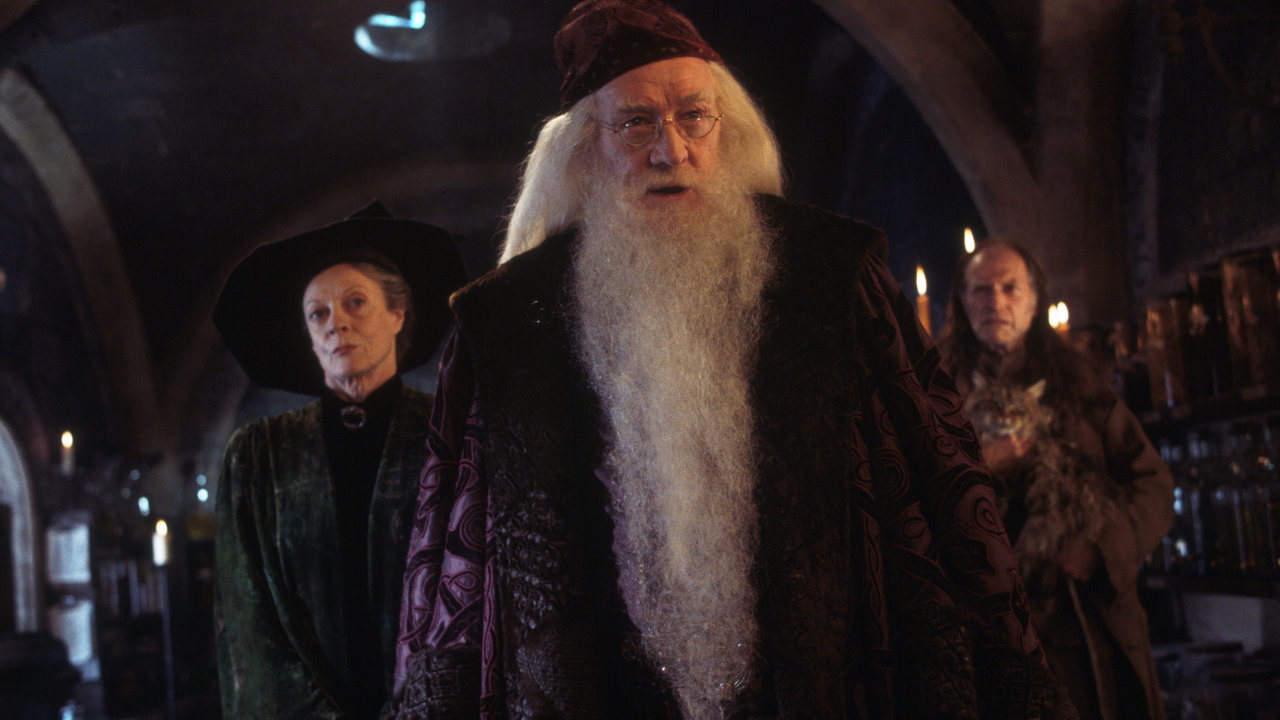
Harry Potter and the Chamber of Secrets is still in the lower tier of Harry Potter films, but it’s a significant step-up from the first film. Visually it’s richer and more interesting. The stakes are higher, the themes deeper and more intriguing. It’s still very much a children’s film, and it still inclines towards being an over-faithful adaptation – it’s a bum-numbing 2 hours and 40 minutes so keen is it to not leave anything out – but this has far stronger material in it than the first film, and is a sure sign that this series was building a foundation it could flourish from.

Harry Potter and the Philosopher's Stone (2001)


Daniel Radcliffe gets sorted in the first of the franchise Harry Potter and the Philosopher’s Stone

Director: Chris Columbus

Cast: Daniel Radcliffe (Harry Potter), Rupert Grint (Ron Weasley), Emma Watson (Hermione Granger), John Cleese (Nearly Headless Nick), Robbie Coltrane (Rubeus Hagrid), Richard Griffiths (Vernon Dusley), Richard Harris (Albus Dumbledore), Ian Hart (Professor Quirrell), John Hurt (Mr Ollivander), Alan Rickman (Severus Snape), Fiona Shaw (Petrunia Dursley), Maggie Smith (Minerva McGonagall), Julie Walters (Molly Weasley), Tom Felton (Draco Malfoy),  Zoe Wanamaker (Madame Hooch), David Bradley (Argus Filch), Warwick Davis (Filius Flitwick)

In 2001, I was in my first year at university. I went to the cinema to watch this new, much-hyped children’s-fantasy film. I’d never heard of this Harry Potter fella going into it – so must have been one of the few people watching who was coming to it completely fresh. I was swept up in the film’s story when I first saw it. But how does it stand up watching it again decades later?

Well it’s a long bloody film. I was actually amazed this is nearly two-and-a-half hours long. Strewth. I mean this is the slightest and most childlike of Rowling’s books. Did it really need such a bum-numbing run-time to bring it to the screen?  I guess it needed a lot of that time, because there is a heck of a lot of backstory and wizarding world to introduce very early on – and the film explains this in very careful, loving detail. 

But Columbus’ world building here is excellent. I think it’s easy to forget how much pressure must have been riding on this film. How many imaginations worldwide did this need to satisfy? Not only that, but this had to cater for, and build towards, a host of sequels, some of which hadn’t even been written yet (other than in Rowling’s brilliant mind). But the film succeeded in bringing this wizarding world enchantingly to life. There is a delight in every magical sequence, or trick, produced in the film – so many that poor Daniel Radcliffe must have swiftly exhausted his repertoire of “awe-inspired” faces. But the film’s loving reconstruction of the world of the book is perfect, and the fact that it not only didn’t alienate people, but that so much of it has become integral to the popularity of the books as well, says a lot.

Later films would get more daring and imaginative in bringing book to screen – with Rowling’s full support – but this first one probably did need to hew pretty close to the original book in order to hook and secure that fan-base. So while Kloves’ screenplay may feel at time like a mixture of transcription and rewording rather than a true work of adaptation, it meets the needs of this first film.

The design elements of the film were also spot on. Much of the wizarding world would be radically overhauled design-wise in The Prisoner of Azkaban, but the foundations are all here. John Williams’ score was also pretty much perfect from the start so winningly constructed and so perfectly matched with the mood of the book that it has also become an integral part of the Harry Potter world.

But, watching the film back, it’s clear still that this is one of the weakest films in the series. Part of this is of course is that it’s also the most simple and childish of the books – Rowling would immeasurably enrichen and deepen the series with each book – but when placed in context with the rest of the franchise efforts, this does seem like a brighter, more colourful, Roald Dahlish, traditional children’s film. Again, a lot of this is faithful replication of the book – but considering how children embraced the later more emotionally mature films, it would not have been a disaster to include more of that material here.

The other main issue with the film is quite simply that it is averagely directed and rather mundanely filmed. It’s a bit of a shock to be reminded that Oscar-winning photographer John Searle shot this film, as it’s ludicrously over-bright and conventionally framed. In fact, it lacks any real visual interest at all, looking more like a child’s picture book than any form of motion picture. There is hardly a shot or visual image in the film that sticks in my head – and I am literally writing this as the credits roll on the movie. As a piece of visual storytelling, it’s pretty mundane.

Similarly, Chris Columbus is a solid but uninspired film maker. He marshals events on camera with a reliably safe pair of hands, unspectacular and undemonstrative. But he doesn’t have any real dynamism as a film maker – perhaps that’s why the material never really feels like his own. When the series did have a film maker with vision in Alfonso Cuaron (in Prisoner of Azkaban), the difference in imagination and vision was immediately striking – so much so the two directors who followed Cuaron effectively trod in his footprints.

But Columbus may well have been what this franchise needed at this stage: a safe pair of hands, who could work with the studio and the producers and shepherd to the screen a series of films that would be running for over a decade. Much as other names bandied around to direct at the time would have been better film-makers, I can’t imagine them having the “safe pair of hands” quality that Columbus did, providing the solid foundation from which the series could later grow – let’s be honest could you imagine Terry Gilliam successfully kick-starting a huge-franchise series like this?

And let’s not forget either the casting gifts Columbus left the film-makers with here. Have three child stars ever been better chosen than Radcliffe, Grint and Watson? And indeed all the other young actors, all but one of whom stayed with the series to the end? The triumph of choosing not just the talent, but the level headedness, was quite something. And the three actors here are very good. 

Grint probably wasn’t better than he was here – his natural comic timing becoming an overused tool in later films, but here he’s charming, likeable and endearing. Watson is raw but a good mix of know-it-all and vulnerable feeling. Radcliffe gets a rough ride in a hugely challenging part – and yeah he’s not yet an actor here – but he does very well, considering how often he is called on to look amazed, and how many deep feelings of isolation, loneliness and confusion he is called upon to show during the film. Not one kid in a thousand could do what he does here. Columbus got magnificent work from the entire child cast – and that alone is enough to give him a pass.

The adult cast is of course pretty much perfect. Robbie Coltrane is a stand-out as a loveable Hagrid, immensely cuddily and endearingly sweet – perfect casting. Rickman was of course similarly inspired casting, Smith was perfect, Harris an unusual choice but one that worked. Ian Hart’s twitchy nervousness gets a bit wearing, but it’s not an easy part. Griffiths and Shaw embrace the cartoonish Roald-Dahl-bullying of the Dursleys. Pretty much every casting choice is spot on.

Harry Potter and the Philosopher’s Stone is the least deep and rich of the Harry Potter films, but it had a hell of a difficult job to do. And what I have to remember is that I was one of the uninitiated who sat in the cinema to watch it and needed all that introduction. Any film that has to get Muggles like me up-to-speed while keeping the die-hard fans happy faces a very difficult task. I think you can say, for all the later films surpassed it, that Philosopher’s Stone managed that in spades.

The Circle (2017)


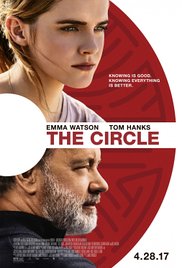
Emma Watson struggles against the surveillance state in shockingly bad adaptation The Circle

Director: James Ponsoldt

Cast: Mae Holland (Emma Watson), Tom Hanks (Eamon Bailey), John Boyega (Ty Lafitte/Kalden), Karen Gillan (Annie Allerton), Ellar Coltrane (Mercer), Patton Oswalt (Tom Stenton), Bill Paxton (Vinnie Holland), Glenne Headly (Bonnie Holland)

Is there anything sadder than seeing a book you thought was fantastic get totally screwed up by film producers? Worst of all, Dave Eggers, the book’s author, even gets a screenwriting credit here. I hope to God his contribution was a rejected earlier draft, rather than the bland, aimless drivel on display here. It would be too depressing to think he gutted his own work and then mutilated its corpse.

Mae (Emma Watson) is thrilled to land a job at The Circle, an all-powerful, Google-style corporation with a virtual monopoly over the internet. However, she discovers while she works at the Circle that there are (of course!) dark secrets at the heart of the company, and that its charismatic CEO Eamon Bailey (Tom Hanks) may not be all that he seems.

Imagine an adaptation of 1984 at the end of which Winston Smith defeats Big Brother but decides there are positive sides to living under a dictatorship, so carries on doing so. That’s exactly as ballsed-up as this total misreading of Egger’s gripping critique of our internet age. In this terrible adaptation, the novel is neutered beyond recognition into just another bland “Big Corporations Acting All Corporation-y” nonsense. The film is pretty much exactly as awful as the book is brilliant.

Where did it all go so completely and utterly wrong? Did they not understand the book? The novel is not only a critique of the pervasive power of its shady Google-like organisation. It’s also a savage attack on our own tweeting, social media obsessed world – the sort of world where private actions are theft as they rob everyone else from experiencing them vicariously through tweets, photos and posts. It’s this part of the story the film completely (and almost wilfully) misses the point of.

They seem terrified at the thought that the social media Twitteratti might take against the film if it too openly attacks the actual users of systems like this, with their (at times) shallow, demanding and entitled pushing of their own opinions, and intrusions into others’ lives. Instead the film gives a complete pass to all the users of the systems, while attacking the corporation providing them. So we get the bizarre set up of a film that seems to say it’s totally fine for normal people to record everything and push it all onto the internet, turning their world into a judgemental surveillance state, but it’s evil for a corporation to create the devices they use to do it.

Even the film’s criticism of corporations isn’t very clear, largely because we never get a sense of the Circle’s power and its hunger for getting more and more control. The film throws away its involvement in politics and its control over everyday lives. Perhaps because it knows so many of the viewership love gadgets, there is no exploration of the creepy, controlling aspect of the many tracking and recording devices the Circlers wear throughout the film, as there is in the novel. Instead the target is the shady business people at the top (not that we learn anything about what they want) because everyone hates businessmen don’t they? Nice easy target. I can tweet my loathing of them very easily.

It’s a film devoid of any challenge. A character’s suicide from the book is changed to an accidental death. The more vulnerable and desperate of the characters from the book have been deleted. The obsessive self-definition the Circlers gain from what other people tweet about them is downplayed. The ending of the film completely inverts the novel, and leaves us with a bizarre final image of our hero kayaking on the lake, but warmly smiling at the drones watching her, even after she has destroyed the “villains” who run them. It makes no sense whatsoever. My jaw literally dropped when this happened by the way.

Mae is a character who now has no consistency. Her growing obsession with the power of social media – and the destructive effect it has on her actual human relationships – is completely ignored. It’s the key part of her character from the book, and its removed here to try her as traditionally ‘likeable’ as possible. An anti-hero becomes a flat out hero. The film shows the impact of actions she carries out in the book – particularly on Annie – but removes these actions from the film. Why do people slip into depression or depart from the film? Who knows. Left with nothing to work with from the original book, Emma Watson gives a bland and forgettable performance. No one else really makes an impact, playing dull, neutered versions of the characters from the source material, devoid of depth or interest.

The Circle might be one of the worst literary adaptations I’ve ever seen. It guts the original book and removes any of the most challenging and interesting content. It’s terrified of criticising in any way anyone who might be watching. It’s a satire on the social media age that has no satire in it, and is desperate not to talk about social media. Worst of all it will discourage people from reading the original novel. In the words of the modern age: #uttershit.

Beauty and the Beast (2017)


Dan Stevens and Emma Watson faithfully recreate almost shot-by-shot a much better cartoon

Director: Bill Condon

Cast: Emma Watson (Belle), Dan Stevens (The Beast), Luke Evans (Gaston), Kevin Kline (Maurice), Josh Gad (LeFou), Ewan McGregor (Lumiere), Stanley Tucci (Maestro Cadenza), Ian McKellen (Cogsworth), Audra McDonald (Madame de Garderobe), Gugu Mbatha-Raw (Plumette), Hattie Morahan (Agathe)

hhBeauty and the Beast was released at the perfect time. The generation who grew up watching the original could now take their children – or revisit the fond memories with their parents. It was a chance for everyone to wallow in sentimental nostalgia. Disney knew its market would be people who wanted something as close as possible to what they remembered: they certainly delivered.

Surely you know the story by now? But in case you’ve been living under a rock for your entire life: Belle (Emma Watson) is the beautiful but bookish village girl who dreams of a something more than this provincial life. When her father Maurice (Kevin Kline) is imprisoned by a horrific Beast, Belle volunteers to take his place and stays in the castle. The Beast and all his servants are enchanted and only true love can break the spell – will Belle and the Beast fall in love?

I would ask why Disney feels the need to make what are effectively shot-by-shot remakes of their animated classics, but the fact this raked in almost a billion dollars at the box office kinda answers that question. But make no mistake, creatively this is karaoke: a few small flourishes have been thrown in, but effectively it’s a faithful recreation of a film that was already pretty much perfect to begin with. In fact, watching it, the only real emotion I felt was a desire to watch the “real” thing again. Damningly, twice my wife and I stopped to look up the equivalent scenes from the original on YouTube: in every case they were better.

That’s the big problem. Of all these remakes, only The Jungle Book was a genuine reimagining of the original. This one follows Cinderella and hews as close as possible to the film you’ve already seen. The plot is identical. The song and dance sequences are the same. The characterisations are the same. Hell, half the line readings are the same. It’s a film that is so dependent on people’s affection for the original that it’s terrified of offering anything too different from it. In which case – why not just watch the original? Would you rather look at a poster or the actual Mona Lisa?

Condon has thrown in some new pieces here and there to get an extra 30 minutes of action. One decent invention does involve the spell also causing the villagers to forget the castle exists, which is neat. The others add less. Belle has been turned into as much of an inventor as her father and, in one particularly bizarre sequence, invents the washing machine. There is a rather confused sequence involving a magic book which allows the Beast to go anywhere in the world (the witch clearly left a plethora of magic devices behind to entertain the Beast) – raising the question of why he needs that enchanted mirror, since he can apparently physically travel through both space and time with his Tardis-book. LeFou is subtly reimagined as gay – but this is very quietly done so as not to damage the film’s box-office potential in some markets.

There is a rather clumsily done storyline around Belle’s mother dying of plague when she was a baby, which also adds nothing. The film may possibly be trying to construct some kind of clunky commonality between the Beast and Belle with their parental traumas, but a dead mother with a rose fetish shares little with the stereotypical Cold Abusive Aristocrat father the Beast has – and anyway, they’re already giving them plenty of common ground through the good stuff they’ve lifted straight from the original film. Nothing else new really stands out.

In fact, the film is so studiously faithful, you get annoyed when it deviates from the original – particularly as it invariably does scenes less well. The final battle between Gaston and the Beast suffers horribly, with the emotional narrative of the fight thoroughly muddled, in contrast with the original’s clear and efficient storytelling. In the original, the Beast despairs and refuses to save himself from Gaston’s attack until he sees Belle. Here, he’s sort of defending himself and sort of not, and Belle is given some action nonsense, and Gaston’s death is turned from a clean narrative (one treacherous thrust hits home, then in sadistically going for the second he falls to his death) into a strange sequence where he stands and brutally shoots at the Beast repeatedly until the stonework beneath him randomly collapses and send him plummeting to his doom.

None of this, however, compares to the butchering of the moment when Belle discovers the library. In the original this is an endearingly sweet moment, with the Beast overcome with excitement at giving Belle a gift she really wants. The audience shares in his delight, and is charmed by his touching anxiety that she will like it, just as they share in her wonder at the discovery. It’s a major moment in the growth of their relationship. Here it’s thrown away – the Beast shows her the library in a fit of irritation at her pedestrian Shakespeare tastes. The film gives all the time and emotional weight to the tedious “magic book” sequence, where they travel to the “Paris of my childhood” and discover that, yup, Belle’s mum died of plague. Well that was both depressing and uninteresting…

Anyway – take a look at those two library scenes…

The acting is pretty good. Emma Watson does a decent job, particularly considering the pressure on her. She performs the songs prettily, although they don’t soar the way they did when performed by someone with the vocal power of Paige O’Hara. Her Belle is thoughtful but has a level of defiance and independence that’s been stepped up from the original. Dan Steven’s Beast is much more of a prince under a ghastly shell – unlike the original he’s literate, can dance and is well spoken (which makes his moments of animalism and his soup eating failure stick out all the more). The rest of the cast are fine – Ewan McGregor is as flamboyant as you’d expect, Emma Thompson sings the song very well, Kevin Kline makes a lot of Maurice. However for each of them, there are moments when you remember fondly that the animators invested the originals with more emotion.

The one member of the cast who does stand out is Luke Evans. How is the guy not a star yet? Sure the swaggering braggart Gaston might be the best part in the whole film, but Evans nails it with all the energy and egotism you would expect. His scenes are the best in the film by far, and he’s the only one who manages to do something a little different with his role.

Of course it looks fabulous, but it feels somehow a little bit empty. All the things that move you are done (mostly better) in the original – in fact, a major part of why they move you is the memory of the original. The acting is pretty good and it’s well filmed and made – the design is terrific. But honestly, with the original out there what’s the point? Why would you watch this rather than the other one? It’s not as moving, it’s not as exciting, it’s not as funny, it’s not as charming. All it does is to try and recreate the original as closely as possible. You can stage Hamlet thousands of times and each production would be different, but Disney can’t stage Beauty and the Beast twice without replicating it.

If you want it to exactly match your memories, without being quite as good, it’s the film for you. If you want a Disney live-action film that feels like something original, watch The Jungle Book.