Tag: Erland Josephson

Autumn Sonata (1978)

Autumn Sonata (1978)

The great Bergmans collaborate in a raw powerful film that does cover familiar Bergman ground

Director: Ingmar Bergman

Cast: Ingrid Bergman (Charlotte Andergast), Liv Ullmann (Eva), Lena Nyman (Helena), Halvar Björk (Viktor), Erland Josephson (Josef), Gunnar Björnstrand (Paul), Georg Løkkeberg (Leonardo)

In the history of Swedish cinema, there was one mighty collaboration the world was waiting for. The Bergmans (no relation) Ingmar and Ingrid, two generations of iconic Swedish filmmaking, to work together for the first time. It’s ironic that when it finally happened – and Autumn Sonata was the final time both Bergman’s worked on a project exclusively intended for cinema – it came during Ingmar’s self-imposed exile, meaning it was shot in Norway via a German company (and with a title originally in German) with British and American money. But one thing you couldn’t change: this would bring Ingrid back to the artistic Euro-film-making of her own Hollywood exile and that Ingmar wouldn’t flinch on his forensic, emotionally traumatic style for the legend.

Ingrid plays Charlotte, a famed classical pianist whose entire life has been her career, with brief stop-offs between concerts for marriages and kids. It’s meant she’s not seen her now-adult daughter Eva (Liv Ullmann) for over seven years. And that she’s also missed most of Eva’s affectionate-but-passionless marriage to Viktor (Halvar Björk) and the entire life (including birth and funeral) of her grandson Erik. Charlotte also has no idea Eva has moved her disabled younger sister Helena (Lena Nyman) from the nursing home Charlotte deposited her in years ago into her own home. A visit brings mother and daughter together again for an awkward reunion that turns into a cathartic emotional outpouring, as Eva unbottles decades of resentment, anger and pain.

Autumn Sonata revolves around this extended confrontation scene, which takes up a sizeable portion of Ingmar Bergman’s thoughtful, measured film where conversations are all too clearly ticking time bombs leading to revelations that might be best unsaid. It fixates powerfully on the damage parents can inflict on their children and the shattering pain children can cause their parents. It’s a film about the brutal, challenging complexities of family and the unspoken resentments they can cause on those within them, who see their own opportunities and freedoms eaten into by a never-ending stream of demands and expectations from ‘loved ones’.

It’s a feeling familiar to all three of the principles. Ingmar was all-too-aware of his difficult relationship with both his parents and his children, Ullmann wrote about her self-perceived failings as a mother while Ingrid’s elopement with Roberto Rossellini in the 40s led her to not seeing her own daughter for almost five years. And it plays into this incredibly raw film which, while it covers familiar Ingmar ground, is played with such powerful, visceral commitment from its leads (held grippingly in frame by Ingmar’s regular collaborator Sven Nykvist), that it’s still one of his tougher watches.

Ingrid is superb as Charlotte, a woman who arrives in the remote vicarage home of her daughter, bursting with glamour. Assured, certain and utterly confident of her position as the centre of any room, Charlotte has a tendency to narrate her own life, self-assuredly mapping out her actions (from what to wear to the decision to gift Eva a car) and basks in advance in the positive reactions she anticipates. Charlotte maps her life out in terms of concerts and recitals (constantly, when Eva asks about an event from her childhood, Charlotte will ground herself by referring to a performance from that time). She automatically assumes maestro status in the house, including listening to Eva’s piano playing, moving her aside to take over and lecturing her on how the piece should be played.

She’s also though a woman deeply uncomfortable with emotion and emotional commitment. It’s an insight into how distant and unconnected Eva’s childhood must have been (brief flashbacks show Charlotte’s politely affectionate utter lack of interest in the young Eva) that what’s motivated her to visit Eva is to distract herself from the unpleasant burden of dealing with her recent husband’s death. Not grief or the need for comfort mind: it’s the experience of dealing with the events connected to the death that’s unsettled her. Her refusal to engage with anything emotional continues, from avoiding the topic of Eva’s dead son entirely to reacting to something close to barely concealed irritation at discovering her disabled daughter Helena in the home: she didn’t come here to be reminded about this other difficult emotional bond she’d outsourced to a professional.

Charlotte’s emotional coldness and distance under her warm confidence is brilliantly embodied by Ingrid. She’s a woman so overwhelmingly focused on her career she probably should never have had children at all (and perhaps regrets doing do), wasn’t remotely interested in Eva and Helena’s father (a decent, bank-manager sort played silently by Erland Josephson in flashbacks) and wants nothing from this visit except to feel better about herself. The lacerating home truths unleashed on her, see Ingrid’s composure fracture in shock, guilt and regret, her eyes becoming wells of shamed emotion.

Equally brilliant is Liv Ullman, perhaps even more so. Ullmann appears at first mousey, dowdy, humble and deferential – her husband opens the film with a heartfelt monologue about her being convinced she is not worth loving and that he only regrets he has never been able to persuade her otherwise. The cause for this becomes clear as Eva releases years of pent-up fury and anger at her mother’s oscillating from ignoring her to bursts of obsessive attention focused on coaching Eva into becoming what Charlotte wants her to be (Ingrid is fantastic at establishing Charlotte’s dumb-founded amazement that these times she fondly remembers were in fact purgatory for her daughter). Ullman’s delivery of this is powerful, viciously resentful and overwhelmingly painful.

This confrontation is the centre of Autumn Sonata but Ingmar knows that, despite what happens in Hollywood, moments like this don’t cure festering boils. In fact, our great gift as humans is to forget, re-form and move on. The film’s coda sees both women doing this: Charlotte feels her shame, but in a one-sided conversation with her agent (a wordless cameo from Gunnar Björnstrand) has already begun the process of self-justifying self-mythologising of her past. Similarly, having released years of frustration, Eva returns to her compromising self, drafting letters of apology to her mother. Or perhaps these are springs of hope? Somehow in Bergman it’s hard to think so.

You can argue that all of this very familiar to Bergman watchers: and it is (the presence of Ingrid is probably what cements it as one of his best-known films). But this is also a thought-provoking work in its own right. Autumn Sonata suggests we may try to confront or deal with things that have caused us pain. But in reality, the long, continual work of doing so is too much or us: we revert instead to compromise, adjustment and familiar patterns. Flashpoints carry emotional and dramatic weight, but life is made up of forgetting. It’s a powerful closing idea in this viciously raw piece of film-making from Ingmar, that draws such heart-breaking and emotional performances from Ingrid and Ullman.

Fanny and Alexander (1982)

Fanny and Alexander (1982)

Bergman’s gorgeous final film, a sublime family saga, that leaves you thinking for days

Director: Ingmar Bergman

Cast: Bertil Guve (Alexander Ekdahl), Pernilla Allwin (Fanny Ekdahl), Ewa Fröling (Emilie Ekdahl), Jan Malmsjö (Bishop Edvard Vergérus), Gunn Wållgren (Helena Ekdahl), Erland Josephson (Isak Jacobi), Jarl Kulle (Gustav Adolf Ekdahl), Allan Edwall (Oscar Ekdahl), Pernilla August (Maj), Mona Malm (Alma Ekdahl), Börje Ahlstedt (Carl Ekdahl), Christina Schollin (Lydia Ekdahl), Harriet Andersson (Justina), Stina Ekblad (Ismael Retzinsky), Mats Bergman (Aron Retzinsky), Gunnar Björnstrand (Filip Landahl)

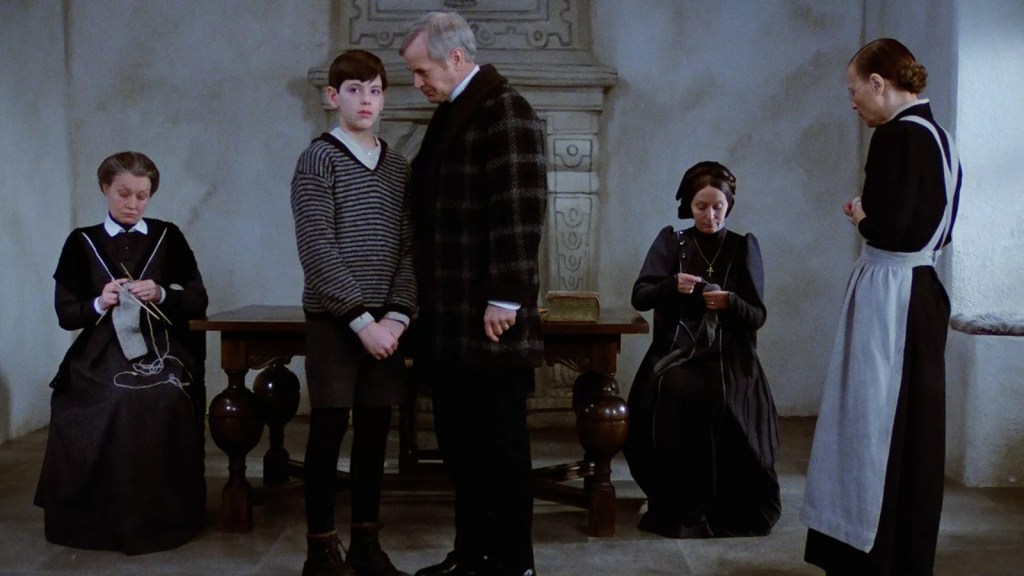
After many years (and masterpieces) Bergman wanted to move on from film: but before he went, there was time for one more magnum opus, a sprawling family saga that would throw a host of his interests (death, family, sexual openness, God, theatre, infidelity, the unknowable) onto one grand, sprawling canvas. Fanny and Alexander would be a truly personal film, featuring a young protagonist with more than a passing resemblance to Bergman himself. Despite this it’s an irony Bergman might like that the finest version of this film we have is actually a five-hour recut for television (the limits of run-time from distributors being one of many things Bergman was tired of). That version is a beautiful, life-affirming, gorgeous piece of film-making, an extraordinarily humane story tinged with the supernatural told on a luscious, Visconti-like scale. It’s a fitting sign-off from a master.

In 1907, the wealthy Ekdahl family live in a luxurious apartment block, their rooms filled with the rich detail of their love of art and culture. Ten-year-old Alexander’s (Bertil Guve) father Oscar (Allan Edwall) and mother Emilie (Ewa Fröling) run the Ekhdal theatre, where his wealthy grandmother Helena (Gunn Wållgren) once performed. After a fabulous Christmas celebration, Oscar dies after a stroke while rehearsing the role of the Ghost in Hamlet. After a period of mourning, Emilie remarries to the older Bishop Edvard Vergérus (Jan Malmsjö), who turns out to be a domestic tyrant, obsessed with the letter of religious and family law. Will Alexander, his younger sister Fanny (Pernilla Allwin) and their mother escape from Vergérus’ controlling clutches?

What really strikes you first and foremost about Fanny and Alexander is its gorgeous warmth – hardly the first quality you traditionally associate with Bergman. It opens with a prolonged (over an hour) Christmas celebration, with the family and their servants eating, laughing, telling stories and dancing through their gorgeously furnished apartment. It should feel indulgent (and I suppose it is), but this warm reconstruction of an at-times-flawed, but fundamentally loving and vibrant family is actually deeply moving and heart-warming.

The Ekdahls have a bohemian freedom, with their love of theatre and art (only Uncle Carl, a manic depressive businessman, feels slightly out-of-place and even he takes the children to one-side during the festivities to entertain them by blowing out candles with his farts). Their house is charmingly egalitarian, with the servants treated as part of the family, loyalty they return. The theatre troupe (led by Bergman regular Gunnar Björnstrand in his final, small, role) – are equally part of this extended family, the theatre a second magical home where the children take small roles in various productions and delight in the stagecraft and costumes behind-the-scenes.

Fitting a Bergman family (and the Ekdahl’s share some elements with parts of Bergman’s family) they are extremely forward-looking in their morality. Uncle Gustav Adolf (played with bombastic, gentle charm by Jarl Kulle) is a notorious ladies man, but goes about it with such innocence and near-childish openness his patient wife Alma (Mona Malm) indulges him because in all other respects he’s a loving husband and father, and his overall fidelity to her is never in doubt. Alma restricts herself to a single slap of his new lover, maid Maj, but otherwise treats her like a sister. Pernilla August is hugely endearing as this caring young woman, swiftly absorbed into the wider Ekdahl family who value her care for others. The Ekdahl’s have no time for conventional morality, led from the front by matriarch Helena (Gunn Wållgren is fantastic as this wordly-wise, ideal grandmother figure) who has lived a life of sexual openness with her husband and values people not societal conventions.

Oscar, their father (wonderfully played by Allan Edwall as a bashfully mediocre actor and a quietly shy but warm man) takes his role as the leader of this company very seriously, but with a light touch (modestly bemoaning his lack of statue compared to his father). Bergman uses a myriad of small moments to make this father an ideal parent, not least a late-night fantastical story he improvises for the children, spun around their nursery room chair, one of the most tender moments of parent-child bonding in the movies. (This despite hints that Oscar, who has allowed the younger, more sensual Emilie to conduct her own affairs, might not be their true father).

The stunning production and costume design (which won Oscars for Anna Asp and Marik Vos-Lundh) are essential for creating this immersive, rich and vibrant life: one which will be exploded in Dickensian tragedy by the death of Oscar and the arrival of the Murdstone-like Edvard Vergérus (played with chilling, smug hypocrisy by Jan Malmsjö under a fake smile) who is everything the Ekdahls are not. Where they are warm and egalitarian, he is cool and elitist, he is a prude with no regard for art and his home is in bleached-out puritan stone, devoid of personal touches – it literally looks like a different world to that we’ve spent the first few hours in, full of untrustworthy people (like Vergérus’ maid played by a wonderfully two-faced Harriet Andersson).

Vergérus is all about control, something we suspect from the start with his aggressively tender manhandling of Alexander, his hand slamming into the back of his neck. He worms his way into the affections of Emilie – a woman who, with her earth-shattering wails over the body of Oscar, is clearly vulnerable in her raw grief (Ewa Fröling is extraordinary as this gentle figure, prone to appalling judgement and unexpected strength of character) – and then sets out their marriage terms with controlling agendas, not least that in arriving in his house, she and her children must shed every inch of their previous life, from personal connections to the knick-knacks they have grown to love. He’s a poor advert for a God Alexander is already cursing for taking his father (his attic, filled with crumbling religious symbols, feels of a part of Bergman’s world where God is at best a passive observer, at worst a near malicious presence).

Bergman makes clear Vergérus is a man who genuinely believes he is doing the best for his family and that the moral lessons he hands out, at the end of a cane, to Alexander are essential. A weak man who mistakes bullying for strength. In many ways the fact he is not vindictive just weak and convinced of his own moral certainty (re-enforced by his fawning family, who treat him like a sort of prophet). Sure, he’s capable of anger, anti-Semitic slurs and little acts of cruelty, but Malmsjö shows him as a man who is trying, in his own wrong-headed way, to win the love of his adopted wife and children and can’t understand why he is not met with gratitude and love.

Perhaps it’s this sudden dropping into a cold world (one not dissimilar from Bergman’s own troubled relationship with his priest father – in fact you leave Fanny and Alexander wondering if Bergman hated his own father as much as Alexander who literally prays for his death) that so sparks Alexander’s own links to a mystic world around him. There is a rich vein of something other throughout Fanny and Alexander, from the statues Alexander watches move in the opening sequence (not to mention the haunting spectre of Death he witnesses in the same moment), to Oscar constantly appearing to Alexander like Hamlet’s Ghost. Is this haunting Alexander’s guilt at this failure to face his dying father on his deathbed, or a link to a world beyond our understanding?

After all Oscar’s Ghost greets Helena at one point, the two entering into a loving conversation. And he’s not the only supernatural touch around Fanny and Alexander. Family friend (and Helena’s lover) the Jew Isak (a rich performance by Bergman regular Erland Josephson) lives in a house full of mystic puppets that might be able to breath and walk. Isak perhaps uses magic to help smuggle the children out of Vergérus’ house (making them appear in two places at once), while his androgenous son Ismael (played by a woman, Stina Ekbad) is implied to having the spiritual power to channel Alexander’s hatred of Vergérus into actual supernatural revenge in the real world (another classic literary touch, that plays on spirituality and the Mad Woman in the Attic in Jane Eyre).

Fanny and Alexander is an extraordinary film, I feel I have only begun to scratch its surface here. It’s both a Dickensian family fable and a semi-benevolent Ghost story. It’s a family saga and a careful look at a particular time and place. It’s funny and moving. It really feels like one final mighty effort from a master.

Scenes From a Marriage (1974)

Scenes From a Marriage (1974)

Bergman’s compelling, emotionally charged film is an intense, impressive and surprising tale

Director: Ingmar Bergman

Cast: Liv Ullman (Marianne), Erland Josephson (Johan), Bibi Andersson (Katarina), Jan Malmsjö (Peter), Gunnel Lindblom (Eva), Barbro Hiort af Ornäs (Mrs Jacobi), Anita Wall (Journalist)

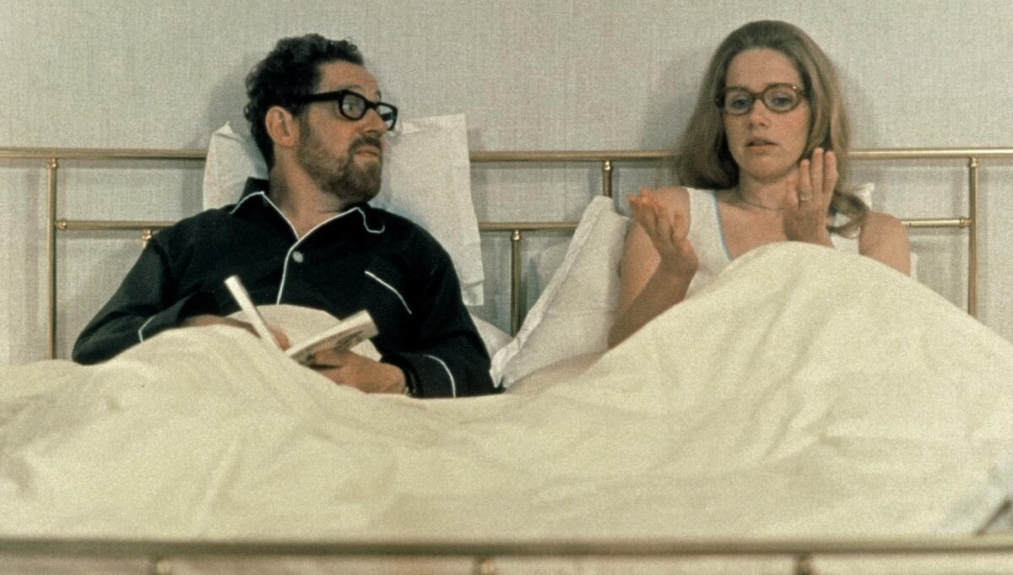
A loving couple sit with an interviewer to discuss how happy their relationship is. Ten years later, years after their divorce, they meet in their old weekend cottage for an assignation away from their new partners. Along the way, they’ll lie, fight, cheat but also show time-and-again few people know them better than they do each other. Based on his own marriages and relationships (not least his relationship with Liv Ullman), Bergman’s Scenes from a Marriage is a fascinatingly intimate and intense portrait of the contradictory impulses we feel towards the people we know best: how we can, in the same moment, love them, hate them, want to be a million miles away from them and also yearn to take them in our arms and tell them everything.

Skilfully cut down from a six-part TV series – the episode titles become ‘chapter headings’, each signifying a time shift – it becomes a series of intense, almost real-time, conversations between middle-brow professor Johan (Erland Josephson) and successful lawyer Marianne (Liv Ullman). From their ten-year anniversary, their happy-but-functional relationship is shattered when Johan leaves for the (unseen) Paula, heading into divorce, Marianne’s growth in sexual confidence, her little acts of revenge over Johan and their later affair. At all times they prove capable of ripping emotional wounds into each other, but also remaining strangely dependent on love and affection from each other.

It would be easy to say that Scenes of a Marriage is a theatrical piece – it came, originally, from a play Bergman was working on and well over two thirds of its running time features Josephson and Ullman alone on screen. But if the close-up is the language of cinema, Scenes from a Marriage may be the most cinematic film every made. Shot in a cooly observational style by Sven Nykvist, vast swathes of Scenes from a Marriage plays out in searing close-up, the camera studying every inch of the emotional angst its two characters are putting themselves through. Bergman knows exactly how to build the punishing tension in these scenes, frequently climaxing in visceral outbursts.

It is a film about what we say and what we chose not to say and what we decide to hear. The conversation between the couples is framed by their careful considerations: when to hold fire and when to let rip; when to listen and when to choose not to hear. And it’s clear that, when we are first introduced to them, they have mastered the art of not saying anything at all. Smilingly parroting cliches to their interviewer, they later smugly compare themselves to their feuding friends Karatina and Peter (excellent cameos from a searing Bibi Andersson and a provocative Jan Malmsjö). But their conversation never touches on deeper issues (Bergman’s called this chapter ‘The Art of Sweeping Things Under the Carpet’) and their sex life has dwindled to timetabled functionality.

It’s clear they are aware of this growing distance themselves. Johan shares his poetry with a colleague (an expertly reserved cameo from Gunnel Lindblom), complaining Marianne considers it little better than spiritual masturbation and yearns for an expressive freedom he feels is impossible in his marriage. Marianne meanwhile speaks to a client, Mrs Jacobi (a tragic Barbro Hiort af Ornäs), whose story of a lifetime trapped in a loveless marriage with children she never really wanted clearly strikes Marianne as a chilling vision of her own future.

That doesn’t stop Marianne responding with shocked subservience that tips into desperate pleading when Johan announces he wants to leave her. Bergman stages this scene beautifully, with the ridiculous logic people sink into in tragic break-ups. Johan eats a snack meal prepared by Marianne, guiltily confessing his affair, but there is something very real about Marianne’s stunned reaction which sees her planning his packing (because he’s useless at it) and continue their bedtime preparation before she starts pleading him to stay. Just there is something very real in Johan’s reaction: having steeled himself for a fight, her subservience enrages him until he is cruelly tearing verbal lumps out of her. This is the sort of searing emotional up-and-down that rings true, one allowing shock to humiliate them the other transforming shame into defensive, accusatory blame.

But Scenes from a Marriage is a film that utterly understands how much we change under circumstances. Separation is not good for Johan: his new lover doesn’t interest him, his career stalls and he tips into self-pity. Marianne, once the shock and fear of separation passes, discovers she likes her freedom. Her wardrobe shifts to more form-fitting and revealing clothes, she embraces the opportunities of singledom and repays Johan’s desertion with a seduction of him she deliberately doesn’t follow-through on. They now talk more honestly than ever before – and it’s a blistering, verbally and physically violent exchange rammed full of resentment and petty cruelty.

To do this stuff you need actors at the top of their game and who completely trust each other. Bergman certainly has this with his two stars. Josephson’s self-contented smugness moves through arrogant selfishness to desperate vulnerability, his expressive face sometimes puppy-doggish, sometimes drowning in bear-like fury. Ullman is, of course, exceptional. Her masterful ability to react, to let thoughts and emotions play fleetingly across her face was made for Bergman’s close-up film-making and she takes Marianne on a fascinating journey, from near-submissive home-maker to vibrantly confident women of the world while never letting the vulnerability and doubt be too far from her eyes. It’s an extraordinary performance, searing and tender, as raw as knife-edge.

These two play absorbingly off each other, their conversations gripping minefields of repressed then hugely expressed emotions. Their collaboration, guided by Bergman’s close (but not intrusive) camerawork is extraordinary. Fashioned from Bergman’s experiences of relationships, Scenes from a Marriage is, however, strangely hopeful. One of its key themes is that, even when they hate each other, this couple know and trust each other more than anyone else. In times of crisis and pain they always turn to each for a consolatory word or comfort.

There is something strangely warm about their relationship, despite its turmoil, and the film is refreshing in saying friendship and love doesn’t have to end with divorce, but can transform itself into something else, perhaps even something better. Perhaps it’s that strange note of hope that makes Scenes of a Marriage so influential to a generation of filmmakers. It refuses the simple moral standpoints of judgement and suggests the decision to no longer be together (or even faithful to each other) need not be the end all, but instead a bump in a longer journey: that a relationship (and even a love) doesn’t end when a marriage does.

Cries and Whispers (1972)

Cries and Whispers (1972)

Bergman’s heart-rendering, challenging and compelling family drama: a slice of raw pain

Director: Ingmar Bergman

Cast: Harriet Andersson (Agnes), Ingrid Thulin (Karin), Liv Ullmann (Maria), Kari Sylwan (Anna), Anders Ek (Isak, the priest), Inga Gill (Aunt Olga), Erland Josephson (David), Henning Moritzen (Joakim), Georg Årlin (Fredrik)

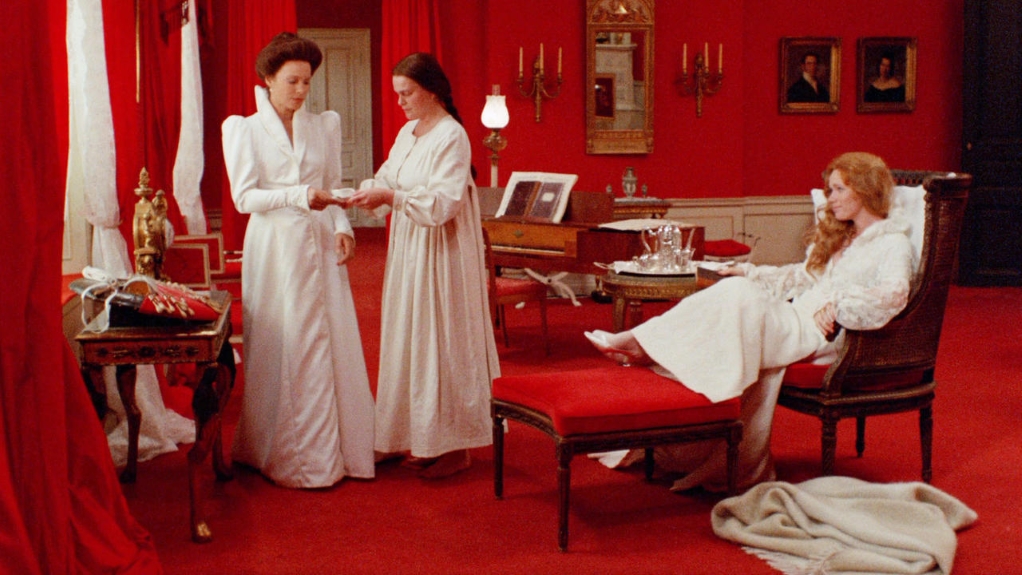
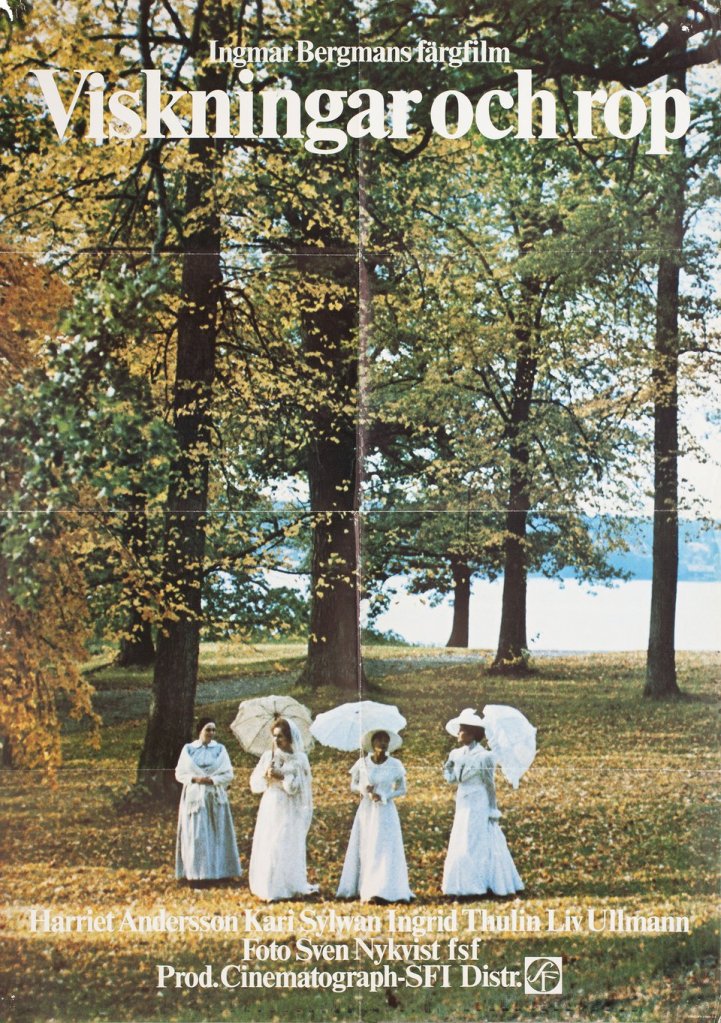
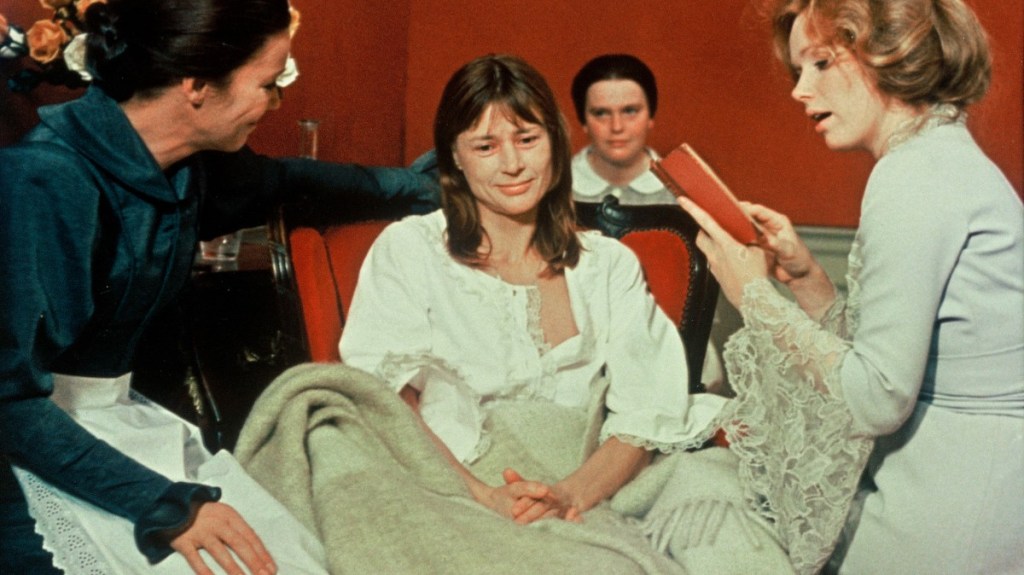
It came to Bergman in a dream: a red-lined room, where four women dressed in white whisper intimate secrets to each other. It became one of his most elliptical, horrifying and haunting films, a cryptic puzzle about life and death, faith and despair, love and hate, sex and violence and almost every human experience in between, all filmed within an imposing (and beautifully shot) red-walled house that turns more-and-more into a nightmareish Satre-style trap. Cries and Whispers sits alongside Persona as one of Bergman’s most successful reaches for the sublimely unknown and if it doesn’t quite touch Persona’s astonishing mastery, it’s remarkable by every measure.

Two sisters gather to nurse a third as she goes through the final days of a long, painful illness. Karin (Ingrid Thulin), the oldest, is professional, distant and repressed; Maria (Liv Ullman) the youngest is sensual, flighty and slightly selfish. The dying Agnes (Harriet Andersson) yearns for love and affection, but is a natural outsider. Agnes is most devotedly cared for by the maid Anna (Kari Sylwan), a young woman who lost a child a few years ago. As Agnes’ final days approach, all four mull on life, their decisions and choices, each trying to grasp some understanding about the great mystery of life.

Cries and Whispers feels like a savage slash of raw pain. Perhaps no other film in Bergman hits like such a punch to the gut. In this red-lined house, everyone is silently screaming behind the whispers (literally so in Agnes’ case, the film opening with Harriet Andersson writhing in wordless agony on her bed for an almost unbearable shot held for almost four minutes). All four of these characters are carrying mountains of disappointment, despair and disillusionments on their shoulders, none of them able to see a way out of the constant grind of simply struggling through existence. You could argue that Agnes has the easiest path in death.

The overbearing red walls – not to mention the fades to ‘red-out’ that seem to drown out the faces of the four women as each stares into the camera before their own memory or dream is staged by Bergman – begins to feel increasingly like a trap. The lack of natural light adds even more to the sense that this is taking place in some sort of prison or oppressive womb, cooking up traumas. There doesn’t seem to be any escape from this pressure-cooker atmosphere (rather like the claustrophobic trappings of The Silence and Persona), with reality starting to fracture and dissolve.

It becomes clear there are decades of unspoken tensions between the three sisters. Karin and Maria seem to be tending for their system more out of duty than love: Maria sleeps through her watch, while Karin feels like a dutiful professional rather than a loving sister. There is precious little sense of intimacy between them. So much so, that both sisters will utterly reject (in a late dream sequence that topples into a nightmare) even the hint of tenderness or contact with the deceased Agnes (Maria will run, screaming, at the very idea). It’s the same between Maria and Karin, who seemingly have nothing except blood in common.

But then they could hardly be two more contrasting women. Liv Ullman is superbly multi-layered as a woman who feels at first flirtatious and light-hearted but emerges as manipulative and selfish with a rich vein of self-loathing, compensated by a malicious pleasure in hurting other people. Her sexual fascination with Erland Josephson’s aloof doctor is based less on his qualities and more on his frank deconstruction of her physical flaws, accentuated by the deep pain and distress the affair causes her husband. Similarly with Karin, she alternates between reaching out to in shared sisterly closeness, then denying she ever felt or said such things a day later.

Like other Bergman films there is dark implication of incest in the relationship between Maria and Karin. In their moments of reconciliation, their physicality (all stroking and kissing) stinks of sexuality, their unheard whispers incredibly suggestive. Is this a foul secret what that has made Karin so deeply disgusted by physical intimacy? This is after all a woman who (in a flourish where I feel Bergman goes too far) cuts her vagina with a piece of glass and defiantly smears the blood over her face in front of her husband to prevent him from claiming his conjugal rights.

Ingrid Thulin is extraordinary as Karin, a deeply repressed woman utterly bereft in the world, who secretly yearns for closeness and contact. She seems though to have a very little idea how to build emotional bridges with people, her manner reserved and cold, unable to even treat the dying Agnes as anything other than a duty. If Maria quietly delights in making people feel bad and is disturbed by feelings of warmth, Karin is unable to even begin to arouse feelings of any sort from other people. She lives in an isolation that has left her deeply unhappy.

Strangely, Agnes herself might even be the happiest – and she’s dying. Agnes is the only person Bergman allows to narrate her own flashbacks (the other three are all introduced in voiceover by Bergman himself). Beautifully played by Harriet Anderson as a woman full of hope, despite the appalling pain of her illness, she is a strange beacon of contentment. The priest at her wake (a beautifully delivered monologue from Anders Ek) even confesses he cannot help but question the strength of his own faith compared to the spirituality of Agnes. What sign is there of God in this world when he punishes with such excruciating pain the purest person in the film?

Harriet Andersson’s performance is not only almost unbearably in its raw physical commitment to pain, but also a quietly moving in its emotion. Agnes is a woman longing to be closer to her sisters – envying Maria’s closeness to their mother as a child (the mother is also played by Liv Ullman) – feeling closer to her mother only when observing her in solitary moments of pain. Her happiest memory is of the three sisters as adults, contently laughing together on a swing. This willingness to embrace love – always a matter of key importance to Bergman – singles her out from the two-faced Maria or the repressed Karin.

It also explains the link to Anna, played with a quiet observance by Kari Sylwan. Frequently silently, moving through the frame or performing duties, Anna is the only person in the house who categorically loves and respects Agnes. It’s she who cares for her, who tends her, nurses her through her pain and most readily responds to her desire for closeness. There is, in fact, a hint of sexual familiarity between the two – it’s very possible to imagine them as lovers. Do Agnes’ family recognise – and envy – that breach of distance, that leads them to offer only the smallest reward for her service and a curt dismissal after Agnes’ death?

Or are Anna’s motives as clear cut and noble as they appear? Grieving the (clearly relatively recent) death of a child, perhaps Anna uses Agnes to fill emotional holes in her own life. Her dream-like fantasy of Agnes’ after death rotates around Anna taking almost complete possession of her deceased mistress, dismissing the sisters and cradling the dying Anna in a pieta like grasp that resembles a mother and child rather than lovers. Is Anna desperately using this moment of death, just as Karin and Maria do, to fulfil longings in herself?

All these ideas are superbly explored in Bergman’s beautifully paced and powerful work, like the best of his films a hauntingly intriguing and challenging work that lingers long in the mind after it finishes. With four very different, but extraordinary performances, at its heart it may at times be a little too intellectual and Bergman may at times go a little too far, but for its extraordinary exploration of raw, vicious pain it can be hard to beat. A challenging but extremely necessary film.

The Magician (1958)

The Magician (1958)

Illusion, faith and rationalism are all explored in Bergman’s fascinating musing on performance

Director: Ingmar Bergman

Cast: Max von Sydow (Albert Emanuel Vogler), Ingrid Thulin (Aman/Manda Vogler), Gunnar Björnstrand (Dr. Vergerus), Naima Wifstrand (Granny Vogler), Bengt Ekerot (Johan Spegel), Bibi Andersson (Sara), Birgitta Pettersson (Sanna), Gertrud Fridh (Ottilia Egerman), Lars Ekborg (Simson), Toivo Pawlo (Police Superintendent Starbeck), Erland Josephson (Consul Egerman), Åke Fridell (Tubal), Sif Ruud (Sofia Garp), Oscar Ljung (Antonsson), Ulla Sjöblom (Henrietta Starbeck), Axel Düberg (Rustan)

He who tells the truth may be the greatest liar. So thinks Mr Aman (Ingrid Thulin), in the carriage carrying him and the rest of Albert Emmanuel Volger’s Magnetic Health Theatre to a performance in a village in nineteenth-century Sweden. It’s fitting for Aman to thinking about it, since he’s actually Vogler’s wife Manda. The mute Vogler (Max von Sydow) claims powers of healing and mesmerism. But perhaps he’s making it up? If we peek behind the curtain, what is the truth?

Peeking behind the curtain is exactly what their clients want to do. The troupe is due to perform before a trio of rationalists, practically falling over themselves to debunk every step Vogler takes. Dr Vergerus (Gunnar Björnstrand) is a chilly health official who only believes what his own hands touch. Consul Egerman (Erland Josephson) wants to prove it’s rubbish to his wife Ottila (Gertrude Fridh), while Police Superintendent Starbeck (Tovio Pawlo) is a swaggering bully who just likes making people feel small. But can the imperious Vogler turn the tables on these would-be myth busters?

Bergman first struck upon the idea for The Magician after observing how much audiences at the theatre wanted to go backstage and meet the actors – and how they were invariably disappointed when they did at how everyday it was. Based on a GK Chesterton play, The Magician is a multi-layered musing on the relationship between performance and viewing, and the conflict between rationalism and faith. At heart it sympathises with the plight of the performer, presenting their work to an unsympathetic, uninterested, unengaged and unimpressed audience.

The theatre troupe look all sorts of glamourous, with the eccentric costumes and their intriguingly unknowable personae. They offer a carnival of the weird and wonderful that fascinates the rationalists, in spite of how much they want to debunk it. But, as they strip down the acts, they find plainer, simpler, less mysterious people below. Despite their eagerness to know how the trick is done, they are disappointed to find out. They barely watch the acts, or listen to the skill of the performers, because they are focused on unpicking the minutia and detail (Bergman having a pop at pretentious critical writing like the material here perhaps?).

Our rationalists are, to a man, an unpleasant, smug and often insufferable bunch. They have a clear world view and anything unscientific doesn’t fit in it: even God is “totally out of date”. Tovio Pawlo’s Starbeck is a crude, jumped-up bully, who feels barely more than a step or two higher up the social pyramid than Vogler. Egerman (a wonderfully nervy and insecure Erland Josephson) is so in awe of facts and statistics he can barely think for himself. Really controlling things is Dr Vergerus, a masterful performance of arrogance and self-satisfaction masquerading as open-minded scientific enquiry from Gunnar Björnstrand.

Far from inquiring, Vergeus’ mind is rigidly closed to anything outside of his world view. People are categorised and little more than objects of curiosity – he even speaks (ominously it turns out) of an eagerness to dissect Vogler. Flashes of the supernatural or inexplicable are met with blank terror which Vergeus swiftly covers with cold impassivity. He has made up his mind well before Vogler arrives. Like the rest of the rationalists, he preaches absolute truth but only on his own terms.

And perhaps he’s right to, in a way. The troupe are liars – but at least they are honest about it. They claim magical skills of healing and love potions (“what the bottle looks like and the colour” is far more important than the contents) which they merrily flog to the credulous. Their magic tricks are dressed up in elaborate costumes and quasi-mystical business. Their promoter Tubal (another impressive, bombastic performance for Bergman from Åke Fridell) shamelessly peddles exaggerated stories of their mastery. They may be a glamourous, but they are also cheap.

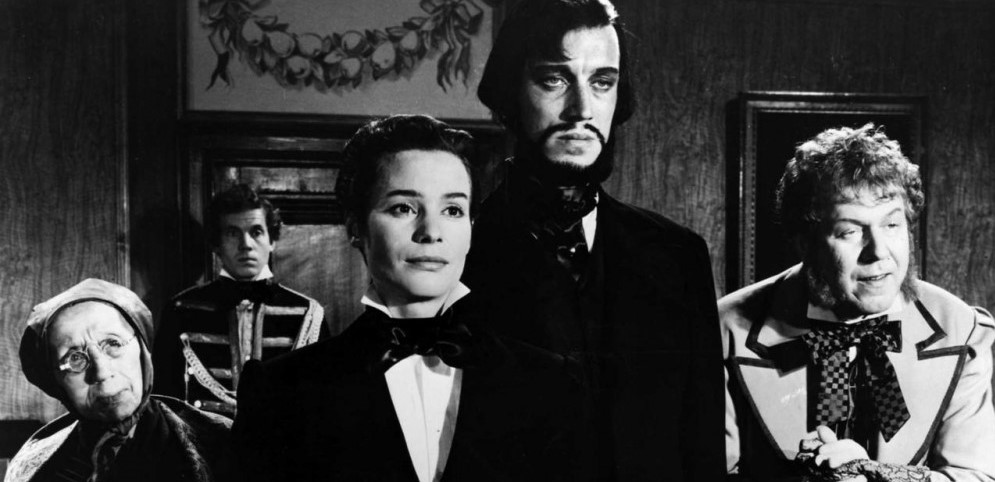
And then of course there is Vogler, who has practically dressed himself as a prop. Coated in pale make-up, Fu Manchu facial hair and a flowing black wig, von Sydow presents Vogler as an enigmatic showman. Bergman makes fabulous use of his riveting stare – surely he doesn’t need any flim-flam to hypnotise when he can glare at you like that. There is a sadness to Vogler though: his faith in himself has gone. Encountering a dying actor on the road (a neat cameo from Bengt Ekerot – and a nice call-back to his and von Sydow’s Seventh Seal team-up), Vogler’s face leans forward in fascination, curiosity and a strange longing as the actor faces death, as if he is longing to touch powers beyond once more. Manda is adamant his powers used to be real, but behind the contemptuous and defiant stare it’s unclear if Vogler knows where he is going.

Not that it matters. He’s still got the star quality to leave Mrs Egerman weak at the knees, desperate to seduce him to touch a part of his magic. And the powers are still there – even in their first meeting, Vegeus feels a flash of discomfort as Vogler’s fixed stare causes his mind to drift (a fear he dismisses in seconds). Its only as Bergman’s film strips down the performance qualities of Vogler – his costume, his make-up, his stage persona – and leaves an off-duty actor, that the dark fascination of his clients finally snaps all together into smug, rationalist contempt.

But that’s not before Vogler turns the table on Vergeus with an unsettling confrontation in a locked loft, after a performance seems to have gone disastrously wrong. It’s Vogler’s intimidating “real performance” to prove he and his troupe can still engross and deceive their audiences. This horror-tinged, mesmeric sequence of reflections, shadows, distant sounds and small movements is another reminder of what a master of the cinema of terror Bergman could have been (imagine he had joined von Sydow for The Exorcist!). It’s a superb sequence that almost shakes Vergeus’ faith in his certainty, before becoming another confirmation of how dismissive audiences are when they find out how the trick was done (no matter the impact it had on them at the time).

The Magician isn’t perfect. The middle of the film spends a little too long with the servants in the belly of the house (a Bergman trope of delight for the love of simple, everyday pleasures among the working classes). But its exploration of rationalism and artistry is fascinating. There are masterful performances (in addition to the earlier named, Ingrid Thulin is outstanding). But there is a lingering sense underneath that perhaps Bergman is gently accusing us of being little better than the rationalists, eager to know how cinema works but then talking it down when we find out. Which I suppose means a review of it rather makes his point.