Tag: Ernest Borgnine

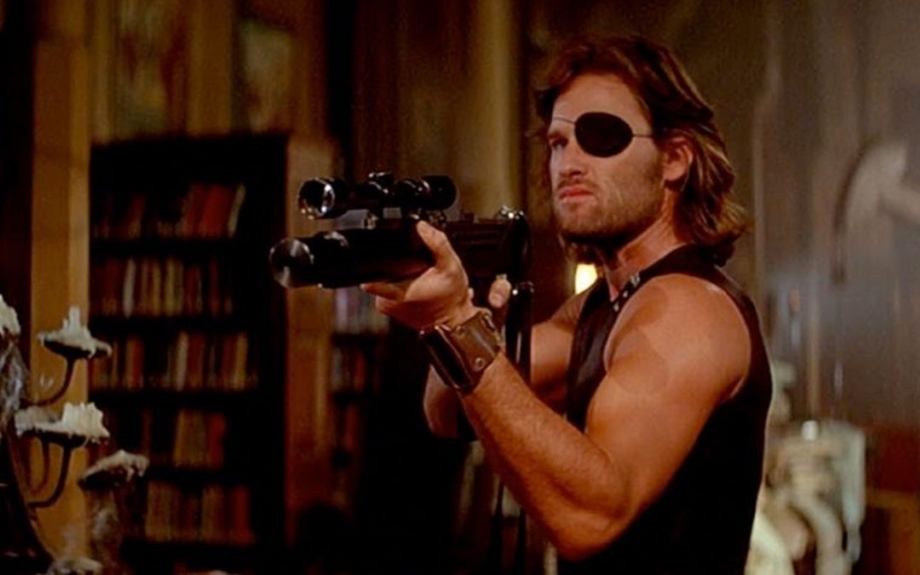
Escape from New York (1981)

Escape from New York (1981)

B-movie thrills and an epic piece of world building in this very fun cult actioner

Director: John Carpenter

Cast: Kurt Russell (Snake Plissken), Lee Van Cleef (Commissioner Bob Hauk), Ernest Borgnine (Cabbie), Donald Pleasance (The President), Isaac Hayes (The Duke), Harry Dean Stanton (Brain), Adrienne Barbeau (Maggie), Tom Atkins (Captain Rehme), Season Hubley (Girl in ChockFull o’ Nuts)

In the 1980s New York was pretty much America’s crime capital, so it wasn’t too much of a stretch to imagine an insanely dystopian America of 1997 where Manhattan is turned into a massive jail surrounded by a wall with its population entirely made up of murderous gangs and criminals (sadly without the severed head of the Lady Liberty lying in the middle of the streets). That’s what we get in Escape From New York (great title!). Problem is, it also makes it incredibly hard to get into New York – a real issue when a hijacked Air Force One crashlands there and the President (Donald Pleasence) needs rescuing.

Who ya gonna call? None other than grizzled, scowling, no-nonsense ex-Special Forces legend turned criminal Snake Plissken (Kurt Russell). Plucked from a line of convicts by Commissioner Hauk (Lee Van Cleef), Snake is given a simple offer: fly a glider into Manhattan, find the President and bring him back in 22 hours so he can speak at vital peace conference and in exchange get a pardon. And just to make sure he doesn’t back out? Inject him with explosives that will go off in exactly 22 hours unless Hauk switches them off. Into New York Snake goes, a Mad Max hell under the thumb of kingpin The Duke (Isaac Hayes), with his only allies an eccentric ex-cabbie (Ernest Borgnine) and married couple Maggie (Adrienne Barbeau) and an old (untrustworthy) partner-in-crime Brain (Harry Dean Stanton).

From all this pulp, Carpenter serves up a very entertaining slice of B-movie fun and games, that frequently makes very little narrative sense (by the end relying on hilariously convenient plot developments and off-screen meetings), where the 22-hour countdown seems to alter with as little consistent logic as the shifts between night and day (judging by the sky, at one point it takes Snake well over an hour to take a lift up the World Trade Centre which even in a dystopian hell seems like a long time) and where characters switch allegiances as easily as you and I change socks.

But that hardly matters when Carpenter was so focused on making B-movie fun and use every penny of his tiny budget to maximum effect. Escape From New York is above all a triumph of creative world-building. In broad strokes – the sort of well-built skeleton that leaves the audience wanting to fill in the muscles and skin themselves – it presents a compelling view of an America that has so comprehensively gone-to-shit that a city is now a prison, a forever-war is taking place with both the USSR and China, the President is a corporate stooge (with British accent!) and the whole country is run by a proto-fascist police force. It’s full of neat little touches – not least the computer voice at the Manhattan prisoner processing centre that offers prisoners the chance of voluntarily immediate cremation rather than be chucked into the city – that suggest a panoply of dystopian mess behind it.

The world of Escape From New York is so intriguing, it carries the fairly bog-standard urban warfare against lunatic gangs plot that Carpenter had already mastered with Assault on Precinct 13. Once Snake lands his glider atop the World Trade Centre (for extra un-intentional retrospective impact, hijackers also fly Air Force One into a couple of Manhattan skyscrapers), truthfully there isn’t much in terms of the action that we haven’t seen before. Shoot-outs on streets lined with trashed cars and graffiti, fisticuffs in abandoned train stations and boxing ring match-ups between Snake and a giant bruiser armed with a baseball bat full of nails. Most of the film is basically a hide-and-seek cat-and-mouse chase. Eccentrically presented stuff, but all fairly run-on-the-mill.

What makes it work is that post-apocalyptic mystique and Carpenter’s determination to make every shot count. Not least because the budget only stretched to about a day’s filming in New York (probably why both sequences atop the World Trade Centre illogically take place at nighttime). The rest was shot in a burnt-out district of St Louis. There is a great deal of demented imagination that has gone into the design of the film, not least the cyber-punk barminess of the gang costumes, from the Duke’s Napoleonesque shoulder braids to the punk-rocker scuzziness of his number two Romero (an eye-catching performance of bizarre oddness from Frank Doubleday).

It helps when you have some committed performances, not least from Kurt Russell as ultimate man’s-man maverick Snake Plissken. Strange to think now that Russell, best known for Disney work, was seen as an odd choice for the bitter, shoulder-chipped, ruthless Snake. But it’s a role he embraces whole-heartedly, making Snake both a selfish guy who literally barely cares about anything other than himself and the sort of ideal tough-as-nails maverick who gets things done that we all kind of want to be. He’s also – from his eyepatch to his grizzled monosyllabic dialogue to his unveiled contempt for all the double-dealers and bullies he meets – effortlessly cool.

Russell sets a lot of the tone for the movie, his low-key scowl allowing a lot of the rest of the cast to cut loose in eccentric roles. Ernest Borgnine overflows with cheery New York patter, which doesn’t even slow down when he lights a Molotov cocktail to ward off marauding gang-members. Harry Dean Stanton weasels as a constantly side-shifting guy we are assured is a genius (despite all evidence to the contrary). Donald Pleasance has a whale of a time as an uncharismatic functionary who, it becomes clear, doesn’t care about anyone other than himself. Best of all, Lee Van Cleef (perhaps flattered that Russell seem to be homaging his Spaghetti Western roles) smirks, gloats and scowls as a relentlessly ends-rather-than-means boss.

Escape From New York barrels along to a blackly comic ending (in which our pissed off maverick hero potentially scuppers a major peace conference out of a fit of resentful pique). It’s intriguing world-building riffs wonderfully on Mad Max (in fact, you could argue that later Mad Max films basically riff of Escape From New York) and while its action is fairly routine, it’s acted and directed with huge verve and fun. The sort of thing you call a guilty pleasure.

The Poseidon Adventure (1972)

The Poseidon Adventure (1972)

Our heroes climb up an overturned cruise liner in the film that launched a thousand enjoyable disaster movie clichés

Director: Ronald Neame (Irwin Allen)

Cast: Gene Hackman (Reverend Frank Scott), Ernest Borgnine (Mike Rogo), Red Buttons (James Martin), Shelley Winters (Belle Rosen), Jack Albertson (Manny Rosen), Carol Lynley (Nonnie Parry), Roddy McDowell (Acres), Stella Stevens (Linda Rogo), Pamela Sue Martin (Susan Shelby), Arthur O’Connell (Chaplain John), Eric Shea (Robin Shelby), Leslie Nielsen (Captain Harrison)

New Year’s Eve on the biggest cruise liner in the world and the money men have ordered “Full steam ahead!” into a storm – after all, it would be terrible publicity to arrive late at harbour. Needless to say, it’s a terrible idea, as the Poseidon is hit by a tsunami and flipped upside down. Everyone at the top of the ship is killed, leaving only the party goers in the promenade room alive. Who is going to make it out from the one of the most famous disaster films of all time?

Produced by the Master of Disaster himself Irwin Allen – he personally staked half the budget and made a fortune – the ship’s passenger log is a host of Oscar-winning stars, each balancing soapy plotlines. Gene Hackman is the maverick priest, body pumping with muscular Christianity, who believes God helps those who help themselves. Ernest Borgnine is a grumpy police chief, on a long-delayed holiday with his ex-call girl wife Stella Stevens. Shelley Winters and Jack Albertson are a retired couple heading to Israel to see their grandson for the first time. Red Buttons is an unlucky-in-love fitness freak, Roddy McDowell a plucky steward. Pamela Sue Martin and Eric Shea are two (unbearable) kids travelling to join their parents while Carol Lynley is the ship’s terrified singer.

The Poseidon Adventure cemented the tropes you’d come to know and love in disaster films. The maverick leader, the grouchy contrarian, a plucky pensioner with a vital skill, adorably brave kids, a self-sacrificing nice guy… They’re all in here, the actors playing these cardboard cut-out characters with gusto as they climb up the endurance obstacle course set of an upside-down cruise liner.

Allen’s film takes a while to get going: a quarter of the run time is dedicated to setting up the various character dilemmas. Is a member of the crew a former client of Stevens’ Linda? Will Gene Hackman find new purpose in his faith? Will Red Buttons find love? Neame shoots these opening exchanges with the uninspired professionalism the exposition-filled dialogue demands (there are several variations on “What am I doing on this ship? Let me tell you…” lines). But what makes the best of these films work is when the soapy shallowness manages to make the characters endearing. It’s what happens here: the cast could do these scenes standing on their head, but gosh darn it we end up hoping the Rosens will live to see their grandson at the foot of Mount Sinai.

The film of course “starts” proper with that wave hitting. At which point, Allen (and Neame) knows exactly what works. He makes the stakes clear, the target simple (climb up, get out) and taps into common fears of falling, drowning etc. He knows how to make us thrill at the stunts – that tipping ballroom, with various stuntmen plunging downwards – and throw in the odd moment to remind us how tragic it all is (like Red Buttons sadly laying his jacket across some poor soul).

It also understands that we need to feel smarter than the crowd of extras caught up in the drama. When Gene Hackman earnestly tells everyone their only chance of survival is up, we want to feel that we’d be smart enough to go with him, rather than join the sheeple listening to the literally-out-of-his-depth purser (“What you’re suggesting is suicide!”). Allen knows we need to feel smarter so much he later throws in another group led by a confident-but-wrong authority figure (the ship’s doctor) blithely walking downhill to the flooded aft, ignoring Hackman’s cries that they are striding to a watery grave.

No, we’d definitely be with the plucky stars. After all Hackman can’t be wrong! (Gene Hackman’s priest, for all his bluster, is remarkably unpersuasive – he even only just holds onto authority in the group). The stunt work and production design as the battered stars climb up the overturned ship to the hull are remarkable – not for nothing did this scoop nine Oscar nominations – and while the film is undeniably slightly cheesy, it’s played with an absolute earnest seriousness by the cast (Hackman, to his eternal credit, acts as if his life depended on it – which considering it’s clearly a pay cheque role other actors would have coasted through is admirable).

The set pieces are superb. As the cast is whittled down, the deaths carry a certain weight – again conveyed by the honesty of the grief from those left behind. Shelley Winters bagged the best role – and the most iconic scene – as an overweight old lady with a Chekhov’s skill, performing (at great cost) an act of heroism no one else could manage. (She landed an Oscar nomination, largely for this stand-up-and-cheer moment with a sting). Most get a moment to shine – although Carol Lynley’s pathetic, panicking singer (she can’t swim or climb or hold her breath or run…) who spends her time shrieking tries your patience no end.

The film is so much about the experience of seeing this group of people overcome death-defying climbs, swims and flames that when the survivors stagger into the sunlight, the film abruptly ends. It’s all about the ride, with most of the plot points established earlier settled by someone dying on the way up. But it’s entertaining and lands just the right side of involving. The characters may be artificial, but we still care about them.

The Poseidon Adventure was a massive hit and still the best maritime disaster film made (certainly much better than its belated, lame, remake). Allen cements a formula where swiftly sketched characters, played by recognisable actors, go through endurance tests in front of us via terrifying set-ups and death-defying stunts. It’s grand, old-fashioned entertainment, perhaps taking itself a little too seriously, but giving us lots to gasp and cheer at.

From Here to Eternity (1953)

From Here to Eternity (1953)

Glorious romance goes up against military discipline in this sweeping, entertaining Oscar-winner

Director: Fred Zinnemann

Cast: Burt Lancaster (First Sergeant Milton Warden), Montgomery Clift (Private Robert E. Lee Prewitt), Deborah Kerr (Karen Holmes), Donna Reed (Alma Burke/Lorene), Frank Sinatra (Private Angelo Maggio), Philip Ober (Captain Dana Holmes), Mickey Shaughnessy (Sergeant Leva), Harry Bellaver (Private Mazzioli), Ernest Borgnine (Staff Sergeant James “Fatso” Judson), Jack Warden (Corporal Buckley)

Dominating the 1953 Oscars, From Here to Eternity is exactly the sort of sweeping, highly-professional studio epic Hollywood at its best produced in its Golden Years. Everything turned out pretty much right, with iconic imagery and characters, and skilled production and acting turning a soapy story into something quite profound. From Here to Eternity is entertainment-as-art, a sharply intelligent film that sails along smoothly. It feels like a generational progression from Casablanca – it may not quite hit those heights, but it deserves to be in the same conversation.

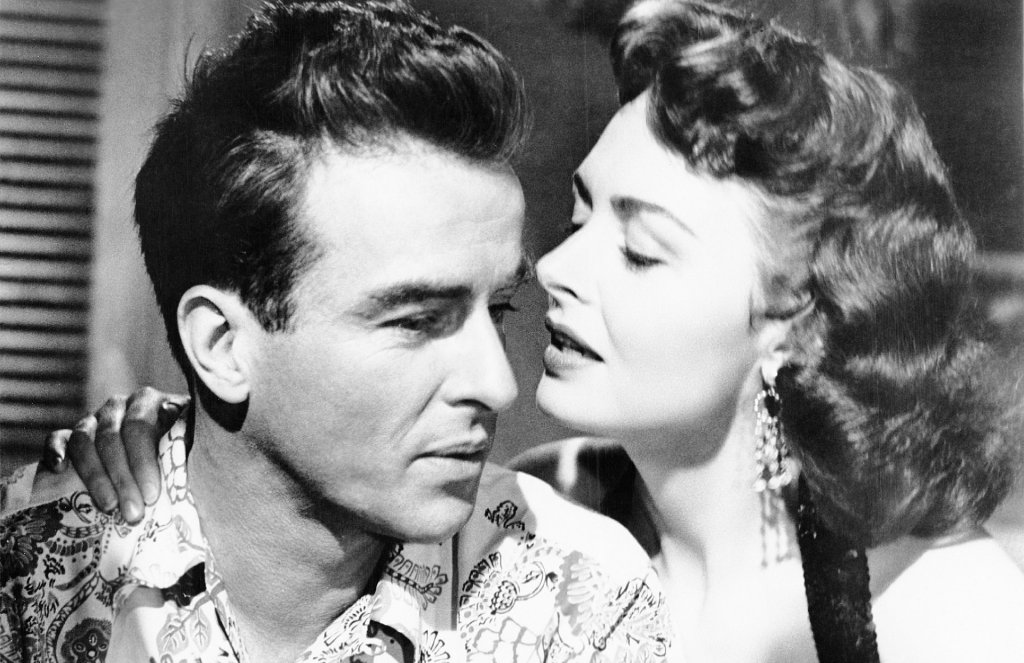
It’s 1941 at Pearl Harbour and three soldiers discover going their own way, rather than conforming to rules and expectations, causes no end of trouble. Private Prewitt (Montgomery Clift) is repeatedly hazed by his comrades (with the support of his CO) for refusing to join the boxing team. A champion boxer, Prewitt retired after accidentally blinding an opponent and nothing will persuade him to go back. His only comfort is with local social club ‘hostess’ Lorene (Donna Reed). First Sergeant Warden (Burt Lancaster) is persuaded to try for officer – because otherwise he risks prison for his love affair with the CO’s unloved wife Karen (Deborah Kerr). Private Maggio (Frank Sinatra), Prewitt’s only friend, is a loyal wild-card who can’t stick to the rules and is targeted by brutal stockade sergeant “Fatso” Judson (Ernest Borgnine).

From Here to Eternity sounds like a great big soap, a sort of 1980s glossy TV mini-series made before its time (it was later remade exactly as that). It’s got that in its DNA, but is made with such luscious, professional, old-school Hollywood excellence it becomes something special. Superb craftsmen work in every position to produce a classic melodrama with touches of romance, thriller, war drama and tragedy. With excellent performances across the board (Sinatra and Reed both won Oscars, while Lancaster, Clift and Kerr were all nominated), FHtE tells emotive, empathetic stories about genuine characters trapped in situations beyond their control.

The film is a masterclass in adaptation. The original novel – a popular tome of its day – tells a story crammed full of sex, STDs, homosexuality, bad language and violence across its 800+ pages. No wonder it was a hit – and no wonder, under the Production Code, it was thought impossible to adapt it into a film. Screenwriter Daniel Taradash carefully reworked and ‘hinted’ at several things that could not be explicitly said (for example, no one calls Lorene a prostitute, but you’d have to be pretty dense not to realise she is doing more than pouring drinks in that bar). Restraint, as it often did, demanded invention and bought out the best (and subtle work) in people. The film’s requirement to focus on dialogue and character rather than controversy hugely works to its benefit.

Zinnemann was the perfect director for the material. Drawing wonderful performances from the actors, he also keep the film intimate, drawing us closer to the characters over scale, despite the temptations of the film’s location shooting in Hawaii (Zinnemann pushed strongly against shooting in technicolour and widescreen). The film also fits perfectly with one of Zinnemann’s key pre-occupations: the struggle of principled men (most strikingly Prewitt) in a society that demands them to say or do something against those principles. Just as the townspeople wanted Marshal to run and the Tudor court wanted More to swear allegiance, so our characters buck against conforming with the roles they are expected to play.

You can see why the military – after supporting the project – were less happy when they saw the film. The individual is championed at the cost of the machine. Prewitt’s principles are praised, while his regiment is hopelessly corrupted by his incompetent and careerist commander. The hazing is endemic, and supported from above – and no one even notices or cares that Fatso is also abusing his position to brutalize Maggio. The CO is so useless – as well as ruining his wife’s life, rendering her infertile and cheating on her all over town – that the company is effectively run by First Sergeant Warden, the only NCO with the courage of his principles. Under pressure from their army sponsors, the film does see the chain of command cashier the CO (a scene Zinnemann hated) – but the sympathy is with the individual rather than the system.

From Here to Eternity is also a highly effective romance. Its most famous image will always be the clinch between Lancaster and Kerr, kissing and embracing while the turf washes up around them. But the film is also realistic – its why it remains so effective. Warden and Karen are made as miserable by their growing love as they are happy (they even comment on this). Relationships are never an easy ride, and demand constant dedication. Lorene and Prewitt’s relationship is far from rose-tinted, with the two of them constantly forced apart by their own mistakes and choices.

It’s melodrama told with emotional intelligence and realism – and Zinnemann gets great performances from great actors. Lancaster brings immense strength and purpose to Warden, but also a concealed vulnerability and decency. Kerr – revitalising her career after a string of “good wives” – brilliantly conveys Karen’s desperation and misery, along with her wary hope her life could change. That moment on the beach, the surf washing around them as they make-out is a rare moment of relaxed happiness. Other than that, its one tough conversation after another – stolen moments in bars or cars, where the two of them confront the difficulty of their situation, but also their need for each other. That’s old school romance for you – unavoidable, but never-endingly difficult and even a little painful.

Sinatra (in the role that changed his career – and the debate around how he got the role inspired that horse’s head in The Godfather) brings charm, cheek and tragedy to Maggio. How did Maggio end up in this man’s army? He’s quietly fun loving, but bucks the rules like almost no other character in the film. Sure he’s an upstanding guy – the only one who sticks by Prewit and defends him – but he can’t follow a simple order. Mostly because he’s not really disciplined enough. Plus he makes enemies – worst of all Borgnine’s bruising sergeant. He’d be so much happier running a bar for soldiers than he ever is being a soldier himself.

This makes him very different from Clift’s Prewit. Clift gives one of his finest performances as this fully-realised tragic hero. Prewit is a man of principle who, for the best reasons, makes choices that have a terrible impact on him. He’ll stand by his decision not to box, even though it opens up a bucket load of unpleasantness for him and Maggio. If that leaves him with one friend and no supporters, so be it. He may not look like a boxer (the studio wanted a more muscular lead), but he is every inch the emotionally conflicted, guilt-plagued and confused GI, stubborn but profoundly sincere, with the strength of character to stand alone, but the vulnerability to need affection from Lorene (and respond like a lovesick kid when he thinks she has spurned him). It’s a complex, mature and excellent performance.

All these events are eventually dwarfed by the outbreak of war. If there is one thing that Zinnemann will accept is bigger than the individual, it’s world war. The film quietly counts down to the attack on Pearl Harbor (without the characters realising it), sneaking us peaks at calendars and reports to let us know how close we are to the fateful day. When it comes, it reveals the characters of the people we’ve been following. Warden takes command in a way his CO never could. Prewit, hiding out with Lorene (Reed by the way is marvellous, her investing Lorene with a real world-weary sadness), decides its his mission to return from AWOL, despite the dangers this will cause him. The attack is grippingly but simply filmed.

From Here to Eternity is a complex film, made with real professional skill, and a rewarding character study. Zinnemann gets the tone right at almost every single point and draws out brilliant performances from a very strong cast. As an example of Hollywood Studio film making, it’s hard to beat.

Ice Station Zebra (1968)

Rock Hudson takes command in the rather turgid cold war thriller Ice Station Zebra

Director: John Sturges

Cast: Rock Hudson (Commander James Farraday), Ernest Borgnine (Boris Vaslov), Patrick McGoohan (David Jones), Jim Brown (Captain Leslie Anders), Tony Bill (Lt Russell Walker), Lloyd Nolan (Admiral Garvey), Alf Kjellin (Colonel Ostrovsky)

Rumour has it that Howard Hughes loved this movie so much, he insisted on the Las Vegas TV broadcaster he owned to screen the film over 100 times. For most of the rest of us, once will probably be enough to take in all the fun that can be pulled out of this sub-par Alistair MacLean Cold War thriller, a poor relation to The Guns of the Navarone and Where Eagles Dare.

It’s the middle of the Cold War and US submarine commander James Farraday (Rock Hudson) is ordered to the North Pole to rescue a British scientific team. However that mission is just a cover for the real goal – something to do with retrieving a top secret gizmo from a crashed satellite. Farraday is ordered to transport British intelligence agent “David Jones” (Patrick McGoohan) to the Pole, who has bought Soviet defector Boris Vaslov (Ernest Borgnine) along with him. En route, sabotage nearly downs the sub, and on arrival the base has been nearly destroyed. Looks like there is a traitor on board – but is it Boris or recently arrived marine Captain Leslie Anders (Jim Brown)? Who can tell?

To be honest most people watching the film. It’s one of many not-particularly-intriguing mysteries in a hopelessly over-extended film that takes nearly two hours to get going, and then crams its paper-thin characters into a series of adventures that bounce from dull to cliché with giddy haste. Directed with a professional lack of engagement by John Sturges (who could believe the director of Bad Day at Black Rock and The Great Escape could have made something as flat as this?).

It’s a film that mistakes lack of explanations and rushed conclusions for intriguing mystery. There is barely enough actual plot here to sustain an hour and a half let alone the nearly two and a half hours the film takes to get nowhere in particular. The middle of the film is given over to a series of submarine escapades that would have already felt familiar at the time from The Enemy Below and have been bettered since in countless submarine films. From deep dives to furiously leaking compartments, there isn’t anything particularly new here.

When we finally arrive at the polar base, there is finally some decent mystery – as well as a haunting atmosphere – as the characters explore the badly damaged base and its traumatised residents (You can see how this film influenced John Carpenter as he directed The Thing). Sadly, what the film hasn’t managed to do up to this point is make us care at all about any of the characters. Rock Hudson, never a particularly inspiring performer, makes a dry and unengaging lead (first choice Gregory Peck would have made the world of difference). Patrick McGoohan does his best as the mysterious British agent, but the character is so lightly written that you never really feel particularly intrigued by his mystery. Ernest Borgnine chews the scenery as the ex-Pat Soviet while Jim Brown is serviceable as the marine captain. Virtually no other character makes any real impact.

The film culminates eventually in a confusing stand-off between the Americans and the Soviets, until the villains reveal themselves and a détente that doesn’t end up destroying the world is revealed. That’s about the sum total of interest the film can spark. Other than that, it’s slow pace, unengaging characters, uninvolving plot and unoriginal action make it a great deal of fuss about nothing in particular. Howard Hughes may have wanted to watch it a hundred times. You probably won’t want to.

The Vikings (1958)

Kirk Douglas has a whale of a time as one of The Vikings

Director: Richard Fleischer

Cast: Kirk Douglas (Einar), Tony Curtiz (Eric), Ernest Borgnine (Ragnar Lodbrok), Janet Leigh (Morgana), James Donald (Egbert), Alexander Knox (Father Godwin), Maxine Audley (Enid), Frank Thring (Aella of Northumbria), Eileen Way (Kitala), Dandy Nichols (Bridget), Edric Conner (Sandpiper), Orson Welles (Narrator)

There’s a big market for stories about Vikings. Perhaps there is something attractive in our more staid world for a “noble savage” culture, with warriors romantically travelling far and wide. Perhaps a race of brave warriors just seems rather cool. Either way, despite their reputation for ravishing and raiding, Vikings often get a decent deal from films, usually positioned as a race of anti-heroes. That’s definitely what we get from Richard Fleischer’s enjoyable swashbuckler, which has a nodding acquaintance with history.

After the King of Northumbria is killed by fearsome Viking Ragnar Lodbrok (Ernest Borgnine), his queen is raped by Ragnar. Northumbria name a new King, the corrupt Aella (Frank Thring), while the queen sends her baby son (who she knows is Ragnar’s son) to Italy for his protection. Jump forward twenty odd years and, wouldn’t you know it, that young boy turns up as Eric (Tony Curtis) a slave of Ragnar’s, loathed by his unknown half-brother Einar (Kirk Doouglas), Ragnar’s son. The only person who knows who Eric is, is exiled Northumbrian load Egbert (James Donald). Things get even more complex when Aella’s intended Morgana (Janet Leigh) is kidnapped in a raid, and both Eric and Einar fall in love with her….

The Vikings is a great deal of fun, its tongue stuck firmly in its cheek. The plot veers from scene-to-scene from being too dense (various complexities around the rightful king of Northumbria get so confusing the film eventually abandons them) too being shunted off to the sides in favour of the action. But then it’s more about broad, brightly coloured action (very handsomely filmed by Jack Cardiff) with its stars having a good time fighting and shouting.

It’s interesting watching the film as almost a dry run for Spartacus, where Douglas and Curtis would re-unite. Here the film revolves around a rivalry between the two that turns into an alliance of mutual self-interest. Douglas clearly has a whale of a time playing a semi-baddie with depth, his Einar a typical “Viking’s Viking” who drinks hard, fights hard and wants a life of adventure on the high seas. But he’s also got a strange sense of nobility about home and – even though he makes a half-hearted attempt to rape her – he seems to fall genuinely in love with Morgana. Even his eventual comeuppance comes from a moment of decency. It makes for a villain more complex than normal, while Douglas roars through the movie.

Curtis is left with the duller part as the noble son-of-a-king. Looking rather too pampered for a life of serfdom, Curtis feels like a slightly too modern, New Yorkish presence for period pieces (Spartacus would use his pampered prissiness to better effect) but he charges into the sword swinging, high romance of the story with relish, while also shining during Eric’s several moments of brave principle. Morgana, very well played by his real-life wife Janet Leigh, sees a character who could have been a victimised love-interest turn into an independent and strong-minded woman, brave enough to take a stand on the things she believes in.

But the film’s real interest is in the world of the Vikings. There has been some very impressive historical research into their culture and shipping, while the battles and scenes of drunken merriment are well staged and carry a lot of boozy buzz. Most of the cast enter into relish, following Douglas and Ernest Borgnine’s lead (Borgnine, playing Douglas’ father, was at best a few months older) with plenty of shouting, ale swallowing and axe throwing. While the film’s score makes a number of odd choices – this really needed a Goldsmith or Morricone rather than the odd mix we get here – Fleischer’s direction is crisp and adept and keeps things charging forward.

The politics at the Northumbrian court gets a bit forgotten about, with Alan Thring turning Aella into a sneering, unprincipled villain who barely gets much of a look-in. However, the savage punishments that Aella meets out to his rivals – and his ruthless condemnation of anyone seen as being against him – makes a neat contrast with the Vikings who, for all their blood-curdling violence, do at least have some sort of nominal sense of justice and some willingness to compromise.

But the film’s heart is in the action. Douglas, acting as producer, jumped at the chance to take on as many of the stunts as possible – including famously walking across the oars of a Viking longboat while it is at sea (he nearly falls in twice, but it has the sort of excitement of seeing the star doing something for real that you still get with Tom Cruise). He and Curtis eagerly take part in assorted sword battles, while balancing a love/hate relationship (well probably mostly hate) that keeps the film powering forward. All in it makes for some really enjoyable B-movie shenanigans.

The Wild Bunch (1969)

William Holden and Ernest Borgnine lead The Wild Bunch into one last adventure

Director: Sam Peckinpah

Cast: William Holden (Pike Bishop), Ernest Borgnine (Dutch Engstrom), Robert Ryan (Deke Thornton), Edmond O’Brien (Freddie Sykes), Warren Oates (Lyle Gorch), Ben Johnson (Tector Gorch), Jamie Sánchez (Angel), Emilio Fernandez (General Mapache), Strother Marin (Coffer), LQ Jones (T.C.)

SPOILERS: Discussion of The Wild Bunch is pretty much impossible without discussing its ending – but then it does have a pretty famous ending. Well you’re warned…

It’s easy to look back the Wild West with rose-tinted glasses. To remember it as being when the American spirit was at its best and a romance ruled. To basically take the “Wild” out of the picture. Peckinpah’s The Wild Bunch is all about putting that “Wild” front and centre, a stunning exploration of the closing days of the Wild West that replaces sentiment and nostalgia with violence and a group of men who know nostalgia is just the vanity of hardened, brutal killers.

In 1916 Pike Bishop (William Holden) is the leader of a notorious gang of criminals, ruthless killers all, wanted by the law – and the rail company they have been robbing for years – at any price. Pike’s latest bank job winds up being a trap, with a deadly shoot-out taking place in the middle of a town (with the population lethally caught in the crossfire) as the rail company tries to kill Pike’s crew, their efforts led by Pike’s former partner Deke Thornton (Robert Ryan), forced to work against Pike or return to the hellish jail at Yuma. The massacre sees only a few members of the gang survive – Pike, his best friend Dutch (Ernest Borgnine), the Gorch brothers Lyle (Warren Oates) and Tector (Ben Johnson), Mexican gun-slinger Angel (Jamie Sánchez) and old-timer Freddie Sykes (Edmond O’Brien). The gang flees to Mexico, with Deke and his posse dispatched on their heels by the furious railway company. In a Mexico ripped apart by civil war, the gang are hired by would-be warlord General Mapache (Emilio Fernandez) to hijack guns from the American army – but there are other dangers when Angel has friendly contacts with the Mexican revolutionaries.

Peckinpah’s film is a stunning exploration not only of the dying dreams and way of life of old men in the West – Pike, Deke, Dutch and Freddie are all old men while the Gorch brothers are hardly in the first flush of youth – but also the endemic nature of violence. Peckinpah’s film is unfailingly brutal in its depiction of violence, an infection that runs through every level of society. Everyone from the children – the film opens with a gang of children laughingly feeding two scorpions to a mass colony of ants, before setting all the animals on fire (look in vain for the “no animals were harmed in the making of this picture” message) – to the men themselves. The film’s opening shoot-out – a technical marvel and also a masterpiece of slow tension building by Peckinpah – is shocking in its brutality.

Unlike Leone, to whom violence is shocking in its suddenness, Peckinpah slows down the action so that we can see (and feel) the horror of each bullet. The Wild Bunch set some sort of record – in its final shoot-out sequence – for blood squibs used. It’s not a surprise after watching the opening shoot-out between the Bunch and the railway forces. With the Bunch using a passing Temperance march to cover their retreat, bullets are fired indiscriminately, killing passers-by and men from both sides alike. No one, aside from a furious and appalled Deke (the only character who has suffered himself from violence in prison) expresses a moment’s guilt for this massacre.

But then Pike and the bunch are hardened killers to a man. Pike cares nothing for the members of the gang lost – even forgetting until late on that he left a man guarding the bank staff while the gang rode out of town – and when a wounded survivor can’t ride and agrees that Pike should finish it, he doesn’t pause for a second. Any ideas of these men as being rogues or there being any charm to living a life on the margins of the law are rapidly dispelled. 

And this violence isn’t just an American thing – it dominates life in Mexico as well, where the drunken, bullying General Mapache is a brutal would-be dictator, whose soldiers frequently terrorise, steal from and murder the villagers around them. In Mexico, the gun is law even more than the US, and these guys have even closer to being criminals in uniform, just as Deke’s posse could just as easily be working with the Bunch as against them.

So what motivates these men? What is brilliant about Peckinpah’s film is acknowledging that these violent killers may feud and fight, but they are still stretching for some sort of meaning in their life. These are world-weary old men with little to live for, who are trying to work out what – if anything – is left in their lives. And that life has to have some sort of code, some sort of grounding basis, even if everything else is up for grabs. Pike says when you “side with a man, you stay with him and if you can’t do that you’re finished”. It’s a flexible rule for these guys – and they frequently shirk it in the film when events are dangerous – but it’s a code they need to believe they would keep.

It’s that code that comes into play late in the film as Angel falls increasingly foul of Mapache’s anger and whims. It takes the gang a while to stand by it, but when they do it’s also partnered by a sad realisation that for these old men what else is there? Their lives have been ruled by the gun and shoot-out after shoot-out. Peckinpah views the West with no nostalgia, but he understands that men need to view their own lives with nostalgia at times, to understand that they may yearn to point at something and say that was what their lives were for.

And what else is there? Everyone in the film knows it’s over. They’re old men, and the world is moving on and leaving them behind. At one point the gang look on at wonder at a car owned by Mapache, and the Gorch brothers flat out can’t believe in the existence of an aeroplane. The modern world is ending the world of these guys, and Pike knows it: “We need to start thinking beyond our guns” he says at one point, but offers no solutions at all about what that might be. The modern world is the real deadly bullet that’s taking out the gang: in the final shoot-out, the key weapon even turns out to be a modern machine gun, spraying death at a level ordinary shooters can’t even begin to match.

That final shoot-out sees all these themes come together brilliantly. It could almost be a rebuttal of Butch Cassidy and the Sundance Kid (released the same year) that sees our heroes captured in romantic sepia freeze frame, charging into certain death against the Bolivian army. Here we effectively see the battle, with additional machine guns and thousands of blood squibs as the Bunch take on Mapache’s army in fury at Mapache’s murder of Sanchez. In a furious shoot-out lasting almost ten minutes, it’s a blood bath as the Bunch mow down dozens and dozens of Mapache’s army while themselves being repeatedly shredded by bullets, adrenalin alone keeping them going. Peckinpah even has the final fatal bullet that takes out Pike coming from a child soldier.

But the Bunch are taking this suicidal last stand because it’s their last –  their only – chance to have stood for something, to have a code they stuck by. To stand by their partner and if that means going down in a hail of bullets, at least there is some sort of glory to it. And besides – what else have they got? The modern world has drained all purpose from their life, so why not at the end wordlessly agree to leave behind the greed that has dominated their lives and die for something?

Peckinpah’s film is simply brilliant, fabulously made and brilliantly shot and edited. The cast of pros is simply excellent. Holden’s world-weary faded glamour now leaving only a cold ruthlessness and a wish that he had more to show for it is perfectly partnered with Borgnine’s easy-going sidekick who wants to do the right thing but needs to find the reasons. Ryan is excellent as a guilt-ridden Deke, who finally has begun to understand the impact of violence. The rest of the cast also excel. The Wild Bunch may be the least nostalgia infected Western ever made, a grim reminder that the West really was Wild. But it’s also a stunningly well-made and challenging picture.

Marty (1955)

Betsy Blair and Ernest Borgnine are two shy people out on a date in Marty

Director: Delbert Mann

Cast: Ernest Borgnine (Marty Piletti), Betsy Blair (Clara), Esther Minciotti (Mrs Piletti), Augusta Ciolli (Aunt Catherine), Joe Mantell (Angie), Karen Steele (Virginia), Jerry Paris (Tommy)

Strange to think today, but until Parasite, only one other film had won both the Palme d’Or at Cannes and the Oscar for Best Picture. That film was Marty and if that fact seems odd today when you watch the film, it’s easy to forget how revolutionary a film about a regular guy with an average job and boring life was back then. Films were about larger than life guys doing big manly things. They weren’t about butchers who lived with their mamas and can’t get girls.

Our butcher is Marty Piletti (Ernest Borgnine) and one night he meets Clara (Betsy Blair), an equally shy chemistry school teacher. They spend the whole night talking, and Marty excitedly plans to call her the next day. Problem is, a brief meeting with his mother (Esther Minciotti) is a disaster – not least because she’s worried Clara could mean her being thrown out of Marty’s home like her sister (Augusta Ciolli) has been – and Marty’s best friend Angie (Joe Mantell) doesn’t think Clara is much to write home about. Under these peer pressures will Marty make that call or not?

That plot summary by the way effectively covers 95% of the film. Today Marty seems so lightweight and slight it’s almost a puff of air. The film was adapted from a one hour TV play, and beat a host of Broadway adaptations (Picnic, The Rose Tattoo and Mister Roberts) to the big one. Today of course a TV play would never be adapted into a movie (in fact if anything Paddy Chayefsky’s play would probably be expanded into a ten episode Netflix drama), but in 1950s America a TV play would have been screened once and then disappeared forever. What better for Hollywood but to assume the one-off delights of TV could be as mined as easily as the best work on Broadway?

So Marty was made and won and it’s a decent, reasonably charming movie even though it’s really hard to see what the fuss is about now. The main delights lie in the script by Paddy Chayefsky, one of the greatest screenplay writers of American film history here winning the first of his three Oscars. The script is simple, well observed, full of cracking little lines, creates some marvellously rounded characters and is careful not to overbalance the overall low-key effect of the film. 

Chayefsky has teed the whole film up so well that most of those involved simply run with the great material they have been given. None of the actors – or Delbert Mann, who received a generous Best Director Oscar – ever hit these heights again. But then that’s about right for a film that is all about the triumph of the little guy (or at least the little guy getting a small day in the sun). Mann marshals the actors (some of whom were in the original TV production) to good effect and basically doesn’t get in the way of the script.

The story itself covers just two days in the life of Marty, but it’s still a gift of a part for Ernest Borgnine, who won an Oscar (surely to the chagrin of Rod Steiger who played the role on TV). The role subtly subverts Borgnine’s persona – Marty has the build for muscular action that matches the series of smarmy, working-class heavies Borgnine had played up to this point (characters much like some of his friends in the drama) but he moves with the nerves of a timid man. Borgnine is as gentle and careful as the picture itself, a shy man who has given up on good things happening to him but comes alive when he meets someone who sees him for who he is rather than what he is not.

That first long date – it takes up well over half the film’s runtime – sees him slowly go through stages from nerves, to stumbled confessions to an excited jabbering as he is so excited to be with Clara he keeps failing (accidentally) to let her speak so keen is he to share everything with her, through to a protective regard and a euphoric celebration. The only slight dated misstep is Marty’s reaction when denied a kiss – which he goes for with the entitlement of a Mad Men era male – but it’s swiftly course corrected in the film as another sign of Marty’s clumsy lack of knowledge of how relationships work. Throughout all this Borgnine is charming, heartfelt, tender and sweet and deserving of recognition for the role.

Opposite him for most of the film is Betsy Blair, who won the role after vigorous campaigning from her and her husband Gene Kelly (who announced he would refuse to do his next film if she was not cast). Mousy, timid and shy but looking for warmth and affection in life, Clara is just like Marty: a woman who isn’t sure what the next step in her life is but is certain that she doesn’t want to spend it growing old alone. It’s another heartfelt performance. The cast is rounded out by the sort of solid minor supporting players who don’t usually stand out, with Joe Mantell getting an Oscar nomination repeating his role as brash best friend Angie from TV. Stand out though is Esther Minciotti (also repeating her role) as Marty’s loving but domineering mother.

It all comes together into something very small, sweet and low-key and if it’s strange to see what the fuss is all about, it’s probably because there have been so many more movies made about ordinary people since then that this first trend setter now looks like nothing too special. But with a marvellous script and some wonderful performances from actors who never got an opportunity like this again, it’s truly a magic moment for all concerned, a once in a life-time film before most of them returned to jobbing roles once more.

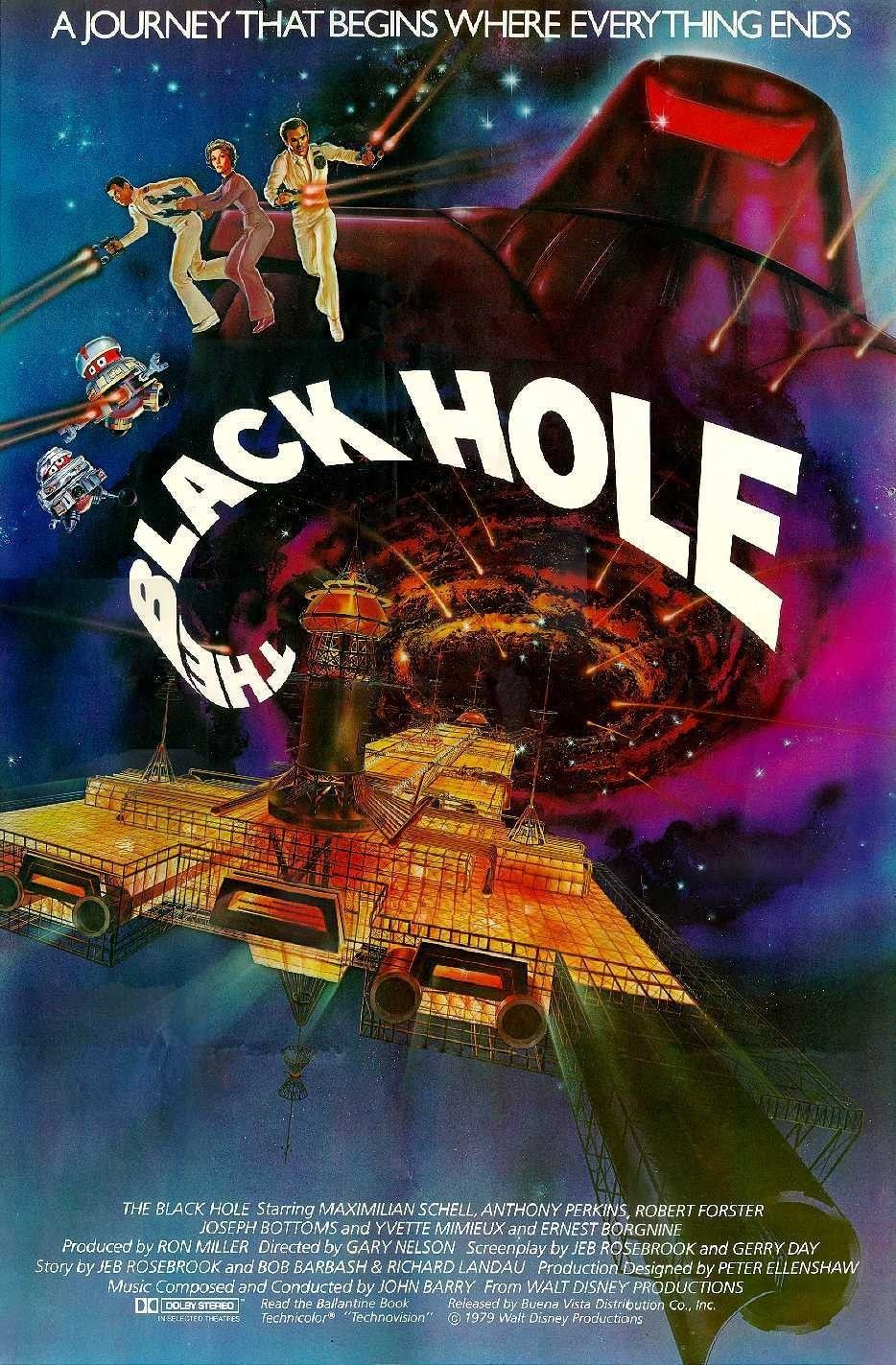
The Black Hole (1979)

Maximilian Schell in one of his quieter moment, planning a journey into The Black Hole

Director: Gary Nelson

Cast: Maximilian Schell (Dr Hans Reinhardt), Anthony Perkins (Dr Alex Durant), Robert Forster (Captain Dan Holland), Joseph Bottoms (Lt Charle Pizer), Yvette Mimieux (Dr Kate McCrae), Ernest Borgnine (Harry Booth), Roddy McDowell (VINCENT), Slim Pickens (BOB)

When Star Wars became a massive smash hit, every single studio assumed all they needed to do was to search out any damn space-set saga it could find, dress it up with a few Star Wars-feeling elements (usually shooting and funny robots) and, Bob’s Your Uncle, you would have a box-office smash of your very own. Well that turned out not to be the case – and Disney’s The Black Hole was a case in point.

At the end of a long mission, the crew of the USS Palomino is on the way back to Earth, when they discover a black hole with a spaceship hovering around it. The ship is the long-lost USS Cygnus, commanded by legendary genius Dr Max Reinhardt (Maximilian Schell). The crew are at first welcomed by the Cygnus – but is there a dangerous secret on board? You bet there is.

The Black Hole feels like several different types of story all very unsuccessfully stapled together.  There are elements in there of a 2001-style intellectual, “what does life mean” science fiction saga. But every time we start to get near those tones, up jumps a funny robot, or a bit of shooting, or an odd “haunted-house-in-space” sequence, or a mad scientist ranting. None of these stories, by the way, are particularly good or unique. They are all rather clumsily assembled. The tone of the film is also all over the place – so we get a comedy robot with funny bug eyes getting up to hi-jinks, closely followed by Anthony Perkins being ruthlessly killed by a drill (even if it is mostly offscreen blood and guts). Who is this film for? Too dark and grim for kids, too stupid and childish for their parents.

Robert Forster and Anthony Perkins look barely interested in the events around them (Perkins must have been wondering by this point in his life where it had all gone wrong). Ernest Borgnine plays the sort of blow-hard he could do standing on his head. Perhaps aware that most of the rest of the performers weren’t really engaged in it, Maximilian Schell acts for everyone. Never one to be afraid of going overboard, Schell’s wild-eyed enthusiasm leaves no scenery unchewed. It’s the sort of performance that seems to capture the wildly uneven tone of the film: so one minute Schell is a sort of space Byron, the next minute he’s literally slapping his head over the incompetence of his minions like some sort of Space Skeletor.

There really isn’t any actual plot in The Black Hole – it takes no more than about 40 minutes to hit the final “we gotta get off this ship” run around. There are some vague ideas bandied around about the spiritual meaning of touching the edge of God’s creation – but these barely get any air time. The last 30 minutes are a hurried dash through the ship, before we finally fly through the wormhole. This wormhole flight is left obliquely unclear (it’s crammed with odd imagery inspired by Dante), and I suspect there were more ideas in the original script that were cut when they basically decided to make this a kids’ film.

But then that’s like the whole film. It’s a 2001 wannabe that has been retrofitted into something as Star Warsy as possible. VINCENT and BOB are a low-rent R2-D2 and C3P0 (they even have basically the same personalities) and Dr Reinhardt’s robot followers are nothing more than imitation storm troopers with the Cygnus like some sort of Death Star. That’s not even mentioning odd touches, such as the ESP powers given to Kate McCrae. None of these elements fit well together at all. The special effects have dated very badly (surely they can’t have looked too impressive back then either?).

It’s also of course possibly one of the least scientifically accurate films ever made. Most of the black hole physics are errant nonsense (at least so I’m told, I’m not qualified to comment). But I know enough about science to know that if anyone ever spent as much time in the cold vacuum of space as most of these characters do, they would all be frozen and dead. Most of the last chase sequence sees the crew moving through the Cygnus as parts of the ship break off, with holes to space all over the place. One character even drifts out into space only to be dragged back in absolutely fine. I guess it’s for kids but it still immediately stands out as odd. 

And then there is that ending. As our heroes head down into the wormhole, the film makes a play for some sort of cult classic status. Angles distort and bend. Bizarre imagery is thrown at us. Reinhardt merges with his robot Maximilian and seems to go to hell. Angels fly across the screen. Lights and whizzbangs. What is going on? I don’t think the film knows: its the sort of cult classic stuff where it’s left open to the viewer to give it more meaning than it probably has. The final emergence from the black hole is a total let down – hard not to have a “what was all that about?” feeling…

The Black Hole is just, to be honest, a little too rubbish. I mean there are elements in there I don’t mind: some people hate VINCENT, but I find him probably the most engaging hero (that’s probably a pretty damning statement). Schell’s scenery chewing (“MAXIMILIAN!!!!!”) is reasonably entertaining. Some of the chasing around is fun. Villainous robot Maximilian is very well designed and looks creepy. But it’s not enough. There is too much damn nonsense everywhere. It’s a film with no spiritual or intellectual depth, which means when it does try to leave questions answered it merely frustrates rather than making you think.

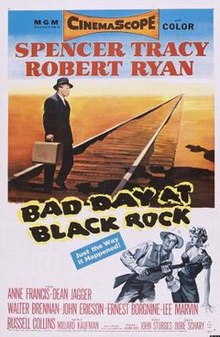
Bad Day at Black Rock (1956)

Spencer Tracy is the only just man in town, in brilliant modern Western Bad Day at Black Rock

Director: John Sturges

Cast: Spencer Tracy (John J Macreedy), Robert Ryan (Reno Smith), Anne Francis (Liz Wirth), Dean Jagger (Sheriff Tim Horn), Walter Brennan (Doc Viele), John Ericson (Pete Wirth), Ernest Borgnine (Coley Trimble), Lee Marvin (Hector David), Russell Collins (Mr Hastings), Walter Sande (Sam)

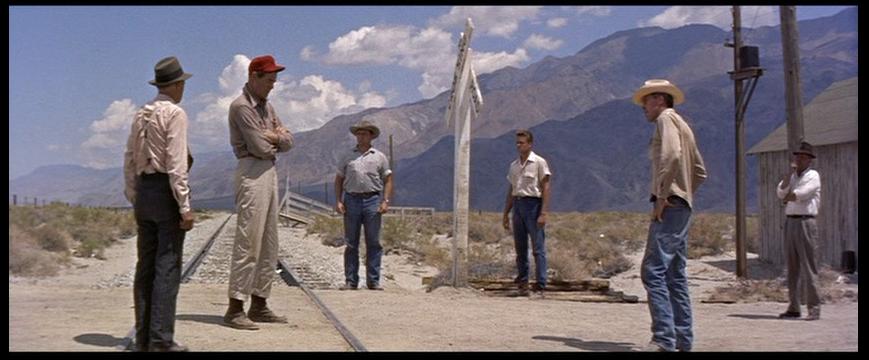
A man walks into a town. It’s a dust bowl town, looks like it’s just one street with a few buildings. The natives sit warily outside the bar and treat the stranger with suspicion. Trigger fingers are itchy. Is it the Wild West? No it’s 1945, but the new guy in town is about to find out just how unfriendly the American West can be. Just as well that, despite only having one hand, he’s more than capable of looking after himself.

Spencer Tracy, perfect as a man of rigid principles and certainties who won’t waver in the face of any intimidation, is our no-nonsense hero Macreedy. Arriving in town, he’s looking for Japanese-American farmer Komoko, father of a deceased colleague from the war, but no one wants to talk about where he is or what happened to him. Sheriff Horn (Dean Jagger) is an alcoholic who doesn’t want to know anything, the local doctor (Walter Brennan) doesn’t want to get involved and hotel clerk Pete (John Ericson) doesn’t want to give Macreedy a home. Macreedy is tailed on arrival by a couple of intimidating heavies (Ernest Borgnine and Lee Marvin – the go-to guys at the time for these sort of roles), and quickly works out the town is run by local businessman Reno Smith (Robert Ryan) – and any secrets it holds ain’t coming out easy.

Bad Day at Black Rock is a classic western, set in a time when the world of the West had been left far behind. American culture has a romantic longing for rural, small-town America, and the heroic past of the pioneers of the old West. Bad Day inverts a lot of this mythology: this America is horribly corrupt, unspeakably racist and hiding no end of dirty linen in its cupboards. In fact, small-town America is horrible, while the man from the big city represents all that is good – that in itself is quite a surprise turnaround from what you might expect from Hollywood.

In many ways it’s a very simple, very gripping, film. Macreedy’s arrival in the town sparks guilty consciences and sets the town bully, Reno Smith, into a quiet, panicked breakdown. We know watching it roughly where the film is likely to go. However, what Sturges does well is to invest this with so much attention. Huge chunks of the film involve both Macreedy and the men of the town, tensely trying to work out what is going on, or watching and waiting to see what opportunities there will be. It’s a film packed with moments of waiting or characters sitting and watching, talking around subjects rather than tackling the big questions they want to ask. It sounds slow but it actually builds up an extraordinary amount of danger and feeling of danger.

It’s a drama that works on the slow burn while also being a very short, snappily paced film. The best part of the first half-hour of the film is the careful establishing of the atmosphere, the relationships between the different characters, and the politics of this Western town. In the middle of this we have Macreedy, the man of mystery whom we know nothing about, who never seems to rise to the unfriendly intimidation he meets from every corner. You know that all this tension is going to erupt into something serious – but the film constantly leaves you guessing exactly how it will pan out and keeps you surprised about who ends up on which side.

You couldn’t get a better actor for this role than Spencer Tracy. There is something so rigidly determined about Tracy in this film, so adamantine and determined – the sort of man who operates in rights and wrongs, who even in this world of intimidation and terror tries to play by some sort of rules for as long as he possibly can. What’s so great about Tracy in this film is that he seems like both a stranger in black and a disappointed dad, with the people in the town constantly letting him down. The film also teases us for a long time – we suspect throughout that Macreedy is more dangerous and more capable of looking after himself than he appears. (It was Tracy who insisted, by the way, that Macreedy be made one-armed, as he thought it could give Macreedy an interesting vulnerability to overcome). 

The film makes us wait for its three action set-pieces: a car chase, a bar fight and a shoot-out. But it’s perfect in its patience, because violence always seems like it could burst out at any time. Marvin and Borgnine as the obvious heavies do great work as different types of overt muscle. Robert Ryan as the corrupt guy who really runs the town is especially good as a man who seems, under his dominance, to only just be holding onto his self-control, going to great lengths to prevent himself getting into trouble. It’s a point that Macreedy himself makes – deep down, Smith doesn’t have the guts to do his dirty work alone, and gets his strength from controlling others. All this delicate mixture of guilt and fear that bubbles under the surface of Smith is apparent in Ryan’s excellent performance.

But then no-one in the town is in control. Dean Jagger’s moral weakling sheriff is a drunk and a pathetic loser. Walter Brennan’s (very good) doctor wants to do the right thing, but lacks the guts to do it. John Ericsen’s hotel clerk knows he’s in the wrong, but isn’t brave enough to stand his ground. Their lack of control is in fact the root of the problem – Macreedy would never have suspected there were any dark secrets to uncover in the town if the people there hadn’t treated him with such overt suspicion. Sturges captures this perfectly (even if I think the Cinemascope width of shot isn’t perfect for a film that gets so much play out of claustrophobia and suspicion).

Politically the film is pretty simple – racism ain’t good you know – but as an example of brilliantly assembled Western tension and moral righteousness, mixed with a bit of action, adventure and claustrophobia, it works really well. Brilliantly directed, and very well written as a piece of expressive theatre, this is terrific with some wonderful performances. And front and centre is Spencer Tracy as the ultimate man in black, a man with moral certainty and courage, whom it’s impossible not to admire.

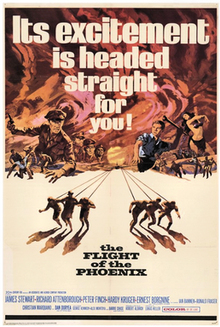
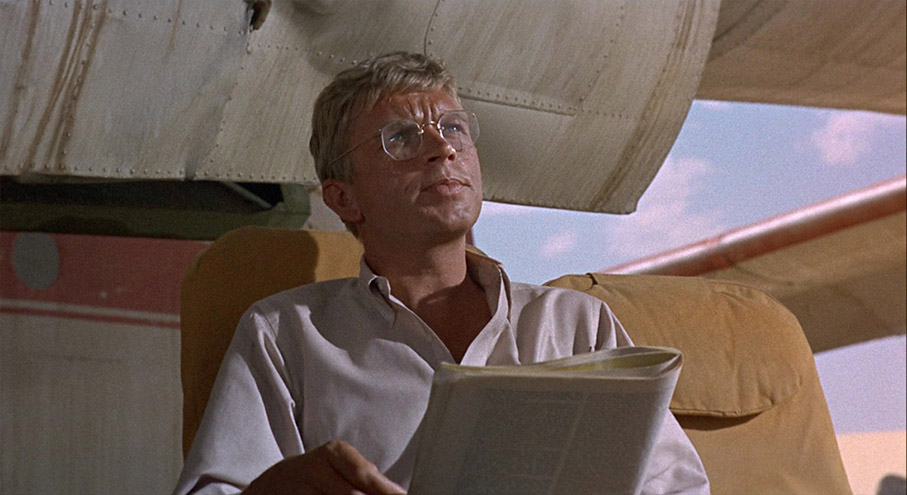
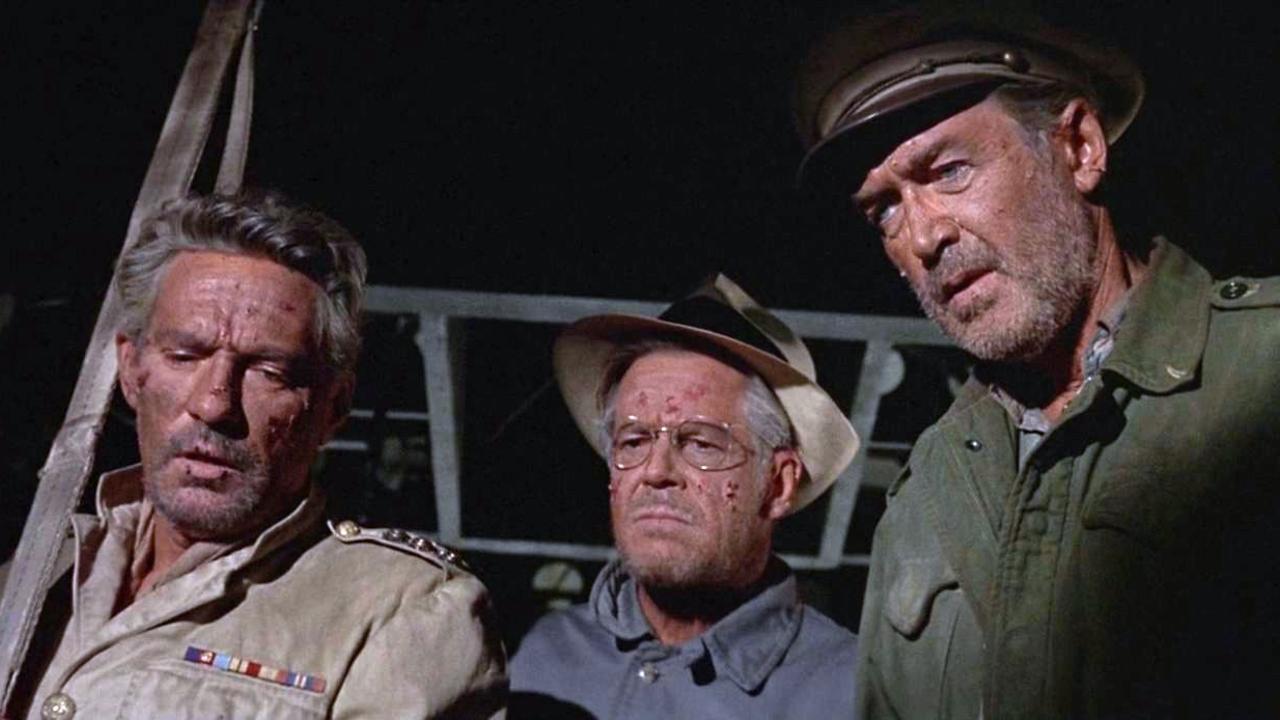
The Flight of the Phoenix (1965)

Fury and despair are never far away in brilliant survivalist film The Flight of the Phoenix

Director: Robert Aldrich

Cast: James Stewart (Captain Frank Towns), Richard Attenborough (Lew Moran), Hardy Krüger (Henrich Dorfmann), Peter Finch (Captain Harris), Ernest Borgnine (Trucker Cobb), Ian Bannen (“Ratbags” Crow), Ronald Fraser (Sergeant Watson), Christian Marquand (Dr Renaud), Dan Duryea (Standish), George Kennedy (Mike Bellamy)

Every so often you watch a film and say “where have you been my whole life!”. That’s the case with The Flight of the Phoenix– I can’t even imagine how much I would have loved this film if I had seen it when I was younger. This one has got it all for fans of anything from disaster movies to personality clashes. Aldrich’s film is a Sunday afternoon classic with bite, a brilliantly constructed actors’ piece set in the claustrophobic confines of the only shelter for miles around in the Gobi Desert.

Frank Towns (James Stewart) and Lew Moran (Richard Attenborough) are the pilot and navigator on a cargo plane flying to Benghazi, with several passengers. Caught in a sandstorm, the plane crashes in the desert over 100 miles off course. The chances of being located are small and the survivors have only enough water for a little under a fortnight, so long as they avoid exertion. While Towns quietly struggles with the guilt, and different (hopeless) solutions are suggested, German aeronautical engineer Heinrich Dorfman (Hardy Krüger) believes that they can build a new airplane from the wreckage to fly themselves to safety. Towns and Dorfman are incompatible people, leaving Moran to play peacemaker and to support the building of the new aeroplane which may be (as Towns believes) a forlorn hope in any case.

Amazingly the film was a box-office flop on release – but time rewards skill, because you watch the film and marvel at the economy of its storytelling, its expert direction, wonderful acting and fantastically drawn characters. It’s a film of immense tension, with nearly all of this coming from the bubbling potential for deadly clashes between the trapped men. The rest is supplied by the ever-present threat of diminishing resources – none more so than the limited supply of cartridges needed to start the new plane’s engine (they’ve got seven and, best case, need at least five). 

It’s this grim awareness of the knife-edge everyone is living on that powers the film. Every single resource is precious, and the pressure and fatigue show in every scene. As the film progresses, each of the men slowly disintegrates, growing increasingly scruffy, unshaven, dry skinned and weak and more and more susceptible to anger. Aldrich charts all this with professional excellence, the editing skilfully cutting away at several points to reaction shots from the actors as feuds come to a head, helped by some gloriously subtle and intelligent acting. 

And it’s not surprising really – few films capture the grim pressure of the desert better than this. Sand dries out skin and throats, reflecting the beating heat of the sun everywhere. The clear sky and burning sun turn every surface into smouldering heat – even the shade offers little respite. The viewer is left with no doubt about the insanity of spending time out of the shade in these conditions. You know immediately Captain Harris’ plan to walk 500 miles over the desert with a single canteen of water is absurd (it doesn’t end well of course). It’s a beautifully shot film that makes the mystical glamour of the desert beautiful and terrifying.

One of the things I like best about the film is that it is almost impossible to predict who will come out alive and who won’t. Unlike most Hollywood films, characters are not punished for deviating from goodness and purity – some of the most noble characters don’t come out alive, while some of the most self-serving, selfish and cowardly ones do. Even the central heroes are flawed: Towns is struggling with depression and a near crippling guilt that almost leave him fatalistically accepting death; Moran is a drunk possibly to blame for the whole disaster; Dorfman is arrogant, difficult, prickly and in many ways flat out unlikeable. 

Ah yes, Dorfmann. What a superb performance from Krüger (the first actor cast). In a masterstroke of invention, the character was changed from British (in the novel) to German. This opens up a whole world of additional prejudice between Dorfmann and the other passengers. “What did you do during the war?” antagonistic joker Ratbags asks Dorfman pointedly. It’s a tension that underlies most of the clashes. Dorfmann doesn’t help with his almost complete lack of awareness of social etiquette and his Germanic insistence on probabilities of survival: he sees no problem with treating the rest of the survivors like staff, openly debates the wisdom of helping the critically wounded, refuses to explain his thinking until absolutely pressed and has no empathy for their flagging strength and morale. But he also has a strange naivety which plays into a late plot reveal hinging on Dorfmann’s inability to read the reactions of the people sitting next to him. The film and Krüger flirt brilliantly with Germanic stereotypes – is there a more “German” character in film than Dorfmann? He’s about as far from a white knight as you can get.

But then so is James Stewart’s Towns. One of the things I like most about the film is the difficult psychology of survival. Towns is clearly struck with a barely understood guilt about the people killed in the crash, and seems ready to fatalistically accept death. His clash with Dorfmann is powered by numerous factors, not least a sense Towns has of his generation being replaced by a younger, technically minded one and a sense of losing control of his destiny. Nevertheless, Towns almost fanatically opposes the project at one point – and basically only accepts it when Moran and Dr Renard (an immensely noble Christian Marquand) tell him it’s better to have a chance of something to live for than to sit around dying. Stewart brilliantly taps into the ambiguity in his screen persona – a decency beneath the surface, but also a psychological weakness, a need for control under the nice-guy persona, a man struggling to accept he is out of his depth. It’s a brilliantly low-key psychological performance of a man struggling to button up guilt, pressure and unease.

The whole cast is superb. Attenborough plays the closest to type as a loyal number 2, but even he is clearly struggling to hold acres of despair while constantly playing peace-maker. Ronald Fraser is exceptional as a career army sergeant tottering on the edge of open-rebellion throughout the film, who betrays his commander’s trust no less than three times and is the most unknown wildcard in the pack. Ian Bannen was Oscar-nominated for his electric performance as a bitter, sarcastic Scots oil-worker who surprises everyone with his hard work while never letting up for a moment his bitter commentary on events. Peter Finch gives an excellent, ram-rod straight, almost naively decent stiff-upper lip performance as Captain Harris, a man a few degrees away from a noble idiot. Ernest Borgnine is touching as an oil foreman suffering from exhaustion and stress.

All this comes together in a superior package of film making, expertly made and superbly directed, with the actors embracing their well-developed characters with glee, making this in many ways part disaster movie, part chamber piece play. I love the little surprises it throws at you – just as you think you know a character there is a moment that surprises you or makes you reassess them. The tensions and dangers of survival in extreme conditions are brilliantly captured. There isn’t a weak moment in the film, and plot twists and surprises throw curveballs at the audience, some of which bring terrifying consequences. For any lovers of survival stories, acting or tense movies this is an absolute must.