
Perhaps the definitive submarine film, a terrifying masterpiece of claustrophobia and suspense
Director: Wolfgang Petersen
Cast: Jürgen Prochnow (Kapitänleutnant), Herbert Grönemeyer (Leutnant Werner), Klaus Wennemann (Chief engineer), Hubertus Bengsch (First watch officer), Martin Semmelrogge (Second watch officer), Bernd Tauber (Chief HelmsmanKriechbaum), Erwin Leder (Chief Mechanic Johann), Martin May (Ullmann), Heinz Hoenig (Hinrich), Uwe Ochsenknecht (Boatswain Lamprecht), Claude-Oliver Rudolph (Ario), Jan Fedder (Pilgrim), Ralf Richter (Frenssen)

In the annals of submarine movies, few have taken such a hold of the imagination than Das Boot. This is particularly remarkable since it follows the struggles not of Allied sailors but members of the German Kriegsmarine, the U-Boats who patrolled the Atlantic to sink as many merchant ships as they could, all in the service of aiding the Nazi war effort. But the sea knows no flags and holds no allegiances: to the watery deep, men are just men, and a small, rusty metal box is fragile at 280 metres no matter who sails in it. And the men sailing U-96 are just ordinary, regular men, with wives, girlfriends and regrets back home who above all just want to survive to see them again.
Wolfgang Petersen’s is a masterclass in immersing us in a claustrophobic world. The crew of U-96 are led by the captain (Jürgen Prochnow), a hardened, cynical veteran is out here to do a job, not fight for radical cause he has little time for. Instead, his concern is to preserve the lives of his men, all younger (in most cases almost twenty years so) than him, during their time at sea where days (and even weeks) of bored inaction are interspersed with interludes of sheer terror as the submarine desperately runs from depth charges and dodges Allied destroyers.
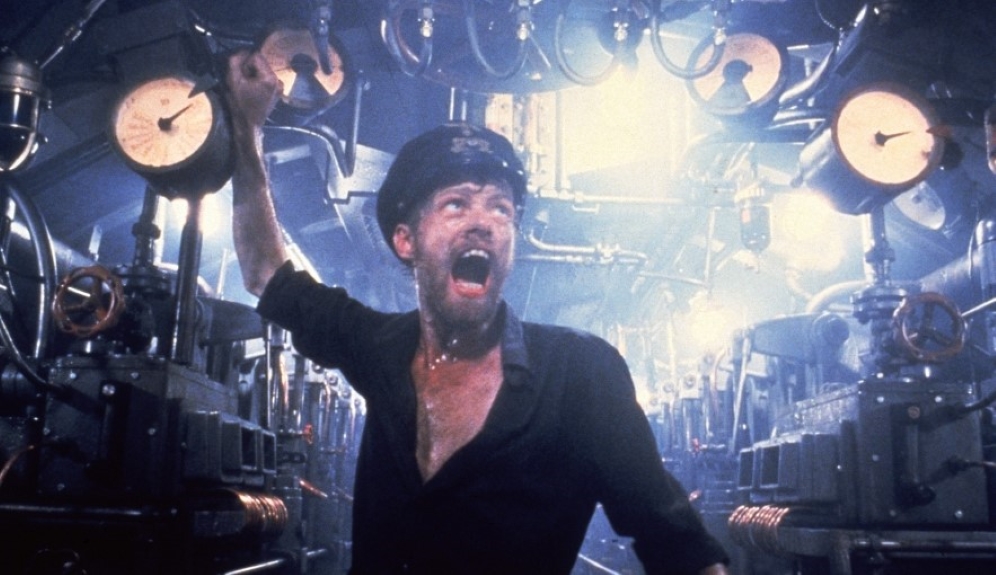
Das Boot was filmed over almost a year, in chronological order. The actors practically lived in their confined set (deafened by the sound of its mechanics), their hair growing out to match their characters and their skin taking on a pallor from not enough time in the sun. For hours at a time we never leave the confines of the submarine – if you don’t count the odd trip to the ship’s bridge, where those lucky enough to venture up-top are lashed with salty sea water from near constant Atlantic storms. Aside from that, they are in what is effectively a 60m metal corridor, a specially designed camera operated by cinematographer Jost Vacano, tracking swiftly behind the frenetic pace of the sailors as they dive through hatches and pound along dripping quarters.
It’s a film where you cannot escape the tight confines of this boat, the sound track filled with groans and shudders as the boat cracks under the weight of water or buckles from high-pressure depth charges. When under attack, bolts burst out of pipes like machine gun bullets and water (which is obviously freezing) gushes through opened valves. It mixes with the sweat in the characters tension-filled faces. There is no comfort and no privacy under the water, bunks positioned on the edges of the ship’s corridor. The only food is whatever was taken aboard last time the ship was at shore – and if that means cutting layers of green mould off weeks-old bread, so be it.
Petersen’s capturing of this sense of a tiny, pressure-filled world is superb and he succeeds masterfully in getting the audience to feel the character’ stress and fear. When the film opened in America, crowds cheered an opening caption which details the losses the Kriegsmarine suffered during the war: at the end, the same audiences were reported stunned into sympathetic silence. None of these men are detestable Nazis. One man writes never-ending letters to his French fiancée. Another is a devout Christian. The Chief Engineer clasps tight photos of a skiing holiday with the wife he has not seen in months. Another is frustrated at radio reports of his football team losing a key match. All of them are haggard, unshaven and scruffy. None of them feel safe for a moment.
Only the first watch officer utters anything approaching true believe in the Nazi regime (he is also the only man to try and maintain some semblance of military smartness – at an encounter with a German merchant ship, he is inevitably mistaken for the captain). But his belief comes from naïve optimism: he has no wider idea of the world around him and his statements of trust in the regime noticeably dry up over time. For the rest: who has the time for ideology when you could be crushed by a mountain of water at any time? Captain Thomson (Otto Sander) opens the film by making a drunken speech at the launch of U-96, lambasting Hitler – a speech that is met with shocked silence because its being said rather than because of the content.
The sea also builds subconscious bonds for those who share its dangers, even with enemies. After returning later at night to the scene of a sinking ship (their only successful operation throughout the whole film), the Captain and his officers are horrified to find the Allied ship has not had its crew evacuated – a fact they notice too late, having already sent two more torpedoes into the water to finish the ship off. Haunted, the Captain orders U-96 to back off: after all, he knows (as we do) it will be impossible to take any survivors aboard his tiny boat. Even this successful mission is tinged with horror: the rest of their encounters mostly feature desperate attempts to dodge British destroyers.

It’s relentless. Life under water is dull, but inescapable but could be broken at any moment by life-threatening terror, perhaps hours of shaking and leaking under depth charges explode around them. Even the most experienced can crack – Johann, the ship’s chief mechanic, at one-point breaking under the pressure, his wide-eyes desperately searching for some escape as he ignores orders. War correspondent Lt Werner (Herbert Grönemeyer) goes through the same experiences we do: his assumptions about brave soldiers and ice-cold professionals, breaking down as he and we realise these are ordinary people just trying to stay alive.
Their lives are the principle concern of the Captain, superbly played by a stoic Jürgen Prochnow, as a man who keeps his emotions on a tight leash because letting them slip may see them never getting under his control again. The Captain is a default father to his men, concerned above all with preserving their lives, over and above the war he is bitter and cynical about. Now of course, you can argue Petersen is stacking the deck by presenting a German crew with not a (determined) advocate for Nazism among them: but so superbly does the film bring-to-life the pressures, risks and terror of U-96, you fail to be surprised that they would come to focus overwhelmingly on their own survival rather than the gnomic ideology of the murderous dictator who started the whole thing.
By the time the film has send U-96 to the near bottom of the ocean, forcing the crew to battle against the odds to restore power and save it from sinking (it’s the golden rule of all submarine films, that the recommended depth should be exceeded and for the ship to sink like a stone), you will be rooting for these pressured-but-capable professionals to save themselves. The overall feeling you take from Das Boot is the futile, pointlessness of it all: months at sea almost for nothing, acts of extreme bravery rendered moot by flashes of ill luck and chance, the utter lack of having any to show for it when the boat returns to port. Das Boot understands the futile horror, the grim pressure and punishing impact of war, placing people into terrible situations for no real purpose. It’s that which helps make it one of the defining war films – and the great submarine film.
 Movie Musings