Tag: Esmond Knight

The Red Shoes (1948)

The Red Shoes (1948)

Ballet and obsession go hand-in-hand in this beautiful, triumphant film

Director: Michael Powell, Emeric Pressburger

Cast: Anton Walbrook (Boris Lermontov), Marius Goring (Julian Craster), Moria Shearer (Victoria Page), Robert Helpmann (Ivan Boleslawsky), Léonide Massine (Grischa Ljubov), Albert Bassermann (Sergei Ratov), Ludmilla Tchérine (Irina Boronskaya), Esmond Knight (Livingstone Montague), Austin Trevor (Professor Palmer), Jean Short (Terry), Gordon Litmann (Ike), Eric Berry (Dimitri)

If there was a moment when “ballet” and “obsession” became synonymous in people’s minds, it might just have been the premiere of Powell and Pressburger’s The Red Shoes. The founding text in the cult of en pointe, The Red Shoes mixes technicolour beauty and fairy-tale darkness with an elaborate meditation on the struggle to balance life and art. For many it’s the peak of The Archer’s cinematic artistry. While I don’t place it that high – I have too much fondness for the beauty of A Matter of Life and Death, enjoyment for the bonkers madness of Black Narcissus and too much respect for the pleasures of The Life and Death of Colonel Blimp – there is no arguing that this is vibrant, beautiful filmmaking, two masters firing on all cylinders.

The Red Shoes is the ballet battleground for the conflicting demands of three people. Boris Lermontov (Anton Walbrook) is a Diaghilevish impresario for whom everything is secondary to art, demanding complete obedience from his protégés. Julian Craster (Marius Goring) is a gifted young composer who values life and love over art. Between them is Victoria Page (Moira Shearer), graceful once-in-a-generation ballerina talent who wants to both dedicate herself to Julian but also dance herself into legend with Boris. These three will make and break alliances on and off tour, touring Craster’s Red Shoes about ballet shoes with a mind (and dance) of their own.

On its release The Red Shoes became the most successful British film ever released in America (it even topped the end-of-year box office chart). Its popularity added even greater momentum to the wave of Hollywood musicals that turned into a tsunami. Would Gene Kelly have had the guts to end An American in Paris with a fifteen-minute ballet if Powell and Pressburger hadn’t stuck a 17 minute one in the middle of The Red Shoes first? Where The Red Shoes differs from Hollywood musicals that pirouetted in its footsteps, was it darkness and surprising bleakness, it’s clear, cold-eyed look at the limits of opportunity and the dangers of following your dream.

Because Victoria Page – played with a great deal of honesty and affecting vulnerability by professional ballet dancer Moira Shearer – is severely damaged by doing so. Inveigling her way into Lermontov’s company (despite Lermontov’s distaste at her mother’s forceful pushiness) she proves her spurs by a sensational performance in a small-scale Swan Lake at the Mercury Theatre (dancing to a recording rather than a live band) and is parachuted into a leading role in Lermontov’s productions. Vicky dreams of leaving the sort of mark few do – but she’s also human, unsuited at heart to the fierce, all-consuming obsession Lermontov expects from his stars. Shearer makes her vulnerable, gentle, lacking the force of personality to resist peer pressure.

Pressure is what Lermontov trades in. Played with a vampiric intensity by Walbrook, Lermontov is pale, Germanic and frequently retreats behind sunglasses. He commands there is no God but art and that he alone is its unquestionable high priest. He holds court in his office, where his staff come and go, rotating around his every whim and opinion. He lurks in the shadows at the rear of the theatre during rehearsals, quietly passing judgement. Vicky’s predecessor is dismissed for daring to get married. And there is the constant expectation that should he ask you for a sacrifice, it should be made in seconds.
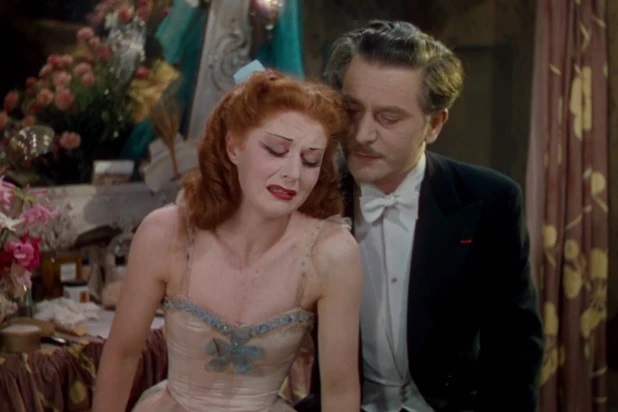
He doesn’t care for conflict. In fact, any disagreement is met with summary dismissal. It doesn’t matter how much he’s invested in you. As Julian Craster discovers to his cost. Goring does fine work as the enthusiastic young composer (even if he is clearly a little old for the role) who we are introduced to excitedly watching his professor’s new composition for Lermontov only to discover all the melodies are his. While Lermontov is reluctant to do anything to ensure Craster gains the credit for his work (a sign of his own need to control all patronage and praise) he takes Craster on, who proves himself no flash in the plan. But no amount of time invested in Craster matters when the young composer dares to fall in love with Vicky. And even worse, she dares to love him back.

Because love and a life outside of the dance isn’t part of the plan. These ideas are all captured in The Ballet of the Red Shoes, the piece Craster composes for Vicky (the preparation for which is the catalyst for their burgeoning love affair). Based on the Hans Christian Anderson tale of the dancing shoes that had a life of their own, it neatly encapsulates Vicky’s problem. As Lermontov says summing up the story, it’s the tale of shoes that at first delight a young woman and then literally dance her to death. The entire ballet, like the film, is a grim reminder of the horrific price all-sacrificing excellence in the arts can lead to.

It’s fitting that this story is placed at the heart of such a hugely beautiful and fascinating film. Powell and Pressburger’s film are virtually a by-word for technicolour beauty. Jack Cardiff excels himself here as a photographer (only a reluctance to give this Brit outsider an Oscar two years running surely prevented even his nomination). The Red Shoes is crammed with exquisite imagery, gorgeous photography and striking, unforgettable colours. Hein Heckroth’s sets are magisterial (and Oscar winning), not least in the staging of the ballot that dominates the centre of the film.

The ballet is filmed quite unlike any other dance sequences in films. Powell in many ways breaks the cardinal rules of shooting dances. The ballet is a combination of quick edits and intricate camera moves. It is defiantly non-realistic: despite the setting, it is clearly (with its use of slow motion, super-imposed images and effects like the red shoes lacing themselves onto Vicky’s feet) not a faithful theatrical staging but highly cinematic. It beautifully, subtly suggests that we are at a tipping point between reality and imagination, that Vicky’s identification with the lead role has partially shifted her perception of the whole piece into a fairy tale turned real.

Is that partly why the whole film feels like we are walking in her own personal Hans Christian Anderson story? With Julian as the romantic prince, the theatre as a mix of enchanted forest and mysterious castle – and Lermontov as the beast who may be a prince in disguise or the wolf dressed as granny. It leads into the finales tragic ending, which blurs the line between reality, imagination and trauma into an undefinable mass. Do those red shoes exert a terrible, profound power of Vicky she hardly understands? Or are they just physical representations of her own ability to choose between the demands placed on her?

The Red Shoes is in some ways a traditional melodrama, not to mention another fable of a woman being unable to have both career and family (in the way, of course, that a man can). It is also a slim story, and the ballet – impressive as it is – depends on your relationship to that artform to work or not (I confess I find it drags slightly). But it’s also full of delightful behind the scenes sequences, from rehearsals to design meetings with Albert Bassermann’s Germanic designer to Craster’s coaching of the orchestra.

Visually rapturous, its directed with a great deal of flair and sympathy from Powell who draws some superb performances from his cast of mostly professional dancers. Although Shearer has no real chemistry with Goring, her performance as Vicky is beautifully observed and highly sympathetic and The Red Shoes is blessed with a definitive performance from Walbrook who is powerfully, imposingly domineering as Lermontov. The Red Shoes may at time dress its melodramatic heart in a little too much on-the-nose artiness, but it is also a sensational, ravishing film that lingers as long in the memories as Vicky’s prodigious dance steps.

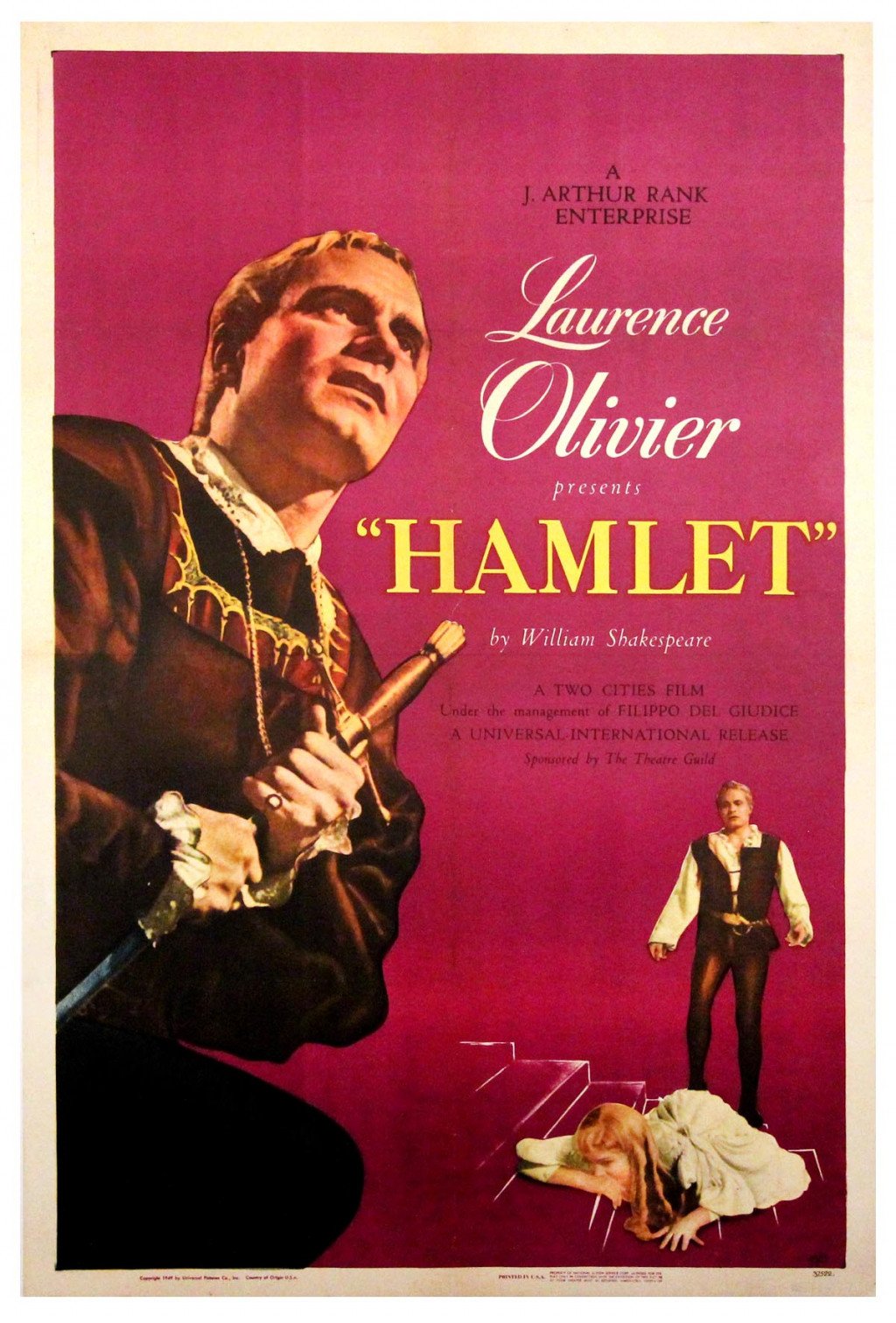
Hamlet (1948)

Laurence Olivier makes Shakespearean cinematic history in Hamlet

Director: Laurence Olivier

Cast: Laurence Olivier (Hamlet), Basil Sydney (Claudius), Eileen Herlie (Gertrude), Jean Simmons (Ophelia), Felix Aylmer (Polonius), Noman Wooland (Horatio), Terence Morgan (Laertes), Peter Cushing (Osric), Stanley Holloway (Gravedigger), Anthony Quayle (Marcellus), Esmond Knight (Bernardo), Russell Thorndike (Priest), Harcourt Williams (Player)

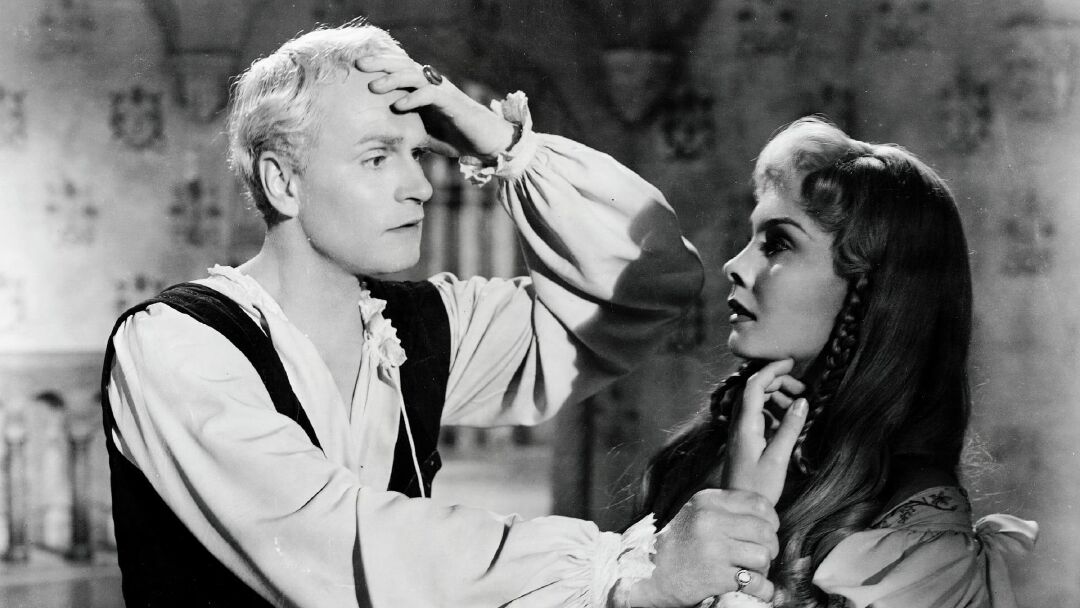
Close your eyes and picture Hamlet – chances are you will see an image inspired by Olivier. Olivier’s second Shakespearean directing outing coated him in plaudits. He became the only actor to win an Oscar for Shakespeare (and, until Roberto Benigni, the only actor to direct himself to an Oscar) and the film itself became the first non-American film to win Best Picture. Hamlet will live forever, a corner-stone production of the play and a part of Shakespearean and cinematic history. It skilfully weaves together theatre and cinema and still works as a cracking production of the play.

To bring it to the screen, Olivier made some big calls. Smaller parts were cut to ribbons (particularly the Player King) or in many cases (I’m looking at you Rosencrantz and Guildenstern) excised all together. Over half the dialogue cut, with the focus being bought onto domestic tragedy (the politics of Fortinbras is never mentioned). This is a family tragedy, and a Hamlet-centric production, where Claudius is a jovial villain and Gertrude a mother with confused feelings for her son.

Oliver set this in a sprawling medieval castle using the best elements of theatre and cinema. The sets are beautifully constructed: winding corridors, towering halls and imperious battlements provide the sort of realist set Olivier could only dream of in the theatre. But Olivier (and photographer Desmond Dickinson), lights this with the moody intensity of film noir. Shadows dominate the castle and the frame, frequently provide hiding places. Olivier’s debt to Wyler (and Welles) can be seen in his pictorial framing and use of deep focus, while domestic tragedy in a grand house has more than a few calls backs to Hitchcock’s Rebecca. Frequently shots show an actor in the foreground, being observed in long shot by a second actor in perfect focus.

It also takes inspiration from expressionist cinema, especially in its mist-laden battlements, with some neatly surreal touches. The Ghost (whose voice, heavily distorted, is also Olivier’s) is a shadowy demonic figure, emerging shrouded in mist. A wonderful series of shots sees the camera seem to soar away from the throne room steps where Ophelia weeps, through the castle towers, into the sky and then down towards Hamlet staring at the waves at the foot of the cliff, passing through his skull where the image of the crashing waves is overlaid across the interior of Hamlet’s skull. It’s a more effective use of visuals than the film gets credit for.

For all its traditional trimmings – cod-pieces and men-in-tights abound – it’s easy to forget how influential this was. It cemented for years a view of Hamlet as a man wracked by indecision and made it standard to see Gertrude and Hamlet locked in Freudian-inspired Oedipal lust. The first idea came from the opening narration’s reductive phrase “This is a tragedy of a man who could not make up his mind”. It’s an odd statement to make – especially as Olivier’s Hamlet hardly seems wracked by indecision – but it matched a perception of the play so, true or not, it stuck.

That relationship between Hamlet and Gertrude adds a perverted romantic twist to the bedroom scene between the two (you can sense the inspiration of Wyler’s Wuthering Heights), with the film frequently framing the encounter with romantic angles. Eileen Herlie, for all the unflattering make-up and filming, looks all too much like Hamlet’s contemporary rather than mother (Herlie was in fact nearly 12 years younger than Olivier). While the scene does have a little too much heavy-breathing – and Olivier overplays the heart-beat soundtrack as white noise – it’s an effectively unsettling balance of intimacy and incest. It also runs through the production – from Gertrude kissing Hamlet on the lips, to her conscious decision to drink the poison and protect Hamlet.

The production – partly driven by cuts – is fiercely Hamlet-centric. Olivier speaks most of the dialogue (all of Olivier’s films revolve around massive star-roles for himself, fitting his competitive dominance). His Hamlet is beautifully thoughtful, but also dynamic and energetic (not much doubt there). Olivier perfectly captures the intellectual, as well as the humanity, grace and charm. Some of the nuance of the soliloquies is lost by Olivier’s decision to deliver them in voice-over (although Olivier does a good job reacting along to the narration) – but fortunately “To Be or Not To Be” and his speech on Yorick’s skull remain delivered ‘live’, and coated in emotional honesty.

The rest of the cast are relegated. Sydney’s Claudius is little more than a scowling villain, Herlie has little presence. Norman Wooland makes a great deal of the loyal Horatio (a famously dull role), while Peter Cushing adds some comic energy as a foppish Osric. The best non-Hamlet moments go to Polonius and his children: Aylmer is the portrait of a doddering interferer nowhere near as smart as he thinks he is, while Morgan has a matinee idol energy as Laertes. Best of all is Jean Simmons, wonderfully heart-felt and fragile as Ophelia, whose gentleness dooms her.

Olivier might give himself most the best moments, but he allows plenty of directorial flourish elsewhere. There is a wonderful shot at Yorick’s tomb, where Hamlet’s shadow is cast over the skull, the skull seeming to become the shadow’s head. While a crane shot during Claudius-Laertes scheming is unwisely used twice in quick succession (more likely to raise chuckles), there is an impressive amount of camera movement and tracking shots. The production ends with a knock-out sword fight – and of course only Olivier would cap that with a life-and-limb risking dive from a platform. Olivier’s charisma is used brilliantly in these scenes, and while it’s not always quite clear emotionally what Hamlet is considering in these moments, his forceful presence drives the action and adds great weight to his final speech.

Because, this isn’t a film about a man not making up his mind. Sure, he’s a thinker – and one of the final shots brings us back to Hamlet’s chair, now empty – but when action is needed, this Hamlet grabs it. Just as Olivier grabbed the tools of cinema to create a production of the play that feels like a film. Some critics at the time were horrified that Hamlet should even be in the crude medium of film (Olivier took to calling it an “essay” on Hamlet) but today it stands quite rightly as both a great film and a key example of how to bring Shakespeare to the screen.

Henry V (1944)

Once more unto the breach with Laurence Olivier as Henry V

Director: Laurence Olivier

Cast: Laurence Olivier (Henry V), Renée Asherson (Princess Katherine), Robert Newton (Pistol), Leslie Banks (Chorus), Felix Aylmer (Archbishop of Canterbury), Robert Helpmann (Bishop of Ely), Nicholas Hannen (Exeter), Ernest Thesiger (Duke of Berri), Frederick Cooper (Nym), Roy Emerton (Bardolph), Freda Jackson (Mistress Quickly), George Cole (Boy), Harcourt Williams (King Charles VI), Russell Thorndike (Duke of Bourbon), Leo Genn (Constable of France), Francis Lister (Orleans), Max Adrian (The Dauphin), Esmond Knight (Fluellen), Michael Shepley (Gower), John Laurie (Jamy), Niall McGinnis (MacMorris), Valentine Dyall (Burgandy)

Olivier’s pre-eminence as the leader of the acting profession in Britain for a large chunk of the last century probably found its roots in his imperiously sublime production of Henry V, the first time he directed a film, but also the point where it seemed that Olivier and the country of Britain seemed to be almost one and the same. Filmed as a propaganda piece, heralding the indomitable spirit of the British in the face of foreign wars, Olivier’s film is a triumph that also set the tone for what the public expected from Shakespeare films for decades to come. 

Originally Oliver balked at the idea of directing the film, approaching William Wyler to take the job on. But Wyler, rightly, knew he could never bring the Shakespearean understanding to it that Olivier could, so the soon-to-be Sir Laurence took the job on himself – meaning he directed, co-produced, co-adapted and starred in the film. I’m not sure anyone else could have done it – or invested the entire project with such certainty, such confidence, such power of personality that the entire project flies together into a sweeping, brightly technicolour treat of pageantry and theatre.

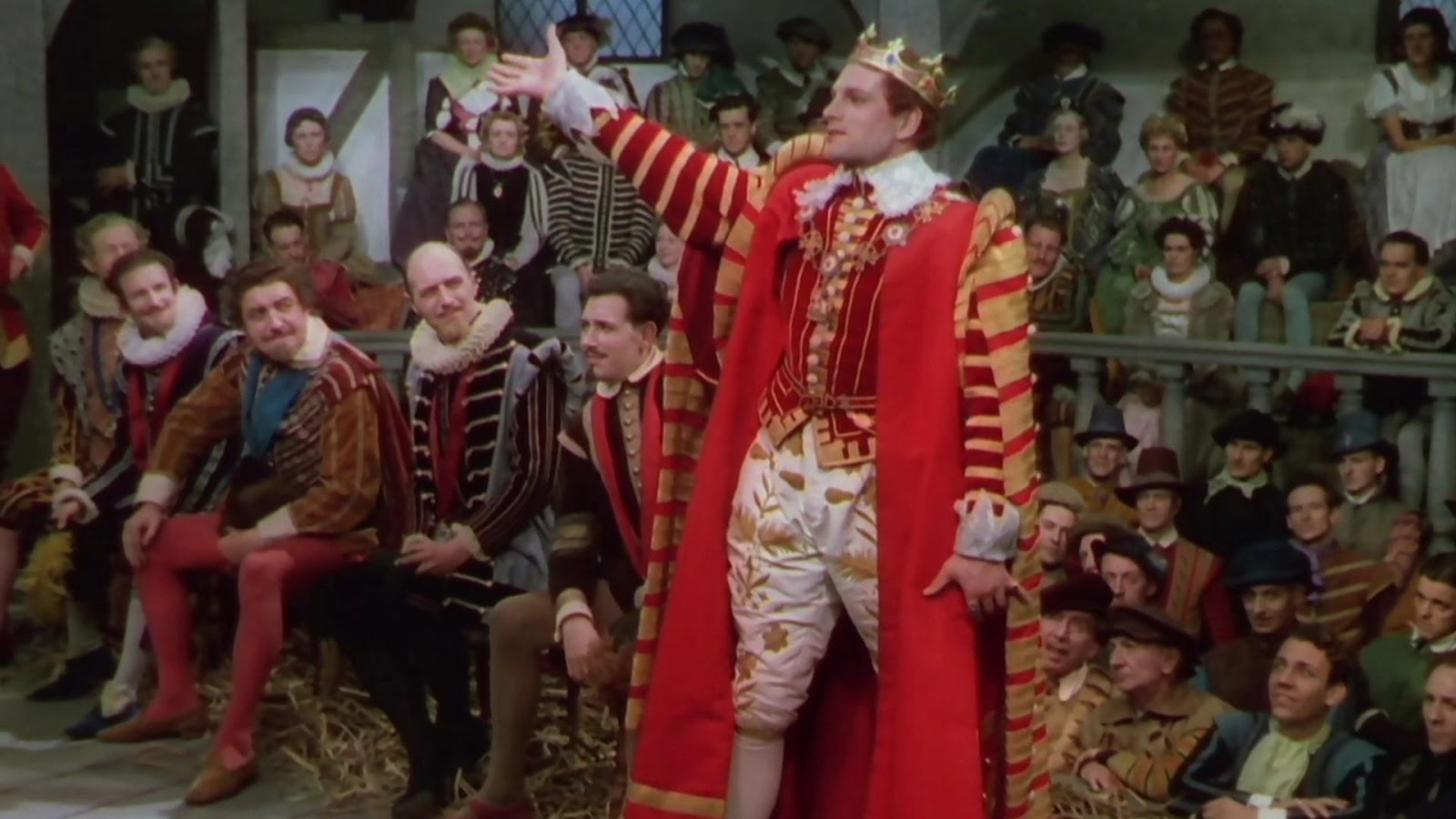
Olivier’s concept for the film is ingenious – and influential. Taking as its cue the words of the chorus (delivered with a archly bombastic confidence by Leslie Banks), the call to “let your imaginary forces work”, the film is set initially in a genuine Elizabethan era staging of Henry V (including unfortunate rain downpour after the first scene).Slowly, it develops over the course of the film from set to cinematic sound stage (still designed with influence from medieval illustrations) and finally into a realistic location setting for the Battle of Agincourt, before turning heel and repeating the journey back until the film ends again in the Globe theatre, with the actors taking their bow (and the female characters now played by fresh-faced boys). It’s marvellously done, and a neat play on the limitations of both film and theatre, and a testament to the powers that imagination can have to expand the world of what we are presented with.

The style of the play develops as we watch it, becoming more natural and restrained as we get closer to Agincourt, then progressing gently back the other way. The opening scenes play Canterbury and Ely’s long-winded legal argument in favour of war for laughs (with neat comic timing by Felix Aylmer and Robert Helpmann), with an avalanche of papers across the stage, Canterbury frequently lost in his exposition and Ely (and even Henry) having to prompt him with precise points. This is a nice set-up for the comic characters of the play, Falstaff’s old retainers here are the very picture of high-spirited, rowdy common folk (though I must say Robert Newton’s high-energy, gurning Pistol is a bit of a trial, even if it perfectly captures the playing-to-the-cheap-seats mania the role seems to require). 

This comic exuberance (and the stuff with Canterbury is genuinely quite funny) gives a perfect counterpoint for Laurence Olivier to perform Henry at his imperious best. Olivier was an actor who invested his Shakespearean delivery with far more naturalism than he is often given credit for, and his Henry here has more than enough true feeling, emotion, determination, courage, bravery and nobility behind his almost sanctified greatness. And of course you get Olivier’s outstanding delivery, that wonderfully rich voice with just a hint of sharpness, delivering the lines not as just poetry, but as true moments of invention. Olivier also has the mastery of the small moments – and Henry doesn’t get much of those – with two particular favourites being the small cough in the wings to clear his throat before entering for his first scene, and that satisfied, exuberant smile at the curtain call at the play’s end. His Henry – the true warrior king of virtue – cemented perception of the character for decades to come.

True, Olivier never touches on Henry’s darker side. Olivier neatly cut anything that could introduce any shades of grey into the character: gone is the summary execution of the traitors at Southampton, cut are the references to naked newborn babes being spitted on pikes before Harfleur, nowhere do you hear the order to execute all prisoners at Agincourt. This is film-making with a purpose, to pushing the message of England, for good, against all. 

As a director, Olivier revelled in the possibilities of cinema, marrying it to theatre. For the large speeches, Olivier invariably starts small and close, and then pans sharply and widely out to turn the cinema into a theatre – also allowing the actors (often to be fair, himself) to not feel restrained by the intimacy of the camera, but to deliver the speeches as intended, larger than life and bursting with impact. Olivier’s confidence with the camera is striking, his film a celebration of sweeping shots, of carefully placed tracking shots, of well-delivered acting. The camera work in the Globe is beautifully done, a series of carefully selected angles and shots. The long panning shot over a model of London leading to the Globe that book-ends the film is beautifully done, and the confidence with which Olivier slowly transitions from artifice to reality is superbly well done.

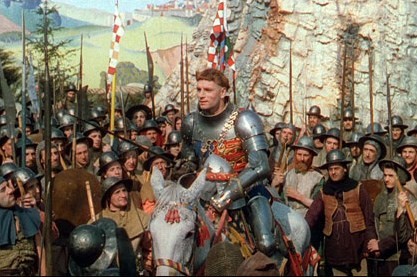
The style of the piece is extraordinary, with its primary colours like a medieval book brought to life. There is some pleasing comic mileage from the French court, reduced almost to a man to being a bunch of camp moral weaklings. The courting of Princess Katherine (Renée Asherson, in a role intended for Vivien Leigh) has a playful charm to it (even if, as in the play, it’s probably a scene too far after the highpoint of Agincourt). But the heart of it is that long build to the campaign, for Agincourt to be brought to life (at huge expense at the time), a beautiful rendering and explosion of reality after the careful artificiality of the rest of the film, as if we really have got our imaginations working and brought it to life before us as the Chorus instructed.

The film established a regular Olivier company that would work with him on films to come. William Walton’s score seems to capture that mood of England at war and believing it was in the right. The cast – plucked from English theatre by Olivier – give striking performances, from Leo Genn’s stern Constable to Max Adrian’s bitter Dauphin, with Esmond Knight’s pernickety Fluellen leading the way for the English. Olivier is of course at the centre as the master conductor, a man who fitted so naturally into the role of leader that he basically seemed ready to take it on for the whole country, never mind just the film. Is there an actor around who was more suited and natural in positions of authority than Olivier? Who was so easily able to inspire and dalliance with genius? 

Turning Henry Vinto a patriotic celebration of England was what was needed, but turning Shakespeare into something that worked on film, that married the theatrical qualities with the cinematic sweep of the camera was exactly what the Bard needed to find a life on screen. Olivier’s daring was to strip down the play and work out what would work on screen and how to make that come to life. Doing so, he defined Shakespeare films for a generation.

Black Narcissus (1947)

Deborah Kerr leads a community of nuns struggling with temptations in the classic Black Narcissus

Director: Michael Powell, Emeric Pressburger

Cast: Deborah Kerr (Sister Clodagh), Sabu (Young General), David Farrar (Mr Dean), Kathleen Byron (Sister Ruth), Flora Robson (Sister Philippa), Jenny Laird (Sister Honey), Judith Furse (Sister Briony), Esmond Knight (Old General), Jean Simmons (Kanchi), May Hallatt (Angu Ayah)

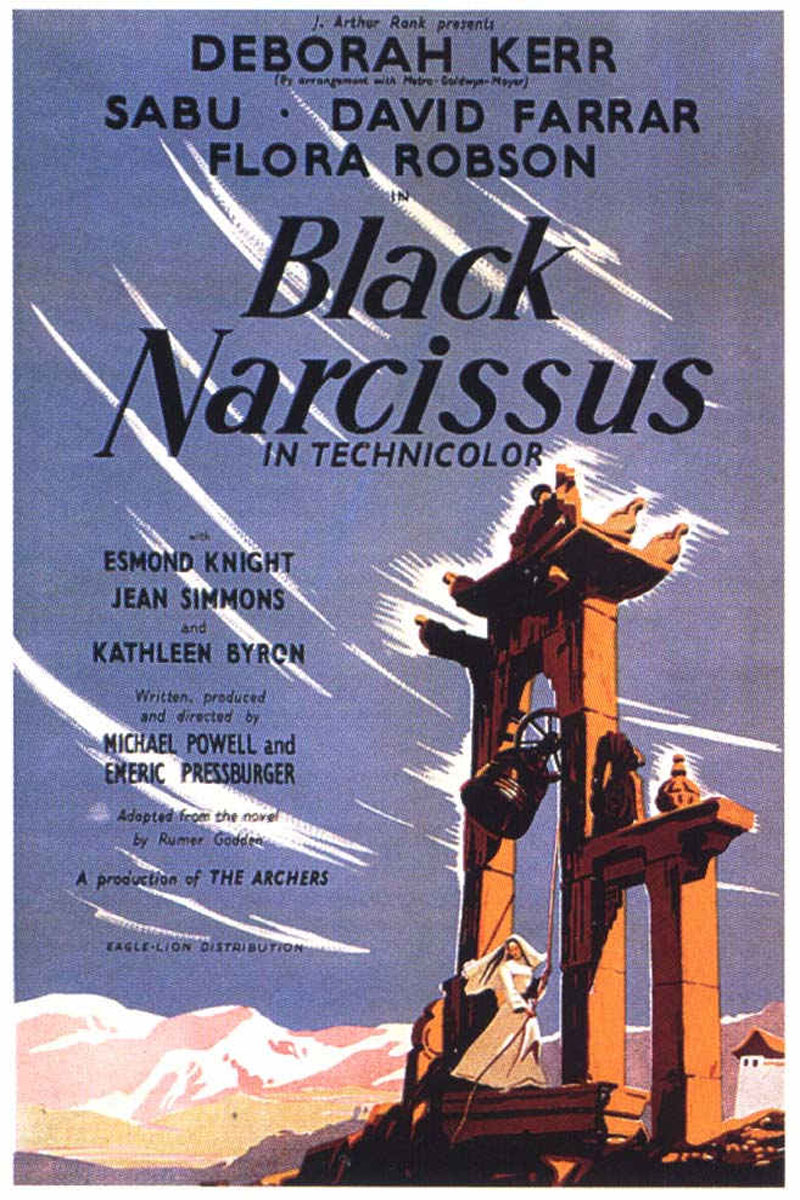
In 1947, people hadn’t seen anything like Black Narcissus. Its triumphant technicolour was like nothing that had been made before – and watching it now on a brand new, shiny restoration, it’s still overwhelmingly impressive. Alongside this beautifully shot action, we have a storyline surprisingly modern in its acute psychology and questioning of the strengths and weaknesses of human nature.

Sister Clodagh (Deborah Kerr) is given leadership of a group of nuns in a remote Himalayan harem building converted into a nunnery. But the isolation of the mountains and the strange atmosphere of the harem bring out weaknesses in the characters of the nuns, leading to profound challenges to their spiritual and mental well-being – not least Sister Ruth (Kathleen Byron), who becomes increasingly pre-occupied with local land captain Mr Dean (David Farrar).

Powell and Pressburger’s film is a brilliant, slightly hard to interpret, psychological gothic drama, a du Maurier-style sexually charged drama set in an exotic Indian location which the nuns struggle to understand. It’s a curious melange of scenes, often moving swiftly, sometimes only with narrow bridge scenes, meaning you soon get as lost in how much time has passed as the nuns themselves. Several key events take place off screen, and the native Indians are curious, unknowable and strangely intimidating in their distance and coolness.

All this is to help build the audience into feeling as unsettled as the characters themselves. It’s a film about the struggles between expression and repression. The two principal nuns – Sisters Clodagh and Ruth – both show elements of this. Both are drawn towards the earthy, manly but still patrician Dean, but both handle these emotions in very different ways – one by denying those feelings, another by trying to embrace them. All of this takes place in a distancing and intoxicating environment, where the convention rules of life seem suspended.

For Sister Clodagh, Dean serves as a bridge back to her own frustrated romantic feelings for an old flame – whose failure to propose guided her towards taking the veil – and elements of her warmer persona (witnessed by us in flashback). But Clodagh resolves never to make herself a slave to these feelings, and these moments of remembrance seem to make her cling all the more to her order – even while the film suggests that it is a strange mixture of pride, insecurity and fear as well as faith that motivates her.

By contrast, Sister Ruth – already acknowledged by the Mother Superior as not an obvious choice for the sisterhood – increasingly loses her grip first on her faith, then sanity, as she struggles with the feelings she clearly has for Dean. This quiet obsession has built up in her mind into representing all the desires for freedom and independence she feels while in the order. Where Clodagh resolves to cling closer to the repression of her feelings, Ruth rejects this very idea and determines to express herself – even as it costs her everything. 

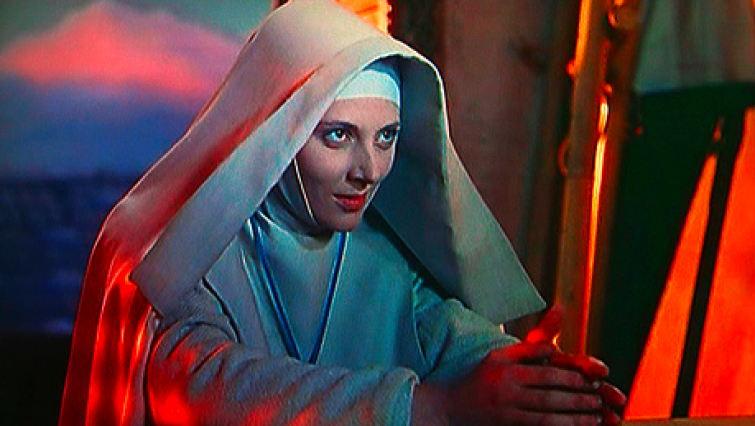
This heated growing madness is powers the film – and Kathleen Byron provides most of the drama with a stunningly unhinged performance, which builds so quietly (almost in the background of the film) that it never becomes wearing and also surprises with the extent of her unhinged delusion. One particular night-time encounter with Clodagh sizzles with rival agendas – one woman using a lipstick, the other using a Bible. 

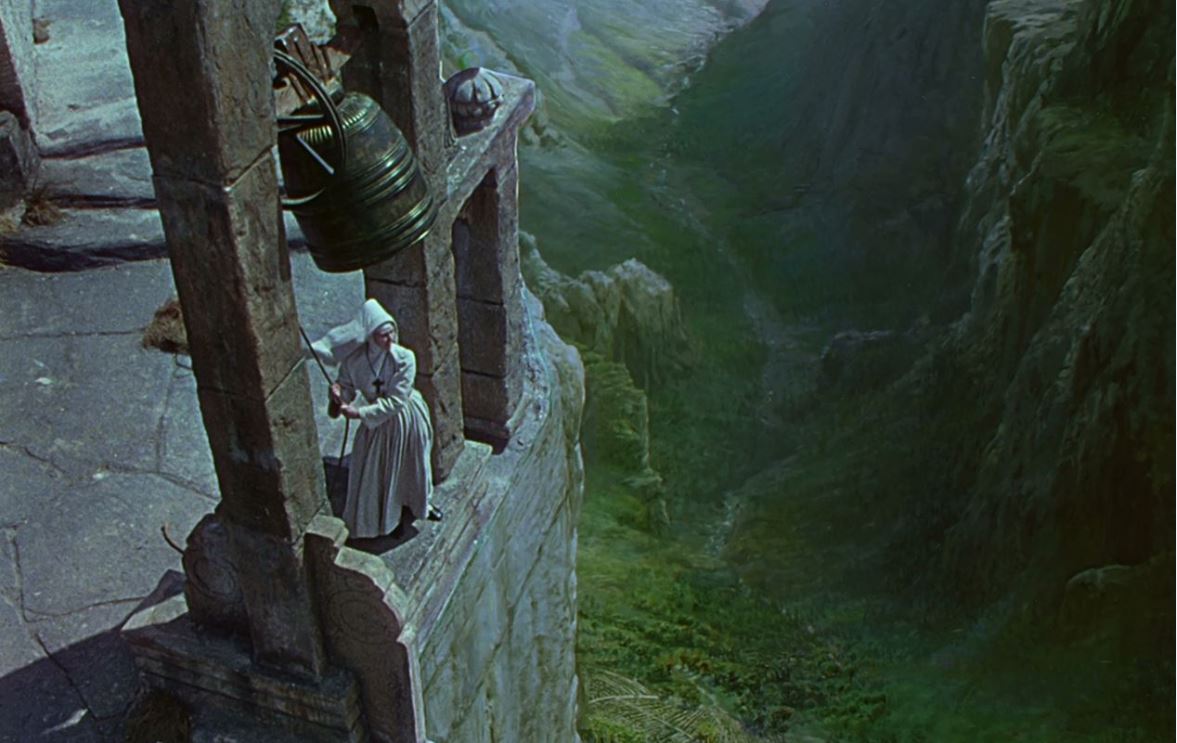
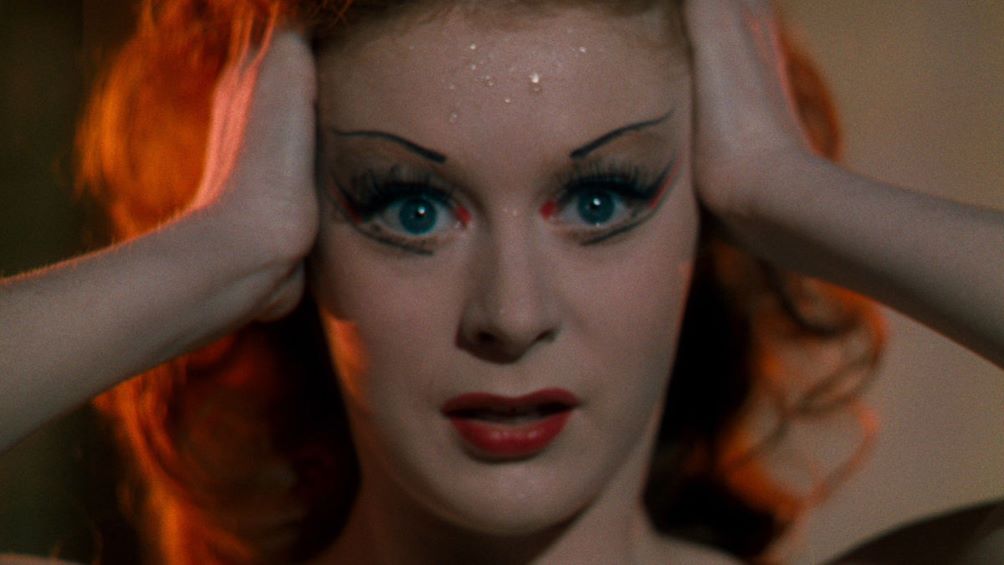
Powell (and it was Powell who largely directed these Archers pictures) uses a variety of techniques to develop this unease. Several shots are direct POV shots, with the audience becoming one of the characters, giving us the slightly unsettling feeling of being addressed by the actors. Quick tableaux editing gives us economic storytelling and a sense of events building swiftly towards a head (several sequences use a series of quick cuts of characters reacting to events). The camera uses a series of close-ups of sweaty foreheads or dizzying, vertigo inducing shots of the Himalayas to increase the unease. A later shot shows Sister Ruth moving through a shimmeringly filmed jungle, bringing a sense of confused eroticism to the picture.

Sexuality is a major theme of the film – and the characters have a series of acknowledged or unacknowledged sexual interests in each other. The music and camera work develop a sense of heated intensity on the mountain that suggests a simmering heat that unnerves the mind and throws open the temptations of physicality. Old wall paintings from the harem of bare-breasted women seem to be a constant presence – no wonder feelings are running high.

Jack Cardiff’s photography is simply extraordinary – it’s hard to believe none of this was filmed on location and most of it was shot in a studio – and this is still a film today that is hugely beautiful. The production by Alfred Junge is hugely impressive, with the nunnery a triumph of mismatched themes.

It’s not perfect. It’s a bit awkward to see actors blacking up. Some of the acting is quite OTT or stagy – in particular May Hallatt at points – and the film’s occasional delight in its visual appeal means its themes don’t always get the exploration that they deserve. One of the disadvantages of its deliberately vague timeline is that sometimes events happen too soon – or we don’t get enough sense of why they are happening. But these are blemishes.

This is a masterfully made picture, still beautiful to look at with impressive performances from Kerr, Byron, Farrar and many of the rest of the cast. It’s a surprisingly gothic melodrama by the end, with reds splashed across the screen with an imposing sense of threat. Still one that needs to be seen: and the end is so melodramatically gothic considering where the film started that the fact it doesn’t seem hugely jarring is an enormous tribute to the talents of those involved.