
Tag: Eva Green

Kingdom of Heaven (2005)

Kingdom of Heaven (2005)

Scott’s crusader epic is a much better, more thoughtful film than you’ve been led to believe

Director: Ridley Scott

Cast: Orlando Bloom (Balian of Ibelin), Eva Green (Sibylla of Jerusalem), Jeremy Irons (Lord Tiberias), David Thewlis (Hospitaller), Liam Neeson (Godfrey of Ibelin), Brendan Gleeson (Raynald of Chatillon), Marton Csokas (Guy de Lusignan), Edward Norton (King Baldwin IV), Ghassan Massoud (Saladin), Michael Sheen (Priest), Velibor Topić (Almaric), Alexander Siddig (Imad ad-Din al-Isfahani), Kevin McKidd (Sergeant), Jon Finch (Patriarch Heraclius), Ulrich Thomsen (Gerard de Ridefort), Nikolaj Coster-Waldau (Godfrey’s nephew), Iain Glen (Richard I)

Version control: This review cover the Director’s cut of Kingdom of Heaven, a three-hour film that is much better than the original theatrical version.

For hundreds of years the Middle East has been the site of wars over land and religion: the more things change, the more they stay the same. Ridley Scott’s Kingdom of Heaven is a grand, melancholic epic about the crusades, a period of history that seems to become even more divisive and controversial if every passing year. During the First Crusade (1096-99), a European Christian army had bloodily seized control of Jerusalem (massacring its Muslim population). The Crusaders built a state that lived through fragile truces, in a constant state of cold war with the Muslim states that opposed their conquest. Scott’s film picks up the final years of that ‘kingdom of Heaven’.

He does so through fictionalised version of the events. Balian (Orlando Bloom), a former military engineer, is now a widowed blacksmith in Northern France – until Godfrey of Ibelin (Liam Neeson), a crusader lord, returns to claim him as his illegitimate son. Fleeing his home after murdering his bullying priest brother (Michael Sheen), Balian arrives in the Holy Land as the new Lord of Ibelin. But he not a paradise, but a kingdom full of ambitious lords and zealots, surrounded by the armies of Saladin (Ghassan Massoud) with the whole thing only just held together by the wise leper king Baldwin IV (Edward Norton). There is already a power struggle for who will control Baldwin’s heir, the child of his sister Sibylla (Eva Green). Will it be the moderates led by Tiberias (Jeremy Irons) or the zealot Templars led by Sibylla’s husband Guy de Lusignan (Marton Csorkas)?

I’ve always been interested in this period of history, and I’m a sucker for a grand historical epics. So I’m pretty much the target for this ambitious, luscious, flawed but engaging film. It helps when it’s assembled by a director as full of visual flair as Ridley Scott. Kingdom of Heaven is an extraordinarily beautiful film – one of those where you really could snip out every frame and hang it up on your wall. Gorgeously lensed by John Mathieson, it moves from a chilly, blue-filtered North France (a land of artistic snow fall and permafreeze) to a David Leanesque desert land, of rolling sand dunes and skies tinged with deepest blue. It’s a film of breathtaking scale, as medieval armies converge, legions of siege weapons roll up to never-ending city walls and the desert stretches as far as the eye can see.

It makes a fantastic backdrop for a film that’s tries really, really hard to take a measured, reasonable view on human nature and religion. It’s fair to say that this makes Kingdom of Heaven a very serious film (there is barely a few minutes of humour in its entire three hour runtime – a joke about Neeson once fighting three days with an arrow in his testicle is about all you’re gonna get), but it’s also nice to have a film celebrating compromise and moderation. Really, Kingdom of Heaven isn’t a true representation of the Crusader period at all – the real Balian and Baldwin would scarcely recognise the humanist liberals they become here – but as a sort of fantasia on balancing conflicting demands in a place that seems to make men mad, it’s hard not to be respect that it’s trying as hard as it is.

To achieve it’s aims, Kingdom of Heaven divides both sides of the argument into goodies and baddies. For the goodies, Baldwin and Saladin are reasonable, just men willing to strive for a world where all can worship freely. Edward Norton – unbilled under a silver mask and English accent – brings a great deal of strength and wisdom to Baldwin, matched by Ghassan Massoud’s superbly patient Saladin. On the other side, we have the “God wills it!” brigade. Admittedly on the Muslim side, they are embodied by one of Saladin’s advisors, whereas the crusaders are awash in angry, Holy War bloodlust types who believe any killing is justified if it’s in God’s name.

Kingdom of Heaven has a respect for faith, particularly when filtered through the words of characters who don’t believe painting a cross on their chest allows them to kill anyone who disagrees with them. Several times, Balian argues doing sensible, reasonable things technically against the word of the Biblewill be understood by God (if he’s worthy of the name). It playfully suggests David Thewlis’ (in an excellent performance) reasonable Hospitaler might actually be an angel, with his power to appear undetected and prodding of Balian towards doing the right thing (Thewlis even disappears into a burning bush at one point).

But, if I’m honest, much of the rest makes its points rather forcefully, showing a world where fine words are corrupted by ambition and anger. Many of those preaching faith are really motivated by a constant hunger for more –power, land, you name it. The closer a character is to the Church, the more likely they are to be either a pantomime, mustachio-twirling villain (like Marton Csorkas imperious Guy or Brendan Gleeson’s playfully-psychotic Raynald) or snivelling hypocrites like Jon Finch’s Patriach (who counsels converting to Islam and repenting later when the shit hits the fan).

Kingdom of Heaven lays out this earnest, well-meaning political viewpoint of how moderation should trump fanaticism, while filling its wonderful visuals with gorgeous costumes, stupendous sets, a brilliant score and some stunning battle sequences. But there is always a fascinating lack of hope in Kingdom of Heaven. When Balian troops up Gethsemane on his arrival in Jerusalem, he only hears the wind not the word of God. When offered the chance to save the kingdom from itself, it comes with such a morally compromised price-tag a straight-shooter like Balian is always going to say no. While his father (one of Neeson’s patented performances of weary, maverick nobility) clings to ideals, the film is perhaps best summed up by Jeremy Irons’ wonderfully world-weary performance as the cynical Tiberias: mournful, depressed and wondering what the hell it’s all been for.

It’s no wonder it’s such a savage world. Kingdom of Heaven doesn’t shirk on the medieval violence. Bodies are hacked to pieces with fountains of blood. It opens by introducing us to a regular Dirty Dozen of toughened Crusader veterans – only to slaughter nearly all of them in the first act. Death is only seconds away in this dangerous world: even sailing to the Holy Land is to risk near certain shipwreck. It’s fascinating that the film’s amazing reconstruction of the Siege of Jerusalem sees Balian fighting to make the siege so difficult that Saladin will be forced to offer terms rather than slaughter the city’s population as the First Crusaders did hundreds of years ago.

Sadly, the film’s main weakness is Orlando Bloom. Surfing the peak of his post LOTR popularity, Bloom’s limitations are ruthlessly exposed by carrying this historical epic. His delivery lacks shade and depth, he doesn’t have the charisma for the big speeches and he never convinces as either a man consumed with grief or a battle-hardened veteran (he doesn’t even remotely look like Michael Sheen’s older brother). It’s a part that needs a role of commanding presence, but Bloom doesn’t have it. It’s unlucky he also has to play off Eva Green giving a complex, well-judged performance as a Queen who learns humility the hard way (the director’s cut restores an entire plot-line for her, which adds hugely to the film’s quiet air of inevitable tragedy).

Kingdom of Heaven has a lot going for it: it looks amazing, it’s crammed with stunning scenes on a truly epic scale and gives excellent opportunities to a host of great actors. It’s an interesting, surprisingly glum exploration of the struggle to find peace. Sure, it’s view of the Crusades has very little link to do with the actual crusades and it’s a little one-sided in its views. But it’s also a thoughtful film that’s really trying to say something that’s worth hearing about moderation, all with some truly breath-taking epic film-making. It’s not a lost masterpiece, but it’s a much more impressive film than its reputation suggests.
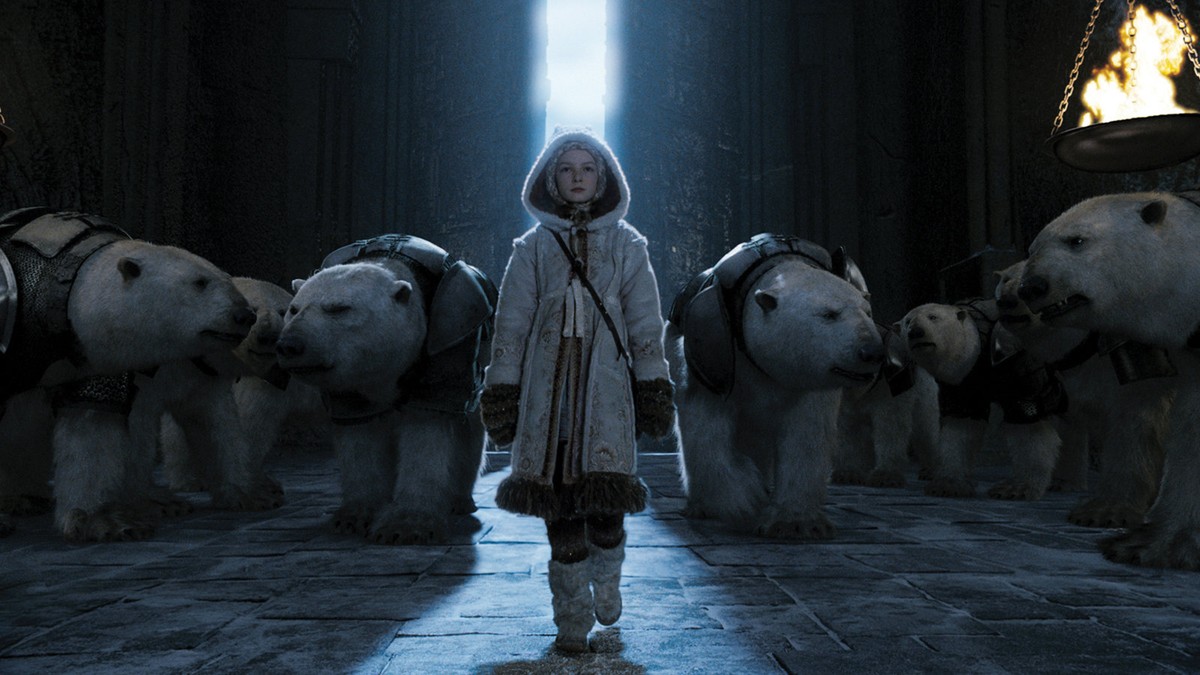
The Golden Compass (2007)


How did it all go wrong? The disastrous production of Philip Pullman’s The Golden Compass

Director: Chris Weitz

Cast: Dakota Blue Richards (Lyra Belacqua), Nicole Kidman (Mrs Coulter), Daniel Craig (Lord Asriel), Sam Elliott (Lee Scoresby), Eva Green (Serafina Pekkala), Jim Carter (John Faa), Clare Higgins (Ma Costa), Tom Courtenay (Farder Coram), Derek Jacobi (Magisterial Emissary), Simon McBurney (Fra Pavel), Jack Shepherd (Master of Jordan College), Ian McKellen (Iorek Byrnison), Freddie Highmore (Pantalaimon), Ian McShane (Ragnar Sturlusson), Kathy Bates (Hester), Kristin Scott Thomas (Stelmaria)

After the success of The Lord of the Rings, bookshops were stripped of all epic fantasy novels with a cross-generational appeal by film producers, their mouths watering at the prospect of having another billion-dollar licence to print money. Nearly all of these projects bombed, but I’m not sure any of them bombed harder than this, an attempt to kick-start a trilogy of films based on Philip Pullman’s both loved and controversial His Dark Materials books. What went so completely wrong?

Pullman’s trilogy is set in an alternative-Oxford, where people all have Dæmons, part of their soul that lives outside their body in animal form. It’s a world where the Magisterium, a powerful organisation, suppresses all free thought, in particular all investigation into the mysterious particle dust. Lyra Belacqua (Dakota Blue Richards) is an orphan raised in Jordan College, who saves the life of Lord Asriel (Daniel Craig), who is investigating Dust in the North. Leaving the college with the mysterious Mrs Coulter (Nicole Kidman), who may or may not be involved in a series of child kidnappings, she eventually finds herself drawn more and more into setting right the problems of her world.

The Golden Compass is a film that pleased no-one. Fans of the book generally hated it. The people who hated the books hated it. The people who hated what they had been told the book was about hated it. Why did the studio decide to make a film in the first place about a book series they seemed to know was controversial from the start? If they didn’t really want to embrace the themes of the books, why bother? Pullman’s books are partly adventure stories, partly intricate world building, partly spiritual discussions – and yes partly atheist tracts with a strong anti-Establishment-church bent (with a more general regard for genuine faith). To put it bluntly, that’s a lot of ideas to try and squeeze into a film – particularly a film well under two hours.

So The Golden Compass is a mess that feels like it’s been put together by committee. It’s been cut to within an inch of its life – scenes jump incredibly swiftly from event to event, often with the barest of clunky explanation voiceover (“We’re going to see Lord Faa, King of the Gyptians”) to tell you what’s going on. Pages and pages of dialogue and character seem to be lost. We are constantly told Lyra is “special” but never shown anything that supports or explains this. An Eva Green-voiced infodump opens the film: clearly the producers were thinking about Peter Jackson’s masterful opening to The Fellowship of the Ring, which skilfully introduces everything. This introduction though is about removing all the mystery and magic of the story as soon as possible by stating it bluntly up-front.

The biggest mess is of course the way the film avoids all reference to Pullman’s religious themes. No reference is made at all to the Magisterium being a church. No reference is made at all to religion or faith. Iorek is clearly being held in a Russian Orthodox painted church – but the building is referred to throughout as an “office”. Derek Jacobi plays one of the principal Cardinal antagonists of the third book – no reference is made to his office. The Magisterium is instead just a “shady organisation” – a controlling gestapo-type organisation, with black uniforms and creepy Albert Speer style buildings. The questions of Dust and original sin – so central to the motivations of the story – are completely unexplained, meaning the child kidnapping and sinister intercission the villains are carrying out makes no sense at all. How on earth they planned to continue not talking about religion in their planned third film is a complete mystery.

This rushing is the problem throughout the film. Stuff just happens really, really quickly for no real reason. Characters pop up to introduce themselves for later films, or to drop clunky exposition. Tom Courtenay explains what an aleitheometer is for us (the film constantly brings up this “Golden Compass” and its future-telling properties, without ever really making them feel important for anything that happens in the film). Eva Green flies in to say she’s a witch and how pleased she is to meet Lyra and promptly flies off. Daniel Craig name checks Dust, gets captured then disappears. Sam Elliott introduces his rabbit Dæmon and shoots a couple of things. None of this gets any chance to grow and develop – and you end up not caring about any of these characters. Nearly every plot event from the first book is kept in – but so rushed you don’t give a toss.

The structure of the film has also been changed from the book, and not for the better. The film (probably thinking about later films) increases the presence of the Magisterium throughout – but without really making their antagonist role clear. Lyra and Iorek’s defeat of Iorek’s usurper Ragnar is moved to before the final defeat of the Gobbler’s ice base – this doesn’t make a lot of sense. If Iorek now commands an army of bears, why doesn’t he bring them along for the final battle? Lyra instead wanders up to the base like an idiot, and the film extends the release of the children from the ice base into a big battle in order to give us a Lord of the Rings style finish. It doesn’t matter that nothing in the film feels like it’s building plotwise or dramatically towards this battle – it’s there you feel, because Lord of the Rings had battles and people loved that, so let’s get one in here. 

In fact the film builds towards nothing, because it has been cut so poorly, and is such a terrible compromised product, that everything the books are building towards has been removed from it. So the entire thing makes no bloody sense. The clash with the church and organised religion doesn’t work because all reference to faith has been cut. There are mutterings about a “war” coming, but no one says what it might be about. There is a loose crusade to save the kidnapped children – but we don’t understand either side of this. The cruelly ironic ending of the book, with Lord Asriel’s real plan revealed, is deleted altogether from the film – because the studio didn’t want a “downer” ending. As a result the film just suddenly ends (after a clunky “We’ll go home one day after this, and this, and this, and this, and this, and after we’ve solved all the problems of the world” speech).

Studio interference reeks off this whole film. It’s been cut to ribbons. Ian McKellen and Christopher Lee were parachuted into the cast in order to make the film feel more like Lord of the Rings. McKellen sounds completely wrong as a mighty armoured bear (original casting Nonso Anozie would have been perfect). Lee chips in a single line in what is painfully obviously an addition from re-shoots. Anything potentially different or interesting is cut out. In fact anything that was unique about Pullman’s original books is cut out: as much is done as possible to make Pullman’s story as identikit and standard as hundreds of other bland fantasy dramas. As if they hadn’t realised the book was potentially really controversial in the more traditional parts of the US market, it seems like the studio only really read the books once the film was shot, suddenly realised they had made a massive mistake, and tried to reduce the danger as much as possible by making the film as bland as they possible could.

Chris Weitz is completely unsuited for directing it – and he actually feels like a hostage the more you read about the film’s turbulent production – but it’s not all bad. Dakota Blue Richards is actually pretty good as Lyra – she’s got a certain magic charisma. The set design is pretty terrific – even if it is a lot more steampunk than I pictured the novel as being. The special effects are pretty goods – the Dæmons are well done, and the puff of gold Dust they turn into when someone dies is striking. Some of the adult casting is pretty good – Kidman is just about perfect, Craig is pretty good, Sam Elliott stands out as Lee Scoresby. There are some neat cameos as well – I would have liked to see Jacobi get to tackle the third book, Eva Green is wasted, Tom Courtenay is pretty good. It just all rushes by so quickly. You don’t get the chance to get to know anyone fully. If the book was a bit episodic, this takes that worst element of it and ramps it up to eleven.

The Golden Compass tanked. It tanked so hard, New Line Cinema didn’t really recover. All plans for future films were scrapped. However, it is important in another way. In presenting such a horrifically neutered, stripped-down version of the story, it persuaded a lot of people that books rich in world building and content like this needed much longer than a traditional film to be brought to life. It helped persuade George RR Martin that TV was the way to go when selling the rights for Game of Thrones. And His Dark Materials will now live again as a 10 part TV series in the near future. For all its many, many failures – we owe it something.