Tag: Flora Robson

Guns at Batasi (1964)

Guns at Batasi (1964)

An excellent lead performance powers a solid film that slightly pulls it’s punches

Director: John Guillermin

Cast: Richard Attenborough (RSM Lauderdale), Jack Hawkins (Colonel Deal), Flora Robson (Miss Barker-Wise MP), John Leyton (Private Wilkes), Mia Farrow (Karen Eriksson), Cecil Parker (Fletcher), Errol John (Lt Boniface), Graham Stark (Sgt ‘Dodger’ Brown), Earl Cameron (Captain Abraham), Percy Herbert (Colour Sgt Ben Parkin), David Lodge (Sgt ‘Muscles’ Dunn), John Meillon (Sgt ‘Aussie’ Drake), Bernard Horsfall (Sgt ‘Schoolie’ Prideaux)
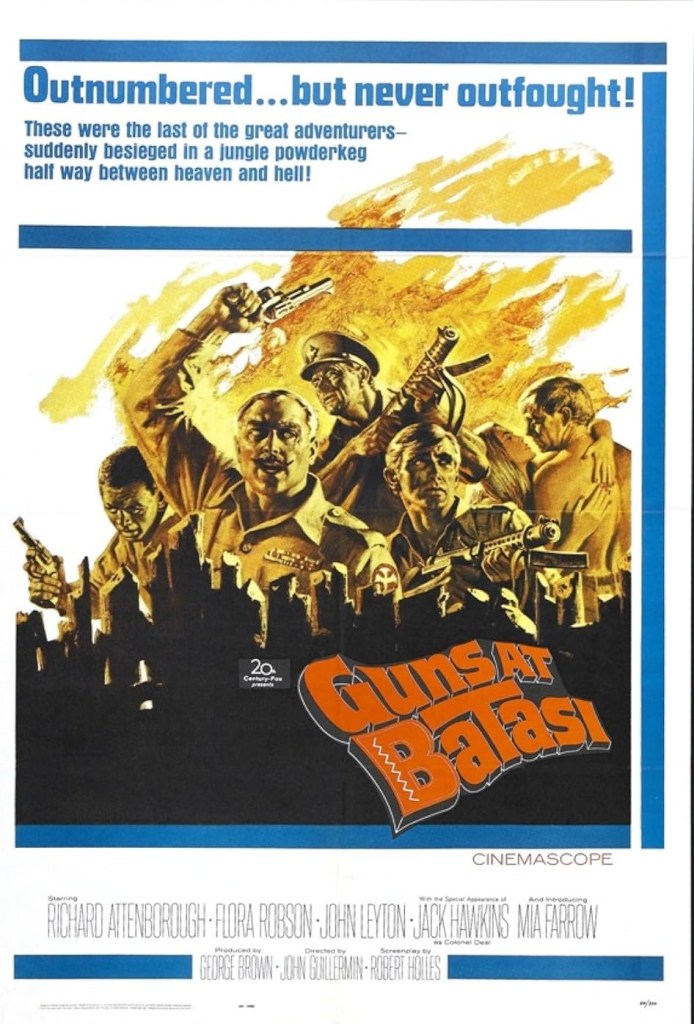
In the dying days of Empire, in an unnamed African nation, the British have agreed to a peaceful handover of power. Something that’s thrown out of kilter when an attempted coup takes place. That appals Regimental Sergeant Major Lauderdale (Richard Attenborough). His whole life has been keeping the peace in the colonies, making sure the mess is kept spick-and-span, drilling recruits, saluting portraits of the Queen and regretting he missed his chance to do his bit at Tobruk or El Alamein. A coup to him is nothing more than a mutiny, and harbouring the new overthrown government commander in the NCO’s mess from the troops looking to lynch him is both a matter of honour and (perhaps) a chance to fight his own little war preserving decency, honour and the British way.

Guns at Batasi is a fascinating slice of post-colonial film-making that succeeds as well as it does because it treats its lead character both as a sort of Blimpish moron and a tragic hangover whose Victorian principles are hideously out-of-step with the world around him. All of that is captured in Richard Attenborough’s rich, BAFTA winning, performance as he makes Lauderdale both faintly ridiculous (obsessed with neat collars, perfectly executed salutes and drill bullshit sitting) with an utter lack of interest in the world outside the parade ground and strangely likeable. He’s got a principled sense of right-and-wrong, a strangely affectionate regard for the soldiers he presses to the uttermost and an utter lack of cynicism or cruelty in his convictions.

It’s near career-best work by Attenborough, one well out of his wheel-house (at the time) of softly spoken eccentrics. In fact, he’s almost unrecognisable, transformed into a sort of walking bullet, rigid as his swagger stick and barking out his every utterance with a parade-ground bellow that emerges from a deep vocal bass. He’s a character soaking in absolute certainty, and Guns at Batasi gives him the dignity of letting him be both right and wrong without crowbarring in any moral judgement. Put bluntly, it trusts us to be intelligent enough to appreciate his determination to protect the lives of those under his care, just as we can feel uncomfortable at his parental attitude towards Africans.

Guillermin’s film places this bolted down man, absolutely certain of his understanding of the world, in two turmoils, one on-top of the other. Firstly, he’s the sort of bloke who wouldn’t have been out of place in the height of the Raj, barely able to believe that the British army (embodied by the decent, gentlemanly but subtly ineffective Colonel Deal expertly played by Jack Hawkins) doesn’t sweep everything before it anymore but has to negotiate with the locals. Secondly, he’s flung into the middle of a siege of the NCO’s mess, shepherding a mix of other sergeants, a young private (John Leyton) whose mocking 60’s swagger feels like he’s from a different planet and a painfully liberal visiting MP (Flora Robson) who feels Lauderdale is the problem not the solution.

Guns at Batasi builds its base-under-siege storyline very effectively, with Guillermin skilfully shooting a small set, interspersed with some well-staged action set pieces, not least Captain Abrahams (Earl Cameron) escape from his would-be lynch-mob. There is a neat sense throughout of a world pushing in on Lauderdale and his sergeants, from artillery pieces gathering on the lawn outside to an ever more searching series of questions for Lauderdale from the others about what exactly he thinks he’s preserving here. What’s well-handled about the film is you could see this as both Lauderdale making a stubborn stand that’s more about his pride than anything else, and a genuinely selfless noble attempt to save a persecuted man.

The film does slightly weight the deck in favour of Lauderdale. We warm to his witty sergeants-cunning to prevent the noble Abraham handing himself over to save lives (drafting a hugely wordy written order to do so, which he knows Abrahams will never stay conscious long-enough to sign). It’s hard not to sympathise with him, when the voice of liberalism is placed in the piously self-important lips of Flora Robson’s MP who insists, until she’s finally shown she’s terribly wrong, that coup lickspittle Lt Boniface (Errol John) isn’t the ruthless two-faced man-of-no-honour he so plainly is. It’s hard not to sympathise when Lauderdale tears Boniface off a titanic strip (a tour-de-force moment from Attenborough) or hard not to admire the professional pride in his duty to keep others safe.

If you could criticise the film, it gives less scope to putting into an explicitly critical viewpoint or giving much scope to Lauderdale’s probably less charming or attractive features. You could well imagine that, returning to Blighty, his attitudes could curdle into an unattractive ‘Britain First’ attitude. Sure, we are encouraged to see his obsession with perfectly ironed uniforms and the exact perfection of a salute as something quite silly. But he’s also a man who doesn’t question for a minute Britain’s inherent superiority or its right to dominate large chunks of the globe. But Guns at Batasi lacks a real character who challenges Lauderdale – even Leyton’s cheeky private ends up being adopted in an affectionate strict-fatherly way by the RSM, rather than someone who could really signpost Lauderdale’s relic nature or the potentially darker implications of his character. Just as the film treats the other sergeants lack of knowledge or interest in this country (right down to continually mis-pronouncing the local town as Battersea) as comedic rather than an insight into underlying complacent understanding as the world being a place run by and for the British.

But the film stands out as one of the best acting showcases Attenborough ever had, a swaggering role of bombast that he absolutely rips through while humanising it. There are great supporting turns from Horsfall, Herbert, Lodge and Mellion as wildly different types of sergeant and the film manages to be both quietly satirical, nostalgic and pack in some derring-do along the way. If it doesn’t quite manage to really seize on its potential, it’s still an interesting film.
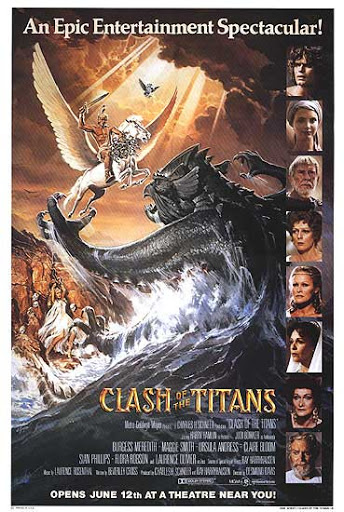
Clash of the Titans (1981)

Clash of the Titans header
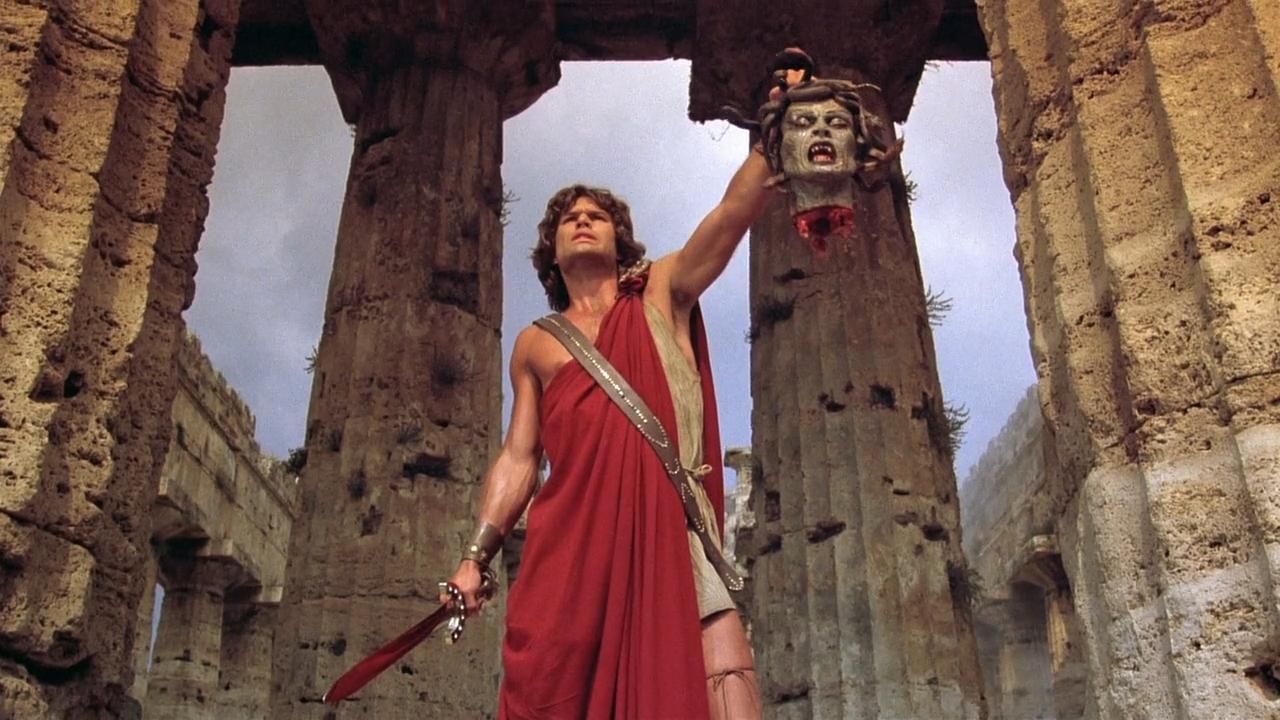
Harry Hamlin takes on monsters in Clash of the Titans

Director: Desmond Davis

Cast: Harry Hamlin (Perseus), Judi Bowker (Andromeda), Burgess Meredith (Ammon), Maggie Smith (Thetis), Sian Phillips (Cassiopeia), Claire Bloom (Hera), Ursula Andress (Aphrodite), Laurence Olivier (Zeus), Susan Fleetwood (Athena), Tim Pigott-Smith (Thallo), Jack Gwillim (Poseidon), Neil McCarthy (Calibos), Donald Houston (Acrisius), Flora Robson, Freda Jackson, Anna Manahan (Stygian Witches)

It’s almost impossible not to have a soft spot in your heart for Ray Harryhausen’s stop-motion magic. The best of Harryhausen – and for me surely that’s his superb Jason and the Argonauts – has a magic that few other films can match. A magic born of awe at the technical skill and patience needed to bring it to the screen and the boundless imagination behind them. For all that they are no more real than the CGI of today, there is an emotional connection you can form with watching something where you know each frame was painstakingly hand-made, that you can’t quite feel for the scope of a computer-born Marvel world. Clash of the Titans was the last hurrah for Harryhausen. It’s far from perfect, and even in 1981 it looked dated and almost a relic from another era – but it still carries enough entertainment value.

We’re back in the mythology of ancient Greece. As a boy, Perseus (Harry Hamlin) and his mother are sent out to sea to drown by his Grandfather King Acrisius of Argos (Donald Houston), jealous of her love from Perseus’ father, the God Zeus (Laurence Olivier). Zeus orders Argos destroyed by the Titan sea monster the Kraken. Years later Princess Andromeda (Judi Bowker) of Joppa is due to marry Calibos (Neil McCarthy), son of the Goddess Thetis (Maggie Smith). But Calibos is cursed by Zeus, turned into a monster for his crimes. Andromeda is cursed by Thetis to only marry a man who can answer a riddle (set every night by Calibos). Perseus – using gifts from Zeus – discovers the answer to the riddle, confronts Calibos, cuts off his hand and is set to marry Andromeda.

But when Andromeda’s mother Cassiopeia (Sian Phillips) claims her daughter is more beautiful than any of the Gods, Thetis condemns the Andromeda to be consumed by the Kraken, or the city to be destroyed. To stop this, Perseus – with the quiet help of Zeus and his winged horse Pegasus – must travel across Greece to obtain the head of Medusa, who turns all who look upon her to stone.

Well, in case you were in any doubts (and I really struggled to write those last couple of paragraphs), one of Clash of the Titans main faults is that it’s plot is a mess (a combination of several Greek myths into one story) and lacks either a clear narrative thrust or a clear villain. It’s without focus, flabby and has so many sub-clauses in its structure, you either need to concentrate or just switch off and take it on a scene-by-scene basis. It’s summed up by the meaningless title which – for all Flora Robson’s Stygian witch shrieks “a titan against a titan!” mid-way through the film – barely relates to the plot.

The film also suffers from an over-abundance of characters (Gods, Kings, warriors, monsters) many of them only vaguely outlined. But with so much going on (and so much plot to cover in the slight running time) it all pulls focus from our two leads. Harry Hamlin’s Perseus is a dull, uncharismatic figure who it’s hard to get interested in. Judi Bowker fares a little better as Andromeda, but her brief moments of proactivity are only byways before she becomes a damsel in distress, chained to a rock. Neil McCarthy as nominal villain Calibos is undermined by only getting to play the character in close-up (in all other shots he’s all too obviously replaced by a tailed stop-motion monster), and in any case the character is barely given any decent motivation or background.

It doesn’t help these underpowered leads that there are a host of famous actors picking up pay cheques around them. Laurence Olivier made no secret of the fact that a large cheque (and only a week’s shooting time) was what bought him on board as Zeus (although the part is a good fit for his grandeur). Claire Bloom and Ursula Andress signed up for similar reasons. Maggie Smith (who was married to the screenwriter) seemingly did the film as a well-paid favour. Burgess Meredith repackages his role from Rocky as a poet turned advisor to Perseus. I will say Tim Pigott-Smith does a decent turn as the head of Joppa’s royal guard. But these are paper-thin characters, given what life they have by the actors rather than the script.

But Clash of the Titans is all about those Harryhausen set-pieces, with everything else just over-complicated filler to get us from place-to-place. Desmond Davis’ uninspired and flat direction doesn’t help, with the action too often presented in basic medium shot and frequently over-lit – a lighting set-up that doesn’t help to make the effects look particularly convincing. The film feels confusingly pitched, part a kids film, part an appeal to nostalgic adults. Neither seems to particularly work, and the film ends up looking rather uninspired.

This was the last hurrah for this sort of stop-motion. Star Wars had reset the table completely for adventure films like this. Clash of the Titans feels like a feeble attempt to address this challenge – right down to the irritating robotic owl Bubo, a clear rip-off of R2-D2 right down to his bouncing movement and dialogue of beeps. The film goes for making things as big as possible – the gigantic kraken, the huge scorpions – but everything in it looks a little tired.

Davis’ uninspired direction and the film’s flatness doesn’t help – or its general air of fusty, dusty oldness. If Jason and the Argonauts has all the charge and energy of a young man’s film (from its sharp direction, pacey plot, neatly drawn characters and Herrmann’s score), this really feels like a middle-aged Dad trying to be hip. The Kraken’s destruction of Argos seems to consist of little more than a few toppling pillars. The beast is slow, cumbersome and takes forever to do anything. An extended sequence where our heroes fight a two-headed dog is both dull and laughable. The only classic piece of stop-motion here is Medusa. Surely no coincidence that this is the most atmospherically shot sequence, with lighting that helps to hide the joins between stop-motion and reality in a way the rest of the film ruthlessly exposes.

Clash of the Titans is a film you can feel a nostalgia for – but really it’s actually rather naff. It’s badly plotted – surely the story could have been told in a cleaner way than this confused mess. Too many actors either phone it in, or fail to deliver the charisma needed (Todd Armstrong in Jason is no Olivier, but at least he had a matinee idol robustness Hamlin lacks). It’s limply directed. Worst of all, too much of the stop-motion looks a little silly – the film failing to cover up the cracks and too frequently exposing the joins rather than disguising them. Show this one to someone first, and you’ll never get them back to watch the best of Harryhausen. While I always enjoy it – for nostalgia if nothing else – its a cult classic, but no classic.

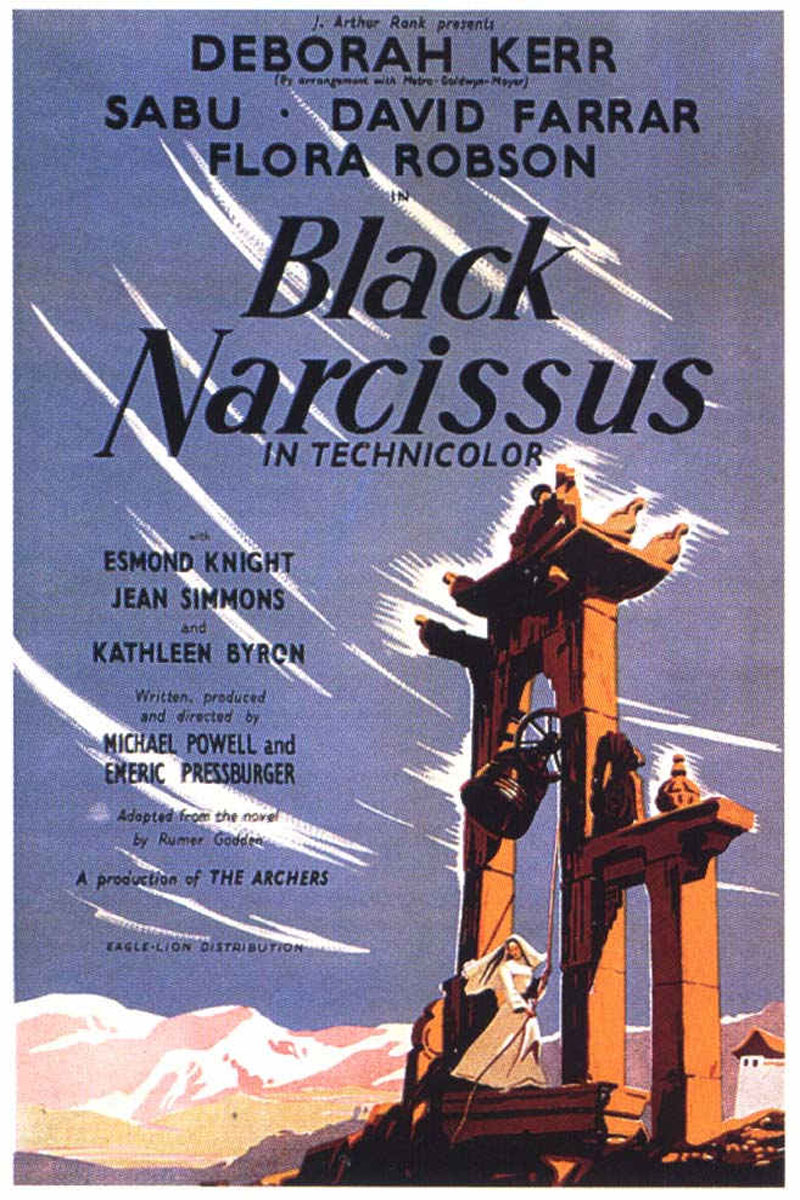
Black Narcissus (1947)

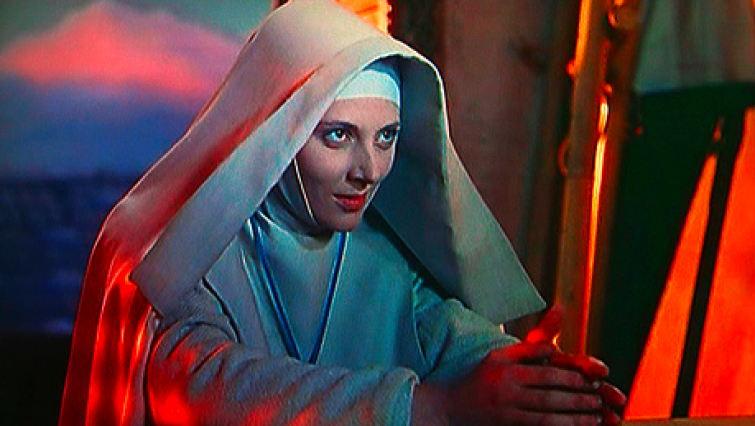
Deborah Kerr leads a community of nuns struggling with temptations in the classic Black Narcissus

Director: Michael Powell, Emeric Pressburger

Cast: Deborah Kerr (Sister Clodagh), Sabu (Young General), David Farrar (Mr Dean), Kathleen Byron (Sister Ruth), Flora Robson (Sister Philippa), Jenny Laird (Sister Honey), Judith Furse (Sister Briony), Esmond Knight (Old General), Jean Simmons (Kanchi), May Hallatt (Angu Ayah)

In 1947, people hadn’t seen anything like Black Narcissus. Its triumphant technicolour was like nothing that had been made before – and watching it now on a brand new, shiny restoration, it’s still overwhelmingly impressive. Alongside this beautifully shot action, we have a storyline surprisingly modern in its acute psychology and questioning of the strengths and weaknesses of human nature.

Sister Clodagh (Deborah Kerr) is given leadership of a group of nuns in a remote Himalayan harem building converted into a nunnery. But the isolation of the mountains and the strange atmosphere of the harem bring out weaknesses in the characters of the nuns, leading to profound challenges to their spiritual and mental well-being – not least Sister Ruth (Kathleen Byron), who becomes increasingly pre-occupied with local land captain Mr Dean (David Farrar).

Powell and Pressburger’s film is a brilliant, slightly hard to interpret, psychological gothic drama, a du Maurier-style sexually charged drama set in an exotic Indian location which the nuns struggle to understand. It’s a curious melange of scenes, often moving swiftly, sometimes only with narrow bridge scenes, meaning you soon get as lost in how much time has passed as the nuns themselves. Several key events take place off screen, and the native Indians are curious, unknowable and strangely intimidating in their distance and coolness.

All this is to help build the audience into feeling as unsettled as the characters themselves. It’s a film about the struggles between expression and repression. The two principal nuns – Sisters Clodagh and Ruth – both show elements of this. Both are drawn towards the earthy, manly but still patrician Dean, but both handle these emotions in very different ways – one by denying those feelings, another by trying to embrace them. All of this takes place in a distancing and intoxicating environment, where the convention rules of life seem suspended.

For Sister Clodagh, Dean serves as a bridge back to her own frustrated romantic feelings for an old flame – whose failure to propose guided her towards taking the veil – and elements of her warmer persona (witnessed by us in flashback). But Clodagh resolves never to make herself a slave to these feelings, and these moments of remembrance seem to make her cling all the more to her order – even while the film suggests that it is a strange mixture of pride, insecurity and fear as well as faith that motivates her.

By contrast, Sister Ruth – already acknowledged by the Mother Superior as not an obvious choice for the sisterhood – increasingly loses her grip first on her faith, then sanity, as she struggles with the feelings she clearly has for Dean. This quiet obsession has built up in her mind into representing all the desires for freedom and independence she feels while in the order. Where Clodagh resolves to cling closer to the repression of her feelings, Ruth rejects this very idea and determines to express herself – even as it costs her everything. 

This heated growing madness is powers the film – and Kathleen Byron provides most of the drama with a stunningly unhinged performance, which builds so quietly (almost in the background of the film) that it never becomes wearing and also surprises with the extent of her unhinged delusion. One particular night-time encounter with Clodagh sizzles with rival agendas – one woman using a lipstick, the other using a Bible. 

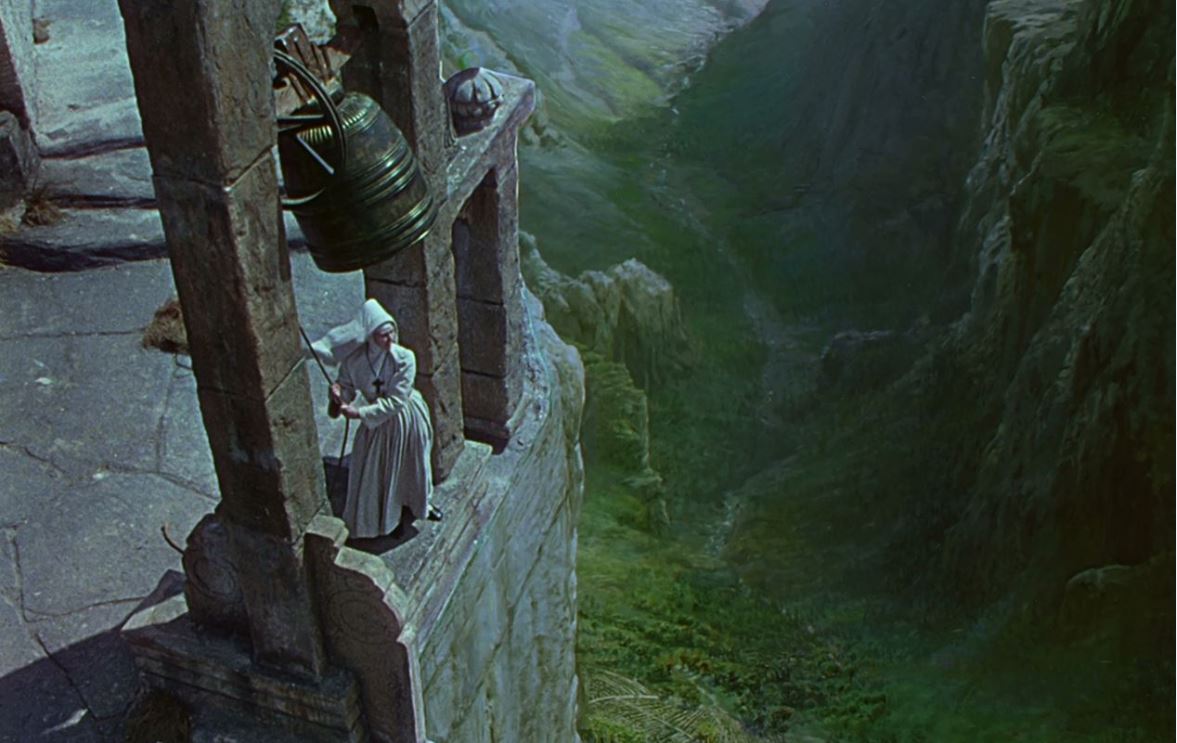
Powell (and it was Powell who largely directed these Archers pictures) uses a variety of techniques to develop this unease. Several shots are direct POV shots, with the audience becoming one of the characters, giving us the slightly unsettling feeling of being addressed by the actors. Quick tableaux editing gives us economic storytelling and a sense of events building swiftly towards a head (several sequences use a series of quick cuts of characters reacting to events). The camera uses a series of close-ups of sweaty foreheads or dizzying, vertigo inducing shots of the Himalayas to increase the unease. A later shot shows Sister Ruth moving through a shimmeringly filmed jungle, bringing a sense of confused eroticism to the picture.

Sexuality is a major theme of the film – and the characters have a series of acknowledged or unacknowledged sexual interests in each other. The music and camera work develop a sense of heated intensity on the mountain that suggests a simmering heat that unnerves the mind and throws open the temptations of physicality. Old wall paintings from the harem of bare-breasted women seem to be a constant presence – no wonder feelings are running high.

Jack Cardiff’s photography is simply extraordinary – it’s hard to believe none of this was filmed on location and most of it was shot in a studio – and this is still a film today that is hugely beautiful. The production by Alfred Junge is hugely impressive, with the nunnery a triumph of mismatched themes.

It’s not perfect. It’s a bit awkward to see actors blacking up. Some of the acting is quite OTT or stagy – in particular May Hallatt at points – and the film’s occasional delight in its visual appeal means its themes don’t always get the exploration that they deserve. One of the disadvantages of its deliberately vague timeline is that sometimes events happen too soon – or we don’t get enough sense of why they are happening. But these are blemishes.

This is a masterfully made picture, still beautiful to look at with impressive performances from Kerr, Byron, Farrar and many of the rest of the cast. It’s a surprisingly gothic melodrama by the end, with reds splashed across the screen with an imposing sense of threat. Still one that needs to be seen: and the end is so melodramatically gothic considering where the film started that the fact it doesn’t seem hugely jarring is an enormous tribute to the talents of those involved.