Tag: Gary Sinise

Ransom (1996)

Ransom (1996)

Every parent’s nightmare gets tackled in this efficient, smart (but not quite smart enough) thriller from Ron Howard

Director: Ron Howard

Cast: Mel Gibson (Tom Mullen), Rene Russo (Kate Mullen), Gary Sinise (Detective Jimmy Shaker), Delroy Lindo (FBI Special Agent Lonnie Hawkins), Lili Taylor (Maris Conner), Liev Schreiber (Clark Barnes), Donnie Wahlberg (‘Cubby’ Barnes), Evan Handler (Miles Roberts), Brawley Nolte (Sean Mullen), Paul Guilfoyle (FBI Director Stan Wallace), Dan Hedaya (Jackie Brown)
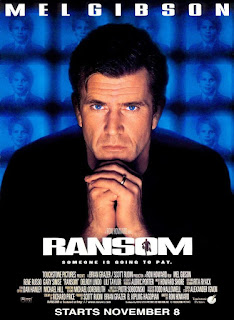
There is no greater fear for any parent than losing a child. Doesn’t matter if you are prince or pauper, the same heart-pounding dread is there. But sometimes the risks are greater if you a prince. Because the more money you have, the more likely a kidnapper might think you’d be willing to swop that money to get your kid back.

It’s what kidnappers decide when they take the son of Airline owner Tom Mullen (Mel Gibson). The kidnappers want $2million and no questions asked, in return for his son Sean (Brawley Nolte). Tom and his wife Kate Mullen (Rene Russo) are willing to pay – with the advice of FBI Agent Lonnie Hawkins (Delroy Lindo). But after the first bungled handover, Tom becomes convinced the kidnappers have no intention of returning his son alive. So, he takes a desperate gamble to try and turn the tables, much to the fury of secretive kidnapper (and police detective) Jimmy Shaker (Gary Sinise).

Ransom is a change of pace for Ron Howard, his first flat-out thriller. And it’s a very good one. Ransom has a compulsive energy to it, powered by sharp filming and cutting and some impressively emotional performances from the leads. It also takes a number of unexpected narrative twists and turns – before it reverts to a more conventional final act – and manages to keep the viewer on their toes.

Its main strength is an emotionally committed performance from Mel Gibson. Taking a leaf from Spencer Tracy’s book, this is Gibson at his best, very effectively letting us see him listen and consider everything that happens around him. Mullen is a determined man who plays the odds, and cuts corners only when he must – but is also convinced of his own certainty. He applies his own business learning – of negotiation and corporate deal-making – to this kidnapping, which is an intriguingly unique approach. Gibson’s performance is also raw, unnerved and vulnerable and he plays some scenes with a searing grief you won’t often see in a mainstream movie. Russo does some equally fine work – determined, scared, desperate – and their chemistry is superb.

Howard coaches, as he so often does, wonderful performances from his leads and from the rest of the cast. Gary Sinise turns what could have been a lip-smacking villain into someone chippy, over-confident and struggling with his own insecurities and genuine feelings for his girlfriend (a doe-eyed Lili Taylor, roped into kidnapping). Delroy Lindo is very good as the professional kidnap resolver and there are a host of interesting and engaging performances from Schreiber, Wahlberg, Handler and Hedaya. Ransom turns into a showpiece for some engagingly inventive performances.

Howard also triumphs with his control of the film’s set-pieces. The kidnapping sequence is highly unsettling in its slow build of the parent’s dread. The first attempted exchange is a masterclass in quick-quick-slow tension, with Gibson and Sinise very effective in a series of cryptic phone calls. The ransom phone calls are similarly feasts of good acting and careful cross-cutting, which throb like fight scenes. Howard understands that this is a head-to-head between two men struggling in a game of deadly one-up-manship, both of them constantly trying to figure out not only their next move, but the likely reaction of their opponent.

For much of the first two thirds of the film, Ransom is very effective in its unpredictability. There is a genuine sense of dread for how this might play out and the radical changes of plan both sides of the kidnap play out land events in a very different place than you might expect at the start. The more hero and villain try to out-think each other, the murkier the plot becomes.

It’s unfortunate that the final third devolves into a more traditional goody/baddy standoff with guns, punches and our hero reasserting his control (and the safety of his family) through the fist and the trigger. But then I guess in the 90s you couldn’t have a Gibson film without a bit of action. But when the film focuses on the thinking, talking, slow-burn tension and the sheer terror of parents who have lost a child, it’s a very effective and tense film that stands up to repeat viewings.
Apollo 13 (1995)

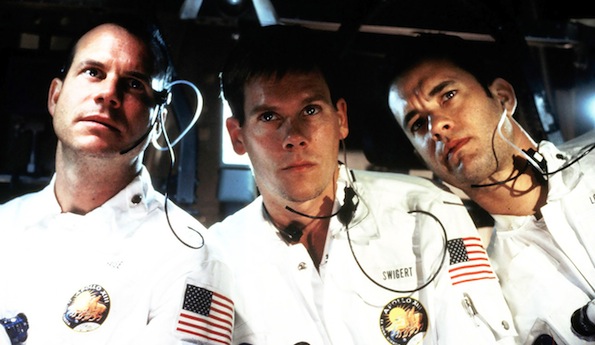
Bill Paxon, Kevin Bacon and Tom Hanks are stranded in space in Apollo 13

Director: Ron Howard

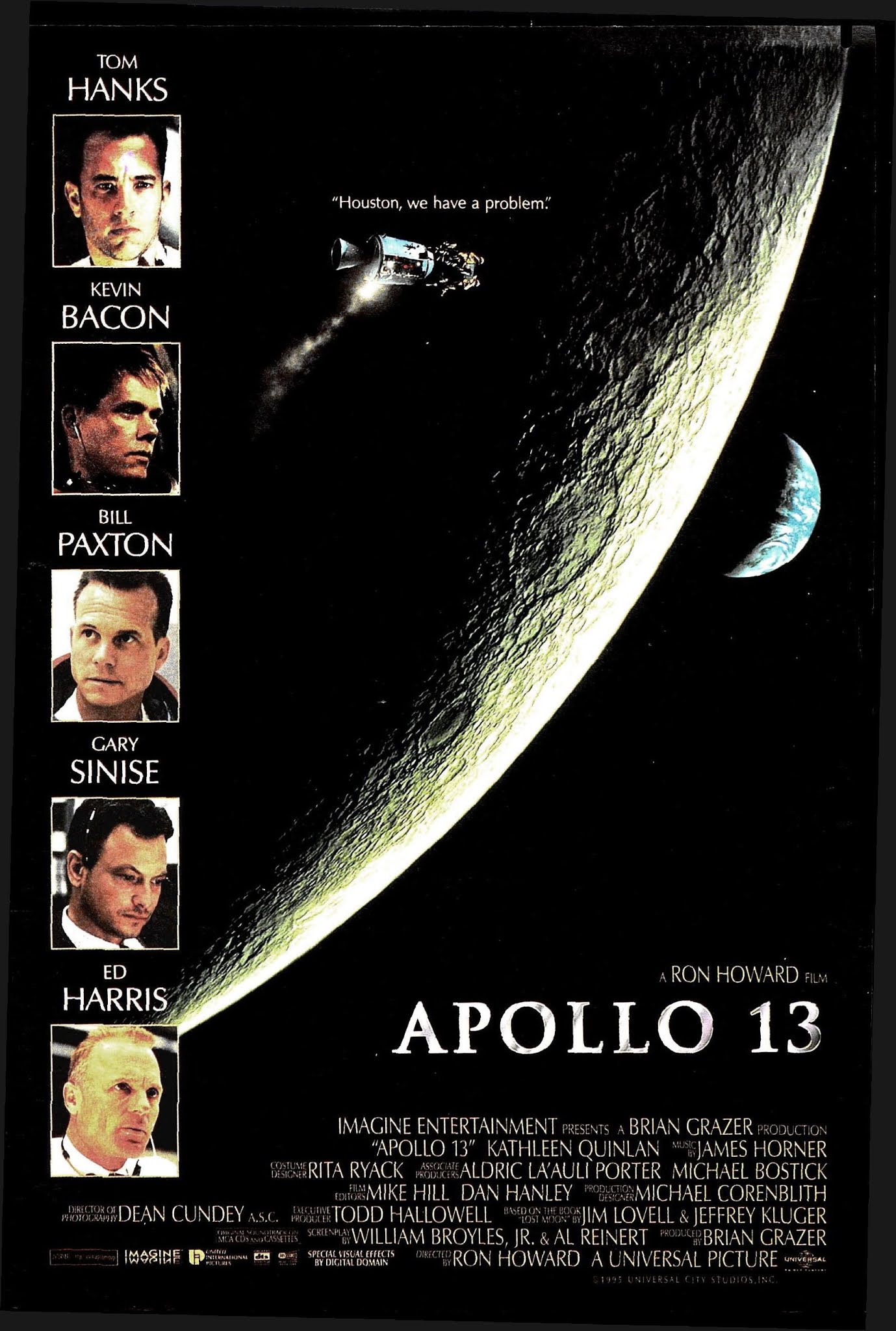
Cast: Tom Hanks (Jim Lovell), Kevin Bacon (Jack Swigert), Bill Paxton (Fred Haise), Gary Sinise (Ken Mattingly), Ed Harris (Gene Kranz), Kathleen Quinlan (Marilyn Lovell), Chris Ellis (Deke Slayton), Joe Spano (NASA Director) Xander Berkeley (Henry Hunt), Marc McClure (Glenn Lunney), Clint Howard (Sy Libergot), Ray McKinnon (Jerry Bostwick), David Andrews (Pete Conrad), Christian Clemenson (Dr Charles Berry), Brett Cullen (CAPCOM1)

“Houston we have a problem”. Those calmly spoken words coat an ocean of disaster in Ron Howard’s brilliant reconstruction of the disaster-that-very-nearly-was, Apollo 13. Without a shadow of a doubt Howard’s finest film, this is brilliantly tense and hugely engaging that builds an edge-of-the-seat tension around a true story. You can’t watch it without being filled with breathless admiration for the ingenuity of those in mission control and the courage of those in space as they worked together to bring the mission home. Truly “Failure is not an option”.

On a mission to the moon, Mission Commander Jim Lovell (Tom Hanks) and crew Fred Haize (Bill Paxton) and late replacement Jack Swigert (Kevin Bacon) are left desperately trying to salvage their ship after an accident strikes. Meanwhile back in Houston, Flight Director Gene Kranz (Ed Harris) and replaced crewman Ken Mattingley (Gary Sinise) lead a dedicated team juggling every inch of mathematical, scientific and practical knowledge they have to bring the ship home.

Apollo 13 is a masterpiece of reconstruction. Every inch of the NASA space programme is reassembled in perfect detail. Every nut and bolt, from procedures to the interplay between the astronauts and Ground Control. There isn’t a single false note, and every single element of the production, photography and editing is carefully placed to support this total immersion in period. Howard’s technical direction is brilliantly done, intercutting with a fabulous sense of pacing between the crew in space and Ground Control back here on Earth. It becomes one of the most engrossing and involving true-life stories you can imagine.

I love this film. I love every second of it. Every single time I see it – and I must have watched it at least once a year since 1996 – I get wrapped up in the tension and, perhaps even more than that, the inventiveness needed to solve problems in space. The film throws conundrums at us time and time again. The command module needs to be restarted to land the ship – but only has enough power to keep a coffee machine running for a few hours. A vital course correction, that a computer could calculate and perform, needs to be carried out by hand. The weight of moon rocks needs to be replicated in the landing module. And, most brilliant of all, the NASA boffins need to work out literallyhow to fit a round peg into a square hole in order to replace a CO2 filter – using nothing but the pile of equipment on the spaceship.

These problems all need to be solved by people low on sleep, high on stress and – in three obvious cases – stranded, cold and alone in space, and each one is carefully explained by the film’s very natural but highly detailed script and then relayed into nail-biting efforts to solve them. (James Horner’s score also works wonders here, communicating the awe of space and our vulnerability in that black void expertly.) In no other film can the tearing of a plastic bag have you gasping at the impact it could have on life or death.

Added to the impact of this, is the engrossing excitement of watching brilliantly trained professionals tackle the sort of situations that would reduce you or I to sweaty panic. Other than a brief moment of recrimination between Haise and Swigert (authoritatively quashed by Lovell’s “Gentlemen, we are not doing this”), everyone stays more cool, calm and collected than you could possibly expect. This also means that flashes of urgency or emotion carry huge impact in communicating stress: when Libergot stresses powering down the ship is the only way for the crew to survive or Lovell is caught on radio ranting he is “well aware of the Goddamn gimbels” while trying to pilot a ship leaking oxygen through a barrage of debris to a soundtrack of alarms, the pressures they are trying to cope with come thundering home to us.

The extraordinary work of the actors also goes a long way towards the film’s success. If any film cemented Tom Hanks’ everyman quality, it was this one. His Jim Lovell is calm, controlled and extremely grounded, a professional with a realistic outlet, a devoted family man and overwhelmingly ordinary for all the extraordinary things he’s done. Hanks brings the role a huge authority and acres of empathy and relatability. He seems both vulnerable, human and professionally assured. I’d trade both his Oscar-winning performances for this one.

The whole cast follows his lead. Bacon and Paxton are very good as the rest of the crew, juggling moments of fear, frustration and black humour. Ed Harris became a star character actor overnight with his brilliant performance as Kranz, another committed professional who refuses to countenance failure and guides the ground team through super-human efforts, while keeping his own emotions carefully under control. Kathleen Quinlan is impressive as Lovell’s wife, keeping the morale of those left behind as high as she can while barely controlling her own fear. Gary Sinise’s Ken Mattingley channels his resentment at being benched from the mission into a Herculean commitment to bringing them home.

It’s that commitment on the ground that Howard’s film so brilliantly understands. A lesser film would have focused overwhelmingly on the courage of the astronauts alone, and heightened their struggles to pilot the spacecraft and survive. Apollo 13 understands above all that this was a team effort – and the casting and scripting feeds brilliantly into this. No one is the “hero”, no one “saves the day”. Every character focuses on their own small piece of the puzzle and has to trust all the others worked out. The film gives huge amounts of time over to the boffins and geniuses of Mission Control – all brilliantly played by a host of character actors – and its respect for these unsung heroes is as great as it is for Lovell and his crew.

Howard also understands exactly when to up the music, editing and effects and when to slow the film down and let events quietly play out. Moments in space where the actors have to quietly reflect, or when we check in on the fears and concerns of the families back home, contrast perfectly (and carry even more impact) when they sit alongside the scenes of failures and rushes to save lives. As for that re-entry scene… is there any more tense scene in a true story film than that long, long wait to see if Apollo 13 will return from space? There are certainly fewer moments that will get those specks of dust irritating your eyes – I get a lump in my throat just thinking about it.

Everything in Apollo 13 is spot on. I would go further and say I’m not sure there is a single wrong beat in it. It’s Howard’s masterpiece – his infamous snubbing for an Oscar nomination is inexplicable, his direction here is vastly superior to winner Mel Gibson’s work on Braveheart. It turns a true-life story into an impossibly tense, deeply involving, hugely emotional story. The actors – some of whom shot for weeks in a “vomit comet” plane to replicate weightlessness, an effect that works superbly – are outstanding. Every single technical aspect of the film is spot on. Its emotional impact is as absolute as the admiration and respect you’ll feel for the real NASA crews that guided this mission home. Apollo 13 is a classic. I can’t imagine anyone not finding something in it to like – not many films you can say that about.

Forrest Gump (1994)

Tom Hanks unleashes some cloying charm in Forrest Gump

Director: Robert Zemeckis

Cast: Tom Hanks (Forrest Gump), Robin Wright (Jenny Curran), Gary Sinise (Lt Dan Taylor), Mykelti Williamson (“Bubba” Blue), Sally Field (Mrs Gump), Haley Joel Osmont (Forrest Gump Jnr)

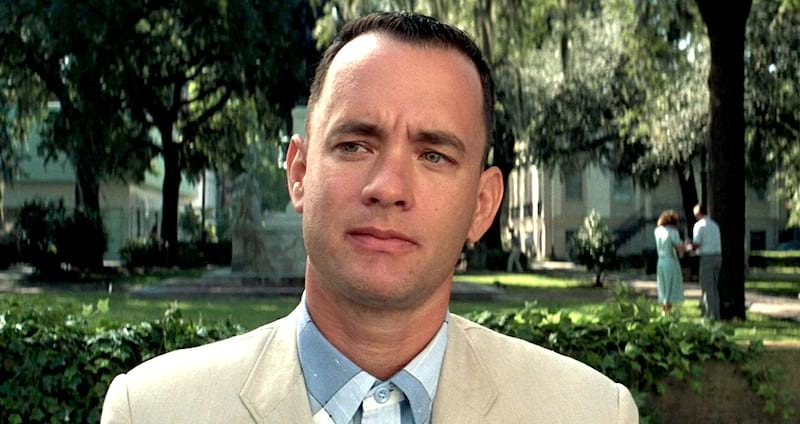
Oh dear God. It’s worse than I remembered. I hadn’t watched Forrest Gump since maybe 1995. I hadn’t liked it much then. But that might just have been my contrariness: sure I was going to find faults in the film that became a cultural phenomenon. Rewatching it today: actually no, I had good taste. This must be one of the worst films to ever win the Best Picture Oscar – and certainly one of the most unsettlingly twee, sentimental, conservative-minded pieces of feel-goodery to ever come out of Hollywood.

You surely know the plot. Forrest Gump (Tom Hanks, who to do him credit plays this one note character with real charm) is a good-hearted man with developmental difficulties (IQ below the 75 mark) who lives through some of the most turbulent times in American history. From racial violence in the 1950s, to Vietnam, the Cold War, the political turmoil of the 1970s, Forrest lives through it all. And largely lets it wash over him, never letting it intrude on his simple, folksy, homespun gentleness. Although that might mostly be because he also doesn’t really understand most of the things happening around him. He’s quite a contrast with the girl he’s loved since their childhood, Jenny (Robin Wright) who embraces everything the modern world brings (protest, politics, drugs) but of course finds her life much less rewarding and happy than Forrest’s “go-with-the-flow” acceptance.

Just writing it down I can feel my stomach turning again. At the time the filmmakers were very keen to promote the film as stridently apolitical. Yeah sure the film never praises, say Kennedy or Nixon, just as it goes out of its way not to state an opinion on either George Wallace or the Black Panthers. But the film is, at its heart, a large, beating, reassuring lump of rank conservatism.

It looks back at America’s past with rose-tinted glasses, portraying a world which would have all better if they had taken a leaf out of Forrest’s book. If we had all been just as uninvolved, decent, kind and stayed at home where we were happy rather than getting engaged in major social and political issues, everything would have been better. Forrest is a celebration of all-American virtues of honesty, bravery and loyalty – but the film is also an implicit criticism of other all-American virtues like curiosity, scepticism and challenging the status quo. Basically, the film celebrates the cosy attitudes conservatives adore and has nothing good to say about more liberal values. Sure, it doesn’t roll out a banner for Nixon – but you can also see this playing well at a Trump rally, with people saying we would be a happier country if we could all be a bit like Forrest.

That’s really tough on the film – and I imagine Zemeckis and co would be rightly horrified about that very idea – but it’s a film that doesn’t once challenge the audience at all. I was reminded throughout of Being There which took a similar concept: a man with low IQ finds himself at the centre of major events. But while that film was a satire – where the characters invest Chance’s gnomic utterings with profound wisdom – this film is a serious drama which encourages the audience to see a “deeper wisdom” in Forrest, to effectively treat him as a sort of prophet. There is a reason bland nonsense like “life is like a box of chocolates” caught on.

The original book was far more of a satire on the shallowness of modern culture. This instead plays like a sort of holy fool pilgrimage, with Forrest’s interaction with historical figures played for laughs. From showing Elvis how to dance, to (in the film’s most cringing moment) inspiring John Lennon with the lyrics of Imagine (another reason to hate Forrest), the film is crammed with gags like this. While the insertion of Tom Hanks into newsreel footage with Kennedy, Johnson and Nixon is impressive (although it has not aged quite so well), it’s not made with any point. This is because Forrest has no real appreciation of what’s happening around him. He’s merely moving from one event from the next – but this lack of engagement and understanding is held up as a virtue. And the very fact that it is, speaks to the film’s underlying conservatism and love for simple, small-town American ideals that shouldn’t be sacrificed to all that uncomfortable social and political change.

The film is particularly harsh on Jenny, decently played by Robin Wright, who is portrayed as someone succumbing to every trend and popular movement of the era. And whom the film consistently punishes for this by showing her emptiness, shallowness and unhappiness, until it finally consigns her to death from AIDS. Just in case we’ve missed the point, Forrest repeatedly urges her to come home – to stop engaging with the wider world and the problems in it and bury her head back into the sands of home, where everything is simple, safe and nothing changes.

The world of Forrest Gump is one where corruption and war mongering don’t matter because it happened a long time ago. A world where racial politics are too distasteful to mention (although since Forrest’s Granddaddy was a leading member of the KKK – a flashback played for laughs – that clearly wasn’t the case). Where the only black people Forrest encounters are the outsider soldier Bubba (who of course dies in ‘Nam – even in serious films, the Black Guy dies first) and his servile family whose names don’t even merit a mention, but who become the grateful beneficiaries of Forrest’s oblivious generosity. But there is no sense here of the dangers and violence of America (bar some nasty jocks at Forrest’s college) – which considering the film has a cameo from George Wallace of all people is really striking.

But then the problems of the world I guess don’t seem that bad if you just don’t think about them and instead go through life with a smile on your face, blissfully unaware of what’s happening around you. The closest the film gets to giving Forrest an opinion on something is when he is asked to speak at a rally against Vietnam – and even then the sound cuts out meaning we can’t hear him (though it seems to have been profound). A wittier film, like Being There, would have made this a moment for satire. Here it seems more like the magic of Forrest’s simplicity mustn’t be shattered for the audience by daring to suggest he actually has a view on something.

The film is a warm and comforting hug, that tells people the past wasn’t that bad and would have been better still if we’d just been nice to each other. That wanting to change the world is dangerous and greater rewards can come from going with the flow. For all Forrest is bereft by Jenny’s death, the film still rewards him with family, home and friends. It’s sentimental, empty, depressing crap. Well made, but simply dreadful. You may not know what’s in a box of chocolates, but you sure as shit will remember after you’ve vomited them all back up after watching this.