Tag: Gemma Jones

Benediction (2021)

Benediction (2021)

Davies’ final film is a beautifully made, deeply sad, exploration of the long-term impact of trauma

Director: Terence Davies

Cast: Jack Lowden (Siegfried Sassoon), Peter Capaldi (Older Siegfried Sassoon), Simon Russell Beale (Robbie Ross), Jeremy Irvine (Ivor Novello), Kate Phillips (Hester Gatty), Gemma Jones (Older Hester Gatty), Ben Daniels (Dr Rivers), Calam Lynch (Stephen Tennant), Anton Lesser (Older Stephen Tennant), Tom Blyth (Glen Byam Shaw), Matthew Tennyson (Wilfred Owen), Geraldine James (Theresa Thornycroft), Richard Goulding (George Sassoon), Lia Williams (Edith Sitwell), Julian Sands (Chief Medical Officer)

Few generations carried scars as deep as that which saw millions of their fellows mown down in the endless bloody slaughter of World War One. For us, whatever understanding of the horrors of that conflict we have is often filtered through the war poets, who fought in unimaginable conditions. Terence Davies’ final film explores the life of Siegfried Sassoon (Jack Lowden, ageing into Peter Capaldi) whose life never escaped the shadow of those terrible sights and awful losses.

Benediction is a sombre, mellow, deeply sad portrait of a man who spent a lifetime searching for something, anything to fill the void the war had left in him. Following Sassoon’s life in a series of tableaux-style scenes that mix poetry reading, period music, news footage with flash-forwards to the tetchy, weary older man he will become, it’s a sad, reflective work that presents memory as a sort of prison that consigns everyone to a life sentence. Davies catches this beautifully in his stately, melancholic film where survival guilt goes hand in hand with bitter regret at missed opportunities.

It opens with Sassoon’s protest against the war – denouncing its content from his first-hand experience. Saved from the possibility of a firing squad by influential friends (chief among them, Simon Russell Beale’s good-natured Robbie Ross) Sassoon is dispatched to an Edinburgh military hospital to “recuperate”. There he meets and falls in love with the sensitive, shy poet Wilfrid Owen (Matthew Tennyson), a love he is scared to confess. After Owen is killed, Sassoon commits himself to a series of romantic relationships with selfish, bitchy men including Ivor Novello (a marvellously supercilious Jeremy Irvine, whose eyes are stone cold) and the shallow, vain Stephen Tennent (Calam Lynch, full of Bright Young Thing smugness, turning into a lonely, tragic Anton Lesser). As an older man, he converts to Catholicism and struggles to understand his son George (Richard Goulding).

Davies’ film posits a Sassoon who never recovered from grief at the death of Wilfrid Owen and could never truly forgive himself for being too timid to express his feelings. Davies films Sassoon and Owen in scenes that sing of unspoken intimacy, from an overhead shot of a swimming pool dip that feels like a pirouette, to the matching body language they exhibit while sitting watching a variety show at the hospital. They laugh and dance together, but at parting Sassoon cannot move himself beyond a tightly clasped handshake and a whispered urge to stay a few minutes longer.

In discussions with his doctor and friend Rivers (a lovely tender cameo from Ben Daniels), Sassoon tearfully talks of his fear of expressing his own emotions. Perhaps this, coupled with his self-blame, is why Sassoon placed himself in so many relationships with such transparently flamboyant shits? Davies certainly seems to suggest so: Sassoon had less fear of “being himself” when he was with arrogantly confident men like Novello and Tennant. Did he also, the film suggests, feel so crippled with regret and survivor guilt, that he couldn’t believe himself worthy of the love of gentle, decent men, such as the Owen-like Glen Byam Shaw (Tom Blyth).

Sassoon becomes a man who can never fully escape the never-ending hurt of memories. Even as an older man, Davies shows Capaldi’s Sassoon sitting in his garden, the background replaced by news footage of slaughter in the trenches. It’s mixed in with the shame Sassoon felt at his “stand” against the war being, in the end, a moment that changed nothing. Davies further paints his poetry as declining post-war, as if parts of his creative life never survived the shocks he experienced.

And always he hopes something might make him whole again. Sassoon races through these false dawns during the film: relationships with men, marriage to Hetty (Kate Phillips as the younger Hetty is nearly as oppressed with unspoken sadness as Sassoon), the birth of his son – all fail to deliver. So as an older man – in a neat CGI transition during a 360 camera move – Davies transforms Lowden to Capaldi as he tries Catholicism (there is another wonderful cut that takes us from young Sassoon’s silver military cross being dropped into a river, that transitions into the grey-suited older Sassoon lying in a crucifix position on the floor of a church).

But the tragedy of Benediction – and there is no denying it’s a deeply sad and even slightly depressing film – is none of these attempts fill his soul. The older Sassoon – sharp, prickly and with a stare that goes on and on from Capaldi – snaps at things he doesn’t understand, cruelly dismisses the older Tennant and bitterly complains at the lack of recognition his later work received. He’s a man desperate for companionship, but comfortable only on his own.

It’s particularly sad having seen the brighter, passionate and warm man he was. Much of Benediction succeeds due to an exceptional performance by Jack Lowden. Lowden brilliantly conveys Sassoon’s lingering depression and loss under the surface of every interaction. The cheery wit that covers the self-loathing that leads him into destructive relationships and painful situations is as well captured as the self-deceiving optimism he had that everything could be different. Lowden ends the film with an extraordinary emotional moment – filmed in tight one-shot by Davies – where we see, one the last day of the war, his impossible burdens lead him to a single, quiet, emotional outburst of the vast reams of pain that then continued to burn inside him for the rest of his life.

Benediction is about guilt, loss, regret and denying yourself opportunities at happiness and joy through an internal determination that it is not for you. There is something profoundly personal in this – Sassoon’s life in this film, mirroring many of the regrets Davies spoke of in his own life – a fact increased by the heartfelt, gentle construction of the film with its melancholic air and rich sense of empathy for its subject. As a final work, it’s a fitting tribute to both the poet and its director.
Sense and Sensibility (1995)

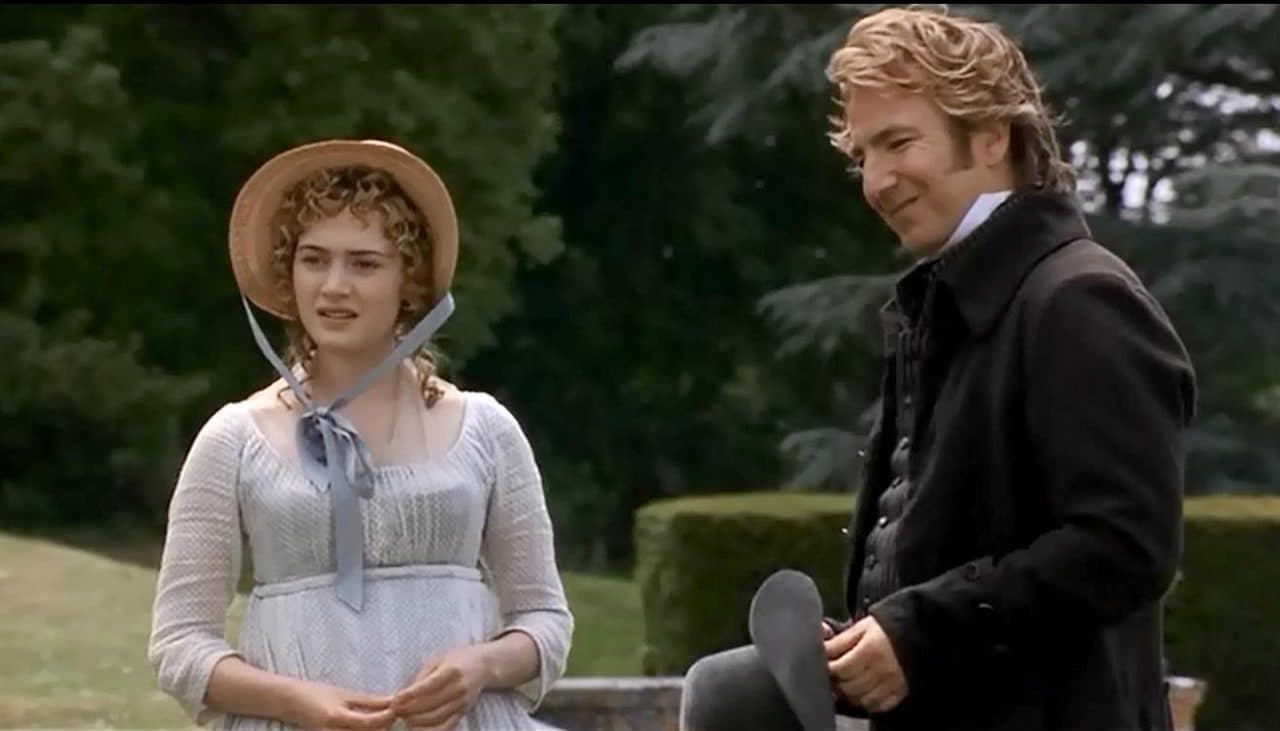
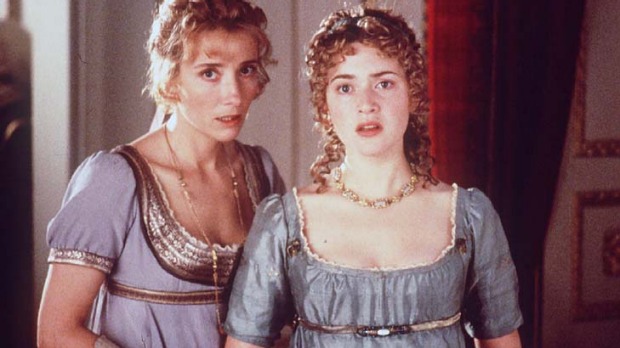
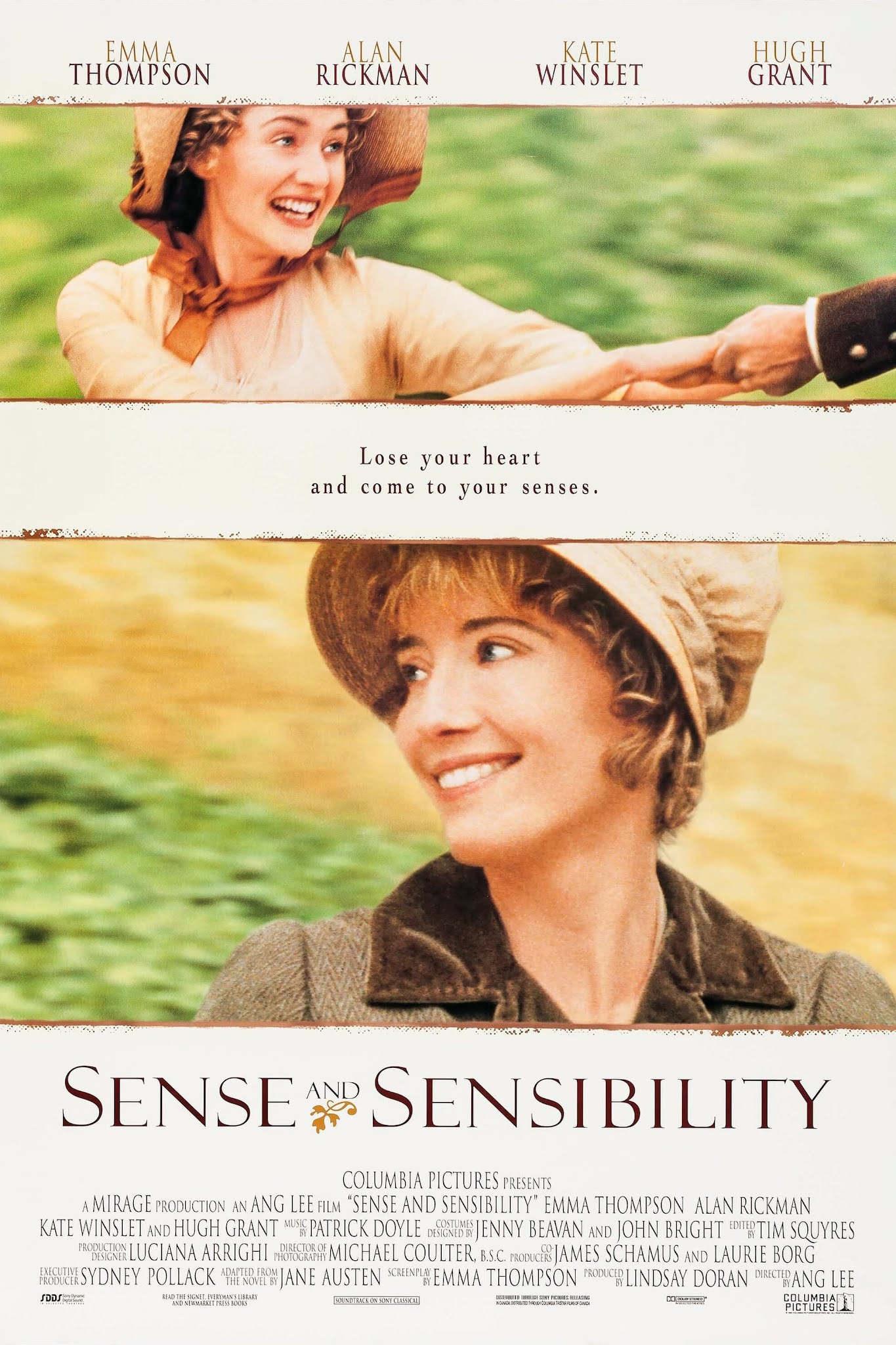
Emma Thompson and Kate Winslet are superb in probably the greatest Austen adaptation on film, Sense and Sensibility

Director: Ang Lee

Cast: Emma Thompson (Elinor Dashwood), Kate Winslet (Marianne Dashwood), Alan Rickman (Colonel Brandon), Hugh Grant (Edward Ferrars), Greg Wise (John Willoughby), Gemma Jones (Mrs Dashwood), Harriet Walter (Fanny Dashwood), James Fleet (John Dashwood), Robert Hardy (Sir John Middleton), Elizabeth Spriggs (Mrs Jennings), Imogen Stubbs (Lucy Steele), Hugh Laurie (Mr Palmer), Imelda Staunton (Mrs Palmer), Emilie Francoise (Margaret Dashwood), Tom Wilkinson (Mr Dashwood)

The world of Austen adaptations stands on two pillars – and both of them date from 1995. One is the BBC Pride and Prejudice, the other this luminous adaptation of Austen’s first novel, written by and starring Emma Thompson. It’s hard to pull together a review when a film pretty much plays its hand perfectly: and that’s exactly what Sense and Sensibility does. The film is a complete delight, in which Thompson takes surprisingly large liberties with many of the details of the novel, but brings to the screen a version that never once loses the spirit and heart of Austen’s work. It’s an immensely impressive achievement, and one of the finest literary adaptations ever made.

After the death of Mr Dashwood (Tom Wilkinson), the Dashwood estate passes into the hands of his son John (James Fleet) and John’s ambitious wife Fanny (Harriet Walter), leaving his second wife (Gemma Jones) and their daughters sensible Elinor (Emma Thompson), passionate Marianne (Kate Winslet) and giddy schoolgirl Margaret (Emilie Francoise) suddenly homeless. However, this does bring Fanny’s gentle and kind brother Edward Ferrars (Hugh Grant) into Elinor’s life, and an unspoken romance builds between the pair. There is passion in the air for Marianne at their new home, when she is rescued from a fall in the rain by the dashing Willoughby (Greg Wise). But are there secrets in the pasts of both men that could threaten the sisters’ happiness? And how did Willoughby’s life intersect with the reserved Colonel Brandon (Alan Rickman)?

Thompson’s superbly written script is a faultless adaptation that makes not a single poor choice, and expands and enriches several characters (in particular the three men) to great effect. Thompson not only brings much of the humour and wit in Austen to the fore – the film is frequently very funny – she also understands here truth and tenderness. Which is why the film is so beloved: it’s a film overflowing with empathy and heart for its characters which builds the emotional investment as skilfully as it does the comedy. It culminates in a proposal scene which I don’t think has ever not placed a lump in my throat.

To list all the excellent adaptation ideas would take forever so I’ll use one example. The film wisely expands much of the early character interactions, in particular deepening and exploring the early meeting between Elinor and Edward. A section that takes up barely one of the book’s (very short) chapters here fills the first 20 minutes of the film. It’s vital as it superbly establishes the natural warmth and intimacy between these two, and their perfectly complementing personalities.

It also allows Grant – in one of his most romantically winning performances – to display some deeply endearing light comedy, as well as establishing Edward as a thoughtful, sympathetic and decent man, who forms bonds quickly with all the family (especially young Margaret) through his genuineness. It also keeps us rooting for a relationship – and for a character – who the film often has to leave off screen for vast stretches, and leaves us in no doubt that his (later revealed) engagement to Lucy Steele (a woman he does not love, and who is interested in him solely for his position) comes from the same motives of decency, duty and the desire to do the right thing.

If that’s an example of one of Thompson’s most successful changes in her adaptation, she also unerringly identifies the things it’s most important to keep. Just like the novel, the film places the warmth of the sisters’ relationship at its heart. Helped by the natural chemistry and ease between Thompson and Winslet, the film carefully contrasts the personalities of these two sisters (one sensible and reserved, the other spontaneous and passionate) but takes no sides and also shows the sisters themselves are united by their love for each other. The film frequently features scenes of confidence and intimacy between the two, and continually brings us back to each other as the key relationship in their lives. It also shows how both need to meet in the middle ground: Elinor needs some of Marianne’s sensibility, just as Marianne needs to take on some of Elinor’s sense.

Although sense would not have necessarily helped Marianne uncover the dangerous selfishness of Willoughby. Perhaps the only wrong call in the BBC Pride and Prejudice (like most adaptations of that novel), is that it makes the rogueish Wickham insufficiently handsome and too blatantly smarmy from the start, tipping the audience the wink that this man can’t be trusted. Not so here, with Greg Wise giving Willoughby so much charm, regency handsomeness, dash and warmth that you would not imagine for a moment he could be anything but what he seems. He makes a clear contrast with Marianne’s other suitor, the older, more distant Brandon – superbly played by Alan Rickman – whose qualities of kindness and decency are hidden behind his coolness and lack of flash (Rickman is, again, wonderful here as a man hoping against hope for  a second chance at love).

But then the film is filled with perfectly cast actors. Thompson is a brilliant and natural fit for Elinor (even if she is too old for the part, something she acknowledged herself) giving her acres of emotional torment under an exterior she must keep calm and controlled for the sake of her family. Winslet became a star for her enchantingly free-spirited performance, grounded by a warmth and desire for the best for others that keeps the character from ever becoming irritating or overbearing.

Among the rest, there isn’t a bum note. Walter is hilarious as the washpish Fanny, Hardy full of bonhomie as Sir John. Elizabeth Spriggs is perfect as a gossipy old maid who is a pillar of strength when her friends are ill-treated. Hugh Laurie is hilarious in a gift of a part as the dry, cynical Mr Palmer whose nearly every line is laugh-out-loud funny, but who also proves his nobility in a crisis. Staunton is equally good as his flighty, mismatched wife. Imogen Stubbs brings out the simpering manipulative scheming of Lucy Steele perfectly.

The whole is bought together expertly by wonderfully paced and constructed directing by Ang Lee, whom it’s surprisingly easy to over-look. Lee was a considered an odd choice for the film – he barely spoke English at the time and was a stranger to Austen. But the film is an inspired match for him, tapping into his sensitivity, the warm eye he brings to families and their dramas, and also the observer’s wit he brings to social comedy and dynamics. Lee also brings an outsider’s eye to England – it’s a film that looks wonderful, but not simply romantic, with Lee not afraid of a stormy sky or a muddy street. Interiors are shot with a candlelit beauty, and there is a sense throughout of all this taking place in a real world. Patrick Doyle’s perfectly judged score also works wonders to help create the mood.

Sense and Sensibility is a masterful film and a, perfect adaptation of Austen. It’s hard to imagine that it will be bettered for some time. Indeed, like the BBC Pride and Prejudice, it feels like it has made all other adaptations of the book redundant. With a brilliant adaptation, superb acting, sensitive and insightful direction and a true understanding of the spirit and heart of Austen, this is one of the greatest adaptations ever made.

Wilde (1997)


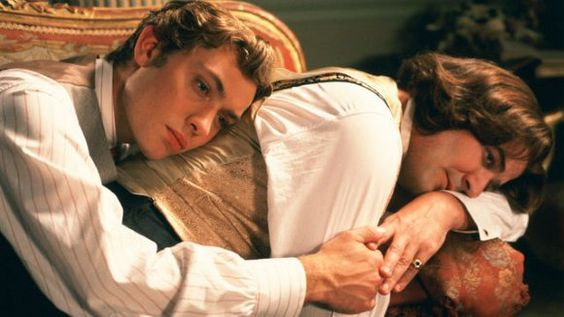
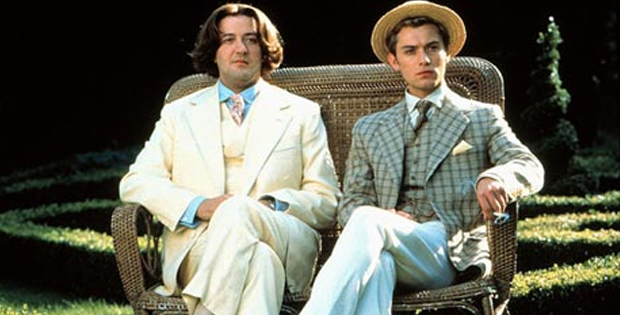
Jude Law and Stephen Fry in a disastrous love affair in sensitive biopic Wilde

Director: Brian Gilbert

Cast: Stephen Fry (Oscar Wilde), Jude Law (Lord Alfred “Bosie” Douglas), Jennifer Ehle (Constance Lloyd Wilde), Vanessa Redgrave (Jane Francesca Agnes “Speranza” Wilde), Gemma Jones (Sibyl Douglas), Judy Parfitt (Lady Mount-Temple), Michael Sheen (Robbie Ross), Zoë Wanamaker (Ada Leverson), Tom Wilkinson (Marquess of Queensbury), Ioan Gruffudd (John Gray)

Could there be a more perfect piece of casting than Stephen Fry as Oscar Wilde? Not only is Fry the spitting image of the famed Irishman, but Fry’s own mercurial talent, his enormous outpouring of novels, articles and screenplays, his skill as a raconteur and his general ubiquitous presence as a personality make him a pretty good modern equivalent of Oscar Wilde. A lifelong admirer of Wilde – and an increasingly vocal proponent of gay rights and mental health awareness – Wilde’s life plugs into many of Fry’s own outlooks on the world. So yeah, perfect casting!

Opening in 1882 with Wilde’s tour of America (he effortlessly charms a group of clichéd “yee-haw!” silver miners – who literally fire their guns into the air in delight at his bon-mots in the film’s crudest touch), the film covers Wilde’s growing career, but focuses on his personal relationships. Unaware of his homosexuality, he marries Constance (Jennifer Ehle), but discovers his true nature with her friend Robbie Ross (Michael Sheen). However, this leads to his destructive, obsessive love for alternately petulant and caring Lord Alfred Douglas (Jude Law), his beloved “Bosie”. When he is accused publically of sodomy by Bosie’s father, the Marquess of Queensbury (a raging Tom Wilkinson, chewing the scenery), Wilde takes the matter to court – a disastrous decision that destroys his life.

Brian Gilbert’s film is a sensitive and lovingly crafted slice of period drama, that movingly demonstrates the hypocrisy of Victorian values. Wilde is celebrated by the public, despite the open secret of his and Bosie’s relationship, while rent boys (including a one-line appearance from Orlando Bloom!) and discrete gay relationships are common place. Wilde is a gentle, naïve man for whom emotional closeness is more important than physical love. He charms a society only too aware of his nature. However, the instant he causes a stink, his reputation is ruined and his life collapses. What the film does so well is give us a sense of the inner vulnerability, doubt and desire for affection at the heart of a man who, perhaps more than any other, lived his life as a public exhibition.

Halliwell’s Film Guide claimed the film attempted to reposition Wilde as a family man, a grossly unfair view of the film’s stance. As if a man who discovers he is gay could not love his children, or that he could no longer care for his wife. Similarly, accusations that the film shows Wilde’s homosexuality as the roots of his downfall are similarly misguided – Robbie Ross is unaffected by legal troubles and he’s openly gay. No, the film is making a far more conventional (in a way) point – Wilde was brought low because he fell hopelessly in love with the wrong guy.

Jude Law’s big break was in this film – and watching it again is a reminder of what a firebrand, dynamic actor he can be. He makes Bosie half monster, half emotionally vulnerable child. He alternates (sometimes within the same scene) between affection, devotion, kindness and wildly petulant rage. He’s overwhelmingly selfish and self-obsessed – even as Wilde’s life collapses, he can only whine that he is furious his father is winning – but then remorseful and guilt-stricken when the consequences of his actions become clear (but not enough to not do it again). Law juggles all these contradictions with astonishing skill – it’s an assured, magnetic performance of brilliance. We can see why Wilde adores him, while at the same time wanting to wring his neck.

It’s also clear why all the other characters around Wilde find him so appalling. Ross (and Sheen is similarly superb as Wilde’s tragically “friend-zoned” devoted admirer) can’t bear the appalling influence Bosie has, but knows he’s powerless to do anything about it. In one great scene, Bosie haughtily says he knows Ross always hated him, before cruelly saying it’s because Wilde loved Bosie, but Ross was only “one of his boys” – the look of pain on Sheen’s face is brilliantly moving. Wilde himself seems almost sadly (if inevitably) drawn into Bosie’s tastes for casual sex and rough trade – often playing voyeur at these events, while sadly accepting Bosie doesn’t find him physically attractive. Wilde’s basically the victim of an abusive relationship – and the film does a brilliant job of demonstrating why a man otherwise so blessed with intelligence can’t see it.

Julian Mitchell’s excellent screenplay (based on Richard Ellman’s award-winning biography) uses Wilde’s The Selfish Giant as a framing device – subtly comparing Wilde and Bosie respectively to the giant and the child. It also brilliantly constructs a sense of Wilde’s quick wit and staggering intelligence, and provides a host of sparkling cameos for some fine character actors. The production design and photography are spot-on, and while Gilbert may be slightly workmanlike in his filming, he certainly lets the story tell itself.

The focus on Wilde’s family life is also reassuringly different – it’s brilliant to see Wilde’s obvious adoration for his children, and plenty of indication that he was actually (much of the time) a very good husband and father. Mitchell’s script softens Constance’s reaction to Wilde’s conviction (she wasn’t as forgiving and forward-thinking in her views as she seems to be here) but it does mean that we are allowed to see the full story of Wilde’s life, rather than having him defined by his sexuality. Jennifer Ehle also does a marvellous job with very little material, and her quiet dignity and support for her husband (despite her anger at his obsession with Bosie) is very affecting.

But at the centre of all this is that perfect casting of Stephen Fry. In all the rest of his career, Fry will never be better than he is here. His Wilde is intellectual, mildly arrogant, but also naïve, gentle and almost unworldly. His voice is perfect for the aphorisms, and he is really striking physically. Above all though, he brings a deep, emotional empathy to the part – you feel how personal this is for Fry the actor, and you feel how closely he identifies with a man who discovered his sexuality late. His besotted, blind love for Bosie is as affecting as it is frustrating. His vulnerability in Reading gaol is deeply moving. It’s a quite marvellous performance, anchoring a movie that is gentle, kindly, caring and sensitive in exploring the inner life of a very public man.

The Winslow Boy (1999)


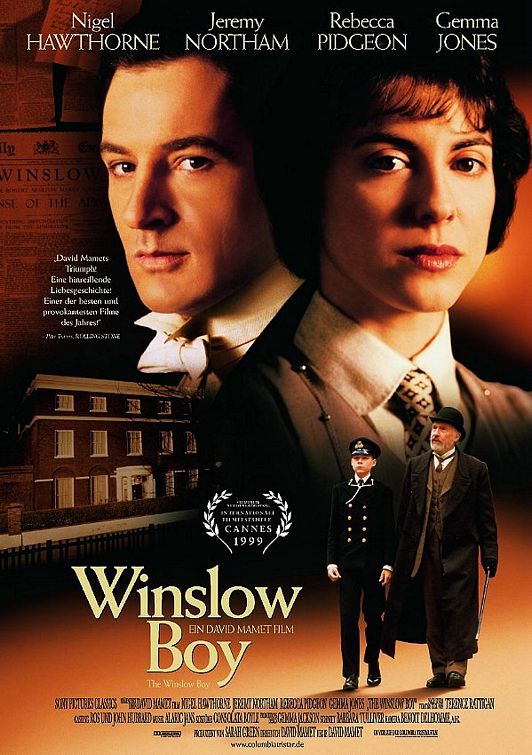
Nigel Hawthrone will stop at nothing for justice for his son in faithful literary adaptation The Winslow Boy

Director: David Mamet

Cast: Nigel Hawthorne (Arthur Winslow), Rebeccca Pidgeon (Catherine Winslow), Jeremy Northam (Sir Robert Morton), Gemma Jones (Grace Winslow), Guy Edwards (Ronnie Winslow), Matthew Pidgeon (Dickie Winslow), Aden Gillet (John Waterstone), Colin Stinton (Desmond Curry)

David Mamet surprised those who associate him with macho, alpha-male led drama with this sensitive and faithful adaptation of Terence Rattigan’s play. After his young son Ronnie is sent down from naval college for stealing a five shilling postal order, Arthur Winslow (Nigel Hawthorne, terrific) will stop at nothing to clear his name, supported by his suffragette daughter Catherine (Rebecca Pidgeon, excellent in a difficult role). They recruit Sir Robert Morton (an electric Jeremy Northam) to champion Ronnie’s case, as the scandal rocks the nation.

There can’t be many film adaptations of plays that so completely avoid “opening up” the play. The settings and dialogue of Rattigan’s original are kept largely as is. This means that – just as in the play – all the major dramatic events happen off-stage and are reported in dialogue. The campaign to clear Ronnie’s name? Apart from flyers and newspaper prints in Winslow’s home, you’re not seeing that. Morton’s advocacy of the case in the House of Commons? The smallest of scenes. The crowds outside the Winslow home? A faint echo on the soundtrack. The pivotal court case itself? Not a single shot. If ever a production made Rattigan feel more like Chekov, I’m yet to see it.

This theatricality is not necessarily a bad thing. I’ll admit it may create a film a bit too contained and low key for some. But catch this in the right mood and Mamet’s carefully considered staging brings many of its smaller moments and personal interactions into shape. Would a film full of triumphal courtroom scenes have so perfectly captured anti-climax and confusion that can come after an event that has dominated your whole life comes to an end?

This approach also allows the relationships to come front and centre – in particular the growing attraction between Catherine and Morton, treated lightly and subtly but with huge warmth. Catherine here mirrors the main plot. Her suitors are, in turn: an upright military careerist (whom she loves, but we care little for), a gentle non-entity (whom we like but she is bored by) and the imperious Morton – on the surface someone she shares few opinions with but, subconsciously, recognises a deep kinship with. Like the public reaction to the campaign, the attitudes of these people to Catherine represent the wider reactions happening off-camera. The Morton-Catherine story is a beautiful romance in which not a single word of overt, direct affection passes between the two characters, but volumes are increasingly spoken in each glance.

Mamet’s approach also allows plenty of stagy touches to translate really well to film. The film is clearly divided into acts, and each one returns us to the Winslow home, each time in less pomp than before (by the final scene it’s stripped down to bare essentials). Arthur Winslow is less and less sturdy each time we see him, the character shrinking ever closer to old age and infirmity. Each member of the family increasingly pays heavier prices, as their financial security is sacrificed (though Mamet certainly understands the characters’ very British acceptance of these turns in fortune).

The other major benefit is that the acting comes to the fore. I’m not sure Jeremy Northam has been better than he is here: the one downside of not staging the courtroom scenes is that we will never get to see Northam play them! His Morton is a perfectly pitched imperious upper-class professional, whose exterior hides a compassionate and selfless concern for “right”. The film’s most electrifying moment is his hostile examination of Ronnie, a dynamic verbal assault that rips into the film’s quiet austereness, crackling with tension. Northam is so good, at one point I am sure he muffs a line – but he carries it off with such brilliance (the austere man awkwardly burying his feelings) that Mamet keeps it in (take a look around 2:10 here and make up your own mind!). It’s also a beautifully real moment – the man of words, briefly revealed by them. This scene is, by the way, a masterpiece of unspoken emotions and affection (from both actors).


The other main performers are equally strong. Nigel Hawthorne mixes his cuddly avuncular wit with hints of the monomaniacal obsessiveness that leads Winslow to drain his resources, and strength, in pursuit of justice. While the film doesn’t always acknowledge the sometimes self-destructive effects of Winslow’s passion – and only hints at how much Winslow sees the accusation against his son as a personal affront, as if questioning his son’s honesty is questioning his own – Hawthorne keeps the character morally rigid yet sympathetic and understandable.

Rebecca Pidgeon, the director’s wife, is practically an open target for suggestions she only got the part through nepotism. Such views are unjust. While her accent seems a little forced, her performance as the slightly distant, intellectual, prickly and driven Catherine is spot-on. The crusade begins as her father’s obsession, which she shares. Their characters then evolve so naturally that you only realise at the conclusion that she has become the lead character, and the main driver of the crusade, for quite some time.

I’ve seen The Winslow Boy three or four times now. The first time I saw it I was thrown (disappointed) by its staginess, its surface stateliness. However, since then I’ve grown to appreciate its careful, respectful lack of showiness more and more. It’s an intelligent, well-handled adaptation, crammed with wonderful performances. Yes it’s sometimes a little too “Masterpiece Theatre”, but when it can deliver such stirring, and moving, moments as it does – well you could never refuse it a place in your heart. Let Right Be Done.