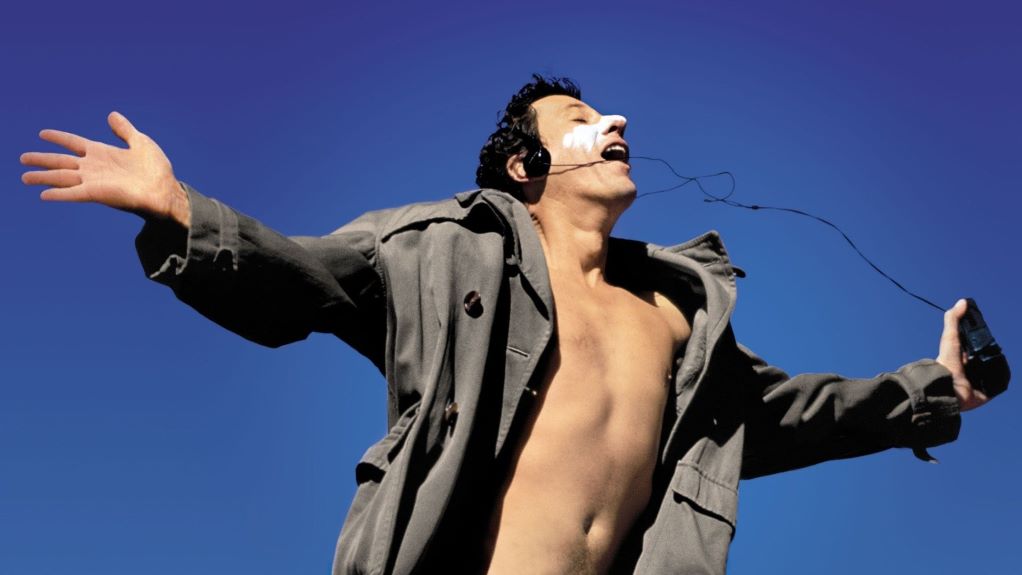
Tag: Geoffrey Rush

Shine (1996)

Shine (1996)

Middle-brow and safe biography that takes easy choices and makes reassuring points

Director: Scott Hicks

Cast: Geoffrey Rush (David Helfgott), Armin Mueller-Stahl (Peter Helfgott), Noah Taylor (Young David Helfgott), Lynn Redgrave (Gillian), Googie Withers (Katherine Susannah Prichard), John Gielgud (Sir Cecil Parkes), Sonia Todd (Sylvia), Nicholas Bell (Mr Rosen), Alex Rafalowicz (Child David Helfgott)

A hugely talented pianist, David Helfgott (played by Noah Taylor then Geoffrey Rush) trained at the Royal College of Music in the late 1960s but developed schizoaffective disorder, a condition that stalled any music career. What happened next is debated, but according to Shine years of mental institutes and sheltered housing eventually led to rediscovery and a life turned round by marriage to Gillian (Lynn Redgrave). This provided a happy home to Helfgott, who had grown up under the domineering hand of his father Peter (Armin Mueller-Stahl), a Polish-Australian who had narrowly escaped the Holocaust and disowned his son after he travelled, against his wishes, to Britain.

Shine repackages Helfgott’s life into a crowd-pleasing triumph-against-adversity biopic which plays fast and loose with facts. Shine makes no mention of Helfgott’s first marriage, it’s portrayal of his father as a misguided tyrant has been disputed by other members of Helfgott’s family and the level of estrangement Helfgott had from his family (his brother claimed David continued to live with the Helfgott family after his return) has been strongly disputed. Shine smooths off all rough edges and emphasises dramatic potential in others to create its stereotypical heart-warming tale.

What it also does is turn Helfgott’s life into a middle-of-the-road biopic, a highly convention film full of expected arcs (struggle, triumph, collapse, triumphant return) and directed with a middlebrow assurance by Hicks. It’s a film that flatters to deceive, offering only cursory insight into its subject and ends with a sentimental scene in which we are all-but-invited to join the characters in a standing ovation for a Helfgott comeback performance (which the film doesn’t even show us).

Shine has almost no interest in Helfgott’s illness, what bought it on, how it developed or what he and those around him did to help him function in society (his marriage to Gillian gets barely ten minutes of the film’s runtime). It has very little interest or insight into music – other than Rachmaninov being ‘very hard to play’ and some guff about finding the heart behind the notes which sounds full of import because anything said by John Gielgud sounds important. It takes a fascinatingly conflicted character like Peter Helfgott and bends over backwards to make him as two dimensional as possible, with only a brief throw-away line that leans into how quite possibly his views on the importance of family might just have been affected by the slaughter of the rest of his in the Holocaust. Everything is designed to make us feel that standing ovation is earned.

The film gets a much better performance than it deserves from Armin Mueller-Stahl as Peter Helfgott. Here is an actor with more compassion and insight into his role than either the film or the director has. On the surface everything Peter does is appalling; controlling what his son plays, demanding he wins competitions, blocking opportunities for progress, beating him in a rage twice and throwing him out of the house. But Mueller-Stahl plays the fragility and vulnerability under Peter exquisitely. This is a man so terrified about losing his family that he goes to extraordinarily damaging lengths to hold it together. So much so he destroys it.

And you understand that in every moment of Mueller-Stahl’s sensitive and immaculately judged performance. He looks at his son with tenderness and adoring love. His eyes dance with fear at the prospect of David going out alone into a world he thinks is dangerous. Its fear that leads him to react with violence – the terror of weakness pours from Mueller-Stahl. It’s a rich, layered, superb performance which seems almost smuggled into a film that does it’s very best to present Peter Helfgott as a controlling, destructive bully who (it believes) was the root cause of David’s illness.

The drama of the film – most of its first hour – revolves around the clash between this domineering father and the young Helfgott, played by Noah Taylor. It tells a very familiar story: the quiet, but talented son and the monster behind him, but does it solidly enough. Quiet, mumbling and shy – but with subtle traces of condition we know will seize him later in life, Taylor is marvellous. The training sequence at the Royal Academy, again familiarly reassuring for its pupil-mentor set-up, also allows a lovely showcase for an-almost-swansong role for Gielgud, sparkling, wry and charming.

It’s strange than that the Best Actor awards were poured onto Geoffrey Rush who only appears in two scenes before taking over the role at the 67-minute mark (of a 100-minute film). Rush, then unknown internationally, gives the sort of grand performance beloved of awards ceremonies. I admire Rush enormously: but Shine is all technique and no insight. Rush twitches, talks at a thousand miles a minute and plays the piano like a natural. Never once is he given the opportunity to really get inside what motivates Helfgott. He doesn’t even get the main dramatic meat of the film (he shares one brief scene with Mueller-Stahl). It’s ironically like a note-perfect but professionally smooth piano recital: the sort of role you feel Rush could actually have done standing on his head.

Shine even fudges moments of stand-up-and-cheer. Helfgott has been told he cannot play a piano because it affects his nerves. We frequently see him starring wistfully at a piano. The film opens with a rain-soaked Helfgott barging into a closed café hoping to be allowed to use the piano. The film is clearly building towards the moment when Helfgott plays the piano in that café, wowing the clientele with his virtuosity after a clumsy initial test playing of a few keys. We should have been wondering: does he still have it after all these years? We’re not because Hicks has thrown away Helfgott’s first playing of the piano in years five minutes early by having him hammer the keys with brilliance in a piano in his hostel (the instrument subsequently locked by his annoyed host). Why not have the piano locked from the start, sitting in his room, present but out of reach? Wouldn’t that have made it even more triumphant when Helfgott played like a master in that café one evening?

It’s cack-handed moments like that exposes the weakness in Shine, a film that flatters to deceive, offering only the most conventional and safe perspectives on a life. It boils things down to goodies and baddies and simplifies mental problems into being solved by just a little love and affection.  It’s a film that wants us to applaud Helfgott – and, by extension, to feel better about ourselves. But Shine offers very little in the way of insight or understanding and boils all its events down into easily digestible narrative homilies. It’s middle-brow filmmaking of the middlest kind.

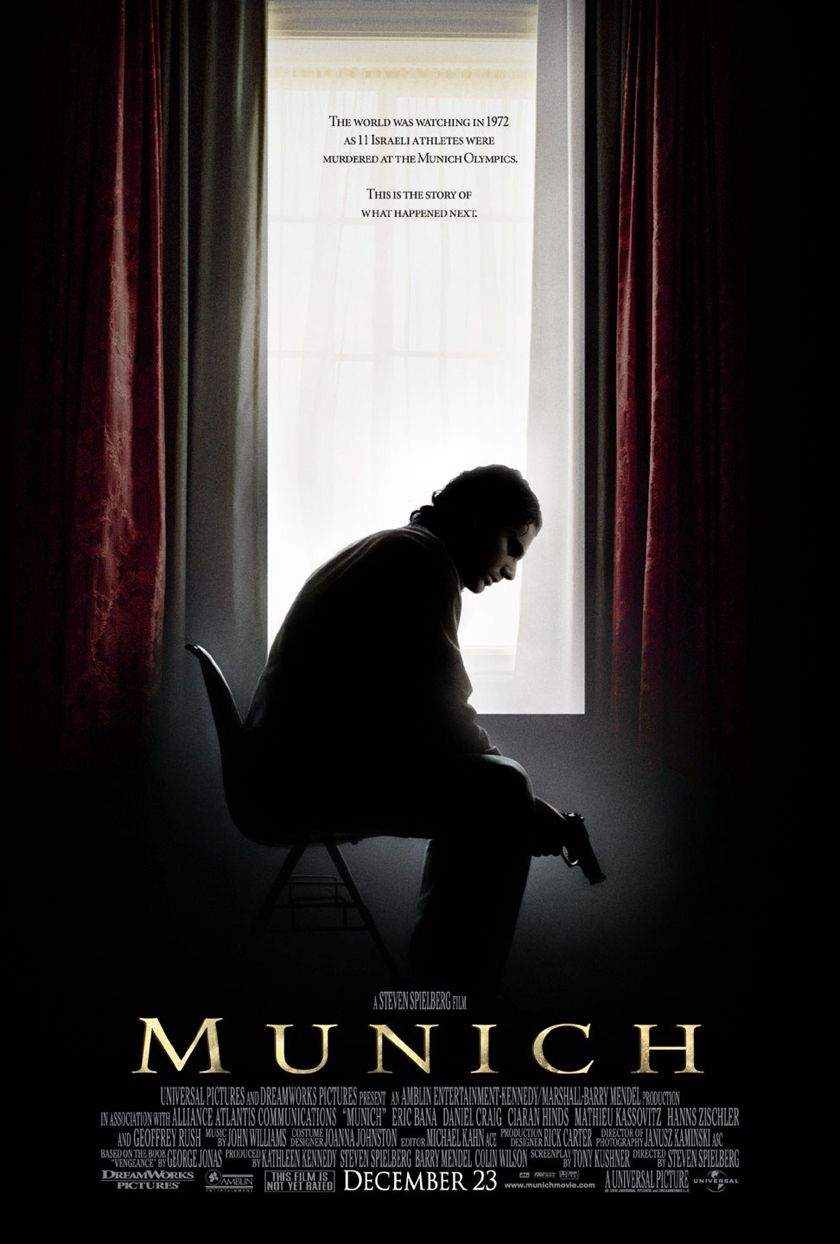
Munich (2005)

Eric Bana leads a team of Mossad agents in Spielberg’s uneven terrorism drama Munich

Director: Steven Spielberg

Cast: Eric Bana (Avner Kaufman), Daniel Craig (Steve), Ciarán Hinds (Carl), Mathieu Kassovitz (Robert), Hanns Zischler (Hans), Geoffrey Rush (Ephraim), Ayelet Zurer (Daphna Kaufman), Mathieu Amalric (Louis), Michael Lonsdale (Papa), Marie-Josée Croze (Jeanette), Lynn Cohen (Golda Meir)

At the 1972 Munich Summer Olympics, 11 members of the Israeli Olympic team were murdered by a Palestinian terrorist cell, Black September. The world was shocked and appalled. Israel responded with a hard-line anti-terrorist campaign, that saw Mossad teams traversing the globe, assassinating Palestinian leaders involved with Black September. They learned not only was terrorism a hydra, but that the moral high-ground erodes quickly when the shooting starts. Can terrorism be defeated by violence? Munich argues not: instead suggesting violence is a beast that feeds itself – an argument that, in 2005 in the fourth year of the War on Terror (the film ends with a shot of the World Trade Centre) was increasingly relevant to another country, traumatised by the slaughter of innocents.

Adapted by Tony Kurshner and Eric Roth, it’s based on a book Vengeance by George Jones about the man who claimed to be the leader of the Mossad cell (whether that is true or not is debated). He’s fictionalised here (to side-step that issue) as Avner Kaufman (Eric Bana). His team consists of driver Steve (Daniel Craig), explosives expert Robert (Mathieu Kassovitz), forger Hans (Hanns Zischler) and clean-up man Carl (Ciarán Hinds) with Ephraim (Geoffrey Rush) as their handler. The team hunt down and eliminate their targets – but as the mission goes on they pay a heavy cost, both in their eroding of their own moral certainties and in blood as they become targets for repercussions.

Spielberg’s film is his least flashy, least sentimental and (I suppose) most mature film, a cold-eyed, even-handed look at the Middle East conflict that acknowledges faults and consequences on all sides, draped in the muted colours and bleached out photography of 1970s conspiracy thrillers. It’s also a very long and very self-consciously important film, that makes mis-steps and at times is crudely obvious as well as being more interested in posing questions than presenting any answers. Where it is at its best, is demonstrating how campaigns like this are tasks worth of Sisyphus.

Munich takes a long, hard look at the cost of violence – both on its victims and its perpetrators. Death in this film is slow, painful and frequently disturbing. Shot people stagger and slump in drunken shock, dying slowly. Bomb victims are ripped apart, recognisable limps left hanging from walls and ceilings. Machine gun bursts tear bodies apart. The cost of inflicting this violence leaves increasingly deep psychological violence on the team (we don’t get to see if it does on the Palestinians, a limit to the films even handedness), as it becomes harder and harder to treat those they kill as faceless monsters, rather than men with families of their own.

Spielberg reconstructs the horror of the killings in Munich with a documentary realism, not shying away from the horror. It follows the appalling opening moments of the attack, with the athletes taken hostage and the shocked world media reaction. Spielberg returns later in the film to restage the final murder of the athletes at the Munich airport with sickening detail (perhaps too much – but more of this scene later).

Showing the impact of violence from both sides, Munich strains at always being even-handed (despite this both sides attacked it for bias). It’s an Israeli story so we mostly see the psychological impact of carrying out the violence on the Israeli team, and little of the Palestinian perspective. But the film throws in a chance meeting between Avner and what-could-be his Palestinian equivalent, where Avner is brutally told that, when fighting for their home, the Palestinians will never give up, and consider any price worth paying – attitudes he can’t help but recognise as he fights for his own home. The film has clear sympathy with the sufferings of the Jewish people, and their need for a home of their own – but wonders if this is the right way to defend it. Spielberg is a friend to Israel – but wants to be an honest one.

What starts out as clear and simple (a campaign against terror) becomes morally complex. The team’s first targets are sympathetic, family men. When Avner talks to a later bomb victim, he’s friendly and welcoming. A Palestinian cell they (accidentally or maliciously) end up sharing a safe house with, thanks to their mutual French contacts, are surprisingly relatable. The mission’s accomplishments are unclear – the targets are killed, but all that happens is more people take their place. Worse, those that do are only more infuriated by the campaign of violence.

That’s the question – how do you fight terrorism? It breeds on a belief of injustice and persecution – and Spielberg’s film suggests, all the campaign does is pour petrol on that fire. Avner becomes a paranoid psychological wreck by the end of the film, plagued with a loss of moral certainty. The film argues that the only result of all this has been the price he and other have made – an end to the violence is further away than it was at the operation’s beginning.

Spielberg’s film is strong on showing the pointlessness of this campaign. What it’s less strong on is answers. In many ways, the film boils down to a simple “deep down we are all the same, why don’t we just get along” message. While handsomely filmed and daring in its questioning about the futility of anti-terrorist (and indeed terrorist) action, it’s a simplistic film, largely lacking nuance. The characters are ciphers – Bana, for all his skill, plays a shell of a character, designed to make statements, who is alternately ruthless or questioning as the plot demands. Because the film strives so hard to remain even-handed, it brings little to the table itself in terms of proposed solutions, merely focusing on telling us what we know: an eye for an eye eventually makes his all blind.

It’s also a film that has more than its fair share of clumsy mis-steps. It’s view of the world is picture post-card in is simplicity. First thing we see in Paris, is a shot of the Eiffel Tower. Go to London and it rains. First shot in Holland is our characters on bikes. Its characters are largely plot devices, well played but rarely fleshed out in people who feel like human beings, more like mouthpieces to express viewpoints.

Most atrocious of all, the film concludes with a penultimate sequence staggering in its misjudgement. Retired and living in America, Avner makes focused, vigorous love to his wife intercut with the showing of the final deaths of the athletes in brutal detail. It’s tasteless, ill-judged and horrendously unclear. I suppose we are meant to think Avner is purging himself of his burden of guilt – but the scene is so appallingly done, so grossly detailed it comes across as both offensive and insultingly twee in using the deaths of real people (staged in detail) to help our lead character feel better about himself. When Spielberg does sex, he invariably gets it wrong – and does again here.

Munich is a very worthy film, but it’s too-long, dramatically simple, for all its daring commentary on the war on terror. It’s well-acted – Michael Lonsdale and Matthieu Almaric are very good as Avner’s French contacts, while Hinds is a stand-out among the team – but the characters are ill-formed and the entire film takes a very long time to make a very simple point. Well-made but a film trying a little too hard to always be profound.

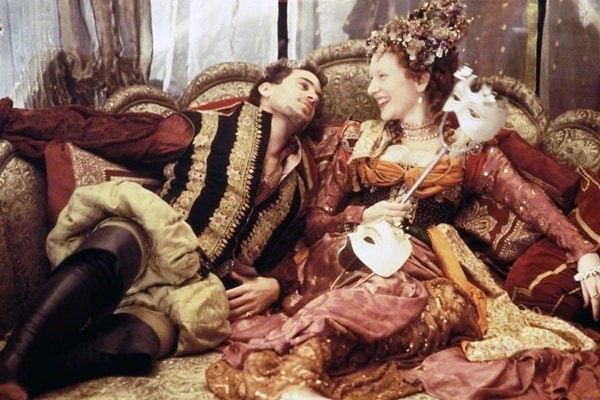
Shakespeare in Love (1998)

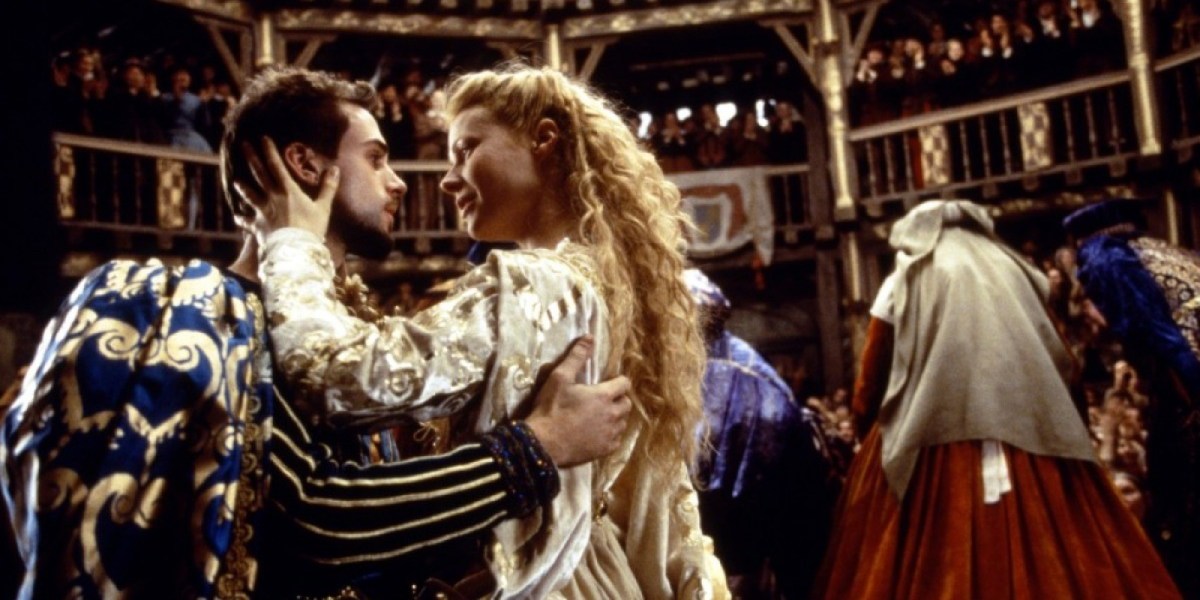
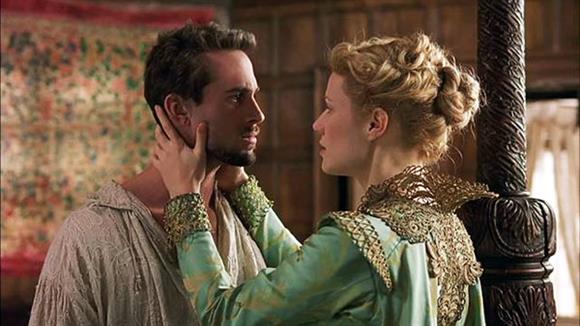
Joseph Fiennes and Gwyneth Paltrow juggle love and inspiration in the delightful Shakespeare in Love

Director: John Madden

Cast: Gwyneth Paltrow (Viola de Lessops), Joseph Fiennes (William Shakespeare), Geoffrey Rush (Philip Henslowe), Colin Firth (Lord Wessex), Ben Affleck (Ned Alleyn), Judi Dench (Queen Elizabeth I), Simon Callow (Edmund Tilney), Jim Carter (Ralph), Martin Clunes (Richard Burbage), Antony Sher (Dr Moth), Imelda Staunton (Nurse), Tom Wilkinson (Hugh Fennyman), Mark Williams (Wabash)

It’s become fashionable since 1998 to criticize Shakespeare in Love. It’s one of those films that the Oscar has diminished –you’ll swiftly find someone who’ll say “can you believe it beat Saving Private Ryan?” It doesn’t help that the film become a poster-child for Harvey Weinstein’s Oscar success, his tireless and canny promotion campaign for the film being credited for its sweeping the board. All that buzz is unfair, as it distracts from a hugely enjoyable, very funny, heartfelt and charming film, stacked with scenes that will make you laugh or let out a sad little sigh.

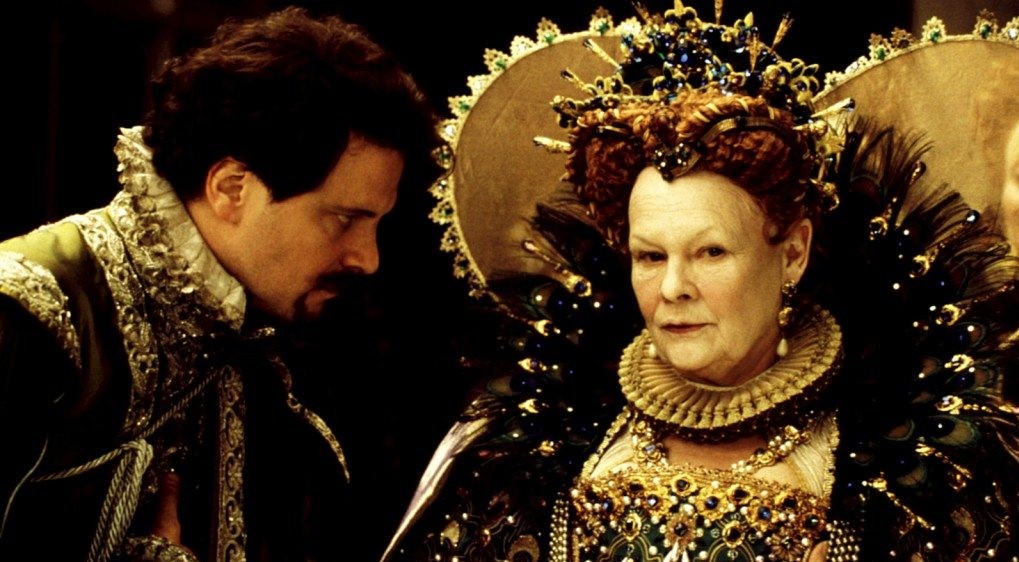
It’s 1593 and Will Shakespeare (Joseph Fiennes) has writer’s block. His latest play, Romeo and Ethel the Pirate’s Daughter just can’t get started despite the fact he’s promised theatre manager Philip Henslowe (Geoffrey Rush) that he’ll have it ready in a few days. Will only begins to find inspiration when he falls in love with Viola de Lessops (Gwyneth Paltrow) – little realising that Viola and the promising young actor in his company, Thomas Kent, are one-and-the-same. Viola, passionate about the theatre, dreams of acting on the stage and falls in love with Shakespeare (while keeping her Thomas Kent identity secret) – but her wealthy parents want her to marry the noble Lord Wessex (Colin Firth). Will these two star-crossed lovers find happiness? Or will their destiny follow the lines of the increasingly dark play about two young Verona lovers, that Romeo and Ethel is morphing into?

The largest part of Shakespeare in Love’s success rests with its script. The original idea had been doing the rounds in Hollywood for several years (Julia Roberts was determined to do it at one point, but only with Daniel Day-Lewis as Shakespeare, who was not interested). Marc Norman developed the concept and a plotline (originally much darker). But the film’s captivating wit and playfulness only really cemented itself when Tom Stoppard adapted the script into the frothy, super-smart comedy it became, crammed with riffs and gags about the Bard, Elizabethan theatre and show business. It’s also got a very funny – and humanising – idea of the world’s most famous writer suffering from writer’s block and then falling in love like he’s in one of his own plays.

Stoppard’s other trick was to repackage the concept into a delightful romantic comedy, centring the love story and downplaying other elements (such as Shakespeare’s quest to go solo and build his theatre career). With that, and the plot brilliantly refracting and reflecting Romeo and Juliet in tone and structure (just like that play, the first half is pure comedy, the second half darker in tone). In particular, the film is crammed with Shakespearean plot points and themes (from cross-dressing to plays-within-plays, mistaken identities, ghosts etc etc) all of which playfully  appear, cramming the film with delightful easter eggs.

It’s a celebration of the joy and magic of theatre – but it also hit big in Hollywood, because it’s essentially a Hollywood-studio comedy transmuted into the 1590s. Henslowe feels like a chancing B-movie producer, in debt who feels that with the idea of promising a share of profits (“there never are any”) instead of a salary, that his financial backer “may have hit on something”. There are puns about the unimportance of writers, billing on posters, the neurosis of creative people (even including an Elizabethan psychiatrist), oversized production credits, forced “happy endings” and sticking to tried-and-tested formulas. Gags call back to show-biz staples (“The show must…” “Go on!”). While it may be set in a theatre, there is a lot of the Hollywood studio in this.

But, with Stoppard at the pen, it was never going to be anything other than a loving tribute to the power of theatre to change lives. Shakespeare’s Romeo and Juliet is presented as a landmark in theatre history, a shift towards putting real-life emotion on stage instead of a few cheeky laughs and “a bit with a dog”. There is a wonderful plotline for Tom Wilkinson’s at-first all-business moneylender Fennyman, who discovers in himself a sense of wonder and delight for the theatre that melts his heart. (Wilkinson is outstanding here, a brutal man turned teary-eyed spectator, thrilled to be playing the apothecary). It weaves its charms so well about the delights of theatre, that you’ll even forgive the cliché of the stammering actor who finds his confidence on the first night. You even get a belting performance of Romeo and Juliet(with all the dull bits removed).

What really sucks in audiences through is the love-story – and Shakespeare in Love has a belter of a romantic plot. Riffing on Twelfth Night, As You Like It and of course Romeo and Juliet among many others, it’s a delightful series of misunderstandings, confusions and then passion, that eventually builds to an ending that’s bittersweet but true. It’s also beautifully played by the actors. Joseph Fiennes is so good here, a masterful display of light comedy tinged with sadness, so quick and electric with inspiration that I’m still amazed he didn’t go onto to better things.

Paltrow’s teary Oscar-acceptance has rather blighted the memory of her performance, but she has an earnestness and innocence that is deeply endearing and brings with it a radiant intelligence and emotional maturity that sees her turn into a realist. Wisely, the film’s ending sheds the other, minor plots, to hone in on an ending that is both sad and hopeful, that reflects real life (Shakespeare was after all, a real man married to someone else in Stratford) and sets up a thematic idea of love and inspiration being a life-long romance, that touches every moment of our lives, even when the loved person themselves is far away.

Directed with a smooth, professional sense of pace and joy by John Madden, it becomes a sweeping, surprisingly epic film, with a brilliant reconstruction of Elizabethan England and a luscious musical score by Stephen Warbeck heightening each scene’s emotional impact. The leads are marvellous, and there isn’t a weak-link in the strong cast. Judi Dench famously won an Oscar for her 8 minutes, but then its quality not quantity that matters and Dench’s archness is perfect for the role. Rush is hilarious as the grubby Henslowe, Affleck never better than his grand-actor parody, Colin Firth scowls expertly as “the other man” and Rupert Everett is dry and witty in a brief cameo as Christopher Marlowe, feeding Shakespeare suggestions.

You could say that Shakespeare in Love is just a romantic comedy. In many ways that would be fair. It doesn’t re-invent a genre, like Saving Private Ryan did. But, it’s a brilliantly mounted, intelligent and extremely funny one, with a superb script, some brilliant performances and wonderfully mounted. While it makes some good riffs on theatre, Shakespeare and the nature of love, it’s principle mission is to entertain – a big cinematic entertainment about the greatest playwright ever. And don’t we always say that comedy is exactly what the academy is biased against?

Elizabeth: The Golden Age (2007)

Elizabeth the golden age
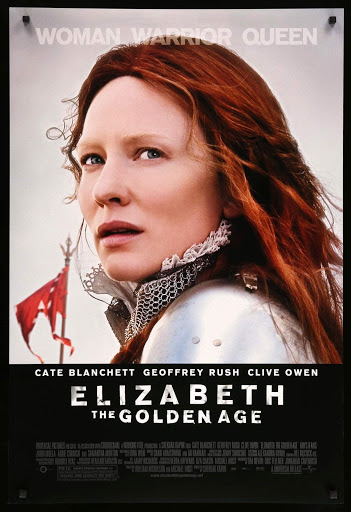
Cate Blanchett returns as Elizabeth I in the slightly underwhelming Elizabeth: The Golden Age

Director: Shekhar Kapur

Cast: Cate Blanchett (Elizabeth I), Geoffrey Rush (Sir Francis Walsingham), Clive Owen (Sir Walter Raleigh), Abbie Cornish (Bess Throckmorton), Samantha Morton (Mary Queen of Scots), Jordi Molla (King Philip II), Susan Lynch (Annette Fleming), Rhys Ifans (Robert Reston), Eddie Redmayne (Anthony Babington), Tom Hollander (Amias Paulet), David Threlfall (John Dee), Steven Robertson (Sir Francis Throckmorton), Adam Godley (William Walsingham), Laurence Fox (Sir Christopher Hatton), William Houston (Guerae de Espes)

Its 1585 and the reign of Elizabeth I (Cate Blanchett) has seen England enter a Golden Age. But tensions are rising with the Spanish and their king Philip II (Jordi Molla). The Spanish plot to replace the protestant Elizabeth on the throne with the catholic Mary Queen of Scots (Samantha Morton), sending their agents (including the likes of Rhys Ifans and Eddie Redmayne) to England to ferment rebellion. Can Elizabeth’s trusted advisor Sir Francis Walsingham (Geoffrey Rush) root out this potential rebellion? Or could this be a trap to lure England into a naval war with Spain and its chilling armada of ships?

Elizabeth: The Golden Age is a late sequel to the more influential Elizabeth, which mixed in the ruthlessness of The Godfather, with a sprinkling of sex in a darkly tinged Elizabeth England which seemed to drip conspiracy (setting the tone for costume dramas for the next ten years at least). Compared to its original, Elizabeth: The Golden Age seems a much more traditional piece of filmmaking. It’s luscious and handsomely filmed, with the darkness and oppression of the original replaced with golden hued lighting, sumptuous (Oscar-winning) costumes and some very impressive set-designs, all of which help to point up the glamour of the past in a way that seems much more similar to a 1970s epic than the more inventive work of the original.

It’s a part of the film’s idea of the country now enjoying the glory Elizabeth’s reign has bought, with the dark corridors replaced by the bright lights of peace and opulence. The film’s reimagining of Tudor history does still present some interesting perspectives, not least in the character of Elizabeth. Now firmly in middle-age – and committed to a life of celibate singledom – Cate Blanchett’s regally imperious Elizabeth is still emotionally vulnerable with a deep sense of longing in her. Unable to live the life of romantic freedom she could in her youth, she now lives an emotional life vicariously through her ladies in waiting, particularly Abbie Cornish’s sharp and knowing Bess Throckmorton.

This focuses on Elizabeth alternating between encouraging and discouraging (due to her own half-realised romantic longing) a romance between Bess and famed explorer Walter Raleigh. Played by Clive Owen at his most buccaneering (with an accent that playfully lies between Norfolk and New England, suggesting the American accent came from Raleigh), Raleigh bewitches the Queen with exciting tales of abroad – but with her unable to flirt with him fully as she wishes, Bess is encouraged to dance intimately with him among other romantic gestures. The most important thing throughout for Elizabeth is that it is she controls and dictates the relationship – and when the couple start to make their own decisions, it leads to disaster.

It’s all part of Michael Hirst’s (here sharing script writing duties with William Nicholson) imaginative reinvention of Tudor history (remixed into an exciting version of what could have happened). This also comes together very nicely in an interesting conspiracy thriller take on the Babington plot and the goals of the Spanish to use it to manipulate both Elizabeth and Mary Queen of Scots. The film is at its strongest when playing with historical expectations.

However, too often it plays into the sort of “Britain Triumphant” nonsense that made Michael Gove on release (and you imagine Laurence Fox today – here popping up as Christopher Hatton) thrilled. The British characters – Elizabeth, Raleigh, Walsingham – are brave, charismatic, ingenious and attractive. The villainous Spanish are thick-lipped, spittle flecked, bad-haired meanies with Philip II literally a sinister limping hunchback. No scene in Spain is complete without dark lighting, chanting monks, massive crucifixes and a general air of oppression. When ships sink, the camera doesn’t miss the chance to capture a crucifix sinking to the bottom of the briny. The Babington conspirators plot out of a dyers shop, where blood red dye drips all around them. The plot culminates in a “just missed her” point blank gun confrontation (the film’s most silly flourish). Subtle it ain’t.

And also it feels more Little Englander than its predecessor. Whereas the first film saw as much darkness and dirty dealing among the British as it did Europe, this film feels like a “Britain Stands Alone” against treacherous, lecherous, sanctimonious (or all three) Europeans. Sure the Armada was a terrific win for Britain – here with much of the credit reassigned to Raleigh who steers fire ships into the path of the Spanish ships (Drake is reimagined as a lumpen bureaucrat dazzled by Raleigh’s pizzazz) – but it owed as much (as even the Tudors themselves admitted) to the weather and luck as it did bravery and skill. Unlike the first film, Elizabeth: The Golden Age seems determined to define European and Catholic as suspiciously “other”. It makes for a less rewarding film.

And a less interesting one. For all its playing with psychology, this is a very much more traditional costume drama, celebrating Merrie Olde Englande where the original film challenged us to question our expectations. Kapur and Hirst settle for spectacle and style, over drama and truth. Blanchett is impressive as always – and the rest of the cast very sound – but this is a sequel that only lives as a counterpoint for the original.

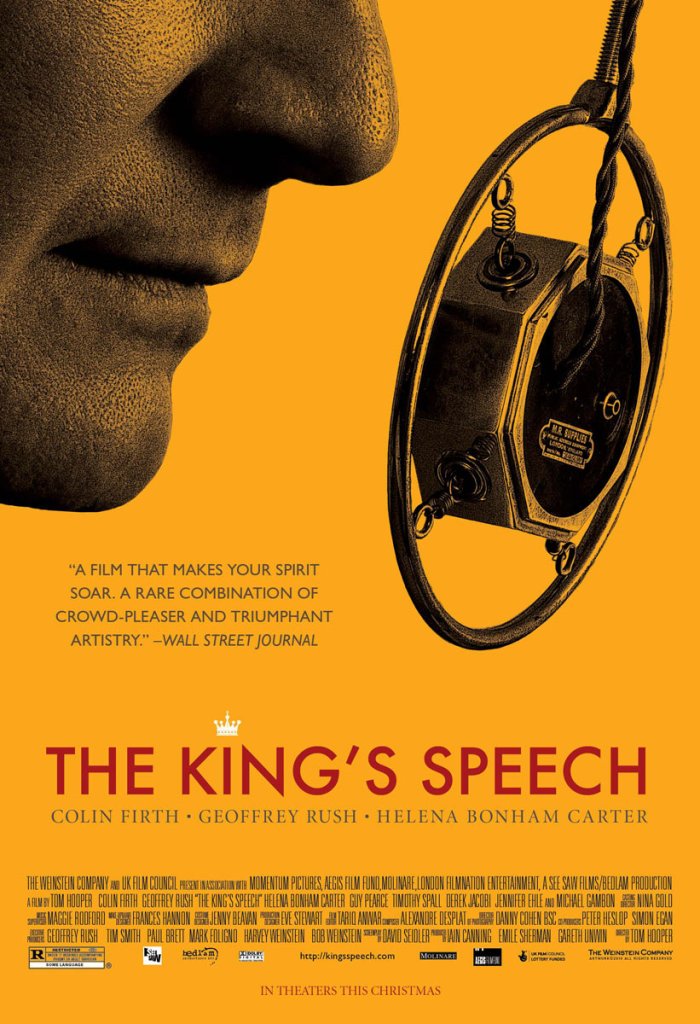
The King's Speech (2010)

The King's Speech (2010)

A King struggles to speak in this Oscar-winning heart-warmer that really works

Director: Tom Hooper

Cast: Colin Firth (King George VI), Geoffrey Rush (Lionel Logue), Helena Bonham Carter (Queen Elizabeth), Guy Pearce (King Edward VIII), Timothy Spall (Winston Churchill), Derek Jacobi (Archbishop Cosmo Lang), Jennifer Ehle (Myrtle Logue), Michael Gambon (King George V), Freya Wilson (Princess Elizabeth), Ramona Marquez (Princess Margaret), Anthony Andrews (Stanley Baldwin), Eve Best (Wallis Simpson)

It can be very hard to imagine the fear and pressure of not being able to trust your own voice. In a world where communication is valued so highly, what terror can it bring if you can’t easily express the thoughts in your own head? It’s a fear perfectly captured in the Oscar-winning The King’s Speech. Because in a constitutional monarchy, what purpose does the King have, but to be a voice for his people? And if the King can’t speak, how can he hope to fulfil his duty? The King’s Speech uses its empathy for those struggling with a condition many find easy to mock and belittle, to create an emotionally compelling and deeply moving story that is a triumph not of overcoming an affliction, but learning how it can be managed and lived with.

In the 1930’s Prince Albert, Duke of York (Colin Firth) is second-in-line for the throne. But unlike his charismatic brother David (Guy Pearce), he’s a tense man uncomfortable in the spotlight, whose life has been blighted by his stammer. As pressure grows from his father George V (Michael Gambon) to take on a more public role, he and his wife Elizabeth (Helena Bonham Carter) begin the process of consulting doctors for “a cure”. But the answer might lie with a former actor turned speech therapist Lionel Logue (Geoffrey Rush), whose techniques are as much psychological as they are practical. As he and the future George VI begin to work together, a tentative friendship forms as the taciturn king begins to open up about his feelings and find real friendship for the first time in his life.

The King’s Speech delivers a well-paced, beautifully written (an Oscar winning script from David Seidler) moving story of two unlikely outsiders who find themselves as unlikely kindred spirits. While it’s easy to see its Oscar win for Best Picture as a triumph of the academy’s conservatism (and there is a case to make, with the film’s heritage style and rather conventional structure and story-telling), but that would be to overlook the emotional impact it carries. I’ve seen the film several times now, and each time I find a lump forming in my throat as it sensitively and intelligently tackles themes of depression, isolation and fear and builds towards the heart-warming achievement of a man who learns his afflictions don’t have to define him.

Hooper (who scooped the Oscar for Best Director) draws superb performances from his actors, as well as bringing his own distinctive style to the film. He had already shown with his TV miniseries John Adams that he could shoot period material with all the immediacy and energy of more modern subjects, and it’s what he does here. His unique framing – with the actor’s often at the edges of the frame, in front of strikingly character-filled surfaces – not only grounds the drama in reality, but also captures a sense of the characters own personal isolation, helped by the frequent intimately-close shots. It helps the film avoid throughout from falling into the “heritage” trap, and instead feel (for all its royal family trappings) like a personal, intimate and real story.

And the intimacy is what makes it work so well – especially since so many of the scenes are made up of two characters sitting and talking, gently but with a slowly peeling honesty, about their own thoughts and feelings. The film is hugely successful in building up our empathy for the often over-looked struggles those who stammer go through. The terror that everyday events can bring. The burden of not mastering your own voice. The anger not being able to express yourself can bring. The resentment of how others can perceive your condition as anything from an irritation to a joke to something that with just a bit of help and effort you could brush aside like a sore toe.

The film has drawn praise for its depiction of stammering – although I am reliably told by an friend with an expertise in such things that the film’s connection of stammering with psychological trauma is old-fashioned and far from proven. But it realistically shows the burdens both it, and a troubled childhood, can bring and draws attention and sympathy to the condition in the best possible way.

A lot of this is helped by Colin Firth’s outstanding, Oscar-winning, performance in the lead role. From first seeing him, his George VI is a buttoned-up man with tension pouring out of every pore, who has chosen taciturn aggression as a defensive alternative to actually having to speak. Firth’s observance of mechanics of stammering is spot on (I wonder if he consulted Jacobi, who has had more than his own experience acting a stammer!), but above all he captures the deep pain, frustration and fear it can bring to a person. Firth’s King is a man who has lived a life feeling coldly shunned by most of his family – an upbringing he is clearly working hard to correct with his sweetly loving relationship with his own children. He’s bitter and angry – not only struggling to understand and express these emotions, but allowing them to crowd out his natural warmth, kindness and generosity which emerge as he opens up to Logue, and experiences genuine friendship for the first time.

Firth sparks beautifully with Geoffrey Rush who is at his playful and eccentric best as Logue. A warm, witty and caring man with a sharp antipodean wit and playful lack of regard for authority (the film mines a lot of fun from Logue’s playful teasing of the stuffed shirt nature of monarchy and the British class system), Rush’s performance is excellent. Just as the King has been dismissed by others for his stammer, so Logue has been dismissed as an actor for his Aussie accent and is scorned by his colleagues for his unconventional methods and lack of qualifications. But, by simply listening to a man who has been lectured to his whole life, who is frightened of himself and his situations, he helps him find a voice (in, of course more ways than one). Rush’s performance is essential to the success of the film, both as the audience surrogate and also a character with his own burdens to overcome.

Backing these two is a superbly judged performance of emotional honesty, matched with that take-no-prisoners bluntness we grew to know in the Queen Mother, from Helena Bonham Carter. The rest of the cast is equally strong. Pearce offers a neat cameo as a bullyingly selfish Edward VIII. Jacobi is overbearingly pompous as the face of the establishment. Jennifer Ehle is wonderfully playful as Logue’s put-upon wife. Andrews contributes a neat little turn as Stanley Baldwin.

Historically the film telescopes events for dramatic purposes. In fact, the future King’s therapy had started almost a decade earlier. Timothy Spall’s Winston Churchill – a rather cliched performance – is converted here into an early supporter of George VI during the abdication crisis (in fact Churchill’s outspoken support for Edward VIII nearly destroyed his career). Baldwin has been partly combined with Chamberlain. Other events are simplified. But it doesn’t really matter too much. Because the emotional heart of the story is true – and the relationship between these two men, and the positive impact they had on each other’s life is what make the film so moving.

Culminating in a near real-time reconstruction of the King’s speech announcing the outbreak of the Second World War – a brilliantly handled, marvellously edited and shot sequence with masterful performances from Firth and Rush – the film is an emotional triumph. Sure, it hardly re-events the wheel, with its struggle to overcome adversity story line and tale of royalty bonding with commoner – but it hardly matters when the rewards are as rich as this. With superb performances all round, in particular from Firth, Rush and Carter and sharp direction of a very good script, this is a treat.

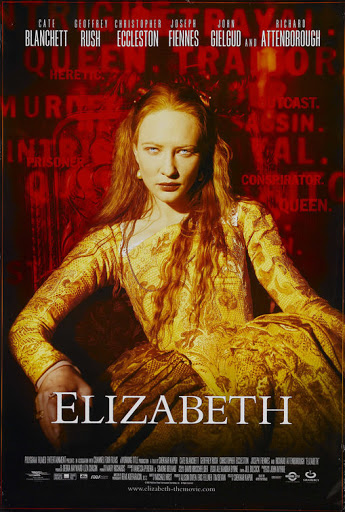
Elizabeth (1998)

Joseph Fiennes flirts with a regal Cate Blanchett in this landmark Tudor history flick Elizabeth

Director: Shekhar Kapur
Cast: Cate Blanchett (Elizabeth I), Geoffrey Rush (Francis Walsingham), Joseph Fiennes (Robert Dudley, Earl of Leicester), Richard Attenborough (Lord William Cecil), Christopher Eccleston (Duke of Norfolk), Kathy Burke (Mary I), Fanny Ardant (Mary of Guise), Vincent Cassel (Duke of Anjou), Eric Cantona (French Ambassador de Foix), Emily Mortimer (Kat Ashley), Kelly Macdonald (Isabel Knollys), John Gielgud (Pope Pius V), Daniel Craig (John Ballard), James Frain (Alvaro de la Quadra), Edward Hardwicke (Earl of Arundel), Jamie Foreman (Earl of Sussex), Terence Rigby (Bishop Gardiner)

Not many people would think of Elizabeth as being an influential film. But I would say the roots of all modern costume drama can be found in this British Tudor epic. Classic costume drama before had seen the focus on “thees and thous”, Greensleeves, lovely costumes, well-lit sets and a certain grandeur. Elizabeth re-set the table. Mixing The Godfather with Elizabeth R, Elizabeth turned costume drama into a world of dark schemes, political intrigue, violence and lashings of sex and passion. It would leave prestige Hollywood dramas of the 70s and 80s behind and turn costume drama into something far darker, grittier and sexual than ever before.

The film follows the early years of the reign of Elizabeth I (Cate Blanchett). The queen is young, naïve and passionate. She’s well educated and smart, but still impulsive and too much in thrall to her emotions. She’s far too open about her sex-filled love affair with Robert Dudley (Joseph Fiennes), new-made Earl of Leicester, and too inexperienced to heed the advice of either William Cecil (Richard Attenborough), who is pushing her towards the middle-ground of European alliances, or Francis Walsingham (Geoffrey Rush), who argues for Elizabeth to lead a strong nation, willing to take on its enemies. Conspiracies whirl around the court, as disaffected Catholics led by the Duke of Norfolk (Christopher Eccleston) plot to seize the crown and restore the “true religion”.

Elizabeth’s style is triumphant. Many of the scenes take place in dimly lit halls at court, and candlelit private chambers. The palace is seemingly made of nooks and crannies where conspirators and lovers can silently retreat and keep their intentions secret. The music – wonderfully composed by David Hirschfelder – is a mixture of urgent marches and murky sounding chords, which brings a watery effect to the soundtrack, as if every moment could twist into swamp-like traps of treachery. The film is briskly cut, frequently jump-cutting and putting together impressive montages of conspirators or events. 

The film starts with such a montage of protestants being burned: moving swiftly from a death warrant being stamped, to heads being brutally (and bloodily) shaved to an overhead shot of the cart carrying the martyrs to their deaths, culminating in their cries as the fires reach hold and finally overwhelm the soundtrack. It’s a sign straightaway that this will be very different from the traditional taste and decorum of a costume drama – and this film won’t flinch away from the grimness. Shekhar Kapur’s direction throughout is stylish, dynamic and uses editing and cinematic tricks to great effect (if at times with a little too much flash).

And the film is soaking in political intrigue – conspiracies and plots swell and unfold, with the film finally culminating in a clearly Godfather-esque purge of the Queen’s enemies. This is Tudor drama as Mafia flick, the lords of England little better than the heads of the five families, and Elizabeth the young heir they underestimate at their peril. It takes historical action and brings it definitely into a very modern feeling conspiracy thriller, using cinematic tricks and good editing to break away from the more staid period pieces of the 1970s into something much darker and atmospheric.

That also carries across into its exploration of sex, something that has got even more play in costume dramas since. It’s odd to think that the film was quite controversial at the time for showing Elizabeth and Dudley engaged in a passionate sexual affair, or for suggesting that the Queen “became a virgin” as part of piece of political showmanship. The film fronts and centres the young naivety of Elizabeth and her all-consuming fascination with Dudley – well played by Joseph Fiennes as a part romantic dreamer, part tragic weakling – and her slow realisation that there is no place for romance and passion in the world of being a queen.

Because the film is also a coming of age drama: how did Elizabeth become the Greatest Tudor Monarch? Cate Blanchett is inspired casting choice, dominating the film with a multi-faceted performance that sees Elizabeth change from an excited young girl into the distant authoritarian figure. Blanchett gets to play it all here, showing her impressive range, charting this changing personality as not always linear – so a scene of giddy romance can be followed by her sharpness when challenging the lords of England over matters of religion and then back to weakness. While you can argue the film undermines Elizabeth’s intelligence (particularly early on) what it does capture supremely well is her determination and her wilfulness. It also triumphantly turns her into a very human figure, Blanchett brilliantly showing a character forcefully – and consciously – reshaping herself to meet the demands of her office.

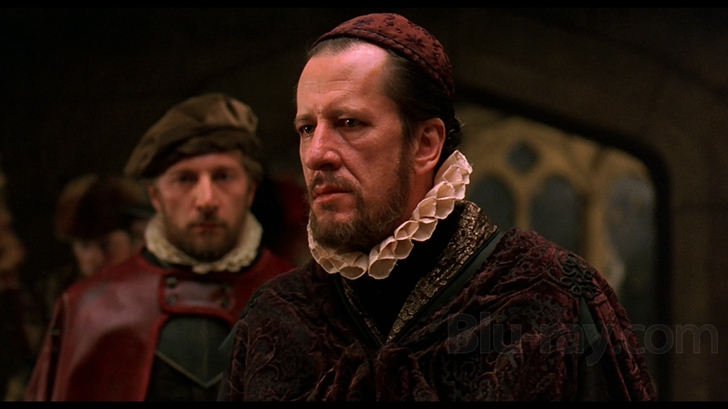
Around Blanchett, Kapur assembles possibly one of the most eclectic casts in history. Can you think of another film where you could see John Gielgud one scene and Eric Cantona the next? Richard Attenborough and Angus Deayton side-by-side? Fortunately, the core roles are played by assured and impressive performers. Eccleston makes for a wonderfully imperious, self-important Norfolk. Cassel goes gleefully over-the-top as the camp Anjou. Frain, Craig and others excel in early roles. The pick of the lot is a mesmeric performance by Rush as the sinister but loyal Walsingham, an eminence grise willing to work things in the background Elizabeth wants but cannot ask for, a wartime consigliere, several steps ahead of the rest and whose loyalty to Elizabeth is matched only by his ruthlessness.

Historically the film has only a passing resemblance to reality. Elizabeth’s political astuteness was sharper from the first than the film gives her credit for (although, as its aim is to stress how humanity must be sacrificed for power, there are artistic reasons for this). Bishop Gardiner, leader of the anti-Elizabeth church faction, had died during the reign of Mary I. Cecil is played as an unimaginative old man, when he was in fact in his thirties when Elizabeth came to the throne, and her most trusted and wisest advisor. Numerous events are telescoped and combined – the Ridolfi plot which (roughly) climaxes the film took place 14 years into Elizabeth’s rule, not within at most a year. The film ends with a series of historical captions, not a single one of which is actually true. Michael Hirst’s script plays fast and loose with history (and with the odd dodgy line along the way) but he’s got a flair for bringing out the drama.

But does it matter? After all, who really looks to films for their history lessons? What Elizabeth is trying to do is to turn history into cinema, and this it does to glorious effect. It also managed to change our idea of what a “history film” was. After Elizabeth, history dramas would turn increasingly into darker tales, tinged with sex and conspiracy. But this film remains one of the best, directed with real flair and style by Kapur and powered by a superb performance by Cate Blanchett. Elizabeth gets more or less everything (apart from the facts of course) stylishly right and tells English history with gripping and entertaining intensity.

The Book Thief (2013)

Sophie Nelisse is The Book Thief in this worthy, dull adaptation

Director: Brian Percival

Cast: Geoffrey Rush (Hans Hubermann), Sophie Nélisse (Liesel Meminger), Emily Watson (Rosa Hubermann), Nico Liersch (Rudy Steiner), Ben Schnetzer (Max Vanderberg), Heike Makatsch (Liesel’s mother), Barbara Auer (Ilsa Hermann), Roger Allam (Death)

Every year you get prestigious film versions of novels that have soared up the bestseller lists. Some of these are good or even great films. Other are so lifeless, listless and lacking in spirit they leave you wondering what on earth people got so fussed about the original for. That’s the case here with The Book Thief.

In late 1930s Munich, young Liesel (Sophie Nélisse) is fostered with a local decorator Hans (Geoffrey Rush) and his wife Rosa (Emily Watson). Liesel has a fascination with books – despite not being able to read and write – and soon Hans is teaching her literacy. Liesel has a compulsion to “borrow” books – first from a burning pile of Nazi forbidden tomes, then from the library of the wife of the local mayor. But it’s dangerous to draw too much attention to the family, particularly when they are hiding a young Jewish man, Max (Ben Schnetzer). 

I’ve not read The Book Thief. I can’t say that I feel the need to dash out and do so after this bland, middle of the road picture that makes Fascist Germany seem very picturesque. The film largely fails, like so many films before it, to translate the joy of reading into a visual language so the whole “book thief” concept of the title quickly gets pushed to the margins in favour of a series of episodic events based around Nazi Germany and Second World War tropes that already feel a bit tired. 

Percival’s award-baiting film doesn’t seem like it wants to bring (or is capable of bringing) something unique or interesting to the setting, instead going through the motions as prettily as possible. And the film does look great, I will give it that. It also sounds pretty damn good, not least through a playful and rich score from John Williams (his first original score for a non-Spielberg film for decades). But it never really gets anything special from the content. In fact, that very chocolate-box beauty of the film seems to run contrary to the setting of Nazi Germany. The awards-friendly beauty envelops the film like treacle.

The book was written from the prospective of Death, but, the film seems to drop this unique aspect as soon as it possibly can. Again, it’s a sign that the film cannot reproduce what worked in the book – by stripping out its most unique and interesting point, it makes the film feel as generic as it possibly can. Roger Allam is a wonderful choice as the richly voiced narrator – but he’s so rarely used in the film that when Death talks about how fascinating he found Liesel you are simply left wondering why. 

In fact that why is a real problem with the film – it’s what you’ll be asking all the way through. Why? Why is anything really happening? Why is Death telling us how different and striking this story is when everything we see in the film feels pretty familiar? What is the point of this film or the message it is trying to give us? For a film that tackles war, fascism, persecution of the Jews, and childhood innocence, it seems empty all the time.

And that’s the problem with the film. It’s all about the pretty presentation. The characters speak with forced German accents that make it feel even more like a pretty Hollywood Golden Age film. (By the way the bad Germans, like the Nazis, they speak only in German. Make of that what you will.) The acting is pretty good, Sophie Nélisse is a great find as the heroine. But there is nothing special about it at all. It’s seemingly made entirely as a prestige product for potentially winning Oscars. Any of the depths of uniqueness of the book seems to have been shaved off in service of that, and we’ve been left with a chocolate box that feels like it’s lacking the sweet richness you’d expect to find in it.

Gods of Egypt (2016)

Just your standard Giant Meets Boy Gets Chased by Female Assassins Riding Giant Worms Story. Really didn’t anyone learn anything from Dune?

Director: Alex Proyas
Cast: Nikolaj Coster-Waldau (Horus), Gerard Butler (Set), Geoffrey Rush (Ra), Benton Thwaites (Bek), Chadwick Boseman (Thoth), Elodie Yung (Hathar), Courtenay Eaton (Zaya), Rufus Sewell (Urshu), Bryan Brown (Osiris)

Oh good lord where to begin. It’s not so much that this is a terrible film – although it is. It’s not offensive or unpleasant. It’s just a film that is almost impossible to take seriously whatever. It’s a fat, bloated, overblown mess where the plot makes almost no sense, the design is totally ridiculous, the acting bored or unengaging, and the directing totally lacking any charisma. It’s a film you can only laugh it, except for the fact that it’s so lamentably badly that it’s not even that funny. There is so little joy in the making of this bloated fart of a picture, that even as a joke it falls flat.

As far as I can tell, in a fictionalised ancient Egypt the Gods live among men. Horus’ coronation as the new king is interrupted by his uncle Set who seizes the throne, removes Horus’ eyes and sets about turning the realm into a dictatorship. He has some sort of overall plan but I’m really not sure what it was. Something to do with immortality or something. The film barely cares so neither should you. Set is a baddie. Horus is supposed to be a goodie, I guess, but he is such a humourless, arrogant, cold and (above all) boring God you probably won’t give a toss about him.

The film is a disaster almost from start to finish. In a decision that guarantees giggles every few minutes, the Gods are all 9 feet high, making the humans look like chippy midgets. Poor forced perspective hammers home this ridiculousness every few seconds. If this didn’t make the Gods silly enough, they also have some bizarre metal “battle modes” they transform into, which along with some piss poor special effects makes them look like refugees from Mighty Morphin Power Rangers. The colours are bright and primary and the sets all have the sheen of CGI, lacking any substance. The design decisions cross swiftly from daring into dumb. If you ever wanted to see a flying chariot pulled by winged scarabs or to see mix and match female hitmen ride giant worms chasing a giant and his normal sized friend, well hallelujah your day has come, this is the film for you.

The script, such as it is, is a loosely connected series of incoherent events. The acting is simply awful. Coster-Waldau completely lacks the big screen presence to carry the movie, his upper crust arrogance from Game of Thrones here comes across as insufferable and dull. Thwaites comic relief is about as funny as a hernia and his quest to save his true love has all the drama of running to catch a bus. Boseman aims for wisdom and grace but delivers camp and affectation in a truly terrible performance. Butler does at least have a bit of charisma, even though Set is such a poorly defined character he’s impossible to get interested in. Various other actors chip in autopilot performances for the cash. The female characters are little more than props. Geoffrey Rush needs a new agent: seriously how much money does he need?

The biggest problem though is it isn’t quite ridiculous, campy or shite enough to be a camp classic. Instead it’s just boring. It doesn’t have the sort of cosmic sweep or visual splendour to give you something to look at. Instead it’s loud, boring and stinks like animal droppings. That’s the worst thing of all: not even as a camp classic will this be remembered. Simply crap.