Tag: George Clooney

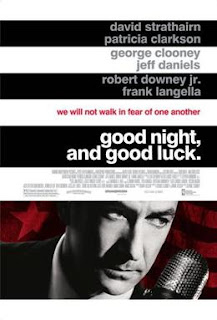
Good Night, and Good Luck (2005)

Good Night, and Good Luck (2005)

The importance of journalism is loudly praised in this engaging but faultlessly liberal Clooney film

Director: George Clooney

Cast: David Strathairn (Edward R Murrow), George Clooney (Fred Friendly), Robert Downey Jnr (Joseph Wershba), Patricia Clarkson (Shirley Wershba), Frank Langella (William Paley), Jeff Daniels (Sig Mickelson), Tate Donovan (Jesse Zousmer), Ray Wise (Don Hollenbeck), Helen Slayton-Hughes (Mary), Alex Borstein (Natalie), Thomas McCarthy (Palmer Williams)
In the early 1950s America seemed to be in the paranoid grip of one man. Senator Joseph McCarthy was the tip of a spear of anti-Communism, targeting every part of American life. To have even had thoughts that might be seen as socialist or communist, was enough for you to be considered an Anti-American and potential enemy of the state. McCarthy led a campaign to unearth Communist spies and sympathisers in the government, military, business, academia and the media. Blacklists and persecution were rife, and the slightest past association could condemn you. It took many years before anyone took a stand against this.

One of the leaders of this stand was renowned journalist Edward R Murrow (David Straithairn). Famous for his broadcasts from London during the Blitz, Murrow hosted an investigative journalist programme See It Now. A passionate believer in the power of television to educate and inform, Murrow and his producer Fred Friendly (George Clooney) are appalled when Air Force officer Milo Radulovich is condemned to be discharged, based on members of his family being communists and a sealed envelope of charges he was never allowed to see. Despite the worries of network CBS, Murrow, Friendly and their team run an episode of the show that exposes McCarthyism and its injustice, the first of several investigating McCarthy. But what price will they pay?

Clooney’s well-made, heartfelt film, is an impeccably liberal piece of film-making that is a very sincere tribute to the potential of television to be more than just an idiot’s lantern. Clooney frames the film with Murrow accepting a lifetime achievement award in 1958: he uses the opportunity to make a speech rebuking the room full of executives and journalists for squandering the potential of television to inform rather than just entertain. Murrow would of course be horrified by what TV became. Good Night, and Good Luck is a rose-tinted view of television journalism at its pioneering best: just as the end result of See It Now being gutted by cuts is a realistic look at where the scales will fall if entertainment and money are balanced with principles and education.

Clooney’s father was a TV journalist, while Clooney himself majored in journalism. The cut-and-thrust of the newsroom is as intrinsic to him, as is a desire to investigate and inform as part of a healthy political debate. Good Night, and Good Luck captures the mood of a newsroom with a convincing confidence. Journalists debate the fine point of stories, editors rush to assemble films and executives balance the pros and cons. It’s all shot in a beautiful monochrome, that exquisitely captures the haze of cigarette smoke all this takes place in. It’s a shot with a handheld urgency, sharply cut, that puts us into this world of cut-and-thrust media decisions.

And it makes clear what TV news can be. Not agenda led, but facts led. Not kowtowing to power, but challenging it to justify itself. Looking into matters that are important, not sensational. Wanting to inform people and expand their understanding, rather than pander to the lowest common denominator. Murrow’s shows are scrupulously fact-checked, and allow full rebuttal from their subject. He comes at story not with a pre-supposed position, but based on where the facts and his editorial judgement leads him.

It all takes place in a TV set that’s really striking in its humbleness, compared to the operatic news sets we see today. The 1950s studio is small, cramped and simple – and by contrast the ideas are large, expansive and complex. Murrow’s set is little more than a chair with a TV monitor. His producer Fred Friendly, literally sits at his feet to hand him notes and cue him in with announcements and VT. The See It Now set contrasts vividly with the more grandiose sets for Murrow’s other show, a series of puff piece interviews with popular stars like Liberace. (While Murrow learns his scripts by heart for See it Now, he professionally reads through a series of cue cards for these for-the-money interviews).

Murrow and Friendly also won’t compromise. They defend their right to make the show to CBS President William Paley (a brilliant performance from Frank Langella), who prides himself on no direct intervention on the news but pushes for a less controversial line. The entire team is consulted on every issue. The newsroom is a place where our better angels can come out.

But it’s still happening in an America where people are careful about what they say and do. A subplot concerns reporters played by Robert Downey Jnr and Patricia Clarkson: secretly married – contrary to CBS policy – like those suffering from McCarthyism, they must live a lie in order to protect what they have. See It Now is in danger of criticism, cancellation and attack. Another CBS anchor, Don Hollenbeck – perfectly played by Ray Wise (and few actors are better at suppressed desperation than Wise) – is dealing with constant media persecution for his perceived communist sympathy. Murrow and Friendly are not perfect: they sometimes dodge the fights they can’t win and Murrow in particular shrugs off or ignores Hollenbeck’s concerns with tragic results.

But, as Clooney makes clear, the good outweighs all the rest. As Murrow, David Straithairn (Oscar-nominated) has never been better. He perfectly captures Murrow’s mannerisms, but mixes it with wonderful measure of honesty and decency, mixed with a degree of pride and self-righteous certainty. He dominates the film (with Clooney as a generous foil) and carries much of the film’s liberal message that smart, intelligent, dedicated men can change the world.

Good Night, and Good Luck might be the most soft-left liberal film made in Hollywood in the last fifteen years. But it is a fine example of film-making craft and the earnest honesty with which it is made in its own way inspiring. It’s Clooney’s finest film and it’s grounded in his strengths: fine actors and writing carrying a sincerely told message.

The Midnight Sky (2020)

The Midnight Sky (2020)

Dystopian end-of-the-world drama gets dull and dreary in this misfire

Director: George Clooney

Cast: George Clooney (Augustine Lofthouse), Felicity Jones (Dr “Sully” Sullivan), David Oyelowo (Commander Adewole), Kyle Chandler (Mitchell), Demián Bichir (Sanchez), Tiffany Boone (Maya), Caoilinn Springall (Iris), Ethan Peck (Augustine), Sophie Rundle (Jean)

The world has been evacuated after an unspecified radiological disaster, with the survivors bound for K-23, a newly discovered moon of Jupiter capable of supporting life. The only person left on Earth is Augustine Lofthouse (George Clooney), suffering from a terminal illness. He remains behind at an arctic base to warn returning space missions. The returning mission Aether – crewed by Jones, Oyelowo, Chandler, Bichir and Boone – are en route, but to make contact with them Lofthouse must travel across the arctic to a back-up transmitter, accompanied by a mysterious wordless child called Iris (Caoilinn Springall) who seems to have been left behind during the evacuation.

The Midnight Sky is the largest, most technically ambitious film Clooney has directed. Did the focus on the technical aspects mean he took his eye off other elements? Even the ones his previous films have been strong on: dialogue and character. The Midnight Sky looks great and has some impressive effects. But it is a dull film, lacking pace or energy, populated by paper-thin characters and often feeling like a Frankenstein-like stitching together of elements of other, much better, films.

It splits its focus between two story lines: one a survivalist two-hander between Clooney and child actress Caroilinn Springall; the other a “journey home against the odds” space mission. The first carries a little more interest, if only because Clooney manages to brilliantly convey loneliness, isolation, sadness and how terminal illness increases the effects of all of these. There is also emotional depth from his growing bond with Iris: the two of them playfully flicking peas at each other over dinner and his protecting her from the dangers outside. This is shot in some stunning Iceland vistas and shows a competent selection of various traditional survivalist set-ups during the struggle to complete the journey. It’s not exactly original, but at least it holds the interest.

That interest isn’t found in the space scenes – although the lack of originality is. How did Clooney fail to notice that he assembled a terrific cast of actors, but then failed to give them so much as a whisper of a character to play between them. This crew are terminally unengaging 2-D characters, whose dialogue echoes tropes of other films. Despite the dangers they encounter while navigating a course to Earth (that inevitably takes them through uncharted meteor storms), we are never really given a reason to really care about these characters (all the sad mooning over holograms of the families they left behind doesn’t actually make us feel like we know them).

The sense of nothing we are seeing here actually feeling new is key, and the main problem with the whole film. Countless other films have covered world-ending events. Clooney’s battle to cross the arctic and survive carries more than an echo of The Revenant by way of The Road. The struggles in space have lashings of Gravity with an Interstellarvibe. And those are just for starters. Even the final narrative twist (which you can probably see coming) echoes other film twists. For all the handsomeness of the film, it never feels fresh, always more of a tribute remix of other superior films that you should probably just consider rewatching instead.

That’s Clooney’s main failing here. As if he was so focused on getting the technical elements spot on, he never checked if the patient had a pulse. The Midnight Sky, knitted together from the offcuts of other films, has only the vaguest of heartbeats. Nothing is original and virtually no character in it ever feels either fully-formed or someone we care about. Others, all too obviously, serve as nothing but narrative devices. There are some wonderful shots and a lovely score from Alexandre Desplat. But narratively, the film often feels too cold, distant and emotionally dead. It ends up feeling far, far longer than its two-hour run time.

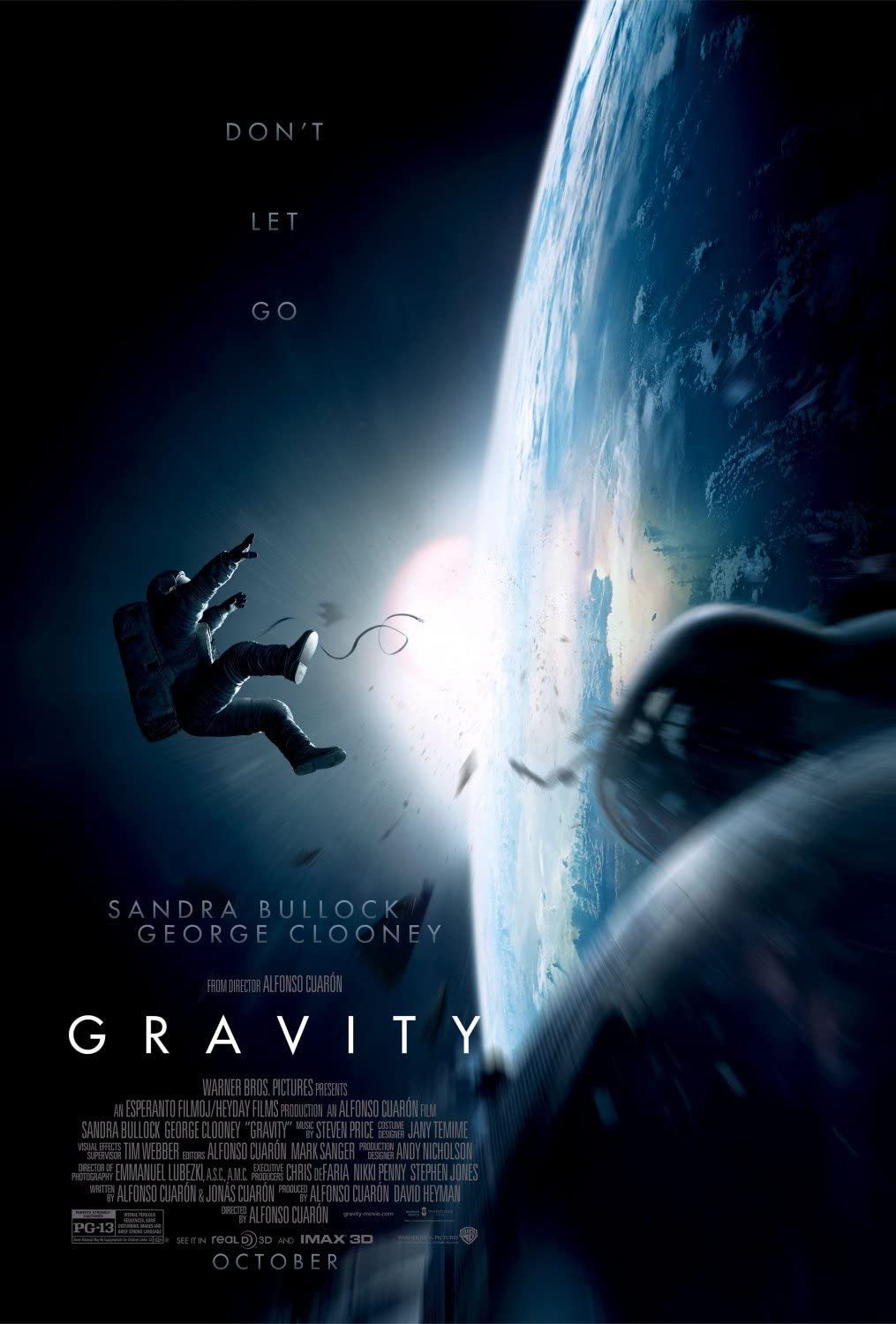
Gravity (2013)

Sandra Bullock is stranded in space in Gravity

Director: Alfonso Cuarón

Cast: Sandra Bullock (Ryan Stone), George Clooney (Matt Kowalski), Ed Harris (Voice of Mission Control)

It’s often been said space is mankind’s final frontier. It’s beautiful and awe-inspiring. But it’s also a terrible place, a void where the normal rules that dictate how our bodies operate are completely suspended. We can only breathe what we carry with us and the lack of any atmosphere or gravity means a few metres might as well be a million miles. It’s in many ways the perfect conditions for a survival film – which, at its heart, is what Gravity is.

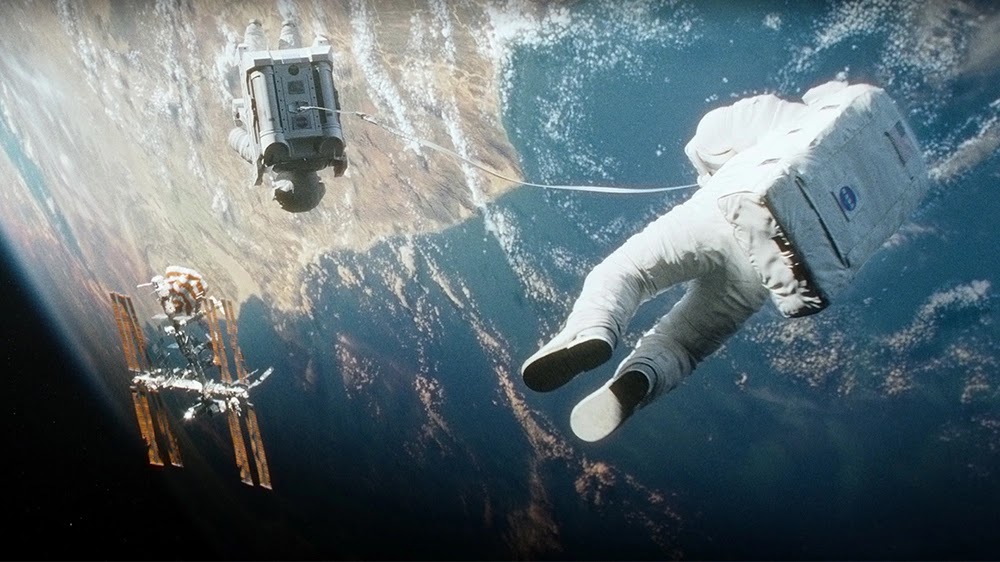
On a mission in space to repair the Hubble telescope, a collapsed satellite triggers a chain reaction of space debris hurtling in orbit at extreme velocities. Turned into a vast number of deadly bullets flying completing an orbit once every 90 minutes. This shrapnel destroys the mission, leaving specialist Dr Ryan Stone (Sandra Bullock) and mission commander Matt Kowalski (George Clooney) as the only survivors – and left with their only chance of return to Earth being to travel somehow to one of the other space stations in orbit and hitch a ride home on one of their escape pods.

Cuarón’s film is an engrossing and edge-of-the-seat 90 minute thrill ride, combined with a quietly meditative reflection on how our internal pain can make us drift through life. The film is titled Gravity but it’s there to draw attention to what is missing in the film. Not only the obvious – the lack of pull on her body – but also the lack of grounding in Stone herself. In mourning for the loss of a child, Stone has very little ties to earth or indeed anything. She is drifting through her life emotionally, much as she drifts through space itself. When asked why she likes it up in space, she replies “the silence”. She’s a woman untethered from life on earth in more ways than one.

So this is a film that is not just a survival but also a rebirth. We see Stone go through immense, dangerous moments of tension and terror, battling against all the odds to survive and return home. At the same time, the film carries an emotional weight because it’s also about Stone making a conscious decision to survive, to decide to re-engage with and commit to the world – to choose life if you like. Someone suffering from grief and depression as she does at the start of the film, may well have understandably embraced despair. Instead, the film is her coming to terms with the loss of her daughter, and a resolve to live her life for her.

All of this happens of course in the vast majesty of space, a vision beautifully captured by Cuarón. Filmed in an immersive style, with several long takes that don’t draw attention to themselves – a shot length that serves the purpose of the story not vice versa – and Cuarón is happy to use quicker cuts where needed. The camera follows the journey of Stone in epic and intimate detail, with shots exchanged between vast panamas of the astronauts as dots in space, to extreme close ups that bore into Stone’s eyes and capture her emotions from guilt, to hope, to terror. 

The long opening shot, that ducks and weaves around the weighless astronauts in space as they repair the Hubble telescope is of course a technical marvel, but it also brilliantly established the situation and the joy and fear of being an astronaut, of being allowing in the darkness and emptiness of space. It sets the scene perfectly from later shots that throw you into the adrenalin burning terror of spinning wildly in space with no resistance to slow you down or dodging debris moving at thousands of kilometres per second through space.

In fact the film is almost unbelievably tense – probably the most tense space film since Apollo 13 and in that we actually knew they were coming home alive (in a nice nod to that film, Ed Harris ‘reprises’ his role as mission controller in a voice-only cameo). With its brilliant immersive style, and the emotional bond it swiftly builds with the viewer, it means you will find you hardly draw breath along with the heroes. I’ve seen the film three times and each time after the first viewing I was sure it wouldn’t have the impact the first viewing had. But goddamn it, it works every time. The film is quick – at little under 90 mins – but you won’t feel it (in fact if anything you might be relieved).

Cuarón won the Oscar for direction, and the film is not just a load of flash and technical marvel (although it has a lot of both). It’s grounded in a very simple emotional story of survival, matched with an internal story (not overplayed) of resolving and dealing with grief. A lot of that works from the effectively unflashy performance from Sandra Bullock, who is very good in a part that requires not just physical but also emotional commitment. She’s well supported by George Clooney, who is perfect as the charming but calm and controlled mission commander who mentors her through the early stages of survival in space.

The film has a series of breathtaking set pieces – collapsing Hubbles, spinning astronauts in space, desperate space walks trying to grab any inch of objects to stop them drifting into space, collapsing space stations, burning up on re-entry – all of them shot with an elegance that marries technical excellence and dazzling camerawork and vision with a powerful story. A bag of tricks but one that is delivered with real heart.

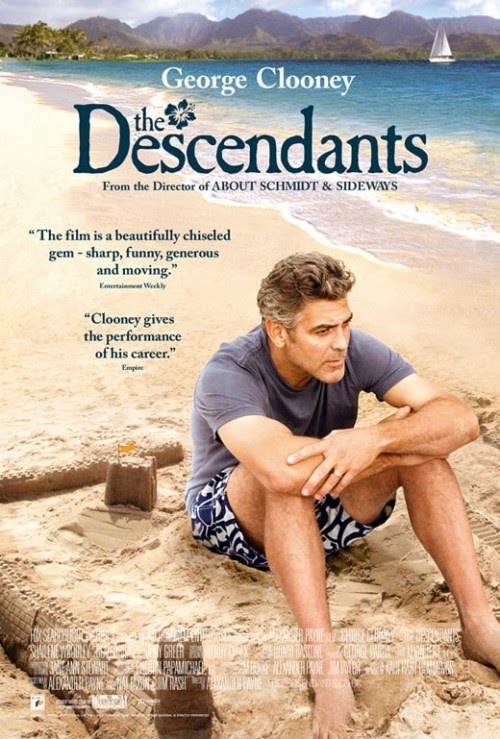
The Descendants (2011)

George Clooney is a family man dealing with difficulty from The Descendants

Director: Alexander Payne

Cast: George Clooney (Matt King), Shailene Woodley (Alex King), Amara Miller (Scottie King), Nick Krause (Sid), Beau Bridges (Hugh), Judy Greer (Julie Speer), Matthew Lillard (Brian Speer), Robert Forster (Scott), Patricia Hastie (Elizabeth King)

Anyone expecting a straight comedy hasn’t been familiar enough with Alexander Payne’s career. Payne’s movies are triumphant, slightly quirky, explorations of crisis in the lives and emotions of middle-aged, middle-class men. Few directors do it as well, bringing both a lightness of touch and a profound understanding of the tragedy that can underpin ordinary lives. He has an astute understanding of the pain of opportunities lost. And The Descendants is full of these, just as it is full of the hope you can gain from seizing new opportunities in the future.

Matt King (George Clooney) is a Honolulu attorney who is the last trustee representative in his vast family for a site of 25,000 pristine acres on Kauai. With the trust due to end, Matt is under pressure from his family to sell the land for hundreds of millions and gain them all their financial security. In the middle of this, his wife suffers a boat accident that leaves her in an unrecoverable coma. Matt has to rebuild the relationship with his two daughters Alex (Shailene Woodley) and Scottie (Amara Miller) as well as deal with the reveal this his wife was planning to leave him for her lover, a married estate agent Brian Speer (Matthew Lillard).

Payne’s film is heartfelt, low-key and a marvellous showcase for George Clooney who has probably never been better as the grieving and shocked Matt, struggling to come to terms with revelations about his own life that come completely out of the blue. In particular, his own realisation that he has left far too much of his family life to his wife, and his wife has in any case a less than perfect relationship with their two troubled children. Alex (Shailene Woodley) has a history of substance abuse and hell-raising while her sister Scottie (Amara Miller) is using bullying as a way of acting out. King, its clear, has let his connection with his family drift away with his consumption in his work, a character flaw that leaves him with a serious of painful revelations about his own failures.

These revelations are expertly acted by Clooney, who gives the part a rawness and edge beneath his natural charm that becomes deeply involving. He makes Matt both desperate, bewildered and confused as well as kind, decent and forgiving. Payne’s films never present easy solutions to problems, and frequently hold up their leading characters as being the root of their own troubles. It’s the case here as well, as King must learn to realise that many of the problems he is discovering in his family life come out from his own mistakes and lack of focus. How should he respond to his discovery of his wife’s infidelity? How should he decide to react when he discovers his wife’s lover had his own family? 

It’s never the easy choice, and it’s never a clean and easy solution that wraps everything up neatly. The problems we encounter will eventually require us to make intelligent, emotional decisions and accept there are no clean answers. When we meet Brian Speer, he’s not a bad guy just a bit weak. It’s the same throughout. Every character has depth and hinterland. Robert Forster as Matt’s father-in-law may seem foreboding and harsh – but then he is perhaps right to blame Matt for his daughter’s unhappiness, even while he never holds it too harshly against him. Alex’s spaced out boyfriend Sid (Nick Krause) suddenly surprises Matt with his emotional insight into family dynamics.

And of course, his daughters who seem tearaways are in fact far more mature and supportive than might have been expected. Shailene Woodley is excellent as Alex, a young woman who doesn’t blame but demands to be part of solutions, and supports her father to make the tough calls. And the moral problems keep coming, mixed with surrealist comic touches. It’s the sort of film where Matt can make a shocking realisation about his wife, and then return to his table in his restaurant to be assailed by a garish traditional music band.

Despite all this Payne’s film captures a sense of affection and warmth without succumbing to sentimentality or easy solutions. The sort of satisfying outbursts of pain and cathartic anger are largely avoided for far more mature and realistic feelings of joint responsibility for problems and an acceptance that what our lives become are what we make of them as well as other people. It’s a sort of complex avoidance of black-and-white solutions that help to make the film feel truly real and grounded. While not many of us need to worry about the pressures of making decisions that will make us millionaires, all of us have had to deal with our own mistakes leading to others making mistakes and the emotional fallout that this can bring. 

In the centre of Payne’s emotionally intelligent film are these excellent performances, with George Clooney hugely unlucky to miss out on an Oscar for his emotionally intelligent and rich performance here. Payne’s film takes the male mid-life and family crisis and subtly analyses from a host of positions and angles, not just the man itself. We can feel sorry for a bloke who has suffered blows but also see his own decisions have contributed to his position. It makes for a delightful and heartfelt film, which is beautifully made by Payne and superb showcase for intelligent, grown up film making.

Syriana (2005)

George Clooney gets crushed by the corruption of major oil companies in Syriana

Director: Stephen Gaghan

Cast: George Clooney (Bob Barnes), Matt Damon (Bryan Woodman), Jeffrey Wright (Bennett Holiday), Christopher Plummer (Dean Whiting), Nicky Henson (Sydney Hewitt), David Clennon (Donald Farish III), Amanda Peet (Julie Woodman), Peter Gerety (Leland Janus), Chris Cooper (Jimmy Pope), Tim Blake Nelson (Danny Dalton), William Hurt (Stan Goff), Mark Strong (Mussawi), Alexander Siddig (Prince Nasir Al-Subaai), Mazhar Munir (Wasim Ahmed Khan), Nadim Sawalha (Emir Hamed Al-Subaai), Akbar Kurtha (Prince Meshal Al-Subaai)

The more I think about Syriana the more I think Stephen Gaghan was unlucky. If he had made this story today, you can be sure this would have become a ten episode series on HBO or Netflix. Instead, Gaghan made it into a film in the early 2000s. This means the bloated, over expanded plot gets crammed into two short hours at the cost of much of the emotional and political complexity it needs. Without this Syriana is an angry lecture, something that throws some interesting observations at the viewer, but basically resorts more often to shouting at them about how shit the world is. With its interlinking storylines and “serious” content it looks like intelligent filmmaking, but it’s more like a misguided opportunity.

Gaghan’s film follows four plotlines. Bob Barnes (George Clooney) is a CIA field agent, and expert on the Middle East, coming to end of his effectiveness as a field agent, struggling to get his superiors in Washington to understand the complexities of Middle Eastern oil politics. He is ordered to arrange the assassination of the eldest son of the Emir of a Persian Oil Kingdom Prince Nasir Al-Subaai (Alexander Siddig). Nasir is suspected of the States of harbouring terrorist sympathies. In fact he is a passionate reformer, desperate to modernise his country. Nasir is working with Bryan Woodman (Matt Damon) a representative of an American energy company, whose son is tragically killed by an electrical fault at one of the Emir’s estates during a business trip. The Kingdom is also being courted by a newly merged US oil company Connex-Killen for exclusive drilling rights – with attorney Bennett Holiday (Jeffrey Wright) tasked to ensure that nothing stands in the way of the merger and the riches that will follow. As these three storylines of political and economic oil matters interweave, migrant oil worker Wasim (Mazhar Munir) struggles to find work in the kingdom, and is slowly wooed by extremists.

Gaghan directs his own script and that might be his first mistake, as he is not a confident or imaginative enough director to craft something truly dramatic and engaging out of this highly researched, technical script. Instead, the script – or rather the research behind the script – drives events at every turn and leads to scenes that feel like they should be intelligent but tend to be actors reciting reams of dialogue and stats at each other. Combined with that, the film has a slightly smug preachy tone to it, desperate to let us know how shady and corrupt the world is and how trapped we are on a continual downward spiral of greed and corruption preventing us from improving and changing the world. It doesn’t always make for compelling viewing.

On top of that the complexity of the narrative is often mistaken for smartness, but often feels rather more like rushed and sudden execution of a story that doesn’t really have time to breath. Frankly the story that Gaghan wants to tell needed 8-10 hours of screen time and he doesn’t get it. Instead he throws everything and the kitchen sink into this sprawling study of oil based corruption. From Washington, to private oil firms, to intelligence agencies, to the cash rich families sitting on top of these oil geysers everyone gets a kicking as part of the same sordid mess that has led to the world being dominated by the rich and the regular guys of the middle east being left adrift and easy picking for extremists.

It feels like it should carry real weight, but it never really does because it’s hard for us to get a handle on what is going on half the time and even less harder to care once you realise the film has sacrificed character and motivation for the drive of putting together its polemical view of the world. The film is stuffed with actors, but its striking how few of the characters they play make an impression. Every part is played by a star – except of course for the inexplicable casting of jobbing 1980s Brit TV actor Nicky Henson as an arrogant oil exec, a casting so outlandishly out of place for an actor you are more likely to see in One Foot in the Grave that I kind of love the film for it – but none of the roles is really much more than a cipher.

That’s not to say there isn’t decent work. Christopher Plummer brings great heft and menace to a law firm Washington bigwig. Jeffrey Wright nailed so well playing this sort of on-the-surface meek functionary who quietly learns (albeit reluctantly) to play the game as well as the loudmouths that he has played the same role several times afterwards. Alexander Siddig owes much of his post DS9 career to his exceptional thoughtful and sympathetic performance as an Arab Prince whose forward-thinking is a disaster for the governments who want to keep using his state as an ATM. 

George Clooney won a generous Oscar (it was surely partly a compensation for not winning anything for Good Night, and Good Luck that year) but gets the meatiest role as Bob Barnes, the tired and cynical CIA agent who slowly begins to question the orders he is given and the world he has been working to build for his masters. His story contains the most actual drama, possibly why it stands out – poor George gets a rough ride here, tortured, arrested, bruised and blooded. It’s pretty straight forward stuff for an actor of his quality (Clooney plays it with a world weary outrage) but it’s also the most memorable storyline of a film straining at every moment to be important. 

It’s quite telling actually that the film’s most memorable speech is put into the mouth of Tim Blake Nelson’s oil executive (“Corruption is why we win!”) a character so lightly sketched out he barely appears other than making that speech. It’s a sign of the weakness of the film: characters serve purposes to the narrative and then disappear. These lightly sketched characters act out a lecture on world politics and economic-energy-driven corruption. Syriana needed room to breath in order to become a drama rather than a lecture. Instead it’s a decent workmanlike movie with ideas that it never manages to really express in a way that will make you care. When it tells you rich businessmen love money and powerful politicians love power you’re likely to basically say “yeah. I know. Tell me something new…”

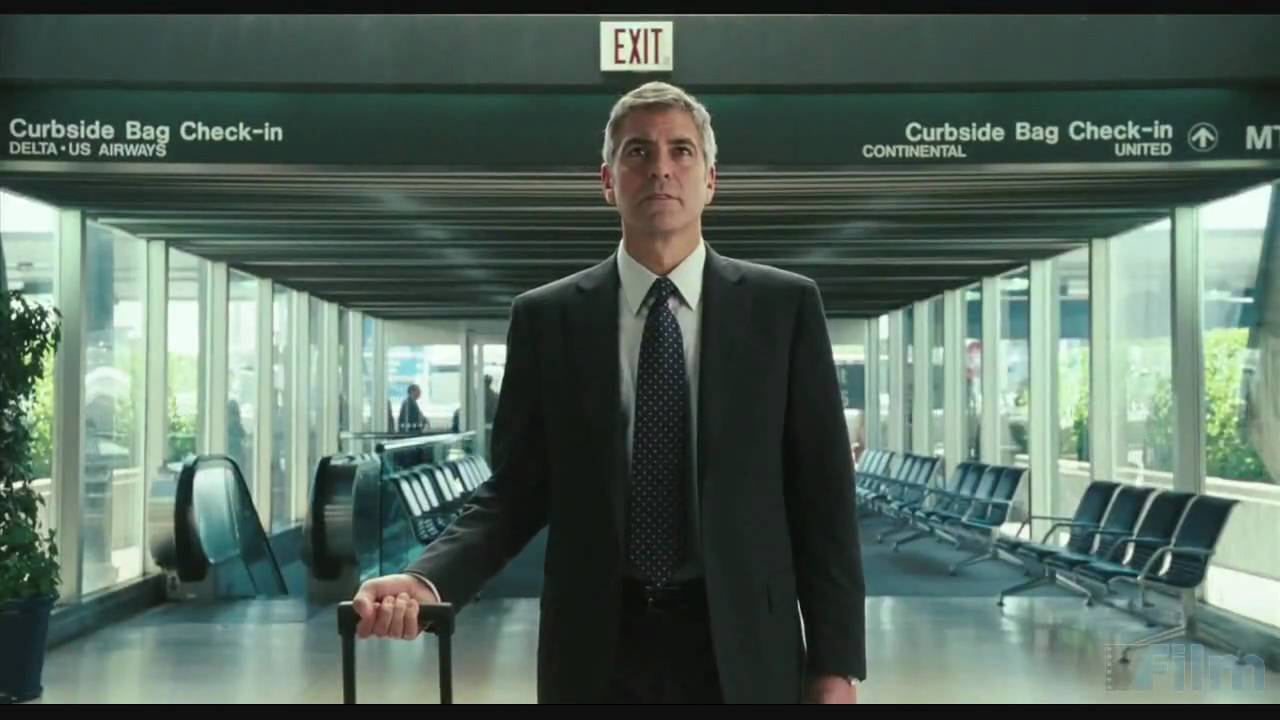
Up in the Air (2009)


George Clooney about to head Up in the Air in Reitman’s brilliant bitter-sweet comedy

Director: Jason Reitman

Cast: George Clooney (Ryan Bingham), Anna Kendrick (Natalie Keener), Vera Farmiga (Alex Goran), Jason Bateman (Craig Gregory), Amy Morton (Kara Bingham), Melanie Lynskey (Julie Bingham), Danny McBride (Jim Miller), Zach Galifianakis (Steve), JK Simmons (Bob), Sam Elliott (Marnard Finch), Tamala Jones (Karen Barnes)

One of the worst days in your life can be the day you lose your job. The uncertainty, the insecurity, the sudden feeling of no longer knowing what the future holds – it hurts. Imagine, however, if you were the other side of the equation. What if it was your job to actually tell other people they no longer had a job?

Ryan Bingham (George Clooney) works for a Human Resources consultancy company who specialises in firing people for companies. Ryan spends his life flying from company to company across America, fires thousands of people a year, and gives motivational speeches promoting his ideology of no relationships with people or possessions. His relationships are on-the-road flirtations, in particular with one of his female counterparts Alex Goran (Vera Farmiga). However, Ryan’s world is facing threat: his company has hired young, ambitious Natalie Keener (Anna Kendrick), and wants to introduce a video conferencing system to conduct firings remotely. Ryan argues Natalie knows nothing about the ‘human element’ of his job, and she joins him on the road to find out more.

Up in the Air is a marvellous, perfectly formed, small-scale film: thought-provoking, endearing, with plenty of laughs as well as an air of bittersweet sadness. It manages to focus on all its issues and themes equally without short-changing any of them, and leaves you feeling rewarded and rich at its end. There are moments in there that will make you cry, make you laugh but also make you a little angry. Reitman never insults your intelligence though: he presents things as they are and trusts you to make the judgements you want to make. It’s quite simply wonderful, a little masterpiece of cinema. 

It’s also a wonderful film of its time, which very deliberately doesn’t shy away from the brutality of the economic climate so much of its plot focuses on. Reitman used a series of talking heads of real people who really had gone through meetings exactly like this, and their emotional, very real reactions to losing their jobs gives the picture a profound depth. 

Up in the Air doesn’t take the easy route of condemning Ryan’s work. Sure our sympathies are naturally with those losing their jobs, but Ryan isn’t a heartless shark. He genuinely feels he is there to support people: his principal objection to the video conferencing is it removes the human element from an extremely difficult moment in people’s lives. He has platitudes, and smooth professionalism, but also a brilliant understanding of people and he gets so close to appearing that he cares deeply about people’s lives (even if he can’t remember them days later) it’s as near as damn it to counting. Watch the scene where he fires JK Simmons’ character – he’s read Simmons’ CV, gently questions why Simmons is working anyway at a company he hates and encourages him to follow his dream of becoming a chef. Sure it’s about defusing a situation – but to Ryan it’s also about helping a person see possible future steps, if only for a moment.

It’s such a brilliant snapshot of how Ryan can analyse in seconds what might encourage a person to find greater depth in their lives, that you forget for a moment that Ryan prides himself on having nothing. His flat is a facelessly cold place, which looks less welcoming (and cheaper and colder) than the hotel rooms he stays in. He’s never happier than when in a VIP lounge. He proudly lives out of a suitcase perfectly sized to avoid checking bags. His motivational career stresses the aim of getting everything that matters to you in the world into a backpack. He has no friends, he’s a stranger to his family, no fixed abode (he spends over 320 days a year travelling). He shares a few painful minutes with people and then never sees them again. 

This might just be the part Clooney was born to play: his handsome, slightly smug grin, his studied chuckles, his slight air of blankness behind his good looks are perfect for Ryan’s surface, but Clooney’s great gift as an actor is the emotional weight and depth he is able to show beneath this veneer as soon as it is scratched. He’s a marvellous physical actor – watch his growing flirtatious ease with Alex turn into a comfy affection. He understands the psychology of Ryan completely and never judges him: he can see why Ryan does what he does, and why it works for him. His performance gives Ryan the dignity of his convictions, doesn’t present with any inch of satire Ryan’s feeling that his job is partly about helping people. Even the slightest touch of distance from the part would have shattered the film’s delicate equilibrium – Clooney doesn’t do it for a second.

Of course, drama means Ryan is thrown into situations that challenge this way of thinking, not least his relationship with Alex (essentially the female version of himself). Vera Farmiga is outstanding as a woman with a very male outlook on the world. Perhaps because they share so much, their relationship grows from a sexually charged flirtation (a brilliantly shot and edited sequence in a VIP lounge) into one that increasingly becomes more and more tender. The film dangles before us and Ryan the option for a new way of life – but it doesn’t lie to us about the nature of either of these people. The relationship doesn’t develop the way we expect – and in fact it becomes a commentary in its own way on the very same future prospects Ryan spends his life selling the people he fires, that despair is a gateway to future opportunity.

Anna Kendrick’s Natalie comes at the world of firing from our ruthless modern age – how can we do this faster, quicker and cheaper? Let’s put together a framework for all conversations, let’s do it remotely, let’s use as many buzzwords and platitudes as we can. While Ryan’s work (to him) is all about not forgetting you need to guide an actual human being through without them getting angry or upset, for Anna it’s a simple progression from A to B. Kendrick’s wonderful performance is all about unpeeling these layers. As she finds out first-hand what the job involves, so we discover she is a far more sensitive, “normal” person than we expect, someone who can’t see the logic behind Ryan’s world-view.

And the film asks Ryan to look at the logic of this world view as well. Everything he expresses at the start of the film comes under fire. Change threatens to make him as redundant as the people he fires. His growing closeness to Alex challenge his ideas about commitment (“we fall in love with pricks and are then surprised when they are pricks” Alex comments, something the film explores late on). The impending marriage of his sister – and the realisation of the complete lack of presence he has in his family’s lives – makes him start to think about the strength of his rootless existence.

But the film doesn’t hammer these points home, it juggles them all perfectly within its framework of looking at corporate America today. In a world where people are increasingly becoming faceless numbers on a spreadsheet, is it surprising so many need a faceless man to do the firing for them? Travel has made the world smaller, but also our lives smaller – like Ryan we can be everywhere and nowhere. Up in the Air is a sad and tender film, but one which leaves a kernel of hope somewhere – there are moments that make you think there are opportunities for change and rebirth. Sure it might be pulling the same trick Ryan does, but if so that’s smart – and shows what a good trick it is. Up in the Air is a hell of a movie, and Reitman is one hell of a director.

Hail Caesar! (2016)


George Clooney is a kidnapped actor in the Coen brothers 1950’s Hollywood spoof

Director: Joel and Ethan Coen

Cast: Josh Brolin (Eddie Mannix), George Clooney (Baird Whitlock), Alden Ehrenreich (Hobie Doyle), Ralph Fiennes (Laurence Laurentz), Scarlett Johansson (DeeAnna Moran), Frances McDormand (CC Calhoun), Tilda Swinton (Thora Thacker/Thessaly Thacker), Channing Tatum (Burt Gurney), Alison Pill (Connie Mannix), Jonah Hill (Joseph Silverman), Emily Beecham (Diedre), Clancy Brown (Co-star Hail Caesar!), Michael Gambon (Narrator)

The Coen brothers’ CV is a bit of a strange thing. It’s one part thriller, one part engagingly brilliant comedy – and then there are a collection of screwball-style entertainments, off-the-wall lightweight comedies (usually about dummies or sharp-talking professionals), as if every so often they needed a palate cleanser. Hail Caesar! falls very much into that final camp. 

Eddie Mannix (Josh Brolin) is a studio manager and fixer in 1950s Hollywood, whose job is to keep the stars in line and the films running smoothly. The latest fly-in-his-ointment is the kidnapping of Baird Whitlock (George Clooney), the star of the studio’s prestigious sword-and-sandals-and-Christianity epic Hail Caesar!. Mannix has to settle the ransom demand, while struggling to keep the news quiet – and manage the production of several other problems including a secretly pregnant Hollywood sweetheart (Scarlett Johansson) and a cowboy-turned-actor (Alden Ehrenreich) struggling with his latest movie requiring him to speak and act rather than just sing and ride a horse.

Hail Caesar! is a mixed bag. There are some wonderful comic sketches in here, the sort of brilliant highlights you could quite happily watch again and again. The problem is these sketches are part of a narrative framework that never really catches fire, that can’t seem to decide how much it is a surrealist comedy and how much it is a genuine Hollywood “behind-the-scenes” slice of life. So I found I delighted in the sketches, and the hilarious reconstructions of some of the studio fodder of the 1950s – while drifting through the general plot of the movie. The laughs are very tightly focused on the stand-alone sketches, and rarely develop from the plot of the movie itself.

Those sketches, though, are brilliant – and the Coens have secured what are effectively a series of stand-out cameos to deliver them. The highlight is certainly a hilarious sequence featuring Ralph Fiennes as a superior English director and Alden Ehrenreich as a cowboy-turned-actor crammed into a period drama in order to “change his image”. It’s a brilliant idea, that revolves around Fiennes’ barely concealed frustration Ehrenreich’s awkwardness in front of the camera, eagerness to please and most of all his accent which so badly affects his elocution that he simply cannot pronounce the line “Would that it were so simple”. The sequence is brilliantly funny – take a look at it down here. In fact it’s so good, it might be too good. Nothing else in the film really touches it.

There are some other good sketches in here as well. Most of them revolve around the loving recreation of Hollywood movies. The movie-within-the-movie Hail Caesar! is a perfect recreation of the Quo Vadis style of movies: large sets, hilariously over-blown dialogue, heavy-handed Christian messages (“Squint at the grandeur!” Clooney’s character is directed in one reaction shot to The Christ – as the filmmakers persist in calling him) and gaudy colour and sets. Clooney himself does a pitch perfect parody of the style and delivery of Robert Taylor.

We also get some spot-on parodies of Hollywood musical styles of the time. Scarlett Johansson plays a Esther Williams-style actress who stars in a series of swimming pool musicals (a bizarre fad of the time). Fiennes is directing a creakingly glacial Broadway-adaptation. Channing Tatum plays an actor in a Minnelli style musical. The tap-dancing sequence we see being filmed is, by the way, another brilliant sketch – a toe-tapping parody song, which also showcases Tatum’s grace and style as a dancer. It’s such a good parody that it actually sort of crosses over into being a genuinely enjoyable slice of song and dance.

I also struggled, as I tend to sometimes, with the artificiality of the Coens’ comedy – there is always an air of them (and their actors) wanting the audience to know that they are far smarter than the dummies in the film. I get this feeling a lot from Clooney in particular – while his film-within-a-film sequences are brilliant, it feels like he never feels much affection for the character outside these sequences. He wants us to know that Clooney is not as dumb or vain as Whitlock is. It’s this lack of empathy that doesn’t quite make the performance work. Empathy is why Eldenreich is the stand-out performer of the film. He plays Hobie Doyle with a real affection and warmth – he makes the character feel like a sweet and genuine person. While Hobie is always a comic spoof, he also feels like he could be a real person – making him so much easier to relate to for the audience.

Hail Caesar! is a film that works in fits and starts, not all the way through. Josh Brolin is fine as Mannix, and his fast-talking, plate juggling, problem solving throws up some funny lines – but his story never really engages the audience as much as it should, and the Catholic guilt Mannix balances in his life never really becomes clear. The Coens are reaching for some point about art and faith – of how film makers may tell themselves they are making something for art, when they actually work for faceless businessmen interested only in making money – but it never really brings this art vs. money argument into place. Does a picture have worth if we talk about worth enough? It’s a question we may as well ask about Hail Caesar itself.

Because the parodies and sketches of old Hollywood movies are so brilliantly done, whenever we drift away from them to the actual plot you find yourself losing interest. It’s a film that actually works better as a few sketches extracted from YouTube – I could happily watch Fiennes and Eldenreich’s scene, or Tatum’s dance sequence, or Clooney’s Taylor spoof in isolation – I don’t really feel the need to watch the entire movie again.

The Ides of March (2011)


George Clooney is a Presidential candidate with feet of clay in this bitter indictment of American politics

Director: George Clooney

Cast: Ryan Gosling (Stephen Meyers), George Clooney (Governor Mike Morris), Evan Rachel Wood (Molly Stearns), Philip Seymour Hoffman (Paul Zara), Paul Giamatti (Tom Duffy), Marisa Tomei (Ida Horowicz), Jeffrey Wright (Senator Franklin Thompson), Jennifer Ehle (Cindy Morris), Gregory Itzin (Jack Stearns), Max Minghella (Ben Harpen)

Stephen Meyers (Ryan Gosling) is an ambitious young political advisor on the presidential campaign of Governor Mike Morris (George Clooney). However, scandal bubbles under the surface of the campaign and Meyers finds himself a pawn in the power struggles between his boss Paul (Philip Seymour Hoffman) and the rival campaign manager Tom (Paul GIamatti), as well as increasingly drawn to a young intern Molly (Evan Rachel Wood) with a secret.

Like some of the work of the current crop of actor-directors (Clooney and Affleck being the prime examples) this feels like a thematic remake of classic (better) films from the 1970s, in this case Robert Redford’s classic The Candidate. Like that film, this one explores a politician whose dynamism, photogenic appeal and liberalism hide feet of clay. The film takes a supremely cynical view of modern politics, presenting a world where even idealists will (when push comes to shove) do anything to assure their position because they believe that only they can deliver the change the country needs. As Rich Hall said in the build-up to the most recent election, it takes a special kind of ego to say “I’ve looked at this countries problems and what you need to solve them is me”.

To get this idea across a bit more, it probably would have helped to get more sense of what Morris (and his rival Pullman) stands for. The film tries to get round this with the shorthand of casting Clooney as Morris: we all know Gorgeous George is a Good Thing (although I’d also add that Clooney’s smoothly groomed, almost too-perfect good looks give him plausibility as a character drenched in hypocrisy behind his charismatic smirk). Instead we have to take it for granted, from his appearance and few phrases about green politics and job creation, that Morris is a Kennedy-like force for change. The film rather weights the decks by presenting no-one in this political game as being truly idealistic or in it for any other reason than personal gain or the thrill of the game – even Morris, a force for the film argues good, is shown to be totally hypocritical and devoid of personal empathy, believing that any means are justified by the end.

Gosling’s Stephen Meyers is the heart of the film, and it’s his growing corruption the film charts. Meyers starts as a slightly uneasy mix of professional politician, cynical about the media and the public, and idealist eager to change the country for the better. Gosling’s performance is the embodiment of the struggle between these good and bad angels, and Gosling has the right balance of naivety and ruthless careerism in his looks to capture this. Having seen this film once before, I actually found it more rewarding this time: Meyers is a cynic who wants to be an idealist.

Slightly less clear, however, is Evan Rachel Wood’s role as an intern. I don’t think it’s much of a spoiler to say her role is largely a tragic one – but the film never quite shapes her as a real person. She’s a model of the intelligent, sexy young woman, more of a collection of beats than a real person (however winningly Wood plays her). Her eventual tragedy is something that happens rather than something that feels like it happens to her – and the story is about the effect this has on the male characters around her rather than what it might have meant for her. She’s a well designed plot device rather than a person.

The film does have an interesting stance on politics – even if it already feels outdated in our new Trumpian, post-truth days. Hoffman and Giamatti do good work as contrasting political fixers at opposite ends of the idealist and cynic spectrum. The vision of politics has something designed to support news cycles rather than to serve the people feels like it has more than some truth behind it. It’s not a masterpiece by any stretch of the imagination, but it’s well made and has some brains behind it. And it does actually grow better on a second viewing.

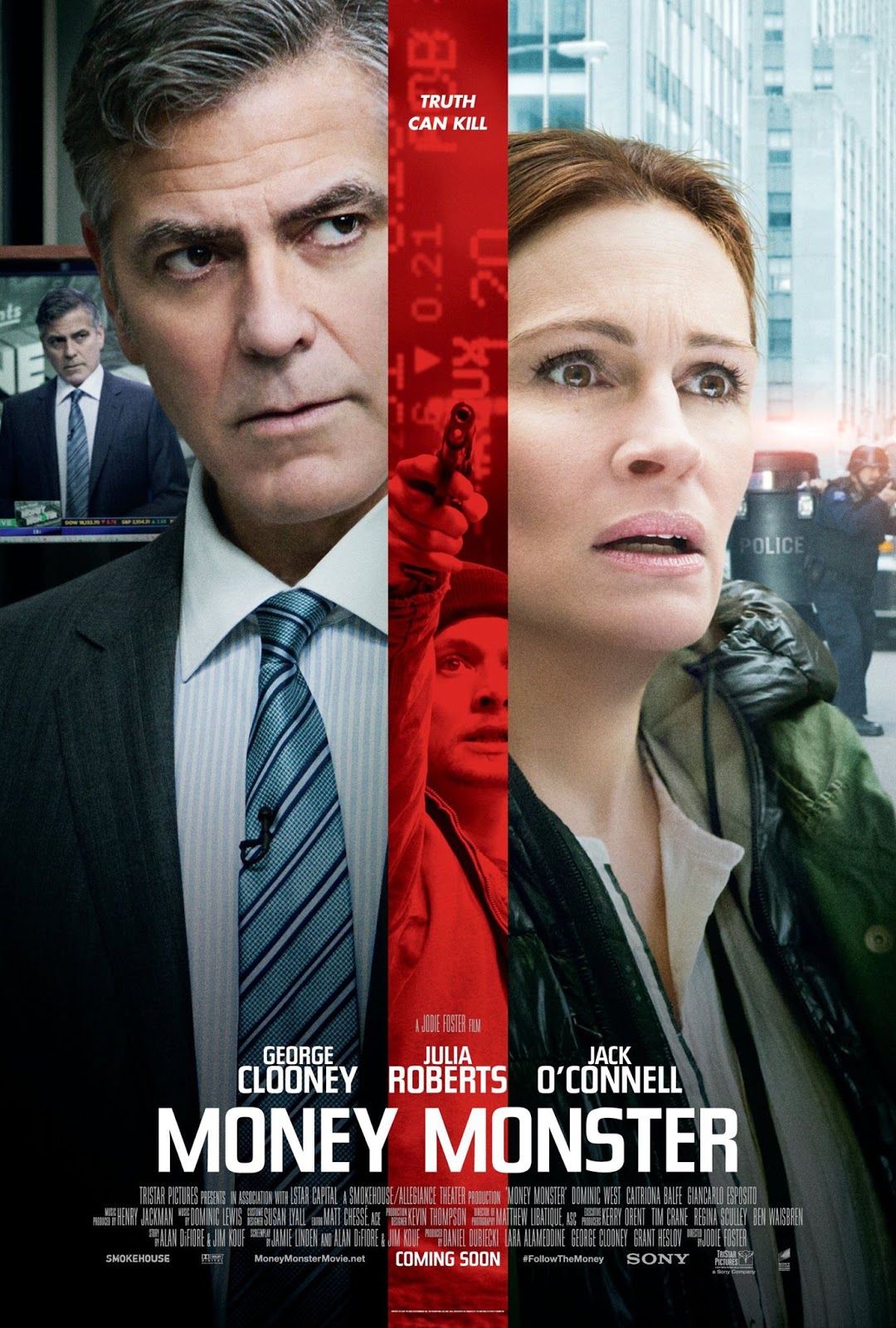
Money Monster (2016)


A bad day at the office was ahead for George Clooney

Director: Jodie Foster

Cast: George Clooney (Lee Gates), Julia Roberts (Patty Fenn), Jack O’Connell (Kyle Budwell), Dominic West (Walt Camby), Caitriona Balfe (Diane Lester), Giancarlo Esposito (Captain Marcus Powell)

For as long as there has been TV, then the world of Film has looked down its nose at the mass market medium. “It’s in your homes! It makes you dumber! It stops you caring!” Set a film in a TV studio and it’s a fair bet that, before long, some shallow media types will appear, a dramatic on-air event will take place, a shallow man will rediscover his soul and the camera will cut back to punters at home watching the drama as if they it was just part of the show.

All this is exhibited to its full in Money Monster, a passably entertaining hostage drama set in the studio of a fictional Wall Street themed entertainment and “news” show. Lee Gates (George Clooney) is a shallow, image and money-obsessed TV personality taken hostage after a desperate grief-stricken viewer Kyle Budwell (Jack O’Connell) loses his life savings on one of Gates’ tips. However, with the prodding of his director Patty (Julia Roberts), Gates slowly begins to rediscover his journalistic integrity.

Watching the film when it rather heavy-handedly enters into the world of media satire, it’s pretty hard not to remember better films in the same genre. Network covered much of this ground so well 40 years ago, it’s almost not been necessary to watch another film about the manipulation of the media. The Truman Show so successfully skewered the thoughtless collaboration of the watcher at home, that this film’s attempt feels like a rather mundane repeat.

Saying that, George Clooney does a grand job of portraying the shallow, media man re-discovering his depths – although lord knows he’s played this sort of part often enough to do it standing on his head. But he gets the dark comedy of it, and he is also able to deliver on the growing decency and integrity of the character. Julia Roberts is pretty good as a confident professional who has allowed her principles to slide for too long. In this illustrious company, Jack O’Connell more than holds his own, delivering brilliantly as a desperate and angry man.

The hostage taking sequences are quite well done, and threaded in well with the general satirical air of the film. At two key moments during the crisis, the film successfully pulls the rug out from under the feet of the viewer by delivering a different outcome than we might have expected. It’s probably when the film is most effective. It also does a good job threading many of the themes, locations and characters that will become important by the end of the film into its opening moments – many of them done so gently, you won’t even notice until they become important later.

The dark satire around the uncaring nature of big business and its lack of principles also hits more than a few familiar beats (big business being another thing multi-million film companies love to lay into), but this side of the plot is interesting enough – and I didn’t quite work out how the dodgy dealing had worked out. The final reveal and confrontation around this is well staged. It doesn’t tell you anything new, or present its old points in a unique or intriguing new way, but it does it in an entertaining way.

The film generally deserves some congratulation for its staging – Foster directs with a tightness and the flimsy conception of the film is delivered in a taut 85 minutes (almost in real time) which certainly means it doesn’t outstay its welcome. The acting is decent and the points it makes are well delivered, no matter how familiar they are. The film effectively plays with and changes your views on its characters over the course of its runtime. Honestly there are worse ways you can spend an hour and a half. It’s just not something that is going to stick with you for long.

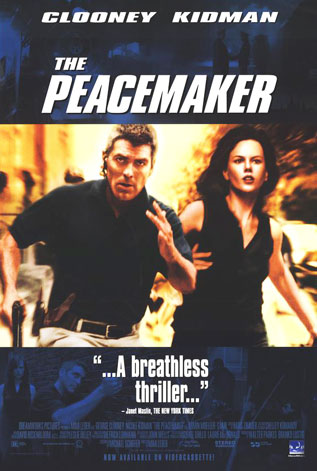
The Peacemaker (1997)


Clooney and Kidman flee an exploding cliché

Director: Mimi Leder

Cast: George Clooney (Lt. Col. Thomas Devoe), Nicole Kidman (Dr. Julia Kelly), Marcel Iureş (Dušan Gavrić), Aleksandr Baluev (Gen. Aleksandr Kodoroff), Rene Medvešek (Vlado Mirić), Armin Mueller-Stahl (Col. Dimitri Vertikoff) 

In the late 1990s, Steven Spielberg, music tycoon David Geffen and the former chairman of Disney Jeffrey Katzenberg banded together to pool their knowledge and resources to found their very own film studio, DreamWorks. Excitement abounded – what would be the first film released from DreamWorks? How would all that genius and experience express itself? The answer was The Peacemaker.It’s a film cobbled together, Frankenstein-like, from bits and pieces of other movies. Russian separatist soldiers steal nine nuclear warheads. The USA immediately leads efforts to locate these bombs, their efforts spearheaded by a maverick Army colonel (George Clooney) uneasily paired up with a by-the-book White House Nuclear Weapons expert scientist (Nicole Kidman). The trail leads them to dodgy Eastern-European officials playing both  sides  shoot outs in picturesque locations such as Vienna and non-descript ex-Soviet republics, and  a cat and mouse chase in New York for a man on a very personal mission of revenge.

It’s quite something, an achievement almost, to sit down and watch a film and see nothing original in it at all. That’s the case with The Peacemaker: there is literally nothing in this film that you won’t have seen in any action film made between 1980 and 2000. It’s such a perfect capturing of clichés and tropes it could almost work as a time capsule piece. A reasonably film literate person could probably take a decent stab at writing down the plot of the film in advance with nothing more than a cast list and brief one-line synopsis.

It’s also fun now to see Clooney and Kidman play such dumb, by-the-numbers roles like this, having seen how far both of them have come since the 1990s. Back then, Kidman was best known for being Mrs Tom Cruise and Clooney as the star of ER struggling to break Hollywood. Both of them go through the motions with assurance, though Clooney is basically Doug Ross in an army uniform while Kidman plays a sort of Hepburnish scientist, overtly unimpressed (but secretly very impressed) by her macho comrade. There is a retrospective interest seeing them in something you can’t imagine either of them touching with a barge-pole today.

The film is routinely directed by Leder, then a staple on ER’s director payroll, with a habit of expressing the same clichés over and over again. Most of the action sequences lack any real flair, though a truck chase is reasonably well done and the final half hour chase around New York works well enough.

The plot is straight forward, although like many of these things it doesn’t really make any sense at all when you sit down and think about it (twice I think I’ve watched this in my life, and I still don’t understand how the baddies fund their operation). But everything has a back-of-a-fag-packet briefness to it, not least the yawningly familiar tale of our heroes slowly growing to respect each other. In fact the most original beat of the film is probably that they don’t end the film locking lips.

I guess you could say The Peacemaker is exactly the sort of safely dull, totally forgettable, paint by numbers bland piece you could expect a fledgling studio to dip its toes into the water with. It goes with the sort of formulaic familiarity that’s worked for countless films in the past. It’s inoffensive enough and (good judgement by them) they snagged two actors whose fame has increased exponentially since the making of the film, meaning it will always have a lifespan on TV repeats. DreamWorks went on to much better things than this TV-Movie of the week, but at least this one-for-the-money job is okay, you won’t mind wandering in and out of the room while it’s on, and you might even enjoy some of its spirited retreads of worn clichés.