Tag: George Segal

A Touch of Class (1973)

A Touch of Class (1973)

A decent farce gets buried in a film that tries to make a profound point about relationships

Director: Melvin Frank

Cast: George Segal (Steve Blackburn), Glenda Jackson (Vickie Allessio), Hildegard Neil (Gloria Blackburn), Paul Sorvino (Walter Menkes), K Callan (Patty Menkes), Cec Linder (Wendell Thompson), Nadim Sawalha (Hotel manager), David de Keyser (Doctor Alvarez), Eve Kampf (Miss Ramos)

London-based American banker Steve Blackburn (George Segal) and divorced fashion designer Vickie Allessio (Glenda Jackson) feel an instant spark when they literally bump into each other while he’s playing baseball in the park. She loves the idea of some no-strings sex; he’s got more than a little experience of cheating on his wife. They head to Málaga for a dirty weekend, only to find a string of circumstances keep getting in their way of a relaxing (dirty) weekend.

A Touch of Class seems an odd choice as Best Picture nominee – just as Glenda Jackson seems an unlikely Oscar winner for a fairly straight-forward role of comic exasperation. (Surely part of Oscar was the voters surprise that the fiercely serious Jackson even had a sense of humour). But this film has its moments of entertaining farce, particularly in its opening half covering the disastrous trip to Málaga where literally nothing seems to go right. It works less well when A Touch of Class segues later into something trying to be more serious, not least since the film’s attempt to explore genuine feelings works best when it embraces the fact its lead characters realise that, beyond a sexual charge, they pretty much can’t stand each other.

There is something very British about this farce of manners. The first hour chronicles a series of embarrassments, nearly all of them revolving around a constant sense of social obligation and clumsy propriety, much of it coming from Steve’s desperation not to be caught out as an unfaithful husband. From booking tickets for their flight – an arch travel advisor (a very funny Eve Kampf) responding with mocking po-faced seriousness to attempts by Steve to pass Vickie off as his ‘mother’ – to the two awkwardly pretending not to know each other when Steve bumps into film producer friend Walter (Paul Sorvino) – who you suspect wouldn’t care less –  it quickly goes from bad to worse.

Like any classic farce, they end up trading their winning pre-booked car for a juddering mini with a faulty clutch (so Steven can escape Sorvino’s character without having to explain why he can’t give him a lift), arrive at their hotel to be shunted from room-to-toom, Steve putting his back out after a bizarre argument about which side of the bed each will sleep on and eventually both being invited separately to dinner with Walter and his wife (who, unknowingly to them, are awkwardly shadowing part of their holiday). The comedy of this social awkwardness, the terror of saying something that might shock or embarrass someone, genuinely generates some decent comic mileage.

A Touch of Class also generates an entertaining sense that the two have very little in common. George Segal’s Steve is an overgrown, spoilt schoolboy, obsessed with winning who celebrates like he’s scooped The Open when he beats the child (as talented as a young Seve) he’s hired to play golf with him. (Vickie’s look of scornful disgust throughout this match is great.) When it comes to sex, you get the sense he’s demanding and in constant need of praise. Their first major argument kicks off when he responds very poorly to her review of their first tumble as ‘very nice’. Segal mixes this with a frantic desire to constantly be seen as a nice guy by everyone, from his wife to his friends while making minimal sacrifices for a relationship with Vickie.

In fact, the film would work best if it just focused on the disastrous holiday and two people discovering an initial spark disguised feelings clearly closer to mutual loathing. A more nimble film would have allowed more peaks and troughs where strong sexual desire mix with growing dislike outside of the tumbles in the sheet, leading to the affair beginning and ending in Málaga. Instead, A Touch of Class suddenly shifts in its final third to exploring the two attempting a long-term adulterous affair, a beat of seriousness it’s not adept enough to pull off. It’s not helped by the fact it repeats points already made (Steve is interested in booty calls with minimal concentration, Vickie is torn between having some fun and wanting something serious). It becomes a different – and to be honest, not that good, movie (not helped by an in-movie screening of Brief Encounter which really points up how much weaker this films depiction of infidelity is).

Part of the problem is it’s really hard to see what Glenda Jackson’s Vicki could find to respect in this guy once she got to know him. Jackson is a much better comic performer than you might expect – she landed the role after Frank saw her royally take the piss out of her impossibly-serious image on TV’s Morecambe and Wise – but her comedy is one of dry, arch exasperation not flat-out farce. She’s at her most relaxed in the moments where she can barely hide her contempt for Steve, or when laying into his selfishness and immaturity with arch sarcastic monologues. But this strength of character makes it all the more unlikely Vicki would consider continuing the affair in London – or that she would ever tolerate being used as essentially a sex toy by a selfish lover.

A sudden pivot to wider ambitions the film can undermining what could have been a decent comic farce. Expanding the film’s first two thirds and embracing showing the life cycle of a relationship starting as a fling and disintegrating under the pressure of actually spending time together gets lost under a clumsy attempt to say something profound about infidelity. A strange desire to suggest there is in fact real emotion between these two clashes constantly with the comic drive of the film suggesting the exact opposite. As the humour drains awkwardly out the film, so does its purpose and success. It’s as if Frank and team were as embarrassed as Steve to be caught out in a sex farce and felt they needed to add a clumsy social message and character study to make it feel legit. This never meshes with the film’s most successful moments and never rings true.
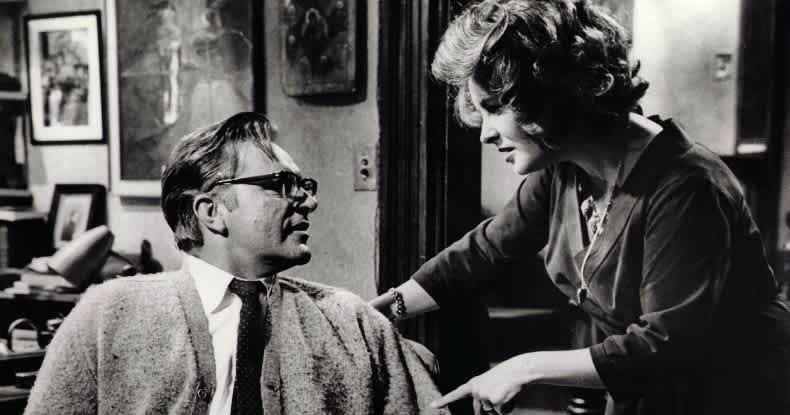
Who’s Afraid of Virginia Woolf? (1966)

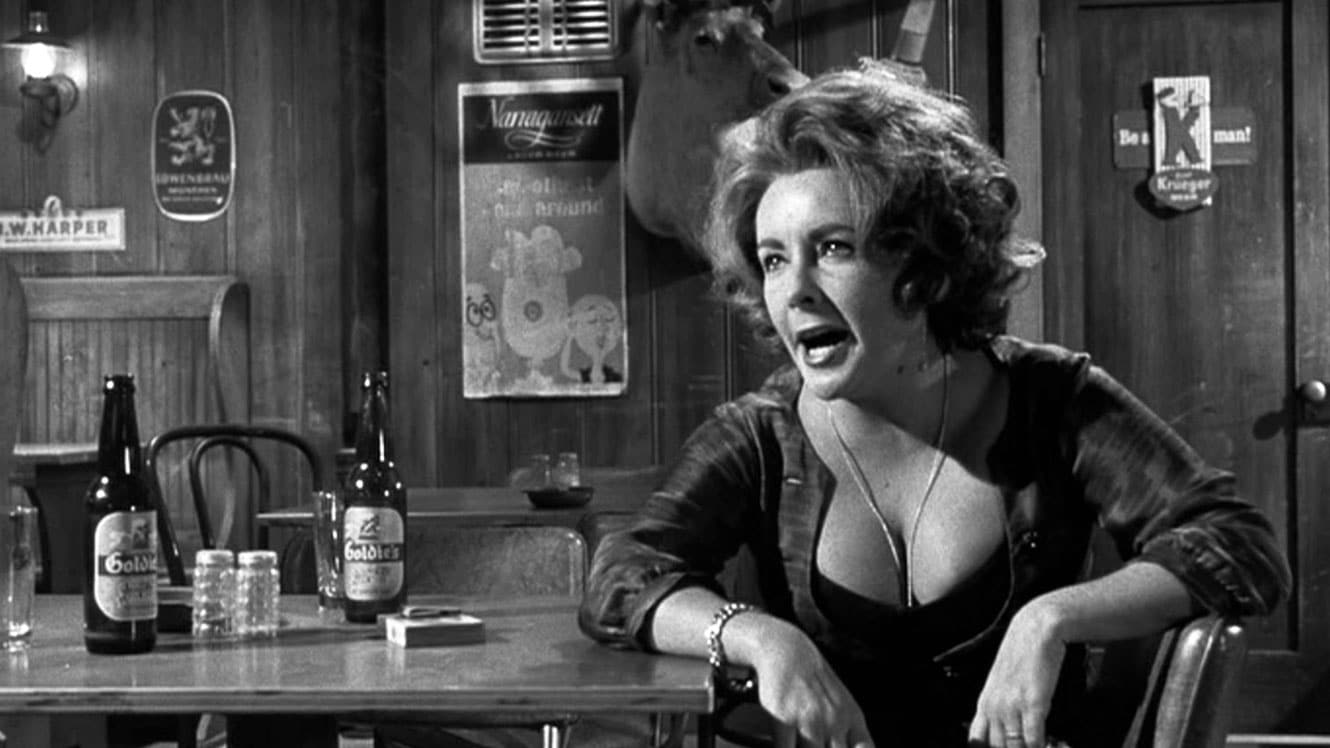
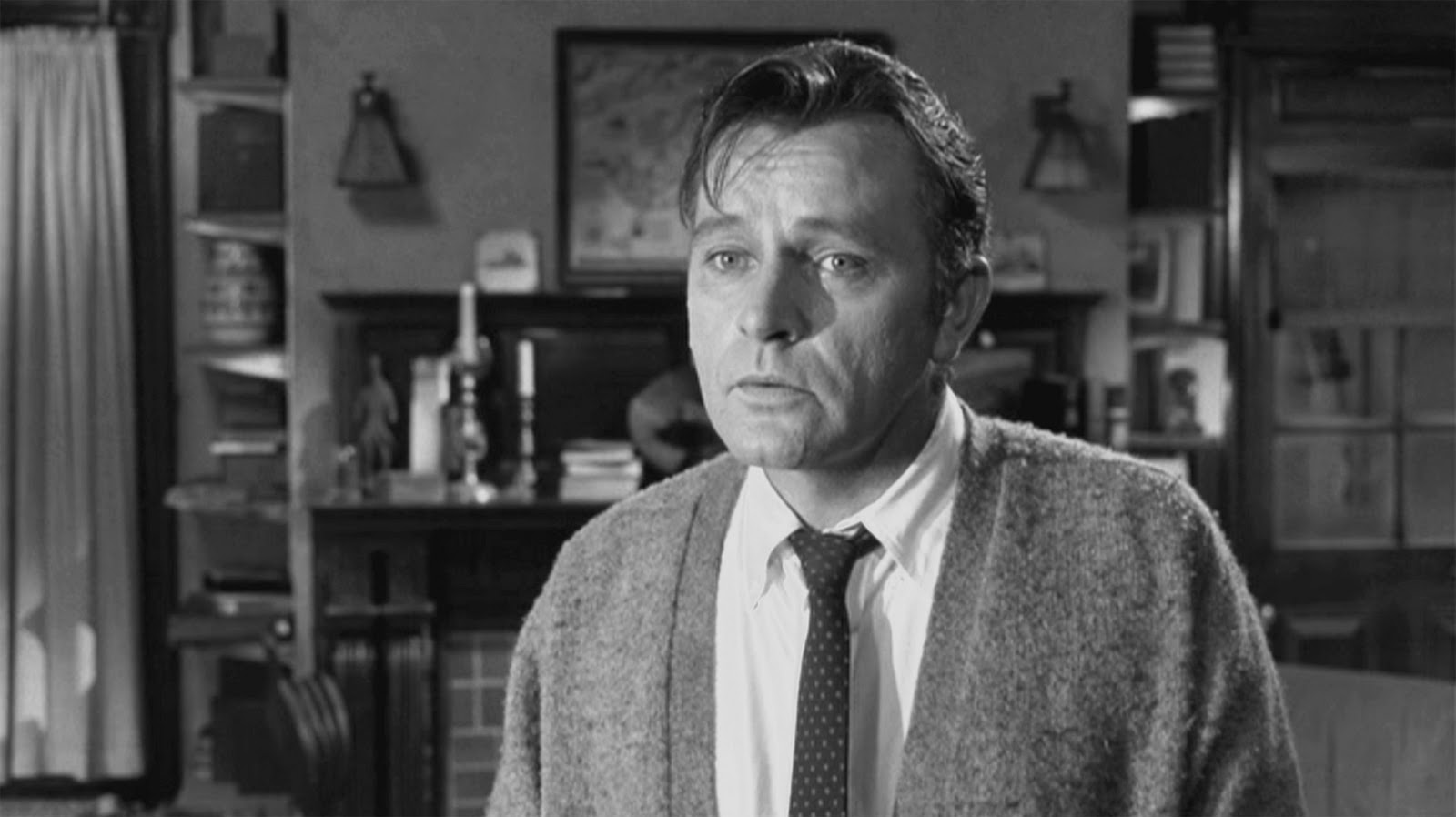
Burton and Taylor play a feuding couple in Who’s Afraid of Virginia Woolf?

Director: Mike Nichols

Cast: Elizabeth Taylor (Martha), Richard Burton (George), George Segal (Nick), Sandy Dennis (Honey)

In 1966, Hollywood was only just emerging from the strict rules of the Hays Code. These governed everything from the themes a film could explore to the language you could use while doing it. But in the permissive 60s, it was finally beginning to crack – and Who’s Afraid of Virginia Woolf? was one of the first films to really push it over the edge. This film helped usher in 70s Hollywood, where filmmakers finally felt empowered to explore darker themes and to do so with sex, violence and bad language. Five years after this film came out, something like A Clockwork Orange could become a box-office smash and a Best Picture nominee. Talk about the changing of the guard.

Mike Nichols’ film debut is a faithful adaptation of Edward Albee’s Broadway smash, which had been controversial enough on stage for its full and frank exploration of a marriage consumed with bitterness, feuding and pain. Not to mention its open acknowledgement of extra marital sex, abortion and alcoholism all delivered with a literal “screw you!”. Elizabeth Taylor is Martha, daughter of the president of a small New England college, whose husband George (Richard Burton) is a failed associate history professor. The couple are locked into a dysfunctional marriage that mixes recrimination and a perverse, shared sense of humour. Drunkenly returning home after a party, they welcome a new professor (George Segal) and his wife (Sandy Dennis) to their home for a nightcap. There they quickly rope the couple into a series of increasingly personal “games” with an edge of cruelty and lashings of verbal abuse.

Today, Who’s Afraid of Virginia Woolf? has not always aged well, coming across at times as rather forced and overbearing, as is often the way with films that pushed the boundaries so effectively back in the day. Nichols has the confidence to avoid “opening up” the play too much – its single setting on stage is augmented here only with a brief drunken excursion out to a late night bar – and instead focuses on drawing out four superb performances from its actors (all Oscar nominated) and letting the camera move intricately around the confined rooms where the action takes place.

What Nichols really draws superbly from this film is the control of the film’s continual pattern of simmer, tension and release. The play is effectively a series of psychological games that George and Martha play between themselves. The film is like a drunken, truly mean-spirited version of Noel Coward’s Hay Fever, where the self-absorbed hosts similarly play elaborate ”games” with their confused guests. Most games involves Martha and George turning on each other, viciously attacking the other for everything from failure to drunkenness, with their guests used as the jury, mixed with “get the guests” interludes as the couple turn on the sexual and marital issues in their guests’ lives.

It makes for a series of compellingly delivered sequences – even if the constant thrum of tension and heightened half-mock, half-real fury Martha and George keep up for most of the film finally starts to bear down on the viewer. The film starts banging its points with a transgressive pride, which looks like increasingly like a lot of sound and fury over quite minor issues. But then that’s always the way with convention defying films – so many following films have buried these conventions, that the attention grabbing way this film does it looks quite tired and overworked today.

As Martha and George, Nichols was able to cast the most famous married couple on the planet at the time, in Elizabeth Taylor and Richard Burton. With these titanic personalities working – for perhaps the only time – with a director who had the skill and authority to tame them, the two of them delivered probably their finest performances on film. It also adds to the illicit sense for the audience – like Nick and Honey – that we are trapped into seeing a series of personal and intense conversations and arguments. 

Finally accepting the sort of intense and challenging material he often overlooked for well-paid gigs, Burton is superb as George: a mass of passive aggression, condescending to everyone around him, capable of great cruelty but also a crushed, disappointed and vulnerable man, desperate for affection.

Elizabeth Taylor was similarly sensational – and Oscar-winning: puffy faced, blowsy and domineering as Martha, who similarly has buried her pain and loneliness under a never ending onslaught of aggression, mockery, tartiness and loudness. Brassy and bold, Martha at first seems the controlling, even abusive force in the relationship, but she is also isolated, scared and overwhelmed with pain. 

What’s brilliant about the relationship between the couple is at first it seems like George and Martha are a deeply unhappy couple, fuelled by hate. However, it becomes clear their feuding and contempt for each other is in fact part of a relationship grounded on mutual love and need (the final shot is their hands joined together), revolving around their mutual shared pain on their failure to have children. The couple’s primary “game” is a private one – a fictional child, invented to compensate for their mutual infertility – discussion of whom early on by Martha opens the door to the fury that follows. But it gives an insight into their relationship, actually kept fresh by their feuding.

By contrast, it’s the seemingly happier young couple who have serious problems. Nick, very well played by George Segal, is a dashing young buck who is actually selfish and, with a dream of sleeping his way to the top (despite his possible impotence), whose lack of depth is routinely savaged by both Martha and George. Despite this, Nick doesn’t seem to realise that this he’s in the middle of a series of games. He’s married his wife out of obligation for her pregnancy. Honey – an Oscar-winning turn by Sandy Dennis – on the other hand seems to be aware she’s out of his depth here, and reverts into an almost childish passiveness, mixed with awkward horror which slowly peels away to reveal her misery and depression. Slowly we realise Nick and Honey have nothing in common.

It’s a complex and intriguing play, brilliantly bought to the screen by Nichols whose camera (in stark black and white) bobs and weaves through the action, involving each actor in every scene (the camera often focuses on reactions as much as dialogue delivery). All four of the actors are great, but Burton and Taylor are nothing less than sensational (ironically their careers never seemed to recover from the amount they put out there, with more than a few speculating that their own marriage was but a few degrees different from George and Martha) and the film itself, while overbearing, is also still compelling in its complexity and stark insight into human relationships.

Ship of Fools (1965)

Simeone Signoret and Oskar Werner are just part of the kaleidoscope of humanity in Ship of Fools

Director: Stanley Kramer

Cast: Vivien Leigh (Mary Treadwell), Simeone Signoret (La Condesa), José Ferrer (Siegfried Rieber), Lee Marvin (Bill Tenny), Oskar Werner (Dr Wilhelm Schumann), Elizabeth Ashley (Jenny Brown), George Segal (David Scott), José Greco (Pepe), Michael Dunn (Carl Glocken), Charles Korvin (Captain Thiele), Heinz Rühmann (Julius Lowenthal), Lilia Skala (Frau Hutten), Barbara Luna (Amparo), Christiane Schmidtmer (Lizzi Spokenkieker), Alf Kjellin (Freytag), Werner Klemperer (Lt Huebner)

Stanley Kramer was the man who went his own way in Hollywood. Struggling to find work after returning from the Second World War, he set up his own production company which quickly specialised in critically acclaimed “message” films. It’s the sort of film making that hasn’t always aged well. Kramer’s style hasn’t often either – even at the time he was seen as achingly earnest and worthy. Ship of Fools was the sort of perfect project for him: a massive best-selling novel about a huge subject, humanity itself. It was about big themes and it felt really important. It was perfect Kramer material.

In 1933, a ship sails from Mexico back to a newly Nazified Germany. On board, the passengers and crew blithely continue their own personal dramas and obsessions – it really is literally a “ship of fools”, as we are informed in the film’s opening by wry observant German dwarf Carl Glocken (Michael Dunn) who serves as an occasional chorus. On board: a faded Southern Belle (Vivien Leigh) desperate to recapture her youth; a failed baseball player (Lee Marvin) bitter that his career never took off; a young artist (George Segal) intent on only drawing serious subjects to the frustration of his girlfriend (Elizabeth Ashley); a bigoted, bullying Nazi (JoséFerrer) trying to start an affair with an attractive younger blonde (Christiane Schmidtmer); a Jewish jeweller (Heinz Rühmann) who thinks the Nazi party can’t be that dangerous; and ship’s doctor Willi Schumann (Oskar Werner) who finds himself increasingly fascinated with La Condesa (Simeone Signoret), a drug addict and a social campaigner being transported to prison in Spain. Truly, the whole world is on board this boat! (Or so you can imagine the poster saying).

The success of the individual moments in Ship of Fools rise and fall depending on the level of engagement you feel in each of these stories. It’s a curious mixture of tales, some of them dancing around deeper meanings, some playing like dark farce, some plain self-important rubbish. What’s abundantly clear is Kramer feels this is all leading towards meaning something, though whether he gets anywhere near expressing what this something is really isn’t clear. In fact the only real categorical message I could take about this is that humanity has a tendency to fiddle whole Rome burns – and that of course the Nazis are bad. 

There is an attempt to suggest a world in microcosm – and some have argued that the smorgasbord of characters are basically like facets of one person’s personality – but really what many of these stories are deep down are soapy pot-boilers, brought to life by good writing and fine acting. Kramer marshals all these events with a professional smoothness: there is something quite admirable about the fact he clearly sees the director’s role as more like a producer’s, someone there to service the story and actors more than to cover the film with flash. It might not make for something compellingly visual, but it is refreshing.

What Kramer is less successful with is the heavy-handed importance the film gives its serious moments. Most infamous is a moment when Glocken and Jewish trader Julius Lowenthal are sitting on the veranda, listening to the band while chatting about current affairs in Germany. “There are nearly a million Jews in Germany. What are they going to do? Kill all of us?” Julius jovially states – the band music obviously ends the second he stops speaking, filling the screen with a chilling silence. It’s the sort of moment that is supposed to make us feel the chill of the oncoming storm – but instead feels manipulative and portentous. Every moment like that lands in the same way – the film is delighted with its exploration of these shallow people, very pleased with knowing the Nazi destruction is on the way. 

This self-important bombast dates the picture more than anything else in it. Nothing dates as badly as pretension. It’s a film that feels like it’s been made very consciously to make you think, and which wears its attempt to capture every level of society – from poor Spanish workers to rich Nazis – very heavily. It also makes obvious points: naturally the only true act of self-sacrifice comes from a poor Spanish worker, while the rich passengers can scarcely look past their own concerns. 

When it isn’t being self-important, the film too often finds itself mired in soapy rubbish. The plotline featuring George Segal as a failing artist and Elizabeth Ashley as a frustrated girlfriend is tedious beyond belief, a slog through the worst kind of coupley drama that adds very little to the film. A further plotline around the companion of a wheelchair-bound intellectual, obsessed with an exotic dancer on the ship, could sit just as easily in Coronation Street as it could in a highbrow drama like this.

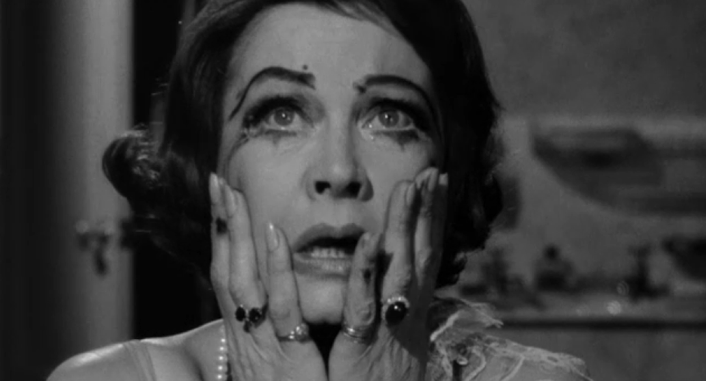
Despite all this, I have to say much of the acting is very strong – even if many of the actors are cast very much to type. Vivien Leigh, in her last performance, struggled with immense psychological difficulties during shooting, but brings a heartfelt realism to divorced Southern belle Mary Treadwell (an even more heartfelt version of her Blanche DuBois than in Streetcar). Kramer also allows her one of the film’s few moments of imaginative spontaneity when she suddenly bursts into a Charleston before stumbling back to her hotel room. 

Carrying a lot of the film’s emotional weight are Oskar Werner and Simeone Signoret (both Oscar nominated) as an unlikely romantic coupling. Werner brings great depth and sadness to the world-weary doctor who finds himself irresistibly drawn to Simeone Signoret’s Countess. Signoret channels her distant, fragile imperiousness from Les Diabloques and Room at the Top to marvellous effect as a woman struggling with an indolent drug addiction but who feels a genuine responsibility to the world. The quiet scenes between these two are the closest the film gets to touching some distant meaning, even if it never quite gets there – and again the points deep down are fairly straight forward.

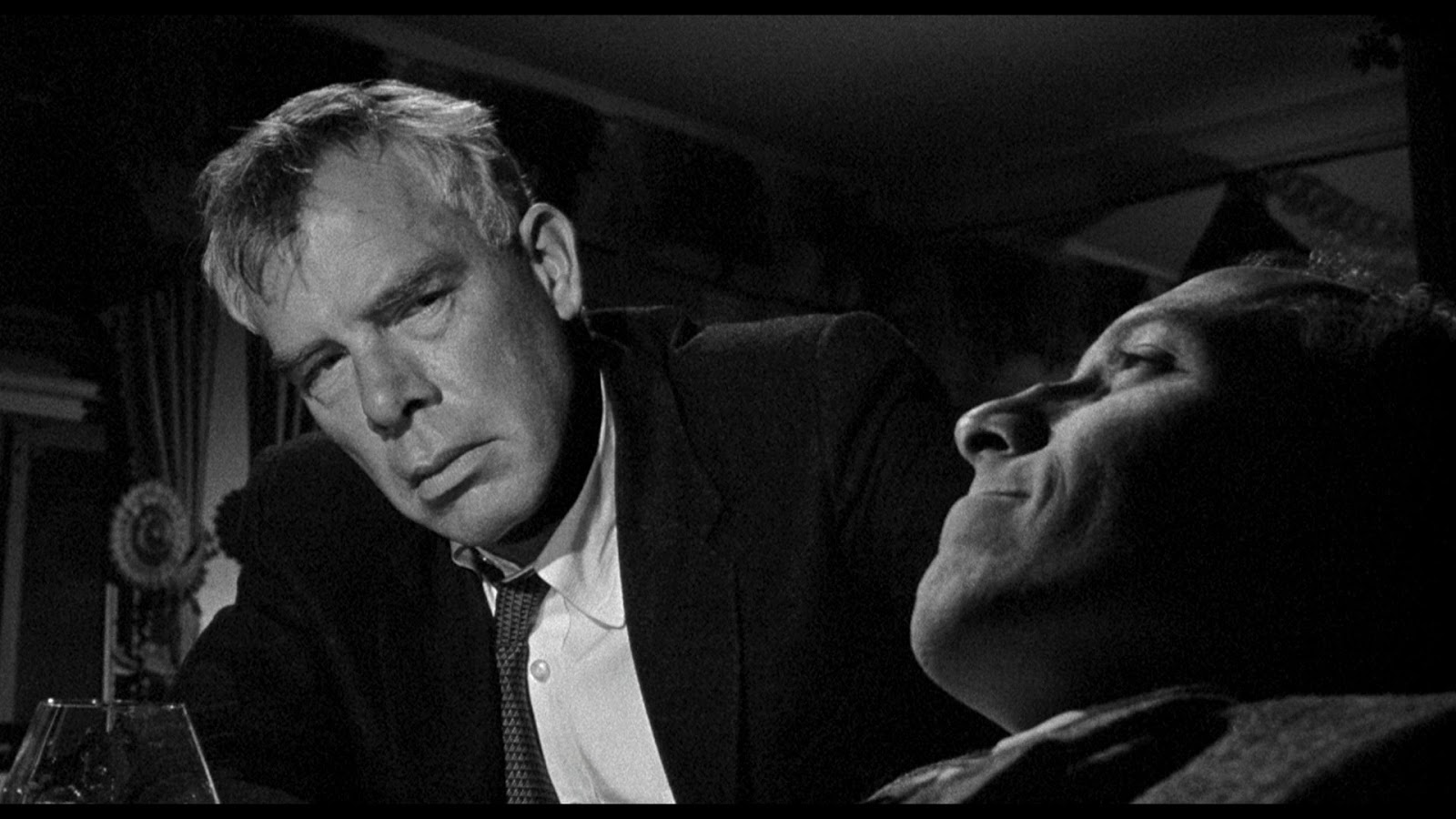
For the rest of the cast, there is hardly a weak link. Heinz Rühmann, in his only English-speaking role, campaigned heavily for the role of Jewish trader Julius and he is magnificent. José Ferrer swaggers convincingly as bullying Nazi Siegfried, even if he is saddled with the most obvious, poorly written, character. Michael Dunn (also Oscar nominated) makes a lot of his role as charming chorus and commentator. Lee Marvin is terrific as the frustrated and bitter baseball player. Charles Korvin gives a lot of depth to the thoughtful and compassionate captain.

Ship of Fools has plenty of moments of enjoyment. But as a whole it’s always a little self-consciously important, too determined to push you to be aware of the messages it wants you to take home. As the final shot sees a camera crane inexorably down onto a swastika you feel smacked around the face with the film wanting you to know that the darkness was just around the corner. The dread of Nazism should hang over the film like a shroud but instead it feels so repeatedly stressed to us that it loses all impact. The film wants us to know that we know more than the characters, and goes out of its way to remind us so that we can pat ourselves on the back when we spot the irony. Despite much of the quality of acting and dialogue, it gets wearing after a while.